
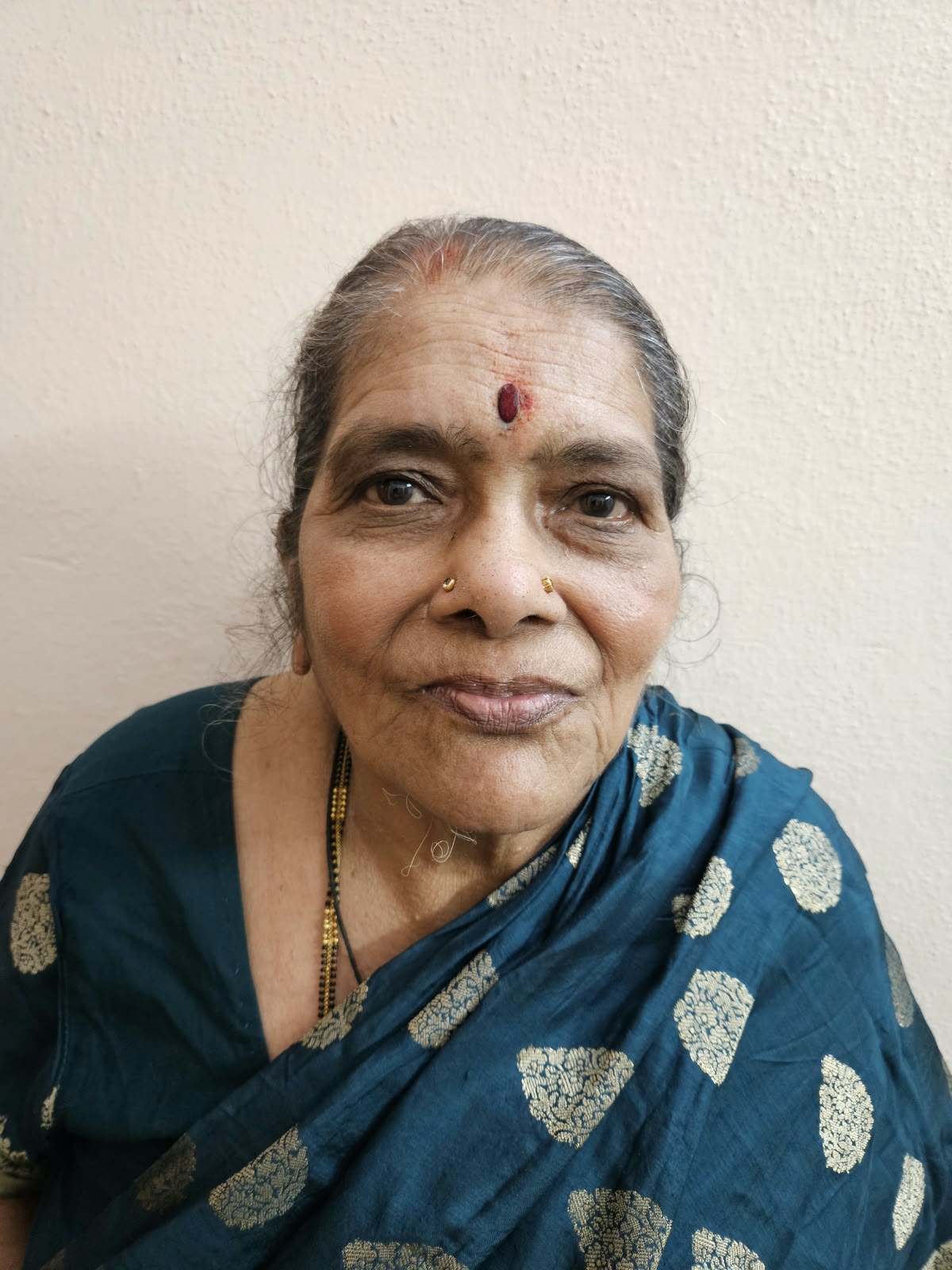
On the morning of October 12, 2026, just around sunrise, my mother took her final breath at the age of 79 (1947-2026). Her departure unfolded during an auspicious window of time in Hyderabad, India. On the second day of Navaratri, under the Swati Nakshatra of Lord Narasimha. She had spent the preceding five months in the hospital and was moved to the ICU the night before. The hospital had sealed the ICU to outside visitors at that exact hour, preventing us from being physically beside her chanting the Holy Names as she left this world.
Over those five months, her physical body had become largely immobile and wracked with pain, a sensation she once described as feeling like a fire burning all over her skin. Yet, remarkably, her consciousness remained crystal clear, and she communicated clearly. She knew her time was drawing near, and she met her impending departure with grace and acceptance. Whenever anyone asked how she was feeling, even through the worst of her discomfort, her answer was always the same: “I’m okay. Alright. Fine. No problem.” Once, while she was in the hospital, she asked me what she could do about the pain. Knowing she wanted to remain conscious, I suggested that she try to tolerate it and remember Krishna, and she wholeheartedly accepted that suggestion with a smile, nodding, holding on to it with determination.
Watching her endure such physical pain with poise reminded me of Lord Brahma’s timeless prayer in the Srimad-Bhagavatam (10.14.8):
tat te ‘nukampāṁ su-samīkṣamāṇo bhuñjāna evātma-kṛtaṁ vipākam
hṛd-vāg-vapurbhir vidadhan namas te jīveta yo mukti-pade sa dāya-bhāk
— Srimad-Bhagavatam 10.14.8
In this verse, the Bhagavatam describes a devotee who meets life’s hardships without bitterness, seeing them as the Lord’s compassionate grace, quietly working through past karma while continuing to offer reverence with heart, words, and body. Such a soul, the scripture affirms, becomes the rightful heir to liberation. If there were any karmic reactions left for her to experience, she surely paid for them in full through that intense physical discomfort, leaving her account completely clear, as evidenced from the various funeral rites. As Lord Krishna teaches in the Bhagavad-gita (2.22), shedding an aged, worn-out body is no different from putting aside old garments for new ones (vāsāṁsi jīrṇāni yathā vihāya). My mother seemed to live in that realization in her final days, largely detached from the failing vessel she was leaving behind.
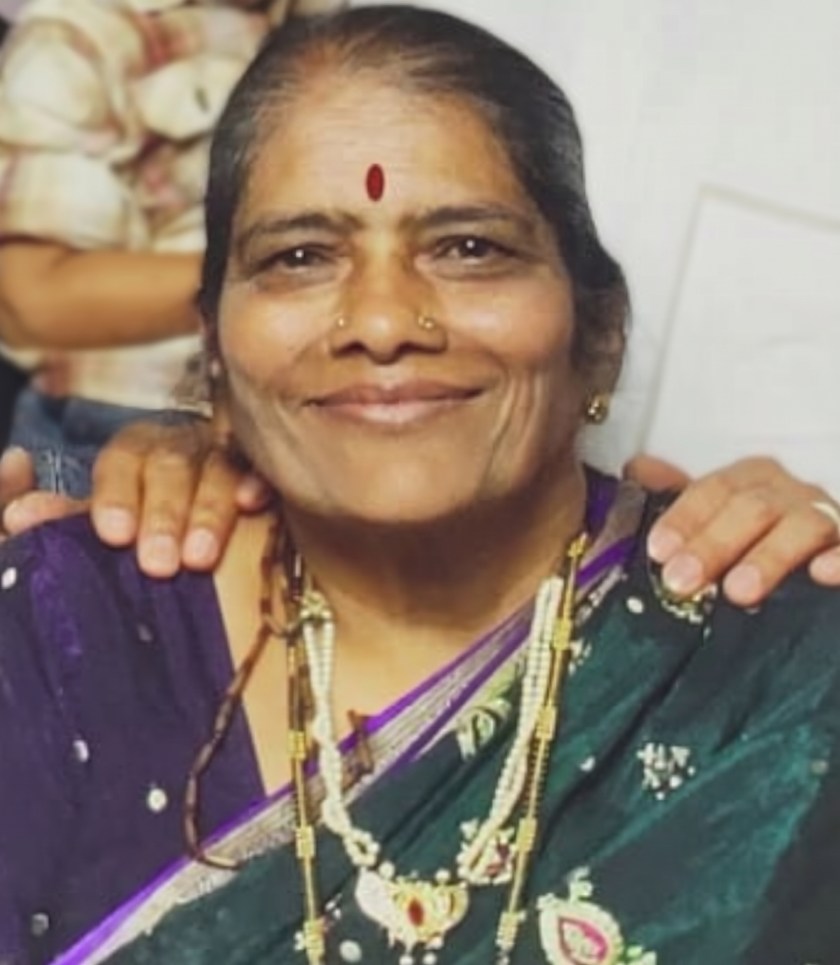
While her body was confined to a hospital bed, her mind and heart were alert. She regularly received Krishna Prasadam, sacred water from 1,008 holy tirthas, and dust from Sri Vrindavan, with the Holy Name serving as her constant companion. Like Maharaja Parikshit in the Srimad-Bhagavatam (1.19), who spent his final days immersed in hearing Krishna-katha, she eagerly asked for and listened to the pastimes of Sri Krishna, delighting in stories of Sri Khirchor Gopinath, the watch-wearing Gopinath of Jaipur, and Sakshi Gopal, and heard the Brahma Samhita recited by my father every single day. The timeless bhajans of Purandara Dasa were a deep source of solace for her; in her final days, Rama Nama Payasakke (The sweetness of the Lord’s Names), Kurudu Naayi Santega Bantante (A blind dog came to the market fair), and Yaaru Baruvaru Ninna Hinde (who will come with you on your final journey) echoed regularly by her side. There were daily readings from the Bhagavad Gita by my father too.
Both the Srimad-Bhagavatam and the Bhagavad-gita declare that this remembrance of the Lord at the threshold of death is the ultimate triumph of a human life:
etāvān sāṅkhya-yogābhyāṁ sva-dharma-pariniṣṭhayā
janma-lābhaḥ paraḥ puṁsām ante nārāyaṇa-smṛtiḥ
— Srimad-Bhagavatam 2.1.6
anta-kāle ca mām eva smaran muktvā kalevaram
yaḥ prayāti sa mad-bhāvaṁ yāti nāsty atra saṁśayaḥ
— Bhagavad-gita 8.5
Whether one pursues wisdom, yoga, or the faithful discharge of life’s duties, Sukadeva Goswami explains in Srimad-Bhagavatam 2.1.6 that the highest perfection is simply to remember Narayana at the end. And in Bhagavad-gita 8.5, Sri Krishna gives His personal assurance that whoever quits the body while remembering Him alone attains His transcendental nature without a trace of doubt. Witnessing how completely my mother’s consciousness remained fixed on the Lord’s names and pastimes up to the very end gives me immense hope, though of course, I was not there with her when she departed.
It is often said that one can never truly repay the debt owed to one’s parents and teachers, and I feel the weight and beauty of that truth deeply today. My mother gave me a healthy body, and more importantly, she planted the very first seeds of Krishna Consciousness in my heart, narrating pastimes of Sri Krishna to us when we were still babies. Throughout my life, she offered me unconditional love and acceptance. She never asked for much; simply seeing my face on a video call and hearing my voice was enough to bring her joy. She took immense pride in the spiritual path I chose, fondly and proudly speaking of me to others as “Bhagavat Das.”
Alongside that unconditional acceptance, she was fiercely protective of me, not just when I was a child, quietly shielding me from all the little snafus of growing up, but even long after I became a grown man. Even when I made big mistakes, she never piled on; she always stood firmly in my corner and encouraged me to learn from the mistakes and keep moving forward. Everyone should have someone like that in their lives, because God knows there is already far too much criticism in the world as it is.
Her devotion was also woven into the quiet rhythm of her daily spiritual practices. Year after year, she rose early each morning, taking a bath, lighting the lamps, meditating on Sri Krishna as she drew a free-hand Rangoli design at the start of every day. Her mornings were anchored in saying her mantras, singing her bhajans, and reading the sacred Hari Kathamrita Saara in Kannada.
Beyond formal scripture, she also imparted everyday wisdom about the fleeting, temporary nature of everything in this material world. Whenever we playfully teased her for moving slowly as she grew older, she would offer a gentle reminder: “They say the green leaf laughed at the yellow leaf.” It was her simple, disarming way of expressing what Lord Krishna teaches in the Bhagavad-gita (2.13), that every embodied soul inevitably passes from youth to old age (kaumāraṁ yauvanaṁ jarā), and no living leaf stays green forever. Similarly, whenever we were fussy or complained about her cooking, she would smile and say, “Hunger is the best spice,” steering us away from indulgence and toward gratitude, simplicity, and contentment.
Like all of us, she was a frail human, with her own quirks and imperfections, things that naturally dissolve into the sands of time. Even the people who had experienced some friction with her in the past rallied around to serve and support her. Looking back, do I have regrets? Yes. I wish I had been more patient and attentive to her in my younger years. Caught up in the restlessness of being a teenager, and later a hot-headed young man busy jet-setting around the world, I didn’t always make her the priority she deserved to be. In fact, I distinctly remember being very nasty towards her, on many occasions. Yet even through all of it, she remained one of my greatest teachers, showing me through her life both how to be and how not to be.
Still, she gave me the greatest gift of healing before she left. When I asked for her forgiveness for all the wrong I had ever done to her, every past offense, every moment of harshness or neglect, her face lit up with a huge, radiant smile. Without a trace of hesitation, she told me that I had done her no wrong, no offense, no harshness, nothing at all, and that I had always been very nice to her. In that single moment, embodying the pure, forgiveness (kṣamā) that the scriptures glorify as a hallmark of a saintly heart, or the boundless love of a mother, she forgave me for decades of my offenses.
Over her last several years, I watched her mobility and her physical world gradually grow smaller, yet her good fortune was a constant. In fact, throughout her entire life, she was remarkably fortunate and lucky in every respect. If there was something lucky that could happen to anyone, it happened to her, and she always seemed to get the best of everything. My mother was always eager to go on pilgrimage. In 2019, I was blessed to take her on her final pilgrimage to Srirangam, Tirupati, and other sacred sites. In 2022, she beamed with pure joy at my son’s Upanayanam ceremony and during that time she visited the Sri Ananta Padmanabha Swami temple in Anantagiri, Vikarabad. Then, in 2023, I was able to take her one last time for the darshan of Sri Radha Madan Mohan in Hyderabad, established by Srila Prabhupada. EThat last outing took well over seven hours, and she was in a lot of physical discomfort. With her characteristic love for me, she gave me all the credit for taking her on pilgrimage, completely overlooking that it was her early gift of Krishna Consciousness that planted the desire in me to go on pilgrimage in the first place, let alone bring my parents along. After that, her world steadily narrowed, first she was confined to home, then to her floor, and finally to her room, until the point came when we could no longer care for her at home, leading to those final five months in the hospital.
In her final chapter, I did everything within my capacity to serve her, bolstered by the prayers of thousands of Vaishnavas around the world. Though she was no easy patient to deal with, her simplicity touched everyone around her, even the paid staff at the hospital, her last caregivers, shed tears for her. Her final rites were performed meticulously, down to the smallest detail, in accordance with our ancient Madhva Vaishnava Brahmin traditions, which was her preference. I also feel profound gratitude for my father, who stood as a living example of unwavering commitment, selfless service, and loving concern throughout their marriage of more than 54 years, until death finally parted them.
Even after her departure, she gifted me one final, unforgettable realization. As I rummaged through the ashes of her funeral pyre, still hot, gathering the remnants of her bones to immerse in the sacred Godavari river, a profound clarity washed over me: this hot pile of ashes and bone was not my mother. In the quiet drive holding the pot that contained her remnants, hot at first, then warm, my mother was not inside that pot. I remember thinking “this is not my mother, not my mother”. The soul who had so lovingly served as my mother in this life was no longer there, she had already left well before the fire consumed her body. I carefully collected those mortal remains and offered them to the holy waters with sacred chants, knowing with complete certainty that her true self, the eternal atma which Lord Krishna declares in the Bhagavad-gita (2.20) is never born and never dies, and is untouched even when the body is reduced to ashes (na hanyate hanyamāne śarīre) had already moved onward.
Even though no son or daughter can ever materially repay the gift of life and devotion a mother gives, the Srimad-Bhagavatam (11.5.41) offers this solace:
devarṣi-bhūtāpta-nṛṇāṁ pitṝṇāṁ na kiṅkaro nāyam ṛṇī ca rājan
sarvātmanā yaḥ śaraṇaṁ śaraṇyaṁ gato mukundaṁ parihṛtya kartam
— Srimad-Bhagavatam 11.5.41
Here, Karabhajana Muni explains that while every human being enters the world indebted to the demigods, sages, society, and especially one’s parents and forefathers (pitṛ-ṛṇa), a soul who takes wholehearted shelter at the lotus feet of Mukunda fulfills every sacred obligation and brings spiritual elevation to their entire family line.
Honestly, I do not yet fit the description given there “sarvātmanā yaḥ śaraṇaṁ śaraṇyaṁ gato mukundaṁ parihṛtya kartam“, but that is my aspiration, and by all the blessings of my spiritual masters, including my mother and father, I will get there one day.
This body I have belongs to my mother. I must use it well. My prayer now is that the way I live my life, and my continued dedication to the service of the Lord, will serve as a worthy tribute to her, and that by Sri Krishna’s boundless grace, she continues her journey ever closer to His lotus feet.
Hare Krishna Hare Krishna
Krishna Krishna Hare Hare
Hare Rama Hare Rama
Rama Rama Hare Hare
Please pray for her continued welfare. Thank you. Hare Krishna.
Discover more from Freedom through Genuine Spiritual Progress
Subscribe to get the latest posts sent to your email.


