

I get this question a lot… Bhakti means loving devotional service to Krishna, the Supreme Personality of Godhead. Bhakti means Individual, Spontaneous, Loving Devotional Service… So why all the rules?
Some people say “I love spirituality, but I hate organized religion”. And I get their sentiment. They want to love God and serve God. However, they hate the bureaucracy, the politics, and the behind-the-scenes ugliness that may lurk inside religious organizations.
Spiritual life is supposed to be free, and yet the rules!
There are so many rules. There is the chanting of sixteen rounds of the Hare Krishna Maha Mantra every day – 1728 Mantras minimum. Here’s the mantra.
Hare Krishna Hare Krishna
Krishna Krishna Hare Hare
Hare Rama Hare Rama
Rama Rama Hare Hare
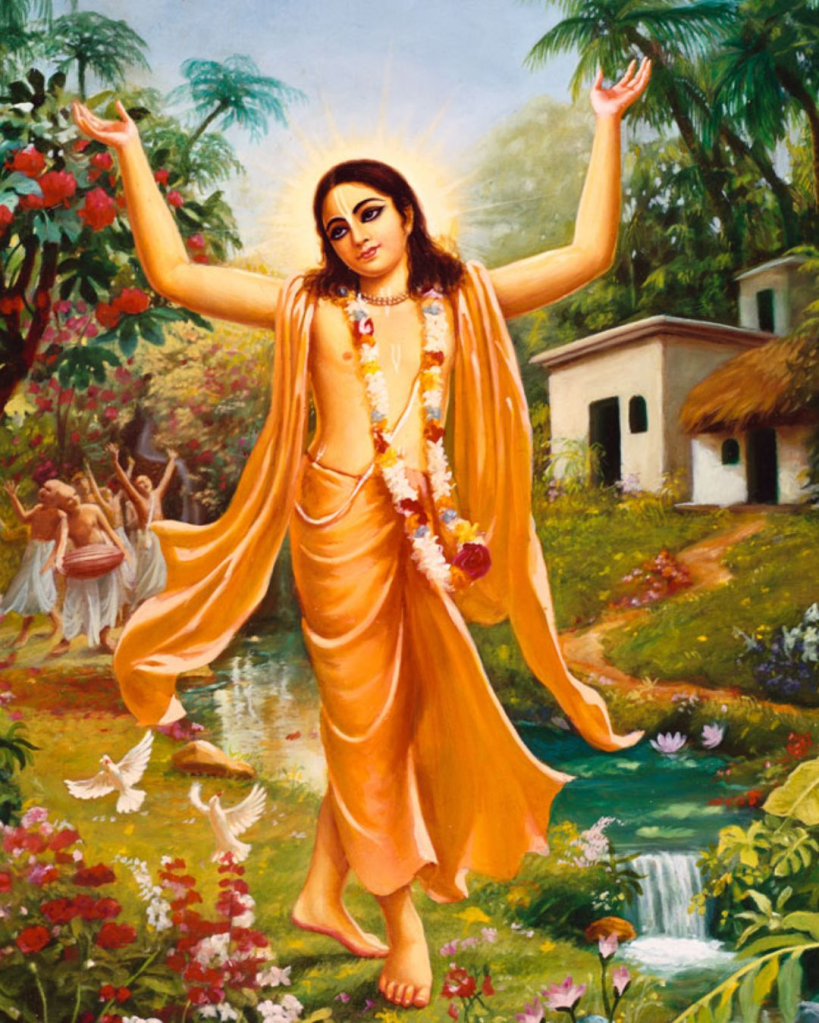
Sri Krishna Chaitanya Mahaprabhu even says that there are no rules…
CC Antya 20.16
নাম্নামকারি বহুধা নিজসর্বশক্তি- স্তত্রার্পিতা নিয়মিতঃ স্মরণে ন কালঃ ।
এতাদৃশী তব কৃপা ভগবন্মমাপি দুর্দৈবমীদৃশমিহাজনি নানুরাগঃ ॥ ১৬ ॥nāmnām akāri bahudhā nija-sarva-śaktis
tatrārpitā niyamitaḥ smaraṇe na kālaḥ
etādṛśī tava kṛpā bhagavan mamāpi
durdaivam īdṛśam ihājani nānurāgaḥSynonyms“ ‘My Lord, O Supreme Personality of Godhead, in Your holy name there is all good fortune for the living entity, and therefore You have many names, such as “Kṛṣṇa” and “Govinda,” by which You expand Yourself. You have invested all Your potencies in those names, and there are no hard and fast rules for remembering them. My dear Lord, although You bestow such mercy upon the fallen, conditioned souls by liberally teaching Your holy names, I am so unfortunate that I commit offenses while chanting the holy name, and therefore I do not achieve attachment for chanting.’
It’s clear, Mahaprabhu says “there are no hard and fast rules“. Yet in the same verse, Sri Krishna Chaitanya Mahaprabhu also mentions “offenses” to be avoided. What are those?
When we chant Hare Krishna or any other authorized names of God, we should strive to avoid all offenses. There are 10 specific offenses to be mindful of.
1) To blaspheme the devotees who have dedicated their lives for propagating the holy name of the Lord.
2) To consider the names of demigods like Lord Shiva or Lord Brahma to be equal to or independent of the name of the Lord Vishnu.
3) To disobey the orders of the spiritual master.
4) To blaspheme the vedic scriptures or scriptures in pursuance to the vedic version.
5) To consider the glories of chanting Hare Krishna to be an imagination.
6) To give some interpretations to the holy name of the Lord.
7) To commit sinful activities on the strength of the holy name.
8) To consider the chanting of Hare Krishna as one of the auspicious ritualistic activities which are offered in the Vedas as frutive activities (Karma kanda).
9) To instruct a faithless person about the glories of the holy name
10) To not have complete faith in the chanting of the holy name and to maintain material attachments, even after understanding so many instructions on this matter. It is also an offense to be inattentive while chanting.
Every devotee who claims to be Vaishnava must guard against these offenses in order to quickly achieve the desired success KRISHNA PREMA!!!Padma Purana (Section: Brahma Khanda 25.15–18)
There are so many rules and regulations! This applies whether it is with cooking for Krishna, or worship of Krishna in Deity form. This applies to fasting, or ending one’s fast. This applies to reading or explaining scripture. In every aspect of Bhakti there are rules.
There are rules and regulations in the other religious traditions also. There is hardly a tradition without rules and regulations. And without rules and regulations, what is tradition anyways?
But the highest spiritual principle is pure love of God, so why all the rules?
After all, there are no rules and regulations in love, no?
But here’s the catch… We presently do not have any love for God!
We have only a blind, slavish servitude of our senses and mind!
The rules are meant for those who are not yet pure lovers of God. For the pure Lover of God, there are no rules.
Still, why any rules on the path of love of God?
Think of this situation…
Let us say you are responsible for caring for someone. Let’s say, a dear parent, or grandparent, a child, or even a pet…
Now, let’s say you need to entrust that loved one to me, a stranger. Let us say I can be trusted to be reliable with my care, but I don’t know your loved one. I don’t know what they need.

How many rules and regulations will you give me? How many guidelines? How much advice?
She doesn’t like this food… He is allergic to that medicine. She sleeps at this time. He gets agitated when someone does that! She loves it when you serve this food with that condiment… Here is the clothing. Here is the extra blanket. Here is the toy. Wake him up for his appointment. Take him to this place. Don’t leave her alone… Here is the medicine, and this is the right dosage, by the way. Here is this, and don’t forget that. Here is my phone number, call me if you need anything. Please be careful. Thank you soooo much!
Then, when I am alone with your loved one, will you call? Will you check up on how they are doing?
That is the intent of the rules and regulations in Bhakti also.
The rules are regulations are given to us by someone who loves God very very much. The spiritual master, who gives us the rules, is a confidential servitor of God, and knows God better than us. The saintly souls hand us the rules, for our own growth.
So, out of their love for us, and for God, they give us the rules.
The rules and regulations are simply a manifestation of the saints’ love for Krishna. When we adhere to them precisely, we can reach the same stage of love. Of course, we can’t remain only on the platform of rules and regulations. By the blessings of the spiritual master, we can develop the same individual, spontaneous, loving attraction to Krishna. We can exceed the standard of the minimum rules by their grace.
So, who will be so foolish as to not pay attention to the rules and regulations of the scripture?
Bg. 16.23
य: शास्त्रविधिमुत्सृज्य वर्तते कामकारत: ।
न स सिद्धिमवाप्नोति न सुखं न परां गतिम् ॥ २३ ॥yaḥ śāstra-vidhim utsṛjya vartate kāma-kārataḥ
na sa siddhim avāpnoti na sukhaṁ na parāṁ gatimHe who discards scriptural injunctions and acts according to his own whims attains neither perfection, nor happiness, nor the supreme destination.
https://vedabase.io/en/library/bg/16/23/
Bg. 16.24
तस्माच्छास्त्रं प्रमाणं ते कार्याकार्यव्यवस्थितौ ।
ज्ञात्वा शास्त्रविधानोक्तं कर्म कर्तुमिहार्हसि ॥ २४ ॥tasmāc chāstraṁ pramāṇaṁ te
kāryākārya-vyavasthitau
jñātvā śāstra-vidhānoktaṁ
karma kartum ihārhasiOne should therefore understand what is duty and what is not duty by the regulations of the scriptures. Knowing such rules and regulations, one should act so that he may gradually be elevated.
What do you think about rules and regulations in spiritual life? Let me know!
 Freedom through Genuine Spiritual Progress