Understanding Vaishnava Compassion: Lessons from Great Saints (part 3)

This article explores the profound concept of Vaishnava Compassion through the examples of Jesus Christ, Vasudeva Datta, Ramanuja Acharya, and Srila Prabhupada. Each figure exemplifies immense compassion, willing to suffer for the sake of others. Their teachings inspire us to embody such selflessness and understanding in our own lives.

In the earlier two parts of this series of articles, we examined

In this part, we will look at 4 examples of Vaishnava Compassion.

1. Jesus Christ – a topmost Vaishnava

Jesus Christ - a Topmost Vaishnava Saint

This, some readers find surprising. Indeed, when I spoke on this topic, many in the audience came to chat with me about this.

Some people argue, and entire churches have been created on the premise that Jesus Christ is God Himself. But Jesus himself claimed that he was son of God. And of course, we know that God, being unlimited, has no shortage of sons or daughters or prophets.

And Jesus answered and said unto him, Blessed art thou, Simon: for flesh and blood hath not revealed it unto thee, but my Father who is in heaven.” Mathew 16.17

God is perfect in every respect. God is full of all opulence. The compassion of Jesus is even more adorable because he is a son of God and not God Himself.

Jesus Christ appeared in a most desolate place, the dry and foreboding desert, at a time of great turmoil, the decay of the Roman empire, amidst the most wretched of all people, and tried to help them understand God consciousness. But the people of that day and age were so fallen that they tried to crucify their savior. Still, what Jesus has taught continues to resonate with so many souls, even though most misunderstand his teachings.

We adore Lord Jesus Christ is a Vaishnava Acharya. Why do I say that?

I will leave you with some quotes of Srila A. C. Bhaktivedanta Swami Prabhupada…

The Śrīmad-Bhāgavatam states that any bona fide preacher of God consciousness must have the qualities of titikṣā (tolerance) and karuṇā (compassion). In the character of Lord Jesus Christ we find both these qualities. He was so tolerant that even while he was being crucified, he didn’t condemn anyone. And he was so compassionate that he prayed to God to forgive the very persons who were trying to kill him. (Of course, they could not actually kill him. But they were thinking that he could be killed, so they were committing a great offense.) As Christ was being crucified he prayed, “Father, forgive them. They know not what they are doing.”

…Of course, the message that Christ preached was just according to his particular time, place, and country, and just suited for a particular group of people. But certainly he is the representative of God. Therefore we adore Lord Jesus Christ and offer our obeisances to him.

Once, in Melbourne, a group of Christian ministers came to visit me. They asked, “What is your idea of Jesus Christ?” I told them, “He is our guru. He is preaching God consciousness, so he is our spiritual master.” The ministers very much appreciated that.

Actually, anyone who is preaching God’s glories must be accepted as a guru. Jesus Christ is one such great personality. We should not think of him as an ordinary human being. The scriptures say that anyone who considers the spiritual master to be an ordinary man has a hellish mentality. If Jesus Christ were an ordinary man, then he could not have delivered God consciousness. (Science of Self Realization, Chapter 4, “Understanding Krsna and Christ)

A. C. Bhaktivedanta Swami Prabhupada

2. Vasudeva Datta – relatively unknown, but even greater compassion

Lord Chaitanya with His Associates, including Vasudeva Datta

It is tempting to think that Lord Jesus Christ is one of a kind. Such mercy as shown by Jesus Christ is practically unparalleled. But such personalities have been repeatedly sent by God all over the world. Before Jesus, after Jesus, and such personalities continue to walk the earth with us even today. Most of us do not have the eyes to see such great personalities for who they are. But thanks to revealed scripture, we know of many such personalities.

One great example is Vasudeva Datta, an eternal associate of Sri Chaitanya Mahaprabhu. Lord Chaitanya is Krishna Himself, God in the form of His own pure devotee.

Jesus Christ takes the sins of anyone who believes in Him or surrenders to him. But Vasudeva Datta wanted to indiscriminately take on the sinful reactions of all the living entities in this Universe!

I will quote an interaction from the Chaitanya Charitamrita…

Śrī Caitanya Mahāprabhu then embraced Vāsudeva Datta and began to speak of his glories as if He had a thousand mouths.

When Caitanya Mahāprabhu glorified him, Vāsudeva Datta immediately became very much embarrassed and shy. He then submitted himself, touching the Lord’s lotus feet.

Vāsudeva Datta told Caitanya Mahāprabhu, “My dear Lord, You incarnate just to deliver all conditioned souls. I now have one petition, which I wish You would accept.

“My Lord, You are certainly able to do whatever You like, and You are indeed merciful. If You so desire, You can very easily do whatever You want.

“My Lord, my heart breaks to see the sufferings of all the conditioned souls; therefore I request You to transfer the karma of their sinful lives upon my head.

“My dear Lord, let me suffer perpetually in a hellish condition, accepting all the sinful reactions of all living entities. Please finish their diseased material life.”

When Śrī Caitanya Mahāprabhu heard Vāsudeva Datta’s statement, His heart became very soft. Tears flowed from His eyes, and He began to tremble. In a faltering voice He spoke as follows.

Accepting Vāsudeva Datta as a great devotee, the Lord said, “Such a statement is not at all astonishing because you are the incarnation of Prahlāda Mahārāja. It appears that Lord Kṛṣṇa has bestowed complete mercy upon you. There is no doubt about it.

“Whatever a pure devotee wants from his master, Lord Kṛṣṇa doubtlessly grants because He has no duty other than to fulfill the desire of His devotee.

“If you desire the deliverance of all living entities within the universe, then all of them can be delivered even without your undergoing the tribulations of sinful activity.
Text 168: “Kṛṣṇa is not incapable, for He has all potencies. Why would He induce you to suffer the sinful reactions of other living entities?

“Whosever welfare you desire immediately becomes a Vaiṣṇava, and Kṛṣṇa delivers all Vaiṣṇavas from the reactions of their past sinful activities.

“ ‘Let me offer my respectful obeisances unto the original Personality of Godhead, Govinda, who regulates the sufferings and enjoyments due to fruitive activity. He does this for everyone — from the heavenly King Indra down to the smallest insect [indra-gopa]. That very Personality of Godhead destroys the karmic reactions of one engaged in devotional service.’

“Because of your honest desire, all living entities within the universe will be delivered, for Kṛṣṇa does not have to do anything to deliver all the living entities of the universe.

“Just as there are millions of fruits on the uḍumbara tree, millions of universes float on the waters of the river Virajā.

“The uḍumbara tree is filled with millions of fruits, and if one falls down and is destroyed, the tree does not even consider the loss.

“In the same way, if one universe is vacated due to the living entities’ having been liberated, that is a very little thing for Kṛṣṇa. He does not take it very seriously.

“The entire spiritual world constitutes the unlimited opulence of Kṛṣṇa, and there are innumerable Vaikuṇṭha planets there. The Causal Ocean is considered the surrounding waters of Vaikuṇṭhaloka.
Text 176: “Māyā and her unlimited material universes are situated in that Causal Ocean. Indeed, māyā appears to be floating like a pot filled with mustard seeds.

“Of the millions of mustard seeds floating in that pot, if one seed is lost, the loss is not at all significant. Similarly, if one universe is lost, it is not significant to Lord Kṛṣṇa.

“To say nothing of one universal mustard seed, even if all the universes and the material energy [māyā] are destroyed, Kṛṣṇa does not even consider the loss.


“If a person possessing millions of wish-fulfilling cows loses one she-goat, he does not consider the loss. Kṛṣṇa owns all six opulences in full. If the entire material energy is destroyed, what does He lose?”

 Śrī Caitanya Mahāprabhu continued, “ ‘O my Lord, O unconquerable one, O master of all potencies, please exhibit Your internal potency to conquer the nescience of all moving and inert living entities. Due to nescience, they accept all kinds of faulty things, thus provoking a fearful situation. O Lord, please show Your glories! You can do this very easily, for Your internal potency is beyond the external potency, and You are the reservoir of all opulence. You are also the demonstrator of the material potency. You are also always engaged in Your pastimes in the spiritual world, where You exhibit Your reserved, internal potency, and sometimes You exhibit the external potency by glancing over it. Thus You manifest Your pastimes. The Vedas confirm Your two potencies and accept both types of pastimes due to them.’ ”

CC Madhya 158-180 https://vedabase.io/en/library/cc/madhya/15/

3. Ramanuja Acharya – compassion greater than all
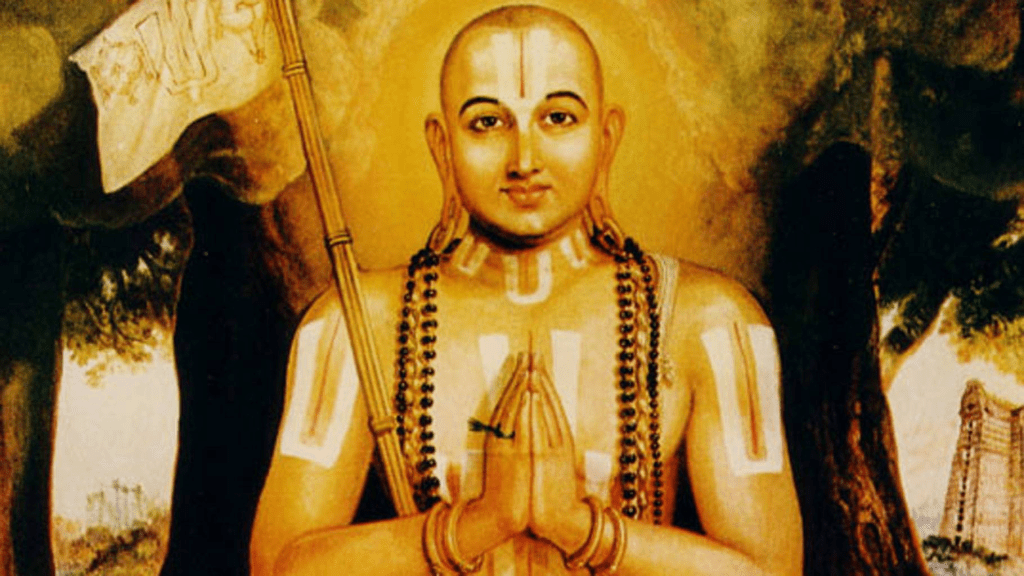
Ramanuja Acharya, the saint of boundless compassion

In both of the above cases, the compassion of Jesus and Vasudeva Datta was certainly great.

But the great Vaishnava Acharya Sri Ramanuja exhibited even greater compassion. He showed the way by which anyone can be freed from the effects of bondage due to sinful reactions.

Among many instances of Ramanuja’s vast compassion, here is just one.

Ramanuja was advised to get education from a highly respected teacher of the times, Goshtipurna, based in Tirukostiyur. Ramanuja was then based in Srirangam. Over 100 kms away. When Ramanuja approached him after his 100+km walk, Goshtipurna asked Ramanuja to come back another day. Ramanuja was disappointed but went back and came another day, walking all the way. This happened once, twice, a total of 18 times! This was just to test the earnestness of the aspiring disciple, Ramanuja. However, Ramanuja rose to the expectations and Goshtipurna gave him the mantra at last.

Just imagine, Ramanuja walked well over 3600 kms to get the mantra!

When the great teacher imparted the well-known mantra, he commanded Ramanuja to keep it an absolute secret. The reason was that those who heard it would be liberated. But if imparted to unworthy persons, Ramanuja would go to hell. Ramanuja considered this for some time. He then hastened to a nearby temple, quickly climbed to the top of its tower. Ramanuja then called out to the people to assemble there and loudly imparted the mantra to everyone.

When Goshtipurna got the news, he was furious. He called for his errant disciple right away. Ramanuja humbly expressed his willingness to go to eternal hell. He said he would reside in hell with great joy. Since so many others people who, otherwise might not progress to liberation would now surely get it, he was happy. Goshtipurna realized the magnanimity of Ramanuja and fell at his feet, giving him the title “Emperumanar” – He who is the most compassionate.

And what was the mantra?

“Om Namo Narayanaya” / ॐ नमो नारायणाय / ஓம் நமோ நாராயணாய

Ramanuja Acharya and his followers have popularized the mantra all over!

4. Srila Prabhupada – a modern example of Vaishnava Compassion
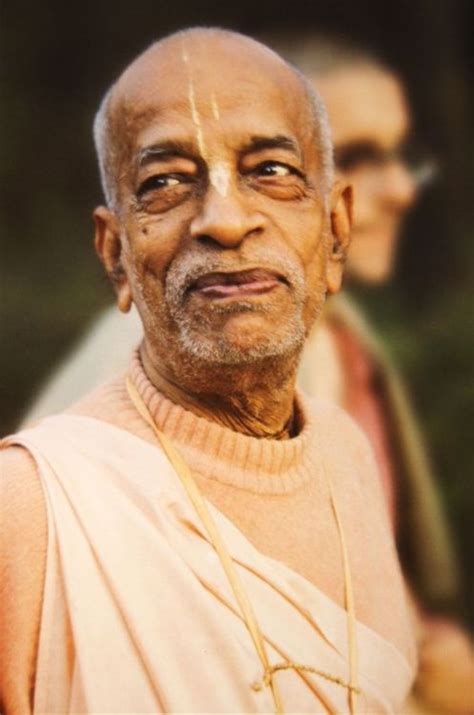
Srila Prabhupada

The glories of Srila Prabhupada are limitless! He appeared in this world 1896, and re-entered the spiritual realm in 1977.

Hundreds and Thousands of souls have written about this great modern-day saint. Writings about Srila Prabhupada will continue at least for the next 10,000 years.

Here is one little pastime that illustrates Srila Prabhupada’s most perfect example of Vaishnava Compassion.

When Srila Prabhupada was winding up his pastimes on our planet, he was apparently very ill.

One doctor, a very learned traditional healer, came to see Srila Prabhupada. He had an urgent, important piece of information that could prolong Srila Prabhupada’s life!

He said that when an Acharya allows a deity of himself to be worshipped while he is still in a living body, when people offer obeisances to that deity and touch the feet of the deity, the karmic reactions of the worshiper enter the living body of the Acharya.

In other words, Srila Prabhupada was accepting the sinful reactions of thousands upon thousands of people every day.

The doctor made an urgent request – he said, remove that deity, let people not worship you in deity form, and you will be immediately healed, cured from your ailment.

Srila Prabhupada refused. He softly muttered “do you not know why I have come?”

Srila Prabhupada came to take away our sufferings, and was willing to suffer, exactly in the mood of Jesus Christ, of Vasudeva Datta, of Ramanuja Acharya.

Such compassion is rare indeed, in our world.

We cannot imitate it, but we can certainly try to follow in their footsteps.

तप्यन्ते लोकतापेन साधव: प्रायशो जना: ।
परमाराधनं तद्धि पुरुषस्याखिलात्मन: ॥ ४४ ॥
tapyante loka-tāpena
sādhavaḥ prāyaśo janāḥ
paramārādhanaṁ tad dhi
puruṣasyākhilātmanaḥ

It is said that great personalities almost always accept voluntary suffering because of the suffering of people in general. This is considered the highest method of worshiping the Supreme Personality of Godhead, who is present in everyone’s heart.
https://vedabase.io/en/library/sb/8/7/44/

Is Srila Prabhupada insulting Lord Shiva?

Srila Prabhupada, a great teacher, wrote prolifically. Even though his works are lucid and clear, there are many misunderstandings about his writings. One is that he insulted Lord Shiva. Is this true?

Question:

A devotee who has been with ISKCON for 7 years has asked this question… he says he does not agree with Srila Prabhupada’s purport to BG 2.62.

Lord Śiva was deep in meditation, but when Pārvatī agitated him for sense pleasure, he agreed to the proposal, and as a result Kārtikeya was born.

https://vedabase.io/en/library/bg/2/62/

He says that this is not the real story also he doesn’t agree that Lord Shiva can be agitated.

Lord Shiva, Parvati Devi, and their children Kartikeya and Ganesha

Answer:

Thank you for writing to me about this. It is an important thing.

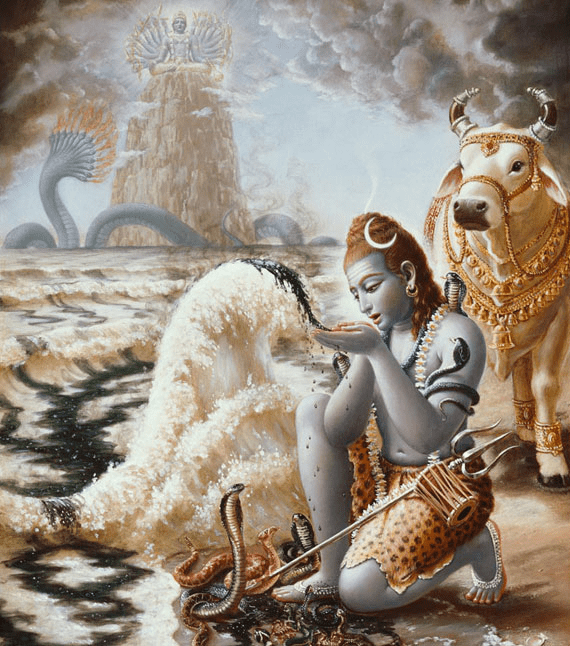
First and foremost we have to understand who is Srila Prabhupada. Srila Prabhupada is a pure devotee. As a pure devotee, Srila Prabhupada has no envy in his heart. Srila Prabhupada has no desire to criticize someone unnecessarily. He also has no tendency to try and pull someone down. In fact, Srila Prabhupada is on the Uttama Adhikari platform. As an Uttama Adhikari, he feels that everyone else is serving Krishna except himself. But Srila Prabhupada came down to the Madhyama Adhikari platform. On this platform, he suppressed his ecstatic emotions and took the role of a teacher of Krishna Consciousness. Thus he preached to us poor lost souls in the material world. Srila Prabhupada undertook an austerity for us. Just like Lord Shiva drank up the ocean of poison, Srila Prabhupada tolerated the poisonous nature of this material world. His sacrifice saves us all.

Great personalities accept voluntary suffering for the benefit of others

“tapyante loka taapena”, this is a verse from the Bhagavatam glorifying personalities like Lord Shiva and Srila Prabhupada.

तप्यन्ते लोकतापेन साधव: प्रायशो जना: ।
परमाराधनं तद्धि पुरुषस्याखिलात्मन: ॥ ४४ ॥

tapyante loka-tāpena
sādhavaḥ prāyaśo janāḥ
paramārādhanaṁ tad dhi
puruṣasyākhilātmanaḥ

It is said that great personalities almost always accept voluntary suffering because of the suffering of people in general. This is considered the highest method of worshiping the Supreme Personality of Godhead, who is present in everyone’s heart.
https://vedabase.io/en/library/sb/8/7/44/

Lord Shiva drinks up an ocean of deadly poison and keeps it suspended in his throat

On the Madhyama Adhikari platform…

A devotee behaves differently with different kinds of personalities. A Madhyama Adhikari is a teacher/preacher… and his mission is to guide souls to spiritual perfection.

  1. To Supreme Personality of Godhead or His plenary expansions, he offers prayers
  2. To the devotees of Krishna, he makes friendship
  3. To the innocent, he preaches Krishna Consciousness
  4. Those envious of Krishna, he avoids

ईश्वरे तदधीनेषु बालिशेषु द्विषत्सु च ।
प्रेममैत्रीकृपोपेक्षा य: करोति स मध्यम: ॥ ४६ ॥

īśvare tad-adhīneṣu
bāliśeṣu dviṣatsu ca
prema-maitrī-kṛpopekṣā
yaḥ karoti sa madhyamaḥ

An intermediate or second-class devotee, called madhyama-adhikārī, offers his love to the Supreme Personality of Godhead, is a sincere friend to all the devotees of the Lord, shows mercy to ignorant people who are innocent and disregards those who are envious of the Supreme Personality of Godhead.

https://vedabase.io/en/library/sb/11/2/46/

Srila Prabhupada, the great Vaishnava Acharya

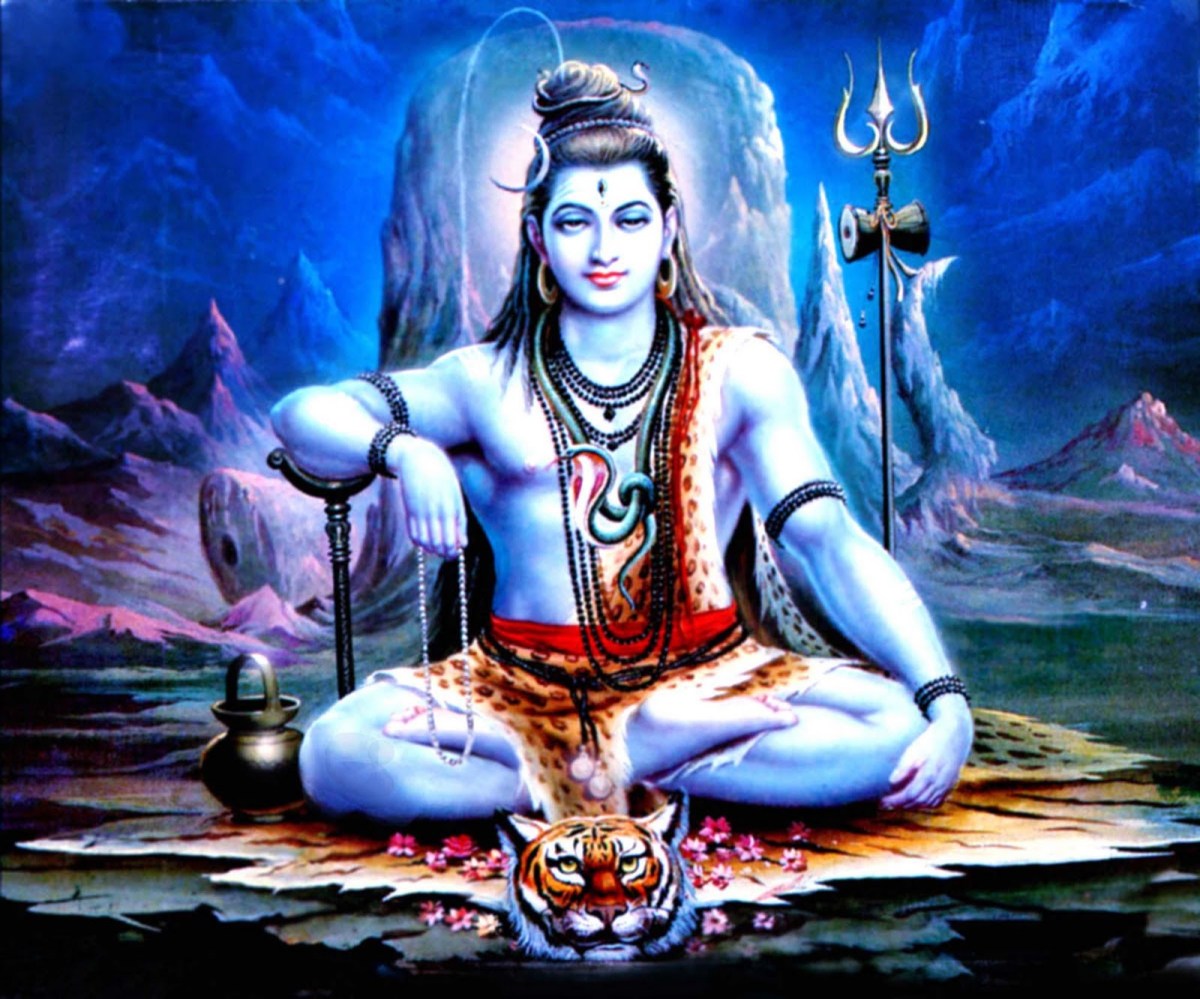
Now, let us examine who is Lord Shiva.

Lord Shiva is the Topmost Vaishnava, “vaishnavaanaam yathaa shambhu” as stated in the Bhagavatam.

निम्नगानां यथा गङ्गा देवानामच्युतो यथा ।
वैष्णवानां यथा शम्भु: पुराणानामिदं तथा ॥ १६ ॥

nimna-gānāṁ yathā gaṅgā
devānām acyuto yathā
vaiṣṇavānāṁ yathā śambhuḥ
purāṇānām idam tathā

Just as the Gaṅgā is the greatest of all rivers, Lord Acyuta the supreme among deities and Lord Śambhu [Śiva] the greatest of Vaiṣṇavas, so Śrīmad-Bhāgavatam is the greatest of all Purāṇas.

https://vedabase.io/en/library/sb/12/13/16/

In the Brahma Samhita (kshiram yatha dadhi vikaaram) it is stated that Lord Vishnu transforms as Lord Shiva when Lord Vishnu is “in touch” with material energy. This is just like how milk turns to curds when touched with tamarind. In other words, Lord Vishnu and Lord Shiva have no difference of opinion. Krishna desires everyone to be His pure devotee. Similarly, Lord Shiva desires everyone to be Krishna’s pure devotee.

क्षीरं यथा दधि विकारविशेषयोगात्
सञ्जायते न हि ततः पृथगस्ति हेतोः ।
यः शम्भुतामपि तथा समुपैति कार्या-
-द्गोविन्दमादिपुरुषं तमहं भजामि ॥ ४५ ॥

kṣīraṁ yathā dadhi vikāra-viśeṣa-yogāt
sañjāyate na hi tataḥ pṛthag asti hetoḥ
yaḥ śambhutām api tathā samupaiti kāryād
govindam ādi-puruṣaṁ tam ahaṁ bhajāmi

Just as milk is transformed into curd by the action of acids, but yet the effect curd is neither same as, nor different from, its cause, viz., milk, so I adore the primeval Lord Govinda of whom the state of Śambhu is a transformation for the performance of the work of destruction.

https://vedabase.io/en/library/bs/5/45/

In fact, without the mercy of Lord Shiva, no one can become a Vaishnava. Lord Shiva and Parvati Devi are regarded as the father and mother of the material world. As you know, father and mother are the first teachers of every child.

As such, Lord Shiva is beyond all criticism. And as Lord Shiva is a pure devotee, Srila Prabhupada would never criticize Lord Shiva.

Srila Prabhupada is stating the fact.

Lord Kartikeya was born of Shiva and Parvati’s union. Lord Brahma, who is Lord Vishnu’s son is born directly from Himself without the help or assistance of Lakshmi Devi.

In the Valmiki Ramayana, Kartikeya is mentioned as the son of Rudra and Parvati. Agni and Ganga Devi aided in his birth. We accept Valmiki Muni as an utmost authority.

Valmiki, the author of the Original Ramayana

In the Mahabharata, Kartikeya is mentioned as the son of Shiva and Parvati. He emerged as a result of Lord Shiva’s sexual union with Parvati Devi. The details I will not mention here. Ganga Devi cultivated the seed of Lord Shiva. Agni Deva, the demigod in charge of fire, kept it warm.

Now, there is a third story, from the Shiva Purana… Lord Shiva was meditating. Parvati Devi was trying to attract him. Kamadeva tried to help but was burned to ashes by the wrath of Lord Shiva. Lord Shiva, being merciful, then paid attention to Parvati Devi. He married her, and Kartikeya was conceived.

There is additionally a Tamil version of the Skanda Purana in which another story is presented. I read that story in the Amar Chitra Katha comics as a child. Only later I learned where the story came from. The demigods prayed to Lord Shiva and pleased Him. As a result, Lord Shiva manifested 5 additional heads. From each head came one spark. Vayu Deva, the demigod in charge of the wind, carried these sparks and handed them to Agni Deva. Agni Deva then carried the sparks to Ganga Devi, who took them to Saravana lake. There, 6 boys were born. The 6 boys were merged into one by Krittika Devi. This marked the appearance of Kartikeya. He then defeated the demons Surapadma and Simhamukha. These demons surrendered to Kartikeya and became his assistant associates.

Valmiki Ramayana is the Absolute Truth. Mahabharata is also composed by Veda Vyasa. Therefore, we have 2 authoritative references to support Srila Prabhupada’s statement about Lord Shiva in BG 2.62.

Srila Prabhupada is a highly empowered Vaishnava Acharya who has presented Krishna Consciousness in the Brahma Madhva Gaudiya Sampradaya. Why should anyone accept an objection raised by an uncontrolled mind? Instead, whenever we hear the instruction of the Acharya, we should strive to understand how it is true. It’s not about whether it is true or not, but how it is true. This is called surrender. It may take time. It took me many years to surrender to my Guru Maharaja, but eventually I did. Whenever I had any doubts about Srila Prabhupada’s words, my spiritual masters helped me. They guided me with proper understanding to overcome that doubt.

To “disagree” with an Acharya, is simply immaturity.

Sometimes Acharyas disagree with each other. This is alright if they are of an equal stature. In that case, the rest of us must try to understand how they are right, all of them! Spiritual reality is truly wonderful. It is not one dimensional.

Puranic stories sometimes differ because they describe one kalpa (a day of Brahma) or another. On different days of Lord Brahma, there can be variations in some details.

Lord Shiva’s agitation by Parvati is not an insult to Lord Shiva.

Instead, it glorifies his great devotion to Sri Krishna. By personal example, Lord Shiva is showing how great Lord Krishna is. Lord Krishna remained without agitation even when surrounded by 3 Billion beautiful young gopis. The gopis were ready to do anything for Krishna. Krishna is an eternal Brahmachari, and the proof of this statement is Sri Bhishmadeva who has stated this personally!

Does this help?

Glossary – Personalities & Concepts mentioned in the article:

  • Acharya – A teacher in one of 4 authorized disciplic successions from God, who teaches by personal example
  • Agni Deva – The demigod in charge of fire
  • Bhagavatam – The topmost spiritual scripture, available online at https://vedabase.io/en/library/sb/
  • Bhishmadeva – Among the 12 greatest spiritual authorities of our universe, played a pivotal role in the Mahabharata, sometimes referred to as “grandsire” or “grandfather”
  • Brahma – The creator of this universe, son of Lord Vishnu
  • Brahma Samhita – The composition of Lord Brahma is a 100-chapter book. Only Chapter 5 is available. It can be found online at https://vedabase.io/en/library/bs
  • Deva – “Demigod”, also used as an honorific for divine personalities
  • Ganga – The most sacred river in our Universe, a liquid form of God
  • Gopis – The topmost saints, devotees of Krishna
  • Guru – Spiritual Master, also “heavy”
  • Kalpa – A day of Brahma, 4.32 Billion Years long
  • Kama – Literally “lust”, used to refer to the demigod in charge of love
  • Kartikeya – Son of Shiva and Parvati, the military commander of the demigods
  • Krishna – The Supreme Personality of Godhead, source of both spiritual and material realms, the One and Only appearing Himself in different forms and with different names
  • Krittika Devi – a demigoddess
  • Madhva Gaudiya Sampradaya – A current unbroken line of disciplic succession from God Himself, included below for reference
  • Madhyama Adhikari – defined above
  • Maharaja – King among men, used to refer to royalty and to renounced or exalted souls
  • Parvati – The consort of Lord Shiva, expanded as the material energy
  • Purana – Authorized history of the Universe, there are 18 such histories, 6 meant for those in the mode of goodness, 6 for those in the mode of passion, and 6 meant for those in the mode of passion
  • Ramayana – The pastimes of Lord Rama, the Personality of Godhead
  • Rudra – A son of Lord Brahma, born of his anger from his forehead
  • Simhamukha & Surapadma – Former demons who accepted the shelter of Kartikeya and became his assistants
  • Shiva – The auspicious one, also referred to as Rudra
  • Shiva Purana – The scripture describing the pastimes of Lord Shiva, meant for the benefit of those situated in the mode of ignorance
  • Sri – Opulence, refers to the Goddess of Fortune, or someone blessed with some extraordinary opulence
  • Uttama Adhikari – defined above
  • Valmiki – The author of the original Ramayana, disciple of Narada
  • Vayu Deva – The demigod in charge of the air and wind
  • Vishnu – An expansion of Krishna
  • Vyasa – The compiler of Vedic literature

The Brahma Madhva Gaudiya Sampradaya:

1. Kṛṣṇa
2. Brahmā
3. Nārada
4. Vyāsa
5. Madhva
6. Padmanābha
7. Nṛhari
8. Mādhava
9. Akṣobhya
10. Jaya Tīrtha
11. Jñānasindhu
12. Dayānidhi
13. Vidyānidhi
14. Rājendra
15. Jayadharma
16. Puruṣottama
17. Brahmaṇya Tīrtha
18. Vyāsa Tīrtha
19. Lakṣmīpati
20. Mādhavendra Purī
21. Īśvara Purī, (Nityānanda, Advaita)
22. Lord Caitanya
23. Rūpa, (Svarūpa, Sanātana)
24. Raghunātha, Jīva
25. Kṛṣṇadāsa
26. Narottama
27. Viśvanātha
28. (Baladeva), Jagannātha
29. Bhaktivinoda
30. Gaurakiśora
31. Bhaktisiddhānta Sarasvatī
32. A. C. Bhaktivedanta Swami Prabhupāda

The Author’s spiritual master, His Grace Sriman Sankarshan Das Adhikari, is a disciple of His Divine Grace A. C. Bhaktivedanta Swami Prabhupada.

A great saint – bull in his last lifetime

Once upon a time there was a bull. Then there was a warrior. And then there was a great saint. The bull became the warrior who became the saint when reminded of his legacy… how come? How does a bull become a saint?

Picture this…

A wealthy, handsome young man in full armour on horseback. A hot day in South Central India, where temperatures routinely exceed 40 Celsius or 104 Fahrenheit. They’re thirsty, parched, both the warrior and the horse.

Warrior on horseback was very thirsty, as was his horse

Dhondo Pant Raghunath, our dashing warrior, suddenly chances upon a river. It’s cool waters were irresistible on the searing hot day. So, the young man rides his horse straight into the cool refreshing waters of the river, and both horse and man eagerly quench their thirst.

A sage sitting on the bank remarks “kim pashuh purva dehe? / किं पशुः पूर्व देहे?” or “why, were you an animal in your previous body?”.

Hearing this question instantly brought back a flood of past life memories in our young Dhondo Pant.

तत्र तं बुद्धिसंयोगं लभते पौर्वदेहिकम् ।
यतते च ततो भूय: संसिद्धौ कुरुनन्दन ॥ ४३ ॥

tatra taṁ buddhi-saṁyogaṁ
labhate paurva-dehikam
yatate ca tato bhūyaḥ
saṁsiddhau kuru-nandana

On taking such a birth, he revives the divine consciousness of his previous life, and he again tries to make further progress in order to achieve complete success, O son of Kuru.

https://vedabase.io/en/library/bg/6/43/

In his former lifetime, Dhondo Pant had been a bull.

Yes, four-legged bovine with horns, used as a beast of burden. He was in the service of the great Ananda Tirtha, or Sripad Madhvacharya. The bull was engaged in carrying the manuscripts of various scriptural texts and commentaries.

Dhondo Pant, Raghunath had been a bull in his former life. No ordinary bull, but one engaged in the service of the great Madhvacharya!

Madhvacharya is famous for having written commentaries, “bhashya / भाष्य” on the various fundamental texts of Vedic literature. If you have come across the commentaries of Sripad Madhvacharya, you may have noticed that they are not very easy to understand, even for a well-educated reader. Many of his disciples therefore requested permission to write commentaries on the commentaries “teeka / टीका”… but Madhvacharya refused them all.

He said “This bull here shall write the commentaries on my works“.

Madhvacharya, the great teacher of Krishna Consciousness

And the great sage on the riverbank recognized the soul, he saw the soul who wore the body of a bull, now wearing the body of this rich young man. The sage was the great Akshobhya Tirtha, a spiritual descendent of Sripad Madhvacharya. Such is the mercy of the spiritual master, who appears at the right time, at the right place, to claim a soul on behalf of God.

I am fortunate to be initiated in the same line of discplic succession.

By the mercy of my eternal spiritual master His Grace Sriman Sankarshan Das Adhikari and his divine spiritual master His Divine Grace A. C Bhaktivedanta Swami Prabhupada. In a similar way, my spiritual master approached me through the Internet, and answered my questions patiently, writing over 600 replies, before I recognized him as my spiritual master. I offer my respectful obeisances to my spiritual master for helping me recognize who I am and be myself. However, I am still unworthy, to be honest.

In any case, our bull-turned-young man immediately decided…

To renounce his materialistic life in a rich family, and take Sannyasa, the monastic order of pure devotion to Sri Krishna. He was now known as Jayatirtha. His father, Raghunath Deshpande, like any rich father, tried his best to stop his son, but in the end had to acquiesce to the divine destiny that was unfolding before his eyes.

Sri Jayatirtha, the author of many great works in the Brahma Madhva tradition of Krishna Consciousness

Sri Jayateertha is famous as “Teekacharyaru / ಟೀಕಾಚಾರ್ಯರು”, or “The Master of the Commentaries. The word Acharya means one who teaches purely the instructions of God and personally lives those teachings. “Teeka” means commentary upon a commentary.

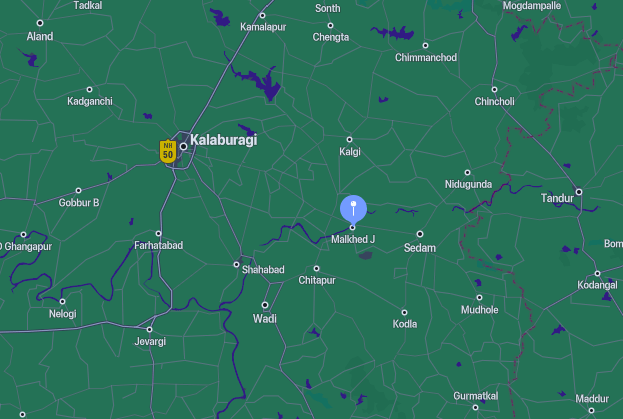
malkhed, kalaburgi district of karnataka, the location of the samadhi of sri jayatirtha

So, by the grace of Sri Jayatirtha…

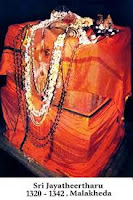
the complex instructions of the Vedic literature of Madhvacharya was revealed to us, to study, understand, discuss, teach, and follow ourselves. His Samadhi still exists in Southern India, in Malkhed, Kalaburgi District, Karnataka. A saint who has entered Samadhi is not “dead”, one can go and receive their blessings just as one can receive blessings from a saint who still walks the earth amongst us. Near the Samadhi of Jayatirtha is the Samadhi of his spiritual master, Sri Akshobhya Tirtha.

The Samadhi of Sri Jayatirtha, great teacher of Krishna Consciousness

What can we learn from this incident…

Of the warrior turned sage who was a bull in his former lifetime? That no matter how we engage in the service of God, it is always beneficial. What is more, no matter how small a thing someone does for God, that soul benefits beyond our comprehension.

नेहाभिक्रमनाशोऽस्ति प्रत्यवायो न विद्यते ।
स्वल्पमप्यस्य धर्मस्य त्रायते महतो भयात् ॥ ४० ॥

nehābhikrama-nāśo ’sti
pratyavāyo na vidyate
sv-alpam apy asya dharmasya
trāyate mahato bhayāt

In this endeavor there is no loss or diminution, and a little advancement on this path can protect one from the most dangerous type of fear.

https://vedabase.io/en/library/bg/2/40/

What are some examples?

The great Jayananda Prabhu is a perfect example… he would often call out to a passerby, “Hey can you just hold this nail for me?”, and before you know it, by service to Krishna, the dull, unclean passerby has transformed into a bright-faced Vaishnava devotee!

In a similar way, we request donations from everyone we speak to. The donations are not for us, we don’t need anyone’s money. Krishna has given us enough. But anyone who gives, they benefit.

दातव्यमिति यद्दानं दीयतेऽनुपकारिणे ।
देशे काले च पात्रे च तद्दानं सात्त्विकं स्मृतम् ॥ २० ॥

dātavyam iti yad dānaṁ
dīyate ’nupakāriṇe
deśe kāle ca pātre ca
tad dānaṁ sāttvikaṁ smṛtam

Charity given out of duty, without expectation of return, at the proper time and place, and to a worthy person is considered to be in the mode of goodness.

https://vedabase.io/en/library/bg/17/20/

Sometimes we get a ride from someone, sometimes, we ask someone to help move some boxes or hold open a door… sometimes, we give an animal Krishna Prasada, or chant the Holy Name of Krishna loudly so they hear it.

प्रसादे सर्वदुःखानां हानिरस्योपजायते ।
प्रसन्नचेतसो ह्याश‍ु बुद्धिः पर्यवतिष्ठते ॥ ६५ ॥

prasāde sarva-duḥkhānāṁ
hānir asyopajāyate
prasanna-cetaso hy āśu
buddhiḥ paryavatiṣṭhate

For one thus satisfied [in Kṛṣṇa consciousness], the threefold miseries of material existence exist no longer; in such satisfied consciousness, one’s intelligence is soon well established.

https://vedabase.io/en/library/bg/2/65/

Anyone who comes in contact with someone engaged in devotional service is benefited. Whether it is the ant who comes in contact with the dust from the altar, or the bee who was intoxicated on some leftover nectar offered to Krishna, or the cockroach who lives in Radharani’s kitchen and feeds on leftover Prasadam.

When I got out on Harinam, pigeons and seagulls sometimes surround me. I am 100% certain that all those souls will come back as devotees, and Krishna will help me serve them again. I can’t wait to see them again, as bright-faced Vaishnavas!

The birds and animals who get a bit of Krishna Prasada or hear Sri Harinam, the Holy Name of Krishna, will be freed from lower life forms and will get a chance to pursue Krishna Consciousness

There is also eyewitness evidence to the power of Prasada… food offered to the Lord, but more on that another day.

It doesn’t matter what your present condition is. Just engage somehow or other in Bhakti, pure devotional service. You will benefit beyond your wildest imagination! As one of my teachers, Vaisesika Prabhu, likes to say “do what you can, with what you have”

P.S: I found the writeup by His Grace Toshan Nimai Prabhu very helpful… please read it here if you’re interested in more details. https://flowers-of-grace.blogspot.com/2012/06/sri-jayatirtha.html

P.P.S: This is the disciplic succession with which I have received my spiritual knowledge and impetus to share this knowledge. Many branches and sub-branches of this disciplic succession have helped me, not to mention souls from so many other traditions from around the world. I am grateful to them all, too numerous to mention.

  1. Kṛṣṇa
  2. Brahmā
  3. Nārada
  4. Vyāsa
  5. Madhva
  6. Padmanābha
  7. Nṛhari
  8. Mādhava
  9. Akṣobhya
  10. Jaya Tīrtha
  11. Jñānasindhu
  12. Dayānidhi
  13. Vidyānidhi
  14. Rājendra
  15. Jayadharma
  16. Puruṣottama
  17. Brahmaṇya Tīrtha
  18. Vyāsa Tīrtha
  19. Lakṣmīpati
  20. Mādhavendra Purī
  21. Īśvara Purī, (Nityānanda, Advaita)
  22. Lord Caitanya
  23. Rūpa, (Svarūpa, Sanātana)
  24. Raghunātha, Jīva
  25. Kṛṣṇadāsa
  26. Narottama
  27. Viśvanātha
  28. (Baladeva), Jagannātha
  29. Bhaktivinoda
  30. Gaurakiśora
  31. Bhaktisiddhānta Sarasvatī
  32. A. C. Bhaktivedanta Swami Prabhupāda
  33. Sankarshan Das Adhikari