The Simple Devotion of Haridasa Varya Prabhu

Haridasa Varya Prabhu, a humble and devoted soul, exemplifies the profound impact of simple devotion. Initiated at the age of 82, he lived a quiet life in Maharashtra, embodying true spirituality through daily chanting and reading. Despite illness, his dedication never wavered, demonstrating that it’s never too late to pursue a spiritual path. Surrounded by supportive devotees, his sincere humility and consistent practice of chanting the Hare Krishna mantra brought him closer to Krishna, ultimately guiding him to spiritual perfection.

Haridasa Varya Prabhu is not a well known devotee. He is not a Guru. He is not a big leader. He does not give classes. He does not write books. He did not take any tremendous vows. He did not commit to or achieve some ambitious project. He is a simple devotee. But his simple devotion earned him a place in the spiritual realm. Read more about the simplicity of this sweet devotee that made him dear to Guru and Krishna.

Born in 1941, Haridasa Varya Prabhu left for the spiritual world in 2025 at the age of 84. He was initiated quite recently, in 2023. How did he achieve this amazing feat, and that too “so quickly”?

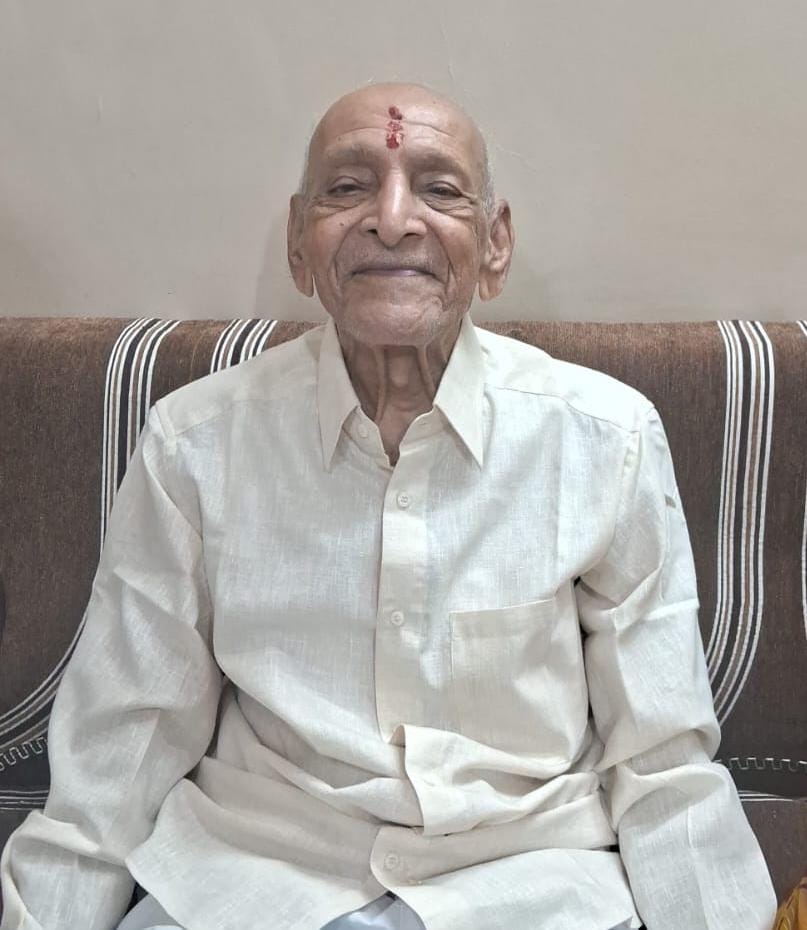
His Grace Haridasa Varya Prabhu

Our hero was born in a pious Marathi-speaking family. It was in a little village in the Washim District of Maharashtra. He led a very quiet and simple life. Married, early, he had two sons and a daughter. I learned about this great soul through his daughter. She is a devotee named Shyama Gauri Devi Dasi. She is a disciple of His Holiness Radhanath Swami. When she spoke about her father, I was inspired and struck by the simple devotion of her father. I had to write about it.
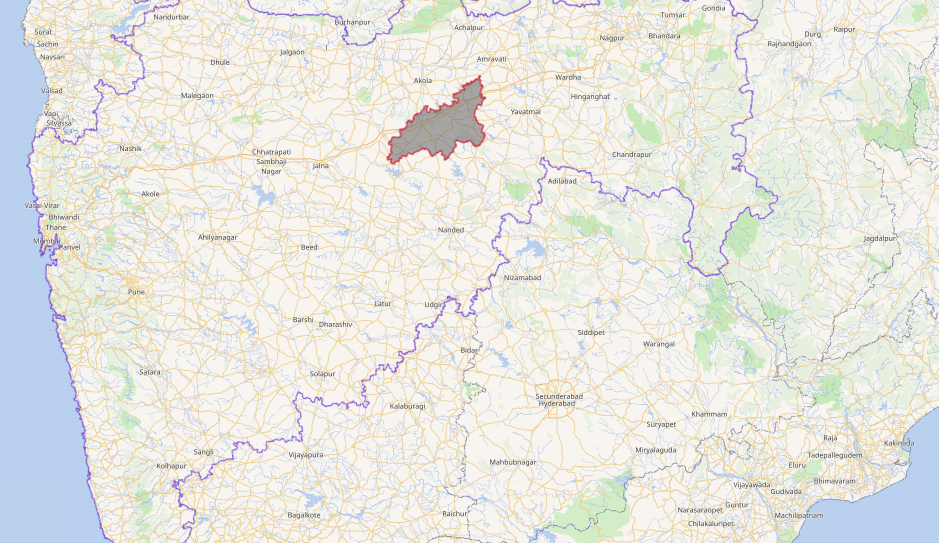
A map of India highlighting the Washim District of the State of Maharashtra

A map of India highlighting the Washim District of the State of Maharashtra

Once, not long ago, a visiting preacher, Ram Narayan Prabhu asked this elderly gentlemen “How many rounds are you chanting?”. The answer came back “Five”. The preacher asked “How will you reach spiritual perfection by chanting only five rounds?”. He added “If you chant a sixteen rounds, I will arrange for your initiation”. Our elderly hero was incredulous “What, even I can get initiated?” – thinking himself so unqualified for spiritual initiation, nevertheless started chanting sixteen rounds of the Hare Krishna Mahamantra. Every single day our octogenarian hero would chant Hare Krishna. Minimum of 16 rounds. Every single day.

Baladev Prabhu is our hero’s spiritual guide. He served as “Atma Pradarshak Guru” and “Shiksha Guru”, the instructing spiritual master. He took great pains to craft a plan of spiritual practice suitable for an octogenarian. Another spiritual guide was Vednath Prabhu, the Bhakti Vriksha leader or the local community.

Simple things get harder in old age. That’s one reason to start as early as possible. But, our hero never skipped his rounds. Even in ill health. Even in pain. No matter how hard it got, there was no stopping until he got to the magic number 16 rounds.

When it came time to getting initiated, though, there was a problem. He couldn’t travel far. In fact, he barely traveled to a nearby village. So how would he get initiated?

His Grace Samika Rishi Prabhu is a disciple of Srila Prabhupada. When he heard about this sincere soul, he agreed to initiate him. Not only is Samika Rishi Prabhu an accomplished physician of the body, he also is a doctor for the soul. The spiritual master has over 50 years of dedicated service under his belt. He agreed to visit the little village in Washim, Maharashtra. He came just to initiate this sincere soul.
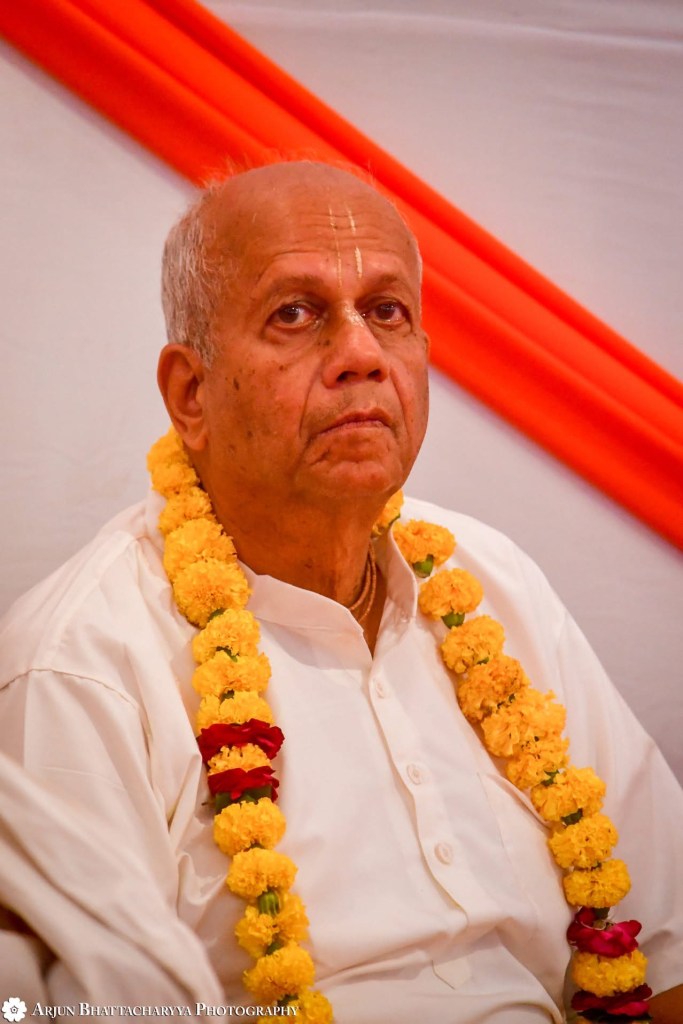
On the initiation day, everyone was moved by the sincerity of the octogenarian initiate! His simplicity and dedication were clearly seen by all. New initiates are required to take the following vows:

  1. To chant a minimum of 16 rounds of the Hare Krishna Mahamantra (1728 utterances of the mantra) every day.
  2. To follow these four regulative principles
    • No illicit sex
    • No gambling
    • No meat eating
    • No intoxication

When taking the vows to follow the regulative, our hero was embarrassed. He didn’t want anyone thinking he used to do these things before and would now abstain from them! So he took the vows somewhat like this:

“I don’t partake of illicit sex, gambling, meat eating, or intoxication” – deliberately using the present tense!

That simple innocence definitely brought a chuckle to everyone present!

His Grace Samika Rishi Prabhu initiated our hero with the name “Haridasa Varya Das.” This name means “The foremost among the servants of Sri Hari.” He took his spiritual life very seriously.

This was the daily schedule of Haridasa Varya Prabhu:

7:00 AM – rise, cleanse teeth, have breakfast, take a bath, apply Tilaka, recite his mantras at the altar. The mantras starting with the Ganapati Stotra and other mantras he was used to reciting since childhood.

8:00 AM – Chant 16 rounds of the Hare Krishna Mahamantra on meditation beads

11 AM – Lunch

12 Noon – Nap

2 PM – Read the Srimad Bhagavatam, at least 40 pages daily – make a daily record of his reading

4PM – Watch TV, speak with other villagers

6PM – dinner

7PM – Chant Hare Krishna some more

9PM – Rest
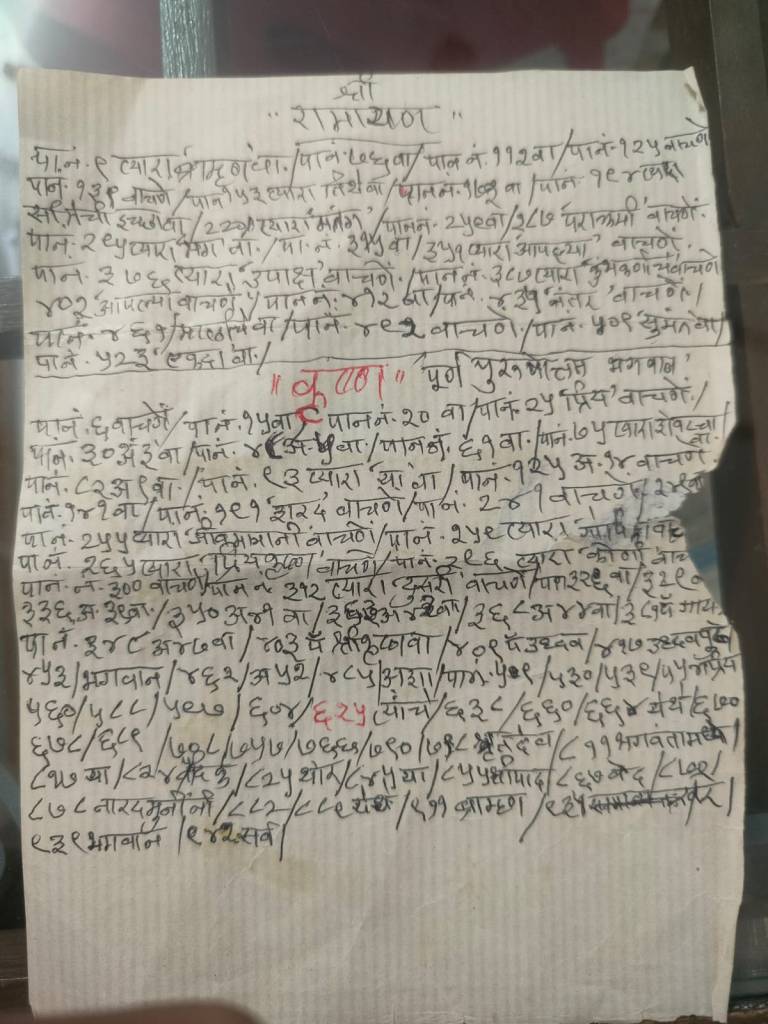
Handwritten notes containing the reading progress of His Grace Haridasa Varya Prabhu around the date of his departure

Handwritten notes example, containing the reading progress of His Grace Haridasa Varya Prabhu around the date of his departure

When he became sick closer to departure from his body, he chanted constantly, with or without beads. Even without beads, or while “asleep”, he would “move the beads”on a piece of cloth in bed.

Just before he departed, he did this:

  • Asked for his beads
  • Asked for a picture of Krishna to be brought before him. Not just any picture of Krishna from some magazine, but a picture of Sri Radha Pandharinath from ISKCON Pandharpur.
  • He told his daughter-in-law “There are four personalities here. They have come to take me home”
  • He asked to go outside in the sun, and spoke to passersby as if saying goodbye to everyone
  • Took Krishna Prasadam
  • A neighbor who had gone to Prayagraj for the Maha Kumbha Mela gave him some Ganga Jal (water from the Ganga)
  • Refused to go into his bedroom to sleep
  • Sat down on a couch gazing at a picture of Sri Radha Vrindavan Chandra from ISKCON NVCC Pune.
  • Told his daughter-in-law, “Yes, there are four of them who have come for me”
  • Took his “bath”, a sponge bath from one of his daughters-in-law
  • He departed just when his arms were raised to put on his shirt
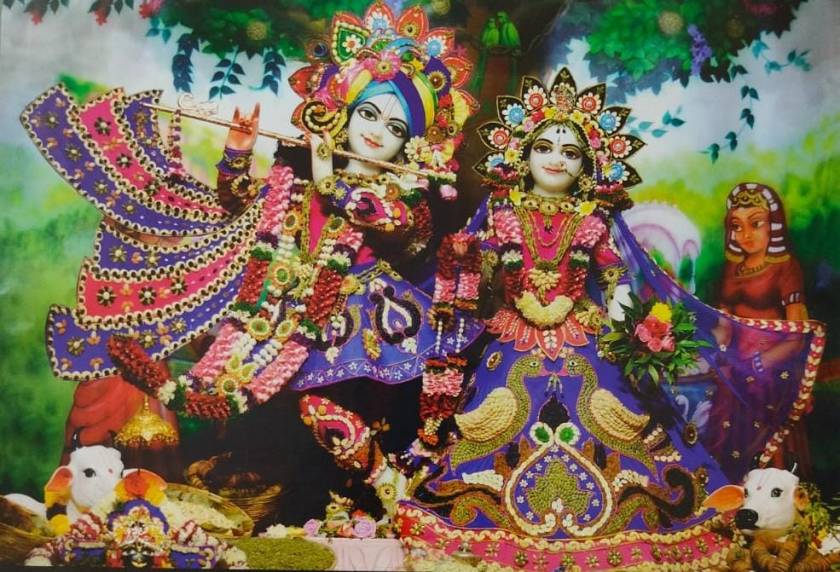
Sri Radha Vrindavan Chandra, ISKCON NVCC Pune

Haridasa Varya Prabhu used to love to lead Harinam Kirtan in his own special way. Someone would hold a microphone close to his mouth and he would sing a simple song or two. His sincere Kirtan was appreciated by all.

This was one of his favourite songs:

तू माझा यजमान रामा, तू माझा यजमान ||धृ||

जननी जठरी रक्षियले मज,पोसुनी पंचहि प्राण ||१||

बाहेर निघता मातेचे स्तनी,पय केले निर्माण ||२||

ऐसे असता या पोटाची,का करू चिंता जाण ||३||

मध्व मुनीश्वर स्वामी रमापती,धरी माझा अभिमान ||४||

You are my Lord Rama, You are my Lord

In the womb of my mother, you protected me, you preserved my five life airs

When I came out, you caused milk to flow from my mother’s breast

When this is so, why shall I worry for my own sustenance

He read the entire Srimad Bhagavatam and the entire Chaitanya Charitamrita. He was on his second round of reading the Srimad Bhagavatam around the date of his departure.

He leaves behind his wife, Mother Damodar Priya Devi Dasi, also initiated by Samika Rishi Prabhu.

At the end, he pulled out an ace… attained perfection… whatever he did or not, at the end, he did. – Her Grace Rukmini Devi Dasi (JPS)

Haridasa Varya Prabhu, I pray at your lotus feet the next prayer taught to me by my spiritual master. I fall down in the dust of your lotus feet while praying this prayer to you. You have shown us by your personal example of humility, eagerness, consistency, and presence of mind. You have attained pure devotional service at the lotus feet of Sri Radha Vrindavan Chandra. You are very kind and merciful Vaishnava. Please grant this poor soul shelter at your lotus feet.

From Haridasa Varya Prabhu’s life, we get the following lessons:

  1. It is never too late to start – of course, start as early as possible, but start, and GO!
  2. When the disciple is ready, the spiritual master is sent by Krishna. In this case, Haridasa Varya Prabhu’s spiritual master came all the way from New Jersey, USA.
  3. Humility is a great asset – Haridasa Varya Prabhu considered himself unfit for initiation!
  4. Take spiritual practice seriously. It is potent. Chanting Hare Krishna. Reading Srimad Bhagavatam. Every bit counts!
  5. Focus consciousness on what is most important, and do it every day.
  6. Simplicity in spiritual life is a prized asset, we should cultivate this simplicity that allows us to chant always.
  7. Krishna is very kind and merciful, and His devotee is even more so. We see this from the example of all the devotees who encouraged Haridasa Varya Prabhu.
  8. The process of devotional service as given to us by His Divine Grace A. C. Bhaktivedanta Swami Prabhupada works.

ये तु सर्वाणि कर्माणि मयि सन्न्यस्य मत्परा: ।
अनन्येनैव योगेन मां ध्यायन्त उपासते ॥ ६ ॥
तेषामहं समुद्धर्ता मृत्युसंसारसागरात् ।
भवामि न चिरात्पार्थ मय्यावेशितचेतसाम् ॥ ७ ॥

ye tu sarvāṇi karmāṇi mayi sannyasya mat-parāḥ
ananyenaiva yogena māṁ dhyāyanta upāsate

teṣām ahaṁ samuddhartā mṛtyu-saṁsāra-sāgarāt
bhavāmi na cirāt pārtha mayy āveśita-cetasām

But those who worship Me, giving up all their activities unto Me and being devoted to Me without deviation, engaged in devotional service and always meditating upon Me, having fixed their minds upon Me, O son of Pṛthā – for them I am the swift deliverer from the ocean of birth and death.

https://vedabase.io/en/library/bg/12/6-7/

And this beautiful verse…

अहो बकी यं स्तनकालकूटं
जिघांसयापाययदप्यसाध्वी ।
लेभे गतिं धात्र्युचितां ततोऽन्यं
कं वा दयालुं शरणं व्रजेम ॥ २३ ॥

aho bakī yaṁ stana-kāla-kūṭaṁ
jighāṁsayāpāyayad apy asādhvī
lebhe gatiṁ dhātry-ucitāṁ tato ’nyaṁ
kaṁ vā dayāluṁ śaraṇaṁ vrajema

Alas, how shall I take shelter of one more merciful than He who granted the position of mother to a she-demon [Pūtanā] although she was unfaithful and she prepared deadly poison to be sucked from her breast?
https://vedabase.io/en/library/sb/3/2/23/

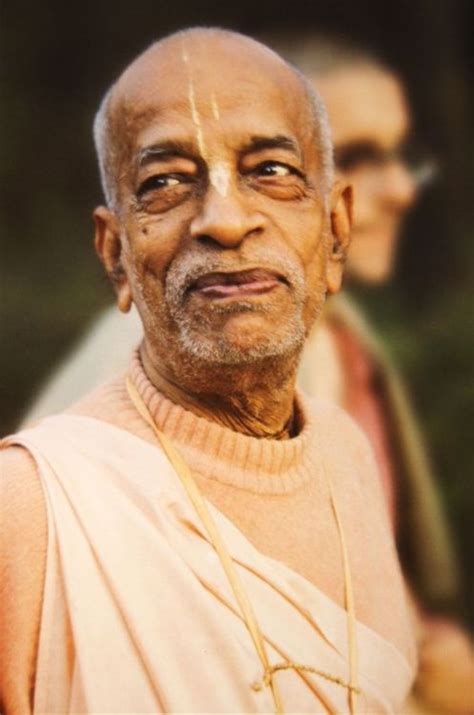
Srila Prabhupada
Srila Prabhupada

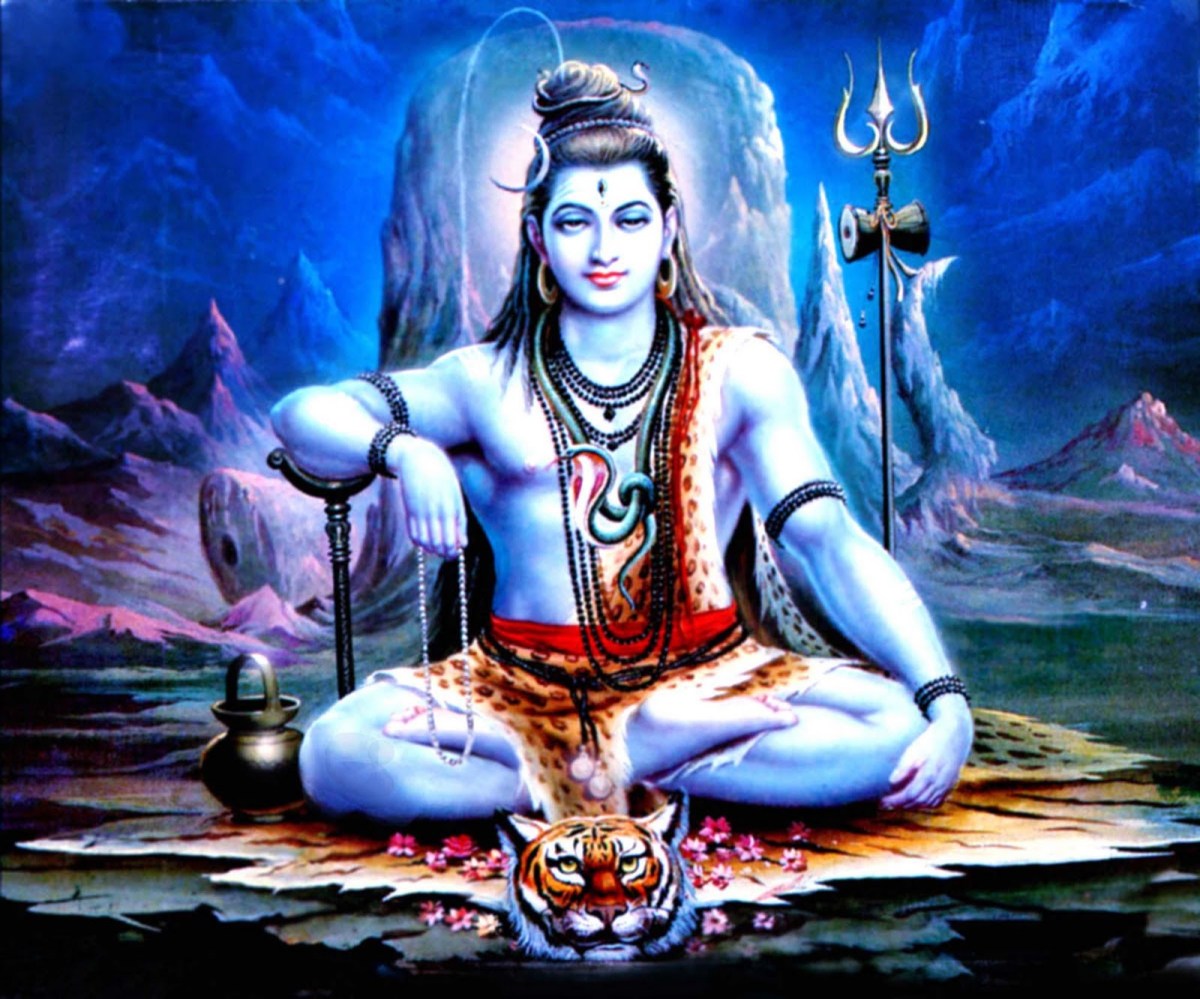
Is Srila Prabhupada insulting Lord Shiva?

Srila Prabhupada, a great teacher, wrote prolifically. Even though his works are lucid and clear, there are many misunderstandings about his writings. One is that he insulted Lord Shiva. Is this true?

Question:

A devotee who has been with ISKCON for 7 years has asked this question… he says he does not agree with Srila Prabhupada’s purport to BG 2.62.

Lord Śiva was deep in meditation, but when Pārvatī agitated him for sense pleasure, he agreed to the proposal, and as a result Kārtikeya was born.

https://vedabase.io/en/library/bg/2/62/

He says that this is not the real story also he doesn’t agree that Lord Shiva can be agitated.

Lord Shiva, Parvati Devi, and their children Kartikeya and Ganesha

Answer:

Thank you for writing to me about this. It is an important thing.

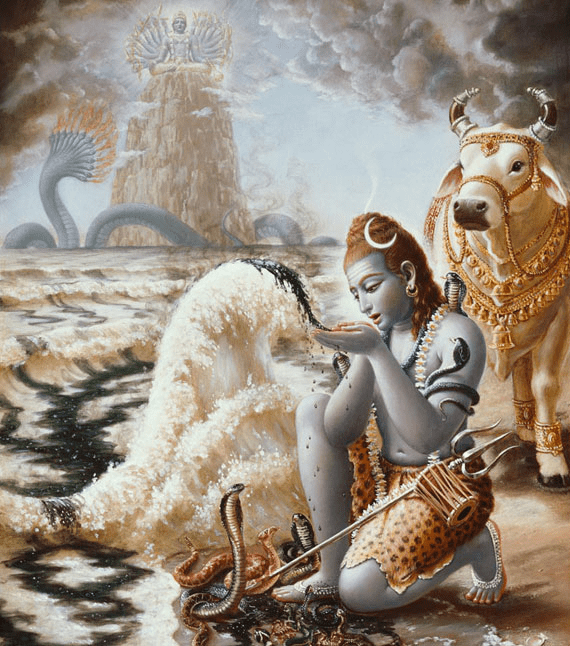
First and foremost we have to understand who is Srila Prabhupada. Srila Prabhupada is a pure devotee. As a pure devotee, Srila Prabhupada has no envy in his heart. Srila Prabhupada has no desire to criticize someone unnecessarily. He also has no tendency to try and pull someone down. In fact, Srila Prabhupada is on the Uttama Adhikari platform. As an Uttama Adhikari, he feels that everyone else is serving Krishna except himself. But Srila Prabhupada came down to the Madhyama Adhikari platform. On this platform, he suppressed his ecstatic emotions and took the role of a teacher of Krishna Consciousness. Thus he preached to us poor lost souls in the material world. Srila Prabhupada undertook an austerity for us. Just like Lord Shiva drank up the ocean of poison, Srila Prabhupada tolerated the poisonous nature of this material world. His sacrifice saves us all.

Great personalities accept voluntary suffering for the benefit of others

“tapyante loka taapena”, this is a verse from the Bhagavatam glorifying personalities like Lord Shiva and Srila Prabhupada.

तप्यन्ते लोकतापेन साधव: प्रायशो जना: ।
परमाराधनं तद्धि पुरुषस्याखिलात्मन: ॥ ४४ ॥

tapyante loka-tāpena
sādhavaḥ prāyaśo janāḥ
paramārādhanaṁ tad dhi
puruṣasyākhilātmanaḥ

It is said that great personalities almost always accept voluntary suffering because of the suffering of people in general. This is considered the highest method of worshiping the Supreme Personality of Godhead, who is present in everyone’s heart.

https://vedabase.io/en/library/sb/8/7/44/

Lord Shiva drinks up an ocean of deadly poison and keeps it suspended in his throat

On the Madhyama Adhikari platform…

A devotee behaves differently with different kinds of personalities. A Madhyama Adhikari is a teacher/preacher… and his mission is to guide souls to spiritual perfection.

  1. To Supreme Personality of Godhead or His plenary expansions, he offers prayers
  2. To the devotees of Krishna, he makes friendship
  3. To the innocent, he preaches Krishna Consciousness
  4. Those envious of Krishna, he avoids

ईश्वरे तदधीनेषु बालिशेषु द्विषत्सु च ।
प्रेममैत्रीकृपोपेक्षा य: करोति स मध्यम: ॥ ४६ ॥

īśvare tad-adhīneṣu
bāliśeṣu dviṣatsu ca
prema-maitrī-kṛpopekṣā
yaḥ karoti sa madhyamaḥ

An intermediate or second-class devotee, called madhyama-adhikārī, offers his love to the Supreme Personality of Godhead, is a sincere friend to all the devotees of the Lord, shows mercy to ignorant people who are innocent and disregards those who are envious of the Supreme Personality of Godhead.

https://vedabase.io/en/library/sb/11/2/46/

Srila Prabhupada, the great Vaishnava Acharya

Now, let us examine who is Lord Shiva.

Lord Shiva is the Topmost Vaishnava, “vaishnavaanaam yathaa shambhu” as stated in the Bhagavatam.

निम्नगानां यथा गङ्गा देवानामच्युतो यथा ।
वैष्णवानां यथा शम्भु: पुराणानामिदं तथा ॥ १६ ॥

nimna-gānāṁ yathā gaṅgā
devānām acyuto yathā
vaiṣṇavānāṁ yathā śambhuḥ
purāṇānām idam tathā

Just as the Gaṅgā is the greatest of all rivers, Lord Acyuta the supreme among deities and Lord Śambhu [Śiva] the greatest of Vaiṣṇavas, so Śrīmad-Bhāgavatam is the greatest of all Purāṇas.

https://vedabase.io/en/library/sb/12/13/16/

In the Brahma Samhita (kshiram yatha dadhi vikaaram) it is stated that Lord Vishnu transforms as Lord Shiva when Lord Vishnu is “in touch” with material energy. This is just like how milk turns to curds when touched with tamarind. In other words, Lord Vishnu and Lord Shiva have no difference of opinion. Krishna desires everyone to be His pure devotee. Similarly, Lord Shiva desires everyone to be Krishna’s pure devotee.

क्षीरं यथा दधि विकारविशेषयोगात्
सञ्जायते न हि ततः पृथगस्ति हेतोः ।
यः शम्भुतामपि तथा समुपैति कार्या-
-द्गोविन्दमादिपुरुषं तमहं भजामि ॥ ४५ ॥

kṣīraṁ yathā dadhi vikāra-viśeṣa-yogāt
sañjāyate na hi tataḥ pṛthag asti hetoḥ
yaḥ śambhutām api tathā samupaiti kāryād
govindam ādi-puruṣaṁ tam ahaṁ bhajāmi

Just as milk is transformed into curd by the action of acids, but yet the effect curd is neither same as, nor different from, its cause, viz., milk, so I adore the primeval Lord Govinda of whom the state of Śambhu is a transformation for the performance of the work of destruction.

https://vedabase.io/en/library/bs/5/45/

In fact, without the mercy of Lord Shiva, no one can become a Vaishnava. Lord Shiva and Parvati Devi are regarded as the father and mother of the material world. As you know, father and mother are the first teachers of every child.

As such, Lord Shiva is beyond all criticism. And as Lord Shiva is a pure devotee, Srila Prabhupada would never criticize Lord Shiva.

Srila Prabhupada is stating the fact.

Lord Kartikeya was born of Shiva and Parvati’s union. Lord Brahma, who is Lord Vishnu’s son is born directly from Himself without the help or assistance of Lakshmi Devi.

In the Valmiki Ramayana, Kartikeya is mentioned as the son of Rudra and Parvati. Agni and Ganga Devi aided in his birth. We accept Valmiki Muni as an utmost authority.

Valmiki, the author of the Original Ramayana

In the Mahabharata, Kartikeya is mentioned as the son of Shiva and Parvati. He emerged as a result of Lord Shiva’s sexual union with Parvati Devi. The details I will not mention here. Ganga Devi cultivated the seed of Lord Shiva. Agni Deva, the demigod in charge of fire, kept it warm.

Now, there is a third story, from the Shiva Purana… Lord Shiva was meditating. Parvati Devi was trying to attract him. Kamadeva tried to help but was burned to ashes by the wrath of Lord Shiva. Lord Shiva, being merciful, then paid attention to Parvati Devi. He married her, and Kartikeya was conceived.

There is additionally a Tamil version of the Skanda Purana in which another story is presented. I read that story in the Amar Chitra Katha comics as a child. Only later I learned where the story came from. The demigods prayed to Lord Shiva and pleased Him. As a result, Lord Shiva manifested 5 additional heads. From each head came one spark. Vayu Deva, the demigod in charge of the wind, carried these sparks and handed them to Agni Deva. Agni Deva then carried the sparks to Ganga Devi, who took them to Saravana lake. There, 6 boys were born. The 6 boys were merged into one by Krittika Devi. This marked the appearance of Kartikeya. He then defeated the demons Surapadma and Simhamukha. These demons surrendered to Kartikeya and became his assistant associates.

Valmiki Ramayana is the Absolute Truth. Mahabharata is also composed by Veda Vyasa. Therefore, we have 2 authoritative references to support Srila Prabhupada’s statement about Lord Shiva in BG 2.62.

Srila Prabhupada is a highly empowered Vaishnava Acharya who has presented Krishna Consciousness in the Brahma Madhva Gaudiya Sampradaya. Why should anyone accept an objection raised by an uncontrolled mind? Instead, whenever we hear the instruction of the Acharya, we should strive to understand how it is true. It’s not about whether it is true or not, but how it is true. This is called surrender. It may take time. It took me many years to surrender to my Guru Maharaja, but eventually I did. Whenever I had any doubts about Srila Prabhupada’s words, my spiritual masters helped me. They guided me with proper understanding to overcome that doubt.

To “disagree” with an Acharya, is simply immaturity.

Sometimes Acharyas disagree with each other. This is alright if they are of an equal stature. In that case, the rest of us must try to understand how they are right, all of them! Spiritual reality is truly wonderful. It is not one dimensional.

Puranic stories sometimes differ because they describe one kalpa (a day of Brahma) or another. On different days of Lord Brahma, there can be variations in some details.

Lord Shiva’s agitation by Parvati is not an insult to Lord Shiva.

Instead, it glorifies his great devotion to Sri Krishna. By personal example, Lord Shiva is showing how great Lord Krishna is. Lord Krishna remained without agitation even when surrounded by 3 Billion beautiful young gopis. The gopis were ready to do anything for Krishna. Krishna is an eternal Brahmachari, and the proof of this statement is Sri Bhishmadeva who has stated this personally!

Does this help?

Glossary – Personalities & Concepts mentioned in the article:

  • Acharya – A teacher in one of 4 authorized disciplic successions from God, who teaches by personal example
  • Agni Deva – The demigod in charge of fire
  • Bhagavatam – The topmost spiritual scripture, available online at https://vedabase.io/en/library/sb/
  • Bhishmadeva – Among the 12 greatest spiritual authorities of our universe, played a pivotal role in the Mahabharata, sometimes referred to as “grandsire” or “grandfather”
  • Brahma – The creator of this universe, son of Lord Vishnu
  • Brahma Samhita – The composition of Lord Brahma is a 100-chapter book. Only Chapter 5 is available. It can be found online at https://vedabase.io/en/library/bs
  • Deva – “Demigod”, also used as an honorific for divine personalities
  • Ganga – The most sacred river in our Universe, a liquid form of God
  • Gopis – The topmost saints, devotees of Krishna
  • Guru – Spiritual Master, also “heavy”
  • Kalpa – A day of Brahma, 4.32 Billion Years long
  • Kama – Literally “lust”, used to refer to the demigod in charge of love
  • Kartikeya – Son of Shiva and Parvati, the military commander of the demigods
  • Krishna – The Supreme Personality of Godhead, source of both spiritual and material realms, the One and Only appearing Himself in different forms and with different names
  • Krittika Devi – a demigoddess
  • Madhva Gaudiya Sampradaya – A current unbroken line of disciplic succession from God Himself, included below for reference
  • Madhyama Adhikari – defined above
  • Maharaja – King among men, used to refer to royalty and to renounced or exalted souls
  • Parvati – The consort of Lord Shiva, expanded as the material energy
  • Purana – Authorized history of the Universe, there are 18 such histories, 6 meant for those in the mode of goodness, 6 for those in the mode of passion, and 6 meant for those in the mode of passion
  • Ramayana – The pastimes of Lord Rama, the Personality of Godhead
  • Rudra – A son of Lord Brahma, born of his anger from his forehead
  • Simhamukha & Surapadma – Former demons who accepted the shelter of Kartikeya and became his assistants
  • Shiva – The auspicious one, also referred to as Rudra
  • Shiva Purana – The scripture describing the pastimes of Lord Shiva, meant for the benefit of those situated in the mode of ignorance
  • Sri – Opulence, refers to the Goddess of Fortune, or someone blessed with some extraordinary opulence
  • Uttama Adhikari – defined above
  • Valmiki – The author of the original Ramayana, disciple of Narada
  • Vayu Deva – The demigod in charge of the air and wind
  • Vishnu – An expansion of Krishna
  • Vyasa – The compiler of Vedic literature

The Brahma Madhva Gaudiya Sampradaya:

1. Kṛṣṇa
2. Brahmā
3. Nārada
4. Vyāsa
5. Madhva
6. Padmanābha
7. Nṛhari
8. Mādhava
9. Akṣobhya
10. Jaya Tīrtha
11. Jñānasindhu
12. Dayānidhi
13. Vidyānidhi
14. Rājendra
15. Jayadharma
16. Puruṣottama
17. Brahmaṇya Tīrtha
18. Vyāsa Tīrtha
19. Lakṣmīpati
20. Mādhavendra Purī
21. Īśvara Purī, (Nityānanda, Advaita)
22. Lord Caitanya
23. Rūpa, (Svarūpa, Sanātana)
24. Raghunātha, Jīva
25. Kṛṣṇadāsa
26. Narottama
27. Viśvanātha
28. (Baladeva), Jagannātha
29. Bhaktivinoda
30. Gaurakiśora
31. Bhaktisiddhānta Sarasvatī
32. A. C. Bhaktivedanta Swami Prabhupāda

The Author’s spiritual master, His Grace Sriman Sankarshan Das Adhikari, is a disciple of His Divine Grace A. C. Bhaktivedanta Swami Prabhupada.

The Profession of Confession and Atonement

In many religious traditions, there is the concept of confessing and atoning for sins. But why do people keep sinning and keep confessing, keep atoning? What is the use of such confession and atonement? What can be done to completely get out of this nasty habit of committing sinful activities?

Some souls accept the authority of God in theory, but not in practice. In the article “Love of God, The Ultimate Variety“, I wrote about fear vs. love… who fears God? One who does not properly follow the instructions of God must necessarily fear God. Just like ordinary citizens are not afraid of the police, but the thief is.

The idea is that just as there is the state law, there is also God’s law. And just as someone who flouts the state law becomes a criminal or an outlaw, similarly, one who flouts God’s law also faces reactions. And depending on the severity of the crime, the reactions can be rather heavy.

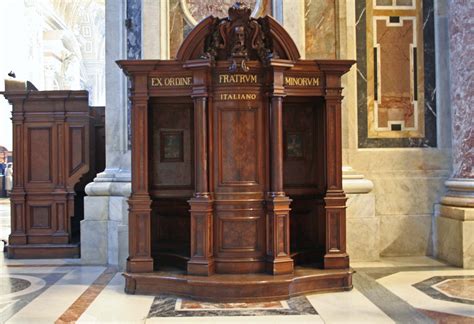
In some traditions, practically all religious traditions, there is the idea of “atonement” or in Sanskrit “praayaschitta”. This has been formalized in so many different ways, for example, Christians often go to Church and then confess their sins to the priest. The priest says “OK, repent by doing this and this”, or maybe a Hindu might go to the temple and the priest might tell her “give this and that charity to such-and-such to atone for this sin”.

The atonement is supposed to release the soul of the sinful reaction for a much lower “cost”…

Confession, useful, but is it enough?

But even with or without atonement, though there is hellish punishment that purifies the sinner of the sinful reactions, the soul commits sin again, after all the purification! Why is this?

Do you know what the problem is?

क्‍वचिन्निवर्ततेऽभद्रात्‍क्‍वचिच्चरति तत्पुन: ।
प्रायश्चित्तमथोऽपार्थं मन्ये कुञ्जरशौचवत् ॥ १० ॥

kvacin nivartate ’bhadrāt
kvacic carati tat punaḥ
prāyaścittam atho ’pārthaṁ
manye kuñjara-śaucavat

Sometimes one who is very alert so as not to commit sinful acts is victimized by sinful life again. I therefore consider this process of repeated sinning and atoning to be useless. It is like the bathing of an elephant, for an elephant cleanses itself by taking a full bath, but then throws dust over its head and body as soon as it returns to the land.

https://vedabase.io/en/library/sb/6/1/10/
An elephant bathes in the water

Let’s examine the elephant… the elephant goes to the river and takes a bath in the river. Then the elephant comes out and pours dirt, sand and dust on itself after it comes out. Now, the wildlife experts may say why the elephant is doing that, how it protects its skin etc., but let’s just keep to the spirit of the example here.

An elephant dusts itself with mud

If we treat a confession or atonement as a bath, then why is it that people perform the required atonement and then sin again? Why do you need to take a bath again and again? Because you got dirty again after the last bath!

In the material world, dirt is unavoidable, our very bodies are quite dirty, and need to be cleansed again and again. But what about the spirit soul? Is the spirit soul not clean originally?

Hindus bathe in the Ganga to atone for their sins

Is it a good thing to become a professional at confession and atonement? There is no doubt that God is infinitely merciful… and can forgive unlimitedly. Does anyone think that God is such a fool as to accept repeated confessions of a professional sinner without giving the proper reactions to maintain fairness? God is also unlimitedly wise!

In the Srimad Bhagavatam, the highly intelligent Maharaja Parikshit and Shukadeva Goswami had this wonderful conversation on this topic. To this question, the answer given was:

Śukadeva Gosvāmī, the son of Vedavyāsa, answered: My dear King, since acts meant to neutralize impious actions are also fruitive, they will not release one from the tendency to act fruitively. Persons who subject themselves to the rules and regulations of atonement are not at all intelligent. Indeed, they are in the mode of darkness. Unless one is freed from the mode of ignorance, trying to counteract one action through another is useless because this will not uproot one’s desires. Thus even though one may superficially seem pious, he will undoubtedly be prone to act impiously. Therefore real atonement is enlightenment in perfect knowledge, Vedānta, by which one understands the Supreme Absolute Truth.

https://vedabase.io/en/library/sb/6/1/11/

But knowledge enough is not sufficient, one must act on that knowledge, Shukadeva Goswami continues…

My dear King, if a diseased person eats the pure, uncontaminated food prescribed by a physician, he is gradually cured, and the infection of disease can no longer touch him. Similarly, if one follows the regulative principles of knowledge, he gradually progresses toward liberation from material contamination.

https://vedabase.io/en/library/sb/6/1/12/

One should go beyond the lifestyle that produces sinful desires…

तपसा ब्रह्मचर्येण शमेन च दमेन च ।
त्यागेन सत्यशौचाभ्यां यमेन नियमेन वा ॥ १३ ॥
देहवाग्बुद्धिजं धीरा धर्मज्ञा: श्रद्धयान्विता: ।
क्षिपन्त्यघं महदपि वेणुगुल्ममिवानल: ॥ १४ ॥

tapasā brahmacaryeṇa
śamena ca damena ca
tyāgena satya-śaucābhyāṁ
yamena niyamena vā

deha-vāg-buddhijaṁ dhīrā
dharmajñāḥ śraddhayānvitāḥ
kṣipanty aghaṁ mahad api
veṇu-gulmam ivānalaḥ

To concentrate the mind, one must observe a life of celibacy and not fall down. One must undergo the austerity of voluntarily giving up sense enjoyment. One must then control the mind and senses, give charity, be truthful, clean and nonviolent, follow the regulative principles and regularly chant the holy name of the Lord. Thus a sober and faithful person who knows the religious principles is temporarily purified of all sins performed with his body, words and mind. These sins are like the dried leaves of creepers beneath a bamboo tree, which may be burned by fire although their roots remain to grow again at the first opportunity.

https://vedabase.io/en/library/sb/6/1/13-14/

It is commonly seen that even priests, supposed to be God’s representatives, sin, what to speak of the lay person! This means that even though one may lead a very closely regulated lifestyle, the desire to sin can still remain hidden as a root within the heart. So what is the ultimate solution?

केचित्केवलया भक्त्या वासुदेवपरायणा: ।
अघं धुन्वन्ति कार्त्स्‍न्येन नीहारमिव भास्कर: ॥ १५ ॥

kecit kevalayā bhaktyā
vāsudeva-parāyaṇāḥ
aghaṁ dhunvanti kārtsnyena
nīhāram iva bhāskaraḥ

Only a rare person who has adopted complete, unalloyed devotional service to Kṛṣṇa can uproot the weeds of sinful actions with no possibility that they will revive. He can do this simply by discharging devotional service, just as the sun can immediately dissipate fog by its rays.

https://vedabase.io/en/library/sb/6/1/15/

So therefore, it is impossible to be completely pure without being a pure devotee of God. Without being a pure lover of God, one cannot escape this sin. In fact, when one is rendering devotional service, at that time it is impossible to sin, because where is the time and the energy to perform sinful actions?

So therefore, instead of sinning and confessing, sinning and confessing, sinning and atoning, sinning and atoning, one should seek to develop pure uncontaminated Love of God in a practical way, which is the only way to be free of the desire and tendency to sin.

My spiritual master says it best “it’s hard to hit a moving target, so keep moving for Krishna, if you give illusion an inch, you will lose your life!”