The Simple Devotion of Haridasa Varya Prabhu

Haridasa Varya Prabhu, a humble and devoted soul, exemplifies the profound impact of simple devotion. Initiated at the age of 82, he lived a quiet life in Maharashtra, embodying true spirituality through daily chanting and reading. Despite illness, his dedication never wavered, demonstrating that it’s never too late to pursue a spiritual path. Surrounded by supportive devotees, his sincere humility and consistent practice of chanting the Hare Krishna mantra brought him closer to Krishna, ultimately guiding him to spiritual perfection.

Haridasa Varya Prabhu is not a well known devotee. He is not a Guru. He is not a big leader. He does not give classes. He does not write books. He did not take any tremendous vows. He did not commit to or achieve some ambitious project. He is a simple devotee. But his simple devotion earned him a place in the spiritual realm. Read more about the simplicity of this sweet devotee that made him dear to Guru and Krishna.

Born in 1941, Haridasa Varya Prabhu left for the spiritual world in 2025 at the age of 84. He was initiated quite recently, in 2023. How did he achieve this amazing feat, and that too “so quickly”?

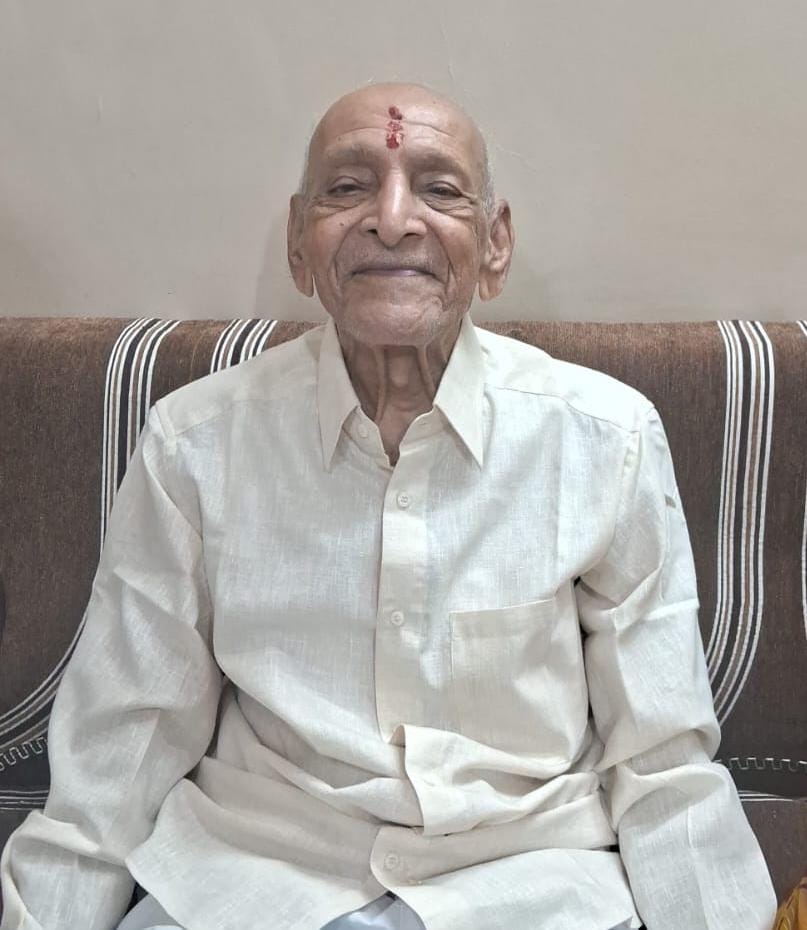
His Grace Haridasa Varya Prabhu

Our hero was born in a pious Marathi-speaking family. It was in a little village in the Washim District of Maharashtra. He led a very quiet and simple life. Married, early, he had two sons and a daughter. I learned about this great soul through his daughter. She is a devotee named Shyama Gauri Devi Dasi. She is a disciple of His Holiness Radhanath Swami. When she spoke about her father, I was inspired and struck by the simple devotion of her father. I had to write about it.
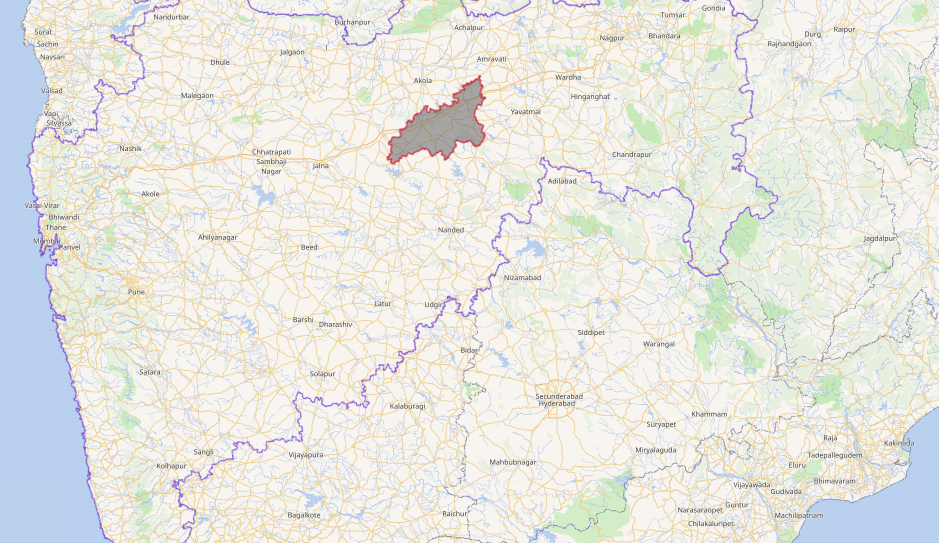
A map of India highlighting the Washim District of the State of Maharashtra

A map of India highlighting the Washim District of the State of Maharashtra

Once, not long ago, a visiting preacher, Ram Narayan Prabhu asked this elderly gentlemen “How many rounds are you chanting?”. The answer came back “Five”. The preacher asked “How will you reach spiritual perfection by chanting only five rounds?”. He added “If you chant a sixteen rounds, I will arrange for your initiation”. Our elderly hero was incredulous “What, even I can get initiated?” – thinking himself so unqualified for spiritual initiation, nevertheless started chanting sixteen rounds of the Hare Krishna Mahamantra. Every single day our octogenarian hero would chant Hare Krishna. Minimum of 16 rounds. Every single day.

Baladev Prabhu is our hero’s spiritual guide. He served as “Atma Pradarshak Guru” and “Shiksha Guru”, the instructing spiritual master. He took great pains to craft a plan of spiritual practice suitable for an octogenarian. Another spiritual guide was Vednath Prabhu, the Bhakti Vriksha leader or the local community.

Simple things get harder in old age. That’s one reason to start as early as possible. But, our hero never skipped his rounds. Even in ill health. Even in pain. No matter how hard it got, there was no stopping until he got to the magic number 16 rounds.

When it came time to getting initiated, though, there was a problem. He couldn’t travel far. In fact, he barely traveled to a nearby village. So how would he get initiated?

His Grace Samika Rishi Prabhu is a disciple of Srila Prabhupada. When he heard about this sincere soul, he agreed to initiate him. Not only is Samika Rishi Prabhu an accomplished physician of the body, he also is a doctor for the soul. The spiritual master has over 50 years of dedicated service under his belt. He agreed to visit the little village in Washim, Maharashtra. He came just to initiate this sincere soul.
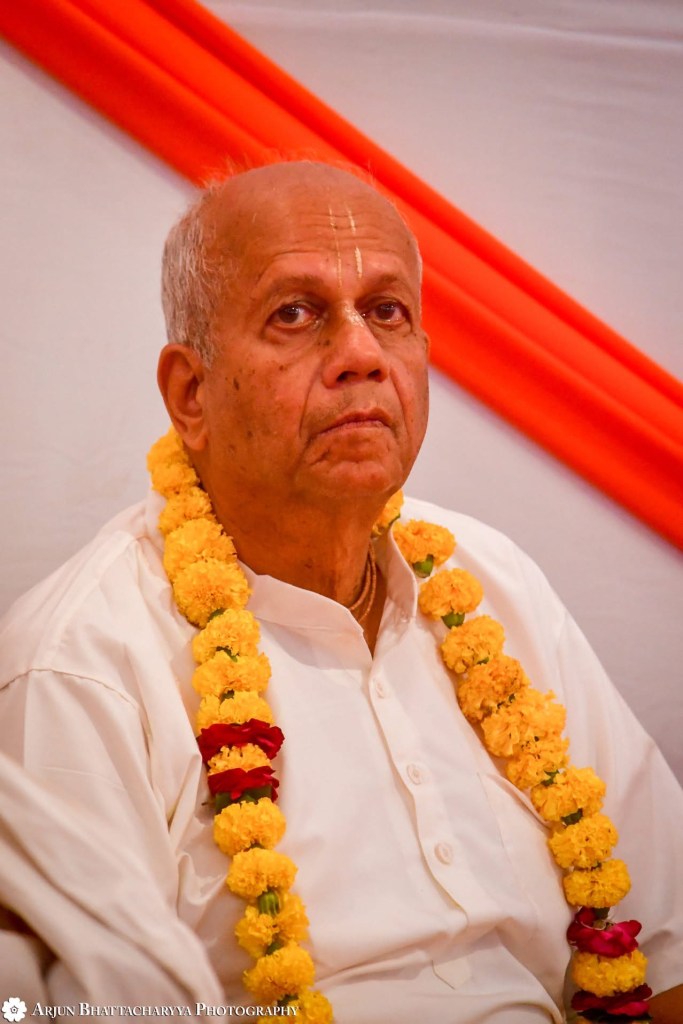
On the initiation day, everyone was moved by the sincerity of the octogenarian initiate! His simplicity and dedication were clearly seen by all. New initiates are required to take the following vows:

  1. To chant a minimum of 16 rounds of the Hare Krishna Mahamantra (1728 utterances of the mantra) every day.
  2. To follow these four regulative principles
    • No illicit sex
    • No gambling
    • No meat eating
    • No intoxication

When taking the vows to follow the regulative, our hero was embarrassed. He didn’t want anyone thinking he used to do these things before and would now abstain from them! So he took the vows somewhat like this:

“I don’t partake of illicit sex, gambling, meat eating, or intoxication” – deliberately using the present tense!

That simple innocence definitely brought a chuckle to everyone present!

His Grace Samika Rishi Prabhu initiated our hero with the name “Haridasa Varya Das.” This name means “The foremost among the servants of Sri Hari.” He took his spiritual life very seriously.

This was the daily schedule of Haridasa Varya Prabhu:

7:00 AM – rise, cleanse teeth, have breakfast, take a bath, apply Tilaka, recite his mantras at the altar. The mantras starting with the Ganapati Stotra and other mantras he was used to reciting since childhood.

8:00 AM – Chant 16 rounds of the Hare Krishna Mahamantra on meditation beads

11 AM – Lunch

12 Noon – Nap

2 PM – Read the Srimad Bhagavatam, at least 40 pages daily – make a daily record of his reading

4PM – Watch TV, speak with other villagers

6PM – dinner

7PM – Chant Hare Krishna some more

9PM – Rest
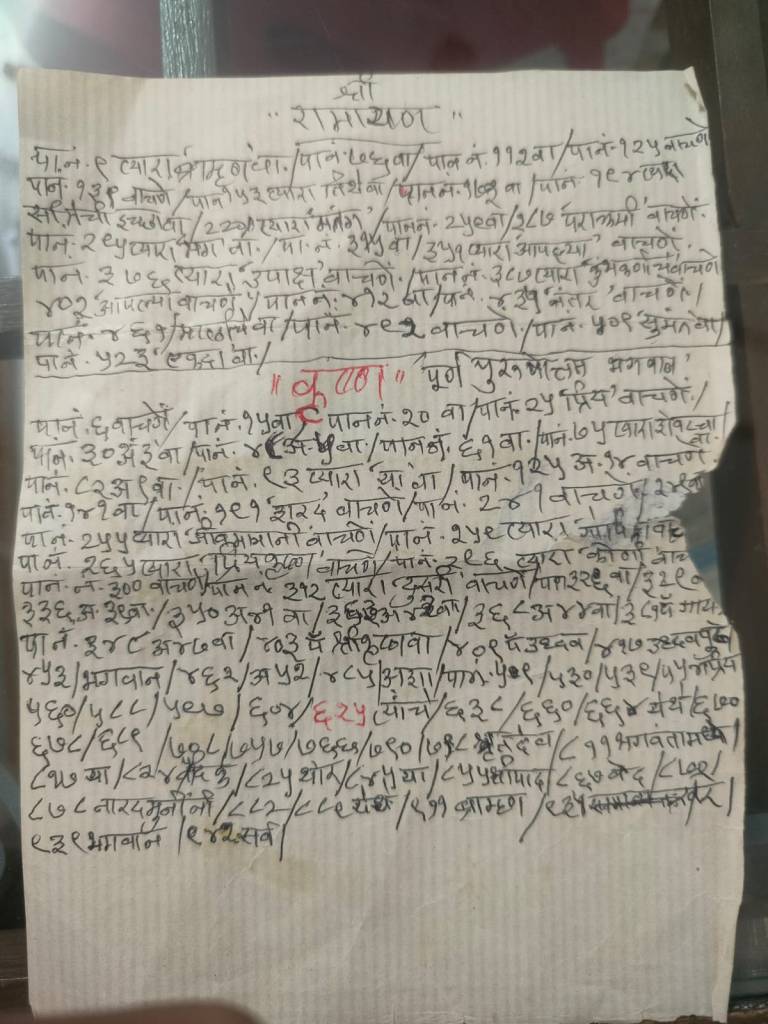
Handwritten notes containing the reading progress of His Grace Haridasa Varya Prabhu around the date of his departure

Handwritten notes example, containing the reading progress of His Grace Haridasa Varya Prabhu around the date of his departure

When he became sick closer to departure from his body, he chanted constantly, with or without beads. Even without beads, or while “asleep”, he would “move the beads”on a piece of cloth in bed.

Just before he departed, he did this:

  • Asked for his beads
  • Asked for a picture of Krishna to be brought before him. Not just any picture of Krishna from some magazine, but a picture of Sri Radha Pandharinath from ISKCON Pandharpur.
  • He told his daughter-in-law “There are four personalities here. They have come to take me home”
  • He asked to go outside in the sun, and spoke to passersby as if saying goodbye to everyone
  • Took Krishna Prasadam
  • A neighbor who had gone to Prayagraj for the Maha Kumbha Mela gave him some Ganga Jal (water from the Ganga)
  • Refused to go into his bedroom to sleep
  • Sat down on a couch gazing at a picture of Sri Radha Vrindavan Chandra from ISKCON NVCC Pune.
  • Told his daughter-in-law, “Yes, there are four of them who have come for me”
  • Took his “bath”, a sponge bath from one of his daughters-in-law
  • He departed just when his arms were raised to put on his shirt
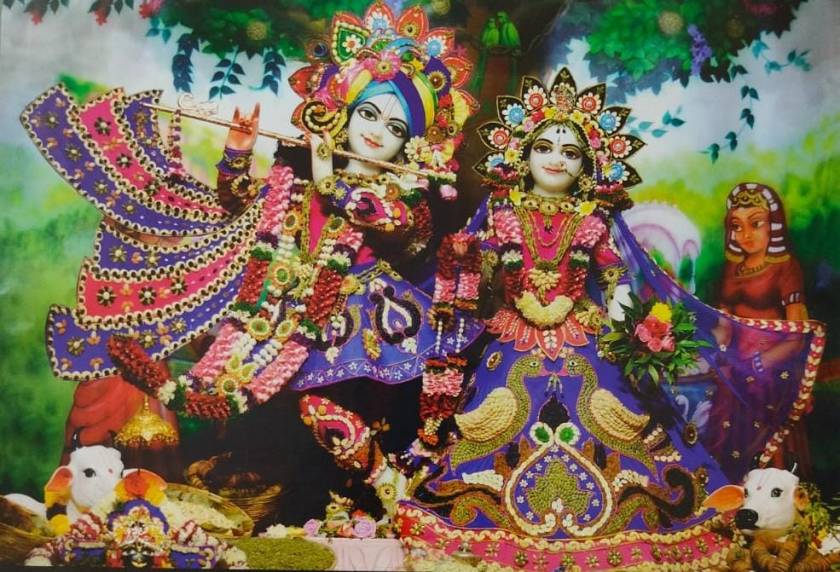
Sri Radha Vrindavan Chandra, ISKCON NVCC Pune

Haridasa Varya Prabhu used to love to lead Harinam Kirtan in his own special way. Someone would hold a microphone close to his mouth and he would sing a simple song or two. His sincere Kirtan was appreciated by all.

This was one of his favourite songs:

तू माझा यजमान रामा, तू माझा यजमान ||धृ||

जननी जठरी रक्षियले मज,पोसुनी पंचहि प्राण ||१||

बाहेर निघता मातेचे स्तनी,पय केले निर्माण ||२||

ऐसे असता या पोटाची,का करू चिंता जाण ||३||

मध्व मुनीश्वर स्वामी रमापती,धरी माझा अभिमान ||४||

You are my Lord Rama, You are my Lord

In the womb of my mother, you protected me, you preserved my five life airs

When I came out, you caused milk to flow from my mother’s breast

When this is so, why shall I worry for my own sustenance

He read the entire Srimad Bhagavatam and the entire Chaitanya Charitamrita. He was on his second round of reading the Srimad Bhagavatam around the date of his departure.

He leaves behind his wife, Mother Damodar Priya Devi Dasi, also initiated by Samika Rishi Prabhu.

At the end, he pulled out an ace… attained perfection… whatever he did or not, at the end, he did. – Her Grace Rukmini Devi Dasi (JPS)

Haridasa Varya Prabhu, I pray at your lotus feet the next prayer taught to me by my spiritual master. I fall down in the dust of your lotus feet while praying this prayer to you. You have shown us by your personal example of humility, eagerness, consistency, and presence of mind. You have attained pure devotional service at the lotus feet of Sri Radha Vrindavan Chandra. You are very kind and merciful Vaishnava. Please grant this poor soul shelter at your lotus feet.

From Haridasa Varya Prabhu’s life, we get the following lessons:

  1. It is never too late to start – of course, start as early as possible, but start, and GO!
  2. When the disciple is ready, the spiritual master is sent by Krishna. In this case, Haridasa Varya Prabhu’s spiritual master came all the way from New Jersey, USA.
  3. Humility is a great asset – Haridasa Varya Prabhu considered himself unfit for initiation!
  4. Take spiritual practice seriously. It is potent. Chanting Hare Krishna. Reading Srimad Bhagavatam. Every bit counts!
  5. Focus consciousness on what is most important, and do it every day.
  6. Simplicity in spiritual life is a prized asset, we should cultivate this simplicity that allows us to chant always.
  7. Krishna is very kind and merciful, and His devotee is even more so. We see this from the example of all the devotees who encouraged Haridasa Varya Prabhu.
  8. The process of devotional service as given to us by His Divine Grace A. C. Bhaktivedanta Swami Prabhupada works.

ये तु सर्वाणि कर्माणि मयि सन्न्यस्य मत्परा: ।
अनन्येनैव योगेन मां ध्यायन्त उपासते ॥ ६ ॥
तेषामहं समुद्धर्ता मृत्युसंसारसागरात् ।
भवामि न चिरात्पार्थ मय्यावेशितचेतसाम् ॥ ७ ॥

ye tu sarvāṇi karmāṇi mayi sannyasya mat-parāḥ
ananyenaiva yogena māṁ dhyāyanta upāsate

teṣām ahaṁ samuddhartā mṛtyu-saṁsāra-sāgarāt
bhavāmi na cirāt pārtha mayy āveśita-cetasām

But those who worship Me, giving up all their activities unto Me and being devoted to Me without deviation, engaged in devotional service and always meditating upon Me, having fixed their minds upon Me, O son of Pṛthā – for them I am the swift deliverer from the ocean of birth and death.

https://vedabase.io/en/library/bg/12/6-7/

And this beautiful verse…

अहो बकी यं स्तनकालकूटं
जिघांसयापाययदप्यसाध्वी ।
लेभे गतिं धात्र्युचितां ततोऽन्यं
कं वा दयालुं शरणं व्रजेम ॥ २३ ॥

aho bakī yaṁ stana-kāla-kūṭaṁ
jighāṁsayāpāyayad apy asādhvī
lebhe gatiṁ dhātry-ucitāṁ tato ’nyaṁ
kaṁ vā dayāluṁ śaraṇaṁ vrajema

Alas, how shall I take shelter of one more merciful than He who granted the position of mother to a she-demon [Pūtanā] although she was unfaithful and she prepared deadly poison to be sucked from her breast?
https://vedabase.io/en/library/sb/3/2/23/

Srila Prabhupada
Srila Prabhupada

Leveraging Jet Lag for Spiritual Growth

Recently returning from a transformative trip to India, I found jet lag to be an unexpected ally in my spiritual journey. Embracing early mornings, I engaged in meditation, reading, and serving Krishna. Instead of viewing jet lag negatively, I was able to leverage it to enhance my devotional practices and enrich my daily routine. What a blessing! Jet lag? Bring it on!

I have recently returned to Toronto from a hectic, exhausting, yet ecstatic trip to Bharat Bhumi, also known as India. I was away for a total of 14 days. Out of those, I got to spend 11 in the holy land.

The privilege of meeting, hearing from, and serving the sincere devotees of Krishna is, as always, a life changing experience.

I visited…

  • Frankfurt
  • Mantralayam
  • Hyderabad
  • Bengaluru
  • Pune
  • Mumbai

With a 10.5 hour time zone difference between Toronto and India, that is just enough to get jet lagged. Jet lag gets a bad rap… because the body clock is set to some other time zone. It wakes up at odd hours. It feels sleepy at odd hours and so on. There’s an entire cottage industry to help people cope with and overcome jet lag.

I even tried this app called “Timeshifter” but it was totally impractical for my lifestyle… for example it contained advice to use caffeine, which I avoid like the plague, and melatonin… It required specific times to go to sleep and wake up. There were also specific times to “see” light and to avoid it. This was almost like trying to hack the body and mind. It didn’t sit right with me. Was it really necessary to “overcome” jet lag? I wondered if jet lag can be leveraged for Krishna, for spiritual growth.

When I was in India, the jet lag was a great asset! I managed to wake up early enough to attend Mangala Arati. I completed my Sadhana. I got by with a short nap for the rest of the day. Early mornings, late nights, and the rest of the time spent in serving Krishna and His devotees, perfect!

When I got back to Toronto, for example this morning, I was up at 2AM. I wondered if I should try to go back to sleep… then I remembered that my Guru and Gurumata usually rise at this hour. They complete their japa, meditation on the Holy Names of Krishna on their beads, well before others rise… and then they can spend their whole day serving others on their spiritual journey.

So I decided to follow in their footsteps. After completing my meditation, I still had time to read, not one but parts of 2 books! Anyone who has a corporate career and a family understands the challenge. Finding quality time to read is incredibly hard. I still had enough time to complete Mangala Arati. Then I performed deity worship before getting an early start to the day!

In this way I will leverage jet lag to serve Krishna. And when the jet lag ends? I will simply go back to my earlier routine to serve Krishna!

Devotee serving Krishna

Jet lag? Bring it on!

Of course, in all success, the credit goes to Guru and Krishna, as long as we are ready to be an instrument!

Now, in case you think that this idea to leverage jet lag in Krishna’s service somehow is mine… it is not.

Srila Rupa Goswami enunciated the principle of “avyarthakālatvam — being free from wasting time”, this was over 500 years ago…

ক্ষান্তিরব্যর্থকালত্বং বিরক্তির্মানশূন্যতা ।
আশাবন্ধঃ সমুৎকণ্ঠা নামগানে সদা রুচিঃ ॥ ১৮ ॥
আসক্তিস্তদ্‌গুণাখ্যানে প্রীতিস্তদ্বসতিস্থলে ।
ইত্যাদয়োঽনুভাবাঃ স্যু র্জাতভাবাঙ্কুরে জনে ॥ ১৯ ॥


kṣāntir avyartha-kālatvaṁ viraktir māna-śūnyatā
āśā-bandhaḥ samutkaṇṭhā nāma-gāne sadā ruciḥ
āsaktis tad-guṇākhyāne prītis tad-vasati-sthale
ity-ādayo ’nubhāvāḥ syur jāta-bhāvāṅkure jane

“ ‘When the seed of ecstatic emotion for Kṛṣṇa fructifies, the following nine symptoms manifest in one’s behavior: forgiveness, concern that time should not be wasted, detachment, absence of false prestige, hope, eagerness, a taste for chanting the holy name of the Lord, attachment to descriptions of the transcendental qualities of the Lord, and affection for those places where the Lord resides — that is, a temple or a holy place like Vṛndāvana. These are all called anubhāva, subordinate signs of ecstatic emotion. They are visible in a person in whose heart the seed of love of God has begun to fructify.’

https://vedabase.io/en/library/cc/madhya/23/18-19/

My spiritual master has indeed planted the seed of pure devotional service in my heart. However, I cannot claim any success in cultivating devotional service. I am just sincerely trying to practice sadhana bhakti.

And I have examples of great Vaishnavas who travel around the world…

So I brought Prabhupada his breakfast, and then when he was finished I came and took everything out and Prabhupada laid down. So I went back, I said, “Prabhupada’s resting.” So Paramahamsa and I, we laid down. Of course, we fell asleep, we were out, and Prabhupada maybe took 15 minutes or something and he was up. So finally I heard a bell ring. So I went into Prabhupada’s room, and it happened a few times where I would literally try to wake up as I was offering obeisances and exercise my eyes so Prabhupada couldn’t tell that I was sleeping. I sat up, and as soon as I sat up he said, “Why are you sleeping? You’re like dead men. Everyone is awake. The karmis are all at work but not the devotees. No, they’re sleeping.” He said, “They’re sleeping very soundly. Why are you sleeping?” And, of course, when Prabhupada asked why were you doing something wrong, I never had a response because whatever you said, he would just take that apart. So I just said, “Prabhupada, I’m sorry.” “What about Paramahamsa? Why is he sleeping?” He said, “Call him in here.” He goes in and immediately Prabhupada says, “You are a sannyasi. Your business is to minimize bodily demands, minimize sleeping, minimize eating. Why are you sleeping?” Paramahamsa said, “Prabhupada, I have jet lag,” and I thought, “Oh, no!” And Prabhupada said, “Jet lag?” He said, “Well, we just flew from here and done this,” and Prabhupada said, “So I am also flying, I am doing the same thing. I am awake.” Then he said, “All right, go on. Go sleep if you want.

https://srilaprabhupadalila.org/read/3665 

Srila Prabhupada circled the globe twelve times in less than 10 years… and no one ever recalls a time when he was jet lagged.

Gopal Krishna Goswami, a dear disciple of Srila Prabhupada, traveled from continent to continent. He was always on the altar offering Mangala Arati to the local deities at the temple he was staying at. This was regardless of which time zone he came in from and which time zone he traveled to. I have personally witnessed this, arrived at midnight, 1AM, 2AM, but no, at 4:30am he was on the altar.

My own spiritual master, Srila Sankarshan Das Adhikari, has circled the globe more than 50 times. My Gurumataji Srimati Vishnupriya Devi Dasi has accompanied him. They have never let jet lag stand in the way of their service to Krishna. They are both up early. They chant their rounds and offer their service to Sri Sri Radha Damodar. Then, they follow a full schedule of service all day, working 12-16 hours most days.

So why should I not try to follow in their illustrious footsteps?

Best Way to Understand Bhagavad Gita

What is the best way to understand Bhagavad Gita? Chant Hare Krishna! Doesn’t sound reasonable? How can chanting a mantra over and over again help me understand the Bhagavad Gita? What is the proof of the pudding? Is it not in the eating? Read more to find out how this works! Do you have questions?

Hare Krishna!

For those of you trying to understand Bhagavad Gita… here is a tip.

Bhagavad Gita is a study of consciousness… lower consciousness, higher consciousness, human, animal, or divine consciousness… and then, when one understands, then to practice, uplift our consciousness and act in the best possible way…

The only way to understand Bhagavad Gita better and better is to sharpen, refine, and clarify our own consciousness… it’s like if you have a blunt knife, it is hard to cut away impurities or imperfections, say, in a fruit or vegetable… but with a sharp knife, one can easily cut away undesirable portions…

So then, the question becomes… “How to sharpen, refine, and clarify my consciousness?”

The short answer? Chant the Hare Krishna Mahamantra!

Why? There is a lot of theory, and a lot of information about this, but it is not something that can be understood theoretically.

Why?

Because it is a practical, experiential thing!

Just like eating when you are hungry… no amount of theoretical reasoning can give you that feeling of satisfaction or fullness… but a simple plate of Krishna Prasada can satisfy you in all respects when you are hungry.

Chaitanya Mahaprabhu summarized this in his famous 8-verse prayer, the Shikshashtakam… “cheto darpana marjanam”… cleansing the mirror of the consciousness… is what Sri Harinam does, first and foremost.

ceto-darpaṇa-mārjanaṁ bhava-mahā-dāvāgni-nirvāpaṇaṁ
śreyaḥ-kairava-candrikā-vitaraṇaṁ vidyā-vadhū-jīvanam
ānandāmbudhi-vardhanaṁ prati-padaṁ pūrṇāmṛtāsvādanaṁ
sarvātma-snapanaṁ paraṁ vijayate śrī-kṛṣṇa-saṅkīrtanam
Synonyms
cetaḥ — of the heart; darpaṇa — the mirror; mārjanam — cleansing; bhava — of material existence; mahā-dāva-agni — the blazing forest fire; nirvāpaṇam — extinguishing; śreyaḥ — of good fortune; kairava — the white lotus; candrikā — the moonshine; vitaraṇam — spreading; vidyā — of all education; vadhū — wife; jīvanam — the life; ānanda — of bliss; ambudhi — the ocean; vardhanam — increasing; prati-padam — at every step; pūrṇa-amṛta — of the full nectar; āsvādanam — giving a taste; sarva — for everyone; ātma-snapanam — bathing of the self; param — transcendental; vijayate — let there be victory; śrī-kṛṣṇa-saṅkīrtanam — for the congregational chanting of the holy name of Kṛṣṇa.

Translation
“ ‘Let there be all victory for the chanting of the holy name of Lord Kṛṣṇa, which can cleanse the mirror of the heart and stop the miseries of the blazing fire of material existence. That chanting is the waxing moon that spreads the white lotus of good fortune for all living entities. It is the life and soul of all education. The chanting of the holy name of Kṛṣṇa expands the blissful ocean of transcendental life. It gives a cooling effect to everyone and enables one to taste full nectar at every step.’

https://vedabase.io/en/library/cc/antya/20/12/

ceto-darpaṇa-mārjanaṁ … cetaḥ — of the heart; darpaṇa — the mirror; mārjanam — cleansing;

What is the proof of this? I can cite my personal example… I got my Bhagavad Gita As It Is in my early twenties, and I had already read so many other editions without understanding anything… I read hundreds of times, without understanding much… for years and years, I read, thinking I had understood… but didn’t understand much, because my actual life didn’t change much… the proof of understanding is what we do with the knowledge, is it not?

But the moment I started chanting Hare Krishna, in 2005, things started falling into place, and my life was transformed. The process continues to this day.

So, what can you do to understand the Bhagavad Gita? Chant Hare Krishna!

Ask me if you don’t know… Do you know how to chant Hare Krishna?

What is “reflective” chanting?

What are the stages in chanting the Hare Krishna Maha Mantra? Especially, what is reflecting chanting? What are the benefits experienced by someone at the various levels of chanting?

Madumitha, 11 November 2014

Hare Krishna!

Please accept my humble obeisances.

All glories to Srila Prabhupada!

All glories to Guru and Gauranga!

Could you please elaborate on what is meant by ‘reflective chanting’. I understand that the offensive chanting stage is when a neophyte devotee commits offenses while chanting and the offenseless chanting stage is when one does not commit any offenses towards the Holy Name, but I am unable to understand what happens in this intermediate stage. It is also mentioned that it is in the reflective chanting stage that one attains a stage of emancipation. What does this mean? Doesn’t one become liberated at the offenseless chanting stage?  

Thanks, 

Madumitha

Srivatsa Das, 13 November 2014

Hare Krishna

Please accept my humble obeisances

All glories to Srila Gurudeva

 In previous yugas, the devotees attained purified goodness mode by training of yoga by a Brahmana or a bona fide spiritual master away from the devotee’s home under brahmacharya asrama.  In the present age,  it is not possible to have this,  but still, we can attain the same purified goodness or Vasudeva sattva stage by the easy process of chanting the mahamantra offencelessly and reading regularly Srimad Bhagavad gita and Srimad Bhagavatam along with other devotees. In both the cases we can see that the seed of bhakti has to be planted into the heart of the devotee by a bonafide spiritual master.

As the chanting continues along with other devotional services, purification starts.  The three stages of chanting as I understood are as follows:

1. offensive chanting –  In this stage purification starts

2.  intermediate stage of chanting – Attains liberation

3. in the offence-less chanting – in this stage one attains Vasudeva sattva stage by real love and devotion towards the Lord.  In this stage, the devotee might be present in this material world physically, but he is already in the Goloka Vrindavana serving the Lord at His lotus feet.

Waiting to read others understanding about the question

your servant

Srivatsa Das

Bhakta Sunil, 13 November 2014

Hare Krishna

Please accept my humble obeisances

All Glories to Srila Prabhupada

All Glories to the assembled devotees , in this group

Regarding your query about “Thought For the Day” of 10th November 2014 : 

—————————

Today’s Thought–Broadcast daily to over 16,000 subscriber in over 100 countries listed at: http://www.backtohome.com/countries 

The Offenseless Chanter Lives in God’s Kingdom

uploaded from ISKCON Austin, Texas USA

We read in Srila Prabhupada’s purport to Srimad Bhagavatam 2.2.30:

“There are three stages in chanting the holy name of the Lord. The first stage is the offensive chanting of the holy name, and the second is the reflective stage of chanting the holy name. The third stage is the offenseless chanting of the holy name of the Lord. In the second stage only, the stage of reflection, between the offensive and offenseless stages, one automatically attains the stage of emancipation. And in the offenseless stage, one actually enters into the kingdom of God, although physically he may apparently be within the material world.”

This is truly amazing! Even while apparently being situated in his material body the offenseless chanter of Krishna’s holy names is actually situated in Krishna’s pastimes in the spiritual world. What this means is that the devotee does not have to wait for the demise of his material body to go back to Godhead. He can gradually attain the perfection of going back to Godhead even while he is in his present body simply by becoming an offenseless chanter of the Hare Krishna mahamantra. At this perfectional stage while associating within his heart with Krishna, he will be externally engaged on this planet for bringing about a spiritual revolution and thus the influence of the age of Kali to go into remission.

Sankarshan Das Adhikari

www.joincourse.com

———————– 

On researching for your query , I understand that reflective chanting refers to the ‘clearing of offenses leading to liberation’. At this stage of chanting , one gets taste of the Holy Names or ‘namabhasa’

The following references ( courtesy webpage )  may help further clarify your doubts :

The three stages of chanting the holy name:

The simple process of offenselessly chanting and hearing the holy name of the Lord will gradually promote one very soon to the stage of emancipation. There are three stages in chanting the holy name of the Lord. The first stage is the offensive chanting of the holy name, and the second is the reflective stage of chanting the holy name. The third stage is the offenseless chanting of the holy name of the Lord. In the second stage only, the stage of reflection, between the offensive and offenseless stages, one automatically attains the stage of emancipation. And in the offenseless stage, one actually enters into the kingdom of God, although physically he may apparently be within the material world.

Srimad Bhagavatam 2.2.30

There are three stages in chanting the holy name of the Lord−the offensive stage, the stage of lessening offenses, and the pure stage. When a neophyte takes to the chanting of the Hare Krsna mantra, he generally commits many offenses. There are ten basic offenses, and if the devotee avoids these, he can glimpse the next stage, which is situated between offensive chanting and pure chanting. When one attains the pure stage, he is immediately liberated. This is called bhava−mahadavagni−nirvapanam. As soon as one is liberated from the blazing fire of material existence, he can relish the taste of transcendental life.

The Nectar of Instruction Text 7

There are three stages in chanting the holy name of the Lord. In the first stage, one commits ten kinds of offenses while chanting. In the next stage, namabhasa, the offenses have almost stopped, and one is coming to the platform of pure chanting. In the third stage, when one chants the Hare Krsna mantra without offenses, his dormant love for Krsna immediately awakens. This is the perfection.

Srimad Bhagavatam 5.24.20

________________________________

The namabhasa stage of chanting elevates one to the position of offenseless chanting:

[Chand Kazi to his orderlies]: “‘The Hindus chant the name Hari because that is the name of their God. But you are Muhammadan meat−eaters. Why do you chant the name of the Hindus’ God?’ The meat−eater replied, ‘Sometimes I joke with the Hindus. Some of them are called Krsnadasa, and some are called Ramadasa. Some of them are called Haridasa. They always chant “Hari, Hari,” and thus I thought they would steal the riches from someone’s house. Since that time, my tongue always vibrates the sound “Hari, Hari.” I have no desire to say it, but still my tongue says it. I do not know what to do.’ Another meat−eater said, ‘Sir, please hear me. Since the day I joked with some Hindus in this way, my tongue chants the Hare Krsna hymn and cannot give it up. I do not know what mystic hymns and herbal potions these Hindus know.'”

Sometimes demoniac nonbelievers, not understanding the potency of the holy name, make fun of the Vaisnavas when the Vaisnavas chant the Hare Krsna maha−mantra. This joking is also beneficial for such persons. Srimad−Bhagavatam, Sixth Canto, Second Chapter, verse 14, indicates that the chanting of the Hare Krsna maha−mantra, even in joking, in the course of ordinary discussion, in indicating something extraneous, or in negligence, is called namabhasa, which is chanting that is almost on the transcendental stage. This namabhasa stage is better than namaparadha. Namabhasa awakens the supreme remembrance of Lord Visnu. When one remembers Lord Visnu, he becomes free from material enjoyment. Thus he gradually comes forward toward the transcendental service of the Lord and becomes eligible to chant the holy name of the Lord in the transcendental position.

Sri Caitanya caritamrta Adi−lila 17.197−202

__

Hope this helps,

Sincerely,

Bhakta Sunil

Guru Vandana devi dasi, 13 November 2014

Hare Krishna!

When the mirror is covered by dust it does not reflect our image clearly. But when it is polished a clear picture is reflected from the impressions on it.Similarly when our minds are covered with material contamination our reflections on holy name are not clear.

Gradually as the transcendental sound of the holy names cleanses the dust of our heart and leads to the reflective stage where one is able to reflect the names or remember the Lord.The stage is when one is free from material anxieties, lamentation, hankering and is elevated to brahma bhutah stage.

your servant

Guru Vandana devi dasi

Sulakshana devi dasi, 14 November 2014

Hare Krishna

Please accept my humble obeisances

All glories to Srila Gurudeva and Smt Gurumataji!

All Glories to Srila Prabhupada!

Thank you Guru Vandana mataji for such a nice explanation.

Your humble servant,

Sulakshana devi dasi

Mahabhagavat Das SDA, 22 November 2014

Hare Krishna!

Answer from Srila Gurudeva below. Note the specific meaning of the word “reflective/reflection” in this context coming to us from Srila Prabhupada. I hope this clears all doubts.

Sincerely,

Mahabhagavat Das

———- Forwarded message ———-

From: Sankarshan Das Adhikari

Date: Fri, Nov 14, 2014 at 7:41 AM

Subject: Re: [sda_students:4624] Question regarding thought for the day Nov 10,2014

To: Mahabhagavat Das SDA

From: ISKCON Austin, Texas USA

My Dear Mahabhagavat,  

Please accept my blessings.

All glories to Srila Prabhupada.

Srila Prabhupada has used this term for the clearing stage:

The first stage is the offensive chanting of the holy name, and the second is the reflective stage of chanting the holy name. The third stage is the offenseless chanting of the holy name of the Lord. In the second stage only, the stage of reflection, between the offensive and offenseless stages, one automatically attains the stage of emancipation. And in the offenseless stage, one actually enters into the kingdom of God, although physically he may apparently be within the material world. 

purport to  SB 2.2.30

Reflection means  serious thought or consideration.  So in the clearing stage one is deeply thoughtful about his chanting.  In other words, he is carefully chanting and trying to avoid all of the offenses. 

I hope this meets you in the best of health and in an ecstatic mood.

Your ever well-wisher,

Sankarshan Das Adhikari

kṛṣṇe matir astu (“May you become Krishna conscious”).

From: Mahabhagavata Das <mahabhag…@gmail.com>

Date: Wednesday, November 12, 2014 at 3:55 PM

To: Sankarshan Das Adhikari <s…@backtohome.com>

Subject: Fwd: [sda_students:4624] Question regarding thought for the day Nov 10,2014

Dear Srila Gurudeva,

Please accept my humble obeisances.

All glories unto your divine grace.

The following question was asked on your students’ group. I cannot understand exactly why you used the specific word “reflective” to mention the intermediate “clearing” stage. Instead of speculating, it is better you answer the question, will post it to the entire group.

your servant,

Mahabhagavat Das

Madhumitha, 22 November 2014

Hare Krishna!

Please accept my humble obeisances.

All glories to Srila Prabhupada!

All glories to Guru and Gauranga!

Thank you very much Prabhus and Matajis for clarifying this for me. I understand it now.

Thanks,

Madumitha

Please subscribe to daily inspirational emails from His Grace Sriman Sankarshan Das Adhikari ( Writings and lectures archived at www.ecstaticmedia.com ), written fresh every day from his travels around the world sharing the highest spiritual knowledge with everyone. Sign up now at www.joincourse.com

Chanting – which hand to use and why?

Francisco Valencia Berrueta, 22nd August 2011

Hare Krishna

My respectful obedience to all the devotees of Krishna

Para en canto de Mahamantra Hare Krishna con Japa, en la conciencia de Krishna, ¿ por que se recomienda utilizar la mano derecha y usar únicamente los dedos pulgar e indice?

(google translate: For in Mahamantra chanting Hare Krishna Japa, in Krishna consciousness, why it is recommended to use the right hand and use only the thumb and index?)

Your humble servant

Francisco

jagannatha dasa,22nd August 2011

Hare Krishna,

Please accept my humble obeisances.

All glories to Sri Guru and Gauranga!

All glories to Srila Prabhupada!

The right hand is used for chanting japa because the left hand is reserved for personal hygiene and other less exalted things.

We dont use the index finger.  The index finger is for pointing out faults in others, and for claiming pride and distinction for ourselves.  Therefore, we chant using the thumb and middle finger.  Please find attached an illustration.

Your servant,

-Jagannatha dasa

jagannatha dasa, 22nd August 2011

Regarding the ring finger and smallest finger, it is very difficult to chant with them.

I have heard more esoteric reasons in a class, but I have not done research into scripture for those points personally.

Please accept my humble obeisances.

All glories to Sri Guru and Gauranga!

All glories to Srila Prabhupada!

Your servant,

-Jagannatha dasa

Uddhava Presta Das, 23rd August 2011

Hare Krsna

Please accept my humble obeisances.

All glories to Sri Guru and Gauranga!

All glories to Srila Prabhupada

May I take the liberty of adding some comments that I heard from Sarvabauma prabhuji.

He mentions that the pointing/index finger is kept out of the chanting bag (in a way not used for chanting) to show the direction to a devotee who is asking the way to a Krsna/Vishnu temple and is in a place which is new to him.  This explanation got inscribed on my mind as the statement is more PALATABLE.

Hare Krsna

Uddhava presta das

Mahabhagavat Das SDA, 24th August 2011

Uddhava Prestha Prabhu, hare Krishna! Please could you get a shastric

reference for this Prabhu? I have never heard it and would like to

understand the source of that information and be sure it is bona fide.

rAma Sita, 24th August 2011

Hare Krsna.

All I know is tarjani (index finger) is not fit for japa as it is forbidden and only angustha (thumb) and madhyama (middle finger) are used with the support of anamika and kanishtika (ring and little fingers). I was told that it is to do with the energy centres and connection there with other nAdis of the body. The nAdi that tarjani connects to is not fit for japam.

To show the way to temple I am not sure 🙂

regards

rAma

Rodrigo, 24th August 2011

All glories to Srila Prahbupada,

All glories to Sri Guru and Gauranga,

Dear servants of Sri Bhagavan Krishna and Srila Prahbupada.I am left-handed and uhhh,as far as i have remembered i have wiped my bottom while doing toiletry actions with my right hand;and ,that is the way I think it is with all left-handed persons.It is vice-versa with right handed persons who wipe with their left hand .I don’t know why this is.Does anyone know.Does that mean I have been chanting all this time with the wrong hand?since I began chanting I have chanted with my right hand in a bead bag( when i procured one)so please tell me godbrothers and sisters which hand should I really be chanting with;the one I wipe with (the right hand)or the one i never have wiped with(the left hand).It is just a matter of natural dexterous inclination.Please someone tell if or not I have been doing wrong by chanting with the hand I wipe my bottom with in toiletry actions.Thank you .Dandavat Pranams.

Your Servant Eternally in Krishna Consciousness,

A humble,tolerant home worshipper of Sri Krishna

who is not yet initiated,have mercies and grace,

Rodrigo

Manian VB, 24th August 2011

All glories to Gurudeva and Krishna

Which ever hand you do the Japa, purity of the hand and mind is

important. There are so many people left handers. If I am wrong,

devotees please forgive.

Hari Bol.

Mahabhagavat Das SDA, 24th August 2011

Rodrigo,

Hare Krishna!

Please accept my humble obeisances.

All glories to Srila Prabhupada.

This discussion may feel petty, but there are some very nice principles involved here, so this group is fulfilling the purpose of helping us overcome practical day-to-day hurdles on the path of Krishna Consciousness.

The Vedic system is coming from the perfect source of all knowledge, Sri Krishna. There is a time, place, significance and reason for everything; this is not a whimsical system. Sometimes, the given reason is not reasonable to the material mind, but that is a conditioning. Ultimately, whether we are left-handed or right-handed, that is just a form of material conditioning as we got this present body.

One interaction I recall is when Srila Prabhupada was eating with a person of Indian origin who had become quite westernized in habits, after they were finished, Srila Prabhupada asked the person to wash his hands, the person replied that he had not eaten with his hand directly but used cutlery. Srila Prabhupada explained that the contamination was subtle, but it was there, that the hand was not clean by Vedic standards.

Yes sometimes, the spiritually perfect Acharyas, based on time, place, and circumstances, make some modifications but ensuring that the higher principle is kept. However, changes made by material considerations such as being left-handed or right-handed lead one to a slippery slope of where do we draw the line… Someone can say that they were born in the Middle East, and were brought up eating meat, therefore they should be allowed to eat meat? Someone can say they have been given a very beautiful or handsome body therefore they should be excused the no illicit sex regulation? Someone can say they love that intoxicants “relax” them so they request that they be allowed to continue with that habit? Someone can say they are left-handed therefore they want to offer worship to the deity with their left hand? Manian Prabhu does that make sense?

One positive example in the left-hand/right-hand chanting is a devotee in Toronto. His Grace Dharma Prana Prabhu is a direct disciple of Srila Prabhupada. Some years ago he suffered a stroke and much of his language and the mobility in the right side of his body was lost. Of course, he didn’t forget Krishna Consciousness, and has been a great inspiration to me (and hundreds of other people) for the last 8 years I have been at the Toronto temple. He chants Hare Krishna clearly, some other mantras are sometimes slurred, but he chants enthusiastically and can get many many people dancing with him in Kirtan. He showed me my first steps personally. With Japa, he cannot hold/move his beads in his right hand. So he uses the left hand. Someone can say he is breaking the rules, but the higher principle is that he needs to chant, and he is chanting, anyway that he can with his current physical condition which makes it impossible for him to hold beads in right hand.

So Prabhus, I would recommend that unless physically impossible, instead of changing the hand with which one chants, which is the right hand as explained by our Acharyas, and following their instructions, learning to use the left hand for less-than-pleasant necessities is a better thing… someone needs to learn to subdue their mind a bit, others need to control their tongue in eating or speaking, some others need to overcome pride on account of wealth or beauty or youth… everyone has some type of conditioning to overcome, the left-handed/right-handed thing is the same.

Does this help Rodrigo Prabhu?

Your servant,

Mahabhagavat Das

Manian VB, 24th August 2011

Hare Krishna Prabhu,

All obeisance to Gurudeva

I thank you very much for correcting me. Your knowledge is so profound

in Vedic systems, I admire you and will try to improve myself with

your blesings. You have corrected me on several occasions for which I

am grateful to you. Your servanat

Hare Krishna

rAma Sita, 24th August 2011

Hare Krsna.

vAma is left hand; vAma hasta is used for one set of activities. While doing homam, taking theertham or taking prasAdam, etc we use the right hand as that is sadAchAra. As Mahabhagavat prabhu has already mentioned, these are all vedic standards. In cases, when only one hand works, the exceptions are fine.

On that note, the consort of the Lord is always on the left. For dharma activities like couple sitting to do sudarsana homam, etc in temples wife sits to the left of the husband.

Irrespective of the purity, etc the positions are better followed as per vedic standards.

regards

rAma

Uddhava Presta Das 25th August 2011

Hare Krsna Mahabhagavat Das prabhuji

Please accept my humble obeisances

All glories to Srila Prbhupada

Excellent explanation and inspiration….

Thanks a lot.  Really indebted…

your servant

uddhava presta das