The Kumbhakarna Complex: Are We Sleeping Through Our Own Lives?

As children listening to the Ramayana, we laughed at Kumbhakarna, the giant who slept for six months, woke up to gorge himself on massive feasts, and promptly drifted back into slumber. But looking at our modern world of autopilot routines, sensory binges, and glorified rest, are we really that different? This article examines the fine line between essential physical recovery and dulled consciousness, drawing timeless wisdom from the Bhagavad Gita on what it truly means to wake up to a higher purpose…

As children listening to stories from the timeless epic Ramayana, few characters captured our imaginations quite like Kumbhakarna. He was the giant, dutiful, and surprisingly virtuous brother of Ravana, the learned and powerful atheist villain king of Lanka.

To a child’s ears, Kumbhakarna’s signature trait sounded like pure comedy. He was bound to a peculiar routine: sleep for six months straight, then wake up to embark on a whirlwind frenzy of gorging on vast quantities of food, indulging in sensory gratification, wreaking havoc wherever he goes, eating more, and then tumbling right back into another six-month slumber.

It was impossible not to laugh. Imagine a life spent almost entirely in bed, interrupted only by massive feasts and wreaking havoc all around!

Looking back with adult eyes and a bit of spiritual realization, however, the joke takes on a surprisingly sharp edge. Most people in the world today are not that different from Kumbhakarna.

A man sleeping during daytime

The Modern Slumber

In our modern world, sleep has become something deeply glorified and revered. We track it on smartwatches, optimize it with supplements, and discuss it endlessly. Our society is largely split into two extremes: the millions who can’t get enough sleep, dragging themselves through life in a haze, and those who sleep too much, using rest as a refuge from reality.

But Kumbhakarna’s story isn’t just a tale about physical sleep, it works as a striking metaphor for human consciousness.

Consider how many of us navigate our weekly routines:

  • The Auto-Pilot Slumber: Moving through daily obligations on complete mental auto-pilot, essentially “asleep” to the broader purpose or presence in our actions.
  • The Binge Awakening: “Waking up” briefly on weekends or downtime to gorge, whether on food, endless scrolling, entertainment, or short-burst sensory gratification.
  • The Havoc & Burnout: Frantically over-consuming experience and energy until we burn out, only to retreat right back into a period of recovery and numbing routine.

Biological Need vs. Rest as an Escape

To be clear, rest itself is vital and naturally varies by circumstance. Babies and growing children genuinely need significantly more sleep to fuel their rapid physical and neurological development. Similarly, individuals who are sick or recovering need extended rest so the body can repair and heal itself.

For a healthy adult, however, the target is simple: sleep only as much as your body truly needs to recover and recharge. Anything beyond genuine physical restoration often ceases to be healthy rest and becomes a form of callousness, a way to avoid the effort of conscious living.

Susupti: Essential Rest vs. Dulled Consciousness

In ancient philosophical tradition, this deep state of dreamless slumber is referred to as susupti (or su-supti). For anyone bound to a material body, susupti is indispensable. It is the period where the conscious mind rests, allowing the physical vehicle to repair tissue, restore vital energies, and rejuvenate itself for the demands of existence.

However, overindulging in this state shifts rest from a medicine into a toxin. Excess sleep leads directly to a dulling of consciousness. Instead of returning to the waking state refreshed and sharp, over-sleeping creates a heavy mental fog, dampening clarity, enthusiasm, and higher awareness. What was meant to renew our physical form ends up numbing the mind.

The Path of Regulation from the Bhagavad Gita

This ancient dilemma of finding balance in our basic drives is timeless. In the Bhagavad Gita (Chapter 6, Verse 17), Krishna highlights the exact path out of these extremes:

yuktāhāra-vihārasya yukta-ceṣṭasya karmasu

yukta-svapnāvabodhasya yogo bhavati duḥkhahā

“He who is regulated in his habits of eating and recreation, regulated in working, and regulated in sleep and waking, can mitigate all sorrows by practicing yoga.”

https://vedabase.io/en/library/bg/6/17

The keyword here is yukta, meaning balanced, appropriate, or regulated. The verse specifically targets yukta-svapnāvabodhasya (regulation of sleep and wakefulness). True well-being comes neither from complete sleep deprivation nor from Kumbhakarna-like indulgence, but from disciplined moderation. When our bodily needs are kept in exact proportion, energy is freed to elevate our consciousness rather than dull it.

Inspiration, Not Imitation: The Example of Great Souls

Throughout history, perfected masters and elevated souls have shown us what happens when consciousness begins to transcend bodily demand entirely. Consider the Six Goswamis of Vrindavan, Namacharya Haridas Thakur, or, in modern history, Srila Prabhupada. These great personalities drastically minimized their sleeping and eating, often resting for only a couple of hours a night, not out of self-mortification, but because their consciousness was deeply absorbed in a higher spiritual taste.

There is a vital principle to keep in mind here: inspiration, not imitation. Trying to artificially force ourselves into sleeping two hours a night without having attained that level of spiritual absorption will only result in burnout, illness, and mental strain.

However, while we should not blindly imitate their external lifestyle, their example serves as a powerful reminder. Controlling sense indulgence and refusing to be ruled by physical impulses is an indispensable key for spiritual advancement. By gradually regulating our habits, we regain control over the mind and senses instead of letting them dictate our life.

The Six Goswamis of Vrindavan

Two Realms of Consciousness: Night and Day Reversed

This fundamental shift in perception is illuminated in another famous passage from the Bhagavad Gita (Chapter 2, Verse 69):

yā niśā sarva-bhūtānāṁ tasyāṁ jāgarti saṁyamī

yasyāṁ jāgrati bhūtāni sā niśā paśyato muneḥ

“What is night for all beings is the time of awakening for the self-controlled; and the time of awakening for all beings is night for the introspective sage.”

https://vedabase.io/en/library/bg/2/69

What the material world considers “awake”, the frenzy of physical indulgence, material accumulation, and short-lived sensory stimulation, the introspective sage views as a dark, unconscious slumber. Conversely, the inner quietude, spiritual practice, and heightened awareness that seem like unappealing “night” to the worldly mind are, to the sage, the only true daylight. Ultimately, being genuinely awake isn’t about whether our physical eyes are open, but about what our consciousness is tuned into.

Srila Prabhupada Chanting Hare Krishna

Waking Up for Real

Kumbhakarna was a figure of immense strength, loyalty, and potential, yet almost his entire existence was consumed by an endless loop of stupor and temporary indulgence. Storytellers may have narrated his habits with humour to entertain young minds, but the underlying reflection runs much deeper.

The question his story leaves us with isn’t about how many hours we log in bed each night, but how conscious we are when our eyes are actually open. Are we truly living, or are we just waking up long enough to consume, exhaust ourselves, and again drift back to sleep?

As one naturally advances on the spiritual path, the biological requirement for prolonged sleep begins to decrease on its own. Medical professionals may object to this reduction, adhering strictly to conventional standards and routine advice. Yet, rest exists to serve life, not the other way around. When a person touches a higher purpose, they realize that life contains realities far more meaningful than simply logging an obligatory eight hours of sleep.

Hare Krishna! Please can we all wake up?
Madhvacharya’s Genius: A Solution for Managerial issues

Managing in religious organizations is uniquely challenging, with managers often facing burnout from balancing volunteer dynamics, demanding senior leaders, and resource limitations. There are other issues too, leading to dysfunctional management. This can hinder personal and spiritual growth. Implementing a rotational management system, like Madhvacharya’s, can combat burnout and foster healthier organizational environments, allowing managers, the organizaton, and the congregations to thrive.

He who is regulated in his habits of eating, sleeping, recreation and work can mitigate all material pains by practicing the yoga system. BG 6.17

Have you ever met a dysfunctional manager?

Someone who has been managing up, managing down, managing sideways, somehow trying to get things to work but failing? In your temple, church, mosque or synagogue?

A manager can be any one of burned out, corrupt, entitled, or arrogant. It is possible that a manager in a religious organization has lost touch with the purpose of the organization… I discussed that in one of my previous posts. That article talks about whether it is possible for a genuinely spiritual organization to even exist.

Corporate vs. Religious Management

In the corporate world, managers have it relatively easy. After all, when things get sticky, they can choose to leave. They switch jobs or fire people. They can also switch roles. We concluded with the sage words of Srila Prabhupada on how to manage effectively. The essence is that the managers or leaders can’t lose sight of the spiritual goal, the main thing.

Burned out manager

The dysfunctional manager’s dual persona

The confusing part is usually when we meet such a dysfunctional the manager as an individual. They are usually a perfectly nice person. But when we meet the individual in their role as a manager, they can be cold or calculating. They may behave as shrewd, political, or even diabolical. They might seem callous, jealous, or envious. Sometimes, they are angry, sad, frustrated, anxious, or exhibit other negative traits. Most of the time, they may come across as uninspired and uninspiring.

Challenges for Managers in Religious Organizations

Let’s face it. Managers in religious organizations have it tough.

Managing Volunteers
On the one hand, they manage an organization of volunteers. Volunteers can choose to accept what the manager is telling them, or do otherwise. Volunteers are few and far between. Volunteers are hard to fire. Every religious organization needs its volunteers.

Volunteers

Reporting to Senior Leaders
On the other hand, managers in religious organizations often report to senior religious leaders. These leaders can be very demanding and authoritarian. Some of them can be egotists, worse than leaders in the corporate or business world. After all, a person who actually believes he is worthy of his exalted position can be dangerous. This belief is downright perilous.

Resource and Donor Management

There are other constraints. Managing scarce resources is one of them. Keeping donors happy without pandering to their every whim is another difficult job.

Leaders in religious organizations

The Consequences of Burnout
Continuously managing in this way leads to burnout. Managers lose their focus, their vision, and their enthusiasm. They end up acting in petty ways or developing serious issues like abuse of power, corruption, etc. Such managers land their organizations in hot water. Then, they cease to think or act “spiritual” by any stretch of the imagination. The news headlines reveal this all too often, unfortunately.

The Neglect of Personal Well-being
Mainly, the problem is that management stresses leave the managers no time and energy. Managers (often volunteers themselves) can’t take care of their own physical, mental, emotional needs. Most importantly, they can’t invest into their own spiritual needs. All too often, managers in religious organizers manage, manage, manage their way into personal destruction, disrepute, disgrace, and eventually oblivion.

A spiritual leader in poor health

The Difficulty of Finding Qualified Managers

Understandably, it is very hard to find a serious spiritualist who will take up management responsibility in a religious organization. So many individuals with integrity and capability refuse. The task is very challenging. As a result, all too often, someone ends up in the role who is not qualified to manage. This happens out of necessity or just convenience. Someone who happened to be at the right place at the right time. So, unfortunately, it so happens that a dysfunctional manager is often kept in the role for too long. To the detriment of the individual. To the detriment of the organization. And to the detriment of the congregation.

To a sincere but capable soul, accepting management responsibility with no end in sight seems like spiritual suicide.

Not just burnout…

There is a well-known saying that power corrupts, and absolute power corrupts absolutely. This applies to all situations where someone has some power. But it is especially applicable to managerial situations in religious organizations. After all, a manager in a religious organization does have material power. This includes access to money, people, land, and resources. But they also carry the special cachet of being close to God.

To anyone who opposes a dysfunctional manager, that is a double jeopardy… They are dealing with someone who is undoubtedly very powerful. This person is also apparently very close to God!

And of course, all members of religious organizations are instructed to be subservient to authority! See the problem?

When someone has lost the mood of a servant

In all effective organizations, the leadership must keep the mood of being a servant.

Sri Chaitanya Mahaprabhu, God Himself appearing in the form of His own devotee, famously said this:

नाहं विप्रो न च नरपति नापि वैश्यो न शूद्रो
नाहं वर्णी न च गर्हपतिर्नो वनस्थो यतिर्वा |
किन्तुप्रोद्यननिखिलपरमानन्दपुर्णाम्र्ताब्धेर्
गोपीभर्तुः पदकमलयोर्दासदासनुदासः ||

nāhaṁ vipro na ca nara-patir nāpi vaiśyo na śūdro
nāhaṁ varṇī na ca gṛha-patir no vanastho yatir vā
kintu prodyan-nikhila-paramānanda-pūrnāmṛtābdher
gopī-bhartuḥ pada-kamalayor dāsa-dāsānudāsaḥ

“ ‘I am not a brāhmaṇa, I am not a kṣatriya, I am not a vaiśya or a śūdra. Nor am I a brahmacārī, a householder, a vānaprastha or a sannyāsī. I identify Myself only as the servant of the servant of the servant of the lotus feet of Lord Śrī Kṛṣṇa, the maintainer of the gopīs. He is like an ocean of nectar, and He is the cause of universal transcendental bliss. He is always existing with brilliance.’ ” https://vedabase.io/en/library/cc/madhya/13/80/

God Himself is flawless in all respects, in every role. Yet, God’s illusory energy, Maya, she, is a formidable temptress. Maya can convince anyone of that which is not. A manager or a leader can be falsely convinced that they are not a servant.

दैवी ह्येषा गुणमयी मम माया दुरत्यया ।
मामेव ये प्रपद्यन्ते मायामेतां तरन्ति ते ॥ १४ ॥

daivī hy eṣā guṇa-mayī
mama māyā duratyayā
mām eva ye prapadyante
māyām etāṁ taranti te

This divine energy of Mine, consisting of the three modes of material nature, is difficult to overcome. But those who have surrendered unto Me can easily cross beyond it. https://vedabase.io/en/library/bg/7/14/

It is very easy for anyone to fall prey to the illusory material energy. After all, religious organizations are not full of perfected beings, but those who are trying to become spiritually perfect! So, it is practically unfair for a religious organization to leave someone in a position of power for too long.

Madhvacharya’s Management Genius

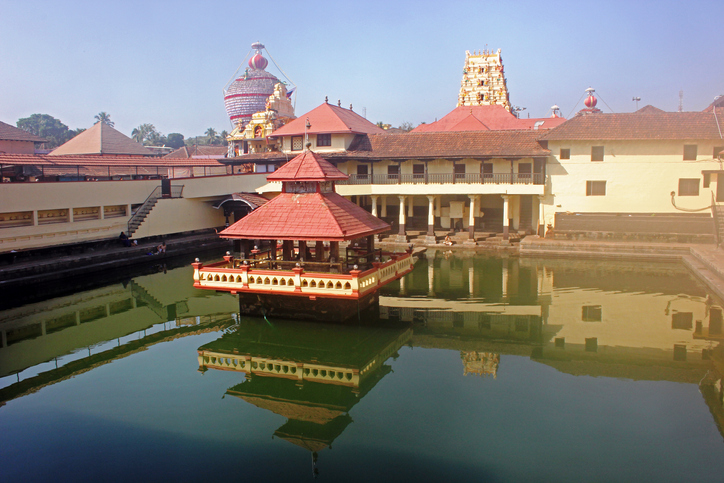
The Udupi Sri Krishna temple

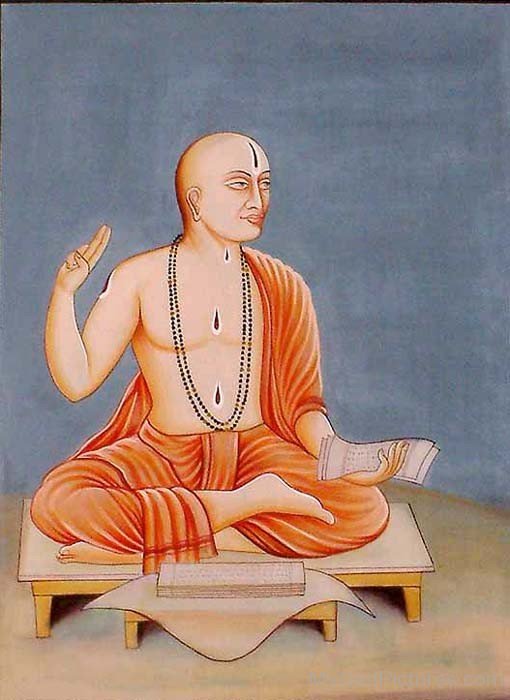
Madhvacharya, an influential 13th Century Guru was a management genius. While his spiritual contributions are unparalleled, there is another amazing contribution. He presented a very intelligent management paradigm that religious organizations should take note of. He recognized all these problems and came up with a master stroke of a management strategy.

Madhvacharya disappeared from our view in the Himalayas at Badarikashram over 700 years ago. He went to associate with his Guru Sri Veda Vyasa. It is said that the spiritual master and disciple are still living there, up in the Himalayas. But the management system he put into place still continues to work in Udupi, at the Sri Krishna Matha.

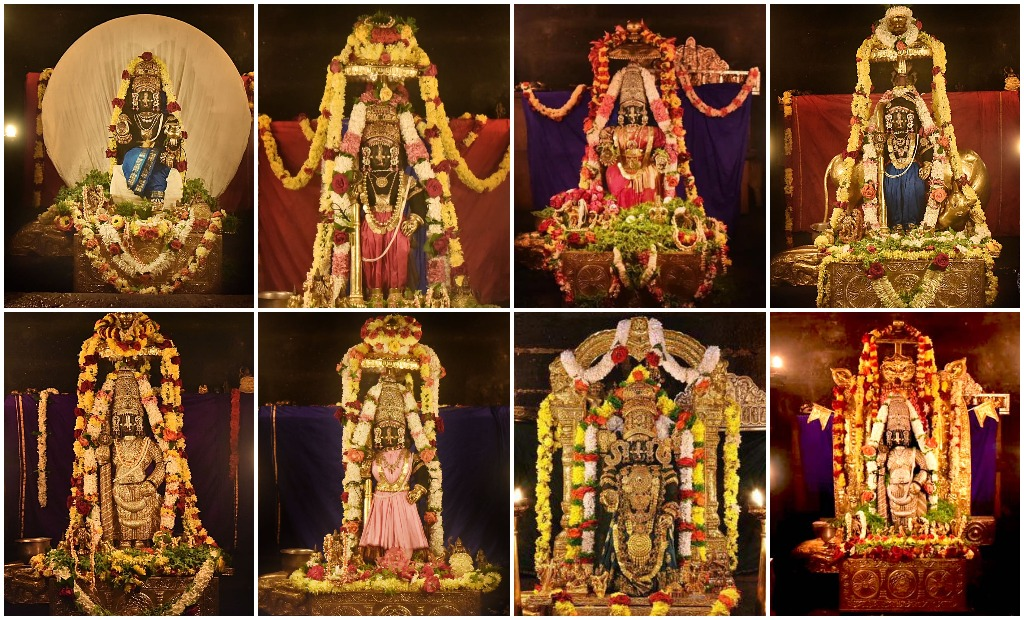
Lord Sri Krishna in Udupi

The Rotating Management System
What is Madhvacharya’s management genius? He built 8 management teams under 8 capable leaders. Not one, not two, but EIGHT! He then put each team in charge of management of the temple for two years, on a permanent rotation basis. So one team takes charge, manages the massive temple for two years, then hands over to the next team… continuously rotating.

Benefits of Rotation
Each team gets 14 years to invest into their own physical, mental, emotional and spiritual wellbeing. Then they sacrifice two years to serve at the temple… and then, before any of the above negative things start happening, they exit the main stage. They are now ready to recover, recoup, and reinvest into their spiritual core. They get a good 14 years to regroup, share reflections, and prepare for their next shot at the management service.

The Impact on Manager Motivation
Put yourself in their shoes. If you get 14 years to prepare for something, how eager and enthusiastic would you be? How hard-working, sincere, and serious would you be if you have just 2 years to actually do it? Many leaders don’t even get one chance to do the service, because after all, death appears to everyone. But if you do get more than one opportunity, we can be sure that the service will be always better.

The Importance of Rotation
There is no burnout, and no time to get involved in any detrimental activities. There is enough time to deeply ponder the purpose and mood and mission of the service. Religious organizations should take note of this. Any organization that does not follow such a rotation policy risks making the headlines for the wrong reasons. Do not keep a manager in a management role for too long. Find others, keep switching it up. Give everyone enough time to take care of their own health, physical, mental, emotional, and above all, spiritual.

Sri Krishna says this in the Bhagavad Gita…

युक्ताहारविहारस्य युक्तचेष्टस्य कर्मसु ।
युक्तस्वप्‍नावबोधस्य योगो भवति दु:खहा ॥ १७ ॥

yuktāhāra-vihārasya
yukta-ceṣṭasya karmasu
yukta-svapnāvabodhasya
yogo bhavati duḥkha-hā

He who is regulated in his habits of eating, sleeping, recreation and work can mitigate all material pains by practicing the yoga system.

https://vedabase.io/en/library/bg/6/17/

If you are a manager in a religious organization yourself, watch out!

You won’t get to your spiritual destination if you don’t take care of your spiritual growth. Managerial growth, or more fame, power, money or influence, is not the same as spiritual growth! Please guard your spiritual life with great attention!

Happy Hare Krishnas

I pray for your success!

Hare Krishna!

The author humbly expresses his gratitude to Sriman Ravindra Shyamsundar Joshi, his elder brother. His valuable feedback on this article addressed a key misunderstanding. It helped clarify that burnout was not the only cause of managerial issues in religious organizations.