Can Spiritual Organizations Truly Exist?

Is “spiritual organization” a contradiction? Spirituality is all about simplicity while organizations lean towards complexity. Combining them poses risks, like losing sight of true spiritual goals. Yet, if done right, organizations can help spread spiritual teachings and drive broader impacts. It’s all about focus! Do you see problems with spiritual organizations?

“Spiritual Organization” – is that an oxymoron?

An oxymoron is when two contradictory words are used together. This can occur sometimes intentionally and sometimes by accident. Occasionally, it is not meant to be so, but hypocrisy is the cause.

In this case, we are aware of many spiritual organizations, think temples, churches, mosques, and so on… there are many. Some of them are spiritual, some religious, some both.

When I think about what spirituality is, and what organization must be, we wonder if they can ever go together.

Simplicity vs. Complexity

Spirituality means simplicity. For someone who is not simple, spiritual life is extremely complicated.

But organization means complexity… it is impossible to build and grow an organization without avoiding complexity.

On the other hand, without good organization, it is not possible to have a greater spiritual impact. Many pure saints have come and gone for thousands of years. Their existence remains a well-kept secret. They come, and they go, sight unseen. Almost no one knows about their teachings, instructions, or example.

Spiritual descendants of those simple saints often take a risk. They make the effort to organize and distribute their teachings on a wider scale. They regularly get sucked into the complexities of organizations. As a result, they sometimes lose sight of the simplicity that makes spiritual practice possible.

So this is the dichotomy… “spiritual” means simple, frugal, minimal, open, honest, etc.

But “organization” means people, money, structure, process, secrecy, and inevitably, politics.

Can spirituality exist in an organization? Can an organization fulfill spiritual goals?

How to properly understand this? How to reconcile these?

Let us examine both, and understand the risks better.

Spirituality

Spirituality means a pursuit that is non-material. A genuine spiritualist does not care for money, fame, power, influence, or any material trappings.

Organization

Organization means, fundamentally, some land or real estate, some money, and people… and some structure so that it can all be effectively governed.

In an organization, we need different types of roles. We need individual contributors. These include preachers, teachers, singers, cooks, cleaners, priests, musicians, etc. We also need managers, we need wranglers who can get things done. We need thinkers, we need executive leaders who can articulate a vision. And we need those who can execute on that vision. We need accountants, we need lawyers, we need marketing people too… we need fundraisers, we need people leaders and technically skilled leaders.

Amidst all of this, there is also a class of bureaucrats… people who can figure out a system and work it, to their advantage, to others’ disadvantage. There is also a rise of the people who don’t really contribute to the mission of the organization. They broker relationships, they broker rewards, they broker power and peddle influence. They also broker corruption. It is unavoidable, in any organization, even a spiritual organization. Even if there are parasites. Yes, we can strive to root them out, but it is often hard to tell. So we often tolerate them.

Why? Because a genuine spiritual process can transform even the most hardened materialist. So we have hope for them, even if we see through them. Even if we see their machinations, their schemes. Even if we must tolerate their shenanigans, while continuing to cultivate spiritual purity ourselves.

Srila Prabhupada spoke about this…

Just like a ripe mango and green mango. Green mango is the cause of ripe mango. But to taste ripe mango is better than unripe mango. Similarly, before attaining love of Godhead, you have got different stages. Just like the same mango, it passes through different stages, then one day it comes nice yellow color, fully ripened, and taste is so nice.

The same mango. The mango does not change, but it comes to the mature stage. So this . . . as this example, the mango is in the beginning a flower, then gradually a little fruit. Then gradually it grows. Then it becomes very tight, green, and then, gradually, it becomes little, little yellowish, and it becomes fully ripe.

This is the process of everything. In material world also, there are six processes, and the last process is vanquish. This mango example or any other material example, we can accept it so far the growth is required, concerned, but material example is not perfect. Just like mango, when it is ripe, somebody eats, that’s all right.

Otherwise it will overripe, it will decompose, it will fall down and finish. That is material. But spiritual is not like that. It is not finished. If you once come to the stage of mature stage of love, then that perfectional stage continues eternally, and your life is successful. Premā pum-artho mahān 

https://vanisource.org/wiki/681018_-Lecture-_Seattle?hl=ripe|mango

Should we do away with organizations?

It is tempting to think in that way… no organizations, no money, no power, no corruption, no bureaucrats, no parasites, right?

The power, the money, the powerful, the influential, the famous, and the stars. We all know fame corrodes and power corrupts. Absolute power corrupts absolutely.

No, because despite it all… Despite many challenges. By organizing ourselves better, we can help more souls advance spiritually. It is worth all the effort. Organization, sacrifices, and compromises make it possible, but only when we haven’t lost sight of the goal. Working together towards a common goal makes it possible, even if it is difficult to do so.

After all, one lone saintly person, how much can he do? How many souls can he reach?

So many saints have come and gone. Many have cried in the wilderness. Most are unknown. Those saints who took the time and trouble to organize did something tangible. Even if they had to distract themselves with the mundane temporarily, their efforts were worthwhile.

There is every risk that an organization becomes ineffective… That is a risk for any organization. Not just a danger for spiritual organizations.

I had written about this before. Srila Prabhupada wisely warned us against thinking that simply by being part of some organization we can advance spiritually…

But if we want to go to the spiritual platform, then these bodily demands, at least for the present, we have to regulate. We cannot enjoy material life without any restriction and at the same time we can stand on the spiritual platform. That is the whole thing. The difficult problem is there: we want to be spiritualist by speculation only. That is the whole tendency.

People are much interested in philosophical speculation without any practical life. In the modern world it is said, yaśo ‘rthe dharma-yajanam. This is the symptom of this age. Yaśaḥ arthe. I want to associate with some organization, spiritual, just for the sake of name: “Oh, I am attached to that such big organization.” But, so far my life is concerned, it is as it is. https://vanisource.org/wiki/660418_-_Lecture_BG_02.59-69_-_New_York?hl=organization

So? What is the conclusion?

Spiritualists, organize properly!

But how?

By making sure to keep the main thing the main thing!
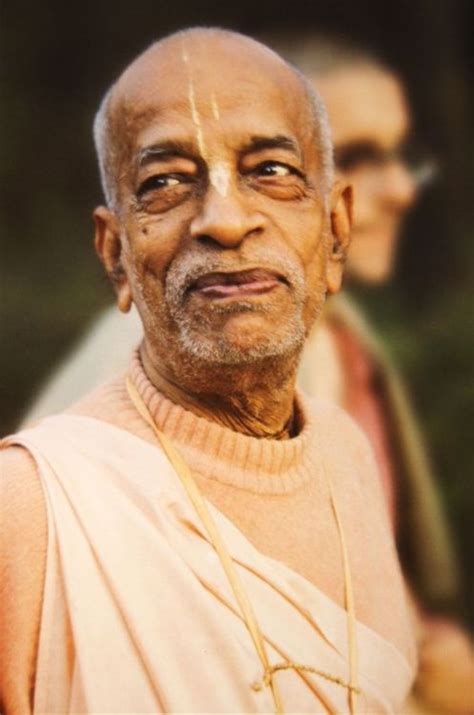
Srila Prabhupada

I leave you with profound instructions from the great His Divine Grace A. C. Bhaktivedanta Swami Prabhupada.

The point is to be engaged in doing something for Krishna, never mind what is that job, but being so engaged in doing something very much satisfying to the devotee that he remains always enthusiastic.

He will automatically follow the regulative principles because they are part of his occupational duty–by applying them practically as his occupational duty, he realises the happy result of regulative principles.

So the future of this Krishna Consciousness movement is very bright, so long the managers remain vigilant that 16 rounds are being chanted by everyone without fail, that they are all rising before four morning, attending mangal arotik–our leaders shall be careful not to kill the spirit of enthusiastic service, which is individual and spontaneous and voluntary.

They should try always to generate some atmosphere of fresh challenge to the devotees, so that they will agree enthusiastically to rise and meet it.

That is the art of management: to draw out spontaneous loving spirit of sacrificing some energy for Krishna.

But where are so many expert managers? All of us should become expert managers and preachers. We should not be very much after comforts and become complacent or self-contented.

There must be always some tapasya, strictly observing the regulative principles

Krishna Consciousness movement must be always a challenge, a great achievement to be gained by voluntary desire to do it, and that will keep it healthy.

So you big managers now try to train up more and more some competent preachers and managers like yourselves.

Forget this centralizing and bureaucracy.

https://vanisource.org/wiki/721222_-_Letter_to_Karandhara_written_from_Bombay?hl=individual|spontaneous|voluntary

This is a cautionary note for all spiritual organizations.

The standard of education

We wake up to horrible headlines every day. People in leadership roles, people who are “highly educated” act in terrible ways.

We come up with band-aid solutions every day, whack-a-mole style. But have we examined the root cause of the problems we face in our world?

Could there be a problem with our education system?

What does it mean to be “educated”? What is the standard of education? What is the bar? How do we know if someone is educated or not?

I was shocked and disgusted to see news like this in the media…

  • Bengaluru student raped, blackmailed by college professors; three arrested
  • Former professor charged with raping multiple victims from El Salvador
  • Two women say Stanford and UC Berkeley professors raped them
  • UP professor booked for raping female students
  • Muslim Schoolteacher rapes and marries 12-year old student
  • Mumbai Teacher Gave Student Anti-Anxiety Meds, Sexually Assaulted Him

How is it that teachers and professors did this to their own students?

We are very proud of our education system in the modern world.

We gush about our kindergarten, primary, secondary, tertiary education… about Montessori and Waldorf, and other types of education.

We talk about degrees, undergraduate, graduate, PhDs.

We talk about vocational training, we laud the trades.

And yet, on a daily basis, we see scandals in the world around us. They occur in the corporate world, the medical profession, business, and government…

There are many band-aid solutions floating around, but do we know the real cause?

Our education system is a failure

Why do I say that?

Because education is meant to produce cultured individuals of high character. Someone objects that this is a subjective thing. Who can define what is a “cultured” individual with “high character”?

That is yet another failure of our education system. We don’t even know what the definition of simple things is.

The definition of “well educated” has been known for millions of years.

If someone does not trust the pedigree of Vedic culture, there is more recent definition. More than 1,500 years ago, the great thinker Chanakya Pandit wrote:

mātṛvat para-dāreṣu
para-dravyeṣu loṣṭravat
ātmavat sarva-bhūteṣu
yaḥ paśyati sa paṇḍitaḥ

“One who considers another’s wife as his mother, another’s possessions as a lump of dirt and treats all other living beings as he would himself, is considered to be learned.”

quoted by Srila A. C. Bhaktivedanta Swami Prabhupada in https://vedabase.io/en/library/sb/9/10/27/

But there is hardly such a person trained by the modern education system… And if you can actually find such a person, that is in spite of their education. It is not because of their education.

We don’t teach such things in our education system. What do we teach?

We teach how to compete, how to defeat, how to win at any cost. We teach how to beg, borrow, or steal. We teach how to be passionate or ignorant, but never how to be “good”. We simply teach people how to make a dollar, or a rupee, or a pound or euro. That is not education!

Education means to raise a student above their low class impulses, to be good in the face of temptation! But it is impossible for our education system today to do any better.

The very definition of “goodness” is unknown in the modern world!

Here are a few definitions of “goodness” from the Vedic scriptures…

  • nityasattvasthaḥ — in a pure state of spiritual existence BG 2.45
  • ūrdhvaṁ gacchanti sattva-sthā – Those situated in the mode of goodness gradually go upward to the higher planets BG 14.18
  • sattvasaṁśuddhiḥ — purification of one’s existence BG 16.1
  • sāttvika – that which increases the duration of life, purify one’s existence and give strength, health, happiness and satisfaction BG 17.8
  • na dveṣṭy akuśalaṁ karma kuśale nānuṣajjate
    tyāgī sattva-samāviṣṭo medhāvī chinna-saṁśayaḥ

The intelligent renouncer situated in the mode of goodness, neither hateful of inauspicious work nor attached to auspicious work, has no doubts about work. BG 18.10

There are many many wonderful definitions of what it means to be “good” in Vedic literature. When we look at the few definitions of “goodness” above, we see that our education system does not touch these at all:

  1. Spirituality
  2. Understanding of the evolution of the qualities of life
  3. Purification of our very existence
  4. Renunciation, Contentment, etc.

As a result, no matter how educated someone is, they inevitably indulge in this:

  1. Look upon other women (or men) as objects of their own gratification
  2. Covet others’ wealth and try to make it their own
  3. Emphasize and amplify the differences between others and oneself, treat others differently from how one would like to be treated

There is plenty of evidence to support the above claims.

Do you not see how things are in this world? Everyone is searching after one sexual experience after another… constantly, in real life, in the media, on social media, on the Internet… our society has become a cesspool of illicit sexual indulgence.

The men do not see other women as mothers. Nor do the women hold themselves in high enough regard to act and behave as mothers should. In fact, there is hardly any understanding of the exalted nature of mothers in our world! Some women, even elderly women, balk at being called “mother”, preferring to remain sex objects or identify with other designations.

With wealth, it is a free-for-all, “finders keepers losers weepers” goes the saying taught to tiny tots these days! No one sees others’ possessions as good as worthless. They are constantly envious of what others have, and how to take it from them, by hook or by crook. This goes all the way from individuals to corporations to countries!

And almost everyone treats everyone else differently from how they would like to be treated… There is widespread harassment, racism, sexism, ageism, nationalism, ableism, classism, and so much more.

The education sytem does not teach that we are all spirit souls, equal spiritually!

So, dear reader, our education system has failed.

We need to bring it back to this standard of education.

“One who considers another’s wife as his mother, another’s possessions as a lump of dirt and treats all other living beings as he would himself, is considered to be learned.”

All teachers, lecturers, instructors, professors, and other educators who can’t uphold this principle must be educated. They must reach the right standard before being trusted to educate anyone.

Until then, the education system will stay broken… and we will continually experience fresh horrors from the “products” of this demonic education system we push.

Anyone who can’t uphold the above principles must be seen as uneducated. They should not be given any position of leadership in any part of society.

Most of the modern leaders, including are uneducated, unfortunately. This includes this representative sample of those who lead our society today.

  • Teachers
  • Professors
  • Politicians
  • Business leaders
  • Government leaders
  • Scientists
  • Researchers
  • Doctors
  • Military Leaders
  • Engineers
  • Architects
  • Judges
  • Lawyers
  • Police Officers
  • Accountants
  • IT Professionals
  • Corporate Leaders
  • Social Workers
  • Economists
  • Religious Leaders

Can we wake up to the real standard of education?

Why Religious Conversion Does Not Equal True Transformation

A reflection on the nature of religious conversion… does it often lack genuine transformation? What is religious conversion driven by? Let us not ignore the importance of personal development and the cultivation of qualities such as compassion, truthfulness, and humility, rather than merely changing religious labels!

A Hindu can convert to Islam or Christianity. A Christian can convert to Hinduism or Islam. And of course, a Muslim can give up his faith to become an agnostic or Hindu or Christian. Replace any label with any other label, an “X” can convert to “Y”.

When someone converts, then some rejoice, and others fret and fume. One lady once said to me, after revealing to me her previous background “don’t reveal this to anyone, those people, they will kill me if they find out.”. I was quite saddened to hear that someone could be so barbaric as to try and kill her.

Neither is religious conversion of any value, nor should we worry about it. Rest assured, it will have no effect whatsoever. Religious conversion is a farce. It is a political move at best. Why is that?

The work we do inside a trligious tradition matters, not just professing some faith!

What is The Purpose of Religious Tradition?

Because, religious traditions, are like universities or other educational institutions. You don’t “convert” from Stanford to Yale, for example. Neither do you “convert” from computer science to mathematics.

Yes, you can transfer credits from one program to another, you can even switch from one university to another, but it is laughable to say that you have “converted” from studying to be, say, a doctor, to studying to be a medical researcher.

No matter if you are a doctor, or a lawyer, or a medical researcher or a mathematician or a software engineer or whatever… ultimately the result of your work is an income, which you use to meet your needs and wants. A religious tradition is similar, in it that you are meant to use your religious tradition to get closer to God! So don’t use your religious tradition for political purposes or any other lesser purpose!

Now, after an academic transfer, if you actually complete the requirements of your new program and put your acquired knowledge and experience to do better than before, then maybe the transfer was worthwhile, otherwise, it is like the farce of enrolling into a program, and doing nothing to actually fulfill the requirements!

Conversions Galore, and Re-Conversions Too!

I come from India, and throughout my history lessons, I studied how, starting about 2,500 years ago, “Hindus” were converting to Buddhism. Then, I read how, as the philosophy of Buddhism was defeated by great Acharyas such as Adi Shankaracharya, Sripad Ramanujacharya, and Sri Madhvacharya… all those former Buddhists reconverted to “Hinduism”.

Then later on, the Muslims invaded India from Central Asia, the Middle East, and those parts of the world… and they “converted” many of the “Hindus” into “Muslims”. Some of those “Muslims” later reconverted to being called “Hindus” while others adopted their new identities.

After a few hundred years, the Christian missionaries came to India, and began to “convert” Hindus, Muslims, and even the remaining Buddhists, into “Christians”. Some convert back, or to something else!

And this conversion roulette continues to be played today.

It is a farce. A person who professes some label, now claiming to profess some other label doesn’t change anything!

rotten fruit juice is no nectar

Labels Labels Everywhere

If you took some rotten fruit juice and put it into a different bottle labeled something… will the rotten fruit juice be transformed into nectar? No, rotten will remain rotten, maybe even become more so!

You can take an animal, let’s say, a dog, and you can label him a cat, but does he change to being a cat? Can you label a bird as a fish and now the “bird-labeled-fish” will be able to breathe under water and swim around like a fish?

Yes, you could try to indoctrinate the dog all you want… you could tell him “ok, now you are a cat… cats are ‘yours’ and dogs are the enemy”… will it work? No, the next time that dog sees a cat, he will be after it, barking away.

a dog is a dog, in any dress or conditioniong

Similarly, if you take a person who is unable to, say, practice the high Brahminical standards… and you convert that person into, say, a Christian. Will there be any transformation in the person based on this conversion? No, that person will still not be able to follow the highest tenets of Christianity!

In this case, the religious conversion was just to avoid following higher standards. In this way, conversion for the sake of some temporary economic benefit, or social pressure, or frustration with the community – these are the signs of a farcical conversion!

Someone may convert to Christianity because of promise of money or a job or some gifts, like a blanket or a pot or a stove… some convert to Christianity to get access to an addiction recovery service.

After all, how many Christians can follow the ten commandments? In fact, most of the Christians were so incapable of following the ten commandments that they had to water them down! And still they are hard to follow for most people who profess Christianity.

Embodying the Essence!

But to a dedicated follower of the Vedic Principles, the ten commandments are nothing, merely common sense, not even some great philosophical revelation! They have no trouble naturally following the ten commandments!

So what is the real deal? The real deal is when a person’s consciousness is transformed, taking it from animal-like consciousness to a divine state of consciousness!

That is the test. When someone tells me “I am X” or “I am Y”… I look at whether the person has actually developed a love for God, a love for their fellow beings, and not just humans of a certain label. I look for qualities like compassion, cleanliness, truthfulness, punctuality, honesty, and so on. In fact, these are the qualities I try and cultivate within myself…

kṛpālu, akṛta-droha, satya-sāra, sama
nidoṣa, vadānya, mṛdu, śuci, akiñcana
sarvopakāraka, śānta, kṛṣṇaika-śaraṇa
akāma, anīha, sthira, vijita-ṣaḍ-guṇa
mita-bhuk, apramatta, mānada, amānī
gambhīra, karuṇa, maitra, kavi, dakṣa, maunī

SYNONYMS
kṛpālu—merciful; akṛta-droha—not defiant; satya-sāra—thoroughly truthful; sama—equal; nidoṣa—faultless; vadānya—magnanimous; mṛdu—mild; śuci—clean; akiñcana—without material possessions; sarva-upakāraka—working for the welfare of everyone; śānta—peaceful; kṛṣṇa-eka-śaraṇa—exclusively surrendered to Kṛṣṇa; akāma—desireless; anīha—indifferent to material acquisitions; sthira—fixed; vijita-ṣaṭ-guṇa—completely controlling the six bad qualities (lust, anger, greed, etc.); mita-bhuk—eating only as much as required; apramatta—without inebriation; māna-da—respectful; amānī—without false prestige; gambhīra—grave; karuṇa—compassionate; maitra—a friend; kavi—a poet; dakṣa—expert; maunī—silent.

TRANSLATION
”Devotees are always merciful, humble, truthful, equal to all, faultless, magnanimous, mild and clean. They are without material possessions, and they perform welfare work for everyone. They are peaceful, surrendered to Kṛṣṇa and desireless. They are indifferent to material acquisitions and are fixed in devotional service. They completely control the six bad qualities—lust, anger, greed and so forth. They eat only as much as required, and they are not inebriated. They are respectful, grave, compassionate and without false prestige. They are friendly, poetic, expert and silent.

https://vedabase.io/en/library/cc/madhya/22/78-80/

In fact, the Bhagavatam goes on to say this…

ŚB 5.18.12
यस्यास्ति भक्तिर्भगवत्यकिञ्चना
सर्वैर्गुणैस्तत्र समासते सुरा: ।
हरावभक्तस्य कुतो महद्गुणा
मनोरथेनासति धावतो बहि: ॥ १२ ॥

yasyāsti bhaktir bhagavaty akiñcanā
sarvair guṇais tatra samāsate surāḥ
harāv abhaktasya kuto mahad-guṇā
manorathenāsati dhāvato bahiḥ

Synonyms
yasya — of whom; asti — there is; bhaktiḥ — devotional service; bhagavati — to the Supreme Personality of Godhead; akiñcanā — without any motive; sarvaiḥ — with all; guṇaiḥ — good qualities; tatra — there (in that person); samāsate — reside; surāḥ — all the demigods; harau — unto the Supreme Personality of Godhead; abhaktasya — of a person who is not devoted; kutaḥ — where; mahat-guṇāḥ — good qualities; manorathena — by mental speculation; asati — in the temporary material world; dhāvataḥ — who is running; bahiḥ — outside.

Translation
All the demigods and their exalted qualities, such as religion, knowledge and renunciation, become manifest in the body of one who has developed unalloyed devotion for the Supreme Personality of Godhead, Vāsudeva. On the other hand, a person devoid of devotional service and engaged in material activities has no good qualities. Even if he is adept at the practice of mystic yoga or the honest endeavor of maintaining his family and relatives, he must be driven by his own mental speculations and must engage in the service of the Lord’s external energy. How can there be any good qualities in such a man?

https://vedabase.io/en/library/sb/5/18/12/

In the purport, Srila Prabhupada clarifies more…

The Qualities of an Advanced Spiritualist

In the Ādi-līlā of Caitanya-caritāmṛta, Chapter Eight, there is a description of some of the qualities of devotees. For example, Śrī Paṇḍita Haridāsa is described as being very well-behaved, tolerant, peaceful, magnanimous and grave. In addition, he spoke very sweetly, his endeavors were very pleasing, he was always patient, he respected everyone, he always worked for everyone’s benefit, his mind was free of duplicity, and he was completely devoid of all malicious activities. These are all originally qualities of Kṛṣṇa, and when one becomes a devotee they automatically become manifest. Śrī Kṛṣṇadāsa Kavirāja, the author of Caitanya-caritāmṛta, says that all good qualities become manifest in the body of a Vaiṣṇava and that only by the presence of these good qualities can one distinguish a Vaiṣṇava from a non-Vaiṣṇava. Kṛṣṇadāsa Kavirāja lists the following twenty-six good qualities of a Vaiṣṇava:

(1) He is very kind to everyone.

(2) He does not make anyone his enemy.

(3) He is truthful.

(4) He is equal to everyone.

(5) No one can find any fault in him.

(6) He is magnanimous.

(7) He is mild.

(8) He is always clean.

(9) He is without possessions.

(10) He works for everyone’s benefit.

(11) He is very peaceful.

(12) He is always surrendered to Kṛṣṇa.

(13) He has no material desires.

(14) He is very meek.

(15) He is steady.

(16) He controls his senses.

(17) He does not eat more than required.

(18) He is not influenced by the Lord’s illusory energy.

(19) He offers respect to everyone.

(20) He does not desire any respect for himself.

(21) He is very grave.

(22) He is merciful.

(23) He is friendly.

(24) He is poetic.

(25) He is expert.

(26) He is silent.

So let us all, with every means offered to us by our own religious tradition, strive to inculcate these qualities.

Let us not be a disgrace to our teachers, prophets, saints, philosophers, Gurus, Acharyas, Rabbis, Mullahs, Imams, Priests, Mentors, Pastors, Sangomas, and so on.

Let us not be a disgrace to our leaders. And it will be worse if we ourselves are the leaders!

In fact, it will be an even bigger disgrace if we ourselves are in such a respectable position as to advise others, and we ourselves have none of the transformation, none of the qualities mentioned above.

Let us all be converted in the only way that matters, develop pure Love for God.

Srila Prabhupada, a pure lover of God.

Hare Krishna!