21 Jul 2024 The Ultimate Goal of all Ambitions ISKCON Toronto

Ambitions are something everyone has, someone has high ambitions, someone has low ambitions, someone has ordinary ambitions, someone has extraordinary ambitions.

Someone wants to be very famous… someone wants to be very rich… someone wants to be very knowledgeable… someone aspires for strength and power…. someone may have a combination of different categories of ambitions.

But if we take all ambitions into account, what is the ultimate goal of all ambitions?

What is a worthy ambition and what is an unworthy ambition?

If we take “ambitions” as a broad category, then what is the ultimate goal of all ambitions?

Hare Krishna!

Ambitions are something everyone has, someone has high ambitions, someone has low ambitions, someone has ordinary ambitions, someone has extraordinary ambitions.

Someone wants to be very famous… someone wants to be very rich… someone wants to be very knowledgeable… someone aspires for strength and power…. someone may have a combination of different categories of ambitions.

Why does someone have any ambition?

What is a worthy ambition and what is an unworthy ambition?

If we take “ambitions” as a broad category, then what is the ultimate goal of all ambitions?

What is the ultimate goal of all ambition?

TOPIC: Srimad Bhagavatam verse 6.18.75

DATE📆: Sunday, 21st July 2024

TIME⌚: 7:30 AM. ET USA+Canada/ 6:30 AM. CT USA/ 4:30 AM PST USA/ 12:30 PM UK/ 8:30 PM MYT/ 5:00 PM IST

The class will be available on ISKCON Toronto’s Youtube Channel, and I will also record audio separately.

https://www.youtube.com/channel/UCIkoQgJea7Bo3zLiJRGdf_Q

Please join online if you’re interested in joining this class, or let me know if you want to get a link to the recording.

Diti Vows to Kill King Indra


This chapter gives the history of Diti, the wife of Kaśyapa, and how she followed a vow to have a son who would kill Indra. It also describes how Indra attempted to foil her plan by cutting to pieces the son within her womb.

In relation to Tvaṣṭā and his descendants, there is a description of the dynasty of the Ādityas (sons of Aditi) and other demigods. Pṛśni, the wife of Aditi’s fifth son named Savitā, had three daughters — Sāvitrī, Vyāhṛti and Trayī — and very exalted sons named Agnihotra, Paśu, Soma, Cāturmāsya and the five Mahāyajñas. Siddhi, the wife of Bhaga, had three sons, named Mahimā, Vibhu and Prabhu, and she also had one daughter, whose name was Āśī. Dhātā had four wives — Kuhū, Sinīvālī, Rākā and Anumati — who had four sons, named Sāyam, Darśa, Prātaḥ and Pūrṇamāsa respectively. Kriyā, the wife of Vidhātā, gave birth to the five Purīṣyas, who are representatives of five kinds of fire-gods. Bhṛgu, the mind-born son of Brahmā, took his birth again from Carṣaṇī, the wife of Varuṇa, and the great sage Vālmīki appeared from Varuṇa’s semen. Agastya and Vasiṣṭha were two sons of Varuṇa and Mitra. Upon seeing the beauty of Urvaśī, Mitra and Varuṇa discharged semen, which they kept in an earthen pot. From that pot, Agastya and Vasiṣṭha appeared. Mitra had a wife named Revatī, who gave birth to three sons — Utsarga, Ariṣṭa and Pippala. Aditi had twelve sons, of whom Indra was the eleventh. Indra’s wife was named Paulomī (Śacīdevī). She gave birth to three sons — Jayanta, Ṛṣabha and Mīḍhuṣa. By His own powers, the Supreme Personality of Godhead appeared as Vāmanadeva. From His wife, whose name was Kīrti, appeared a son named Bṛhatśloka. Bṛhatśloka’s first son was known as Saubhaga. This is a description of the sons of Aditi. A description of Āditya Urukrama, who is an incarnation of the Supreme Personality of Godhead, will be offered in the Eighth Canto.

The demons born of Diti are also described in this chapter. In the dynasty of Diti appeared the great saintly devotee Prahlāda and also Bali, Prahlāda’s grandson. Hiraṇyakaśipu and Hiraṇyākṣa were the first sons of Diti. Hiraṇyakaśipu and his wife, whose name was Kayādhu, had four sons — Saṁhlāda, Anuhlāda, Hlāda and Prahlāda. They also had one daughter, whose name was Siṁhikā. In association with the demon Vipracit, Siṁhikā bore a son named Rāhu, whose head was severed by the Supreme Personality of Godhead. Kṛti, the wife of Saṁhlāda, bore a son named Pañcajana. Hlāda’s wife, whose name was Dhamani, gave birth to two sons — Vātāpi and Ilvala. Ilvala put Vātāpi into the form of a ram and gave him to Agastya to eat. Anuhlāda, in the womb of his wife, Sūryā, begot two sons, named Bāṣkala and Mahiṣa. Prahlāda’s son was known as Virocana, and his grandson was known as Bali Mahārāja. Bali Mahārāja had one hundred sons, of whom Bāṇa was the eldest.

After describing the dynasty of the Ādityas and the other demigods, Śukadeva Gosvāmī describes Diti’s sons known as the Maruts and how they were elevated to the position of demigods. Just to help Indra, Lord Viṣṇu had killed Hiraṇyākṣa and Hiraṇyakaśipu. Because of this, Diti was very envious, and she was eager to have a son who could kill Indra. By her service, she enchanted Kaśyapa Muni in order to beg from him a greater son to do this. In corroboration of the Vedic injunction vidvāṁsam api karṣati, Kaśyapa Muni was attracted to his beautiful wife and promised to grant her any request. When, however, she requested a son who would kill Indra, he condemned himself, and he advised his wife Diti to follow the Vaiṣṇava ritualistic ceremonies to purify herself. When Diti, following the instructions of Kaśyapa, engaged in devotional service, Indra could understand her purpose, and he began observing all her activities. One day, Indra had the opportunity to see her deviating from devotional service. Thus he entered her womb and cut her son into forty-nine parts. In this way the forty-nine kinds of air known as the Maruts appeared, but because Diti had performed the Vaiṣṇava ritualistic ceremonies, all the sons became Vaiṣṇavas.

ŚB 6.18.75

आराध्यात्मप्रदं देवं स्वात्मानं जगदीश्वरम् ।
को वृणीत गुणस्पर्शं बुध: स्यान्नरकेऽपि यत् ॥ ७५ ॥

ārādhyātma-pradaṁ devaṁ
svātmānaṁ jagad-īśvaram
ko vṛṇīta guṇa-sparśaṁ
budhaḥ syān narake ’pi yat

Synonyms

ārādhya — after worshiping; ātmapradam — who gives Himself; devam — the Lord; svaātmānam — the most dear; jagatīśvaram — the Lord of the universe; kaḥ — what; vṛṇīta — would choose; guṇasparśam — material happiness; budhaḥ — intelligent person; syāt — is; narake — in hell; api — even; yat — which.

Translation

The ultimate goal of all ambitions is to become a servant of the Supreme Personality of Godhead. If an intelligent man serves the most dear Lord, who gives Himself to His devotees, how can he desire material happiness, which is available even in hell?

Purport

An intelligent man will never aspire to become a devotee to achieve material happiness. That is the test of a devotee. As Śrī Caitanya Mahāprabhu teaches:

na dhanaṁ na janaṁ na sundarīṁ
kavitāṁ vā jagad-īśa kāmaye
mama janmani janmanīśvare
bhavatād bhaktir ahaitukī tvayi

“O almighty Lord, I have no desire to accumulate wealth, nor do I desire beautiful women, nor do I want any number of followers. I only want Your causeless devotional service birth after birth.” A pure devotee never begs the Lord for material happiness in the shape of riches, followers, a good wife or even mukti. The Lord promises, however, yoga-kṣemaṁ vahāmy aham: “I voluntarily bring everything necessary for My service.”

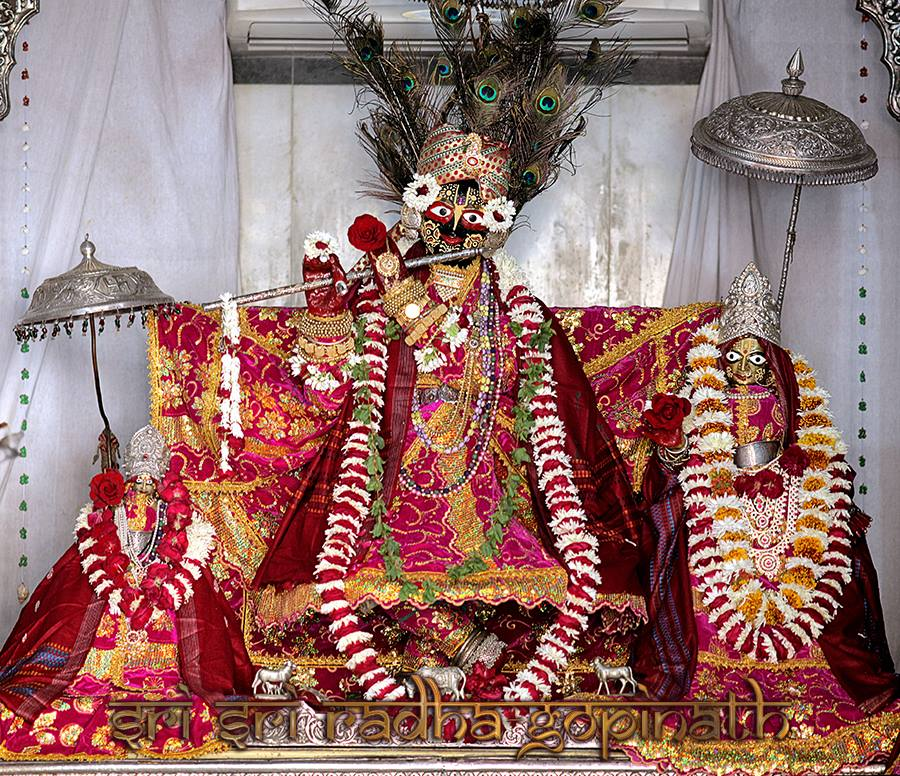
Confused – why are there different deities of Krishna when Krishna is One The Original Supreme Personality of Godhead?

If Krishna is One, then why do we have so many deities like Madana Mohana, Govinda, and Gopinath? Is one deity superior to others?

Question:

In this purport from CC Adi 1.47, I don’t understand the purport…

https://vedabase.io/en/library/cc/adi/1/47/

Why the different deities have different roles? Aren’t they all one-  svayam bhagwan krsna?  Is Gopinath vigraha superior to all deities? 

“Śrīla Sanātana Gosvāmī is the ideal spiritual master, for he delivers one the shelter of the lotus feet of Madana-mohana. Even though one may be unable to travel on the field of Vṛndāvana due to forgetfulness of his relationship with the Supreme Personality of Godhead, he can get an adequate opportunity to stay in Vṛndāvana and derive all spiritual benefits by the mercy of Sanātana Gosvāmī. Śrī Govindajī acts exactly like the śikṣā-guru (instructing spiritual master) by teaching Arjuna the Bhagavad-gītā. He is the original preceptor, for He gives us instructions and an opportunity to serve Him. The initiating spiritual master is a personal manifestation of Śrīla Madana-mohana vigraha, whereas the instructing spiritual master is a personal representative of Śrīla Govindadeva vigraha. Both of these Deities are worshiped at Vṛndāvana. Śrīla Gopīnātha is the ultimate attraction in spiritual realization.”

Answer:

Yes, Krishna is one. Just like a multi-faceted diamond shines in different colours, similarly Krishna manifests differently according to the need and desire of the devotee…

Take for example, a man… in the business world he may be called as “Mr. Rana”, by his friends as “Arpit”, by his wife as “honey” by his juniors as “sir”, by his friends as “Arpi”, by his kids as “dad”… and so on. It is not that the person is different, he is the same person, but manifesting differently to different people… he’s doing business in one place, obeying instructions in another place, and so on…

For example, we have Sri Radha Khirchor Gopinath on the altar, but to the person who is an atheist They manifest as a statue, to a person fearful of his mistakes, They appear as the Lawgivers… to a person in the mood of awe and reverence or not yet pure devotee… as Sri Lakshmi Narayana, in Their opulence etc.

What to speak of the deity… even Krishna will manifest Himself as the ishta deva of His devotee… for example to Murari Gupta, Chaitanya Mahaprabhu manifested as Lord Ramachandra as Murari Gupta is an incarnation of Hanuman… to one devotee as Varahadeva, to another as Narasimhadeva… when Krishna disappeared during the Rasa Lila, He tried to conceal Himself by appearing as Four-handed Narayana… but the Gopis’ love was so intense he couldn’t contain himself and appeared as Shyamasundar Krishna!

You will find many such instructions in the scriptures.

Please continue reading scrutinizingly and in a prayerful mood… does this help? Are there any other questions?

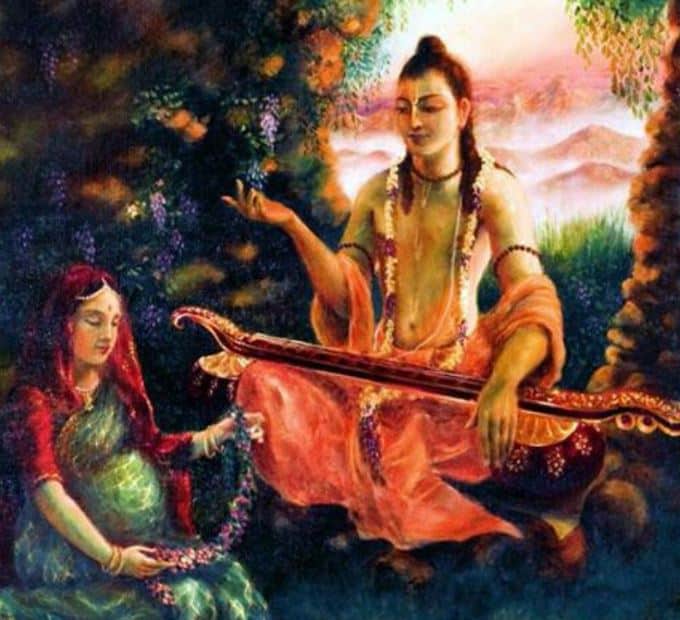
Lord Chaitanya Instructs Sanatana Goswami

Sri Radha Madana-Mohana, now in Karauli, Rajasthan, India

Sri Radha Govindaji, now in Jaipur, Rajasthan, India

Sri Radha Gopinath, now in Jaipur, Rajasthan, India

14 May 2024 What is the real problem of life, and how to stop it? Srimad Bhagavatam Class with Bhakti Sanga Japa Group SB 7.7.37

Prahlada is a great saint. He learned everything he knew while he was still in the womb of his mother Kayadhu, from Narada Muni, the great spiritual master. And his devotion manifested when he was a small child… so much so that Prahlada is known as one of the great Mahajanas, the great pure teachers of the Science of God.

In this SB 7.7.37, Prahlada instructs that the real problem of life is birth and death. Do you want to know how to stop this continuously whirling wheel of birth and death?

Attend this class to find out, watch the recording, or if you are pressed for time, just read this article!

Hare Krishna!

The Bhakti Sanga Japa Group connects Krishna conscious devotees from across the world, be it a neophyte, serious sadhaka, or just someone with a casual interest in spirituality, through online conference calls! Bhakti Sanga group facilitates devotee association with several classes and japa sessions during the day. Classes include lectures on Srimad Bhagavatam, Sri Caitanya Caritamrta, Children’s sessions on scriptures, festival/holy days and assorted spiritual topics. The Bhakti Sanga group provides an informal setting where devotees can seek answers regarding their sadhana, spiritual topics and practices. Come experience Krishna consciousness in the association of devotees, from the very convenience of your home, just a phone call away!

DATE📆: Tuesday, 14th May 2024

TIME⌚: 7:20 AM. ET USA/ 6:20 AM. CT USA/ 4:20 AM PST USA/ 12:20 PM UK/ 8:20 PM MYT/ 4:50 PM IST

The class will be available on Zoom and later uploaded online on their Youtube Channel.

ZOOM Meeting ID: 681 873 6022 Password: 803604

https://www.youtube.com/channel/UCHty1ZkyTvzn_vTTfiYqwTA

Please join online if you’re interested in joining this class, or let me know if you want to get a link to the recording.

Chapter SB 7.7 What Prahlāda Learned in the Womb – Summary

In this chapter, to dissipate the doubts of his class friends, the sons of the demons, Prahlāda Mahārāja states how, within the womb of his mother, he had heard from the mouth of Nārada Muni, who had instructed him in bhāgavata-dharma.

When Hiraṇyakaśipu left his kingdom and went to the mountain known as Mandarācala to execute severe austerities, all the demons scattered. Hiraṇyakaśipu’s wife, Kayādhu, was pregnant at that time, and the demigods, mistakenly thinking that she carried another demon in her womb, arrested her. Their plan was that as soon as the child took birth they would kill him. While they were taking Kayādhu to the heavenly planets, they met Nārada Muni, who stopped them from taking her away and took her to his āśrama until Hiraṇyakaśipu’s return. In Nārada Muni’s āśrama, Kayādhu prayed for the protection of the baby in her womb, and Nārada Muni reassured her and gave her instructions on spiritual knowledge. Taking advantage of those instructions, Prahlāda Mahārāja, although a small baby within the womb, listened very carefully. The spirit soul is always apart from the material body. There is no change in the spiritual form of the living entity. Any person above the bodily conception of life is pure and can receive transcendental knowledge. This transcendental knowledge is devotional service, and Prahlāda Mahārāja, while living in the womb of his mother, received instructions in devotional service from Nārada Muni. Any person engaged in the service of the Lord through the instructions of a bona fide spiritual master is immediately liberated, and being free from the clutches of māyā, he is relieved of all ignorance and material desires. The duty of everyone is to take shelter of the Supreme Lord and thus become free from all material desires. Regardless of the material condition in which one is situated, one can achieve this perfection. Devotional service is not dependent on the material activities of austerity, penance, mystic yoga or piety. Even without such assets, one can achieve devotional service through the mercy of a pure devotee.

https://vedabase.io/en/library/sb/7/7/

ŚB 7.7.37

अधोक्षजालम्भमिहाशुभात्मन:
शरीरिण: संसृतिचक्रशातनम् ।
तद् ब्रह्मनिर्वाणसुखं विदुर्बुधा-
स्ततो भजध्वं हृदये हृदीश्वरम् ॥ ३७ ॥

adhokṣajālambham ihāśubhātmanaḥ
śarīriṇaḥ saṁsṛti-cakra-śātanam
tad brahma-nirvāṇa-sukhaṁ vidur budhās
tato bhajadhvaṁ hṛdaye hṛd-īśvaram

Synonyms

adhokṣaja — with the Supreme Personality of Godhead, who is beyond the reach of the materialistic mind or experimental knowledge; ālambham — being constantly in contact; iha — in this material world; aśubhaātmanaḥ — whose mind is materially contaminated; śarīriṇaḥ — of a living entity who has accepted a material body; saṁsṛti — of material existence; cakra — the cycle; śātanam — completely stopping; tat — that; brahmanirvāṇa — connected with the Supreme Brahman, the Absolute Truth; sukham — transcendental happiness; viduḥ — understand; budhāḥ — those who are spiritually advanced; tataḥ — therefore; bhajadhvam — engage in devotional service; hṛdaye — within the core of the heart; hṛtīśvaram — to the Supreme Personality of Godhead, the Supersoul within the heart.

Translation

The real problem of life is the repetition of birth and death, which is like a wheel rolling repeatedly up and down. This wheel, however, completely stops when one is in touch with the Supreme Personality of Godhead. In other words, by the transcendental bliss realized from constant engagement in devotional service, one is completely liberated from material existence. All learned men know this. Therefore, my dear friends, O sons of the asuras, immediately begin meditating upon and worshiping the Supersoul within everyone’s heart.

Purport

Generally it is understood that by merging into the existence of Brahman, the impersonal feature of the Absolute Truth, one becomes completely happy. The words brahma-nirvāṇa refer to connecting with the Absolute Truth, who is realized in three features: brahmeti paramātmeti bhagavān iti śabdyate. One feels brahma-sukha, spiritual happiness, by merging into the impersonal Brahman because the brahmajyoti is the effulgence of the Supreme Personality of Godhead. Yasya prabhā prabhavato jagad-aṇḍa-koṭiYasya prabhā, the impersonal Brahman, consists of the rays of Kṛṣṇa’s transcendental body. Therefore whatever transcendental bliss one feels from merging in Brahman is due to contact with Kṛṣṇa. Contact with Kṛṣṇa is perfect brahma-sukha. When the mind is in touch with the impersonal Brahman one becomes satisfied, but one must advance further to render service to the Supreme Personality of Godhead, for one’s remaining merged in the Brahman effulgence is not always assured. As it is said, āruhya kṛcchreṇa paraṁ padaṁ tataḥ patanty adho ’nādṛta-yuṣmad-aṅghrayaḥ: one may merge in the Brahman feature of the Absolute Truth, but there is a chance that one may fall because of not being acquainted with Adhokṣaja, or Vāsudeva. Of course, such brahma-sukha undoubtedly eliminates material happiness, but when one advances through impersonal Brahman and localized Paramātmā to approach the Supreme Personality of Godhead in relationship with Him as a servant, friend, parent or conjugal lover, one’s happiness becomes all-pervading. Then one automatically feels transcendental bliss, just as one becomes happy seeing the shining of the moon. One acquires natural happiness upon seeing the moon, but when one can see the Supreme Personality of Godhead, one’s transcendental happiness increases hundreds and thousands of times. As soon as one is very intimately connected with the Supreme Personality of Godhead, one surely becomes free from all material contamination. Yā nirvṛtis tanu-bhṛtām. This cessation of all material happiness is called nirvṛti or nirvāṇa. Śrīla Rūpa Gosvāmī says in Bhakti-rasāmṛta-sindhu (1.1.38):

brahmānando bhaved eṣa
cet parārdha-guṇīkṛtaḥ
naiti bhakti-sukhāmbhodheḥ
paramāṇu-tulām api

“If brahmānanda, the bliss of merging in the Brahman effulgence, were multiplied one hundred trillion times, it would still not equal even an atomic fragment of the ocean of transcendental bliss felt in devotional service.”

brahma-bhūtaḥ prasannātmā
na śocati na kāṅkṣati
samaḥ sarveṣu bhūteṣu
mad-bhaktiṁ labhate parām

“One who is transcendentally situated at once realizes the Supreme Brahman and becomes fully joyful. He never laments or desires to have anything; he is equally disposed toward all living entities. In that state he attains pure devotional service unto the Lord.” (Bg. 18.54) If one advances further from the brahma-nirvāṇa platform, one enters the stage of devotional service (mad-bhaktiṁ labhate parām). The word adhokṣajālambham refers to keeping the mind always engaged in the Absolute Truth, who is beyond the mind and material speculation. Sa vai manaḥ kṛṣṇa-padāravindayoḥ. This is the result of Deity worship. By constantly engaging in the service of the Lord and thinking of His lotus feet, one is automatically freed from all material contamination. Thus the word brahma-nirvāṇa-sukham indicates that when one is in touch with the Absolute Truth, material sense gratification is completely nullified.

https://vedabase.io/en/library/sb/7/7/37

God and The Absolute Truth

Who is God? What is the Absolute Truth? Does all God do is work to keep us all in line? What gives?

J Raul C, 12th November 2016

Hare Krishna!!

All Glories to Srila Prabhupada and Gurudeva!!

vancha-kalpa-tarubhyashcha

kripa-sindhubhya eva cha

patitanam pavanebhyo

vaishnavebhyo namo namaha

Dear devotees,

Please help me to understand the conception of God and the conception of Absolute Truth.

I have read and heard so many times in the scriptures and purports that God is Krishna and at the same time we talk about Absolute Truth as the supreme person or param satyam also we know Krishna as the Supreme Person

Please elaborate as God and Absolute Truth are not on the same level.

Thank you kindly,
J Raul C.

Premananda das, 12th November 2016

Hare Krsna Vaisnavas

Please accept my humble obeisances
All glories to Srila Prabhupada

God means controller and Absolute Truth means the source and end of everything and all the energies that exist.

Actually the conception of Absolute Truth is way beyond God.

Absolute Truth actually makes an impression on the mind that it is not just a religious enthusiasm but profound philosophy.
It answers the most important question that He is the origin and destination of everything.

In the Srimad Bhagavatam Canto 1.1.1 it is explained that Krsna is beginning and end of everything and it also defeats the idea that matter is the source of creation which is prominent in today’s modern world.

It is not only om namo bhagavate not vague but it is Vasudevaya son of Vasudeva and Devaki primeval Bhagawan.

This list is check point of whether someone is God and Absolute Truth.

Absolute Truth is Sri Krsna son of Vasudeva and Devaki.

oṁ namo bhagavate vāsudevāya
janmādy asya yato ’nvayād itarataś cārtheṣv abhijñaḥ svarāṭ
 tene brahma hṛdā ya ādi-kavaye muhyanti yat sūrayaḥ
tejo-vāri-mṛdāṁ yathā vinimayo yatra tri-sargo ’mṛṣā
 dhāmnā svena sadā nirasta-kuhakaṁ satyaṁ paraṁ dhīmahi

O my Lord, Śrī Kṛṣṇa, son of Vasudeva, O all-pervading Personality of Godhead, I offer my respectful obeisances unto You. I meditate upon Lord Śrī Kṛṣṇa because He is the Absolute Truth and the primeval cause of all causes of the creation, sustenance and destruction of the manifested universes. He is directly and indirectly conscious of all manifestations, and He is independent because there is no other cause beyond Him. It is He only who first imparted the Vedic knowledge unto the heart of Brahmājī, the original living being. By Him even the great sages and demigods are placed into illusion, as one is bewildered by the illusory representations of water seen in fire, or land seen on water. Only because of Him do the material universes, temporarily manifested by the reactions of the three modes of nature, appear factual, although they are unreal. I therefore meditate upon Him, Lord Śrī Kṛṣṇa, who is eternally existent in the transcendental abode, which is forever free from the illusory representations of the material world. I meditate upon Him, for He is the Absolute Truth.

He is the source and end of everything.
He is supremely conscious and independent.
He is the original source of all knowledge.
He is the original source of bewilderment.
He makes the three worlds appear real like mirage.
He resides in the eternal abode free from illusion.
He is the highest Truth to be mediated upon.(Son of Vasudeva)

your servant

Premananda Das

Mahabhagavat Das SDA, 16th November 2016

Dear Sriman Raul,

Hare Krishna!

Please accept my humble obeisances.
All glories to Srila Gurudeva.
All glories to Srila Prabhupada.

Who is “God” – this is the generic name for some kind of administrative and executive function/position in the creation, maintenance, and dissolution of the manifestation. Actually Krishna is greater than “God”, because Krishna is the source of “God”.

It is like saying “Man”, does not identify a specific individual but a class of individual.

This is why Srila Prabhupada used the phrase “Supreme Personality of Godhead” to describe Krishna, though he did call Krishna God in some specific contexts, like when he explained the phrase “krishnas tu bhagavan svayam”.

There are many “gods”, like for example each of us control something in our own and others’ lives… and because Krishna expands Himself unlimitedly in Vishnu Tattva expansions actually one can say that there are also many “Gods”… but the “gods” and “Gods” are all servant Gods, and everyone is ultimately serving Krishna in some way or another.

A riverhead is the source of a river. A river is a continuously flowing stream of water… even though we say “here is a river”, it is not the same at any two moments – the water in it is different at every moment practically.

Similarly, “God” is a concept that is impossible to explain materially, and is dynamic. Krishna is the source of that infinite dynamism, the source of the power of all powers, all energies, all living entities. If the word Godhead is considered, then that Godhead is the Source of “God”, but that Source of God has many many personalities, like Balarama, Sankarshana, Pradyumna, Aniruddha, and then the second set of those, Maha Vishnu Garbhodakashayi Vishnu, Kshirodakashayi Vishnu, etc.

We read from the Srimad Bhagvatam how Krishna expands “bahu syam” (I shall be many) into different types of expansions, “svamsha” or Vishnu Tattva expansions, and “vibbinamsha” or separated jiva expansions. Then there are the shaktis, the shiva tattva. There are the potencies of hladini, sandhini, samvit, and so many further expansions and so much complexity in the spiritual and material manifestation.

But in the end, Krishna has nothing to do, He simply plays His flute, and enjoys pastimes with His associates, no “duty” to do, like having to keep track of who is doing what, punishment and reward, that is the “God” function which is played by His arrangements in so many elaborate ways.

I hope this helps.

your servant,
Mahabhagavat Das

Please subscribe to daily inspirational emails from His Grace Sriman Sankarshan Das Adhikari (Writings and lectures archived at www.sda-archives.com), written fresh every day from his travels around the world sharing the highest spiritual knowledge with everyone. Sign up now at www.joincourse.com