Brahmachari vs Bhramachari: Which one do you want to be?

A Brahmachari is like a spiritual athlete, dedicated to serving the Supreme Truth, while a Bhramachari chases illusions—basically like a spiritual couch potato, confusing the finish line for a mirage in a desert. We dive into how society’s roles, like Brahmanas and Shudras, fit into this divine quest, reminding us that serving God is the real goal, whether you’re a householder or a renounced sage. Remember, folks: always be a Brahmachari, not a Bhramachari—that’s the real spiritual workout!

A Brahmachari is a person who is dedicated to the pursuit and service of the Supreme Absolute Truth.

ब्रह्म आचरति इति ब्रह्मचारी

brahma ācarati iti brahmacāri
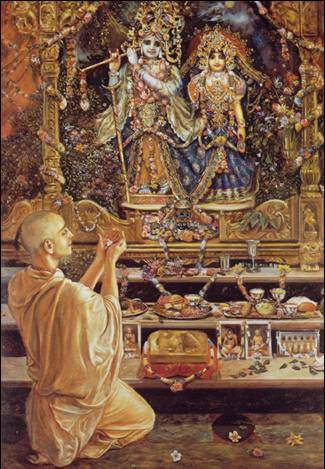
Brahmachari worships Radha Krishna

And a Bhramachari is a person is the exact opposite.

The Sanskrit word “bhrama” means “illusion”.
 Illusion, from the dictionary

So, someone who chases after illusory happiness is the opposite of someone who dedicates themselves to the Absolute Truth.

What got me thinking was a typo. The person writing was referring to a gentleman who is solidly dedicated to the Supreme Absolute Truth. At first I chuckled, but then I started thinking about the difference between the two.

I concluded that I can be one or the other at any given time, either I am engaged in the service of the Supreme Absolute Truth, or I am engaged in something frivolous that is temporary at best, illusory in nature.

Human society is divided by God into 4 natural orders of spiritual life, and 4 social orders, according to the natural qualities and work performed by the various people. And Brahmacharis can exist in all spiritual and social orders. This natural division is clearly visible in the nature and activities of people, it’s not the birth-based caste system as it has degenerated to.

चातुर्वर्ण्यं मया सृष्टं गुणकर्मविभागशः ।
तस्य कर्तारमपि मां विद्ध्यकर्तारमव्ययम् ॥ १३ ॥

cātur-varṇyaṁ mayā sṛṣṭaṁ
guṇa-karma-vibhāgaśaḥ
tasya kartāram api māṁ
viddhy akartāram avyayam

According to the three modes of material nature and the work associated with them, the four divisions of human society are created by Me. And although I am the creator of this system, you should know that I am yet the nondoer, being unchangeable. https://vedabase.io/en/library/bg/4/13/

The 4 Social Orders are:

  • Brahmanas: The intelligent class, the “head” of society
  • Kshatriyas: The administrator class, the “arms” of society
  • Vaishyas: The mercantile community, merchants, traders, farmers, the “belly” of society
  • Shudras: The worker class, the “legs” of society
Varna: The 4 social orders created by God. BG 4.13

And then there are the 4 spiritual orders:

  • Brahmachari: The celibate student
  • Grihastha: The householder family man
  • Vanaprastha: The former householder, retired from family life
  • Sannyasa: The fully renounced order of life

However, no matter which social or spiritual order one may be situated in…

अत: पुम्भिर्द्विजश्रेष्ठा वर्णाश्रमविभागश: ।
स्वनुष्ठितस्य धर्मस्य संसिद्धिर्हरितोषणम् ॥ १३ ॥


ataḥ pumbhir dvija-śreṣṭhā
varṇāśrama-vibhāgaśaḥ
svanuṣṭhitasya dharmasya
saṁsiddhir hari-toṣaṇam

O best among the twice-born, it is therefore concluded that the highest perfection one can achieve by discharging the duties prescribed for one’s own occupation according to caste divisions and orders of life is to please the Personality of Godhead. https://vedabase.io/en/library/sb/1/2/13/

All these 4 orders of society are meant to serve God in their own way, just like the different parts of the body serves the whole – the hand feeds the stomach, the leg moves the body, and the brain regulates the hand, stomach, and legs. One without the others is a handicapped body, not very effective. Neither is one more or less important than others.

By following the activities according to one’s own nature, and offering that in the service of God, one can indeed attain perfection.

यत: प्रवृत्तिर्भूतानां येन सर्वमिदं ततम् ।
स्वकर्मणा तमभ्यर्च्य सिद्धिं विन्दति मानव: ॥ ४६ ॥

yataḥ pravṛttir bhūtānāṁ
yena sarvam idaṁ tatam
sva-karmaṇā tam abhyarcya
siddhiṁ vindati mānavaḥ

By worship of the Lord, who is the source of all beings and who is all-pervading, a man can attain perfection through performing his own work. https://vedabase.io/en/library/bg/18/46/

Which now brings us to the main topic of our discussion…

No matter where we might fit into society, we are all meant to serve God with all our faculties, with all our gifts, with all our abilities, and all our resources.

This is how one may remain a Brahmachari, no matter where one may be situated in…

  • Brahmacharis in the Brahmachari Ashrama – these are either students or those dedicated to spiritual life without deviation, and/or preparing themselves for the renounced order, usually younger men, but also many older men. Being in young bodies or being inexperienced does not mean they can pursue unrestricted sense enjoyment.
  • Grihastha Brahmacharis, or those who pursue spiritual life even while accepting the responsibilities of householder or family life. It’s not that taking on family responsibilities give the person to pursue illusion in an unrestricted manner.
  • Vanaprastha Brahmacharis, or those who have retired from family life, or decided to marry a like-minded person dedicated to spiritual life – even while living as a married couple, they have no family responsibilities. However, just because they are not directly responsible for their family doesn’t mean they don’t accept responsibility for other Grihasthas and Brahmacharis. The dedicate themselves to being on “constant pilgrimage” and leveraging their life experience and spiritual knowledge to benefit others.
  • Sannyasa Brahmacharis, or those who are in the renounced order of life, with no family or social connections. But just because someone is in the renounced order of life doesn’t mean they don’t do anything. In fact, they adopt the whole world as their family, meeting others just so they can convey God Consciousness, Krishna Consciousness to them, and staying just long enough to deliver the message and keep moving on.

Importantly, one needs to remain focused on the goal of life, which is to attain spiritual perfection. The way one expresses one’s Brahmacharya, or dedication to spiritual advancement, may look different depending on which Varna and Ashram one is in, but the principles of a regulated spiritually focused life remain.

No matter if you are a man or woman, young or old, whether you wear white, or saffron, or any other colour… If you’re serious about spiritual life, then you must be a Brahmachari, in every thought, word, and deed.

So we have a choice, no matter what our official social and spiritual status might be. At every moment, with every thought, word, and deed, we all need to be Brahmacharis, not Bhramacharis.

Thoughts?
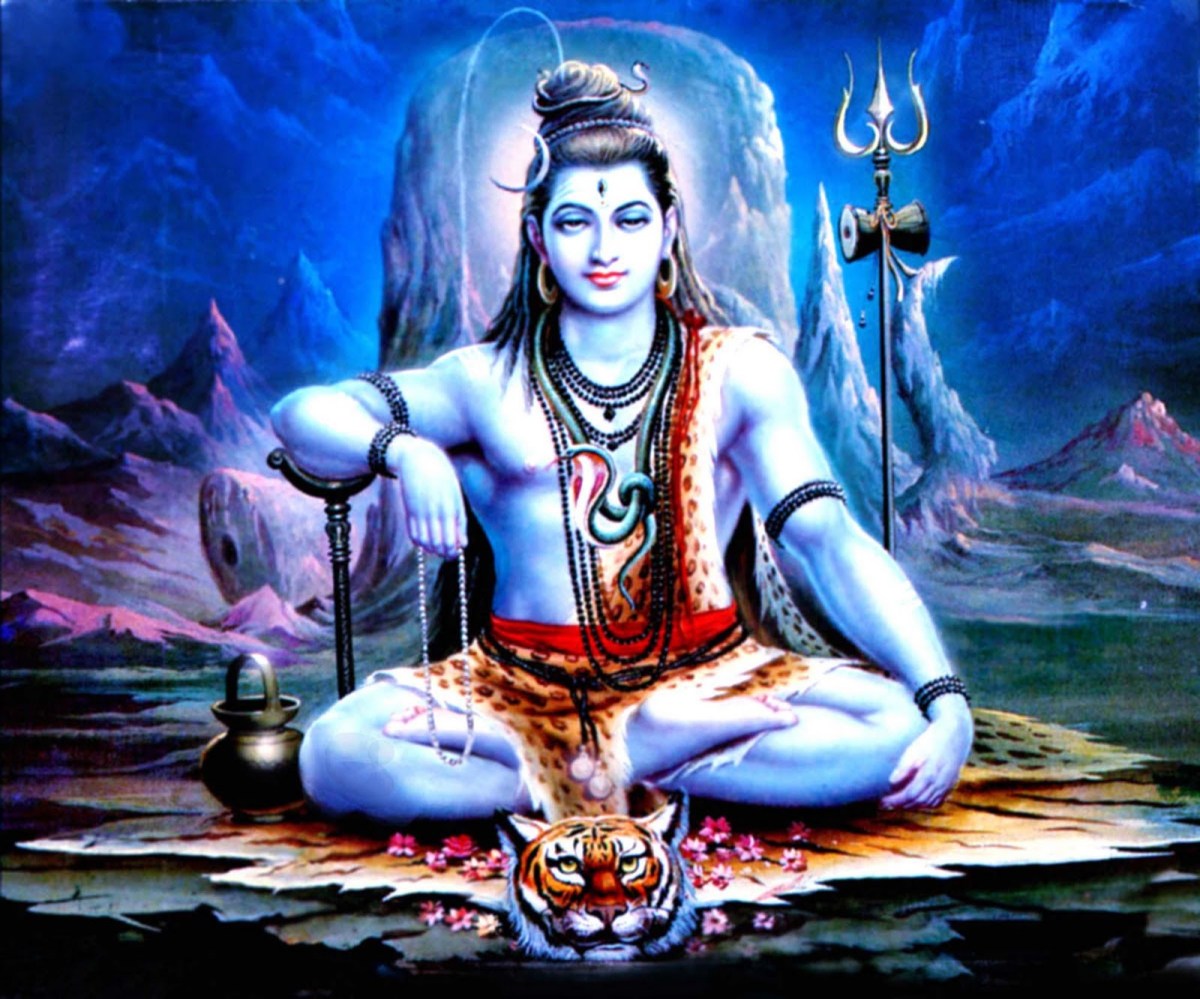
Is Srila Prabhupada insulting Lord Shiva?

Srila Prabhupada, a great teacher, wrote prolifically. Even though his works are lucid and clear, there are many misunderstandings about his writings. One is that he insulted Lord Shiva. Is this true?

Question:

A devotee who has been with ISKCON for 7 years has asked this question… he says he does not agree with Srila Prabhupada’s purport to BG 2.62.

Lord Śiva was deep in meditation, but when Pārvatī agitated him for sense pleasure, he agreed to the proposal, and as a result Kārtikeya was born.

https://vedabase.io/en/library/bg/2/62/

He says that this is not the real story also he doesn’t agree that Lord Shiva can be agitated.

Lord Shiva, Parvati Devi, and their children Kartikeya and Ganesha

Answer:

Thank you for writing to me about this. It is an important thing.

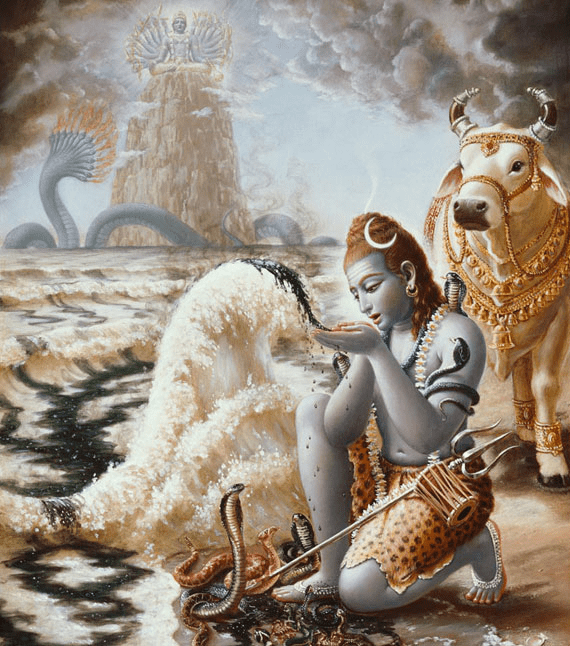
First and foremost we have to understand who is Srila Prabhupada. Srila Prabhupada is a pure devotee. As a pure devotee, Srila Prabhupada has no envy in his heart. Srila Prabhupada has no desire to criticize someone unnecessarily. He also has no tendency to try and pull someone down. In fact, Srila Prabhupada is on the Uttama Adhikari platform. As an Uttama Adhikari, he feels that everyone else is serving Krishna except himself. But Srila Prabhupada came down to the Madhyama Adhikari platform. On this platform, he suppressed his ecstatic emotions and took the role of a teacher of Krishna Consciousness. Thus he preached to us poor lost souls in the material world. Srila Prabhupada undertook an austerity for us. Just like Lord Shiva drank up the ocean of poison, Srila Prabhupada tolerated the poisonous nature of this material world. His sacrifice saves us all.

Great personalities accept voluntary suffering for the benefit of others

“tapyante loka taapena”, this is a verse from the Bhagavatam glorifying personalities like Lord Shiva and Srila Prabhupada.

तप्यन्ते लोकतापेन साधव: प्रायशो जना: ।
परमाराधनं तद्धि पुरुषस्याखिलात्मन: ॥ ४४ ॥

tapyante loka-tāpena
sādhavaḥ prāyaśo janāḥ
paramārādhanaṁ tad dhi
puruṣasyākhilātmanaḥ

It is said that great personalities almost always accept voluntary suffering because of the suffering of people in general. This is considered the highest method of worshiping the Supreme Personality of Godhead, who is present in everyone’s heart.

https://vedabase.io/en/library/sb/8/7/44/

Lord Shiva drinks up an ocean of deadly poison and keeps it suspended in his throat

On the Madhyama Adhikari platform…

A devotee behaves differently with different kinds of personalities. A Madhyama Adhikari is a teacher/preacher… and his mission is to guide souls to spiritual perfection.

  1. To Supreme Personality of Godhead or His plenary expansions, he offers prayers
  2. To the devotees of Krishna, he makes friendship
  3. To the innocent, he preaches Krishna Consciousness
  4. Those envious of Krishna, he avoids

ईश्वरे तदधीनेषु बालिशेषु द्विषत्सु च ।
प्रेममैत्रीकृपोपेक्षा य: करोति स मध्यम: ॥ ४६ ॥

īśvare tad-adhīneṣu
bāliśeṣu dviṣatsu ca
prema-maitrī-kṛpopekṣā
yaḥ karoti sa madhyamaḥ

An intermediate or second-class devotee, called madhyama-adhikārī, offers his love to the Supreme Personality of Godhead, is a sincere friend to all the devotees of the Lord, shows mercy to ignorant people who are innocent and disregards those who are envious of the Supreme Personality of Godhead.

https://vedabase.io/en/library/sb/11/2/46/

Srila Prabhupada, the great Vaishnava Acharya

Now, let us examine who is Lord Shiva.

Lord Shiva is the Topmost Vaishnava, “vaishnavaanaam yathaa shambhu” as stated in the Bhagavatam.

निम्नगानां यथा गङ्गा देवानामच्युतो यथा ।
वैष्णवानां यथा शम्भु: पुराणानामिदं तथा ॥ १६ ॥

nimna-gānāṁ yathā gaṅgā
devānām acyuto yathā
vaiṣṇavānāṁ yathā śambhuḥ
purāṇānām idam tathā

Just as the Gaṅgā is the greatest of all rivers, Lord Acyuta the supreme among deities and Lord Śambhu [Śiva] the greatest of Vaiṣṇavas, so Śrīmad-Bhāgavatam is the greatest of all Purāṇas.

https://vedabase.io/en/library/sb/12/13/16/

In the Brahma Samhita (kshiram yatha dadhi vikaaram) it is stated that Lord Vishnu transforms as Lord Shiva when Lord Vishnu is “in touch” with material energy. This is just like how milk turns to curds when touched with tamarind. In other words, Lord Vishnu and Lord Shiva have no difference of opinion. Krishna desires everyone to be His pure devotee. Similarly, Lord Shiva desires everyone to be Krishna’s pure devotee.

क्षीरं यथा दधि विकारविशेषयोगात्
सञ्जायते न हि ततः पृथगस्ति हेतोः ।
यः शम्भुतामपि तथा समुपैति कार्या-
-द्गोविन्दमादिपुरुषं तमहं भजामि ॥ ४५ ॥

kṣīraṁ yathā dadhi vikāra-viśeṣa-yogāt
sañjāyate na hi tataḥ pṛthag asti hetoḥ
yaḥ śambhutām api tathā samupaiti kāryād
govindam ādi-puruṣaṁ tam ahaṁ bhajāmi

Just as milk is transformed into curd by the action of acids, but yet the effect curd is neither same as, nor different from, its cause, viz., milk, so I adore the primeval Lord Govinda of whom the state of Śambhu is a transformation for the performance of the work of destruction.

https://vedabase.io/en/library/bs/5/45/

In fact, without the mercy of Lord Shiva, no one can become a Vaishnava. Lord Shiva and Parvati Devi are regarded as the father and mother of the material world. As you know, father and mother are the first teachers of every child.

As such, Lord Shiva is beyond all criticism. And as Lord Shiva is a pure devotee, Srila Prabhupada would never criticize Lord Shiva.

Srila Prabhupada is stating the fact.

Lord Kartikeya was born of Shiva and Parvati’s union. Lord Brahma, who is Lord Vishnu’s son is born directly from Himself without the help or assistance of Lakshmi Devi.

In the Valmiki Ramayana, Kartikeya is mentioned as the son of Rudra and Parvati. Agni and Ganga Devi aided in his birth. We accept Valmiki Muni as an utmost authority.

Valmiki, the author of the Original Ramayana

In the Mahabharata, Kartikeya is mentioned as the son of Shiva and Parvati. He emerged as a result of Lord Shiva’s sexual union with Parvati Devi. The details I will not mention here. Ganga Devi cultivated the seed of Lord Shiva. Agni Deva, the demigod in charge of fire, kept it warm.

Now, there is a third story, from the Shiva Purana… Lord Shiva was meditating. Parvati Devi was trying to attract him. Kamadeva tried to help but was burned to ashes by the wrath of Lord Shiva. Lord Shiva, being merciful, then paid attention to Parvati Devi. He married her, and Kartikeya was conceived.

There is additionally a Tamil version of the Skanda Purana in which another story is presented. I read that story in the Amar Chitra Katha comics as a child. Only later I learned where the story came from. The demigods prayed to Lord Shiva and pleased Him. As a result, Lord Shiva manifested 5 additional heads. From each head came one spark. Vayu Deva, the demigod in charge of the wind, carried these sparks and handed them to Agni Deva. Agni Deva then carried the sparks to Ganga Devi, who took them to Saravana lake. There, 6 boys were born. The 6 boys were merged into one by Krittika Devi. This marked the appearance of Kartikeya. He then defeated the demons Surapadma and Simhamukha. These demons surrendered to Kartikeya and became his assistant associates.

Valmiki Ramayana is the Absolute Truth. Mahabharata is also composed by Veda Vyasa. Therefore, we have 2 authoritative references to support Srila Prabhupada’s statement about Lord Shiva in BG 2.62.

Srila Prabhupada is a highly empowered Vaishnava Acharya who has presented Krishna Consciousness in the Brahma Madhva Gaudiya Sampradaya. Why should anyone accept an objection raised by an uncontrolled mind? Instead, whenever we hear the instruction of the Acharya, we should strive to understand how it is true. It’s not about whether it is true or not, but how it is true. This is called surrender. It may take time. It took me many years to surrender to my Guru Maharaja, but eventually I did. Whenever I had any doubts about Srila Prabhupada’s words, my spiritual masters helped me. They guided me with proper understanding to overcome that doubt.

To “disagree” with an Acharya, is simply immaturity.

Sometimes Acharyas disagree with each other. This is alright if they are of an equal stature. In that case, the rest of us must try to understand how they are right, all of them! Spiritual reality is truly wonderful. It is not one dimensional.

Puranic stories sometimes differ because they describe one kalpa (a day of Brahma) or another. On different days of Lord Brahma, there can be variations in some details.

Lord Shiva’s agitation by Parvati is not an insult to Lord Shiva.

Instead, it glorifies his great devotion to Sri Krishna. By personal example, Lord Shiva is showing how great Lord Krishna is. Lord Krishna remained without agitation even when surrounded by 3 Billion beautiful young gopis. The gopis were ready to do anything for Krishna. Krishna is an eternal Brahmachari, and the proof of this statement is Sri Bhishmadeva who has stated this personally!

Does this help?

Glossary – Personalities & Concepts mentioned in the article:

  • Acharya – A teacher in one of 4 authorized disciplic successions from God, who teaches by personal example
  • Agni Deva – The demigod in charge of fire
  • Bhagavatam – The topmost spiritual scripture, available online at https://vedabase.io/en/library/sb/
  • Bhishmadeva – Among the 12 greatest spiritual authorities of our universe, played a pivotal role in the Mahabharata, sometimes referred to as “grandsire” or “grandfather”
  • Brahma – The creator of this universe, son of Lord Vishnu
  • Brahma Samhita – The composition of Lord Brahma is a 100-chapter book. Only Chapter 5 is available. It can be found online at https://vedabase.io/en/library/bs
  • Deva – “Demigod”, also used as an honorific for divine personalities
  • Ganga – The most sacred river in our Universe, a liquid form of God
  • Gopis – The topmost saints, devotees of Krishna
  • Guru – Spiritual Master, also “heavy”
  • Kalpa – A day of Brahma, 4.32 Billion Years long
  • Kama – Literally “lust”, used to refer to the demigod in charge of love
  • Kartikeya – Son of Shiva and Parvati, the military commander of the demigods
  • Krishna – The Supreme Personality of Godhead, source of both spiritual and material realms, the One and Only appearing Himself in different forms and with different names
  • Krittika Devi – a demigoddess
  • Madhva Gaudiya Sampradaya – A current unbroken line of disciplic succession from God Himself, included below for reference
  • Madhyama Adhikari – defined above
  • Maharaja – King among men, used to refer to royalty and to renounced or exalted souls
  • Parvati – The consort of Lord Shiva, expanded as the material energy
  • Purana – Authorized history of the Universe, there are 18 such histories, 6 meant for those in the mode of goodness, 6 for those in the mode of passion, and 6 meant for those in the mode of passion
  • Ramayana – The pastimes of Lord Rama, the Personality of Godhead
  • Rudra – A son of Lord Brahma, born of his anger from his forehead
  • Simhamukha & Surapadma – Former demons who accepted the shelter of Kartikeya and became his assistants
  • Shiva – The auspicious one, also referred to as Rudra
  • Shiva Purana – The scripture describing the pastimes of Lord Shiva, meant for the benefit of those situated in the mode of ignorance
  • Sri – Opulence, refers to the Goddess of Fortune, or someone blessed with some extraordinary opulence
  • Uttama Adhikari – defined above
  • Valmiki – The author of the original Ramayana, disciple of Narada
  • Vayu Deva – The demigod in charge of the air and wind
  • Vishnu – An expansion of Krishna
  • Vyasa – The compiler of Vedic literature

The Brahma Madhva Gaudiya Sampradaya:

1. Kṛṣṇa
2. Brahmā
3. Nārada
4. Vyāsa
5. Madhva
6. Padmanābha
7. Nṛhari
8. Mādhava
9. Akṣobhya
10. Jaya Tīrtha
11. Jñānasindhu
12. Dayānidhi
13. Vidyānidhi
14. Rājendra
15. Jayadharma
16. Puruṣottama
17. Brahmaṇya Tīrtha
18. Vyāsa Tīrtha
19. Lakṣmīpati
20. Mādhavendra Purī
21. Īśvara Purī, (Nityānanda, Advaita)
22. Lord Caitanya
23. Rūpa, (Svarūpa, Sanātana)
24. Raghunātha, Jīva
25. Kṛṣṇadāsa
26. Narottama
27. Viśvanātha
28. (Baladeva), Jagannātha
29. Bhaktivinoda
30. Gaurakiśora
31. Bhaktisiddhānta Sarasvatī
32. A. C. Bhaktivedanta Swami Prabhupāda

The Author’s spiritual master, His Grace Sriman Sankarshan Das Adhikari, is a disciple of His Divine Grace A. C. Bhaktivedanta Swami Prabhupada.