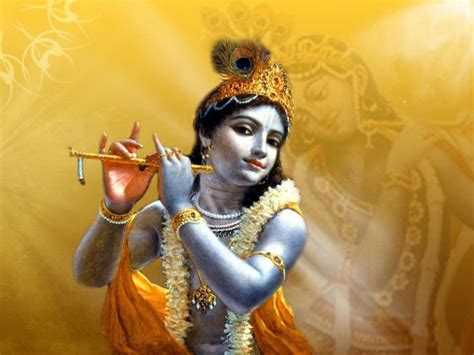
Brahmachari vs Bhramachari: Which one do you want to be?

A Brahmachari is like a spiritual athlete, dedicated to serving the Supreme Truth, while a Bhramachari chases illusions—basically like a spiritual couch potato, confusing the finish line for a mirage in a desert. We dive into how society’s roles, like Brahmanas and Shudras, fit into this divine quest, reminding us that serving God is the real goal, whether you’re a householder or a renounced sage. Remember, folks: always be a Brahmachari, not a Bhramachari—that’s the real spiritual workout!

A Brahmachari is a person who is dedicated to the pursuit and service of the Supreme Absolute Truth.

ब्रह्म आचरति इति ब्रह्मचारी

brahma ācarati iti brahmacāri
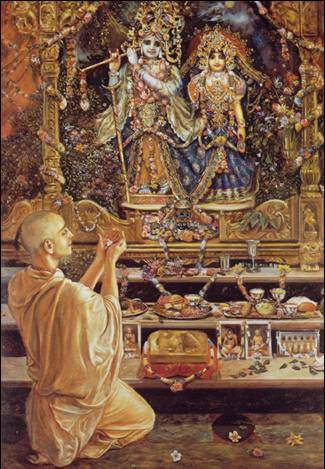
Brahmachari worships Radha Krishna

And a Bhramachari is a person is the exact opposite.

The Sanskrit word “bhrama” means “illusion”.
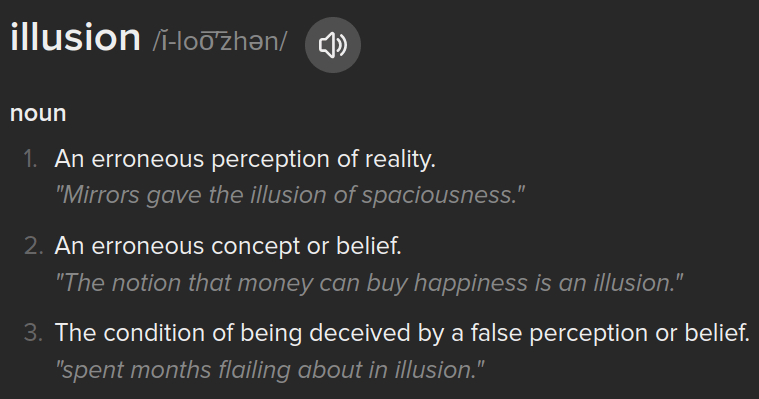
 Illusion, from the dictionary

So, someone who chases after illusory happiness is the opposite of someone who dedicates themselves to the Absolute Truth.

What got me thinking was a typo. The person writing was referring to a gentleman who is solidly dedicated to the Supreme Absolute Truth. At first I chuckled, but then I started thinking about the difference between the two.

I concluded that I can be one or the other at any given time, either I am engaged in the service of the Supreme Absolute Truth, or I am engaged in something frivolous that is temporary at best, illusory in nature.

Human society is divided by God into 4 natural orders of spiritual life, and 4 social orders, according to the natural qualities and work performed by the various people. And Brahmacharis can exist in all spiritual and social orders. This natural division is clearly visible in the nature and activities of people, it’s not the birth-based caste system as it has degenerated to.

चातुर्वर्ण्यं मया सृष्टं गुणकर्मविभागशः ।
तस्य कर्तारमपि मां विद्ध्यकर्तारमव्ययम् ॥ १३ ॥

cātur-varṇyaṁ mayā sṛṣṭaṁ
guṇa-karma-vibhāgaśaḥ
tasya kartāram api māṁ
viddhy akartāram avyayam

According to the three modes of material nature and the work associated with them, the four divisions of human society are created by Me. And although I am the creator of this system, you should know that I am yet the nondoer, being unchangeable. https://vedabase.io/en/library/bg/4/13/

The 4 Social Orders are:

  • Brahmanas: The intelligent class, the “head” of society
  • Kshatriyas: The administrator class, the “arms” of society
  • Vaishyas: The mercantile community, merchants, traders, farmers, the “belly” of society
  • Shudras: The worker class, the “legs” of society
Varna: The 4 social orders created by God. BG 4.13

And then there are the 4 spiritual orders:

  • Brahmachari: The celibate student
  • Grihastha: The householder family man
  • Vanaprastha: The former householder, retired from family life
  • Sannyasa: The fully renounced order of life

However, no matter which social or spiritual order one may be situated in…

अत: पुम्भिर्द्विजश्रेष्ठा वर्णाश्रमविभागश: ।
स्वनुष्ठितस्य धर्मस्य संसिद्धिर्हरितोषणम् ॥ १३ ॥


ataḥ pumbhir dvija-śreṣṭhā
varṇāśrama-vibhāgaśaḥ
svanuṣṭhitasya dharmasya
saṁsiddhir hari-toṣaṇam

O best among the twice-born, it is therefore concluded that the highest perfection one can achieve by discharging the duties prescribed for one’s own occupation according to caste divisions and orders of life is to please the Personality of Godhead. https://vedabase.io/en/library/sb/1/2/13/

All these 4 orders of society are meant to serve God in their own way, just like the different parts of the body serves the whole – the hand feeds the stomach, the leg moves the body, and the brain regulates the hand, stomach, and legs. One without the others is a handicapped body, not very effective. Neither is one more or less important than others.

By following the activities according to one’s own nature, and offering that in the service of God, one can indeed attain perfection.

यत: प्रवृत्तिर्भूतानां येन सर्वमिदं ततम् ।
स्वकर्मणा तमभ्यर्च्य सिद्धिं विन्दति मानव: ॥ ४६ ॥

yataḥ pravṛttir bhūtānāṁ
yena sarvam idaṁ tatam
sva-karmaṇā tam abhyarcya
siddhiṁ vindati mānavaḥ

By worship of the Lord, who is the source of all beings and who is all-pervading, a man can attain perfection through performing his own work. https://vedabase.io/en/library/bg/18/46/

Which now brings us to the main topic of our discussion…

No matter where we might fit into society, we are all meant to serve God with all our faculties, with all our gifts, with all our abilities, and all our resources.

This is how one may remain a Brahmachari, no matter where one may be situated in…

  • Brahmacharis in the Brahmachari Ashrama – these are either students or those dedicated to spiritual life without deviation, and/or preparing themselves for the renounced order, usually younger men, but also many older men. Being in young bodies or being inexperienced does not mean they can pursue unrestricted sense enjoyment.
  • Grihastha Brahmacharis, or those who pursue spiritual life even while accepting the responsibilities of householder or family life. It’s not that taking on family responsibilities give the person to pursue illusion in an unrestricted manner.
  • Vanaprastha Brahmacharis, or those who have retired from family life, or decided to marry a like-minded person dedicated to spiritual life – even while living as a married couple, they have no family responsibilities. However, just because they are not directly responsible for their family doesn’t mean they don’t accept responsibility for other Grihasthas and Brahmacharis. The dedicate themselves to being on “constant pilgrimage” and leveraging their life experience and spiritual knowledge to benefit others.
  • Sannyasa Brahmacharis, or those who are in the renounced order of life, with no family or social connections. But just because someone is in the renounced order of life doesn’t mean they don’t do anything. In fact, they adopt the whole world as their family, meeting others just so they can convey God Consciousness, Krishna Consciousness to them, and staying just long enough to deliver the message and keep moving on.

Importantly, one needs to remain focused on the goal of life, which is to attain spiritual perfection. The way one expresses one’s Brahmacharya, or dedication to spiritual advancement, may look different depending on which Varna and Ashram one is in, but the principles of a regulated spiritually focused life remain.

No matter if you are a man or woman, young or old, whether you wear white, or saffron, or any other colour… If you’re serious about spiritual life, then you must be a Brahmachari, in every thought, word, and deed.

So we have a choice, no matter what our official social and spiritual status might be. At every moment, with every thought, word, and deed, we all need to be Brahmacharis, not Bhramacharis.

Thoughts?
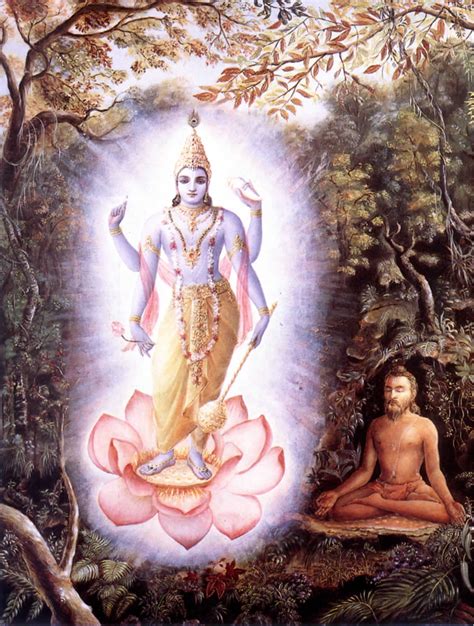
What is the final destination of the Yogi who sees the Supersoul?

If the goal of the Yogi is to see the Supersoul, then how can they end up at the Impersonal Effulgence instead? Is it possible to attain perfection with devotion to the Supreme Personality of Godhead?

Partha Das, 17 August 2020

Hare Krsna . Dandavats.Prabhu. 

One doubt crossed my mind. If the yogi’s aim is to see the Paramatma(supersoul) in the heart, why is it that after seeing the Lord the destination he achieves is nirakar brahman (formless effulgence).

Regards,

Partha Das

Mahabhagavat Das SDA, 19 August 2020

Dear Sriman Partha,

Hare Krishna!

Please accept my humble obeisances.

All glories to Srila Prabhupada.

All glories to Srila Gurudeva, Srimati Gurumataji and all their associates!

Thank you for your question. This question has been answered in the Bhagavad Gita and by Srila Prabhupad in various purports.

Srila Gurudeva has also answered this question in a succinct way as follows (paraphrased): “When a Yogi sees the Paramatma in the heart, then the yogi falls in love with the Lord and becomes a Bhakta, then he can proceed towards Bhagavan realization, or eternal loving devotional service. Upon reaching the Paramatma platform, one has a choice to go higher to Bhagavan realization or slide back down to Brahman platform… All of these are spiritual perfections, but Brahman realization is said to be perfect, Paramatma realization is said to be more perfect, and Bhagavan realization is to be most perfect”

This has been comprehensively confirmed as follows: https://vedabase.io/en/library/sb/3/25/19/

“Perfection in self-realization cannot be attained by any kind of yogī unless he engages in devotional service to the Supreme Personality of Godhead, for that is the only auspicious path.”

Gurumataji is giving a Bhagavatam class on this specific verse right now, if you want to join, the URL is http://livelectures.net/ The present date is Wed 19 Aug, and the time is 8:50AM Eastern Time (Toronto), 6:20PM India time. Class will go on for another 30-40 minutes… please join if you can. Highly recommended, as Gurumataji’s classes are not recorded as per her desire.

Sincerely,

Mahabhagavat Das

dasadas.com

Please subscribe to daily inspirational emails from His Grace Sriman Sankarshan Das Adhikari ( Writings and lectures archived at www.ecstaticmedia.com ), written fresh every day from his travels around the world sharing the highest spiritual knowledge with everyone. Sign up now at www.joincourse.com

Krishna – Duality Confusion – One And Many?

Is the Supreme Absolute Truth One or Many? Is Krishna One or Many? How is it that Krishna is One without a Second? How about Love? How about Relationships? How to understand this?

Jyoti Gupta, 27 April 2020

Hare Krishna 

If you could explain Chapter 5, Text 17 of Bhagavad Gita, where it has been told that there is duality in Krishna-simultaneous identity and individuality.

One more thing I would like to know – He is one without a second.. kindly explain .

Thank you 

🙏

Hare Krishna 

Jyoti Gupta

Mahabhagavat Das, 28 April 2020

Dear Mother Jyoti,

Hare Krishna!

You are referring to BG 5.17, where in the purport Srila Prabhupada writes: “A Kṛṣṇa conscious person can thoroughly understand that there is duality (simultaneous identity and individuality) in Kṛṣṇa, and, equipped with such transcendental knowledge, one can make steady progress on the path of liberation.”

What this means is that Krishna is a person originally, and that He has impersonal aspects.

Before we go to Krishna, let us look at ourselves…

You are a person, but if you completely ignore someone, then that is your own impersonal aspect. Also, when you are angry, then anyone who comes in your way will experience your anger, whether they did something to deserve your anger or not, so in this way, your anger can be said to be impersonal, even though you are a person yourself.

Similarly, Krishna, has His own impersonal aspects. The primary impersonal aspect is His Brahman feature. In the Brahman feature, which is His bodily effulgence, there is no individuality. Another one of Krishna’s impersonal features is time, time does not care for any person, it is impersonal, time just moves on and forces the world to keep moving along with it.

In addition to Krishna’s impersonal features, there is also the “localized Supersoul” or Paramatma feature, where Krishna expands into unlimited expansions, enters into the heart of every living entity along with the Atma, and also enters into the atoms and the space within the atoms. Even though Krishna expands in this way, Krishna still remains Krishna individually.

His closest, most intimate feature is Himself, His personal form, name, and identity.

Another crude example is – you may get a letter from the Government… inside the Government there is a department, and that department has a head, and that head has a boss, that boss has another boss, and ultimately it is the President or the Prime Minister who is the top power of the government. But when we see a policeman on the street enforcing the order of the government, then that policeman has the combined force of the entire government, and if necessary, through that policeman, the entire government can act. So, the government can be seen as some sort of “Brahman” – the government is impersonal, but inside that Brahman, there are so many little government representatives… Of course all of this cannot compare to SrI Krishna because Krishna is inconceivable by material means.

Krishna is one without a second because when you rank someone #1, #2, #3, etc., then it implies that there is some measure by which #1 is superior to #2, and #2 is superior to #3… so if #3 tries a bit harder, then they can overtake #1 and become the new #1… but in the case of Krishna, there is no comparison whatsoever, no one else can compare or match up to Krishna!

There may be occasionally some delay in answering questions sometimes, but rest assured that we are here to serve you on your spiritual journey.

I hope this helps.

Sincerely,

Mahabhagavat Das

dasadas.com

Jyoti Gupta, 29 April 2020

Hare Krishna !

Thank you so much for the kind response, and for bringing clarity to my mind.

Regards

Jyoti Gupta

Please subscribe to daily inspirational emails from His Grace Sriman Sankarshan Das Adhikari (Writings and lectures archived at www.ecstaticmedia.com), written fresh every day from his travels around the world sharing the highest spiritual knowledge with everyone. Sign up now at www.joincourse.com

What is the position of the Impersonalist in the spiritual world?

What is the position of the impersonalist in the material world? Is their position impermanent? Why can they not enter the spiritual world?

Suzanne Inwood, 25 June 2019

Hare Krishna

Dear Devotees,

I have a question regarding the following found in Srila Prabhupada’s book Beyond Birth and Death Chapter 2:

The impersonalist’s position in the spiritual world is nonpermanent, for out of loneliness he will attempt to acquire some association. Because he does not associate personally with the Supreme Lord, he has to return again to the world and associate with conditioned living entities there.

It is of utmost importance, therefore, that we know the nature of our constitutional position: we want eternity, complete knowledge, and also pleasure. When we are left alone for a long time in the impersonal brahmajyoti, we cannot have pleasure, and therefore we accept the pleasure given by the material world. But in Krṣṇa consciousness, real pleasure is enjoyed.

Here are my questions:

If a spark in brahmajyoti gets lonely and desires association why does this spark have to go back to the material world INSTEAD of, through begging Krishna for direct association progress from there into a loving relationship with the Supreme Personality of Godhead? 

If one has become part of the sunshine can one not then progress to the sun?   

Can the impersonalist realize while sitting as a spark in the effulgence that he wants association with Krishna and not with material associates in the material world?

Can he realize he wants Krishna instead of only the effulgence of Krishna’s body and then get to go to Krishna? Can the spark awaken to the servant position while sitting as a spark in the effulgence?

Thank you for reading.

Bhaktin Suzanne

Rakesh, 25 June 2019

Hare Krsna Mataji

Please accept my humble obeisances.

As far as I know, those souls which have gone to Brahma Jyoti have not started their Bhakti process, else they wouldn’t have decided to go to Brahma Jyoti in the first place.

They can go to Spiritual world, if, by inconceivable arrangement of Krsna, they get association of devotees or mercy of devotees or Krsna.

The four Kumaras were on Brahma Jyoti platform but when they smelt the fragrance of Tulasi Mahrani placed at the lotus feet of Lord Vishnu, they tasted the higher pleasure of Bhakti and became devotees.

Hope this helps.

your servant

Rakesh

Tapas Chakraborty, 25 June 2019

Hare Krishna

All glories to Srila Prabhupada

The impersonalists and personalist  both can accomplish liberation from the materialistic world but following different paths.

The impersonalists follows the path of yoga such as jnana, hatha, Kriya etc which is very difficult and full of austerity whereas the personalist follows the Path of Bhakti yoga.

The difference between them is that  Impersonalists don’t accept the separate existence of Lord but the personalist accepts the Lord.

The path of impersonalists is called Pantheism.

The personalists believe in whatever they see in this  world is the manifestation of the Supreme Lord therefore everything should be engaged in the service of Lord. They not only thrive for their personal liberation but for all.

As the impersonalists chose not the path of Lord for liberation, hence they cannot enter the higher Planets where Lord resides rather they find the place in Brahmajyoti- the spiritual sky. Since they do not recognize Krishna, hence after liberation they cannot embrace Krishna consciousness.

Tapas

Shreyas, 25 June 2019

Hare Krishna Mataji,

Please accept my humble obeisance.

Thank you for engaging us with more and more genuine inquiries. You are indeed starting to take full benefit of these groups.

As stated by Bhakta Rakesh, it is only by Lord’s inconceivable arrangement or association of a pure devotee that even such a person can get transformed to accept Lord’s personal form. Srila Prabhupada and his followers have already done many.

The famous verse below also answers a part of your query as to why a person in Brahmajyoti doesn’t attain the personal association of Lord from there directly:

https://www.vedabase.com/en/sb/10/2/32

your servant

Shridhar das

Suzanne Inwood, 26 June 2019

Thank you for your response

Suzanne

Mahabhagavat Das SDA, 13 September 2019

Hare Krishna! Thank you so much for all these lively discussions! This is what I live for! 🙂 And when we started this group in 2011, this is what we had in mind. We welcome thoughtful questions from those looking to get closer to Krishna, and we welcome thoughtful and considerate answers that maintain fidelity to our disciplic succession starting from Krishna and flowing through Srila Prabhupada to Srila Gurudeva and ourselves.

Some items to note:

1. Impersonalists are of 2 kinds “Mayavadi” and “Brahmavadi”.

2. The “Mayavadi” is actually inimical and envious of Krishna the Person. They aim to use Krishna as a ladder to become Krishna themselves. Therefore, it is unlikely they will suddenly develop an impetus to serve Krishna. Remember, only the pure servitor gets pure service, because the impure/envious “servitor” is a disturbance to the pure devotee.

3. The “Brahmavadi” does not bear envy towards God, but doesn’t have personal experience of a Personal God. The 4 kumaas mentioned earlier in this thread are in this category… when they got a personal experience of the Lord by smelling the fragrance of the Tulasi leaf and sandalwood paste offered to the Lotus Feet of the Lord then they became devotees… But important to note that the pure devotees they ended up cursing got an even higher and more intimate benediction to serve the Lord personally even through their own defamation… Everyone loves to hate Ravana/Kumbhakarna and Hiranyakashipu/Hiranyaksha and Shishupala/Dantavakra… but actually they are so amazing as devotees, that Jaya and Vijaya don’t mind their infamy as those demons. They got to rise higher and be more intimate (how intimate is a wrestling match) than their servant-status would otherwise permit them to!

4. Because on the impersonal effulgence platform “sat”, there is no sense of knowledge or bliss, there is just the sense of eternity. On the Paramatma platform there is “chit” knowledge, and only on the Bhagavan platform there is “ananda” bliss. In Brahman, there is no variegatedness, no service, no experience, just a sense of eternal oneness, and it is actually pretty boring up there. There’s only so much “om” anyone can take, you need to progress to “om namo bhagavate vasudevaaya” which is beyond Brahman.

5. In the hierarchy of pure Love of God, there being 5 shanta – neutral, dasya – servitude, sakhya – friendship, vatsalya – parental affection, madhurya – conjugal mood… “servant” is higher than “neutral” – an impersonalist is most likely to adopt a mood of neutrality (“I know You are God, I respect You, but I’m fine way over here in this corner of the spiritual world”) rather than progressing to servant (“How can I serve you, how can I serve you, my dear Lord how can I serve you”), but of course such progress is dependent on their eternal identity and/or causeless mercy as pointed out before. In the spiritual world even the pebbles are conscious, the trees and grass are fully conscious. They don’t actively serve Krishna, but they do experience the bliss of service when Krishna steps on a pebble (the pebble melts in sheer ecstasy) or when the grass gets a speck of dust from Krishna’s lotus foot (the grass wears the dust as a brilliant ornament) or when Krishna takes a flower or fruit for Himself or more likely a servant of a servant picks such a thing for Krishna’s pleasure (then the tree experiences great pleasure). But once in the spiritual world a jiva can adopt the mood that will give Krishna the most pleasure, the jiva doesn’t care about his own pleasure at that point, only Krishna’s pleasure – that is purity.

5. Srila Prabhupada says that even the most neophyte devotee has surpassed the Brahman and Paramatma realizations, so yes, every devotee is already sitting “in the effulgence” at every moment, that is why genuine devotees, no matter how insignificant, are always so happy, because they are experiencing “sat” eternal “chit” knowledge and feeling “ananda” bliss. I have had personal experience – I go out on the street or knock on people’s doors trying to get them to reconnect with Krishna. Many do, they take books, give donations, and chant Hare Krishna. Many who chant Hare Krishna – often for the first time in their lives, burst out crying or become emotional for reasons no one knows. To experience the Hare Krishna Mahamantra in that way is among the biggest thrills of my life, because it reaffirms how Krishna is in His name. That person just surpassed Brahman and Paramatma realization and experienced Bhagavan consciousness, Krishna consciousness, even if for a brief moment.

I pray this helps.

Sincerely,

Mahabhagavat Das

Marc, 19 September 2019

Mahabhagavat Prabhu,

Hare Krishna!

I appreciated your detailed and sometimes humorous response to this question.  This is my question:

Sri Ramakrishna reached his impersonalist experience through an intense devotion to Kali, “Mother” as he often put it.  He experienced states of spontaneous samadhi.  Here is bhakti revealed to be a method to impersonalist experience, that being the highest. 

What do you think of this?  No idle question I would say, given the enormous popularity of Ramakrishna, not only in temples and with seekers and intellectuals but in mainstream Indian society as well, in temples, family activities and camps and such.

Obeisances to Srila Prabhupada

Thank you

Marc

Mahabhagavat Das SDA, 19 September 2019

Dear Marc,

Hare Krishna.

Thank you.

Sri Ramakrishna, the guru of Swami Vivekananda, was a “shakta” worshipper. A devotee of the personality of the material energy known as Kali, Durga, etc.

Swami Vivekananda for example was a meat-eater and I have read where he preached that meat-eating was OK for a transcendentalist and in fact was good “concentrated food”. But this diet is in the mode of ignorance, “tamasik”. So that instruction is also in the mode of ignorance.

The word “bhakti” is permissible only in connection with the Supreme Absolute Transcendence, Sri Krishna.

According to the Bhagavad Gita, such a person connected deeply to a demigod has no experience of the Supreme Absolute Truth while on the platform of demigod worship. https://vedabase.io/en/library/bg/7/20/

Bg. 7.20

kāmais tais tair hrta-jñānāḥ
prapadyante ’nya-devatāḥ
taṁ taṁ niyamam āsthāya
prakrtyā niyatāḥ svayā

Synonyms

kāmaiḥ — by desires; taiḥ taiḥ — various; hrta — deprived of; jñānāḥ — knowledge; prapadyante — surrender; anya — to other; devatāḥ — demigods; tam tam — corresponding; niyamam — regulations; āsthāya — following; prakrtyā — by nature; niyatāḥ — controlled; svayā — by their own.

Translation

Those whose intelligence has been stolen by material desires surrender unto demigods and follow the particular rules and regulations of worship according to their own natures.

https://vedabase.io/en/library/bg/7/20/

Sri Krishna is our authority. We don’t go by someone’s popularity or fame.

Sincerely,

Mahabhagavat Das

Marc, 19 September 2019

Dear Mahabhagavat Prabhu

Thank you for your reply which I will reflect and read upon further.

Hare Krishna!

Marc

Please subscribe to daily inspirational emails from His Grace Sriman Sankarshan Das Adhikari (Writings and lectures archived at sda-archives.com), written fresh every day from his travels around the world sharing the highest spiritual knowledge with everyone. Sign up now at www.joincourse.com