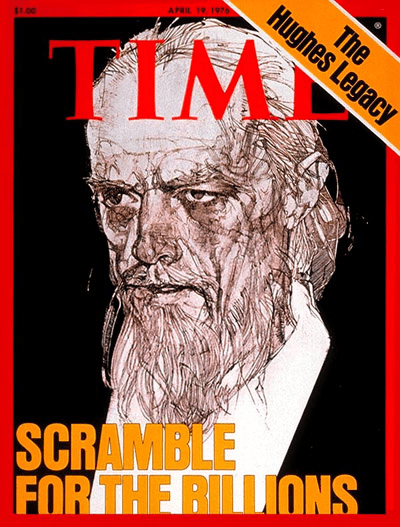
The Fate of Billionaires: The $116 Billion Difference Between Wealth and Happiness

Does vast material wealth guarantee a fulfilled life, or does it simply buy a higher grade of anxiety?

In this article, we examine the stark contrast between two of history’s richest men: American tycoon Howard Hughes, who died in tragic isolation, disease, and paranoia despite his immense fortune, and Purandara Dasa, a 16th-century diamond merchant who surrendered an estimated $116 billion net worth to pursue a life of pure devotion and ecstatic joy.

Drawing on the deathbed realizations of Alexander the Great alongside timeless teachings from the Bhagavad Gita and Srimad Bhagavatam, this post explores:

The Invisible Ledger: Why we leave every dollar behind at death, yet carry our karmic reactions into our next destination.

Wealth vs. Happiness: How a person can have karmic credits for money without having the credits for peace of mind.

The Culinary Recipe for Spiritual Bliss: Purandara Dasa’s famous Rama Nama Payasake metaphor for cultivating divine sweetness.

Read on to discover why material riches are inherently fleeting, and why the only wealth that endures beyond this life is spiritual.

We live in a culture obsessed with net worth, luxury, and material accumulation. Many spend their entire lives chasing vast fortunes, assuming that reaching the top of the financial ladder guarantees lasting peace, security, and happiness. But what happens when you actually reach that summit?

Examining history and the timeless spiritual laws governing human life reveals a striking lesson on the difference between material fortune, karmic debt, and true spiritual wealth.

The Tragic Isolation of Howard Hughes

Howard Hughes was once the epitome of the American dream. He was an extraordinarily wealthy billionaire with vast business interests spanning aviation, real estate, weaponry, and entertainment. Beyond his riches, he was a talented engineer and an avid golfer. Handsome, famous, and exceedingly rich, he had access to every luxury money could buy and surrounded himself with beautiful women.
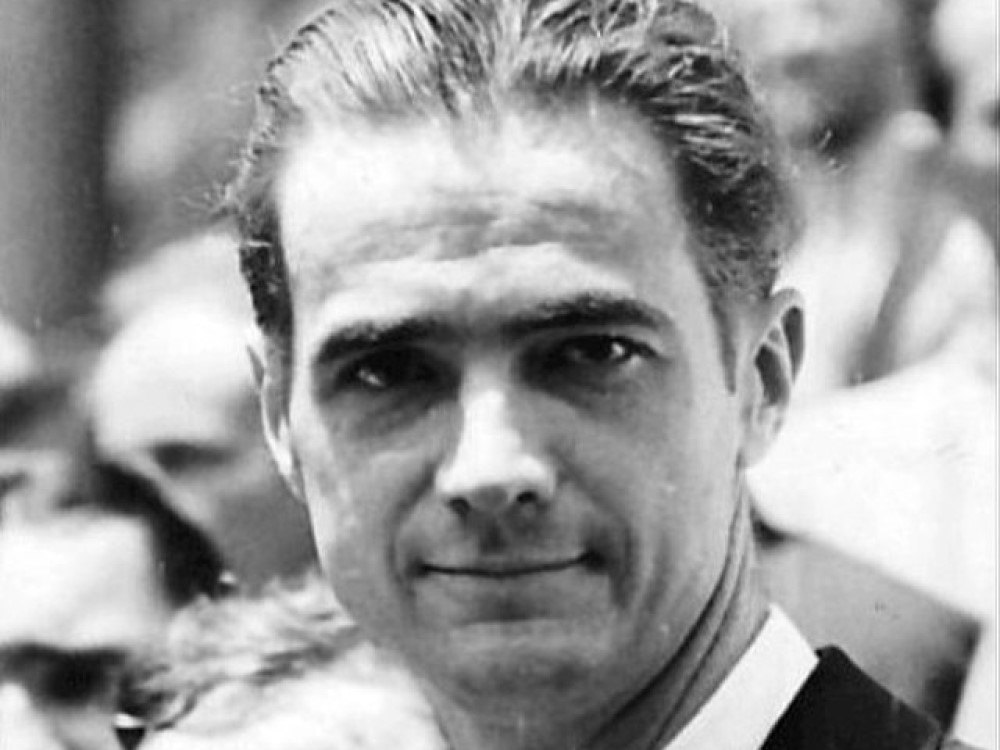
Howard Hughes in 1938

Yet, despite his astronomical fortune, the end of his life tells a deeply sobering story:

  • Paralyzing Anxiety & Isolation: In his later years, Hughes became a complete recluse. Driven by an obsessive-compulsive fear of infection, he locked himself in a hermetically sealed facility where the air was constantly filtered and his clothes were “de-germed”.
  • A Tragic End: He died aboard an airplane en route to a hospital. When he died, he was dirty, dishevelled, diseased, and suspected to have suffered a drug overdose administered by someone close to him.
  • Unrecognizable Remains: His physical state was so deteriorated and unrecognizable that law enforcement authorities had to rely on fingerprints just to confirm his identity.
Howard Hughes, Ex-Billionaire

And what became of his vast fortune? Hughes could not take a single dollar with him. His passing triggered endless legal drama involving a fake will, intense lawsuits, and an estate eventually carved up among 22 cousins and an unknown wife.

What We Carry Forward: The Invisible Ledger of Karma

When a wealthy person dies, the world sees only the bank accounts and estates left behind. But ancient wisdom teaches that while we leave every cent behind, materialists carry a heavy invisible load with them: their karmic reactions.

This dynamic is famously illustrated by Alexander the Great. On his deathbed, Alexander asked that his path to the grave be strewn with his treasures and that his hands be left dangling empty out of his coffin to show the world that even the greatest conqueror leaves empty-handed. Yet, while Alexander realized he could take none of his conquests with him, he failed to realize that he did carry the karmic reactions for the thousands of lives lost during his meaningless conquests.
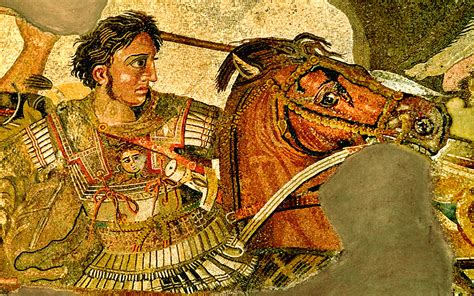
Alexander, the great murderer

Wealth Credits vs. Happiness Credits

It is a mistake to assume that having money automatically equals having a joyful life:

  • Wealth Without Peace: A billionaire may possess the specific karmic credits required to accumulate vast monetary wealth, yet lack the karmic credits for basic health, mental tranquility, or genuine love. They live surrounded by gold, yet imprisoned by internal and external conflict, severe paranoia, fear, and disease.
  • Fulfillment Without Riches: Conversely, a materialistically “poor” person may have very little money, yet possess karmic and spiritual credits that yield a far more fulfilling, peaceful life, blessed with warm relationships, restful sleep, and spiritual contentment.

Physical wealth and inner happiness are governed by completely different accounts. Money can buy luxuries, but it cannot buy a peaceful mind.

The science of action an reaction is tricky, and just because someone is clever at intellectual pursuits or expert at earning a lot of money doesn’t mean they can master the law of karma.

किं कर्म किमकर्मेति कवयोऽप्यत्र मोहिताः ।
तत्ते कर्म प्रवक्ष्यामि यज्ज्ञात्वा मोक्ष्यसेऽश‍ुभात् ॥ १६ ॥

kiṁ karma kim akarmeti
kavayo ’py atra mohitāḥ
tat te karma pravakṣyāmi
yaj jñātvā mokṣyase ’śubhāt

Even the intelligent are bewildered in determining what is action and what is inaction. Now I shall explain to you what action is, knowing which you shall be liberated from all misfortune.

https://vedabase.io/en/library/bg/4/16

Ancient Wisdom: Why Material Wealth Can Lock the Soul in Fear

The tragic trajectory of Howard Hughes isn’t an anomaly. It is a direct illustration of spiritual laws described thousands of years ago.

In the Bhagavad Gita, Lord Krishna explains how extreme attachment to material wealth and luxury clouds human judgment and blocks spiritual realization:

भोगैश्वर्यप्रसक्तानां तयापहृतचेतसाम् ।
व्यवसायात्मिका बुद्धिः समाधौ न विधीयते ॥ ४४ ॥

bhogaiśvarya-prasaktānāṁ
tayāpahṛta-cetasām
vyavasāyātmikā buddhiḥ
samādhau na vidhīyate

In the minds of those who are too attached to sense enjoyment and material opulence, and who are bewildered by such things, the resolute determination for devotional service to the Supreme Lord does not take place.
https://vedabase.io/en/library/bg/2/44/

When the mind is scattered across endless material desires, intelligence becomes “many-branched” (BG 2.41), leading to perpetual anxiety, mistrust, and fear.

In contrast, Srimad Bhagavatam highlights where true relief and fearlessness are found:

एतन्निर्विद्यमानानामिच्छतामकुतोभयम् ।
योगिनां नृप निर्णीतं हरेर्नामानुकीर्तनम् ॥ ११ ॥

etan nirvidyamānānām
icchatām akuto-bhayam
yogināṁ nṛpa nirṇītaṁ
harer nāmānukīrtanam

O King, constant chanting of the holy name of the Lord after the ways of the great authorities is the doubtless and fearless way of success for all, including those who are free from all material desires, those who are desirous of all material enjoyment, and also those who are self-satisfied by dint of transcendental knowledge.

https://vedabase.io/en/library/sb/2/1/11

While material riches often lead to paranoia and disease of the mind, spiritual practice cures our inner ignorance. As Srila Rupa Goswami notes in Upadesamrta (7), Krishna’s holy names are transcendentally sweet like sugar candy. Even if our diseased “jaundice of ignorance” initially prevents us from tasting that sweetness, chanting carefully every day gradually restores our natural relish and cures the disease at its root.

The Alternate Path: Purandara Dasa, The Billionaire Who Gave It All Away

To understand how differently a life of immense wealth can turn out, consider Purandara Dasa (born Srinivasa Nayaka) over 500 years ago.
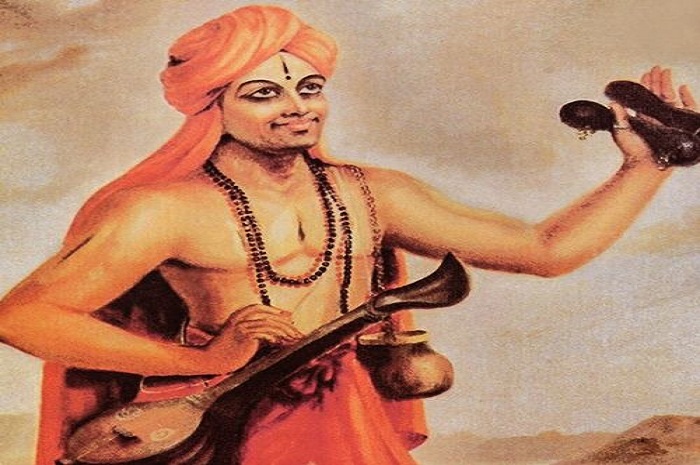
Purandara Dasa
Purandara Dasa

Srinivasa Nayaka was trained in the fine arts and spiritual texts, but he became a shrewd, calculating, and exceptionally wealthy diamond merchant. His vast enterprise included real estate, mortgages, and farmland. His fortune was estimated at 90 million gold coins (roughly 900,000 kilograms of gold)—which translates to over $116 Billion USD (or ₹11,14,000 Crore) in today’s terms!

Yet, after a famous divine intervention involving his wife Saraswati’s nose ring, Srinivasa experienced a profound awakening. Recognizing the temporary, hollow nature of material riches, he gave away his entire $68 billion fortune to focus exclusively on devotional service as a Haridasa. Initiated by the great saint Vyasa Tirtha, he became known as Purandara Dasa.

The Delicious Taste of Spiritual Wealth

Purandara Dasa went on to compose around 475,000 devotional songs (collectively known as Purandaropanishad) and became known as the Father of Carnatic Classical Music. Instead of hoarding gold, he relished the infinite sweetness of God’s names.

In his famous composition Rama Nama Payasake, he uses a brilliant culinary metaphor to explain how to prepare and enjoy true spiritual life:

  • The Ingredients: Take the Milk of Rama’s name, add the Sugar of Krishna’s name, and mix in the Ghee of Vitthala’s name.
  • The Preparation: Bring the wheat of single-mindedness, grind it with the stones of renunciation, draw out the fine flour of simplicity, and roll it into vermicelli.
  • The Cooking: Put it in the pot of your heart with the green gram of faith, cook it down using your intelligence, and offer it to Hari!

While Howard Hughes died in fear, isolated in a sealed room, drugged to death while trying to keep out germs, Purandara Dasa lived a life filled with spontaneous song, deep bliss (ananda), and profound inner peace.


Conclusion: The Only Lasting Wealth

The contrast between Howard Hughes and Purandara Dasa presents us with a clear contrast:

Howard HughesPurandara Dasa
Clung fiercely to his material wealthFreely donated $116 billion in wealth for God
Lived his final years in fear, isolation, and paranoiaLived in ecstatic devotion, song, and spiritual joy
Body unrecognizable at death; estate torn apart by lawsuitsLeft behind an immortal legacy of love, wisdom, and music

Material wealth, no matter how vast, is inherently temporary. It cannot purchase freedom from old age, disease, anxiety, or death, and we cannot carry a single cent across the threshold of passing.

The only wealth that endures beyond this body is spiritual wealth! Our connection with the Supreme, our character, and our practice of devotion is our only wealth. While money may taste sweet to a world bound by temporary desire, the holy names and loving service of God offer a taste that is infinitely more delicious, lasting, and truly eternal.

But even if you happen to be a millionaire or billionaire, even if on paper, why not win yourself the ultimate success? Start Chanting the Names of God Today, even if according to your tradition!

Or, can you please chant the Hare Krishna Mahamantra?

Hare Krishna Hare Krishna Krishna Krishna Hare Hare Hare Rama Hare Rama Rama Rama Hare Hare
The Hare Krishna Mahamantra

Anxious from physical pain or health issue? Leverage it!

When facing physical pain, it’s natural to feel anxious. This anxiety can be debilitating if not channeled properly. However, this can be channeled to deepen Krishna Consciousness. Just like a cricket batsman flicks away a fast ball from an aggressive bowler to score many runs, embracing verses like 10.14.8 from Srimad Bhagavatam within the heart and leveraging hardships to increase devotion can lead to liberation. Just as a legitimate son inherits from his father, a sincere devotee will gain the mercy of the Lord and attain the kingdom of God.

Question

When I get any physical pain or physical health problem, I tend to get extremely anxious. How to deal with that?

Answer

The anxiety in response to physical pain is natural. After all your body is your home, home of the spirit soul.

If there is a fire or flood in our home we get anxious and take care to mitigate the issue. People spend their whole life maintaining their house and clothes and car.

India is full of people who are mad after cricket. So here is a cricket analogy… when a fast bowler sends a very fast ball the batsman who is skillful channels the energy of the bowler to score runs, just by flicking the ball away to the boundary.

Cricket batsman plays the flick shot...

We may not be able to avoid anxiety but we can channel that anxiety to increase our Krishna Consciousness. We can use the opportunity to remember that the present body is temporary, to remember Krishna and take to His shelter more deeply. Whenever I feel such pain I ask if this may be my last moment in this life and try to remember Krishna very sincerely and cry, even if internally, that I am not yet Krishna Conscious.

Verse 10.14.8 from Srimad Bhagavatam is my favorite to take shelter of when facing adverse situations. Learn it by heart and take shelter of that verse whenever you feel anxious.

तत्तेऽनुकम्पां सुसमीक्षमाणो
भुञ्जान एवात्मकृतं विपाकम् ।
हृद्वाग्वपुर्भिर्विदधन्नमस्ते
जीवेत यो मुक्तिपदे स दायभाक् ॥ ८ ॥


tat te ’nukampāṁ su-samīkṣamāṇo
bhuñjāna evātma-kṛtaṁ vipākam
hṛd-vāg-vapurbhir vidadhan namas te
jīveta yo mukti-pade sa dāya-bhāk

Translation
My dear Lord, one who earnestly waits for You to bestow Your causeless mercy upon him, all the while patiently suffering the reactions of his past misdeeds and offering You respectful obeisances with his heart, words and body, is surely eligible for liberation, for it has become his rightful claim.

Purport
Śrīla Śrīdhara Svāmī explains in his commentary that just as a legitimate son has to simply remain alive to gain an inheritance from his father, one who simply remains alive in Kṛṣṇa consciousness, following the regulative principles of bhakti-yoga, automatically becomes eligible to receive the mercy of the Personality of Godhead. In other words, he will be promoted to the kingdom of God.

The word su-samīkṣamāṇa indicates that a devotee earnestly awaits the mercy of the Supreme Lord even while suffering the painful effects of previous sinful activities. Lord Kṛṣṇa explains in the Bhagavad-gītā that a devotee who fully surrenders unto Him is no longer liable to suffer the reactions of his previous karma. However, because in his mind a devotee may still maintain the remnants of his previous sinful mentality, the Lord removes the last vestiges of the enjoying spirit by giving His devotee punishments that may sometimes resemble sinful reactions. The purpose of the entire creation of God is to rectify the living entity’s tendency to enjoy without the Lord, and therefore the particular punishment given for a sinful activity is specifically designed to curtail the mentality that produced the activity. Although a devotee has surrendered to the Lord’s devotional service, until he is completely perfect in Kṛṣṇa consciousness he may maintain a slight inclination to enjoy the false happiness of this world. The Lord therefore creates a particular situation to eradicate this remaining enjoying spirit. This unhappiness suffered by a sincere devotee is not technically a karmic reaction; it is rather the Lord’s special mercy for inducing His devotee to completely let go of the material world and return home, back to Godhead.

A sincere devotee earnestly desires to go back to the Lord’s abode. Therefore he willingly accepts the Lord’s merciful punishment and continues offering respects and obeisances to the Lord with his heart, words and body. Such a bona fide servant of the Lord, considering all hardship a small price to pay for gaining the personal association of the Lord, certainly becomes a legitimate son of God, as indicated here by the words dāya-bhāk. Just as one cannot approach the sun without becoming fire, one cannot approach the supreme pure, Lord Kṛṣṇa, without undergoing a rigid purificatory process, which may appear like suffering but which is in fact a curative treatment administered by the personal hand of the Lord.

https://vedabase.io/en/library/sb/10/14/8/

When did the immortal soul get attached to Karmic Debts?

If a spirit soul is eternally existent, and karmic reactions only attach when in the material realm, how could spirit souls originally accumulate karmic debt?

Question:

If souls always existed , how did karmic substance get attached to the souls for the first time ?

Answer:

There are an unlimited number of spirit souls, manifesting eternally from Krishna for the purpose of having a loving relationship with Him. An infinitesimal fraction of them decide to enjoy separately from Krishna. That is an infinitely large number…

Why? Because for love, there must be free will. There must be the freedom to leave. Krishna does not force anyone to love Him. He gives them freedom to leave if they wish to.

But when a living entity comes from the spiritual realm, the only position fit for the soul is as Lord Brahma of a Universe. There are an unlimited number of Universes, and therefore an unlimited number of Brahma posts available.

Some of these Brahmas are Bhaktyonmukhi (devotionally inclined) Brahmas, in other words, they see the material world and make a U-turn and go back home back to Godhead, after that one lifetime as Brahma.

Some of them, foolishly, are Bahir Mukha (materially inclined) Brahmas, choose to experience other lifetimes, say, as Indra, Chandra, as an Apsara, and so on…

The way karmic reactions work, one karmic action is sufficient to create an unlimited number of reactions. Why? Think of a banyan tree that gives figs… how many seeds are there inside each fruit? And how many trees can sprout from one fruit? In other words, how many banyan trees are inside one little seed? Actions and reactions, easily and quickly pile up.

Remaining inside karma chakra, the cycle of fruitive action and reaction, or doing things like trying to be artificially nonviolent is of no use. We unavoidably create karmic reactions at every moment, just by breathing, speaking, eating, or sleeping.

How to get rid of all of them?

By performing devotional service, Bhakti.

This is what the Padma Purana says…

aprarabdha phalam papam
kutam bijam phalon-mukham
kramenaiva praliyeta
vishnu bhakti ratatmanam

Karmic reactions exist as manifest as fruits, unmanifest, hidden, in seed form etc., but they are gradually destroyed through the process of vishnu bhakti.

Therefore Krishna says:

सर्वधर्मान्परित्यज्य मामेकं शरणं व्रज ।
अहं त्वां सर्वपापेभ्यो मोक्षयिष्यामि मा श‍ुच: ॥ ६६ ॥

sarva-dharmān parityajya
mām ekaṁ śaraṇaṁ vraja
ahaṁ tvāṁ sarva-pāpebhyo
mokṣayiṣyāmi mā śucaḥ

Abandon all varieties of religion and just surrender unto Me. I shall deliver you from all sinful reactions. Do not fear.

https://vedabase.io/en/library/bg/18/66

So you want to serve the needy?

Would you like to help others? How do you know you are actually helping them and not prolonging their misery? How do you know you are not getting entangled in an endless web of actions and reactions?

Some say “manava seve madhava seva“, which means “by serving the needy man, you serve God”. Let us examine this… if you feed the hungry, or clothe the naked, or try to heal the sick… will that actually help them? Sure, there is some temporary relief from the pangs of material suffering. If temporary relief is your goal, sure, but what if you want to really help them out of this mess they are in? You surely cannot feed, clothe, or shelter someone forever. Even if you did, you cannot protect them from old age, disease, and eventually death.

They are suffering primarily because they are spirit souls masquerading as material bodies. The material body gets hungry, gets sick, gets old, and dies, and this is the main cause of problems.

So yes, we can serve God by serving the souls, but how we serve them determines if we become the cause of their emancipation or the cause of their (and our own!) continued bondage.

The law of karma is very complicated, and impossible to trace out fully due to the immense complexity, but it is very very precise. It will surely pay back in just measure every single reaction to every single action.

So yes, eye for an eye, tooth for a tooth. Not to be administered by us, but we do become instruments of that, mostly unwittingly. What personal enmity did the soldiers from Nazi Germany have against the soldiers from America in the Second World War? Why did Guenter kill Billy? Why did Tommy kill Thorsten? They owed a debt to each other, one to kill, and one to be killed, and in that particular lifetime, one soul was born in Nazi Germany, and the other was born in America. Both were enlisted, and many souls’ karmic reactions came together and manifested as the Second World War.

Every single occurence in the world is simply an example of karmic debts… someone becomes a father, someone becomes a daughter, someone becomes the slaughtherer, someone becomes the slaughtered, and in this way, ad nauseum, someone becomes an exploiter, someone becomes the exploited.

Don’t believe me? OK, let us see, what could be the karmic reward for feeding a hungry man? To be fed yourself, maybe many times over, but being fed yourself primarily. And what does the person who was fed need to do? They need to repay their debt to you. This means that both to enjoy the benefit and to get paid back, both you and the person you fed need to take birth again. Birth again, old again, sick again, and surely death again.

Don’t forget that whatever you fed someone was also a living entity – whether seed, vegetable or animal. So, who pays the debt to that living entity. You both, benefactor and beneficiary.

Same with opening up hospitals – you will one day get free medical treatment yourself.

Opening up orphanages? You will be taken care of by benevolent strangers when you become an orphan yourself.

Any philanthropic activity on the material platform results in such karmic bondage, subtle or gross.

All this sounds depressing, no?

How to actually help someone? It is commonly understood that teaching someone to farm is far better than just feeding them a few meals. Knowing that each living entity is actually spiritual in nature wearing a material covering. It then stands to reason that teaching them to shed the material covering, or in other words, helping them be purely spiritual, that is the way to actually help someone.

Want to help someone? Help them be truly spiritual through your help, let them begin their journey back home. This starts with being purely spiritual yourself. If you cannot do this, then you can continue your philanthropy, don’t stop it, because one day you may progress further…

श्रेयो हि ज्ञानमभ्यासाज्ज्ञानाद्ध्यानं विशिष्यते ।
ध्यानात्कर्मफलत्यागस्त्यागाच्छान्तिरनन्तरम् ॥ १२ ॥

śreyo hi jñānam abhyāsāj
jñānād dhyānaṁ viśiṣyate
dhyānāt karma-phala-tyāgas
tyāgāc chāntir anantaram

If you cannot take to this practice, then engage yourself in the cultivation of knowledge. Better than knowledge, however, is meditation, and better than meditation is renunciation of the fruits of action, for by such renunciation one can attain peace of mind.

https://vedabase.io/en/library/bg/12/12/

So if you want to renounce the fruits of action, that is OK, but know that there is more, such as cultivation of knowedge, but the real deal – realized knowledge, you need to live your knowledge. Even better than the cultivation of knowledge is meditation, and what is the highest?

Being purely conscious of Krishna is higher.

What is even still higher?

And even higher?

And the highest?

मय्येव मन आधत्स्व मयि बुद्धिं निवेशय ।
निवसिष्यसि मय्येव अत ऊर्ध्वं न संशय: ॥ ८ ॥

mayy eva mana ādhatsva
mayi buddhiṁ niveśaya
nivasiṣyasi mayy eva
ata ūrdhvaṁ na saṁśayaḥ

Just fix your mind upon Me, the Supreme Personality of Godhead, and engage all your intelligence in Me. Thus you will live in Me always, without a doubt.

https://vedabase.io/en/library/bg/12/8/

Ultimately however, this the way to please God the most…

Generally it is advised that Bhagavad-gītā be discussed amongst the devotees only, for those who are not devotees will understand neither Kṛṣṇa nor Bhagavad-gītā. Those who do not accept Kṛṣṇa as He is and Bhagavad-gītā as it is should not try to explain Bhagavad-gītā whimsically and become offenders. Bhagavad-gītā should be explained to persons who are ready to accept Kṛṣṇa as the Supreme Personality of Godhead. It is a subject matter for the devotees only and not for philosophical speculators. Anyone, however, who tries sincerely to present Bhagavad-gītā as it is will advance in devotional activities and reach the pure devotional state of life. As a result of such pure devotion, he is sure to go back home, back to Godhead.

https://vedabase.io/en/library/bg/18/68/

Want to read more? Try this.

Help others, truly help them, start by helping yourself first.

You can start by chanting this purely spiritual mantra, even if just once:

Hare Krishna Hare Krishna

Krishna Krishna Hare Hare

Hare Rama Hare Rama

Rama Rama Hare Hare

The Maha Mantra, the Great Mantra for Deliverance from Material Bondage and Development of Pure Spiritual Nature

Try it out. Help me help others. Please let me know I may serve you on your spiritual journey.

How to understand being insulted?

In general, karmic reactions are to be understood to be the result of our own past actions. But is is always the case? Are some situations outside of the Karmic balance?

Dr.Gopal Shinde, 13th May 2013

Dandavat to prabhus,

I have following question regarding Dhruv Maharaj
Kindly enlighten me.
I thought of asking this question to Guru Maharaj but then thought to keep it in this forum so as to not waste Guru Maharaj’s time

We get insulted because of our karma , we have insulted someone in past therefore they are insulting us in present , as Guru Maharaj has clarified in one of the question answer in Daily Thoughts through www.backtohome.com
My question is when did dhruva maharaj insult suruchi …in his past life? if he hadnt insulted suruchi why was he insulted ?

Kindly pardon my ignorance

aspiring to be your servant……
Gopal
Mahabhagavat Das SDA, 14th May 2013

Dear Gopal,

Hare Krishna!

Srila Gurudeva never considers that his time is “wasted” when someone asks him a question. In fact, a spiritual master is served by us asking him questions and doing practical service to assist him “pariprashnena sevayaa”.

In fact, all of us, especially those who want to receive initiation, should make the effort to develop a personal relationship with him. He likes this, and we all benefit from having many disciples with a personal relationship with the spiritual master. Of course, he does spend upwards of 8 hours every day on email no matter where he is, answering emails practically every single moment he has. It took me a while to understand the great privilege of receiving an email from him… this is like disciples of Srila Prabhupada writing letters to him and receiving replies. Don’t think that this group is meant to replace that. It is meant to serve the spiritual master, not act as a barrier between the spiritual master and the students and disciples! 🙂

Yes, some questions may be directed to his disciples, and if unsatisfied/dissatisfied with the answer(s), one should approach Srila Gurudeva.

Your consideration to save some of his time is very noble, but do not feel that he has no time for you. He is your spiritual father, and to a father, hearing from children is always pleasurable.

Yes, correct, a pure devotee understands that all suffering is reduced reaction to their own previous actions… but in the case of Dhruva Maharaja, there is no recorded history of this, but just consider how long ago this happened… Maharaja Dhruva was the son of Uttanapada who was the son of Svayambhuva Manu who was the son of Lord Brahma, the creator of this universe which is currently 155 trillion, 20 billion years old. (ref: http://www.sda-archives.com/tftd/2011/jun/tftd_061711.html)

For a pure devotee, such a thing is usually understood to be “Leela”, in other words, there is no karmic action-reaction cycle behind this, it is Leela, directly Krishna’s plan. Dhruva Maharaja is considered to be an eternally liberated soul, nitya siddha, even though he may have acted as a hot-headed little Kshatriya boy at some time.

Just like the example of Srila Prabhupada – he tried to establish League of Devotees in Jhansi, but he was cheated by some politician’s wife… does that mean that Srila Prabhupaa previously cheated that person? No, we cannot understand it in that way. This is Leela, Krishna’s direct plan to send Srila Prabhupada to America to establish ISKCON which would then flood the whole world with Krishna consciousness, including a little Indian city, famous for some historical reasons, known as Jhansi. 🙂

I hope this makes sense.

Sincerely,
Mahabhagavat Das

Please subscribe to daily inspirational emails from His Grace Sriman Sankarshan Das Adhikari (Writings and lectures archived at sda-archives.com), written fresh every day from his travels around the world sharing the highest spiritual knowledge with everyone. Sign up now at www.backtohome.com.