Can Spiritual Organizations Truly Exist?

Is “spiritual organization” a contradiction? Spirituality is all about simplicity while organizations lean towards complexity. Combining them poses risks, like losing sight of true spiritual goals. Yet, if done right, organizations can help spread spiritual teachings and drive broader impacts. It’s all about focus! Do you see problems with spiritual organizations?

“Spiritual Organization” – is that an oxymoron?

An oxymoron is when two contradictory words are used together. This can occur sometimes intentionally and sometimes by accident. Occasionally, it is not meant to be so, but hypocrisy is the cause.

In this case, we are aware of many spiritual organizations, think temples, churches, mosques, and so on… there are many. Some of them are spiritual, some religious, some both.

When I think about what spirituality is, and what organization must be, we wonder if they can ever go together.

Simplicity vs. Complexity

Spirituality means simplicity. For someone who is not simple, spiritual life is extremely complicated.

But organization means complexity… it is impossible to build and grow an organization without avoiding complexity.

On the other hand, without good organization, it is not possible to have a greater spiritual impact. Many pure saints have come and gone for thousands of years. Their existence remains a well-kept secret. They come, and they go, sight unseen. Almost no one knows about their teachings, instructions, or example.

Spiritual descendants of those simple saints often take a risk. They make the effort to organize and distribute their teachings on a wider scale. They regularly get sucked into the complexities of organizations. As a result, they sometimes lose sight of the simplicity that makes spiritual practice possible.

So this is the dichotomy… “spiritual” means simple, frugal, minimal, open, honest, etc.

But “organization” means people, money, structure, process, secrecy, and inevitably, politics.

Can spirituality exist in an organization? Can an organization fulfill spiritual goals?

How to properly understand this? How to reconcile these?

Let us examine both, and understand the risks better.

Spirituality

Spirituality means a pursuit that is non-material. A genuine spiritualist does not care for money, fame, power, influence, or any material trappings.

Organization

Organization means, fundamentally, some land or real estate, some money, and people… and some structure so that it can all be effectively governed.

In an organization, we need different types of roles. We need individual contributors. These include preachers, teachers, singers, cooks, cleaners, priests, musicians, etc. We also need managers, we need wranglers who can get things done. We need thinkers, we need executive leaders who can articulate a vision. And we need those who can execute on that vision. We need accountants, we need lawyers, we need marketing people too… we need fundraisers, we need people leaders and technically skilled leaders.

Amidst all of this, there is also a class of bureaucrats… people who can figure out a system and work it, to their advantage, to others’ disadvantage. There is also a rise of the people who don’t really contribute to the mission of the organization. They broker relationships, they broker rewards, they broker power and peddle influence. They also broker corruption. It is unavoidable, in any organization, even a spiritual organization. Even if there are parasites. Yes, we can strive to root them out, but it is often hard to tell. So we often tolerate them.

Why? Because a genuine spiritual process can transform even the most hardened materialist. So we have hope for them, even if we see through them. Even if we see their machinations, their schemes. Even if we must tolerate their shenanigans, while continuing to cultivate spiritual purity ourselves.

Srila Prabhupada spoke about this…

Just like a ripe mango and green mango. Green mango is the cause of ripe mango. But to taste ripe mango is better than unripe mango. Similarly, before attaining love of Godhead, you have got different stages. Just like the same mango, it passes through different stages, then one day it comes nice yellow color, fully ripened, and taste is so nice.

The same mango. The mango does not change, but it comes to the mature stage. So this . . . as this example, the mango is in the beginning a flower, then gradually a little fruit. Then gradually it grows. Then it becomes very tight, green, and then, gradually, it becomes little, little yellowish, and it becomes fully ripe.

This is the process of everything. In material world also, there are six processes, and the last process is vanquish. This mango example or any other material example, we can accept it so far the growth is required, concerned, but material example is not perfect. Just like mango, when it is ripe, somebody eats, that’s all right.

Otherwise it will overripe, it will decompose, it will fall down and finish. That is material. But spiritual is not like that. It is not finished. If you once come to the stage of mature stage of love, then that perfectional stage continues eternally, and your life is successful. Premā pum-artho mahān 

https://vanisource.org/wiki/681018_-Lecture-_Seattle?hl=ripe|mango

Should we do away with organizations?

It is tempting to think in that way… no organizations, no money, no power, no corruption, no bureaucrats, no parasites, right?

The power, the money, the powerful, the influential, the famous, and the stars. We all know fame corrodes and power corrupts. Absolute power corrupts absolutely.

No, because despite it all… Despite many challenges. By organizing ourselves better, we can help more souls advance spiritually. It is worth all the effort. Organization, sacrifices, and compromises make it possible, but only when we haven’t lost sight of the goal. Working together towards a common goal makes it possible, even if it is difficult to do so.

After all, one lone saintly person, how much can he do? How many souls can he reach?

So many saints have come and gone. Many have cried in the wilderness. Most are unknown. Those saints who took the time and trouble to organize did something tangible. Even if they had to distract themselves with the mundane temporarily, their efforts were worthwhile.

There is every risk that an organization becomes ineffective… That is a risk for any organization. Not just a danger for spiritual organizations.

I had written about this before. Srila Prabhupada wisely warned us against thinking that simply by being part of some organization we can advance spiritually…

But if we want to go to the spiritual platform, then these bodily demands, at least for the present, we have to regulate. We cannot enjoy material life without any restriction and at the same time we can stand on the spiritual platform. That is the whole thing. The difficult problem is there: we want to be spiritualist by speculation only. That is the whole tendency.

People are much interested in philosophical speculation without any practical life. In the modern world it is said, yaśo ‘rthe dharma-yajanam. This is the symptom of this age. Yaśaḥ arthe. I want to associate with some organization, spiritual, just for the sake of name: “Oh, I am attached to that such big organization.” But, so far my life is concerned, it is as it is. https://vanisource.org/wiki/660418_-_Lecture_BG_02.59-69_-_New_York?hl=organization

So? What is the conclusion?

Spiritualists, organize properly!

But how?

By making sure to keep the main thing the main thing!
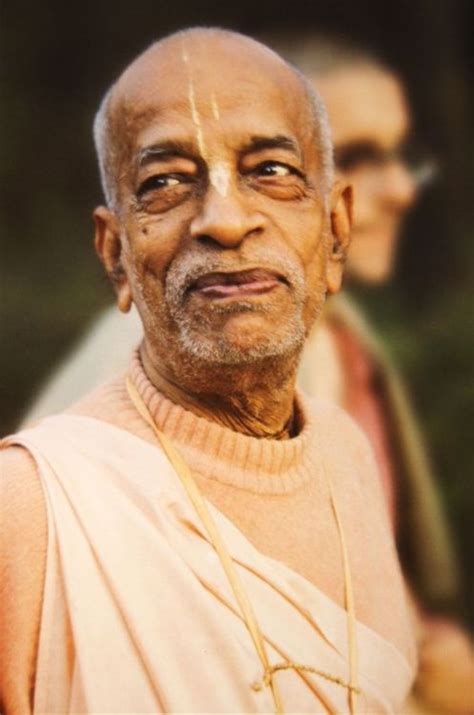
Srila Prabhupada

I leave you with profound instructions from the great His Divine Grace A. C. Bhaktivedanta Swami Prabhupada.

The point is to be engaged in doing something for Krishna, never mind what is that job, but being so engaged in doing something very much satisfying to the devotee that he remains always enthusiastic.

He will automatically follow the regulative principles because they are part of his occupational duty–by applying them practically as his occupational duty, he realises the happy result of regulative principles.

So the future of this Krishna Consciousness movement is very bright, so long the managers remain vigilant that 16 rounds are being chanted by everyone without fail, that they are all rising before four morning, attending mangal arotik–our leaders shall be careful not to kill the spirit of enthusiastic service, which is individual and spontaneous and voluntary.

They should try always to generate some atmosphere of fresh challenge to the devotees, so that they will agree enthusiastically to rise and meet it.

That is the art of management: to draw out spontaneous loving spirit of sacrificing some energy for Krishna.

But where are so many expert managers? All of us should become expert managers and preachers. We should not be very much after comforts and become complacent or self-contented.

There must be always some tapasya, strictly observing the regulative principles

Krishna Consciousness movement must be always a challenge, a great achievement to be gained by voluntary desire to do it, and that will keep it healthy.

So you big managers now try to train up more and more some competent preachers and managers like yourselves.

Forget this centralizing and bureaucracy.

https://vanisource.org/wiki/721222_-_Letter_to_Karandhara_written_from_Bombay?hl=individual|spontaneous|voluntary

This is a cautionary note for all spiritual organizations.

Muslim Brahmin in Hyderabad

Can a Muslim be a Brahmin? Can a Vaishnava be as good as a Mullah or Rabbi or Christian priest? Here are some great insights from a Maulvi in Hyderabad!

Not long ago, I was out on the street distributing the Bhagavad Gita in the South Central Indian City of Hyderabad. Hyderabad, like most cities in India, is a beautiful confluence of many cultures. Specifically, in Hyderabad, there is a significant mix of Hindu, Muslim, and Christian populations, and the history of the city has a strong Muslim flavour. For the most part, people have lived in harmony for hundreds of years. There have been flash-points and incidents of hatred, but relatively rare.

One day, as I stood on the street, I saw an elderly gentlemen, clearly Muslim from his long white beard with moustache shaved off, a baggy light-coloured Salwar Kameez, and a distinctive skull cap. He walked slowly, with a walker, that he gently placed in front of him, and then moved his legs closer to the walker, shuffling by slowly. I respectfully made way for this gentleman and greeted him with a little bow.

He passed back-and-forth a few times, and seeing his friendly countenance, I asked him if he would read the Bhagavad Gita. He said he most certainly would, if I had a Hindi version available. He then told me that he had been to the ISKCON Radha Madan Mohan temple in Abids, Hyderabad several times for the Sunday feast program, and had participated in Harinam Sankirtan, and taken Prasad many times at the temple. The surprise must have been clear on my face, because he then said “Do you know that I am a Brahmin?”.

He then explained “I am the Maulvi of this mosque around this corner. I have dedicated my life to Allah. I don’t eat meat and I don’t drink alcohol. I teach the scripture. So how am I not a Brahmin?”. He then added “The Gita was spoken by Allah and the Q’uran was spoken by Allah, so why would I read one but not the other?“. I was very much gladdened by his mature understanding. This is exactly our Vaishnava understanding too.

In the Bhagavad Gita, Sri Krishna describes the qualities of a Brahmin…

शमो दमस्तप: शौचं क्षान्तिरार्जवमेव च ।
ज्ञानं विज्ञानमास्तिक्यं ब्रह्मकर्म स्वभावजम् ॥ ४२ ॥

śamo damas tapaḥ śaucaṁ
kṣāntir ārjavam eva ca
jñānaṁ vijñānam āstikyaṁ
brahma-karma svabhāva-jam

Peacefulness, self-control, austerity, purity, tolerance, honesty, knowledge, wisdom and religiousness – these are the natural qualities by which the brāhmaṇas work.

https://vedabase.io/en/library/bg/18/42/

So, if we see any living entity from any cultural background or any religious orientation who has these qualities, we must accept them as good as Brahmins. Of course, Krishna also says that Brahmin is not only by quality, but also by the work they do…

चातुर्वर्ण्यं मया सृष्टं गुणकर्मविभागशः ।
तस्य कर्तारमपि मां विद्ध्यकर्तारमव्ययम् ॥ १३ ॥

cātur-varṇyaṁ mayā sṛṣṭaṁ
guṇa-karma-vibhāgaśaḥ
tasya kartāram api māṁ
viddhy akartāram avyayam

According to the three modes of material nature and the work associated with them, the four divisions of human society are created by Me. And although I am the creator of this system, you should know that I am yet the nondoer, being unchangeable.

https://vedabase.io/en/library/bg/4/13/

Srila Prabhupada describes the 6 duties of a Brahmin…

Brāhmaṇas are supposed to acquire six kinds of auspicious qualifications: they become very learned scholars (paṭhana) and very qualified teachers (pāṭhana); they become expert in worshiping the Lord or the demigods (yajana), and they teach others how to execute this worship (yājana); they qualify themselves as bona fide persons to receive alms from others (pratigraha), and they distribute the wealth in charity (dāna).

https://vedabase.io/en/library/sb/5/17/11/

Based on instructions from the Vaishnava Acharyas, the great saintly teachers, we accept that Prophet Muhammad is an empowered messenger sent directly by God, practically, speaking a “shaktyavesha avataar” or a living entity but with the power to act in a way empowered by God. We accept that Jesus Christ is the son of God, a pure devotee fully dovetailed with the desire of God. We accept that there is only one God, known by different names and different degrees of understanding, as an impersonal spirit (Brahman), as a localized supersoul (Paramatma), and as the Personality of Godhead (Bhagavan).

When our constitutional position, or dharma, is deteriorated due to the contaminations of matter, the Lord Himself comes as an incarnation or sends some of His confidential servitors. Lord Jesus Christ called himself the “son of God,” and so is a representative of the Supreme. Similarly, Mohammed identified himself as a servant of the Supreme Lord. Thus whenever there is a discrepancy in our constitutional position, the Supreme Lord either comes Himself or sends His representative to inform us of the real position of the living entity.

On the Way to Krishna, Chapter 2

I offered my deepest respects to that great Maulvi, that Muslim priest, who has realized the essence of Allah Consciousness in principle. Surely, he is very very close to Allah. By speaking his sweet realized words, he gave me hope that this world can be rectified from its current sectarian path.

In the same way, all the Muslims should accept the advanced Vaishnavas as good as their own Maulvis and Hazrats.

The Christians should accept the advanced Vaishnavas as good as their own nuns, monks, and priests.

The Jews should accept the advanced Vaishnavas as good as their own Rabbis.

This is the principle. One God. Many scriptures according to time, place, and circumstance.

So, what was our conclusion as we parted ways? We concluded that the genuine mature follower of any genuine faith tradition is very similar, they love God, and they love all of God’s creation. They see God everywhere, and see everyone as God’s children, to be loved and served. But the follower-in-name, a materialist or religion-politician of any faith is equally sectarian or in many cases, inhuman, and unfortunately, also evil.

Overcoming Dr. Frog Mentality

Why does anyone try to measure God against themselves?

I heard this example from my spiritual master Sri Sankarshan Das Adhikari several times. Once upon a time, Dr. Frog lived in a well. He was the authority on the well. He knew all its inhabitants, he knew the varying water levels. Dr. Frog was born in the well, and knew that of course, his well was the greatest water body in the world.

One day, a little visitor came to his well, hop hop hop. This visitor had just come from the ocean’s edge. Dr. Frog welcomed his little guest, and they got talking. Dr. Frog told him all about his well. The little one said all that was fine but that he had seen a water body much bigger than the well. Dr. Frog couldn’t believe his ears. He decided to humour his little visitor.

He puffed up his chest a little. “This much bigger?” he asked. The little one said, “No Dr. Frog, much bigger”. Dr. Frog was a master puffer. So he puffed himself up some more. And more. And more. Until his chest burst. And that was the end of Dr. Frog.

Similarly, the Dr. Frogs of this world are trying to measure the glory of God in relation to themselves. When they hear Krishna drank deadly poison as a newborn and sucked out the life of Putana the child-killing demoness, they think, surely this is a fairy tale. When they hear how Krishna lifted Govardhan Hill for 7 days and 7 nights on the little finger of his left hand without a break to protect the citizens of Vrindavan, they think this is surely a myth. When they hear Krishna danced with 3 Billion Gopis and made each of them feel that she was the only one, they say, surely this is a male fantasy. When they hear Krishna married 16,108 wives and each of the wives thought she was the only one, they may think surely Krishna must refer to a tribe of men.

Each materialist, atheist, and pseudo-spiritualist tries to measure God against Himself. This is Maya, that which is not, trying to measure God against one’s own puny little self.

But we little fellows, recovering atheists, are going around telling the little Dr. Frogs of the world, sir, there is a God, and God is very very great, much much greater than you, and they simply puff up their chests. We also say God is very very sweet, not an angry old man, and they think we are fools. We tell them we know what God looks like and they think we are idol worshippers.

But everyone should remember that a frog who croaks too loud attracts his own death in the form of a hungry snake.

The snake of time will devour us all, but those of us in a compact of Love with God, death is simply taking a nap and waking up in our eternal form.

Please read the books of Srila A. C. Bhaktivedanta Swami Prabhupada. Please strive to understand and follow them. Please chant Hare Krishna, serve the Krishna Consciousness Movement directly or in any of its many branches like Hinduism, Christianity, Judaism, or Islam, and continue your progessive journey home.

If I may serve you on your journey please reach out!