Brahmachari vs Bhramachari: Which one do you want to be?

A Brahmachari is like a spiritual athlete, dedicated to serving the Supreme Truth, while a Bhramachari chases illusions—basically like a spiritual couch potato, confusing the finish line for a mirage in a desert. We dive into how society’s roles, like Brahmanas and Shudras, fit into this divine quest, reminding us that serving God is the real goal, whether you’re a householder or a renounced sage. Remember, folks: always be a Brahmachari, not a Bhramachari—that’s the real spiritual workout!

A Brahmachari is a person who is dedicated to the pursuit and service of the Supreme Absolute Truth.

ब्रह्म आचरति इति ब्रह्मचारी

brahma ācarati iti brahmacāri
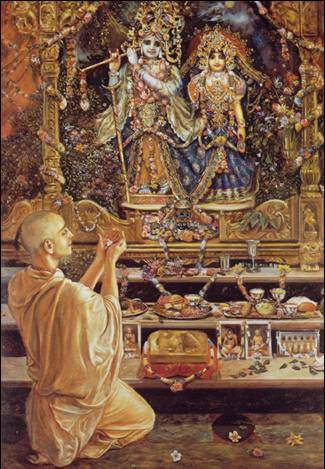
Brahmachari worships Radha Krishna

And a Bhramachari is a person is the exact opposite.

The Sanskrit word “bhrama” means “illusion”.
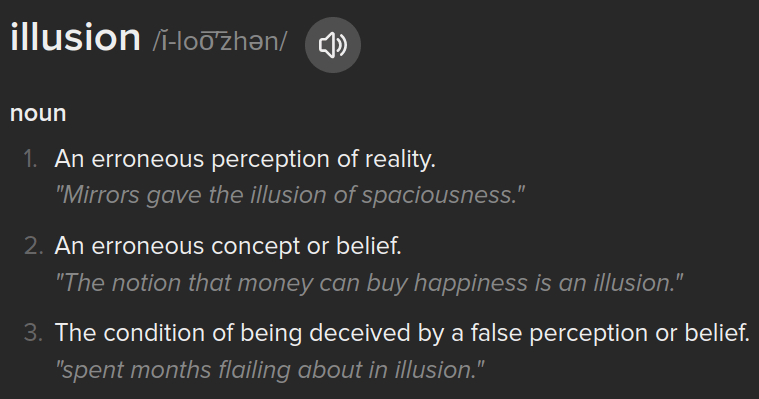
 Illusion, from the dictionary

So, someone who chases after illusory happiness is the opposite of someone who dedicates themselves to the Absolute Truth.

What got me thinking was a typo. The person writing was referring to a gentleman who is solidly dedicated to the Supreme Absolute Truth. At first I chuckled, but then I started thinking about the difference between the two.

I concluded that I can be one or the other at any given time, either I am engaged in the service of the Supreme Absolute Truth, or I am engaged in something frivolous that is temporary at best, illusory in nature.

Human society is divided by God into 4 natural orders of spiritual life, and 4 social orders, according to the natural qualities and work performed by the various people. And Brahmacharis can exist in all spiritual and social orders. This natural division is clearly visible in the nature and activities of people, it’s not the birth-based caste system as it has degenerated to.

चातुर्वर्ण्यं मया सृष्टं गुणकर्मविभागशः ।
तस्य कर्तारमपि मां विद्ध्यकर्तारमव्ययम् ॥ १३ ॥

cātur-varṇyaṁ mayā sṛṣṭaṁ
guṇa-karma-vibhāgaśaḥ
tasya kartāram api māṁ
viddhy akartāram avyayam

According to the three modes of material nature and the work associated with them, the four divisions of human society are created by Me. And although I am the creator of this system, you should know that I am yet the nondoer, being unchangeable. https://vedabase.io/en/library/bg/4/13/

The 4 Social Orders are:

  • Brahmanas: The intelligent class, the “head” of society
  • Kshatriyas: The administrator class, the “arms” of society
  • Vaishyas: The mercantile community, merchants, traders, farmers, the “belly” of society
  • Shudras: The worker class, the “legs” of society
Varna: The 4 social orders created by God. BG 4.13

And then there are the 4 spiritual orders:

  • Brahmachari: The celibate student
  • Grihastha: The householder family man
  • Vanaprastha: The former householder, retired from family life
  • Sannyasa: The fully renounced order of life

However, no matter which social or spiritual order one may be situated in…

अत: पुम्भिर्द्विजश्रेष्ठा वर्णाश्रमविभागश: ।
स्वनुष्ठितस्य धर्मस्य संसिद्धिर्हरितोषणम् ॥ १३ ॥


ataḥ pumbhir dvija-śreṣṭhā
varṇāśrama-vibhāgaśaḥ
svanuṣṭhitasya dharmasya
saṁsiddhir hari-toṣaṇam

O best among the twice-born, it is therefore concluded that the highest perfection one can achieve by discharging the duties prescribed for one’s own occupation according to caste divisions and orders of life is to please the Personality of Godhead. https://vedabase.io/en/library/sb/1/2/13/

All these 4 orders of society are meant to serve God in their own way, just like the different parts of the body serves the whole – the hand feeds the stomach, the leg moves the body, and the brain regulates the hand, stomach, and legs. One without the others is a handicapped body, not very effective. Neither is one more or less important than others.

By following the activities according to one’s own nature, and offering that in the service of God, one can indeed attain perfection.

यत: प्रवृत्तिर्भूतानां येन सर्वमिदं ततम् ।
स्वकर्मणा तमभ्यर्च्य सिद्धिं विन्दति मानव: ॥ ४६ ॥

yataḥ pravṛttir bhūtānāṁ
yena sarvam idaṁ tatam
sva-karmaṇā tam abhyarcya
siddhiṁ vindati mānavaḥ

By worship of the Lord, who is the source of all beings and who is all-pervading, a man can attain perfection through performing his own work. https://vedabase.io/en/library/bg/18/46/

Which now brings us to the main topic of our discussion…

No matter where we might fit into society, we are all meant to serve God with all our faculties, with all our gifts, with all our abilities, and all our resources.

This is how one may remain a Brahmachari, no matter where one may be situated in…

  • Brahmacharis in the Brahmachari Ashrama – these are either students or those dedicated to spiritual life without deviation, and/or preparing themselves for the renounced order, usually younger men, but also many older men. Being in young bodies or being inexperienced does not mean they can pursue unrestricted sense enjoyment.
  • Grihastha Brahmacharis, or those who pursue spiritual life even while accepting the responsibilities of householder or family life. It’s not that taking on family responsibilities give the person to pursue illusion in an unrestricted manner.
  • Vanaprastha Brahmacharis, or those who have retired from family life, or decided to marry a like-minded person dedicated to spiritual life – even while living as a married couple, they have no family responsibilities. However, just because they are not directly responsible for their family doesn’t mean they don’t accept responsibility for other Grihasthas and Brahmacharis. The dedicate themselves to being on “constant pilgrimage” and leveraging their life experience and spiritual knowledge to benefit others.
  • Sannyasa Brahmacharis, or those who are in the renounced order of life, with no family or social connections. But just because someone is in the renounced order of life doesn’t mean they don’t do anything. In fact, they adopt the whole world as their family, meeting others just so they can convey God Consciousness, Krishna Consciousness to them, and staying just long enough to deliver the message and keep moving on.

Importantly, one needs to remain focused on the goal of life, which is to attain spiritual perfection. The way one expresses one’s Brahmacharya, or dedication to spiritual advancement, may look different depending on which Varna and Ashram one is in, but the principles of a regulated spiritually focused life remain.

No matter if you are a man or woman, young or old, whether you wear white, or saffron, or any other colour… If you’re serious about spiritual life, then you must be a Brahmachari, in every thought, word, and deed.

So we have a choice, no matter what our official social and spiritual status might be. At every moment, with every thought, word, and deed, we all need to be Brahmacharis, not Bhramacharis.

Thoughts?
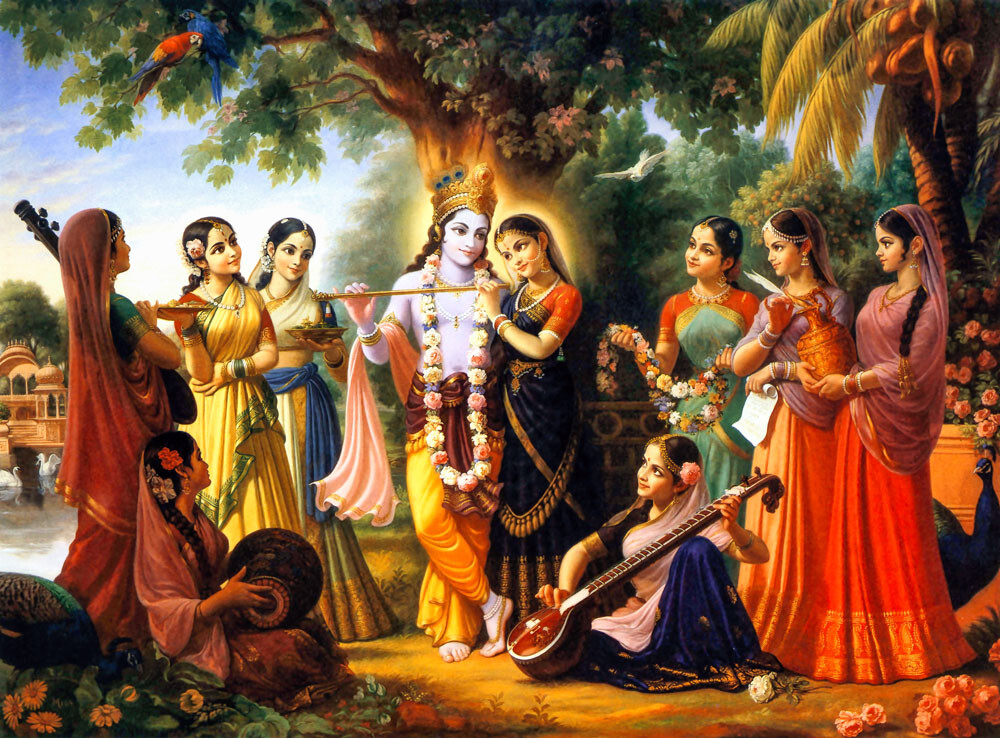
Krishna’s Message on Spiritual Equality in Devotion

Does birth matter in the eyes of God? What does it mean to be lowborn? Are women lowborn? Are merchants lowborn? Are workers lowborn? And if someone does happen to be “lowborn”, are they rejected by God?
In the Bhagavad Gita, Krishna emphasizes that all individuals, regardless of social standing or gender, have the potential for spiritual elevation through devotional service. True worth is defined by one’s internal consciousness, not external circumstances. By taking shelter in Krishna, everyone can attain the supreme destination, fostering hope for all.

Question:

B.G 9.32 says women are considered as low born. I answered this but somehow I am not satisfied with my answer. Please guide me on this.

Answer:

You are referring to the this verse from the Bhagavad Gita…

Bg. 9.32

मां हि पार्थ व्यपाश्रित्य येऽपि स्यु: पापयोनय: ।
स्त्रियो वैश्यास्तथा श‍ूद्रास्तेऽपि यान्ति परां गतिम् ॥ ३२ ॥

māṁ hi pārtha vyapāśritya
ye ’pi syuḥ pāpa-yonayaḥ
striyo vaiśyās tathā śūdrās
te ’pi yānti parāṁ gatim

Synonyms

mām — of Me; hi — certainly; pārtha — O son of Pṛthā; vyapāśritya — particularly taking shelter; ye — those who; api — also; syuḥ — are; pāpa-yonayaḥ — born of a lower family; striyaḥ — women; vaiśyāḥ — mercantile people; tathā — also; śūdrāḥ — lower-class men; te api — even they; yānti — go; parām — to the supreme; gatim — destination.

Translation

O son of Pṛthā, those who take shelter in Me, though they be of lower birth – women, vaiśyas [merchants] and śūdras [workers] – can attain the supreme destination.

https://vedabase.io/en/library/bg/9/32/

In this verse above, Krishna is covering over 90% of the human population, including men! So should we all take offense that Krishna is saying this?

Srila Prabhupada writes this in his purport:

It is clearly declared here by the Supreme Lord that in devotional service there is no distinction between the lower and higher classes of people. In the material conception of life there are such divisions, but for a person engaged in transcendental devotional service to the Lord there are not. Everyone is eligible for the supreme destination. In the Śrīmad-Bhāgavatam (2.4.18) it is stated that even the lowest, who are called caṇḍālas (dog-eaters), can be purified by association with a pure devotee. Therefore devotional service and the guidance of a pure devotee are so strong that there is no discrimination between the lower and higher classes of men; anyone can take to it. The most simple man taking shelter of the pure devotee can be purified by proper guidance. According to the different modes of material nature, men are classified in the mode of goodness (brāhmaṇas), the mode of passion (kṣatriyas, or administrators), the mixed modes of passion and ignorance (vaiśyas, or merchants), and the mode of ignorance (śūdras, or workers). Those lower than them are called caṇḍālas, and they are born in sinful families. Generally, the association of those born in sinful families is not accepted by the higher classes. But the process of devotional service is so strong that the pure devotee of the Supreme Lord can enable people of all the lower classes to attain the highest perfection of life. This is possible only when one takes shelter of Kṛṣṇa. As indicated here by the word vyapāśritya, one has to take shelter completely of Kṛṣṇa. Then one can become much greater than great jñānīs and yogīs.

https://vedabase.io/en/library/bg/9/32/

Spiritually speaking, Krishna describes all living entities as “Prakriti.” As spirit souls, we’re higher than material elements.

Earth, water, fire, air, ether, mind, intelligence and false ego – all together these eight constitute My separated material energies.

https://vedabase.io/en/library/bg/7/4/

Besides these, O mighty-armed Arjuna, there is another, superior energy of Mine, which comprises the living entities who are exploiting the resources of this material, inferior nature.

https://vedabase.io/en/library/bg/7/5/

“Energy” indicates that the energy belongs to the “energetic”. For example, the sunshine is an energy of the sun. A living entity’s core nature is as a part-and-parcel of God. The living entities are “energies” of God. This is true whether someone is in a male body or a female body. The energetic is called “male” and the energy is called “female”. The “minute energy” is not the Supreme Energetic, God. Then, the only true “male” is God Himself, or Krishna, because other than God everyone is an energy.

In the same verse, Vaishyas and Shudras are also considered to be lowborn, and that includes men also. Why are Vaishyas included here? Vaishya means business person. If a business person cares only about money, and not about spiritual advancement, then are they not lowborn? A Shudra is a person who cannot do anything independently. A Shudra laments unnecessarily over inconsequential things. A Shudra lacks higher training. When a Shudra is not interested in spiritual advancement, then are they not lowborn?

A person who considers themselves a woman is definitely lowborn. A woman who they are a spirit soul in the body of a woman is elevated. The same thing applies to men also… For example a person who works for a salary is a Shudra, a worker. This is not dependent on their birth. Socially speaking, they are employed, so they are Shudra. A person who works in abominable professions is worse than a Shudra. If such a person uses their time and money to advance in Krishna Consciousness, they are ONLY externally a Shudra. Internally they are advancing spiritually. Thus, they are a Vaishnava. The internal consciousness of a person trumps the externals.

But the focus of the verse is not that someone is lowborn or highborn etc. It does not matter who or what someone is externally. Anyone can be elevated to the highest platform by devotional service to Krishna. We should not lose focus of what Krishna is saying and focus tangentially extracting some obscure meaning.

I leave you with this paraphrased quote of Krishna. Please try to understand it in the proper context

Those who take shelter in Me … Reach the supreme destination. – Lord Krishna