
How Spiritual Practices Combat Material Pollution

Hyderabad, like many other cities, is a vibrant chaos of litter. Dedicated street cleaners face a relentless battle against the chronic litterbugs who trash the city daily. Despite their morning efforts, the streets revert to their messy state by evening. This mirrors our spiritual lives where temporary cleansings fail to eliminate deeper impurities. The battle against sin and distraction is exacerbated by our habits that pollute consciousness. The antidote? Fully embrace Krishna Consciousness—an all-encompassing practice that brings clarity, purpose, and purity to both streets and spirit.

I am here in India presently, the booming bustling messy city of Hyderabad.

Every morning, I walk back from the temple after the morning program. I admire the cleaners busily cleansing the streets of all sorts of garbage… pieces of paper, plastic wrappers, cigarette butts, and more.

Street Sweepers in Hyderabad

They work quite hard, actually. They diligently sweep and clean up everything. They collect it all, put it into their carts, and take it all away. At about 8 AM in the morning, everything looks so neat and clean!

But come the afternoon, the streets look almost the same as they did before. This, despite all the hard work by the cleaners of Hyderabad!
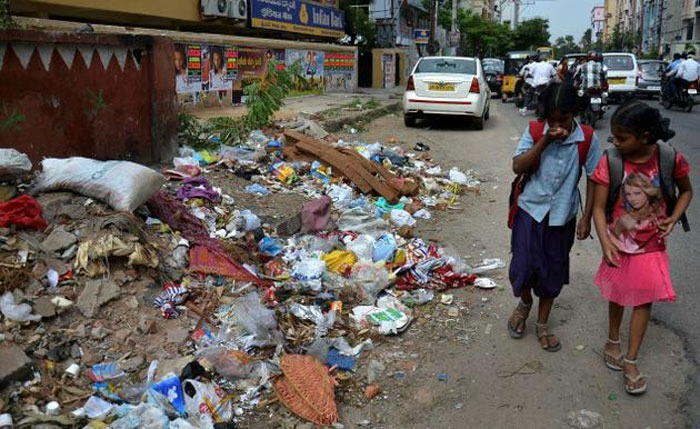
No matter how much the cleaners clean, Hyderabad streets remain as messy as ever.

What just happened?

Litterbug city

The culprits are the citizens (no offense intended) of Hyderabad! Most of them are chronic litterbugs… I saw one man on a motorcycle. He opens up a sachet of tobacco. He pops the contents into his mouth and discards the wrapper right there. All this while he is stopped in traffic.

Motorcycle riders in Hyderabad

A child peels the wrapper off a sweet. She pops it into her mouth. Then she discards the wrapper.

A street vendor is preparing some fruit for sale… He discards all the peels in a heap behind his cart.

A fruit vendor in Hyderabad

A housewife has just swept her home, and she dumps the rubbish right on the street outside her house.

A man in a business suit is in a chauffeured car. He rolls down the tinted window of his fancy car. He out throws out an envelope, carefully torn into tiny bits. He spits out a stream of red tobacco induced liquid.

Boys light firecrackers on the street – it is a few weeks to Diwali. They’re getting a head start on the merriment… Every firework is left right there on the street where it went off… Bits of plastic, paper tubes, shredded paper.

Multiply that 11 Million times… the population of Hyderabad. It’s a recipe for one messy place!

Then the next morning, the cleaners will be at it again… sweep, collect, throw.

But Hyderabad looks as messy as ever, day after day. The rivers are open sewers, drains are clogged with plastic film… People have been spitting all over the place.

The cleaners don’t stand a chance, they are outnumbered!

Spiritual Cleansing, Materialistic Littering

On the spiritual path, people often engage in cleanups… Prayers, Purificatory rituals, penances, austerities… But sometimes we feel discouraged when there is no progress.

Faithful Muslims Praying

Let’s say someone prays or meditates (cleansing the consciousness) for 5 minutes, 20 minutes, or even two hours every day. Or more. What happens for the remaining time during the day?

It’s the same thing – gotta’ stop littering for the effects of the cleaning to show!

The streets of Hyderabad are cleaned each morning. But the actions of the chronic litterbugs make it seem futile. Similarly, our consciousness can be littered by where we choose to focus our attention.

It is important to focus our consciousness in a way that doesn’t litter our consciousness with more materialistic garbage.

The elephant’s bath

In a picturesque analogy from the Bhagavatam, King Parikshit makes this astute observation. He observes the souls passing in turn through regions of enjoyment and purgatory throughout the Universe. Souls are rewarded with heavenly pleasures for their pious activities, and punished for their sinful activities.

King Parikshit receives transcendental knowledge from the great sage Sukadeva Goswami

These pious and impious activities don’t cancel each other out. The after-effects of both must be experienced separately. Enjoyment for pious deeds, and suffering for the impious. And every such activity leaves behind a seed of future entanglement.

Many of us on the spiritual path are very keen to avoid the sinful activities. But all too often, we still fall victim.

क्‍वचिन्निवर्ततेऽभद्रात्‍क्‍वचिच्चरति तत्पुन: ।
प्रायश्चित्तमथोऽपार्थं मन्ये कुञ्जरशौचवत् ॥ १० ॥

kvacin nivartate ’bhadrāt
kvacic carati tat punaḥ
prāyaścittam atho ’pārthaṁ
manye kuñjara-śaucavat

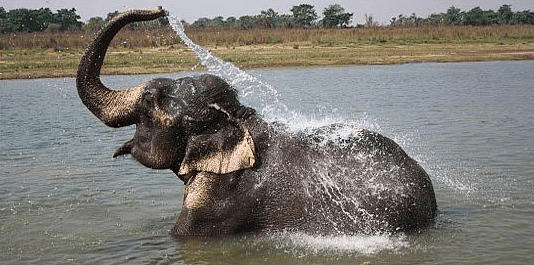
Sometimes one who is very alert so as not to commit sinful acts is victimized by sinful life again. I therefore consider this process of repeated sinning and atoning to be useless. It is like the bathing of an elephant, for an elephant cleanses itself by taking a full bath, but then throws dust over its head and body as soon as it returns to the land.
https://vedabase.io/en/library/sb/6/1/10/

An elephant bathes himself with clean water
An elephant showers himself with mud

Many of us do the same… we engage in purification, and then we cover our consciousness with dirt.

What is that “dirt”… It is activities which cover our spiritual consciousness with material contamination. Think television, newspapers, mundane movies, games of crickets and soccer, video games, internet gossip and worse.

Why?

It’s so important to lose the habit of littering our consciousness!

Lord Krishna says this in His Song, the Bhagavad Gita, the Song of God…

विषया विनिवर्तन्ते निराहारस्य देहिनः ।
रसवर्जं रसोऽप्यस्य परं दृष्ट्वा निवर्तते ॥ ५९ ॥

viṣayā vinivartante
nirāhārasya dehinaḥ
rasa-varjaṁ raso ’py asya
paraṁ dṛṣṭvā nivartate

Though the embodied soul may be restricted from sense enjoyment, the taste for sense objects remains. But, ceasing such engagements by experiencing a higher taste, he is fixed in consciousness.

https://vedabase.io/en/library/bg/2/59/

You see, the taste for sense objects remains. There is facility, there is time, and so, we fall headlong.

But is there a way to prevent this? How to avoid the fall?

केचित्केवलया भक्त्या वासुदेवपरायणा: ।
अघं धुन्वन्ति कार्त्स्‍न्येन नीहारमिव भास्कर: ॥ १५ ॥

kecit kevalayā bhaktyā
vāsudeva-parāyaṇāḥ
aghaṁ dhunvanti kārtsnyena
nīhāram iva bhāskaraḥ

Translation

Only a rare person who has adopted complete, unalloyed devotional service to Kṛṣṇa can uproot the weeds of sinful actions with no possibility that they will revive. He can do this simply by discharging devotional service, just as the sun can immediately dissipate fog by its rays.

https://vedabase.io/en/library/sb/6/1/15/

The process of Krishna Consciousness is so sublime. There is Krishna Consciousness activity to immerse ourselves twenty four hours a day.

24/7 Spiritual Engagement

We can start with rising early for Mangala Arati. We can engage in a full morning program of hearing, chanting, and worship. Our consciousness becomes charged up with Krishna. We can then insert Krishna Conscious thoughts, words, and deeds throughout the day as we go about our duties.

And of course, someone who rises early is also forced to rest early. So much trouble avoided!

And of course, genuine spiritualists do not litter. Not their consciousness, not their homes, nor their streets.

Let us take advantage of this process! Want to avoid littering your streets of your consciousness? Want to know how?

P.S: I have nothing against the city or the people of Hyderabad. It is practically the same story in every village, town, or city in the world. It is the terrible practice of littering, both spiritual and material, but especially the spiritual littering that I’m advocating against.
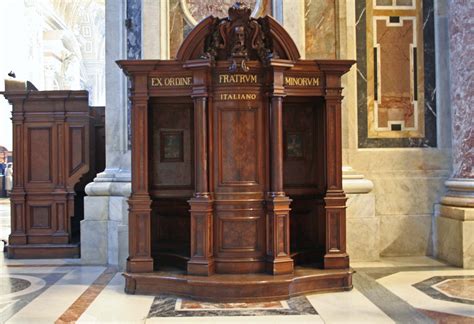
The Profession of Confession and Atonement

In many religious traditions, there is the concept of confessing and atoning for sins. But why do people keep sinning and keep confessing, keep atoning? What is the use of such confession and atonement? What can be done to completely get out of this nasty habit of committing sinful activities?

Some souls accept the authority of God in theory, but not in practice. In the article “Love of God, The Ultimate Variety“, I wrote about fear vs. love… who fears God? One who does not properly follow the instructions of God must necessarily fear God. Just like ordinary citizens are not afraid of the police, but the thief is.

The idea is that just as there is the state law, there is also God’s law. And just as someone who flouts the state law becomes a criminal or an outlaw, similarly, one who flouts God’s law also faces reactions. And depending on the severity of the crime, the reactions can be rather heavy.

In some traditions, practically all religious traditions, there is the idea of “atonement” or in Sanskrit “praayaschitta”. This has been formalized in so many different ways, for example, Christians often go to Church and then confess their sins to the priest. The priest says “OK, repent by doing this and this”, or maybe a Hindu might go to the temple and the priest might tell her “give this and that charity to such-and-such to atone for this sin”.

The atonement is supposed to release the soul of the sinful reaction for a much lower “cost”…

Confession, useful, but is it enough?

But even with or without atonement, though there is hellish punishment that purifies the sinner of the sinful reactions, the soul commits sin again, after all the purification! Why is this?

Do you know what the problem is?

क्‍वचिन्निवर्ततेऽभद्रात्‍क्‍वचिच्चरति तत्पुन: ।
प्रायश्चित्तमथोऽपार्थं मन्ये कुञ्जरशौचवत् ॥ १० ॥

kvacin nivartate ’bhadrāt
kvacic carati tat punaḥ
prāyaścittam atho ’pārthaṁ
manye kuñjara-śaucavat

Sometimes one who is very alert so as not to commit sinful acts is victimized by sinful life again. I therefore consider this process of repeated sinning and atoning to be useless. It is like the bathing of an elephant, for an elephant cleanses itself by taking a full bath, but then throws dust over its head and body as soon as it returns to the land.

https://vedabase.io/en/library/sb/6/1/10/
An elephant bathes in the water

Let’s examine the elephant… the elephant goes to the river and takes a bath in the river. Then the elephant comes out and pours dirt, sand and dust on itself after it comes out. Now, the wildlife experts may say why the elephant is doing that, how it protects its skin etc., but let’s just keep to the spirit of the example here.

An elephant dusts itself with mud

If we treat a confession or atonement as a bath, then why is it that people perform the required atonement and then sin again? Why do you need to take a bath again and again? Because you got dirty again after the last bath!

In the material world, dirt is unavoidable, our very bodies are quite dirty, and need to be cleansed again and again. But what about the spirit soul? Is the spirit soul not clean originally?

Hindus bathe in the Ganga to atone for their sins

Is it a good thing to become a professional at confession and atonement? There is no doubt that God is infinitely merciful… and can forgive unlimitedly. Does anyone think that God is such a fool as to accept repeated confessions of a professional sinner without giving the proper reactions to maintain fairness? God is also unlimitedly wise!

In the Srimad Bhagavatam, the highly intelligent Maharaja Parikshit and Shukadeva Goswami had this wonderful conversation on this topic. To this question, the answer given was:

Śukadeva Gosvāmī, the son of Vedavyāsa, answered: My dear King, since acts meant to neutralize impious actions are also fruitive, they will not release one from the tendency to act fruitively. Persons who subject themselves to the rules and regulations of atonement are not at all intelligent. Indeed, they are in the mode of darkness. Unless one is freed from the mode of ignorance, trying to counteract one action through another is useless because this will not uproot one’s desires. Thus even though one may superficially seem pious, he will undoubtedly be prone to act impiously. Therefore real atonement is enlightenment in perfect knowledge, Vedānta, by which one understands the Supreme Absolute Truth.

https://vedabase.io/en/library/sb/6/1/11/

But knowledge enough is not sufficient, one must act on that knowledge, Shukadeva Goswami continues…

My dear King, if a diseased person eats the pure, uncontaminated food prescribed by a physician, he is gradually cured, and the infection of disease can no longer touch him. Similarly, if one follows the regulative principles of knowledge, he gradually progresses toward liberation from material contamination.

https://vedabase.io/en/library/sb/6/1/12/

One should go beyond the lifestyle that produces sinful desires…

तपसा ब्रह्मचर्येण शमेन च दमेन च ।
त्यागेन सत्यशौचाभ्यां यमेन नियमेन वा ॥ १३ ॥
देहवाग्बुद्धिजं धीरा धर्मज्ञा: श्रद्धयान्विता: ।
क्षिपन्त्यघं महदपि वेणुगुल्ममिवानल: ॥ १४ ॥

tapasā brahmacaryeṇa
śamena ca damena ca
tyāgena satya-śaucābhyāṁ
yamena niyamena vā

deha-vāg-buddhijaṁ dhīrā
dharmajñāḥ śraddhayānvitāḥ
kṣipanty aghaṁ mahad api
veṇu-gulmam ivānalaḥ

To concentrate the mind, one must observe a life of celibacy and not fall down. One must undergo the austerity of voluntarily giving up sense enjoyment. One must then control the mind and senses, give charity, be truthful, clean and nonviolent, follow the regulative principles and regularly chant the holy name of the Lord. Thus a sober and faithful person who knows the religious principles is temporarily purified of all sins performed with his body, words and mind. These sins are like the dried leaves of creepers beneath a bamboo tree, which may be burned by fire although their roots remain to grow again at the first opportunity.

https://vedabase.io/en/library/sb/6/1/13-14/

It is commonly seen that even priests, supposed to be God’s representatives, sin, what to speak of the lay person! This means that even though one may lead a very closely regulated lifestyle, the desire to sin can still remain hidden as a root within the heart. So what is the ultimate solution?

केचित्केवलया भक्त्या वासुदेवपरायणा: ।
अघं धुन्वन्ति कार्त्स्‍न्येन नीहारमिव भास्कर: ॥ १५ ॥

kecit kevalayā bhaktyā
vāsudeva-parāyaṇāḥ
aghaṁ dhunvanti kārtsnyena
nīhāram iva bhāskaraḥ

Only a rare person who has adopted complete, unalloyed devotional service to Kṛṣṇa can uproot the weeds of sinful actions with no possibility that they will revive. He can do this simply by discharging devotional service, just as the sun can immediately dissipate fog by its rays.

https://vedabase.io/en/library/sb/6/1/15/

So therefore, it is impossible to be completely pure without being a pure devotee of God. Without being a pure lover of God, one cannot escape this sin. In fact, when one is rendering devotional service, at that time it is impossible to sin, because where is the time and the energy to perform sinful actions?

So therefore, instead of sinning and confessing, sinning and confessing, sinning and atoning, sinning and atoning, one should seek to develop pure uncontaminated Love of God in a practical way, which is the only way to be free of the desire and tendency to sin.

My spiritual master says it best “it’s hard to hit a moving target, so keep moving for Krishna, if you give illusion an inch, you will lose your life!”