
The Butcher’s Needle: Dr. Ian Ball and the Spiritual Illiteracy of Assisted Dying

Is life “unfair,” or is it perfectly just? ⚖️

We often view terminal illness as a cruel tragedy, but from a Vedic perspective, every moment of suffering is a divine education. When pioneers like Dr. Ian Ball offer a shortcut through lethal injection, they aren’t just ending pain—they are interrupting a vital lesson that the soul must eventually return to finish.

Read more on the “Karmic Demotion” and why perseverance is the only true way to “burn the mountain” of our past.

Dr. Ian Ball is a Canadian physician and a pioneer in what is known as Medical Assistance in Dying (MAID). This procedure is for those diagnosed with a terminal illness. There is no hope of recovery or prognosis. For instance, if a patient suffering from cancer finds their pain unbearable, they may request MAID. In these instances, Dr. Ball or a colleague arrives to administer death through a specific set of lethal injections.

The scale of this practice has grown significantly. In 2024, in Canada alone, 16,499 people died by MAID, lives ended by the choice of patients. These are deaths through the direct actions of a doctor. This staggering figure represents over 5% of all registered deaths in Canada for that year. For those who know the value of life through spiritual knowledge, this trend is deeply distressing.

It is to be noted that doctors are also heavily involved in the other side of assisted death. They call it abortions. This has already resulted in a massive reduction of life expectancy rates around the world.

The Infallible Law of Karma

The law of karma is perfectly just and infallible. It is a misconception to say that “life is unfair”; in reality, life is perfectly fair to everyone. The principle is simple: As you sow, so shall you reap. What goes around, truly comes around. The cycle of actions and reactions is incredibly complex. As a result, many fail to understand this intricate chain of cause and effect.

Alas, a materially motivated person continues in this cycle:

नूनं प्रमत्त: कुरुते विकर्म
यदिन्द्रियप्रीतय आपृणोति ।
न साधु मन्ये यत आत्मनोऽय-
मसन्नपि क्लेशद आस देह: ॥ ४ ॥

nūnaṁ pramattaḥ kurute vikarma
yad indriya-prītaya āpṛṇoti
na sādhu manye yata ātmano ’yam
asann api kleśada āsa dehaḥ

When a person considers sense gratification the aim of life, he certainly becomes mad after materialistic living and engages in all kinds of sinful activity. He does not know that due to his past misdeeds he has already received a body which, although temporary, is the cause of his misery. Actually the living entity should not have taken on a material body, but he has been awarded the material body for sense gratification. Therefore I think it not befitting an intelligent man to involve himself again in the activities of sense gratification by which he perpetually gets material bodies one after another.

https://vedabase.io/en/library/sb/5/5/4/

The intricacies of action and reaction are extremely difficult to understand, actually – it is not always what it looks like:

किं कर्म किमकर्मेति कवयोऽप्यत्र मोहिताः ।
तत्ते कर्म प्रवक्ष्यामि यज्ज्ञात्वा मोक्ष्यसेऽश‍ुभात् ॥ १६ ॥

kiṁ karma kim akarmeti
kavayo ’py atra mohitāḥ
tat te karma pravakṣyāmi
yaj jñātvā mokṣyase ’śubhāt

Even the intelligent are bewildered in determining what is action and what is inaction. Now I shall explain to you what action is, knowing which you shall be liberated from all misfortune.

https://vedabase.io/en/library/bg/4/16/

Our joys and sufferings are the direct result of our own past karmic reactions. We are affected by everything in this material world. This includes our genes, family, brain, body, work, health, money, and relationships. These are reactions to our past activities. These reactions are not punishments, but lessons meant to help us advance toward spiritual perfection. We are meant to accept them with grace, tolerance, and love, while maintaining gratitude toward God, as expressed in the mood of:

तत्तेऽनुकम्पां सुसमीक्षमाणो
भुञ्जान एवात्मकृतं विपाकम् ।
हृद्वाग्वपुर्भिर्विदधन्नमस्ते
जीवेत यो मुक्तिपदे स दायभाक् ॥ ८ ॥

tat te ’nukampāṁ su-samīkṣamāṇo
bhuñjāna evātma-kṛtaṁ vipākam
hṛd-vāg-vapurbhir vidadhan namas te
jīveta yo mukti-pade sa dāya-bhāk

My dear Lord, one who earnestly waits for You to bestow Your causeless mercy upon him, all the while patiently suffering the reactions of his past misdeeds and offering You respectful obeisances with his heart, words and body, is surely eligible for liberation, for it has become his rightful claim.

https://vedabase.io/en/library/sb/10/14/8/

The Himalayan Mountain vs. The Spoonful

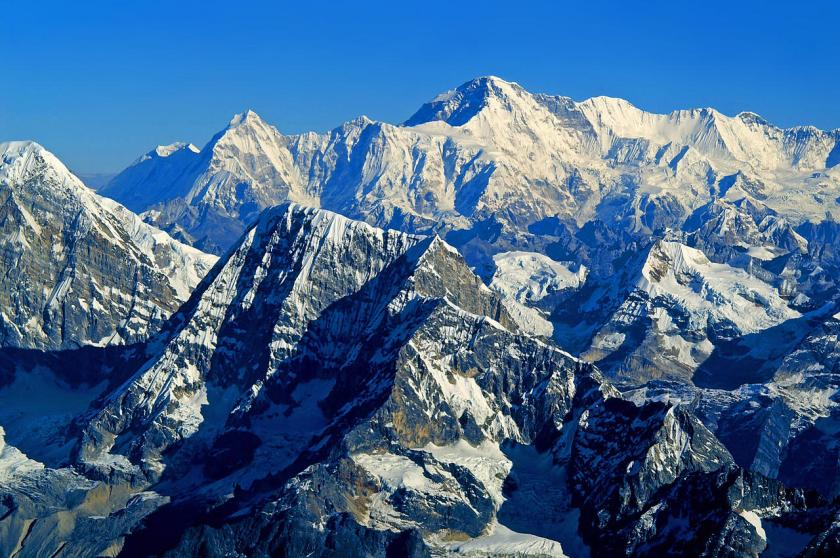
To truly grasp the gravity of our situation, we must realize that our karmic reactions are virtually unlimited. We have been in the material realm for millions and millions of lives. Many of these reactions are mostly hidden from our view. Our total accumulated karma is comparable to the size of a Himalayan mountain. We bring only the equivalent of a single spoonful into any one lifetime. This portion is known as prarabdha karma. It progresses through three stages. Kutam signifies the hidden potential. Bijam is the seed form. Phala represents the visible “flowers and fruits” of pleasure or pain. When a doctor administers MAID to “stop the pain,” they aim to pluck out a single piece of “bitter fruit.” This action leaves the vast mountain of seeds and latent reactions untouched. These seeds are then ready to sprout again.
Himalayan Mountain
Himalayan Mountain

This statement is confirmed in the Padma Purāṇa:

aprārabdha-phalaṁ pāpaṁ
kūtaṁ bījaṁ phalonmukham
krameṇaiva pralīyante
viṣṇu-bhakti-ratātmanā

For those who are engaged in the devotional service of the Supreme Personality of Godhead, all sinful reactions, whether fructified, in the stock, or in the form of a seed, gradually vanish.

https://vedabase.io/en/library/bg/9/2/ – purport

A Spoonful...
A Spoonful…

The Alchemy of Perseverance: Burning the Mountain

On the other hand, when a soul chooses to persevere for spiritual perfection, a miraculous transformation occurs. This happens through the fire of pain. By meeting suffering with equanimity and devotion, the soul doesn’t just pay off the spoonful of current karma. It actually burns off a vast amount of accumulated reactions from that hidden Himalayan mountain. This conscious endurance acts as a spiritual furnace. It incinerates the seeds (bijam) and latent potentials (kutam). These would have otherwise forced the soul into countless future births of suffering. What seems like a tragedy to the material eye is actually the soul’s best chance to clear the books. It is also the final liberation.

The Gift of Human Consciousness vs. Animal Instinct

It is vital to understand the distinction between human life and the lower species. In animal life, there is neither agency nor freedom, nor is there any inherent desire to do better. The specific animal form imposes its conditioning completely; the creature simply acts according to instinct. In contrast, human life is a unique gift. We alone possess the ability to reflect upon our condition, to tolerate our circumstances, and to grow. An animal is a prisoner of its biological programming. However, a human being can use even the most difficult suffering. This suffering can serve as a catalyst for spiritual evolution.

नृदेहमाद्यं सुलभं सुदुर्लभं
प्लवं सुकल्पं गुरुकर्णधारम् ।
मयानुकूलेन नभस्वतेरितं
पुमान् भवाब्धिं न तरेत् स आत्महा ॥ १७ ॥

nṛ-deham ādyaṁ su-labhaṁ su-durlabhaṁ
plavaṁ su-kalpaṁ guru-karṇadhāram
mayānukūlena nabhasvateritaṁ
pumān bhavābdhiṁ na taret sa ātma-hā
Synonyms

The human body, which can award all benefit in life, is automatically obtained by the laws of nature, although it is a very rare achievement. This human body can be compared to a perfectly constructed boat having the spiritual master as the captain and the instructions of the Personality of Godhead as favorable winds impelling it on its course. Considering all these advantages, a human being who does not utilize his human life to cross the ocean of material existence must be considered the killer of his own soul.

https://vedabase.io/en/library/sb/11/20/17/

Human Consciousness
Human Consciousness

The Moment of Death and the Karmic Demotion

Furthermore, the consciousness of the soul at the moment of death determines its next destination. By choosing the “easy way out” through MAID, the soul avoids its challenges. This decision leads to spiritual stagnation. Instead of finding liberation from pain, the soul returns to the karmic cycle. It suffers even more than before. The individual has wasted the precious opportunity to use the human form for spiritual growth. As a result, they face a demotion. They are forced to take birth in a species characterized by tremendous suffering. In this new form, the light of human reason is no longer available to them. If I die like an animal running away from mere bodily pain, I will take life as an animal.

यं यं वापि स्मरन्भावं त्यजत्यन्ते कलेवरम् ।
तं तमेवैति कौन्तेय सदा तद्भ‍ावभावित: ॥ ६ ॥

yaṁ yaṁ vāpi smaran bhāvaṁ
tyajaty ante kalevaram
taṁ tam evaiti kaunteya
sadā tad-bhāva-bhāvitaḥ
Synonyms

Whatever state of being one remembers when he quits his body, O son of Kuntī, that state he will attain without fail.
https://vedabase.io/en/library/bg/8/6/

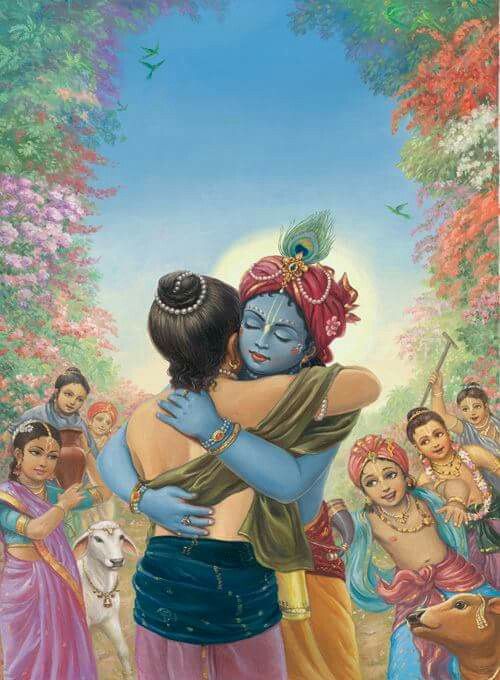
Krishna embraces His Devotee

Temporary Suffering as Education

Karmic reactions act like the discipline of a benevolent, loving parent. If I have caused pain to other living entities, I must learn what that pain feels like. If I have brought joy to others, I am given a proportionate reaction. When this educational process is cut short by artificial means, the lesson remains unlearned. It is like dropping out of a difficult course of study. You will not get the “degree” until the requirements are met.

  • The Compounding Debt: When “therapeutic” pain is cut short, the patient suffers even more in the future. A debt balloons if not paid on time. A fire rages if unchecked. A disease festers when untreated.
  • Treating the Symptom: The terminal patient’s pain is not the disease! The terminal illness is not the disease! The true disease is the unfortunate attitude and impious activities that led to a material body. The material body is already doomed with a terminal illness the day it is born. Alas, the disease remains untreated, and the doctors are responsible for letting that spiritual disease flourish.

जातस्य हि ध्रुवो मृत्युर्ध्रुवं जन्म मृतस्य च ।
तस्मादपरिहार्येऽर्थे न त्वं शोचितुमर्हसि ॥ २७ ॥

jātasya hi dhruvo mṛtyur
dhruvaṁ janma mṛtasya ca


One who has taken his birth is sure to die, and after death one is sure to take birth again.

https://vedabase.io/en/library/bg/2/27/

Intelligence vs. Mere Cleverness

To understand why this happens, we must distinguish between true intelligence and mere cleverness. Intelligence is the higher capacity to see right from wrong, the power of discrimination. Cleverness is simply the mental ability to solve material problems. One can be incredibly clever at administering a medical procedure while remaining completely unintelligent about the moral and karmic consequences. Without the ability to discern what benefits the soul, cleverness can harm it. Cleverness becomes a dangerous tool under these circumstances.

तेषां सततयुक्तानां भजतां प्रीतिपूर्वकम् ।
ददामि बुद्धियोगं तं येन मामुपयान्ति ते ॥ १० ॥

teṣāṁ satata-yuktānāṁ
bhajatāṁ prīti-pūrvakam
dadāmi buddhi-yogaṁ taṁ
yena mām upayānti te
Synonyms

teṣām — unto them; satatayuktānām — always engaged; bhajatām — in rendering devotional service; prītipūrvakam — in loving ecstasy; dadāmi — I give; buddhiyogam — real intelligence; tam — that; yena — by which; mām — unto Me; upayānti — come; te — they.Translation

To those who are constantly devoted to serving Me with love, I give the understanding by which they can come to Me.

https://vedabase.io/en/library/bg/10/10/

The Blind Leading the Blind

Physicians who perform these acts suffer terrible karmic reactions themselves. It is not that Dr. Ball and his colleagues set out with ill intent; they do this because of their lack of spiritual education. They are in ignorance, acting in ignorance, a classic case of the blind leading the blind.

Dr. Ball is undoubtedly a highly trained physician. He has an above-average mental capacity. He also has the courage to perform a very difficult task. Unfortunately, I presently have no influence over him or his colleagues. It is said that “fools rush in where angels fear to tread.” He is very clever, but he is unintelligent. He has no clue about the laws that govern the soul in the material world.

न ते विदु: स्वार्थगतिं हि विष्णुं
दुराशया ये बहिरर्थमानिन: ।
अन्धा यथान्धैरुपनीयमाना-
स्तेऽपीशतन्‍त्र्यामुरुदाम्नि बद्धा: ॥ ३१ ॥

na te viduḥ svārtha-gatiṁ hi viṣṇuṁ
durāśayā ye bahir-artha-māninaḥ
andhā yathāndhair upanīyamānās
te ’pīśa-tantryām uru-dāmni baddhāḥ
Synonyms

Persons who are strongly entrapped by the consciousness of enjoying material life, and who have therefore accepted as their leader or guru a similar blind man attached to external sense objects, cannot understand that the goal of life is to return home, back to Godhead, and engage in the service of Lord Viṣṇu. As blind men guided by another blind man miss the right path and fall into a ditch, materially attached men led by another materially attached man are bound by the ropes of fruitive labor, which are made of very strong cords, and they continue again and again in materialistic life, suffering the threefold miseries.

https://vedabase.io/en/library/sb/7/5/31/

Blind Leading the Blind

A Final Plea

I pray that God grants all such people the proper intelligence to do the right thing. At the very least, doctors should not be in the business of killing. That is the business of butchers, not healers.

Hare Krishna!

Please chant:

Hare Krishna Hare Krishna Krishna Krishna Hare Hare Hare Rama Hare Rama Rama Rama Hare Hare
The Hare Krishna Mahamantra

Understanding Buddhi Yoga and Jnana-Mishra-Bhakti

If Buddhi means intelligence, and Jnana means knowledge, then to use one’s intelligence, does it means to speculate on the knowledge?

What does Krishna mean by “Buddi Yoga”?

Buddhi-Yoga is not just mundane intelligence! It’s the ultimate key to true devotion and liberation. Mixed with speculative knowledge however, Jnana dilutes pure bhakti, making it a distant dream. Real progress in spiritual pursuits demands a focus on Krishna alone, stripping away distractions, and achieving clarity in devotion. Are you ready to commit to the pursuit of spiritual perfection?

Bhakta Sunil, 26 February 2021

Please accept my humble obeisances
All Glories to Srila Prabhupada

Does Buddhi-Yoga mean utilizing one’s intelligence to serve the Lord?
If yes , is Buddhi Yoga the same as Gyaan-Yoga-Mishrit-Bhakti?

What is the difference between Buddhi-Yoga and Gyaan-Yoga-Mishrit-Bhakti?

your servant,
sunil

Bhakta Sunil, 12 March 2015
Hare Krishna

To rephrase / add to the query : Can a person do Buddhi-Yoga if his bhakti is tinged with mental speculation?

your servant,
sunil

Shridhar Das, 13 March 2015
Hare Krishna Sunil Prabhu,
Please accept my humble obeisances!
All Glories to his Divine Grace Srila Prabhupada!

Your question is clearly answered in BG 10.10:

teṣāṁ satata-yuktānāṁ
bhajatāṁ prīti-pūrvakam
dadāmi buddhi-yogaṁ taṁ
yena mām upayānti te

“Buddhi-yoga itself is action in Kṛṣṇa consciousness; that is the highest intelligence.”
“When one tries to go back home, back to Godhead, and takes fully to Kṛṣṇa consciousness in devotional service, his action is called buddhi-yoga. In other words, buddhi-yoga is the process by which one gets out of the entanglement of this material world.”(From the Purport)

This can be confirmed from BG 10.8 also:

ahaṁ sarvasya prabhavo
mattaḥ sarvaṁ pravartate
iti matvā bhajante māṁ
budhā bhāva-samanvitāḥ

“I am the source of all spiritual and material worlds. Everything emanates from Me. The wise” [budha] “who perfectly know this engage in My devotional service and worship Me with all their hearts.” (BG 10.8)

As per His Divine Grace Srila Prabhupada:

Intelligence means to know how to go back to home, back to Godhead.

Buddhi means intelligence and buddhi yoga is apt for bhakti yoga only because in various other yogas, the spiritualists are taking so much pain by changing their positions, locations, shelters, what not, but failing to realize – Krishna is complete, Krishna is everything and the only shelter.

For the same reason Krishna states – I will give you the “intelligence” by which you can come to me, hence this is real intelligence, real buddhi and hence buddhi yoga is bhakti yoga.

A broader understanding of buddhi yoga – To be able to discriminate whether our acts are on the platform of pure consciousness (pleasing Guru and Krishna) or on the platform of body? This technique of being able to rectify our own act is also buddhi yoga as per His Divine Grace.

Interestingly, this also connects with BG 2.49 and confirms buddhi yoga:

dūreṇa hy avaraṁ karma
buddhi-yogād dhanañ-jaya
buddhau śaranam anviccha
kṛpaṇāḥ phala-hetavaḥ

“O Dhanañjaya, keep all abominable activities far distant by devotional service, and in that consciousness surrender unto the Lord. Those who want to enjoy the fruits of their work are misers.” (BG 2.49)

I personally also relate this with vyavasaya-atmika buddhir (BG 2.41) – resoluteness in Krishna consciousness.

Finally, Srila Prabhupada again specifies Buddhi yoga from BG 10.10:

So what is that buddhi-yoga? Krsna says, tesam satata-yuktanam: “Persons who are twenty-four hours engaged,” satata… Satata means always. Engaged. What kind of engagement? Bhajatam priti-purvakam. This engagement means always trying to render some service to the Lord. How? Priti-purvakam: “with love and faith.” Not that “Oh, I have to do it? All right, let me do.” No. “Oh, I have to do it? Let me do it nicely.”(September 12, 1973, London)

I hope this helps us conclude clearly what Buddhi yoga ultimately means.

Regarding difference between the 2 yogas, Srila Prabhupada states:

All other yoga system, there is little tinge of vasudeva-bhakti, but not cent percent pure. It is mixed. Misra-bhakti. Misra-bhakti will not be immediately fruitful. It will take long, long time. Bahunam janmanam ante jnanavan mam prapadyate [Bg. 7.19]. Everything, there is some bhakti-yoga, but if it is not pure.then it will take very, very, very, very long time, bahunam janmanam. One janma means hundreds of years.

Jnana-misra-bhakti means affinity for scriptural knowledge or tendency towards monistic liberation among sadhakas. Instead of trying to serve, to know and to experience, we are more in the mood of trying to be a pandita without following. We already know pure devotional service is anyabhilasita sunyam jnana-karma-adi anavrtam – free of all desires except the desire to please Krishna.

I also had read Uddhava was among jnana-misra-bhakta, being a disciple of Brihaspati. For the same reason Lord Krishna chose him for Vrindavan so that he may take to pure devotional service while associating with the Vrajavasis, especially the gopis. However, position of Uddhava having Lord’s personal association is not to be considered as a subject of comparison.

Personally sharing, when I was researching the strict differences and understandings between jnana and jnana-misra-bhakti yoga an year ago, which has scholarly been distinguished by Srila Vishvanath Chakravarti Thakur and Srila Bhaktivinoda Thakura, I ultimately concluded – Let me take shelter of that which will help with my current struggle against the dirt in my heart and mind. If Krishna wants, He shall drag me to all these studies in future.

your servant,
Shridhar Das

Bhakta Sunil, 16 March 2015
Hare Krishna Shridhar Prabhu

Please accept my humble obeisances
All Glories to Srila Prabhupada

Prabhu amazing knowledge you shared

my , any doubts on this topic have been dispelled

All Glories to your enthusiastic endeavor

in humble mood,
sunil

Mahabhagavat Das, 17 March 2015
Dear Devotees,

Hare Krishna!

As I was reflecting to find a concise way to describe the difference between Buddhi Yoga (Yoga of Intelligence) and Jnana-Mishra-Bhakti (Devotional Service tinged with the desire to become One with the Supreme), and very much inspired by Shridhar Prabhu’s’ answer, I also came across this wonderful purport by Srila Prabhupada in my regular study, it was very profound, and this is from the purport to SB 7.2.47:

“The living entity is bound by the subtle body, consisting of the mind, intelligence and false ego. At the time of death, therefore, the position of the mind becomes the cause for the next body. As confirmed in Bhagavad-gītā (8.6), yaṁ yaṁ vāpi smaran bhāvaṁ tyajaty ante kalevaram: at the time of death the mind sets the criteria for the spirit soul’s being carried to another type of body. If a living being resists the dictation of the mind and engages the mind in the loving service of the Lord, the mind cannot degrade him. The duty of all human beings, therefore, is to keep the mind always engaged at the lotus feet of the Lord (sa vai manaḥ kṛṣṇa-padāravindayoḥ). When the mind is engaged at the lotus feet of Kṛṣṇa, the intelligence is purified, and then the intelligence gets inspiration from the Supersoul (dadāmi buddhi-yogaṁ tam). Thus the living entity makes progress toward liberation from material bondage.”

What jumped out at me was “If a living being resists the dictation of the mind and engages the mind in the loving service of the Lord, the mind cannot degrade him.”, and then ” When the mind is engaged at the lotus feet of Kṛṣṇa, the intelligence is purified, and then the intelligence gets inspiration from the Supersoul (dadāmi buddhi-yogaṁ tam). Thus the living entity makes progress toward liberation from material bondage.”

In other words, as stated by Srila Prabhupada in the purport to BG 10.10, as referred by Shridhar Prabhu:

“In this verse the word buddhi-yogam is very significant. We may remember that in the Second Chapter the Lord, instructing Arjuna, said that He had spoken to him of many things and that He would instruct him in the way of buddhi-yoga. Now buddhi-yoga is explained. Buddhi-yoga itself is action in Kṛṣṇa consciousness; that is the highest intelligence. Buddhi means intelligence, and yoga means mystic activities or mystic elevation. When one tries to go back home, back to Godhead, and takes fully to Kṛṣṇa consciousness in devotional service, his action is called buddhi-yoga. In other words, buddhi-yoga is the process by which one gets out of the entanglement of this material world. The ultimate goal of progress is Kṛṣṇa. People do not know this; therefore the association of devotees and a bona fide spiritual master are important. One should know that the goal is Kṛṣṇa, and when the goal is assigned, then the path is slowly but progressively traversed, and the ultimate goal is achieved.”

So therefore, I would summarize that Buddhi Yoga means Bhakti Yoga, or pure devotional service, and every other mixup is an unfortunate distraction.

Sincerely,
Mahabhagavat Das

Sudarshan Das, 20 March 2015
Hare Krishna,

I also had been thinking on the question and the following translations by His Divine Grace caught my attention which further supports Mahabhagavat Prabhuji’s mail.

BG 2.44:

bhogaiśvarya-prasaktānāṁ
tayāpahṛta-cetasām
vyavasāyātmikā buddhiḥ
samādhau na vidhīyate

“In the minds of those who are too attached to sense enjoyment and material opulence, and who are bewildered by such things, the resolute determination for devotional service to the Supreme Lord does not take place.”

Here: buddhiḥ — devotional service to the Lord

And then BG 2.50:

buddhi-yukto jahātīha
ubhe sukṛta-duṣkṛte
tasmād yogāya yujyasva
yogaḥ karmasu kauśalam

“A man engaged in devotional service rids himself of both good and bad reactions even in this life. Therefore strive for yoga, which is the art of all work.”

Here: buddhi-yuktaḥ — one who is engaged in devotional service

your servant,
Sudarshan Das

Bhakta Sunil, 21 March 2015
Amazing finds Sudarshan Prabhu

Jaya

All Glories to your sincere endeavour

your insignificant servant,
Bhakta Sunil

Shridhar Das, 21 March 2015
Hare Krishna!

All Glories to Srila Gurudeva and Srimati Gurumataji!

One time I had a good fortune to be near Srila Gurudeva while Srila Gurudeva was singing “Jaya Radhe Jaya Krishna Jaya Vrindavan” while departing from Gokula Vrindavan. Then when “Mahavan” was sung in the bhajan (kalindi jamuna jaya jaya mahavan”), Srila Gurudeva searched for Mahavan in Vedabase and further shared of the 12 forests, 5 situated in East and 7 in the West, separated by Yamuna, Mahavan maybe situated in the East. Then Srila Gurudeva shared few pastimes of Lord Krishna which connected with Mahavan. Then Srila Gurudeva asked me all that I remembered from the first part(which I typed above).

Srila Gurudeva inspired me to refer to Vedabase and research on topics although I had Vedabase 2014 lying on laptop desktop unused for a long time. Now these questions, an amazing one such as yours, are helping me to use Vedabase nicely and conclude as per acharyas. Therefore All Glories to Srila Gurudeva and your (Sunil Prabhu) question which are allowing me to follow my heart, at least begin with it in some way.

Mahabhagavat prabhuji, you have shared the dividing line and the science that takes from mishrit to shuddha bhakti from such a sublime purport from His Divine Grace that would have not sparked a bulb in my mind. Glad to have your association. Additions from Sudarshan Prabhu makes us seem that we had an essence conclusion of what buddhi-yoga is.

your servant,
Shridhar Das

Please subscribe to daily inspirational emails from His Grace Sriman Sankarshan Das Adhikari (Writings and lectures archived at www.ecstaticmedia.com ), written fresh every day from his travels around the world sharing the highest spiritual knowledge with everyone. Sign up now at www.joincourse.com