Letters from Death

What if you could make a deal with Death itself, a promise that before your time comes, you’d receive written warnings to prepare? In this retelling of a classic, a man believes he has outsmarted his mortal fate by securing a divine pact with Yamaraja, the god of death. Yet as decades pass and his body ages, he misses the warning signs right in front of him. With timeless Vedic wisdom from the Srimad Bhagavatam and Bhagavad-gita, we explore the letters we all receive, the value of our allotted breaths, and how to truly prepare for our most transition.

Once upon a time, there lived a man who was utterly terrified of dying. He pondered long and hard about how to escape his mortal fate until a clever thought struck him: How could a friend ever kill a friend?

Determined to save his own skin, he embarked on a path of intense austerities, severe penances, and disciplined efforts to earn the favor of Yamaraja, the god of death. Impressed by his dedication, Yamaraja appeared before him and offered his friendship.

Seizing the moment, the man placed his ultimate wish before his new powerful friend: “I never want to die.”

Yamaraja chuckled softly. “My friend, no one can live forever in this material world. Eternal life exists only in the spiritual realm. However, because of our friendship, I will do this for you: I will send you letters in advance to warn you when your time is drawing near, so you have ample opportunity to prepare. Until that final moment comes, you will not see me.”

Overjoyed with this arrangement, the man happily agreed. He walked away with supreme confidence. He had a royal guarantee: Death would write to him first.

Decades rolled by, and the man built a magnificent life. He was blessed with a devoted wife who was both his partner and his soulmate. His children grew up brilliant and successful, eventually bringing loving grandchildren into the world. In his business, he amassed greater wealth and prestige than ever before. Respected by his community, young people routinely sought his wisdom on careers, family, and success.

Yet, as the years advanced, changes began to occur, subtly at first.

First came digestive troubles. His well-wishers gently suggested he lighten his diet and slow down, but the man simply popped digestive pills and continued feasting as before.

Then his hair began to turn gray and fall out. Undeterred, he dyed his locks, got hair transplants, took medications, and carried on as if his youth were eternal.

Next, his knees and joints started to ache. He visited top physiotherapists and chiropractors, consumed endless supplements, tried novel exercise routines, and kept trying to move at full speed.

Then, the mirror began revealing new, undeniable truths. His youthful complexion started to fade; deep wrinkles carved lines into his forehead, and his skin began to lose its elasticity and sag. At the same time, his metabolism slowed, causing stubborn weight to cling to his waistline. Did he recognize these signs for what they were? Not at all. He fought back with a vengeance. He booked regular appointments for Botox and dermal fillers, slathered on expensive anti-aging serums, and underwent chemical peels and subtle facelifts to pull his skin taut once more. To battle his changing shape, he turned to modern fat-reduction procedures… liposuction, CoolSculpting, and rigid fad diets, relentlessly trying to carve out the silhouette of a much younger man.

Eventually, his teeth failed him, so he replaced them with sparkling new implants. His eyes grew dim and weak, so he underwent modern laser surgeries and wore stylish designer glasses.

Throughout it all, caring friends urged him to rein in his worldly pursuits and begin preparing himself for the inevitable. But he dismissed their warnings. Why give up the good life when things were going so well? Besides, he had an agreement. Yamaraja hadn’t sent a single letter yet!

Then came a day unlike any other. The man fell gravely ill, not with a passing cold or mild fever, but a collapse that forced his family to rush him to the hospital. Specialists swarmed his room, hooking his body up to a labyrinth of IV lines, monitors, and tubes.

Even as he lay in that hospital bed, surrounded by weeping relatives, the man remained blissfully confident. I am not going to die today, he thought. Yamaraja promised me letters, and my mailbox has been empty.

Suddenly, the man felt the atmosphere in the room grow icy cold. Standing at the foot of his bed was Yamaraja, accompanied by his fierce attendants, ready to sever the soul from the body to which the man had clung so desperately.

Shocked and betrayed, the man looked at his powerful friend and cried out, “Yamaraja! How could you betray our pact? You swore you would write to me so I could prepare! Why didn’t you send me a single letter before coming to take me?”

Yamaraja smiled with deep compassion and laughed softly.

“My dear friend,” Yama replied, “do you truly believe I sent you no letters? What was the trouble in your stomach? What were the sharp pains in your knees and hips? What was the graying of your hair, the sagging of your skin, and the slowing of your body? Did you expect paper and ink when I have billions of souls across the universe to attend to? Every physical decline was a letter delivered directly to your body, but you chose to try to erase the ink with scalpels, injectables, and pills rather than read the message.”

Before the man could reply, his time was up. He had to immediately depart in the company of his friend, the god of death.

And everything and everyone else he cherished so much? Stayed behind. He did carry all his karmic reactions with him though, that was his baggage. Plus a seed of goodness from meeting Yamaraja.

Reading the Mail in Our Own Lives

How many of us, right now, are sitting on a stack of unopened letters from death?

It sounds jarring to call death a “friend,” but in truth, death is our most constant companion. Death is born with us the very moment we take our first breath. If a child turns seven years old today, it simply means that seven years of that child’s life have already died—bringing them seven years closer to the final curtain.

Beyond holding up a mirror to our mortality, death is also a friend because it offers us the ultimate grace of renewal. It allows us to lay down the heavy burdens of old traumas, heartbreaks, and emotional scars that we were never meant to carry forever. Death grants us fresh energy, a clean slate, and another youthful body to continue our soul’s journey. Above all, death is an act of divine mercy that gives every one of us a second chance—a fresh opportunity to learn, evolve, and turn inward, no matter how terribly we may have squandered this current life.

As the Bhagavad-gita (2.27) reminds us:

jatasya hi dhruvo mrtyuh

“For one who has taken birth, death is strictly certain.”

Vedic wisdom teaches that our lifespan is not measured merely by years on a calendar, but counted in the exact number of breaths allotted to us at birth. Once those breaths are exhausted, our time in this vessel is finished. We have total freedom in how we choose to spend those breaths, but we cannot purchase a single extra breath with all the wealth in the world.

This fundamental truth is vividly highlighted in the Srimad Bhagavatam (2.3.18):

तरवः किं न जीवन्ति भस्त्राः किं न श्वसन्त्युत ।

न खादन्ति न मेहन्ति किं ग्रामे पशवोऽपरे ॥

taravaḥ kiṁ na jīvanti bhastrāḥ kiṁ na śvasanty uta

na khādanti na mehanti kiṁ grāme paśavo ‘pare

Translation: “Do the trees not live? Do the bellows of a blacksmith not breathe? Do the beasts all around us not eat and discharge semen?”

The commentary explains that the physical body is maintained by a finite quantity of life-air (prana) operating through respiration. Every soul enters a physical vessel with a preallocated quota of breath dictated by past karma. Merely inhaling and exhaling does not constitute true living. Even a blacksmith’s bellows draws air.

Furthermore, Srimad Bhagavatam (2.3.17) warns us of how relentlessly time consumes this finite allowance:

आयुर्हरति वै पुंसामुद्यन्नस्तं च यन्नसौ ।

तस्यर्ते यत्क्षणो नीत उत्तमश्लोकवार्तया ॥

āyur harati vai puṁsām udyann astaṁ ca yann asau

tasya ṛte yat-kṣaṇo nīta uttama-śloka-vārtayā

Translation: “Both by rising and by setting, the sun decreases the duration of life of everyone, except one who utilizes time by discussing topics of the Supreme Personality of Godhead.”

When Yamaraja’s letters arrive in our mailbox, a new gray hair, a sudden ache in the back, a decline in energy, or a diagnosis, we generally react in one of three ways:

  1. We ignore them. Like the man in the story, we take pills, apply dye, undergo procedures, and pretend the warning never arrived.
  2. We panic and distract ourselves. We rush out to buy shiny sports cars, seek out new romantic flings, or undergo desperate cosmetic alterations to outrun the clock.
  3. We prepare. We recognize the warning for what it is, a graceful reminder to turn our attention toward what truly matters. Krishna promises in Bhagavad-gita 8.6, our state of mind at death determines our next destination.

History and sacred texts offer profound examples of those who knew how to receive these notifications. King Parikshit received a formal seven-day notice of his death and spent every remaining second absorbed in spiritual hearing and contemplation. King Khatvanga had a notice of just forty-eight minutes, yet he immediately withdrew his mind from worldly attachments and achieved spiritual perfection in that brief window.

Some people receive no tangible notice at all; death simply arrives unannounced. But most of us are blessed with plenty of advance mail.

I have received many letters from Yamaraja over the years. At first, I brushed them off. But recently, the tone of those letters has grown far more urgent. Recognizing the signals, I have decided to take them seriously and invest my remaining breaths into spiritual perfection.

How about you? How many letters from Yamaraja have arrived in your mailbox so far, and what do you plan to do with the next one?

A Prayer

Krishna, my dear best friend and well-wisher, You are not only my friend, but a friend of all souls. You reside in our hearts as that all-knowing Supersoul, Paramatma. However, You don’t impose. You remind us of whatever we want to remember, and cause us to forget what we want to forget (BG 15.15).

My dear Lord, please, could You cut off all my material attachments save to You and those dear to You? Please, may I use every single breath I have in remembrance and glorification of You. Please, could You bless me that I may take Your message to everyone who needs it?

Hare Krishna Hare Krishna

Krishna Krishna Hare Hare

Hare Rama Hare Rama

Rama Rama Hare Hare

Krishna enjoys the company of His devotee

The Butcher’s Needle: Why are Doctors Killing People?

Is life “unfair,” or is it perfectly just? ⚖️

We often view terminal illness as a cruel tragedy, but from a Vedic perspective, every moment of suffering is a divine education. When pioneers like Dr. Ian Ball offer a shortcut through lethal injection, they aren’t just ending pain—they are interrupting a vital lesson that the soul must eventually return to finish.

Read more on the “Karmic Demotion” and why perseverance is the only true way to “burn the mountain” of our past.

Dr. Ian Ball is a Canadian physician and a pioneer in what is known as Medical Assistance in Dying (MAID). This procedure is for those diagnosed with a terminal illness. There is no hope of recovery or prognosis. For instance, if a patient suffering from cancer finds their pain unbearable, they may request MAID. In these instances, Dr. Ball or a colleague arrives to administer death through a specific set of lethal injections.

The scale of this practice has grown significantly. In 2024, in Canada alone, 16,499 people died by MAID, lives ended by the choice of patients. These are deaths through the direct actions of a doctor. This staggering figure represents over 5% of all registered deaths in Canada for that year. For those who know the value of life through spiritual knowledge, this trend is deeply distressing.

It is to be noted that doctors are also heavily involved in the other side of assisted death. They call it abortions. This has already resulted in a massive reduction of life expectancy rates around the world.

The Infallible Law of Karma

The law of karma is perfectly just and infallible. It is a misconception to say that “life is unfair”; in reality, life is perfectly fair to everyone. The principle is simple: As you sow, so shall you reap. What goes around, truly comes around. The cycle of actions and reactions is incredibly complex. As a result, many fail to understand this intricate chain of cause and effect.

Alas, a materially motivated person continues in this cycle:

नूनं प्रमत्त: कुरुते विकर्म
यदिन्द्रियप्रीतय आपृणोति ।
न साधु मन्ये यत आत्मनोऽय-
मसन्नपि क्लेशद आस देह: ॥ ४ ॥

nūnaṁ pramattaḥ kurute vikarma
yad indriya-prītaya āpṛṇoti
na sādhu manye yata ātmano ’yam
asann api kleśada āsa dehaḥ

When a person considers sense gratification the aim of life, he certainly becomes mad after materialistic living and engages in all kinds of sinful activity. He does not know that due to his past misdeeds he has already received a body which, although temporary, is the cause of his misery. Actually the living entity should not have taken on a material body, but he has been awarded the material body for sense gratification. Therefore I think it not befitting an intelligent man to involve himself again in the activities of sense gratification by which he perpetually gets material bodies one after another.

https://vedabase.io/en/library/sb/5/5/4/

The intricacies of action and reaction are extremely difficult to understand, actually – it is not always what it looks like:

किं कर्म किमकर्मेति कवयोऽप्यत्र मोहिताः ।
तत्ते कर्म प्रवक्ष्यामि यज्ज्ञात्वा मोक्ष्यसेऽश‍ुभात् ॥ १६ ॥

kiṁ karma kim akarmeti
kavayo ’py atra mohitāḥ
tat te karma pravakṣyāmi
yaj jñātvā mokṣyase ’śubhāt

Even the intelligent are bewildered in determining what is action and what is inaction. Now I shall explain to you what action is, knowing which you shall be liberated from all misfortune.

https://vedabase.io/en/library/bg/4/16/

Our joys and sufferings are the direct result of our own past karmic reactions. We are affected by everything in this material world. This includes our genes, family, brain, body, work, health, money, and relationships. These are reactions to our past activities. These reactions are not punishments, but lessons meant to help us advance toward spiritual perfection. We are meant to accept them with grace, tolerance, and love, while maintaining gratitude toward God, as expressed in the mood of:

तत्तेऽनुकम्पां सुसमीक्षमाणो
भुञ्जान एवात्मकृतं विपाकम् ।
हृद्वाग्वपुर्भिर्विदधन्नमस्ते
जीवेत यो मुक्तिपदे स दायभाक् ॥ ८ ॥

tat te ’nukampāṁ su-samīkṣamāṇo
bhuñjāna evātma-kṛtaṁ vipākam
hṛd-vāg-vapurbhir vidadhan namas te
jīveta yo mukti-pade sa dāya-bhāk

My dear Lord, one who earnestly waits for You to bestow Your causeless mercy upon him, all the while patiently suffering the reactions of his past misdeeds and offering You respectful obeisances with his heart, words and body, is surely eligible for liberation, for it has become his rightful claim.

https://vedabase.io/en/library/sb/10/14/8/

The Himalayan Mountain vs. The Spoonful

To truly grasp the gravity of our situation, we must realize that our karmic reactions are virtually unlimited. We have been in the material realm for millions and millions of lives. Many of these reactions are mostly hidden from our view. Our total accumulated karma is comparable to the size of a Himalayan mountain. We bring only the equivalent of a single spoonful into any one lifetime. This portion is known as prarabdha karma. It progresses through three stages. Kutam signifies the hidden potential. Bijam is the seed form. Phala represents the visible “flowers and fruits” of pleasure or pain. When a doctor administers MAID to “stop the pain,” they aim to pluck out a single piece of “bitter fruit.” This action leaves the vast mountain of seeds and latent reactions untouched. These seeds are then ready to sprout again.

Himalayan Mountain
Himalayan Mountain

This statement is confirmed in the Padma Purāṇa:

aprārabdha-phalaṁ pāpaṁ
kūtaṁ bījaṁ phalonmukham
krameṇaiva pralīyante
viṣṇu-bhakti-ratātmanā

For those who are engaged in the devotional service of the Supreme Personality of Godhead, all sinful reactions, whether fructified, in the stock, or in the form of a seed, gradually vanish.

https://vedabase.io/en/library/bg/9/2/ – purport

A Spoonful...
A Spoonful…

The Alchemy of Perseverance: Burning the Mountain

On the other hand, when a soul chooses to persevere for spiritual perfection, a miraculous transformation occurs. This happens through the fire of pain. By meeting suffering with equanimity and devotion, the soul doesn’t just pay off the spoonful of current karma. It actually burns off a vast amount of accumulated reactions from that hidden Himalayan mountain. This conscious endurance acts as a spiritual furnace. It incinerates the seeds (bijam) and latent potentials (kutam). These would have otherwise forced the soul into countless future births of suffering. What seems like a tragedy to the material eye is actually the soul’s best chance to clear the books. It is also the final liberation.

The Gift of Human Consciousness vs. Animal Instinct

It is vital to understand the distinction between human life and the lower species. In animal life, there is neither agency nor freedom, nor is there any inherent desire to do better. The specific animal form imposes its conditioning completely; the creature simply acts according to instinct. In contrast, human life is a unique gift. We alone possess the ability to reflect upon our condition, to tolerate our circumstances, and to grow. An animal is a prisoner of its biological programming. However, a human being can use even the most difficult suffering. This suffering can serve as a catalyst for spiritual evolution.

नृदेहमाद्यं सुलभं सुदुर्लभं
प्लवं सुकल्पं गुरुकर्णधारम् ।
मयानुकूलेन नभस्वतेरितं
पुमान् भवाब्धिं न तरेत् स आत्महा ॥ १७ ॥

nṛ-deham ādyaṁ su-labhaṁ su-durlabhaṁ
plavaṁ su-kalpaṁ guru-karṇadhāram
mayānukūlena nabhasvateritaṁ
pumān bhavābdhiṁ na taret sa ātma-hā
Synonyms

The human body, which can award all benefit in life, is automatically obtained by the laws of nature, although it is a very rare achievement. This human body can be compared to a perfectly constructed boat having the spiritual master as the captain and the instructions of the Personality of Godhead as favorable winds impelling it on its course. Considering all these advantages, a human being who does not utilize his human life to cross the ocean of material existence must be considered the killer of his own soul.

https://vedabase.io/en/library/sb/11/20/17/

Human Consciousness
Human Consciousness

The Moment of Death and the Karmic Demotion

Furthermore, the consciousness of the soul at the moment of death determines its next destination. By choosing the “easy way out” through MAID, the soul avoids its challenges. This decision leads to spiritual stagnation. Instead of finding liberation from pain, the soul returns to the karmic cycle. It suffers even more than before. The individual has wasted the precious opportunity to use the human form for spiritual growth. As a result, they face a demotion. They are forced to take birth in a species characterized by tremendous suffering. In this new form, the light of human reason is no longer available to them. If I die like an animal running away from mere bodily pain, I will take life as an animal.

यं यं वापि स्मरन्भावं त्यजत्यन्ते कलेवरम् ।
तं तमेवैति कौन्तेय सदा तद्भ‍ावभावित: ॥ ६ ॥

yaṁ yaṁ vāpi smaran bhāvaṁ
tyajaty ante kalevaram
taṁ tam evaiti kaunteya
sadā tad-bhāva-bhāvitaḥ
Synonyms

Whatever state of being one remembers when he quits his body, O son of Kuntī, that state he will attain without fail.

https://vedabase.io/en/library/bg/8/6/

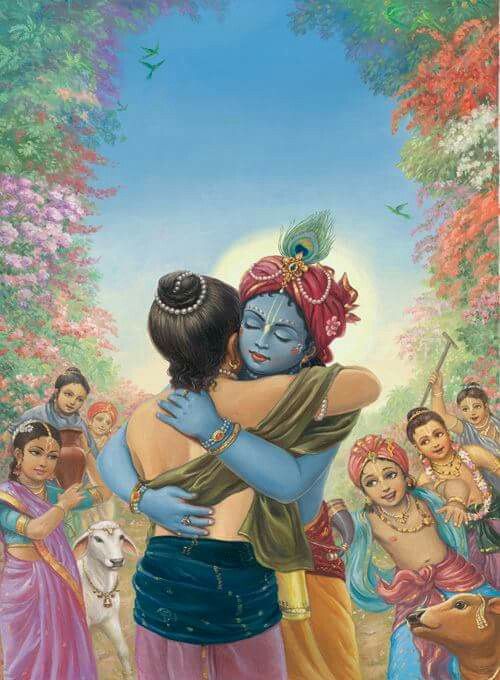
Krishna embraces His Devotee

Temporary Suffering as Education

Karmic reactions act like the discipline of a benevolent, loving parent. If I have caused pain to other living entities, I must learn what that pain feels like. If I have brought joy to others, I am given a proportionate reaction. When this educational process is cut short by artificial means, the lesson remains unlearned. It is like dropping out of a difficult course of study. You will not get the “degree” until the requirements are met.

  • The Compounding Debt: When “therapeutic” pain is cut short, the patient suffers even more in the future. A debt balloons if not paid on time. A fire rages if unchecked. A disease festers when untreated.
  • Treating the Symptom: The terminal patient’s pain is not the disease! The terminal illness is not the disease! The true disease is the unfortunate attitude and impious activities that led to a material body. The material body is already doomed with a terminal illness the day it is born. Alas, the disease remains untreated, and the doctors are responsible for letting that spiritual disease flourish.

जातस्य हि ध्रुवो मृत्युर्ध्रुवं जन्म मृतस्य च ।
तस्मादपरिहार्येऽर्थे न त्वं शोचितुमर्हसि ॥ २७ ॥

jātasya hi dhruvo mṛtyur
dhruvaṁ janma mṛtasya ca


One who has taken his birth is sure to die, and after death one is sure to take birth again.

https://vedabase.io/en/library/bg/2/27/

Intelligence vs. Mere Cleverness

To understand why this happens, we must distinguish between true intelligence and mere cleverness. Intelligence is the higher capacity to see right from wrong, the power of discrimination. Cleverness is simply the mental ability to solve material problems. One can be incredibly clever at administering a medical procedure while remaining completely unintelligent about the moral and karmic consequences. Without the ability to discern what benefits the soul, cleverness can harm it. Cleverness becomes a dangerous tool under these circumstances.

तेषां सततयुक्तानां भजतां प्रीतिपूर्वकम् ।
ददामि बुद्धियोगं तं येन मामुपयान्ति ते ॥ १० ॥

teṣāṁ satata-yuktānāṁ
bhajatāṁ prīti-pūrvakam
dadāmi buddhi-yogaṁ taṁ
yena mām upayānti te
Synonyms

teṣām — unto them; satata–yuktānām — always engaged; bhajatām — in rendering devotional service; prīti–pūrvakam — in loving ecstasy; dadāmi — I give; buddhi–yogam — real intelligence; tam — that; yena — by which; mām — unto Me; upayānti — come; te — they.Translation

To those who are constantly devoted to serving Me with love, I give the understanding by which they can come to Me.

https://vedabase.io/en/library/bg/10/10/

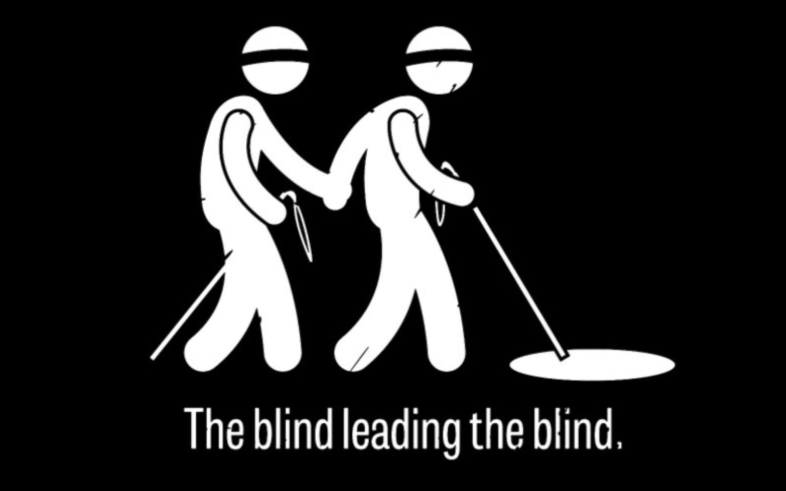
The Blind Leading the Blind

Physicians who perform these acts suffer terrible karmic reactions themselves. It is not that Dr. Ball and his colleagues set out with ill intent; they do this because of their lack of spiritual education. They are in ignorance, acting in ignorance, a classic case of the blind leading the blind.

Dr. Ball is undoubtedly a highly trained physician. He has an above-average mental capacity. He also has the courage to perform a very difficult task. Unfortunately, I presently have no influence over him or his colleagues. It is said that “fools rush in where angels fear to tread.” He is very clever, but he is unintelligent. He has no clue about the laws that govern the soul in the material world.

न ते विदु: स्वार्थगतिं हि विष्णुं
दुराशया ये बहिरर्थमानिन: ।
अन्धा यथान्धैरुपनीयमाना-
स्तेऽपीशतन्‍त्र्यामुरुदाम्नि बद्धा: ॥ ३१ ॥

na te viduḥ svārtha-gatiṁ hi viṣṇuṁ
durāśayā ye bahir-artha-māninaḥ
andhā yathāndhair upanīyamānās
te ’pīśa-tantryām uru-dāmni baddhāḥ
Synonyms

Persons who are strongly entrapped by the consciousness of enjoying material life, and who have therefore accepted as their leader or guru a similar blind man attached to external sense objects, cannot understand that the goal of life is to return home, back to Godhead, and engage in the service of Lord Viṣṇu. As blind men guided by another blind man miss the right path and fall into a ditch, materially attached men led by another materially attached man are bound by the ropes of fruitive labor, which are made of very strong cords, and they continue again and again in materialistic life, suffering the threefold miseries.

https://vedabase.io/en/library/sb/7/5/31/

Blind Leading the Blind

A Final Plea

I pray that God grants all such people the proper intelligence to do the right thing. At the very least, doctors should not be in the business of killing. That is the business of butchers, not healers.

Hare Krishna!

Please chant:

Hare Krishna Hare Krishna Krishna Krishna Hare Hare Hare Rama Hare Rama Rama Rama Hare Hare

The Hare Krishna Mahamantra

Exploring our Origin, Past Life Memories and the Soul- Three Questions on the Gita

Are you ready? Unraveling the soul’s origin sparks a provocative inquiry into our eternal essence. Souls emanate from Krishna, existing beyond creation, spiraling through lifetimes with desires entangled in material shackles. Memories of past lives lie buried, mostly to shield us from trauma, leaving lingering impressions as we cycle through bodies shaped by our will and divine sanction. Spiritual perfection delivers liberation, culminating in eternal pastimes with Krishna, where desire meets destiny. The journey demands a vigorous pursuit of understanding, action, and devotion—our only ticket home.

Soul in the Human Body

We had a few questions come up in Gita Class that I would have to ask you for the answers.

1.) Where did the soul originate?

Souls are eternal, just like Krishna. They originate as “emanations” or “expansions” from Krishna. There is no moment when they were created. Therefore, they are eternal. Krishna is eternally emanating us. Here is a crude example. Imagine a lit candle with a mirror in front of it. When did the reflection originate? Now in the case of our example, someone placed the candle and the mirror. They lit the candle. All this happened at a certain time. But if you conceive of the inconceivable, when the candle, mirror and flame eternally existent… then the reflection originated in the original flame, and will continue eternally. In our case, we are “separated expansions” unlike say Lord Narasimha, Lord Narayana, etc., who are “nondifferent” expansions. 

Bg. 15.7

ममैवांशो जीवलोके जीवभूत: सनातन: ।
मन:षष्ठानीन्द्रियाणि प्रकृतिस्थानि कर्षति ॥ ७ ॥

mamaivāṁśo jīva-loke
jīva-bhūtaḥ sanātanaḥ
manaḥ-ṣaṣṭhānīndriyāṇi
prakṛti-sthāni karṣati

The living entities in this conditioned world are My eternal fragmental parts. Due to conditioned life, they are struggling very hard with the six senses, which include the mind.

https://vedabase.io/en/library/bg/7/15/

Bg. 2.12

न त्वेवाहं जातु नासं न त्वं नेमे जनाधिपाः ।
न चैव नभविष्यामः सर्वे वयमतः परम् ॥ १२ ॥na tv evāhaṁ jātu nāsaṁ
na tvaṁ neme janādhipāḥ
na caiva na bhaviṣyāmaḥ
sarve vayam ataḥ param

Never was there a time when I did not exist, nor you, nor all these kings; nor in the future shall any of us cease to be.

https://vedabase.io/en/library/bg/2/12/

The philosophy of “achintya bheda abheda tattva”, inconceivable, simultaneous oneness and difference, is very deep. It can take us many, many lifetimes to fully understand it. But I don’t need to directly concern myself with all that. My job is to be a pure devotee acceptable by my spiritual master. He will cause everything to be revealed to me.

2.) How do people remember their past lives?

The spirit soul in the material world is encased in a subtle body. This body consists of the subtle material elements (mind, intelligence, and false ego). Now, this subtle body encasing the soul is suspended in 5 kinds of air. Each air is more subtle than the previous one: prana, apana, udana, vyana, and samana… This package is placed inside the heart of the living entity by the material nature.

eṣo ’ṇur ātmā cetasā veditavyo
yasmin prāṇaḥ pañcadhā saṁviveśa
prāṇaiś cittaṁ sarvam otaṁm prajānāṁ
yasmin viśuddhe vibhavaty eṣa ātmā

“The soul is atomic in size and can be perceived by perfect intelligence. This atomic soul is floating in the five kinds of air [prāṇa, apāna, vyāna, samāna and udāna]. The soul is situated within the heart, and it spreads its influence all over the body of the embodied living entities. When the soul is purified from the contamination of the five kinds of material air, its spiritual influence is exhibited.”

Muṇḍaka Upaniṣad (3.1.9), quoted in https://vedabase.io/en/library/sb/11/3/39/

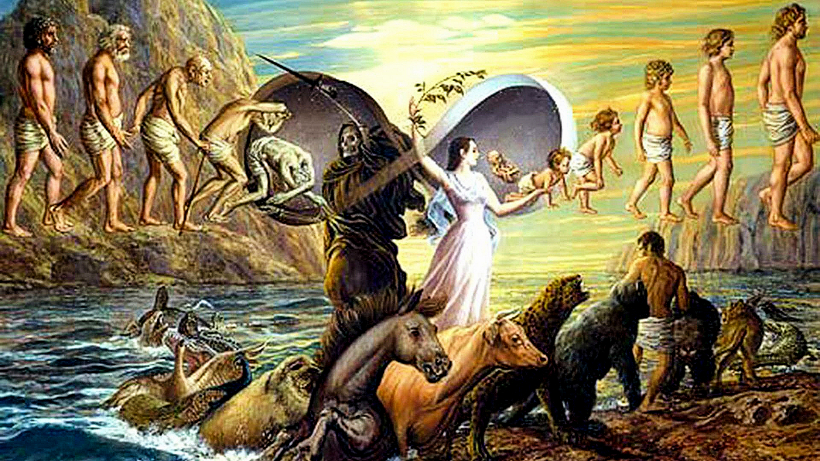
When someone dies, the spirit soul leaves the gross material body. This body is made of the gross material elements earth, water, fire, air, and space. The soul remains cocooned inside the subtle body. It follows the various paths chalked out by Yamaraja into the next body.

Past life memories are usually buried or erased. This prevents trauma in the next life. For example helps avoid Post-Traumatic Stress Disorder (PTSD) cases. Consider what can happen if someone was a deer in their last lifetime. Suppose they remember when they were devoured alive by a tiger… Now think about this: If we remembered every single traumatic thing we ever experienced? These experiences span millions and billions of lifetimes… This is the mercy of the material nature under the direction of Krishna that we don’t remember past lives.

Young babies and small children are said to remember their past lives for some time. They forget as they grow up. Sometimes, remembrance of past lives is allowed for reasons that I know. One reason is to avoid the same mistakes again. There are also other reasons.

3.) This was about the impressions that people have based on their desires. We understand that people take another body, and they bring their impressions based on their desires with them.  Can a person have a desire to not change into another body, meaning not wanting to come back?  If they manifest it, then will it happen? 

MBD: There is only so much we can control… “karmana daiva netrena jantar deha upapatti”. Our body is given by higher authorities according to what we desire and deserve, not just what we desire.

ŚB 3.31.1

श्रीभगवानुवाच
कर्मणा दैवनेत्रेण जन्तुर्देहोपपत्तये ।
स्त्रिया: प्रविष्ट उदरं पुंसो रेत:कणाश्रय: ॥ १ ॥śrī-bhagavān uvāca
karmaṇā daiva-netreṇa
jantur dehopapattaye
striyāḥ praviṣṭa udaraṁ
puṁso retaḥ-kaṇāśrayaḥ

The Personality of Godhead said: Under the supervision of the Supreme Lord and according to the result of his work, the living entity, the soul, is made to enter into the womb of a woman through the particle of male semen to assume a particular type of body.

https://vedabase.io/en/library/sb/3/31/1/

If we act in purely spiritual ways, then naturally the higher authorities will provide us with a spiritual body.

Bg. 13.22

पुरुष: प्रकृतिस्थो हि भुङ्क्ते प्रकृतिजान्गुणान् ।
कारणं गुणसङ्गोऽस्य सदसद्योनिजन्मसु ॥ २२ ॥

puruṣaḥ prakṛti-stho hi
bhuṅkte prakṛti-jān guṇān
kāraṇaṁ guṇa-saṅgo ’sya
sad-asad-yoni-janmasu

The living entity in material nature thus follows the ways of life, enjoying the three modes of nature. This is due to his association with that material nature. Thus he meets with good and evil among various species.

https://vedabase.io/en/library/bg/13/22/

This spiritual body has no flaws. Once a material body is obtained, no one can prevent its death. This is unless sanctioned by God or someone empowered by God. Not just by wishing or willing can we escape old age, disease, or death. “jatasya hi dhruvo mrtyuh” BG 2.27 One who has taken birth must die. One who has died must take birth again, until spiritual perfection is reached.

The spirit soul takes on different bodies depending on the consciousness.

Bg. 2.27

जातस्य हि ध्रुवो मृत्युर्ध्रुवं जन्म मृतस्य च ।
तस्मादपरिहार्येऽर्थे न त्वं शोचितुमर्हसि ॥ २७ ॥

jātasya hi dhruvo mṛtyur
dhruvaṁ janma mṛtasya ca
tasmād aparihārye ’rthe
na tvaṁ śocitum arhasi

One who has taken his birth is sure to die, and after death one is sure to take birth again. Therefore, in the unavoidable discharge of your duty, you should not lament.

https://vedabase.io/en/library/bg/2/27/

This is why we bless “may you never take birth again”. If a person does reach spiritual perfection, then for one last lifetime, they will be transferred to a specific Universe. In that Universe, Krishna is performing His pastimes. These can be any of His expansions, depending on the love of the soul for a particular form of Krishna. They are born there and trained there. They reach their eternal competence. When Krishna winds up His pastimes, He takes that soul back to the spiritual world. The soul is in the specific eternal form that it has. This return happens without any birth. Then the soul experiences pastimes with Krishna eternally.

There are innumerable universes, and the Lord is appearing in one of these universes at every moment. Therefore His pastimes are called nitya-līlā, eternal pastimes. The Lord’s appearance as a child in the house of Devakī takes place continuously in one universe after another. Therefore, the devotee is first transferred to that particular universe where the pastimes of the Lord are current. As stated in Bhagavad-gītā, even if a devotee does not complete the course of devotional service, he enjoys the happiness of the heavenly planets, where the most pious people dwell, and then takes birth in the house of a śuci or śrīmān, a pious brāhmaṇa or a wealthy vaiśya (śucīnāṁ śrīmatāṁ gehe yoga-bhraṣṭo ’bhijāyate). Thus a pure devotee, even if unable to execute devotional service completely, is transferred to the upper planetary system, where pious people reside. From there, if his devotional service is complete, such a devotee is transferred to the place where the Lord’s pastimes are going on.

https://vedabase.io/en/library/sb/10/1/23/ purport

My Guru Maharaja has expressed the desire to stay here till all the souls are delivered back! 🙂 We can see what Krishna does with Him. It is possible for Krishna to do anything. For example, He can keep a soul in the spiritual realm. He can also let them serve Him in the material world. Many of our Acharyas could go into the spiritual realm in their meditation. They could bring back tangible objects back to the material realm. Like jewellery, food, flower, perfume, etc. There are many pastimes where Krishna has done it also… Take for example when Krishna married the 16,100 princesses at once… His parents, priest, wives, and other relatives where all at once attending the 16,100 weddings! 🙂 Krishna’s associates live a most adventurous life!

I know these are deep, but they were discussing it was beyond my capacity of understanding

MBD: This kind of churning is required for a person to genuinely understand the philosophy. Then, when they practice sincerely, they will realize the philosophy for themselves. When someone applies themselves wholeheartedly with a combination of knowledge, action, service and humility, then they reach the Supreme Destination. Our job is to send everyone back home, back to Godhead. Back home to Krishna. Hare Krishna!

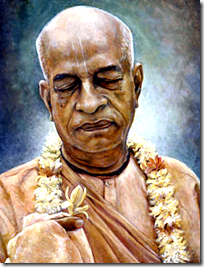
His Divine Grace A. C. Bhaktivedanta Swami Prabhupada.

How to stop death

How to stop death? Most people don’t understand that death can actually be stopped. Would you like to understand how?

A lot of souls are interested in stopping death. Trillions of dollars are being spent all over the world in the attempt to stop death. Some are trying to prolong life, some others are trying to conquer this or that disease. Some are taking special diets and pills, yet others are striving to edit their genes to clip out the parts that cause our bodies to grow old.

Some have accepted the inevitability, but are trying to externally patch up their appearance with cosmetic surgery or other cosmetic treatments.

Yet others have accepted the inevitability, and are trying hard to perpetuate themselves through wills, estates, and institutions.

Most don’t realize that there is a simple way to stop death, though.

जातस्य हि ध्रुवो मृत्युर्ध्रुवं जन्म मृतस्य च ।
तस्मादपरिहार्येऽर्थे न त्वं शोचितुमर्हसि ॥ २७ ॥

jātasya hi dhruvo mṛtyur
dhruvaṁ janma mṛtasya ca
tasmād aparihārye ’rthe
na tvaṁ śocitum arhasi

One who has taken his birth is sure to die, and after death one is sure to take birth again. Therefore, in the unavoidable discharge of your duty, you should not lament.

https://vedabase.io/en/library/bg/2/27/

It is a fact that if someone has taken birth then they have to die. And someone who has died must take birth again.

So, if you want to stop death you must stop (re)birth.

Krsna’s advice in the Bhagavad-gita is that we tolerate this temporary suffering. Just as your body is not permanent, so your diseases are also not permanent. You should tolerate the temporary suffering and solve the real problem—you must stop your repetition of birth and death. But people do not know that birth and death can be stopped, so they are simply busy with the temporary problems.

A. C. Bhaktivedanta Swami Prabhupada, Back To Godhead Magazine, Conversation with Mr. Chugani

As we cultivate a certain consciousness, practically we prepare our next body. For example, there may be a very rich man, and he may be striving to figure out how to protect his wealth from those who want to take it from him… such a person may bury his wealth somewhere, and after death, be born as a poisonous snake that bites anyone who goes in that area. In fact, such an occurance is described in the seventh chapter of the Gita Mahatmya section of the Padma Purana, spoken by Lord Shiva to Parvati Devi. We won’t get into the details here, but this is how it works…

If I cultivate the consciousness of a hog by thinking and acting like one, the mother nature will give me the body of a hog. If I cultivate the consciousness of a dog by thinking and acting like one, then mother nature will mercifully give me the body of a dog.

However if I do cultivate my original consciousness, that I am a spirit soul, part of the Supreme Whole, and spend my life thinking, feeling, willing, speaking, and acting in that purely spiritual way, then, there will be no death for that person, and where there is no death, there is no (re)birth. Where there is no rebirth, there will be no death.

अन्तकाले च मामेव स्मरन्मुक्त्वा कलेवरम् ।
य: प्रयाति स मद्भ‍ावं याति नास्त्यत्र संशय: ॥ ५ ॥

anta-kāle ca mām eva
smaran muktvā kalevaram
yaḥ prayāti sa mad-bhāvaṁ
yāti nāsty atra saṁśayaḥ

And whoever, at the end of his life, quits his body remembering Me alone at once attains My nature. Of this there is no doubt.

https://vedabase.io/en/library/bg/8/5/

For example, if you have spent your lifetime caring for your wealth, possessions, family, or employees or your community or nation, at your moment of departure, you will think of how your projects will continue. You may even ask your physician to give you more time to manage your affairs and leave them properly done. You cannot suddenly think of God. But no one can extend your lifespan even by a single moment.

You may follow another tradition from mine, that is alright. But please understand this fact, that the consciousness you cultivate will determine if you die or live at the moment of your inevitable death. Please purely cultivate God Consciousness, in any tradition.

Hare Krishna!