Understanding Compassion: Actions That Truly Help (Part 2)

Suppose you want to help someone. Very noble! First do no harm. How can you tell if you are helping or hurting? Suppose we want to act with compassion… should we not understand what compassion is first? Here is a discussion about hte complexity of compassion and how well-intentioned actions in passion and ignorance cause harm. Effective compassion must be in the mode of goodness. But charity begins at home. If we are not compassionate with ourselves, we cannot be compassionate towards others. And how to be compassionate with ourselves?

This is part Two of a Series of Articles on Compassion. Part 1 is here. Part 3 is here

Let’s say we do somehow get past the most obvious schadenfreude for others. How to act with compassion?

How do we know if something is helping or hurting?

It is said, first, do no harm.

Take these situations… how would you “help” in these situations?

  • A crying, tantrum-throwing child is being firmly dealt with by a parent
  • A patient is on a very strict diet to allow their quick recovery
  • A homeless substance abuser is begging for money on the street

Would it be “compassion” to intervene in the first example of the child above? Should we stop the parent from being firm? No! The parent knows what the child needs. Maybe the child is hungry, maybe the child is tired and sleepy. The parent is being compassionate with that child, even if it’s not all kisses and hugs!

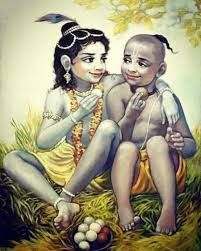
A child throws a tantrum

There is a second example of a sick friend on a strict diet. The patient asks you to sneak in a rich meal, they want to escape their bland, boring diet. You are his buddy. You really want your friend to have some great food! Would you be acting with compassion? No, you end up killing your friend with your “act of compassion”!

A patient is served hospital food

In the third example, the drug addict is on the street begging you for money. If you gave it to them, would that be compassionate? No, the person doesn’t know what is good for them! They will use your charity to hurt themselves, dig deeper into addiction! Maybe even die of an overdose!

Everything we experience in this world is composed of what is known as the modes of material nature. This includes substances, personalities, habits, and activities. It also encompasses the time of day or night, music, writing, and entertainment. Indeed, we can understand that these are the fundamental ingredients of material nature.

We can consider that trying to help someone is an intentional action. Being compassionate towards someone means acting to help that person. Being compassionate takes the form of charity.

Actions in the mode of passion give results that are sweet to start, but have a bitter end. Actions in the mode of ignorance bring results that are bitter in the beginning and bitter in the end.

The modes of material nature are three in number:

  • Goodness
  • Passion
  • Ignorance

Only actions in the mode of goodness produce a desirable result. They may taste bitter to start. This bitterness nevertheless, is only if someone is not situated in the mode of goodness.
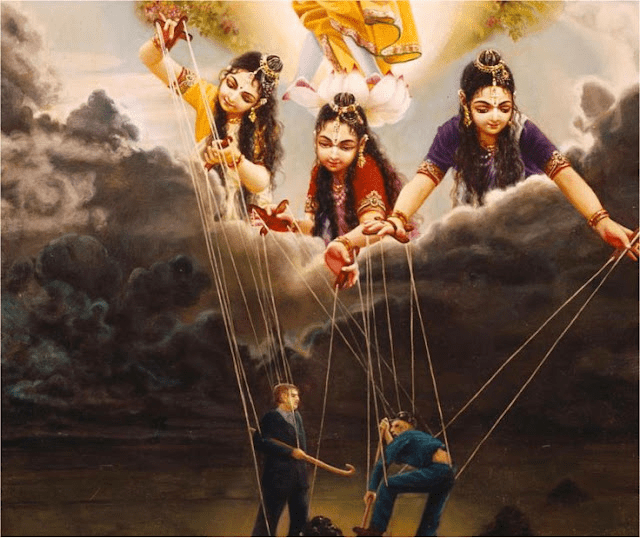
The modes of material nature act on everyone. Indeed they are the ropes that bind us.

The result of charity is highly misunderstood in our world. Not everything we consider charitable is actually beneficial! There are three kinds of charity defined by Krishna in the Bhagavad Gita.

  • Charity in the Mode of Goodness
  • Charity in the Mode of Passion
  • Charity in the Mode of Ignorance
Charity, thre's more to it than meets the eye.

Charity given out of duty, without expectation of return, at the proper time and place, and to a worthy person is considered to be in the mode of goodness.

But charity performed with the expectation of some return, or with a desire for fruitive results, or in a grudging mood is said to be charity in the mode of passion.

And charity performed at an impure place, at an improper time, to unworthy persons, or without proper attention and respect is said to be in the mode of ignorance.

https://vedabase.io/en/library/bg/17/

The mode of goodness way to deal with an upset child is to let a parent handle the situation. This parent knows what the child actually needs. Others should not interfere.

The mode of goodness way to deal with a patient is to follow the physician’s prescription with food and medicine. This is true no matter how dissatisfied the patient is with a bland diet.

The mode of goodness way to deal with a drug addict on the street is to get them professional help. Seek assistance from those who are trained and qualified to help them.

How to “help” someone and not push them deeper into a hole?

Charity begins at home! To be compassionate with anyone else, I need to be compassionate with myself first!

What is that compassion? First, I must know the difference between what is compassion and what is not!

In a desert, say there is a mirage. If someone races towards that mirage, should I let them just run? Or should I stop them?

A mirage in the desert looks like water, but there is no water there.

trushna” is a Sanskrit word that indicates extreme thirst. This is a thirst that can never be quenched. An animal in the desert, running towards a mirage can never quench it’s thirst. In fact it will run to its death.

Similarly, conditioned souls in the material world are running, running running… Running with their tongues out, trying to get some taste, to quench their thirst. This they’re trying to do by pursuing sense gratification.

The conditioned living entities try to satisfy themselves by trying to satisfy the senses. At the extreme, this is hedonism. Everyone is on that trip, more or less.

Compassion is definitely not about gratifying the senses of a suffering soul.

The senses are like a fire! They can never be satisfied by giving them more gratification!

Think of it this way. If there’s a blazing fire, can it be put out by adding more fuel to it? No! A fire can be put out by cutting the supply of fuel and oxygen. But only an expert firefighter knows how to put out a really bad fire.

The senses are like fire, and sense gratification is like fuel. The senses can’t be satisfied, no matter how much we try to gratify them. They must be controlled for the soul to be satisfied.

Just like the expert firefighter, there are great souls who manifest compassion. They know actually what it means to “help” someone. We can learn from them and follow the process they have given us.

निवृत्ततर्षैरुपगीयमानाद्भवौषधाच्छ्रोत्रमनोऽभिरामात् ।

क उत्तमश्लोकगुणानुवादात्पुमान् विरज्येत विना पशुघ्नात् ॥ ४ ॥

nivṛtta-tarṣair upagīyamānād
bhavauṣadhāc chrotra-mano-’bhirāmāt
ka uttamaśloka-guṇānuvādāt
pumān virajyeta vinā paśughnāt

Glorification of the Supreme Personality of Godhead is performed in the paramparā system, that is, it is conveyed from the spiritual master to disciple. Such glorification is relished by those no longer interested in the false, temporary glorification of this cosmic manifestation. Descriptions of the Lord are the right medicine for the conditioned soul undergoing repeated birth and death. Therefore, who will cease hearing such glorification of the Lord except a butcher or one who is killing his own self?

https://vedabase.io/en/library/sb/10/1/4/

This is what is needed. Not sense gratification, but a clear understanding of what is helpful and what is not.

Do you want a specific suggestion on how to be compassionate with yourself and others?

तद्विद्धि प्रणिपातेन परिप्रश्न‍ेन सेवया ।
उपदेक्ष्यन्ति ते ज्ञानं ज्ञानिनस्तत्त्वदर्शिनः ॥ ३४ ॥

tad viddhi praṇipātena
paripraśnena sevayā
upadekṣyanti te jñānaṁ
jñāninas tattva-darśinaḥ

Just try to learn the truth by approaching a spiritual master. Inquire from him submissively and render service unto him. The self-realized souls can impart knowledge unto you because they have seen the truth.

https://vedabase.io/en/library/bg/4/34/

Want to act with compassion?

Be compassionate with yourself.

Approach a genuine spiritual master.

Sankarshan Das Adhikari, the author's spiritual master

A great saint – bull in his last lifetime

Once upon a time there was a bull. Then there was a warrior. And then there was a great saint. The bull became the warrior who became the saint when reminded of his legacy… how come? How does a bull become a saint?

Picture this…

A wealthy, handsome young man in full armour on horseback. A hot day in South Central India, where temperatures routinely exceed 40 Celsius or 104 Fahrenheit. They’re thirsty, parched, both the warrior and the horse.

Warrior on horseback was very thirsty, as was his horse

Dhondo Pant Raghunath, our dashing warrior, suddenly chances upon a river. It’s cool waters were irresistible on the searing hot day. So, the young man rides his horse straight into the cool refreshing waters of the river, and both horse and man eagerly quench their thirst.

A sage sitting on the bank remarks “kim pashuh purva dehe? / किं पशुः पूर्व देहे?” or “why, were you an animal in your previous body?”.

Hearing this question instantly brought back a flood of past life memories in our young Dhondo Pant.

तत्र तं बुद्धिसंयोगं लभते पौर्वदेहिकम् ।
यतते च ततो भूय: संसिद्धौ कुरुनन्दन ॥ ४३ ॥

tatra taṁ buddhi-saṁyogaṁ
labhate paurva-dehikam
yatate ca tato bhūyaḥ
saṁsiddhau kuru-nandana

On taking such a birth, he revives the divine consciousness of his previous life, and he again tries to make further progress in order to achieve complete success, O son of Kuru.

https://vedabase.io/en/library/bg/6/43/

In his former lifetime, Dhondo Pant had been a bull.

Yes, four-legged bovine with horns, used as a beast of burden. He was in the service of the great Ananda Tirtha, or Sripad Madhvacharya. The bull was engaged in carrying the manuscripts of various scriptural texts and commentaries.

Dhondo Pant, Raghunath had been a bull in his former life. No ordinary bull, but one engaged in the service of the great Madhvacharya!

Madhvacharya is famous for having written commentaries, “bhashya / भाष्य” on the various fundamental texts of Vedic literature. If you have come across the commentaries of Sripad Madhvacharya, you may have noticed that they are not very easy to understand, even for a well-educated reader. Many of his disciples therefore requested permission to write commentaries on the commentaries “teeka / टीका”… but Madhvacharya refused them all.

He said “This bull here shall write the commentaries on my works“.

Madhvacharya, the great teacher of Krishna Consciousness

And the great sage on the riverbank recognized the soul, he saw the soul who wore the body of a bull, now wearing the body of this rich young man. The sage was the great Akshobhya Tirtha, a spiritual descendent of Sripad Madhvacharya. Such is the mercy of the spiritual master, who appears at the right time, at the right place, to claim a soul on behalf of God.

I am fortunate to be initiated in the same line of discplic succession.

By the mercy of my eternal spiritual master His Grace Sriman Sankarshan Das Adhikari and his divine spiritual master His Divine Grace A. C Bhaktivedanta Swami Prabhupada. In a similar way, my spiritual master approached me through the Internet, and answered my questions patiently, writing over 600 replies, before I recognized him as my spiritual master. I offer my respectful obeisances to my spiritual master for helping me recognize who I am and be myself. However, I am still unworthy, to be honest.

In any case, our bull-turned-young man immediately decided…

To renounce his materialistic life in a rich family, and take Sannyasa, the monastic order of pure devotion to Sri Krishna. He was now known as Jayatirtha. His father, Raghunath Deshpande, like any rich father, tried his best to stop his son, but in the end had to acquiesce to the divine destiny that was unfolding before his eyes.

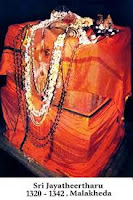
Sri Jayatirtha, the author of many great works in the Brahma Madhva tradition of Krishna Consciousness

Sri Jayateertha is famous as “Teekacharyaru / ಟೀಕಾಚಾರ್ಯರು”, or “The Master of the Commentaries. The word Acharya means one who teaches purely the instructions of God and personally lives those teachings. “Teeka” means commentary upon a commentary.

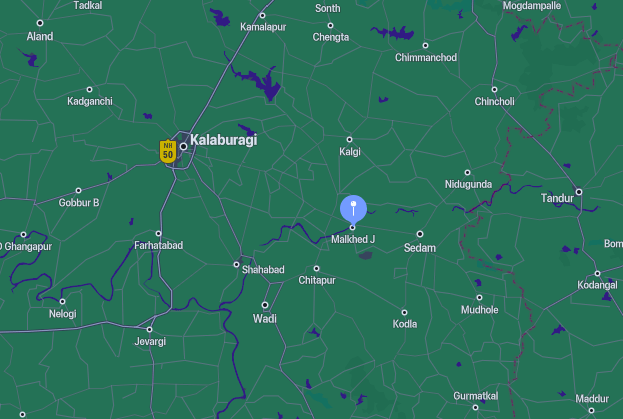
malkhed, kalaburgi district of karnataka, the location of the samadhi of sri jayatirtha

So, by the grace of Sri Jayatirtha…

the complex instructions of the Vedic literature of Madhvacharya was revealed to us, to study, understand, discuss, teach, and follow ourselves. His Samadhi still exists in Southern India, in Malkhed, Kalaburgi District, Karnataka. A saint who has entered Samadhi is not “dead”, one can go and receive their blessings just as one can receive blessings from a saint who still walks the earth amongst us. Near the Samadhi of Jayatirtha is the Samadhi of his spiritual master, Sri Akshobhya Tirtha.

The Samadhi of Sri Jayatirtha, great teacher of Krishna Consciousness

What can we learn from this incident…

Of the warrior turned sage who was a bull in his former lifetime? That no matter how we engage in the service of God, it is always beneficial. What is more, no matter how small a thing someone does for God, that soul benefits beyond our comprehension.

नेहाभिक्रमनाशोऽस्ति प्रत्यवायो न विद्यते ।
स्वल्पमप्यस्य धर्मस्य त्रायते महतो भयात् ॥ ४० ॥

nehābhikrama-nāśo ’sti
pratyavāyo na vidyate
sv-alpam apy asya dharmasya
trāyate mahato bhayāt

In this endeavor there is no loss or diminution, and a little advancement on this path can protect one from the most dangerous type of fear.

https://vedabase.io/en/library/bg/2/40/

What are some examples?

The great Jayananda Prabhu is a perfect example… he would often call out to a passerby, “Hey can you just hold this nail for me?”, and before you know it, by service to Krishna, the dull, unclean passerby has transformed into a bright-faced Vaishnava devotee!

In a similar way, we request donations from everyone we speak to. The donations are not for us, we don’t need anyone’s money. Krishna has given us enough. But anyone who gives, they benefit.

दातव्यमिति यद्दानं दीयतेऽनुपकारिणे ।
देशे काले च पात्रे च तद्दानं सात्त्विकं स्मृतम् ॥ २० ॥

dātavyam iti yad dānaṁ
dīyate ’nupakāriṇe
deśe kāle ca pātre ca
tad dānaṁ sāttvikaṁ smṛtam

Charity given out of duty, without expectation of return, at the proper time and place, and to a worthy person is considered to be in the mode of goodness.

https://vedabase.io/en/library/bg/17/20/

Sometimes we get a ride from someone, sometimes, we ask someone to help move some boxes or hold open a door… sometimes, we give an animal Krishna Prasada, or chant the Holy Name of Krishna loudly so they hear it.

प्रसादे सर्वदुःखानां हानिरस्योपजायते ।
प्रसन्नचेतसो ह्याश‍ु बुद्धिः पर्यवतिष्ठते ॥ ६५ ॥

prasāde sarva-duḥkhānāṁ
hānir asyopajāyate
prasanna-cetaso hy āśu
buddhiḥ paryavatiṣṭhate

For one thus satisfied [in Kṛṣṇa consciousness], the threefold miseries of material existence exist no longer; in such satisfied consciousness, one’s intelligence is soon well established.

https://vedabase.io/en/library/bg/2/65/

Anyone who comes in contact with someone engaged in devotional service is benefited. Whether it is the ant who comes in contact with the dust from the altar, or the bee who was intoxicated on some leftover nectar offered to Krishna, or the cockroach who lives in Radharani’s kitchen and feeds on leftover Prasadam.

When I got out on Harinam, pigeons and seagulls sometimes surround me. I am 100% certain that all those souls will come back as devotees, and Krishna will help me serve them again. I can’t wait to see them again, as bright-faced Vaishnavas!

The birds and animals who get a bit of Krishna Prasada or hear Sri Harinam, the Holy Name of Krishna, will be freed from lower life forms and will get a chance to pursue Krishna Consciousness

There is also eyewitness evidence to the power of Prasada… food offered to the Lord, but more on that another day.

It doesn’t matter what your present condition is. Just engage somehow or other in Bhakti, pure devotional service. You will benefit beyond your wildest imagination! As one of my teachers, Vaisesika Prabhu, likes to say “do what you can, with what you have”

P.S: I found the writeup by His Grace Toshan Nimai Prabhu very helpful… please read it here if you’re interested in more details. https://flowers-of-grace.blogspot.com/2012/06/sri-jayatirtha.html

P.P.S: This is the disciplic succession with which I have received my spiritual knowledge and impetus to share this knowledge. Many branches and sub-branches of this disciplic succession have helped me, not to mention souls from so many other traditions from around the world. I am grateful to them all, too numerous to mention.

  1. Kṛṣṇa
  2. Brahmā
  3. Nārada
  4. Vyāsa
  5. Madhva
  6. Padmanābha
  7. Nṛhari
  8. Mādhava
  9. Akṣobhya
  10. Jaya Tīrtha
  11. Jñānasindhu
  12. Dayānidhi
  13. Vidyānidhi
  14. Rājendra
  15. Jayadharma
  16. Puruṣottama
  17. Brahmaṇya Tīrtha
  18. Vyāsa Tīrtha
  19. Lakṣmīpati
  20. Mādhavendra Purī
  21. Īśvara Purī, (Nityānanda, Advaita)
  22. Lord Caitanya
  23. Rūpa, (Svarūpa, Sanātana)
  24. Raghunātha, Jīva
  25. Kṛṣṇadāsa
  26. Narottama
  27. Viśvanātha
  28. (Baladeva), Jagannātha
  29. Bhaktivinoda
  30. Gaurakiśora
  31. Bhaktisiddhānta Sarasvatī
  32. A. C. Bhaktivedanta Swami Prabhupāda
  33. Sankarshan Das Adhikari

A gift of warm socks, from one beggar to another

Once, on the street, an old lady gifted me with warm socks. I am not a beggar, and but yet a beggar. Why was I begging? I don’t need anything from anyone. Or do I?

It was one cold December morning before Christmas. We were out with book tables in downtown Toronto, trying to get passing souls to consider a spiritual gift, either for themselves or others.

One elderly lady, dressed in shabby winter wear suddenly approached me, speaking a language I didn’t understand, but holding out a a pair of gray socks she had in her hand. She herself could have used those socks… some good Samaritan had given out the socks as a present, probably in the spirit of the season. But the lady insisted that I take them from her.

When I repeatedly refused, the look in her eyes turned from a kind eagerness to a kind of dejected sadness – why was I refusing her gift?

I tried to show her my own warm socks, the ones I wore – she pulled out another pair of the same kind of socks… in other words, we were even.

I then explained that I had other pairs of warm socks at home… she probably thought I was politely declining out of some kind of pride.

Each time I refused, she grew sadder.

Until finally, I decided to accept her gift. She couldn’t have been happier!

To the kind lady, out there in the cold, I appeared to be in more need than herself!

I tried to look at myself from her angle of vision. I was wearing an unbranded hat, coat, and boots. I was out there soliciting passersby to consider taking books. Some people handed me change or different amounts of money in exchange for the books.

So, it must have appeared to her that I was trying to earn some money by selling spiritual books to passersby. She saw that I had a child with me… and her motherly compassion was aroused.

She was quite happy when I accepted her kind gift, and she blessed me, this time, in English, saying “God bless you my child, you should keep doing this work for God. You are doing a good thing”.

Relieved and happy that she was conversant with English, I handed her a gift set of books and without being asked, she gave me some change with a smile.

She may or may not have realized this, but at that moment, the whole trajectory of her life changed. She had donated in exchange for spiritual knowledge, which means she had acquired the power to read and understand those books, and apply the knowledge to her own life.

The gift of spiritual knowledge has the power to end the endless sojourn of the soul in the material realm. Each soul has been here, taking birth, growing old, catching disease, and dying, over and over again.

But genuine spiritual knowledge, such as the Bhagavad Gita As It Is, has the power to change the trajectory of the soul and end all suffering.

So the gift of spiritual knowledge is the highest of all gifts, because it is the ultimate solution to all problems.

I came back home and offered those socks to Krishna. Those were valuable socks.

I treasure and value that gift. Because the lady gave a donation selflessly without expectation of a return, to a person who was out trying to serve God and His souls, her donation qualifies under this qualification spoken by Krishna:

दातव्यमिति यद्दानं दीयतेऽनुपकारिणे ।
देशे काले च पात्रे च तद्दानं सात्त्विकं स्मृतम् ॥ २० ॥

dātavyam iti yad dānaṁ
dīyate ’nupakāriṇe
deśe kāle ca pātre ca
tad dānaṁ sāttvikaṁ smṛtam

Charity given out of duty, without expectation of return, at the proper time and place, and to a worthy person is considered to be in the mode of goodness.

https://vedabase.io/en/library/bg/17/20/

I am no beggar from an external perspective. God has given me enough and more, enough to be able to donate my time and money to worthy causes. He has given me a relatively easy way to earn a decent livelihood, given me good health, put me into a good family, given me a good education, and best of all, placed me in the care of advanced spiritualists. I’m really quite fortunate in all respects.

I don’t consider myself “worthy” to receive charity… but the mission I was on is worthy. She may have given to me, but actually she gave to the mission.

From an internal perspective, I am indeed a beggar. I constantly beg God to engage me in His service, and the service of His servants. I also beg other souls to please turn their attention to God, and to make God the centre of their lives. In other words, I beg from people for their own benefit.

To anyone who is a beggar of any kind, of course, must be prepared for all sorts of rebuffs, insults, and the like.

नूनं स्वार्थपरो लोको न वेद परसङ्कटम् ।
यदि वेद न याचेत नेति नाह यदीश्वर: ॥ ६ ॥

nūnaṁ svārtha-paro loko
na veda para-saṅkaṭam
yadi veda na yāceta
neti nāha yad īśvaraḥ

Those who are too self-interested beg something from others, not knowing of others’ pain. But if the beggar knew the difficulty of the giver, he would not ask for anything. Similarly, he who is able to give charity does not know the beggar’s difficulty, for otherwise he would not refuse to give the beggar anything he might want as charity.

https://vedabase.io/en/library/sb/6/10/6/

I often get told “Go get a real job” (as if this world were permanent and that any job in the material world had any relevance in the realm of eternity), or “stop living off of others” (as if anyone is living off of themselves, everyone depends on God for everything!). I get shooed, chased off, ridiculed, and made fun of. Sometimes, I get threatened with violence or worse. Sometimes, I get barely tolerated, sometimes, I get all sorts of rude comments.

Of course, I do get compliments and admiration and so many nice sentiments expressed.

The best is when someone actually takes the spiritual message I am trying to pass on.

I know the difficulty of the beggar, and I know the difficulty of the giver too. It is the hardest thing to contemplate and actually surrender. But the search for a soul who is ready to return to God is well worth all the trouble.

As for the kind lady with the gift of warm socks? She has a special place in Krishna’s world. Time separates her from her eventual destination. I pray that wherever she is, Krishna helps her to continue her journey, for she has served Lord Chaitanya’s mission with a kind heart.

Krishna is someone who is constantly looking to catch us doing something right, and He takes the highest and best from even the most insignificant thing we may do. Krishna never forgets something that someone has done for Him or the servant of His servant. That I am, fortunately.

As a spiritual beggar, my job is to keep approaching souls, looking for the ones who are ready to go back.

Coming back to the kind lady, a beggar herself, possibly homeless, who developed a motherly affection for me…

The trajectory of her life is irrevocably altered, she has begun her journey home.