Leveraging Jet Lag for Spiritual Growth

Recently returning from a transformative trip to India, I found jet lag to be an unexpected ally in my spiritual journey. Embracing early mornings, I engaged in meditation, reading, and serving Krishna. Instead of viewing jet lag negatively, I was able to leverage it to enhance my devotional practices and enrich my daily routine. What a blessing! Jet lag? Bring it on!

I have recently returned to Toronto from a hectic, exhausting, yet ecstatic trip to Bharat Bhumi, also known as India. I was away for a total of 14 days. Out of those, I got to spend 11 in the holy land.

The privilege of meeting, hearing from, and serving the sincere devotees of Krishna is, as always, a life changing experience.

I visited…

  • Frankfurt
  • Mantralayam
  • Hyderabad
  • Bengaluru
  • Pune
  • Mumbai

With a 10.5 hour time zone difference between Toronto and India, that is just enough to get jet lagged. Jet lag gets a bad rap… because the body clock is set to some other time zone. It wakes up at odd hours. It feels sleepy at odd hours and so on. There’s an entire cottage industry to help people cope with and overcome jet lag.

I even tried this app called “Timeshifter” but it was totally impractical for my lifestyle… for example it contained advice to use caffeine, which I avoid like the plague, and melatonin… It required specific times to go to sleep and wake up. There were also specific times to “see” light and to avoid it. This was almost like trying to hack the body and mind. It didn’t sit right with me. Was it really necessary to “overcome” jet lag? I wondered if jet lag can be leveraged for Krishna, for spiritual growth.

When I was in India, the jet lag was a great asset! I managed to wake up early enough to attend Mangala Arati. I completed my Sadhana. I got by with a short nap for the rest of the day. Early mornings, late nights, and the rest of the time spent in serving Krishna and His devotees, perfect!

When I got back to Toronto, for example this morning, I was up at 2AM. I wondered if I should try to go back to sleep… then I remembered that my Guru and Gurumata usually rise at this hour. They complete their japa, meditation on the Holy Names of Krishna on their beads, well before others rise… and then they can spend their whole day serving others on their spiritual journey.

So I decided to follow in their footsteps. After completing my meditation, I still had time to read, not one but parts of 2 books! Anyone who has a corporate career and a family understands the challenge. Finding quality time to read is incredibly hard. I still had enough time to complete Mangala Arati. Then I performed deity worship before getting an early start to the day!

In this way I will leverage jet lag to serve Krishna. And when the jet lag ends? I will simply go back to my earlier routine to serve Krishna!
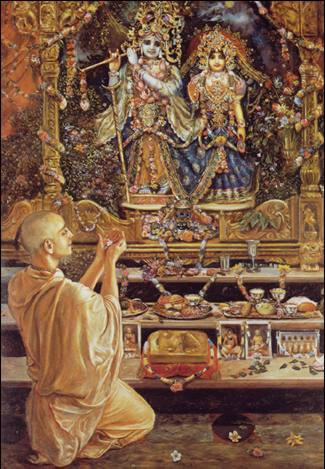
Devotee serving Krishna

Jet lag? Bring it on!

Of course, in all success, the credit goes to Guru and Krishna, as long as we are ready to be an instrument!

Now, in case you think that this idea to leverage jet lag in Krishna’s service somehow is mine… it is not.

Srila Rupa Goswami enunciated the principle of “avyarthakālatvam — being free from wasting time”, this was over 500 years ago…

ক্ষান্তিরব্যর্থকালত্বং বিরক্তির্মানশূন্যতা ।
আশাবন্ধঃ সমুৎকণ্ঠা নামগানে সদা রুচিঃ ॥ ১৮ ॥
আসক্তিস্তদ্‌গুণাখ্যানে প্রীতিস্তদ্বসতিস্থলে ।
ইত্যাদয়োঽনুভাবাঃ স্যু র্জাতভাবাঙ্কুরে জনে ॥ ১৯ ॥


kṣāntir avyartha-kālatvaṁ viraktir māna-śūnyatā
āśā-bandhaḥ samutkaṇṭhā nāma-gāne sadā ruciḥ
āsaktis tad-guṇākhyāne prītis tad-vasati-sthale
ity-ādayo ’nubhāvāḥ syur jāta-bhāvāṅkure jane

“ ‘When the seed of ecstatic emotion for Kṛṣṇa fructifies, the following nine symptoms manifest in one’s behavior: forgiveness, concern that time should not be wasted, detachment, absence of false prestige, hope, eagerness, a taste for chanting the holy name of the Lord, attachment to descriptions of the transcendental qualities of the Lord, and affection for those places where the Lord resides — that is, a temple or a holy place like Vṛndāvana. These are all called anubhāva, subordinate signs of ecstatic emotion. They are visible in a person in whose heart the seed of love of God has begun to fructify.’

https://vedabase.io/en/library/cc/madhya/23/18-19/

My spiritual master has indeed planted the seed of pure devotional service in my heart. However, I cannot claim any success in cultivating devotional service. I am just sincerely trying to practice sadhana bhakti.

And I have examples of great Vaishnavas who travel around the world…

So I brought Prabhupada his breakfast, and then when he was finished I came and took everything out and Prabhupada laid down. So I went back, I said, “Prabhupada’s resting.” So Paramahamsa and I, we laid down. Of course, we fell asleep, we were out, and Prabhupada maybe took 15 minutes or something and he was up. So finally I heard a bell ring. So I went into Prabhupada’s room, and it happened a few times where I would literally try to wake up as I was offering obeisances and exercise my eyes so Prabhupada couldn’t tell that I was sleeping. I sat up, and as soon as I sat up he said, “Why are you sleeping? You’re like dead men. Everyone is awake. The karmis are all at work but not the devotees. No, they’re sleeping.” He said, “They’re sleeping very soundly. Why are you sleeping?” And, of course, when Prabhupada asked why were you doing something wrong, I never had a response because whatever you said, he would just take that apart. So I just said, “Prabhupada, I’m sorry.” “What about Paramahamsa? Why is he sleeping?” He said, “Call him in here.” He goes in and immediately Prabhupada says, “You are a sannyasi. Your business is to minimize bodily demands, minimize sleeping, minimize eating. Why are you sleeping?” Paramahamsa said, “Prabhupada, I have jet lag,” and I thought, “Oh, no!” And Prabhupada said, “Jet lag?” He said, “Well, we just flew from here and done this,” and Prabhupada said, “So I am also flying, I am doing the same thing. I am awake.” Then he said, “All right, go on. Go sleep if you want.

https://srilaprabhupadalila.org/read/3665 

Srila Prabhupada circled the globe twelve times in less than 10 years… and no one ever recalls a time when he was jet lagged.

Gopal Krishna Goswami, a dear disciple of Srila Prabhupada, traveled from continent to continent. He was always on the altar offering Mangala Arati to the local deities at the temple he was staying at. This was regardless of which time zone he came in from and which time zone he traveled to. I have personally witnessed this, arrived at midnight, 1AM, 2AM, but no, at 4:30am he was on the altar.

My own spiritual master, Srila Sankarshan Das Adhikari, has circled the globe more than 50 times. My Gurumataji Srimati Vishnupriya Devi Dasi has accompanied him. They have never let jet lag stand in the way of their service to Krishna. They are both up early. They chant their rounds and offer their service to Sri Sri Radha Damodar. Then, they follow a full schedule of service all day, working 12-16 hours most days.

So why should I not try to follow in their illustrious footsteps?
Brahmachari vs Bhramachari: Which one do you want to be?

A Brahmachari is like a spiritual athlete, dedicated to serving the Supreme Truth, while a Bhramachari chases illusions—basically like a spiritual couch potato, confusing the finish line for a mirage in a desert. We dive into how society’s roles, like Brahmanas and Shudras, fit into this divine quest, reminding us that serving God is the real goal, whether you’re a householder or a renounced sage. Remember, folks: always be a Brahmachari, not a Bhramachari—that’s the real spiritual workout!

A Brahmachari is a person who is dedicated to the pursuit and service of the Supreme Absolute Truth.

ब्रह्म आचरति इति ब्रह्मचारी

brahma ācarati iti brahmacāri

Brahmachari worships Radha Krishna

And a Bhramachari is a person is the exact opposite.

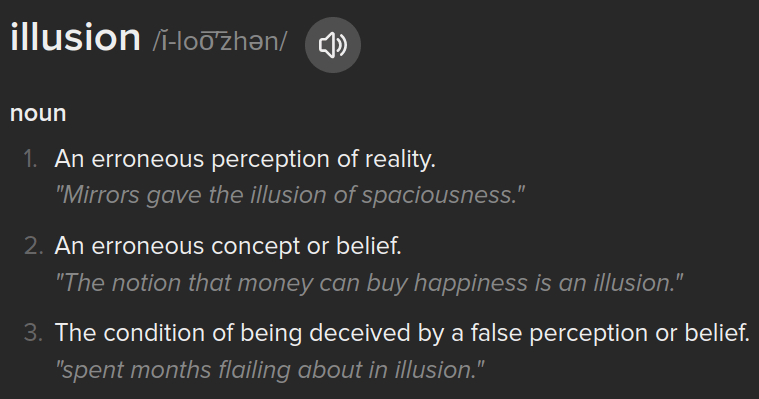
The Sanskrit word “bhrama” means “illusion”.

 Illusion, from the dictionary

So, someone who chases after illusory happiness is the opposite of someone who dedicates themselves to the Absolute Truth.

What got me thinking was a typo. The person writing was referring to a gentleman who is solidly dedicated to the Supreme Absolute Truth. At first I chuckled, but then I started thinking about the difference between the two.

I concluded that I can be one or the other at any given time, either I am engaged in the service of the Supreme Absolute Truth, or I am engaged in something frivolous that is temporary at best, illusory in nature.

Human society is divided by God into 4 natural orders of spiritual life, and 4 social orders, according to the natural qualities and work performed by the various people. And Brahmacharis can exist in all spiritual and social orders. This natural division is clearly visible in the nature and activities of people, it’s not the birth-based caste system as it has degenerated to.

चातुर्वर्ण्यं मया सृष्टं गुणकर्मविभागशः ।
तस्य कर्तारमपि मां विद्ध्यकर्तारमव्ययम् ॥ १३ ॥

cātur-varṇyaṁ mayā sṛṣṭaṁ
guṇa-karma-vibhāgaśaḥ
tasya kartāram api māṁ
viddhy akartāram avyayam

According to the three modes of material nature and the work associated with them, the four divisions of human society are created by Me. And although I am the creator of this system, you should know that I am yet the nondoer, being unchangeable. https://vedabase.io/en/library/bg/4/13/

The 4 Social Orders are:

  • Brahmanas: The intelligent class, the “head” of society
  • Kshatriyas: The administrator class, the “arms” of society
  • Vaishyas: The mercantile community, merchants, traders, farmers, the “belly” of society
  • Shudras: The worker class, the “legs” of society
Varna: The 4 social orders created by God. BG 4.13

And then there are the 4 spiritual orders:

  • Brahmachari: The celibate student
  • Grihastha: The householder family man
  • Vanaprastha: The former householder, retired from family life
  • Sannyasa: The fully renounced order of life

However, no matter which social or spiritual order one may be situated in…

अत: पुम्भिर्द्विजश्रेष्ठा वर्णाश्रमविभागश: ।
स्वनुष्ठितस्य धर्मस्य संसिद्धिर्हरितोषणम् ॥ १३ ॥


ataḥ pumbhir dvija-śreṣṭhā
varṇāśrama-vibhāgaśaḥ
svanuṣṭhitasya dharmasya
saṁsiddhir hari-toṣaṇam

O best among the twice-born, it is therefore concluded that the highest perfection one can achieve by discharging the duties prescribed for one’s own occupation according to caste divisions and orders of life is to please the Personality of Godhead. https://vedabase.io/en/library/sb/1/2/13/

All these 4 orders of society are meant to serve God in their own way, just like the different parts of the body serves the whole – the hand feeds the stomach, the leg moves the body, and the brain regulates the hand, stomach, and legs. One without the others is a handicapped body, not very effective. Neither is one more or less important than others.

By following the activities according to one’s own nature, and offering that in the service of God, one can indeed attain perfection.

यत: प्रवृत्तिर्भूतानां येन सर्वमिदं ततम् ।
स्वकर्मणा तमभ्यर्च्य सिद्धिं विन्दति मानव: ॥ ४६ ॥

yataḥ pravṛttir bhūtānāṁ
yena sarvam idaṁ tatam
sva-karmaṇā tam abhyarcya
siddhiṁ vindati mānavaḥ

By worship of the Lord, who is the source of all beings and who is all-pervading, a man can attain perfection through performing his own work. https://vedabase.io/en/library/bg/18/46/

Which now brings us to the main topic of our discussion…

No matter where we might fit into society, we are all meant to serve God with all our faculties, with all our gifts, with all our abilities, and all our resources.

This is how one may remain a Brahmachari, no matter where one may be situated in…

  • Brahmacharis in the Brahmachari Ashrama – these are either students or those dedicated to spiritual life without deviation, and/or preparing themselves for the renounced order, usually younger men, but also many older men. Being in young bodies or being inexperienced does not mean they can pursue unrestricted sense enjoyment.
  • Grihastha Brahmacharis, or those who pursue spiritual life even while accepting the responsibilities of householder or family life. It’s not that taking on family responsibilities give the person to pursue illusion in an unrestricted manner.
  • Vanaprastha Brahmacharis, or those who have retired from family life, or decided to marry a like-minded person dedicated to spiritual life – even while living as a married couple, they have no family responsibilities. However, just because they are not directly responsible for their family doesn’t mean they don’t accept responsibility for other Grihasthas and Brahmacharis. The dedicate themselves to being on “constant pilgrimage” and leveraging their life experience and spiritual knowledge to benefit others.
  • Sannyasa Brahmacharis, or those who are in the renounced order of life, with no family or social connections. But just because someone is in the renounced order of life doesn’t mean they don’t do anything. In fact, they adopt the whole world as their family, meeting others just so they can convey God Consciousness, Krishna Consciousness to them, and staying just long enough to deliver the message and keep moving on.

Importantly, one needs to remain focused on the goal of life, which is to attain spiritual perfection. The way one expresses one’s Brahmacharya, or dedication to spiritual advancement, may look different depending on which Varna and Ashram one is in, but the principles of a regulated spiritually focused life remain.

No matter if you are a man or woman, young or old, whether you wear white, or saffron, or any other colour… If you’re serious about spiritual life, then you must be a Brahmachari, in every thought, word, and deed.

So we have a choice, no matter what our official social and spiritual status might be. At every moment, with every thought, word, and deed, we all need to be Brahmacharis, not Bhramacharis.

Thoughts?

What is “reflective” chanting?

What are the stages in chanting the Hare Krishna Maha Mantra? Especially, what is reflecting chanting? What are the benefits experienced by someone at the various levels of chanting?

Madumitha, 11 November 2014

Hare Krishna!

Please accept my humble obeisances.

All glories to Srila Prabhupada!

All glories to Guru and Gauranga!

Could you please elaborate on what is meant by ‘reflective chanting’. I understand that the offensive chanting stage is when a neophyte devotee commits offenses while chanting and the offenseless chanting stage is when one does not commit any offenses towards the Holy Name, but I am unable to understand what happens in this intermediate stage. It is also mentioned that it is in the reflective chanting stage that one attains a stage of emancipation. What does this mean? Doesn’t one become liberated at the offenseless chanting stage?  

Thanks, 

Madumitha

Srivatsa Das, 13 November 2014

Hare Krishna

Please accept my humble obeisances

All glories to Srila Gurudeva

 In previous yugas, the devotees attained purified goodness mode by training of yoga by a Brahmana or a bona fide spiritual master away from the devotee’s home under brahmacharya asrama.  In the present age,  it is not possible to have this,  but still, we can attain the same purified goodness or Vasudeva sattva stage by the easy process of chanting the mahamantra offencelessly and reading regularly Srimad Bhagavad gita and Srimad Bhagavatam along with other devotees. In both the cases we can see that the seed of bhakti has to be planted into the heart of the devotee by a bonafide spiritual master.

As the chanting continues along with other devotional services, purification starts.  The three stages of chanting as I understood are as follows:

1. offensive chanting –  In this stage purification starts

2.  intermediate stage of chanting – Attains liberation

3. in the offence-less chanting – in this stage one attains Vasudeva sattva stage by real love and devotion towards the Lord.  In this stage, the devotee might be present in this material world physically, but he is already in the Goloka Vrindavana serving the Lord at His lotus feet.

Waiting to read others understanding about the question

your servant

Srivatsa Das

Bhakta Sunil, 13 November 2014

Hare Krishna

Please accept my humble obeisances

All Glories to Srila Prabhupada

All Glories to the assembled devotees , in this group

Regarding your query about “Thought For the Day” of 10th November 2014 : 

—————————

Today’s Thought–Broadcast daily to over 16,000 subscriber in over 100 countries listed at: http://www.backtohome.com/countries 

The Offenseless Chanter Lives in God’s Kingdom

uploaded from ISKCON Austin, Texas USA

We read in Srila Prabhupada’s purport to Srimad Bhagavatam 2.2.30:

“There are three stages in chanting the holy name of the Lord. The first stage is the offensive chanting of the holy name, and the second is the reflective stage of chanting the holy name. The third stage is the offenseless chanting of the holy name of the Lord. In the second stage only, the stage of reflection, between the offensive and offenseless stages, one automatically attains the stage of emancipation. And in the offenseless stage, one actually enters into the kingdom of God, although physically he may apparently be within the material world.”

This is truly amazing! Even while apparently being situated in his material body the offenseless chanter of Krishna’s holy names is actually situated in Krishna’s pastimes in the spiritual world. What this means is that the devotee does not have to wait for the demise of his material body to go back to Godhead. He can gradually attain the perfection of going back to Godhead even while he is in his present body simply by becoming an offenseless chanter of the Hare Krishna mahamantra. At this perfectional stage while associating within his heart with Krishna, he will be externally engaged on this planet for bringing about a spiritual revolution and thus the influence of the age of Kali to go into remission.

Sankarshan Das Adhikari

www.joincourse.com

———————– 

On researching for your query , I understand that reflective chanting refers to the ‘clearing of offenses leading to liberation’. At this stage of chanting , one gets taste of the Holy Names or ‘namabhasa’

The following references ( courtesy webpage )  may help further clarify your doubts :

The three stages of chanting the holy name:

The simple process of offenselessly chanting and hearing the holy name of the Lord will gradually promote one very soon to the stage of emancipation. There are three stages in chanting the holy name of the Lord. The first stage is the offensive chanting of the holy name, and the second is the reflective stage of chanting the holy name. The third stage is the offenseless chanting of the holy name of the Lord. In the second stage only, the stage of reflection, between the offensive and offenseless stages, one automatically attains the stage of emancipation. And in the offenseless stage, one actually enters into the kingdom of God, although physically he may apparently be within the material world.

Srimad Bhagavatam 2.2.30

There are three stages in chanting the holy name of the Lord−the offensive stage, the stage of lessening offenses, and the pure stage. When a neophyte takes to the chanting of the Hare Krsna mantra, he generally commits many offenses. There are ten basic offenses, and if the devotee avoids these, he can glimpse the next stage, which is situated between offensive chanting and pure chanting. When one attains the pure stage, he is immediately liberated. This is called bhava−mahadavagni−nirvapanam. As soon as one is liberated from the blazing fire of material existence, he can relish the taste of transcendental life.

The Nectar of Instruction Text 7

There are three stages in chanting the holy name of the Lord. In the first stage, one commits ten kinds of offenses while chanting. In the next stage, namabhasa, the offenses have almost stopped, and one is coming to the platform of pure chanting. In the third stage, when one chants the Hare Krsna mantra without offenses, his dormant love for Krsna immediately awakens. This is the perfection.

Srimad Bhagavatam 5.24.20

________________________________

The namabhasa stage of chanting elevates one to the position of offenseless chanting:

[Chand Kazi to his orderlies]: “‘The Hindus chant the name Hari because that is the name of their God. But you are Muhammadan meat−eaters. Why do you chant the name of the Hindus’ God?’ The meat−eater replied, ‘Sometimes I joke with the Hindus. Some of them are called Krsnadasa, and some are called Ramadasa. Some of them are called Haridasa. They always chant “Hari, Hari,” and thus I thought they would steal the riches from someone’s house. Since that time, my tongue always vibrates the sound “Hari, Hari.” I have no desire to say it, but still my tongue says it. I do not know what to do.’ Another meat−eater said, ‘Sir, please hear me. Since the day I joked with some Hindus in this way, my tongue chants the Hare Krsna hymn and cannot give it up. I do not know what mystic hymns and herbal potions these Hindus know.'”

Sometimes demoniac nonbelievers, not understanding the potency of the holy name, make fun of the Vaisnavas when the Vaisnavas chant the Hare Krsna maha−mantra. This joking is also beneficial for such persons. Srimad−Bhagavatam, Sixth Canto, Second Chapter, verse 14, indicates that the chanting of the Hare Krsna maha−mantra, even in joking, in the course of ordinary discussion, in indicating something extraneous, or in negligence, is called namabhasa, which is chanting that is almost on the transcendental stage. This namabhasa stage is better than namaparadha. Namabhasa awakens the supreme remembrance of Lord Visnu. When one remembers Lord Visnu, he becomes free from material enjoyment. Thus he gradually comes forward toward the transcendental service of the Lord and becomes eligible to chant the holy name of the Lord in the transcendental position.

Sri Caitanya caritamrta Adi−lila 17.197−202

__

Hope this helps,

Sincerely,

Bhakta Sunil

Guru Vandana devi dasi, 13 November 2014

Hare Krishna!

When the mirror is covered by dust it does not reflect our image clearly. But when it is polished a clear picture is reflected from the impressions on it.Similarly when our minds are covered with material contamination our reflections on holy name are not clear.

Gradually as the transcendental sound of the holy names cleanses the dust of our heart and leads to the reflective stage where one is able to reflect the names or remember the Lord.The stage is when one is free from material anxieties, lamentation, hankering and is elevated to brahma bhutah stage.

your servant

Guru Vandana devi dasi

Sulakshana devi dasi, 14 November 2014

Hare Krishna

Please accept my humble obeisances

All glories to Srila Gurudeva and Smt Gurumataji!

All Glories to Srila Prabhupada!

Thank you Guru Vandana mataji for such a nice explanation.

Your humble servant,

Sulakshana devi dasi

Mahabhagavat Das SDA, 22 November 2014

Hare Krishna!

Answer from Srila Gurudeva below. Note the specific meaning of the word “reflective/reflection” in this context coming to us from Srila Prabhupada. I hope this clears all doubts.

Sincerely,

Mahabhagavat Das

———- Forwarded message ———-

From: Sankarshan Das Adhikari

Date: Fri, Nov 14, 2014 at 7:41 AM

Subject: Re: [sda_students:4624] Question regarding thought for the day Nov 10,2014

To: Mahabhagavat Das SDA

From: ISKCON Austin, Texas USA

My Dear Mahabhagavat,  

Please accept my blessings.

All glories to Srila Prabhupada.

Srila Prabhupada has used this term for the clearing stage:

The first stage is the offensive chanting of the holy name, and the second is the reflective stage of chanting the holy name. The third stage is the offenseless chanting of the holy name of the Lord. In the second stage only, the stage of reflection, between the offensive and offenseless stages, one automatically attains the stage of emancipation. And in the offenseless stage, one actually enters into the kingdom of God, although physically he may apparently be within the material world. 

purport to  SB 2.2.30

Reflection means  serious thought or consideration.  So in the clearing stage one is deeply thoughtful about his chanting.  In other words, he is carefully chanting and trying to avoid all of the offenses. 

I hope this meets you in the best of health and in an ecstatic mood.

Your ever well-wisher,

Sankarshan Das Adhikari

kṛṣṇe matir astu (“May you become Krishna conscious”).

From: Mahabhagavata Das <mahabhag…@gmail.com>

Date: Wednesday, November 12, 2014 at 3:55 PM

To: Sankarshan Das Adhikari <s…@backtohome.com>

Subject: Fwd: [sda_students:4624] Question regarding thought for the day Nov 10,2014

Dear Srila Gurudeva,

Please accept my humble obeisances.

All glories unto your divine grace.

The following question was asked on your students’ group. I cannot understand exactly why you used the specific word “reflective” to mention the intermediate “clearing” stage. Instead of speculating, it is better you answer the question, will post it to the entire group.

your servant,

Mahabhagavat Das

Madhumitha, 22 November 2014

Hare Krishna!

Please accept my humble obeisances.

All glories to Srila Prabhupada!

All glories to Guru and Gauranga!

Thank you very much Prabhus and Matajis for clarifying this for me. I understand it now.

Thanks,

Madumitha

Please subscribe to daily inspirational emails from His Grace Sriman Sankarshan Das Adhikari ( Writings and lectures archived at www.ecstaticmedia.com ), written fresh every day from his travels around the world sharing the highest spiritual knowledge with everyone. Sign up now at www.joincourse.com

How to go deep into meditation

How to go deep into meditation? How to overcome the tyranny of the mind? What can we do to improve the quality of our meditation?

Kaspars, 30 January 2016

Dear Devotees!

Please accept my humble obeisances.

All glories to Gurudeva and Gurumata! All glories to Srila Prabhupada!

How to go deep in meditation? Our Gurudev Sankarshan Maharaj mentions that tamasic / rajasic mood will not help. Ok. Then what helps to deepen the meditative moods of bhakti to Krishna in devotion. Please, dear devotees, kindly give some glimpse about your practice of meditational state of mind and how you get that and how you keep being like that.

Thank you.

Kaspars

Seba, 30 January 2016

Sir, 

I am chanting the Hare Krishna mantra daily on the beads still I feel difficulty in deep meditation, my thoughts are in tandem to my repetition to the mantra. 

Kindly help

Thanks

Seba

Shyamapriya devi dasi, 30 January 2016

Hare Krishna Bhakta Kaspars,

Please accept my humble obeisances.

All glories to Srila Gurudeva and Srimati Gurumataji.

All glories to Srila Prabhupada.

Thank you for your questions.

Just for comparison, my current condition is like that of a surfer, who is struggling to balance on the surfboard. I am constantly battling with the turbulent waves of thoughts in my mind, which try to push me off the board and I have to again and again try to get back on my board and try to listen to the names. This happens almost everyday. And just like the surfer has to check the time of high tides and low tides during a day before venturing into the sea, to deepen our meditation – the time of the day plays a significant role. And Srila Gurudeva gave the key to dive into that deep meditation. 

The following is an excerpt from Srila Gurudeva’s book ‘Truth Works'(Questions and Answers for reviving your divine existence, Vol.1 (page 137) 

“The key to focused japa chanting is to rise early in the morning and finish one’s daily quota of japa chanting before sunrise. This time of the day is known as brahma-muhurta. It is a very spiritual time of the day when it is very easy to keep one’s mind fixed on the holy names. At this time of the day the mode of goodness predominates. This is why it is so easy to chant during this time period. Once the sun comes up, the atmosphere shifts into the mode of passion, a time for activity and productivity; then it becomes very difficult to sit and peacefully meditate on the holy names. If for some reason you cannot complete your japa before sunrise then you must finish it before you take your morning meal. If you make this serious commitment and stick to it every day, you will be able to train your mind to stay absorbed nicely during your japa chanting. It is simply a matter of training and practise.” 

Almost everyone of us here must have experienced the difference in meditating on japa at different times of the day- early morning, noon or evening or night time. And as recommended by the acaryas and with experience we can see that early morning hours, before the sunrise is the best time to practise and help deepen our meditation on mantra. It is also recommended to try to focus the mind on hearing the syllables of Hare Krishna mantra by pronouncing each word of the mantra clearly.

Time is just one of the factors. If we go further then there are ten offenses one must avoid which will further help to deepen our meditation and so on. I am sure some wonderful realizations of the devotees in the group will follow up this post for the benefit of everyone.

Sincerely,

Shyamapriya devi dasi

Guru Vandana devi Dasi, 30 January 2016

Hare Krishna!

Please accept my humble obeisances.

All glories to Srila Gurudeva and Srimati Gurumata.

All glories to Srila Prabhupada.

Srila Gurudeva’s Thought for the day Jan 28, 2016  is very inspiring:

“As within, so without.In other words, whatever consciousness you cultivate within your heart is the atmosphere that you will create or manifest in the world that surrounds you. So now decide what kind of atmosphere you would like to live in and seriously cultivate that atmosphere within your heart. In other words, if you want to live in a peaceful, God conscious or Krishna conscious environment, you must always hear about, speak about and think about Lord Sri Krishna, the Supreme Personality of Godhead. The magic of this is that by doing so you will exert an uplifting influence on your surroundings.”

“Whatever consciousness you cultivate within your heart is the atmosphere that you will create” My practical experience for chanting 2 hours of 16 rounds is to prepare our consciousness for 22 hours for it.   When we think of nonsense for 22 hours ,   there is no focus on the Holy name during those 2 hours.

Rajasic and Tamasic moods will not help because the mind is not peaceful.

Some of these prayers help and keep praying always..

” O Krishna, please help me connect with You in my chanting. O compassionate Krishna please help me to realize that Your Holy name is non different from you. Inspire me to listen to Your Holy name as carefully as I listen to a message from a loved one”

Speak to our mind

” My dear mind please call Krishna, then don’t ignore Him. My dear mind please don’t ignore the presence of the Lord while chanting please, please, please”. 

In nectar of Instruction Verse 8, Srila Prabhupada writes about stages of perfection,

“In the neophyte stage one should always engage in hearing krsna-katha. This is called sranava-dasa, the stage of hearing. By constantly hearing the transcendental holy name of Krsna and hearing of His transcendental form, qualities and pastimes, one can attain to the stage of acceptance called varana-dasa. When one attains this stage, he becomes attached to the hearing of krsna-katha. When one is able to chant in ecstasy, he attains the stage of smaranavastha, the stage of remembering. Recollection, absorption, meditation, constant remembrance and trance are the five items of progressive krishna-smarana. At first, remembrance of Krishna may be interrupted at intervals, but later remembrance proceeds uninterrupted. When remembrance is uninterrupted, it becomes concentrated and is called meditation. When meditation expands and becomes constant, it is called anusmrti. By uninterrupted and unceasing anusmrti one enters the stage of samadhi, or spiritual trance. After smarana-dasa or samadhi has fully developed, the soul comes to understand his original constitutional position. At that time he can perfectly and clearly understand his eternal relationship with Krishna. That is called sampatti-dasa, the perfection of life.”

Thank you for this wonderful question, this makes me remember to take up Krishna consciousness seriously.

your servant

Guru Vandana devi dasi

Alakananda Devi Dasi, 31 January 2016

Hare Krishna devotees,

All glories to Srila Gurudeva and Gurumataji

All glories to Srila Prabhupada!

Thank you all for your wonderful insights on how to perfect the chanting of the mantra on japa beads. The information given inspires me to become a better devotee of guru and Lord Krishna.

yours humbly,

Alakananda Devi Dasi

Mahabhagavat Das, 02 February 2016

Dear Bhakta Bushanlal Raina,

Hare Krishna!

Your choice is whether to pay attention to your thoughts or to your chanting. If you pay no attention to the thoughts, the mind will automatically come and listen to the Hare Krishna Mahamantra, of course, it will try to distract you with thoughts, but again, your choice to pay attention makes the difference. Try it out.

Sincerely,

Mahabhagavat Das

Mahabhagavat Das, 02 February 2016

Dear Kaspars,

Hare Krishna!

Please accept my humble obeisances.

All glories to Srila Gurudeva.

All glories to Srila Prabhupada.

This desire you have is a very wonderful desire, and if you repeatedly beg Krishna, He will fulfill your desire.

Sincerely,

Mahabhagavat Das

Haresh Bakshi, 03 February 2016

Hare Krishna bhakta-s, 

Based on my own experience, I can say that chanting is as easy as it is effective. In this age, it is the easiest path to realization.

Thanks and namaste

Haresh Bakshi

Shridhar Prabhu, 17 February 2016

Hare Krishna,

Please accept my humble obeisances,

All Glories to Srila Gurudeva !

All Glories to His Divine Grace Srila Gurudeva!

Meditation means absorption (in Lord or His Absolute aspects). Absorption comes from intense desire (tatra laulyam api mulyam ekalam). Intense desire shall arise when we are convinced of the ultimate goal of life single pointedly, without doubt. 

Therefore we must first strengthen our faith in the ultimate goal of life being devotional service to Krishna,

that there is nothing in this whole material world that is worth comparing to devotional service of the Lord. That devotional service 

is unlike any mundane service which instead of demanding a pay (salary), rather deserves a pay to be allowed to be performed. 

Once our faith gets more and more narrowed and firm in this process then we’ll also realize that material nature will keep tossing us into ignorance and passion helplessly, which we cannot fight on our own strength. Due to our anarthas always appearing at any and every time, distancing us away from Lord(through service, His devotees, His pastimes, His qualities, His form, Holy Names, etc..), we feel separation. The longing/hankering of the soul to relish that devotional engagement multiplies, and results into meditation. 

Therefore faith needs to be strengthened, which happens by sincerely striving for practicing a regulated life in the association of devotees and under the guidance of seniors. Association of devotees is explained in Nectar of Instruction, text 4. Hearing from seniors is very important.

The importance of following a regulative life as instructed by the spiritual master has been emphasized in the Preface to Nectar of Instruction. My favorite paragraph from Preface is:

“In all spiritual affairs, one’s first duty is to control his mind and senses. Unless one controls his mind and senses, one cannot make any advancement in spiritual life. Everyone within this material world is engrossed in the modes of passion and ignorance. One must promote himself to the platform of goodness, sattva-guṇa, by following the instructions of Rūpa Gosvāmī, and then everything concerning how to make further progress will be revealed.”

Therefore, while encountering the unavoidable limitless ignorance and passion in the path of devotional service, we may often face despondency and despair. But somehow or the other ignoring these symptoms we must, dutifully and faithfully, if not meditatively, execute devotional service aiming for improvement. Then meditation shall come. 

Also, of the 9 processes of devotional service, visno-smaranam or remembrance of the Lord is 3rd and comes after sravanam and kirtanam, indicating, the automatic result of proper hearing and chanting/preaching is – smaranam (or meditation).

your servant

Shridhar Das

Please subscribe to daily inspirational emails from His Grace Sriman Sankarshan Das Adhikari (Writings and lectures archived at www.ecstaticmedia.com ), sharing the highest spiritual knowledge with everyone. Sign up now at www.joincourse.com

How to chant early in the morning?

How to get chanting early in the morning?

Nuria, 26 April, 2019

Hare Krishna

Please accept my humble obeisances

All glories to Srila Prabhupada

I ask guidance to the group for a personal advice on the spiritual journey of Krsna consciousness. Sometimes I have doubts and I feel guilty for every mistake…I am quite new in Krsna consciousness but sometimes I wake up in the early morning and I feel shy. I would like to get up to start chanting but somehow my body is stucked and there is a struggle with the mind so I cannot move. What to do? I tried to relax and breath but it seems it does not work…

Hare Krsna

Nuria

Sudarshan Das, 26 April 2019

Hare Krishna Nuria,

Sorry to see that your sincere question got missed.

I had a similar feeling and got the opportunity to ask the same question to Srila Gurudev in-person when He was giving a lecture in Vrindavan. He replied saying that it was a good sign. If you feel guilty of the mistakes then you are for sure progressing in Bhakti. If you feel fear of the mistakes done and feel bad inside then that means that you are managed to purify yourself to an extent where the false ego is going down, the ego which makes us feel that we have not done any mistake 🙂 So congratulations. What is important to realize is that the process of chanting has helped us reach so far. This is despite the fact that we don’t chant without offenses and not full of love. So, we should not get demotivated and try to chant more both in quantity and quality. Just imagine how much more progress can we make by doing so.

your Servant,

Sudarshan Das

Bhakta Sunil, 9 May 2019

Hare Krishna Prabhu

The point about early morning waking for chanting is in the wonderful audio, in the question-answer part, at the following link : http://www.ultimateselfrealization.com/Lectures/2018/2018.01.10_SB.5.5.1_Toronto_Canada.mp3

Hope this helps

Sincerely,

Bhakta Sunil

Mahabhagavat Das SDA , 11 May 2019

Dear Mother Nuria,

Hare Krishna!

Great question and great answers too!

Having doubts means you are a jiva, congratulations. Feeling guilty means you know you have made a mistake, so that meter is also working. The test is, “is this increasing my desire to hear/chant/read about Krishna, serve Krishna’s devotees, or is this decreasing my desire”. If it is increasing, it is good, if is decreasing, it is not good for us – we should ignore it.

Personally, for me, I always have trouble rising early in the morning whenever I have done one or more of these things:

1. Eaten too much too late at night before going to bed. What is the optimal time varies from person to person, for me it is eating less than 2 hours before going to bed

2. Going to bed too late at night – again this is a personal thing, but anything past 10 PM for me tends to reduce the efficacy of morning meditation

3. Planning to rise too late – the recommendation is to rise well before sunrise. Rising too late clouds my consciousness with “do this do that read this send that remind so-and-so, etc.”, all necessary, but not while I’m chanting

4. Not getting enough rest. I need around 6-7 hours of rest every night – I can push on for 3-4 nights with less rest but after that I start to decline in my ability to function

5. Been too active, either with a lot of people or with computers, Internet, social media, or even preaching before going to bed. I tend to sleep better with a quiet zone between the end of my day and the start of bed-time, usually with reading about Krishna, hearing a class about Krishna, or reading about Krishna

6. I have failed to pray the previous night – something like “My dear Krishna, I have come to this material world trying to usurp your position. Now I realize how foolish I am, but tomorrow morning, in the grip of sleep, I may not realize this. Please save me, please protect me, please allow me to come back to you by chanting your Holy Names”

Over the years I have evolved all sorts of rituals to help me chant – perhaps you should evolve your own, no hard-and-fast rules, just doing more of whatever makes chanting better and doing less of whatever makes chanting worse.

I hope this helps.

Sincerely,

Mahabhagavat Das

dasadas.com

Please subscribe to daily inspirational emails from His Grace Sriman Sankarshan Das Adhikari (Writings and lectures archived at sda-archives.com), written fresh every day from his travels around the world sharing the highest spiritual knowledge with everyone. Sign up now at www.joincourse.com

Consciousness, Higher or Lower

The quality of our consciousness can be chosen, either actively or passively. Where do you want to take your consciousness today?

Everything we think, say, or do, affects our consciousness. Everything we eat or drink affects our consciousness. Everything we hear or see affects our consciousness too. Our consciousness is shaped by our experiences. Does that sound hopeless or hopeful to you? You can choose your consciousness!

Recently I met one young aspiring spiritualist who had once imbibed some intoxicating substance to “reach a higher plane of consciousness”. I told him that if attaining to a higher plane of consciousness was so cheap that a mere substance could take us there, then all the drug addicts of the world would be sages, great saintly souls who can see the past, present and future, act with perfect equanimity, and help everyone they meet. But this is not the case.

A drunk man may be entertaining or irritating, but a drunk man is a drunk man, not a sober human even.

When we are intoxicated, we hallucinate. Hallucination is not a “higher plane of consciousness”, no matter what the drug peddler might tell you. Hallucination is a lower form of consciousness. Don’t hallucinate with substances, you can reach a higher plane of consciousness by proper meditation.

Substances like tea, coffee, chocolate, alcohol, cannabis, opioids, and drugs, they are all intoxicants. They don’t take our consciousness to a higher level, but to a lower level.

These are, at a high-level, states of consciousness:

  • Unconscious
  • Sub-conscious
  • Conscious
  • Super-Conscious

When most of us are asleep, we’re mostly unconscious, though there are certain things that happen at a sub-conscious level also.

When we’re awake, we’re generally conscious, but there are certain things that happen at a sub-conscious level too.

At the sub-conscious level, usually it is instincts, but also other complex phenomena, like for example suggestions and advertisements that are on a subtle level, always playing with our consciousness, inserting suggestions into our consciousness… making us feel that it is us who want those things or experiences…

यथा प्रकाशयत्येक: कृत्स्‍नं लोकमिमं रवि: ।
क्षेत्रं क्षेत्री तथा कृत्स्‍नं प्रकाशयति भारत ॥ ३४ ॥ yathā prakāśayaty ekaḥ
kṛtsnaṁ lokam imaṁ raviḥ
kṣetraṁ kṣetrī tathā kṛtsnaṁ
prakāśayati bhārata

O son of Bharata, as the sun alone illuminates all this universe, so does the living entity, one within the body, illuminate the entire body by consciousness.

https://vedabase.io/en/library/bg/13/34/

Because consciousness is the symptom of the soul, a symptom of life itself, all living entities are conscious. The quality, the fidelity of consciousness varies though. A plant is aware of very little, and hence conscious at a very low level, insect at a higher level, animal at an even higher level, and so on. Both a drunk human and a sober human are conscious, just that the drunk human’s consciousness is said to be closer to the consciousness of an animal than the sober human’s, in most cases anyways.

A soul in a dog’s body, even though conscious, can’t do much about it’s level of consciousness except accept whatever consciousness was imposed upon it by nature, viz, act like a dog.

Humans, on the other hand, possess a rare gift, in it that they can actively choose a state of consciousness. Consequently, humans can, if they choose to, act like animals or like trees or fish or birds or insects. That is a freedom afforded in human life.

However, only humans can actively choose a higher form of consciousness, super-consciousness. To be aware of what is going on, inside us at a spiritual level, inside our bodies and minds… to be able to see what consciousness someone else is at, and as this gets further developed, know more than can be afforded by the limits of space and time.

Every single thought, word, and deed we engage in, or are part of, for example, reading a novel or a newspaper, watching a movie or television, hanging out with a friend who loves politics or sports… each such experience shapes our consciousness.

When someone practices a genuine form of meditation that is centered around the Supreme Absolute Truth, such as, for example, the chanting of the Maha Mantra “the great chant”:

हरे कृष्ण हरे कृष्ण कृष्ण कृष्ण हरे हरे |
हरे राम हरे राम राम राम हरे हरे ||

Hare Krishna Hare Krishna Krishna Krishna Hare Hare
Hare Rama Hare Rama, Rama Rama Hare Hare

When properly heard and chanted, this mantra lifts the consciousness of the chanter towards super-consciousness. Try it out. Just hear yourself saying this mantra, and let me know if I can help.

इदं ज्ञानमुपाश्रित्य मम साधर्म्यमागता: ।
सर्गेऽपि नोपजायन्ते प्रलये न व्यथन्ति च ॥ २ ॥ idaṁ jñānam upāśritya
mama sādharmyam āgatāḥ
sarge ’pi nopajāyante
pralaye na vyathanti ca

By becoming fixed in this knowledge, one can attain to the transcendental nature like My own. Thus established, one is not born at the time of creation or disturbed at the time of dissolution.

https://vedabase.io/en/library/bg/14/2/

Where do you want to take your consciousness today?

Enter your email address to subscribe to this blog and receive notifications of new posts by email.

“I don’t have no time to meditate man”

Meditation? Don’t have the time? But do you realize you’re meditating all the time? What are you meditating on?

I am often out on the street, trying to engage souls in conversation about spirituality. Most ignore me, and I get, it, who wants to talk to a stranger in today’s paranoid times? Some even get angry with me, and make me stronger by trying to abuse me. But after years of practice, I don’t take this all personally.

As a messenger of God, my goal is to simply poll every soul I can to see if they are ready. One of my teachers, Vaisesika Dasa, taught me how to try my best to leave everyone with a good impression. So even though I have all sorts of stingers and retorts up my sleeve, I strive to practice humility instead.

But some souls do engage positively, some do take the message, they chant the mantra, or take a book, many even give me a heartfelt donation to help continue the work. It is another thing that we don’t need the money – I am a successful professional in the corporate world, I can afford to give out all those books, all my time and energy, for free… but we do take a donation to help the other soul begin / continue their service to the spiritual cause.

One of the most common responses I get to “Hey, have you ever tried meditation”, is “No time to meditate”, or “I’m too busy for that”, or “I have tried, but I just can’t meditate”. But what most fail to realize is that everyone meditates.

Everyone meditates all the time!

The question is, what do we meditate on? Some of us meditate on the past, some meditate on some imagined future, pleasant or otherwise. Some of us meditate on objects, and some of us on certain sensory experiences.

But meditation on these is pointless and does not give us much benefit. Any benefit, for example, from meditating on conquering the world is temporary because one’s present life is temporary. Meditation on sensory experiences is also futile because such meditation gives no satisfaction, but increases hankering. Meditating on objects is unsatisfying too.

In fact, this is what the Bhagavad Gita says about meditation on the non-spiritual…

ध्यायतो विषयान्पुंसः सङ्गस्तेषूपजायते ।
सङ्गात्संजायते कामः कामात्क्रोधोऽभिजायते ॥ २.६२ ॥

dhyāyato viṣayān puṁsaḥ saṅgas teṣūpajāyate
saṅgāt sañjāyate kāmaḥ kāmāt krodho ’bhijāyate

While contemplating the objects of the senses, a person develops attachment for them, and from such attachment lust develops, and from lust anger arises.

https://vedabase.io/en/library/bg/2/62/

क्रोधाद्भवति संमोहः संमोहात्स्मृतिविभ्रमः ।
स्मृतिभ्रंशाद्बुद्धिनाशो बुद्धिनाशात्प्रणश्यति ॥ २.६३ ॥
krodhād bhavati sammohaḥ
sammohāt smṛti-vibhramaḥ
smṛti-bhraṁśād buddhi-nāśo
buddhi-nāśāt praṇaśyati

From anger, complete delusion arises, and from delusion bewilderment of memory. When memory is bewildered, intelligence is lost, and when intelligence is lost one falls down again into the material pool.

https://vedabase.io/en/library/bg/2/63/

And, unfortunately, everyone who does not specifically, intentionally meditate on something non-material, something spiritual, ends up feeling increasingly dissatisfied, having to resort to wanton sense gratification, intoxication, and different forms of violence. And this is a cycle, which is how we see most souls in older bodies continually grumpy, continually snarky, perennially dissatisfied.

The mind is like a depression on the ground where there is a lot of water – the ditch collects water, and the mind collects thoughts, feelings, and the intents to act. Every single impression is stored somewhere in the mind. And by mind, I don’t mean the “brain” but something more subtle, that is manifested as those synapses and neurons and so on (more on this some other time).

But there is a mediation that takes us out of that negative cycle, that connects us to a source of sublime pleasure that is non-material, pleasure that ever-increases, pleasure that time, distance or anyone else can take away. Purely spiritual, and ever-increasing, this pleasure is endlessly deep, and endlessly delicious, with no sense of boredom and no lack of variety.

When I go out on the street, it is that pleasure that I wish to share with others, some are ready, some are not, and for everyone who is ready, it is a journey.

बाह्यस्पर्शेष्वसक्तात्मा विन्दत्यात्मनि यत् सुखम् ।
स ब्रह्मयोगयुक्तात्मा सुखमक्षयमश्नुते ॥ ५.२१ ॥
bāhya-sparśeṣv asaktātmā
vindaty ātmani yat sukham
sa brahma-yoga-yuktātmā
sukham akṣayam aśnute

Such a liberated person is not attracted to material sense pleasure but is always in trance, enjoying the pleasure within. In this way the self-realized person enjoys unlimited happiness, for he concentrates on the Supreme.

https://vedabase.io/en/library/bg/5/21/

And this pleasure is available, here is a hint. 🙂

Srila A. C. Bhaktivedanta Swami chants the Hare Krishna Mahamantra in great ecstasy

Enter your email address to subscribe to this blog and receive notifications of new posts by email.

How to meditate Attentively?

Rathin Mandal, 14th December 2013

Hare Krishna,

Please accept my humble obeisances,
All glories to Your Lotus Feet and Srimati Gurumataji,
All glories to Srila Prabhupada.

I will like to ask a question about chanting properly.
Sometimes it do happens that some personal, professional, family thought repetitively comes into the mind.
At times it become very difficult to get those thoughts out of mind.

In such condition, please tell me a way how to continue chanting.

your Servant
Rathin

Bhakta Sunil, 14th December 2013

Hare Krishna everyone

Please accept my humble obeisances
All Glories to Srila Prabhupada

Rathin , during chanting on japa mala please make it a point that during the complete round mind has to be focussed to the transcendental sound vibrations of the holy names of the Lord.  Even if mind gets diverted to other thoughts please  try to bring mind gradually to the transcendental sound vibrations of the holy names of the Lord.  Mind is like a monkey which  jumping from one thought to another. But with proper and determined practice one can control and bring mind to the transcendental sound vibrations of the holy names of the Lord during chanting of the Mahamantra

Regards,
Sunil

Mahabhagavat Das SDA, 17th December 2013

Dear Rathin Mandal,

Please keep chanting and don’t pay any attention to those thoughts – you are not the mind, so if you don’t give the mind fuel by giving attention to those thoughts, then the mind will eventually stop having a grip on you. Chanting while sincerely trying is the only way to better chanting.

Here are some strategies:

1. When you notice that you are inattentive, congratulate yourself on noticing, and bring yourself back to hearing the Mahamantra as you chant.

2. Keep a little diary – if some thought is really troubling you, then make a note of it, tell the mind see it will not be forgotten, and continue chanting.

3. Mind does not like big big projects, this 16 rounds seems like too much. So tell the mind – just three mahamantras, just three, and focus on them, when done, another three, like this 108, and like this 16 rounds.

4. Make sure that every syllable of the Mahamantra is being pronounced – strive to hear each syllable yourself and speed up when you are sure all syllables are there – if you want, you can record yourself while chanting and hear later to make sure.

5. Chant in the association of sincere and serious chanters.

6.Chant early in the morning.

7. Know that the chanting you are doing, if you can try to please Krishna, is benefiting the entire universe, including yourself.

Above all, please keep trying. To tell you the truth I need so many of these reminders myself, as I am weak little fool and Krishna’s Maya is very strong. Another thing to remember is that if you are thinking you are not chanting very well, there is a good chance you can improve, but if I think I can’t get any better than I am now, then I am a sure-fire candidate for falldown.

Sincerely,
Mahabhagavat Das

Rathin Mandal, 19th December 2013

Hare Krishna,

Please accept my humble obeisances,
All glories to Your Lotus Feet and Srimati Gurumataji,
All glories to Srila Prabhupada.

Thank you very much Sunil Prabhu and Mahabhagavat Prabhu for your kind reply and suggestions.

For last couple of days, I have been trying to follow your directions and feel little better than before.

Hope to follow in your footsteps to improve.

your Servant
Rathin

Please subscribe to daily inspirational emails from His Grace Sriman Sankarshan Das Adhikari (Writings and lectures archived at sda-archives.com), written fresh every day from his travels around the world sharing the highest spiritual knowledge with everyone. Sign up now at www.backtohome.com