

These two words “idol” and “mythology” should be avoided like the plague when speaking about Vedic Culture. Vedic Culture means the culture that increases our love for Krishna. Never use the words “idol” and “mythology” when speaking about Vedic culture, or Vishnu / Krishna.
Unfortunately, this happens a lot in India, which is sad.
I give dictionary meanings, before elaborating further.
Idol: /īd′l/ A false god. One that is adored, often blindly or excessively.
Mythology: /mĭ-thŏl′ə-jē/ A body or collection of myths belonging to a people and addressing their origin, history, deities, ancestors, and heroes. A body of myths associated with an event, individual, or institution.
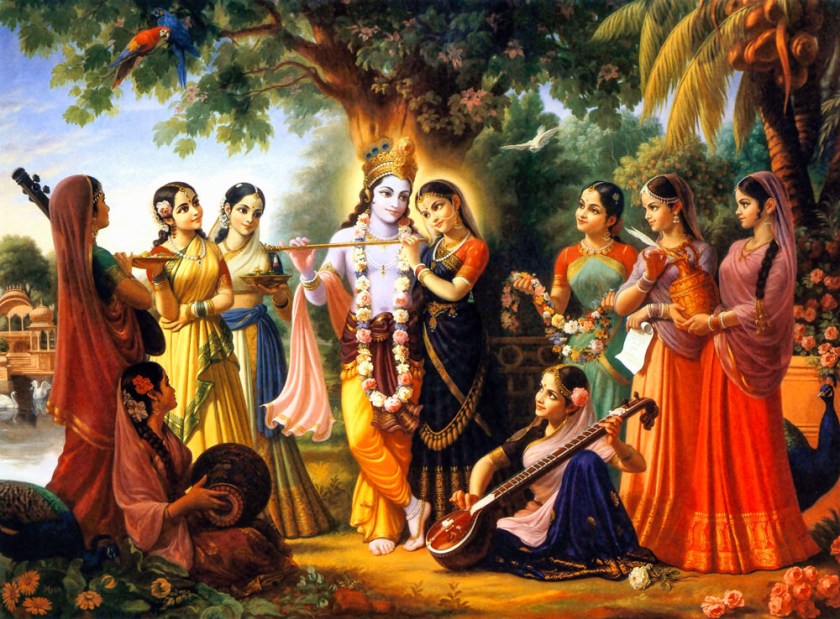
Krishna is the Supreme Personality of Godhead. Krishna is known in other languages as Allah, Jehovah, Yahweh, and many other languages.
ईश्वरः परमः कृष्णः सच्चिदनन्द विग्रह:
अनदिरदिर् गोविन्दः सर्व कारण कारणं ।।१।।īśvaraḥ paramaḥ kṛṣṇaḥ
sac-cid-ānanda-vigrahaḥ
anādir ādir govindaḥ
sarva-kāraṇa-kāraṇamKṛṣṇa who is known as Govinda is the Supreme Godhead. He has an eternal blissful spiritual body. He is the origin of all. He has no other origin and He is the prime cause of all causes. https://vedabase.io/en/library/bs/5/1/
Krishna is the Supreme Absolute Truth.
This means that Krishna’s name, form, pastimes, paraphernalia, abode, associates, etc., are all on the Absolute platform.
नाम चिन्तामणि कृष्णस्चैतन्य रस विग्रहः |
पूर्ण शुद्धो नित्य मुक्तो अभिन्नत्वं नाम नामिनोः ||nāma cintāmaṇiḥ kṛṣṇaś
caitanya-rasa-vigrahaḥ
pūrṇaḥ śuddho nitya-mukto
’bhinnatvān nāma-nāminoḥ“ ‘The holy name of Kṛṣṇa is transcendentally blissful. It bestows all spiritual benedictions, for it is Kṛṣṇa Himself, the reservoir of all pleasure. Kṛṣṇa’s name is complete, and it is the form of all transcendental mellows. It is not a material name under any condition, and it is no less powerful than Kṛṣṇa Himself. Since Kṛṣṇa’s name is not contaminated by the material qualities, there is no question of its being involved with māyā. Kṛṣṇa’s name is always liberated and spiritual; it is never conditioned by the laws of material nature. This is because the name of Kṛṣṇa and Kṛṣṇa Himself are identical.’ https://vedabase.io/en/library/cc/madhya/17/133/
Take a second look at the dictionary meaning of “idol”…
Idol: /īd′l/ A false god. One that is adored, often blindly or excessively.
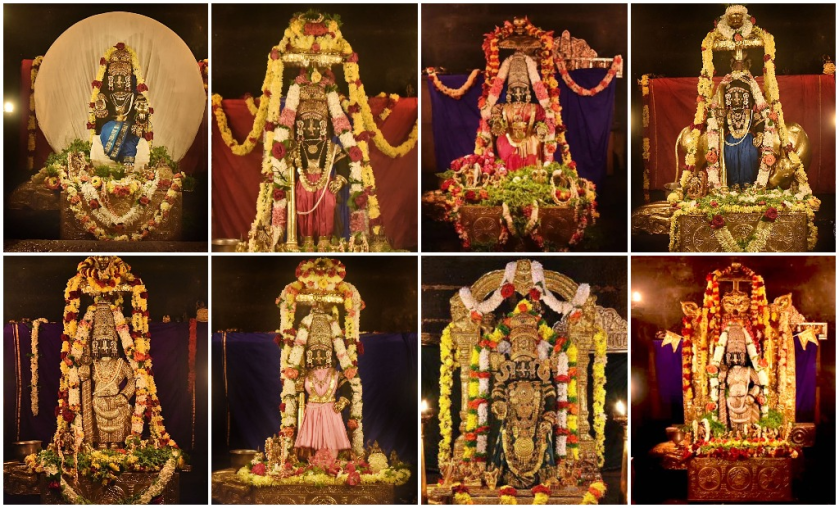
Nothing about Krishna is “false”. And there can be no such thing as “blind” or “excessive” adoration of Krishna. In fact, no matter how much we adore, it is always insufficient. Our problem is that we don’t adore Krishna enough. And we don’t adore Krishna sufficiently because we are blind. If we were not blind, we would be absolutely pure in our love of Krishna.
कृष्णे स्वधामोपगते धर्मज्ञानादिभि: सह ।
कलौ नष्टदृशामेष पुराणार्कोऽधुनोदित: ॥ ४३ ॥kṛṣṇe sva-dhāmopagate
dharma-jñānādibhiḥ saha
kalau naṣṭa-dṛśām eṣa
purāṇārko ’dhunoditaḥThis Bhāgavata Purāṇa is as brilliant as the sun, and it has arisen just after the departure of Lord Kṛṣṇa to His own abode, accompanied by religion, knowledge, etc. Persons who have lost their vision due to the dense darkness of ignorance in the Age of Kali shall get light from this Purāṇa. https://vedabase.io/en/library/sb/1/3/43/
Now, to come back to the dictionary meaning of “mythology”…
Mythology: /mĭ-thŏl′ə-jē/ A body or collection of myths belonging to a people and addressing their origin, history, deities, ancestors, and heroes. A body of myths associated with an event, individual, or institution.
सर्वस्य चाहं हृदि सन्निविष्टो
मत्त: स्मृतिर्ज्ञानमपोहनं च ।
वेदैश्च सर्वैरहमेव वेद्यो
वेदान्तकृद्वेदविदेव चाहम् ॥ १५ ॥sarvasya cāhaṁ hṛdi sanniviṣṭo
mattaḥ smṛtir jñānam apohanaṁ ca
vedaiś ca sarvair aham eva vedyo
vedānta-kṛd veda-vid eva cāhamI am seated in everyone’s heart, and from Me come remembrance, knowledge and forgetfulness. By all the Vedas, I am to be known. Indeed, I am the compiler of Vedānta, and I am the knower of the Vedas. https://vedabase.io/en/library/bg/15/15/
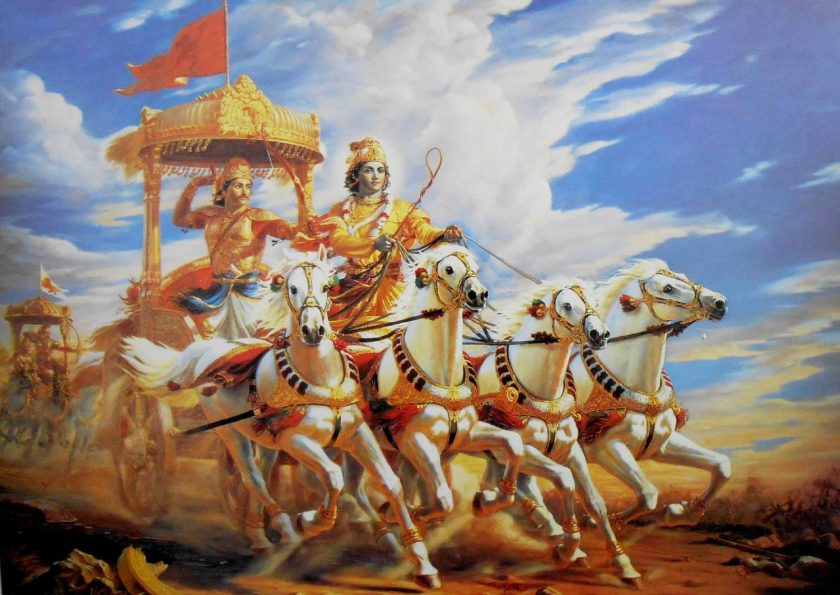
The Vedic Scriptures explain different aspects of Krishna. The Puranas are ancient history. So ancient and so broad that they encompass the entire Universe, and go back billions, even trillions of years. Who can comprehend that Universal range and time scale with our teeny little perspective?
Now, where did this misunderstanding come from?
Where did anyone get the idea to call images of Krishna as “idols” and the Vedic scriptures as “Mythology”?
The last surviving bastion of Vedic culture is what is current-day India, Pakistan, Nepal, Bangladesh, Sri Lanka, Thailand, Indonesia, etc.
Vedic culture has been under attack for well over 3000 years. It is natural, because we are in the kaliyuga, the age of quarrel and hypocrisy. Vedic culture i the opposite of quarrel and hypocrisy
First, it was the advent of Buddhism, and Jainism. These are essentially either impersonal, voidist, or both, depending on the specific flavor. Both twisted the Vedic scriptures in different ways. Both were philosophically defeated and Buddhism was mostly driven out to the far corners of the world, away from India.

Buddhism was advented by Lord Gautama Buddha to originally to drive out a corruption in Vedic culture.
तत: कलौ सम्प्रवृत्ते सम्मोहाय सुरद्विषाम् ।
बुद्धो नाम्नाञ्जनसुत: कीकटेषु भविष्यति ॥ २४ ॥tataḥ kalau sampravṛtte
sammohāya sura-dviṣām
buddho nāmnāñjana-sutaḥ
kīkaṭeṣu bhaviṣyatiThen, in the beginning of Kali-yuga, the Lord will appear as Lord Buddha, the son of Añjanā, in the province of Gayā, just for the purpose of deluding those who are envious of the faithful theist.
The origin of Jainism was a corruption of the pure teachings and example of Lord Rishbhadeva, an incarnation of Krishna.

यस्य किलानुचरितमुपाकर्ण्य कोङ्कवेङ्ककुटकानां राजार्हन्नामोपशिक्ष्य कलावधर्म उत्कृष्यमाणे भवितव्येन विमोहित: स्वधर्मपथमकुतोभयमपहाय कुपथपाखण्डमसमञ्जसं निजमनीषया मन्द: सम्प्रवर्तयिष्यते ॥ ९ ॥
yasya kilānucaritam upākarṇya koṅka-veṅka-kuṭakānāṁ rājārhan-nāmopaśikṣya kalāv adharma utkṛṣyamāṇe bhavitavyena vimohitaḥ sva-dharma-patham akuto-bhayam apahāya kupatha-pākhaṇḍam asamañjasaṁ nija-manīṣayā mandaḥ sampravartayiṣyate.
Śukadeva Gosvāmī continued speaking to Mahārāja Parīkṣit: My dear King, the King of Koṅka, Veṅka and Kuṭaka whose name was Arhat, heard of the activities of Ṛṣabhadeva and, imitating Ṛṣabhadeva’s principles, introduced a new system of religion. Taking advantage of Kali-yuga, the age of sinful activity, King Arhat, being bewildered, gave up the Vedic principles, which are free from risk, and concocted a new system of religion opposed to the Vedas. That was the beginning of the Jain dharma. Many other so-called religions followed this atheistic system. https://vedabase.io/en/library/sb/5/6/9/
Later invasions from the west
But then, there were the expansionist invasions by the zealots claiming to follow “Islam, the religion of peace”. Those invaders to the Holy Land of India were attracted by the wealth, the riches in the temples… But they were too uncivilized and uncultured to appreciate the nuances of Vedic culture.

So they started calling temple worship “idol worship” in their middle eastern languages, Arabic, Persian, etc. They started a systematic system of persecution, calling the followers of Vedic culture as “kafirs” or non-believers. They did not understand that Krishna is actually Allah Himself. This persecution conginues to this day, a thousand years on. For example in Pakistan and Bangladesh, followers of Vedic culture are still harshly persecuted.
The European powers made the most sophisticated attempts to culturally conquer the Vedic culture. They came to India about 600 years ago. They engaged in business and military conquest. They also sought to replace Vedic culture with barbarian European culture through an insidious system called “modern education”.
Indians have been conditioned to denigrate their own culture!

Indians began to speak Portuguese, Dutch, French, and English. They were made to forget their own languages, their own customs and refined practices. It was deeply rooted. The Europeans, especially the British, sought to vilify all Vedic practices through their Christian missionaries.
- Deity worship became “Idol Worship”.
- Krishna became a “tribal chieftain” or at best, a “Hindu god”.
- All the ancient historical texts like the Vedas, the Upanishads, the Puranas, became “Hindu myths”.
Vedic culture will rescue with world from its dense darkness. To revive the glorious Vedic culture, we must first reject this insulting word “idol” in relation to Krishna. We must also reject the derogatory “mythology” in relation to the Vedic scriptures.
What is idol worship then?
It is the worship of politicians, business people, actors, sports people, military leaders, etc. It is the worship of TV personalities and entertainers. The western world fully engages in idol worship daily. They do this through their thousands of TV channels, their movies, their books, newspapers, magazines, their marketplaces, and living spaces.

“Western Culture”, an oxymoron, means to worship the temporary bodies, through luxurious homes devoid of a culture of Krishna Consciousness. It means lavish bathrooms and swimming pools. It means arenas to celebrate war in disguise. It means a worship of their dogs and cats. It means the killing of cows and bulls, which are dear to Krishna.
Reject idol worship, by all means, but the form of Krishna is not an “idol”.
We can use the these words instead to describe images of Krishna:
- “Archa Vigraha” (अर्च विग्र:) – the Divine Worshipable Form of God
- Deity
- Divine Form of God
And what is mythology?
What is called “modern science” is mostly mythology. And the western version of “history” is mythology. Common uncultured rascals have been promoted as great personalities. Alexander “the great” was a looter and marauder. Napoleon was a low class murderer and looter. He conspired to become king of France after the French had executed their king and rejected the monarchy. Winston Churchill was a disgusting narrow minded bigot. He was a lying manipulator. He was not a great leader by any stretch of the imagination, because he was full of all vices.
Everything that opposes the pristine Vedic culture is mythology. This includes the spiritual texts of the Middle East, that were once great and pure. These texts like the Quran, Bible, etc., have been censored, edited and misinterpreted. They have lost spiritual value due to tampering. They are only good as political manifestos now. Even if the text is intact, the misinterpretation and misunderstanding of it has depleted its value.
So, yes, reject mythology also, but the Vedic scriptures are not mythology.
धर्म: प्रोज्झितकैतवोऽत्र परमो निर्मत्सराणां सतां
वेद्यं वास्तवमत्र वस्तु शिवदं तापत्रयोन्मूलनम् ।
श्रीमद्भागवते महामुनिकृते किं वा परैरीश्वर:
सद्यो हृद्यवरुध्यतेऽत्र कृतिभि: शुश्रूषुभिस्तत्क्षणात् ॥ २ ॥dharmaḥ projjhita-kaitavo ’tra paramo nirmatsarāṇāṁ satāṁ
vedyaṁ vāstavam atra vastu śivadaṁ tāpa-trayonmūlanam
śrīmad-bhāgavate mahā-muni-kṛte kiṁ vā parair īśvaraḥ
sadyo hṛdy avarudhyate ’tra kṛtibhiḥ śuśrūṣubhis tat-kṣaṇātCompletely rejecting all religious activities which are materially motivated, this Bhāgavata Purāṇa propounds the highest truth, which is understandable by those devotees who are fully pure in heart. The highest truth is reality distinguished from illusion for the welfare of all. Such truth uproots the threefold miseries. This beautiful Bhāgavatam, compiled by the great sage Vyāsadeva [in his maturity], is sufficient in itself for God realization. What is the need of any other scripture? As soon as one attentively and submissively hears the message of Bhāgavatam, by this culture of knowledge the Supreme Lord is established within his heart. https://vedabase.io/en/library/sb/1/1/2/
You can call the Vedic scriptures as:
- The Yoga texts of India
- Vedas or Puranas
- Vedic scriptures
- Vedic literature
- Vedic History
Please give up the use of the words “idol” and “mythology” in relation with Vedic Culture! Hare Krishna!

 Freedom through Genuine Spiritual Progress