Letters from Death

What if you could make a deal with Death itself, a promise that before your time comes, you’d receive written warnings to prepare? In this retelling of a classic, a man believes he has outsmarted his mortal fate by securing a divine pact with Yamaraja, the god of death. Yet as decades pass and his body ages, he misses the warning signs right in front of him. With timeless Vedic wisdom from the Srimad Bhagavatam and Bhagavad-gita, we explore the letters we all receive, the value of our allotted breaths, and how to truly prepare for our most transition.

Once upon a time, there lived a man who was utterly terrified of dying. He pondered long and hard about how to escape his mortal fate until a clever thought struck him: How could a friend ever kill a friend?

Determined to save his own skin, he embarked on a path of intense austerities, severe penances, and disciplined efforts to earn the favor of Yamaraja, the god of death. Impressed by his dedication, Yamaraja appeared before him and offered his friendship.

Seizing the moment, the man placed his ultimate wish before his new powerful friend: “I never want to die.”

Yamaraja chuckled softly. “My friend, no one can live forever in this material world. Eternal life exists only in the spiritual realm. However, because of our friendship, I will do this for you: I will send you letters in advance to warn you when your time is drawing near, so you have ample opportunity to prepare. Until that final moment comes, you will not see me.”

Overjoyed with this arrangement, the man happily agreed. He walked away with supreme confidence. He had a royal guarantee: Death would write to him first.

Decades rolled by, and the man built a magnificent life. He was blessed with a devoted wife who was both his partner and his soulmate. His children grew up brilliant and successful, eventually bringing loving grandchildren into the world. In his business, he amassed greater wealth and prestige than ever before. Respected by his community, young people routinely sought his wisdom on careers, family, and success.

Yet, as the years advanced, changes began to occur, subtly at first.

First came digestive troubles. His well-wishers gently suggested he lighten his diet and slow down, but the man simply popped digestive pills and continued feasting as before.

Then his hair began to turn gray and fall out. Undeterred, he dyed his locks, got hair transplants, took medications, and carried on as if his youth were eternal.

Next, his knees and joints started to ache. He visited top physiotherapists and chiropractors, consumed endless supplements, tried novel exercise routines, and kept trying to move at full speed.

Then, the mirror began revealing new, undeniable truths. His youthful complexion started to fade; deep wrinkles carved lines into his forehead, and his skin began to lose its elasticity and sag. At the same time, his metabolism slowed, causing stubborn weight to cling to his waistline. Did he recognize these signs for what they were? Not at all. He fought back with a vengeance. He booked regular appointments for Botox and dermal fillers, slathered on expensive anti-aging serums, and underwent chemical peels and subtle facelifts to pull his skin taut once more. To battle his changing shape, he turned to modern fat-reduction procedures… liposuction, CoolSculpting, and rigid fad diets, relentlessly trying to carve out the silhouette of a much younger man.

Eventually, his teeth failed him, so he replaced them with sparkling new implants. His eyes grew dim and weak, so he underwent modern laser surgeries and wore stylish designer glasses.

Throughout it all, caring friends urged him to rein in his worldly pursuits and begin preparing himself for the inevitable. But he dismissed their warnings. Why give up the good life when things were going so well? Besides, he had an agreement. Yamaraja hadn’t sent a single letter yet!

Then came a day unlike any other. The man fell gravely ill, not with a passing cold or mild fever, but a collapse that forced his family to rush him to the hospital. Specialists swarmed his room, hooking his body up to a labyrinth of IV lines, monitors, and tubes.

Even as he lay in that hospital bed, surrounded by weeping relatives, the man remained blissfully confident. I am not going to die today, he thought. Yamaraja promised me letters, and my mailbox has been empty.

Suddenly, the man felt the atmosphere in the room grow icy cold. Standing at the foot of his bed was Yamaraja, accompanied by his fierce attendants, ready to sever the soul from the body to which the man had clung so desperately.

Shocked and betrayed, the man looked at his powerful friend and cried out, “Yamaraja! How could you betray our pact? You swore you would write to me so I could prepare! Why didn’t you send me a single letter before coming to take me?”

Yamaraja smiled with deep compassion and laughed softly.

“My dear friend,” Yama replied, “do you truly believe I sent you no letters? What was the trouble in your stomach? What were the sharp pains in your knees and hips? What was the graying of your hair, the sagging of your skin, and the slowing of your body? Did you expect paper and ink when I have billions of souls across the universe to attend to? Every physical decline was a letter delivered directly to your body, but you chose to try to erase the ink with scalpels, injectables, and pills rather than read the message.”

Before the man could reply, his time was up. He had to immediately depart in the company of his friend, the god of death.

And everything and everyone else he cherished so much? Stayed behind. He did carry all his karmic reactions with him though, that was his baggage. Plus a seed of goodness from meeting Yamaraja.

Reading the Mail in Our Own Lives

How many of us, right now, are sitting on a stack of unopened letters from death?

It sounds jarring to call death a “friend,” but in truth, death is our most constant companion. Death is born with us the very moment we take our first breath. If a child turns seven years old today, it simply means that seven years of that child’s life have already died—bringing them seven years closer to the final curtain.

Beyond holding up a mirror to our mortality, death is also a friend because it offers us the ultimate grace of renewal. It allows us to lay down the heavy burdens of old traumas, heartbreaks, and emotional scars that we were never meant to carry forever. Death grants us fresh energy, a clean slate, and another youthful body to continue our soul’s journey. Above all, death is an act of divine mercy that gives every one of us a second chance—a fresh opportunity to learn, evolve, and turn inward, no matter how terribly we may have squandered this current life.

As the Bhagavad-gita (2.27) reminds us:

jatasya hi dhruvo mrtyuh

“For one who has taken birth, death is strictly certain.”

Vedic wisdom teaches that our lifespan is not measured merely by years on a calendar, but counted in the exact number of breaths allotted to us at birth. Once those breaths are exhausted, our time in this vessel is finished. We have total freedom in how we choose to spend those breaths, but we cannot purchase a single extra breath with all the wealth in the world.

This fundamental truth is vividly highlighted in the Srimad Bhagavatam (2.3.18):

तरवः किं न जीवन्ति भस्त्राः किं न श्वसन्त्युत ।

न खादन्ति न मेहन्ति किं ग्रामे पशवोऽपरे ॥

taravaḥ kiṁ na jīvanti bhastrāḥ kiṁ na śvasanty uta

na khādanti na mehanti kiṁ grāme paśavo ‘pare

Translation: “Do the trees not live? Do the bellows of a blacksmith not breathe? Do the beasts all around us not eat and discharge semen?”

The commentary explains that the physical body is maintained by a finite quantity of life-air (prana) operating through respiration. Every soul enters a physical vessel with a preallocated quota of breath dictated by past karma. Merely inhaling and exhaling does not constitute true living. Even a blacksmith’s bellows draws air.

Furthermore, Srimad Bhagavatam (2.3.17) warns us of how relentlessly time consumes this finite allowance:

आयुर्हरति वै पुंसामुद्यन्नस्तं च यन्नसौ ।

तस्यर्ते यत्क्षणो नीत उत्तमश्लोकवार्तया ॥

āyur harati vai puṁsām udyann astaṁ ca yann asau

tasya ṛte yat-kṣaṇo nīta uttama-śloka-vārtayā

Translation: “Both by rising and by setting, the sun decreases the duration of life of everyone, except one who utilizes time by discussing topics of the Supreme Personality of Godhead.”

When Yamaraja’s letters arrive in our mailbox, a new gray hair, a sudden ache in the back, a decline in energy, or a diagnosis, we generally react in one of three ways:

  1. We ignore them. Like the man in the story, we take pills, apply dye, undergo procedures, and pretend the warning never arrived.
  2. We panic and distract ourselves. We rush out to buy shiny sports cars, seek out new romantic flings, or undergo desperate cosmetic alterations to outrun the clock.
  3. We prepare. We recognize the warning for what it is, a graceful reminder to turn our attention toward what truly matters. Krishna promises in Bhagavad-gita 8.6, our state of mind at death determines our next destination.

History and sacred texts offer profound examples of those who knew how to receive these notifications. King Parikshit received a formal seven-day notice of his death and spent every remaining second absorbed in spiritual hearing and contemplation. King Khatvanga had a notice of just forty-eight minutes, yet he immediately withdrew his mind from worldly attachments and achieved spiritual perfection in that brief window.

Some people receive no tangible notice at all; death simply arrives unannounced. But most of us are blessed with plenty of advance mail.

I have received many letters from Yamaraja over the years. At first, I brushed them off. But recently, the tone of those letters has grown far more urgent. Recognizing the signals, I have decided to take them seriously and invest my remaining breaths into spiritual perfection.

How about you? How many letters from Yamaraja have arrived in your mailbox so far, and what do you plan to do with the next one?

A Prayer

Krishna, my dear best friend and well-wisher, You are not only my friend, but a friend of all souls. You reside in our hearts as that all-knowing Supersoul, Paramatma. However, You don’t impose. You remind us of whatever we want to remember, and cause us to forget what we want to forget (BG 15.15).

My dear Lord, please, could You cut off all my material attachments save to You and those dear to You? Please, may I use every single breath I have in remembrance and glorification of You. Please, could You bless me that I may take Your message to everyone who needs it?

Hare Krishna Hare Krishna

Krishna Krishna Hare Hare

Hare Rama Hare Rama

Rama Rama Hare Hare

Krishna enjoys the company of His devotee

“Idol” and “Mythology” – Two words that are offensive to Vedic culture

Why should we avoid the terms “idol” and “mythology” when discussing Vedic culture? These terms undermine the Krishna and Vedic scriptures. Krishna is the Supreme Personality of Godhead. The Vedic scriptures expound the Supreme Absolute Truth and Universal history. The original misunderstanding stems from historical attacks on Vedic culture. What is actual idol worship? What is actual mythology? Read more to find out!

These two words “idol” and “mythology” should be avoided like the plague when speaking about Vedic Culture. Vedic Culture means the culture that increases our love for Krishna. Never use the words “idol” and “mythology” when speaking about Vedic culture, or Vishnu / Krishna.

Unfortunately, this happens a lot in India, which is sad.

I give dictionary meanings, before elaborating further.

Idol: /īd′l/ A false god. One that is adored, often blindly or excessively.

Mythology: /mĭ-thŏl′ə-jē/ A body or collection of myths belonging to a people and addressing their origin, history, deities, ancestors, and heroes. A body of myths associated with an event, individual, or institution.

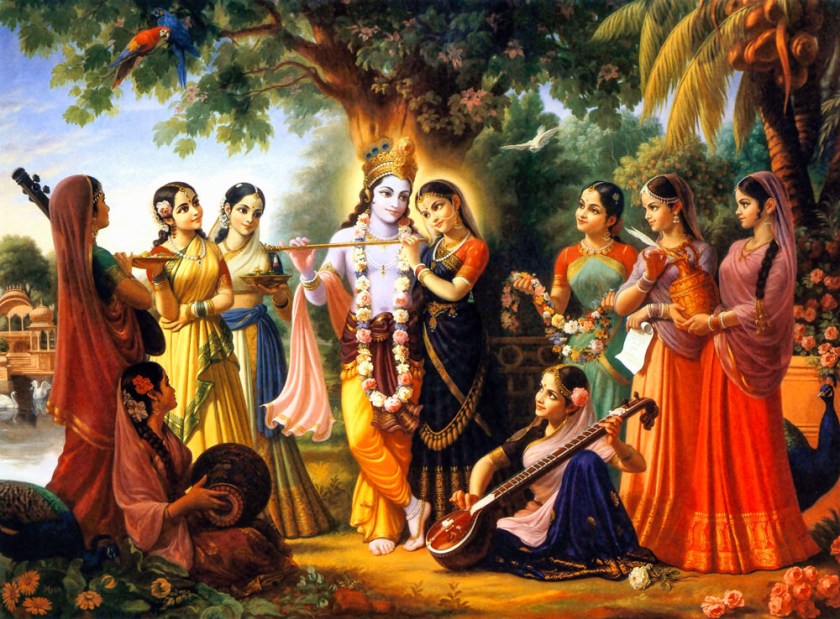
Radha Krishna and the 8 Topmost Gopis

Krishna is the Supreme Personality of Godhead. Krishna is known in other languages as Allah, Jehovah, Yahweh, and many other languages.

ईश्वरः परमः कृष्णः सच्चिदनन्द विग्रह:
अनदिरदिर् गोविन्दः सर्व कारण कारणं ।।१।।

īśvaraḥ paramaḥ kṛṣṇaḥ
sac-cid-ānanda-vigrahaḥ
anādir ādir govindaḥ
sarva-kāraṇa-kāraṇam

Kṛṣṇa who is known as Govinda is the Supreme Godhead. He has an eternal blissful spiritual body. He is the origin of all. He has no other origin and He is the prime cause of all causes. https://vedabase.io/en/library/bs/5/1/

Krishna is the Supreme Absolute Truth.

This means that Krishna’s name, form, pastimes, paraphernalia, abode, associates, etc., are all on the Absolute platform.

नाम चिन्तामणि कृष्णस्चैतन्य रस विग्रहः |
पूर्ण शुद्धो नित्य मुक्तो अभिन्नत्वं नाम नामिनोः ||

nāma cintāmaṇiḥ kṛṣṇaś
caitanya-rasa-vigrahaḥ
pūrṇaḥ śuddho nitya-mukto
’bhinnatvān nāma-nāminoḥ

“ ‘The holy name of Kṛṣṇa is transcendentally blissful. It bestows all spiritual benedictions, for it is Kṛṣṇa Himself, the reservoir of all pleasure. Kṛṣṇa’s name is complete, and it is the form of all transcendental mellows. It is not a material name under any condition, and it is no less powerful than Kṛṣṇa Himself. Since Kṛṣṇa’s name is not contaminated by the material qualities, there is no question of its being involved with māyā. Kṛṣṇa’s name is always liberated and spiritual; it is never conditioned by the laws of material nature. This is because the name of Kṛṣṇa and Kṛṣṇa Himself are identical.’ https://vedabase.io/en/library/cc/madhya/17/133/

Take a second look at the dictionary meaning of “idol”…

Idol: /īd′l/ A false god. One that is adored, often blindly or excessively.

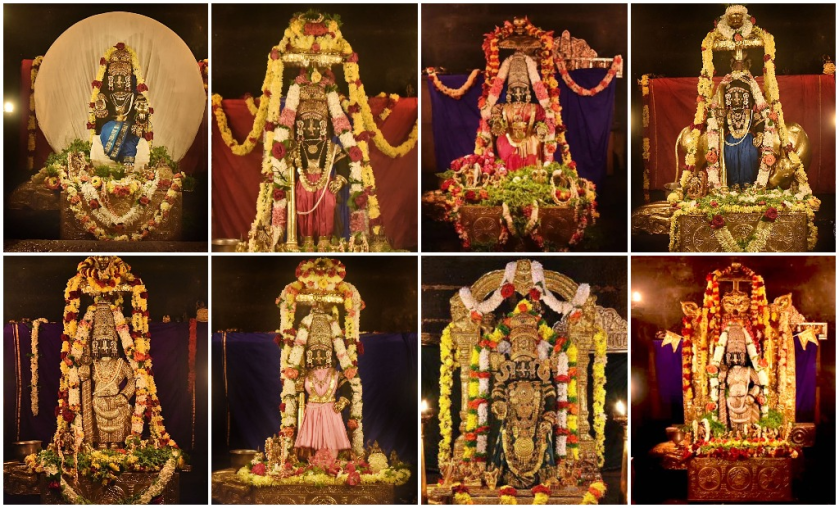
Udupi Sri Krishna
Udupi Sri Krishna

Nothing about Krishna is “false”. And there can be no such thing as “blind” or “excessive” adoration of Krishna. In fact, no matter how much we adore, it is always insufficient. Our problem is that we don’t adore Krishna enough. And we don’t adore Krishna sufficiently because we are blind. If we were not blind, we would be absolutely pure in our love of Krishna.

कृष्णे स्वधामोपगते धर्मज्ञानादिभि: सह ।
कलौ नष्टद‍ृशामेष पुराणार्कोऽधुनोदित: ॥ ४३ ॥

kṛṣṇe sva-dhāmopagate
dharma-jñānādibhiḥ saha
kalau naṣṭa-dṛśām eṣa
purāṇārko ’dhunoditaḥ

This Bhāgavata Purāṇa is as brilliant as the sun, and it has arisen just after the departure of Lord Kṛṣṇa to His own abode, accompanied by religion, knowledge, etc. Persons who have lost their vision due to the dense darkness of ignorance in the Age of Kali shall get light from this Purāṇa. https://vedabase.io/en/library/sb/1/3/43/

Now, to come back to the dictionary meaning of “mythology”…

Mythology: /mĭ-thŏl′ə-jē/ A body or collection of myths belonging to a people and addressing their origin, history, deities, ancestors, and heroes. A body of myths associated with an event, individual, or institution.

सर्वस्य चाहं हृदि सन्निविष्टो
मत्त: स्मृतिर्ज्ञानमपोहनं च ।
वेदैश्च सर्वैरहमेव वेद्यो
वेदान्तकृद्वेदविदेव चाहम् ॥ १५ ॥

sarvasya cāhaṁ hṛdi sanniviṣṭo
mattaḥ smṛtir jñānam apohanaṁ ca
vedaiś ca sarvair aham eva vedyo
vedānta-kṛd veda-vid eva cāham

I am seated in everyone’s heart, and from Me come remembrance, knowledge and forgetfulness. By all the Vedas, I am to be known. Indeed, I am the compiler of Vedānta, and I am the knower of the Vedas. https://vedabase.io/en/library/bg/15/15/

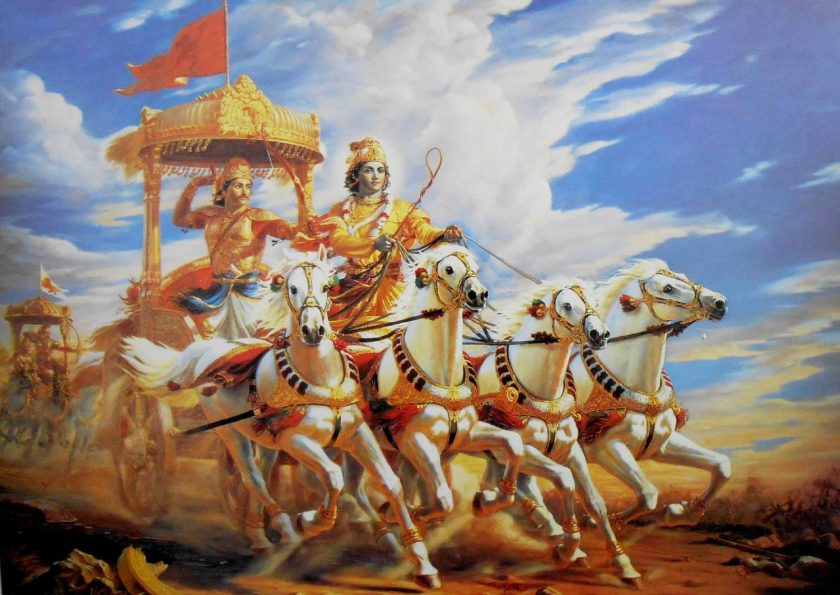
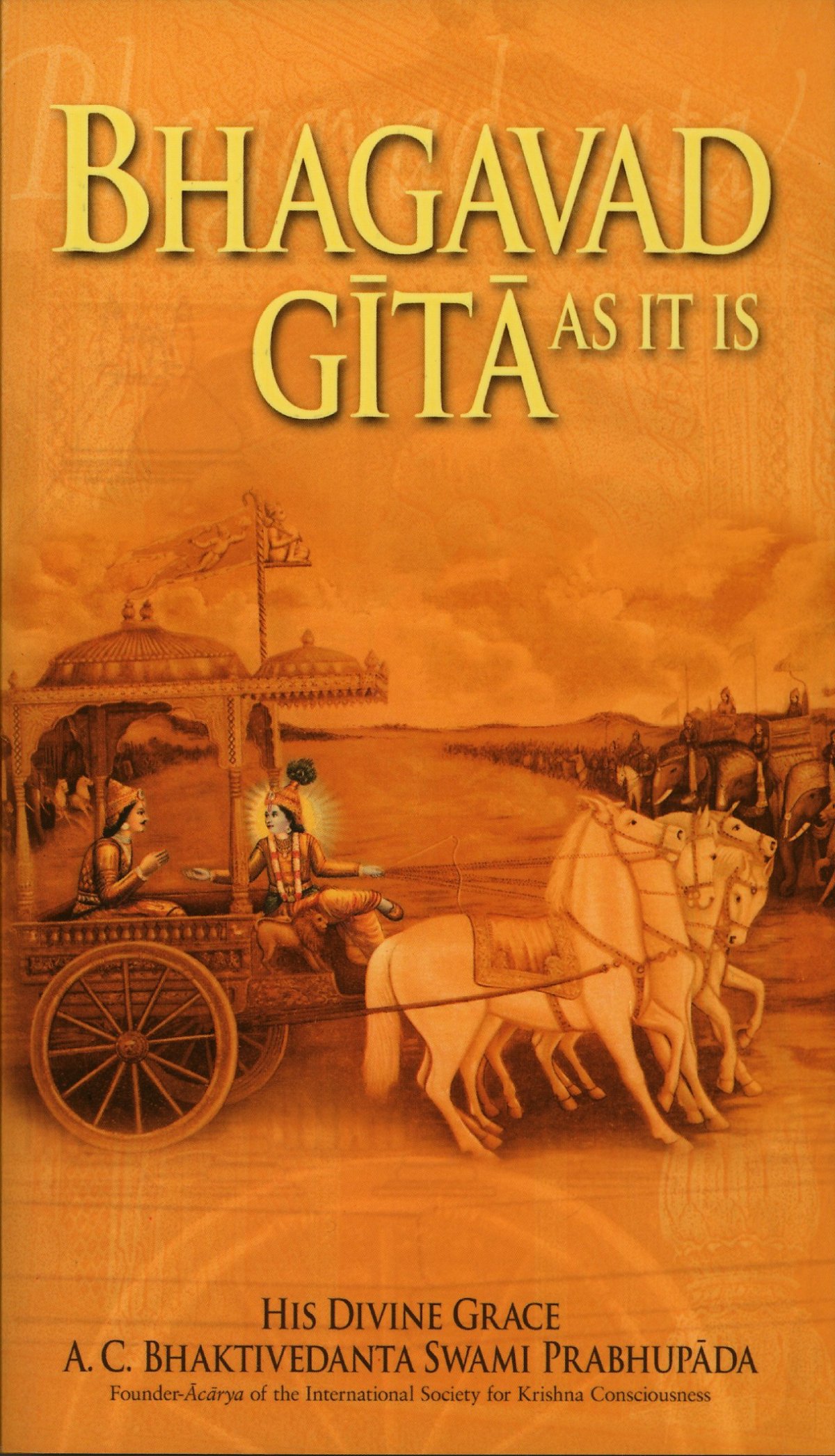
Krishna and Arjuna on the Battlefield of Kurukshetra

The Vedic Scriptures explain different aspects of Krishna. The Puranas are ancient history. So ancient and so broad that they encompass the entire Universe, and go back billions, even trillions of years. Who can comprehend that Universal range and time scale with our teeny little perspective?

Now, where did this misunderstanding come from?

Where did anyone get the idea to call images of Krishna as “idols” and the Vedic scriptures as “Mythology”?

The last surviving bastion of Vedic culture is what is current-day India, Pakistan, Nepal, Bangladesh, Sri Lanka, Thailand, Indonesia, etc.

Vedic culture has been under attack for well over 3000 years. It is natural, because we are in the kaliyuga, the age of quarrel and hypocrisy. Vedic culture i the opposite of quarrel and hypocrisy

First, it was the advent of Buddhism, and Jainism. These are essentially either impersonal, voidist, or both, depending on the specific flavor. Both twisted the Vedic scriptures in different ways. Both were philosophically defeated and Buddhism was mostly driven out to the far corners of the world, away from India.

Lord Buddha

Buddhism was advented by Lord Gautama Buddha to originally to drive out a corruption in Vedic culture.

तत: कलौ सम्प्रवृत्ते सम्मोहाय सुरद्विषाम् ।
बुद्धो नाम्नाञ्जनसुत: कीकटेषु भविष्यति ॥ २४ ॥

tataḥ kalau sampravṛtte
sammohāya sura-dviṣām
buddho nāmnāñjana-sutaḥ
kīkaṭeṣu bhaviṣyati

Then, in the beginning of Kali-yuga, the Lord will appear as Lord Buddha, the son of Añjanā, in the province of Gayā, just for the purpose of deluding those who are envious of the faithful theist.

https://vedabase.io/en/library/sb/1/3/24/

The origin of Jainism was a corruption of the pure teachings and example of Lord Rishbhadeva, an incarnation of Krishna.

Lord Rishabhadeva instructing His sons

यस्य किलानुचरितमुपाकर्ण्य कोङ्कवेङ्ककुटकानां राजार्हन्नामोपशिक्ष्य कलावधर्म उत्कृष्यमाणे भवितव्येन विमोहित: स्वधर्मपथमकुतोभयमपहाय कुपथपाखण्डमसमञ्जसं निजमनीषया मन्द: सम्प्रवर्तयिष्यते ॥ ९ ॥

yasya kilānucaritam upākarṇya koṅka-veṅka-kuṭakānāṁ rājārhan-nāmopaśikṣya kalāv adharma utkṛṣyamāṇe bhavitavyena vimohitaḥ sva-dharma-patham akuto-bhayam apahāya kupatha-pākhaṇḍam asamañjasaṁ nija-manīṣayā mandaḥ sampravartayiṣyate.

Śukadeva Gosvāmī continued speaking to Mahārāja Parīkṣit: My dear King, the King of Koṅka, Veṅka and Kuṭaka whose name was Arhat, heard of the activities of Ṛṣabhadeva and, imitating Ṛṣabhadeva’s principles, introduced a new system of religion. Taking advantage of Kali-yuga, the age of sinful activity, King Arhat, being bewildered, gave up the Vedic principles, which are free from risk, and concocted a new system of religion opposed to the Vedas. That was the beginning of the Jain dharma. Many other so-called religions followed this atheistic system. https://vedabase.io/en/library/sb/5/6/9/

Later invasions from the west

But then, there were the expansionist invasions by the zealots claiming to follow “Islam, the religion of peace”. Those invaders to the Holy Land of India were attracted by the wealth, the riches in the temples… But they were too uncivilized and uncultured to appreciate the nuances of Vedic culture.

So they started calling temple worship “idol worship” in their middle eastern languages, Arabic, Persian, etc. They started a systematic system of persecution, calling the followers of Vedic culture as “kafirs” or non-believers. They did not understand that Krishna is actually Allah Himself. This persecution conginues to this day, a thousand years on. For example in Pakistan and Bangladesh, followers of Vedic culture are still harshly persecuted.

The European powers made the most sophisticated attempts to culturally conquer the Vedic culture. They came to India about 600 years ago. They engaged in business and military conquest. They also sought to replace Vedic culture with barbarian European culture through an insidious system called “modern education”.

Indians have been conditioned to denigrate their own culture!

Indians began to speak Portuguese, Dutch, French, and English. They were made to forget their own languages, their own customs and refined practices. It was deeply rooted. The Europeans, especially the British, sought to vilify all Vedic practices through their Christian missionaries.

  1. Deity worship became “Idol Worship”.
  2. Krishna became a “tribal chieftain” or at best, a “Hindu god”.
  3. All the ancient historical texts like the Vedas, the Upanishads, the Puranas, became “Hindu myths”.

Vedic culture will rescue with world from its dense darkness. To revive the glorious Vedic culture, we must first reject this insulting word “idol” in relation to Krishna. We must also reject the derogatory “mythology” in relation to the Vedic scriptures.

What is idol worship then?

It is the worship of politicians, business people, actors, sports people, military leaders, etc. It is the worship of TV personalities and entertainers. The western world fully engages in idol worship daily. They do this through their thousands of TV channels, their movies, their books, newspapers, magazines, their marketplaces, and living spaces.

Sports fans indulging in Idol Worship

“Western Culture”, an oxymoron, means to worship the temporary bodies, through luxurious homes devoid of a culture of Krishna Consciousness. It means lavish bathrooms and swimming pools. It means arenas to celebrate war in disguise. It means a worship of their dogs and cats. It means the killing of cows and bulls, which are dear to Krishna.

Reject idol worship, by all means, but the form of Krishna is not an “idol”.

We can use the these words instead to describe images of Krishna:

  1. “Archa Vigraha” (अर्च विग्र:) – the Divine Worshipable Form of God
  2. Deity
  3. Divine Form of God

And what is mythology?

What is called “modern science” is mostly mythology. And the western version of “history” is mythology. Common uncultured rascals have been promoted as great personalities. Alexander “the great” was a looter and marauder. Napoleon was a low class murderer and looter. He conspired to become king of France after the French had executed their king and rejected the monarchy. Winston Churchill was a disgusting narrow minded bigot. He was a lying manipulator. He was not a great leader by any stretch of the imagination, because he was full of all vices.

False history propagated by the Europeans

Everything that opposes the pristine Vedic culture is mythology. This includes the spiritual texts of the Middle East, that were once great and pure. These texts like the Quran, Bible, etc., have been censored, edited and misinterpreted. They have lost spiritual value due to tampering. They are only good as political manifestos now. Even if the text is intact, the misinterpretation and misunderstanding of it has depleted its value.

So, yes, reject mythology also, but the Vedic scriptures are not mythology.

धर्म: प्रोज्झितकैतवोऽत्र परमो निर्मत्सराणां सतां
वेद्यं वास्तवमत्र वस्तु शिवदं तापत्रयोन्मूलनम् ।
श्रीमद्भागवते महामुनिकृते किं वा परैरीश्वर:
सद्यो हृद्यवरुध्यतेऽत्र कृतिभि: शुश्रूषुभिस्तत्क्षणात् ॥ २ ॥

dharmaḥ projjhita-kaitavo ’tra paramo nirmatsarāṇāṁ satāṁ
vedyaṁ vāstavam atra vastu śivadaṁ tāpa-trayonmūlanam
śrīmad-bhāgavate mahā-muni-kṛte kiṁ vā parair īśvaraḥ
sadyo hṛdy avarudhyate ’tra kṛtibhiḥ śuśrūṣubhis tat-kṣaṇāt

Completely rejecting all religious activities which are materially motivated, this Bhāgavata Purāṇa propounds the highest truth, which is understandable by those devotees who are fully pure in heart. The highest truth is reality distinguished from illusion for the welfare of all. Such truth uproots the threefold miseries. This beautiful Bhāgavatam, compiled by the great sage Vyāsadeva [in his maturity], is sufficient in itself for God realization. What is the need of any other scripture? As soon as one attentively and submissively hears the message of Bhāgavatam, by this culture of knowledge the Supreme Lord is established within his heart. https://vedabase.io/en/library/sb/1/1/2/

You can call the Vedic scriptures as:

  1. The Yoga texts of India
  2. Vedas or Puranas
  3. Vedic scriptures
  4. Vedic literature
  5. Vedic History

Please give up the use of the words “idol” and “mythology” in relation with Vedic Culture! Hare Krishna!

Understanding the Vedas

How can one get a basic understanding of the Vedas?

Tapas, 2 February 2020

Hare Krishna

All glories to Gurudeva

All glories to Srila Prabhupada

Dear Prabhuji

I have no knowledge on Vedas. Request you all for helping me to have some basic knowledge on Vedas.

Dandavat Pranam

your ever endearing servant

Tapas

Dejan (Dan) Boskovic, 2 February 2020

Hare Krishna 

All glories to Gurudeva 

All glories to Srila Prabhupāda!

Thank you for your mail, prabhuji.

Radhanath Swami in one lecture said that we should chant 16 rounds a day and attend one lecture to have protection against Maya. We should be scared of Maya too, I am pretty sure he said that in the same lecture. And as I hear pure devotees who do a lot for Krishna never feel like they do enough.

I read and have read Bhagavad Gita few times and am on tenth chapter but my knowledge is not realized yet. Sastra said that you must approach a bonafide spiritual master and serve him and he will tell you the truth because he has seen it. He has that realized knowledge. That is my opinion ,Srila Prabhupāda said we can’t do this just by reading but that is the process of devotion sravanam(hearing) read Bhagavad Gita read everything you can get your hands on and try to brake 4 pillars of demoniac life (meat, eating, illicit sex, intoxication and gambling) chant 16 rounds minimum and thus make your self eligible to receive a spiritual master. Which you can get to know a little through the lectures on YouTube and he will make your knowledge perfect. 

That is the best answer I can give you that I am trying to follow. But I am a neophyte. I suggest you keep asking. And see if more advanced devotes give you an answer that is practical and will enliven you more and make your quest for knowledge of the Vedas enjoyable and fruitful.

Haribol

yours 

Dan

Manian VB, February 2020

Pranams to devotees. 

The  best veda is Bhagavad gita. if you strictly follow its teachings your soul will be up lifted

Sundar Gopal Das, 4 February 2020

Dear Sriman Tapas,

Hare Krishna!

Pls accept my humble obeisances.

All glories to Srila Prabhupada.

All glories to Sri Guru & Gauranga.

Thank you so much for your query.

Actually, the ultimate goal of Vedas is to know Lord Sri Krishna-vedaiś ca sarvair aham eva vedyo (Bg.-15.15). So Srila Prabhupada has given us the most important teachings of Lord Sri Krishna in the form of Bhagavad Gita-As it is and Srimad Bhagavatam which is the natural commentary on Vedanta by Srila Vyasadeva along with his Bhaktivedanta Purport. Actually, it is not very easy to derive the most essential Bhakti element from the complicated presentation of Vedic wisdom. The embedded complication act as default encryption is not meant for deprivation of this valuable knowledge but to restrict unauthentic and unscrupulous interpretation. That’s why it is advisable instead of independent study of Vedas, better scrutinizingly go through the treasure house of essence of Vedic wisdom as given by Srila Prabhupada through his books.

In addition, the introduction to Isopanishad, Srila Prabhupada’s one lecture on the “Teachings of Vedas” has been included:

https://vedabase.io/en/library/iso/introduction/

After completely studying all the books of Srila Prabhupada, if you are further interested in Vedas, you can read the followings:

Also you can go through this booklet named ‘Elements of Vedic Thought and Culture’  written by His Holiness Satsvarupa Dasa Goswami (Disciple of A.C. Bhaktivedanta Swami Srila Prabhupada) :

https://mayapur.store/english-books/3-elements-of-vedic-thought-and-culture.html

Furthermore, you can order the following book online from BBT:

http://bbt.org/book/veda-secrets-east-anthology 

Does this make any sense?

with regards,

your servant,

Sundar Gopal Das

Mahabhagavat Das SDA, 6 February 2020

Dear Sriman Tapas,

Hare Krishna!

Please accept my humble obeisances.

All glories to Srila Gurudeva.

All glories to Srila Prabhupada.

What do you wish to know about the Vedas when Sri Krishna says the following:

yām imāṁ puṣpitāṁ vācaṁ pravadanty avipaścitaḥ

veda-vāda-ratāḥ pārtha nānyad astīti vādinaḥ

kāmātmānaḥ svarga-parā janma-karma-phala-pradām

kriyā-viśeṣa-bahulāṁ bhogaiśvarya-gatiṁ prati

Men of small knowledge are very much attached to the flowery words of the Vedas, which recommend various fruitive activities for elevation to heavenly planets, resultant good birth, power, and so forth. Being desirous of sense gratification and opulent life, they say that there is nothing more than this

Bg. 2.42-43 (https://vedabase.io/en/library/bg/2/42-43/)

bhogaiśvarya-prasaktānāṁ tayāpahrta-cetasām

vyavasāyātmikā buddhiḥ samādhau na vidhīyate

In the minds of those who are too attached to sense enjoyment and material opulence, and who are bewildered by such things, the resolute determination for devotional service to the Supreme Lord does not take place.

Bg. 2.44 (https://vedabase.io/en/library/bg/2/44/)

trai-guṇya-viṣayā vedā nistrai-guṇyo bhavārjuna

nirdvandvo nitya-sattva-stho niryoga-kṣema ātmavān

The Vedas deal mainly with the subject of the three modes of material nature. O Arjuna, become transcendental to these three modes. Be free from all dualities and from all anxieties for gain and safety, and be established in the self.

Bg. 2.45 (https://vedabase.io/en/library/bg/2/45/)

Sincerely,

Mahabhagavat Das

dasadas.com

Please subscribe to daily inspirational emails from His Grace Sriman Sankarshan Das Adhikari (Writings and lectures archived at sda-archives.com), written fresh every day from his travels around the world sharing the highest spiritual knowledge with everyone. Sign up now at www.joincourse.com