Why a Dog? And Why Blind? Unpacking Purandara Dasa’s Master Metaphor

Why would a 16th-century saint-poet choose a blind street dog wandering into a crowded village market to describe the human condition? In my previous post, we explored Purandara Dasa’s masterclass in spiritual psychology, Kurudu Naayi Santege Bantante. But behind this allegory lies a deeper question: out of 8.4 million species of life, why specifically a dog? And why blind?

Today, we peel back the layers of this brilliant metaphor. By examining raw animal behavior alongside timeless Vedic scriptures, we discover an uncomfortable truth: this sightless, wandering dog isn’t just poetry, it is a mirror holding up our own lives.

In a previous post, A blind dog comes to the fair, I promised you a more detailed exploration of the 16th-century saint-poet Purandara Dasa’s timeless song, “Kurudu Naayi Santege Bantante”.

In this article, we will focus on the sheer genius of his chosen imagery: Why did he specifically choose a “dog”? And why a “blind dog” at that? This is what we’re focusing on n this article.

ಕುರುಡು ನಾಯಿ ಸಂತೆಗೆ ಬಂತಂತೆ
ಅದು ಯಾತಕೆ (ಯಾಕೆ) ಬಂತೋ

kuruḍu nāyi santege bantante

adu yāke bantō

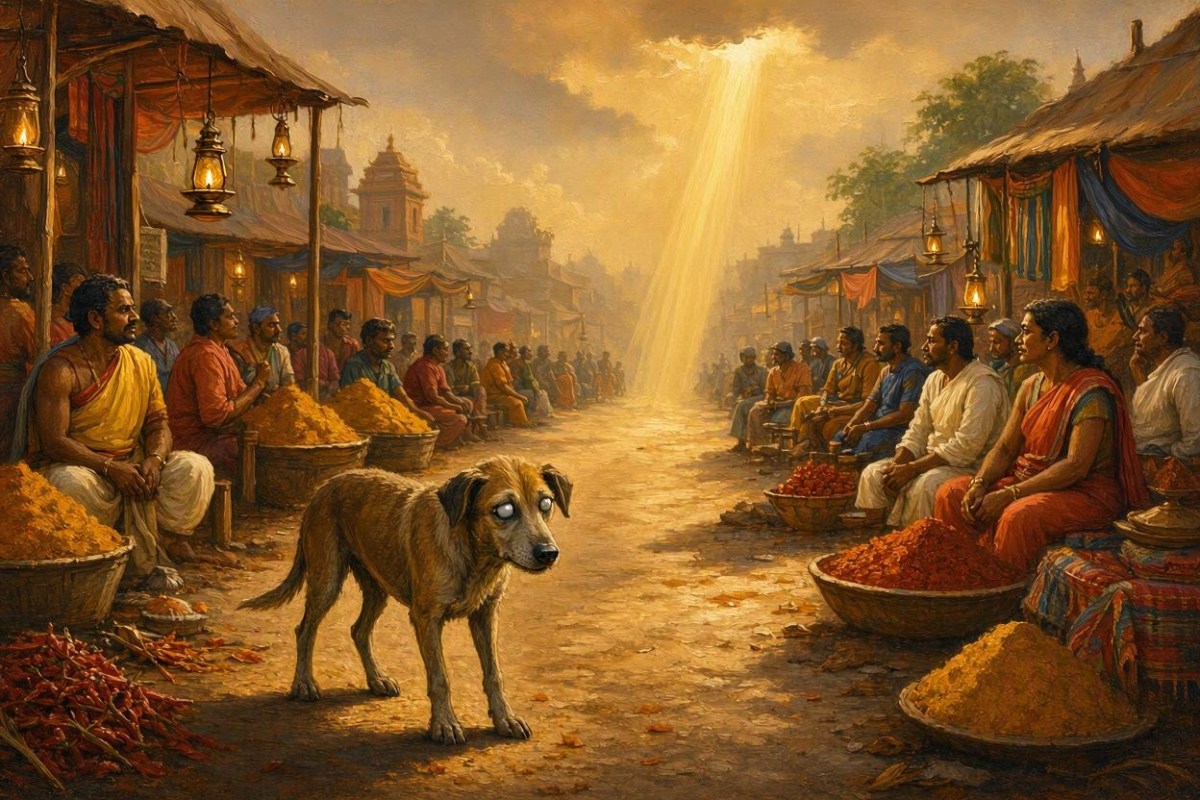
A blind dog stumbled to the bustling fair,

With sightless eyes and an aimless tread;

Ah, who can say what brought it to the market square,

Or by what strange desire it was led?

Though it is impossible to fully grasp the inner depth and complete import of a great saint like Purandara Dasa, we can make a humble attempt to understand the brilliant lessons hidden inside this poignant analogy, and see how it directly mirrors the wisdom of the Śrīmad-Bhāgavatam and Bhagavad-gītā.

Translating High Philosophy into Everyday Street Language

The profound truths contained in Sanskrit scriptures like the Bhagavad-gītā and Śrīmad-Bhāgavatam can sometimes feel distant or abstract to ordinary people busy navigating the struggles of daily life. This is where the compassionate genius of saint-poets like Purandara Dasa shines.

As a prominent leader of the Haridasa movement and the father of Carnatic music, Purandara Dasa made it his mission to take high Vedantic philosophy out of exclusive scholastic circles and bring it straight to the streets. Instead of overwhelming everyday listeners with dense technical terminology, he wrapped timeless spiritual psychology in raw, unforgettable, real-world imagery.

By recasting Samsara (the endless cycle of material birth and death) as a noisy, chaotic village fair (sante), and the illusioned spirit soul as a blind dog wandering through it, Purandara Dasa transformed complex theology into a vivid wake-up call that anyone, from a scholar to a street vendor could immediately grasp and feel in their heart.

Out of 8,400,000 Species of Life, Why a “Dog”?

According to Vedic knowledge, the soul travels through 8.4 million species of life across endless cosmic cycles. So why did Purandara Dasa select a dog to represent the soul adrift in the material world?

A dog possesses a psychological profile that uncannily reflects conditioned human nature. In fact, in the commentary to Śrīmad-Bhāgavatam 2.3.19, the acharyas detail these exact traits: a dog wags its tail for anyone who offers a scrap of bread, barks fiercely at strangers, submits completely to a stronger opponent by rolling on its back, yet fights bitterly over a bone with its equals, and mercilessly subdues the weak.

Purandara Dasa draws on these precise characteristics to hold up a mirror to our own lives:

  1. Very Relatable: Dogs have lived alongside human society since antiquity, making their behavior instantly recognizable to all of us.
  2. Fickle Faithfulness: A dog exhibits intense devotion, but primarily to whoever provides it with immediate sensory gratification or food.
  3. Hostile to Strangers: It barks at, mistrusts, and attacks anyone outside its familiar circle.
  4. Unpredictable Loyalty: Despite its reputation for loyalty, a dog can unexpectedly turn on and bite the very master who feeds it.
  5. Fiercely Territorial: It is especially inimical to competitors, viciously guarding its small patch of dirty pavement or territory.
  6. Flattering to the Strong: It knows how to be submissive, rolling over and flattering a proven stronger opponent to avoid a thrashing.
  7. A Dog-Eat-Dog World: When survival is on the line, dogs can be ruthless. Take Jack London’s The Call of the Wild, when sled dogs fight, the loser, even if stronger than the rest, ends up torn to shreds and eaten by the rest of the pack.
  8. Endless Sensory Greed: A dog is perpetually greedy, sniffing around for new sensory experiences, pacing endlessly with its tongue hanging out.

We Are Like That Dog

When we examine this list honestly, a sobering realization hits home: we are like that dog.

(If my use of the word “we” throughout this article felt presumptuous or brought any offense, please forgive me. I speak first and foremost of myself and those who share in my struggles.)

In our material conditioning, we are experts at making high-minded resolutions, but terrible at living up to them.

Imagine a dog sitting on a foul heap of garbage, quietly pondering, seemingly reconsidering its life choices after finding nothing of value. The very moment someone throws a fresh bag of new garbage onto the heap, off the dog runs to investigate.

We do the exact same thing. We recognize the emptiness of worldly pursuits, vow to pursue a higher spiritual life, and then abandon our resolve the instant a shiny new distraction is tossed into our path.

Lord Kapila describes this tragic loop of worldly attachment in Śrīmad-Bhāgavatam 3.30.20:

तत्राप्यनाथवत् क्षेत्रे गृहेत्ताभिरुपेक्षितः ।

यथा गृहे शुनाहारमुपानीतमश्नन् भूङ्क्ते ॥

tatrāpy anāthavat kṣetre gṛhe tābhir upekṣitaḥ

yathā gṛhe śunāhāram upānītam aśnan bhūṅkte

Translation: “In old age, neglected by the very family members he spent his entire life maintaining, he remains at home like a pet dog (śunā), eating whatever few scraps are reluctantly thrown to him.”

We slave our entire lives for material attachments, only to wind up like an old household dog, taking whatever scraps our illusory masters toss our way. From top dog to a nobody.

But Why Blind?

Purandara Dasa didn’t just choose a dog; he wrote about a blind dog wandering into the middle of a chaotic village fair.

A dog naturally relies heavily on its smell, but it uses vision to navigate safely. A blind dog can “smell” something delicious sitting inside a shop stall, but it cannot see the danger standing in its path, the heavy carts, the narrow traps, or the vendor holding a stick. Driven purely by its nose, it marches straight into a beating.

This spiritual blindness is a central theme throughout Vedic literature. In Śrīmad-Bhāgavatam 7.5.31, Prahlāda Mahārāja poignantly describes the tragic state of souls who lack spiritual vision:

न ते विदुः स्वार्थगतिं हि विष्णुं दुराशया ये बहिरर्थमानिनः ।

अन्धा यथान्धैरुपनीयमानाः तेऽपीशतन्त्र्यामुरुदाम्नि बद्धाः ॥

na te viduḥ svārtha-gatiṁ hi viṣṇuṁ

durāśayā ye bahir-artha-māninaḥ

andhā yathāndhair upanīyamānāḥ

te ‘pīśa-tantryām uru-dāmni baddhāḥ

Translation: “Persons who are strongly entrapped by the consciousness of enjoying material life do not know that the ultimate goal of human life is Lord Viṣṇu. Like blind men led by another blind man (andhā yathāndhaiḥ), they fall off the path and remain tightly bound by the strong ropes of material nature.”

This loss of vision is described in Bhagavad-gītā 2.67:

इन्द्रियाणां हि चरतां यन्मनोऽनुविधीयते ।

तदस्य हरति प्रज्ञां वायुर्नावमिवाम्भसि ॥

indriyāṇāṁ hi caratāṁ yan mano ‘nuvidhīyate

tad asya harati prajñāṁ vāyur nāvam ivāmbhasi

Translation: “As a strong wind sweeps away a boat on the water, even one of the roaming senses on which the mind focuses can carry away a man’s intelligence.”

Just as scent sweeps away the blind dog’s caution, our untamed senses sweep away our intelligence (prajñā). We can “smell” the fleeting pleasures of the material world, and our desires pull us forward. But without the eyes of spiritual knowledge (jnana), we remain blind to the karmic traps and the inevitable blows of fate waiting at every stall.

Freedom from Illusory Masters

The great Vaishnava saint Śrī Rūpa Gosvāmī captured this exact plight in a prayer that is frequently cited throughout the Śrīmad-Bhāgavatam purports (Bhakti-rasāmṛta-sindhu 3.2.35):

कामौदीनां कति न कतिधा पालिता दुर्निदेशास्

तेषां जाता मयि न करुणा न त्रपा नोपशान्तिः ।

उत्सृज्यैतानथ यदुपते साम्प्रतं लब्धबुद्धिस्

त्वामायातः शरणमभयं मां नियुङ्क्ष्वात्मदास्ये ॥

kāmādīnāṁ kati na katidhā pālitā durnideśās

teṣāṁ jātā mayi na karuṇā na trapā nopaśāntiḥ

utsṛjyaitān atha yadu-pate sāmprataṁ labdha-buddhis

tvām āyātaḥ śaraṇam abhayaṁ māṁ niyuṅkṣvātma-dāsye

Translation: “O my Lord, there is no limit to the unwanted orders of my material masters such as lust, anger, and greed. Although I have served them so faithfully for so long, they have shown no mercy to me, nor have I felt any shame, nor any peace. O Lord of the Yadus, now that my intelligence has finally awakened, I abandon them all. I come to You today to take shelter at Your fearless lotus feet. Please engage me in Your service.”

The underlying lesson here is profound: while we may appear to be serving various external masters in this world, we are actually serving only those who gratify our senses. In truth, no matter who the external master seems to be, we remain bound in servitude to our own ruthless, merciless material senses.

Returning to Our True Home

The tragic truth underlying Purandara Dasa’s poem is that the soul’s aimless wandering through this chaotic marketplace is entirely unnecessary. We are not native to this world of birth, disease, old age, and death; our true home is in the eternal spiritual realm (Vaikuntha). As eternal fragmental parts of the Supreme Lord, we have simply strayed away, mistaking the noisy, temporary stalls of Samsara for our permanent residence. We can end this grueling cycle of wandering the moment we stop surrendering to ruthless, illusory masters and accept our original, true Master, Śrī Kṛṣṇa.

In Bhagavad-gītā 15.6 & 15.7, Lord Kṛṣṇa reminds us of our real identity and our true home:

न तद्भासयते सूर्यो न शशाङ्को न पावकः ।

यद्गत्वा न निवर्तन्ते तद्धाम परमं मम ॥

ममैवांशो जीवलोके जीवभूतः सनातनः ।

मनःषष्ठानीन्द्रियाणि प्रकृतिस्थानि कर्षति ॥

na tad bhāsayate sūryo na śaśāṅko na pāvakaḥ

yad gatvā na nivartante tad dhāma paramaṁ mama

mamaivāṁśo jīva-loke jīva-bhūtaḥ sanātanaḥ

manaḥ-ṣaṣṭhānīndriyāṇi prakṛti-sthāni karṣati

Translation: “That supreme abode of Mine is not illumined by the sun or moon, nor by fire or electricity. Those who reach it never return to this material world.. The living entities in this conditioned world are My eternal fragmental parts. Due to conditioned life, they are struggling very hard with the six senses, which include the mind.”

Echoing this, Śrīmad-Bhāgavatam 10.14.58 confirms that once we surrender to our true Master, the vast, dangerous ocean of material existence shrinks to nothing:

समाश्रिता ये पदपल्लवप्लवं महत्पदं पुण्ययशोमुरारेः ।

भवाम्बुधिर्वत्सपदं परं पदं पदं पदं यद्विपदां न तेषाम् ॥

samāśritā ye pada-pallava-plavaṁ mahat-padaṁ puṇya-yaśo-murāreḥ

bhavāmbudhir vatsa-padaṁ paraṁ padaṁ padaṁ padaṁ yad vipadāṁ na teṣām

Translation: “For those who have accepted the boat of the lotus feet of the Supreme Lord, the ocean of the material world is like the water contained in a calf’s footprint. Their destination is paraṁ padam, the spiritual realm where there are no miseries, rather than this world where there is danger at every step.”

A Humble Prayer

Purandara Dasa’s metaphor is not an insult; it is a merciful wake-up call to help us open our spiritual eyes. In that spirit, let us pray together:

O my dear Śrī Kṛṣṇa, You are the most merciful benevolent ever-merciful Master, and yet I am chasing all sorts of illusory masters who abuse me more than anything else.

Please kindly release me from the bondage of these illusory masters and let me take shelter at Your lotus feet.

Please allow me to bring other such blind dogs like myself into Your eternal shelter.

Hare Krishna Hare Krishna

Krishna Krishna Hare Hare

Hare Rama Hare Rama

Rama Rama Hare Hare
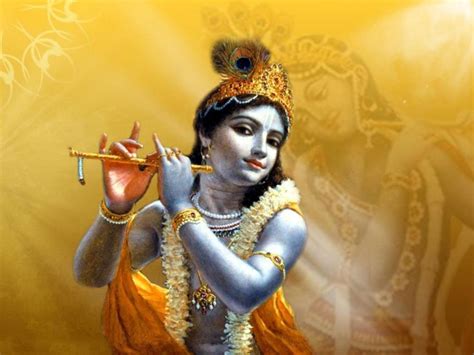
Lord Krishna, the Supreme Personality of Godhead

In the next post we will explore the next two lines of the song.

ಖಂಡ ಸಕ್ಕರೆ ಹಿತವಿಲ್ಲವಂತೆ ಖಂಡ ಎಲುಬು ಕಡಿದಿತಂತೆ
ಹೆಂಡಿರ ಮಕ್ಕಳ ನೆಚ್ಚಿತಂತೆ ಕೊಂಡು ಹೋಗುವಾಗ ಯಾರಿಲ್ಲವಂತೆ || 1 ||

khaṇḍa sakkare hitavillavante khaṇḍa elubu kaḍiditante

heṇḍira makkaḷa neccitante koṇḍu hōguvāga yārillavante || 1 ||

Translation:

Pure rock sugar held no sweetness to his taste,

Yet on dry and splintered bones his teeth he placed.

He spurned the honeyed bliss that sets the spirit free,

To crunch on sharp despair in blind captivity.

He doted on his wife and children day and night,

And anchored all his love within their changing sight.

Yet when the final hour called his breath away,

Not one could join his soul upon that lonely way.

Democracy means a society ruled by Hogs, Dogs, Camels, and Asses

Democracy is much praised, but what does it really produce? A government where the leaders are no better than hogs, dogs, animals and asses, just like the people who elect them. Don’t believe me? Read on!

Nowadays, it is the age of democracy for a significant part of the world.

Democracy is meant to be a government “By the People, For the People, and Of the People”. Sounds like a great concept in theory.

Until we see what is actually happening in practice.

In my post Human Animal Farm, I wrote about this… I wanted to focus on this particular point about what a democratic government ends up being and why.

In general, I use the phrase “untrained humans” as humans who do not know or appreciate the true value of human life, which is meant for spiritual perfection.

Instead, these untrained humans spend all their activities in the 4 basic animal activities…

  • Eating
  • Sleeping
  • Mating
  • Defending

If you look at any species of germ, insect, fish, bird, animal, or even a plant, we see that they conduct these 4 activities, and their lives essentially revolve around those 4 activities…

The ancient Sanskrit Hitopadesha (Instruction for Welfare), which is an instruction to all of us, especially in modern times, defines a human being devoid of “dharma” as equivalent to a beast.

A 2-legged or 3-legged beast, but a beast nevertheless.

āhāra-nidrā-bhaya-maithunaṃ cha
samānam_etat_pashubhir_narāṇām |
dharmo hi teṣhāmadhiko visheṣho
dharmeṇa hīnāḥ pashubhiḥ samānāḥ ||
Food, sleep, fear and mating, these acts of humans are similar to animals. 
Of them (humans), dharma is the only special thing, without dharma humans are also animals

Why is that?

Just look at the creatures around you – whether it be an ant or an elephant… you can hardly interest them in any subject matter beyond these 4 – eating, sleeping, mating, and defending. And neither do they have to work very hard, or get some kind of education to fulfill those aims.

Our modern education system is largely focused around teaching students how to earn a livelihood… because we have made earning a livelihood so complicated that it takes training just to find a little food and some shelter. As for mating and defending, no one needs training, it comes naturally to everyone.

However, there is no education to teach people in general about the higher purpose of life.

शास्त्रेष्वियानेव सुनिश्चितो नृणां
क्षेमस्य सध्र्‌यग्विमृशेषु हेतु: ।
असङ्ग आत्मव्यतिरिक्त आत्मनि
द‍ृढा रतिर्ब्रह्मणि निर्गुणे च या ॥ २१ ॥

śāstreṣv iyān eva suniścito nṛṇāṁ
kṣemasya sadhryag-vimṛśeṣu hetuḥ
asaṅga ātma-vyatirikta ātmani
dṛḍhā ratir brahmaṇi nirguṇe ca yā

It has been conclusively decided in the scriptures, after due consideration, that the ultimate goal for the welfare of human society is detachment from the bodily concept of life and increased and steadfast attachment for the Supreme Lord, who is transcendental, beyond the modes of material nature.

https://vedabase.io/en/library/sb/4/22/21/

And this precisely is the thing that needs training! But we have no such training available to society at large.

Democracy, as a system, depends on the quality of the electors, the qualification of the voters. When a particular society gets bad government, then that means that the electors were at fault. Either the right candidates never ran for election, thinking it to be a fool’s errand, or the right candidates were not chosen.

’tis a folly to be wise where ignorance is bliss, goes the idiom!

Why is this?

Let us examine a pack of wolves, relatives of the dogs… who gets chosen as the Leader of the Pack? The most ferocious and qualified wolf of course, in some cases the winner has to fight for it.

So, if humans were just like dogs who would they choose? The biggest most qualified dog of course!

And why these 4 animals in particular?

Hogs:

Persons who have no discrimination in the matter of foodstuff and who eat all sorts of rubbish are compared to hogs. Hogs are very much attached to eating stools. So stool is a kind of foodstuff for a particular type of animal. And even stones are eatables for a particular type of animal or bird. But the human being is not meant for eating everything and anything; he is meant to eat grains, vegetables, fruits, milk, sugar, etc. Animal food is not meant for the human being. For chewing solid food, the human being has a particular type of teeth meant for cutting fruits and vegetables. The human being is endowed with two canine teeth as a concession for persons who will eat animal food at any cost. It is known to everyone that one man’s food is another man’s poison. Human beings are expected to accept the remnants of food offered to Lord Śrī Kṛṣṇa, and the Lord accepts foodstuff from the categories of leaves, flowers, fruits, etc. (Bg. 9.26). As prescribed by Vedic scriptures, no animal food is offered to the Lord. Therefore, a human being is meant to eat a particular type of food. He should not imitate the animals to derive so-called vitamin values. Therefore, a person who has no discrimination in regard to eating is compared to a hog.

https://vedabase.io/en/library/sb/2/3/19/

Dogs:

Modern university education practically prepares one to acquire a doggish mentality with which to accept the service of a greater master. After finishing a so-called education, the so-called educated persons move like dogs from door to door with applications for some service, and mostly they are driven away, informed of no vacancy. As dogs are negligible animals and serve the master faithfully for bits of bread, a man serves a master faithfully without sufficient rewards.

https://vedabase.io/en/library/sb/2/3/19/

Camels:

The camel is a kind of animal that takes pleasure in eating thorns. A person who wants to enjoy family life or the worldly life of so-called enjoyment is compared to the camel. Materialistic life is full of thorns, and so one should live only by the prescribed method of Vedic regulations just to make the best use of a bad bargain. Life in the material world is maintained by sucking one’s own blood. The central point of attraction for material enjoyment is sex life. To enjoy sex life is to suck one’s own blood, and there is not much more to be explained in this connection. The camel also sucks its own blood while chewing thorny twigs. The thorns the camel eats cut the tongue of the camel, and so blood begins to flow within the camel’s mouth. The thorns, mixed with fresh blood, create a taste for the foolish camel, and so he enjoys the thorn-eating business with false pleasure. Similarly, the great business magnates, industrialists who work very hard to earn money by different ways and questionable means, eat the thorny results of their actions mixed with their own blood. Therefore the Bhāgavatam has situated these diseased fellows along with the camels.

https://vedabase.io/en/library/sb/2/3/19/

Asses:

The ass is an animal who is celebrated as the greatest fool, even amongst the animals. The ass works very hard and carries burdens of the maximum weight without making profit for itself. The ass is generally engaged by the washerman, whose social position is not very respectable. And the special qualification of the ass is that it is very much accustomed to being kicked by the opposite sex. When the ass begs for sexual intercourse, he is kicked by the fair sex, yet he still follows the female for such sexual pleasure. A henpecked man is compared, therefore, to the ass. The general mass of people work very hard, especially in the Age of Kali. In this age the human being is actually engaged in the work of an ass, carrying heavy burdens and driving ṭhelā and rickshaws. The so-called advancement of human civilization has engaged a human being in the work of an ass. The laborers in great factories and workshops are also engaged in such burdensome work, and after working hard during the day, the poor laborer has to be again kicked by the fair sex, not only for sex enjoyment but also for so many household affairs.

https://vedabase.io/en/library/sb/2/3/19/

What happens when these hogs, dogs, camels, and asses go to the elections?

Now take a look at our leaders, and decide if any of these men and women are actually above the level of hogs, dogs, camels, and asses.

Who is your democratic society ruled by?

Human Animal Farm

George Orwell’s Animal Farm describes a horrifying story of how “equals” exploit other equals… There are so many different social systems being tried out, communism, capitalism, socialism, and so on, but practically all of them are animalistic. Is there an ideal social system?

There is a famous book by George Orwell, Animal Farm. It is a satire on communism.

In the book, the oppressed animals on a farm overthrow their human farmer and try to create a society based on egalitarian principles, but they end up in a situation much worse than before, under the dictatorship of a pig named Napoleon.

But have you considered any other competing “ism”, such as, say “Capitalism”?

Capitalism, where money rules the roost

Is any materialistic ideology different from any other materialistic ideology when implemented in human society?

Is the end result any different?

Let’s take the case of any “democratic” country… take for example Canada, where I live presently… Canada is high up on the list when it comes to social liberty and freedom, with its famous Charter of Rights and Freedoms, and so on… but even in Canada, let’s take, say, the Prime Minister of Canada – does anyone feel that such a person is “equal” to the rest of us living in Canada? OK, let’s leave the top powerful people aside… let’s take an ordinary police officer… there was recently a case in which a Toronto Police Officer accessed a database, gave his son the name and address of an individual who drove a car with a certain license plate, and the individual ended up dead because of that.

The Canadian Charter of Rights and Freedoms

And if you want to exclude that type of power from the equation, let’s take the case of the Native Canadians! The original first nations people of Canada – where are they? I have mostly seen them destitute and begging on the streets. How on earth did Canadian society engineer that injustice?

Canadian Beggar

There are extreme examples, for example communism is supposed to be a classless society in which everyone is equal, has access to common prosperity, and equal opportunity for the best possible life. What is the reality though? The children of communist leaders study in the top schools, go to the top universities, and the children of the rural citizens? They are not even allowed to get off the farm, because then, who will feed the cities cheap food? This is institutionalized with many systems, such as the Hukou system. We see leaders trying to hold on to power until their dying breath, Stalin, Lenin, and Mao are all examples of that. There are any number of present leaders who want to entrench themselves for the duration of their lives!

Communism is based on materialistic ideals

But lest you think that some other competing system like democratic capitalism is better, just look around us – some people have no access to clean drinking water, food, and opportunity in life, just by the compounded effect of generations of exploitation. Some people have what is known as “inter-generational wealth”, and others struggle to pay their rent, living in buildings owned by REITs funded by, guess who, those with inherited wealth! Of course, who ends up born in better or worse material circumstances depends on the past karma of every individual.

Homeless person in Toronto, Canada

Ultimately no materialistic or man-made system can be perfect. The only perfect system is the one that is created by the Creator of all Natural Systems, variously referred to as Allah, Jehovah, or Krishna but referring to the same one Person.

Krishna, the Perfect Creator of the Perfect Society

It is called “Varnashrama”, which is a combination of 2 words “Varna” and “Ashrama”… Varna means occupation, Ashrama means “Life Status”…

The system is organized as follows – there are 4 main Varnas, and 4 main Ashramas, which gives rise to a combination of 16 different categories of people, which are a natural order of society.

The 4 Varnas are:

  • “Brahmana” – the intellectual class
  • “Kshatriya” – the administrator class
  • “Vaishya” – the mercantile class
  • “Shudra” – the worker class

The 4 Ashramas are:

  • “Brahmacharya” – the student class
  • “Grhastha – the householder class
  • “Vanaprastha” – the retired class
  • “Sannyasa” – the renounced class

Krishna says in the Bhagavad Gita:

चातुर्वर्ण्यं मया सृष्टं गुणकर्मविभागशः ।
तस्य कर्तारमपि मां विद्ध्यकर्तारमव्ययम् ॥ १३ ॥

cātur-varṇyaṁ mayā sṛṣṭaṁ
guṇa-karma-vibhāgaśaḥ
tasya kartāram api māṁ
viddhy akartāram avyayam

According to the three modes of material nature and the work associated with them, the four divisions of human society are created by Me. And although I am the creator of this system, you should know that I am yet the nondoer, being unchangeable.

https://vedabase.io/en/library/bg/4/13/

Ah, there you go, you might say, here comes the infamous Indian caste system, which has resulted in so much suffering, so much inequity, so much bias, and so much violence and exploitation.

The present-day Indian caste system is demonic

Two words are key here, one is “guna” and the other is “karma”.

The present Indian caste system is based on birth, which is called “janma”… basing the caste system on birth is like saying that all doctors’ children will be ever forevermore doctors, or that all of the judges’ children will be anointed judges. Yes, if you are born in a technical or a medical or a business family, it is very likely you will take up the same line because the whole atmosphere is steeped with that particular mood, but you still have to go to medical school or law school or learn to operate a business!

A doctor must be properly qualified

So therefore, the caste system based on birth alone is rejected… instead, every person is analyzed according to their qualities and the work they do.

If for example, someone is born in a family of doctors cannot clear high school or medical school, they will not get the degree and will not be allowed to practice. So why then is someone born in the family of a Brahmana but has the mindset of a worker still demand the social position of a Brahmana?

A judge must be duly qualified

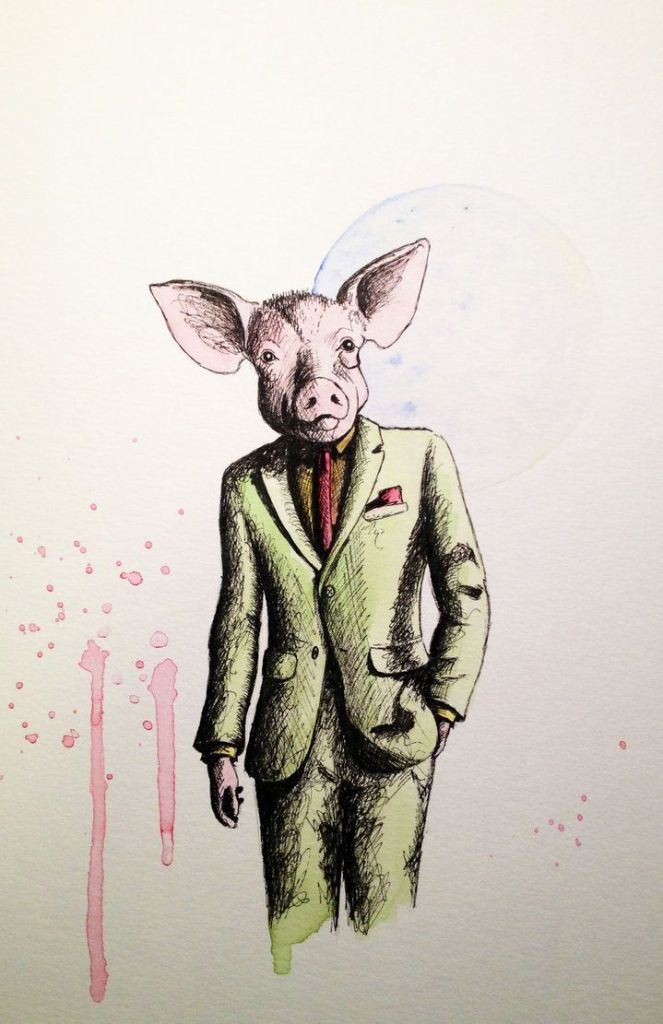
This degraded practice alone has completely destroyed the original social system in India, and is responsible for the destruction of the high class Vedic culture. After all, just like in the famous book by George Orwell, if you make a pig the leader of society, the position will not alter the fact that the pig is, at the root of it, still a pig!

A pig in a suit is still a pig!

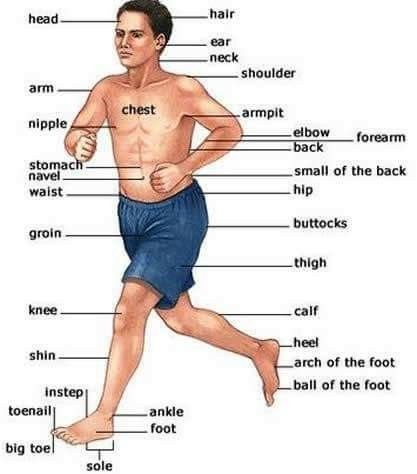
The 4 orders are compared to the various parts of the body – the Brahmanas to the head, the Kshatriyas to the hands, the Vaishyas to the stomach, and the Shudras to the legs. This is not derogatory, the head alone cannot get much done, and neither can the hands, stomach, or legs on their own.

The different sections of society must work together, just like the parts of our bodies

Imagine the legs running around without a head, or the hands flailing about in one place, or the stomach starving for the want of food! Our society is presently just like that.

So, in modern day society, we see that the humans are actually divided into 4 categories, represented by animals.

श्वविड्‍वराहोष्ट्रखरै: संस्तुत: पुरुष: पशु: ।
न यत्कर्णपथोपेतो जातु नाम गदाग्रज: ॥ १९ ॥

śva-viḍ-varāhoṣṭra-kharaiḥ
saṁstutaḥ puruṣaḥ paśuḥ
na yat-karṇa-pathopeto
jātu nāma gadāgrajaḥ

Men who are like dogs, hogs, camels and asses praise those men who never listen to the transcendental pastimes of Lord Śrī Kṛṣṇa, the deliverer from evils.

https://vedabase.io/en/library/sb/2/3/19/

Why dogs, hogs, camels, and asses? Do we have some kind of hatred for these animals? No, we respect every living entity, but we lament the lost opportunity when a living entity who has achieved a human form of life descends to lower species in life…

Dogs will be dogs

Why and how are humans like dogs?

Modern university education practically prepares one to acquire a doggish mentality with which to accept the service of a greater master. After finishing a so-called education, the so-called educated persons move like dogs from door to door with applications for some service, and mostly they are driven away, informed of no vacancy. As dogs are negligible animals and serve the master faithfully for bits of bread, a man serves a master faithfully without sufficient rewards.

A. C. Bhaktivedanta Swami Prabhupada in purport to https://vedabase.io/en/library/sb/2/3/19/
A pig will eat anything, practically

Why hogs?

Persons who have no discrimination in the matter of foodstuff and who eat all sorts of rubbish are compared to hogs. Hogs are very much attached to eating stools. So stool is a kind of foodstuff for a particular type of animal. And even stones are eatables for a particular type of animal or bird. But the human being is not meant for eating everything and anything; he is meant to eat grains, vegetables, fruits, milk, sugar, etc. Animal food is not meant for the human being. For chewing solid food, the human being has a particular type of teeth meant for cutting fruits and vegetables. The human being is endowed with two canine teeth as a concession for persons who will eat animal food at any cost. It is known to everyone that one man’s food is another man’s poison. Human beings are expected to accept the remnants of food offered to Lord Śrī Kṛṣṇa, and the Lord accepts foodstuff from the categories of leaves, flowers, fruits, etc. (Bg. 9.26). As prescribed by Vedic scriptures, no animal food is offered to the Lord. Therefore, a human being is meant to eat a particular type of food. He should not imitate the animals to derive so-called vitamin values. Therefore, a person who has no discrimination in regard to eating is compared to a hog.

A. C. Bhaktivedanta Swami in purport to https://vedabase.io/en/library/sb/2/3/19/
A camel eats thorns, and thinks they are tasty whereas it tastes its own blood as the thorns cut the insides of its mouth

Why camels?

The camel is a kind of animal that takes pleasure in eating thorns. A person who wants to enjoy family life or the worldly life of so-called enjoyment is compared to the camel. Materialistic life is full of thorns, and so one should live only by the prescribed method of Vedic regulations just to make the best use of a bad bargain. Life in the material world is maintained by sucking one’s own blood. The central point of attraction for material enjoyment is sex life. To enjoy sex life is to suck one’s own blood, and there is not much more to be explained in this connection. The camel also sucks its own blood while chewing thorny twigs. The thorns the camel eats cut the tongue of the camel, and so blood begins to flow within the camel’s mouth. The thorns, mixed with fresh blood, create a taste for the foolish camel, and so he enjoys the thorn-eating business with false pleasure. Similarly, the great business magnates, industrialists who work very hard to earn money by different ways and questionable means, eat the thorny results of their actions mixed with their own blood. Therefore the Bhāgavatam has situated these diseased fellows along with the camels.

A. C. Bhaktivedanta Swami Prabhupada in purport to https://vedabase.io/en/library/sb/2/3/19/
An ass carrying a heavy load, all for a little grass

And why asses?

The ass is an animal who is celebrated as the greatest fool, even amongst the animals. The ass works very hard and carries burdens of the maximum weight without making profit for itself.* The ass is generally engaged by the washerman, whose social position is not very respectable. And the special qualification of the ass is that it is very much accustomed to being kicked by the opposite sex. When the ass begs for sexual intercourse, he is kicked by the fair sex, yet he still follows the female for such sexual pleasure. A henpecked man is compared, therefore, to the ass. The general mass of people work very hard, especially in the Age of Kali. In this age the human being is actually engaged in the work of an ass, carrying heavy burdens and driving ṭhelā and rickshaws. The so-called advancement of human civilization has engaged a human being in the work of an ass. The laborers in great factories and workshops are also engaged in such burdensome work, and after working hard during the day, the poor laborer has to be again kicked by the fair sex, not only for sex enjoyment but also for so many household affairs.

A. C. Bhaktivedanta Swami Prabhupada in purport to https://vedabase.io/en/library/sb/2/3/19/

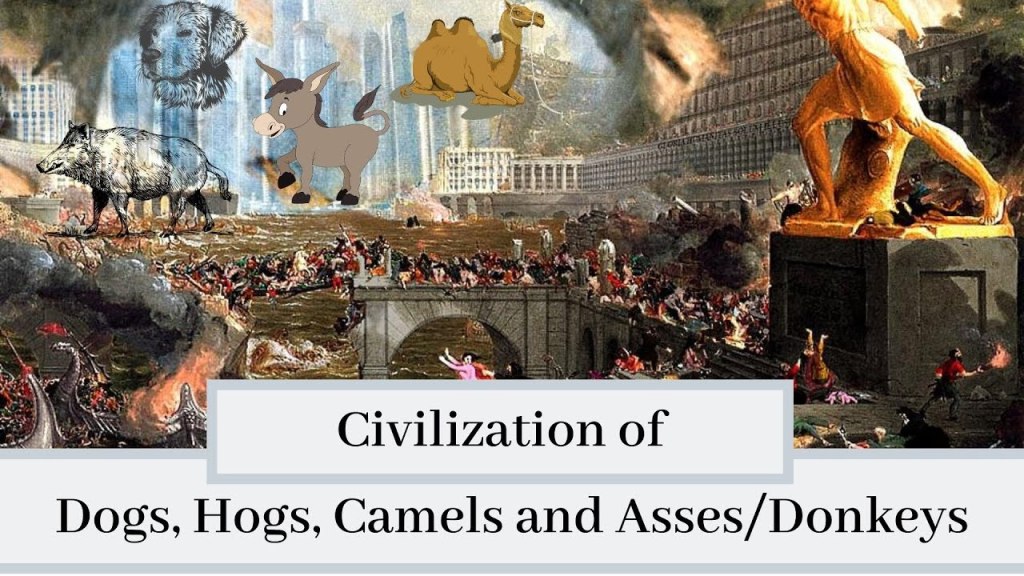
What happens when humans who are just like hogs, dogs, camels, and asses go to the election? The dogs vote for a big dog, the hogs vote for a big hog, the camels vote for a big camel, and the asses vote for a big ass.

We end up with a civilization of dogs, hogs, camels, and asses!

And we get a leadership that is full of such dogs, hogs, camels, and asses!

And what will such leaders do in society? They will promote animalism, they might spout big ideals just like the hogs in George Orwell’s book do, but quietly or openly promote animalistic civilization.

Srila Prabhupada once called democracy as “demon crazy”! In other words, the democratic process does not get us the best leaders, only the lowest common denominator.

An ideal society without God in the Centre is not possible

Take your pick, the system created by God or the system created by animals masquerading as humans.

Krishna, the Creator of the Perfect Social Order

What is your choice?

Poor St. Patrick

St. Patrick is the patron saint of Ireland, he brought Christianity to Ireland. Why then is he associated with excessive alcohol consumption? Poor St. Patrick.

As I write this, it is St. Patrick’s day. St. Patrick brought Christianity to Ireland. While Christianity is a wide range of beliefs, and some Christians are more austere than others, it is amazing to note how many people use St. Patrick’s day to eat like hogs and transform their consciousness to a lowly animal-like state, all in the name of St. Patrick.

Legend has it that St. Patrick drove the snakes out of Ireland, though some say there were no snakes there to begin with. Some others say that this is a reference to how, by the introduction of Christianity, St. Patrick drove out paganism, represented by snakes.

And how did it start that the poor old St. Patrick got saddled with excessive indulgence to mark his day, the day of his disappearance? Note I say disappearance, not death, because great saints never die, they simply disappear from our vision, even an ordinary soul does not really die, simply changes bodies.

many Christians fast for Lent, the period of time before Easter. The regulations are strict, some live only by bread and water for 40 days before Easter. Someone made a foolish decision to let the Christians put their restrictions aside and indulge in eating, drinking, and all sorts of merry-making on this day. And, this easing was interpreted in this sort of pathetic, drunken, animalistic behaviour as we see on St. Patrick’s day especially much of the western world.

विषया विनिवर्तन्ते निराहारस्य देहिनः ।
रसवर्जं रसोऽप्यस्य परं दृष्ट्वा निवर्तते ॥ ५९ ॥

viṣayā vinivartante
nirāhārasya dehinaḥ
rasa-varjaṁ raso ’py asya
paraṁ dṛṣṭvā nivartate

Though the embodied soul may be restricted from sense enjoyment, the taste for sense objects remains. But, ceasing such engagements by experiencing a higher taste, he is fixed in consciousness.

https://vedabase.io/en/library/bg/2/59/

It is clearly stated that in order to let go of a lower taste, one must develop a higher taste, and without this, after the end of denial comes overindulgence – because the underlying taste remains!

It also shows the calibre of the leadership and populace who cannot change the consciousness from a lower taste to a higher taste…

श्वविड्‍वराहोष्ट्रखरै: संस्तुत: पुरुष: पशु: ।
न यत्कर्णपथोपेतो जातु नाम गदाग्रज: ॥ १९ ॥

śva-viḍ-varāhoṣṭra-kharaiḥ
saṁstutaḥ puruṣaḥ paśuḥ
na yat-karṇa-pathopeto
jātu nāma gadāgrajaḥ

Men who are like dogs, hogs, camels and asses praise those men who never listen to the transcendental pastimes of Lord Śrī Kṛṣṇa, the deliverer from evils.

https://vedabase.io/en/library/sb/2/3/19/

Since St. Patrick is associated with driving away the snakes of ignorance, please see here what the Bhagavatam says…

बिले बतोरुक्रमविक्रमान् ये
न श‍ृण्वत: कर्णपुटे नरस्य ।
जिह्वासती दार्दुरिकेव सूत
न चोपगायत्युरुगायगाथा: ॥ २० ॥

bile batorukrama-vikramān ye
na śṛṇvataḥ karṇa-puṭe narasya
jihvāsatī dārdurikeva sūta
na copagāyaty urugāya-gāthāḥ

One who has not listened to the messages about the prowess and marvelous acts of the Personality of Godhead and has not sung or chanted loudly the worthy songs about the Lord is to be considered to possess earholes like the holes of snakes and a tongue like the tongue of a frog.

https://vedabase.io/en/library/sb/2/3/20/

Poor St. Patrick! May he be at peace even after knowing that most of those he tried to save have completely strayed from his instructions to them and are making a mockery of his memory.

As for Ireland, and everyone who wishes to be saved from sliding down, following in the footsteps of St. Patrick, this is the fastest method for a consciousness upgrade. Just chant…

Chanting the Hare Krishna Mahamantra is the fastest way to a consciousness upgrade.

St. Patrick may not have known this Maha mantra himself as Europe was in the dark ages an not yet ready for this sublime mantra back then. But when St. Patrick hears this mantra, he will surely join us. Now we are in the Golden Age. This would be the real St. Patrick’s day if you could chant this mantra even once! Try it!