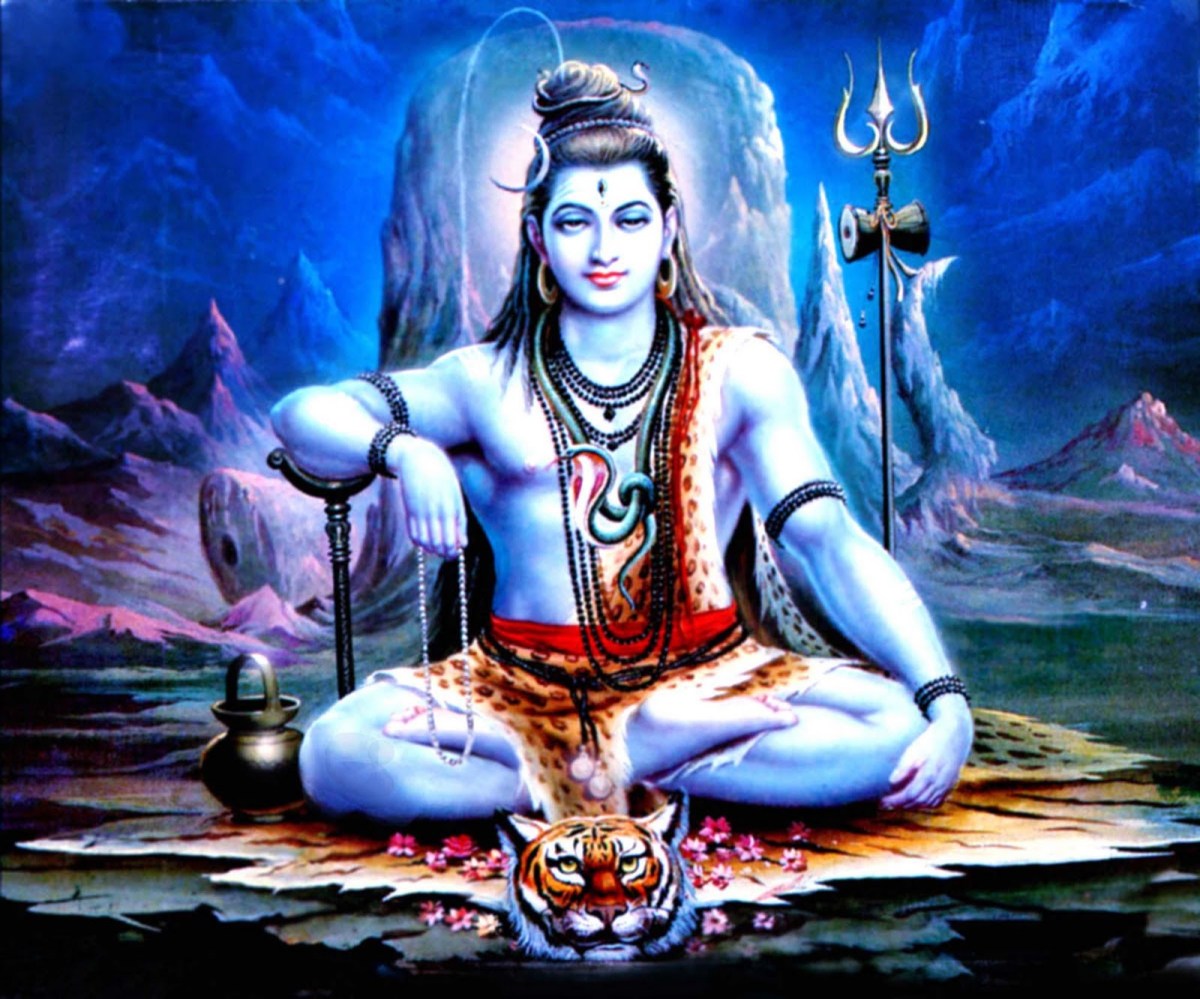
Is Srila Prabhupada insulting Lord Shiva?

Srila Prabhupada, a great teacher, wrote prolifically. Even though his works are lucid and clear, there are many misunderstandings about his writings. One is that he insulted Lord Shiva. Is this true?

Question:

A devotee who has been with ISKCON for 7 years has asked this question… he says he does not agree with Srila Prabhupada’s purport to BG 2.62.

Lord Śiva was deep in meditation, but when Pārvatī agitated him for sense pleasure, he agreed to the proposal, and as a result Kārtikeya was born.

https://vedabase.io/en/library/bg/2/62/

He says that this is not the real story also he doesn’t agree that Lord Shiva can be agitated.

Lord Shiva, Parvati Devi, and their children Kartikeya and Ganesha

Answer:

Thank you for writing to me about this. It is an important thing.

First and foremost we have to understand who is Srila Prabhupada. Srila Prabhupada is a pure devotee. As a pure devotee, Srila Prabhupada has no envy in his heart. Srila Prabhupada has no desire to criticize someone unnecessarily. He also has no tendency to try and pull someone down. In fact, Srila Prabhupada is on the Uttama Adhikari platform. As an Uttama Adhikari, he feels that everyone else is serving Krishna except himself. But Srila Prabhupada came down to the Madhyama Adhikari platform. On this platform, he suppressed his ecstatic emotions and took the role of a teacher of Krishna Consciousness. Thus he preached to us poor lost souls in the material world. Srila Prabhupada undertook an austerity for us. Just like Lord Shiva drank up the ocean of poison, Srila Prabhupada tolerated the poisonous nature of this material world. His sacrifice saves us all.

Great personalities accept voluntary suffering for the benefit of others

“tapyante loka taapena”, this is a verse from the Bhagavatam glorifying personalities like Lord Shiva and Srila Prabhupada.

तप्यन्ते लोकतापेन साधव: प्रायशो जना: ।
परमाराधनं तद्धि पुरुषस्याखिलात्मन: ॥ ४४ ॥

tapyante loka-tāpena
sādhavaḥ prāyaśo janāḥ
paramārādhanaṁ tad dhi
puruṣasyākhilātmanaḥ

It is said that great personalities almost always accept voluntary suffering because of the suffering of people in general. This is considered the highest method of worshiping the Supreme Personality of Godhead, who is present in everyone’s heart.
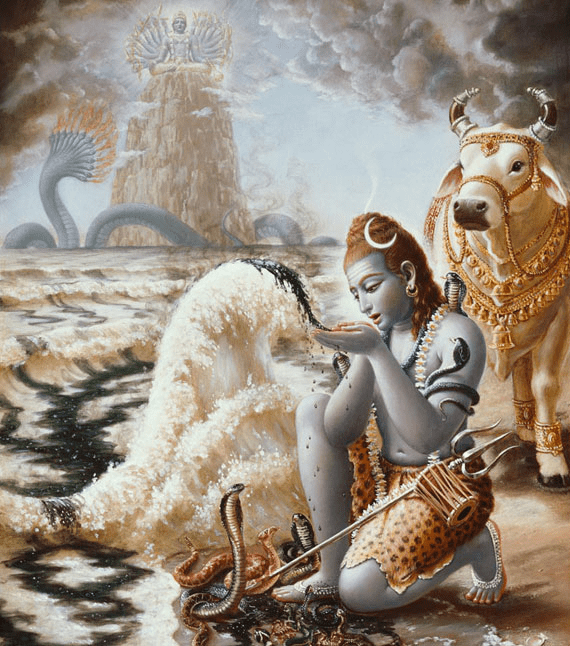
https://vedabase.io/en/library/sb/8/7/44/

Lord Shiva drinks up an ocean of deadly poison and keeps it suspended in his throat

On the Madhyama Adhikari platform…

A devotee behaves differently with different kinds of personalities. A Madhyama Adhikari is a teacher/preacher… and his mission is to guide souls to spiritual perfection.

  1. To Supreme Personality of Godhead or His plenary expansions, he offers prayers
  2. To the devotees of Krishna, he makes friendship
  3. To the innocent, he preaches Krishna Consciousness
  4. Those envious of Krishna, he avoids

ईश्वरे तदधीनेषु बालिशेषु द्विषत्सु च ।
प्रेममैत्रीकृपोपेक्षा य: करोति स मध्यम: ॥ ४६ ॥

īśvare tad-adhīneṣu
bāliśeṣu dviṣatsu ca
prema-maitrī-kṛpopekṣā
yaḥ karoti sa madhyamaḥ

An intermediate or second-class devotee, called madhyama-adhikārī, offers his love to the Supreme Personality of Godhead, is a sincere friend to all the devotees of the Lord, shows mercy to ignorant people who are innocent and disregards those who are envious of the Supreme Personality of Godhead.

https://vedabase.io/en/library/sb/11/2/46/

Srila Prabhupada, the great Vaishnava Acharya

Now, let us examine who is Lord Shiva.

Lord Shiva is the Topmost Vaishnava, “vaishnavaanaam yathaa shambhu” as stated in the Bhagavatam.

निम्नगानां यथा गङ्गा देवानामच्युतो यथा ।
वैष्णवानां यथा शम्भु: पुराणानामिदं तथा ॥ १६ ॥

nimna-gānāṁ yathā gaṅgā
devānām acyuto yathā
vaiṣṇavānāṁ yathā śambhuḥ
purāṇānām idam tathā

Just as the Gaṅgā is the greatest of all rivers, Lord Acyuta the supreme among deities and Lord Śambhu [Śiva] the greatest of Vaiṣṇavas, so Śrīmad-Bhāgavatam is the greatest of all Purāṇas.

https://vedabase.io/en/library/sb/12/13/16/

In the Brahma Samhita (kshiram yatha dadhi vikaaram) it is stated that Lord Vishnu transforms as Lord Shiva when Lord Vishnu is “in touch” with material energy. This is just like how milk turns to curds when touched with tamarind. In other words, Lord Vishnu and Lord Shiva have no difference of opinion. Krishna desires everyone to be His pure devotee. Similarly, Lord Shiva desires everyone to be Krishna’s pure devotee.

क्षीरं यथा दधि विकारविशेषयोगात्
सञ्जायते न हि ततः पृथगस्ति हेतोः ।
यः शम्भुतामपि तथा समुपैति कार्या-
-द्गोविन्दमादिपुरुषं तमहं भजामि ॥ ४५ ॥

kṣīraṁ yathā dadhi vikāra-viśeṣa-yogāt
sañjāyate na hi tataḥ pṛthag asti hetoḥ
yaḥ śambhutām api tathā samupaiti kāryād
govindam ādi-puruṣaṁ tam ahaṁ bhajāmi

Just as milk is transformed into curd by the action of acids, but yet the effect curd is neither same as, nor different from, its cause, viz., milk, so I adore the primeval Lord Govinda of whom the state of Śambhu is a transformation for the performance of the work of destruction.

https://vedabase.io/en/library/bs/5/45/

In fact, without the mercy of Lord Shiva, no one can become a Vaishnava. Lord Shiva and Parvati Devi are regarded as the father and mother of the material world. As you know, father and mother are the first teachers of every child.

As such, Lord Shiva is beyond all criticism. And as Lord Shiva is a pure devotee, Srila Prabhupada would never criticize Lord Shiva.

Srila Prabhupada is stating the fact.

Lord Kartikeya was born of Shiva and Parvati’s union. Lord Brahma, who is Lord Vishnu’s son is born directly from Himself without the help or assistance of Lakshmi Devi.

In the Valmiki Ramayana, Kartikeya is mentioned as the son of Rudra and Parvati. Agni and Ganga Devi aided in his birth. We accept Valmiki Muni as an utmost authority.

Valmiki, the author of the Original Ramayana

In the Mahabharata, Kartikeya is mentioned as the son of Shiva and Parvati. He emerged as a result of Lord Shiva’s sexual union with Parvati Devi. The details I will not mention here. Ganga Devi cultivated the seed of Lord Shiva. Agni Deva, the demigod in charge of fire, kept it warm.

Now, there is a third story, from the Shiva Purana… Lord Shiva was meditating. Parvati Devi was trying to attract him. Kamadeva tried to help but was burned to ashes by the wrath of Lord Shiva. Lord Shiva, being merciful, then paid attention to Parvati Devi. He married her, and Kartikeya was conceived.

There is additionally a Tamil version of the Skanda Purana in which another story is presented. I read that story in the Amar Chitra Katha comics as a child. Only later I learned where the story came from. The demigods prayed to Lord Shiva and pleased Him. As a result, Lord Shiva manifested 5 additional heads. From each head came one spark. Vayu Deva, the demigod in charge of the wind, carried these sparks and handed them to Agni Deva. Agni Deva then carried the sparks to Ganga Devi, who took them to Saravana lake. There, 6 boys were born. The 6 boys were merged into one by Krittika Devi. This marked the appearance of Kartikeya. He then defeated the demons Surapadma and Simhamukha. These demons surrendered to Kartikeya and became his assistant associates.

Valmiki Ramayana is the Absolute Truth. Mahabharata is also composed by Veda Vyasa. Therefore, we have 2 authoritative references to support Srila Prabhupada’s statement about Lord Shiva in BG 2.62.

Srila Prabhupada is a highly empowered Vaishnava Acharya who has presented Krishna Consciousness in the Brahma Madhva Gaudiya Sampradaya. Why should anyone accept an objection raised by an uncontrolled mind? Instead, whenever we hear the instruction of the Acharya, we should strive to understand how it is true. It’s not about whether it is true or not, but how it is true. This is called surrender. It may take time. It took me many years to surrender to my Guru Maharaja, but eventually I did. Whenever I had any doubts about Srila Prabhupada’s words, my spiritual masters helped me. They guided me with proper understanding to overcome that doubt.

To “disagree” with an Acharya, is simply immaturity.

Sometimes Acharyas disagree with each other. This is alright if they are of an equal stature. In that case, the rest of us must try to understand how they are right, all of them! Spiritual reality is truly wonderful. It is not one dimensional.

Puranic stories sometimes differ because they describe one kalpa (a day of Brahma) or another. On different days of Lord Brahma, there can be variations in some details.

Lord Shiva’s agitation by Parvati is not an insult to Lord Shiva.

Instead, it glorifies his great devotion to Sri Krishna. By personal example, Lord Shiva is showing how great Lord Krishna is. Lord Krishna remained without agitation even when surrounded by 3 Billion beautiful young gopis. The gopis were ready to do anything for Krishna. Krishna is an eternal Brahmachari, and the proof of this statement is Sri Bhishmadeva who has stated this personally!

Does this help?

Glossary – Personalities & Concepts mentioned in the article:

  • Acharya – A teacher in one of 4 authorized disciplic successions from God, who teaches by personal example
  • Agni Deva – The demigod in charge of fire
  • Bhagavatam – The topmost spiritual scripture, available online at https://vedabase.io/en/library/sb/
  • Bhishmadeva – Among the 12 greatest spiritual authorities of our universe, played a pivotal role in the Mahabharata, sometimes referred to as “grandsire” or “grandfather”
  • Brahma – The creator of this universe, son of Lord Vishnu
  • Brahma Samhita – The composition of Lord Brahma is a 100-chapter book. Only Chapter 5 is available. It can be found online at https://vedabase.io/en/library/bs
  • Deva – “Demigod”, also used as an honorific for divine personalities
  • Ganga – The most sacred river in our Universe, a liquid form of God
  • Gopis – The topmost saints, devotees of Krishna
  • Guru – Spiritual Master, also “heavy”
  • Kalpa – A day of Brahma, 4.32 Billion Years long
  • Kama – Literally “lust”, used to refer to the demigod in charge of love
  • Kartikeya – Son of Shiva and Parvati, the military commander of the demigods
  • Krishna – The Supreme Personality of Godhead, source of both spiritual and material realms, the One and Only appearing Himself in different forms and with different names
  • Krittika Devi – a demigoddess
  • Madhva Gaudiya Sampradaya – A current unbroken line of disciplic succession from God Himself, included below for reference
  • Madhyama Adhikari – defined above
  • Maharaja – King among men, used to refer to royalty and to renounced or exalted souls
  • Parvati – The consort of Lord Shiva, expanded as the material energy
  • Purana – Authorized history of the Universe, there are 18 such histories, 6 meant for those in the mode of goodness, 6 for those in the mode of passion, and 6 meant for those in the mode of passion
  • Ramayana – The pastimes of Lord Rama, the Personality of Godhead
  • Rudra – A son of Lord Brahma, born of his anger from his forehead
  • Simhamukha & Surapadma – Former demons who accepted the shelter of Kartikeya and became his assistants
  • Shiva – The auspicious one, also referred to as Rudra
  • Shiva Purana – The scripture describing the pastimes of Lord Shiva, meant for the benefit of those situated in the mode of ignorance
  • Sri – Opulence, refers to the Goddess of Fortune, or someone blessed with some extraordinary opulence
  • Uttama Adhikari – defined above
  • Valmiki – The author of the original Ramayana, disciple of Narada
  • Vayu Deva – The demigod in charge of the air and wind
  • Vishnu – An expansion of Krishna
  • Vyasa – The compiler of Vedic literature

The Brahma Madhva Gaudiya Sampradaya:

1. Kṛṣṇa
2. Brahmā
3. Nārada
4. Vyāsa
5. Madhva
6. Padmanābha
7. Nṛhari
8. Mādhava
9. Akṣobhya
10. Jaya Tīrtha
11. Jñānasindhu
12. Dayānidhi
13. Vidyānidhi
14. Rājendra
15. Jayadharma
16. Puruṣottama
17. Brahmaṇya Tīrtha
18. Vyāsa Tīrtha
19. Lakṣmīpati
20. Mādhavendra Purī
21. Īśvara Purī, (Nityānanda, Advaita)
22. Lord Caitanya
23. Rūpa, (Svarūpa, Sanātana)
24. Raghunātha, Jīva
25. Kṛṣṇadāsa
26. Narottama
27. Viśvanātha
28. (Baladeva), Jagannātha
29. Bhaktivinoda
30. Gaurakiśora
31. Bhaktisiddhānta Sarasvatī
32. A. C. Bhaktivedanta Swami Prabhupāda

The Author’s spiritual master, His Grace Sriman Sankarshan Das Adhikari, is a disciple of His Divine Grace A. C. Bhaktivedanta Swami Prabhupada.

I ended my Ekadasi fast 3 minutes too late… what will be my punishment for that?

The rules and regulations of the scripture are meant for purification. But all rules and regulations are within the mercy of the Lord, in other words, God is not a mechanical robot who prescribes punishments for unavoidable or accidental oversight of the rules. One should remember that God is not trying to catch us doing something wrong. We are almost always doing something or the other wrong. God is trying to catch us doing something right.

Question:

I did Ekadasi fast yesterday and time to end the fast was this morning – I hope I didn’t make a big mistake but I broke fast about 3 minutes after window of time. 

Please can you advise how to not be punished too much for this as I’ve done most fasting for years and within prescribed times.

Demigods pray to Lord Vishnu at the boundary of the milk ocean

Background:

Spiritualists from all traditions have some form of fasting as part of their spiritual practices… Some Muslims fast for the month of Ramadan. Some Christians fast for Lent, before Easter. Some Jews fast on Yom Kippur and other days.

Vaishnavas, or those who follow the ancient texts such as the Bhagavad Gita and Srimad Bhagavatam, fast on several occasions, such as Ekadasi, the 11th day of each fortnight of the waxing and waning moon. There are specific rules for such fasting, such as the time when one ends the fast.

Answer:

Srila Prabhupada didn’t emphasize the time of ending one’s fast. We do try, but sometimes it just doesn’t work out.

For example yesterday I was in service from 4:45am-10pm, almost practically continuously. Then this morning I was in service again from 4:30am till now, approximately 5pm. There is still chanting to complete and the evening service of the Lord.  I could only take breakfast at 7:45am, more than an hour after the official time to end fast today.

I’m not telling you all this for any other reason except to ask you… What sort of merciful Lord is Sri Krishna who gave the position of His Mother to Putana who came to kill Him disguising herself as a mother but smearing deadly poison on her breast?

So why will Krishna overlook your daily worship and sadhana and instead make you liable for a 3min delay in ending your fast? Can you see I’m trying to help you see the sweet merciful character of Sri Krishna who is all-merciful?

That is really the difference between Karma Kanda and Bhakti. In Bhakti we take shelter of the causeless mercy of the Lord.

And even if Krishna wants to use something that is like sinful reactions for my purification, my Lord is my best well-wisher so whatever He is is for my own best benefit. Please take full shelter of the lotus feet of Sri Krishna. Depend upon Him.

Why not do our best and leave it to Krishna?

The 26 Qualities of a Devotee of Krishna

The devotee of Krishna, or Lord Ramachandra, or any other expansion of Krishna, referred to as “Vaishnava” manifests 26 wonderful qualities. What are they?

Yamini Narang, 13 Feb 2015

Hare Krishna!

Please accept my humble obeisances at your lotus feet.

All glories to Sri Guru & Gauranga!

All glories to Srila Prabhupada.

Dear devotee,

The Twenty-Six Qualities of a Devotee in detail:

The Lord is satisfied by the development of the transcendental qualities of the living entities and not by artificial performance of sacrifices and mystic yoga. In other words, unless one is fully qualified to become a pure devotee of the Lord, one cannot expect to be liberated from material entanglement.

1. KIND TO EVERYONE

The devotee is merciful because he is the well-wishing friend of all living entities. He is not only favorably inclined to the human society but also to plants and animals. He treats all living entities in such a way that they can ultimately become free from material bondage and go back home, back to Godhead.

2. HUMBLE, DOES NOT QUARREL WITH ANYONE

To be humble means that one is not hankering to be worshiped by others. Humility should not be artificial but honest, deep, and natural. It will develop when the conditioned soul admits its wrong attitude towards Krsna and prays to Him for forgiveness and to be allowed to always engage in His devotional service.

3.TRUTHFUL, FIXED IN THE ABSOLUTE TRUTH

The primary truthfulness for a disciple to keep his vow of following the regulative principles and chanting 16 rounds of japa every day. Also, a devotee should not perform any illegal activities and he should always act in Krsna’s interest and not in his own in order to remain fixed in the absolute truth.

4.EQUAL TO EVERYONE

A devotee sees the soul and the Supersoul in everyone’s heart and treats every living entity according to its position and in a way that is most beneficial for its spiritual progress.

5.FAULTLESS

A devotee, who in words, deeds, and mind is always surrendered to Krsna and who executes Krsna’s desire to the best of his ability is considered to be faultless.

6.CHARITABLE

A devotee is charitable because he knows that love for Krsna is the best, and he distributes it without selfish motives. His charity has no limits, just like the happiness someone experiences who got the gift of Krsna consciousness.

7.MILD

A devotee avoids illusory, materialistic happiness, and thus is spared from the suffering which is bound to it. He always remains peaceful, because he is satisfied within Krsna consciousness.

8.CLEAN, PURE

The Krsna conscious movement is meant for purifying the world in a revolutionary way-by hygienic external principles as well as by chanting the Hare Krsna maha-mantra which purifies the heart.

9.SIMPLE, WITHOUT MATERIAL POSSESSION

The highest realization is to see everything as Krsna’s property. The sincere devotee is not only satisfied to see everything as Krsna’s property, but also to engage everything in a proper way in Krsna’s service.

10.BENEVOLENT

Since Krsna-consciousness affects the heart of every living entity, the welfare work of a devotee is not restricted to a specific race, species, etc., but for the benefit of all living entities.

11.PEACEFUL

To be peaceful does not mean to physically maintain idyllic peace but to experience real peace in one’s relationship with Krsna. Only someone who has realized that there is nothing beyond Krsna can achieve real peace and fearlessness.

12.COMPLETELY ATTACHED TO KRSNA

Devotion to Krsna is neither sentimental nor whimsical but authorized and scientific. By practicing devotional service we can learn to surrender properly. Complete surrender to Krsna is the goal of every devotee because he wants to become free from material desires in order to serve Krsna more and more. Complete surrender to Krsna is the most important of all qualities to be developed.

13.DESIRELESS

When one is fully engaged in devotional service, one realizes that all one’s desires are satisfied. Thus one does not have any material desire anymore. One only desires to serve guru and Krsna.

14.INDIFFERENCE TOWARDS MATERIAL POSSESSIONS

A devotee may use things in Krsna’s service but he does not become attached to or dependent on them. He may serve Krsna with millions of dollars by opening temples, printing books, etc. However, he is also satisfied when he does not have any material assets and then simply chants Hare Krsna.

15.STEADY, FIXED

The realizations of a devotee should be so profound that his dedication to his spiritual master and Krsna cannot be influenced anymore by various temptations, suffering or opposing philosophies.

16.SELF-CONTROLLED

There are six bad qualities, namely lust, anger, greed, illusion, madness and envy. A pure devotee controls these bad qualities by engaging in Krsna’s service. These qualities cannot be left behind in an artificial way by can be easily counteracted with transcendental knowledge and transcendental taste arising from one’s devotional service.

17.DOES NOT EAT MORE THAN REQUIRED

Lord Krsna explains in the Bhagavad-gita that a yogi does not eat too much nor too little. This means practically exactly as much as he can easily digest. According to Ayurveda, one’s stomach should be filled with 1/2 food, 1/4 water, and 1/4 air.

18.SANE

A devotee is never intoxicated by material enjoyment. He reduces his requirements to a minimum and offers his whole life to Krsna. In this way he is completely balanced.

19.RESPECTFUL

A devotee offers respect to others without expecting anything in return. He respects everyone as part of Krsna and treats them accordingly.

20.HAS NO MATERIAL HANKERING

A devotee is not attracted by material possessions which help us to gain a prestigious position. He sees everything attractive in this world as a reflection of Krsna, the all-attractive cause of all causes.

21.GRAVE

Although we lead a happy life in Krsna consciousness, we are always conscious that the material existence can be finished at any time and that the way back home, back to Godhead is not cheap. To be grave means that the devotee is constantly thinking of Krsna and the ultimate goal of life.

22.COMPASSIONATE

The essence of compassion is the distribution of transcendental knowledge. The basis of it are Srila Prabhupada’s books and the force behind it is our purity.

23.FRIENDLY

A devotee is friendly because he leads everyone to Krsna, who is the best friend of all living entities.

24.POETIC

A devotee is even poetic if he is not literally active because he is able to connect everything with Krsna’s transcendental nature.

25.SILENT

Silence means that one only speaks about Krsna and not about material topics.

26.EXPERT

The essence of the expertise of a devotee is that he can do anything for Krsna. The best expertise is to surrender to Krsna.

His Divine Grace A.C. Bhaktivedanta Swami Prabhupada exhibits these super excellent qualities of a devotee. He is the acarya (one who teaches by example) and is exemplary in showing us how to develop the qualities in order to benefit all living beings and to serve Krsna.

His Divine Grace Srila Prabhupada ki Jai!

Jaya Prabhupada!

Thank you!

May you always think of Krsna!

Begging your mercy,

Forever your servant,

yamini

Rantideva Das, 13 Feb 2015

My dear Yamini,

Please accept my humble obeisances.

All glories to Sri Guru and Sri Gauranga.

All glories to Srila Prabhupada.

I trust that you are well.

Thank you so much for posting these 26 qualities of the devotee. This list helps the devotee remember the proper path to pure love of God. I pray that through the mercy of Sri Guru and Lord Sri Krishna, as well as the prayers of my wonderful godbrothers and sisters, that I may someday develop at least one of these qualities.

I remain your worthless servant,

Rantideva das

Gabrielė, 13 Feb 2015

Hare Krishna, dear Yamini,

Please, kindly accept my humble obeisances at Your lotus feet.

All glories to Sri Guru and Gauranga !

All glories to Srila Prabhupada !

Thank You very much for the detailed list. May Krishna bless You have all those qualities forever 🙂

your servant,

Gabriele

(https://vedabase.io/en/library/sb/5/18/12/ – editor)

Please subscribe to daily inspirational emails from His Grace Sriman Sankarshan Das Adhikari (Writings and lectures archived at www.ecstaticmedia.com ), written fresh every day from his travels around the world sharing the highest spiritual knowledge with everyone. Sign up now at www.joincourse.com

Feasting on the Holy Name

Many spiritualists fast. Especially Vaishnavas on Ekadasi day… but Ekadasi is meant for feasting. So how is it that someone can be simultaneously fasting and feasting at the same time?

తెలుగు (Telugu) translation

In most religious traditions, there is a concept of fasting… whether it is fasting from vice, or fasting from food and water… For example, the Christians fast for 40 days during Lent. Muslims fast for a month during Ramadan/Ramzan… and many other traditions have similar fasts.

In the Vaishnava tradition which I practice, we fast once approximately every 14 days, on a day called Ekadasi or Ekadashi. Usually this is the eleventh day of the waxing or waning moon. Usually, because there are some details when the fasting is a day later, but we won’t get into all that right now.

However, some advanced Vaishnavas say that Ekadashi is meant to be a day of feasting, not fasting.

But…

One should fast on the two Ekādaśī days, which fall on the eleventh day of the waxing and waning moon, and on the birthdays of Lord Kṛṣṇa, Lord Rāma and Caitanya Mahāprabhu. There are many such fasting days.

https://vedabase.io/en/library/sb/3/27/22/

Huh?

If Vaishnavas are fasting from grains, beans, and in some cases from all food, and from all water too for some… then what are they feasting on?

Well, new practitioners may find it hard to fast from food, being how intricately attached we are to our bodies, minds, and serving them constantly. For such Vaishnavas, it is advised that they can eat as much as they need to, except no grains and beans… and all that they eat must be first offered to Krishna. This helps them regulate their senses at least on that level.

But many Vaishnavas often fast from much more than just grains and beans, so how is it that they can feast?

Let us take the example of Rupa Goswami and Sanatana Goswami, great Goswamis of Vrindavan… they had obtained exalted birth, a very sharp intelligence and tremendous knowledge, and were serving as the ministers of the Nawab of Bengal. Rupa Goswami’s life savings in gold coins filled up an entire boat with gold!

But these same two brothers, when in Vrindavan, had no fixed residence, spending each night under a different tree, with barely enough clothing to cover themselves, and austere food, spent all their time hearing and chanting about Krishna. How could they do that?

tyaktva turnam asesha-mandala-pati-srenim sada tuccha-vat
bhutva dina-ganesakau karunaya kaupina-kanthasritau
gopi-bhava-rasamritabdhi-lahari-kallola-magnau muhur
vande rupa-sanatanau raghu-yugau sri-jiva-gopalakau

I offer my respectful obeisances unto the six Gosvamis, namely Sri Rupa Gosvami, Sri Sanatana Gosvami,
Sri Raghunatha Bhatta Gosvami, Sri Raghunatha dasa Gosvami, Sri Jiva Gosvami, and Sri Gopala Bhatta
Gosvami, who kicked off all association of aristocracy as insignificant. In order to deliver the poor
conditioned souls, they accepted loincloths, treating themselves as mendicants, but they are always merged in
the ecstatic ocean of the gopis’ love for Krishna and bathe always and repeatedly in the waves of that ocean.

Verse 4 https://iskcondesiretree.com/page/shad-goswamy-ashtakam

How is it possible for such persons accustomed to royal pleasures to give them up?

It understand by spiritualists that the objects of the senses, the experiences we chase, the possessions we crave, the sensory satisfaction we seek, are compared to toys and children… the child is attached to the toy, but can be induced to give up the toy if offered a higher and better experience.

What could be a higher and better experience than all the pleasures of material life? Especially, how can one give up that most basic of bodily needs – food?

What does food do for us?

  • Food satisfies the tongue – this hankering of the tongue is practically unconquerable, no matter if we need the food or not, the tongue will never say no.
  • Food nourishes the body – we feel strength from the food.
  • Food produces renunciation from food – as we get full, we hanker for food less and less.

भक्ति: परेशानुभवो विरक्ति-
रन्यत्र चैष त्रिक एककाल: ।
प्रपद्यमानस्य यथाश्न‍त: स्यु-
स्तुष्टि: पुष्टि: क्षुदपायोऽनुघासम् ॥ ४२ ॥

bhaktiḥ pareśānubhavo viraktir
anyatra caiṣa trika eka-kālaḥ
prapadyamānasya yathāśnataḥ syus
tuṣṭiḥ puṣṭiḥ kṣud-apāyo ’nu-ghāsam

Devotion, direct experience of the Supreme Lord, and detachment from other things — these three occur simultaneously for one who has taken shelter of the Supreme Personality of Godhead, in the same way that pleasure, nourishment and relief from hunger come simultaneously and increasingly, with each bite, for a person engaged in eating.

So, if someone obtained an experience that fulfilled all three needs – satisifed the tongue, satisfied the bodily need for nourishment, and produced renunciation from the hankering for food, then that experience can replace food!

https://vedabase.io/en/library/sb/11/2/42/

Such is the chanting of the Holy Name of God.

This Hare Krishna Mahamantra

Hare Krishna Hare Krishna
Krishna Krishna Hare Hare
Hare Rama Hare Rama
Rama Rama Hare Hare

The Hare Krishna Mahamantra

This Mahamantra, when chanted purely, produces such an experience and beyond.

In fact, advanced spiritualists have tried to describe the experience of chanting Hare Krishna…

tuṇḍe tāṇḍavinī ratiṁ vitanute tuṇḍāvalī-labdhaye
karṇa-kroḍa-kaḍambinī ghaṭayate karṇārbudebhyaḥ spṛhām
cetaḥ-prāṅgaṇa-saṅginī vijayate sarvendriyāṇāṁ kṛtiṁ
no jāne janitā kiyadbhir amṛtaiḥ kṛṣṇeti varṇa-dvayī

“I do not know how much nectar the two syllables ‘Kṛṣ-ṇa’ have produced. When the holy name of Kṛṣṇa is chanted, it appears to dance within the mouth. We then desire many, many mouths. When that name enters the holes of the ears, we desire many millions of ears. And when the holy name dances in the courtyard of the heart, it conquers the activities of the mind, and therefore all the senses become inert.”

Rupa Goswami https://vedabase.io/en/library/cc/antya/1/99/

Is it any wonder that if a Vaishnava experiences even a tiny drop of a fraction of the ecstasy that the Holy Name generates, that they can abstain from food?

So should the rest of us go and imitate these Vaishnavas and fast from food and water willy nilly, even if the body is hurting?

अशास्त्रविहितं घोरं तप्यन्ते ये तपो जना: ।
दम्भाहङ्कारसंयुक्ता: कामरागबलान्विता: ॥ ५ ॥
कर्षयन्त: शरीरस्थं भूतग्राममचेतस: ।
मां चैवान्त: शरीरस्थं तान्विद्ध्यासुरनिश्चयान् ॥ ६ ॥

aśāstra-vihitaṁ ghoraṁ
tapyante ye tapo janāḥ
dambhāhaṅkāra-saṁyuktāḥ
kāma-rāga-balānvitāḥ

karṣayantaḥ śarīra-sthaṁ
bhūta-grāmam acetasaḥ
māṁ caivāntaḥ śarīra-sthaṁ
tān viddhy āsura-niścayān

Those who undergo severe austerities and penances not recommended in the scriptures, performing them out of pride and egoism, who are impelled by lust and attachment, who are foolish and who torture the material elements of the body as well as the Supersoul dwelling within, are to be known as demons.

https://vedabase.io/en/library/bg/17/5-6/

Of course, advanced Vaishnavas are not masochists or sadists, certainly not demons, and they don’t accept torturing their bodies, even if they have transcended the body… This is because the advanced Vaishnava sees the body as the property of Krishna.

In fact, when an advanced Vaishnava is seen by Krishna to be accepting too much austerity, Krishna gives that person more nourishment and opulence.

Take Krishna’s friend, the pure-hearted Brahmana named Sudama… Krishna gave him all opulence even though he didn’t ask for it!

This is one of Krishna’s most famous promises…

अनन्याश्चिन्तयन्तो मां ये जना: पर्युपासते ।
तेषां नित्याभियुक्तानां योगक्षेमं वहाम्यहम् ॥ २२ ॥

ananyāś cintayanto māṁ
ye janāḥ paryupāsate
teṣāṁ nityābhiyuktānāṁ
yoga-kṣemaṁ vahāmy aham

But those who always worship Me with exclusive devotion, meditating on My transcendental form – to them I carry what they lack, and I preserve what they have.

https://vedabase.io/en/library/bg/9/22/

So, coming back to our original question… when a Vaishnava fasts, how is it that they are still feasting while fasting?

Simple. They feast on the Holy Name of Krishna

(1)
Of sweet things, it’s the sweetest you will taste at any time;
Of things that bring good fortune, it’s good fortune’s paradigm;
Of things that purify, it purifies most powerf’lly;
The Holy Name of Sri Hari is surely all that be.
(2)
From Brahma’s realm atop the sky down to the lowly grass,
Illusion reigns in Maya-devi’s treacherous morass.
The truth, the truth, the only truth: the Name of Sri Hari.
The Holy Name of Sri Hari is surely all that be.
(3)
He’s the guru, he’s the father, he’s the friend most true,
And she’s the real mother who most kindly teaches you
To always chant and hear the Holy Name of Sri Hari.
The Holy Name of Sri Hari is surely all that be.
(4)
Remember that our final breath may come at any time,
No matter if we’re old and sick or in our youthful prime.
So young and old alike should chant the Name incessantly.
The Holy Name of Sri Hari is surely all that be.
(5)
Lord Sri Hari forever dwells wherever devotees
Whose hearts are fixed on Him and free of all impurities
Uplift their voices high and sing His Name in ecstasy.
The Holy Name of Sri Hari is surely all that be.
(6)
Alas! What sorrow! What great pain! The worst calamity-
For people to forget the Holy Name of Sri Hari!
Although the Name’s a priceless gem, mere broken glass they see.
The Holy Name of Sri Hari is surely all that be.
(7)
Just fill your ears, just fill them with the Name of Sri Hari!
Just chant the Name, just chant the Name with all sincerity!
Just sing the Name, just sing the Holy Name eternally!
The Holy Name of Sri Hari is surely all that be.
(8)
It makes this world appear like bits of straw upon the ground;
It splendorously reigns supreme-divinity in sound;
It’s filled with transcendental bliss and peerless purity;
The Holy Name of Sri Hari is surely all that be.
(9)
Inspired to glorify the Holy Name of Sri Hari,
A certain sage composed this hymn in Sanskrit poetry.
I pray that those who read this lowly version made by me
Will chant the Holy Name of Sri Hari in ecstasy.

His Grace Sriman Dravida Dasa ACBSP English rendering of Sri Kevalastakam of Sri Nilakanta Goswami

What to speak of food for a day, the advanced Vaishnava can give up this entire material world!

Jiva Soul – A poem from 1874

Back in in 1874, Bhaktivinode Thakura wrote this sublime poem that gives us the formula for Supreme Spiritual Success! Jiva Soul, from Saragrahi Vaishnava

This is a poem by the great saint Bhaktivinode Thakura… from his 1874 work, “Saragrahi Vaishnava”

The Jiva Soul:

Alas for those who spend their days
In festive mirth and joy.
The dazzling, deadly liquid forms
Their hearts fore’er employ.

The shining bottles charm their eyes
And draw their heart’s embrace;
The slaves of wine can never rise
From what we call disgrace.

Was man intended to be
A brute in work and heart?
Should man, the Lord of all around,
From common sense depart?

Man’s glory is in common sense
Dictating us the grace,
That man is made to live and love
The beauteous Heaven’s embrace.

The flesh is not our own alas;
The mortal frame a chain;
The soul confined for former wrongs
Should try to rise again.

Why then this childish play in that
Which cannot be our own;
Which falls within a hundred years
As if a rose ablown.

Our life is but a rosy hue
To go ere long for naught;
The soul alone would last fore’er
With good or evil fraught.

How deep the thought of times to be!
How grave the aspect looks!
And wrapt in awe become, O, we,
When reading Nature’s books.

Man’s life to him a problem dark–
A screen both left and right;
No soul hath come to tell us what
Exists beyond our sight.

But then a voice, how deep and soft,
Within ourselves is left;
Man! Man! Thou art immortal soul!
Thee Death can never melt.

For thee thy Sire on High has kept
A store of bliss above,
To end of time, thou art O! His–
Who wants but purest love.

O Love! Thy power and spell benign
Now melt my soul to God;
How can my earthly words describe
That feeling soft and broad.

Enjoyment, sorrow — what but lots
To which the flesh is heir?
The soul that sleeps alone concludes
In them it hath a share.

And then, my friends, no more enjoy
Nor weep for all below;
The women, wine, and flesh of beasts
No love on thee bestow.

But thine to love thy brother man
And give thyself to God.
And God doth know your wages fair–
This fact is true and broad.

Forget the past that sleeps and ne’er
The future dream at all,
But act in time that are with thee
And progress thee shall call.

But tell me not in reasoning cold,
The soul is made alone
By Earth’s mechanic lifeless rules
And to destruction prone.

My God who gave us life and all
Alone the soul can kill
Or give it all the joys above
His promise to fulfill.

So push thy onward march, O soul,
Against an evil deed
That stands with soldiers Hate and Lust–
A hero be indeed.

Maintain thy post in spirit world
As firmly as you can,
Let never matter push thee down–
O stand heroic man!

O Sharagrahi Vaishnava soul,
Thou art an angel fair;
Lead, lead me on to Vrindavan
And spirit’s power declare.

There rests my soul from matter free
Upon my Lover’s arms–
Eternal peace and spirits love
Are all my chanting charms.

Love of God – the ultimate variety

Some Fear God though God Loves Everyone… But what about our Love for God? Infinite Variety! Read on…

We discussed how, for a beginner who does not yet really know God or is not following the instructions of God, Fear of God is a powerful motivator.

On one beautiful afternoon, during a long walk with one of my brothers in Christ, Steve, we discussed both Fear of God, and Love. He is very much in the stage of feeling Fear of God, but I urged him to go deeper into Love instead of staying on in fear. He then said that in the Bible, these types of love are described…

  • Eros – sensual, or romantic love
  • Storge – familial love, parents and children, brothers and sister…
  • Philia – brotherly love – usually between those of faith
  • Agape (prounounced uh-gaap-eh) – God’s love, or Love of God – immeasurable and incomparable to other types of love

I brought up how our spiritual masters teach us that everything that exists in the material world is a perverted reflection of everything pure that exists in the spiritual world.

So every relationship in the material world, which is, more often than not, selfish and in fact, more lust than love, is simply a perverted reflection of the original relationships that exist in the spiritual realm.

When “Agape” that pure love of God is fully and perfectly reciprocated back towards God by the living entities, then it manifests as the following five types of mellows (called “rasas”) of relationship with God.

  • Shanta – the mood of neutrality
    • I know you’re God, but I’m over here, not actively interacting or serving You, even though I’m in the spiritual world
  • Dasya – the mood of servitude
    • actively serving, often in the mood of great awe and reverence
  • Sakhya – the mood of friendship
    • see God as a Friend, no awe and reverence
  • Vatsalya – the mood of parental love
    • see God as a Son, actually subordinate to yourself, feel protective, and feel that God is your dependent
  • Madhurya – the mood of conjugal love
    • this is the most nuanced and complex of them all, but basically seeing God as your husband or lover

In addition to these, there are the following seven secondary rasas, or mellows…

  • laughing
  • astonishment
  • chivalry
  • compassion
  • anger
  • dread
  • ghastliness

When these five primary mellows combine with each other and with the seven secondary mellows, an unlimited variety of mellows is generated, and these wonderful mellows are relished by those who are purely reflecting the Pure Love of God back to God.

Some combinations of mellows are incompatible of course, whereas others are perfectly compatible. This is an intricate science, this knowledge of rasa (mellow) and rasabhaas (the pretense of a mellow).

These mellows of loving devotional service cannot be imitated. They are manifested by perfectly pure devotees only, those who have not the slightest tinge of material attachment or material inebriety. Not to be imitated or artificially put on. If a soul who is not fully and completely in perfect spiritual consciousness tries to artificially force themselves into an advanced mellow of personal relationship, such as person is known as an offender against God.

One great saint, Srila Rupa Goswami, in the 16th Century AD, combed through vast volumes of Vedic Literature and extracted the essence of all Vedic Literature, among his incredible contributions, left behind for us a delightful text called the Bhakti Rasamrita Sindhu (The Ocean of the Unending and Unlimited Nectar of Pure Devotion to God).

Another great modern-day saint, A. C. Bhaktivedanta Swami Prabhupada, wrote a summary study of Rupa Goswami’s Bhakti Rasamrita Sindhu, calling it the Nectar of Devotion.

This subject matter is very vast, and very deep. And to be honest, I am not qualified to delve into most aspects of this subject.

However, I’d like to bring out a few of my appreciations for how the theology from different traditions connects and expands our understanding of God The Supremely All-Attractive One. Even though one scripture, say from the Abrahamic traditions may not contain all this detail that is mentioned in another scripture, say, from the Vedic tradition, it must be understood that all genuine scriptures talk about the same One Supreme Absolute Truth. And genuine saintly souls, advanced in their understanding of their own scripture, will understand, accept, and relish this.

As for the others, the analogy is “stay on the tree”, which refers to how a sour mango on a branch of a mango tree reputed for giving sweet mangoes, just by staying on the branch, becomes sweet. In other words, someone who cannot appreciate higher aspects of our tradition or other traditions should, instead of blaspheming other traditions, seek inward purification and consequent broader and deeper understanding from God about His Glories.

More on purely spiritual relationships in future posts, but the important takeway is that spiritual life doesn’t mean negation of relationships, it means harmonizing all relationships through perfecting that one very special relationship each of us has, with our eternal emanator. In fact, the very raison-de’etre for our existence is so that the Supreme can enjoy these relationships with us.

Yes, the taste of an individual soul’s relationship is absolutely unique, no two souls can give the exact same taste to God. Even though there are unlimited millions, billions, trillions of us in this Universe and in other Universes.

Not just those in “human” forms, but every single living entity has a unique irreplaceable relationship with Krishna.

Would you not like to awaken your personal relationship with your best well-wisher and friend? Try this mantra, if you really want to get in…

Hare Krishna Hare Krishna

Krishna Krishna Hare Hare

Hare Rama Hare Rama

Rama Rama Hare Hare

The Hare Krishna Mahamantra

If you want to go deeper, then best to cultivate being a servant of the servant of the servant of the servant…. (ad inifinitum) God – easier said than done! Leave a comment or contact me.

Why no onions and garlic?

Harish V Menon, 18th January 2014

Hare Krishna!

Please accept my humble obeisances.
All glories to Srila Prabhupada.

I humbly seek clarification on my following ignorance.

Why is onion and garlic forbidden from offering to Krishna. I understand that they are in the mode of ignorance and would develop the characteristics of passion and ignorance to the person consuming it. Kindly enlighten in detail about the reasons behind the same.

Are there any other vegetables generally avoided from offering to Krishna?

Are there any other vegetables which are under the mode of passion and ignorance but are still offered to Krishna and then consumed?

I find it very difficult in making my family members understand about avoiding onion/garlic and its significance. They are not accepting this opinion citing health issues which might arise later for not consuming onion/garlic and for the loss of flavour in the food prepared without those items.

Kindly advise me how to handle this situation and make them understand and follow these principles.

Please forgive me for any offenses.

Thank you.

your Servant,
Harish V

Srivatsa Das SDA, 19th January 2014

Hare Krishna Prabhuji,
Please accept my humble obeisances
All glories to Srila Gurudeva

Regarding Onion/Garlic kindly read the article in the below link

why no onion/garlic

Regarding how to offer food to Krishna and what can be offered , kindly read below article

how and what to offer to Krishna

Regarding the health benefits, there are articles which says that “These natural foods are full of chemicals that can help protect a person from a variety of infections, diseases and illnesses. Garlic and onions help to protect against cardiovascular disease, respiratory concerns, diabetes, and a variety of cancers.”

By eating onion or garlic, there is no guarantee that we can avoid above diseases, since we are fully under the control of the law of nature (destiny).

Instead, if we surrender to Krishna and follow a Krishna conscious life, we are less likely to fall prey on these diseases due to healthy food habit (and healthy life too) and also our destiny is controlled by Krishna

I hope the above explanation helps.

your servant
Srivatsa Das

Rohini Devi Dasi, 22nd January 2014

Hare Krishna prabhuji,

All glories to srila Gurudev and srimati gurumataji
All glories to srila prabhupada.

Please accept my humble obeisance.

Harish prabhuji, thank you for asking, a question related to onion and garlic. Its very important to know the reason when we are avoiding certain food items.Although for devotees, when the statement cms from bonafide guru, it is accepted without any deviations and questions.
I understand its very difficult to convince family members, but pls share the two stories mentioned below and also explain the scientific reason to them. This might convince them.

Eating onions and garlic adversely affects one’s consciousness.
The modes of goodness, passion, and ignorance influence every living thing — human, animal, or plant — and we learn from the Vedic literature that onions and garlic are in the lower modes of nature: passion and ignorance. In spiritual life one should cultivate the mode of goodness and avoid the lower modes. Sin in its broadest sense is any activity that hinders our spiritual advancement. Since eating foods in the modes of ignorance and passion hampers our Krsna consciousness, Vaisnava spiritual masters teach their followers to give up onions and garlic. Most important, as aspiring devotees of Krsna we eat only what we offer Him. And His great devotees tell us He doesn’t eat onions and garlic.” The foul breathe and sweat of anyone who has consumed garlic is enough to turn many off. Not only the breathe but the whole body may reek.

In Bhagavad Gita (17.9) Krsna states that ‘Foods that are too bitter, too sour, salty, hot, pungent, dry and burning are dear to those in the mode of passion. Such foods cause distress, misery and disease.’ Onion and garlic fall in this category. They excite the baser instincts and make it difficult for one to control the senses. The prohibition on onion, garlic etc. is implicit, by virtue of their characteristics.

There are several stories about the actual appearance of onions and garlic in this world – here are a few:

(The following story was kindly provided by HH Bhakti Purusottama Swami) One ayurvedic doctor had told me that this description is there in Ayurveda: When Lord Vishnu in His Mohini form was distributing nectar to demigods two
demons named Rahu and Ketu sat down along with the line of Demigods. By mistake the Lord served them nectar into their mouths. Immediately the lord was informed by the Sun and Moon that those two were demons. As soon as the Lord came to know of this He cut off the heads of both demons. By that time nectar had not passed through their throats. It was still in their mouths. When the Lord cut of their heads , the heads were separated from their bodies. Thus nectar did not pass to the stomach but fell on the ground . (That is the reason why Rahu and Ketu’s head are still alive but their bodies were finished.) When their heads were cut off  garlic and Onions manifested from this nectar which fell on the ground from the mouth of the  two demons. Thus Garlic and Onions are regarded as nectar but not used for the Lord because these are remnants of demons having touched their mouths. Even the nectar touched the mouths of these two demons still garlic and onions act like nectar in curing the diseases. But they are not meant for Vishnu or Vaishnavas. The doctor told me that whoever will eat garlic and Onion, their body will Be very strong like demons body and at the same time their intelligence also will be contaminated like the intelligence of demons.

Here is another historical account:
“Once, in Satya Yuga the rishis were performing gomedha and asvamedha sacrifices for the welfare of the whole universe. A cow or a horse would be cut into pieces and placed in the fire. Afterwards the rishis would utter mantras and the same animal would come alive in a beautiful young body. One time the rishi who was about to perform a gomedha sacrifice, his wife was pregnant. She had a very strong desire to eat and she had heard that if, during pregnancy one has a desire to eat and does not fulfill this, then the baby that will be born will always have saliva coming from its mouth. Very strangely, she desired strongly to eat meat, thus she decided to keep one piece of meat of the cow’s body that was offered in sacrifice. She hid it and was making a plan to eat it very soon. At that time the rishi was finishing the sacrifice and uttered all the mantras for the new young cow tocome to life. However when he saw the new cow, he noticed that there was a little part missing from her left side. He went into meditation and realized that his wife had taken away a piece of meat during the sacrifice. Now his wife also understood what happened and quickly threw the meat far away in a field. Due to the effect of the mantras uttered by the rishi there was now life in this piece of meat. Then the bones in that piece of meat became garlic and the meat became onions in that field. Thus these foods are never taken by any Vaishnava devotee because it is not  vegetarian. Plus it is in the mode of ignorance.”

Onion and garlic are forbidden for the pregnant mother because the child’s body is too delicate and new for him to tolerate such pungent food. Restrictions and precautions to be taken by the pregnant mother, as enunciated in the smrti scriptures of Vedic literature, are very useful. Many ancient cultures recognized the aphrodisiac effects of onions and garlic and highly recommended them for those who wished to increase their sexual potency and discouraged them for those who were on the spiritual path, as they irritate the mind and senses.

There is certainly much information to indicate that onions  and garlic are beneficial in many areas of health such as the following: Antibacterial, antifungal, blood pressure, cholesterol, circulation, impotence, diabetes, as a cardioprotective, anti-oxidant, coughs and colds, stomach conditions, cancer. However for those wishing to cultivate spiritual life they should better not be taken even for those reasons.

Eating only food offered to Kṛṣṇa is the perfection of vegetarianism. In itself, being a vegetarian is not enough; after all, even pigeons and monkeys are vegetarians. But when we go beyond vegetarianism to a diet of prasādam, our eating becomes helpful in achieving the goal of human life-reawakening the soul’s original relationship with God. In the Bhagavad-gītā Lord Kṛṣṇa says that

“If one offers Me with love and devotion a leaf, a flower, a fruit, or water, I will accept it.” From this verse it is understood that we can offer Kṛṣṇa foods prepared from milk products, vegetables, fruits, nuts, and grains. Meat, fish, and eggs are not offerable. And a few vegetarian items are also forbidden—garlic and onions, for example, which are in the mode of darkness. (Hing, or asafetida, is a tasty substitute for them in cooking and is available at most Indian groceries or from Temple Services.) Nor can you offer to Krṣṇa coffee or tea that contain caffeine. If you like these beverages, purchase caffeine—free coffee and herbal teas.

While shopping, be aware that you may find meat, fish, and egg products mixed with other foods; so be sure to read labels carefully. For instance, some brands of yogurt and sour cream contain gelatin, a substance made from the horns, hooves, and bones of slaughtered animals. Also, make sure the cheese you buy contains no rennet, an enzyme extracted from the stomach tissues of slaughtered calves. Most hard cheese sold in America contains rennet, so be careful about any cheese you can’t verify as rennetless.

Devotees pls add to the list. I could remember only few.

Hare Krishna.

your servant,
Rohini devi dasi.
Harish V Menon, 21st January 2014

Hare Krishna Srivatsa Das Prabhuji,

Please accept my humble obeisances.

Thank you for your nice clarification.

your Servant,
Harish V

Harish V Menon, 03rd February 2014

Hare Krishna Rohini Mataji,

Please accept my humble obeisance.

Thank you so much for enlightening me.
Regards,
Harish V

Sulaksana devi dasi, 29th January 2014

Hare Krishna mataji,

Please accept my humble obeisance.
All glories to Srila Gurudev and Srimati gurumataji
All glories to Srila prabhupada!

Thank you! Enjoyed reading the answer.

your humble servant,
Sulaksana devi dasi

Srivatsa Das SDA, 05th February 2014

Hare Krishna
Please accept my humble obeisances
All glories to Srila Gurudeva

When I asked this question some time back to a senior devotee in a local ISKCON yatra, the answer I got was that “Srila Prabhupada is so merciful that he has given us such nice opportunities to serve Lord Krishna”.  So, what I understood is that there are devotees, who celebrate these opportunities of small small sacrifices.

your servant,
Srivatsa Das

Shreyas, 06th February 2014

Hare Krsna Prabhuji
Dandavat Pranam!
Jaya Srila Gurudeva!

This one is one of my favorites as I had the good fortune to attend this lecture from Srila Gurudeva personally. Srila Gurudeva read out the following question which was the same as you have asked by a sincere listener and Srila Gurudeva replied to the Why: Because they stink! They are stinky. How can you offer such a stink to Krsna? Just by eating them one gets a foul smell. If you eat them then please at least do not come near me, stay away from me! (audience is appreciating and laughing with Srila Gurudeva’s amazing and simple response)

The best way to be convinced is and be able to realize this is by hearing it from sda-archives, audio,2013: 2013.09.20/SB.5.14.10/Katwaria.Sarai.BACE/New.Delhi/India (I am unsure if we are allowed to share the link hence no link, kindly search).

So with respect to family we already have such nice explanations from above but it depends on how much are we convinced?  Theory is there but so is also realization there. And depending on that we can smartly preach to family or friends as per circumstances and people. In simple words onion and garlic promote mode of passion and mode of ignorance. It is scientifically proved that these makes one more sex conscious (Aphrodisiac food) and Krsna and sex go ill together, its the worse combination! Hence a sincere spiritualist or a devotee would reject anything that is rejected by Lord or that which makes one easily serve maya. So if one is sincere to understand God one would act sincerely by rejecting these. Sources are already mentioned by Srila Gurudeva, link to which has been shared above by Srivatsa Prabhuji.

your servant
Hare Krsna!

Shreyas

Bhakta Sunil, 08th February 2014

Hare Krishna everyone

Please accept my humble obeisances
All Glories to Srila Prabhupada

I had asked similar question to His Grace Sankarshan Das Adhikari

Following is copy of the question answer :

——————————

Hare Krishna

Please accept my humble obeisances
All Glories to Srila Prabhupada

Please clarify about foods like onion , garlic

I agree that Lord does not like these types of food and also that these are not in mode of goodness

I myself also do not like to consume these types of foods

Even after reading your reply recently about this same topic , I have few confusions that I humbly request you to clarify :

Onions and garlic are also part of Lord’s created foods. So why such foods are created by Lord though He Himself does like to be offered such type of foods?

Are there permissions for those persons who are used to eating onion , garlic  , to consume such foods under restrictions , and that they can gradually avoid such foods?

Regards,
Sunil

Sankarshan Das Adhikari Jan 24

From: ISKCON Austin, Texas USA

My Dear Sunil,

Please accept my blessings.
All glories to Srila Prabhupada.

Onions and garlic are there to satisfy the taste
buds of those who desire such unpalatable things.

There are no permissions.  They are forbidden
in the scriptures:

Manusmriti 5.5

laśunaṁ caiva palāṇḍu abhakṣyāṇi

“Garlic and onions are unworthy of eating.”

I hope this meets you in the best of health
and in an ecstatic mood.

Your ever well-wisher,

Description: SDA

Sankarshan Das Adhikari

kṛṣṇe matir astu (“May you become Krishna conscious”).

————————————

Regards,
Sunil

Please subscribe to daily inspirational emails from His Grace Sriman Sankarshan Das Adhikari (Writings and lectures archived at sda-archives.com), written fresh every day from his travels around the world sharing the highest spiritual knowledge with everyone. Sign up now at www.backtohome.com