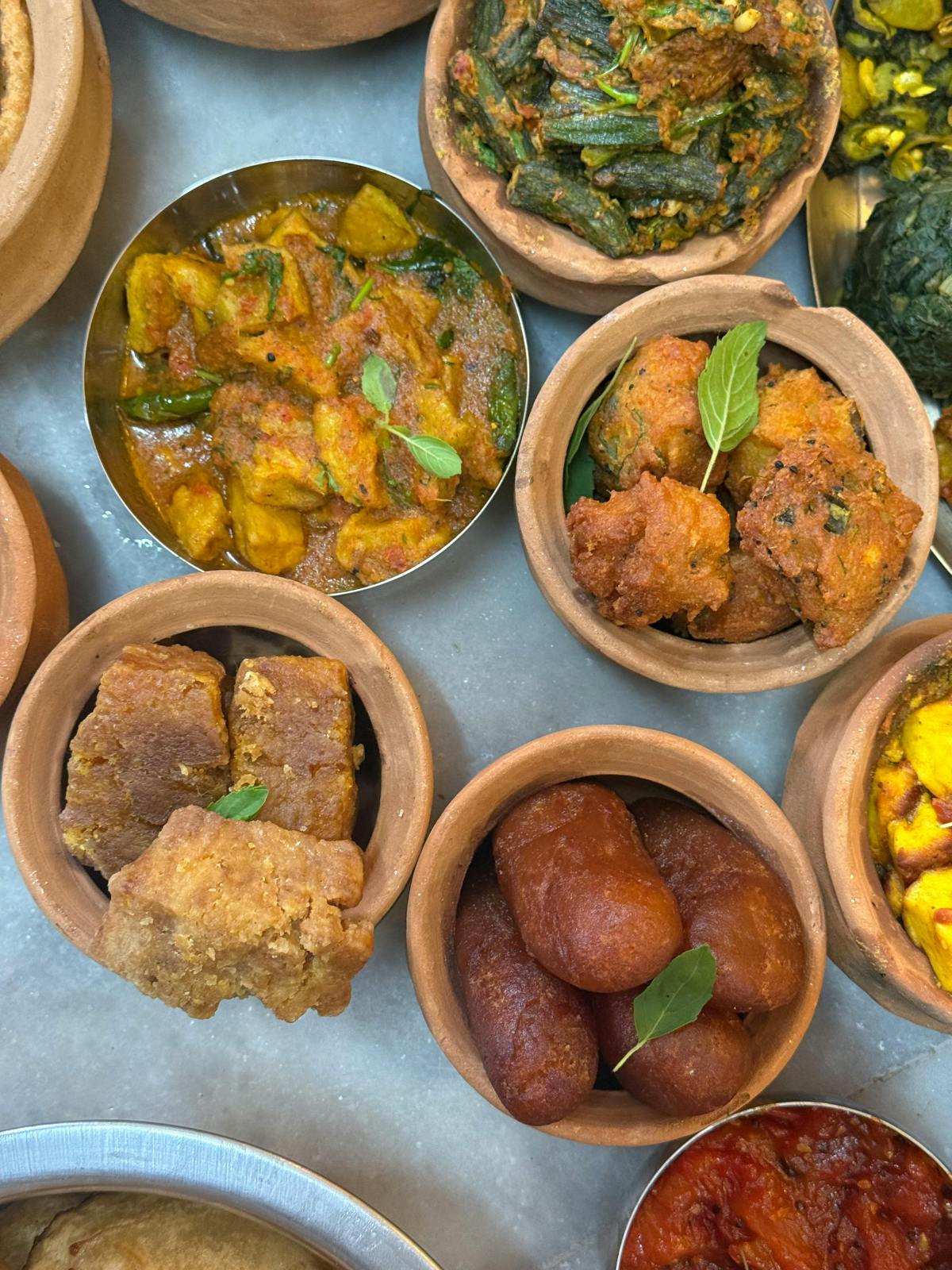
Do You Know How Heavy Your Lunch Is?

Usually, my bag is heavy with a laptop, books, and a lovingly prepared lunch. But on Ekadashi,the bag feels weightless, and for once, the “hunger” that usually rules the day miraculously vanishes. We spend our whole lives working to “pay” for our food, but are we actually settling the bill? Or are we just ignoring the debt we owe to the Sun, the Earth, and God who made them all? If we aren’t offering our food back to God, are we truly eating or are we just incurring a debt we can’t pay back? In the material world, “you die so I can live” is the standard. But there is a way to break this cycle of debt. Dive into my latest post on why Ekadashi is more than just a fast. What is the “weight” of our food?

One day, as I set out for the morning, my backpack felt much lighter, practically weightless. Normally, it carries a laptop, a notebook, my meditation beads, some spiritual books to distribute to those looking for a higher taste in life, and a lovingly prepared lunch, offered first to Krishna. But on this day, there was no food in it.

On the eleventh (it can vary some times) day of every fortnight, Ekadashi, those who wish to make rapid spiritual progress observe a fast. The specific standard of the fast depends on many factors, but in my case, I am blessed that I do not need to eat on that day. It took a long time to get there, and the process was gradual, but it has been well worth it. I don’t take any credit for this, because He who creates the hunger that appears unbearable on other days simply chooses to free me from it on Ekadashi. This is so we can focus on something higher.

People sometimes fast for different reasons. But all the purposes of fasting are served when we fast for spiritual purposes, just as all purposes of a small well are served by a gigantic fresh water lake.

On Ekadashi days, I do drink water, which is a great blessing. Water cleanses in so many ways. One can appreciate the beautiful taste of water more when one is fasting from food.

रसोऽहमप्सु कौन्तेय

O son of Kuntī, I am the taste of water

https://vedabase.io/en/library/bg/7/8/

As a spirit soul full of eternity, knowledge and bliss, it is a humbling paradox that we are saddled with a body that “needs” to eat, sleep, and seek recreation. Because we are presently in the material world, everyone must work for their sustenance. Even the powerful “king of the jungle”, the lion cannot simply lie down, go to sleep, and expect food to enter its mouth.

न हि सुप्तस्य सिंहस्य प्रवि-शन्ति मुखे मृगाः

Animals don’t enter into the mouth of a sleeping lion

The weight of a meal

Eating is a requirement to keep the body alive, so we spend a vast amount of time working and making all the necessary arrangements. Yet, even when we pay for our food, we aren’t paying the full price of food. In this material world, some other living entity must die so that we may live. Whether it is a grain of rice, a bean, a potato, or a nut, a life is given so that I can survive. Because of this, I am careful to honor the life of these living entities by offering them in sacred sacrifice to Krishna.

In this sense, food is “heavy” in many ways, not just by its weight in a bag or its economic price, but by the karmic reactions attached to it.

Generally, the material world is a place where the philosophy is “you die so I can live”. Those who wish to advance spiritually abstain from meat.

अहस्तानि सहस्तानामपदानि चतुष्पदाम् ।
फल्गूनि तत्र महतां जीवो जीवस्य जीवनम् ॥ ४७ ॥

ahastāni sahastānām
apadāni catuṣ-padām
phalgūni tatra mahatāṁ
jīvo jīvasya jīvanam

Those who are devoid of hands are prey for those who have hands; those devoid of legs are prey for the four-legged. The weak are the subsistence of the strong, and the general rule holds that one living being is food for another.

https://vedabase.io/en/library/sb/1/13/47/

The Difference Between Need and Greed

Beyond the debt we owe to the source of our food, there is a karmic debt we incur when we take more than our share. We often mistake our greed for our “need,” and in doing so, we deprive others of their rightful portion.
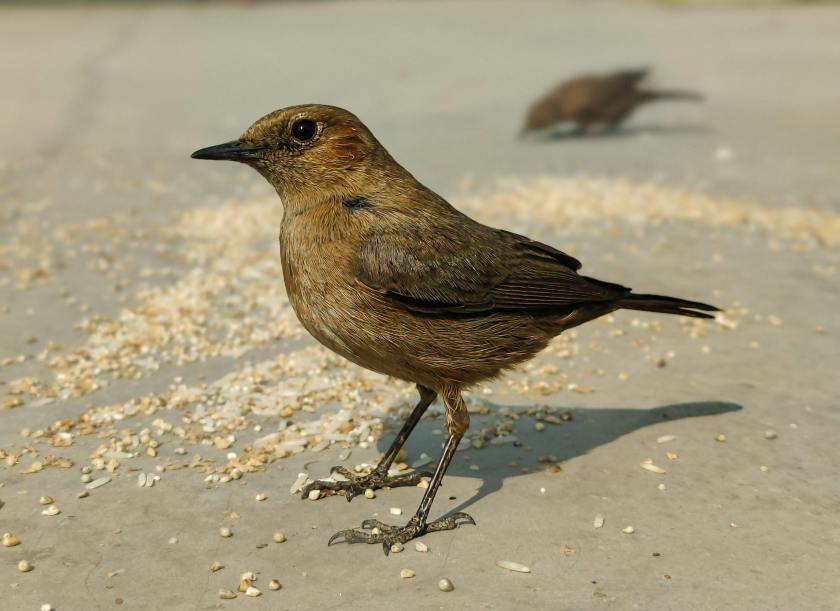
Birds Eating grains and Seeds

Consider a sack of rice left out on an open road. A bird flies down, picks up a single grain at a time to satisfy its hunger, and flies away. Another bird follows, doing the same. They take only what is required for their sustenance. But when a human passes by, they don’t see a single meal! They may see a surplus to be hoarded. They might take the entire sack home, leaving nothing for the others who might follow. By claiming more than our rightful quota, we tighten the knot of karmic debts, forgetting that what we take in excess is effectively stolen from another’s plate. A person who takes more than their need makes themselves liable to have less than they need in future, as per the law of karma.

No one is recommending starvation, but moderation to our bare necessity is important, and voluntary fasting enables that, in the grand scheme of things.

ईशावास्यमिदँ सर्वं यत्किञ्च जगत्यां जगत् ।
तेन त्यक्तेन भुञ्जीथा मा गृधः कस्य स्विद्धनम् ॥ १॥

īśāvāsyam idaḿ sarvaṁ
yat kiñca jagatyāṁ jagat
tena tyaktena bhuñjīthā
mā gṛdhaḥ kasya svid dhanam

Everything animate or inanimate that is within the universe is controlled and owned by the Lord. One should therefore accept only those things necessary for himself, which are set aside as his quota, and one should not accept other things, knowing well to whom they belong.

https://vedabase.io/en/library/iso/1

The Hidden Costs

I reflected in quiet wonder, tracing the journey of a single morsel of food back to its source. We easily settle our debts with the farmer, the trader, and the storekeeper, the visible hands that bring food to our table. But what of the invisible ones? Mother Earth charges no rent for her soil; the sun sends no invoice for his light and warmth, the clouds ask for no payment for the rain. Our currency reaches the middlemen, but it never reaches the Source. Do we not owe a deeper debt to the ones who give everything for nothing in return?

Watering the Root

The only way to truly benefit all these contributors is to offer the food back to God. As God says:

यज्ञशिष्टाशिनः सन्तो मुच्यन्ते सर्वकिल्बिषै ।
भुञ्जते ते त्वघं पापा ये पचन्त्यात्मकारणात् ॥ १३ ॥

yajña-śiṣṭāśinaḥ santo
mucyante sarva-kilbiṣaiḥ
bhuñjate te tv aghaṁ pāpā
ye pacanty ātma-kāraṇāt
Synonyms

The devotees of the Lord are released from all kinds of sins because they eat food which is offered first for sacrifice. Others, who prepare food for personal sense enjoyment, verily eat only sin.

https://vedabase.io/en/library/bg/3/13/

Anyone who does not offer their food to God is caught in a cycle of debt. It is a matter of “an eye for an eye.” If I eat a grain of rice selfishly, I incur the karmic reaction of becoming a grain of rice myself, to be eaten by that same soul in another form. Time separates me from the inevitable consequences of my actions, but the consequence is unavoidable. As sure as death.
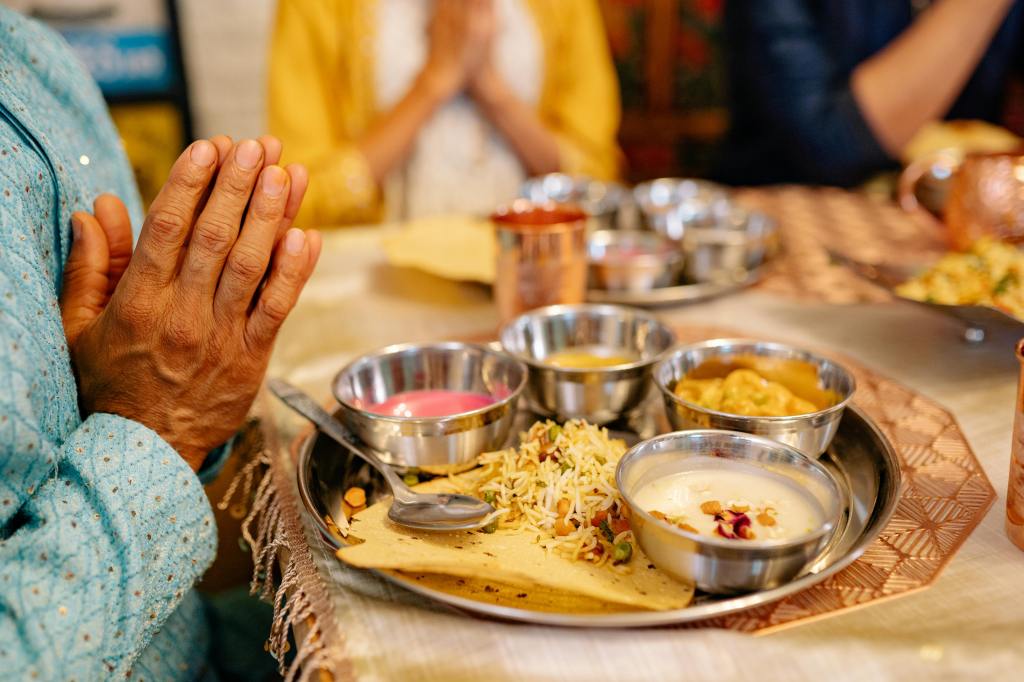
This is because when we water the root of the tree, all the branches, twigs, and leaves automatically get watered.

यथा तरोर्मूलनिषेचनेन
तृप्यन्ति तत्स्कन्धभुजोपशाखा: ।
प्राणोपहाराच्च यथेन्द्रियाणां
तथैव सर्वार्हणमच्युतेज्या ॥ १४ ॥

yathā taror mūla-niṣecanena
tṛpyanti tat-skandha-bhujopaśākhāḥ
prāṇopahārāc ca yathendriyāṇāṁ
tathaiva sarvārhaṇam acyutejyā

As pouring water on the root of a tree energizes the trunk, branches, twigs and everything else, and as supplying food to the stomach enlivens the senses and limbs of the body, simply worshiping the Supreme Personality of Godhead through devotional service automatically satisfies the demigods, who are parts of that Supreme Personality.

https://vedabase.io/en/library/sb/4/31/14/

Do you know how heavy your food is?

Can you afford the price of your food?

Can you carry it’s weight?

That Ekadashi was a great day, packed with a lot of extra time and energy. We often have no idea how much work it actually takes just to procure, eat, and digest all that food. The very next day, of course, my bag was heavy again. But having reflected on the cost, I carried it with a renewed sense of gratitude and responsibility.

With gratitude for feedback on a previous version of this article from my elder brother, Sriman Ravindra Joshi.

I ended my Ekadasi fast 3 minutes too late… what will be my punishment for that?

The rules and regulations of the scripture are meant for purification. But all rules and regulations are within the mercy of the Lord, in other words, God is not a mechanical robot who prescribes punishments for unavoidable or accidental oversight of the rules. One should remember that God is not trying to catch us doing something wrong. We are almost always doing something or the other wrong. God is trying to catch us doing something right.

Question:

I did Ekadasi fast yesterday and time to end the fast was this morning – I hope I didn’t make a big mistake but I broke fast about 3 minutes after window of time. 

Please can you advise how to not be punished too much for this as I’ve done most fasting for years and within prescribed times.

Demigods pray to Lord Vishnu at the boundary of the milk ocean

Background:

Spiritualists from all traditions have some form of fasting as part of their spiritual practices… Some Muslims fast for the month of Ramadan. Some Christians fast for Lent, before Easter. Some Jews fast on Yom Kippur and other days.

Vaishnavas, or those who follow the ancient texts such as the Bhagavad Gita and Srimad Bhagavatam, fast on several occasions, such as Ekadasi, the 11th day of each fortnight of the waxing and waning moon. There are specific rules for such fasting, such as the time when one ends the fast.

Answer:

Srila Prabhupada didn’t emphasize the time of ending one’s fast. We do try, but sometimes it just doesn’t work out.

For example yesterday I was in service from 4:45am-10pm, almost practically continuously. Then this morning I was in service again from 4:30am till now, approximately 5pm. There is still chanting to complete and the evening service of the Lord.  I could only take breakfast at 7:45am, more than an hour after the official time to end fast today.

I’m not telling you all this for any other reason except to ask you… What sort of merciful Lord is Sri Krishna who gave the position of His Mother to Putana who came to kill Him disguising herself as a mother but smearing deadly poison on her breast?

So why will Krishna overlook your daily worship and sadhana and instead make you liable for a 3min delay in ending your fast? Can you see I’m trying to help you see the sweet merciful character of Sri Krishna who is all-merciful?

That is really the difference between Karma Kanda and Bhakti. In Bhakti we take shelter of the causeless mercy of the Lord.

And even if Krishna wants to use something that is like sinful reactions for my purification, my Lord is my best well-wisher so whatever He is is for my own best benefit. Please take full shelter of the lotus feet of Sri Krishna. Depend upon Him.

Why not do our best and leave it to Krishna?

Feasting on the Holy Name

Many spiritualists fast. Especially Vaishnavas on Ekadasi day… but Ekadasi is meant for feasting. So how is it that someone can be simultaneously fasting and feasting at the same time?

తెలుగు (Telugu) translation

In most religious traditions, there is a concept of fasting… whether it is fasting from vice, or fasting from food and water… For example, the Christians fast for 40 days during Lent. Muslims fast for a month during Ramadan/Ramzan… and many other traditions have similar fasts.

In the Vaishnava tradition which I practice, we fast once approximately every 14 days, on a day called Ekadasi or Ekadashi. Usually this is the eleventh day of the waxing or waning moon. Usually, because there are some details when the fasting is a day later, but we won’t get into all that right now.

However, some advanced Vaishnavas say that Ekadashi is meant to be a day of feasting, not fasting.

But…

One should fast on the two Ekādaśī days, which fall on the eleventh day of the waxing and waning moon, and on the birthdays of Lord Kṛṣṇa, Lord Rāma and Caitanya Mahāprabhu. There are many such fasting days.

https://vedabase.io/en/library/sb/3/27/22/

Huh?

If Vaishnavas are fasting from grains, beans, and in some cases from all food, and from all water too for some… then what are they feasting on?

Well, new practitioners may find it hard to fast from food, being how intricately attached we are to our bodies, minds, and serving them constantly. For such Vaishnavas, it is advised that they can eat as much as they need to, except no grains and beans… and all that they eat must be first offered to Krishna. This helps them regulate their senses at least on that level.

But many Vaishnavas often fast from much more than just grains and beans, so how is it that they can feast?

Let us take the example of Rupa Goswami and Sanatana Goswami, great Goswamis of Vrindavan… they had obtained exalted birth, a very sharp intelligence and tremendous knowledge, and were serving as the ministers of the Nawab of Bengal. Rupa Goswami’s life savings in gold coins filled up an entire boat with gold!

But these same two brothers, when in Vrindavan, had no fixed residence, spending each night under a different tree, with barely enough clothing to cover themselves, and austere food, spent all their time hearing and chanting about Krishna. How could they do that?

tyaktva turnam asesha-mandala-pati-srenim sada tuccha-vat
bhutva dina-ganesakau karunaya kaupina-kanthasritau
gopi-bhava-rasamritabdhi-lahari-kallola-magnau muhur
vande rupa-sanatanau raghu-yugau sri-jiva-gopalakau

I offer my respectful obeisances unto the six Gosvamis, namely Sri Rupa Gosvami, Sri Sanatana Gosvami,
Sri Raghunatha Bhatta Gosvami, Sri Raghunatha dasa Gosvami, Sri Jiva Gosvami, and Sri Gopala Bhatta
Gosvami, who kicked off all association of aristocracy as insignificant. In order to deliver the poor
conditioned souls, they accepted loincloths, treating themselves as mendicants, but they are always merged in
the ecstatic ocean of the gopis’ love for Krishna and bathe always and repeatedly in the waves of that ocean.

Verse 4 https://iskcondesiretree.com/page/shad-goswamy-ashtakam

How is it possible for such persons accustomed to royal pleasures to give them up?

It understand by spiritualists that the objects of the senses, the experiences we chase, the possessions we crave, the sensory satisfaction we seek, are compared to toys and children… the child is attached to the toy, but can be induced to give up the toy if offered a higher and better experience.

What could be a higher and better experience than all the pleasures of material life? Especially, how can one give up that most basic of bodily needs – food?

What does food do for us?

  • Food satisfies the tongue – this hankering of the tongue is practically unconquerable, no matter if we need the food or not, the tongue will never say no.
  • Food nourishes the body – we feel strength from the food.
  • Food produces renunciation from food – as we get full, we hanker for food less and less.

भक्ति: परेशानुभवो विरक्ति-
रन्यत्र चैष त्रिक एककाल: ।
प्रपद्यमानस्य यथाश्न‍त: स्यु-
स्तुष्टि: पुष्टि: क्षुदपायोऽनुघासम् ॥ ४२ ॥

bhaktiḥ pareśānubhavo viraktir
anyatra caiṣa trika eka-kālaḥ
prapadyamānasya yathāśnataḥ syus
tuṣṭiḥ puṣṭiḥ kṣud-apāyo ’nu-ghāsam

Devotion, direct experience of the Supreme Lord, and detachment from other things — these three occur simultaneously for one who has taken shelter of the Supreme Personality of Godhead, in the same way that pleasure, nourishment and relief from hunger come simultaneously and increasingly, with each bite, for a person engaged in eating.

So, if someone obtained an experience that fulfilled all three needs – satisifed the tongue, satisfied the bodily need for nourishment, and produced renunciation from the hankering for food, then that experience can replace food!

https://vedabase.io/en/library/sb/11/2/42/

Such is the chanting of the Holy Name of God.

This Hare Krishna Mahamantra

Hare Krishna Hare Krishna
Krishna Krishna Hare Hare
Hare Rama Hare Rama
Rama Rama Hare Hare

The Hare Krishna Mahamantra

This Mahamantra, when chanted purely, produces such an experience and beyond.

In fact, advanced spiritualists have tried to describe the experience of chanting Hare Krishna…

tuṇḍe tāṇḍavinī ratiṁ vitanute tuṇḍāvalī-labdhaye
karṇa-kroḍa-kaḍambinī ghaṭayate karṇārbudebhyaḥ spṛhām
cetaḥ-prāṅgaṇa-saṅginī vijayate sarvendriyāṇāṁ kṛtiṁ
no jāne janitā kiyadbhir amṛtaiḥ kṛṣṇeti varṇa-dvayī

“I do not know how much nectar the two syllables ‘Kṛṣ-ṇa’ have produced. When the holy name of Kṛṣṇa is chanted, it appears to dance within the mouth. We then desire many, many mouths. When that name enters the holes of the ears, we desire many millions of ears. And when the holy name dances in the courtyard of the heart, it conquers the activities of the mind, and therefore all the senses become inert.”

Rupa Goswami https://vedabase.io/en/library/cc/antya/1/99/

Is it any wonder that if a Vaishnava experiences even a tiny drop of a fraction of the ecstasy that the Holy Name generates, that they can abstain from food?

So should the rest of us go and imitate these Vaishnavas and fast from food and water willy nilly, even if the body is hurting?

अशास्त्रविहितं घोरं तप्यन्ते ये तपो जना: ।
दम्भाहङ्कारसंयुक्ता: कामरागबलान्विता: ॥ ५ ॥
कर्षयन्त: शरीरस्थं भूतग्राममचेतस: ।
मां चैवान्त: शरीरस्थं तान्विद्ध्यासुरनिश्चयान् ॥ ६ ॥

aśāstra-vihitaṁ ghoraṁ
tapyante ye tapo janāḥ
dambhāhaṅkāra-saṁyuktāḥ
kāma-rāga-balānvitāḥ

karṣayantaḥ śarīra-sthaṁ
bhūta-grāmam acetasaḥ
māṁ caivāntaḥ śarīra-sthaṁ
tān viddhy āsura-niścayān

Those who undergo severe austerities and penances not recommended in the scriptures, performing them out of pride and egoism, who are impelled by lust and attachment, who are foolish and who torture the material elements of the body as well as the Supersoul dwelling within, are to be known as demons.

https://vedabase.io/en/library/bg/17/5-6/

Of course, advanced Vaishnavas are not masochists or sadists, certainly not demons, and they don’t accept torturing their bodies, even if they have transcended the body… This is because the advanced Vaishnava sees the body as the property of Krishna.

In fact, when an advanced Vaishnava is seen by Krishna to be accepting too much austerity, Krishna gives that person more nourishment and opulence.

Take Krishna’s friend, the pure-hearted Brahmana named Sudama… Krishna gave him all opulence even though he didn’t ask for it!

This is one of Krishna’s most famous promises…

अनन्याश्चिन्तयन्तो मां ये जना: पर्युपासते ।
तेषां नित्याभियुक्तानां योगक्षेमं वहाम्यहम् ॥ २२ ॥

ananyāś cintayanto māṁ
ye janāḥ paryupāsate
teṣāṁ nityābhiyuktānāṁ
yoga-kṣemaṁ vahāmy aham

But those who always worship Me with exclusive devotion, meditating on My transcendental form – to them I carry what they lack, and I preserve what they have.

https://vedabase.io/en/library/bg/9/22/

So, coming back to our original question… when a Vaishnava fasts, how is it that they are still feasting while fasting?

Simple. They feast on the Holy Name of Krishna

(1)
Of sweet things, it’s the sweetest you will taste at any time;
Of things that bring good fortune, it’s good fortune’s paradigm;
Of things that purify, it purifies most powerf’lly;
The Holy Name of Sri Hari is surely all that be.
(2)
From Brahma’s realm atop the sky down to the lowly grass,
Illusion reigns in Maya-devi’s treacherous morass.
The truth, the truth, the only truth: the Name of Sri Hari.
The Holy Name of Sri Hari is surely all that be.
(3)
He’s the guru, he’s the father, he’s the friend most true,
And she’s the real mother who most kindly teaches you
To always chant and hear the Holy Name of Sri Hari.
The Holy Name of Sri Hari is surely all that be.
(4)
Remember that our final breath may come at any time,
No matter if we’re old and sick or in our youthful prime.
So young and old alike should chant the Name incessantly.
The Holy Name of Sri Hari is surely all that be.
(5)
Lord Sri Hari forever dwells wherever devotees
Whose hearts are fixed on Him and free of all impurities
Uplift their voices high and sing His Name in ecstasy.
The Holy Name of Sri Hari is surely all that be.
(6)
Alas! What sorrow! What great pain! The worst calamity-
For people to forget the Holy Name of Sri Hari!
Although the Name’s a priceless gem, mere broken glass they see.
The Holy Name of Sri Hari is surely all that be.
(7)
Just fill your ears, just fill them with the Name of Sri Hari!
Just chant the Name, just chant the Name with all sincerity!
Just sing the Name, just sing the Holy Name eternally!
The Holy Name of Sri Hari is surely all that be.
(8)
It makes this world appear like bits of straw upon the ground;
It splendorously reigns supreme-divinity in sound;
It’s filled with transcendental bliss and peerless purity;
The Holy Name of Sri Hari is surely all that be.
(9)
Inspired to glorify the Holy Name of Sri Hari,
A certain sage composed this hymn in Sanskrit poetry.
I pray that those who read this lowly version made by me
Will chant the Holy Name of Sri Hari in ecstasy.

His Grace Sriman Dravida Dasa ACBSP English rendering of Sri Kevalastakam of Sri Nilakanta Goswami

What to speak of food for a day, the advanced Vaishnava can give up this entire material world!