Understanding Buddhi Yoga and Jnana-Mishra-Bhakti

If Buddhi means intelligence, and Jnana means knowledge, then to use one’s intelligence, does it means to speculate on the knowledge?

What does Krishna mean by “Buddi Yoga”?

Buddhi-Yoga is not just mundane intelligence! It’s the ultimate key to true devotion and liberation. Mixed with speculative knowledge however, Jnana dilutes pure bhakti, making it a distant dream. Real progress in spiritual pursuits demands a focus on Krishna alone, stripping away distractions, and achieving clarity in devotion. Are you ready to commit to the pursuit of spiritual perfection?

Bhakta Sunil, 26 February 2021

Please accept my humble obeisances
All Glories to Srila Prabhupada

Does Buddhi-Yoga mean utilizing one’s intelligence to serve the Lord?
If yes , is Buddhi Yoga the same as Gyaan-Yoga-Mishrit-Bhakti?

What is the difference between Buddhi-Yoga and Gyaan-Yoga-Mishrit-Bhakti?

your servant,
sunil

Bhakta Sunil, 12 March 2015
Hare Krishna

To rephrase / add to the query : Can a person do Buddhi-Yoga if his bhakti is tinged with mental speculation?

your servant,
sunil

Shridhar Das, 13 March 2015
Hare Krishna Sunil Prabhu,
Please accept my humble obeisances!
All Glories to his Divine Grace Srila Prabhupada!

Your question is clearly answered in BG 10.10:

teṣāṁ satata-yuktānāṁ
bhajatāṁ prīti-pūrvakam
dadāmi buddhi-yogaṁ taṁ
yena mām upayānti te

“Buddhi-yoga itself is action in Kṛṣṇa consciousness; that is the highest intelligence.”
“When one tries to go back home, back to Godhead, and takes fully to Kṛṣṇa consciousness in devotional service, his action is called buddhi-yoga. In other words, buddhi-yoga is the process by which one gets out of the entanglement of this material world.”(From the Purport)

This can be confirmed from BG 10.8 also:

ahaṁ sarvasya prabhavo
mattaḥ sarvaṁ pravartate
iti matvā bhajante māṁ
budhā bhāva-samanvitāḥ

“I am the source of all spiritual and material worlds. Everything emanates from Me. The wise” [budha] “who perfectly know this engage in My devotional service and worship Me with all their hearts.” (BG 10.8)

As per His Divine Grace Srila Prabhupada:

Intelligence means to know how to go back to home, back to Godhead.

Buddhi means intelligence and buddhi yoga is apt for bhakti yoga only because in various other yogas, the spiritualists are taking so much pain by changing their positions, locations, shelters, what not, but failing to realize – Krishna is complete, Krishna is everything and the only shelter.

For the same reason Krishna states – I will give you the “intelligence” by which you can come to me, hence this is real intelligence, real buddhi and hence buddhi yoga is bhakti yoga.

A broader understanding of buddhi yoga – To be able to discriminate whether our acts are on the platform of pure consciousness (pleasing Guru and Krishna) or on the platform of body? This technique of being able to rectify our own act is also buddhi yoga as per His Divine Grace.

Interestingly, this also connects with BG 2.49 and confirms buddhi yoga:

dūreṇa hy avaraṁ karma
buddhi-yogād dhanañ-jaya
buddhau śaranam anviccha
kṛpaṇāḥ phala-hetavaḥ

“O Dhanañjaya, keep all abominable activities far distant by devotional service, and in that consciousness surrender unto the Lord. Those who want to enjoy the fruits of their work are misers.” (BG 2.49)

I personally also relate this with vyavasaya-atmika buddhir (BG 2.41) – resoluteness in Krishna consciousness.

Finally, Srila Prabhupada again specifies Buddhi yoga from BG 10.10:

So what is that buddhi-yoga? Krsna says, tesam satata-yuktanam: “Persons who are twenty-four hours engaged,” satata… Satata means always. Engaged. What kind of engagement? Bhajatam priti-purvakam. This engagement means always trying to render some service to the Lord. How? Priti-purvakam: “with love and faith.” Not that “Oh, I have to do it? All right, let me do.” No. “Oh, I have to do it? Let me do it nicely.”(September 12, 1973, London)

I hope this helps us conclude clearly what Buddhi yoga ultimately means.

Regarding difference between the 2 yogas, Srila Prabhupada states:

All other yoga system, there is little tinge of vasudeva-bhakti, but not cent percent pure. It is mixed. Misra-bhakti. Misra-bhakti will not be immediately fruitful. It will take long, long time. Bahunam janmanam ante jnanavan mam prapadyate [Bg. 7.19]. Everything, there is some bhakti-yoga, but if it is not pure.then it will take very, very, very, very long time, bahunam janmanam. One janma means hundreds of years.

Jnana-misra-bhakti means affinity for scriptural knowledge or tendency towards monistic liberation among sadhakas. Instead of trying to serve, to know and to experience, we are more in the mood of trying to be a pandita without following. We already know pure devotional service is anyabhilasita sunyam jnana-karma-adi anavrtam – free of all desires except the desire to please Krishna.

I also had read Uddhava was among jnana-misra-bhakta, being a disciple of Brihaspati. For the same reason Lord Krishna chose him for Vrindavan so that he may take to pure devotional service while associating with the Vrajavasis, especially the gopis. However, position of Uddhava having Lord’s personal association is not to be considered as a subject of comparison.

Personally sharing, when I was researching the strict differences and understandings between jnana and jnana-misra-bhakti yoga an year ago, which has scholarly been distinguished by Srila Vishvanath Chakravarti Thakur and Srila Bhaktivinoda Thakura, I ultimately concluded – Let me take shelter of that which will help with my current struggle against the dirt in my heart and mind. If Krishna wants, He shall drag me to all these studies in future.

your servant,
Shridhar Das

Bhakta Sunil, 16 March 2015
Hare Krishna Shridhar Prabhu

Please accept my humble obeisances
All Glories to Srila Prabhupada

Prabhu amazing knowledge you shared

my , any doubts on this topic have been dispelled

All Glories to your enthusiastic endeavor

in humble mood,
sunil

Mahabhagavat Das, 17 March 2015
Dear Devotees,

Hare Krishna!

As I was reflecting to find a concise way to describe the difference between Buddhi Yoga (Yoga of Intelligence) and Jnana-Mishra-Bhakti (Devotional Service tinged with the desire to become One with the Supreme), and very much inspired by Shridhar Prabhu’s’ answer, I also came across this wonderful purport by Srila Prabhupada in my regular study, it was very profound, and this is from the purport to SB 7.2.47:

“The living entity is bound by the subtle body, consisting of the mind, intelligence and false ego. At the time of death, therefore, the position of the mind becomes the cause for the next body. As confirmed in Bhagavad-gītā (8.6), yaṁ yaṁ vāpi smaran bhāvaṁ tyajaty ante kalevaram: at the time of death the mind sets the criteria for the spirit soul’s being carried to another type of body. If a living being resists the dictation of the mind and engages the mind in the loving service of the Lord, the mind cannot degrade him. The duty of all human beings, therefore, is to keep the mind always engaged at the lotus feet of the Lord (sa vai manaḥ kṛṣṇa-padāravindayoḥ). When the mind is engaged at the lotus feet of Kṛṣṇa, the intelligence is purified, and then the intelligence gets inspiration from the Supersoul (dadāmi buddhi-yogaṁ tam). Thus the living entity makes progress toward liberation from material bondage.”

What jumped out at me was “If a living being resists the dictation of the mind and engages the mind in the loving service of the Lord, the mind cannot degrade him.”, and then ” When the mind is engaged at the lotus feet of Kṛṣṇa, the intelligence is purified, and then the intelligence gets inspiration from the Supersoul (dadāmi buddhi-yogaṁ tam). Thus the living entity makes progress toward liberation from material bondage.”

In other words, as stated by Srila Prabhupada in the purport to BG 10.10, as referred by Shridhar Prabhu:

“In this verse the word buddhi-yogam is very significant. We may remember that in the Second Chapter the Lord, instructing Arjuna, said that He had spoken to him of many things and that He would instruct him in the way of buddhi-yoga. Now buddhi-yoga is explained. Buddhi-yoga itself is action in Kṛṣṇa consciousness; that is the highest intelligence. Buddhi means intelligence, and yoga means mystic activities or mystic elevation. When one tries to go back home, back to Godhead, and takes fully to Kṛṣṇa consciousness in devotional service, his action is called buddhi-yoga. In other words, buddhi-yoga is the process by which one gets out of the entanglement of this material world. The ultimate goal of progress is Kṛṣṇa. People do not know this; therefore the association of devotees and a bona fide spiritual master are important. One should know that the goal is Kṛṣṇa, and when the goal is assigned, then the path is slowly but progressively traversed, and the ultimate goal is achieved.”

So therefore, I would summarize that Buddhi Yoga means Bhakti Yoga, or pure devotional service, and every other mixup is an unfortunate distraction.

Sincerely,
Mahabhagavat Das

Sudarshan Das, 20 March 2015
Hare Krishna,

I also had been thinking on the question and the following translations by His Divine Grace caught my attention which further supports Mahabhagavat Prabhuji’s mail.

BG 2.44:

bhogaiśvarya-prasaktānāṁ
tayāpahṛta-cetasām
vyavasāyātmikā buddhiḥ
samādhau na vidhīyate

“In the minds of those who are too attached to sense enjoyment and material opulence, and who are bewildered by such things, the resolute determination for devotional service to the Supreme Lord does not take place.”

Here: buddhiḥ — devotional service to the Lord

And then BG 2.50:

buddhi-yukto jahātīha
ubhe sukṛta-duṣkṛte
tasmād yogāya yujyasva
yogaḥ karmasu kauśalam

“A man engaged in devotional service rids himself of both good and bad reactions even in this life. Therefore strive for yoga, which is the art of all work.”

Here: buddhi-yuktaḥ — one who is engaged in devotional service

your servant,
Sudarshan Das

Bhakta Sunil, 21 March 2015
Amazing finds Sudarshan Prabhu

Jaya

All Glories to your sincere endeavour

your insignificant servant,
Bhakta Sunil

Shridhar Das, 21 March 2015
Hare Krishna!

All Glories to Srila Gurudeva and Srimati Gurumataji!

One time I had a good fortune to be near Srila Gurudeva while Srila Gurudeva was singing “Jaya Radhe Jaya Krishna Jaya Vrindavan” while departing from Gokula Vrindavan. Then when “Mahavan” was sung in the bhajan (kalindi jamuna jaya jaya mahavan”), Srila Gurudeva searched for Mahavan in Vedabase and further shared of the 12 forests, 5 situated in East and 7 in the West, separated by Yamuna, Mahavan maybe situated in the East. Then Srila Gurudeva shared few pastimes of Lord Krishna which connected with Mahavan. Then Srila Gurudeva asked me all that I remembered from the first part(which I typed above).

Srila Gurudeva inspired me to refer to Vedabase and research on topics although I had Vedabase 2014 lying on laptop desktop unused for a long time. Now these questions, an amazing one such as yours, are helping me to use Vedabase nicely and conclude as per acharyas. Therefore All Glories to Srila Gurudeva and your (Sunil Prabhu) question which are allowing me to follow my heart, at least begin with it in some way.

Mahabhagavat prabhuji, you have shared the dividing line and the science that takes from mishrit to shuddha bhakti from such a sublime purport from His Divine Grace that would have not sparked a bulb in my mind. Glad to have your association. Additions from Sudarshan Prabhu makes us seem that we had an essence conclusion of what buddhi-yoga is.

your servant,
Shridhar Das

Please subscribe to daily inspirational emails from His Grace Sriman Sankarshan Das Adhikari (Writings and lectures archived at www.ecstaticmedia.com ), written fresh every day from his travels around the world sharing the highest spiritual knowledge with everyone. Sign up now at www.joincourse.com

Next Class: Appearance of Sri Radha Kunda, ISKCON Stouffville, 28 Apr 2024

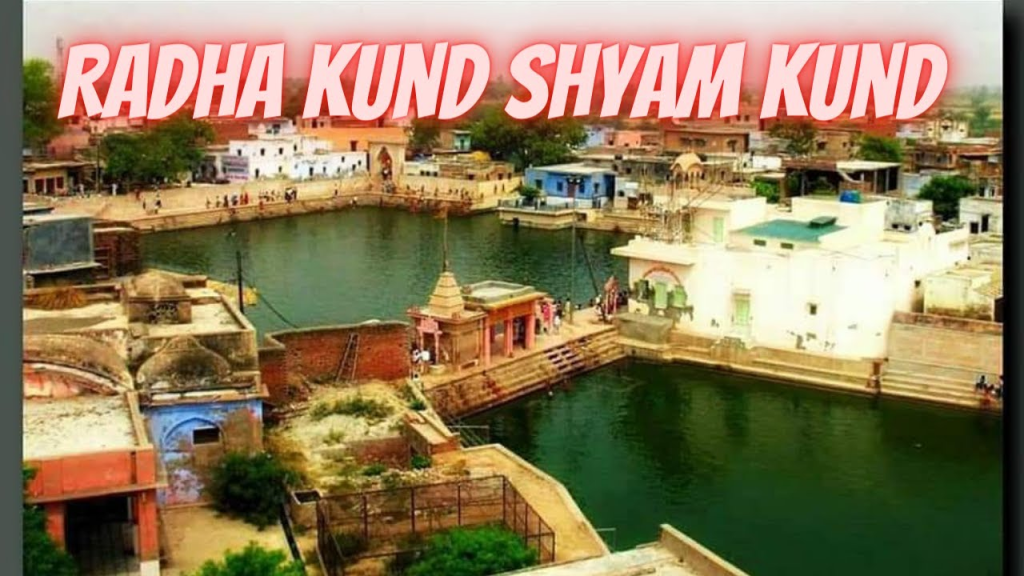
Sri Radha Kunda and Sri Shyam Kunda are sacred places of pilgrimage at Sri Govardhan, near Vrindavan. This class discusses the appearance pastime, and how to approach such a sacred site as this. There will also be a discussion as to what is stopping us from appreciating such spiritually elevated pastimes and topics, and what we can do to improve our spiritual standing.

Hare Krishna!

ISKCON Stouffville Program on 28 Apr 2024 5:15 PM (Eastern Time)

https://www.facebook.com/IStouffville

St. James Presbytarian Church, 6432 Main St, Stouffville, L4A 1G3

Appearance of Sri Radha Kunda

Sri Radha Kunda, along with Sri Shyam Kunda, are among the holiest places of pilgrimage for Vaishnavas. Located at the foot of Sri Govardhan near Vrindavan, they are most auspicious for any fortunate soul who can get a chance to visit them.

We will discuss the following at this class:

  1. The Deliverance of the Demon Aristasura
  2. The playful interactions of Krishna and the Gopis
  3. The appearance of Sri Shyam Kunda
  4. The appearance of Sri Radha Kunda
  5. The disappearance and rediscovery of these sacred ponds
  6. The depth of pastimes such as these, and why we don’t discuss them publicly except in an introductory form
  7. Who cannot appreciate such pastimes
  8. The condition of most of humanity at present
  9. How to improve our spiritual life following the instructions of Srila Prabhupada.

The class will be recorded by ISKCON Stouffville and later uploaded online.

I will also record this class and broadcast it live. Later on, I will send out a link to the recording to those who have expressed interest.

Please contact if you’re interested in joining this class.

Taj Bibi – Mughal Queen, Pure Devotee of Krishna

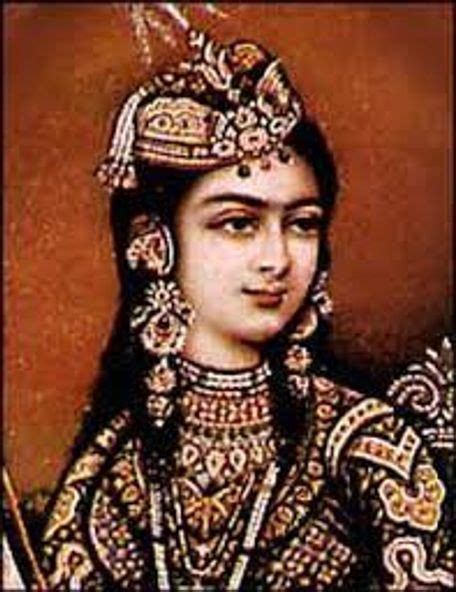
Taj Bibi was a Mughal queen. A wife of the great Mughal Emperor Akbar himself. But she is also a great Vaishnava saint. Her devotional songs are sung to this day. Her tomb is in Vrindavan. How did she make the journey from a mere Mughal Queen to an exalted pure devotee of Krishna?

It is often misunderstood that Krishna is the “God of the Hindus”, or “Hindu God”, or worse “A Hindu god”.

Nothing could be further from the truth, first of all, God is neither Hindu nor Muslim nor Christian nor Jewish nor any other designation you can think of.

God is God.

What to speak of God, even the devotee of God is beyond all material designations!

The very definition of devotion to God by the great Vaishnava saint Srila Rupa Goswami makes this abundantly clear.

সর্বোপাধিবিনির্মুক্তং তৎপরত্বেন নির্মলম্ ।
হৃষীকেণ হৃষীকেশ-সেবনং ভক্তিরুচ্যতে ॥ ১৭০ ॥

sarvopādhi-vinirmuktaṁ
tat-paratvena nirmalam
hṛṣīkeṇa hṛṣīkeśa-
sevanaṁ bhaktir ucyate

“ ‘Bhakti, or devotional service, means engaging all our senses in the service of the Lord, the Supreme Personality of Godhead, the master of all the senses. When the spirit soul renders service unto the Supreme, there are two side effects. One is freed from all material designations, and one’s senses are purified simply by being employed in the service of the Lord.’

https://vedabase.io/en/library/cc/madhya/19/170/

In other words, devotion to God is not possible for someone who is under material designations like Hindu, Muslim, Christian, Jew, or Indian, Pakistani, Chinese, American, African, Canadian.

By corollary, anyone who identifies with any material designation, has no devotion to God.

And when someone truly awakens to the Love of God, then nothing can stop them. Not the religion of their birth, not their gender, not their social or economic status, or their education. When Love of God awakens, it is a force that no other power can stop.

स वै पुंसां परो धर्मो यतो भक्तिरधोक्षजे ।
अहैतुक्यप्रतिहता ययात्मा सुप्रसीदति ॥ ६ ॥

sa vai puṁsāṁ paro dharmo
yato bhaktir adhokṣaje
ahaituky apratihatā
yayātmā suprasīdati

The supreme occupation [dharma] for all humanity is that by which men can attain to loving devotional service unto the transcendent Lord. Such devotional service must be unmotivated and uninterrupted to completely satisfy the self.

https://vedabase.io/en/library/sb/1/2/6/

Take the example of Taj Bibi, a great saint in the Bhakti tradition.

I first heard of Taj Bibi in a Youtube lecture series on Sri Radha Govindaji by His Holiness Indradyumna Swami, a former US Marine turned Vaishnava monk. He is a wonderful, inspiring, saintly Vaishnava.

Taj Bibi was born in a devout and well educated Muslim family. She was the daughter of a Maulvi, a Muslim priest well-connected to the Emperor Akbar. Practically, her father was one of Akbar’s spiritual advisors.

Growing up, she had a fascination for Allah that went beyond the instruction of the Quran. She wanted to see and serve Allah personally. She asked repeatedly if Allah could be seen… and all the Muslim religious leaders told her that if she went to Mecca and Medina on Hajj then she could see Allah. But she was dissuaded for being too young.

She was also exceedingly beautiful. When her father, Fadan Khan died, the Emperor Akbar married her and she became a respected Mughal Queen.

Taj Bibi, Mughal Queen and Vaishnava Saint

One day, on her way to Agra to see Emperor Akbar, she heard the bells of the famous Govindaji temple in Vrindavan. She asked her palanquin bearers what the sound was.

Little Allah!

Those are the bells of the temple of Govindaji, came the reply. She then asked who Govindaji was. The head Muslim Palanquin bearer answered “Oh, he is a little god of the Hindus”. Taj Bibi exclaimed “Oh! Chhota Allah”, which means “Little Allah”. She insisted on being taken to the temple.

Sri Govindaji, who now resides in Jaipur, Rajasthan. He was originally in Vrindavan, but the Mughal Emperor Aurangzeb wanted to desecrate the temple. After a spell-binding adventure, Sri Govindaji reached Jaipur over 400 years ago.

When she reached there, because she was Muslim, she wasn’t allowed entry into the temple. So she sat at the doorway, mesmerized by the sight of Govindaji. She sat there and sang and sang and sang.

The palanquin bearers reminded her that the Emperor was waiting. She ordered the palanquin bearers to inform the emperor to release her from the marriage. Akbar, being an evolved spiritualist himself, agreed.

Taj Bibi then made Vrindavan her home and entered deep into the love of her Allah, she knew Allah as Krishna and saw Him personally in meditation every day.

She also received Vaishnava initiation from her spiritual master Sri Vitthalnath ji, a disciple of Sripada Vallabhacharya of the Pushtimarga Sampradaya.

She spent her life immersed in loving devotional service and wrote many many songs, written in the agony of separation from her beloved, Krishna, or Govindaji. Her songs are sung by devotees to this very day.

In fact, she left her mortal body behind one day, in the sacred land of Vrindavan, eager to catch Krishna who was close by, playing Holi (the festival of colours) with His dearest associates. She went to meet her Beloved in her spiritual form, leaving her mortal body behind.

Her tomb in Raman Reti bears witness to the life of this great saint who fell in love with Krishna despite being born a Muslim and being in the materially exalted position of being a queen of the great Mughal emperor Akbar.

The tomb of the great Mughal Queen and Vaishnava Saint, Taj Bibi.

Bhakti knows no barriers.

Not very long ago, when I gave a Bhagavatam class at ISKCON Hyderabad, there was one young lady who was asking me some very intense questions. I learned that she was a girl from a Muslim family, and her teachers were discouraging her from practicing Krishna Bhakti. I said to her that Allah was standing in front of her in the form of Sri Radha Madan Mohan, and He was visible as He is to those whose eyes are tinged with the salve of Love of God. She was clearly very moved by Sri Radha Madan Mohan, as she stood in front of Him with tears in her eyes.

And of course, many readers have expressed appreciation for the Muslim Brahmin in Hyderabad.

Allah stands in the form of Sri Radha Madan Mohan in ISKCON Hyderabad, for thoe who have the eyes to see Him.

And how can you develop the eyes to see God?

Chant the names of God, even if according to your own tradition. If you are actually chanting the names of God, then you will see God everywhere, including in His deity form, and in every genuine name of God, you will feel ecstatic love.

एतन्निर्विद्यमानानामिच्छतामकुतोभयम् ।
योगिनां नृप निर्णीतं हरेर्नामानुकीर्तनम् ॥ ११ ॥

etan nirvidyamānānām
icchatām akuto-bhayam
yogināṁ nṛpa nirṇītaṁ
harer nāmānukīrtanam

O King, constant chanting of the holy name of the Lord after the ways of the great authorities is the doubtless and fearless way of success for all, including those who are free from all material desires, those who are desirous of all material enjoyment, and also those who are self-satisfied by dint of transcendental knowledge.

https://vedabase.io/en/library/sb/2/1/11/

If you would like to taste genuine spiritual bliss, please chant this mantra constantly:

Hare Krishna Hare Krishna
Krishna Krishna Hare Hare
Hare Rama Hare Rama
Rama Rama Hare Hare

There are many great saints, born in Muslim families, but who developed great devotion to Krishna and are exemplary in their devotional service. I will write about some of them in due course of time.

Do you have a question? Feel free to write to me!

Vrindavan Feeling in Toronto

Sometimes, you’re so near to a spiritually perfect person or in a sacred place of pilgrimage, but your consciousness is far from spiritual, and sometimes you could be far from a spiritual preceptor or a place of pilgrimage, but feel blessed with spiritual grace… w Howhy is that? How can we be in perfect spiritual consciousness always? How can we experience Krishna at every moment?

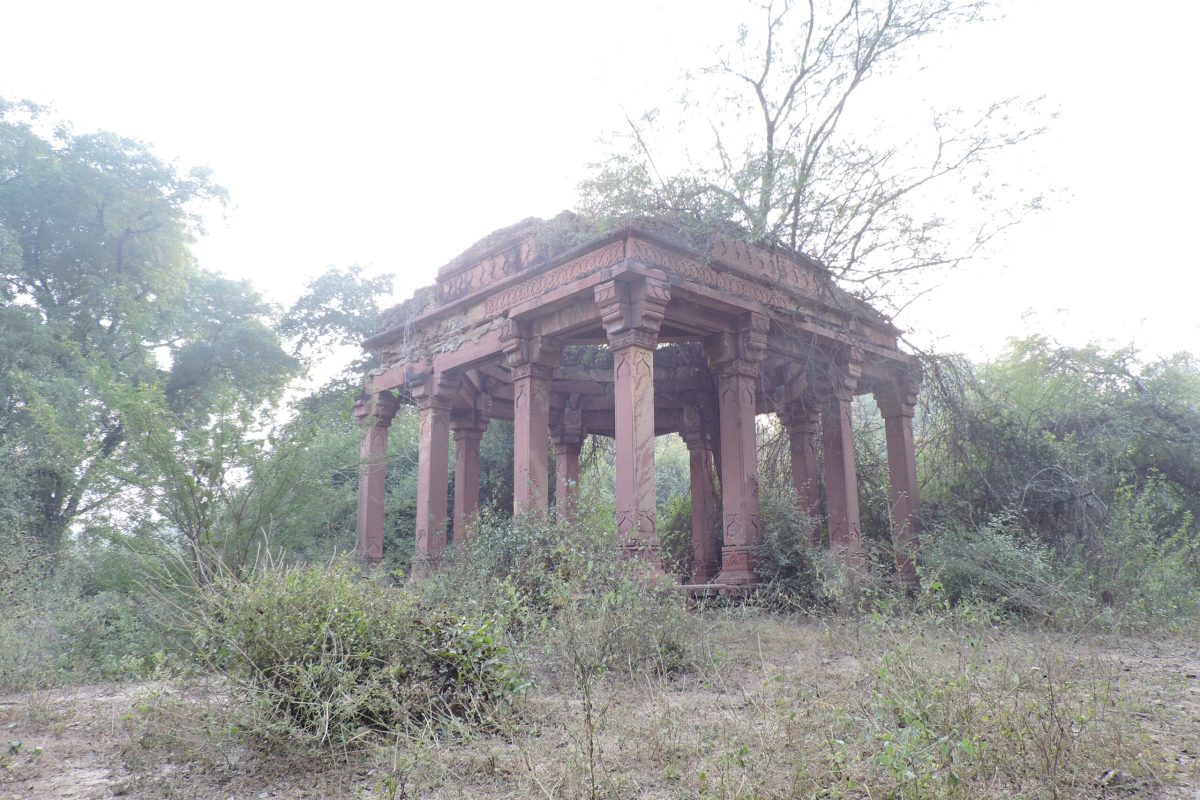
Kusum Sarovar, Govardhan, near Vrindavam
Kusum Sarovar, Govardhan, near Vrindavan

One Morning a few years ago, well before sunrise, I suddenly had the feeling that I was in the sacred sublime atmosphere of Vrindavan, or at the very minimum, in the personal presence of my spiritual master, Srila Sankarshan Das Adhikari.

Everything I did that morning was done in a very pure way, without any disturbance from body, mind, or external sources. I cannot describe the experience in words fully, and neither do I want to disclose details, because that is not the point of this post.

On that morning however, neither was I in Vrindavan, and nor was I in the personal presence of my divine spiritual master.

So what to make of that wonderful ecstatic feeling I was gifted with?

For those who may not know, Vrindavan is a sacred tract of land, a replica of the highest spiritual realm, mentioned in the scriptures as Goloka. That the Vrindavan in the material realm, in the modern-day district of Mathura, Uttar Pradesh, is confirmed by great saints… for example, Srila A. C. Bhaktivedanta Swami Prabhupada writes:

The Lord descends to this mortal world to show His pastimes in Vṛndāvana, which are full of happiness. When Lord Śrī Kṛṣṇa was in Vṛndāvana, His activities with His cowherd boyfriends, with His damsel friends, with the other inhabitants of Vṛndāvana and with the cows were all full of happiness. The total population of Vṛndāvana knew nothing but Kṛṣṇa….

Of course we have a material conception of the sky, and we think of it in relationship to the sun, moon, stars and so on, but in this verse the Lord states that in the eternal sky there is no need for the sun nor for the moon nor electricity or fire of any kind because the spiritual sky is already illuminated by the brahma-jyotir, the rays emanating from the Supreme Lord. We are trying with difficulty to reach other planets, but it is not difficult to understand the abode of the Supreme Lord. This abode is referred to as Goloka. In the Brahma-saṁhitā (5.37) it is beautifully described: goloka eva nivasaty akhilātma-bhūtaḥ. The Lord resides eternally in His abode Goloka, yet He can be approached from this world, and to this end the Lord comes to manifest His real form, sac-cid-ānanda-vigraha. When He manifests this form, there is no need for our imagining what He looks like. To discourage such imaginative speculation, He descends and exhibits Himself as He is, as Śyāmasundara. Unfortunately, the less intelligent deride Him because He comes as one of us and plays with us as a human being. But because of this we should not consider the Lord one of us. It is by His omnipotency that He presents Himself in His real form before us and displays His pastimes, which are replicas of those pastimes found in His abode

https://vedabase.io/en/library/bg/introduction/

After much reflection, I realized that this meant I was doing something right in my spiritual practice. Actually this meant I was following my spiritual master’s instructions sincerely, even if not perfectly. What I was feeling was the pleasure of my spiritual master, and the grace of Sri Radha Krishna.

Since then, I have regularly tested that internal state to determine what kind of consciousness I am in. For example, whenever I am in material consciousness, even if I am directly in Vrindavan, or in the personal presence of my spiritual master, I feel far far away from that divine spiritual consciousness.

How amazing is that! By being there, doing that, still one can feel so far away, and yet, still, while far far away, one can feel that special feeling?

You can’t go to Vrindavan by buying a ticket to travel to Delhi and then taking a taxi or whatever. You can only enter Vrindavan by the blessings of the pure devotee.

His Grace Sriman Sankarshan Das Adhikari

I have had a chance to test this out on several occasions…

  1. While in the personal presence of my spiritual master but unfortunately distracted, and
  2. By physically being in Vrindavan but due my misfortune, in the association of materialistic persons.

Can’t get no Bhaav!

His Grace Sriman Vaisesika Das Adhikari

I cannot just go and sit down in Vrindavan, and even if I do, the current external atmosphere of Vrindavan has become so degraded that it is so easy to come under the influence of the many materialistic persons who prowl there in the hope of making money or enjoying personal sense gratification… it takes a lot of intense prayer and mercy to be able to enter into the real mood of Vrindavan.

It is said that the pure devotee, due to their intense Krishna Consciousness, carries Krishna within their heart, and therefore, wherever they go, that place becomes spiritual even if it is the most abominable place.

भवद्विधा भागवतास्तीर्थभूता: स्वयं विभो ।
तीर्थीकुर्वन्ति तीर्थानि स्वान्त:स्थेन गदाभृता ॥ १० ॥

bhavad-vidhā bhāgavatās
tīrtha-bhūtāḥ svayaṁ vibho
tīrthī-kurvanti tīrthāni
svāntaḥ-sthena gadābhrtā

My lord, devotees like your good self are verily holy places personified. Because you carry the Personality of Godhead within your heart, you turn all places into places of pilgrimage.

https://vedabase.io/en/library/sb/1/13/10/

And neither can I always be in the personal presence of my spiritual master, owing to my various responsibilities, which he has instructed me to manage intelligently.

It is further confirmed by Krishna Himself that He lives where His pure devotees are hearing and chanting about Him…

nāhaṁ tiṣṭhāmi vaikuṇṭhe
yogināṁ hṛdayeṣu vā
tatra tiṣṭhāmi nārada
yatra gāyanti mad-bhaktāḥ

“My dear Nārada, actually I do not reside in My abode, Vaikuṇṭha, nor do I reside within the hearts of the yogīs, but I reside in that place where My pure devotees chant My holy name and discuss My form, pastimes and qualities.”

Padma Purana, quoted in https://vedabase.io/en/library/sb/4/30/35/

So therefore, all I have to do is to sincerely remember and follow in the footsteps of my spiritual master, and strive to sincerely hear and chant about Krishna.

Simply by bringing the memory of an instruction received, one can practically bring into one’s heart the presence of the spiritual master.

Even though, due to my past sinful activities, I have to be in a place where almost everyone practices forgetting Krishna, and where speaking nonsense and doing stupid things are the norm… even for such a lowly wretch such as myself, there is hope.

I can still always be in the association of my spiritual master, and in the sacred spiritual realm of Vrindavan. How?

किरातहूणान्ध्रपुलिन्दपुल्कशा
आभीरशुम्भा यवना: खसादय: ।
येऽन्ये च पापा यदपाश्रयाश्रया:
शुध्यन्ति तस्मै प्रभविष्णवे नम: ॥ १८ ॥

kirāta-hūṇāndhra-pulinda-pulkaśā
ābhīra-śumbhā yavanāḥ khasādayaḥ
ye ’nye ca pāpā yad-apāśrayāśrayāḥ
śudhyanti tasmai prabhaviṣṇave namaḥ

Kirāta, Hūṇa, Āndhra, Pulinda, Pulkaśa, Ābhīra, Śumbha, Yavana, members of the Khasa races and even others addicted to sinful acts can be purified by taking shelter of the devotees of the Lord, due to His being the supreme power. I beg to offer my respectful obeisances unto Him.

https://vedabase.io/en/library/sb/2/4/18/

I may be the most lowly wretch, and yet, simply by remembering my spiritual master, by taking shelter of him within my mind, by following his instructions, wherever I am, and whatever I might be doing, I shall be instantly purified.

To do what I can, with what I have, this is what I pray for, birth after birth. For a moment of pleasure for Guru and Krishna, I am prepared to work hard sincerely, lifetime after lifetime. May this ever be.