A devotee inquires about the significance of raising hands during the chant “Hari bol.” Another devotee explains that this gesture represents voluntary surrender, drawing inspiration from Lord Chaitanya. It enhances one’s connection to Krishna, fostering sincerity and devotion. Ultimately, this practice brings individuals closer to their spiritual goals with heartfelt prayer.
Shivani Saxena, 5 July 2014
Hare Krishna,
My respected obeisances to You,
Srila gurudev and gurumata,
All glories to Srila Prabhupada.
If I may inquire: Why do we do hari bol in hands up position, what does it signify?
Hari bol…
Shivani
Shridhar Das, 8 July 2014
Hare Krsna Mataji!
Please accept my humble obeisances!
All Glories to Srila Gurudeva!
All Glories to Srila Prabhupada!
I will try answering the questions to my best:
1.Why do we do Haribol in hands up position, what does it signify?
Answers. One simple explanation for raising our hands when we say Haribol is because that’s what we read from Caitanya Caritamrta. The same applies when we chant Hare Krsna Mahamantra during lectures in unison or while singing arati. We read many times about Lord Chaitanya raising his hands up and blissfully chanting. He encouraged others to follow. We also follow His footsteps to convince Him that we are eager for the same taste, although far away.
What I was explained when I joined was it’s a sign of surrender. We all know what would happen if a criminal pointed a weapon at us. We would quickly raise our hands in surrender. He would force us by shouting “Hands up!” to make sure we obey his orders. Nevertheless, in bhakti the mood is of voluntary surrender. Out of love for the Lord, in surrender one chants Haribol!! Or during arati in the most surrendered mood. This is to convey one’s heartfelt prayers if the meaning of the song is understood. In the MOST surrendered mood, one prays: “Krsna, I am so helpless and such a fallen soul! Please help me surrender unto You!” or in the mood of glorifying Lord or His devotees. Ultimately, raising hands and singing puts the singer in a more surrendered state of mind. The more we surrender, the more Krsna is pleased with our sincerity despite difficulties. This helps us get closer to the ultimate goal.
your servant
Shridhar Das
Please subscribe to daily inspirational emails from His Grace Sriman Sankarshan Das Adhikari (Writings and lectures archived at www.sda-archives.com ), written fresh every day from his travels around the world sharing the highest spiritual knowledge with everyone. Sign up now at www.joincourse.com
What is the best way to understand Bhagavad Gita? Chant Hare Krishna! Doesn’t sound reasonable? How can chanting a mantra over and over again help me understand the Bhagavad Gita? What is the proof of the pudding? Is it not in the eating? Read more to find out how this works! Do you have questions?
Hare Krishna!
For those of you trying to understand Bhagavad Gita… here is a tip.
Bhagavad Gita is a study of consciousness… lower consciousness, higher consciousness, human, animal, or divine consciousness… and then, when one understands, then to practice, uplift our consciousness and act in the best possible way…
The only way to understand Bhagavad Gita better and better is to sharpen, refine, and clarify our own consciousness… it’s like if you have a blunt knife, it is hard to cut away impurities or imperfections, say, in a fruit or vegetable… but with a sharp knife, one can easily cut away undesirable portions…
So then, the question becomes… “How to sharpen, refine, and clarify my consciousness?”
The short answer? Chant the Hare Krishna Mahamantra!
Why? There is a lot of theory, and a lot of information about this, but it is not something that can be understood theoretically.
Why?
Because it is a practical, experiential thing!
Just like eating when you are hungry… no amount of theoretical reasoning can give you that feeling of satisfaction or fullness… but a simple plate of Krishna Prasada can satisfy you in all respects when you are hungry.
Chaitanya Mahaprabhu summarized this in his famous 8-verse prayer, the Shikshashtakam… “cheto darpana marjanam”… cleansing the mirror of the consciousness… is what Sri Harinam does, first and foremost.
ceto-darpaṇa-mārjanaṁ bhava-mahā-dāvāgni-nirvāpaṇaṁ śreyaḥ-kairava-candrikā-vitaraṇaṁ vidyā-vadhū-jīvanam ānandāmbudhi-vardhanaṁ prati-padaṁ pūrṇāmṛtāsvādanaṁ sarvātma-snapanaṁ paraṁ vijayate śrī-kṛṣṇa-saṅkīrtanam Synonyms cetaḥ — of the heart; darpaṇa — the mirror; mārjanam — cleansing; bhava — of material existence; mahā-dāva-agni — the blazing forest fire; nirvāpaṇam — extinguishing; śreyaḥ — of good fortune; kairava — the white lotus; candrikā — the moonshine; vitaraṇam — spreading; vidyā — of all education; vadhū — wife; jīvanam — the life; ānanda — of bliss; ambudhi — the ocean; vardhanam — increasing; prati-padam — at every step; pūrṇa-amṛta — of the full nectar; āsvādanam — giving a taste; sarva — for everyone; ātma-snapanam — bathing of the self; param — transcendental; vijayate — let there be victory; śrī-kṛṣṇa-saṅkīrtanam — for the congregational chanting of the holy name of Kṛṣṇa.
Translation “ ‘Let there be all victory for the chanting of the holy name of Lord Kṛṣṇa, which can cleanse the mirror of the heart and stop the miseries of the blazing fire of material existence. That chanting is the waxing moon that spreads the white lotus of good fortune for all living entities. It is the life and soul of all education. The chanting of the holy name of Kṛṣṇa expands the blissful ocean of transcendental life. It gives a cooling effect to everyone and enables one to taste full nectar at every step.’
ceto-darpaṇa-mārjanaṁ … cetaḥ — of the heart; darpaṇa — the mirror; mārjanam — cleansing;
What is the proof of this? I can cite my personal example… I got my Bhagavad Gita As It Is in my early twenties, and I had already read so many other editions without understanding anything… I read hundreds of times, without understanding much… for years and years, I read, thinking I had understood… but didn’t understand much, because my actual life didn’t change much… the proof of understanding is what we do with the knowledge, is it not?
But the moment I started chanting Hare Krishna, in 2005, things started falling into place, and my life was transformed. The process continues to this day.
So, what can you do to understand the Bhagavad Gita? Chant Hare Krishna!
Ask me if you don’t know… Do you know how to chant Hare Krishna?
The Names of God are Unlimitedly Sweet. Purandara Dasa, who was a multi-billionaire, gave up the sweeter than honey money to taste the delicious names of God.
He wrote a beautiful song about the sweetness of the Lord’s Names…
To the Milk of Rama’s Name, add the Sugar of Krishna’s Name
Add the Ghee* of Vitthala’s Name, and Smack your Lips!
Bring the Wheat of Single-Mindedness, Grind with the Stones of Renunciation
Draw out the Fine Flour of Simplicity, and Roll into Thin Vermicelli
In the Pot of your Heart, with the Green Gram of your Faith
Cook it all down with your Intelligence, and Serve to Hari’s plate
Oh Joy Oh Bliss when you Experience, and Let Out Satisfied Burps
Then remember Our Lord Eternal Vitthala, the Form of Eternal Bliss!
In Feasting on the Holy Name, I offered a glimpse of how those dedicated to the spiritual path can avoid things like eating and sleeping.
Here in this article, I offer a tangible example of a great soul who actually could taste the holy name… and convey that to those of us who may not yet be tasting.
There are many great souls with a tangible taste of the Holy Name of God, for example, the great saint Rupa Goswami wrote this verse…
“I do not know how much nectar the two syllables ‘Kṛṣ-ṇa’ have produced. When the holy name of Kṛṣṇa is chanted, it appears to dance within the mouth. We then desire many, many mouths. When that name enters the holes of the ears, we desire many millions of ears. And when the holy name dances in the courtyard of the heart, it conquers the activities of the mind, and therefore all the senses become inert.” – https://vedabase.io/en/library/cc/antya/1/99/
Where I come from, we know a great saint named Purandara Dasa.
Purandara Dasa was born Srinivasa Nayaka, son of a rich diamond merchant. Srinivasa was trained in the fine arts and received a solid spiritual education, but as he grew up, he morphed into a ruthless businessman, business above all else, shrewd, calculating, though completely honest. He was a famed jeweller and he had business interests in mortgages, real estate, farmland, and much much more… all this over 500 years ago!
His net worth was said to be the equivalent of 90 million gold coins. If one gold coin was just 10 grams, then that means he owned the equivalent of 900,000 kilograms of gold. In today’s price of gold, Srinivasa Nayaka had an estimated net worth of slightly over USD 68 Billion, or with the current exchange rate!
For the sake of my readers in India, that is Five Lakh Forty Seven Thousand Crore Rupees as of today, or 5,47,000 Crore Rupees!
But, God had delicious plans for Srinivasa Nayaka! He appeared in very interesting disguises to Srinivasa Nayaka. Once there was an intriguing pastime of the nose ring of his wife, Saraswati… and completely bewildered and smitten, when our hero was hopelessly in love with God, he was instructed by God to give away all his wealth and focus exclusively on devotional service. Srinivasa Nayaka had to part with his dearest possession, his wealth, to gain the wealth of God!
How often do we find a Billionaire who gives away $68Bn of wealth and engage himself as a Haridasa, a fully surrendered servant of God?
Srinivasa Nayaka did that, and received initiation from Vyasa Tirtha, a pre-eminent saint in the line of Sri Madhwacharya. Sripad Vyasa Tirtha happens to the the grand-spiritual master of Sripad Madhavendra Puri of the Brahma-Madhwa-Gaudiya Sampradaya, into which this humble author has received initiation from Sripad Sankarshan Das Adhikari, disciple of Srila A. C. Bhaktivedanta Swami Prabhupada.
Initiated as Purandara Dasa, and given the “pen name” of “Purandara Vitthala”, Purandara Dasa is said to have composed more than 475,000 “kritis” or songs. Unfortunately for us, we have only a few known to us today, approximately 1000. Purandara Dasa, like many other pure devotees, Haridasas, spontaneously composed beautiful songs.
His songs are collectively referred to as “Purandaropanishad”… which can be translated as the eternal instructions that bring us closer to the Lord.
His songs explain the most esoteric of concepts in a very simple way, and even ordinary souls such as myself can understand, appreciate, and relish them. The result of meditating on his songs is that our devotional service becomes stronger.
One of my favourite songs of Purandara Dasa is about the most delicious Names of God…
The Names of God are sweeter to Purandara Dasa, whereas to ordinary souls, Money is sweeter than honey, but Purandara Dasa gave all his vast wealth away to obtain the wealth of the Names of God
Rama Nama Payasake – To the Milk of Rama’s Name…
In Kannada Script, the song looks like this:
ರಾಮನಾಮ ಪಾಯಸಕ್ಕೆ ಕೃಷ್ಣನಾಮ ಸಕ್ಕರೆ ವಿಠಲನಾಮ ತುಪ್ಪವ ಬೆರೆಸಿ ಬಾಯಿ ಚಪ್ಪರಿಸಿರೊ
ಒಮ್ಮನ ಗೋಧಿಯ ತಂದು ವೈರಾಗ್ಯ ಕಲ್ಲಲಿ ಬೀಸಿ ಸುಮ್ಮನ ಸಜ್ಜಿಗೆ ತೆಗೆದು ಸಣ್ಣ ಸೇವೆಗೆ ಹೊಸೆದು
ಹೃದಯವೆಂಬೊ ಪಾತ್ರೆಯೊಳಗೆ ಭಾವವೆಂಬೊ ಎಸರು ಇಟ್ಟು ಬುದ್ದಿಯಿಂದ ಪಕ್ವವ ಮಾಡಿ ಹರಿವಾಣದೊಳಗೆ ನೀಡಿ
ಆನಂದ ಆನಂದವೆಂಬೊ ತೇಗು ಬಂದ ಪರಿಯಲಿ ಆನಂದಮೂರುತಿ ನಮ್ಮ ಪುರಂದರವಿಠಲ ನೆನೆಯಿರೊ
I will try to offer a translation for those who may not be conversant with Kannada…
To the Milk of Rama’s Name, add the Sugar of Krishna’s Name
Add the Ghee* of Vitthala’s Name, and Smack your Lips!
Bring the Wheat of Single-Mindedness, Grind with the Stones of Renunciation
Draw out the Fine Flour of Simplicity, and Roll into Thin Vermicelli
In the Pot of your Heart, with the Green Gram of your Faith
Cook it all down with your Intelligence, and Serve to Hari’s plate
Oh Joy Oh Bliss when you Experience, and Let Out Satisfied Burps
Then remember Our Lord Eternal Vitthala, the Form of Eternal Bliss!
– Purandara Dasa’s Rama Nama Payasake, translation by Mahabhagavata Dasa
* Ghee – Clarified Butter, a delicacy used to enhance the flavour of various dishes. Like most Bhakti experiences, it must be tasted and experienced in that way, there is no theoretical way to understand this flavour, the aroma, etc.
Now, my dear reader, please allow me to introduce the deep eternal spiritual truths contained in this simple 4-stanza song.
The Name of God is Sweet!
Is there any doubt about this Yes, beginners may not experience the sweetness, but it is not for lack of sweetness in the Lord’s names, but for the diseased tongue of the beginner to spiritual life… Rupa Goswami Says:
स्यात् कृष्णनामचरितादिसिताप्यविद्यापित्तोपतप्तरसनस्य न रोचिका नु । किन्त्वादरादनुदिनं खलु सैव जुष्टा स्वाद्वी क्रमाद्भवति तद्गदमूलहन्त्री ॥ ७ ॥
syāt kṛṣṇa-nāma-caritādi-sitāpy avidyā- pittopatapta-rasanasya na rocikā nu kintv ādarād anudinaṁ khalu saiva juṣṭā svādvī kramād bhavati tad-gada-mūla-hantrī
The holy name, character, pastimes and activities of Kṛṣṇa are all transcendentally sweet like sugar candy. Although the tongue of one afflicted by the jaundice of avidyā [ignorance] cannot taste anything sweet, it is wonderful that simply by carefully chanting these sweet names every day, a natural relish awakens within his tongue, and his disease is gradually destroyed at the root.
vyavasāyātmikā buddhir ekeha kuru-nandana bahu-śākhā hy anantāś ca buddhayo ’vyavasāyinām
Those who are on this path are resolute in purpose, and their aim is one. O beloved child of the Kurus, the intelligence of those who are irresolute is many-branched.
bhogaiśvarya-prasaktānāṁ tayāpahṛta-cetasām vyavasāyātmikā buddhiḥ samādhau na vidhīyate
In the minds of those who are too attached to sense enjoyment and material opulence, and who are bewildered by such things, the resolute determination for devotional service to the Supreme Lord does not take place.
Those who are not faithful in this devotional service cannot attain Me, O conqueror of enemies. Therefore they return to the path of birth and death in this material world.
indriyāṇi parāṇy āhur indriyebhyaḥ paraṁ manaḥ manasas tu parā buddhir yo buddheḥ paratas tu saḥ
The working senses are superior to dull matter; mind is higher than the senses; intelligence is still higher than the mind; and he [the soul] is even higher than the intelligence.
In the purport to the above verse, Srila Prabhupada writes…
With intelligence one has to seek out the constitutional position of the soul and then engage the mind always in Kṛṣṇa consciousness. That solves the whole problem. A neophyte spiritualist is generally advised to keep aloof from the objects of the senses. But aside from that, one has to strengthen the mind by use of intelligence. If by intelligence one engages one’s mind in Kṛṣṇa consciousness, by complete surrender unto the Supreme Personality of Godhead, then, automatically, the mind becomes stronger, and even though the senses are very strong, like serpents, they will be no more effective than serpents with broken fangs. But even though the soul is the master of intelligence and mind, and the senses also, still, unless it is strengthened by association with Kṛṣṇa in Kṛṣṇa consciousness, there is every chance of falling down due to the agitated mind. – BG 3.42 purport by A. C. Bhaktivedanta Swami Prabhupada
Spiritual Perfection Must be Offered to God
Srila Prabhupada summarizes, in his Nectar of Devotion…
By the process of executing regulated devotional service, one is actually elevated to the transcendental stage, beyond the material modes of nature. At that time one’s heart becomes illuminated like the sun. The sun is far above the planetary systems, and there is no possibility of its being covered by any kind of cloud; similarly, when a devotee is purified like the sun, from his pure heart there is a diffusion of ecstatic love which is more glorious than the sunshine. Only at that time is the attachment to Kṛṣṇa perfect. Spontaneously, the devotee becomes eager to serve the Lord in his ecstatic love.
O King, constant chanting of the holy name of the Lord after the ways of the great authorities is the doubtless and fearless way of success for all, including those who are free from all material desires, those who are desirous of all material enjoyment, and also those who are self-satisfied by dint of transcendental knowledge.
But we can see which taste is more delicious… the taste of untold wealth, or the taste of the Holy Names of God.
Purandara Dasa is the example.
Purandara Dasa is also known as the Father of Carnatic Classical Music, but above mere music is His simple devotion, which he expressed through music.
What will we give up to taste the most unlimitedly delicious sweet clear pure Names of God?
What if all you had to do was to chant this Mantra without giving anything else up?
My Dear Reader, would you please chant this Mantra even just once?
Purandara Dasa is a Mahabhagavata, a mighty pure devotee of the Lord, and this Mahabhagavata Dasa aspires to be the servants of his servants, and hankers to taste their delicious remnants.
I strive to follow the spiritual practices such as rising early for meditation, but sometimes, being encased in dull matter, even though I am a spirit soul, I stumble. But by divine serendipity this morning, I got a loving moonlit wake-up call!
Generally, a spiritualist strives to rise early in the morning.
The time before sunrise is extremely precious for persons on the spiritual path. A most conducive time for meditation, spiritual reflection, and worship of the Supreme Lord.
It may appear like the depth of darkness to the materialist, but the early morning hours are very sublime.
What is night for all beings is the time of awakening for the self-controlled; and the time of awakening for all beings is night for the introspective sage.
Sometimes, even the most well-meaning spiritualist can succumb to imbalances, as I do, ever so often.
My subtle material body consisting of mind, body, and false ego constrains me too often from pursuing spiritual life freely. Sometimes, the spirit and the mind may be willing but it could be the gross material body, made of earth, water, fire, air, and space that constrains me.
The living entities in this conditioned world are My eternal fragmental parts. Due to conditioned life, they are struggling very hard with the six senses, which include the mind.
This morning, my alarm was set for 4:00 AM, but somehow or other I did not rise, resolving to rise at 5:00 AM instead.
But then, shortly thereafter, the moon, who is almost full right now, positioned himself in the sky so he shone on my sleeping face with his full brilliance. As if to help the moon, the mirror behind my pillow on the mat joined in with a secondary reflection of the moonrays.
It was impossible to continue sleeping!
Krishna can be perceived through the light of the sun and the moon.
O son of Kuntī, I am the taste of water, the light of the sun and the moon, the syllable oṁ in the Vedic mantras; I am the sound in ether and ability in man.
My alarm clock and my determination to rise early may have waned, but the waxing moon got me!
Within a few minutes, I was energized by this merciful radiation, reminded of Krishna, and was able to rise refreshed and dive deep into meditation and worship.
The moonlight is an energy of Krishna, the ability for me to engage in acts of Krishna Consciousness are also a gift from Krishna. So it is best to engage my God-given ability in the service of Krishna.
Thanks to that completely undeserved beautiful start to the day, despite all other obstacles or distractions, it has been a most blessed day!
Dear Krishna, thank you for making so many arrangements to help me, a dull recovering atheist, rise to the purpose of human life. Dear Srila Gurudeva, my dear spiritual master, thank you for your prayers and blessings on my behalf, which allow even me, a wretched lost soul, to bask in Krishna Consciousness, even if some of the time.
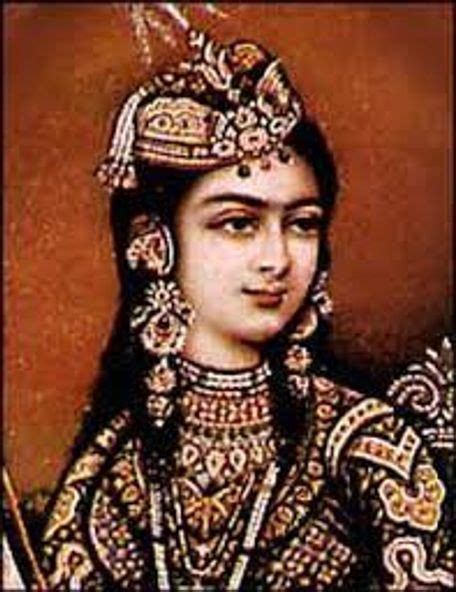
Taj Bibi was a Mughal queen. A wife of the great Mughal Emperor Akbar himself. But she is also a great Vaishnava saint. Her devotional songs are sung to this day. Her tomb is in Vrindavan. How did she make the journey from a mere Mughal Queen to an exalted pure devotee of Krishna?
It is often misunderstood that Krishna is the “God of the Hindus”, or “Hindu God”, or worse “A Hindu god”.
Nothing could be further from the truth, first of all, God is neither Hindu nor Muslim nor Christian nor Jewish nor any other designation you can think of.
God is God.
What to speak of God, even the devotee of God is beyond all material designations!
The very definition of devotion to God by the great Vaishnava saint Srila Rupa Goswami makes this abundantly clear.
“ ‘Bhakti, or devotional service, means engaging all our senses in the service of the Lord, the Supreme Personality of Godhead, the master of all the senses. When the spirit soul renders service unto the Supreme, there are two side effects. One is freed from all material designations, and one’s senses are purified simply by being employed in the service of the Lord.’
In other words, devotion to God is not possible for someone who is under material designations like Hindu, Muslim, Christian, Jew, or Indian, Pakistani, Chinese, American, African, Canadian.
By corollary, anyone who identifies with any material designation, has no devotion to God.
And when someone truly awakens to the Love of God, then nothing can stop them. Not the religion of their birth, not their gender, not their social or economic status, or their education. When Love of God awakens, it is a force that no other power can stop.
स वै पुंसां परो धर्मो यतो भक्तिरधोक्षजे । अहैतुक्यप्रतिहता ययात्मा सुप्रसीदति ॥ ६ ॥
sa vai puṁsāṁ paro dharmo yato bhaktir adhokṣaje ahaituky apratihatā yayātmā suprasīdati
The supreme occupation [dharma] for all humanity is that by which men can attain to loving devotional service unto the transcendent Lord. Such devotional service must be unmotivated and uninterrupted to completely satisfy the self.
Taj Bibi was born in a devout and well educated Muslim family. She was the daughter of a Maulvi, a Muslim priest well-connected to the Emperor Akbar. Practically, her father was one of Akbar’s spiritual advisors.
Growing up, she had a fascination for Allah that went beyond the instruction of the Quran. She wanted to see and serve Allah personally. She asked repeatedly if Allah could be seen… and all the Muslim religious leaders told her that if she went to Mecca and Medina on Hajj then she could see Allah. But she was dissuaded for being too young.
She was also exceedingly beautiful. When her father, Fadan Khan died, the Emperor Akbar married her and she became a respected Mughal Queen.
One day, on her way to Agra to see Emperor Akbar, she heard the bells of the famous Govindaji temple in Vrindavan. She asked her palanquin bearers what the sound was.
Little Allah!
Those are the bells of the temple of Govindaji, came the reply. She then asked who Govindaji was. The head Muslim Palanquin bearer answered “Oh, he is a little god of the Hindus”. Taj Bibi exclaimed “Oh! Chhota Allah”, which means “Little Allah”. She insisted on being taken to the temple.
When she reached there, because she was Muslim, she wasn’t allowed entry into the temple. So she sat at the doorway, mesmerized by the sight of Govindaji. She sat there and sang and sang and sang.
The palanquin bearers reminded her that the Emperor was waiting. She ordered the palanquin bearers to inform the emperor to release her from the marriage. Akbar, being an evolved spiritualist himself, agreed.
Taj Bibi then made Vrindavan her home and entered deep into the love of her Allah, she knew Allah as Krishna and saw Him personally in meditation every day.
She also received Vaishnava initiation from her spiritual master Sri Vitthalnath ji, a disciple of Sripada Vallabhacharya of the Pushtimarga Sampradaya.
She spent her life immersed in loving devotional service and wrote many many songs, written in the agony of separation from her beloved, Krishna, or Govindaji. Her songs are sung by devotees to this very day.
In fact, she left her mortal body behind one day, in the sacred land of Vrindavan, eager to catch Krishna who was close by, playing Holi (the festival of colours) with His dearest associates. She went to meet her Beloved in her spiritual form, leaving her mortal body behind.
Her tomb in Raman Reti bears witness to the life of this great saint who fell in love with Krishna despite being born a Muslim and being in the materially exalted position of being a queen of the great Mughal emperor Akbar.
Bhakti knows no barriers.
Not very long ago, when I gave a Bhagavatam class at ISKCON Hyderabad, there was one young lady who was asking me some very intense questions. I learned that she was a girl from a Muslim family, and her teachers were discouraging her from practicing Krishna Bhakti. I said to her that Allah was standing in front of her in the form of Sri Radha Madan Mohan, and He was visible as He is to those whose eyes are tinged with the salve of Love of God. She was clearly very moved by Sri Radha Madan Mohan, as she stood in front of Him with tears in her eyes.
And of course, many readers have expressed appreciation for the Muslim Brahmin in Hyderabad.
And how can you develop the eyes to see God?
Chant the names of God, even if according to your own tradition. If you are actually chanting the names of God, then you will see God everywhere, including in His deity form, and in every genuine name of God, you will feel ecstatic love.
एतन्निर्विद्यमानानामिच्छतामकुतोभयम् । योगिनां नृप निर्णीतं हरेर्नामानुकीर्तनम् ॥ ११ ॥
O King, constant chanting of the holy name of the Lord after the ways of the great authorities is the doubtless and fearless way of success for all, including those who are free from all material desires, those who are desirous of all material enjoyment, and also those who are self-satisfied by dint of transcendental knowledge.
If you would like to taste genuine spiritual bliss, please chant this mantra constantly:
There are many great saints, born in Muslim families, but who developed great devotion to Krishna and are exemplary in their devotional service. I will write about some of them in due course of time.
Is it necessary to perform the various ritualistic performances of sacrifice mentioned in the Vedas?
Arun Pandit, 4 September, 2019
Dear Prabhuji
On one side religious devotees perform poojas as religiously holy activities. At the same time the intent of such performances are for attaining blessings in material form. Does it not amount to mundane activities and also for fruitive contentment. Granted that all vedik kriyas are for religiously holy activities but ultimately all these kriyas are again for mundane gains
It is thus tantamount to conclude that all vedik kriyas are fruitive in nature and do not aim for moksha or ultimate surrender to paramatama.
Can you please clarify my opaque mind as to why then vedik kriyas and poojas are conducted by devotees if all of them do not lead to attainment of blissful peace of mind
If by any logic vedik kriyas are platforms or stepping stones for attainment kindly explain as to how they lead to this ultimate goal.
The whole hindu world seems to be confused in their so called vedik advances for attaining so called godly devotion.
Kindly elaborate on all vedik kriyas and poojas for my guidance and clarity
Arun Pandit
Devotee
Are Poojas and Kriyas necessary?
Mahabhagavat Das SDA, 5 September 2019
Dear Sriman Arun Pandit,
Hare Krishna!
Please could you be more specific? Which devotees(of which deity) performing which kriyas(task/procedure) and which poojas(ceremonies/worship)?
Sincerely,
Mahabhagavat Das
Tapas Chakraborty, 5 September 2019
Hare Krishna
The confusion of the human mind is with the delusion of truth. It’s not the Hindu society but the entire world is in delusion. The attachment in this materialistic world is cause of delusion and all miseries of humankind. Personalised wisdom is the sum total of ones Karma.
The absolute truth of all human wisdom and eternal truth is vividly elaborated in Bhagavadgita . One who reads Gita daily, understands and comprehends the divine message will be above all illusions and delusion.
All the questions you have raised has been answered vividly in Bhagavad-Gita
Thanks
Hare Krishna
Tapas Chakraborty
Arun Pandit, 5 September 2019
Dear Prabhuji
All deities according to Krishna are imbibed in Him. They are like limbs and attributes of Krishna and are likened to His indriyas. Even if one devotes to a particular deity ultimately it is His own attribute. Hence I do not wish to point to any particular deity or any particular kriya/pooja as long as they ultimately point to Krishna Himself.
Krishna is Ultimate and one may identify Him with any wishful name form nature or religion.
May truth prevail
yours truly
Arun
Are Kriyas necessary?
Arun Pandit, 5 September 2019
Dear Prabhuji
I am citing following shloka no.45 in Second Adhyay.
हे अर्जुन! वेद उपर्युक्त प्रकार से तीनों गुणों के कार्य रूप समस्त भोगों एवं उनके साधनों का प्रतिपादन करने वाले हैं, इसलिए तू उन भोगों एवं उनके साधनों में आसक्तिहीन, हर्ष-शोकादि द्वंद्वों से रहित, नित्यवस्तु परमात्मा में स्थित योग (अप्राप्त की प्राप्ति का नाम ‘योग’ है।) क्षेम (प्राप्त वस्तु की रक्षा का नाम ‘क्षेम’ है।) को न चाहने वाला और स्वाधीन अन्तःकरण वाला हो
Krishna does not point finger at any deity. All kriyas and poojas are of traigunyavishaya I.e. all vedik kriyas come under traigunyavishaya concluding that all are fruitive in nature and /or leading to swarga which also is abundance of pleasures.
Krishna says “Go beyond all traigunyavishaya vedas” and abrogate all worldly pleasures and surrender unto me for vaikunthavaas.
All vedik kriyas are conducted by avivek/विवेकहीन devotees. Nishkaam karmayog does not advise bhogik vedik kriyas and Krishna says you transcend all these avivekiya bhedbhav and kriyas and surrender unto me.
If my understanding of the shloka is different kindly advice me accordingly.
your truly
Arun
Arun Pandit, 6 September 2019
Sri Mahabhagavat Das prabhuji
I am awaiting precise answer to my mail and clarification of my opaque mind which is asking how do vedik kriyas and poojas help one contaminated self in its approach to samadhisht situation
your truly
Arun Pandit
Mahabhagavat Das SDA, 6 September 2019
Dear Sriman Arun Pandit,
Hare Krishna!
Thank you for the question. Thank you also to Sriman Tapas for your beautiful answer. I’m humbly begging that we should be trying to improve ourselves and bring ourselves to the platform of Krishna consciousness by following the instructions of Sri Guru Parampara, as given by Srila Prabhupada to us… chanting Hare Krishna with a vow, following the 4 regulative principles, serving the Krishna consciousness movement practically, dedicating one’s life to Sri Krishna, including formal initiation. To the extent we are surrendered to Sri Guru and Krishna, to that extent we are empowered to bring about a change in other’s consciousness, because as I’m sure we have all experienced… “A man convinced against his will, is of the same opinion still”.
For example, the idea that one may worship any deity (under the logic that every deity is a part-and-parcel of Krishna) is rejected by Sri Krishna Himself. BG 7.20 https://vedabase.io/en/library/bg/7/20/ but we don’t aim to force people to stop their other practices, we simply beg them to add Krishna to their lives, and naturally the sweetness of Krishna consciousness will do its magic.
There is the main principle in Vedic Science… from the Padma Purana.
“smartavyah satatam vishnu vismartavo na jaatuchit
sarve vidhi nishedhayor etayor eva kinkarah”
Translated to English, this means “Always Remember Sri Vishnu, never forget Sri Vishnu, all the Vedic injunctions in terms of rules, regulations, and prohibitions are servants to these principles”.
Sri Krishna is the original Vishnu. “ete chaamsa kalaa pumsah krishnas tu bhagavaan svayam”.
Anything that will increase our Krishna consciousness should be performed, and everything else should be given up.
If we read the Srimad Bhagavatam, we see that in order to set an example for the general public, Lord Balaram went on pilgrimage to various places, including the temples of Kartikeya/Skanda, Lord Shiva, and Durga Devi. Sri Chaitanya Mahaprabhu also went to various places including temples of Lord Shiva. We see that the Gopis worshipped goddess Katyayani, who is another form of Durga Devi to get Krishna as their husband…
But one should not whimsically adopt vows, neither should one whimsically give up previously adopted vows.
All this should be done under the direct personal guidance of a bona fide spiritual master. Here is an example… for someone, taking Sannyas (ultimate renunciation as a monk) may be recommended as it will advance their Krishna consciousness, for someone else, it may not be recommended as it may decrease their Krishna consciousness.
The final word on this is by Srila Prabhupada, in his purport to BG 17.28
“Anything done without the transcendental objective—whether it be sacrifice, charity or penance—is useless. Therefore in this verse it is declared that such activities are abominable. Everything should be done for the Supreme in Krishna consciousness. Without such faith, and without the proper guidance, there can never be any fruit. In all the Vedic scriptures, faith in the Supreme is advised. In the pursuit of all Vedic instructions, the ultimate goal is the understanding of Krishna. No one can obtain success without following this principle. Therefore, the best course is to work from the very beginning in Krishna consciousness under the guidance of a bona fide spiritual master. That is the way to make everything successful.
In the conditional state, people are attracted to worshiping demigods, ghosts, or Yakshas like Kuvera. The mode of goodness is better than the modes of passion and ignorance, but one who takes directly to Krishna consciousness is transcendental to all three modes of material nature.
Although there is a process of gradual elevation, if one, by the association of pure devotees, takes directly to Krishna consciousness, that is the best way. And that is recommended in this chapter. To achieve success in this way, one must first find the proper spiritual master and receive training under his direction. Then one can achieve faith in the Supreme. When that faith matures, in course of time, it is called love of God. This love is the ultimate goal of the living entities. One should therefore take to Krishna consciousness directly. That is the message of this Seventeenth Chapter.”
I hope that this helps you on your journey to Sri Krishna’s lotus feet.
Sincerely,
Mahabhagavat Das
Dixit Aboti, 6 September 2019
Progress of learning as if we do in the academics gives us new light of thoughts and similar is the experience / intuition enters if one sincerely do the spiritual practices…..consciousness shall increase….. There is no medicine for it except chanting of Lord Krishna…
Dixit Aboti
Thunduparambil Jayaprasad, 11 September 2019
Hare Krishna…pranams to Prabhupada. All pujas and rituals in Vedas is to fulfill ones desires in right way ..by that he enjoyed his desire fulfilment (bhoga) and can go to next stage. like our varnasrama…final destination to be reached..if by jnana one got self realised that it is not real but only only delusion . then one can reach fast. this only happens if we surrender to a true guru like Prabhupada ..disciple has craving for truth. then guru reciprocates. hare Krishna
Thunduparambil Jayaprasad
Mahabhagavat Das SDA, 11 September 2019
Thank you!
It is important to note that to surrender to Srila Prabhupada, one must surrender to one of his bona fide disciples who are fit to accept disciples, like, for example, His Grace Sriman Sankarshan Das Adhikari. I am an initiated disciple of this bona fide disciple of Srila Prabhupada, and therefore I am a grand-disciple of Srila Prabhupada.
There are some who claim to surrender to Srila Prabhupada by forcing themselves upon Srila Prabhupada after he stopped initiating disciples in 1977, essentially picking their spiritual names from a hat, they are not properly situated in their surrender and have a long way to go in terms of reaching spiritual perfection.
Sincerely,
Mahabhagavat Das
Arun Pandit, 11 September 2019
Dear Sir
Have read your views on poojas and kriyas.
But I have yet not understood the sentences. Can you make me more clear and simple
By controlling mind and making it your friend one should restrict unwanted desires. For this purpose should one conduct poojas /kriyas?
your sincerely
Arun
Mahabhagavat Das SDA, 5 Feb 2021
Dear Sriman Arun Pandit, Hare Krishna! Please forgive me super delayed response on this… I missed this email somehow. If you chant a minimum of 16 rounds of Hare Krishna Mahamantra, and if you follow the 4 regulative principles, and strive to be a sincere disciple of a bona fide spiritual master in the International Society for Krishna Consciousness, all other Pujas and Kriyas are not necessary. It is said that one who is chanting Hare Krishna with a firm vow has already executed all the pious rituals, bathed at all the holy places of pilgrimage and given all kinds of charity… Here is a good article: http://www.krishna.com/why-and-how-chant-hare-krsna
কোটি অশ্বমেধ এক কৃষ্ণ নাম সম । যেই কহে, সে পাষণ্ডী, দণ্ডে তারে যম ॥ ৭৯ ॥
koṭi aśvamedha eka kṛṣṇa nāma sama yei kahe, se pāṣaṇḍī, daṇḍe tāre yama
One who says that ten million aśvamedha sacrifices are equal to the chanting of the holy name of Lord Kṛṣṇa is undoubtedly an atheist. He is sure to be punished by Yamarāja. CC Adi 3.79
Hare Krishna Hare Krishna Krishna Krishna Hare Hare Hare Rama Hare Rama Rama Rama Hare Hare
Sincerely,Mahabhagavat Das
Please subscribe to daily inspirational emails from His Grace Sriman Sankarshan Das Adhikari (Writings and lectures archived at sda-archives.com), written fresh every day from his travels around the world sharing the highest spiritual knowledge with everyone. Sign up now at www.joincourse.com
Could you tell me if it is alright or correct to advise other people about spiritual path?
Even though, one may not be a pure or perfect devotee and may have many faults.
Sincerely,
Jaanvi
Bhakta Sunil, 31st December 2014
Mataji Hare Krishna
You can tell them how much you know and realize about this sublime process
Even if you do not practise what you preach , you can tell them : that is what is correct according to Scripture
With regards to this point, hope the following Question-Answer from Ultimate Self Realization E-Course also helps :
Answers by Citing the Vedic Version:
________________________________
Question: How to Develop a Desire for Chanting
________________________________
My Dear Guru Maharaja,
Please accept my humble obeisances.
All glories to you and to your worldwide e-preaching!!!
All glories to our dearmost Gurumataji!!!
1. What is the best and the surest way of becoming determined for getting out of bodily identification?
2. How to win over internal laziness?
3. How to chant my rounds so that I feel like chanting? Not just an activity which I have to do, rather something which I want to do?
4. I have heard many times from many devotees: “First be strong in ecstatic in kirtan and japa. Then go out to preach others.” I am not at all strong in either of them. Does that mean I should not go out to preach?
Begging your mercy
Virendra
________________________________
Answer: Remember that You are Meeting Krishna
________________________________
To get out of bodily identification rise early every morning before sunrise, take bath, and deeply absorb yourself in chanting Hare Krishna.
Conquer internal and external laziness by love for Guru, Krishna, and Vaisnavas.
Chanting is enchanting. Even if you don’t taste the ecstasy yet, always remind yourself that chanting Hare Krishna japa is the sweetest, most relishable thing you do each day because it is that time every day when you get to have your own personal, intimate one-on-one private meeting with the Supreme Personality of Godhead, Lord Sri Krishna.
Those who only do bhajan but do not share the mercy of Krishna with those who are suffering due to a lack of Krishna consciousness are disobeying Lord Caitanya’s order that we must tell everyone about Krishna. Because of this neglect of Lord Caitanya’s order they will not be able to relish the full taste of Krishna consciousness.
Sankarshan Das Adhikari
————–
Sincerely,
Bhakta Sunil
Please subscribe to daily inspirational emails from His Grace Sriman Sankarshan Das Adhikari (Writings and lectures archived at sda-archives.com), written fresh every day from his travels around the world sharing the highest spiritual knowledge with everyone. Sign up now at www.backtohome.com
Please accept my humble obeisances.
All Glories to Srila Prabhupada
In the book “Nectar of Instruction” Text Seven, three stages of chanting are mentioned: offensive stage, stage of lessening offences and pure stage.
Can a person reach the pure stage of chanting before initiation?
Regards,
Sunil
Mahabhagavat Das SDA, June 5 2012
Hare Krishna Sunil Prabhu,
Nice question. And we are reading Nectar of Instruction this month in our book club too!
The short answer to your question is “no”.
Evidences:
1. In Nectar of Instruction verse 3, it is mentioned as one of the steps for spiritual perfection,
utsahan niscayad dhairyat
tat-tat-karma-pravartanat
sanga-tyagat sato vrtteh
sadbhir bhaktih prasidhyati
There are six principles favourable to the execution of pure devotional service: (1) being enthusiastic, (2) endeavouring with confidence, (3) being patient, (4) acting according to regulative principles (such as sravanam kirtanam visnoh smaranam [SB 7.5.23] — hearing, chanting and remembering Krsna), (5) abandoning the association of nondevotees, and (6) following in the footsteps of the previous acaryas. These six principles undoubtedly assure the complete success of pure devotional service.
->”(6) following in the footsteps of the previous acaryas.” – all the previous acharyas are duly initiated, there is not a single perfect individual who is not initiated, even Chaitanya Mahaprabhu Himself received initiation even though He is the Supreme Personality of Godhead in the form of His own devotee. So how can we be exempt?
2. In the Chaitanya Charitamrita, Madhya Lila 23.14-15, it is mentioned:
adau sraddha tatah sadhu-
sango ‘tha bhajana-kriya
tato ‘nartha-nivrttih syat
tato nistha rucis tatah
athasaktis tato bhavas
tatah premabhyudancati
sadhakanam ayam premnah
pradurbhave bhavet kramah
“‘In the beginning there must be faith. Then one becomes interested in associating with pure devotees. Thereafter one is initiated by the spiritual master and executes the regulative principles under his orders. Thus one is freed from all unwanted habits and becomes firmly fixed in devotional service. Thereafter, one develops taste and attachment. This is the way of sadhana-bhakti, the execution of devotional service according to the regulative principles. Gradually emotions intensify, and finally there is an awakening of love. This is the gradual development of love of Godhead for the devotee interested in Krsna consciousness.’
3. In the Padma Purana, it is stated and quoted in SB 6.3.20-21 purport by Srila Prabhupada:
“sampradaya-vihina ye mantras te nisphala matah”, this means that without disciplic succession any mantra does not yield the end result, the fruit.
The Hare Krishna Mahamantra is undoubtedly powerful, but its full power is perceived through surrender to the instruction of the bona fide spiritual master, when the mantra is received from the spiritual master in disciplic succession. It is not that the mantra is not powerful but that we are powerless to enter into its deepest mysteries without being admitted in by the bona fide spiritual master.
The desire to not surrender unto a bona fide spiritual master is actually an anartha – an unwanted habit. We have spent so many lifetimes in the attempt to be free of the authority, and so therefore, under material spell, we do not want to also take initiation from bona fide spiritual master.
I heard a lecture where this question was asked to Srila Gurudeva, and his answer was that one can reach maximum up to the “sadhu sangah” stage without initiation.
Actually, to be honest, formal initiation alone does not guarantee perfection – initiation is merely the first step, it “initiate”s us. After that there is the spiritual master’s mercy, and only when accompanied by relentless effort to serve the spiritual master and the devotees and trying to chant nicely, is an initiate liberated, as long as the spiritual master’s instructions are strictly followed.









 Freedom through Genuine Spiritual Progress