
What Will a Mahabhagavat Das Do With a Porsche?

Porsche thinks I’m a wannabe bogus guru simply because my name and profile screams “high-net-worth spiritual influencer.” They recently sent me an invite for a flashy racetrack experience, but I was too busy trudging through dusty Vrindavan, seeking upliftment and dodging the superficial chase for horsepower. While they promise transformation through adrenaline, I’m over here trying to transform my ego instead. Picture me chanting mantras quietly instead of revving engines – infinitely more fulfilling! It’s a classic case of misplaced marketing. Move over, Porsches; I’d rather take a stroll with the cowherd boys!

(And Why Porsche Thinks I’m a Pretender)

I recently received a message from Porsche Cars Canada, Ltd. addressed to Mahabhagavat Das.

The subject? An invitation to the Porsche Track Experience—a high-octane day at the Canadian Tire Motorsport Park. The copy was polished, promising more than just a drive:

“It’s more than a track day. It’s a transformation… Experience our 911 fleet in its natural habitat… refining your driving skills and redefining your limits.”

On the surface, it’s a standard luxury pitch. But beneath the hood of this invitation lies a fascinating, and somewhat indicting, look at how modern culture perceives “spirituality.”

The “Transformation” Trap

The Porsche sales team didn’t send this to me by accident. They operate in a world where “spirituality” has been successfully co-opted by the Spiritual-Industrial Complex. In this world, ancient wisdom is repackaged as a “lifestyle upgrade” for high-performers. There are the people who practice yoga so they can have better sex, for example.

When they use the word “transformation,” they aren’t referring to the shedding of the false ego. They aren’t discussing the quieting the chattering mind. They are certainly not talking about spiritual advancement! They are talking about a peak adrenaline experience—the ultimate form of sense gratification (indriya-tarpana). They’ve seen the “Gurus” in 911s and the “Mindfulness Coaches” who use Zen to sharpen their competitive edge. There are Big Gurus who can cut a deal like almost no one else.

They sent me this email because they assume I am like the other pretenders. They think Mahabhagavat Das is someone who uses a spiritual veneer to decorate a sensuous life. Chasing money, commanding status, and maximizing materialistic, hedonistic sense gratification.

My Actual “Track Experience”: The Dust of Vrindavan

Porsche invites me to a racetrack in Ontario. However, as I write this, I am currently engaged in a very different “performance” experience. I am on a pilgrimage in Vrindavan, India.

Here, there are no engines, no carbon-fiber frames, and no 0-to-60 stats. Instead, I am walking on foot alongside millions of other pilgrims. We aren’t trying to “refine” our driving skills; we are seeking to shed the false prestige entirely.

In Vrindavan, the goal is to peel away the layers of false identity. We aim to shed the material designations. Additionally, we seek to eliminate the suffocating false pride that a luxury car is designed to bolster. My “coaches” aren’t Porsche Certified Driving Instructors; they are the people I meet on the path. I try to humbly listen to everyone. I listen to the “newbies” just discovering Krishna Consciousness. I also listen to the great, accomplished saints who have mastered the art of humility.
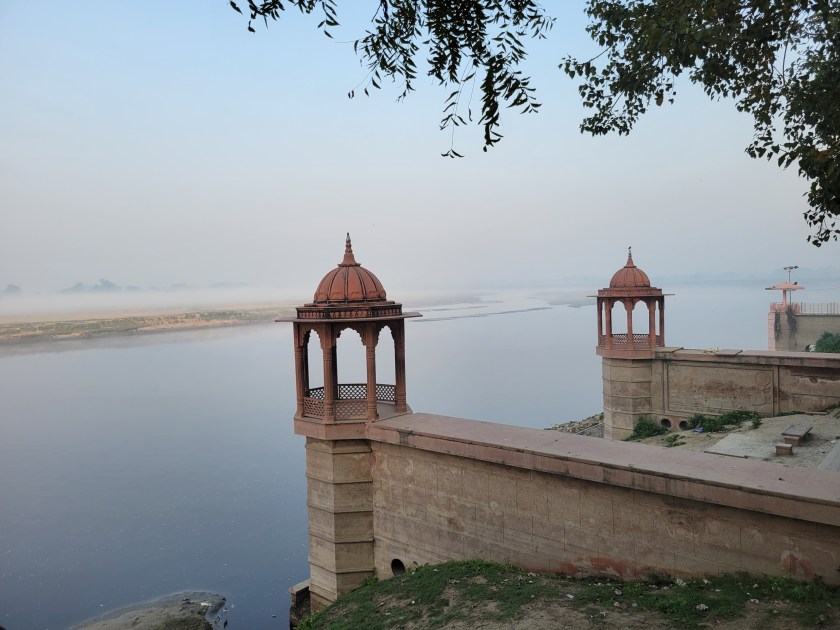
A view of the Yamuna from Brahmand Kund, Vrindavan, India
A view of the Yamuna from Brahmand Ghat, Vrindavan, India

The Wealth of Simplicity

In this land, one finds a standard of “status” that would be incomprehensible to a luxury marketing team. I am surrounded by the mood of the eternal cow herds, the village boys of Vraja. These boys don’t look at The Supreme Personality of Godhead for any personal gain. They don’t regard Krishna and Balaram with awe, reverence, or the desire for a “blessing” of material wealth. In their utter simplicity, they think of Krishna and Balaram as no better than themselves. To them, Krishna and Balaram are just fellow cowherd boys. They do seek shelter of Krishna and Balaram. But most times, they see them as rather “poor wrestlers” who can be teased or defeated in a game. There is no overt hierarchy here, no “top of the line,” and no false prestige. There is only the intimacy of simple love. The world chases a Porsche to feel superior. In contrast, I find a higher state of being in the spiritual atmosphere of Vrindavan. This state is where we are all simple servants of one another, in our service to Krishna. Service for service’ sake.

The Sound of Surrender

Instead of listening to the roar of a flat-six engine, my focus is on a different sound vibration. I walk these dusty roads. I chant the Hare Krishna Mahamantra. I try to hear it in a mood of humble surrender. I am doing this as much as possible. I am doing it as best as I can. I understand that real power doesn’t come from a pedal. It comes from the humble heart’s call to the Divine Couple Sri Radha Shyamsundar.

Hare Krishna Hare Krishna

Krishna Krishna Hare Hare

Hare Rama Hare Rama

Rama Rama Hare Hare

Porsche talks about “taking the wheel,” but the Bhakti path is about deciding which wheel to take up. It is about realizing I am not the controller. Chanting is my attempt to align my consciousness not with a racetrack. Instead, it aligns with the Will of Krishna. I seek a transformation that no amount of horsepower could ever provide.
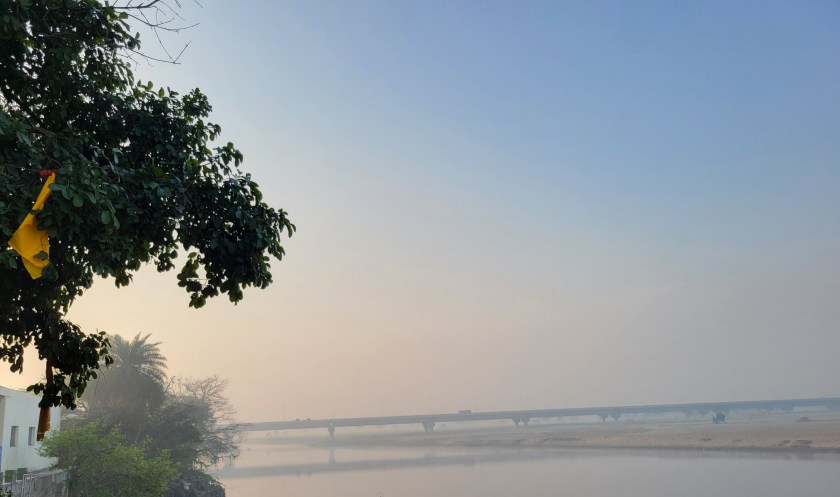
A view of the Yamuna from Brahmand Kund
A view of the Yamuna from Brahmand Ghat

Why They Think I’m a “Pseudo-Spiritualist”. Bhakti vs. Bhukti!

To a marketing algorithm, a name like “Mahabhagavat Das” (Servant of a Great Devotee of Krishna) is just a data point. Their systems interpret “spiritual leader” as “High-Net-Worth Individual interested in Sense Pleasure.”

They believe my spiritual identity is just a “brand.” They think my true “natural habitat” is a racetrack, not a temple or place of service. They don’t think I really intend to serve suffering souls on their spiritual journey. They assume that, like many pseudo-spiritualists today, I am secretly chasing Bhukti (material enjoyment) while talking about Bhakti (devotion). Just one vowel makes syllable different, but almost nothing in common. One syllable is the difference between a soul bound by its desires and a soul liberated by its love.

Porsch vs. Toyot: The Illusion of Difference

Here is the reality that the Porsche sales team doesn’t understand. When you stop looking at the world through the lens of prestige, the “magic” of the brand disappears. The brand loses its allure.

I will not attend a Porsche Track Day. I see no fundamental difference between a Porsche and a Toyota. Remove the marketing, the leather, and the 500-horsepower engine. You are left with a temporary machine built of the same material elements. There is waste, and there is pollution. Infinitely more distraction in one case vs. the other.

In fact, past the labels, is there even a difference between a “Porsch” and a “Toyot”? These are just sounds. Just letters. Just labels we use to convince ourselves that one hunk of metal is “transformative” while the other is merely “functional.” Neither can move the needle of the soul. Neither can take me where I am actually trying to go.

Whether it’s a ‘Porsch’ or a ‘Toyot,’ it’s still just a machine of five elements (earth, water, fire, air, space). It carries a soul that is looking for a home. This home will never be found on a racetrack.

ज्ञानविज्ञानतृप्‍तात्मा कूटस्थो विजितेन्द्रिय: ।
युक्त इत्युच्यते योगी समलोष्ट्राश्मकाञ्चन: ॥ ८ ॥

jñāna-vijñāna-tṛptātmā
kūṭa-stho vijitendriyaḥ
yukta ity ucyate yogī
sama-loṣṭrāśma-kāñcanaḥ

A person is said to be established in self-realization and is called a yogī [or mystic] when he is fully satisfied by virtue of acquired knowledge and realization. Such a person is situated in transcendence and is self-controlled. He sees everything – whether it be pebbles, stones or gold – as the same.

https://vedabase.io/en/library/bg/6/8/

I’m not quite there myself, but chanting Hare Krishna sincerely will eventually will get me there.

The Ethics of Influence

There is a deeper, more personal reason for my “No.” In the Bhakti tradition, being a “Das” (servant) is a sacred trust. Any influence or facility I have been granted is meant for stewardship, not personal consumption.

Using one’s spiritual standing or influence to secure luxury toys or “sense-gratifying” experiences is a betrayal of that trust. The world is full of people who seek the peace of a monk. They also want the garage and harem of a mogul. But a true seeker doesn’t use the cloak of the Divine to chase the mirage of the racetrack.

कर्मेन्द्रियाणि संयम्य य आस्ते मनसा स्मरन् ।
इन्द्रियार्थान्विमूढात्मा मिथ्याचारः स उच्यते ॥ ६ ॥

karmendriyāṇi saṁyamya
ya āste manasā smaran
indriyārthān vimūḍhātmā
mithyācāraḥ sa ucyate

One who restrains the senses of action but whose mind dwells on sense objects certainly deludes himself and is called a pretender.

https://vedabase.io/en/library/bg/3/6/

It is so very easy to get distracted. There is danger at every step for the careless spiritualist. But I am protected by my spiritual masters. As long as I stay within their protection. No one has taken my free will away.

With that free will, I can ascend to a higher realm, or degrade myself.

उद्धरेदात्मनात्मानं नात्मानमवसादयेत् ।
आत्मैव ह्यात्मनो बन्धुरात्मैव रिपुरात्मन: ॥ ५ ॥

uddhared ātmanātmānaṁ
nātmānam avasādayet
ātmaiva hy ātmano bandhur
ātmaiva ripur ātmanaḥ


One must deliver himself with the help of his mind, and not degrade himself. The mind is the friend of the conditioned soul, and his enemy as well.
https://vedabase.io/en/library/bg/6/5/

Closing the Gate

To the Porsche team, the 911 is a masterpiece of engineering. To me, it is just another useless distraction in a world already loud with them.

My path isn’t measured in lap times or gear shifts. It’s measured in the distance between my false ego and the truth. The 911 fleet waits for me in its “natural habitat.” Meanwhile, I’ll stay in mine. I am focusing on a transformation that doesn’t require a key or a combustion engine.

I’ll stay in mine. I strive to walk the dusty roads of Vrindavan, even when I’m in Toronto, or New York or London. The only thing I’m trying to “drive” is the desire for material status out of my heart. I hope to do this once and for all.

Alas, alas, I’m so very far from my goal.

With Gratitude to

The Porsche Marketing Team, for providing a seed many months ago.

Brahmanda Ghat is the sacred place where Lord Sri Krishna “ate dirt”. His friends and elder brother Lord Sri Balaram complained to Their transcendental mother Yashoda. She asked Krishna to open His mouth. She got a glimpse of the entire cosmic creation, many many universes, within Krishna’s mouth. She also saw herself inside herself looking into Krishna’s mouth. These few lines do not do justice to this pastime. Some day I will write more about this place of pilgrimage.

My simple spiritual master Sankarshan Prabhu, for blessing me to genuinely enter Vrindavan.

Vaisesika Prabhu, Mother Nirukula, Mother Shraddha, fanthespark.com.

The organizers and participants of the Pilgrimage of the Heart, 2026, showed immense tolerance. They encouraged and humbled me on my spiritual journey with their own grace.

Especially Vaisesika Prabhu for his “Porsch” vs. “Toyot” joke, apparently an old one!

Feasting on the Holy Name

Many spiritualists fast. Especially Vaishnavas on Ekadasi day… but Ekadasi is meant for feasting. So how is it that someone can be simultaneously fasting and feasting at the same time?

తెలుగు (Telugu) translation

In most religious traditions, there is a concept of fasting… whether it is fasting from vice, or fasting from food and water… For example, the Christians fast for 40 days during Lent. Muslims fast for a month during Ramadan/Ramzan… and many other traditions have similar fasts.

In the Vaishnava tradition which I practice, we fast once approximately every 14 days, on a day called Ekadasi or Ekadashi. Usually this is the eleventh day of the waxing or waning moon. Usually, because there are some details when the fasting is a day later, but we won’t get into all that right now.

However, some advanced Vaishnavas say that Ekadashi is meant to be a day of feasting, not fasting.

But…

One should fast on the two Ekādaśī days, which fall on the eleventh day of the waxing and waning moon, and on the birthdays of Lord Kṛṣṇa, Lord Rāma and Caitanya Mahāprabhu. There are many such fasting days.

https://vedabase.io/en/library/sb/3/27/22/

Huh?

If Vaishnavas are fasting from grains, beans, and in some cases from all food, and from all water too for some… then what are they feasting on?

Well, new practitioners may find it hard to fast from food, being how intricately attached we are to our bodies, minds, and serving them constantly. For such Vaishnavas, it is advised that they can eat as much as they need to, except no grains and beans… and all that they eat must be first offered to Krishna. This helps them regulate their senses at least on that level.

But many Vaishnavas often fast from much more than just grains and beans, so how is it that they can feast?

Let us take the example of Rupa Goswami and Sanatana Goswami, great Goswamis of Vrindavan… they had obtained exalted birth, a very sharp intelligence and tremendous knowledge, and were serving as the ministers of the Nawab of Bengal. Rupa Goswami’s life savings in gold coins filled up an entire boat with gold!

But these same two brothers, when in Vrindavan, had no fixed residence, spending each night under a different tree, with barely enough clothing to cover themselves, and austere food, spent all their time hearing and chanting about Krishna. How could they do that?

tyaktva turnam asesha-mandala-pati-srenim sada tuccha-vat
bhutva dina-ganesakau karunaya kaupina-kanthasritau
gopi-bhava-rasamritabdhi-lahari-kallola-magnau muhur
vande rupa-sanatanau raghu-yugau sri-jiva-gopalakau

I offer my respectful obeisances unto the six Gosvamis, namely Sri Rupa Gosvami, Sri Sanatana Gosvami,
Sri Raghunatha Bhatta Gosvami, Sri Raghunatha dasa Gosvami, Sri Jiva Gosvami, and Sri Gopala Bhatta
Gosvami, who kicked off all association of aristocracy as insignificant. In order to deliver the poor
conditioned souls, they accepted loincloths, treating themselves as mendicants, but they are always merged in
the ecstatic ocean of the gopis’ love for Krishna and bathe always and repeatedly in the waves of that ocean.

Verse 4 https://iskcondesiretree.com/page/shad-goswamy-ashtakam

How is it possible for such persons accustomed to royal pleasures to give them up?

It understand by spiritualists that the objects of the senses, the experiences we chase, the possessions we crave, the sensory satisfaction we seek, are compared to toys and children… the child is attached to the toy, but can be induced to give up the toy if offered a higher and better experience.

What could be a higher and better experience than all the pleasures of material life? Especially, how can one give up that most basic of bodily needs – food?

What does food do for us?

  • Food satisfies the tongue – this hankering of the tongue is practically unconquerable, no matter if we need the food or not, the tongue will never say no.
  • Food nourishes the body – we feel strength from the food.
  • Food produces renunciation from food – as we get full, we hanker for food less and less.

भक्ति: परेशानुभवो विरक्ति-
रन्यत्र चैष त्रिक एककाल: ।
प्रपद्यमानस्य यथाश्न‍त: स्यु-
स्तुष्टि: पुष्टि: क्षुदपायोऽनुघासम् ॥ ४२ ॥

bhaktiḥ pareśānubhavo viraktir
anyatra caiṣa trika eka-kālaḥ
prapadyamānasya yathāśnataḥ syus
tuṣṭiḥ puṣṭiḥ kṣud-apāyo ’nu-ghāsam

Devotion, direct experience of the Supreme Lord, and detachment from other things — these three occur simultaneously for one who has taken shelter of the Supreme Personality of Godhead, in the same way that pleasure, nourishment and relief from hunger come simultaneously and increasingly, with each bite, for a person engaged in eating.

So, if someone obtained an experience that fulfilled all three needs – satisifed the tongue, satisfied the bodily need for nourishment, and produced renunciation from the hankering for food, then that experience can replace food!

https://vedabase.io/en/library/sb/11/2/42/

Such is the chanting of the Holy Name of God.

This Hare Krishna Mahamantra

Hare Krishna Hare Krishna
Krishna Krishna Hare Hare
Hare Rama Hare Rama
Rama Rama Hare Hare

The Hare Krishna Mahamantra

This Mahamantra, when chanted purely, produces such an experience and beyond.

In fact, advanced spiritualists have tried to describe the experience of chanting Hare Krishna…

tuṇḍe tāṇḍavinī ratiṁ vitanute tuṇḍāvalī-labdhaye
karṇa-kroḍa-kaḍambinī ghaṭayate karṇārbudebhyaḥ spṛhām
cetaḥ-prāṅgaṇa-saṅginī vijayate sarvendriyāṇāṁ kṛtiṁ
no jāne janitā kiyadbhir amṛtaiḥ kṛṣṇeti varṇa-dvayī

“I do not know how much nectar the two syllables ‘Kṛṣ-ṇa’ have produced. When the holy name of Kṛṣṇa is chanted, it appears to dance within the mouth. We then desire many, many mouths. When that name enters the holes of the ears, we desire many millions of ears. And when the holy name dances in the courtyard of the heart, it conquers the activities of the mind, and therefore all the senses become inert.”

Rupa Goswami https://vedabase.io/en/library/cc/antya/1/99/

Is it any wonder that if a Vaishnava experiences even a tiny drop of a fraction of the ecstasy that the Holy Name generates, that they can abstain from food?

So should the rest of us go and imitate these Vaishnavas and fast from food and water willy nilly, even if the body is hurting?

अशास्त्रविहितं घोरं तप्यन्ते ये तपो जना: ।
दम्भाहङ्कारसंयुक्ता: कामरागबलान्विता: ॥ ५ ॥
कर्षयन्त: शरीरस्थं भूतग्राममचेतस: ।
मां चैवान्त: शरीरस्थं तान्विद्ध्यासुरनिश्चयान् ॥ ६ ॥

aśāstra-vihitaṁ ghoraṁ
tapyante ye tapo janāḥ
dambhāhaṅkāra-saṁyuktāḥ
kāma-rāga-balānvitāḥ

karṣayantaḥ śarīra-sthaṁ
bhūta-grāmam acetasaḥ
māṁ caivāntaḥ śarīra-sthaṁ
tān viddhy āsura-niścayān

Those who undergo severe austerities and penances not recommended in the scriptures, performing them out of pride and egoism, who are impelled by lust and attachment, who are foolish and who torture the material elements of the body as well as the Supersoul dwelling within, are to be known as demons.

https://vedabase.io/en/library/bg/17/5-6/

Of course, advanced Vaishnavas are not masochists or sadists, certainly not demons, and they don’t accept torturing their bodies, even if they have transcended the body… This is because the advanced Vaishnava sees the body as the property of Krishna.

In fact, when an advanced Vaishnava is seen by Krishna to be accepting too much austerity, Krishna gives that person more nourishment and opulence.

Take Krishna’s friend, the pure-hearted Brahmana named Sudama… Krishna gave him all opulence even though he didn’t ask for it!

This is one of Krishna’s most famous promises…

अनन्याश्चिन्तयन्तो मां ये जना: पर्युपासते ।
तेषां नित्याभियुक्तानां योगक्षेमं वहाम्यहम् ॥ २२ ॥

ananyāś cintayanto māṁ
ye janāḥ paryupāsate
teṣāṁ nityābhiyuktānāṁ
yoga-kṣemaṁ vahāmy aham

But those who always worship Me with exclusive devotion, meditating on My transcendental form – to them I carry what they lack, and I preserve what they have.

https://vedabase.io/en/library/bg/9/22/

So, coming back to our original question… when a Vaishnava fasts, how is it that they are still feasting while fasting?

Simple. They feast on the Holy Name of Krishna

(1)
Of sweet things, it’s the sweetest you will taste at any time;
Of things that bring good fortune, it’s good fortune’s paradigm;
Of things that purify, it purifies most powerf’lly;
The Holy Name of Sri Hari is surely all that be.
(2)
From Brahma’s realm atop the sky down to the lowly grass,
Illusion reigns in Maya-devi’s treacherous morass.
The truth, the truth, the only truth: the Name of Sri Hari.
The Holy Name of Sri Hari is surely all that be.
(3)
He’s the guru, he’s the father, he’s the friend most true,
And she’s the real mother who most kindly teaches you
To always chant and hear the Holy Name of Sri Hari.
The Holy Name of Sri Hari is surely all that be.
(4)
Remember that our final breath may come at any time,
No matter if we’re old and sick or in our youthful prime.
So young and old alike should chant the Name incessantly.
The Holy Name of Sri Hari is surely all that be.
(5)
Lord Sri Hari forever dwells wherever devotees
Whose hearts are fixed on Him and free of all impurities
Uplift their voices high and sing His Name in ecstasy.
The Holy Name of Sri Hari is surely all that be.
(6)
Alas! What sorrow! What great pain! The worst calamity-
For people to forget the Holy Name of Sri Hari!
Although the Name’s a priceless gem, mere broken glass they see.
The Holy Name of Sri Hari is surely all that be.
(7)
Just fill your ears, just fill them with the Name of Sri Hari!
Just chant the Name, just chant the Name with all sincerity!
Just sing the Name, just sing the Holy Name eternally!
The Holy Name of Sri Hari is surely all that be.
(8)
It makes this world appear like bits of straw upon the ground;
It splendorously reigns supreme-divinity in sound;
It’s filled with transcendental bliss and peerless purity;
The Holy Name of Sri Hari is surely all that be.
(9)
Inspired to glorify the Holy Name of Sri Hari,
A certain sage composed this hymn in Sanskrit poetry.
I pray that those who read this lowly version made by me
Will chant the Holy Name of Sri Hari in ecstasy.

His Grace Sriman Dravida Dasa ACBSP English rendering of Sri Kevalastakam of Sri Nilakanta Goswami

What to speak of food for a day, the advanced Vaishnava can give up this entire material world!