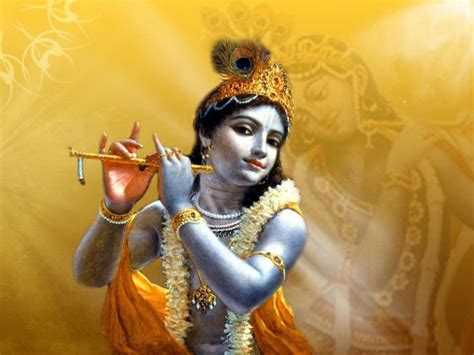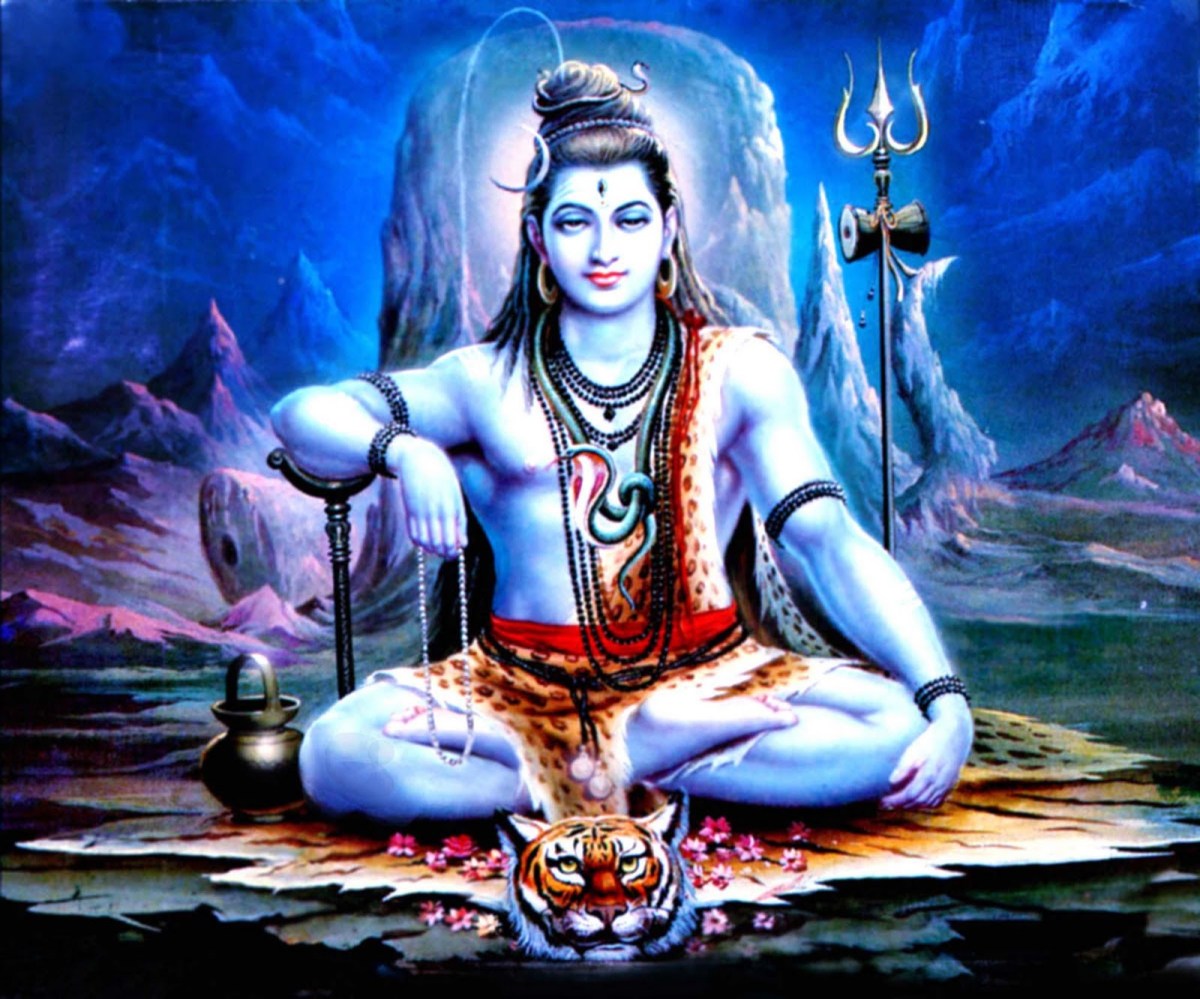
Is Srila Prabhupada insulting Lord Shiva?

Srila Prabhupada, a great teacher, wrote prolifically. Even though his works are lucid and clear, there are many misunderstandings about his writings. One is that he insulted Lord Shiva. Is this true?

Question:

A devotee who has been with ISKCON for 7 years has asked this question… he says he does not agree with Srila Prabhupada’s purport to BG 2.62.

Lord Śiva was deep in meditation, but when Pārvatī agitated him for sense pleasure, he agreed to the proposal, and as a result Kārtikeya was born.

https://vedabase.io/en/library/bg/2/62/

He says that this is not the real story also he doesn’t agree that Lord Shiva can be agitated.

Lord Shiva, Parvati Devi, and their children Kartikeya and Ganesha

Answer:

Thank you for writing to me about this. It is an important thing.

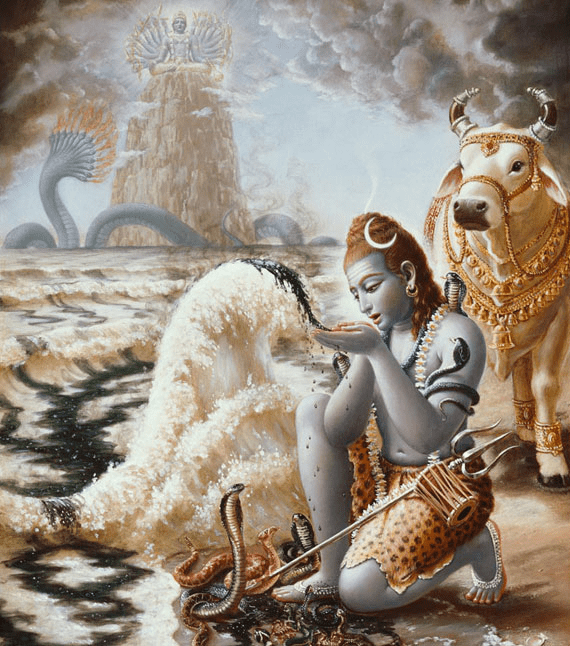
First and foremost we have to understand who is Srila Prabhupada. Srila Prabhupada is a pure devotee. As a pure devotee, Srila Prabhupada has no envy in his heart. Srila Prabhupada has no desire to criticize someone unnecessarily. He also has no tendency to try and pull someone down. In fact, Srila Prabhupada is on the Uttama Adhikari platform. As an Uttama Adhikari, he feels that everyone else is serving Krishna except himself. But Srila Prabhupada came down to the Madhyama Adhikari platform. On this platform, he suppressed his ecstatic emotions and took the role of a teacher of Krishna Consciousness. Thus he preached to us poor lost souls in the material world. Srila Prabhupada undertook an austerity for us. Just like Lord Shiva drank up the ocean of poison, Srila Prabhupada tolerated the poisonous nature of this material world. His sacrifice saves us all.

Great personalities accept voluntary suffering for the benefit of others

“tapyante loka taapena”, this is a verse from the Bhagavatam glorifying personalities like Lord Shiva and Srila Prabhupada.

तप्यन्ते लोकतापेन साधव: प्रायशो जना: ।
परमाराधनं तद्धि पुरुषस्याखिलात्मन: ॥ ४४ ॥

tapyante loka-tāpena
sādhavaḥ prāyaśo janāḥ
paramārādhanaṁ tad dhi
puruṣasyākhilātmanaḥ

It is said that great personalities almost always accept voluntary suffering because of the suffering of people in general. This is considered the highest method of worshiping the Supreme Personality of Godhead, who is present in everyone’s heart.
https://vedabase.io/en/library/sb/8/7/44/

Lord Shiva drinks up an ocean of deadly poison and keeps it suspended in his throat

On the Madhyama Adhikari platform…

A devotee behaves differently with different kinds of personalities. A Madhyama Adhikari is a teacher/preacher… and his mission is to guide souls to spiritual perfection.

  1. To Supreme Personality of Godhead or His plenary expansions, he offers prayers
  2. To the devotees of Krishna, he makes friendship
  3. To the innocent, he preaches Krishna Consciousness
  4. Those envious of Krishna, he avoids

ईश्वरे तदधीनेषु बालिशेषु द्विषत्सु च ।
प्रेममैत्रीकृपोपेक्षा य: करोति स मध्यम: ॥ ४६ ॥

īśvare tad-adhīneṣu
bāliśeṣu dviṣatsu ca
prema-maitrī-kṛpopekṣā
yaḥ karoti sa madhyamaḥ

An intermediate or second-class devotee, called madhyama-adhikārī, offers his love to the Supreme Personality of Godhead, is a sincere friend to all the devotees of the Lord, shows mercy to ignorant people who are innocent and disregards those who are envious of the Supreme Personality of Godhead.

https://vedabase.io/en/library/sb/11/2/46/

Srila Prabhupada, the great Vaishnava Acharya

Now, let us examine who is Lord Shiva.

Lord Shiva is the Topmost Vaishnava, “vaishnavaanaam yathaa shambhu” as stated in the Bhagavatam.

निम्नगानां यथा गङ्गा देवानामच्युतो यथा ।
वैष्णवानां यथा शम्भु: पुराणानामिदं तथा ॥ १६ ॥

nimna-gānāṁ yathā gaṅgā
devānām acyuto yathā
vaiṣṇavānāṁ yathā śambhuḥ
purāṇānām idam tathā

Just as the Gaṅgā is the greatest of all rivers, Lord Acyuta the supreme among deities and Lord Śambhu [Śiva] the greatest of Vaiṣṇavas, so Śrīmad-Bhāgavatam is the greatest of all Purāṇas.

https://vedabase.io/en/library/sb/12/13/16/

In the Brahma Samhita (kshiram yatha dadhi vikaaram) it is stated that Lord Vishnu transforms as Lord Shiva when Lord Vishnu is “in touch” with material energy. This is just like how milk turns to curds when touched with tamarind. In other words, Lord Vishnu and Lord Shiva have no difference of opinion. Krishna desires everyone to be His pure devotee. Similarly, Lord Shiva desires everyone to be Krishna’s pure devotee.

क्षीरं यथा दधि विकारविशेषयोगात्
सञ्जायते न हि ततः पृथगस्ति हेतोः ।
यः शम्भुतामपि तथा समुपैति कार्या-
-द्गोविन्दमादिपुरुषं तमहं भजामि ॥ ४५ ॥

kṣīraṁ yathā dadhi vikāra-viśeṣa-yogāt
sañjāyate na hi tataḥ pṛthag asti hetoḥ
yaḥ śambhutām api tathā samupaiti kāryād
govindam ādi-puruṣaṁ tam ahaṁ bhajāmi

Just as milk is transformed into curd by the action of acids, but yet the effect curd is neither same as, nor different from, its cause, viz., milk, so I adore the primeval Lord Govinda of whom the state of Śambhu is a transformation for the performance of the work of destruction.

https://vedabase.io/en/library/bs/5/45/

In fact, without the mercy of Lord Shiva, no one can become a Vaishnava. Lord Shiva and Parvati Devi are regarded as the father and mother of the material world. As you know, father and mother are the first teachers of every child.

As such, Lord Shiva is beyond all criticism. And as Lord Shiva is a pure devotee, Srila Prabhupada would never criticize Lord Shiva.

Srila Prabhupada is stating the fact.

Lord Kartikeya was born of Shiva and Parvati’s union. Lord Brahma, who is Lord Vishnu’s son is born directly from Himself without the help or assistance of Lakshmi Devi.

In the Valmiki Ramayana, Kartikeya is mentioned as the son of Rudra and Parvati. Agni and Ganga Devi aided in his birth. We accept Valmiki Muni as an utmost authority.

Valmiki, the author of the Original Ramayana

In the Mahabharata, Kartikeya is mentioned as the son of Shiva and Parvati. He emerged as a result of Lord Shiva’s sexual union with Parvati Devi. The details I will not mention here. Ganga Devi cultivated the seed of Lord Shiva. Agni Deva, the demigod in charge of fire, kept it warm.

Now, there is a third story, from the Shiva Purana… Lord Shiva was meditating. Parvati Devi was trying to attract him. Kamadeva tried to help but was burned to ashes by the wrath of Lord Shiva. Lord Shiva, being merciful, then paid attention to Parvati Devi. He married her, and Kartikeya was conceived.

There is additionally a Tamil version of the Skanda Purana in which another story is presented. I read that story in the Amar Chitra Katha comics as a child. Only later I learned where the story came from. The demigods prayed to Lord Shiva and pleased Him. As a result, Lord Shiva manifested 5 additional heads. From each head came one spark. Vayu Deva, the demigod in charge of the wind, carried these sparks and handed them to Agni Deva. Agni Deva then carried the sparks to Ganga Devi, who took them to Saravana lake. There, 6 boys were born. The 6 boys were merged into one by Krittika Devi. This marked the appearance of Kartikeya. He then defeated the demons Surapadma and Simhamukha. These demons surrendered to Kartikeya and became his assistant associates.

Valmiki Ramayana is the Absolute Truth. Mahabharata is also composed by Veda Vyasa. Therefore, we have 2 authoritative references to support Srila Prabhupada’s statement about Lord Shiva in BG 2.62.

Srila Prabhupada is a highly empowered Vaishnava Acharya who has presented Krishna Consciousness in the Brahma Madhva Gaudiya Sampradaya. Why should anyone accept an objection raised by an uncontrolled mind? Instead, whenever we hear the instruction of the Acharya, we should strive to understand how it is true. It’s not about whether it is true or not, but how it is true. This is called surrender. It may take time. It took me many years to surrender to my Guru Maharaja, but eventually I did. Whenever I had any doubts about Srila Prabhupada’s words, my spiritual masters helped me. They guided me with proper understanding to overcome that doubt.

To “disagree” with an Acharya, is simply immaturity.

Sometimes Acharyas disagree with each other. This is alright if they are of an equal stature. In that case, the rest of us must try to understand how they are right, all of them! Spiritual reality is truly wonderful. It is not one dimensional.

Puranic stories sometimes differ because they describe one kalpa (a day of Brahma) or another. On different days of Lord Brahma, there can be variations in some details.

Lord Shiva’s agitation by Parvati is not an insult to Lord Shiva.

Instead, it glorifies his great devotion to Sri Krishna. By personal example, Lord Shiva is showing how great Lord Krishna is. Lord Krishna remained without agitation even when surrounded by 3 Billion beautiful young gopis. The gopis were ready to do anything for Krishna. Krishna is an eternal Brahmachari, and the proof of this statement is Sri Bhishmadeva who has stated this personally!

Does this help?

Glossary – Personalities & Concepts mentioned in the article:

  • Acharya – A teacher in one of 4 authorized disciplic successions from God, who teaches by personal example
  • Agni Deva – The demigod in charge of fire
  • Bhagavatam – The topmost spiritual scripture, available online at https://vedabase.io/en/library/sb/
  • Bhishmadeva – Among the 12 greatest spiritual authorities of our universe, played a pivotal role in the Mahabharata, sometimes referred to as “grandsire” or “grandfather”
  • Brahma – The creator of this universe, son of Lord Vishnu
  • Brahma Samhita – The composition of Lord Brahma is a 100-chapter book. Only Chapter 5 is available. It can be found online at https://vedabase.io/en/library/bs
  • Deva – “Demigod”, also used as an honorific for divine personalities
  • Ganga – The most sacred river in our Universe, a liquid form of God
  • Gopis – The topmost saints, devotees of Krishna
  • Guru – Spiritual Master, also “heavy”
  • Kalpa – A day of Brahma, 4.32 Billion Years long
  • Kama – Literally “lust”, used to refer to the demigod in charge of love
  • Kartikeya – Son of Shiva and Parvati, the military commander of the demigods
  • Krishna – The Supreme Personality of Godhead, source of both spiritual and material realms, the One and Only appearing Himself in different forms and with different names
  • Krittika Devi – a demigoddess
  • Madhva Gaudiya Sampradaya – A current unbroken line of disciplic succession from God Himself, included below for reference
  • Madhyama Adhikari – defined above
  • Maharaja – King among men, used to refer to royalty and to renounced or exalted souls
  • Parvati – The consort of Lord Shiva, expanded as the material energy
  • Purana – Authorized history of the Universe, there are 18 such histories, 6 meant for those in the mode of goodness, 6 for those in the mode of passion, and 6 meant for those in the mode of passion
  • Ramayana – The pastimes of Lord Rama, the Personality of Godhead
  • Rudra – A son of Lord Brahma, born of his anger from his forehead
  • Simhamukha & Surapadma – Former demons who accepted the shelter of Kartikeya and became his assistants
  • Shiva – The auspicious one, also referred to as Rudra
  • Shiva Purana – The scripture describing the pastimes of Lord Shiva, meant for the benefit of those situated in the mode of ignorance
  • Sri – Opulence, refers to the Goddess of Fortune, or someone blessed with some extraordinary opulence
  • Uttama Adhikari – defined above
  • Valmiki – The author of the original Ramayana, disciple of Narada
  • Vayu Deva – The demigod in charge of the air and wind
  • Vishnu – An expansion of Krishna
  • Vyasa – The compiler of Vedic literature

The Brahma Madhva Gaudiya Sampradaya:

1. Kṛṣṇa
2. Brahmā
3. Nārada
4. Vyāsa
5. Madhva
6. Padmanābha
7. Nṛhari
8. Mādhava
9. Akṣobhya
10. Jaya Tīrtha
11. Jñānasindhu
12. Dayānidhi
13. Vidyānidhi
14. Rājendra
15. Jayadharma
16. Puruṣottama
17. Brahmaṇya Tīrtha
18. Vyāsa Tīrtha
19. Lakṣmīpati
20. Mādhavendra Purī
21. Īśvara Purī, (Nityānanda, Advaita)
22. Lord Caitanya
23. Rūpa, (Svarūpa, Sanātana)
24. Raghunātha, Jīva
25. Kṛṣṇadāsa
26. Narottama
27. Viśvanātha
28. (Baladeva), Jagannātha
29. Bhaktivinoda
30. Gaurakiśora
31. Bhaktisiddhānta Sarasvatī
32. A. C. Bhaktivedanta Swami Prabhupāda

The Author’s spiritual master, His Grace Sriman Sankarshan Das Adhikari, is a disciple of His Divine Grace A. C. Bhaktivedanta Swami Prabhupada.

Ascending vs. Descending Process of knowledge

What is knowledge? What is ignorance? How do we acquire knowledge? Which method actually works? Finding out things the ascending way, or hearing from an authority? How to acquire perfect knowledge beyond all doubt?

Knowledge is a wonderful thing, isn’t it?

Are these people getting anywhere? Are they “progressing”?

With knowledge, comes power. Power to do good, and also power to do evil. Knowledge can be a liberator, but also can be a tool for enforcing bondage.

Also, what qualifies as knowledge anyway? If, for example, a person acquired some knowledge on “how to rob a bank” and applies that knowledge, landing in prison, or even if they escape somehow, was that really knowledge? Or was it ignorance?

There are 2 main types of knowledge:

  1. Knowledge of the material world -material knowledge
  2. Knowledge of what lies beyond this material world through the scriptures – spiritual knowledge – In Sanskrit “परोक्ष” or “parokṣa”

There are many means of acquiring knowledge:

  1. By Direct experience or perception – In sanskrit “प्रत्यक्ष” or “pratyakṣa”
  2. By hypothesis/logic/conjecture/guessing – In sanskrit “अनुमान” or “anumāna”
  3. By hearing from a higher authority – In Sanskrit “शब्द” or “śabda”

Ultimately, there are 2 fundamental processes of acquiring knowledge:

  1. Ascending Process – build up knowledge from building blocks – In Sanskrit “आरोहपन्था” or “ārohapanthā
  2. Descending Process – Knowledge descending directly from God and His messengers – In Sanskrit “अवरोहपन्था” or “avarohapanthā

In an article, with an example of an ant who wanted to map the Universe, I discussed the futility of the ascending process of knowledge, especially about items that are outside of our realm of perception.

Much of what we know exists, is actually too subtle to perceive.

These are the material elements, listed in the Bhagavad Gita:

Gross Material Elements:

  1. Earth
  2. Water
  3. Fire
  4. Air
  5. Ether (Space/Sky)

Subtle Material Elements:

  1. Mind
  2. Intelligence
  3. False Ego

BG भूमिरापोऽनलो वायु: खं मनो बुद्धिरेव च ।
अहङ्कार इतीयं मे भिन्ना प्रकृतिरष्टधा ॥ ४ ॥

bhūmir āpo ’nalo vāyuḥ
khaṁ mano buddhir eva ca
ahaṅkāra itīyaṁ me
bhinnā prakṛtir aṣṭadhā

Earth, water, fire, air, ether, mind, intelligence and false ego – all together these eight constitute My separated material energies.

https://vedabase.io/en/library/bg/7/4/

The Material-Spiritual Disconnect

Earth is the most gross of the material elements, more subtle is water, even more subtle is air, and ether is quite subtle, you can’t touch or feel space, but we can still perceive it. Now, when we get to the mind, that is even more subtle. Intelligence is still more subtle, and the most subtle material element is false ego, our sense of identity.

However, none of the material elements can directly approach that which is non-material, namely the spiritual is outside of the realm of material elements, even subtle.

If we see our material means of acquiring knowledge, the mind, intelligence, and our sense of identity are all material in nature, and therefore, the ascending process of acquiring knowledge cannot possibly extend to the spiritual realm.

There is another main reason why the ascending process of knowledge is flawed… all of us who are “conditioned” to accept a material identity, have 4 defects:

  1. Tendency to be illusioned (In Sanskrit “भ्रम”or “bhrama”) – we often misunderstand facts and are illusioned about things as they are
  2. Tendency to make mistakes (In Sanskrit “प्रमाद” or “pramāda”) – there is no conditioned souls who can say they never make mistakes
  3. Tendency to cheat others (In Sanskrit “विप्रलिप्सा”or “vipralipsā”) – this is a great weakness, to want to appear better than we are, or know something we don’t, etc.
  4.  We possess imperfect senses (In Sanskrit “करण पाटव” or “karaṇa-pāṭava”) – all our senses are quite imperfect, and we miss a lot from our senses

So, with these 4 defects, it is impossible to acquire perfect knowledge using only our senses. Why is that? It is because with an imperfect instrument, you cannot make something that is perfect. No matter how hard we try, our imperfections stand in the way.

The common example is if we’re doing some mathematical calculation or solving an equation… a tiny mistake somewhere along the way can get us a wrong answer.

Let’s say, for example, someone didn’t know who their father was… they can do some detective work, or a DNA test of every man in the world, or they can take the answer from their mother. The mother’s answer is authoritative and a lot easier too.

Reconnecting Material to the Spiritual

The only way to acquire perfect knowledge, then, is through the descending process, “avarohapantha”. In this process, the Supreme Absolute Perfect (generically called God, specifically named Krishna, Allah, Rama, Govinda, Buddha, Jehovah, Yahweh, etc.) conveys the perfect knowledge, and whoever hears this knowledge passes it on without addition or subtraction.

Perfect Knowledge means something that never changes. Compare this to our ascending process of knowledge. Researchers make a career out of making mistakes! First they publish one paper hypothesizing (and sometimes also offering “proof”) one particular thing… the laypeople accept that as the truth, and then a little while later, that or another researcher publishes another paper contradicting the original hypothesis or proof. In this way, the so-called philosophers and scientists bumble about, going from imperfection to imperfection. This is not called knowledge, this is called nescience, or ignorance.

Why is that? Because material knowledge gives the impression of advancement, whereas it actually traps us in bigger and bigger problems, requiring more and ever more complexity. A material “solution” is only another problem in disguise… it is simply creating one problem in place of another. Therefore, material knowledge is not called knowledge, but ignorance. And those who pursue material knowledge excessively are said to be ignorant.

So therefore, spiritual knowledge is worth pursuing, and such knowledge cannot be “discovered/created/invented” by anyone else other than the Supreme Personality of Godhead.

धर्मं तु साक्षाद्भ‍गवत्प्रणीतं
न वै विदुऋर्षयो नापि देवा: ।
न सिद्धमुख्या असुरा मनुष्या:
कुतो नु विद्याधरचारणादय: ॥ १९ ॥

dharmaṁ tu sākṣād bhagavat-praṇītaṁ
na vai vidur ṛṣayo nāpi devāḥ
na siddha-mukhyā asurā manuṣyāḥ
kuto nu vidyādhara-cāraṇādayaḥ

Real religious principles are enacted by the Supreme Personality of Godhead. Although fully situated in the mode of goodness, even the great ṛṣis who occupy the topmost planets cannot ascertain the real religious principles, nor can the demigods or the leaders of Siddhaloka, to say nothing of the asuras, ordinary human beings, Vidyādharas and Cāraṇas.

https://vedabase.io/en/library/sb/6/3/19/

But, one may ask, it’s not like the Supreme Personality of Godhead is directly perceivable to a materially conditioned soul. So what is to be done?

Fortunately, there is a clear way…

स्वयम्भूर्नारद: शम्भु: कुमार: कपिलो मनु: ।
प्रह्लादो जनको भीष्मो बलिर्वैयासकिर्वयम् ॥ २० ॥
द्वादशैते विजानीमो धर्मं भागवतं भटा: ।
गुह्यं विशुद्धं दुर्बोधं यं ज्ञात्वामृतमश्नुते ॥ २१ ॥

svayambhūr nāradaḥ śambhuḥ
kumāraḥ kapilo manuḥ
prahlādo janako bhīṣmo
balir vaiyāsakir vayam

dvādaśaite vijānīmo
dharmaṁ bhāgavataṁ bhaṭāḥ
guhyaṁ viśuddhaṁ durbodhaṁ
yaṁ jñātvāmṛtam aśnute

Lord Brahmā, Bhagavān Nārada, Lord Śiva, the four Kumāras, Lord Kapila [the son of Devahūti], Svāyambhuva Manu, Prahlāda Mahārāja, Janaka Mahārāja, Grandfather Bhīṣma, Bali Mahārāja, Śukadeva Gosvāmī and I myself know the real religious principle. My dear servants, this transcendental religious principle, which is known as bhāgavata-dharma, or surrender unto the Supreme Lord and love for Him, is uncontaminated by the material modes of nature. It is very confidential and difficult for ordinary human beings to understand, but if by chance one fortunately understands it, he is immediately liberated, and thus he returns home, back to Godhead.

https://vedabase.io/en/library/sb/6/3/20-21/

Now, at least some of those personalities have established disciplic successions on this planet.

There are 4 main authorized disciplic successions to receive perfect knowledge in discipic successions. A disciplic succession is known as “Sampradaya” or “That which gives completely”.

A mango, intact, passed down

A useful example is that if a ripe mango is high in a tree, then if the mango is handed from person to person from those who are at various heights pass the mango down from hand to hand, vs. trying to throw the mango down to the ground…

A Sampradaya delivers spiritual knowledge perfectly, without addition or subtraction
  1. Brahma Sampradaya and its branches, especially expounded by the great teacher Madhva, Lord Chaitanya, and their followers.
  2. Rudra Sampradaya and its branches, especially expounded by the great teacher Vishnu Swami and his followers.
  3. Sri Sampradaya and its branches, begun by Lakshmi devi, the Goddess of Fortune, consort of Lord Narayana, and especially expounded by the great teacher Sri Ramanuja and his followers.
  4. Kumara Sampradaya and its branches, especially expounded by the great teacher Sri Nimbarka and his followers.

What about the rest?

To the extent the teachings of others are in line with one of these descending lines of discipic succession, they are valid, and anything outside of these is at best a stepping stone to one of these 4 lines of disciplic succession. In the worst case, it is a materialistic business masquerading as a genuine spiritual tradition.

Those who claim to be part of a certain tradition but add or subtract from the fundamental principles or twist the teachings are called “apasampradayas” or “anti disciplic successions”.

His Grace Sriman Sankarshan Das Adhikari

By the mercy of my parents and then my spiritual master His Grace Sriman Sankarshan Das Adhikari who is a disciple of His Divine Grace A. C. Bhaktivedanta Swami Prabhupada The Founder Acharya of the International Society for Krishna Consciousness, even though personally unworthy, I am connected to one of these lines of disciplic succession, called the Brahma-Madhva-Gaudiya Sampradaya, and seeking to pass on those pure instructions to whoever may want to follow, without adding or subtracting any principle, only, if need be, adjusting details to suit the individual and times.

His Divine Grace A. C. Bhaktivedanta Swami Prabhupada, Founder Acharya of the International Society for Krishna Consciousness (ISKCON)

And what is a principle and what is a detail? That, Srila Prabhupada said, requires some intelligence. I pray for this intelligence, which in my case, I simply ask my spiritual master with a clear description of context.

Ultimately however, knowledge coming from the scriptures and the spiritual master in disciplic succession must be realized in the heart through a process of personal effort (sadhana) and purification. Then the paroksha jnana or scriptural knowledge through scripture, becomes “aparoksha” or that which is beyond the reach of the material senses. In order to experience such knowledge in action, one’s senses must be spiritually awakened, or re-spiritualized.

Krishna, the Supreme Personality of Godhead

Pure devotional service to Krishna is the Ultimate goal of all knowledge, and anything besides this is a waste of time.

Questions? I remain your servant on your spiritual journey! Hare Krishna!