Can Spiritual Organizations Truly Exist?

Is “spiritual organization” a contradiction? Spirituality is all about simplicity while organizations lean towards complexity. Combining them poses risks, like losing sight of true spiritual goals. Yet, if done right, organizations can help spread spiritual teachings and drive broader impacts. It’s all about focus! Do you see problems with spiritual organizations?

“Spiritual Organization” – is that an oxymoron?

An oxymoron is when two contradictory words are used together. This can occur sometimes intentionally and sometimes by accident. Occasionally, it is not meant to be so, but hypocrisy is the cause.

In this case, we are aware of many spiritual organizations, think temples, churches, mosques, and so on… there are many. Some of them are spiritual, some religious, some both.

When I think about what spirituality is, and what organization must be, we wonder if they can ever go together.

Simplicity vs. Complexity

Spirituality means simplicity. For someone who is not simple, spiritual life is extremely complicated.

But organization means complexity… it is impossible to build and grow an organization without avoiding complexity.

On the other hand, without good organization, it is not possible to have a greater spiritual impact. Many pure saints have come and gone for thousands of years. Their existence remains a well-kept secret. They come, and they go, sight unseen. Almost no one knows about their teachings, instructions, or example.

Spiritual descendants of those simple saints often take a risk. They make the effort to organize and distribute their teachings on a wider scale. They regularly get sucked into the complexities of organizations. As a result, they sometimes lose sight of the simplicity that makes spiritual practice possible.

So this is the dichotomy… “spiritual” means simple, frugal, minimal, open, honest, etc.

But “organization” means people, money, structure, process, secrecy, and inevitably, politics.

Can spirituality exist in an organization? Can an organization fulfill spiritual goals?

How to properly understand this? How to reconcile these?

Let us examine both, and understand the risks better.

Spirituality

Spirituality means a pursuit that is non-material. A genuine spiritualist does not care for money, fame, power, influence, or any material trappings.

Organization

Organization means, fundamentally, some land or real estate, some money, and people… and some structure so that it can all be effectively governed.

In an organization, we need different types of roles. We need individual contributors. These include preachers, teachers, singers, cooks, cleaners, priests, musicians, etc. We also need managers, we need wranglers who can get things done. We need thinkers, we need executive leaders who can articulate a vision. And we need those who can execute on that vision. We need accountants, we need lawyers, we need marketing people too… we need fundraisers, we need people leaders and technically skilled leaders.

Amidst all of this, there is also a class of bureaucrats… people who can figure out a system and work it, to their advantage, to others’ disadvantage. There is also a rise of the people who don’t really contribute to the mission of the organization. They broker relationships, they broker rewards, they broker power and peddle influence. They also broker corruption. It is unavoidable, in any organization, even a spiritual organization. Even if there are parasites. Yes, we can strive to root them out, but it is often hard to tell. So we often tolerate them.

Why? Because a genuine spiritual process can transform even the most hardened materialist. So we have hope for them, even if we see through them. Even if we see their machinations, their schemes. Even if we must tolerate their shenanigans, while continuing to cultivate spiritual purity ourselves.

Srila Prabhupada spoke about this…

Just like a ripe mango and green mango. Green mango is the cause of ripe mango. But to taste ripe mango is better than unripe mango. Similarly, before attaining love of Godhead, you have got different stages. Just like the same mango, it passes through different stages, then one day it comes nice yellow color, fully ripened, and taste is so nice.

The same mango. The mango does not change, but it comes to the mature stage. So this . . . as this example, the mango is in the beginning a flower, then gradually a little fruit. Then gradually it grows. Then it becomes very tight, green, and then, gradually, it becomes little, little yellowish, and it becomes fully ripe.

This is the process of everything. In material world also, there are six processes, and the last process is vanquish. This mango example or any other material example, we can accept it so far the growth is required, concerned, but material example is not perfect. Just like mango, when it is ripe, somebody eats, that’s all right.

Otherwise it will overripe, it will decompose, it will fall down and finish. That is material. But spiritual is not like that. It is not finished. If you once come to the stage of mature stage of love, then that perfectional stage continues eternally, and your life is successful. Premā pum-artho mahān 

https://vanisource.org/wiki/681018_-Lecture-_Seattle?hl=ripe|mango

Should we do away with organizations?

It is tempting to think in that way… no organizations, no money, no power, no corruption, no bureaucrats, no parasites, right?

The power, the money, the powerful, the influential, the famous, and the stars. We all know fame corrodes and power corrupts. Absolute power corrupts absolutely.

No, because despite it all… Despite many challenges. By organizing ourselves better, we can help more souls advance spiritually. It is worth all the effort. Organization, sacrifices, and compromises make it possible, but only when we haven’t lost sight of the goal. Working together towards a common goal makes it possible, even if it is difficult to do so.

After all, one lone saintly person, how much can he do? How many souls can he reach?

So many saints have come and gone. Many have cried in the wilderness. Most are unknown. Those saints who took the time and trouble to organize did something tangible. Even if they had to distract themselves with the mundane temporarily, their efforts were worthwhile.

There is every risk that an organization becomes ineffective… That is a risk for any organization. Not just a danger for spiritual organizations.

I had written about this before. Srila Prabhupada wisely warned us against thinking that simply by being part of some organization we can advance spiritually…

But if we want to go to the spiritual platform, then these bodily demands, at least for the present, we have to regulate. We cannot enjoy material life without any restriction and at the same time we can stand on the spiritual platform. That is the whole thing. The difficult problem is there: we want to be spiritualist by speculation only. That is the whole tendency.

People are much interested in philosophical speculation without any practical life. In the modern world it is said, yaśo ‘rthe dharma-yajanam. This is the symptom of this age. Yaśaḥ arthe. I want to associate with some organization, spiritual, just for the sake of name: “Oh, I am attached to that such big organization.” But, so far my life is concerned, it is as it is. https://vanisource.org/wiki/660418_-_Lecture_BG_02.59-69_-_New_York?hl=organization

So? What is the conclusion?

Spiritualists, organize properly!

But how?

By making sure to keep the main thing the main thing!

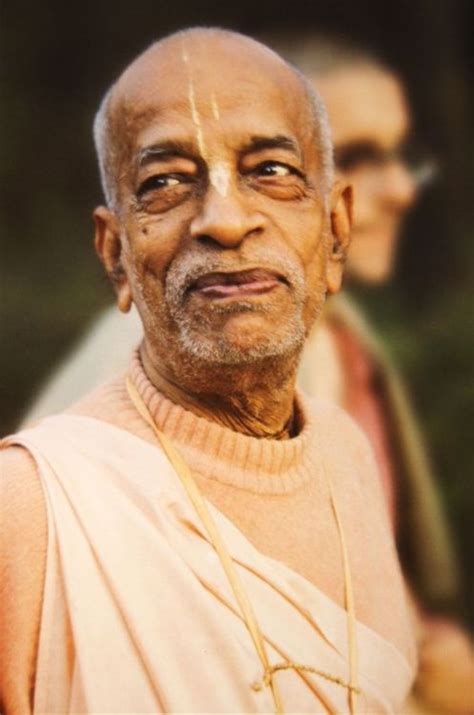
Srila Prabhupada

I leave you with profound instructions from the great His Divine Grace A. C. Bhaktivedanta Swami Prabhupada.

The point is to be engaged in doing something for Krishna, never mind what is that job, but being so engaged in doing something very much satisfying to the devotee that he remains always enthusiastic.

He will automatically follow the regulative principles because they are part of his occupational duty–by applying them practically as his occupational duty, he realises the happy result of regulative principles.

So the future of this Krishna Consciousness movement is very bright, so long the managers remain vigilant that 16 rounds are being chanted by everyone without fail, that they are all rising before four morning, attending mangal arotik–our leaders shall be careful not to kill the spirit of enthusiastic service, which is individual and spontaneous and voluntary.

They should try always to generate some atmosphere of fresh challenge to the devotees, so that they will agree enthusiastically to rise and meet it.

That is the art of management: to draw out spontaneous loving spirit of sacrificing some energy for Krishna.

But where are so many expert managers? All of us should become expert managers and preachers. We should not be very much after comforts and become complacent or self-contented.

There must be always some tapasya, strictly observing the regulative principles

Krishna Consciousness movement must be always a challenge, a great achievement to be gained by voluntary desire to do it, and that will keep it healthy.

So you big managers now try to train up more and more some competent preachers and managers like yourselves.

Forget this centralizing and bureaucracy.

https://vanisource.org/wiki/721222_-_Letter_to_Karandhara_written_from_Bombay?hl=individual|spontaneous|voluntary

This is a cautionary note for all spiritual organizations.

Delicious Names!

The Names of God are Unlimitedly Sweet. Purandara Dasa, who was a multi-billionaire, gave up the sweeter than honey money to taste the delicious names of God.

He wrote a beautiful song about the sweetness of the Lord’s Names…

To the Milk of Rama’s Name, add the Sugar of Krishna’s Name

Add the Ghee* of Vitthala’s Name, and Smack your Lips!

Bring the Wheat of Single-Mindedness, Grind with the Stones of Renunciation

Draw out the Fine Flour of Simplicity, and Roll into Thin Vermicelli

In the Pot of your Heart, with the Green Gram of your Faith

Cook it all down with your Intelligence, and Serve to Hari’s plate

Oh Joy Oh Bliss when you Experience, and Let Out Satisfied Burps

Then remember Our Lord Eternal Vitthala, the Form of Eternal Bliss!

In Feasting on the Holy Name, I offered a glimpse of how those dedicated to the spiritual path can avoid things like eating and sleeping.

Here in this article, I offer a tangible example of a great soul who actually could taste the holy name… and convey that to those of us who may not yet be tasting.

There are many great souls with a tangible taste of the Holy Name of God, for example, the great saint Rupa Goswami wrote this verse…

tuṇḍe tāṇḍavinī ratiṁ vitanute tuṇḍāvalī-labdhaye
karṇa-kroḍa-kaḍambinī ghaṭayate karṇārbudebhyaḥ spṛhām
cetaḥ-prāṅgaṇa-saṅginī vijayate sarvendriyāṇāṁ kṛtiṁ
no jāne janitā kiyadbhir amṛtaiḥ kṛṣṇeti varṇa-dvayī

“I do not know how much nectar the two syllables ‘Kṛṣ-ṇa’ have produced. When the holy name of Kṛṣṇa is chanted, it appears to dance within the mouth. We then desire many, many mouths. When that name enters the holes of the ears, we desire many millions of ears. And when the holy name dances in the courtyard of the heart, it conquers the activities of the mind, and therefore all the senses become inert.”https://vedabase.io/en/library/cc/antya/1/99/

Where I come from, we know a great saint named Purandara Dasa.

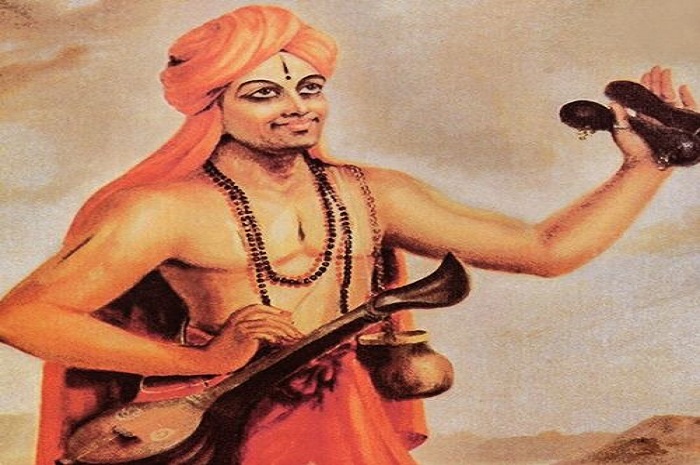
Purandara Dasa was born Srinivasa Nayaka, son of a rich diamond merchant. Srinivasa was trained in the fine arts and received a solid spiritual education, but as he grew up, he morphed into a ruthless businessman, business above all else, shrewd, calculating, though completely honest. He was a famed jeweller and he had business interests in mortgages, real estate, farmland, and much much more… all this over 500 years ago!

His net worth was said to be the equivalent of 90 million gold coins. If one gold coin was just 10 grams, then that means he owned the equivalent of 900,000 kilograms of gold. In today’s price of gold, Srinivasa Nayaka had an estimated net worth of slightly over USD 68 Billion, or with the current exchange rate!

For the sake of my readers in India, that is Five Lakh Forty Seven Thousand Crore Rupees as of today, or 5,47,000 Crore Rupees!

But, God had delicious plans for Srinivasa Nayaka! He appeared in very interesting disguises to Srinivasa Nayaka. Once there was an intriguing pastime of the nose ring of his wife, Saraswati… and completely bewildered and smitten, when our hero was hopelessly in love with God, he was instructed by God to give away all his wealth and focus exclusively on devotional service. Srinivasa Nayaka had to part with his dearest possession, his wealth, to gain the wealth of God!

How often do we find a Billionaire who gives away $68Bn of wealth and engage himself as a Haridasa, a fully surrendered servant of God?

Srinivasa Nayaka did that, and received initiation from Vyasa Tirtha, a pre-eminent saint in the line of Sri Madhwacharya. Sripad Vyasa Tirtha happens to the the grand-spiritual master of Sripad Madhavendra Puri of the Brahma-Madhwa-Gaudiya Sampradaya, into which this humble author has received initiation from Sripad Sankarshan Das Adhikari, disciple of Srila A. C. Bhaktivedanta Swami Prabhupada.

Initiated as Purandara Dasa, and given the “pen name” of “Purandara Vitthala”, Purandara Dasa is said to have composed more than 475,000 “kritis” or songs. Unfortunately for us, we have only a few known to us today, approximately 1000. Purandara Dasa, like many other pure devotees, Haridasas, spontaneously composed beautiful songs.

His songs are collectively referred to as “Purandaropanishad”… which can be translated as the eternal instructions that bring us closer to the Lord.

His songs explain the most esoteric of concepts in a very simple way, and even ordinary souls such as myself can understand, appreciate, and relish them. The result of meditating on his songs is that our devotional service becomes stronger.

One of my favourite songs of Purandara Dasa is about the most delicious Names of God…

The Names of God are sweeter to Purandara Dasa, whereas to ordinary souls, Money is sweeter than honey, but Purandara Dasa gave all his vast wealth away to obtain the wealth of the Names of God

Rama Nama Payasake – To the Milk of Rama’s Name…

In Kannada Script, the song looks like this:

ರಾಮನಾಮ ಪಾಯಸಕ್ಕೆ ಕೃಷ್ಣನಾಮ ಸಕ್ಕರೆ
ವಿಠಲನಾಮ ತುಪ್ಪವ ಬೆರೆಸಿ ಬಾಯಿ ಚಪ್ಪರಿಸಿರೊ

ಒಮ್ಮನ ಗೋಧಿಯ ತಂದು ವೈರಾಗ್ಯ ಕಲ್ಲಲಿ ಬೀಸಿ
ಸುಮ್ಮನ ಸಜ್ಜಿಗೆ ತೆಗೆದು ಸಣ್ಣ ಸೇವೆಗೆ ಹೊಸೆದು

ಹೃದಯವೆಂಬೊ ಪಾತ್ರೆಯೊಳಗೆ ಭಾವವೆಂಬೊ ಎಸರು ಇಟ್ಟು
ಬುದ್ದಿಯಿಂದ ಪಕ್ವವ ಮಾಡಿ ಹರಿವಾಣದೊಳಗೆ ನೀಡಿ

ಆನಂದ ಆನಂದವೆಂಬೊ ತೇಗು ಬಂದ ಪರಿಯಲಿ
ಆನಂದಮೂರುತಿ ನಮ್ಮ ಪುರಂದರವಿಠಲ ನೆನೆಯಿರೊ

raama naama paayasakke kRuShNanaama sakkare |
viThalanaama tuppava kalasi baayi capparisiro ||pa||

ommaana gOdhiya taMdu vairaagya kallili bIsi |
summane sajjigeya tegedu saNNa shaavigeya hosedu ||1||

hRudayaveMbo maDakeyalli bhaavaveMbo esaraniTTu |
buddhiyiMda paakamaaDi harivaaNake baDisikoMDu ||2||

aanaMda aanaMdaveMbo tEgu baMditu kANirO |
aanaMda mUruti namma puraMdara viThalana neneyiro ||3||

– Purandara Dasa

I will try to offer a translation for those who may not be conversant with Kannada…

To the Milk of Rama’s Name, add the Sugar of Krishna’s Name

Add the Ghee* of Vitthala’s Name, and Smack your Lips!

Bring the Wheat of Single-Mindedness, Grind with the Stones of Renunciation

Draw out the Fine Flour of Simplicity, and Roll into Thin Vermicelli

In the Pot of your Heart, with the Green Gram of your Faith

Cook it all down with your Intelligence, and Serve to Hari’s plate

Oh Joy Oh Bliss when you Experience, and Let Out Satisfied Burps

Then remember Our Lord Eternal Vitthala, the Form of Eternal Bliss!

– Purandara Dasa’s Rama Nama Payasake, translation by Mahabhagavata Dasa

* Ghee – Clarified Butter, a delicacy used to enhance the flavour of various dishes. Like most Bhakti experiences, it must be tasted and experienced in that way, there is no theoretical way to understand this flavour, the aroma, etc.

Now, my dear reader, please allow me to introduce the deep eternal spiritual truths contained in this simple 4-stanza song.

The Name of God is Sweet!

Is there any doubt about this Yes, beginners may not experience the sweetness, but it is not for lack of sweetness in the Lord’s names, but for the diseased tongue of the beginner to spiritual life… Rupa Goswami Says:

स्यात् कृष्णनामचरितादिसिताप्यविद्यापित्तोपतप्तरसनस्य न रोचिका नु ।
किन्त्वादरादनुदिनं खलु सैव जुष्टा स्वाद्वी क्रमाद्भवति तद्गदमूलहन्त्री ॥ ७ ॥

syāt kṛṣṇa-nāma-caritādi-sitāpy avidyā-
pittopatapta-rasanasya na rocikā nu
kintv ādarād anudinaṁ khalu saiva juṣṭā
svādvī kramād bhavati tad-gada-mūla-hantrī

The holy name, character, pastimes and activities of Kṛṣṇa are all transcendentally sweet like sugar candy. Although the tongue of one afflicted by the jaundice of avidyā [ignorance] cannot taste anything sweet, it is wonderful that simply by carefully chanting these sweet names every day, a natural relish awakens within his tongue, and his disease is gradually destroyed at the root.

https://vedabase.io/en/library/noi/7/

Single Mindedness is essential for Spiritual Perfection

For the attainment of any goal, focus is a requirement. The rarer and more distinguished the prize, the more single-minded focus is required.

Krishna says, in the Bhagavad Gita:

व्यवसायात्मिका बुद्धिरेकेह कुरूनन्दन ।
बहुशाखा ह्यनन्ताश्च बुद्धयोऽव्यवसायिनाम् ॥ ४१ ॥


vyavasāyātmikā buddhir
ekeha kuru-nandana
bahu-śākhā hy anantāś ca
buddhayo ’vyavasāyinām

Those who are on this path are resolute in purpose, and their aim is one. O beloved child of the Kurus, the intelligence of those who are irresolute is many-branched.

https://vedabase.io/en/library/bg/2/41/

Renunciation from Worldly Goals is required for someone seeking spiritual perfection

Krishna then continues, further on…

भोगैश्वर्यप्रसक्तानां तयापहृतचेतसाम् ।
व्यवसायात्मिका बुद्धिः समाधौ न विधीयते ॥ ४४ ॥


bhogaiśvarya-prasaktānāṁ
tayāpahṛta-cetasām
vyavasāyātmikā buddhiḥ
samādhau na vidhīyate

In the minds of those who are too attached to sense enjoyment and material opulence, and who are bewildered by such things, the resolute determination for devotional service to the Supreme Lord does not take place.

https://vedabase.io/en/library/bg/2/44/

Spiritual Life means Simplicity without any Duplicity

To some, spiritual life is extremely easy. To others it is the, most difficult thing.

Again, in the Bhagavad Gita describes the qualities of someone who is in spiritual life.

अमानित्वमदम्भित्वमहिंसा क्षान्तिरार्जवम्
आचार्योपासनं शौचं स्थैर्यमात्मविनिग्रह: ॥ ८ ॥


amānitvam adambhitvam ahiṁsā kṣāntir ārjavam
ācāryopāsanaṁ śaucaṁ sthairyam ātma-vinigrahaḥ


Humility; pridelessness; nonviolence; tolerance; simplicity; approaching a bona fide spiritual master; cleanliness; steadiness; self-control

https://vedabase.io/en/library/bg/13/8-12/

Simple for the simple, difficult for the crooked!

God lives in our Heart, so working on our heart is essential, it’s a very personal loving thing, not just dry intellectual pursuit!

तेषामेवानुकम्पार्थमहमज्ञानजं तम: ।
नाशयाम्यात्मभावस्थो ज्ञानदीपेन भास्वता ॥ ११ ॥


teṣām evānukampārtham
aham ajñāna-jaṁ tamaḥ
nāśayāmy ātma-bhāva-stho
jñāna-dīpena bhāsvatā

To show them special mercy, I, dwelling in their hearts, destroy with the shining lamp of knowledge the darkness born of ignorance.

https://vedabase.io/en/library/bg/10/11/

Faith in the Spiritual Process is a Necessary Ingredient

अश्रद्दधाना: पुरुषा धर्मस्यास्य परन्तप ।
अप्राप्य मां निवर्तन्ते मृत्युसंसारवर्त्मनि ॥ ३ ॥


aśraddadhānāḥ puruṣā
dharmasyāsya paran-tapa
aprāpya māṁ nivartante
mṛtyu-saṁsāra-vartmani

Those who are not faithful in this devotional service cannot attain Me, O conqueror of enemies. Therefore they return to the path of birth and death in this material world.

https://vedabase.io/en/library/bg/9/3/

Spiritual Progress is Made by those who endeavour Intelligently

इन्द्रियाणि पराण्याहुरिन्द्रियेभ्यः परं मनः ।
मनसस्तु परा बुद्धिर्यो बुद्धेः परतस्तु सः ॥ ४२ ॥


indriyāṇi parāṇy āhur
indriyebhyaḥ paraṁ manaḥ
manasas tu parā buddhir
yo buddheḥ paratas tu saḥ

The working senses are superior to dull matter; mind is higher than the senses; intelligence is still higher than the mind; and he [the soul] is even higher than the intelligence.

https://vedabase.io/en/library/bg/3/42/

In the purport to the above verse, Srila Prabhupada writes…

With intelligence one has to seek out the constitutional position of the soul and then engage the mind always in Kṛṣṇa consciousness. That solves the whole problem. A neophyte spiritualist is generally advised to keep aloof from the objects of the senses. But aside from that, one has to strengthen the mind by use of intelligence. If by intelligence one engages one’s mind in Kṛṣṇa consciousness, by complete surrender unto the Supreme Personality of Godhead, then, automatically, the mind becomes stronger, and even though the senses are very strong, like serpents, they will be no more effective than serpents with broken fangs. But even though the soul is the master of intelligence and mind, and the senses also, still, unless it is strengthened by association with Kṛṣṇa in Kṛṣṇa consciousness, there is every chance of falling down due to the agitated mind. – BG 3.42 purport by A. C. Bhaktivedanta Swami Prabhupada

Spiritual Perfection Must be Offered to God

Srila Prabhupada summarizes, in his Nectar of Devotion…

By the process of executing regulated devotional service, one is actually elevated to the transcendental stage, beyond the material modes of nature. At that time one’s heart becomes illuminated like the sun. The sun is far above the planetary systems, and there is no possibility of its being covered by any kind of cloud; similarly, when a devotee is purified like the sun, from his pure heart there is a diffusion of ecstatic love which is more glorious than the sunshine. Only at that time is the attachment to Kṛṣṇa perfect. Spontaneously, the devotee becomes eager to serve the Lord in his ecstatic love.

https://vedabase.io/en/library/nod/17/

There is no happiness like that from chanting God’s Holy names for anyone

In the Srimad Bhagavatam, we find this verse:

एतन्निर्विद्यमानानामिच्छतामकुतोभयम् ।
योगिनां नृप निर्णीतं हरेर्नामानुकीर्तनम् ॥ ११ ॥


etan nirvidyamānānām
icchatām akuto-bhayam
yogināṁ nṛpa nirṇītaṁ
harer nāmānukīrtanam


O King, constant chanting of the holy name of the Lord after the ways of the great authorities is the doubtless and fearless way of success for all, including those who are free from all material desires, those who are desirous of all material enjoyment, and also those who are self-satisfied by dint of transcendental knowledge.

https://vedabase.io/en/library/sb/2/1/11/

But we can see which taste is more delicious… the taste of untold wealth, or the taste of the Holy Names of God.

Purandara Dasa is the example.

Purandara Dasa is also known as the Father of Carnatic Classical Music, but above mere music is His simple devotion, which he expressed through music.

What will we give up to taste the most unlimitedly delicious sweet clear pure Names of God?

What if all you had to do was to chant this Mantra without giving anything else up?

Hare Krishna Hare Krishna Krishna Krishna Hare Hare Hare Rama Hare Rama Rama Rama Hare Hare

My Dear Reader, would you please chant this Mantra even just once?

Purandara Dasa is a Mahabhagavata, a mighty pure devotee of the Lord, and this Mahabhagavata Dasa aspires to be the servants of his servants, and hankers to taste their delicious remnants.