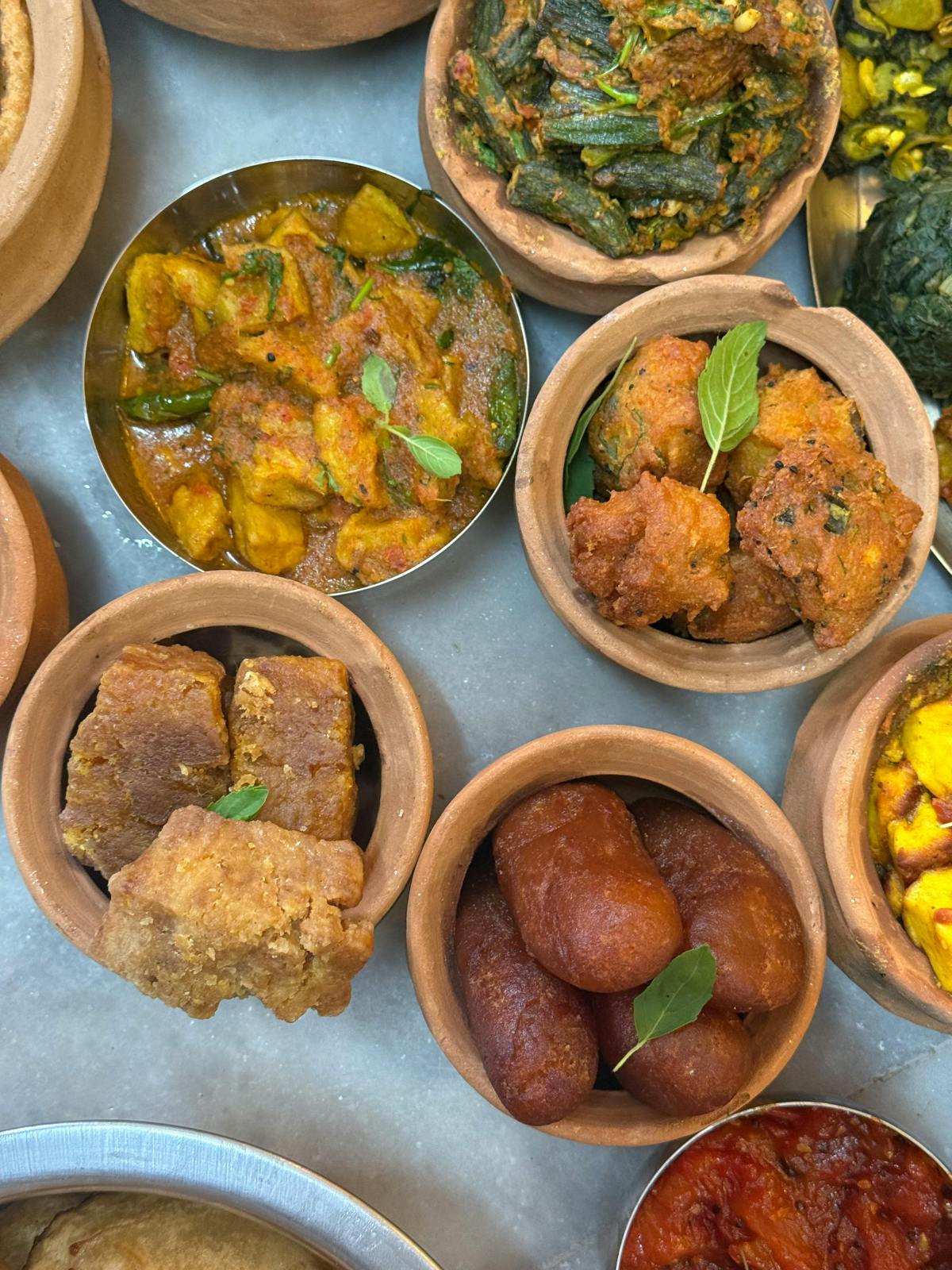
Do You Know How Heavy Your Lunch Is?

Usually, my bag is heavy with a laptop, books, and a lovingly prepared lunch. But on Ekadashi,the bag feels weightless, and for once, the “hunger” that usually rules the day miraculously vanishes. We spend our whole lives working to “pay” for our food, but are we actually settling the bill? Or are we just ignoring the debt we owe to the Sun, the Earth, and God who made them all? If we aren’t offering our food back to God, are we truly eating or are we just incurring a debt we can’t pay back? In the material world, “you die so I can live” is the standard. But there is a way to break this cycle of debt. Dive into my latest post on why Ekadashi is more than just a fast. What is the “weight” of our food?

One day, as I set out for the morning, my backpack felt much lighter, practically weightless. Normally, it carries a laptop, a notebook, my meditation beads, some spiritual books to distribute to those looking for a higher taste in life, and a lovingly prepared lunch, offered first to Krishna. But on this day, there was no food in it.

On the eleventh (it can vary some times) day of every fortnight, Ekadashi, those who wish to make rapid spiritual progress observe a fast. The specific standard of the fast depends on many factors, but in my case, I am blessed that I do not need to eat on that day. It took a long time to get there, and the process was gradual, but it has been well worth it. I don’t take any credit for this, because He who creates the hunger that appears unbearable on other days simply chooses to free me from it on Ekadashi. This is so we can focus on something higher.

People sometimes fast for different reasons. But all the purposes of fasting are served when we fast for spiritual purposes, just as all purposes of a small well are served by a gigantic fresh water lake.

On Ekadashi days, I do drink water, which is a great blessing. Water cleanses in so many ways. One can appreciate the beautiful taste of water more when one is fasting from food.

रसोऽहमप्सु कौन्तेय

O son of Kuntī, I am the taste of water

https://vedabase.io/en/library/bg/7/8/

As a spirit soul full of eternity, knowledge and bliss, it is a humbling paradox that we are saddled with a body that “needs” to eat, sleep, and seek recreation. Because we are presently in the material world, everyone must work for their sustenance. Even the powerful “king of the jungle”, the lion cannot simply lie down, go to sleep, and expect food to enter its mouth.

न हि सुप्तस्य सिंहस्य प्रवि-शन्ति मुखे मृगाः

Animals don’t enter into the mouth of a sleeping lion

The weight of a meal

Eating is a requirement to keep the body alive, so we spend a vast amount of time working and making all the necessary arrangements. Yet, even when we pay for our food, we aren’t paying the full price of food. In this material world, some other living entity must die so that we may live. Whether it is a grain of rice, a bean, a potato, or a nut, a life is given so that I can survive. Because of this, I am careful to honor the life of these living entities by offering them in sacred sacrifice to Krishna.

In this sense, food is “heavy” in many ways, not just by its weight in a bag or its economic price, but by the karmic reactions attached to it.

Generally, the material world is a place where the philosophy is “you die so I can live”. Those who wish to advance spiritually abstain from meat.

अहस्तानि सहस्तानामपदानि चतुष्पदाम् ।
फल्गूनि तत्र महतां जीवो जीवस्य जीवनम् ॥ ४७ ॥

ahastāni sahastānām
apadāni catuṣ-padām
phalgūni tatra mahatāṁ
jīvo jīvasya jīvanam

Those who are devoid of hands are prey for those who have hands; those devoid of legs are prey for the four-legged. The weak are the subsistence of the strong, and the general rule holds that one living being is food for another.

https://vedabase.io/en/library/sb/1/13/47/

The Difference Between Need and Greed

Beyond the debt we owe to the source of our food, there is a karmic debt we incur when we take more than our share. We often mistake our greed for our “need,” and in doing so, we deprive others of their rightful portion.
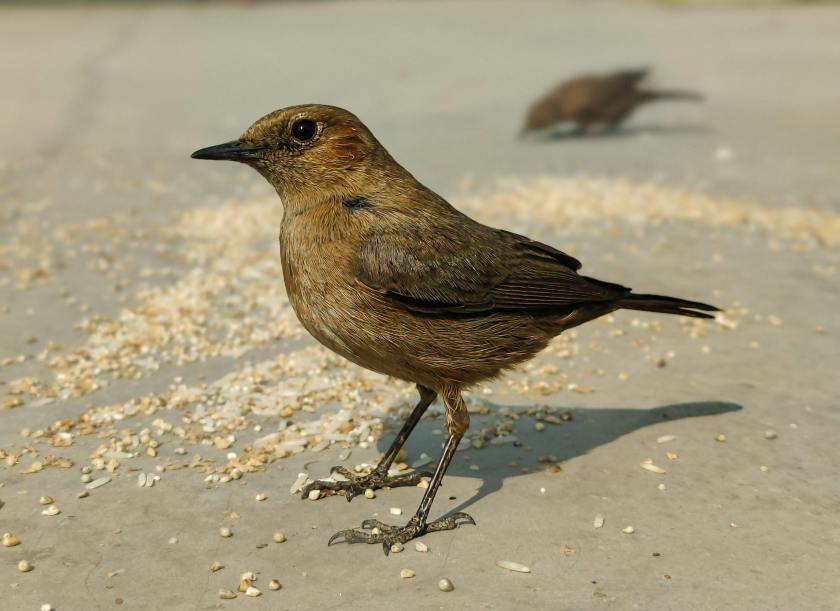
Birds Eating grains and Seeds

Consider a sack of rice left out on an open road. A bird flies down, picks up a single grain at a time to satisfy its hunger, and flies away. Another bird follows, doing the same. They take only what is required for their sustenance. But when a human passes by, they don’t see a single meal! They may see a surplus to be hoarded. They might take the entire sack home, leaving nothing for the others who might follow. By claiming more than our rightful quota, we tighten the knot of karmic debts, forgetting that what we take in excess is effectively stolen from another’s plate. A person who takes more than their need makes themselves liable to have less than they need in future, as per the law of karma.

No one is recommending starvation, but moderation to our bare necessity is important, and voluntary fasting enables that, in the grand scheme of things.

ईशावास्यमिदँ सर्वं यत्किञ्च जगत्यां जगत् ।
तेन त्यक्तेन भुञ्जीथा मा गृधः कस्य स्विद्धनम् ॥ १॥

īśāvāsyam idaḿ sarvaṁ
yat kiñca jagatyāṁ jagat
tena tyaktena bhuñjīthā
mā gṛdhaḥ kasya svid dhanam

Everything animate or inanimate that is within the universe is controlled and owned by the Lord. One should therefore accept only those things necessary for himself, which are set aside as his quota, and one should not accept other things, knowing well to whom they belong.

https://vedabase.io/en/library/iso/1

The Hidden Costs

I reflected in quiet wonder, tracing the journey of a single morsel of food back to its source. We easily settle our debts with the farmer, the trader, and the storekeeper, the visible hands that bring food to our table. But what of the invisible ones? Mother Earth charges no rent for her soil; the sun sends no invoice for his light and warmth, the clouds ask for no payment for the rain. Our currency reaches the middlemen, but it never reaches the Source. Do we not owe a deeper debt to the ones who give everything for nothing in return?

Watering the Root

The only way to truly benefit all these contributors is to offer the food back to God. As God says:

यज्ञशिष्टाशिनः सन्तो मुच्यन्ते सर्वकिल्बिषै ।
भुञ्जते ते त्वघं पापा ये पचन्त्यात्मकारणात् ॥ १३ ॥

yajña-śiṣṭāśinaḥ santo
mucyante sarva-kilbiṣaiḥ
bhuñjate te tv aghaṁ pāpā
ye pacanty ātma-kāraṇāt
Synonyms

The devotees of the Lord are released from all kinds of sins because they eat food which is offered first for sacrifice. Others, who prepare food for personal sense enjoyment, verily eat only sin.

https://vedabase.io/en/library/bg/3/13/

Anyone who does not offer their food to God is caught in a cycle of debt. It is a matter of “an eye for an eye.” If I eat a grain of rice selfishly, I incur the karmic reaction of becoming a grain of rice myself, to be eaten by that same soul in another form. Time separates me from the inevitable consequences of my actions, but the consequence is unavoidable. As sure as death.
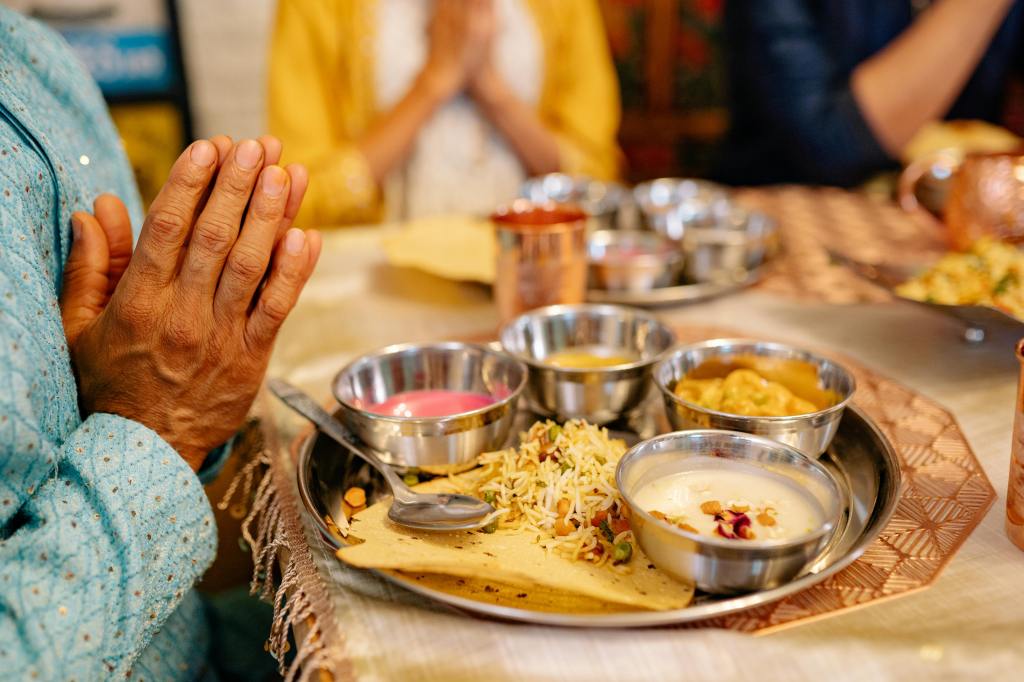
This is because when we water the root of the tree, all the branches, twigs, and leaves automatically get watered.

यथा तरोर्मूलनिषेचनेन
तृप्यन्ति तत्स्कन्धभुजोपशाखा: ।
प्राणोपहाराच्च यथेन्द्रियाणां
तथैव सर्वार्हणमच्युतेज्या ॥ १४ ॥

yathā taror mūla-niṣecanena
tṛpyanti tat-skandha-bhujopaśākhāḥ
prāṇopahārāc ca yathendriyāṇāṁ
tathaiva sarvārhaṇam acyutejyā

As pouring water on the root of a tree energizes the trunk, branches, twigs and everything else, and as supplying food to the stomach enlivens the senses and limbs of the body, simply worshiping the Supreme Personality of Godhead through devotional service automatically satisfies the demigods, who are parts of that Supreme Personality.

https://vedabase.io/en/library/sb/4/31/14/

Do you know how heavy your food is?

Can you afford the price of your food?

Can you carry it’s weight?

That Ekadashi was a great day, packed with a lot of extra time and energy. We often have no idea how much work it actually takes just to procure, eat, and digest all that food. The very next day, of course, my bag was heavy again. But having reflected on the cost, I carried it with a renewed sense of gratitude and responsibility.

With gratitude for feedback on a previous version of this article from my elder brother, Sriman Ravindra Joshi.

Is Vedic geography and Cosmology limited to India alone?

Do the Vedic texts only refer to India? Is the Vedic view that the earth is flat? What is the truth here?

Manoj Tripathi, 19 May 2016

Hare Krishna dear devotees.

Please accept my humble obeisances.

I was reading the Mahabharata translation by Krsna Dharma prabhu, wherein there are references to several places on this earth. The most interesting ones are mentioned in the portions describing the Rajasuya and Ashwamedha yagyas which Maharaja Yudhishthira performed.

All the places mentioned in these parts of the text seem to be in or around India. Also, it is never mentioned that they crossed the ocean to go to some other place like present Australia or the USA. 

The questions that arise are following:

a. Were there no powerful kingdoms in other parts of the world; or were the capitals of all the kingdoms located in and around India?

b. Are many of the routes and places which were accessible to people in those times not visible to us now?

I reconcile the present and past with these two arguments. Is there anything else that should be understood while reading about the past?

Sorry if I have posted something irrelevant.

Thank you.

Manoj

Mahabhagavat Das SDA, 19 May 2016

Dear Manoj,

Hare Krishna!

Please accept my humble obeisances.

All glories to Srila Gurudeva.

All glories to Srila Prabhupada.

Yes, Krishna Dharma Prabhu is in disciplic succession from Srila Prabhupada and his translation is relied upon by many devotees within ISKCON.

What is missing in that edition of the Mahabharata is purports as found in Srila Prabhupada’s books to give us full context of the verses (our context is very different today)… but then the work would become really massive because with Srila Prabhupada’s Srimad Bhagavatam purports, with 18,000 verses it comes to 18 volumes of books… the Mahabharata has 100,000 verses! 🙂 How many of us have read even Srila Prabhupada’s books thoroughly?

On this topic of reconciling things as they appear today vs. Vedic history, a great reference is Devamrita Swami Maharaja’s “Searching for Vedic India“.

The main point is that human civilization is a devolution from Vedic civilization, things were not more primitive 5000 years as claimed by modern historians and scientists ago but actually more advanced. This cannot be accepted by a person who is proud.

In one lecture by Srila Prabhupada, on the verse BG 1.5, Srila Prabhupada says this:

“Practically in the Battle of Kuruksetra great personalities, warriors, from all parts of the world they came and joined. Some of them joined with this party and others joined with the other party. So far we have studied… just like Saibya, he belonged to Sibya. So all these personalities, we did not get their full description, it would enhance the pages. But these big personalities, we have got their information. There is a book, The Personalities of Mahabharata. Bhagavad-gita is part of Mahabharata. Mahabharata means greater India. Maha means greater, and bharata means India. So this whole planet was Bharata-varsa. There was only one flag. The whole planet was being ruled by one king. That is the king of this Hastinapura. The fight is that, that who would be the king, Maharaja Yudhisthira or Duryodhana. But a king… It is not a democratic; it is monarchy. So Krsna is deciding, “No, Duryodhana is unfit. Maharaja Yudhisthira is fit.” This is Krsna’s desire. Therefore this fight is there. Kuruksetra. Krsna wanted to wipe out all unwanted demons from the face of the world and enthrone Maharaja Yudhisthira because he is the exact representative of Krsna.” (Srila Prabhupada Lecture, “Everything (Even Dictatorship) Can Be Utilized for Krishna” 73/07/10 London, Bhagavad-gita 1.4-5)

So, the situation was that there were kings all over the world, but there were greater kings and lesser kings. And this was a war of the advanced Kshatriya races, the tribals, low-class humans, and animal-like-humans were not involved in it. In the Ashwamedha yajna, or declaration of supremacy, it was only necessary to get allegiance from the greater kings, the subordinates were naturally bound to follow suit. And of course, less advanced humans didn’t even figure in the equation.

Even in more modern times, it was like that with the Greek or Roman empire, if someone destroyed Athens or Rome, then the entire empire was practically gone.

Also, travel was not necessarily done as it is done today – for example, in the Mahabharata it is mentioned that Arjuna travelled to the heavenly planets. Where is the transportation means today that can take someone to the heavenly planets? So yes, the means of transportation as it existed then is not known today.

The secret is mantra yoga, by proper chanting of a mantra, one can achieve any desired success, whether material or spiritual, it is not necessary to make a tunnel to go through a mountain, it is not necessary to construct a floating ship to go over water, and it is not necessary to construct a metal tube with Bernoulli’s principle to fly in the air. The mantra is very powerful.

However, in the Krishna consciousness movement, we are not interested in discovering processes of material accomplishments, we simply want to chant

Hare Krishna Hare Krishna

Krishna Krishna Hare Hare

Hare Rama Hare Rama

Rama Rama Hare Hare

The Hare Krishna Maha Mantra

and become pure servants of the servants of the devotees of Krishna.

So therefore, we don’t always focus so much on the exact reconciliation of modern understanding with what is mentioned in the Vedic literature, we are going for the highest success, we don’t care to fly in a celestial flying craft or manufacture gold from chanting mantras etc.

Does this make sense?

Sincerely,

Mahabhagvat das

Manoj Tripathi, 19 May 2016

Thank you Mahabhagvata Prabhu for such a lucid answer.

These kinds of questions automatically come to mind, however upon thinking a little more I realize that there is no end to such inquiries.

Thank you so much for bringing me back.

Hare Krishna!

Sincerely,

Manoj

Kaspars, 02 June 2016

Hare Krishna!

Please accept my humble obeisances.

All glories to Srila Prabhupada.

Is the planet Earth considered circular or flat in Vedic literature? One local devotee answered to me like this. Advanced people see more dimensions, not our three… It is length, width, height. So we cannot even imagine how Earth looks in other dimensions. Still I am curious whether the Earth was considered flat by ancient people. And how then we get the circular globe.

Kaspars

Mahabhagavat Das SDA, 2 June 2016

Dear Kaspars,

Hare Krishna!

The 5th Canto of Srimad Bhagavatam gives a good idea of the structure of the Universe. See https://vedabase.io/en/library/sb/5/, especially SB 5.16 onwards.

The Vedic cosmology goes beyond our insignificant planet. The “earth” is actually a large collection of “earthly” planets (islands) that are arranged to form something that looks like a disc. So yes, the “earth” is flat, but only when you consider that “earth” means “earthly planetary system with many many planets such as ours”.

Also, this is a video especially for you, this is a simulation of the  chandelier that will be inside the TOVP dome, it gives a good idea of Vedic cosmology according to Srimad Bhagavatam 5th Canto… https://www.youtube.com/watch?v=zdX5lffC2IQ

All these things are difficult to fully understand, imagine an ant trying to understand the plan of a big city, it is practically impossible.

Sincerely,

Mahabhagavat Das

Please subscribe to daily inspirational emails from His Grace Sriman Sankarshan Das Adhikari (Writings and lectures archived at www.ecstaticmedia.com ), written fresh every day from his travels around the world sharing the highest spiritual knowledge with everyone. Sign up now at www.joincourse.com

The sack of rice

There is enough for every creature’s need, but there isn enough even for one man’s greed.

My 7 year old son Vitthal Bhakta told me this story.

Once upon a time, there was a farmer. He used to earn his livelihood by selling rice he grew on his farm. One year, after the harvest, he was on his way to Pandharpur, which was four hours away. He was blissfully chanting Harinam Sankirtan (names of God) during the journey. On his way by bullock cart with sixty four sacks of rice, one of his sacks fell off the cart but he was so engrossed in his singing that he did not notice.

One of the villagers along the road cried out “You lost one of your sacks, it fell down back there”. When he heard that he came to external consciousness and opened his eyes. He tied up his bulls to a nearby tree and walked back. He saw that the bag had burst open and the grains of rice had spilled out on the ground, white grains shining in the sun.

Sparrow eating grain

When he came closer, he noticed there were some birds eating the rice. So the saintly farmer hid behind a tree to wait for the birds to finish their meal. A goat and a cow also joined the birds, and they all ate their fill. Then they went away.

Sweet Cow

When they were finished, before the farmer could come out from behind the tree, another man suddenly appeared and began to drag away the heavy bag of rice.

Greedy Man

The farmer said “wait, that is my bag of rice, it fell from my cart, and I have come to take it back”. The farmer gave the person several handfuls of rice and took the bag back to his cart.

When he reached Pandharpur, he sold fifty of his sacks to get enough money to live till the next season, and offered the remaining fourteen sacks to Lord Vitthal of Pandharpur. He said to the Lord “I learned a lesson today, that the birds and the animals, they take whatever they need, and then they go away. But man is so greedy that he hoards more than he needs”. He concluded, “there is enough in this world for every creature’s needs, but there is not enough for a single man’s greed”.

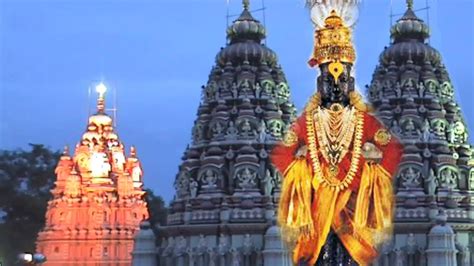
Lord Vitthala of Pandharpur

All food and all necessities of life are provided by God. We may work in the fields, we may work in the factories, but all that we need and want is actually the property of God. Just because we transform it does not make it ours. The earth, the water, the sunlight, and the power of a seed to grow, we make none of these, we have no power over these. We may know how to utilize these, but that does not make them ours.

We cannot make a single thing by ourselves or live for a single day without the mercy of God.

To consider something “mine to do with as I want” is a crime. We should be responsible curators of the gifts that have been bestowed upon us.

अन्नाद्भ‍वन्ति भूतानि पर्जन्यादन्नसम्भवः ।
यज्ञा‍द्भ‍‍वति पर्जन्यो यज्ञः कर्मसमुद्भ‍वः ॥ १४ ॥

annād bhavanti bhūtāni
parjanyād anna-sambhavaḥ
yajñād bhavati parjanyo
yajñaḥ karma-samudbhavaḥ

All living bodies subsist on food grains, which are produced from rains. Rains are produced by performance of yajña [sacrifice], and yajña is born of prescribed duties.

https://vedabase.io/en/library/bg/3/14/
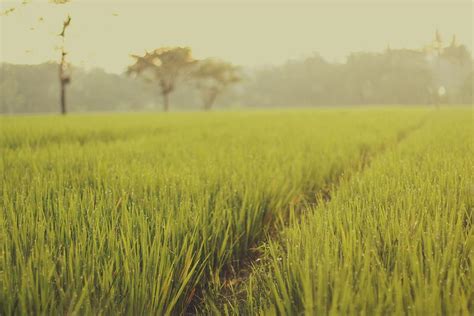
Paddy Field in the rain

कर्म ब्रह्मोद्भ‍वं विद्धि ब्रह्माक्षरसमुद्भ‍वम् ।
तस्मात्सर्वगतं ब्रह्म नित्यं यज्ञे प्रतिष्ठितम् ॥ १५ ॥

karma brahmodbhavaṁ viddhi
brahmākṣara-samudbhavam
tasmāt sarva-gataṁ brahma
nityaṁ yajñe pratiṣṭhitam

Regulated activities are prescribed in the Vedas, and the Vedas are directly manifested from the Supreme Personality of Godhead. Consequently the all-pervading Transcendence is eternally situated in acts of sacrifice.

https://vedabase.io/en/library/bg/3/15/

What is sacrifice? Sacrifice means to please God with our thoughts, words, and deeds. Every thought, word, and deed should be to please God, who is giving us so much at every moment.

The Ishopanishad says this best:

īśāvāsyam idaḿ sarvaṁ
yat kiñca jagatyāṁ jagat
tena tyaktena bhuñjīthā
mā gṛdhaḥ kasya svid dhanam

Everything animate or inanimate that is within the universe is controlled and owned by the Lord. One should therefore accept only those things necessary for himself, which are set aside as his quota, and one should not accept other things, knowing well to whom they belong.

https://vedabase.io/en/library/iso/1/
Sri Ishopanishad - the Science of God

Hare Krishna!

The Best Sacrifice / Yajna for this age

Deepak, 26th May 2015

Hare Krishna to all
Please accept my humble obeisances.
All Glories to GuruDev.
All Glories to Srila Prabhupada.

My question is :- which Yajnas should be perform in this Kaliyug and how to perform it

Hare Krishna

Rathin Mandal, 27th May 2015

Hare Krishna Deepak,

Please accept my humble obeisances,
All glories to Srila Gurudeva and Srimati Gurumataji,

All Glories to Srila Prabhupada.

For this age only Sankirtana Yajna is recommended. For doing the yajnas that were recommended in other ages, neither do we have that much of life span, nor physical strength and not enough resources. That is why other yajnas are not recommended.

your Servant
Rathin

Sridhar Das, 06th June 2015

Hare Krishna Deepak,

My humble obeisances to you,
All Glories to Srila Gurudeva and Srimati Gurumata!
All Glories to His Divine Grace Srila Prabhupada!

You have correctly read that Sankirtan Yajna is the recommended Yajna for this age as confirmed below:

kṛte yad dhyāyato viṣṇuṁ
 tretāyāṁ yajato makhaiḥ
dvāpare paricaryāyāṁ
 kalau tad dhari-kīrtanāt

“Whatever result was obtained in Satya-yuga by meditating on Viṣṇu, in Tretā-yuga by performing sacrifices, and in Dvāpara-yuga by serving the Lord’s lotus feet can be obtained in Kali-yuga simply by chanting the Hare Kṛṣṇa mahā-mantra.” (SB 12.3.52)

It can be performed by anyone irrespective of any past qualifications, irrespective of family backgrounds and can be chanted anytime and any place (we don’t carry beads in the bathroom though).

your servant
Sridhar Das

Please subscribe to daily inspirational emails from His Grace Sriman Sankarshan Das Adhikari (Writings and lectures archived at sda-archives.com), written fresh every day from his travels around the world sharing the highest spiritual knowledge with everyone. Sign up now at www.joincourse.com