Bhaktin Suzanne
Hare Krishna!
All glories to Srila Gurudeva!
All glories to Srila Prabhupada!
Dear Devotees,
I have questions after reading this verse from Bhagavad Gita 9:26.
“If one offers Me with love and devotion a leaf, a flower, a fruit or water, I will accept it.”
I have a question.
All foods mentioned in this verse grow above the ground (leaves, flowers, and fruits).
This verse does not mention roots ( potato, carrot, beet etc).
This verse does not mention stems (celery , cinnamon etc.).
And Krishna also does not say He will accept seeds of plants such as nuts, beans. All grains , which are seeds too are not mentioned in this verse.
Krishna does not mention meat fish and eggs in this verse, so we do not offer these to Krishna.
He does not mention seeds, nuts, and roots. He is very specific about which part of the plant He will accept.
Why then do we go ahead and offer to Krishna the other parts of the plant?
Is there another scripture somewhere that says Krishna accepts roots, stems, seeds and grains? Please enlighten me.
Bhaktin Suzanne
Naren Tippavajjula, 21 June 2019
Hare Krishna
Dear devotee Suzanne
The meaning of :
patraṁ puṣpaṁ phalaṁ toyaṁ yo me bhaktyā prayacchati
tad ahaṁ bhakty-upahṛtam aśnāmi prayatātmanaḥ
https://vedabase.io/en/library/bg/9/26/
Even water is underground
It doesn’t mean anything specific.
In broad sense, Krishna means, you need not give me silver, gold or keep payasam (opulent sweet) in golden bowl
Even a leaf, a sprinkle of water, a fruit which you give me with pure heart and devotion it is counted and God will see the bhakti and pure heart in you
This is the meaning in this verse
Devotion to God and being enlightened is what God sees in you
Thank you
Naren Tippavajjula
Shridhar Das, 21 June 2019
Hare Krishna!
Please accept my humble obeisance,
All Glories to Srila Gurudeva!
All Glories to Srila Prabhupada!
Interesting question. Your attempts to introspect is well appreciated and the act of confirming with a bonafide audience is indeed devotional!
I fully agree with the below answer by Bhakta Narendra. It is the essence.
Of the 18 chapters of Bhagavad Gita, 7-12 are treasure in the middle and even in their midst, 9th is still further confidential and this particular verse is the crux. Just as a careful person in previous ages would want to guard the jewel by putting it in a case and pack that case inside another and so on until he feels satisfied, so is this verse similarly packed in the middle.
Consider this example: It is very laborious to attain a B.Tech degree with high grades, especially from a very reputed college like IIT (in India) and that too with a Gold Medal. Firstly, to get into a college takes good school grades. Besides that many entrance exams have to be attempted which involves cut-throat competition. But imagine if it was available very simply? It is not so in Material World but Krishna Consciousness, which is the topmost goal of life, aspired by even the greatest sages and demigods with lifetimes of austerity is actually simple to attain. Srila Prabhupada is writing in the purport:
The process of achieving such a marvelous result is very easy and can be attempted even by the poorest of the poor, without any kind of qualification.
The only qualification required in this connection is to be a pure devotee of the Lord. It does not matter what one is or where one is situated.
The process is so easy that even a leaf or a little water or fruit can be offered to the Supreme Lord in genuine love and the Lord will be pleased to accept it.
Srila Prabhupada now is very staunchly declaring in his magnanimity:
No one, therefore, can be barred from Krishna consciousness, because it is so easy and universal. Who is such a fool that he does not want to be Krishna conscious by this simple method and thus attain the highest perfectional life of eternity, bliss and knowledge? Krishna wants only loving service and nothing more. Krishna accepts even a little flower from His pure devotee.
Therefore the purpose of mentioning these 4 items are to indicate how simple has Krishna made Himself to be approached.
And He is not even asking all these items, but simply any one of these.(In comparison, some demigod worship involves offering items like meat, some demigod worship requires humongous amount of ghee, gold, perfection in performing rituals, etc.)
And the appearance of the word “bhaktya” in the verse doesn’t indicate error of repetition of the word devotion on Krishna’s behalf but emphasizing the importance of offering them with love and devotion, by a devotee.
As far as your curiosity on what is bonafide to be offered and what not – One sign of love is to offer what is right. Of course, in Kali that is not possible to understand. Therefore, Acharya, direct representative of God comes to teach us and share with us the essence of the oceanic Vedic wisdom. Here also Srila Prabhupada specifies:
Vegetables, grains, fruits, milk and water are the proper foods for human beings and are prescribed by Lord Kishna Himself. Whatever else we eat cannot be offered to Him, since He will not accept it. Thus we cannot be acting on the level of loving devotion if we offer such foods.
Even within the above, whatever is easy to digest for the body, in goodness, favorable for our consciousness, should also be offerable to Krishna although Krishna accepts betel nuts as well which is not suitable for us. The lives of great Acharyas simplifies for us what is offerable and what is not. More details on this can be presented by other devotees.
your servant
Shridhar das
Brajanath Das, 22 June 2019
Hare Krishna Suzanne Mataji,
Please accept my humble obeisances!
All glories to Sri Caitanya Mahaprabhu!
All glories to Srila Prabhupada!
All glories to Srila Gurudeva!
Interesting question and enlightening answers by Narendra Prabhu and Sridhar Prabhu. Here is my humble attempt to give a context of my 2 cents on this subject.
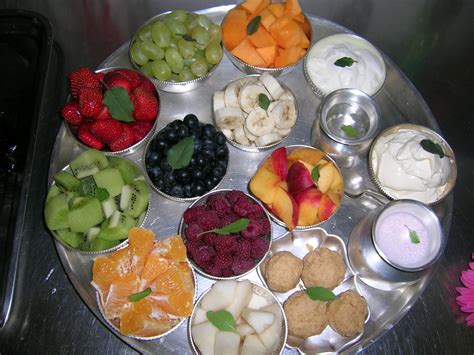
“… a leaf, a fruit, a flower, or water.” This means that vegetables, fruits, nuts, juice, and all kinds of produce can be offered to Him and then eaten. We also offer dairy products that aren’t mentioned in that verse.
Out of His kindness, Krishna will accept even the smallest token of our faith — even a little water or a Tulasi leaf — if it is offered with love. When Krishna asks us to make such an offering, He is really inviting us to reawaken our eternal, blissful relationship with Him. He wants our love. Therefore the key ingredient in the preparation and offering process is our affection for Him, our desire to please Him.
This verse explains how Krsna emphasizes the love and devotion of the devotee and that is what He sees when we offer Him something.
We develop our love for Krishna by offering/accepting the things He likes and rejecting the things He dislikes. Lord Krishna begins Bg 9.26 with the word patram to explain that pain does not exist in the performance of bhakti to Him, and it can also be performed with ease.
The word bhaktya has been used in the second line and also again in the third line in the word bhakty-upahatam. The repetition emphasizes that, if someone other than My bhakta offers Me fruits or flowers with superficial devotion, I do not accept it, but I accept (açnami) whatever My bhaktas give Me, be it even a leaf. In other words, I fully enjoy that which is offered to Me with bhakti, but I do not enjoy the offering of someone who has been forced to do it.
Vidura’s wife, Vidurani, felt such great ecstasy at the opportunity to serve Krishna personally that she offered Him a banana peel instead of the fruit and Krishna ate it with great relish.
Sabhari, a devotee of Lord Rama offered Him fruits after biting each piece to ensure that they didn’t taste sour and Lord Rama ate them with great relish.
One can satisfy the Lord simply by devotional service. Gajendra did this by offering a flower, and thus the Lord was satisfied with him (SB 7.9.9).
We are supposed to be essence seekers.
I hope that helps.
your servant,
Brajanath Das
Suzanne Inwood, 22 June 2019
Hare Krishna!
All glories to Srila Gurudeva!
All glories to Srila Prabhupada!
Dear One,
Your response is gentle and soothing to my mind and heart.
Thank you.
Devotee Suzanne
Rasika Krishna Das, 22 June 2019
Hare Krishna!
Please see below excerpt from Sri Valmiki Ramayan:
As per the instructions of Guru Vishwamitra all of them decided to take night rest there. Ram and Lakshman,both the brothers, collected “Kanda-Mool-Fala” (eatable bulbs, roots and fruits/ vegetables) from forest and dedicated to the sage. With the Guru, both the brothers also ate the collected items considering that as boon. After completing the bath and worship, Ram and Lakshman listened variety of stories and religious discourse told by Vishwamitra. Finally, after providing appropriate services to Guru and getting permission from him, they laid down to their gross beds pronouncing the holy “Gayatri Mantra”.
your servant,
Rasika Krishna Das
Suzanne Inwood, 22 June 2019
Hare Krishna.
All glories to Srila Gurudeva.
All glories to Srila Prabhupada.
All glories to Sri Caitanya Mahaprabhu.
Thank you to all devotees responding to my question.
I am carefully reading and studying your offerings to all of us.
your servant,
Bhaktin Suzanne
Shridhar Das, 23 June 2019
Oh, I am very enlightened by reading all the answers! Especially the examples below and from Ramayan.
Few more examples:
Sudama Brahman was shy and embarrassed to offer the chipped rice that his wife had given him in dirty wrapped clothes. Sudama and his wife had no proper clothes to wear. Only 1 pair. They were torn and besides that dirty as well. Coming to Dwarka and being honored by Krishna in the best possible way, experiencing the topmost opulence and welcome in Dwarka, Sudama indeed felt that his gift was not worth offerable to Krishna. Krishna being the Supersoul asked Sudama, “Do you wish to gift me something?”. When Sudama replied No, Krishna told Sudama that he doesn’t taste anything material that His devotees offer. He tastes the spiritual love and devotion and Krishna snatched the chipped rice and honored with great relish.
Another pastime:
Srila Raghunath Das Goswami once gave up begging food as a renunciant in Jagannath Puri and in the deepest of his humility exhibited topmost renunciation by honoring the rice that was coming out from the drainage of Jagannath Puri temple. That rice was the most rejected in material state, being leftovers after the cows had chewed and spit them. This was Srila Raghunatha Das Goswami’s feast everyday. When Sri Chaitanya Mahaprabhu heard of this, The Supreme Lord Himself came and snatched that Prashadam from hands of Raghunath Das Goswami and told that He had never tasted anything delicious like this. Lord was tasting the devotional renunciation of Srila Raghunath Das Goswami.
your servant
Shridhar das
Naren Tippavajjula, 23rd June 2019
Hare Krishna
There is another verse from purusha suktam
antar bahischa tatsarvam vyapya narayanastitaha
Meaning, in all of us and everyone, the lord Vishnu is present, we are offering the one which God gave us
Regarding offering in Bhagavad-Gita it’s written as 3 types
Satvik food
Rajasik food
Tamasik food
We should take and even offer only satvik food for the God
As rajasik and tamasik if we take ,it gives rise to anger ,greed and other 5 evils kama,krodha,lobha,madam,matsaryam
So Krishna suggested us not to take those food items by which we can reach eternal happiness
Thank you for your valuable questions
Naren Tippavajjula
Suryakant Vibhandik, 25 June 2019
Hari bol. Thank you so much for all the observation by various prabhus. I would also like to add something i have heard.
Patram is to offer a page of our day’s activities. We are daily writing something on this page with the help of the supersoul.
Pusham is to offer a petal of our heart’s love. We cannot bestow our love fully on anyone or anything in this material world.
But the love can be reciprocated with the Supreme Lord and both are fully satisfied fully by this exchange of love.
Phalam is to offer the results of our activities.
Toyam is to offer a tear with love and devotion for the supreme person. Lord Krishna came to help Draupadi when she helplessly cried for help. She tried her best to save herself by herself but when she raised her both hands Krishna came by the mediam of her tears.
Thank you guru maharaj for providing a platform to express and receive opinions of enlightened souls. Please correct and rectify me. Hari bol.
Bhakta Sunil, 25 June 2019
Hare Krishna
would like to add a speck to the wonderful answers,
All the foods mentioned in the Verses are in mode of goodness, accordingly only foods in mode of goodness are to be offered
Bhakta Sunil
Mahabhagavat Das, 25 June 2019
Dear Mother Suzanne,
Hare Krishna!
The Bhagavad Gita is a summary of the vast Vedic literature, just 700 verses, or 1400 lines in all, spoken in a little over an hour. Bhagavad Gita was spoken in the Vedic context by the Greatest Vedic Authority to a highly advanced and learned disciple who got it in one shot. One lifetime, or a hundred of our current lifetimes are not sufficient to study the entire Vedic literature.
In Bhagavad Gita, for example, it is not directly mentioned “Chant Hare Krishna Hare Krishna Krishna Krishna Hare Hare Hare Rama Hare Rama Rama Rama Hare Hare”.We rely on the spiritual masters to tell us that this mantra is what Krishna means when He says amongst all types of sacrifices, “japa” is the highest and best. यज्ञानां जपयज्ञोऽस्मि yajñānāṁ japa-yajño ’smi Of sacrifices I am the chanting of the holy names [japa] https://vedabase.io/en/library/bg/10/25/
In addition to scripture, we have two other sets of authority., You mentioned scripture, or Shaastra… the other two are “Sadhu” – the great saintly personalities, and “Guru” – the spiritual masters in disciplic succession. So just as I don’t need to wait on a DNA test to determine who my mother and father are, I take their word for it unless I’m in some unusual circumstances! 🙂
So therefore we read scriptures in the association of the devotees, because reading alone, it is possible that we reach some strange conclusions – so many conspiracy theorists, tin-foil hats, despots, tyrants, murderers, and other such persons have claimed to have “direct communion” with God or the scripture they were reading…
These 3, Guru, Sadhu, and Shastra are our GPS triangulation points. We consult all 3 to determine our course of action. That is why the International Society for Krishna Consciousness exists, to provide all three, Guru, Sadhu, and Shaastra, plus a large community of those trying to follow them carefully.
your servant,
Mahabhagavat Das
Bhaktin Suzanne, 28 June 2019
Thank you for your response.
Hare Krishna
Bhaktin Suzanne
J. Austin Tomlinson, 28 June 2019
Hare Krishna
Krishna will also accept stems and roots.
He cares more for your spiritual enlightenment and liberation and transcendence. He is very specific that he cares more about you than you know. Krishna is the supreme person. He will also accept beans and nuts. Imagine he is your best friend and you are his guest. Also imagine his power. This I say in Krishna consciousness. Hare Krishna
J. Austin Tomlinson
Please subscribe to daily inspirational emails from His Grace Sriman Sankarshan Das Adhikari (Writings and lectures archived at sda-archives.com), written fresh every day from his travels around the world sharing the highest spiritual knowledge with everyone. Sign up now at www.joincourse.com
Benefit others now. Share this:












 Freedom through Genuine Spiritual Progress