How Spiritual Practices Combat Material Pollution

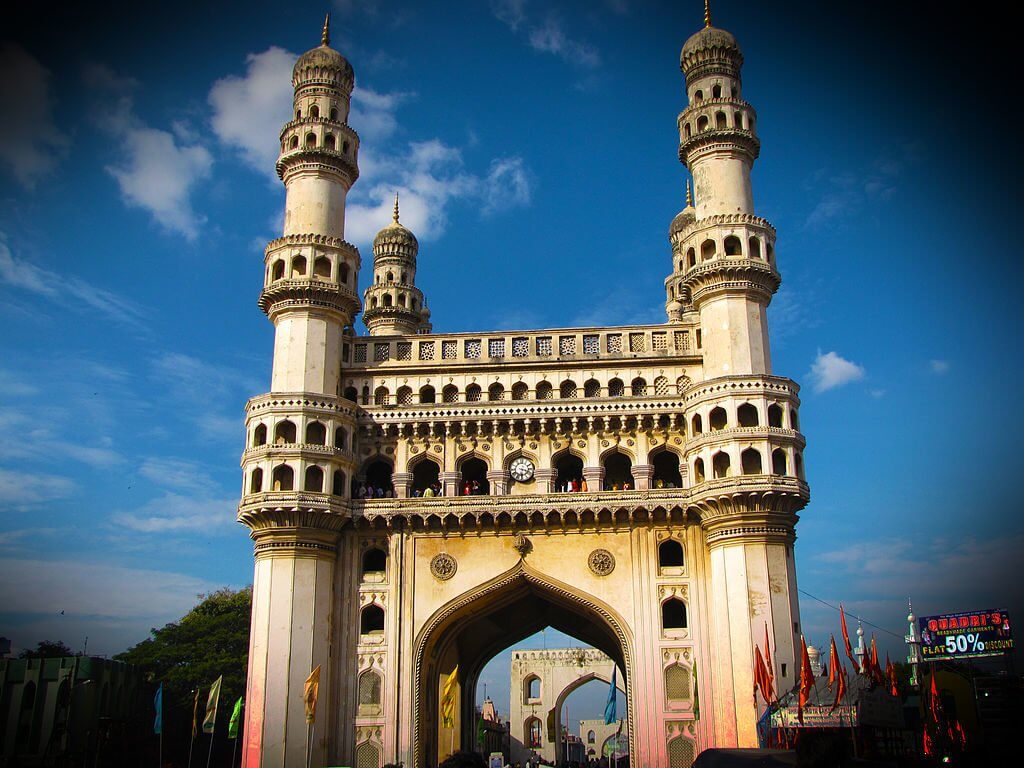
Hyderabad, like many other cities, is a vibrant chaos of litter. Dedicated street cleaners face a relentless battle against the chronic litterbugs who trash the city daily. Despite their morning efforts, the streets revert to their messy state by evening. This mirrors our spiritual lives where temporary cleansings fail to eliminate deeper impurities. The battle against sin and distraction is exacerbated by our habits that pollute consciousness. The antidote? Fully embrace Krishna Consciousness—an all-encompassing practice that brings clarity, purpose, and purity to both streets and spirit.

I am here in India presently, the booming bustling messy city of Hyderabad.

Every morning, I walk back from the temple after the morning program. I admire the cleaners busily cleansing the streets of all sorts of garbage… pieces of paper, plastic wrappers, cigarette butts, and more.

Street Sweepers in Hyderabad

They work quite hard, actually. They diligently sweep and clean up everything. They collect it all, put it into their carts, and take it all away. At about 8 AM in the morning, everything looks so neat and clean!

But come the afternoon, the streets look almost the same as they did before. This, despite all the hard work by the cleaners of Hyderabad!
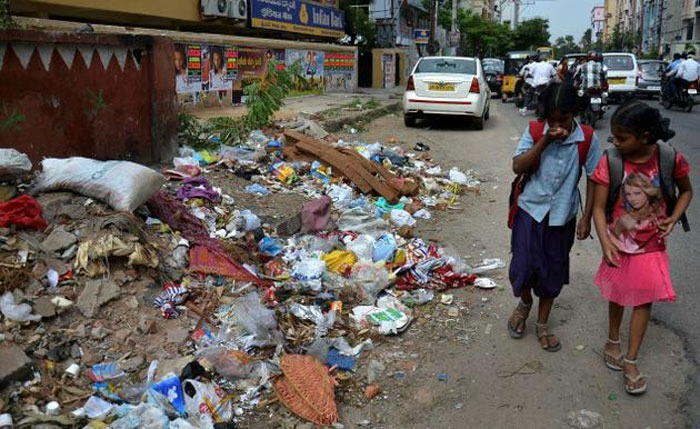
No matter how much the cleaners clean, Hyderabad streets remain as messy as ever.

What just happened?

Litterbug city

The culprits are the citizens (no offense intended) of Hyderabad! Most of them are chronic litterbugs… I saw one man on a motorcycle. He opens up a sachet of tobacco. He pops the contents into his mouth and discards the wrapper right there. All this while he is stopped in traffic.

Motorcycle riders in Hyderabad

A child peels the wrapper off a sweet. She pops it into her mouth. Then she discards the wrapper.

A street vendor is preparing some fruit for sale… He discards all the peels in a heap behind his cart.

A fruit vendor in Hyderabad

A housewife has just swept her home, and she dumps the rubbish right on the street outside her house.

A man in a business suit is in a chauffeured car. He rolls down the tinted window of his fancy car. He out throws out an envelope, carefully torn into tiny bits. He spits out a stream of red tobacco induced liquid.

Boys light firecrackers on the street – it is a few weeks to Diwali. They’re getting a head start on the merriment… Every firework is left right there on the street where it went off… Bits of plastic, paper tubes, shredded paper.

Multiply that 11 Million times… the population of Hyderabad. It’s a recipe for one messy place!

Then the next morning, the cleaners will be at it again… sweep, collect, throw.

But Hyderabad looks as messy as ever, day after day. The rivers are open sewers, drains are clogged with plastic film… People have been spitting all over the place.

The cleaners don’t stand a chance, they are outnumbered!

Spiritual Cleansing, Materialistic Littering

On the spiritual path, people often engage in cleanups… Prayers, Purificatory rituals, penances, austerities… But sometimes we feel discouraged when there is no progress.
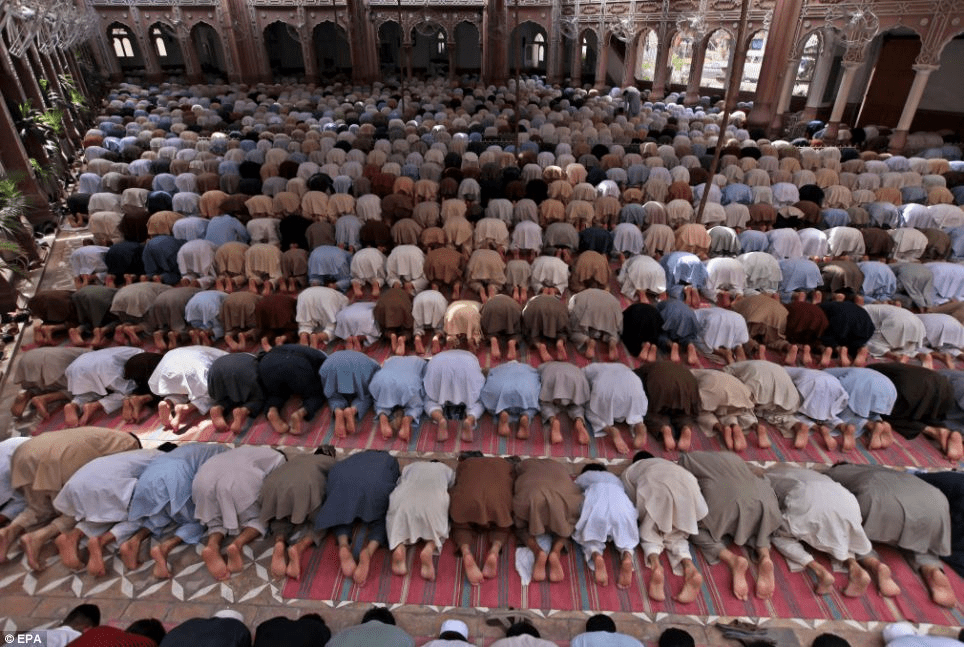
Faithful Muslims Praying

Let’s say someone prays or meditates (cleansing the consciousness) for 5 minutes, 20 minutes, or even two hours every day. Or more. What happens for the remaining time during the day?

It’s the same thing – gotta’ stop littering for the effects of the cleaning to show!

The streets of Hyderabad are cleaned each morning. But the actions of the chronic litterbugs make it seem futile. Similarly, our consciousness can be littered by where we choose to focus our attention.

It is important to focus our consciousness in a way that doesn’t litter our consciousness with more materialistic garbage.

The elephant’s bath

In a picturesque analogy from the Bhagavatam, King Parikshit makes this astute observation. He observes the souls passing in turn through regions of enjoyment and purgatory throughout the Universe. Souls are rewarded with heavenly pleasures for their pious activities, and punished for their sinful activities.

King Parikshit receives transcendental knowledge from the great sage Sukadeva Goswami

These pious and impious activities don’t cancel each other out. The after-effects of both must be experienced separately. Enjoyment for pious deeds, and suffering for the impious. And every such activity leaves behind a seed of future entanglement.

Many of us on the spiritual path are very keen to avoid the sinful activities. But all too often, we still fall victim.

क्‍वचिन्निवर्ततेऽभद्रात्‍क्‍वचिच्चरति तत्पुन: ।
प्रायश्चित्तमथोऽपार्थं मन्ये कुञ्जरशौचवत् ॥ १० ॥

kvacin nivartate ’bhadrāt
kvacic carati tat punaḥ
prāyaścittam atho ’pārthaṁ
manye kuñjara-śaucavat

Sometimes one who is very alert so as not to commit sinful acts is victimized by sinful life again. I therefore consider this process of repeated sinning and atoning to be useless. It is like the bathing of an elephant, for an elephant cleanses itself by taking a full bath, but then throws dust over its head and body as soon as it returns to the land.

https://vedabase.io/en/library/sb/6/1/10/

An elephant bathes himself with clean water
An elephant showers himself with mud

Many of us do the same… we engage in purification, and then we cover our consciousness with dirt.

What is that “dirt”… It is activities which cover our spiritual consciousness with material contamination. Think television, newspapers, mundane movies, games of crickets and soccer, video games, internet gossip and worse.

Why?

It’s so important to lose the habit of littering our consciousness!

Lord Krishna says this in His Song, the Bhagavad Gita, the Song of God…

विषया विनिवर्तन्ते निराहारस्य देहिनः ।
रसवर्जं रसोऽप्यस्य परं दृष्ट्वा निवर्तते ॥ ५९ ॥

viṣayā vinivartante
nirāhārasya dehinaḥ
rasa-varjaṁ raso ’py asya
paraṁ dṛṣṭvā nivartate

Though the embodied soul may be restricted from sense enjoyment, the taste for sense objects remains. But, ceasing such engagements by experiencing a higher taste, he is fixed in consciousness.

https://vedabase.io/en/library/bg/2/59/

You see, the taste for sense objects remains. There is facility, there is time, and so, we fall headlong.

But is there a way to prevent this? How to avoid the fall?

केचित्केवलया भक्त्या वासुदेवपरायणा: ।
अघं धुन्वन्ति कार्त्स्‍न्येन नीहारमिव भास्कर: ॥ १५ ॥

kecit kevalayā bhaktyā
vāsudeva-parāyaṇāḥ
aghaṁ dhunvanti kārtsnyena
nīhāram iva bhāskaraḥ

Translation

Only a rare person who has adopted complete, unalloyed devotional service to Kṛṣṇa can uproot the weeds of sinful actions with no possibility that they will revive. He can do this simply by discharging devotional service, just as the sun can immediately dissipate fog by its rays.

https://vedabase.io/en/library/sb/6/1/15/

The process of Krishna Consciousness is so sublime. There is Krishna Consciousness activity to immerse ourselves twenty four hours a day.

24/7 Spiritual Engagement

We can start with rising early for Mangala Arati. We can engage in a full morning program of hearing, chanting, and worship. Our consciousness becomes charged up with Krishna. We can then insert Krishna Conscious thoughts, words, and deeds throughout the day as we go about our duties.

And of course, someone who rises early is also forced to rest early. So much trouble avoided!

And of course, genuine spiritualists do not litter. Not their consciousness, not their homes, nor their streets.

Let us take advantage of this process! Want to avoid littering your streets of your consciousness? Want to know how?

P.S: I have nothing against the city or the people of Hyderabad. It is practically the same story in every village, town, or city in the world. It is the terrible practice of littering, both spiritual and material, but especially the spiritual littering that I’m advocating against.
Brahmachari vs Bhramachari: Which one do you want to be?

A Brahmachari is like a spiritual athlete, dedicated to serving the Supreme Truth, while a Bhramachari chases illusions—basically like a spiritual couch potato, confusing the finish line for a mirage in a desert. We dive into how society’s roles, like Brahmanas and Shudras, fit into this divine quest, reminding us that serving God is the real goal, whether you’re a householder or a renounced sage. Remember, folks: always be a Brahmachari, not a Bhramachari—that’s the real spiritual workout!

A Brahmachari is a person who is dedicated to the pursuit and service of the Supreme Absolute Truth.

ब्रह्म आचरति इति ब्रह्मचारी

brahma ācarati iti brahmacāri

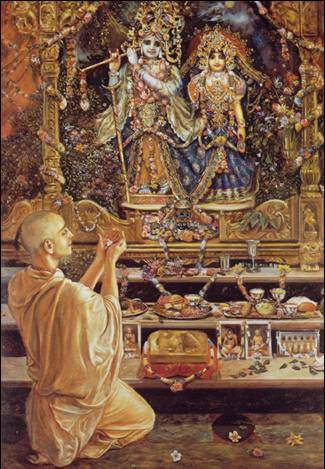
Brahmachari worships Radha Krishna

And a Bhramachari is a person is the exact opposite.

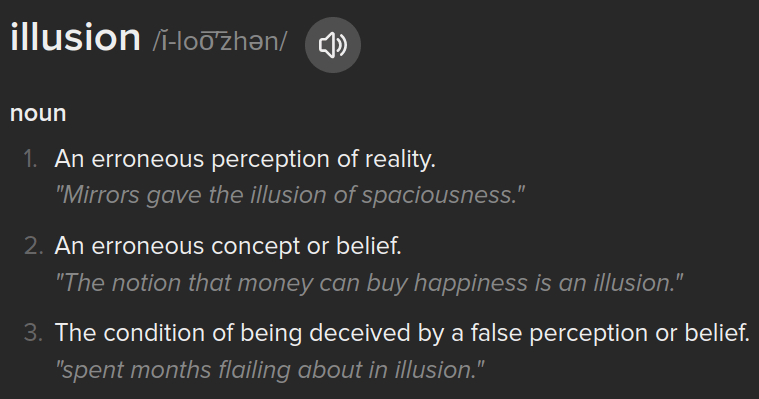
The Sanskrit word “bhrama” means “illusion”.

 Illusion, from the dictionary

So, someone who chases after illusory happiness is the opposite of someone who dedicates themselves to the Absolute Truth.

What got me thinking was a typo. The person writing was referring to a gentleman who is solidly dedicated to the Supreme Absolute Truth. At first I chuckled, but then I started thinking about the difference between the two.

I concluded that I can be one or the other at any given time, either I am engaged in the service of the Supreme Absolute Truth, or I am engaged in something frivolous that is temporary at best, illusory in nature.

Human society is divided by God into 4 natural orders of spiritual life, and 4 social orders, according to the natural qualities and work performed by the various people. And Brahmacharis can exist in all spiritual and social orders. This natural division is clearly visible in the nature and activities of people, it’s not the birth-based caste system as it has degenerated to.

चातुर्वर्ण्यं मया सृष्टं गुणकर्मविभागशः ।
तस्य कर्तारमपि मां विद्ध्यकर्तारमव्ययम् ॥ १३ ॥

cātur-varṇyaṁ mayā sṛṣṭaṁ
guṇa-karma-vibhāgaśaḥ
tasya kartāram api māṁ
viddhy akartāram avyayam

According to the three modes of material nature and the work associated with them, the four divisions of human society are created by Me. And although I am the creator of this system, you should know that I am yet the nondoer, being unchangeable. https://vedabase.io/en/library/bg/4/13/

The 4 Social Orders are:

  • Brahmanas: The intelligent class, the “head” of society
  • Kshatriyas: The administrator class, the “arms” of society
  • Vaishyas: The mercantile community, merchants, traders, farmers, the “belly” of society
  • Shudras: The worker class, the “legs” of society
Varna: The 4 social orders created by God. BG 4.13

And then there are the 4 spiritual orders:

  • Brahmachari: The celibate student
  • Grihastha: The householder family man
  • Vanaprastha: The former householder, retired from family life
  • Sannyasa: The fully renounced order of life

However, no matter which social or spiritual order one may be situated in…

अत: पुम्भिर्द्विजश्रेष्ठा वर्णाश्रमविभागश: ।
स्वनुष्ठितस्य धर्मस्य संसिद्धिर्हरितोषणम् ॥ १३ ॥


ataḥ pumbhir dvija-śreṣṭhā
varṇāśrama-vibhāgaśaḥ
svanuṣṭhitasya dharmasya
saṁsiddhir hari-toṣaṇam

O best among the twice-born, it is therefore concluded that the highest perfection one can achieve by discharging the duties prescribed for one’s own occupation according to caste divisions and orders of life is to please the Personality of Godhead. https://vedabase.io/en/library/sb/1/2/13/

All these 4 orders of society are meant to serve God in their own way, just like the different parts of the body serves the whole – the hand feeds the stomach, the leg moves the body, and the brain regulates the hand, stomach, and legs. One without the others is a handicapped body, not very effective. Neither is one more or less important than others.

By following the activities according to one’s own nature, and offering that in the service of God, one can indeed attain perfection.

यत: प्रवृत्तिर्भूतानां येन सर्वमिदं ततम् ।
स्वकर्मणा तमभ्यर्च्य सिद्धिं विन्दति मानव: ॥ ४६ ॥

yataḥ pravṛttir bhūtānāṁ
yena sarvam idaṁ tatam
sva-karmaṇā tam abhyarcya
siddhiṁ vindati mānavaḥ

By worship of the Lord, who is the source of all beings and who is all-pervading, a man can attain perfection through performing his own work. https://vedabase.io/en/library/bg/18/46/

Which now brings us to the main topic of our discussion…

No matter where we might fit into society, we are all meant to serve God with all our faculties, with all our gifts, with all our abilities, and all our resources.

This is how one may remain a Brahmachari, no matter where one may be situated in…

  • Brahmacharis in the Brahmachari Ashrama – these are either students or those dedicated to spiritual life without deviation, and/or preparing themselves for the renounced order, usually younger men, but also many older men. Being in young bodies or being inexperienced does not mean they can pursue unrestricted sense enjoyment.
  • Grihastha Brahmacharis, or those who pursue spiritual life even while accepting the responsibilities of householder or family life. It’s not that taking on family responsibilities give the person to pursue illusion in an unrestricted manner.
  • Vanaprastha Brahmacharis, or those who have retired from family life, or decided to marry a like-minded person dedicated to spiritual life – even while living as a married couple, they have no family responsibilities. However, just because they are not directly responsible for their family doesn’t mean they don’t accept responsibility for other Grihasthas and Brahmacharis. The dedicate themselves to being on “constant pilgrimage” and leveraging their life experience and spiritual knowledge to benefit others.
  • Sannyasa Brahmacharis, or those who are in the renounced order of life, with no family or social connections. But just because someone is in the renounced order of life doesn’t mean they don’t do anything. In fact, they adopt the whole world as their family, meeting others just so they can convey God Consciousness, Krishna Consciousness to them, and staying just long enough to deliver the message and keep moving on.

Importantly, one needs to remain focused on the goal of life, which is to attain spiritual perfection. The way one expresses one’s Brahmacharya, or dedication to spiritual advancement, may look different depending on which Varna and Ashram one is in, but the principles of a regulated spiritually focused life remain.

No matter if you are a man or woman, young or old, whether you wear white, or saffron, or any other colour… If you’re serious about spiritual life, then you must be a Brahmachari, in every thought, word, and deed.

So we have a choice, no matter what our official social and spiritual status might be. At every moment, with every thought, word, and deed, we all need to be Brahmacharis, not Bhramacharis.

Thoughts?

Understanding the Struggle with Material Desires

If you’re trapped in a cycle of self-sabotage, fully aware of your weaknesses, fully aware of what needs to be done, yet indulging in meaningless distractions. The remedy? Consistent dedication to Krishna through disciplined practice. Just like a sick person must stick to their medicine, embrace the struggle. Transformation may not be instantaneous, but it’s inevitable for those who truly commit.

Question

Hare Krsna Prabhu I have a question. I know what is good for me, what is right and wrong and the ISKCON philosophy. But i give in to my sense gratification. Instead of reading the Gita I read other novels for entertainment or be on my phone. Not able to put my 100% free time into reading Prabhupada’s books. Why is this. I find more ruci (taste) in mundane material temporary things even though i know the truth. How can I change my self. I am not able to control my mind. Its very much spiritual suicide my actions.

Answer

Hare Krishna!

Congratulations! Do you know that if you know the problem then that is half the solution? It is also like “well begun is half done”.

Most people don’t even know the problem. But you do! That is very fortunate!

Thank you for your nice question. The answer will benefit many more also. Of course, your identity will never be disclosed whenever you ask a question, especially if the question is sensitive…

All of us who are in the material realm in material consciousness have one thing in common. Those in the spiritual realm, or in spiritual consciousness do not have this problem.

We have tried for a very long time to forget Krishna, the Supreme Personality of Godhead. So, over these millions of lifetimes, we have developed our false sense of identity… that we are this mind or body that covers us. So, we feel that satisfying the mind or satisfying the senses will actually give us pleasure.

If this were true, then all of us in the material world would be extremely ecstatic… After all, so many of us of us are able to fulfill so many of our material desires on a daily basis!

Srila Rupa Goswami, in the Nectar of Instruction, compares our condition to that of a jaundiced person… I had jaundice once, everything sweet tasted bitter. When I was feeling unwell recently, even the sweetest of drinking water tasted bitter! But in a healthy condition of life, we know that water is not bitter. We also know that sweet things are not bitter. When the illness subsides, then we begin to taste everything as it is.

Similarly, Srila Rupa Goswami Prabhupada advises us…

The holy name, character, pastimes and activities of Kṛṣṇa are all transcendentally sweet like sugar candy. Although the tongue of one afflicted by the jaundice of avidyā [ignorance] cannot taste anything sweet, it is wonderful that simply by carefully chanting these sweet names every day, a natural relish awakens within his tongue, and his disease is gradually destroyed at the root. – https://vedabase.io/en/library/noi/7/

Please read that verse, translation, and purport before you continue further… Please read the verse and purport. The following will make sense only if you have done this now 🙂

So, now what is to be done?

Just as a sick person needs to take their medicine and follow a strict diet, we need to carefully follow the rules of Sadhana Bhakti.

  • Daily chant a minimum of 16 rounds attentively or as best as possible
  • Follow the regulative principles carefully
  • Read Srila Prabhupada’s books prayerfully
  • Sing the songs of the Vaishnava Acharyas regularly
  • Memorize chant the verses of the Bhagavad Gita and Srimad Bhagavatam as much as possible
  • Serve Krishna and His devotees as much as possible

On a practical level, “where attention goes, energy flows”… so when we pay attention to Krishna, then our energy also flows to Krishna. When we pay attention to Maya’s toys, then our attention also goes there.

The weight of our spiritual practices sinks into our consciousness… if I am less conditioned, then it happens very quickly… like those disciples of Srila Prabhupada who started chanting 16 rounds from one day to the next… or who surrendered immediately… but if I am more heavily conditioned, then it may take some time.

But rest assured, like millions of souls have attested and continue to profess, the process of Bhakti Yoga works unfailingly on everyone who sincerely tries. It is a scientific process, which means that when the process is followed without deviation, the result is sure. Srila Prabhupada says “Success is certain for the rigid practitioner.”

So, my request to you is not to get discouraged… sincerely try, just as a child learning to walk does not give up trying to walk.

What do we call persons who don’t recognize their own suffering?

What do we call someone who does not recognize that they are suffering? What do you call someone who does not recognize the root cause of their suffering? What do you call someone who refuses to accept the cause of their suffering? We call them innocent, just like children, just like animals. And then we see them as spirit souls, and we try to serve them on their spiritual journey. Hare Krishna!

Have you ever seen an animal that is about to be slaughtered? In the modern world, that includes most chickens, goats, sheep, pigs, cows, fish, and buffaloes.

Sheep, to the slaughter

These sheep are being led to slaughter

Animals cannot see their impending doom

I have spent much time in the South Indian City of Hyderabad. This city has a large Muslim population. The Muslims celebrate a festival called Bakri-eid, when many Muslims sacrifice a goat to Allah. It is a common sight to see a Muslim man leading a goat somewhere just before Eid, or even on the day of.

Charminar, Old City, Hyderabad, India

As a child, I was tempted to innocently call out to the goat “run away goat, run away, you are about to be slaughtered”. But no, neither do I have the power to make a goat understand that his life is in danger, nor does the goat have the intelligence to understand his fate.

Even right before being slaughtered, the animal can be seen calmly gobbling up grass here and there, oblivious.

Goat chewing and chewing, oblivious

We can extrapolate… think about the animals being transferred in trains or trucks from one place to another. They are all going to be slaughtered, sooner or later.

Cows being transported for slaughter

What about us? Can we see our own sufferings?

As we go about the world, we see so many suffering souls. Some are hungry, some others are unclothed, hot, or cold… yet others are diseased. And everyone is striving, struggling, to solve these problems of life, food, shelter, and clothing, medical treatment, and so on.

Struggling human, sisyphean effort

It is of course, natural for a human being or an animal to mitigate an immediate danger. For example, once an animal senses that someone is causing it harm, for example the pain of a hook in it’s mouth, or a botched attempt at slaughter, it will flap about, bleat, moo, or make some other frantic sounds, maybe try to fight it’s attacker, and even try to run away, but alas, by then it is usually too late.

Goat, about to lose it's life

Similarly, we see human beings trying to mitigate their sufferings in so many ways.

But do they really recognize the actual cause of their suffering?

Man getting medical treatment

Does that woman who is being wooed ardently by that handsome, passionate, suave, smooth-talking man realize that once the man has had his fill of sensual gratification, she will be left behind after an “it’s not you, it’s me conversation.”?

Young man wooing a girl with sweet words and flowers

Does that hard-working employee staying late and working long hours realize that a business change means he is to be on the next list of employees to be laid off due to a “Reduction in Force” or “Headcount cut” or “Re-organization”?

Hardworking employee, doesn't know he is just one step away from being fired

Does that person suffering poverty, pestilence, or war realize that they have created their own situation with their own past actions?

तत्तेऽनुकम्पां सुसमीक्षमाणो
भुञ्जान एवात्मकृतं विपाकम् ।
हृद्वाग्वपुर्भिर्विदधन्नमस्ते
जीवेत यो मुक्तिपदे स दायभाक् ॥ ८ ॥

tat te ’nukampāṁ su-samīkṣamāṇo
bhuñjāna evātma-kṛtaṁ vipākam
hṛd-vāg-vapurbhir vidadhan namas te
jīveta yo mukti-pade sa dāya-bhāk

My dear Lord, one who earnestly waits for You to bestow Your causeless mercy upon him, all the while patiently suffering the reactions of his past misdeeds and offering You respectful obeisances with his heart, words and body, is surely eligible for liberation, for it has become his rightful claim.

https://vedabase.io/en/library/sb/10/14/8

Suffering Child. Who creates our suffering for us?

How can we help everyone understand how to end this cycle of suffering?

Sometimes, not being satisfied with trying to please the senses, an intellectual may, instead, choose to live within the mind, for example in the realm of art, literature, poetry, scientific or mathematical endeavours, maybe even philosophy and speculation about God?

Intellectuals, lost in the world of trying to satisfy the mind

Does the frustrated intellectual, who has given up on gross materialistic gratification and is now involved in trying to satisfy the mind realize that he’s only headed towards insanity?

Mad Scientists. What will they not do?

Neither the mind, nor the senses can ever be satisfied, as much as a fire can never be extinguished by giving it more fuel.

lust cannot be satisfied by any amount of sense enjoyment, just as fire is never extinguished by a constant supply of fuel. In the material world, the center of all activities is sex, and thus this material world is called maithunya-āgāra, or the shackles of sex life. In the ordinary prison house, criminals are kept within bars; similarly, the criminals who are disobedient to the laws of the Lord are shackled by sex life.

https://vedabase.io/en/library/bg/3/39, purport

Blazing fire, no amount of fuel will extinguish it!

We try and we try and we try to help everyone understand that they are not their mind, that they are not this body, not the senses… we try and try to help them understand that actually they are the spirit soul.

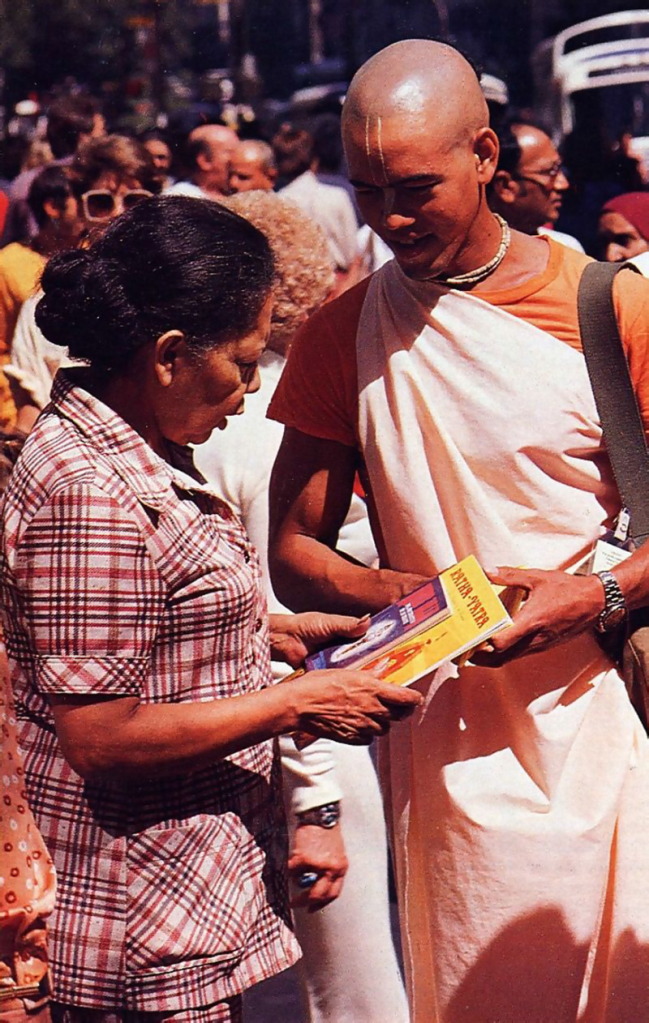
Hare Krishna Monk tries to distribute spiritual literature

But unfortunately, most of the souls we come in contact with are not interested. They are content to pursue that next gourmet meal, that next sensual experience, that holiday, that next acquisition, be it a house or a car or some other shiny object. They are content to chase job after job, climbing the ladder to nowhere (more on that another time).

What do we call such a soul, even if in a human body?

Are we cultivating the consciousness of animals. Then what is our destination?

We call such a person an animal in human form. You may be shocked at this. How dare I call a human being an animal? How arrogant and conceited of me! What sort of spiritualist am I, this Das?

यस्यात्मबुद्धि: कुणपे त्रिधातुके
स्वधी: कलत्रादिषु भौम इज्यधी: ।
यत्तीर्थबुद्धि: सलिले न कर्हिचि-
ज्जनेष्वभिज्ञेषु स एव गोखर: ॥ १३ ॥
yasyātma-buddhiḥ kuṇape tri-dhātuke
sva-dhīḥ kalatrādiṣu bhauma ijya-dhīḥ
yat-tīrtha-buddhiḥ salile na karhicij
janeṣv abhijñeṣu sa eva go-kharaḥ

One who identifies his self as the inert body composed of mucus, bile and air, who assumes his wife and family are permanently his own, who thinks an earthen image or the land of his birth is worshipable, or who sees a place of pilgrimage as merely the water there, but who never identifies himself with, feels kinship with, worships or even visits those who are wise in spiritual truth — such a person is no better than a cow or an ass.

https://vedabase.io/en/library/sb/10/84/13

My dear reader, please understand that a spiritualist is just like an honest doctor. An honest doctor is not afraid to observe carefully and make the right diagnosis. From the doctor’s diagnosis comes a treatment plan, including diet, rest, exercise, and medicine. And from this comes a prognosis, some hope of hope, possibly.

But a doctor who sweeps the symptoms under a rug and pretends everything is just fine, is no doctor. Such a “doctor” is really an enemy in disguise.

A doctor must be honest!

And therefore, out of abundant compassion, we call such a human an animal. So that we may develop even more patience and compassion. After all, there is no point being too harsh with an animal or a child. We then try to coax and cajole and convince in this way or in that way.

Physician Heal Thyself

First things first. As a spiritualist, I seek to spot the times when I myself behave as if I were my mind or my body. And I strive to disassociate myself, my self interest from the urges of the body or the mind. If I can be honest with myself, then I will have a deep sense of humility and understanding as to why this is so difficult for me. My conditioning in the material world makes it extremely difficult, and I have been trying for decades!

So, what should I do? First and foremost, look in the mirror and be honest with myself at all times, places, and circumstances.

I cannot be like this kitten here!

Compassion and Equal Vision!

Just as we need to see ourselves and where we are, we need to see everyone with an equal vision, and understand that every spirit soul is precious!

Not all souls can be served in the same way… I cannot discuss philosophy with a dog, nor can I get a pig to appreciate delicious food.

विद्याविनयसम्पन्ने ब्राह्मणे गवि हस्तिनि ।
श‍ुनि चैव श्वपाके च पण्डिता: समदर्शिन: ॥ १८ ॥

vidyā-vinaya-sampanne
brāhmaṇe gavi hastini
śuni caiva śva-pāke ca
paṇḍitāḥ sama-darśinaḥ

The humble sages, by virtue of true knowledge, see with equal vision a learned and gentle brāhmaṇa, a cow, an elephant, a dog and a dog-eater [outcaste].

https://vedabase.io/en/library/bg/5/18

For 99% of the population, we just try to engage in the chanting of God’s names. We give them Krishna Prasada, sanctified food, which has been lovingly cooked for and offered to Krishna. We then drip in a little bit of the medicine of the philosophy, you are not this body, you are not this mind, you are a spirit soul.

Hare Krishnas out on Harinam Sankirtan, out to save us all!

And so the effort continues, many, many spiritual warriors trying to save one soul, lifetime after lifetime, in a concerted harmonious effort.

The merciful Srila Prabhupada distributes Krishna Prasada generously to one and all.

My dear soul, please help us with this greatest of all causes, please do your bit for yourself, and then turn to serve others and help them get on and stay on a spiritual journey. Hare Krishna!

Bhakti Philosophy for the mind and Krishna’s Pastimes for the Heart?

How does Bhakti/Devotional Service deal with the intellectual / logical / analytical side of us as well as the emotional/feeling side of us? Does catering to one mean neglecting the other?

Brajanath Das, 02 November 2016

Hare Krishna Dear Devotees,

Please accept my humble obeisances!

All glories to Sri Caitanya Mahaprabhu!

All glories to Srila Prabhupada!

Please help me to understand the following phrase – 

“Pastimes of the Lord are for the heart and philosophy is for the mind.”

your servant,

Brajanath Das

Bhakta Sunil, 09 November 2016

Hare Krishna Prabhu

Dandavats!

The pastimes of the Lord help to easily realize the impurities in hearts by direct perception in story formats and reading philosophy engages the mind

Inversely , the reading of philosophy purifies the heart too and pastimes of the Lord engage the mind too

For example if we read this pastime of Lord Nrsimhadeva , not only we get moral by mind but also purifies our Hearts irrespective of how many times we read this, this transcendental literature is ever fresh contrary to mundane literature in news media and magazines :

THE PASTIMES OF LORD NRSIMHADEVA

There was once a great demon who was overwhelmed with rage: his brother Hiranyaksa had just been killed by the incarnation of Vishnu known as Lord Varaha. Thus he became very determined to become the emperor of the entire universe. In order to increase his power, he performed very powerful austerities. This penance was so severe that it disturbed the demigods. In fact, the demigods requested Lord Brahma to stop him. The chief of the demigods, Lord Brahma, therefore descended to pacify him by granting him a wish.

“Please grant that I not be killed by any created living being,” commanded Hiranyakasipu, “that I not die inside or outside any residence, during the daytime or night, nor on the ground or in the sky; that I not be killed by any being created by you, nor by any weapon, nor by any human being or animal indeed that I not meet death from any entity, either living or non-living; that I have no competitor; that I have sole lordship over all living entities and presiding deities, and that I acquire all mystic powers.”

After Brahma had granted him all these requests, Hiranyakasipu very swiftly conquered all the planets in the universe, took up residence in the lavish palace of King Indra, and forced the demigods to bow down to his feet. He even stole the sacrificial oblations meant for the demigods. Intoxicated physically by wine and mentally by power, Hiranyakasipu ruled the universe very severely.

During this time his queen, Kayadhu, returned to the palace of her husband and bore him a son, Prahlada. He was a reservoir of all transcendental qualities because he was a pure devotee of Lord Visnu. Determined to understand the Absolute Truth, he had full control over his senses and mind. He was kind to all living creatures and the best friend of everyone. Toward respectable persons he behaved just like a menial servant, to the poor he was like a father, and to his equals he was always like a sympathetic brother. Always very humble, he considered his teachers and spiritual masters to be as good as the Lord Himself. Indeed, he was completely free of any pride that might have arisen from his good education, riches, beauty, and aristocratic birth.

Hiranyakasipu wanted to raise his son to be a powerful demon, but Prahlada only wanted to learn about devotional service to Lord Visnu. After Prahlada attended school for some time, Hiranyakasipu took him on his lap and affectionately inquired, “My dear son, please tell me about your favorite subject in school.”

Fearlessly, Prahlada said, “Hearing (sravanam) and chanting (kirtanam) about the holy name, form, qualities, paraphernalia, and pastimes of the Supreme Lord; remembering (smaranam) them; serving the lotus feet of the Lord (pada-sevanam); offering the Lord respectful worship with sixteen types of paraphernalia (arcanam); offering prayers to the Lord (vandanam); becoming His servant (dasyam); considering the Lord one’s best friend (sakhyam); and surrendering to Him (atma-nivedanam, in other words, serving Him with body, mind and words); these nine processes are known as pure devotional service, and I consider anyone who has dedicated his life to service of Lord Visnu through these nine methods to be the most learned person, for he has acquired complete knowledge.”

Blinded by anger, Hiranyakasipu threw Prahlada from his lap onto the ground. “Servants! Take him away and kill him at once!” he screamed. However, Prahlada just sat silently and meditated on the Personality of Godhead, and the demons’ weapons had no effect on him. Seeing this Hiranyakasipu became fearful and contrived various ways to kill his son. His servants threw Prahlada beneath an elephant’s feet; they cast him into the midst of huge, fearful snakes; they cursed him with destructive spells; they hurled him from a hilltop; they gave him poison; they starved him; they exposed him to severe cold, winds, fire and water; they threw heavy stones to crush him. Hiranyakasipu even sent his sister Holika to burn him, but instead she herself was burned. But throughout these trials Prahlada was simply absorbed in thoughts of Lord Visnu, and thus he remained unharmed. Hiranyakasipu became very anxious about what to do next.

“You say there is a being superior to me,” said Hiranyakasipu, “but where is He? If He is present everywhere, then why is He not present in this pillar you see before you? Do you think He is in this pillar?” “Yes,” Prahlada answered, “He is there.”

Hiranyakasipu’s rage flared more and more. “Because you are speaking so much nonsense, I shall now sever your head from your body. Now let me see your most worshipable God come to protect you. I want to see it.” Cursing him again and again, Hiranyakasipu took up his sword, got up from his royal throne, and with great anger struck his fist against the column.

Then from within the very pillar that he had singled out came a wonderful half-man, half-lion form never before seen. The Lord’s form was extremely fearsome because of His angry eyes, which resembled molten gold; His shining mane, which expanded the dimensions of His fearful face; His deadly teeth; and His razor-sharp tongue. Lord Nrsimha then proceeded to battle with the wasp-like Hiranyakasipu.

Finally at twilight, Lord Nrsimha captured Hiranyakasipu and placed him in His lap on the doorway of the assembly hall. As He began ripping the demon to pieces with His many, many hands, Lord Nrsimha’s mouth and mane became sprinkled with drops of blood, and His fierce eyes, full of anger, were impossible to look at. Licking the edge of His mouth with His tongue, the Supreme Lord decorated Himself with a garland of intestines taken from Hiranyakasipu’s abdomen. Lord Nrsimha uprooted Hiranyakasipu’s heart and finally threw him aside and destroyed an army of Hiranyakasipu’s faithful followers.

By His transcendental cleverness, Lord Nrsimhadeva was able to kill Hiranyakasipu without contradicting any of Lord Brahma’s benedictions. The execution took place neither inside nor outside, but in the doorway; neither on land nor in sky, but on the Lord’s lap; neither during the day nor during the night, but at twilight; neither by man, beast, or demigod nor by any created being, but by the Personality of Godhead; and not by any weapon, but by the Lord’s own lotus hand, relieving the whole universe of Hiranyakasipu’s demonic activities.

Having been protected by the Lord, Prahlada Maharaja offered many prayers in a voice that faltered with love:

“My dear Lord Nrsimhadeva, please, therefore, allow Your angry feature to diminish, now that my evil father Hiranyakasipu has been killed . . . [The saintly persons] will always remember Your auspicious and fearsome incarnation, for it frees them from fear. In this way, my Lord, You appear in various incarnations as a human being, an animal, a great saint, a demigod, a fish or a tortoise, thus maintaining the entire creation in different planetary systems and killing the demoniac principles.”

Adapted from Srimad Bhagavatam, 7th Canto

Bhaktivedanta Book Trust. HDG A.C. Bhaktivedanta Swami Srila Prabhupada.

Hope this helps with your query

your insignificant servant,

Bhakta Sunil

Mahabhagavat Das, 11 November 2016

Dear Brajanath Prabhu,

Please accept my humble obeisances.

All glories to Sri Guru and Gauranga.

All glories to Srila Prabhupada.

“Pastimes of the Lord are for the heart and philosophy is for the mind.”

Such questions would greatly benefit from inclusion of context. Please do this going forward. A statement out of context is a perfect recipe for misunderstanding and confusion. Who said it, who was it said to, and in what specific context was that statement made? Without context, our answers may be insufficient or cause more misunderstandings.

Bhakti Yoga is a perfect synthesis of “heart” and “mind”. Thinking, feeling, willing, words, deeds, body, and mind, fully engaged in concert in harmoniously pleasing Krishna.

Generally, Bhakti means loving devotional service, there is no intellectual analysis needed or done in such pure devotional service, pure devotees simply love Krishna and act accordingly very naturally, doing whatever is needed for Krishna’s pleasure. They know “in their heart” what pleases Krishna. In this regard, hearing or chanting the pastimes of the Lord are devotional service.

Often, arguments and logic are undesirable in relishing Krishna’s sweetness.

Srila Rupa Goswami says, and Srila Prabhupada summarizes in the Introduction to his Nectar of Devotion

“Śrīla Rūpa Gosvāmī prays to his spiritual master, Śrīla Sanātana Gosvāmī, for the protection of Bhakti-rasāmṛta-sindhu—”The Ocean of the Pure Nectar of Devotional Service”—from the argumentative logicians who unnecessarily meddle in the science of service to the Lord. He compares their arguments and logic to volcanic eruptions in the midst of the ocean. In the midst of the ocean, volcanic eruptions can do very little harm, and similarly, those who are against devotional service to the Lord and who put forward many philosophical theses about the ultimate transcendental realization cannot disturb this great ocean of devotional service.”

But for someone who is conditioned by material energy, the mind and intelligence generally stands in the way of what is simply a matter of natural course of being true to our spiritual self. Such conditioned souls require philosophy and intellectual analysis to convince them to not do material nonsense but to render some devotional service, which, when done sincerely, gradually reawakens love of Krishna within the heart.

A pure devotee often engages in philosophizing on the pastimes, as our Acharyas, Srila Prabhupada and his disciples and grand-disciples do, but this is for our benefit, the benefit of the conditioned souls.

I hope this helps.

your servant,

Mahabhagavat Das

Dra Varni, 12 November 2016

Hare Krsna!!   This is a supreme question. While I am not a devotee I have had this experience. There are many answers, but “pastimes” and “theory” are not two separate things in this case. By this I mean one could not be without the other. And the outcome is not synthesis.  Elevation, in my experience, came from reading “pastimes” and “hearing” pastimes. Primarily, reading of Sri Caitanya Caritamrta, not all 17

Dra Varni

Dra Varni, 02 December 2016

All glories to Srila Prabhupada!, Dhruva Maharaja!

Hare Krsna!

“Bhakti Yoga is a perfect synthesis of  “heart” and “mind”. Thinking, feeling, willing, words, deeds, body, and mind, fully engaged in concert in harmoniously pleasing Krishna.”

I have taken time to respond to the above statement because its components are complicated and fragile . Above is the context of the message I received . I have a problem with the word “synthesis”. Below is my rendering to screen of why. I am sure too be only person with such thinking.

It is important to remember that the heart and mind are a continuum, not two distinct and separate energies. Given the age of Cali there is a compartmentalized effort to split everything. Objects for synthesis must be in direct opposition. Other look-a-likes are called “binary-oppositions” they just have the appearance of opposition. Used as a metaphor “Synthesis”would be fine depending on genre. And Bhakti Yoga would be the perfect synthesis of “heart”and “mind” if they were in opposition. 

Dra

Please subscribe to daily inspirational emails from His Grace Sriman Sankarshan Das Adhikari (Writings and lectures archived at www.ecstaticmedia.com ), written fresh every day from his travels around the world sharing the highest spiritual knowledge with everyone. Sign up now at www.joincourse.com

What is the difference between Advaita, Dvaita, and Vishishtadvaita philosophies?

Geetha, 12th March 2013
Hare Krishna,
Please accept my humble obeisances,
All glories to Srila Prabhupada,

I want to know in detail, what is the difference between Dvaita, Advaita and Vishistadvaita philosophies. Please help me.

Thank you,
Your servant,
Geetha

Harish, 16th March 2013

Hare Krishna !

Thank you for the question.

Please find below a answer replied by Srila Gurudeva Sriman Sankarshan Das Adhikari on the same topic in year 2004 :

Quote:
“My Dear Abhay,
Please accept my blessings. All glories to Srila Prabhupada.

Dvaita philosophy states that God and the living entity are eternally Two. Advaita philosophy states that God and the living entity are in actuality eternally One. The actual fact is that both philosophies are correct. The philosophy which synthesizes them both is known as Acintya Bhedabheda Tattva. This means that the Absolute Truth is simultaneously, inconceivably one and different. How is this so? The Lord is eternal, full of knowledge, and bliss and the living entity is also eternal, full of knowledge, and bliss. Therefore the Lord and the living entity are qualitatively the same, just like a drop of ocean water has the same chemical composition as the entire ocean. However there is a gulf of difference between the quantity of water contained in the drop and the entire ocean, just as quantitatively the Lord and the living entity are Two. The Lord is very big, He is the source of everything, while we are very tiny. We his emanations. He is the Complete Whole are we are the part. Since the part is always meant to serve the whole, we are meant to serve Him. Is this clear?

Unquote

Hare Krsna !

Thank you for the question.

I have no idea about Vishistadvita Philosophy.
Also find an excerpt from Srila Prabhupada’s secretary on the same :

At the press conference in Hyderabad one reporter asked right away whether Srila Prabhupada was an advaita (monistic) or dvaita (dualist) philosopher. Srila Prabhupada scoffed at the question. “What is the point of discussing such things—whether one is dvaita or advaita. Krsna says, annad bhavanti bhutani: ‘All living beings subsist on food grains’ Annad means grains. The people have no grains. Grains are produced from rain, and the rain from yajna (sacrifice).’ So perform yajna. Become Krsna conscious. Dvaita or advaita you may be, but you still need grains.”

Srila Prabhupada was recalling the press conference. One newspaper reported that he had said that Bhagavad-gita contains all answers to all problems—social, political and otherwise—and should not be misinterpreted. He smiled when he heard that and said, “They have captured the main points of my talk.” As for dvaita/advaita, he said, “Krsna never says we are all one. If a servant says, ‘Yes, I am the same as the master,’ that is his impudence. But the master never says it. Krsna says to Arjuna, ‘Many births you and I have had, but you are not the same as Me. You forget; I do not. Therefore you should surrender to Me.’ Where is the question of advaita if Krsna says ‘Surrender to Me’? Our philosophy is both advaita and dvaita. We are one with Krsna in our qualities, but He is much greater than us.”

Thank you.
your servant
Harish

Geetha, 17th March 2013

Hare Krishna,
Please accept my humble obeisances,
All Glories to Srila Prabhupada.

Thank you Harish Prabhu for your reply.

Thank you,
Your servant,
Geetha.

Jayendran Chandrasekaran, 18th March 2013

Hare Krishna Mataji,
Please accept my humble obiesances,
Dandavat pranams,

Each of these philosophies is an ocean and I would try to  list down the differences as per my limited  understanding  and time available.

Advaita- 
The philosophy of oneness where there is  only one truth. There are no two ‘truths’. The sannyasis of the tradition carry a ‘Ekadanda’ to signify only one truth. There is only Brahman and when the one Brahman is superimposed on Maya, creation springs forth. Hence Krishna is also a product of Maya according to  advaita. The jivas see duality within this world  because of  Avidya(ignorance). Unlike in Vaishnavism, the definition of  maya is different from that of avidya. Avidya clouds the living entity making them view suffering and pleasure differently.

They have a famous Rajju-Sarpa Nyaya(Snake-Rope  analogy)  to explain creation saying that creation is like a person mistaking a rope  to be a snake. So the snake was not there. It  is an illusion. Similarly this world and jivatams is not  real.  There is only the rope(Brahman) and the confusion is  because of  the Avidya and Maya present. Maya is neither true nor  false.

While Maya is said to be the cause for  creation of this world, avidya is attributed to suffering. Hence being free from suffering is not the ultimate Moksha in Advaita, since one can still remain within the adjuncts of Maya(like thinking oneself as different from Brahman(Krishna).
There are three levels of reality that the Mayavadis posit. One is Pratibhasika, next is Vyavaharika, other is Paramarthika.  The stage where all worldly people are present is said to be pratibhasika where they view pain and pleasure differently and the stage where one sees himself and the god as different is  said to be Vyavaharika Satya( The mayavadis comfortably  interpret all the statements supportive of Bhakti in the Gita using this philosophy and saying that it is a lower level of  reality) and the last satya where one sees only one truth, nothing second , is called Paramarathika where there is only  one truth(Ekameva  advitiyam Brahmam). It hugely draws strength from five Mahavakyas in the Upanishads. One of the popular being ‘Aham Brahmasmi’ and the other one popular being ‘ Tat Tvam asi’.
There are different types of  Advaita, one proposed by Sankara and the other popular one is by Yadava  Prakasa(Guru of Ramanujacharya). The differences arise in the matter of whether Maya is true or  not.

Vishishtadvaita

According to Sripada Ramanujacharya , Sriman Narayana is the Brahman and his attributes are the Jada(matter) and Chit(Living entities). It is like a soul with a body. Like we have a soul and a body. Sriman Narayana is the soul of everything in this world and everything else is his  body. So  when we see the world around us , it is to be understood to be as a body to that soul. And everything is his body. Hence there is only  one truth(hence the term advaita  in Vishishtadvaita), but since there are attributes  to  this one truth, it has got VIsheshana. Hence, :”Vishishtoyoho advaita Vishishtadvaita”- An advaita with variety.

An analogy for this would be like a King with his subjects. When we think of a King, it does not mean a King  alone, since it is  inclusive of  all the subjects he has in his kingdom. So when the Sastras say Brahman it includes his attributes which are the JIvatmas and the Insentient (Jada). So to say anything of this is  unreal is equivalent to  denigrating the Brahman itself, since everything is  his attribute. But, again  there is only  truth. That is Sriman Narayana(according to Sripada  Ramanujacharaya). There are hence three truths(realities), but actually only one truth in another perspective ,Sriman Narayana, Jivatmas(living entities) and Jada(Matter).

Sarangathi is stressed as  the best means for Moksha and is  distinctly stressed as being different from Bhakti. Bhakti  is seen more as an effort from the individual(Karma mishra Bhakti equivalent in Gaudiya sampradaya) , while Saranagati(Shuddha Bhakti equivalent)  is seen more as an utter dependence on God  for Moksha.

Dvaita

The necessity of Dvaita springs forth because Sripada Madhvacharya felt that even Vishistadhvaita does not give full freedom to  Sri Hari as much as he deserves, since according to Sripada Ramanujacharya, Brahman is in one sense,Krishna plus the living entities and Matter. Hence, the dependence of Krishna on the living entities, to exist as Krishna, was seen as a shortcoming. by Sri Madhwa. Also, Sri Ramanuja posits that upon Moksha,the living entities gain an equal status as Krishna, which Sri Madhwa was not very happy about.  Also, Sri Madhwa felt that Sri Ramanuja grouped both the living entities and matter in one group under the banner of being a body to Brahman, without stressing its difference  too much.

Hence, Sri Madhwa gave the  highest authority to Sri Hari, in comparison to whom the Living entity  is like a dust. There are  also varieties amongst the living  entities, both in the conditioned state and in the liberated state, even in the amounts of bliss they experience. There is also difference between different types of matter  that exist(for eg; 24 elements) . Hence Sri Madhwa posits five difference doctrine(Pancha Bheda).

Sri Madhwa  gives the concept  of Parantantra and Svatantra satya. Sri Hari  is the  independent reality while the jivatmas and matter is dependent reality. He offers a taratamya(gradation) amongst different living entities (even amongst demigods) and matter .To explain this, Sri Madhwa  gives  this example.

” When we talk of a coconut, though we actually mean the kernel of the coconut, we also use it to refer it to a coconut that has its shell. By addressing the shell of the coconut as the coconut itself would be foolish but yet, because of the presence of the kernel inside we also include the shell when we think of a coconut.Similarly, the kernel of all existence is Krishna himself. Yet when we address this creation, sometimes we consider them as good as God himself, only because all of these contain within them God as the Paramatma, the kernel. A disconnection of that object(shell) from God(kernel) would rid itself of all meaning and hence is ignorance.”

So he concludes that Sri Hari is independent reality, the kernel of the coconut, yet there are different realities that are apart from the kernel, like the shell,namely, the jivatmas and the jada that are dependent on the kernel. The shell is different from  the Kernel and is eternally so. He vehemently condemned  Mayavada  during his  preaching. Hence according to Sri Madhwa, Sri Hari is the supreme reality, the jivatmas can reach him through the process of Bhakti.

There are various verses iin the Bhagavad Gita, I feel are against the philosophy of Advaita and where Prabhupada has mentioned. I am pasting it here. Please go through these verses carefully along with the purports to understand how to defeat advaita.(The most important that all Acaryas have mentioned is 2.12 in BG)

Important Verses with Prabhupad purports against Mayavada

30 key slokas:

2.12,13,14

3.13,19,27,37

4.2,7,9,34
5.18
7.1,8,14,19,23
9.10,11,13,14,22
10.8,9,10,11
12.5
15.6
18.55,66
Another reference I often look upon is By His Holiness Suhotra Swami..here is the link

http://www.suhotraswami.net/library/Mayavadi_Philosophy.php

Sri Gauranga Mahaprabhu took the best of all these and put them in the right perspective and got  the juice called ‘Achintya Bheda Abheda tattva’ . Devotees who are more senior to me can post here about Gaudiya Sampradaya so  that I may learn.  And, There might be many devotees who can correct me from whatever I have  posted here. Please do so , so that I may improve my understanding.

Dandavats,
Your servant,
Jayendran

Mahabhagavat Das SDA, 19th March 2013

Hare Krishna Geetha,

Please accept my humble obeisances.
All glories to Srila Gurudeva.

All glories to Srila Prabhupada.

Good question, and I relished reading the answer by Jayendran.

Primarily, the common features of all these Sampradayas is that “I am not this body, I am spirit soul”. Sometimes discussions on these lofty subject matters as discussion of the various philosophies is carried out without being on the basic platform of spiritual knowledge, to be free from the bodily platform of understanding.

Reading Srila Prabhupada’s books very carefully gives us a strong understanding of our own Sampradaya and the others also.

Sincerely,
Mahabhagavat Das

Geetha, 20th March 2013

Hare Krishna,
Please accept my humble obeisances,
All glories to Srila Prabhupada.

Thank you very much Jayendra Prabhu for giving detail explanation about three Philosophies. Now I got a little knowledge about these philosophies. Thank you once again,

Thanking you,
Your servant,
Geetha.

Please subscribe to daily inspirational emails from His Grace Sriman Sankarshan Das Adhikari (Writings and lectures archived at sda-archives.com), written fresh every day from his travels around the world sharing the highest spiritual knowledge with everyone. Sign up now at www.backtohome.com. com