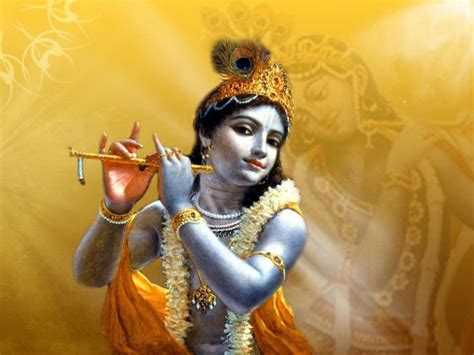
Understanding Vaishnava Compassion: Lessons from Great Saints (part 3)

This article explores the profound concept of Vaishnava Compassion through the examples of Jesus Christ, Vasudeva Datta, Ramanuja Acharya, and Srila Prabhupada. Each figure exemplifies immense compassion, willing to suffer for the sake of others. Their teachings inspire us to embody such selflessness and understanding in our own lives.

In the earlier two parts of this series of articles, we examined

In this part, we will look at 4 examples of Vaishnava Compassion.

1. Jesus Christ – a topmost Vaishnava

Jesus Christ - a Topmost Vaishnava Saint

This, some readers find surprising. Indeed, when I spoke on this topic, many in the audience came to chat with me about this.

Some people argue, and entire churches have been created on the premise that Jesus Christ is God Himself. But Jesus himself claimed that he was son of God. And of course, we know that God, being unlimited, has no shortage of sons or daughters or prophets.

And Jesus answered and said unto him, Blessed art thou, Simon: for flesh and blood hath not revealed it unto thee, but my Father who is in heaven.” Mathew 16.17

God is perfect in every respect. God is full of all opulence. The compassion of Jesus is even more adorable because he is a son of God and not God Himself.

Jesus Christ appeared in a most desolate place, the dry and foreboding desert, at a time of great turmoil, the decay of the Roman empire, amidst the most wretched of all people, and tried to help them understand God consciousness. But the people of that day and age were so fallen that they tried to crucify their savior. Still, what Jesus has taught continues to resonate with so many souls, even though most misunderstand his teachings.

We adore Lord Jesus Christ is a Vaishnava Acharya. Why do I say that?

I will leave you with some quotes of Srila A. C. Bhaktivedanta Swami Prabhupada…

The Śrīmad-Bhāgavatam states that any bona fide preacher of God consciousness must have the qualities of titikṣā (tolerance) and karuṇā (compassion). In the character of Lord Jesus Christ we find both these qualities. He was so tolerant that even while he was being crucified, he didn’t condemn anyone. And he was so compassionate that he prayed to God to forgive the very persons who were trying to kill him. (Of course, they could not actually kill him. But they were thinking that he could be killed, so they were committing a great offense.) As Christ was being crucified he prayed, “Father, forgive them. They know not what they are doing.”

…Of course, the message that Christ preached was just according to his particular time, place, and country, and just suited for a particular group of people. But certainly he is the representative of God. Therefore we adore Lord Jesus Christ and offer our obeisances to him.

Once, in Melbourne, a group of Christian ministers came to visit me. They asked, “What is your idea of Jesus Christ?” I told them, “He is our guru. He is preaching God consciousness, so he is our spiritual master.” The ministers very much appreciated that.

Actually, anyone who is preaching God’s glories must be accepted as a guru. Jesus Christ is one such great personality. We should not think of him as an ordinary human being. The scriptures say that anyone who considers the spiritual master to be an ordinary man has a hellish mentality. If Jesus Christ were an ordinary man, then he could not have delivered God consciousness. (Science of Self Realization, Chapter 4, “Understanding Krsna and Christ)

A. C. Bhaktivedanta Swami Prabhupada

2. Vasudeva Datta – relatively unknown, but even greater compassion

Lord Chaitanya with His Associates, including Vasudeva Datta

It is tempting to think that Lord Jesus Christ is one of a kind. Such mercy as shown by Jesus Christ is practically unparalleled. But such personalities have been repeatedly sent by God all over the world. Before Jesus, after Jesus, and such personalities continue to walk the earth with us even today. Most of us do not have the eyes to see such great personalities for who they are. But thanks to revealed scripture, we know of many such personalities.

One great example is Vasudeva Datta, an eternal associate of Sri Chaitanya Mahaprabhu. Lord Chaitanya is Krishna Himself, God in the form of His own pure devotee.

Jesus Christ takes the sins of anyone who believes in Him or surrenders to him. But Vasudeva Datta wanted to indiscriminately take on the sinful reactions of all the living entities in this Universe!

I will quote an interaction from the Chaitanya Charitamrita…

Śrī Caitanya Mahāprabhu then embraced Vāsudeva Datta and began to speak of his glories as if He had a thousand mouths.

When Caitanya Mahāprabhu glorified him, Vāsudeva Datta immediately became very much embarrassed and shy. He then submitted himself, touching the Lord’s lotus feet.

Vāsudeva Datta told Caitanya Mahāprabhu, “My dear Lord, You incarnate just to deliver all conditioned souls. I now have one petition, which I wish You would accept.

“My Lord, You are certainly able to do whatever You like, and You are indeed merciful. If You so desire, You can very easily do whatever You want.

“My Lord, my heart breaks to see the sufferings of all the conditioned souls; therefore I request You to transfer the karma of their sinful lives upon my head.

“My dear Lord, let me suffer perpetually in a hellish condition, accepting all the sinful reactions of all living entities. Please finish their diseased material life.”

When Śrī Caitanya Mahāprabhu heard Vāsudeva Datta’s statement, His heart became very soft. Tears flowed from His eyes, and He began to tremble. In a faltering voice He spoke as follows.

Accepting Vāsudeva Datta as a great devotee, the Lord said, “Such a statement is not at all astonishing because you are the incarnation of Prahlāda Mahārāja. It appears that Lord Kṛṣṇa has bestowed complete mercy upon you. There is no doubt about it.

“Whatever a pure devotee wants from his master, Lord Kṛṣṇa doubtlessly grants because He has no duty other than to fulfill the desire of His devotee.

“If you desire the deliverance of all living entities within the universe, then all of them can be delivered even without your undergoing the tribulations of sinful activity.
Text 168: “Kṛṣṇa is not incapable, for He has all potencies. Why would He induce you to suffer the sinful reactions of other living entities?

“Whosever welfare you desire immediately becomes a Vaiṣṇava, and Kṛṣṇa delivers all Vaiṣṇavas from the reactions of their past sinful activities.

“ ‘Let me offer my respectful obeisances unto the original Personality of Godhead, Govinda, who regulates the sufferings and enjoyments due to fruitive activity. He does this for everyone — from the heavenly King Indra down to the smallest insect [indra-gopa]. That very Personality of Godhead destroys the karmic reactions of one engaged in devotional service.’

“Because of your honest desire, all living entities within the universe will be delivered, for Kṛṣṇa does not have to do anything to deliver all the living entities of the universe.

“Just as there are millions of fruits on the uḍumbara tree, millions of universes float on the waters of the river Virajā.

“The uḍumbara tree is filled with millions of fruits, and if one falls down and is destroyed, the tree does not even consider the loss.

“In the same way, if one universe is vacated due to the living entities’ having been liberated, that is a very little thing for Kṛṣṇa. He does not take it very seriously.

“The entire spiritual world constitutes the unlimited opulence of Kṛṣṇa, and there are innumerable Vaikuṇṭha planets there. The Causal Ocean is considered the surrounding waters of Vaikuṇṭhaloka.
Text 176: “Māyā and her unlimited material universes are situated in that Causal Ocean. Indeed, māyā appears to be floating like a pot filled with mustard seeds.

“Of the millions of mustard seeds floating in that pot, if one seed is lost, the loss is not at all significant. Similarly, if one universe is lost, it is not significant to Lord Kṛṣṇa.

“To say nothing of one universal mustard seed, even if all the universes and the material energy [māyā] are destroyed, Kṛṣṇa does not even consider the loss.


“If a person possessing millions of wish-fulfilling cows loses one she-goat, he does not consider the loss. Kṛṣṇa owns all six opulences in full. If the entire material energy is destroyed, what does He lose?”

 Śrī Caitanya Mahāprabhu continued, “ ‘O my Lord, O unconquerable one, O master of all potencies, please exhibit Your internal potency to conquer the nescience of all moving and inert living entities. Due to nescience, they accept all kinds of faulty things, thus provoking a fearful situation. O Lord, please show Your glories! You can do this very easily, for Your internal potency is beyond the external potency, and You are the reservoir of all opulence. You are also the demonstrator of the material potency. You are also always engaged in Your pastimes in the spiritual world, where You exhibit Your reserved, internal potency, and sometimes You exhibit the external potency by glancing over it. Thus You manifest Your pastimes. The Vedas confirm Your two potencies and accept both types of pastimes due to them.’ ”

CC Madhya 158-180 https://vedabase.io/en/library/cc/madhya/15/

3. Ramanuja Acharya – compassion greater than all
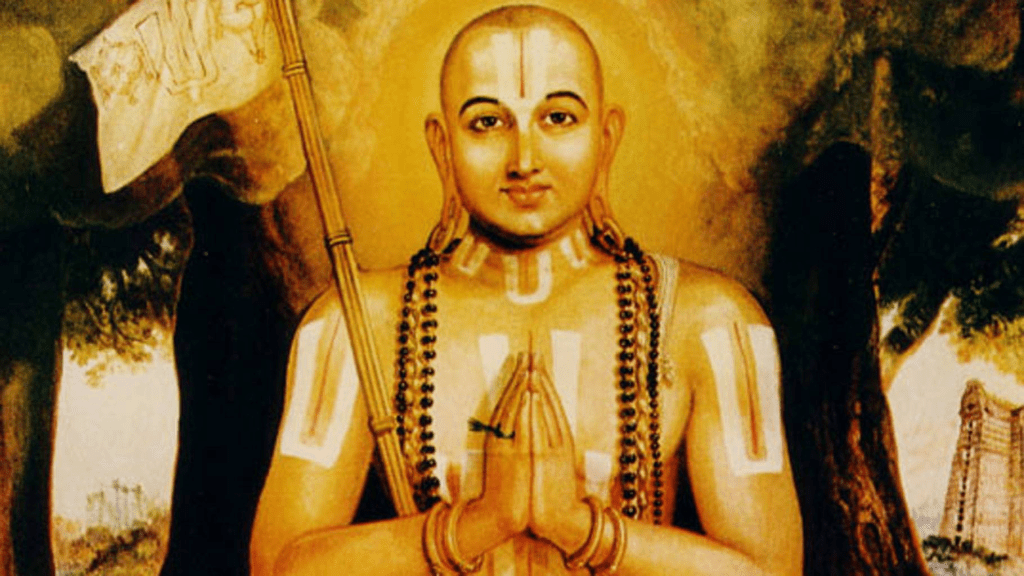
Ramanuja Acharya, the saint of boundless compassion

In both of the above cases, the compassion of Jesus and Vasudeva Datta was certainly great.

But the great Vaishnava Acharya Sri Ramanuja exhibited even greater compassion. He showed the way by which anyone can be freed from the effects of bondage due to sinful reactions.

Among many instances of Ramanuja’s vast compassion, here is just one.

Ramanuja was advised to get education from a highly respected teacher of the times, Goshtipurna, based in Tirukostiyur. Ramanuja was then based in Srirangam. Over 100 kms away. When Ramanuja approached him after his 100+km walk, Goshtipurna asked Ramanuja to come back another day. Ramanuja was disappointed but went back and came another day, walking all the way. This happened once, twice, a total of 18 times! This was just to test the earnestness of the aspiring disciple, Ramanuja. However, Ramanuja rose to the expectations and Goshtipurna gave him the mantra at last.

Just imagine, Ramanuja walked well over 3600 kms to get the mantra!

When the great teacher imparted the well-known mantra, he commanded Ramanuja to keep it an absolute secret. The reason was that those who heard it would be liberated. But if imparted to unworthy persons, Ramanuja would go to hell. Ramanuja considered this for some time. He then hastened to a nearby temple, quickly climbed to the top of its tower. Ramanuja then called out to the people to assemble there and loudly imparted the mantra to everyone.

When Goshtipurna got the news, he was furious. He called for his errant disciple right away. Ramanuja humbly expressed his willingness to go to eternal hell. He said he would reside in hell with great joy. Since so many others people who, otherwise might not progress to liberation would now surely get it, he was happy. Goshtipurna realized the magnanimity of Ramanuja and fell at his feet, giving him the title “Emperumanar” – He who is the most compassionate.

And what was the mantra?

“Om Namo Narayanaya” / ॐ नमो नारायणाय / ஓம் நமோ நாராயணாய

Ramanuja Acharya and his followers have popularized the mantra all over!

4. Srila Prabhupada – a modern example of Vaishnava Compassion
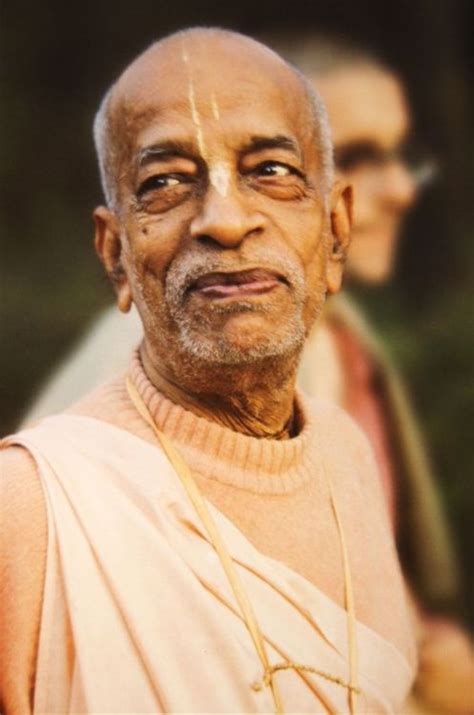
Srila Prabhupada

The glories of Srila Prabhupada are limitless! He appeared in this world 1896, and re-entered the spiritual realm in 1977.

Hundreds and Thousands of souls have written about this great modern-day saint. Writings about Srila Prabhupada will continue at least for the next 10,000 years.

Here is one little pastime that illustrates Srila Prabhupada’s most perfect example of Vaishnava Compassion.

When Srila Prabhupada was winding up his pastimes on our planet, he was apparently very ill.

One doctor, a very learned traditional healer, came to see Srila Prabhupada. He had an urgent, important piece of information that could prolong Srila Prabhupada’s life!

He said that when an Acharya allows a deity of himself to be worshipped while he is still in a living body, when people offer obeisances to that deity and touch the feet of the deity, the karmic reactions of the worshiper enter the living body of the Acharya.

In other words, Srila Prabhupada was accepting the sinful reactions of thousands upon thousands of people every day.

The doctor made an urgent request – he said, remove that deity, let people not worship you in deity form, and you will be immediately healed, cured from your ailment.

Srila Prabhupada refused. He softly muttered “do you not know why I have come?”

Srila Prabhupada came to take away our sufferings, and was willing to suffer, exactly in the mood of Jesus Christ, of Vasudeva Datta, of Ramanuja Acharya.

Such compassion is rare indeed, in our world.

We cannot imitate it, but we can certainly try to follow in their footsteps.

तप्यन्ते लोकतापेन साधव: प्रायशो जना: ।
परमाराधनं तद्धि पुरुषस्याखिलात्मन: ॥ ४४ ॥
tapyante loka-tāpena
sādhavaḥ prāyaśo janāḥ
paramārādhanaṁ tad dhi
puruṣasyākhilātmanaḥ

It is said that great personalities almost always accept voluntary suffering because of the suffering of people in general. This is considered the highest method of worshiping the Supreme Personality of Godhead, who is present in everyone’s heart.

https://vedabase.io/en/library/sb/8/7/44/

Any Harm in attending Laxmi Puja?

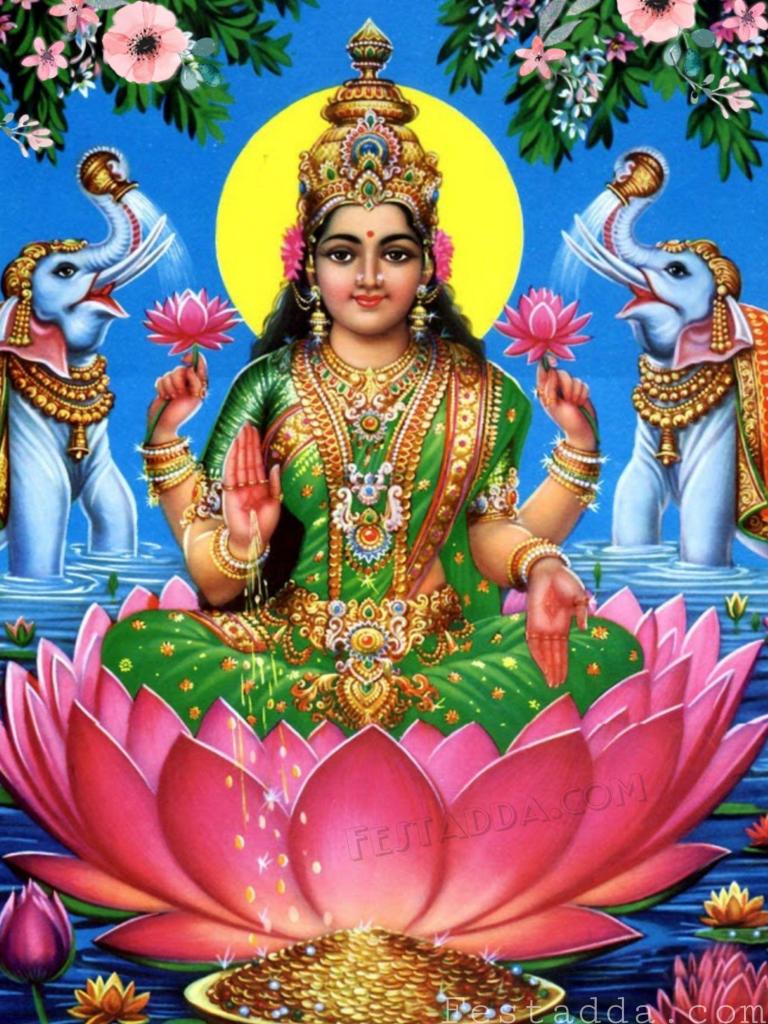
Lakshmi Puja is an essential aspect of Hindu Ritualistic practices, especially during Diwali or Deepavali. Lakshmidevi is worshipped as the Goddess of Fortune, and prayers are made to bestow wealth upon the worshippers. However, Lakshmidevi is also the wife of Lord Narayana. Should we attend, or should we avoid as a materialistic practice?

Hemanga Das, 15 August 2014

Hare Krishna Devotees!

Please accept my obeisances

All glories to Srila Prabhupada

The practice of performing Laxmi puja by householders in India is pretty common.My question is, What is the best thing to do when invited to Laxmi puja?

Can we attend these Pujas with an understanding that Laxmi is the wife Lord Narayana (One of Krishna’s incarnation) or should we see it as a demigod worship and refuse the invitation?

Thank you in advance.

your servant,

Hemanga Das 

Bhakta Sunil, 19 August 2014

Hare Krishna

Please accept my humble obeisances

All Glories to Srila Prabhupada

Prabhu ji , this may not be answer to your question : Regarding Laxmi Puja during Diwali , I remember having heard that one should worship both Laxmi Mata and Narayana Bhagavan. I mean worship , not only Laxmi Mata during Laxmi Puja , but both Laxmi Mata and Narayana Bhagavan in the Laxmi Puja

Requesting readers to correct me if I am wrong

Humbly,

Sunil

​Mahabhagavat Das SDA, 20 August 2014

Dear Hemanga Prabhu,

Please accept my humble obeisances.

All glories to Srila Gurudeva.

All glories to Srila Prabhupada.

It is true that it is not necessary for us to engage in demigod worship. The so-called Lakshmi Puja is essentially a prayer to the Goddess of wealth to please give wealth so that the worshiper may engage in sense gratification with the money. People want Lakshmi, but they don’t understand that where Lord Narayana goes, Lakshmidevi follows her husband.

However, as devotees in general society, if we outright reject all these things, then we will be seen as fanatics and we will not be effective in sharing Krishna consciousness with anyone.

So, since I know you are personally a fixed-up devotee, and I personally don’t see any risk if you go… I would say, weigh carefully all the pros and cons, and decide for yourself. Here are some advantages of going:

1. You make friendships with others and strengthen your relationships

2. You get a chance to share Krishna consciousness with others who may not come to temple etc.

3. You can pray to Lakshmidevi to please give you mercy so you can be a pure devotee – as long as you don’t pray to any demigod for sense gratification or consider any demigod the Supreme, you are fine.

You can take some books of Srila Prabhupada with you also, as presents for those who might not have them, on the auspicious occasion of Lakshmi Puja.

Sincerely,

Mahabhagavat Das

P.S: Srimati Lakshmidevi is also the primary link of the Sri Sampradaya, of which Sri Ramanujacharya is a great Vaishnava Acharya. We follow his instructions to this day!

Please subscribe to daily inspirational emails from His Grace Sriman Sankarshan Das Adhikari (Writings and lectures archived at www.ecstaticmedia.com), written fresh every day from his travels around our world and into the spiritual world, sharing the highest spiritual knowledge with everyone. Sign up now at www.joincourse.com

Ascending vs. Descending Process of knowledge

What is knowledge? What is ignorance? How do we acquire knowledge? Which method actually works? Finding out things the ascending way, or hearing from an authority? How to acquire perfect knowledge beyond all doubt?

Knowledge is a wonderful thing, isn’t it?

Are these people getting anywhere? Are they “progressing”?

With knowledge, comes power. Power to do good, and also power to do evil. Knowledge can be a liberator, but also can be a tool for enforcing bondage.

Also, what qualifies as knowledge anyway? If, for example, a person acquired some knowledge on “how to rob a bank” and applies that knowledge, landing in prison, or even if they escape somehow, was that really knowledge? Or was it ignorance?

There are 2 main types of knowledge:

  1. Knowledge of the material world -material knowledge
  2. Knowledge of what lies beyond this material world through the scriptures – spiritual knowledge – In Sanskrit “परोक्ष” or “parokṣa”

There are many means of acquiring knowledge:

  1. By Direct experience or perception – In sanskrit “प्रत्यक्ष” or “pratyakṣa”
  2. By hypothesis/logic/conjecture/guessing – In sanskrit “अनुमान” or “anumāna”
  3. By hearing from a higher authority – In Sanskrit “शब्द” or “śabda”

Ultimately, there are 2 fundamental processes of acquiring knowledge:

  1. Ascending Process – build up knowledge from building blocks – In Sanskrit “आरोहपन्था” or “ārohapanthā
  2. Descending Process – Knowledge descending directly from God and His messengers – In Sanskrit “अवरोहपन्था” or “avarohapanthā

In an article, with an example of an ant who wanted to map the Universe, I discussed the futility of the ascending process of knowledge, especially about items that are outside of our realm of perception.

Much of what we know exists, is actually too subtle to perceive.

These are the material elements, listed in the Bhagavad Gita:

Gross Material Elements:

  1. Earth
  2. Water
  3. Fire
  4. Air
  5. Ether (Space/Sky)

Subtle Material Elements:

  1. Mind
  2. Intelligence
  3. False Ego

BG भूमिरापोऽनलो वायु: खं मनो बुद्धिरेव च ।
अहङ्कार इतीयं मे भिन्ना प्रकृतिरष्टधा ॥ ४ ॥

bhūmir āpo ’nalo vāyuḥ
khaṁ mano buddhir eva ca
ahaṅkāra itīyaṁ me
bhinnā prakṛtir aṣṭadhā

Earth, water, fire, air, ether, mind, intelligence and false ego – all together these eight constitute My separated material energies.

https://vedabase.io/en/library/bg/7/4/

The Material-Spiritual Disconnect

Earth is the most gross of the material elements, more subtle is water, even more subtle is air, and ether is quite subtle, you can’t touch or feel space, but we can still perceive it. Now, when we get to the mind, that is even more subtle. Intelligence is still more subtle, and the most subtle material element is false ego, our sense of identity.

However, none of the material elements can directly approach that which is non-material, namely the spiritual is outside of the realm of material elements, even subtle.

If we see our material means of acquiring knowledge, the mind, intelligence, and our sense of identity are all material in nature, and therefore, the ascending process of acquiring knowledge cannot possibly extend to the spiritual realm.

There is another main reason why the ascending process of knowledge is flawed… all of us who are “conditioned” to accept a material identity, have 4 defects:

  1. Tendency to be illusioned (In Sanskrit “भ्रम”or “bhrama”) – we often misunderstand facts and are illusioned about things as they are
  2. Tendency to make mistakes (In Sanskrit “प्रमाद” or “pramāda”) – there is no conditioned souls who can say they never make mistakes
  3. Tendency to cheat others (In Sanskrit “विप्रलिप्सा”or “vipralipsā”) – this is a great weakness, to want to appear better than we are, or know something we don’t, etc.
  4.  We possess imperfect senses (In Sanskrit “करण पाटव” or “karaṇa-pāṭava”) – all our senses are quite imperfect, and we miss a lot from our senses

So, with these 4 defects, it is impossible to acquire perfect knowledge using only our senses. Why is that? It is because with an imperfect instrument, you cannot make something that is perfect. No matter how hard we try, our imperfections stand in the way.

The common example is if we’re doing some mathematical calculation or solving an equation… a tiny mistake somewhere along the way can get us a wrong answer.

Let’s say, for example, someone didn’t know who their father was… they can do some detective work, or a DNA test of every man in the world, or they can take the answer from their mother. The mother’s answer is authoritative and a lot easier too.

Reconnecting Material to the Spiritual

The only way to acquire perfect knowledge, then, is through the descending process, “avarohapantha”. In this process, the Supreme Absolute Perfect (generically called God, specifically named Krishna, Allah, Rama, Govinda, Buddha, Jehovah, Yahweh, etc.) conveys the perfect knowledge, and whoever hears this knowledge passes it on without addition or subtraction.

Perfect Knowledge means something that never changes. Compare this to our ascending process of knowledge. Researchers make a career out of making mistakes! First they publish one paper hypothesizing (and sometimes also offering “proof”) one particular thing… the laypeople accept that as the truth, and then a little while later, that or another researcher publishes another paper contradicting the original hypothesis or proof. In this way, the so-called philosophers and scientists bumble about, going from imperfection to imperfection. This is not called knowledge, this is called nescience, or ignorance.

Why is that? Because material knowledge gives the impression of advancement, whereas it actually traps us in bigger and bigger problems, requiring more and ever more complexity. A material “solution” is only another problem in disguise… it is simply creating one problem in place of another. Therefore, material knowledge is not called knowledge, but ignorance. And those who pursue material knowledge excessively are said to be ignorant.

So therefore, spiritual knowledge is worth pursuing, and such knowledge cannot be “discovered/created/invented” by anyone else other than the Supreme Personality of Godhead.

धर्मं तु साक्षाद्भ‍गवत्प्रणीतं
न वै विदुऋर्षयो नापि देवा: ।
न सिद्धमुख्या असुरा मनुष्या:
कुतो नु विद्याधरचारणादय: ॥ १९ ॥

dharmaṁ tu sākṣād bhagavat-praṇītaṁ
na vai vidur ṛṣayo nāpi devāḥ
na siddha-mukhyā asurā manuṣyāḥ
kuto nu vidyādhara-cāraṇādayaḥ

Real religious principles are enacted by the Supreme Personality of Godhead. Although fully situated in the mode of goodness, even the great ṛṣis who occupy the topmost planets cannot ascertain the real religious principles, nor can the demigods or the leaders of Siddhaloka, to say nothing of the asuras, ordinary human beings, Vidyādharas and Cāraṇas.

https://vedabase.io/en/library/sb/6/3/19/

But, one may ask, it’s not like the Supreme Personality of Godhead is directly perceivable to a materially conditioned soul. So what is to be done?

Fortunately, there is a clear way…

स्वयम्भूर्नारद: शम्भु: कुमार: कपिलो मनु: ।
प्रह्लादो जनको भीष्मो बलिर्वैयासकिर्वयम् ॥ २० ॥
द्वादशैते विजानीमो धर्मं भागवतं भटा: ।
गुह्यं विशुद्धं दुर्बोधं यं ज्ञात्वामृतमश्नुते ॥ २१ ॥

svayambhūr nāradaḥ śambhuḥ
kumāraḥ kapilo manuḥ
prahlādo janako bhīṣmo
balir vaiyāsakir vayam

dvādaśaite vijānīmo
dharmaṁ bhāgavataṁ bhaṭāḥ
guhyaṁ viśuddhaṁ durbodhaṁ
yaṁ jñātvāmṛtam aśnute

Lord Brahmā, Bhagavān Nārada, Lord Śiva, the four Kumāras, Lord Kapila [the son of Devahūti], Svāyambhuva Manu, Prahlāda Mahārāja, Janaka Mahārāja, Grandfather Bhīṣma, Bali Mahārāja, Śukadeva Gosvāmī and I myself know the real religious principle. My dear servants, this transcendental religious principle, which is known as bhāgavata-dharma, or surrender unto the Supreme Lord and love for Him, is uncontaminated by the material modes of nature. It is very confidential and difficult for ordinary human beings to understand, but if by chance one fortunately understands it, he is immediately liberated, and thus he returns home, back to Godhead.

https://vedabase.io/en/library/sb/6/3/20-21/

Now, at least some of those personalities have established disciplic successions on this planet.

There are 4 main authorized disciplic successions to receive perfect knowledge in discipic successions. A disciplic succession is known as “Sampradaya” or “That which gives completely”.

A mango, intact, passed down

A useful example is that if a ripe mango is high in a tree, then if the mango is handed from person to person from those who are at various heights pass the mango down from hand to hand, vs. trying to throw the mango down to the ground…

A Sampradaya delivers spiritual knowledge perfectly, without addition or subtraction
  1. Brahma Sampradaya and its branches, especially expounded by the great teacher Madhva, Lord Chaitanya, and their followers.
  2. Rudra Sampradaya and its branches, especially expounded by the great teacher Vishnu Swami and his followers.
  3. Sri Sampradaya and its branches, begun by Lakshmi devi, the Goddess of Fortune, consort of Lord Narayana, and especially expounded by the great teacher Sri Ramanuja and his followers.
  4. Kumara Sampradaya and its branches, especially expounded by the great teacher Sri Nimbarka and his followers.

What about the rest?

To the extent the teachings of others are in line with one of these descending lines of discipic succession, they are valid, and anything outside of these is at best a stepping stone to one of these 4 lines of disciplic succession. In the worst case, it is a materialistic business masquerading as a genuine spiritual tradition.

Those who claim to be part of a certain tradition but add or subtract from the fundamental principles or twist the teachings are called “apasampradayas” or “anti disciplic successions”.

His Grace Sriman Sankarshan Das Adhikari

By the mercy of my parents and then my spiritual master His Grace Sriman Sankarshan Das Adhikari who is a disciple of His Divine Grace A. C. Bhaktivedanta Swami Prabhupada The Founder Acharya of the International Society for Krishna Consciousness, even though personally unworthy, I am connected to one of these lines of disciplic succession, called the Brahma-Madhva-Gaudiya Sampradaya, and seeking to pass on those pure instructions to whoever may want to follow, without adding or subtracting any principle, only, if need be, adjusting details to suit the individual and times.

His Divine Grace A. C. Bhaktivedanta Swami Prabhupada, Founder Acharya of the International Society for Krishna Consciousness (ISKCON)

And what is a principle and what is a detail? That, Srila Prabhupada said, requires some intelligence. I pray for this intelligence, which in my case, I simply ask my spiritual master with a clear description of context.

Ultimately however, knowledge coming from the scriptures and the spiritual master in disciplic succession must be realized in the heart through a process of personal effort (sadhana) and purification. Then the paroksha jnana or scriptural knowledge through scripture, becomes “aparoksha” or that which is beyond the reach of the material senses. In order to experience such knowledge in action, one’s senses must be spiritually awakened, or re-spiritualized.

Krishna, the Supreme Personality of Godhead

Pure devotional service to Krishna is the Ultimate goal of all knowledge, and anything besides this is a waste of time.

Questions? I remain your servant on your spiritual journey! Hare Krishna!

Eating a Mango in hiding

The great saint Ramanuja once gave his disciples a mango each and ordered them to eat hidden from view… one disciple couldn’t find a place to hide! What about you? Do you think you can hide?

I heard this from my Gurumata, Srimati Vishnupriya Devi Dasi, one of my primary instructing spiritual masters.

Once upon a time, the great saint Ramanuja, who appeared on this planet more than 1000 years ago, called his disciples and gave them each a mango. He instructed them to eat the mango in a secluded place without being seen by anyone, and report back.

The disciples scrambled, some went to caves, some to forests, some locked themselves into a dark room, yet others hid behind buildings and trees. Some went under a blanket.

One of the disciples though, returned to his spiritual master and apologetically offered that he could find no place where he could be unseen.

Ramanuja heartily congratulated this disciple and was very pleased with him.

Indeed, for every single one of our thoughts, words, and deeds, there are witnesses.

Everywhere we go, we are witnessed by the light of the sun or the moon, the light of the stars, the earth, air, space, and other material elements. These material elements are merely manifestations of the controlling deities.

You may find that hard to accept, but just think about this – do you have a cellphone? Wherever you go, the cellphone network “sees” you, tracks you. If you ever connect to any network, anything you do on that network is seen by all the providers of that network, and if they wish to, they can easily reconstruct all your actions online. Every. Single. Action. Every. Single. Byte. It is all recorded in gigantic datacenters the size of mega cities, in servers and disks with blinking lights, whirring fans, and efficient cooling systems. You are not unseen.

What to speak of man-made networks, there is the Original Network of this Material Nature, with all the material elements, the various gross and subtle manifestations and so on… do you think that the Creator and operators of this network cannot see your actions?

Very specifically, the agents of the personality in charge of death and the ultimate taxes, Yamaraja, such as Chitragupta, are tapped into this network and are recording all our actions. Not one single action goes unrecorded.

मुक्तलिङ्गं सदाभासमसति प्रतिपद्यते ।
सतो बन्धुमसच्चक्षु: सर्वानुस्यूतमद्वयम् ॥ ११ ॥

mukta-liṅgaṁ sad-ābhāsam
asati pratipadyate
sato bandhum asac-cakṣuḥ
sarvānusyūtam advayam

A liberated soul realizes the Absolute Personality of Godhead, who is transcendental and who is manifest as a reflection even in the false ego. He is the support of the material cause and He enters into everything. He is absolute, one without a second, and He is the eyes of the illusory energy.

https://vedabase.io/en/library/sb/3/27/11/

Even if we were to be able to escape the material elements somehow, we cannot escape the Super Soul, the Paramatma, who is expanded within our hearts and travels with ourselves, us, the spirit soul, Atma. The very same Paramatma is expanded inside every atom and within the space between atoms.

eko ‘py asau racayituṁ jagad-aṇḍa-koṭiṁ
yac-chaktir asti jagad-aṇḍa-cayā yad-antaḥ
aṇḍāntara-stha-paramāṇu-cayāntara-stham-
govindam ādi-puruṣaṁ tam ahaṁ bhajāmi

He is an undifferentiated entity as there is no distinction between potency and the possessor thereof. In His work of creation of millions of worlds, His potency remains inseparable. All the universes exist in Him and He is present in His fullness in every one of the atoms that are scattered throughout the universe, at one and the same time. Such is the primeval Lord whom I adore.

https://vedabase.io/en/library/bs/5/35/

Like that fortunate disciple of Sri Ramanuja, we need to see…

सर्वभूतस्थमात्मानं सर्वभूतानि चात्मनि ।
ईक्षते योगयुक्तात्मा सर्वत्र समदर्शन: ॥ २९ ॥

sarva-bhūta-stham ātmānaṁ
sarva-bhūtāni cātmani
īkṣate yoga-yuktātmā
sarvatra sama-darśanaḥ

A true yogī observes Me in all beings and also sees every being in Me. Indeed, the self-realized person sees Me, the same Supreme Lord, everywhere.

https://vedabase.io/en/library/bg/6/29/

Everyone can see God. Here. Now. For one who has the eyes to see!