Leveraging Jet Lag for Spiritual Growth

Recently returning from a transformative trip to India, I found jet lag to be an unexpected ally in my spiritual journey. Embracing early mornings, I engaged in meditation, reading, and serving Krishna. Instead of viewing jet lag negatively, I was able to leverage it to enhance my devotional practices and enrich my daily routine. What a blessing! Jet lag? Bring it on!

I have recently returned to Toronto from a hectic, exhausting, yet ecstatic trip to Bharat Bhumi, also known as India. I was away for a total of 14 days. Out of those, I got to spend 11 in the holy land.

The privilege of meeting, hearing from, and serving the sincere devotees of Krishna is, as always, a life changing experience.

I visited…

  • Frankfurt
  • Mantralayam
  • Hyderabad
  • Bengaluru
  • Pune
  • Mumbai

With a 10.5 hour time zone difference between Toronto and India, that is just enough to get jet lagged. Jet lag gets a bad rap… because the body clock is set to some other time zone. It wakes up at odd hours. It feels sleepy at odd hours and so on. There’s an entire cottage industry to help people cope with and overcome jet lag.

I even tried this app called “Timeshifter” but it was totally impractical for my lifestyle… for example it contained advice to use caffeine, which I avoid like the plague, and melatonin… It required specific times to go to sleep and wake up. There were also specific times to “see” light and to avoid it. This was almost like trying to hack the body and mind. It didn’t sit right with me. Was it really necessary to “overcome” jet lag? I wondered if jet lag can be leveraged for Krishna, for spiritual growth.

When I was in India, the jet lag was a great asset! I managed to wake up early enough to attend Mangala Arati. I completed my Sadhana. I got by with a short nap for the rest of the day. Early mornings, late nights, and the rest of the time spent in serving Krishna and His devotees, perfect!

When I got back to Toronto, for example this morning, I was up at 2AM. I wondered if I should try to go back to sleep… then I remembered that my Guru and Gurumata usually rise at this hour. They complete their japa, meditation on the Holy Names of Krishna on their beads, well before others rise… and then they can spend their whole day serving others on their spiritual journey.

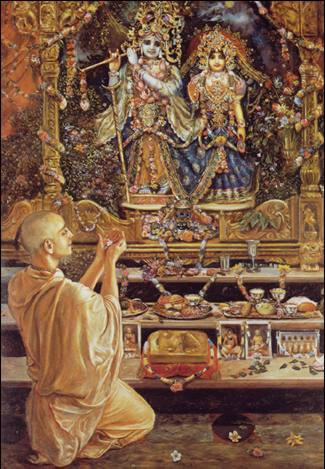
So I decided to follow in their footsteps. After completing my meditation, I still had time to read, not one but parts of 2 books! Anyone who has a corporate career and a family understands the challenge. Finding quality time to read is incredibly hard. I still had enough time to complete Mangala Arati. Then I performed deity worship before getting an early start to the day!

In this way I will leverage jet lag to serve Krishna. And when the jet lag ends? I will simply go back to my earlier routine to serve Krishna!

Devotee serving Krishna

Jet lag? Bring it on!

Of course, in all success, the credit goes to Guru and Krishna, as long as we are ready to be an instrument!

Now, in case you think that this idea to leverage jet lag in Krishna’s service somehow is mine… it is not.

Srila Rupa Goswami enunciated the principle of “avyarthakālatvam — being free from wasting time”, this was over 500 years ago…

ক্ষান্তিরব্যর্থকালত্বং বিরক্তির্মানশূন্যতা ।
আশাবন্ধঃ সমুৎকণ্ঠা নামগানে সদা রুচিঃ ॥ ১৮ ॥
আসক্তিস্তদ্‌গুণাখ্যানে প্রীতিস্তদ্বসতিস্থলে ।
ইত্যাদয়োঽনুভাবাঃ স্যু র্জাতভাবাঙ্কুরে জনে ॥ ১৯ ॥


kṣāntir avyartha-kālatvaṁ viraktir māna-śūnyatā
āśā-bandhaḥ samutkaṇṭhā nāma-gāne sadā ruciḥ
āsaktis tad-guṇākhyāne prītis tad-vasati-sthale
ity-ādayo ’nubhāvāḥ syur jāta-bhāvāṅkure jane

“ ‘When the seed of ecstatic emotion for Kṛṣṇa fructifies, the following nine symptoms manifest in one’s behavior: forgiveness, concern that time should not be wasted, detachment, absence of false prestige, hope, eagerness, a taste for chanting the holy name of the Lord, attachment to descriptions of the transcendental qualities of the Lord, and affection for those places where the Lord resides — that is, a temple or a holy place like Vṛndāvana. These are all called anubhāva, subordinate signs of ecstatic emotion. They are visible in a person in whose heart the seed of love of God has begun to fructify.’

https://vedabase.io/en/library/cc/madhya/23/18-19/

My spiritual master has indeed planted the seed of pure devotional service in my heart. However, I cannot claim any success in cultivating devotional service. I am just sincerely trying to practice sadhana bhakti.

And I have examples of great Vaishnavas who travel around the world…

So I brought Prabhupada his breakfast, and then when he was finished I came and took everything out and Prabhupada laid down. So I went back, I said, “Prabhupada’s resting.” So Paramahamsa and I, we laid down. Of course, we fell asleep, we were out, and Prabhupada maybe took 15 minutes or something and he was up. So finally I heard a bell ring. So I went into Prabhupada’s room, and it happened a few times where I would literally try to wake up as I was offering obeisances and exercise my eyes so Prabhupada couldn’t tell that I was sleeping. I sat up, and as soon as I sat up he said, “Why are you sleeping? You’re like dead men. Everyone is awake. The karmis are all at work but not the devotees. No, they’re sleeping.” He said, “They’re sleeping very soundly. Why are you sleeping?” And, of course, when Prabhupada asked why were you doing something wrong, I never had a response because whatever you said, he would just take that apart. So I just said, “Prabhupada, I’m sorry.” “What about Paramahamsa? Why is he sleeping?” He said, “Call him in here.” He goes in and immediately Prabhupada says, “You are a sannyasi. Your business is to minimize bodily demands, minimize sleeping, minimize eating. Why are you sleeping?” Paramahamsa said, “Prabhupada, I have jet lag,” and I thought, “Oh, no!” And Prabhupada said, “Jet lag?” He said, “Well, we just flew from here and done this,” and Prabhupada said, “So I am also flying, I am doing the same thing. I am awake.” Then he said, “All right, go on. Go sleep if you want.

https://srilaprabhupadalila.org/read/3665 

Srila Prabhupada circled the globe twelve times in less than 10 years… and no one ever recalls a time when he was jet lagged.

Gopal Krishna Goswami, a dear disciple of Srila Prabhupada, traveled from continent to continent. He was always on the altar offering Mangala Arati to the local deities at the temple he was staying at. This was regardless of which time zone he came in from and which time zone he traveled to. I have personally witnessed this, arrived at midnight, 1AM, 2AM, but no, at 4:30am he was on the altar.

My own spiritual master, Srila Sankarshan Das Adhikari, has circled the globe more than 50 times. My Gurumataji Srimati Vishnupriya Devi Dasi has accompanied him. They have never let jet lag stand in the way of their service to Krishna. They are both up early. They chant their rounds and offer their service to Sri Sri Radha Damodar. Then, they follow a full schedule of service all day, working 12-16 hours most days.

So why should I not try to follow in their illustrious footsteps?

Delicious Names!

The Names of God are Unlimitedly Sweet. Purandara Dasa, who was a multi-billionaire, gave up the sweeter than honey money to taste the delicious names of God.

He wrote a beautiful song about the sweetness of the Lord’s Names…

To the Milk of Rama’s Name, add the Sugar of Krishna’s Name

Add the Ghee* of Vitthala’s Name, and Smack your Lips!

Bring the Wheat of Single-Mindedness, Grind with the Stones of Renunciation

Draw out the Fine Flour of Simplicity, and Roll into Thin Vermicelli

In the Pot of your Heart, with the Green Gram of your Faith

Cook it all down with your Intelligence, and Serve to Hari’s plate

Oh Joy Oh Bliss when you Experience, and Let Out Satisfied Burps

Then remember Our Lord Eternal Vitthala, the Form of Eternal Bliss!

In Feasting on the Holy Name, I offered a glimpse of how those dedicated to the spiritual path can avoid things like eating and sleeping.

Here in this article, I offer a tangible example of a great soul who actually could taste the holy name… and convey that to those of us who may not yet be tasting.

There are many great souls with a tangible taste of the Holy Name of God, for example, the great saint Rupa Goswami wrote this verse…

tuṇḍe tāṇḍavinī ratiṁ vitanute tuṇḍāvalī-labdhaye
karṇa-kroḍa-kaḍambinī ghaṭayate karṇārbudebhyaḥ spṛhām
cetaḥ-prāṅgaṇa-saṅginī vijayate sarvendriyāṇāṁ kṛtiṁ
no jāne janitā kiyadbhir amṛtaiḥ kṛṣṇeti varṇa-dvayī

“I do not know how much nectar the two syllables ‘Kṛṣ-ṇa’ have produced. When the holy name of Kṛṣṇa is chanted, it appears to dance within the mouth. We then desire many, many mouths. When that name enters the holes of the ears, we desire many millions of ears. And when the holy name dances in the courtyard of the heart, it conquers the activities of the mind, and therefore all the senses become inert.”https://vedabase.io/en/library/cc/antya/1/99/

Where I come from, we know a great saint named Purandara Dasa.

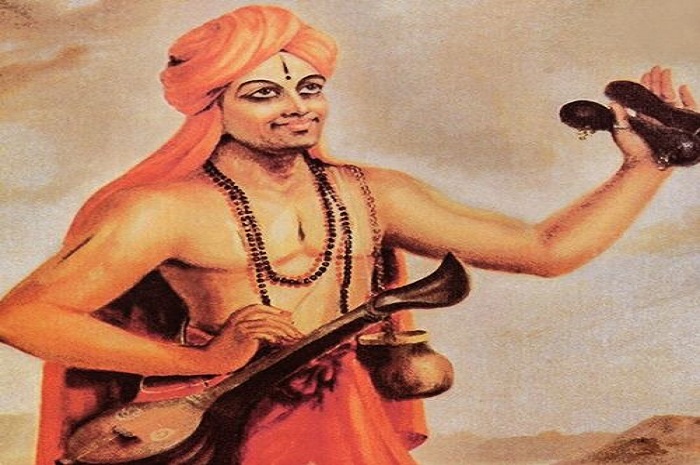
Purandara Dasa was born Srinivasa Nayaka, son of a rich diamond merchant. Srinivasa was trained in the fine arts and received a solid spiritual education, but as he grew up, he morphed into a ruthless businessman, business above all else, shrewd, calculating, though completely honest. He was a famed jeweller and he had business interests in mortgages, real estate, farmland, and much much more… all this over 500 years ago!

His net worth was said to be the equivalent of 90 million gold coins. If one gold coin was just 10 grams, then that means he owned the equivalent of 900,000 kilograms of gold. In today’s price of gold, Srinivasa Nayaka had an estimated net worth of slightly over USD 68 Billion, or with the current exchange rate!

For the sake of my readers in India, that is Five Lakh Forty Seven Thousand Crore Rupees as of today, or 5,47,000 Crore Rupees!

But, God had delicious plans for Srinivasa Nayaka! He appeared in very interesting disguises to Srinivasa Nayaka. Once there was an intriguing pastime of the nose ring of his wife, Saraswati… and completely bewildered and smitten, when our hero was hopelessly in love with God, he was instructed by God to give away all his wealth and focus exclusively on devotional service. Srinivasa Nayaka had to part with his dearest possession, his wealth, to gain the wealth of God!

How often do we find a Billionaire who gives away $68Bn of wealth and engage himself as a Haridasa, a fully surrendered servant of God?

Srinivasa Nayaka did that, and received initiation from Vyasa Tirtha, a pre-eminent saint in the line of Sri Madhwacharya. Sripad Vyasa Tirtha happens to the the grand-spiritual master of Sripad Madhavendra Puri of the Brahma-Madhwa-Gaudiya Sampradaya, into which this humble author has received initiation from Sripad Sankarshan Das Adhikari, disciple of Srila A. C. Bhaktivedanta Swami Prabhupada.

Initiated as Purandara Dasa, and given the “pen name” of “Purandara Vitthala”, Purandara Dasa is said to have composed more than 475,000 “kritis” or songs. Unfortunately for us, we have only a few known to us today, approximately 1000. Purandara Dasa, like many other pure devotees, Haridasas, spontaneously composed beautiful songs.

His songs are collectively referred to as “Purandaropanishad”… which can be translated as the eternal instructions that bring us closer to the Lord.

His songs explain the most esoteric of concepts in a very simple way, and even ordinary souls such as myself can understand, appreciate, and relish them. The result of meditating on his songs is that our devotional service becomes stronger.

One of my favourite songs of Purandara Dasa is about the most delicious Names of God…

The Names of God are sweeter to Purandara Dasa, whereas to ordinary souls, Money is sweeter than honey, but Purandara Dasa gave all his vast wealth away to obtain the wealth of the Names of God

Rama Nama Payasake – To the Milk of Rama’s Name…

In Kannada Script, the song looks like this:
ರಾಮನಾಮ ಪಾಯಸಕ್ಕೆ ಕೃಷ್ಣನಾಮ ಸಕ್ಕರೆ
ವಿಠಲನಾಮ ತುಪ್ಪವ ಬೆರೆಸಿ ಬಾಯಿ ಚಪ್ಪರಿಸಿರೊ

ಒಮ್ಮನ ಗೋಧಿಯ ತಂದು ವೈರಾಗ್ಯ ಕಲ್ಲಲಿ ಬೀಸಿ
ಸುಮ್ಮನ ಸಜ್ಜಿಗೆ ತೆಗೆದು ಸಣ್ಣ ಸೇವೆಗೆ ಹೊಸೆದು

ಹೃದಯವೆಂಬೊ ಪಾತ್ರೆಯೊಳಗೆ ಭಾವವೆಂಬೊ ಎಸರು ಇಟ್ಟು
ಬುದ್ದಿಯಿಂದ ಪಕ್ವವ ಮಾಡಿ ಹರಿವಾಣದೊಳಗೆ ನೀಡಿ

ಆನಂದ ಆನಂದವೆಂಬೊ ತೇಗು ಬಂದ ಪರಿಯಲಿ
ಆನಂದಮೂರುತಿ ನಮ್ಮ ಪುರಂದರವಿಠಲ ನೆನೆಯಿರೊ

raama naama paayasakke kRuShNanaama sakkare |
viThalanaama tuppava kalasi baayi capparisiro ||pa||

ommaana gOdhiya taMdu vairaagya kallili bIsi |
summane sajjigeya tegedu saNNa shaavigeya hosedu ||1||

hRudayaveMbo maDakeyalli bhaavaveMbo esaraniTTu |
buddhiyiMda paakamaaDi harivaaNake baDisikoMDu ||2||

aanaMda aanaMdaveMbo tEgu baMditu kANirO |
aanaMda mUruti namma puraMdara viThalana neneyiro ||3||

– Purandara Dasa

I will try to offer a translation for those who may not be conversant with Kannada…

To the Milk of Rama’s Name, add the Sugar of Krishna’s Name

Add the Ghee* of Vitthala’s Name, and Smack your Lips!

Bring the Wheat of Single-Mindedness, Grind with the Stones of Renunciation

Draw out the Fine Flour of Simplicity, and Roll into Thin Vermicelli

In the Pot of your Heart, with the Green Gram of your Faith

Cook it all down with your Intelligence, and Serve to Hari’s plate

Oh Joy Oh Bliss when you Experience, and Let Out Satisfied Burps

Then remember Our Lord Eternal Vitthala, the Form of Eternal Bliss!

– Purandara Dasa’s Rama Nama Payasake, translation by Mahabhagavata Dasa

* Ghee – Clarified Butter, a delicacy used to enhance the flavour of various dishes. Like most Bhakti experiences, it must be tasted and experienced in that way, there is no theoretical way to understand this flavour, the aroma, etc.

Now, my dear reader, please allow me to introduce the deep eternal spiritual truths contained in this simple 4-stanza song.

The Name of God is Sweet!

Is there any doubt about this Yes, beginners may not experience the sweetness, but it is not for lack of sweetness in the Lord’s names, but for the diseased tongue of the beginner to spiritual life… Rupa Goswami Says:

स्यात् कृष्णनामचरितादिसिताप्यविद्यापित्तोपतप्तरसनस्य न रोचिका नु ।
किन्त्वादरादनुदिनं खलु सैव जुष्टा स्वाद्वी क्रमाद्भवति तद्गदमूलहन्त्री ॥ ७ ॥

syāt kṛṣṇa-nāma-caritādi-sitāpy avidyā-
pittopatapta-rasanasya na rocikā nu
kintv ādarād anudinaṁ khalu saiva juṣṭā
svādvī kramād bhavati tad-gada-mūla-hantrī

The holy name, character, pastimes and activities of Kṛṣṇa are all transcendentally sweet like sugar candy. Although the tongue of one afflicted by the jaundice of avidyā [ignorance] cannot taste anything sweet, it is wonderful that simply by carefully chanting these sweet names every day, a natural relish awakens within his tongue, and his disease is gradually destroyed at the root.

https://vedabase.io/en/library/noi/7/

Single Mindedness is essential for Spiritual Perfection

For the attainment of any goal, focus is a requirement. The rarer and more distinguished the prize, the more single-minded focus is required.

Krishna says, in the Bhagavad Gita:

व्यवसायात्मिका बुद्धिरेकेह कुरूनन्दन ।
बहुशाखा ह्यनन्ताश्च बुद्धयोऽव्यवसायिनाम् ॥ ४१ ॥


vyavasāyātmikā buddhir
ekeha kuru-nandana
bahu-śākhā hy anantāś ca
buddhayo ’vyavasāyinām

Those who are on this path are resolute in purpose, and their aim is one. O beloved child of the Kurus, the intelligence of those who are irresolute is many-branched.

https://vedabase.io/en/library/bg/2/41/

Renunciation from Worldly Goals is required for someone seeking spiritual perfection

Krishna then continues, further on…

भोगैश्वर्यप्रसक्तानां तयापहृतचेतसाम् ।
व्यवसायात्मिका बुद्धिः समाधौ न विधीयते ॥ ४४ ॥


bhogaiśvarya-prasaktānāṁ
tayāpahṛta-cetasām
vyavasāyātmikā buddhiḥ
samādhau na vidhīyate

In the minds of those who are too attached to sense enjoyment and material opulence, and who are bewildered by such things, the resolute determination for devotional service to the Supreme Lord does not take place.

https://vedabase.io/en/library/bg/2/44/

Spiritual Life means Simplicity without any Duplicity

To some, spiritual life is extremely easy. To others it is the, most difficult thing.

Again, in the Bhagavad Gita describes the qualities of someone who is in spiritual life.

अमानित्वमदम्भित्वमहिंसा क्षान्तिरार्जवम्
आचार्योपासनं शौचं स्थैर्यमात्मविनिग्रह: ॥ ८ ॥


amānitvam adambhitvam ahiṁsā kṣāntir ārjavam
ācāryopāsanaṁ śaucaṁ sthairyam ātma-vinigrahaḥ


Humility; pridelessness; nonviolence; tolerance; simplicity; approaching a bona fide spiritual master; cleanliness; steadiness; self-control

https://vedabase.io/en/library/bg/13/8-12/

Simple for the simple, difficult for the crooked!

God lives in our Heart, so working on our heart is essential, it’s a very personal loving thing, not just dry intellectual pursuit!

तेषामेवानुकम्पार्थमहमज्ञानजं तम: ।
नाशयाम्यात्मभावस्थो ज्ञानदीपेन भास्वता ॥ ११ ॥


teṣām evānukampārtham
aham ajñāna-jaṁ tamaḥ
nāśayāmy ātma-bhāva-stho
jñāna-dīpena bhāsvatā

To show them special mercy, I, dwelling in their hearts, destroy with the shining lamp of knowledge the darkness born of ignorance.

https://vedabase.io/en/library/bg/10/11/

Faith in the Spiritual Process is a Necessary Ingredient

अश्रद्दधाना: पुरुषा धर्मस्यास्य परन्तप ।
अप्राप्य मां निवर्तन्ते मृत्युसंसारवर्त्मनि ॥ ३ ॥


aśraddadhānāḥ puruṣā
dharmasyāsya paran-tapa
aprāpya māṁ nivartante
mṛtyu-saṁsāra-vartmani

Those who are not faithful in this devotional service cannot attain Me, O conqueror of enemies. Therefore they return to the path of birth and death in this material world.

https://vedabase.io/en/library/bg/9/3/

Spiritual Progress is Made by those who endeavour Intelligently

इन्द्रियाणि पराण्याहुरिन्द्रियेभ्यः परं मनः ।
मनसस्तु परा बुद्धिर्यो बुद्धेः परतस्तु सः ॥ ४२ ॥


indriyāṇi parāṇy āhur
indriyebhyaḥ paraṁ manaḥ
manasas tu parā buddhir
yo buddheḥ paratas tu saḥ

The working senses are superior to dull matter; mind is higher than the senses; intelligence is still higher than the mind; and he [the soul] is even higher than the intelligence.

https://vedabase.io/en/library/bg/3/42/

In the purport to the above verse, Srila Prabhupada writes…

With intelligence one has to seek out the constitutional position of the soul and then engage the mind always in Kṛṣṇa consciousness. That solves the whole problem. A neophyte spiritualist is generally advised to keep aloof from the objects of the senses. But aside from that, one has to strengthen the mind by use of intelligence. If by intelligence one engages one’s mind in Kṛṣṇa consciousness, by complete surrender unto the Supreme Personality of Godhead, then, automatically, the mind becomes stronger, and even though the senses are very strong, like serpents, they will be no more effective than serpents with broken fangs. But even though the soul is the master of intelligence and mind, and the senses also, still, unless it is strengthened by association with Kṛṣṇa in Kṛṣṇa consciousness, there is every chance of falling down due to the agitated mind. – BG 3.42 purport by A. C. Bhaktivedanta Swami Prabhupada

Spiritual Perfection Must be Offered to God

Srila Prabhupada summarizes, in his Nectar of Devotion…

By the process of executing regulated devotional service, one is actually elevated to the transcendental stage, beyond the material modes of nature. At that time one’s heart becomes illuminated like the sun. The sun is far above the planetary systems, and there is no possibility of its being covered by any kind of cloud; similarly, when a devotee is purified like the sun, from his pure heart there is a diffusion of ecstatic love which is more glorious than the sunshine. Only at that time is the attachment to Kṛṣṇa perfect. Spontaneously, the devotee becomes eager to serve the Lord in his ecstatic love.

https://vedabase.io/en/library/nod/17/

There is no happiness like that from chanting God’s Holy names for anyone

In the Srimad Bhagavatam, we find this verse:

एतन्निर्विद्यमानानामिच्छतामकुतोभयम् ।
योगिनां नृप निर्णीतं हरेर्नामानुकीर्तनम् ॥ ११ ॥


etan nirvidyamānānām
icchatām akuto-bhayam
yogināṁ nṛpa nirṇītaṁ
harer nāmānukīrtanam


O King, constant chanting of the holy name of the Lord after the ways of the great authorities is the doubtless and fearless way of success for all, including those who are free from all material desires, those who are desirous of all material enjoyment, and also those who are self-satisfied by dint of transcendental knowledge.

https://vedabase.io/en/library/sb/2/1/11/

But we can see which taste is more delicious… the taste of untold wealth, or the taste of the Holy Names of God.

Purandara Dasa is the example.

Purandara Dasa is also known as the Father of Carnatic Classical Music, but above mere music is His simple devotion, which he expressed through music.

What will we give up to taste the most unlimitedly delicious sweet clear pure Names of God?

What if all you had to do was to chant this Mantra without giving anything else up?

Hare Krishna Hare Krishna Krishna Krishna Hare Hare Hare Rama Hare Rama Rama Rama Hare Hare

My Dear Reader, would you please chant this Mantra even just once?

Purandara Dasa is a Mahabhagavata, a mighty pure devotee of the Lord, and this Mahabhagavata Dasa aspires to be the servants of his servants, and hankers to taste their delicious remnants.

Is your wealth safe?

Not long ago, Silicon Valley Bank collapsed. With over $209B in assets, it still collapsed. Where is your wealth? What is your wealth really? Who or what can protect your wealth?

Not long ago, Silicon Valley Bank, a large American bank, with over Two Hundred and Nine Billion Dollars in assets experienced a meltdown situation, where depositors tried to withdraw forty two billion dollars in one day. This is called a “run on the bank” and resulted in the bank collapsing.

Silicon Valley Bank collapsed. The US Government eventually bailed them out. But if a $209B bank can collapse, how safe is your wealth anywhere you may try to stash it?

Why did the depositors of the bank scramble to withdraw their money so quickly? Banks take your money, and then they try to invest it, keeping some of your money in cash, but most of it locked away in various types of investments, making them (usually) handsome returns. The amount of money they keep as cash, divided by the amount of money they invest, is called a “liquidity ratio”. And that liquidity ratio is strictly regulated. Despite this regulation, clearly, sometimes, the bank may just not have enough money to pay out!

The external reason of why Silicon Valley Bank crashed is because they had their money invested in bonds, which were dropping in value as interest rates rose. So, the bank was selling their bonds at a loss, and they were short by a couple billion dollars. The news got out and it was mayhem after.

Now, to put all that into perspective you know how much US$209B is? That is more than the total wealth of 103 different countries… Belarus, Jordan, Serbia, Slovenia, 103 of them. And it is more than the collective wealth of the world’s 44 poorest countries.

Think about it. Silicon Valley Bank had more wealth than 44 countries put together!

Silicon Valley Bank had more wealth than 44 of the poorest countries in the world put together. The bank was richer than 103 of the world's poorest countries!

Ultimately the bank was bailed out by the US Government and purchased by another bank, but otherwise depositors would have lost a lot of money.

In this particular case, the US taxpayers were left holding the bill for the collapsed bank.

In general, people assume that such things, like banks, governments, police, armies, weapons, communities, families, wealth, and our own bodies and minds can be actually relied upon. But all of them are fallible soldiers, liable to fail at any moment without notice.

If a bank with that much wealth can collapse from one day to the next, what to speak of your wealth? Surely you don’t have US$209B to your name at a bank?

Where is your wealth? We read the Alexander the Great left all his material wealth behind. But even if death is not about to get you in the next little while, your wealth is not safe.

Will your family protect you? No one can save you, not your family, your money, your community, your strength, or your intelligence.

Neither will your wealth, nor your family, nor your community, society, country, your own personal strength or intelligence save you!

देहापत्यकलत्रादिष्वात्मसैन्येष्वसत्स्वपि ।
तेषां प्रमत्तो निधनं पश्यन्नपि न पश्यति ॥ ४ ॥

dehāpatya-kalatrādiṣv
ātma-sainyeṣv asatsv api
teṣāṁ pramatto nidhanaṁ
paśyann api na paśyati

Persons devoid of ātma-tattva do not inquire into the problems of life, being too attached to the fallible soldiers like the body, children and wife. Although sufficiently experienced, they still do not see their inevitable destruction.

https://vedabase.io/en/library/sb/2/1/4/

Further, on a related note, Srila Prabhupada writes this…

Such persons complacently believe that their nations, communities or families can protect them, unaware that all such fallible soldiers will be destroyed in due course of time. 

https://vedabase.io/en/library/sb/6/3/28/ purport
The strongest military in the world cannot protect you

In other words, nothing that we have anywhere in this world is safe.

So how to protect what is ours?

There is only one way.

In general, only that which we give away, we get to keep.

Give away money? You will get it back in your future lifetimes. Give love? You will receive much love. What you have today is a sum total of what you have given away in the past.

What do I mean by that? That the credit for giving something away is what we take with us. As in the case of Alexander the great, he left his wealth behind upon death, but the results of his activities – all his conquests – the karmic reactions for so many killed, hurt, etc., that he took with him to suffer afterwards. For every death, he had to suffer a death, for every maiming, he had to be maimed himself, for every bit of gold stolen from others, he had to be robbed himself, and so on.

A boatload of gold is nothing when compared to the force of insurmountable time.

What is your real wealth, anyways?

यं लब्ध्वा चापरं लाभं मन्यते नाधिकं तत: ।

yaṁ labdhvā cāparaṁ lābhaṁ
manyate nādhikaṁ tataḥ

upon gaining this he thinks there is no greater gain

BG 6.22

What is it that will satisfy you so much that you will think there is no greater gain? It cannot be money or any other possession, because with money, no matter how much someone has, they are never fully satisfied by it. It cannot be posessions, because the satisfaction one gets from one’s possessions is a continuous downward trend. It cannot be sensual experiences, because when one has some sensual pleasure, they only hanker for more.

There must be something more, something on a completely different dimension!

What is that greatest wealth?

It is the wealth of the soul, which is spiritual in nature. Not material.

The example that comes to mind is that of the six Goswamis of Vrindavan. When Rupa Goswami retired, his wealth equalled a boat full of gold coins. The Goswamis were exalted in every respect, born in rich, aristocratic families, hobnobbing with the rich and famous, and yet, it is said about them…

tyaktva turnam asesha-mandala-pati-srenim sada tuccha-vat

who kicked off all association of aristocracy as insignificant

https://iskcondesiretree.com/page/shad-goswamy-ashtakam

Why is that? Who gives up something as insignificant?

Only one who finds something greater!

In the same song, Srinivas Acharya sings:

gopi-bhava-rasamritabdhi-lahari-kallola-magnau muhur

but they are always merged in the ecstatic ocean of the gopis’ love for Krishna and bathe always and repeatedly in the waves of that ocean

https://iskcondesiretree.com/page/shad-goswamy-ashtakam

So there you go, any wealth in any bank or locker or any kind of wealth we rely upon in the material world, whether it be our family, society, community, country, or any institution… we will have to leave it all behind, insurmountable time will take it all away.

What you will keep eternally is this:

नेहाभिक्रमनाशोऽस्ति प्रत्यवायो न विद्यते ।
स्वल्पमप्यस्य धर्मस्य त्रायते महतो भयात् ॥ ४० ॥

nehābhikrama-nāśo ’sti
pratyavāyo na vidyate
sv-alpam apy asya dharmasya
trāyate mahato bhayāt

In this endeavor there is no loss or diminution, and a little advancement on this path can protect one from the most dangerous type of fear.

https://vedabase.io/en/library/bg/2/40/

Your spiritual advancement is your only wealth!

My dear spirit soul, please cultivate your spiritual wealth. Don’t waste a single moment! Act now. Ask me how!

Taj Bibi – Mughal Queen, Pure Devotee of Krishna

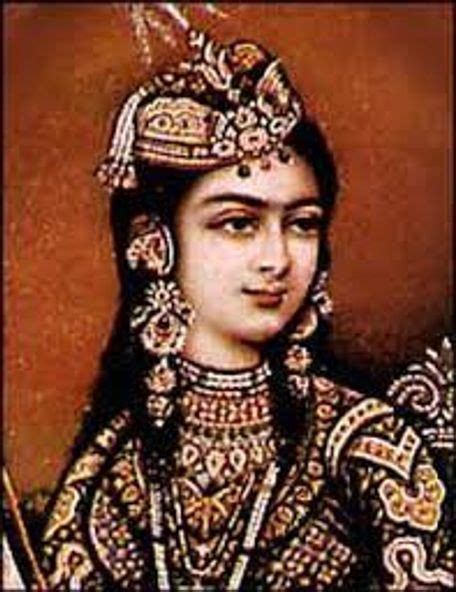
Taj Bibi was a Mughal queen. A wife of the great Mughal Emperor Akbar himself. But she is also a great Vaishnava saint. Her devotional songs are sung to this day. Her tomb is in Vrindavan. How did she make the journey from a mere Mughal Queen to an exalted pure devotee of Krishna?

It is often misunderstood that Krishna is the “God of the Hindus”, or “Hindu God”, or worse “A Hindu god”.

Nothing could be further from the truth, first of all, God is neither Hindu nor Muslim nor Christian nor Jewish nor any other designation you can think of.

God is God.

What to speak of God, even the devotee of God is beyond all material designations!

The very definition of devotion to God by the great Vaishnava saint Srila Rupa Goswami makes this abundantly clear.

সর্বোপাধিবিনির্মুক্তং তৎপরত্বেন নির্মলম্ ।
হৃষীকেণ হৃষীকেশ-সেবনং ভক্তিরুচ্যতে ॥ ১৭০ ॥

sarvopādhi-vinirmuktaṁ
tat-paratvena nirmalam
hṛṣīkeṇa hṛṣīkeśa-
sevanaṁ bhaktir ucyate

“ ‘Bhakti, or devotional service, means engaging all our senses in the service of the Lord, the Supreme Personality of Godhead, the master of all the senses. When the spirit soul renders service unto the Supreme, there are two side effects. One is freed from all material designations, and one’s senses are purified simply by being employed in the service of the Lord.’

https://vedabase.io/en/library/cc/madhya/19/170/

In other words, devotion to God is not possible for someone who is under material designations like Hindu, Muslim, Christian, Jew, or Indian, Pakistani, Chinese, American, African, Canadian.

By corollary, anyone who identifies with any material designation, has no devotion to God.

And when someone truly awakens to the Love of God, then nothing can stop them. Not the religion of their birth, not their gender, not their social or economic status, or their education. When Love of God awakens, it is a force that no other power can stop.

स वै पुंसां परो धर्मो यतो भक्तिरधोक्षजे ।
अहैतुक्यप्रतिहता ययात्मा सुप्रसीदति ॥ ६ ॥

sa vai puṁsāṁ paro dharmo
yato bhaktir adhokṣaje
ahaituky apratihatā
yayātmā suprasīdati

The supreme occupation [dharma] for all humanity is that by which men can attain to loving devotional service unto the transcendent Lord. Such devotional service must be unmotivated and uninterrupted to completely satisfy the self.

https://vedabase.io/en/library/sb/1/2/6/

Take the example of Taj Bibi, a great saint in the Bhakti tradition.

I first heard of Taj Bibi in a Youtube lecture series on Sri Radha Govindaji by His Holiness Indradyumna Swami, a former US Marine turned Vaishnava monk. He is a wonderful, inspiring, saintly Vaishnava.

Taj Bibi was born in a devout and well educated Muslim family. She was the daughter of a Maulvi, a Muslim priest well-connected to the Emperor Akbar. Practically, her father was one of Akbar’s spiritual advisors.

Growing up, she had a fascination for Allah that went beyond the instruction of the Quran. She wanted to see and serve Allah personally. She asked repeatedly if Allah could be seen… and all the Muslim religious leaders told her that if she went to Mecca and Medina on Hajj then she could see Allah. But she was dissuaded for being too young.

She was also exceedingly beautiful. When her father, Fadan Khan died, the Emperor Akbar married her and she became a respected Mughal Queen.

Taj Bibi, Mughal Queen and Vaishnava Saint

One day, on her way to Agra to see Emperor Akbar, she heard the bells of the famous Govindaji temple in Vrindavan. She asked her palanquin bearers what the sound was.

Little Allah!

Those are the bells of the temple of Govindaji, came the reply. She then asked who Govindaji was. The head Muslim Palanquin bearer answered “Oh, he is a little god of the Hindus”. Taj Bibi exclaimed “Oh! Chhota Allah”, which means “Little Allah”. She insisted on being taken to the temple.

Sri Govindaji, who now resides in Jaipur, Rajasthan. He was originally in Vrindavan, but the Mughal Emperor Aurangzeb wanted to desecrate the temple. After a spell-binding adventure, Sri Govindaji reached Jaipur over 400 years ago.

When she reached there, because she was Muslim, she wasn’t allowed entry into the temple. So she sat at the doorway, mesmerized by the sight of Govindaji. She sat there and sang and sang and sang.

The palanquin bearers reminded her that the Emperor was waiting. She ordered the palanquin bearers to inform the emperor to release her from the marriage. Akbar, being an evolved spiritualist himself, agreed.

Taj Bibi then made Vrindavan her home and entered deep into the love of her Allah, she knew Allah as Krishna and saw Him personally in meditation every day.

She also received Vaishnava initiation from her spiritual master Sri Vitthalnath ji, a disciple of Sripada Vallabhacharya of the Pushtimarga Sampradaya.

She spent her life immersed in loving devotional service and wrote many many songs, written in the agony of separation from her beloved, Krishna, or Govindaji. Her songs are sung by devotees to this very day.

In fact, she left her mortal body behind one day, in the sacred land of Vrindavan, eager to catch Krishna who was close by, playing Holi (the festival of colours) with His dearest associates. She went to meet her Beloved in her spiritual form, leaving her mortal body behind.

Her tomb in Raman Reti bears witness to the life of this great saint who fell in love with Krishna despite being born a Muslim and being in the materially exalted position of being a queen of the great Mughal emperor Akbar.

The tomb of the great Mughal Queen and Vaishnava Saint, Taj Bibi.

Bhakti knows no barriers.

Not very long ago, when I gave a Bhagavatam class at ISKCON Hyderabad, there was one young lady who was asking me some very intense questions. I learned that she was a girl from a Muslim family, and her teachers were discouraging her from practicing Krishna Bhakti. I said to her that Allah was standing in front of her in the form of Sri Radha Madan Mohan, and He was visible as He is to those whose eyes are tinged with the salve of Love of God. She was clearly very moved by Sri Radha Madan Mohan, as she stood in front of Him with tears in her eyes.

And of course, many readers have expressed appreciation for the Muslim Brahmin in Hyderabad.

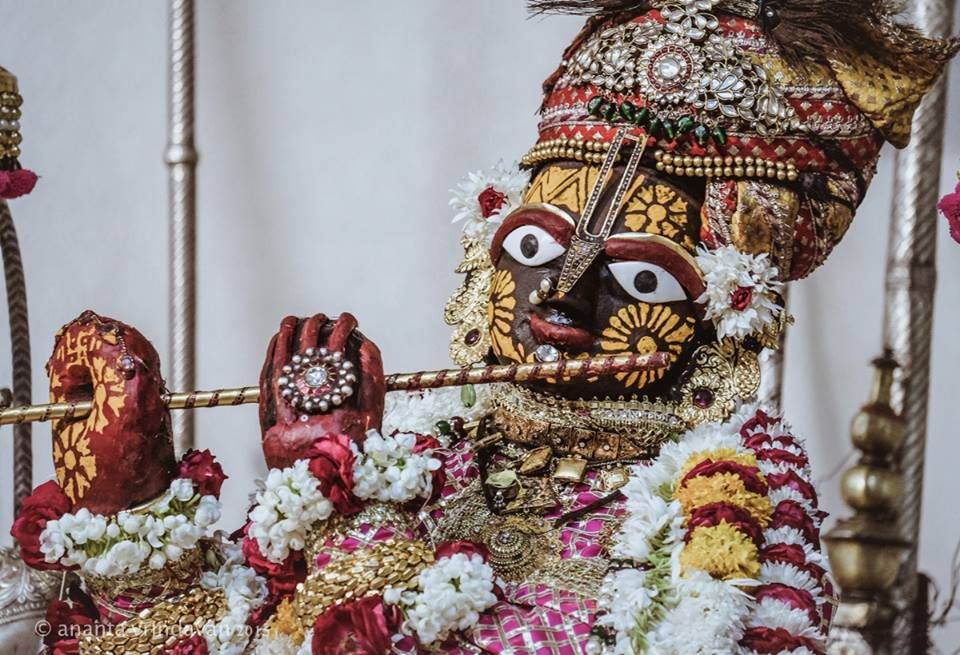
Allah stands in the form of Sri Radha Madan Mohan in ISKCON Hyderabad, for thoe who have the eyes to see Him.

And how can you develop the eyes to see God?

Chant the names of God, even if according to your own tradition. If you are actually chanting the names of God, then you will see God everywhere, including in His deity form, and in every genuine name of God, you will feel ecstatic love.

एतन्निर्विद्यमानानामिच्छतामकुतोभयम् ।
योगिनां नृप निर्णीतं हरेर्नामानुकीर्तनम् ॥ ११ ॥

etan nirvidyamānānām
icchatām akuto-bhayam
yogināṁ nṛpa nirṇītaṁ
harer nāmānukīrtanam

O King, constant chanting of the holy name of the Lord after the ways of the great authorities is the doubtless and fearless way of success for all, including those who are free from all material desires, those who are desirous of all material enjoyment, and also those who are self-satisfied by dint of transcendental knowledge.

https://vedabase.io/en/library/sb/2/1/11/

If you would like to taste genuine spiritual bliss, please chant this mantra constantly:

Hare Krishna Hare Krishna
Krishna Krishna Hare Hare
Hare Rama Hare Rama
Rama Rama Hare Hare

There are many great saints, born in Muslim families, but who developed great devotion to Krishna and are exemplary in their devotional service. I will write about some of them in due course of time.

Do you have a question? Feel free to write to me!

Feasting on the Holy Name

Many spiritualists fast. Especially Vaishnavas on Ekadasi day… but Ekadasi is meant for feasting. So how is it that someone can be simultaneously fasting and feasting at the same time?

తెలుగు (Telugu) translation

In most religious traditions, there is a concept of fasting… whether it is fasting from vice, or fasting from food and water… For example, the Christians fast for 40 days during Lent. Muslims fast for a month during Ramadan/Ramzan… and many other traditions have similar fasts.

In the Vaishnava tradition which I practice, we fast once approximately every 14 days, on a day called Ekadasi or Ekadashi. Usually this is the eleventh day of the waxing or waning moon. Usually, because there are some details when the fasting is a day later, but we won’t get into all that right now.

However, some advanced Vaishnavas say that Ekadashi is meant to be a day of feasting, not fasting.

But…

One should fast on the two Ekādaśī days, which fall on the eleventh day of the waxing and waning moon, and on the birthdays of Lord Kṛṣṇa, Lord Rāma and Caitanya Mahāprabhu. There are many such fasting days.

https://vedabase.io/en/library/sb/3/27/22/

Huh?

If Vaishnavas are fasting from grains, beans, and in some cases from all food, and from all water too for some… then what are they feasting on?

Well, new practitioners may find it hard to fast from food, being how intricately attached we are to our bodies, minds, and serving them constantly. For such Vaishnavas, it is advised that they can eat as much as they need to, except no grains and beans… and all that they eat must be first offered to Krishna. This helps them regulate their senses at least on that level.

But many Vaishnavas often fast from much more than just grains and beans, so how is it that they can feast?

Let us take the example of Rupa Goswami and Sanatana Goswami, great Goswamis of Vrindavan… they had obtained exalted birth, a very sharp intelligence and tremendous knowledge, and were serving as the ministers of the Nawab of Bengal. Rupa Goswami’s life savings in gold coins filled up an entire boat with gold!

But these same two brothers, when in Vrindavan, had no fixed residence, spending each night under a different tree, with barely enough clothing to cover themselves, and austere food, spent all their time hearing and chanting about Krishna. How could they do that?

tyaktva turnam asesha-mandala-pati-srenim sada tuccha-vat
bhutva dina-ganesakau karunaya kaupina-kanthasritau
gopi-bhava-rasamritabdhi-lahari-kallola-magnau muhur
vande rupa-sanatanau raghu-yugau sri-jiva-gopalakau

I offer my respectful obeisances unto the six Gosvamis, namely Sri Rupa Gosvami, Sri Sanatana Gosvami,
Sri Raghunatha Bhatta Gosvami, Sri Raghunatha dasa Gosvami, Sri Jiva Gosvami, and Sri Gopala Bhatta
Gosvami, who kicked off all association of aristocracy as insignificant. In order to deliver the poor
conditioned souls, they accepted loincloths, treating themselves as mendicants, but they are always merged in
the ecstatic ocean of the gopis’ love for Krishna and bathe always and repeatedly in the waves of that ocean.

Verse 4 https://iskcondesiretree.com/page/shad-goswamy-ashtakam

How is it possible for such persons accustomed to royal pleasures to give them up?

It understand by spiritualists that the objects of the senses, the experiences we chase, the possessions we crave, the sensory satisfaction we seek, are compared to toys and children… the child is attached to the toy, but can be induced to give up the toy if offered a higher and better experience.

What could be a higher and better experience than all the pleasures of material life? Especially, how can one give up that most basic of bodily needs – food?

What does food do for us?

  • Food satisfies the tongue – this hankering of the tongue is practically unconquerable, no matter if we need the food or not, the tongue will never say no.
  • Food nourishes the body – we feel strength from the food.
  • Food produces renunciation from food – as we get full, we hanker for food less and less.

भक्ति: परेशानुभवो विरक्ति-
रन्यत्र चैष त्रिक एककाल: ।
प्रपद्यमानस्य यथाश्न‍त: स्यु-
स्तुष्टि: पुष्टि: क्षुदपायोऽनुघासम् ॥ ४२ ॥

bhaktiḥ pareśānubhavo viraktir
anyatra caiṣa trika eka-kālaḥ
prapadyamānasya yathāśnataḥ syus
tuṣṭiḥ puṣṭiḥ kṣud-apāyo ’nu-ghāsam

Devotion, direct experience of the Supreme Lord, and detachment from other things — these three occur simultaneously for one who has taken shelter of the Supreme Personality of Godhead, in the same way that pleasure, nourishment and relief from hunger come simultaneously and increasingly, with each bite, for a person engaged in eating.

So, if someone obtained an experience that fulfilled all three needs – satisifed the tongue, satisfied the bodily need for nourishment, and produced renunciation from the hankering for food, then that experience can replace food!

https://vedabase.io/en/library/sb/11/2/42/

Such is the chanting of the Holy Name of God.

This Hare Krishna Mahamantra

Hare Krishna Hare Krishna
Krishna Krishna Hare Hare
Hare Rama Hare Rama
Rama Rama Hare Hare

The Hare Krishna Mahamantra

This Mahamantra, when chanted purely, produces such an experience and beyond.

In fact, advanced spiritualists have tried to describe the experience of chanting Hare Krishna…

tuṇḍe tāṇḍavinī ratiṁ vitanute tuṇḍāvalī-labdhaye
karṇa-kroḍa-kaḍambinī ghaṭayate karṇārbudebhyaḥ spṛhām
cetaḥ-prāṅgaṇa-saṅginī vijayate sarvendriyāṇāṁ kṛtiṁ
no jāne janitā kiyadbhir amṛtaiḥ kṛṣṇeti varṇa-dvayī

“I do not know how much nectar the two syllables ‘Kṛṣ-ṇa’ have produced. When the holy name of Kṛṣṇa is chanted, it appears to dance within the mouth. We then desire many, many mouths. When that name enters the holes of the ears, we desire many millions of ears. And when the holy name dances in the courtyard of the heart, it conquers the activities of the mind, and therefore all the senses become inert.”

Rupa Goswami https://vedabase.io/en/library/cc/antya/1/99/

Is it any wonder that if a Vaishnava experiences even a tiny drop of a fraction of the ecstasy that the Holy Name generates, that they can abstain from food?

So should the rest of us go and imitate these Vaishnavas and fast from food and water willy nilly, even if the body is hurting?

अशास्त्रविहितं घोरं तप्यन्ते ये तपो जना: ।
दम्भाहङ्कारसंयुक्ता: कामरागबलान्विता: ॥ ५ ॥
कर्षयन्त: शरीरस्थं भूतग्राममचेतस: ।
मां चैवान्त: शरीरस्थं तान्विद्ध्यासुरनिश्चयान् ॥ ६ ॥

aśāstra-vihitaṁ ghoraṁ
tapyante ye tapo janāḥ
dambhāhaṅkāra-saṁyuktāḥ
kāma-rāga-balānvitāḥ

karṣayantaḥ śarīra-sthaṁ
bhūta-grāmam acetasaḥ
māṁ caivāntaḥ śarīra-sthaṁ
tān viddhy āsura-niścayān

Those who undergo severe austerities and penances not recommended in the scriptures, performing them out of pride and egoism, who are impelled by lust and attachment, who are foolish and who torture the material elements of the body as well as the Supersoul dwelling within, are to be known as demons.

https://vedabase.io/en/library/bg/17/5-6/

Of course, advanced Vaishnavas are not masochists or sadists, certainly not demons, and they don’t accept torturing their bodies, even if they have transcended the body… This is because the advanced Vaishnava sees the body as the property of Krishna.

In fact, when an advanced Vaishnava is seen by Krishna to be accepting too much austerity, Krishna gives that person more nourishment and opulence.

Take Krishna’s friend, the pure-hearted Brahmana named Sudama… Krishna gave him all opulence even though he didn’t ask for it!

This is one of Krishna’s most famous promises…

अनन्याश्चिन्तयन्तो मां ये जना: पर्युपासते ।
तेषां नित्याभियुक्तानां योगक्षेमं वहाम्यहम् ॥ २२ ॥

ananyāś cintayanto māṁ
ye janāḥ paryupāsate
teṣāṁ nityābhiyuktānāṁ
yoga-kṣemaṁ vahāmy aham

But those who always worship Me with exclusive devotion, meditating on My transcendental form – to them I carry what they lack, and I preserve what they have.

https://vedabase.io/en/library/bg/9/22/

So, coming back to our original question… when a Vaishnava fasts, how is it that they are still feasting while fasting?

Simple. They feast on the Holy Name of Krishna

(1)
Of sweet things, it’s the sweetest you will taste at any time;
Of things that bring good fortune, it’s good fortune’s paradigm;
Of things that purify, it purifies most powerf’lly;
The Holy Name of Sri Hari is surely all that be.
(2)
From Brahma’s realm atop the sky down to the lowly grass,
Illusion reigns in Maya-devi’s treacherous morass.
The truth, the truth, the only truth: the Name of Sri Hari.
The Holy Name of Sri Hari is surely all that be.
(3)
He’s the guru, he’s the father, he’s the friend most true,
And she’s the real mother who most kindly teaches you
To always chant and hear the Holy Name of Sri Hari.
The Holy Name of Sri Hari is surely all that be.
(4)
Remember that our final breath may come at any time,
No matter if we’re old and sick or in our youthful prime.
So young and old alike should chant the Name incessantly.
The Holy Name of Sri Hari is surely all that be.
(5)
Lord Sri Hari forever dwells wherever devotees
Whose hearts are fixed on Him and free of all impurities
Uplift their voices high and sing His Name in ecstasy.
The Holy Name of Sri Hari is surely all that be.
(6)
Alas! What sorrow! What great pain! The worst calamity-
For people to forget the Holy Name of Sri Hari!
Although the Name’s a priceless gem, mere broken glass they see.
The Holy Name of Sri Hari is surely all that be.
(7)
Just fill your ears, just fill them with the Name of Sri Hari!
Just chant the Name, just chant the Name with all sincerity!
Just sing the Name, just sing the Holy Name eternally!
The Holy Name of Sri Hari is surely all that be.
(8)
It makes this world appear like bits of straw upon the ground;
It splendorously reigns supreme-divinity in sound;
It’s filled with transcendental bliss and peerless purity;
The Holy Name of Sri Hari is surely all that be.
(9)
Inspired to glorify the Holy Name of Sri Hari,
A certain sage composed this hymn in Sanskrit poetry.
I pray that those who read this lowly version made by me
Will chant the Holy Name of Sri Hari in ecstasy.

His Grace Sriman Dravida Dasa ACBSP English rendering of Sri Kevalastakam of Sri Nilakanta Goswami

What to speak of food for a day, the advanced Vaishnava can give up this entire material world!

Of Devotion & Devotional Service

What is the difference between devotion and devotional service? Is it possible to perform devotional service without devotion? Is it possible to have devotion without performing devotional service?

Brajanath Das, 26 April 2015
Hare Krishna Dear Devotees!        

Please accept my humble obeisances!

All glories to Sri Caitanya Mahaprabhu!

All glories to Srila Prabhupada!

Please help me to understand the invisible line of difference between devotion and devotional service. 

your servant,

Brajanath Das

Bhaktin Aruni, 26 Apr 2015

Hare Krishna!          

Pamho, 

All glories to Srila Prabhupada!

I think maybe devotion is the attitude and devotional service is the act …

aruni

Bhakta Jayakrishna, 27 April 2015

Hare krishna! Thank you Prabhu! 

I too had this doubt when first heard and yet never thought that there may be some serious difference.but i felt that there indeed exist some difference as, if ones devotion is not supported by some service in its way, it is most likely he lose his devotion also, (here i must confess that we neophyte devotees more or less are with such a stage,)and hence, devotion when backed up by service or activities suiting it is the devotional service, but i have no sastric reference and i wish to hear from our senior brothers who can give a better explanation.

your servant

Jayakrishna

Premananda Das, 27 April 2015

Hare Krishna

Devotion means ardent and  selfless affection  and dedication to a person or principle. According to Padma Purana one should always remember Lord Vishnu and never forget Him.This is called dhyana or meditation always remembering Krishna.

Srila Rupa Goswami says bhakti means devotional service to Krishna.Every service has some attractive features which drives the servitor progressively on and on.

A family man works day and night for his wife and children.A philanthropist works for the greater love of family and a nationalist for the cause of country and countrymen.The force that drives them is called a rasa or mellow (relationship) that is very sweet.Bhakti -rasa however does not finish with the end of life.It continues perpetually and therefore is called amrta that which does not die but exists perpetually.

According to Bhagavad Gita a little advancement in the bhakti rasa can save the devotee from greatest danger that is missing the opportunity of human life.The rasas derived from social and  family life or greater family life like altruism,philanthropy,socialism,communism nationalism does not guarantee next birth to be human life.

your servant

Premananda Das

Amogha Lila Das, 27 April 2015

Hare Krishna Prabhu. Please accept my humble obeisances.

All glories to Srila Gurudeva! All glories to Srila Prabhupada!

Devotion is cultivated through devotional service. There are nine processes by which one can cultivate devotion.

Sravanam, Kirtanam, Smaranam, Pada Sevanam, Arcanam, Vandanam, Dasyam, Sakhyam, Atma Nivedanam

Gurudeva often mentions these nine processes in his lectures and they are described by Prahlada Maharaja in the 7th Canto of the Srimad Bhagavatam (SB 7.5.23-24):       

To hear about Sri Visnu’s transcendental name, His form, His characteristics, His possessions and His pastimes and to hear and chant about His pastimes, to remember them, to serve the lotus feet of the Lord, to respectfully offer service to the Lord, to offer prayers to the Lord, to become His servant, to consider the Lord one’s best friend and to offer Him everything-these nine processes are recognized as pure devotional service.

Following the above nine processes one can gradually advance in devotional service and progress through the nine stages of Bhakti yoga as described in the Caitanya Caritamrta, Madhya-lila, by Sri Caitanya Mahaprabhu as follows:

“In the beginning there must be faith. Then one becomes interested in associating with pure devotees. Thereafter one is initiated by the spiritual master and executes the regulative principles under his orders. Thus one is freed from all unwanted habits and becomes finally fixed in devotional service. Thereafter, one develops taste and attachment. This is the way of sadhana-bhakti, the execution of devotional service according to the regulative principles. Gradually emotions intensify, and finally there is an awakening of love. This is the gradual development of love of Godhead for the devotee interested in Krsna consciousness.”

your humble servant,

Amogha Lila Das

Rantideva Das, 28 April 2015

My dear devotees,

Please accept my humble obeisances.

All glories to Sri Guru and Sri Gauranga.

All glories to Srila Prabhupada.

I trust that you are all well.

Very nice question and answers regarding devotion and devotional service. However, this subject brought to mind another question concerning the same subject matter. Is it possible to perform devotional service without devotion? And what about devotion without devotional service?

I remain your worthless servant,

Rantideva das

Hare Krishna Das, 28 April 2015

Dear Prabhu,

Please accept my humble and respectful obeisances!

All Glories to His Divine Grace Sriman Sankarshan Das Adhikari Gurumaharaj and Srimati Gurumata!

All Glories to Srila Prabhupada!

Devotion in itself includes service. Without service, there is no actual devotion. It is only lip service. But, to stress the importance of service and protect it from sahajiaism, Srila Prabhupada used the term devotional service. I admit, I also have no quotes (reference lines) from Senior Vaisnavas. This is my perspective. Willing to hear from others.

Thanking You,

your servant,

Hare Krishna Das

Mahabhagavat Das SDA, 30 April 2015

Dear Devotees,

Hare Krishna!

Please accept my humble obeisances.

All glories to Srila Gurudeva.

All glories to Srila Prabhupada.

This discussion was very enlivening for me. Thank you to all who have participated in this discussion. The question is already answered, from reading the emails together.

Since Srila Gurudeva stresses a careful reading of Srila Prabhupada’s books for all of us, I am adding quotes from Srila Prabhupada’s books to solidify our understanding. I have made a few sentences bold, as they jumped out at me, but of course, every word of Srila Prabhupada is of utmost significance…

(from purport to SB 1.2.19)

A living being in his normal constitutional position is fully satisfied in spiritual bliss. This state of existence is called brahma-bhūta (SB 4.30.20) or ātmā-nandī, or the state of self-satisfaction. This self-satisfaction is not like the satisfaction of the inactive fool. The inactive fool is in the state of foolish ignorance, whereas the self-satisfied ātmānandī is transcendental to the material state of existence. This stage of perfection is attained as soon as one is fixed in irrevocable devotional service. Devotional service is not inactivity, but the unalloyed activity of the soul.

The soul’s activity becomes adulterated in contact with matter, and as such the diseased activities are expressed in the form of lust, desire, hankering, inactivity, foolishness and sleep. The effect of devotional service becomes manifest by complete elimination of these effects of passion and ignorance. The devotee is fixed at once in the mode of goodness, and he makes further progress to rise to the position of Vāsudeva, or the state of unmixed sattva, or śuddha-sattva. Only in this śuddha-sattva state can one always see Kṛṣṇa eye to eye by dint of pure affection for the Lord

(from purport to SB 1.10.23)

Jitendriya means one who has full control over the senses. The senses are active parts of the body, and their activities cannot be stopped. The artificial means of the yogic processes to make the senses inactive has proved to be abject failure, even in the case of great yogīs like Viśvāmitra Muni. Viśvāmitra Muni controlled the senses by yogic trance, but when he happened to meet Menakā (a heavenly society woman), he became a victim of sex, and the artificial way of controlling the senses failed. But in the case of a pure devotee, the senses are not at all artificially stopped from doing anything, but they are given different good engagements. When the senses are engaged in more attractive activities, there is no chance of their being attracted by any inferior engagements. In the Bhagavad-gītā it is said that the senses can be controlled only by better engagements. Devotional service necessitates purifying the senses or engaging them in the activities of devotional service. Devotional service is not inaction. Anything done in the service of the Lord becomes at once purified of its material nature.

(From the Introduction to the Nectar of Devotion)

Pure devotional service should be free from the desire for any material benefit or for sense gratification, as these desires are cultivated through fruitive activities and philosophical speculation. Generally, people are engaged in different activities to get some material profit, while most philosophers are engaged in proposing transcendental realization through volumes of word jugglery and speculation. Pure devotional service must always be free from such fruitive activities and philosophical speculations. One has to learn Kṛṣṇa consciousness, or pure devotional service, from the authorities by spontaneous loving service.

This devotional service is a sort of cultivation. It is not simply inaction for people who like to be inactive or devote their time to silent meditation. There are many different methods for people who want this, but cultivation of Kṛṣṇa consciousness is different. The particular word used by Śrīla Rūpa Gosvāmī in this connection is anuśīlana, or cultivation by following the predecessor teachers (ācāryas). As soon as we say “cultivation,” we must refer to activity. Without activity, consciousness alone cannot help us.

I hope that these quotes help.

Sincerely,

Mahabhagavat Das

Rantideva das, 01 May 2015,

Reposting this question as no reply was received earlier…..

My dear devotees,

Please accept my humble obeisances.

All glories to Sri Guru and Sri Gauranga.

All glories to Srila Prabhupada.

I trust that you are all well.

Very nice question and answers regarding devotion and devotional service. However, this subject brought to mind another question concerning the same subject matter. Is it possible to perform devotional service without devotion? And what about devotion without devotional service?

I remain your worthless servant,

Rantideva das

Mahabhagavat Das SDA, 01 May 2015

Dear Rantideva Prabhu,

Please accept my humble obeisances.

All glories to Srila Gurudeva.

All glories to Srila Prabhupada.

Please forgive us, we didn’t mean to ignore your question, but somehow missed it.

It is possible to perform devotional service without devotion, in other words, it is called “ajnata sukriti” (unknowingly performed devotional service), this is when, for example, devotees engage others in devotional service without giving them the full details about how, why… this includes for example when devotees serve out Krishna Prasada for the masses, when they put on festivals like Jagannatha Ratha Yatra, or when they go out on Harinam Sankirtan, or go in public wearing Tilaka and devotional attire, etc.

Or, it could be like someone plants a tree and some devotee uses the fruits and flowers from that tree to offer to the Lord, the person who planted the tree gets the benefit of assisting in devotional service.

This also includes the devotees who feel no devotion but go through the motions anyways, for example, chant mechanically, or dance enthusiastically either because of fear or respect for the spiritual master, or to keep up with their vows or commitments. While they don’t make as much advancement as if it were done attentively and devotedly and genuinely, but still, they make some progress, so for example Srila Gurudeva says “mechanical chanting is better than no chanting”, and “offensive chanting is still better than no chanting”, etc. He also says “dance enthusiastically anyway and the ecstasy will come”, when asked about dancing in Kirtan.

Often it is seen that even such service, performed apparently without devotion, fructifies into full-fledged devotional service, I am one such example who did so much devotional service without any devotion and now I feel some attraction to pleasing Guru and Krishna. All glories to the wonderful devotees who engaged me in service throughout my life, my mother, father, cousins, teachers, devotees all over the world, Bhaktimarga Swami, devotees in Toronto, the book distributor who gave a copy of the Bhagavad Gita even though I was undeserving, Srila Gurudeva for giving me his personal attention even though I am undeserving, the list goes on and on, and I don’t even know how to express my gratitude to them all!

Of course, such “service without devotion” devotional service does not count as “pure devotional service”. 🙂

It is however, not possible to have any devotion without performing devotional service, as was hopefully clear from the various answers and Srila Prabhupada’s writings.

I hope this helped, I beg all group members that if I have misunderstood something, or created some misunderstanding, please do kindly help and correct me.

your servant,

Mahabhagavat Das

Haldhar Prabhu, 01 May 2015

Hare Krsna Mahabhagavat Prabhuji and Rantideva Prabhuji for one more perfect question and perfect answer.

I understood the question only after the answer 🙂

Hare Krsna !

your servant,

Haldhar Das

Rantideva das, 04 May 2015

My dear Godbrother,

Please accept my humble obeisances.

All glories to Srila Gurudeva.

All glories to Srila Prabhupada

I was thinking about Jayananda prabhu. How he could engage anyone in Sri Krishna’s service. He could take anyone from the street, say a homeless man or drunkard, and engage him in helping to build  a ratha cart. So this homeless man is engaged in devotional service but has no devotion for the Lord. He’s just working in hopes of receiving a free meal afterwards. Sometimes we even see how a homeless person will come to the temple on Sunday for a free meal. In both cases they are reaping great benefit by performing service for the Lord, or hearing the pastimes of the Lord, or taking Krishna prasadam.

 Since today is Jayananda Prabhu’s disappearance day, May 1, 1977, this topic of devotional service is very appropriate. By the mercy of Srila Gurudeva and Lord Sri Krishna, may we all reach the platform of pure loving service that our dear Jayananda Thakur displayed while here in this material world.

I remain your worthless servant,

Rantideva das

(das is the important part)

Mahabhagavat Das SDA, 05 May 2015

Dear Rantideva Prabhu,

Please accept my humble obeisances.

All glories to Srila Gurudeva.

All glories to Srila Prabhupada.

Actually I have met one hippie encouraged by Jayananda Prabhu… this was in Puerto Rico, I was visiting the Hare Krishna temple in Gurabo with my wife for a “retreat”, we once went to downtown San Juan. I had my Tilak on but was dressed in street clothes. An elderly man was doing something with some iron bars, some kind of welding work, and suddenly he saw me and called out “Hare Krishna, are you from the temple in Gurabo”, I was amazed and pleasantly surprised. Then he introduced himself as Lance, went on to describe how he “worked with” one taxi driver we consider a great saint, immediately I knew he was talking about Jayananda Prabhu.This man had met Srila Prabhupada even. I asked him what happened, and he sadly replied that with the drugs, he’d lost most of his intelligence, and even then, he heard only partially, and he does not remember much, but he appreciates everything.

It was the highlight of my day, practically the highlight of that trip, and a reaffirmation of the power of Sankirtan, tell everyone about Krishna, deliver Krishna’s mercy to them, and they will never forget Krishna, and this will help them, if not in this birth, then in the next. Clearly, Lance has performed some devotional service, with or without devotion, but I think the devotion had already started to manifest long ago…

your servant,

Mahabhagavat Das

Please subscribe to daily inspirational emails from His Grace Sriman Sankarshan Das Adhikari (Writings and lectures archived at www.ecstaticmedia.com ), written fresh every day from his travels around the world sharing the highest spiritual knowledge with everyone. Sign up now at www.joincourse.com

If Krishna is self satisfied, then how can Radharani satisfy Krishna?

Krishna is the Supreme Personality of Godhead. He is self-satisfied. So how can Srimati Radharani’s touch satisfy Krishna? How can any devotee’s service satisfy someone who is already self-satisfied? Why words like “lust” used in connection with Krishna?

Sudhanshu Soni, 28 August 2019

Hare Krishna 

Please accept my humble obeisances 

Prabhuji I respectfully and humbly wanted to know the answer from all the devotees for the one question that came in my mind as we are reading nowadays radhika ashtakam,since radha-ashtami is coming .

If Krishna is self satisfied or if he does not have any lust then why is it in the third verse of radhika-ashtakam is written “when she touches the master of the gopis ,she dispels the burning heat of his lusty desires”.

please answer, i really need to know this …

thank you 

your servant 

sudhanshu

Mahabhagavat Das SDA, 03 September 2019

Dear Sudhanshu,

Hare Krishna!

Please accept my humble obeisances.

All glories to Srila Gurudeva.

All glories to Srila Prabhupada.

There are at least 2 Radhika Ashtakam, one by Srila Krishnadasa Kaviraja Goswami, and one by Srila Rupa Goswami. Both are incredibly advanced as to their meaning and purport. I must confess that I do not fully appreciate those high spiritual mellows myself.

You are referring to verse 3 of Krishnadasa Kaviraja Goswami.

“saukumarya-shrishta-pallavali-kirti-nigraha

candra-candanotpalendu-sevya-sita-vigraha

svabhimarsha-ballavisha-kama-tapa-badhika

mahyam atma-pada-padma-dasya-dastu radhika

Her charming youthful delicacy negates the fame of freshly-sprouted leaves. Her refreshing form is worthy of being served by the cooling moon, sandalwood paste, lotus flowers, and camphor. When She touches the master of the gopis, She dispels the burning heat of His lusty desires. May Sri Radhika always bestow upon me the service of Her own lotus feet.”

Yes, your understanding is correct that Krishna is beyond and higher than all mundane material qualities. He is “nirguna” that Krishna has no material qualities. But Krishna is also described as “saguna”, which means that He is the reservoir of all auspicious spiritual qualities. It is a fact that Krishna is “Atmarama” or fully satisfied within Himself.

Radha and Krishna are one, They are expanded only to enact pastimes. Srimati Radharani is Krishna’s internal potency Hladini Shakti. No one knows how to give pleasure to Krishna better than Srimati Radharani.

Even though words like “lust” are used, in connection with Radha and Krishna, they do not bear their usual mundane meaning.

It is true that everything we see in the material realm is a perverted reflection of what we see in the spiritual realm. Because we do not have an understanding of the pure spiritual essence of these things, we hear these words and connect that to our material experience.

It is said that the pure devotee sees the mundane and even the mundane reminds the pure devotee of the purely spiritual, for example, Rupa Goswami says “let me be attracted to Krishna like a young boy and girl are attracted to each other”… in other words when Rupa Goswami sees the mundane attraction between a boy a girl, he is reminded of Krishna. Another example, when an advanced devotee sees a baby crying for its mother, she may hanker to chant with that intensity for Sri Sri Radha Krishna to come and save her.

On the contrary, a materially contaminated soul, a conditioned soul such as myself is unfortunately liable to see the mundane in the spiritual, such as the pure interactions of Krishna with the Gopis or Krishna with Srimati Radharani.

Therefore, these advanced topics are not discussed except amongst pure devotees.

When one has fully appreciated Srila Prabhupada’s books, and acquired maturity in one’s understanding of the depths of Bhakti, then one may proceed to these confidential writings of the previous predecessor Acharyas, or spiritual masters.

The confusion you are facing makes it clear that there is some work to be done wrt. fully understanding what Srila Prabhupada has left behind for us…

I hope this helps.

Sincerely,

Mahabhagavat Das

dasadas.com

Rasika Krishna Das, 04 September 2019

Hare Krishna,

Thank you for enlightening my mind Prabhuji with your excellent answer 🙂

your servant,

Rasika Krishna Das

Sudhanshu soni, 04 September 2019

Thank you so much Prabhuji ,it is very convincing..

your servant,

Sudhanshu

Please subscribe to daily inspirational emails from His Grace Sriman Sankarshan Das Adhikari (Writings and lectures archived at www.ecstaticmedia.com , written fresh every day from his travels around the world sharing the highest spiritual knowledge with everyone. Sign up now at www.joincourse.com)

Bhakti Philosophy for the mind and Krishna’s Pastimes for the Heart?

How does Bhakti/Devotional Service deal with the intellectual / logical / analytical side of us as well as the emotional/feeling side of us? Does catering to one mean neglecting the other?

Brajanath Das, 02 November 2016

Hare Krishna Dear Devotees,

Please accept my humble obeisances!

All glories to Sri Caitanya Mahaprabhu!

All glories to Srila Prabhupada!

Please help me to understand the following phrase – 

“Pastimes of the Lord are for the heart and philosophy is for the mind.”

your servant,

Brajanath Das

Bhakta Sunil, 09 November 2016

Hare Krishna Prabhu

Dandavats!

The pastimes of the Lord help to easily realize the impurities in hearts by direct perception in story formats and reading philosophy engages the mind

Inversely , the reading of philosophy purifies the heart too and pastimes of the Lord engage the mind too

For example if we read this pastime of Lord Nrsimhadeva , not only we get moral by mind but also purifies our Hearts irrespective of how many times we read this, this transcendental literature is ever fresh contrary to mundane literature in news media and magazines :

THE PASTIMES OF LORD NRSIMHADEVA

There was once a great demon who was overwhelmed with rage: his brother Hiranyaksa had just been killed by the incarnation of Vishnu known as Lord Varaha. Thus he became very determined to become the emperor of the entire universe. In order to increase his power, he performed very powerful austerities. This penance was so severe that it disturbed the demigods. In fact, the demigods requested Lord Brahma to stop him. The chief of the demigods, Lord Brahma, therefore descended to pacify him by granting him a wish.

“Please grant that I not be killed by any created living being,” commanded Hiranyakasipu, “that I not die inside or outside any residence, during the daytime or night, nor on the ground or in the sky; that I not be killed by any being created by you, nor by any weapon, nor by any human being or animal indeed that I not meet death from any entity, either living or non-living; that I have no competitor; that I have sole lordship over all living entities and presiding deities, and that I acquire all mystic powers.”

After Brahma had granted him all these requests, Hiranyakasipu very swiftly conquered all the planets in the universe, took up residence in the lavish palace of King Indra, and forced the demigods to bow down to his feet. He even stole the sacrificial oblations meant for the demigods. Intoxicated physically by wine and mentally by power, Hiranyakasipu ruled the universe very severely.

During this time his queen, Kayadhu, returned to the palace of her husband and bore him a son, Prahlada. He was a reservoir of all transcendental qualities because he was a pure devotee of Lord Visnu. Determined to understand the Absolute Truth, he had full control over his senses and mind. He was kind to all living creatures and the best friend of everyone. Toward respectable persons he behaved just like a menial servant, to the poor he was like a father, and to his equals he was always like a sympathetic brother. Always very humble, he considered his teachers and spiritual masters to be as good as the Lord Himself. Indeed, he was completely free of any pride that might have arisen from his good education, riches, beauty, and aristocratic birth.

Hiranyakasipu wanted to raise his son to be a powerful demon, but Prahlada only wanted to learn about devotional service to Lord Visnu. After Prahlada attended school for some time, Hiranyakasipu took him on his lap and affectionately inquired, “My dear son, please tell me about your favorite subject in school.”

Fearlessly, Prahlada said, “Hearing (sravanam) and chanting (kirtanam) about the holy name, form, qualities, paraphernalia, and pastimes of the Supreme Lord; remembering (smaranam) them; serving the lotus feet of the Lord (pada-sevanam); offering the Lord respectful worship with sixteen types of paraphernalia (arcanam); offering prayers to the Lord (vandanam); becoming His servant (dasyam); considering the Lord one’s best friend (sakhyam); and surrendering to Him (atma-nivedanam, in other words, serving Him with body, mind and words); these nine processes are known as pure devotional service, and I consider anyone who has dedicated his life to service of Lord Visnu through these nine methods to be the most learned person, for he has acquired complete knowledge.”

Blinded by anger, Hiranyakasipu threw Prahlada from his lap onto the ground. “Servants! Take him away and kill him at once!” he screamed. However, Prahlada just sat silently and meditated on the Personality of Godhead, and the demons’ weapons had no effect on him. Seeing this Hiranyakasipu became fearful and contrived various ways to kill his son. His servants threw Prahlada beneath an elephant’s feet; they cast him into the midst of huge, fearful snakes; they cursed him with destructive spells; they hurled him from a hilltop; they gave him poison; they starved him; they exposed him to severe cold, winds, fire and water; they threw heavy stones to crush him. Hiranyakasipu even sent his sister Holika to burn him, but instead she herself was burned. But throughout these trials Prahlada was simply absorbed in thoughts of Lord Visnu, and thus he remained unharmed. Hiranyakasipu became very anxious about what to do next.

“You say there is a being superior to me,” said Hiranyakasipu, “but where is He? If He is present everywhere, then why is He not present in this pillar you see before you? Do you think He is in this pillar?” “Yes,” Prahlada answered, “He is there.”

Hiranyakasipu’s rage flared more and more. “Because you are speaking so much nonsense, I shall now sever your head from your body. Now let me see your most worshipable God come to protect you. I want to see it.” Cursing him again and again, Hiranyakasipu took up his sword, got up from his royal throne, and with great anger struck his fist against the column.

Then from within the very pillar that he had singled out came a wonderful half-man, half-lion form never before seen. The Lord’s form was extremely fearsome because of His angry eyes, which resembled molten gold; His shining mane, which expanded the dimensions of His fearful face; His deadly teeth; and His razor-sharp tongue. Lord Nrsimha then proceeded to battle with the wasp-like Hiranyakasipu.

Finally at twilight, Lord Nrsimha captured Hiranyakasipu and placed him in His lap on the doorway of the assembly hall. As He began ripping the demon to pieces with His many, many hands, Lord Nrsimha’s mouth and mane became sprinkled with drops of blood, and His fierce eyes, full of anger, were impossible to look at. Licking the edge of His mouth with His tongue, the Supreme Lord decorated Himself with a garland of intestines taken from Hiranyakasipu’s abdomen. Lord Nrsimha uprooted Hiranyakasipu’s heart and finally threw him aside and destroyed an army of Hiranyakasipu’s faithful followers.

By His transcendental cleverness, Lord Nrsimhadeva was able to kill Hiranyakasipu without contradicting any of Lord Brahma’s benedictions. The execution took place neither inside nor outside, but in the doorway; neither on land nor in sky, but on the Lord’s lap; neither during the day nor during the night, but at twilight; neither by man, beast, or demigod nor by any created being, but by the Personality of Godhead; and not by any weapon, but by the Lord’s own lotus hand, relieving the whole universe of Hiranyakasipu’s demonic activities.

Having been protected by the Lord, Prahlada Maharaja offered many prayers in a voice that faltered with love:

“My dear Lord Nrsimhadeva, please, therefore, allow Your angry feature to diminish, now that my evil father Hiranyakasipu has been killed . . . [The saintly persons] will always remember Your auspicious and fearsome incarnation, for it frees them from fear. In this way, my Lord, You appear in various incarnations as a human being, an animal, a great saint, a demigod, a fish or a tortoise, thus maintaining the entire creation in different planetary systems and killing the demoniac principles.”

Adapted from Srimad Bhagavatam, 7th Canto

Bhaktivedanta Book Trust. HDG A.C. Bhaktivedanta Swami Srila Prabhupada.

Hope this helps with your query

your insignificant servant,

Bhakta Sunil

Mahabhagavat Das, 11 November 2016

Dear Brajanath Prabhu,

Please accept my humble obeisances.

All glories to Sri Guru and Gauranga.

All glories to Srila Prabhupada.

“Pastimes of the Lord are for the heart and philosophy is for the mind.”

Such questions would greatly benefit from inclusion of context. Please do this going forward. A statement out of context is a perfect recipe for misunderstanding and confusion. Who said it, who was it said to, and in what specific context was that statement made? Without context, our answers may be insufficient or cause more misunderstandings.

Bhakti Yoga is a perfect synthesis of “heart” and “mind”. Thinking, feeling, willing, words, deeds, body, and mind, fully engaged in concert in harmoniously pleasing Krishna.

Generally, Bhakti means loving devotional service, there is no intellectual analysis needed or done in such pure devotional service, pure devotees simply love Krishna and act accordingly very naturally, doing whatever is needed for Krishna’s pleasure. They know “in their heart” what pleases Krishna. In this regard, hearing or chanting the pastimes of the Lord are devotional service.

Often, arguments and logic are undesirable in relishing Krishna’s sweetness.

Srila Rupa Goswami says, and Srila Prabhupada summarizes in the Introduction to his Nectar of Devotion

“Śrīla Rūpa Gosvāmī prays to his spiritual master, Śrīla Sanātana Gosvāmī, for the protection of Bhakti-rasāmṛta-sindhu—”The Ocean of the Pure Nectar of Devotional Service”—from the argumentative logicians who unnecessarily meddle in the science of service to the Lord. He compares their arguments and logic to volcanic eruptions in the midst of the ocean. In the midst of the ocean, volcanic eruptions can do very little harm, and similarly, those who are against devotional service to the Lord and who put forward many philosophical theses about the ultimate transcendental realization cannot disturb this great ocean of devotional service.”

But for someone who is conditioned by material energy, the mind and intelligence generally stands in the way of what is simply a matter of natural course of being true to our spiritual self. Such conditioned souls require philosophy and intellectual analysis to convince them to not do material nonsense but to render some devotional service, which, when done sincerely, gradually reawakens love of Krishna within the heart.

A pure devotee often engages in philosophizing on the pastimes, as our Acharyas, Srila Prabhupada and his disciples and grand-disciples do, but this is for our benefit, the benefit of the conditioned souls.

I hope this helps.

your servant,

Mahabhagavat Das

Dra Varni, 12 November 2016

Hare Krsna!!   This is a supreme question. While I am not a devotee I have had this experience. There are many answers, but “pastimes” and “theory” are not two separate things in this case. By this I mean one could not be without the other. And the outcome is not synthesis.  Elevation, in my experience, came from reading “pastimes” and “hearing” pastimes. Primarily, reading of Sri Caitanya Caritamrta, not all 17

Dra Varni

Dra Varni, 02 December 2016

All glories to Srila Prabhupada!, Dhruva Maharaja!

Hare Krsna!

“Bhakti Yoga is a perfect synthesis of  “heart” and “mind”. Thinking, feeling, willing, words, deeds, body, and mind, fully engaged in concert in harmoniously pleasing Krishna.”

I have taken time to respond to the above statement because its components are complicated and fragile . Above is the context of the message I received . I have a problem with the word “synthesis”. Below is my rendering to screen of why. I am sure too be only person with such thinking.

It is important to remember that the heart and mind are a continuum, not two distinct and separate energies. Given the age of Cali there is a compartmentalized effort to split everything. Objects for synthesis must be in direct opposition. Other look-a-likes are called “binary-oppositions” they just have the appearance of opposition. Used as a metaphor “Synthesis”would be fine depending on genre. And Bhakti Yoga would be the perfect synthesis of “heart”and “mind” if they were in opposition. 

Dra

Please subscribe to daily inspirational emails from His Grace Sriman Sankarshan Das Adhikari (Writings and lectures archived at www.ecstaticmedia.com ), written fresh every day from his travels around the world sharing the highest spiritual knowledge with everyone. Sign up now at www.joincourse.com

Love of God – the ultimate variety

Some Fear God though God Loves Everyone… But what about our Love for God? Infinite Variety! Read on…

We discussed how, for a beginner who does not yet really know God or is not following the instructions of God, Fear of God is a powerful motivator.

On one beautiful afternoon, during a long walk with one of my brothers in Christ, Steve, we discussed both Fear of God, and Love. He is very much in the stage of feeling Fear of God, but I urged him to go deeper into Love instead of staying on in fear. He then said that in the Bible, these types of love are described…

  • Eros – sensual, or romantic love
  • Storge – familial love, parents and children, brothers and sister…
  • Philia – brotherly love – usually between those of faith
  • Agape (prounounced uh-gaap-eh) – God’s love, or Love of God – immeasurable and incomparable to other types of love

I brought up how our spiritual masters teach us that everything that exists in the material world is a perverted reflection of everything pure that exists in the spiritual world.

So every relationship in the material world, which is, more often than not, selfish and in fact, more lust than love, is simply a perverted reflection of the original relationships that exist in the spiritual realm.

When “Agape” that pure love of God is fully and perfectly reciprocated back towards God by the living entities, then it manifests as the following five types of mellows (called “rasas”) of relationship with God.

  • Shanta – the mood of neutrality
    • I know you’re God, but I’m over here, not actively interacting or serving You, even though I’m in the spiritual world
  • Dasya – the mood of servitude
    • actively serving, often in the mood of great awe and reverence
  • Sakhya – the mood of friendship
    • see God as a Friend, no awe and reverence
  • Vatsalya – the mood of parental love
    • see God as a Son, actually subordinate to yourself, feel protective, and feel that God is your dependent
  • Madhurya – the mood of conjugal love
    • this is the most nuanced and complex of them all, but basically seeing God as your husband or lover

In addition to these, there are the following seven secondary rasas, or mellows…

  • laughing
  • astonishment
  • chivalry
  • compassion
  • anger
  • dread
  • ghastliness

When these five primary mellows combine with each other and with the seven secondary mellows, an unlimited variety of mellows is generated, and these wonderful mellows are relished by those who are purely reflecting the Pure Love of God back to God.

Some combinations of mellows are incompatible of course, whereas others are perfectly compatible. This is an intricate science, this knowledge of rasa (mellow) and rasabhaas (the pretense of a mellow).

These mellows of loving devotional service cannot be imitated. They are manifested by perfectly pure devotees only, those who have not the slightest tinge of material attachment or material inebriety. Not to be imitated or artificially put on. If a soul who is not fully and completely in perfect spiritual consciousness tries to artificially force themselves into an advanced mellow of personal relationship, such as person is known as an offender against God.

One great saint, Srila Rupa Goswami, in the 16th Century AD, combed through vast volumes of Vedic Literature and extracted the essence of all Vedic Literature, among his incredible contributions, left behind for us a delightful text called the Bhakti Rasamrita Sindhu (The Ocean of the Unending and Unlimited Nectar of Pure Devotion to God).

Another great modern-day saint, A. C. Bhaktivedanta Swami Prabhupada, wrote a summary study of Rupa Goswami’s Bhakti Rasamrita Sindhu, calling it the Nectar of Devotion.

This subject matter is very vast, and very deep. And to be honest, I am not qualified to delve into most aspects of this subject.

However, I’d like to bring out a few of my appreciations for how the theology from different traditions connects and expands our understanding of God The Supremely All-Attractive One. Even though one scripture, say from the Abrahamic traditions may not contain all this detail that is mentioned in another scripture, say, from the Vedic tradition, it must be understood that all genuine scriptures talk about the same One Supreme Absolute Truth. And genuine saintly souls, advanced in their understanding of their own scripture, will understand, accept, and relish this.

As for the others, the analogy is “stay on the tree”, which refers to how a sour mango on a branch of a mango tree reputed for giving sweet mangoes, just by staying on the branch, becomes sweet. In other words, someone who cannot appreciate higher aspects of our tradition or other traditions should, instead of blaspheming other traditions, seek inward purification and consequent broader and deeper understanding from God about His Glories.

More on purely spiritual relationships in future posts, but the important takeway is that spiritual life doesn’t mean negation of relationships, it means harmonizing all relationships through perfecting that one very special relationship each of us has, with our eternal emanator. In fact, the very raison-de’etre for our existence is so that the Supreme can enjoy these relationships with us.

Yes, the taste of an individual soul’s relationship is absolutely unique, no two souls can give the exact same taste to God. Even though there are unlimited millions, billions, trillions of us in this Universe and in other Universes.

Not just those in “human” forms, but every single living entity has a unique irreplaceable relationship with Krishna.

Would you not like to awaken your personal relationship with your best well-wisher and friend? Try this mantra, if you really want to get in…

Hare Krishna Hare Krishna

Krishna Krishna Hare Hare

Hare Rama Hare Rama

Rama Rama Hare Hare

The Hare Krishna Mahamantra

If you want to go deeper, then best to cultivate being a servant of the servant of the servant of the servant…. (ad inifinitum) God – easier said than done! Leave a comment or contact me.

Surf’s Up!

In my recent travels, I’ve been to the coastal regions of Southern California quite a bit. There, I had a chance to witness surfers in action. My personal experience with them, (when they’re not far out on the water) is that they’re insightful. I feel a connection with surfer dudes and dudettes. They’re certainly out there seriously looking to catch the next big wave, and so are all of us.

There are different types of oceans to surf on. There are the traders who surf the waves of the markets, and the emergency medical staff who surf the waves of calm, accidents, and disasters, there are the surfers of corporate politics, and of course, among the most skillful surfers in the material world, politicians of various kinds… But all these oceans are material in nature.

Eventually one becomes too weak to be able to surf materially at all (old age, death, and disease), and then one has to eventually give up this body, and give up all the assets, relationships, privileges, and all identity associated with the present body left behind. The ocean of material existence is ultimately exhausting, all that effort and we go nowhere. And once all the waves I’ve earned are “caught”, there are no more left, until I strive hard to earn more, start from scratch. Such a waste. A bad deal.

I do have to surf a few different waves of material nature yet, but for the last couple of decades, had the great good fortune to first dip my toes, and then dive headlong into, the unlimited ocean of spiritual nectar. Those waves are sweet and refreshing, never-endingly adventurous, and one never tires of them. And one can go on surfing for all of eternity. These waves of spiritual bliss take one higher and higher, and there is no hankering, each wave is simply delicious!

It’s a matter of my previous actions and resulting reactions that I still have anything to do with the waves of material nature, but there will surely be a day when I will never leave the ocean of spiritual bliss.

While I do not yet have a personal experience of what Rupa Goswami writes below, I pray to never leave the waves of the oceans of nectar generated by the vibration of the syllables “krish-na”. Spiritual assets, relationships, privileges, and identity are guaranteed, I do take them all with me to any new destination.

tuṇḍe tāṇḍavinī ratiṁ vitanute tuṇḍāvalī-labdhaye
karṇa-kroḍa-kaḍambinī ghaṭayate karṇārbudebhyaḥ spṛhām
cetaḥ-prāṅgaṇa-saṅginī vijayate sarvendriyāṇāṁ kṛtiṁ
no jāne janitā kiyadbhir amṛtaiḥ kṛṣṇeti varṇa-dvayī

“I do not know how much nectar the two syllables ‘Kṛṣ-ṇa’ have produced. When the holy name of Kṛṣṇa is chanted, it appears to dance within the mouth. We then desire many, many mouths. When that name enters the holes of the ears, we desire many millions of ears. And when the holy name dances in the courtyard of the heart, it conquers the activities of the mind, and therefore all the senses become inert.” https://www.vedabase.com/cc/antya/1/99

Enter your email address to subscribe to this blog and receive notifications of new posts by email.