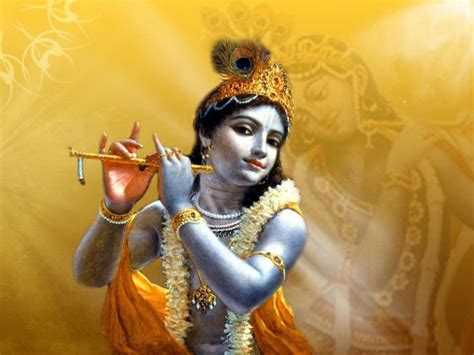

Exploring our Origin, Past Life Memories and the Soul- Three Questions on the Gita

Are you ready? Unraveling the soul’s origin sparks a provocative inquiry into our eternal essence. Souls emanate from Krishna, existing beyond creation, spiraling through lifetimes with desires entangled in material shackles. Memories of past lives lie buried, mostly to shield us from trauma, leaving lingering impressions as we cycle through bodies shaped by our will and divine sanction. Spiritual perfection delivers liberation, culminating in eternal pastimes with Krishna, where desire meets destiny. The journey demands a vigorous pursuit of understanding, action, and devotion—our only ticket home.

Soul in the Human Body

We had a few questions come up in Gita Class that I would have to ask you for the answers.

1.) Where did the soul originate?

Souls are eternal, just like Krishna. They originate as “emanations” or “expansions” from Krishna. There is no moment when they were created. Therefore, they are eternal. Krishna is eternally emanating us. Here is a crude example. Imagine a lit candle with a mirror in front of it. When did the reflection originate? Now in the case of our example, someone placed the candle and the mirror. They lit the candle. All this happened at a certain time. But if you conceive of the inconceivable, when the candle, mirror and flame eternally existent… then the reflection originated in the original flame, and will continue eternally. In our case, we are “separated expansions” unlike say Lord Narasimha, Lord Narayana, etc., who are “nondifferent” expansions. 

Bg. 15.7

ममैवांशो जीवलोके जीवभूत: सनातन: ।
मन:षष्ठानीन्द्रियाणि प्रकृतिस्थानि कर्षति ॥ ७ ॥

mamaivāṁśo jīva-loke
jīva-bhūtaḥ sanātanaḥ
manaḥ-ṣaṣṭhānīndriyāṇi
prakṛti-sthāni karṣati

The living entities in this conditioned world are My eternal fragmental parts. Due to conditioned life, they are struggling very hard with the six senses, which include the mind.

https://vedabase.io/en/library/bg/7/15/

Bg. 2.12

न त्वेवाहं जातु नासं न त्वं नेमे जनाधिपाः ।
न चैव नभविष्यामः सर्वे वयमतः परम् ॥ १२ ॥na tv evāhaṁ jātu nāsaṁ
na tvaṁ neme janādhipāḥ
na caiva na bhaviṣyāmaḥ
sarve vayam ataḥ param

Never was there a time when I did not exist, nor you, nor all these kings; nor in the future shall any of us cease to be.

https://vedabase.io/en/library/bg/2/12/

The philosophy of “achintya bheda abheda tattva”, inconceivable, simultaneous oneness and difference, is very deep. It can take us many, many lifetimes to fully understand it. But I don’t need to directly concern myself with all that. My job is to be a pure devotee acceptable by my spiritual master. He will cause everything to be revealed to me.

2.) How do people remember their past lives?

The spirit soul in the material world is encased in a subtle body. This body consists of the subtle material elements (mind, intelligence, and false ego). Now, this subtle body encasing the soul is suspended in 5 kinds of air. Each air is more subtle than the previous one: prana, apana, udana, vyana, and samana… This package is placed inside the heart of the living entity by the material nature.

eṣo ’ṇur ātmā cetasā veditavyo
yasmin prāṇaḥ pañcadhā saṁviveśa
prāṇaiś cittaṁ sarvam otaṁm prajānāṁ
yasmin viśuddhe vibhavaty eṣa ātmā

“The soul is atomic in size and can be perceived by perfect intelligence. This atomic soul is floating in the five kinds of air [prāṇa, apāna, vyāna, samāna and udāna]. The soul is situated within the heart, and it spreads its influence all over the body of the embodied living entities. When the soul is purified from the contamination of the five kinds of material air, its spiritual influence is exhibited.”

Muṇḍaka Upaniṣad (3.1.9), quoted in https://vedabase.io/en/library/sb/11/3/39/

When someone dies, the spirit soul leaves the gross material body. This body is made of the gross material elements earth, water, fire, air, and space. The soul remains cocooned inside the subtle body. It follows the various paths chalked out by Yamaraja into the next body.

Past life memories are usually buried or erased. This prevents trauma in the next life. For example helps avoid Post-Traumatic Stress Disorder (PTSD) cases. Consider what can happen if someone was a deer in their last lifetime. Suppose they remember when they were devoured alive by a tiger… Now think about this: If we remembered every single traumatic thing we ever experienced? These experiences span millions and billions of lifetimes… This is the mercy of the material nature under the direction of Krishna that we don’t remember past lives.

Young babies and small children are said to remember their past lives for some time. They forget as they grow up. Sometimes, remembrance of past lives is allowed for reasons that I know. One reason is to avoid the same mistakes again. There are also other reasons.

3.) This was about the impressions that people have based on their desires. We understand that people take another body, and they bring their impressions based on their desires with them.  Can a person have a desire to not change into another body, meaning not wanting to come back?  If they manifest it, then will it happen? 

MBD: There is only so much we can control… “karmana daiva netrena jantar deha upapatti”. Our body is given by higher authorities according to what we desire and deserve, not just what we desire.

ŚB 3.31.1

श्रीभगवानुवाच
कर्मणा दैवनेत्रेण जन्तुर्देहोपपत्तये ।
स्त्रिया: प्रविष्ट उदरं पुंसो रेत:कणाश्रय: ॥ १ ॥śrī-bhagavān uvāca
karmaṇā daiva-netreṇa
jantur dehopapattaye
striyāḥ praviṣṭa udaraṁ
puṁso retaḥ-kaṇāśrayaḥ

The Personality of Godhead said: Under the supervision of the Supreme Lord and according to the result of his work, the living entity, the soul, is made to enter into the womb of a woman through the particle of male semen to assume a particular type of body.

https://vedabase.io/en/library/sb/3/31/1/

If we act in purely spiritual ways, then naturally the higher authorities will provide us with a spiritual body.

Bg. 13.22

पुरुष: प्रकृतिस्थो हि भुङ्क्ते प्रकृतिजान्गुणान् ।
कारणं गुणसङ्गोऽस्य सदसद्योनिजन्मसु ॥ २२ ॥

puruṣaḥ prakṛti-stho hi
bhuṅkte prakṛti-jān guṇān
kāraṇaṁ guṇa-saṅgo ’sya
sad-asad-yoni-janmasu

The living entity in material nature thus follows the ways of life, enjoying the three modes of nature. This is due to his association with that material nature. Thus he meets with good and evil among various species.

https://vedabase.io/en/library/bg/13/22/

This spiritual body has no flaws. Once a material body is obtained, no one can prevent its death. This is unless sanctioned by God or someone empowered by God. Not just by wishing or willing can we escape old age, disease, or death. “jatasya hi dhruvo mrtyuh” BG 2.27 One who has taken birth must die. One who has died must take birth again, until spiritual perfection is reached.
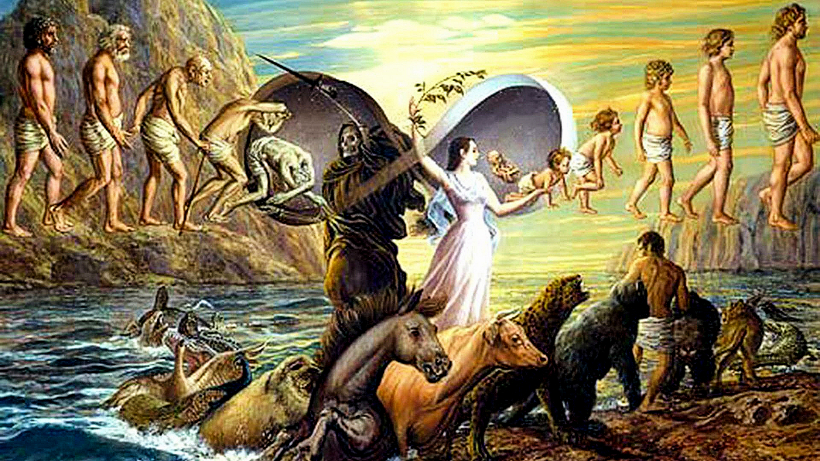
The spirit soul takes on different bodies depending on the consciousness.

Bg. 2.27

जातस्य हि ध्रुवो मृत्युर्ध्रुवं जन्म मृतस्य च ।
तस्मादपरिहार्येऽर्थे न त्वं शोचितुमर्हसि ॥ २७ ॥

jātasya hi dhruvo mṛtyur
dhruvaṁ janma mṛtasya ca
tasmād aparihārye ’rthe
na tvaṁ śocitum arhasi

One who has taken his birth is sure to die, and after death one is sure to take birth again. Therefore, in the unavoidable discharge of your duty, you should not lament.

https://vedabase.io/en/library/bg/2/27/

This is why we bless “may you never take birth again”. If a person does reach spiritual perfection, then for one last lifetime, they will be transferred to a specific Universe. In that Universe, Krishna is performing His pastimes. These can be any of His expansions, depending on the love of the soul for a particular form of Krishna. They are born there and trained there. They reach their eternal competence. When Krishna winds up His pastimes, He takes that soul back to the spiritual world. The soul is in the specific eternal form that it has. This return happens without any birth. Then the soul experiences pastimes with Krishna eternally.

There are innumerable universes, and the Lord is appearing in one of these universes at every moment. Therefore His pastimes are called nitya-līlā, eternal pastimes. The Lord’s appearance as a child in the house of Devakī takes place continuously in one universe after another. Therefore, the devotee is first transferred to that particular universe where the pastimes of the Lord are current. As stated in Bhagavad-gītā, even if a devotee does not complete the course of devotional service, he enjoys the happiness of the heavenly planets, where the most pious people dwell, and then takes birth in the house of a śuci or śrīmān, a pious brāhmaṇa or a wealthy vaiśya (śucīnāṁ śrīmatāṁ gehe yoga-bhraṣṭo ’bhijāyate). Thus a pure devotee, even if unable to execute devotional service completely, is transferred to the upper planetary system, where pious people reside. From there, if his devotional service is complete, such a devotee is transferred to the place where the Lord’s pastimes are going on.

https://vedabase.io/en/library/sb/10/1/23/ purport

My Guru Maharaja has expressed the desire to stay here till all the souls are delivered back! 🙂 We can see what Krishna does with Him. It is possible for Krishna to do anything. For example, He can keep a soul in the spiritual realm. He can also let them serve Him in the material world. Many of our Acharyas could go into the spiritual realm in their meditation. They could bring back tangible objects back to the material realm. Like jewellery, food, flower, perfume, etc. There are many pastimes where Krishna has done it also… Take for example when Krishna married the 16,100 princesses at once… His parents, priest, wives, and other relatives where all at once attending the 16,100 weddings! 🙂 Krishna’s associates live a most adventurous life!

I know these are deep, but they were discussing it was beyond my capacity of understanding

MBD: This kind of churning is required for a person to genuinely understand the philosophy. Then, when they practice sincerely, they will realize the philosophy for themselves. When someone applies themselves wholeheartedly with a combination of knowledge, action, service and humility, then they reach the Supreme Destination. Our job is to send everyone back home, back to Godhead. Back home to Krishna. Hare Krishna!
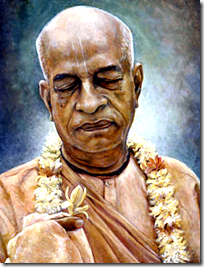
His Divine Grace A. C. Bhaktivedanta Swami Prabhupada.

Madhvacharya’s Genius: A Solution for Managerial issues

Managing in religious organizations is uniquely challenging, with managers often facing burnout from balancing volunteer dynamics, demanding senior leaders, and resource limitations. There are other issues too, leading to dysfunctional management. This can hinder personal and spiritual growth. Implementing a rotational management system, like Madhvacharya’s, can combat burnout and foster healthier organizational environments, allowing managers, the organizaton, and the congregations to thrive.

He who is regulated in his habits of eating, sleeping, recreation and work can mitigate all material pains by practicing the yoga system. BG 6.17

Have you ever met a dysfunctional manager?

Someone who has been managing up, managing down, managing sideways, somehow trying to get things to work but failing? In your temple, church, mosque or synagogue?

A manager can be any one of burned out, corrupt, entitled, or arrogant. It is possible that a manager in a religious organization has lost touch with the purpose of the organization… I discussed that in one of my previous posts. That article talks about whether it is possible for a genuinely spiritual organization to even exist.

Corporate vs. Religious Management

In the corporate world, managers have it relatively easy. After all, when things get sticky, they can choose to leave. They switch jobs or fire people. They can also switch roles. We concluded with the sage words of Srila Prabhupada on how to manage effectively. The essence is that the managers or leaders can’t lose sight of the spiritual goal, the main thing.

Burned out manager

The dysfunctional manager’s dual persona

The confusing part is usually when we meet such a dysfunctional the manager as an individual. They are usually a perfectly nice person. But when we meet the individual in their role as a manager, they can be cold or calculating. They may behave as shrewd, political, or even diabolical. They might seem callous, jealous, or envious. Sometimes, they are angry, sad, frustrated, anxious, or exhibit other negative traits. Most of the time, they may come across as uninspired and uninspiring.

Challenges for Managers in Religious Organizations

Let’s face it. Managers in religious organizations have it tough.

Managing Volunteers
On the one hand, they manage an organization of volunteers. Volunteers can choose to accept what the manager is telling them, or do otherwise. Volunteers are few and far between. Volunteers are hard to fire. Every religious organization needs its volunteers.

Volunteers

Reporting to Senior Leaders
On the other hand, managers in religious organizations often report to senior religious leaders. These leaders can be very demanding and authoritarian. Some of them can be egotists, worse than leaders in the corporate or business world. After all, a person who actually believes he is worthy of his exalted position can be dangerous. This belief is downright perilous.

Resource and Donor Management

There are other constraints. Managing scarce resources is one of them. Keeping donors happy without pandering to their every whim is another difficult job.

Leaders in religious organizations

The Consequences of Burnout
Continuously managing in this way leads to burnout. Managers lose their focus, their vision, and their enthusiasm. They end up acting in petty ways or developing serious issues like abuse of power, corruption, etc. Such managers land their organizations in hot water. Then, they cease to think or act “spiritual” by any stretch of the imagination. The news headlines reveal this all too often, unfortunately.

The Neglect of Personal Well-being
Mainly, the problem is that management stresses leave the managers no time and energy. Managers (often volunteers themselves) can’t take care of their own physical, mental, emotional needs. Most importantly, they can’t invest into their own spiritual needs. All too often, managers in religious organizers manage, manage, manage their way into personal destruction, disrepute, disgrace, and eventually oblivion.

A spiritual leader in poor health

The Difficulty of Finding Qualified Managers

Understandably, it is very hard to find a serious spiritualist who will take up management responsibility in a religious organization. So many individuals with integrity and capability refuse. The task is very challenging. As a result, all too often, someone ends up in the role who is not qualified to manage. This happens out of necessity or just convenience. Someone who happened to be at the right place at the right time. So, unfortunately, it so happens that a dysfunctional manager is often kept in the role for too long. To the detriment of the individual. To the detriment of the organization. And to the detriment of the congregation.

To a sincere but capable soul, accepting management responsibility with no end in sight seems like spiritual suicide.

Not just burnout…

There is a well-known saying that power corrupts, and absolute power corrupts absolutely. This applies to all situations where someone has some power. But it is especially applicable to managerial situations in religious organizations. After all, a manager in a religious organization does have material power. This includes access to money, people, land, and resources. But they also carry the special cachet of being close to God.

To anyone who opposes a dysfunctional manager, that is a double jeopardy… They are dealing with someone who is undoubtedly very powerful. This person is also apparently very close to God!

And of course, all members of religious organizations are instructed to be subservient to authority! See the problem?

When someone has lost the mood of a servant

In all effective organizations, the leadership must keep the mood of being a servant.

Sri Chaitanya Mahaprabhu, God Himself appearing in the form of His own devotee, famously said this:

नाहं विप्रो न च नरपति नापि वैश्यो न शूद्रो
नाहं वर्णी न च गर्हपतिर्नो वनस्थो यतिर्वा |
किन्तुप्रोद्यननिखिलपरमानन्दपुर्णाम्र्ताब्धेर्
गोपीभर्तुः पदकमलयोर्दासदासनुदासः ||

nāhaṁ vipro na ca nara-patir nāpi vaiśyo na śūdro
nāhaṁ varṇī na ca gṛha-patir no vanastho yatir vā
kintu prodyan-nikhila-paramānanda-pūrnāmṛtābdher
gopī-bhartuḥ pada-kamalayor dāsa-dāsānudāsaḥ

“ ‘I am not a brāhmaṇa, I am not a kṣatriya, I am not a vaiśya or a śūdra. Nor am I a brahmacārī, a householder, a vānaprastha or a sannyāsī. I identify Myself only as the servant of the servant of the servant of the lotus feet of Lord Śrī Kṛṣṇa, the maintainer of the gopīs. He is like an ocean of nectar, and He is the cause of universal transcendental bliss. He is always existing with brilliance.’ ” https://vedabase.io/en/library/cc/madhya/13/80/

God Himself is flawless in all respects, in every role. Yet, God’s illusory energy, Maya, she, is a formidable temptress. Maya can convince anyone of that which is not. A manager or a leader can be falsely convinced that they are not a servant.

दैवी ह्येषा गुणमयी मम माया दुरत्यया ।
मामेव ये प्रपद्यन्ते मायामेतां तरन्ति ते ॥ १४ ॥

daivī hy eṣā guṇa-mayī
mama māyā duratyayā
mām eva ye prapadyante
māyām etāṁ taranti te

This divine energy of Mine, consisting of the three modes of material nature, is difficult to overcome. But those who have surrendered unto Me can easily cross beyond it. https://vedabase.io/en/library/bg/7/14/

It is very easy for anyone to fall prey to the illusory material energy. After all, religious organizations are not full of perfected beings, but those who are trying to become spiritually perfect! So, it is practically unfair for a religious organization to leave someone in a position of power for too long.

Madhvacharya’s Management Genius

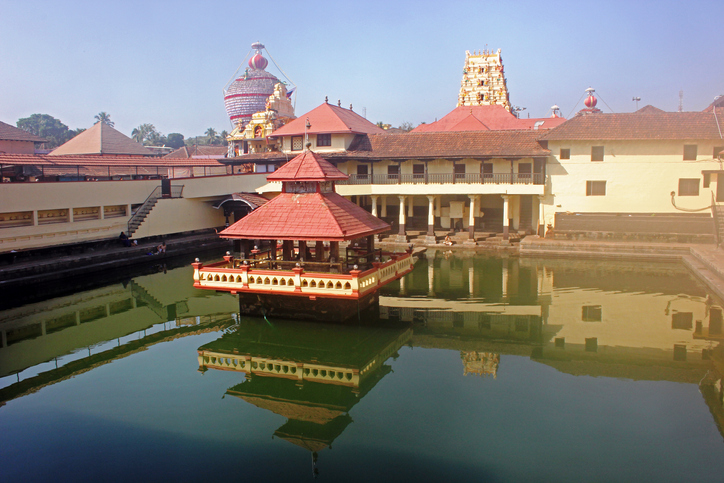
The Udupi Sri Krishna temple

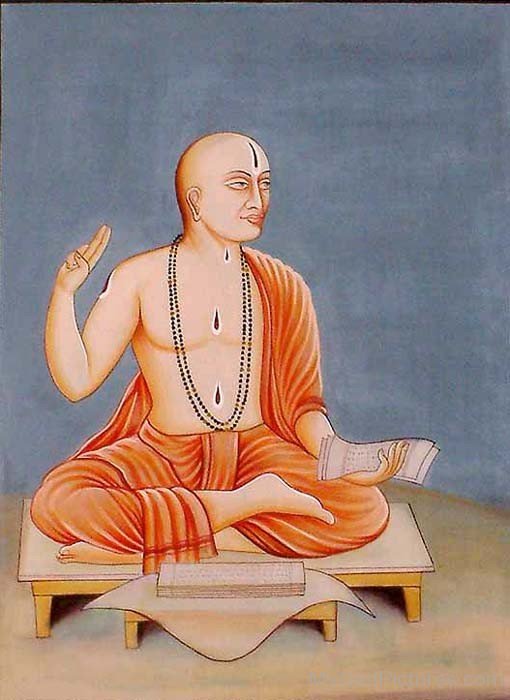
Madhvacharya, an influential 13th Century Guru was a management genius. While his spiritual contributions are unparalleled, there is another amazing contribution. He presented a very intelligent management paradigm that religious organizations should take note of. He recognized all these problems and came up with a master stroke of a management strategy.

Madhvacharya disappeared from our view in the Himalayas at Badarikashram over 700 years ago. He went to associate with his Guru Sri Veda Vyasa. It is said that the spiritual master and disciple are still living there, up in the Himalayas. But the management system he put into place still continues to work in Udupi, at the Sri Krishna Matha.

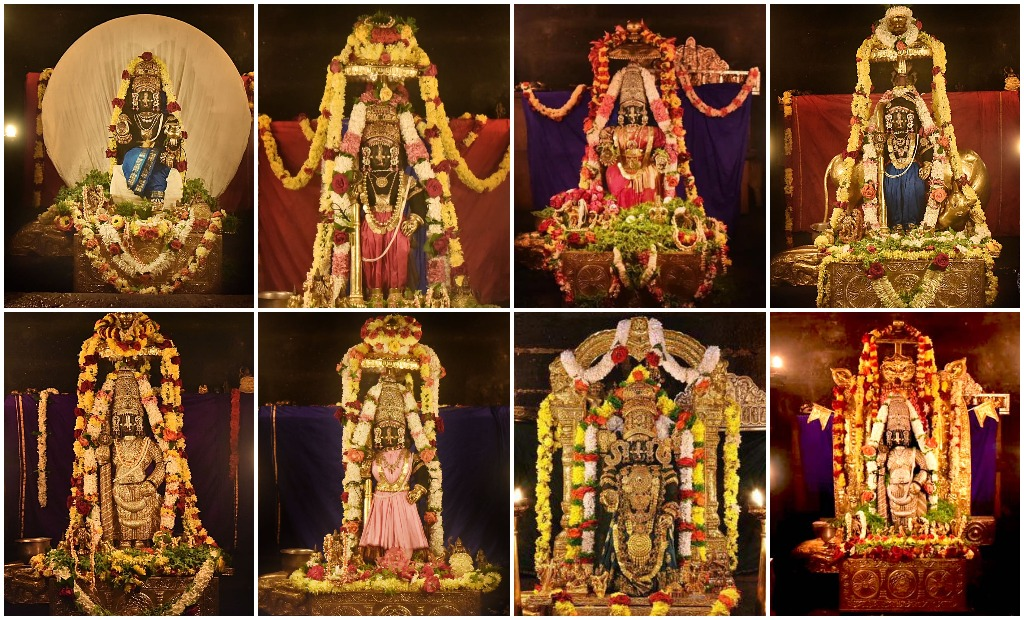
Lord Sri Krishna in Udupi

The Rotating Management System
What is Madhvacharya’s management genius? He built 8 management teams under 8 capable leaders. Not one, not two, but EIGHT! He then put each team in charge of management of the temple for two years, on a permanent rotation basis. So one team takes charge, manages the massive temple for two years, then hands over to the next team… continuously rotating.

Benefits of Rotation
Each team gets 14 years to invest into their own physical, mental, emotional and spiritual wellbeing. Then they sacrifice two years to serve at the temple… and then, before any of the above negative things start happening, they exit the main stage. They are now ready to recover, recoup, and reinvest into their spiritual core. They get a good 14 years to regroup, share reflections, and prepare for their next shot at the management service.

The Impact on Manager Motivation
Put yourself in their shoes. If you get 14 years to prepare for something, how eager and enthusiastic would you be? How hard-working, sincere, and serious would you be if you have just 2 years to actually do it? Many leaders don’t even get one chance to do the service, because after all, death appears to everyone. But if you do get more than one opportunity, we can be sure that the service will be always better.

The Importance of Rotation
There is no burnout, and no time to get involved in any detrimental activities. There is enough time to deeply ponder the purpose and mood and mission of the service. Religious organizations should take note of this. Any organization that does not follow such a rotation policy risks making the headlines for the wrong reasons. Do not keep a manager in a management role for too long. Find others, keep switching it up. Give everyone enough time to take care of their own health, physical, mental, emotional, and above all, spiritual.

Sri Krishna says this in the Bhagavad Gita…

युक्ताहारविहारस्य युक्तचेष्टस्य कर्मसु ।
युक्तस्वप्‍नावबोधस्य योगो भवति दु:खहा ॥ १७ ॥

yuktāhāra-vihārasya
yukta-ceṣṭasya karmasu
yukta-svapnāvabodhasya
yogo bhavati duḥkha-hā

He who is regulated in his habits of eating, sleeping, recreation and work can mitigate all material pains by practicing the yoga system.

https://vedabase.io/en/library/bg/6/17/

If you are a manager in a religious organization yourself, watch out!

You won’t get to your spiritual destination if you don’t take care of your spiritual growth. Managerial growth, or more fame, power, money or influence, is not the same as spiritual growth! Please guard your spiritual life with great attention!

Happy Hare Krishnas

I pray for your success!

Hare Krishna!

The author humbly expresses his gratitude to Sriman Ravindra Shyamsundar Joshi, his elder brother. His valuable feedback on this article addressed a key misunderstanding. It helped clarify that burnout was not the only cause of managerial issues in religious organizations.

Understanding Buddhi Yoga and Jnana-Mishra-Bhakti

If Buddhi means intelligence, and Jnana means knowledge, then to use one’s intelligence, does it means to speculate on the knowledge?

What does Krishna mean by “Buddi Yoga”?

Buddhi-Yoga is not just mundane intelligence! It’s the ultimate key to true devotion and liberation. Mixed with speculative knowledge however, Jnana dilutes pure bhakti, making it a distant dream. Real progress in spiritual pursuits demands a focus on Krishna alone, stripping away distractions, and achieving clarity in devotion. Are you ready to commit to the pursuit of spiritual perfection?

Bhakta Sunil, 26 February 2021

Please accept my humble obeisances
All Glories to Srila Prabhupada

Does Buddhi-Yoga mean utilizing one’s intelligence to serve the Lord?
If yes , is Buddhi Yoga the same as Gyaan-Yoga-Mishrit-Bhakti?

What is the difference between Buddhi-Yoga and Gyaan-Yoga-Mishrit-Bhakti?

your servant,
sunil

Bhakta Sunil, 12 March 2015
Hare Krishna

To rephrase / add to the query : Can a person do Buddhi-Yoga if his bhakti is tinged with mental speculation?

your servant,
sunil

Shridhar Das, 13 March 2015
Hare Krishna Sunil Prabhu,
Please accept my humble obeisances!
All Glories to his Divine Grace Srila Prabhupada!

Your question is clearly answered in BG 10.10:

teṣāṁ satata-yuktānāṁ
bhajatāṁ prīti-pūrvakam
dadāmi buddhi-yogaṁ taṁ
yena mām upayānti te

“Buddhi-yoga itself is action in Kṛṣṇa consciousness; that is the highest intelligence.”
“When one tries to go back home, back to Godhead, and takes fully to Kṛṣṇa consciousness in devotional service, his action is called buddhi-yoga. In other words, buddhi-yoga is the process by which one gets out of the entanglement of this material world.”(From the Purport)

This can be confirmed from BG 10.8 also:

ahaṁ sarvasya prabhavo
mattaḥ sarvaṁ pravartate
iti matvā bhajante māṁ
budhā bhāva-samanvitāḥ

“I am the source of all spiritual and material worlds. Everything emanates from Me. The wise” [budha] “who perfectly know this engage in My devotional service and worship Me with all their hearts.” (BG 10.8)

As per His Divine Grace Srila Prabhupada:

Intelligence means to know how to go back to home, back to Godhead.

Buddhi means intelligence and buddhi yoga is apt for bhakti yoga only because in various other yogas, the spiritualists are taking so much pain by changing their positions, locations, shelters, what not, but failing to realize – Krishna is complete, Krishna is everything and the only shelter.

For the same reason Krishna states – I will give you the “intelligence” by which you can come to me, hence this is real intelligence, real buddhi and hence buddhi yoga is bhakti yoga.

A broader understanding of buddhi yoga – To be able to discriminate whether our acts are on the platform of pure consciousness (pleasing Guru and Krishna) or on the platform of body? This technique of being able to rectify our own act is also buddhi yoga as per His Divine Grace.

Interestingly, this also connects with BG 2.49 and confirms buddhi yoga:

dūreṇa hy avaraṁ karma
buddhi-yogād dhanañ-jaya
buddhau śaranam anviccha
kṛpaṇāḥ phala-hetavaḥ

“O Dhanañjaya, keep all abominable activities far distant by devotional service, and in that consciousness surrender unto the Lord. Those who want to enjoy the fruits of their work are misers.” (BG 2.49)

I personally also relate this with vyavasaya-atmika buddhir (BG 2.41) – resoluteness in Krishna consciousness.

Finally, Srila Prabhupada again specifies Buddhi yoga from BG 10.10:

So what is that buddhi-yoga? Krsna says, tesam satata-yuktanam: “Persons who are twenty-four hours engaged,” satata… Satata means always. Engaged. What kind of engagement? Bhajatam priti-purvakam. This engagement means always trying to render some service to the Lord. How? Priti-purvakam: “with love and faith.” Not that “Oh, I have to do it? All right, let me do.” No. “Oh, I have to do it? Let me do it nicely.”(September 12, 1973, London)

I hope this helps us conclude clearly what Buddhi yoga ultimately means.

Regarding difference between the 2 yogas, Srila Prabhupada states:

All other yoga system, there is little tinge of vasudeva-bhakti, but not cent percent pure. It is mixed. Misra-bhakti. Misra-bhakti will not be immediately fruitful. It will take long, long time. Bahunam janmanam ante jnanavan mam prapadyate [Bg. 7.19]. Everything, there is some bhakti-yoga, but if it is not pure.then it will take very, very, very, very long time, bahunam janmanam. One janma means hundreds of years.

Jnana-misra-bhakti means affinity for scriptural knowledge or tendency towards monistic liberation among sadhakas. Instead of trying to serve, to know and to experience, we are more in the mood of trying to be a pandita without following. We already know pure devotional service is anyabhilasita sunyam jnana-karma-adi anavrtam – free of all desires except the desire to please Krishna.

I also had read Uddhava was among jnana-misra-bhakta, being a disciple of Brihaspati. For the same reason Lord Krishna chose him for Vrindavan so that he may take to pure devotional service while associating with the Vrajavasis, especially the gopis. However, position of Uddhava having Lord’s personal association is not to be considered as a subject of comparison.

Personally sharing, when I was researching the strict differences and understandings between jnana and jnana-misra-bhakti yoga an year ago, which has scholarly been distinguished by Srila Vishvanath Chakravarti Thakur and Srila Bhaktivinoda Thakura, I ultimately concluded – Let me take shelter of that which will help with my current struggle against the dirt in my heart and mind. If Krishna wants, He shall drag me to all these studies in future.

your servant,
Shridhar Das

Bhakta Sunil, 16 March 2015
Hare Krishna Shridhar Prabhu

Please accept my humble obeisances
All Glories to Srila Prabhupada

Prabhu amazing knowledge you shared

my , any doubts on this topic have been dispelled

All Glories to your enthusiastic endeavor

in humble mood,
sunil

Mahabhagavat Das, 17 March 2015
Dear Devotees,

Hare Krishna!

As I was reflecting to find a concise way to describe the difference between Buddhi Yoga (Yoga of Intelligence) and Jnana-Mishra-Bhakti (Devotional Service tinged with the desire to become One with the Supreme), and very much inspired by Shridhar Prabhu’s’ answer, I also came across this wonderful purport by Srila Prabhupada in my regular study, it was very profound, and this is from the purport to SB 7.2.47:

“The living entity is bound by the subtle body, consisting of the mind, intelligence and false ego. At the time of death, therefore, the position of the mind becomes the cause for the next body. As confirmed in Bhagavad-gītā (8.6), yaṁ yaṁ vāpi smaran bhāvaṁ tyajaty ante kalevaram: at the time of death the mind sets the criteria for the spirit soul’s being carried to another type of body. If a living being resists the dictation of the mind and engages the mind in the loving service of the Lord, the mind cannot degrade him. The duty of all human beings, therefore, is to keep the mind always engaged at the lotus feet of the Lord (sa vai manaḥ kṛṣṇa-padāravindayoḥ). When the mind is engaged at the lotus feet of Kṛṣṇa, the intelligence is purified, and then the intelligence gets inspiration from the Supersoul (dadāmi buddhi-yogaṁ tam). Thus the living entity makes progress toward liberation from material bondage.”

What jumped out at me was “If a living being resists the dictation of the mind and engages the mind in the loving service of the Lord, the mind cannot degrade him.”, and then ” When the mind is engaged at the lotus feet of Kṛṣṇa, the intelligence is purified, and then the intelligence gets inspiration from the Supersoul (dadāmi buddhi-yogaṁ tam). Thus the living entity makes progress toward liberation from material bondage.”

In other words, as stated by Srila Prabhupada in the purport to BG 10.10, as referred by Shridhar Prabhu:

“In this verse the word buddhi-yogam is very significant. We may remember that in the Second Chapter the Lord, instructing Arjuna, said that He had spoken to him of many things and that He would instruct him in the way of buddhi-yoga. Now buddhi-yoga is explained. Buddhi-yoga itself is action in Kṛṣṇa consciousness; that is the highest intelligence. Buddhi means intelligence, and yoga means mystic activities or mystic elevation. When one tries to go back home, back to Godhead, and takes fully to Kṛṣṇa consciousness in devotional service, his action is called buddhi-yoga. In other words, buddhi-yoga is the process by which one gets out of the entanglement of this material world. The ultimate goal of progress is Kṛṣṇa. People do not know this; therefore the association of devotees and a bona fide spiritual master are important. One should know that the goal is Kṛṣṇa, and when the goal is assigned, then the path is slowly but progressively traversed, and the ultimate goal is achieved.”

So therefore, I would summarize that Buddhi Yoga means Bhakti Yoga, or pure devotional service, and every other mixup is an unfortunate distraction.

Sincerely,
Mahabhagavat Das

Sudarshan Das, 20 March 2015
Hare Krishna,

I also had been thinking on the question and the following translations by His Divine Grace caught my attention which further supports Mahabhagavat Prabhuji’s mail.

BG 2.44:

bhogaiśvarya-prasaktānāṁ
tayāpahṛta-cetasām
vyavasāyātmikā buddhiḥ
samādhau na vidhīyate

“In the minds of those who are too attached to sense enjoyment and material opulence, and who are bewildered by such things, the resolute determination for devotional service to the Supreme Lord does not take place.”

Here: buddhiḥ — devotional service to the Lord

And then BG 2.50:

buddhi-yukto jahātīha
ubhe sukṛta-duṣkṛte
tasmād yogāya yujyasva
yogaḥ karmasu kauśalam

“A man engaged in devotional service rids himself of both good and bad reactions even in this life. Therefore strive for yoga, which is the art of all work.”

Here: buddhi-yuktaḥ — one who is engaged in devotional service

your servant,
Sudarshan Das

Bhakta Sunil, 21 March 2015
Amazing finds Sudarshan Prabhu

Jaya

All Glories to your sincere endeavour

your insignificant servant,
Bhakta Sunil

Shridhar Das, 21 March 2015
Hare Krishna!

All Glories to Srila Gurudeva and Srimati Gurumataji!

One time I had a good fortune to be near Srila Gurudeva while Srila Gurudeva was singing “Jaya Radhe Jaya Krishna Jaya Vrindavan” while departing from Gokula Vrindavan. Then when “Mahavan” was sung in the bhajan (kalindi jamuna jaya jaya mahavan”), Srila Gurudeva searched for Mahavan in Vedabase and further shared of the 12 forests, 5 situated in East and 7 in the West, separated by Yamuna, Mahavan maybe situated in the East. Then Srila Gurudeva shared few pastimes of Lord Krishna which connected with Mahavan. Then Srila Gurudeva asked me all that I remembered from the first part(which I typed above).

Srila Gurudeva inspired me to refer to Vedabase and research on topics although I had Vedabase 2014 lying on laptop desktop unused for a long time. Now these questions, an amazing one such as yours, are helping me to use Vedabase nicely and conclude as per acharyas. Therefore All Glories to Srila Gurudeva and your (Sunil Prabhu) question which are allowing me to follow my heart, at least begin with it in some way.

Mahabhagavat prabhuji, you have shared the dividing line and the science that takes from mishrit to shuddha bhakti from such a sublime purport from His Divine Grace that would have not sparked a bulb in my mind. Glad to have your association. Additions from Sudarshan Prabhu makes us seem that we had an essence conclusion of what buddhi-yoga is.

your servant,
Shridhar Das

Please subscribe to daily inspirational emails from His Grace Sriman Sankarshan Das Adhikari (Writings and lectures archived at www.ecstaticmedia.com ), written fresh every day from his travels around the world sharing the highest spiritual knowledge with everyone. Sign up now at www.joincourse.com

Ascending vs. Descending Process of knowledge

What is knowledge? What is ignorance? How do we acquire knowledge? Which method actually works? Finding out things the ascending way, or hearing from an authority? How to acquire perfect knowledge beyond all doubt?

Knowledge is a wonderful thing, isn’t it?

Are these people getting anywhere? Are they “progressing”?

With knowledge, comes power. Power to do good, and also power to do evil. Knowledge can be a liberator, but also can be a tool for enforcing bondage.

Also, what qualifies as knowledge anyway? If, for example, a person acquired some knowledge on “how to rob a bank” and applies that knowledge, landing in prison, or even if they escape somehow, was that really knowledge? Or was it ignorance?

There are 2 main types of knowledge:

  1. Knowledge of the material world -material knowledge
  2. Knowledge of what lies beyond this material world through the scriptures – spiritual knowledge – In Sanskrit “परोक्ष” or “parokṣa”

There are many means of acquiring knowledge:

  1. By Direct experience or perception – In sanskrit “प्रत्यक्ष” or “pratyakṣa”
  2. By hypothesis/logic/conjecture/guessing – In sanskrit “अनुमान” or “anumāna”
  3. By hearing from a higher authority – In Sanskrit “शब्द” or “śabda”

Ultimately, there are 2 fundamental processes of acquiring knowledge:

  1. Ascending Process – build up knowledge from building blocks – In Sanskrit “आरोहपन्था” or “ārohapanthā
  2. Descending Process – Knowledge descending directly from God and His messengers – In Sanskrit “अवरोहपन्था” or “avarohapanthā

In an article, with an example of an ant who wanted to map the Universe, I discussed the futility of the ascending process of knowledge, especially about items that are outside of our realm of perception.

Much of what we know exists, is actually too subtle to perceive.

These are the material elements, listed in the Bhagavad Gita:

Gross Material Elements:

  1. Earth
  2. Water
  3. Fire
  4. Air
  5. Ether (Space/Sky)

Subtle Material Elements:

  1. Mind
  2. Intelligence
  3. False Ego

BG भूमिरापोऽनलो वायु: खं मनो बुद्धिरेव च ।
अहङ्कार इतीयं मे भिन्ना प्रकृतिरष्टधा ॥ ४ ॥

bhūmir āpo ’nalo vāyuḥ
khaṁ mano buddhir eva ca
ahaṅkāra itīyaṁ me
bhinnā prakṛtir aṣṭadhā

Earth, water, fire, air, ether, mind, intelligence and false ego – all together these eight constitute My separated material energies.

https://vedabase.io/en/library/bg/7/4/

The Material-Spiritual Disconnect

Earth is the most gross of the material elements, more subtle is water, even more subtle is air, and ether is quite subtle, you can’t touch or feel space, but we can still perceive it. Now, when we get to the mind, that is even more subtle. Intelligence is still more subtle, and the most subtle material element is false ego, our sense of identity.

However, none of the material elements can directly approach that which is non-material, namely the spiritual is outside of the realm of material elements, even subtle.

If we see our material means of acquiring knowledge, the mind, intelligence, and our sense of identity are all material in nature, and therefore, the ascending process of acquiring knowledge cannot possibly extend to the spiritual realm.

There is another main reason why the ascending process of knowledge is flawed… all of us who are “conditioned” to accept a material identity, have 4 defects:

  1. Tendency to be illusioned (In Sanskrit “भ्रम”or “bhrama”) – we often misunderstand facts and are illusioned about things as they are
  2. Tendency to make mistakes (In Sanskrit “प्रमाद” or “pramāda”) – there is no conditioned souls who can say they never make mistakes
  3. Tendency to cheat others (In Sanskrit “विप्रलिप्सा”or “vipralipsā”) – this is a great weakness, to want to appear better than we are, or know something we don’t, etc.
  4.  We possess imperfect senses (In Sanskrit “करण पाटव” or “karaṇa-pāṭava”) – all our senses are quite imperfect, and we miss a lot from our senses

So, with these 4 defects, it is impossible to acquire perfect knowledge using only our senses. Why is that? It is because with an imperfect instrument, you cannot make something that is perfect. No matter how hard we try, our imperfections stand in the way.

The common example is if we’re doing some mathematical calculation or solving an equation… a tiny mistake somewhere along the way can get us a wrong answer.

Let’s say, for example, someone didn’t know who their father was… they can do some detective work, or a DNA test of every man in the world, or they can take the answer from their mother. The mother’s answer is authoritative and a lot easier too.

Reconnecting Material to the Spiritual

The only way to acquire perfect knowledge, then, is through the descending process, “avarohapantha”. In this process, the Supreme Absolute Perfect (generically called God, specifically named Krishna, Allah, Rama, Govinda, Buddha, Jehovah, Yahweh, etc.) conveys the perfect knowledge, and whoever hears this knowledge passes it on without addition or subtraction.

Perfect Knowledge means something that never changes. Compare this to our ascending process of knowledge. Researchers make a career out of making mistakes! First they publish one paper hypothesizing (and sometimes also offering “proof”) one particular thing… the laypeople accept that as the truth, and then a little while later, that or another researcher publishes another paper contradicting the original hypothesis or proof. In this way, the so-called philosophers and scientists bumble about, going from imperfection to imperfection. This is not called knowledge, this is called nescience, or ignorance.

Why is that? Because material knowledge gives the impression of advancement, whereas it actually traps us in bigger and bigger problems, requiring more and ever more complexity. A material “solution” is only another problem in disguise… it is simply creating one problem in place of another. Therefore, material knowledge is not called knowledge, but ignorance. And those who pursue material knowledge excessively are said to be ignorant.

So therefore, spiritual knowledge is worth pursuing, and such knowledge cannot be “discovered/created/invented” by anyone else other than the Supreme Personality of Godhead.

धर्मं तु साक्षाद्भ‍गवत्प्रणीतं
न वै विदुऋर्षयो नापि देवा: ।
न सिद्धमुख्या असुरा मनुष्या:
कुतो नु विद्याधरचारणादय: ॥ १९ ॥

dharmaṁ tu sākṣād bhagavat-praṇītaṁ
na vai vidur ṛṣayo nāpi devāḥ
na siddha-mukhyā asurā manuṣyāḥ
kuto nu vidyādhara-cāraṇādayaḥ

Real religious principles are enacted by the Supreme Personality of Godhead. Although fully situated in the mode of goodness, even the great ṛṣis who occupy the topmost planets cannot ascertain the real religious principles, nor can the demigods or the leaders of Siddhaloka, to say nothing of the asuras, ordinary human beings, Vidyādharas and Cāraṇas.

https://vedabase.io/en/library/sb/6/3/19/

But, one may ask, it’s not like the Supreme Personality of Godhead is directly perceivable to a materially conditioned soul. So what is to be done?

Fortunately, there is a clear way…

स्वयम्भूर्नारद: शम्भु: कुमार: कपिलो मनु: ।
प्रह्लादो जनको भीष्मो बलिर्वैयासकिर्वयम् ॥ २० ॥
द्वादशैते विजानीमो धर्मं भागवतं भटा: ।
गुह्यं विशुद्धं दुर्बोधं यं ज्ञात्वामृतमश्नुते ॥ २१ ॥

svayambhūr nāradaḥ śambhuḥ
kumāraḥ kapilo manuḥ
prahlādo janako bhīṣmo
balir vaiyāsakir vayam

dvādaśaite vijānīmo
dharmaṁ bhāgavataṁ bhaṭāḥ
guhyaṁ viśuddhaṁ durbodhaṁ
yaṁ jñātvāmṛtam aśnute

Lord Brahmā, Bhagavān Nārada, Lord Śiva, the four Kumāras, Lord Kapila [the son of Devahūti], Svāyambhuva Manu, Prahlāda Mahārāja, Janaka Mahārāja, Grandfather Bhīṣma, Bali Mahārāja, Śukadeva Gosvāmī and I myself know the real religious principle. My dear servants, this transcendental religious principle, which is known as bhāgavata-dharma, or surrender unto the Supreme Lord and love for Him, is uncontaminated by the material modes of nature. It is very confidential and difficult for ordinary human beings to understand, but if by chance one fortunately understands it, he is immediately liberated, and thus he returns home, back to Godhead.

https://vedabase.io/en/library/sb/6/3/20-21/

Now, at least some of those personalities have established disciplic successions on this planet.

There are 4 main authorized disciplic successions to receive perfect knowledge in discipic successions. A disciplic succession is known as “Sampradaya” or “That which gives completely”.

A mango, intact, passed down

A useful example is that if a ripe mango is high in a tree, then if the mango is handed from person to person from those who are at various heights pass the mango down from hand to hand, vs. trying to throw the mango down to the ground…

A Sampradaya delivers spiritual knowledge perfectly, without addition or subtraction
  1. Brahma Sampradaya and its branches, especially expounded by the great teacher Madhva, Lord Chaitanya, and their followers.
  2. Rudra Sampradaya and its branches, especially expounded by the great teacher Vishnu Swami and his followers.
  3. Sri Sampradaya and its branches, begun by Lakshmi devi, the Goddess of Fortune, consort of Lord Narayana, and especially expounded by the great teacher Sri Ramanuja and his followers.
  4. Kumara Sampradaya and its branches, especially expounded by the great teacher Sri Nimbarka and his followers.

What about the rest?

To the extent the teachings of others are in line with one of these descending lines of discipic succession, they are valid, and anything outside of these is at best a stepping stone to one of these 4 lines of disciplic succession. In the worst case, it is a materialistic business masquerading as a genuine spiritual tradition.

Those who claim to be part of a certain tradition but add or subtract from the fundamental principles or twist the teachings are called “apasampradayas” or “anti disciplic successions”.

His Grace Sriman Sankarshan Das Adhikari

By the mercy of my parents and then my spiritual master His Grace Sriman Sankarshan Das Adhikari who is a disciple of His Divine Grace A. C. Bhaktivedanta Swami Prabhupada The Founder Acharya of the International Society for Krishna Consciousness, even though personally unworthy, I am connected to one of these lines of disciplic succession, called the Brahma-Madhva-Gaudiya Sampradaya, and seeking to pass on those pure instructions to whoever may want to follow, without adding or subtracting any principle, only, if need be, adjusting details to suit the individual and times.

His Divine Grace A. C. Bhaktivedanta Swami Prabhupada, Founder Acharya of the International Society for Krishna Consciousness (ISKCON)

And what is a principle and what is a detail? That, Srila Prabhupada said, requires some intelligence. I pray for this intelligence, which in my case, I simply ask my spiritual master with a clear description of context.

Ultimately however, knowledge coming from the scriptures and the spiritual master in disciplic succession must be realized in the heart through a process of personal effort (sadhana) and purification. Then the paroksha jnana or scriptural knowledge through scripture, becomes “aparoksha” or that which is beyond the reach of the material senses. In order to experience such knowledge in action, one’s senses must be spiritually awakened, or re-spiritualized.

Krishna, the Supreme Personality of Godhead

Pure devotional service to Krishna is the Ultimate goal of all knowledge, and anything besides this is a waste of time.

Questions? I remain your servant on your spiritual journey! Hare Krishna!

Srila Sriman Swami Goswami – what do they mean?

Raul, 13th April 2013

Hare Krishna!!

All Glories to Srila Prabhupada!!

Quick question:
What’s the difference between:

1. Srila and Sriman?

2. Swami and Goswami

Thank you
Hare Krishna!!

Mahabhagavat Das, 16th April 2013

Dear Raul,

Hare Krishna!

Quick answers to your questions, others may have more detail:

What’s the difference between: 1. Srila and Sriman?

Both are honorific titles used to indicate that the person being referred to has some significant opulence that sets them apart from ordinary persons.

“Srila” practically means “His Divine Grace”, used for exalted personalities – spiritual masters and also for Lord Krishna as in “Srila Govinda devau preshthamaanam smaraami”.

Sriman is used for any respectable personality, especially those serving sincerely.

There is another word “Srimad” in this connection, which can be translated as “most beautiful”

What’s the difference between: 2. Swami and Goswami

Practically no difference. “Swami” means “master”, and “Goswami” means “master of the senses” – if we ask “Swami of what”, it comes to the same thing “master of the senses”. Even though a pure devotee is a master of the senses, only someone who has entered and remained within the renounced order of life, Sannyas, should use the title “Swami” or “Goswami” according to their Sannyas vows.

Sincerely,
Mahabhagavat Das

Bhakta David, 16th April 2013

Please accept my humble obeisances, All glories to Srila Prabhupada, Srila Gurudeva and Srimati Guru Mataji.

This is a wonderful answer. Does this mean it is improper to call someone with the title “Swami” by the title “Goswami?” For example is it offensive to call Bhakti Caru Swami, Bhakti Caru Goswami? They are qualified for Goswami title, so is that improper?

your servant
Bhakta David

Mahabhagavat Das, 16th April 2013

In the case of Srila Bhakti Charu Swami Maharaja, “Swami” is a part of his official Sannyasa name. So for those who know of the glorious qualities of Srila Bhakti Charu Swami Maharaja, it would correct to say that Srila Bhakti Caru Maharaja is an exalted Goswami, but not quite appropriate to change his name! 🙂

Sincerely,
Mahabhagavat Das

Please subscribe to daily inspirational emails from His Grace Sriman Sankarshan Das Adhikari (Writings and lectures archived at sda-archives.com), written fresh every day from his travels around the world sharing the highest spiritual knowledge with everyone. Sign up now at www.backtohome.com.