Exploring our Origin, Past Life Memories and the Soul- Three Questions on the Gita

Are you ready? Unraveling the soul’s origin sparks a provocative inquiry into our eternal essence. Souls emanate from Krishna, existing beyond creation, spiraling through lifetimes with desires entangled in material shackles. Memories of past lives lie buried, mostly to shield us from trauma, leaving lingering impressions as we cycle through bodies shaped by our will and divine sanction. Spiritual perfection delivers liberation, culminating in eternal pastimes with Krishna, where desire meets destiny. The journey demands a vigorous pursuit of understanding, action, and devotion—our only ticket home.

Soul in the Human Body

We had a few questions come up in Gita Class that I would have to ask you for the answers.

1.) Where did the soul originate?

Souls are eternal, just like Krishna. They originate as “emanations” or “expansions” from Krishna. There is no moment when they were created. Therefore, they are eternal. Krishna is eternally emanating us. Here is a crude example. Imagine a lit candle with a mirror in front of it. When did the reflection originate? Now in the case of our example, someone placed the candle and the mirror. They lit the candle. All this happened at a certain time. But if you conceive of the inconceivable, when the candle, mirror and flame eternally existent… then the reflection originated in the original flame, and will continue eternally. In our case, we are “separated expansions” unlike say Lord Narasimha, Lord Narayana, etc., who are “nondifferent” expansions. 

Bg. 15.7

ममैवांशो जीवलोके जीवभूत: सनातन: ।
मन:षष्ठानीन्द्रियाणि प्रकृतिस्थानि कर्षति ॥ ७ ॥

mamaivāṁśo jīva-loke
jīva-bhūtaḥ sanātanaḥ
manaḥ-ṣaṣṭhānīndriyāṇi
prakṛti-sthāni karṣati

The living entities in this conditioned world are My eternal fragmental parts. Due to conditioned life, they are struggling very hard with the six senses, which include the mind.

https://vedabase.io/en/library/bg/7/15/

Bg. 2.12

न त्वेवाहं जातु नासं न त्वं नेमे जनाधिपाः ।
न चैव नभविष्यामः सर्वे वयमतः परम् ॥ १२ ॥na tv evāhaṁ jātu nāsaṁ
na tvaṁ neme janādhipāḥ
na caiva na bhaviṣyāmaḥ
sarve vayam ataḥ param

Never was there a time when I did not exist, nor you, nor all these kings; nor in the future shall any of us cease to be.

https://vedabase.io/en/library/bg/2/12/

The philosophy of “achintya bheda abheda tattva”, inconceivable, simultaneous oneness and difference, is very deep. It can take us many, many lifetimes to fully understand it. But I don’t need to directly concern myself with all that. My job is to be a pure devotee acceptable by my spiritual master. He will cause everything to be revealed to me.

2.) How do people remember their past lives?

The spirit soul in the material world is encased in a subtle body. This body consists of the subtle material elements (mind, intelligence, and false ego). Now, this subtle body encasing the soul is suspended in 5 kinds of air. Each air is more subtle than the previous one: prana, apana, udana, vyana, and samana… This package is placed inside the heart of the living entity by the material nature.

eṣo ’ṇur ātmā cetasā veditavyo
yasmin prāṇaḥ pañcadhā saṁviveśa
prāṇaiś cittaṁ sarvam otaṁm prajānāṁ
yasmin viśuddhe vibhavaty eṣa ātmā

“The soul is atomic in size and can be perceived by perfect intelligence. This atomic soul is floating in the five kinds of air [prāṇa, apāna, vyāna, samāna and udāna]. The soul is situated within the heart, and it spreads its influence all over the body of the embodied living entities. When the soul is purified from the contamination of the five kinds of material air, its spiritual influence is exhibited.”

Muṇḍaka Upaniṣad (3.1.9), quoted in https://vedabase.io/en/library/sb/11/3/39/

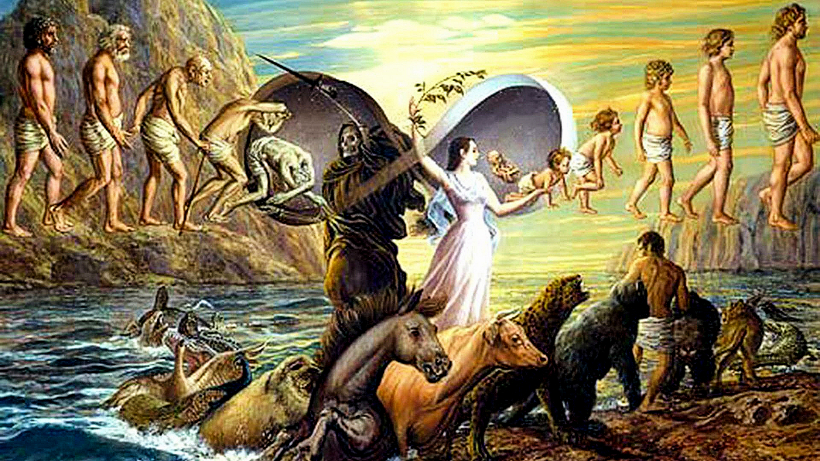
When someone dies, the spirit soul leaves the gross material body. This body is made of the gross material elements earth, water, fire, air, and space. The soul remains cocooned inside the subtle body. It follows the various paths chalked out by Yamaraja into the next body.

Past life memories are usually buried or erased. This prevents trauma in the next life. For example helps avoid Post-Traumatic Stress Disorder (PTSD) cases. Consider what can happen if someone was a deer in their last lifetime. Suppose they remember when they were devoured alive by a tiger… Now think about this: If we remembered every single traumatic thing we ever experienced? These experiences span millions and billions of lifetimes… This is the mercy of the material nature under the direction of Krishna that we don’t remember past lives.

Young babies and small children are said to remember their past lives for some time. They forget as they grow up. Sometimes, remembrance of past lives is allowed for reasons that I know. One reason is to avoid the same mistakes again. There are also other reasons.

3.) This was about the impressions that people have based on their desires. We understand that people take another body, and they bring their impressions based on their desires with them.  Can a person have a desire to not change into another body, meaning not wanting to come back?  If they manifest it, then will it happen? 

MBD: There is only so much we can control… “karmana daiva netrena jantar deha upapatti”. Our body is given by higher authorities according to what we desire and deserve, not just what we desire.

ŚB 3.31.1

श्रीभगवानुवाच
कर्मणा दैवनेत्रेण जन्तुर्देहोपपत्तये ।
स्त्रिया: प्रविष्ट उदरं पुंसो रेत:कणाश्रय: ॥ १ ॥śrī-bhagavān uvāca
karmaṇā daiva-netreṇa
jantur dehopapattaye
striyāḥ praviṣṭa udaraṁ
puṁso retaḥ-kaṇāśrayaḥ

The Personality of Godhead said: Under the supervision of the Supreme Lord and according to the result of his work, the living entity, the soul, is made to enter into the womb of a woman through the particle of male semen to assume a particular type of body.

https://vedabase.io/en/library/sb/3/31/1/

If we act in purely spiritual ways, then naturally the higher authorities will provide us with a spiritual body.

Bg. 13.22

पुरुष: प्रकृतिस्थो हि भुङ्क्ते प्रकृतिजान्गुणान् ।
कारणं गुणसङ्गोऽस्य सदसद्योनिजन्मसु ॥ २२ ॥

puruṣaḥ prakṛti-stho hi
bhuṅkte prakṛti-jān guṇān
kāraṇaṁ guṇa-saṅgo ’sya
sad-asad-yoni-janmasu

The living entity in material nature thus follows the ways of life, enjoying the three modes of nature. This is due to his association with that material nature. Thus he meets with good and evil among various species.

https://vedabase.io/en/library/bg/13/22/

This spiritual body has no flaws. Once a material body is obtained, no one can prevent its death. This is unless sanctioned by God or someone empowered by God. Not just by wishing or willing can we escape old age, disease, or death. “jatasya hi dhruvo mrtyuh” BG 2.27 One who has taken birth must die. One who has died must take birth again, until spiritual perfection is reached.

The spirit soul takes on different bodies depending on the consciousness.

Bg. 2.27

जातस्य हि ध्रुवो मृत्युर्ध्रुवं जन्म मृतस्य च ।
तस्मादपरिहार्येऽर्थे न त्वं शोचितुमर्हसि ॥ २७ ॥

jātasya hi dhruvo mṛtyur
dhruvaṁ janma mṛtasya ca
tasmād aparihārye ’rthe
na tvaṁ śocitum arhasi

One who has taken his birth is sure to die, and after death one is sure to take birth again. Therefore, in the unavoidable discharge of your duty, you should not lament.

https://vedabase.io/en/library/bg/2/27/

This is why we bless “may you never take birth again”. If a person does reach spiritual perfection, then for one last lifetime, they will be transferred to a specific Universe. In that Universe, Krishna is performing His pastimes. These can be any of His expansions, depending on the love of the soul for a particular form of Krishna. They are born there and trained there. They reach their eternal competence. When Krishna winds up His pastimes, He takes that soul back to the spiritual world. The soul is in the specific eternal form that it has. This return happens without any birth. Then the soul experiences pastimes with Krishna eternally.

There are innumerable universes, and the Lord is appearing in one of these universes at every moment. Therefore His pastimes are called nitya-līlā, eternal pastimes. The Lord’s appearance as a child in the house of Devakī takes place continuously in one universe after another. Therefore, the devotee is first transferred to that particular universe where the pastimes of the Lord are current. As stated in Bhagavad-gītā, even if a devotee does not complete the course of devotional service, he enjoys the happiness of the heavenly planets, where the most pious people dwell, and then takes birth in the house of a śuci or śrīmān, a pious brāhmaṇa or a wealthy vaiśya (śucīnāṁ śrīmatāṁ gehe yoga-bhraṣṭo ’bhijāyate). Thus a pure devotee, even if unable to execute devotional service completely, is transferred to the upper planetary system, where pious people reside. From there, if his devotional service is complete, such a devotee is transferred to the place where the Lord’s pastimes are going on.

https://vedabase.io/en/library/sb/10/1/23/ purport

My Guru Maharaja has expressed the desire to stay here till all the souls are delivered back! 🙂 We can see what Krishna does with Him. It is possible for Krishna to do anything. For example, He can keep a soul in the spiritual realm. He can also let them serve Him in the material world. Many of our Acharyas could go into the spiritual realm in their meditation. They could bring back tangible objects back to the material realm. Like jewellery, food, flower, perfume, etc. There are many pastimes where Krishna has done it also… Take for example when Krishna married the 16,100 princesses at once… His parents, priest, wives, and other relatives where all at once attending the 16,100 weddings! 🙂 Krishna’s associates live a most adventurous life!

I know these are deep, but they were discussing it was beyond my capacity of understanding

MBD: This kind of churning is required for a person to genuinely understand the philosophy. Then, when they practice sincerely, they will realize the philosophy for themselves. When someone applies themselves wholeheartedly with a combination of knowledge, action, service and humility, then they reach the Supreme Destination. Our job is to send everyone back home, back to Godhead. Back home to Krishna. Hare Krishna!

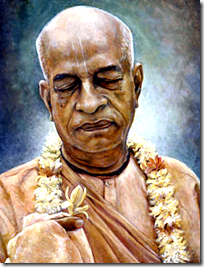
His Divine Grace A. C. Bhaktivedanta Swami Prabhupada.

How does the consciousness of the cook enter the food? And why should we avoid onions?

A thoughtful discussion about the impact of a cook’s consciousness on food, emphasizing the importance of Vedic principles in spiritual practice. They discuss why for tamasic foods like onions should be avoided, and how sincere prayer and love can influence family and promote a cuisine conducive to spiritual growth and devotion.

Shivani Saxena, 5 July 2014

Hare Krishna,

My respected obeisances to You,

Srila gurudev and gurumata,

All glories to Srila Prabhupada.

Our food at home is cooked with onions, and it is prepared by a hired cook.

Prabhu, kindly explain in detail for how the consciousness of the cook reaches to the one who eats it? What can we neophytes do about it because we can not keep convincing people to avoid onion because its tamasic?

Editor’s note: Tamasic means “in the mode of ignorance or darkness”, something that decreases our chance of spiritual success.

Hari bol…

Shivani

Shridhar Das, 8 July 2014

Hare Krsna Mataji!

Please accept my humble obeisances!

All Glories to Srila Gurudeva!

All Glories to Srila Prabhupada!

I will try answering the question to my best:

Our food at home is cooked with onions, and it is prepared by a hired cook.
Prabhu, kindly explain in detail for how the consciousness of the cook reaches to the one who eats it? What can we neophytes do about it because we can not keep convincing people to avoid onion because its tamasic?

Answer. The Vedic science and explanation is a very subtle one. It is difficult to understand without purification. Most institutes do not accept it. They cannot experience it through their imperfect material senses. This inability is also the reason for the degradation of society. This can be another topic for discussion. Practicing Vedic science can confirm its validity. All the practicing souls are clearly concluding this through the results.

Our consciousness is added as an ingredient to the food. This is done by the same fire being used to cook. Exceptions include milk and fruit (Respected senior devotees kindly please confirm the same if correct). The main point is to read and understand BG 3.13.

The devotees of the Lord are released from all kinds of sins because they eat food which is offered first for sacrifice. Others, who prepare food for personal sense enjoyment, verily eat only sin. – Bhagavad Gita 3.13

Even assuming a food is free of someone’s consciousness, if it’s not offered it’s still full of sin. BG 3.13, especially the purport, needs to be carefully read and understood for the same which provides the logic behind it. But surely, subtle nature can’t directly be seen by material vision as so-called modern scientists demand.

Concerning the cook, we can beg to Lord in surrender. This allows us to receive the mercy to honor His remnants (sanctified food, prasadam). These remnants are potent in destroying innumerable sins. They are so potent that they can elevate a soul from a lower species of life. The soul can directly attain a human body. This applies to species like a bird or even lower. This is confirmed by Srila Prabhupada. Considering their other glories, why would Krsna not help the sincere devotees?

Onions are undoubtedly not good for progress in Krsna consciousness. If our family supports our path of bhakti, it can become a strong pillar for our career. It can also support any other duties of life. They will also understand how onion, garlic, mushroom, and meat act as poison to our progress. Krsna has given plenty of vegetables, fruits, milk, and grains. These can yield millions of tasty and nutritious recipes. Why focus so much on onion and garlic? They are full of stink, give foul breath, and are the source of lust. We cannot imagine offering a stink to Krsna. So by becoming convinced we may attempt to share the same with family. How to convince is another art and that is the talent of a preacher. In my case, I stopped taking any food. As a result, my parents were compelled to give up onion and garlic. I asked them to consume these but allow me to prepare my own food. However, there are better ways, as love works far better. Now I am working on the same. Senior devotees please guide on the techniques out of your experiences. 

But prayers have worked for me. Even at my home, my mother was unable to cook due to medical conditions. All cooks who came and went by were meat eaters. I had no other choice but to offer. However, soon, a cook arrived who was Muslim. He rarely consumed meat and chanted the names of Allah before cooking. He recited them 500 times before sleeping. This was the best of a bad bargain. Currently, my mother is cooking as she is fine but again looking for a cook. I question every cook who approaches for cooking at our home “Do you consume meat?”. Then I received instructions from authorities. They said the cook must think that she is cooking for Krsna and be Krsna conscious. So I used to play melodious kirtans to the cook. I would talk about the Lord. Alternatively, I asked the cook to kindly adopt the required mentality. This was the toughest job. I made sincere efforts from my end. Also mataji, please read the following article. It explains why no Onions and Garlic. This will prove helpful in making efforts to avoid them.

I humbly request senior devotees to kindly put more light on this as well as correct my attempt as necessary. 

your servant

Shridhar Das

Please subscribe to daily inspirational emails from His Grace Sriman Sankarshan Das Adhikari (Writings and lectures archived at www.sda-archives.com ), written fresh every day from his travels around the world sharing the highest spiritual knowledge with everyone. Sign up now at www.joincourse.com

Why do we put our hands up when we say “Haribol”?

A devotee inquires about the significance of raising hands during the chant “Hari bol.” Another devotee explains that this gesture represents voluntary surrender, drawing inspiration from Lord Chaitanya. It enhances one’s connection to Krishna, fostering sincerity and devotion. Ultimately, this practice brings individuals closer to their spiritual goals with heartfelt prayer.

Shivani Saxena, 5 July 2014

Hare Krishna,

My respected obeisances to You,

Srila gurudev and gurumata,

All glories to Srila Prabhupada.

If I may inquire: Why do we do hari bol in hands up position, what does it signify?

Hari bol…

Shivani

Shridhar Das, 8 July 2014

Hare Krsna Mataji!

Please accept my humble obeisances!

All Glories to Srila Gurudeva!

All Glories to Srila Prabhupada!

I will try answering the questions to my best:

1.Why do we do Haribol in hands up position, what does it signify?

Answers. One simple explanation for raising our hands when we say Haribol is because that’s what we read from Caitanya Caritamrta. The same applies when we chant Hare Krsna Mahamantra during lectures in unison or while singing arati. We read many times about Lord Chaitanya raising his hands up and blissfully chanting. He encouraged others to follow. We also follow His footsteps to convince Him that we are eager for the same taste, although far away.

What I was explained when I joined was it’s a sign of surrender. We all know what would happen if a criminal pointed a weapon at us. We would quickly raise our hands in surrender. He would force us by shouting “Hands up!” to make sure we obey his orders. Nevertheless, in bhakti the mood is of voluntary surrender. Out of love for the Lord, in surrender one chants Haribol!! Or during arati in the most surrendered mood. This is to convey one’s heartfelt prayers if the meaning of the song is understood. In the MOST surrendered mood, one prays: “Krsna, I am so helpless and such a fallen soul! Please help me surrender unto You!” or in the mood of glorifying Lord or His devotees. Ultimately, raising hands and singing puts the singer in a more surrendered state of mind. The more we surrender, the more Krsna is pleased with our sincerity despite difficulties. This helps us get closer to the ultimate goal.

your servant

Shridhar Das

Please subscribe to daily inspirational emails from His Grace Sriman Sankarshan Das Adhikari (Writings and lectures archived at www.sda-archives.com ), written fresh every day from his travels around the world sharing the highest spiritual knowledge with everyone. Sign up now at www.joincourse.com

Rapid fire questions… selfless service, amanina mana dena in marriage, Krishna Consciousness in a calamity, karma vs. compassion, free will, our anchor…

This article contains a series of questions and answers… it explores the essence of selfless service, emphasizing that true selfless action arises from a pure devotee’s desire to please Krishna, devoid of personal gain. It highlights how harmonious relationships are built on mutual respect. It also discusses how the Internal process of chanting Hare Krishna mbrings peace in challenging times. Understanding the difference between karmic reactions and divine mercy (kripa) allows devotees to perceive their experiences as opportunities for growth. Ultimately, it reinforces the concept of humility and service, reminding individuals of their role as servants of the lowliest servants in devotion to Krishna.

QUESTION 1) We talk a lot about selfless service, but can you pls tell one action devoid of gain in return?


MBD: Selfless service is not possible unless for a pure devotee, who does service for service sake. In all lower states of Bhakti, all service benefits the performer, even if it may benefit others. The higher the stage of the performer’s advancement, the more it benefits others. It benefits the performer less than it benefits others. Take any service. Krishna’s service to the living entities is always selfless. He does not need anything from anyone in return. Same with the spiritual master. He only seeks Krishna’s pleasure.

1.1) Can there be an action without result?


MBD: When you say result, do you mean “karmic” result? All action that is not purely transcendental has karmic reactions… everything in the modes. Devotional service has no karmic results. Still, there are devotional results. These start with the pleasure of Krishna and the purification of the heart of the devotee, etc.

(The question above is from before our discussion today.)

From what I have learned/heard: Anand/ Sukh (Bliss / Pleasure) is the ultimate goal of every action. So if the action is intended for the pleasure of the Lord, it is selfless. But if it is directed towards sense gratification or tries to satisfy sego, then it is selfish action.


MBD: Yes, you have the right understanding.

QUESTION 2) Does the phrase “amanina man dena…” apply in a husband/wife relationship?


MBD: Yes, it applies to all relationships. If 2 souls are perfectly in amanina (not expecting any respect), they experience a state of harmony. When they are in manadena (giving all respect), they are also in perfect harmony with the will of Krishna. They are thus very happy. Easier said than done.

QUESTION 3) In the most unbeatable calamity, what is your internal process in terms of Krishna Consciousness? What is the first thing that comes to your mind?


MBD: I chant Hare Krishna, if I can chant at all. In general, we are in good shape if we can make chanting the Lord’s name a reflex action. This should apply to anything that happens, whether good or bad. We can test how far we have come when something unexpected happens, good or bad.

QUESTION 4) How do we distinguish between the reactions of Karma from Kripa?


MBD: Kripa is undeserved, no one in material consciousness deserves it. For example getting Krishna Prasadam is a great privilege. You may have the karmic credits to be able to eat, digest, etc., but there is no karmic action that can “earn” you Krishna Prasasdam. Whatever our prarabdha is must be experienced without fail. Even pure devotees apparently enjoy or suffer karmic reactions. But Krishna gives them whatever is needed for others’ sake. This is to teach others by personal example. For devotees in the middle, Krishna can use karmic reactions to pat us on the back. He can also kick us in the butt, through maya or yogamaya. All devotional experiences, in general, are purely Kripa.

From what I have learned/heard: If something is happening to me/happened with me, it MUST be my prarabdh karma. But interpreting it as the mercy of the Lord helps. He is “kartum akartum anyatha kartum.” This helps to remain Krishna conscious in the moment. It erases the distinguishing line between karma and kripa.


MBD: That is where the attitude comes in. Whatever happened is by Krishna’s sanction. The devotee will see Krishna’s hand and understand the takeaway. The nondevotee will only try to adjust the situation to “avoid/improve/prevent/etc.” You are on the right track.

QUESTION 5) Do we really have freewill? (If Lord is the enjoyer/doer of all actions, and we are but a medium) So whatever “we think” has been done by us has actually been done by Him, no?


MBD: Knowing what you will do, and forcing you to do it are two different things. It’s like a parent. The parent knows what the child will do in a given situation. Nonetheless, they leave the child free in a limited way. This freedom allows the child to learn. In the material sense, Krishna is a non-doer. The 3 modes of material nature are set in motion by Krishna. They are the doer. In the devotional sense, Krishna does not know how exactly the devotee is going to serve Him. When Radharani cooks something, Krishna knows it will be amazing, but does not know what exactly it will be. He can know it if He wants, but Yogamaya overpowers His knowability. It is like Krishna’s Sarvajnata (all-knowing nature) and mugdhata (innocence) exist together. This would be a contradiction normally, but all contradictions converge and are resolved in Krishna.

QUESTION 6) What is that ONE anchor point to be aware of every time?


MBD: I am a servant of the servant of the servant. I serve at least as far as the extent of the current disciplic succession of Krishna. But I am a servant of all devotees, past, present, and future.

Krishna’s Message on Spiritual Equality in Devotion

Does birth matter in the eyes of God? What does it mean to be lowborn? Are women lowborn? Are merchants lowborn? Are workers lowborn? And if someone does happen to be “lowborn”, are they rejected by God?
In the Bhagavad Gita, Krishna emphasizes that all individuals, regardless of social standing or gender, have the potential for spiritual elevation through devotional service. True worth is defined by one’s internal consciousness, not external circumstances. By taking shelter in Krishna, everyone can attain the supreme destination, fostering hope for all.

Question:

B.G 9.32 says women are considered as low born. I answered this but somehow I am not satisfied with my answer. Please guide me on this.

Answer:

You are referring to the this verse from the Bhagavad Gita…

Bg. 9.32

मां हि पार्थ व्यपाश्रित्य येऽपि स्यु: पापयोनय: ।
स्त्रियो वैश्यास्तथा श‍ूद्रास्तेऽपि यान्ति परां गतिम् ॥ ३२ ॥

māṁ hi pārtha vyapāśritya
ye ’pi syuḥ pāpa-yonayaḥ
striyo vaiśyās tathā śūdrās
te ’pi yānti parāṁ gatim

Synonyms

mām — of Me; hi — certainly; pārtha — O son of Pṛthā; vyapāśritya — particularly taking shelter; ye — those who; api — also; syuḥ — are; pāpa-yonayaḥ — born of a lower family; striyaḥ — women; vaiśyāḥ — mercantile people; tathā — also; śūdrāḥ — lower-class men; te api — even they; yānti — go; parām — to the supreme; gatim — destination.

Translation

O son of Pṛthā, those who take shelter in Me, though they be of lower birth – women, vaiśyas [merchants] and śūdras [workers] – can attain the supreme destination.

https://vedabase.io/en/library/bg/9/32/

In this verse above, Krishna is covering over 90% of the human population, including men! So should we all take offense that Krishna is saying this?

Srila Prabhupada writes this in his purport:

It is clearly declared here by the Supreme Lord that in devotional service there is no distinction between the lower and higher classes of people. In the material conception of life there are such divisions, but for a person engaged in transcendental devotional service to the Lord there are not. Everyone is eligible for the supreme destination. In the Śrīmad-Bhāgavatam (2.4.18) it is stated that even the lowest, who are called caṇḍālas (dog-eaters), can be purified by association with a pure devotee. Therefore devotional service and the guidance of a pure devotee are so strong that there is no discrimination between the lower and higher classes of men; anyone can take to it. The most simple man taking shelter of the pure devotee can be purified by proper guidance. According to the different modes of material nature, men are classified in the mode of goodness (brāhmaṇas), the mode of passion (kṣatriyas, or administrators), the mixed modes of passion and ignorance (vaiśyas, or merchants), and the mode of ignorance (śūdras, or workers). Those lower than them are called caṇḍālas, and they are born in sinful families. Generally, the association of those born in sinful families is not accepted by the higher classes. But the process of devotional service is so strong that the pure devotee of the Supreme Lord can enable people of all the lower classes to attain the highest perfection of life. This is possible only when one takes shelter of Kṛṣṇa. As indicated here by the word vyapāśritya, one has to take shelter completely of Kṛṣṇa. Then one can become much greater than great jñānīs and yogīs.

https://vedabase.io/en/library/bg/9/32/

Spiritually speaking, Krishna describes all living entities as “Prakriti.” As spirit souls, we’re higher than material elements.

Earth, water, fire, air, ether, mind, intelligence and false ego – all together these eight constitute My separated material energies.

https://vedabase.io/en/library/bg/7/4/

Besides these, O mighty-armed Arjuna, there is another, superior energy of Mine, which comprises the living entities who are exploiting the resources of this material, inferior nature.

https://vedabase.io/en/library/bg/7/5/

“Energy” indicates that the energy belongs to the “energetic”. For example, the sunshine is an energy of the sun. A living entity’s core nature is as a part-and-parcel of God. The living entities are “energies” of God. This is true whether someone is in a male body or a female body. The energetic is called “male” and the energy is called “female”. The “minute energy” is not the Supreme Energetic, God. Then, the only true “male” is God Himself, or Krishna, because other than God everyone is an energy.

In the same verse, Vaishyas and Shudras are also considered to be lowborn, and that includes men also. Why are Vaishyas included here? Vaishya means business person. If a business person cares only about money, and not about spiritual advancement, then are they not lowborn? A Shudra is a person who cannot do anything independently. A Shudra laments unnecessarily over inconsequential things. A Shudra lacks higher training. When a Shudra is not interested in spiritual advancement, then are they not lowborn?

A person who considers themselves a woman is definitely lowborn. A woman who they are a spirit soul in the body of a woman is elevated. The same thing applies to men also… For example a person who works for a salary is a Shudra, a worker. This is not dependent on their birth. Socially speaking, they are employed, so they are Shudra. A person who works in abominable professions is worse than a Shudra. If such a person uses their time and money to advance in Krishna Consciousness, they are ONLY externally a Shudra. Internally they are advancing spiritually. Thus, they are a Vaishnava. The internal consciousness of a person trumps the externals.

But the focus of the verse is not that someone is lowborn or highborn etc. It does not matter who or what someone is externally. Anyone can be elevated to the highest platform by devotional service to Krishna. We should not lose focus of what Krishna is saying and focus tangentially extracting some obscure meaning.

I leave you with this paraphrased quote of Krishna. Please try to understand it in the proper context

Those who take shelter in Me … Reach the supreme destination. – Lord Krishna

Is Srila Prabhupada insulting Lord Shiva?

Srila Prabhupada, a great teacher, wrote prolifically. Even though his works are lucid and clear, there are many misunderstandings about his writings. One is that he insulted Lord Shiva. Is this true?

Question:

A devotee who has been with ISKCON for 7 years has asked this question… he says he does not agree with Srila Prabhupada’s purport to BG 2.62.

Lord Śiva was deep in meditation, but when Pārvatī agitated him for sense pleasure, he agreed to the proposal, and as a result Kārtikeya was born.

https://vedabase.io/en/library/bg/2/62/

He says that this is not the real story also he doesn’t agree that Lord Shiva can be agitated.

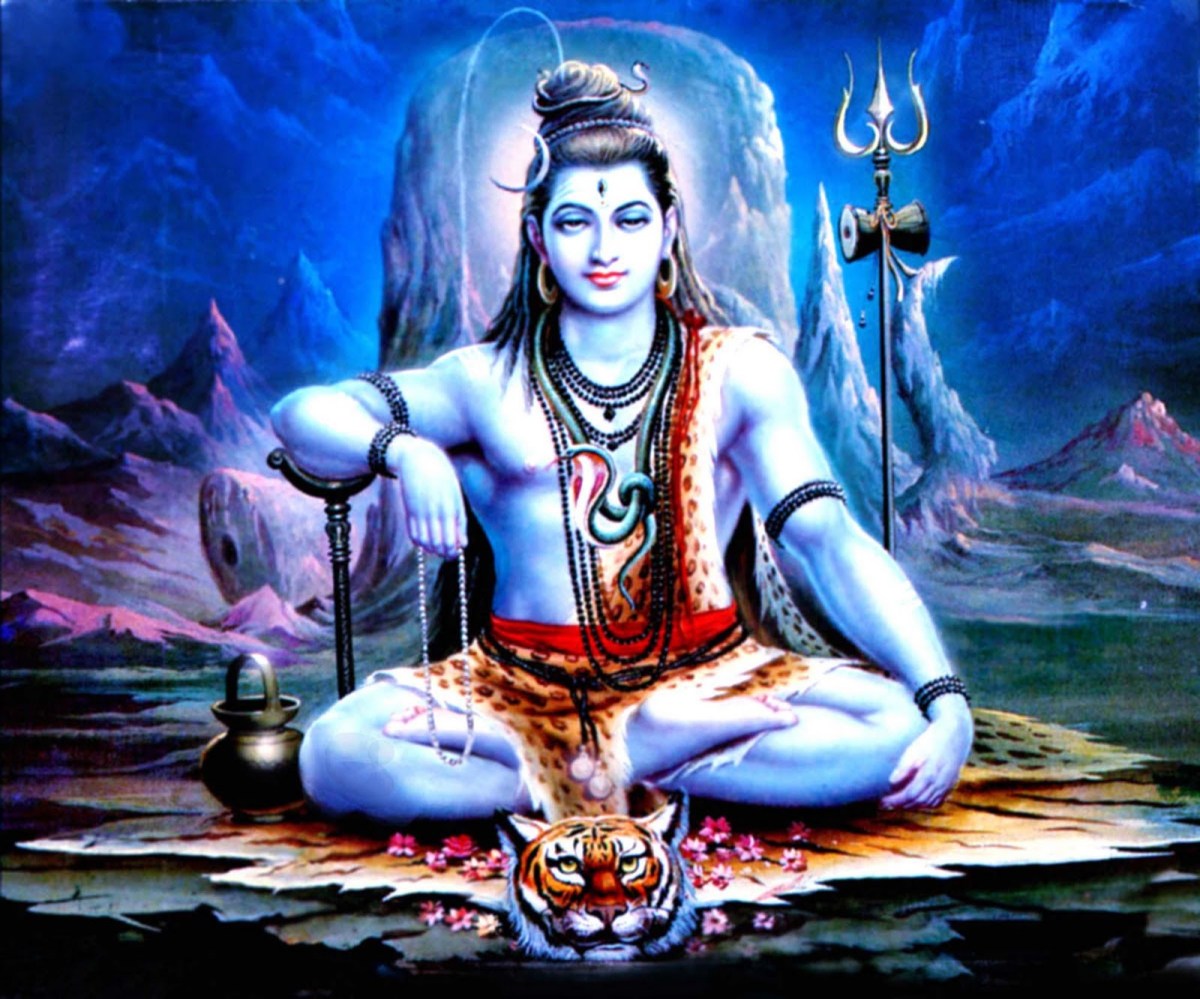
Lord Shiva, Parvati Devi, and their children Kartikeya and Ganesha

Answer:

Thank you for writing to me about this. It is an important thing.

First and foremost we have to understand who is Srila Prabhupada. Srila Prabhupada is a pure devotee. As a pure devotee, Srila Prabhupada has no envy in his heart. Srila Prabhupada has no desire to criticize someone unnecessarily. He also has no tendency to try and pull someone down. In fact, Srila Prabhupada is on the Uttama Adhikari platform. As an Uttama Adhikari, he feels that everyone else is serving Krishna except himself. But Srila Prabhupada came down to the Madhyama Adhikari platform. On this platform, he suppressed his ecstatic emotions and took the role of a teacher of Krishna Consciousness. Thus he preached to us poor lost souls in the material world. Srila Prabhupada undertook an austerity for us. Just like Lord Shiva drank up the ocean of poison, Srila Prabhupada tolerated the poisonous nature of this material world. His sacrifice saves us all.

Great personalities accept voluntary suffering for the benefit of others

“tapyante loka taapena”, this is a verse from the Bhagavatam glorifying personalities like Lord Shiva and Srila Prabhupada.

तप्यन्ते लोकतापेन साधव: प्रायशो जना: ।
परमाराधनं तद्धि पुरुषस्याखिलात्मन: ॥ ४४ ॥

tapyante loka-tāpena
sādhavaḥ prāyaśo janāḥ
paramārādhanaṁ tad dhi
puruṣasyākhilātmanaḥ

It is said that great personalities almost always accept voluntary suffering because of the suffering of people in general. This is considered the highest method of worshiping the Supreme Personality of Godhead, who is present in everyone’s heart.

https://vedabase.io/en/library/sb/8/7/44/

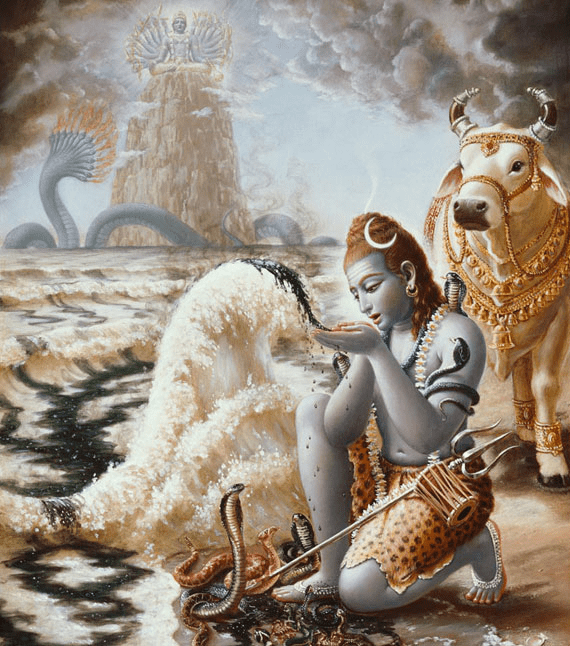
Lord Shiva drinks up an ocean of deadly poison and keeps it suspended in his throat

On the Madhyama Adhikari platform…

A devotee behaves differently with different kinds of personalities. A Madhyama Adhikari is a teacher/preacher… and his mission is to guide souls to spiritual perfection.

  1. To Supreme Personality of Godhead or His plenary expansions, he offers prayers
  2. To the devotees of Krishna, he makes friendship
  3. To the innocent, he preaches Krishna Consciousness
  4. Those envious of Krishna, he avoids

ईश्वरे तदधीनेषु बालिशेषु द्विषत्सु च ।
प्रेममैत्रीकृपोपेक्षा य: करोति स मध्यम: ॥ ४६ ॥

īśvare tad-adhīneṣu
bāliśeṣu dviṣatsu ca
prema-maitrī-kṛpopekṣā
yaḥ karoti sa madhyamaḥ

An intermediate or second-class devotee, called madhyama-adhikārī, offers his love to the Supreme Personality of Godhead, is a sincere friend to all the devotees of the Lord, shows mercy to ignorant people who are innocent and disregards those who are envious of the Supreme Personality of Godhead.

https://vedabase.io/en/library/sb/11/2/46/

Srila Prabhupada, the great Vaishnava Acharya

Now, let us examine who is Lord Shiva.

Lord Shiva is the Topmost Vaishnava, “vaishnavaanaam yathaa shambhu” as stated in the Bhagavatam.

निम्नगानां यथा गङ्गा देवानामच्युतो यथा ।
वैष्णवानां यथा शम्भु: पुराणानामिदं तथा ॥ १६ ॥

nimna-gānāṁ yathā gaṅgā
devānām acyuto yathā
vaiṣṇavānāṁ yathā śambhuḥ
purāṇānām idam tathā

Just as the Gaṅgā is the greatest of all rivers, Lord Acyuta the supreme among deities and Lord Śambhu [Śiva] the greatest of Vaiṣṇavas, so Śrīmad-Bhāgavatam is the greatest of all Purāṇas.

https://vedabase.io/en/library/sb/12/13/16/

In the Brahma Samhita (kshiram yatha dadhi vikaaram) it is stated that Lord Vishnu transforms as Lord Shiva when Lord Vishnu is “in touch” with material energy. This is just like how milk turns to curds when touched with tamarind. In other words, Lord Vishnu and Lord Shiva have no difference of opinion. Krishna desires everyone to be His pure devotee. Similarly, Lord Shiva desires everyone to be Krishna’s pure devotee.

क्षीरं यथा दधि विकारविशेषयोगात्
सञ्जायते न हि ततः पृथगस्ति हेतोः ।
यः शम्भुतामपि तथा समुपैति कार्या-
-द्गोविन्दमादिपुरुषं तमहं भजामि ॥ ४५ ॥

kṣīraṁ yathā dadhi vikāra-viśeṣa-yogāt
sañjāyate na hi tataḥ pṛthag asti hetoḥ
yaḥ śambhutām api tathā samupaiti kāryād
govindam ādi-puruṣaṁ tam ahaṁ bhajāmi

Just as milk is transformed into curd by the action of acids, but yet the effect curd is neither same as, nor different from, its cause, viz., milk, so I adore the primeval Lord Govinda of whom the state of Śambhu is a transformation for the performance of the work of destruction.

https://vedabase.io/en/library/bs/5/45/

In fact, without the mercy of Lord Shiva, no one can become a Vaishnava. Lord Shiva and Parvati Devi are regarded as the father and mother of the material world. As you know, father and mother are the first teachers of every child.

As such, Lord Shiva is beyond all criticism. And as Lord Shiva is a pure devotee, Srila Prabhupada would never criticize Lord Shiva.

Srila Prabhupada is stating the fact.

Lord Kartikeya was born of Shiva and Parvati’s union. Lord Brahma, who is Lord Vishnu’s son is born directly from Himself without the help or assistance of Lakshmi Devi.

In the Valmiki Ramayana, Kartikeya is mentioned as the son of Rudra and Parvati. Agni and Ganga Devi aided in his birth. We accept Valmiki Muni as an utmost authority.

Valmiki, the author of the Original Ramayana

In the Mahabharata, Kartikeya is mentioned as the son of Shiva and Parvati. He emerged as a result of Lord Shiva’s sexual union with Parvati Devi. The details I will not mention here. Ganga Devi cultivated the seed of Lord Shiva. Agni Deva, the demigod in charge of fire, kept it warm.

Now, there is a third story, from the Shiva Purana… Lord Shiva was meditating. Parvati Devi was trying to attract him. Kamadeva tried to help but was burned to ashes by the wrath of Lord Shiva. Lord Shiva, being merciful, then paid attention to Parvati Devi. He married her, and Kartikeya was conceived.

There is additionally a Tamil version of the Skanda Purana in which another story is presented. I read that story in the Amar Chitra Katha comics as a child. Only later I learned where the story came from. The demigods prayed to Lord Shiva and pleased Him. As a result, Lord Shiva manifested 5 additional heads. From each head came one spark. Vayu Deva, the demigod in charge of the wind, carried these sparks and handed them to Agni Deva. Agni Deva then carried the sparks to Ganga Devi, who took them to Saravana lake. There, 6 boys were born. The 6 boys were merged into one by Krittika Devi. This marked the appearance of Kartikeya. He then defeated the demons Surapadma and Simhamukha. These demons surrendered to Kartikeya and became his assistant associates.

Valmiki Ramayana is the Absolute Truth. Mahabharata is also composed by Veda Vyasa. Therefore, we have 2 authoritative references to support Srila Prabhupada’s statement about Lord Shiva in BG 2.62.

Srila Prabhupada is a highly empowered Vaishnava Acharya who has presented Krishna Consciousness in the Brahma Madhva Gaudiya Sampradaya. Why should anyone accept an objection raised by an uncontrolled mind? Instead, whenever we hear the instruction of the Acharya, we should strive to understand how it is true. It’s not about whether it is true or not, but how it is true. This is called surrender. It may take time. It took me many years to surrender to my Guru Maharaja, but eventually I did. Whenever I had any doubts about Srila Prabhupada’s words, my spiritual masters helped me. They guided me with proper understanding to overcome that doubt.

To “disagree” with an Acharya, is simply immaturity.

Sometimes Acharyas disagree with each other. This is alright if they are of an equal stature. In that case, the rest of us must try to understand how they are right, all of them! Spiritual reality is truly wonderful. It is not one dimensional.

Puranic stories sometimes differ because they describe one kalpa (a day of Brahma) or another. On different days of Lord Brahma, there can be variations in some details.

Lord Shiva’s agitation by Parvati is not an insult to Lord Shiva.

Instead, it glorifies his great devotion to Sri Krishna. By personal example, Lord Shiva is showing how great Lord Krishna is. Lord Krishna remained without agitation even when surrounded by 3 Billion beautiful young gopis. The gopis were ready to do anything for Krishna. Krishna is an eternal Brahmachari, and the proof of this statement is Sri Bhishmadeva who has stated this personally!

Does this help?

Glossary – Personalities & Concepts mentioned in the article:

  • Acharya – A teacher in one of 4 authorized disciplic successions from God, who teaches by personal example
  • Agni Deva – The demigod in charge of fire
  • Bhagavatam – The topmost spiritual scripture, available online at https://vedabase.io/en/library/sb/
  • Bhishmadeva – Among the 12 greatest spiritual authorities of our universe, played a pivotal role in the Mahabharata, sometimes referred to as “grandsire” or “grandfather”
  • Brahma – The creator of this universe, son of Lord Vishnu
  • Brahma Samhita – The composition of Lord Brahma is a 100-chapter book. Only Chapter 5 is available. It can be found online at https://vedabase.io/en/library/bs
  • Deva – “Demigod”, also used as an honorific for divine personalities
  • Ganga – The most sacred river in our Universe, a liquid form of God
  • Gopis – The topmost saints, devotees of Krishna
  • Guru – Spiritual Master, also “heavy”
  • Kalpa – A day of Brahma, 4.32 Billion Years long
  • Kama – Literally “lust”, used to refer to the demigod in charge of love
  • Kartikeya – Son of Shiva and Parvati, the military commander of the demigods
  • Krishna – The Supreme Personality of Godhead, source of both spiritual and material realms, the One and Only appearing Himself in different forms and with different names
  • Krittika Devi – a demigoddess
  • Madhva Gaudiya Sampradaya – A current unbroken line of disciplic succession from God Himself, included below for reference
  • Madhyama Adhikari – defined above
  • Maharaja – King among men, used to refer to royalty and to renounced or exalted souls
  • Parvati – The consort of Lord Shiva, expanded as the material energy
  • Purana – Authorized history of the Universe, there are 18 such histories, 6 meant for those in the mode of goodness, 6 for those in the mode of passion, and 6 meant for those in the mode of passion
  • Ramayana – The pastimes of Lord Rama, the Personality of Godhead
  • Rudra – A son of Lord Brahma, born of his anger from his forehead
  • Simhamukha & Surapadma – Former demons who accepted the shelter of Kartikeya and became his assistants
  • Shiva – The auspicious one, also referred to as Rudra
  • Shiva Purana – The scripture describing the pastimes of Lord Shiva, meant for the benefit of those situated in the mode of ignorance
  • Sri – Opulence, refers to the Goddess of Fortune, or someone blessed with some extraordinary opulence
  • Uttama Adhikari – defined above
  • Valmiki – The author of the original Ramayana, disciple of Narada
  • Vayu Deva – The demigod in charge of the air and wind
  • Vishnu – An expansion of Krishna
  • Vyasa – The compiler of Vedic literature

The Brahma Madhva Gaudiya Sampradaya:

1. Kṛṣṇa
2. Brahmā
3. Nārada
4. Vyāsa
5. Madhva
6. Padmanābha
7. Nṛhari
8. Mādhava
9. Akṣobhya
10. Jaya Tīrtha
11. Jñānasindhu
12. Dayānidhi
13. Vidyānidhi
14. Rājendra
15. Jayadharma
16. Puruṣottama
17. Brahmaṇya Tīrtha
18. Vyāsa Tīrtha
19. Lakṣmīpati
20. Mādhavendra Purī
21. Īśvara Purī, (Nityānanda, Advaita)
22. Lord Caitanya
23. Rūpa, (Svarūpa, Sanātana)
24. Raghunātha, Jīva
25. Kṛṣṇadāsa
26. Narottama
27. Viśvanātha
28. (Baladeva), Jagannātha
29. Bhaktivinoda
30. Gaurakiśora
31. Bhaktisiddhānta Sarasvatī
32. A. C. Bhaktivedanta Swami Prabhupāda

The Author’s spiritual master, His Grace Sriman Sankarshan Das Adhikari, is a disciple of His Divine Grace A. C. Bhaktivedanta Swami Prabhupada.

Understanding the Struggle with Material Desires

If you’re trapped in a cycle of self-sabotage, fully aware of your weaknesses, fully aware of what needs to be done, yet indulging in meaningless distractions. The remedy? Consistent dedication to Krishna through disciplined practice. Just like a sick person must stick to their medicine, embrace the struggle. Transformation may not be instantaneous, but it’s inevitable for those who truly commit.

Question

Hare Krsna Prabhu I have a question. I know what is good for me, what is right and wrong and the ISKCON philosophy. But i give in to my sense gratification. Instead of reading the Gita I read other novels for entertainment or be on my phone. Not able to put my 100% free time into reading Prabhupada’s books. Why is this. I find more ruci (taste) in mundane material temporary things even though i know the truth. How can I change my self. I am not able to control my mind. Its very much spiritual suicide my actions.

Answer

Hare Krishna!

Congratulations! Do you know that if you know the problem then that is half the solution? It is also like “well begun is half done”.

Most people don’t even know the problem. But you do! That is very fortunate!

Thank you for your nice question. The answer will benefit many more also. Of course, your identity will never be disclosed whenever you ask a question, especially if the question is sensitive…

All of us who are in the material realm in material consciousness have one thing in common. Those in the spiritual realm, or in spiritual consciousness do not have this problem.

We have tried for a very long time to forget Krishna, the Supreme Personality of Godhead. So, over these millions of lifetimes, we have developed our false sense of identity… that we are this mind or body that covers us. So, we feel that satisfying the mind or satisfying the senses will actually give us pleasure.

If this were true, then all of us in the material world would be extremely ecstatic… After all, so many of us of us are able to fulfill so many of our material desires on a daily basis!

Srila Rupa Goswami, in the Nectar of Instruction, compares our condition to that of a jaundiced person… I had jaundice once, everything sweet tasted bitter. When I was feeling unwell recently, even the sweetest of drinking water tasted bitter! But in a healthy condition of life, we know that water is not bitter. We also know that sweet things are not bitter. When the illness subsides, then we begin to taste everything as it is.

Similarly, Srila Rupa Goswami Prabhupada advises us…

The holy name, character, pastimes and activities of Kṛṣṇa are all transcendentally sweet like sugar candy. Although the tongue of one afflicted by the jaundice of avidyā [ignorance] cannot taste anything sweet, it is wonderful that simply by carefully chanting these sweet names every day, a natural relish awakens within his tongue, and his disease is gradually destroyed at the root. – https://vedabase.io/en/library/noi/7/

Please read that verse, translation, and purport before you continue further… Please read the verse and purport. The following will make sense only if you have done this now 🙂

So, now what is to be done?

Just as a sick person needs to take their medicine and follow a strict diet, we need to carefully follow the rules of Sadhana Bhakti.

  • Daily chant a minimum of 16 rounds attentively or as best as possible
  • Follow the regulative principles carefully
  • Read Srila Prabhupada’s books prayerfully
  • Sing the songs of the Vaishnava Acharyas regularly
  • Memorize chant the verses of the Bhagavad Gita and Srimad Bhagavatam as much as possible
  • Serve Krishna and His devotees as much as possible

On a practical level, “where attention goes, energy flows”… so when we pay attention to Krishna, then our energy also flows to Krishna. When we pay attention to Maya’s toys, then our attention also goes there.

The weight of our spiritual practices sinks into our consciousness… if I am less conditioned, then it happens very quickly… like those disciples of Srila Prabhupada who started chanting 16 rounds from one day to the next… or who surrendered immediately… but if I am more heavily conditioned, then it may take some time.

But rest assured, like millions of souls have attested and continue to profess, the process of Bhakti Yoga works unfailingly on everyone who sincerely tries. It is a scientific process, which means that when the process is followed without deviation, the result is sure. Srila Prabhupada says “Success is certain for the rigid practitioner.”

So, my request to you is not to get discouraged… sincerely try, just as a child learning to walk does not give up trying to walk.

How can Krishna and Allah be the Same Person?

How can Krishna and Allah be the same person, when so many Muslims see the followers of Krishna as “kafirs” or non-believers worthy of being put to death?

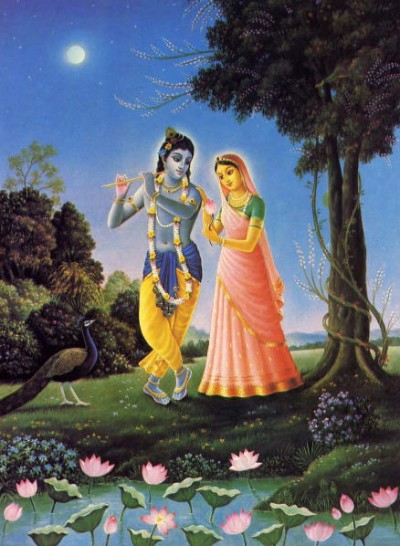
Sri Krishna with Srimati Radha
Allah, the primary name of God from the Quran, written in Arabic script

Question

Hare krishna prabhuji!
Please accept my humble obeisances
All glories to Srila Prabhupada

Srila Prabhupada and Sankarshana Das Adhikari Maharaj have said time and again that Krishna and Allah are the same. I do understand both of them have dedicated all of their time to Bhakti yoga and hence have reached this understanding, however I don’t think I am able to wrap my head around this.

The thing is, the Quran talks about how all kafirs(non muslims) should be killed and so many things. Personally, I don’t believe that those fanatics who so-call kill in the name of Allah go to Jannah. I don’t think those people who destroyed a location of ISKCON Bangladesh and harassing the devotees there will get a place even in heaven. They also talk about eternal damnation for kafirs. I don’t believe in eternal damnation just cause you don’t follow this and that. Isn’t our karma that decides the country and religion we are born in? Those people who act like this are just fanatics ( religion with no philosophy). Krishna in BG says He is our friend, well wisher and more. He even sits in our heart even if we are demons. But in Quran, Allah is someone who would rather choose a sinful muslim than a pious kafir. How can we say Krishna and Allah are same? I am just not able to find any answer that puts me at ease. Why are there different religions in this world? Sorry to say, but wouldn’t the world be a better place if there was only Sanathana Dharma? This entire Allah and Krishna topic drives me crazy..

I would like to get the answers to my questions. Kindly forgive me for my offenses that I have inadvertently done 🙏.

Your confused servant…

Answer:

Hare Krishna!

I have read the Quran. It is a delightful text. Yes, there are some verses which can cause misunderstanding, but this is true also of Vedic scriptures… so therefore we have the GPS of Guru (spiritual master in disciplic succession), Sadhu (community of saintly souls), Shaastra (scripture)… in the Abrahamic cultures, only Shaastra – scripture is remaining… the Guru (disciplic succession) and Saadhu (communities of saintly souls) pillars have been destroyed by thousands of years of violence.

We need to understand this on the level of our highest understanding… for example, someone might think that Krishna is a “Hindu god”… but we know that Krishna is the Supreme Personality of Godhead.

Similarly, we have a better understanding of Allah than most Muslims… we understand that Allah is an impersonal name for Krishna.

In general, if we are talking of a Supreme Person, and they are talking of a Supreme Person, then they must be the same person, because there cannot be 2 Supremes. Otherwise we end up with the 6 blind men situation… https://dasadas.com/2022/07/28/the-ultimate-synthesis-of-advaita-dvaita-achintya-bheda-abheda/

If someone regards the devotee of Krishna as a kafir (non-believer), then that person is in ignorance because they don’t know who is a kafir and who is not. An atheist is a kafir… but we can’t expect everyone to understand… According to the Abrahamic traditions, we see that Muslims, Christans, and Jews are all called “brothers of the book” because their scriptures are practically all the same… and still they fight like cats and dogs. This is not the fault of their respective religious traditions or scriptures but that they have lost the context and culture that comes from Parampara – disciplic succession. For example the one of the ten commandments is “Thou Shalt Not Kill” and all the Christians do morning, evening, and night is kill, kill, kill, for breakfast, lunch and dinner.

Simply scripture alone can be easily weaponized… “Shastra” (weapon) and “Shaastra” (scripture) can be used in similar ways. Both of these can be used to protect or to destroy… recall that a knife in the hands of a surgeon is different from a knife in the hands of a criminal.

Now, as far as the Quran (scripture followed by Muslims) is concerned, it was taught to people who were not very advanced… for example the Quran contains instructions that from this day henceforth, no Muslim shall have a sexual relationship with his mother. Why is such an instruction given? Because such things were happening back then!

But it is not that the Quran does not contain the pathway to the highest instructions… In the conversation between Sri Chaitanya Mahaprabhu and Chand Kazi (See https://vedabase.io/en/library/cc/adi/17/), they argued on the basis of the respective Vedic and Islamic scriptures, and a common understanding was reached by mutual loving enlightened discussions. I have met many many advanced Muslims, who see Krishna as Allah Himself. In particular I have met at least 2 “Muslim Brahmins” in Hyderabad myself, and have interacted with many such saintly souls.

As far as Bangladesh goes, many more people have been killed in their recent riots, of all religious backgrounds, and to be honest, their sufferings are unfortunately going to be heavy… we should be compassionate upon them and not be caught up in the cycle of hatred. It is 100% sure that everyone gets their just dues. The low-class rascals who destroyed an ISKCON temple in Meherpur, Bangladesh will face the wrath of Allah, because know it or not, Lord Jagannath (Lord of the Universe) is Allah Himself, and ignorance of the law is no defense.

Also, you should know that I have met foolish so-called adherents of Sanatan Dharma also… they are no better than animals in human form… Such people, whether they called themselves Sanatan Dharmis or Muslims or Christians or Sikhs or any other designation does not matter, because they are still in animal consciousness… however, they can follow whatever they can manage to follow and gradually they will be elevated – we cannot judge the value of the tradition they are claiming to follow just by seeing that they are not very advanced.

So, in conclusion, as Srila Gurudeva has said, the perfectly Krishna Conscious person is simultaneously the best Muslim, Hindu, Christian, Sikh, Jew, and whatever other bona fide system of religion exists… Sanatana Dharma is not outside of these traditions… the perfection of those traditions is in Sanatana Dharma.

Don’t think that the average “Hindu” is properly following Sanatana Dharma (The Eternal Nature), most of them don’t even understand the meaning of Sanatana Dharma! 🙂 They think Sanatana Dharma is some sectarian religion followed only by Hindus!

I have written many articles on this subject matter, in general:

My humble request to you is to get fully immersed in Krishna Consciousness, so that we all can have the same vision as Srila Gurudeva Sankarshan Prabhu and Srila Prabhupada have. Are you already initiated in the disciplic succession of Srila Prabhupada’s disciples and grand-disciples? If not, what is your personal plan to get to that point?

Make full use of the context and culture which we still do have available!

I hope this helps.

Confused – why are there different deities of Krishna when Krishna is One The Original Supreme Personality of Godhead?

If Krishna is One, then why do we have so many deities like Madana Mohana, Govinda, and Gopinath? Is one deity superior to others?

Question:

In this purport from CC Adi 1.47, I don’t understand the purport…

https://vedabase.io/en/library/cc/adi/1/47/

Why the different deities have different roles? Aren’t they all one-  svayam bhagwan krsna?  Is Gopinath vigraha superior to all deities? 

“Śrīla Sanātana Gosvāmī is the ideal spiritual master, for he delivers one the shelter of the lotus feet of Madana-mohana. Even though one may be unable to travel on the field of Vṛndāvana due to forgetfulness of his relationship with the Supreme Personality of Godhead, he can get an adequate opportunity to stay in Vṛndāvana and derive all spiritual benefits by the mercy of Sanātana Gosvāmī. Śrī Govindajī acts exactly like the śikṣā-guru (instructing spiritual master) by teaching Arjuna the Bhagavad-gītā. He is the original preceptor, for He gives us instructions and an opportunity to serve Him. The initiating spiritual master is a personal manifestation of Śrīla Madana-mohana vigraha, whereas the instructing spiritual master is a personal representative of Śrīla Govindadeva vigraha. Both of these Deities are worshiped at Vṛndāvana. Śrīla Gopīnātha is the ultimate attraction in spiritual realization.”

Answer:

Yes, Krishna is one. Just like a multi-faceted diamond shines in different colours, similarly Krishna manifests differently according to the need and desire of the devotee…

Take for example, a man… in the business world he may be called as “Mr. Rana”, by his friends as “Arpit”, by his wife as “honey” by his juniors as “sir”, by his friends as “Arpi”, by his kids as “dad”… and so on. It is not that the person is different, he is the same person, but manifesting differently to different people… he’s doing business in one place, obeying instructions in another place, and so on…

For example, we have Sri Radha Khirchor Gopinath on the altar, but to the person who is an atheist They manifest as a statue, to a person fearful of his mistakes, They appear as the Lawgivers… to a person in the mood of awe and reverence or not yet pure devotee… as Sri Lakshmi Narayana, in Their opulence etc.

What to speak of the deity… even Krishna will manifest Himself as the ishta deva of His devotee… for example to Murari Gupta, Chaitanya Mahaprabhu manifested as Lord Ramachandra as Murari Gupta is an incarnation of Hanuman… to one devotee as Varahadeva, to another as Narasimhadeva… when Krishna disappeared during the Rasa Lila, He tried to conceal Himself by appearing as Four-handed Narayana… but the Gopis’ love was so intense he couldn’t contain himself and appeared as Shyamasundar Krishna!

You will find many such instructions in the scriptures.

Please continue reading scrutinizingly and in a prayerful mood… does this help? Are there any other questions?

Lord Chaitanya Instructs Sanatana Goswami

Sri Radha Madana-Mohana, now in Karauli, Rajasthan, India

Sri Radha Govindaji, now in Jaipur, Rajasthan, India

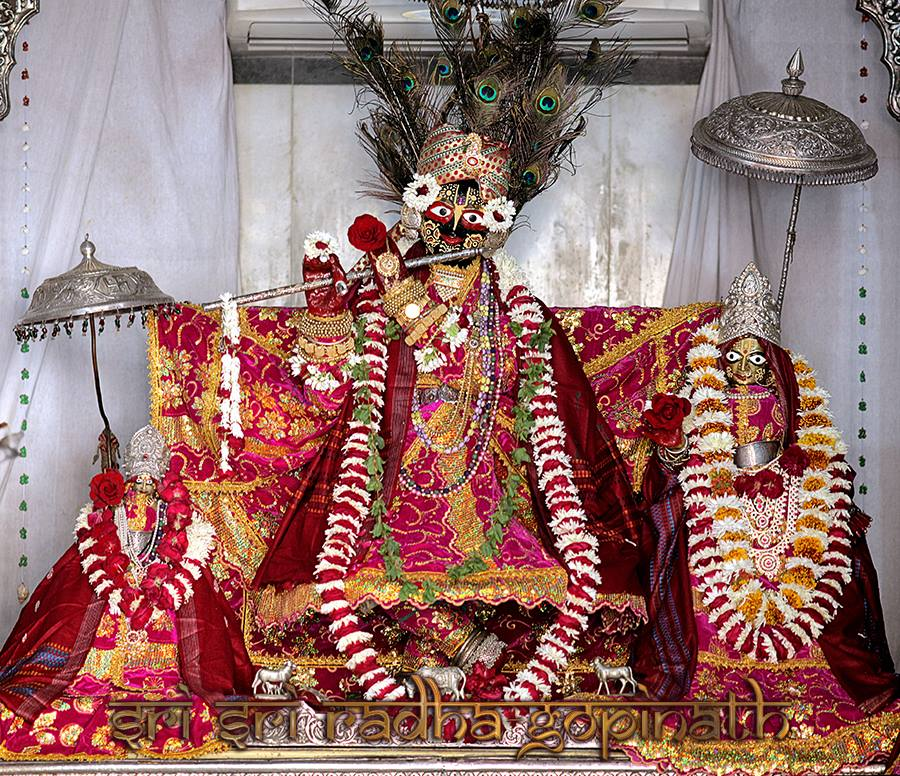
Sri Radha Gopinath, now in Jaipur, Rajasthan, India

I ended my Ekadasi fast 3 minutes too late… what will be my punishment for that?

The rules and regulations of the scripture are meant for purification. But all rules and regulations are within the mercy of the Lord, in other words, God is not a mechanical robot who prescribes punishments for unavoidable or accidental oversight of the rules. One should remember that God is not trying to catch us doing something wrong. We are almost always doing something or the other wrong. God is trying to catch us doing something right.

Question:

I did Ekadasi fast yesterday and time to end the fast was this morning – I hope I didn’t make a big mistake but I broke fast about 3 minutes after window of time. 

Please can you advise how to not be punished too much for this as I’ve done most fasting for years and within prescribed times.

Demigods pray to Lord Vishnu at the boundary of the milk ocean

Background:

Spiritualists from all traditions have some form of fasting as part of their spiritual practices… Some Muslims fast for the month of Ramadan. Some Christians fast for Lent, before Easter. Some Jews fast on Yom Kippur and other days.

Vaishnavas, or those who follow the ancient texts such as the Bhagavad Gita and Srimad Bhagavatam, fast on several occasions, such as Ekadasi, the 11th day of each fortnight of the waxing and waning moon. There are specific rules for such fasting, such as the time when one ends the fast.

Answer:

Srila Prabhupada didn’t emphasize the time of ending one’s fast. We do try, but sometimes it just doesn’t work out.

For example yesterday I was in service from 4:45am-10pm, almost practically continuously. Then this morning I was in service again from 4:30am till now, approximately 5pm. There is still chanting to complete and the evening service of the Lord.  I could only take breakfast at 7:45am, more than an hour after the official time to end fast today.

I’m not telling you all this for any other reason except to ask you… What sort of merciful Lord is Sri Krishna who gave the position of His Mother to Putana who came to kill Him disguising herself as a mother but smearing deadly poison on her breast?

So why will Krishna overlook your daily worship and sadhana and instead make you liable for a 3min delay in ending your fast? Can you see I’m trying to help you see the sweet merciful character of Sri Krishna who is all-merciful?

That is really the difference between Karma Kanda and Bhakti. In Bhakti we take shelter of the causeless mercy of the Lord.

And even if Krishna wants to use something that is like sinful reactions for my purification, my Lord is my best well-wisher so whatever He is is for my own best benefit. Please take full shelter of the lotus feet of Sri Krishna. Depend upon Him.

Why not do our best and leave it to Krishna?

Anxious from physical pain or health issue? Leverage it!

When facing physical pain, it’s natural to feel anxious. This anxiety can be debilitating if not channeled properly. However, this can be channeled to deepen Krishna Consciousness. Just like a cricket batsman flicks away a fast ball from an aggressive bowler to score many runs, embracing verses like 10.14.8 from Srimad Bhagavatam within the heart and leveraging hardships to increase devotion can lead to liberation. Just as a legitimate son inherits from his father, a sincere devotee will gain the mercy of the Lord and attain the kingdom of God.

Question

When I get any physical pain or physical health problem, I tend to get extremely anxious. How to deal with that?

Answer

The anxiety in response to physical pain is natural. After all your body is your home, home of the spirit soul.

If there is a fire or flood in our home we get anxious and take care to mitigate the issue. People spend their whole life maintaining their house and clothes and car.

India is full of people who are mad after cricket. So here is a cricket analogy… when a fast bowler sends a very fast ball the batsman who is skillful channels the energy of the bowler to score runs, just by flicking the ball away to the boundary.

Cricket batsman plays the flick shot...

We may not be able to avoid anxiety but we can channel that anxiety to increase our Krishna Consciousness. We can use the opportunity to remember that the present body is temporary, to remember Krishna and take to His shelter more deeply. Whenever I feel such pain I ask if this may be my last moment in this life and try to remember Krishna very sincerely and cry, even if internally, that I am not yet Krishna Conscious.

Verse 10.14.8 from Srimad Bhagavatam is my favorite to take shelter of when facing adverse situations. Learn it by heart and take shelter of that verse whenever you feel anxious.

तत्तेऽनुकम्पां सुसमीक्षमाणो
भुञ्जान एवात्मकृतं विपाकम् ।
हृद्वाग्वपुर्भिर्विदधन्नमस्ते
जीवेत यो मुक्तिपदे स दायभाक् ॥ ८ ॥


tat te ’nukampāṁ su-samīkṣamāṇo
bhuñjāna evātma-kṛtaṁ vipākam
hṛd-vāg-vapurbhir vidadhan namas te
jīveta yo mukti-pade sa dāya-bhāk

Translation
My dear Lord, one who earnestly waits for You to bestow Your causeless mercy upon him, all the while patiently suffering the reactions of his past misdeeds and offering You respectful obeisances with his heart, words and body, is surely eligible for liberation, for it has become his rightful claim.

Purport
Śrīla Śrīdhara Svāmī explains in his commentary that just as a legitimate son has to simply remain alive to gain an inheritance from his father, one who simply remains alive in Kṛṣṇa consciousness, following the regulative principles of bhakti-yoga, automatically becomes eligible to receive the mercy of the Personality of Godhead. In other words, he will be promoted to the kingdom of God.

The word su-samīkṣamāṇa indicates that a devotee earnestly awaits the mercy of the Supreme Lord even while suffering the painful effects of previous sinful activities. Lord Kṛṣṇa explains in the Bhagavad-gītā that a devotee who fully surrenders unto Him is no longer liable to suffer the reactions of his previous karma. However, because in his mind a devotee may still maintain the remnants of his previous sinful mentality, the Lord removes the last vestiges of the enjoying spirit by giving His devotee punishments that may sometimes resemble sinful reactions. The purpose of the entire creation of God is to rectify the living entity’s tendency to enjoy without the Lord, and therefore the particular punishment given for a sinful activity is specifically designed to curtail the mentality that produced the activity. Although a devotee has surrendered to the Lord’s devotional service, until he is completely perfect in Kṛṣṇa consciousness he may maintain a slight inclination to enjoy the false happiness of this world. The Lord therefore creates a particular situation to eradicate this remaining enjoying spirit. This unhappiness suffered by a sincere devotee is not technically a karmic reaction; it is rather the Lord’s special mercy for inducing His devotee to completely let go of the material world and return home, back to Godhead.

A sincere devotee earnestly desires to go back to the Lord’s abode. Therefore he willingly accepts the Lord’s merciful punishment and continues offering respects and obeisances to the Lord with his heart, words and body. Such a bona fide servant of the Lord, considering all hardship a small price to pay for gaining the personal association of the Lord, certainly becomes a legitimate son of God, as indicated here by the words dāya-bhāk. Just as one cannot approach the sun without becoming fire, one cannot approach the supreme pure, Lord Kṛṣṇa, without undergoing a rigid purificatory process, which may appear like suffering but which is in fact a curative treatment administered by the personal hand of the Lord.

https://vedabase.io/en/library/sb/10/14/8/

When did the immortal soul get attached to Karmic Debts?

If a spirit soul is eternally existent, and karmic reactions only attach when in the material realm, how could spirit souls originally accumulate karmic debt?

Question:

If souls always existed , how did karmic substance get attached to the souls for the first time ?

Answer:

There are an unlimited number of spirit souls, manifesting eternally from Krishna for the purpose of having a loving relationship with Him. An infinitesimal fraction of them decide to enjoy separately from Krishna. That is an infinitely large number…

Why? Because for love, there must be free will. There must be the freedom to leave. Krishna does not force anyone to love Him. He gives them freedom to leave if they wish to.

But when a living entity comes from the spiritual realm, the only position fit for the soul is as Lord Brahma of a Universe. There are an unlimited number of Universes, and therefore an unlimited number of Brahma posts available.

Some of these Brahmas are Bhaktyonmukhi (devotionally inclined) Brahmas, in other words, they see the material world and make a U-turn and go back home back to Godhead, after that one lifetime as Brahma.

Some of them, foolishly, are Bahir Mukha (materially inclined) Brahmas, choose to experience other lifetimes, say, as Indra, Chandra, as an Apsara, and so on…

The way karmic reactions work, one karmic action is sufficient to create an unlimited number of reactions. Why? Think of a banyan tree that gives figs… how many seeds are there inside each fruit? And how many trees can sprout from one fruit? In other words, how many banyan trees are inside one little seed? Actions and reactions, easily and quickly pile up.

Remaining inside karma chakra, the cycle of fruitive action and reaction, or doing things like trying to be artificially nonviolent is of no use. We unavoidably create karmic reactions at every moment, just by breathing, speaking, eating, or sleeping.

How to get rid of all of them?

By performing devotional service, Bhakti.

This is what the Padma Purana says…

aprarabdha phalam papam
kutam bijam phalon-mukham
kramenaiva praliyeta
vishnu bhakti ratatmanam

Karmic reactions exist as manifest as fruits, unmanifest, hidden, in seed form etc., but they are gradually destroyed through the process of vishnu bhakti.

Therefore Krishna says:

सर्वधर्मान्परित्यज्य मामेकं शरणं व्रज ।
अहं त्वां सर्वपापेभ्यो मोक्षयिष्यामि मा श‍ुच: ॥ ६६ ॥

sarva-dharmān parityajya
mām ekaṁ śaraṇaṁ vraja
ahaṁ tvāṁ sarva-pāpebhyo
mokṣayiṣyāmi mā śucaḥ

Abandon all varieties of religion and just surrender unto Me. I shall deliver you from all sinful reactions. Do not fear.

https://vedabase.io/en/library/bg/18/66