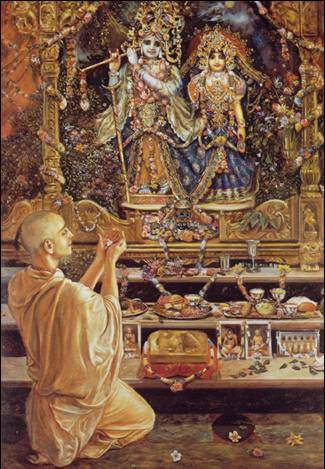
Join the Mission: Distribute 100,000 Bhagavad Gitas Worldwide

I reflect on a transformative spiritual journey that began 25+ years ago with the Bhagavad Gita As It Is, from a monk in Mumbai. Initially skeptical, I engaged, allowing the Gita to purify my heart through countless readings. Inspired by my benefactor, I set a goal to distribute 100,000 copies of the Gita. Through persistent outreach, I have successfully shared over 10,000 copies worldwide but I recognize the challenge ahead. I invite you to join in this great mission. Can you see the potential for worldwide transformational change as each inspired individual can significantly impact countless lives? Will you help?

Approximately twenty five years ago, I was a young, haughty engineer. I was also an atheist then. I got my copy of the Bhagavad Gita As It Is from a monk in Mumbai (then Bombay). He gave it to me free of charge. The story of my early spiritual journey is here.

The Perfect Escape Manual

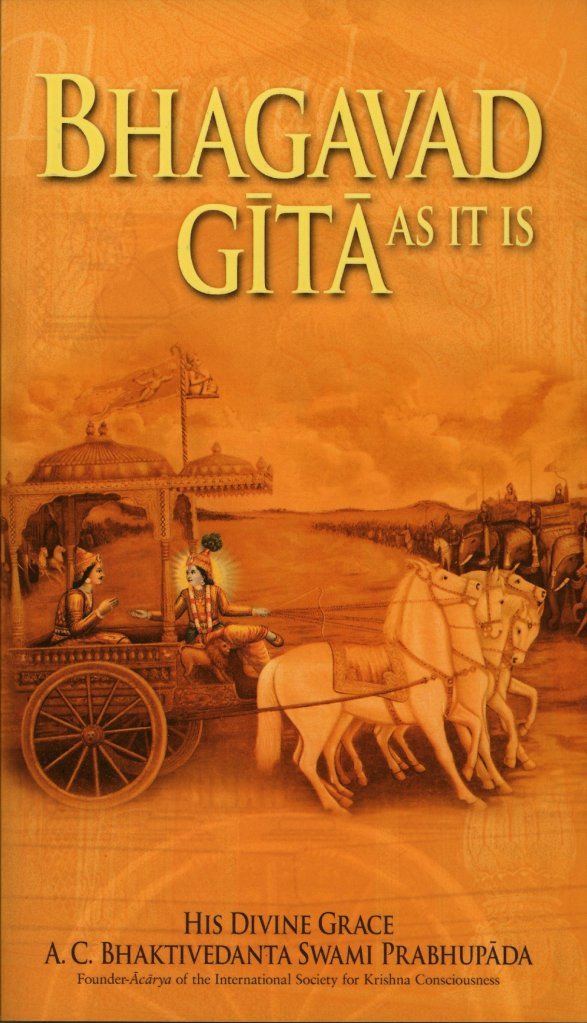
Bhagavad Gita As It Is
Bhagavad Gita As It Is is the perfect escape manual for those trapped in the material realm.

I had read many editions of the Gita before, but they were more or less useless. I had discarded them. I had concluded that the Bhagavad Gita was complete nonsense. I planned to read and discard this one too. So I began to try and find the faults. This book ended up finding my faults, honestly.

My Journey with the Gita

As I travelled all over the world, my Gita went with me. Reflecting on the pure instructions of Krishna cleansed my consciousness. Reading the Bhagavad Gita hundreds of times, the clear writings of His Divine Grace A. C. Bhaktivedanta Swami Prabhupada purified my heart. I wasn’t speaking to anyone about spiritual life during those years. It was just me and the book…It was many years until I actually came into the association of the devotees. It was not just philosophy, but also a full manual to living life in a joyful spiritual way.

That interaction with our unknown hero, the Hare Krishna monk, has been the single most transformational one in my life.

Paying It Forward: The 100,000 Gita Goal

I began to gratefully consider how to respond… I didn’t know by benefactor by name or by face. I didn’t have any contact information for him. While I couldn’t do anything for him, I decided to pay it forward .

Impulsively, I think, at first, but with great conviction after, I picked a target to distribute 100,000 of those Bhagavad Gita As It Is, or equivalent. I don’t know how I came up with the number. But now it’s ingrained. I have committed this to myself. I have committed this to God. I have given my word to my Guru. I have asserted it to so many others. I’ve got to do it, or die trying.

It’s got to be done, the 100,000 Gitas or equivalent. And after 18 years of trying, I’m finally past the 10,000 mark. So 10% there. It’s not totally hopeless.

Testing a New Approach

But recently, I began to have a sneaking suspicion that I couldn’t do it alone. So I decided to test it out.

I continued to distribute Srila Prabhupada’s books as I did, hand-to-hand, person-to-person. I went into apartment buildings. I went to street corners. I went to busy intersections with a lot of people milling about. I approached strangers late at night. I distributed books on buses, trains, planes. I called people. I wrote online. I mailed books to people I’d met. Sometimes they gave me a donation. At other times I covered the cost of the books myself.

As I approach the end of my corporate career, I realized something important. I can’t continue to cover the costs myself for much longer!

The Reality of Spiritual Book Distribution

I quickly discovered that it’s almost impossible to even give spiritual books away. People who are uninterested or against the ideas in the books just do not want them. And to someone who is interested, they will gladly donate generously. There are the friends and family who have donated so much. There is the lady who emptied her bank account on a late night for a book that cost $1. Recently an auto mechanic did the “give you everything in my account right now” thing.

I also compared my hand-to-hand distribution score with the score I got from others’ help. And in the last few years, others have helped me distribute more books than I have distributed myself!

So this boils down the book distribution project down to finding interested people. An interested person wants a book for themselves. Or someone interested wants to help me distribute them to others.

I can only hit the 100,000 goal with others’ help!

The Numbers Don’t Lie

On average, whenever I go out to distribute books, very few people interact with me. Usually, about one in a hundred people will engage with me in any way. The interactions are on a wide spectrum. Some are quite positive. Some are nasty. Of those who do interact in any way, about one out of ten will take a book. Mostly it’s a small book. Rarely it is a Bhagavad Gita. And even more rarely, someone will get a full set of books, like the Srimad Bhagavatam, or the Chaitanya Charitamrita. All in all, it takes me about 10,000 attempts to distribute the equivalent of a single Bhagavad Gita.

My lifetime total is 100,000 Gitas. The last time I counted, I had about 90,000 to go.

The Impossible Math

Simple Math tells me that it will take me about 900,000,000 attempts. That is 900 Million. The human population of our planet is 8.2 Billion. I will need to approach 1 out of every 9 people on this planet. All this to distribute the equivalent of 90,000 Bhagavad Gitas hand-to-hand! This still sounds possible somehow, through my website, through my various outings all over the world.

But, given that a successful book distribution takes around 10 minutes on average including the unsuccessful interactions… that is 900,000 minutes, or 15,000 hours. I can presently go out 108 times a year. If each of my outings were to last just 2 hours, I’d need to go out 7,500 times. And at my current rate, that would take me another 70 years. I’m already over fifty years of bodily age in my current lifetime… It is unlikely I will live to be 120 years old! And even if I were to live that long, my “useful lifespan” would be much shorter than that.

Long story short. I really can’t do this alone. I need help.

Why can’t everyone just get the Gita for themselves?

That’s a valid question. After all, God helps those who helps themselves, right?Why should I or anyone else go through all this trouble? There are some key reasons why someone can’t get the Gita themselves:

  1. They don’t know about it yet – that’s why we reach out relentlessly
  2. They haven’t found a genuine edition of the Gita yet – most versions are full of motivated concoctions – I had read so many editions before, but that monk helped me get the pure message of the Gita, so can we help others
  3. They just can’t afford it – I know many souls who just can’t afford to buy the book, in India, in Africa, in South America, and elsewhere
  4. They don’t realize the value of the Gita – there are many who can very well afford to buy a copy, but don’t know the value – giving them a taste of the Gita will help them tremendously, and they will support the cause themselves

A donated copy of the Bhagavad Gita removes those barriers. Distributors can freely distribute to anyone who is interested.

That monk gave me a copy of the Bhagavad Gita As It Is free of charge. Someone sponsored that copy. So I have yet another unknown benefactor!

Being an Instrument

So how to do it?

It is not that I have to personally distribute the Bhagavad Gitas myself. I just need to be an instrument in the distribution of the Gitas. We know that Krishna advised Arjuna “nimitta-mātraṁ bhava“, “be but an instrument” (BG 11.33). Since the instructions of the Gita apply to all of humanity, they also apply to me, and to you. We can all choose to be instruments in the hands of God.

How can we be an instrument?

I can be an instrument if I can inspire a lot of people, each doing a little bit! And you can be an instrument if you choose to help.

We can be like a scalpel in the hands of the expert surgeon. We can work to remove the cancer of a Godless society together.

An Invitation for you to Join

य इदं परमं गुह्यं मद्भ‍क्तेष्वभिधास्यति ।
भक्तिं मयि परां कृत्वा मामेवैष्यत्यसंशय: ॥ ६८ ॥

ya idaṁ paramaṁ guhyaṁ
mad-bhakteṣv abhidhāsyati
bhaktiṁ mayi parāṁ kṛtvā
mām evaiṣyaty asaṁśayaḥ

For one who explains this supreme secret to the devotees, pure devotional service is guaranteed, and at the end he will come back to Me.

https://vedabase.io/en/library/bg/18/68/

न च तस्मान्मनुष्येषु कश्चिन्मे प्रियकृत्तम: ।
भविता न च मे तस्मादन्य: प्रियतरो भुवि ॥ ६९ ॥

na ca tasmān manuṣyeṣu
kaścin me priya-kṛttamaḥ
bhavitā na ca me tasmād
anyaḥ priya-taro bhuvi

There is no servant in this world more dear to Me than he, nor will there ever be one more dear.

https://vedabase.io/en/library/bg/18/69/

You, my dear reader, can surely help. If you help me, then together, we can change another 90,000 lives at least. The collateral improvement from this can be much bigger. Each of those lives can impact another 90,000, and each of those another 90,000… Don’t you want to save the world with Krishna’s wisdom from the Bhagavad Gita?

We can distribute Bhagavad Gitas anywhere on the planet. Whether it is Africa, or North America, or South America, Europe, Australia, or Asia. Any country in the world. Any of the 90+ languages the Bhagavad Gita is now available in.

Will you please help? das@dasadas.com

“Idol” and “Mythology” – Two words that are offensive to Vedic culture

Why should we avoid the terms “idol” and “mythology” when discussing Vedic culture? These terms undermine the Krishna and Vedic scriptures. Krishna is the Supreme Personality of Godhead. The Vedic scriptures expound the Supreme Absolute Truth and Universal history. The original misunderstanding stems from historical attacks on Vedic culture. What is actual idol worship? What is actual mythology? Read more to find out!

These two words “idol” and “mythology” should be avoided like the plague when speaking about Vedic Culture. Vedic Culture means the culture that increases our love for Krishna. Never use the words “idol” and “mythology” when speaking about Vedic culture, or Vishnu / Krishna.

Unfortunately, this happens a lot in India, which is sad.

I give dictionary meanings, before elaborating further.

Idol: /īd′l/ A false god. One that is adored, often blindly or excessively.

Mythology: /mĭ-thŏl′ə-jē/ A body or collection of myths belonging to a people and addressing their origin, history, deities, ancestors, and heroes. A body of myths associated with an event, individual, or institution.

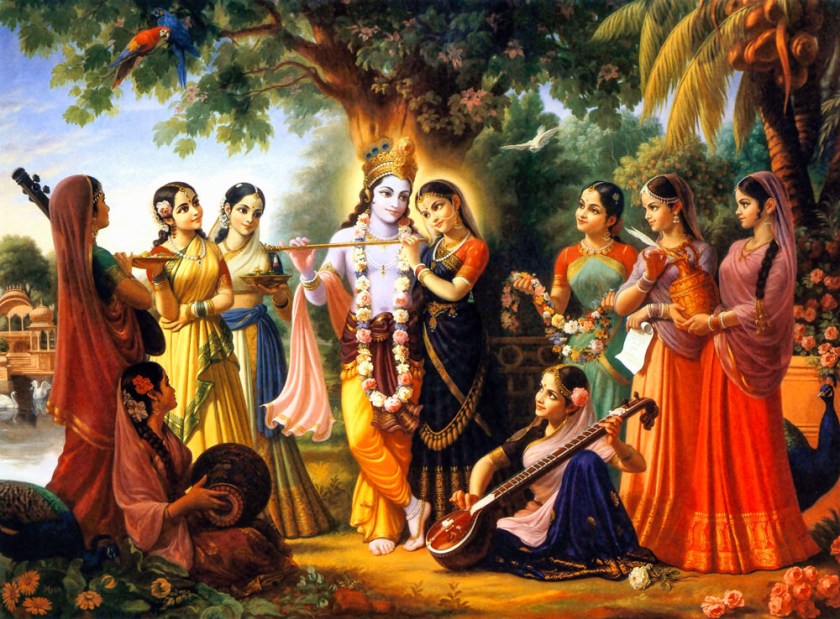
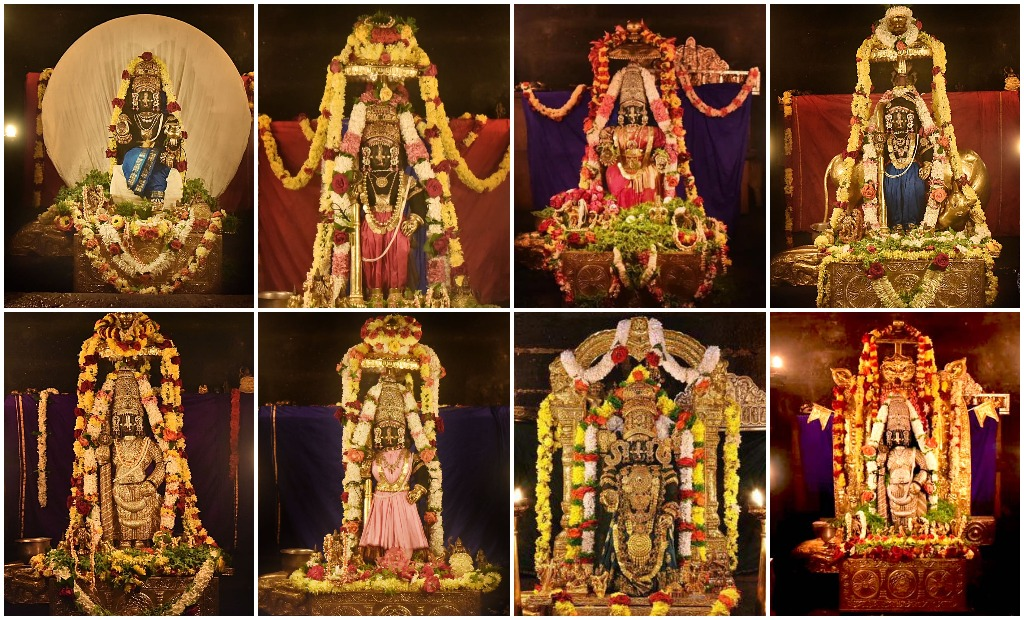
Radha Krishna and the 8 Topmost Gopis

Krishna is the Supreme Personality of Godhead. Krishna is known in other languages as Allah, Jehovah, Yahweh, and many other languages.

ईश्वरः परमः कृष्णः सच्चिदनन्द विग्रह:
अनदिरदिर् गोविन्दः सर्व कारण कारणं ।।१।।

īśvaraḥ paramaḥ kṛṣṇaḥ
sac-cid-ānanda-vigrahaḥ
anādir ādir govindaḥ
sarva-kāraṇa-kāraṇam

Kṛṣṇa who is known as Govinda is the Supreme Godhead. He has an eternal blissful spiritual body. He is the origin of all. He has no other origin and He is the prime cause of all causes. https://vedabase.io/en/library/bs/5/1/

Krishna is the Supreme Absolute Truth.

This means that Krishna’s name, form, pastimes, paraphernalia, abode, associates, etc., are all on the Absolute platform.

नाम चिन्तामणि कृष्णस्चैतन्य रस विग्रहः |
पूर्ण शुद्धो नित्य मुक्तो अभिन्नत्वं नाम नामिनोः ||

nāma cintāmaṇiḥ kṛṣṇaś
caitanya-rasa-vigrahaḥ
pūrṇaḥ śuddho nitya-mukto
’bhinnatvān nāma-nāminoḥ

“ ‘The holy name of Kṛṣṇa is transcendentally blissful. It bestows all spiritual benedictions, for it is Kṛṣṇa Himself, the reservoir of all pleasure. Kṛṣṇa’s name is complete, and it is the form of all transcendental mellows. It is not a material name under any condition, and it is no less powerful than Kṛṣṇa Himself. Since Kṛṣṇa’s name is not contaminated by the material qualities, there is no question of its being involved with māyā. Kṛṣṇa’s name is always liberated and spiritual; it is never conditioned by the laws of material nature. This is because the name of Kṛṣṇa and Kṛṣṇa Himself are identical.’ https://vedabase.io/en/library/cc/madhya/17/133/

Take a second look at the dictionary meaning of “idol”…

Idol: /īd′l/ A false god. One that is adored, often blindly or excessively.

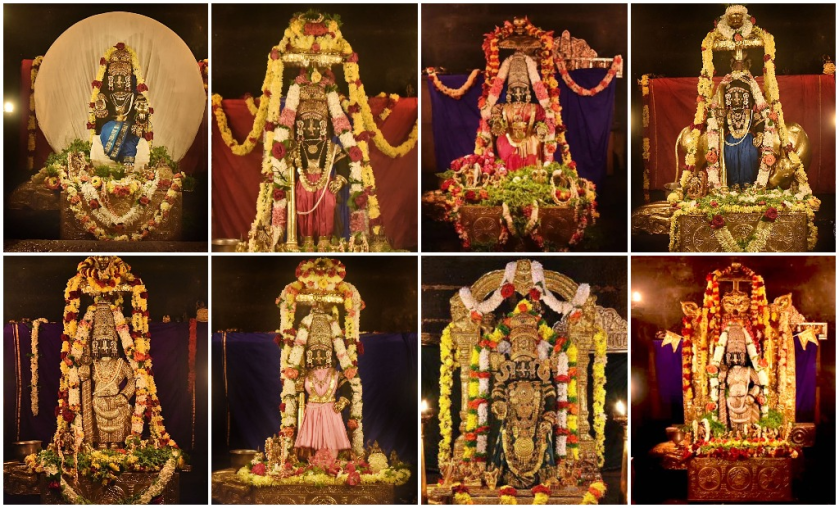
Udupi Sri Krishna
Udupi Sri Krishna

Nothing about Krishna is “false”. And there can be no such thing as “blind” or “excessive” adoration of Krishna. In fact, no matter how much we adore, it is always insufficient. Our problem is that we don’t adore Krishna enough. And we don’t adore Krishna sufficiently because we are blind. If we were not blind, we would be absolutely pure in our love of Krishna.

कृष्णे स्वधामोपगते धर्मज्ञानादिभि: सह ।
कलौ नष्टद‍ृशामेष पुराणार्कोऽधुनोदित: ॥ ४३ ॥

kṛṣṇe sva-dhāmopagate
dharma-jñānādibhiḥ saha
kalau naṣṭa-dṛśām eṣa
purāṇārko ’dhunoditaḥ

This Bhāgavata Purāṇa is as brilliant as the sun, and it has arisen just after the departure of Lord Kṛṣṇa to His own abode, accompanied by religion, knowledge, etc. Persons who have lost their vision due to the dense darkness of ignorance in the Age of Kali shall get light from this Purāṇa. https://vedabase.io/en/library/sb/1/3/43/

Now, to come back to the dictionary meaning of “mythology”…

Mythology: /mĭ-thŏl′ə-jē/ A body or collection of myths belonging to a people and addressing their origin, history, deities, ancestors, and heroes. A body of myths associated with an event, individual, or institution.

सर्वस्य चाहं हृदि सन्निविष्टो
मत्त: स्मृतिर्ज्ञानमपोहनं च ।
वेदैश्च सर्वैरहमेव वेद्यो
वेदान्तकृद्वेदविदेव चाहम् ॥ १५ ॥

sarvasya cāhaṁ hṛdi sanniviṣṭo
mattaḥ smṛtir jñānam apohanaṁ ca
vedaiś ca sarvair aham eva vedyo
vedānta-kṛd veda-vid eva cāham

I am seated in everyone’s heart, and from Me come remembrance, knowledge and forgetfulness. By all the Vedas, I am to be known. Indeed, I am the compiler of Vedānta, and I am the knower of the Vedas. https://vedabase.io/en/library/bg/15/15/

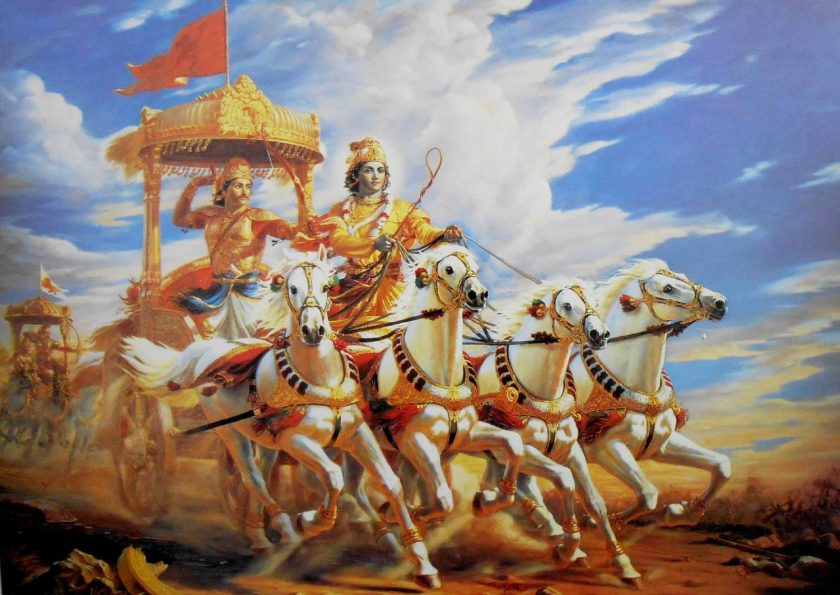
Krishna and Arjuna on the Battlefield of Kurukshetra

The Vedic Scriptures explain different aspects of Krishna. The Puranas are ancient history. So ancient and so broad that they encompass the entire Universe, and go back billions, even trillions of years. Who can comprehend that Universal range and time scale with our teeny little perspective?

Now, where did this misunderstanding come from?

Where did anyone get the idea to call images of Krishna as “idols” and the Vedic scriptures as “Mythology”?

The last surviving bastion of Vedic culture is what is current-day India, Pakistan, Nepal, Bangladesh, Sri Lanka, Thailand, Indonesia, etc.

Vedic culture has been under attack for well over 3000 years. It is natural, because we are in the kaliyuga, the age of quarrel and hypocrisy. Vedic culture i the opposite of quarrel and hypocrisy

First, it was the advent of Buddhism, and Jainism. These are essentially either impersonal, voidist, or both, depending on the specific flavor. Both twisted the Vedic scriptures in different ways. Both were philosophically defeated and Buddhism was mostly driven out to the far corners of the world, away from India.

Lord Buddha

Buddhism was advented by Lord Gautama Buddha to originally to drive out a corruption in Vedic culture.

तत: कलौ सम्प्रवृत्ते सम्मोहाय सुरद्विषाम् ।
बुद्धो नाम्नाञ्जनसुत: कीकटेषु भविष्यति ॥ २४ ॥

tataḥ kalau sampravṛtte
sammohāya sura-dviṣām
buddho nāmnāñjana-sutaḥ
kīkaṭeṣu bhaviṣyati

Then, in the beginning of Kali-yuga, the Lord will appear as Lord Buddha, the son of Añjanā, in the province of Gayā, just for the purpose of deluding those who are envious of the faithful theist.

https://vedabase.io/en/library/sb/1/3/24/

The origin of Jainism was a corruption of the pure teachings and example of Lord Rishbhadeva, an incarnation of Krishna.

Lord Rishabhadeva instructing His sons

यस्य किलानुचरितमुपाकर्ण्य कोङ्कवेङ्ककुटकानां राजार्हन्नामोपशिक्ष्य कलावधर्म उत्कृष्यमाणे भवितव्येन विमोहित: स्वधर्मपथमकुतोभयमपहाय कुपथपाखण्डमसमञ्जसं निजमनीषया मन्द: सम्प्रवर्तयिष्यते ॥ ९ ॥

yasya kilānucaritam upākarṇya koṅka-veṅka-kuṭakānāṁ rājārhan-nāmopaśikṣya kalāv adharma utkṛṣyamāṇe bhavitavyena vimohitaḥ sva-dharma-patham akuto-bhayam apahāya kupatha-pākhaṇḍam asamañjasaṁ nija-manīṣayā mandaḥ sampravartayiṣyate.

Śukadeva Gosvāmī continued speaking to Mahārāja Parīkṣit: My dear King, the King of Koṅka, Veṅka and Kuṭaka whose name was Arhat, heard of the activities of Ṛṣabhadeva and, imitating Ṛṣabhadeva’s principles, introduced a new system of religion. Taking advantage of Kali-yuga, the age of sinful activity, King Arhat, being bewildered, gave up the Vedic principles, which are free from risk, and concocted a new system of religion opposed to the Vedas. That was the beginning of the Jain dharma. Many other so-called religions followed this atheistic system. https://vedabase.io/en/library/sb/5/6/9/

Later invasions from the west

But then, there were the expansionist invasions by the zealots claiming to follow “Islam, the religion of peace”. Those invaders to the Holy Land of India were attracted by the wealth, the riches in the temples… But they were too uncivilized and uncultured to appreciate the nuances of Vedic culture.

So they started calling temple worship “idol worship” in their middle eastern languages, Arabic, Persian, etc. They started a systematic system of persecution, calling the followers of Vedic culture as “kafirs” or non-believers. They did not understand that Krishna is actually Allah Himself. This persecution conginues to this day, a thousand years on. For example in Pakistan and Bangladesh, followers of Vedic culture are still harshly persecuted.

The European powers made the most sophisticated attempts to culturally conquer the Vedic culture. They came to India about 600 years ago. They engaged in business and military conquest. They also sought to replace Vedic culture with barbarian European culture through an insidious system called “modern education”.

Indians have been conditioned to denigrate their own culture!

Indians began to speak Portuguese, Dutch, French, and English. They were made to forget their own languages, their own customs and refined practices. It was deeply rooted. The Europeans, especially the British, sought to vilify all Vedic practices through their Christian missionaries.

  1. Deity worship became “Idol Worship”.
  2. Krishna became a “tribal chieftain” or at best, a “Hindu god”.
  3. All the ancient historical texts like the Vedas, the Upanishads, the Puranas, became “Hindu myths”.

Vedic culture will rescue with world from its dense darkness. To revive the glorious Vedic culture, we must first reject this insulting word “idol” in relation to Krishna. We must also reject the derogatory “mythology” in relation to the Vedic scriptures.

What is idol worship then?

It is the worship of politicians, business people, actors, sports people, military leaders, etc. It is the worship of TV personalities and entertainers. The western world fully engages in idol worship daily. They do this through their thousands of TV channels, their movies, their books, newspapers, magazines, their marketplaces, and living spaces.

Sports fans indulging in Idol Worship

“Western Culture”, an oxymoron, means to worship the temporary bodies, through luxurious homes devoid of a culture of Krishna Consciousness. It means lavish bathrooms and swimming pools. It means arenas to celebrate war in disguise. It means a worship of their dogs and cats. It means the killing of cows and bulls, which are dear to Krishna.

Reject idol worship, by all means, but the form of Krishna is not an “idol”.

We can use the these words instead to describe images of Krishna:

  1. “Archa Vigraha” (अर्च विग्र:) – the Divine Worshipable Form of God
  2. Deity
  3. Divine Form of God

And what is mythology?

What is called “modern science” is mostly mythology. And the western version of “history” is mythology. Common uncultured rascals have been promoted as great personalities. Alexander “the great” was a looter and marauder. Napoleon was a low class murderer and looter. He conspired to become king of France after the French had executed their king and rejected the monarchy. Winston Churchill was a disgusting narrow minded bigot. He was a lying manipulator. He was not a great leader by any stretch of the imagination, because he was full of all vices.

False history propagated by the Europeans

Everything that opposes the pristine Vedic culture is mythology. This includes the spiritual texts of the Middle East, that were once great and pure. These texts like the Quran, Bible, etc., have been censored, edited and misinterpreted. They have lost spiritual value due to tampering. They are only good as political manifestos now. Even if the text is intact, the misinterpretation and misunderstanding of it has depleted its value.

So, yes, reject mythology also, but the Vedic scriptures are not mythology.

धर्म: प्रोज्झितकैतवोऽत्र परमो निर्मत्सराणां सतां
वेद्यं वास्तवमत्र वस्तु शिवदं तापत्रयोन्मूलनम् ।
श्रीमद्भागवते महामुनिकृते किं वा परैरीश्वर:
सद्यो हृद्यवरुध्यतेऽत्र कृतिभि: शुश्रूषुभिस्तत्क्षणात् ॥ २ ॥

dharmaḥ projjhita-kaitavo ’tra paramo nirmatsarāṇāṁ satāṁ
vedyaṁ vāstavam atra vastu śivadaṁ tāpa-trayonmūlanam
śrīmad-bhāgavate mahā-muni-kṛte kiṁ vā parair īśvaraḥ
sadyo hṛdy avarudhyate ’tra kṛtibhiḥ śuśrūṣubhis tat-kṣaṇāt

Completely rejecting all religious activities which are materially motivated, this Bhāgavata Purāṇa propounds the highest truth, which is understandable by those devotees who are fully pure in heart. The highest truth is reality distinguished from illusion for the welfare of all. Such truth uproots the threefold miseries. This beautiful Bhāgavatam, compiled by the great sage Vyāsadeva [in his maturity], is sufficient in itself for God realization. What is the need of any other scripture? As soon as one attentively and submissively hears the message of Bhāgavatam, by this culture of knowledge the Supreme Lord is established within his heart. https://vedabase.io/en/library/sb/1/1/2/

You can call the Vedic scriptures as:

  1. The Yoga texts of India
  2. Vedas or Puranas
  3. Vedic scriptures
  4. Vedic literature
  5. Vedic History

Please give up the use of the words “idol” and “mythology” in relation with Vedic Culture! Hare Krishna!

How Spiritual Practices Combat Material Pollution

Hyderabad, like many other cities, is a vibrant chaos of litter. Dedicated street cleaners face a relentless battle against the chronic litterbugs who trash the city daily. Despite their morning efforts, the streets revert to their messy state by evening. This mirrors our spiritual lives where temporary cleansings fail to eliminate deeper impurities. The battle against sin and distraction is exacerbated by our habits that pollute consciousness. The antidote? Fully embrace Krishna Consciousness—an all-encompassing practice that brings clarity, purpose, and purity to both streets and spirit.

I am here in India presently, the booming bustling messy city of Hyderabad.

Every morning, I walk back from the temple after the morning program. I admire the cleaners busily cleansing the streets of all sorts of garbage… pieces of paper, plastic wrappers, cigarette butts, and more.

Street Sweepers in Hyderabad

They work quite hard, actually. They diligently sweep and clean up everything. They collect it all, put it into their carts, and take it all away. At about 8 AM in the morning, everything looks so neat and clean!

But come the afternoon, the streets look almost the same as they did before. This, despite all the hard work by the cleaners of Hyderabad!

No matter how much the cleaners clean, Hyderabad streets remain as messy as ever.

What just happened?

Litterbug city

The culprits are the citizens (no offense intended) of Hyderabad! Most of them are chronic litterbugs… I saw one man on a motorcycle. He opens up a sachet of tobacco. He pops the contents into his mouth and discards the wrapper right there. All this while he is stopped in traffic.

Motorcycle riders in Hyderabad

A child peels the wrapper off a sweet. She pops it into her mouth. Then she discards the wrapper.

A street vendor is preparing some fruit for sale… He discards all the peels in a heap behind his cart.

A fruit vendor in Hyderabad

A housewife has just swept her home, and she dumps the rubbish right on the street outside her house.

A man in a business suit is in a chauffeured car. He rolls down the tinted window of his fancy car. He out throws out an envelope, carefully torn into tiny bits. He spits out a stream of red tobacco induced liquid.

Boys light firecrackers on the street – it is a few weeks to Diwali. They’re getting a head start on the merriment… Every firework is left right there on the street where it went off… Bits of plastic, paper tubes, shredded paper.

Multiply that 11 Million times… the population of Hyderabad. It’s a recipe for one messy place!

Then the next morning, the cleaners will be at it again… sweep, collect, throw.

But Hyderabad looks as messy as ever, day after day. The rivers are open sewers, drains are clogged with plastic film… People have been spitting all over the place.

The cleaners don’t stand a chance, they are outnumbered!

Spiritual Cleansing, Materialistic Littering

On the spiritual path, people often engage in cleanups… Prayers, Purificatory rituals, penances, austerities… But sometimes we feel discouraged when there is no progress.

Faithful Muslims Praying

Let’s say someone prays or meditates (cleansing the consciousness) for 5 minutes, 20 minutes, or even two hours every day. Or more. What happens for the remaining time during the day?

It’s the same thing – gotta’ stop littering for the effects of the cleaning to show!

The streets of Hyderabad are cleaned each morning. But the actions of the chronic litterbugs make it seem futile. Similarly, our consciousness can be littered by where we choose to focus our attention.

It is important to focus our consciousness in a way that doesn’t litter our consciousness with more materialistic garbage.

The elephant’s bath

In a picturesque analogy from the Bhagavatam, King Parikshit makes this astute observation. He observes the souls passing in turn through regions of enjoyment and purgatory throughout the Universe. Souls are rewarded with heavenly pleasures for their pious activities, and punished for their sinful activities.

King Parikshit receives transcendental knowledge from the great sage Sukadeva Goswami

These pious and impious activities don’t cancel each other out. The after-effects of both must be experienced separately. Enjoyment for pious deeds, and suffering for the impious. And every such activity leaves behind a seed of future entanglement.

Many of us on the spiritual path are very keen to avoid the sinful activities. But all too often, we still fall victim.

क्‍वचिन्निवर्ततेऽभद्रात्‍क्‍वचिच्चरति तत्पुन: ।
प्रायश्चित्तमथोऽपार्थं मन्ये कुञ्जरशौचवत् ॥ १० ॥

kvacin nivartate ’bhadrāt
kvacic carati tat punaḥ
prāyaścittam atho ’pārthaṁ
manye kuñjara-śaucavat

Sometimes one who is very alert so as not to commit sinful acts is victimized by sinful life again. I therefore consider this process of repeated sinning and atoning to be useless. It is like the bathing of an elephant, for an elephant cleanses itself by taking a full bath, but then throws dust over its head and body as soon as it returns to the land.

https://vedabase.io/en/library/sb/6/1/10/

An elephant bathes himself with clean water
An elephant showers himself with mud

Many of us do the same… we engage in purification, and then we cover our consciousness with dirt.

What is that “dirt”… It is activities which cover our spiritual consciousness with material contamination. Think television, newspapers, mundane movies, games of crickets and soccer, video games, internet gossip and worse.

Why?

It’s so important to lose the habit of littering our consciousness!

Lord Krishna says this in His Song, the Bhagavad Gita, the Song of God…

विषया विनिवर्तन्ते निराहारस्य देहिनः ।
रसवर्जं रसोऽप्यस्य परं दृष्ट्वा निवर्तते ॥ ५९ ॥

viṣayā vinivartante
nirāhārasya dehinaḥ
rasa-varjaṁ raso ’py asya
paraṁ dṛṣṭvā nivartate

Though the embodied soul may be restricted from sense enjoyment, the taste for sense objects remains. But, ceasing such engagements by experiencing a higher taste, he is fixed in consciousness.

https://vedabase.io/en/library/bg/2/59/

You see, the taste for sense objects remains. There is facility, there is time, and so, we fall headlong.

But is there a way to prevent this? How to avoid the fall?

केचित्केवलया भक्त्या वासुदेवपरायणा: ।
अघं धुन्वन्ति कार्त्स्‍न्येन नीहारमिव भास्कर: ॥ १५ ॥

kecit kevalayā bhaktyā
vāsudeva-parāyaṇāḥ
aghaṁ dhunvanti kārtsnyena
nīhāram iva bhāskaraḥ

Translation

Only a rare person who has adopted complete, unalloyed devotional service to Kṛṣṇa can uproot the weeds of sinful actions with no possibility that they will revive. He can do this simply by discharging devotional service, just as the sun can immediately dissipate fog by its rays.

https://vedabase.io/en/library/sb/6/1/15/

The process of Krishna Consciousness is so sublime. There is Krishna Consciousness activity to immerse ourselves twenty four hours a day.

24/7 Spiritual Engagement

We can start with rising early for Mangala Arati. We can engage in a full morning program of hearing, chanting, and worship. Our consciousness becomes charged up with Krishna. We can then insert Krishna Conscious thoughts, words, and deeds throughout the day as we go about our duties.

And of course, someone who rises early is also forced to rest early. So much trouble avoided!

And of course, genuine spiritualists do not litter. Not their consciousness, not their homes, nor their streets.

Let us take advantage of this process! Want to avoid littering your streets of your consciousness? Want to know how?

P.S: I have nothing against the city or the people of Hyderabad. It is practically the same story in every village, town, or city in the world. It is the terrible practice of littering, both spiritual and material, but especially the spiritual littering that I’m advocating against.

Madhvacharya’s Genius: A Solution for Managerial issues

Managing in religious organizations is uniquely challenging, with managers often facing burnout from balancing volunteer dynamics, demanding senior leaders, and resource limitations. There are other issues too, leading to dysfunctional management. This can hinder personal and spiritual growth. Implementing a rotational management system, like Madhvacharya’s, can combat burnout and foster healthier organizational environments, allowing managers, the organizaton, and the congregations to thrive.

He who is regulated in his habits of eating, sleeping, recreation and work can mitigate all material pains by practicing the yoga system. BG 6.17

Have you ever met a dysfunctional manager?

Someone who has been managing up, managing down, managing sideways, somehow trying to get things to work but failing? In your temple, church, mosque or synagogue?

A manager can be any one of burned out, corrupt, entitled, or arrogant. It is possible that a manager in a religious organization has lost touch with the purpose of the organization… I discussed that in one of my previous posts. That article talks about whether it is possible for a genuinely spiritual organization to even exist.

Corporate vs. Religious Management

In the corporate world, managers have it relatively easy. After all, when things get sticky, they can choose to leave. They switch jobs or fire people. They can also switch roles. We concluded with the sage words of Srila Prabhupada on how to manage effectively. The essence is that the managers or leaders can’t lose sight of the spiritual goal, the main thing.

Burned out manager

The dysfunctional manager’s dual persona

The confusing part is usually when we meet such a dysfunctional the manager as an individual. They are usually a perfectly nice person. But when we meet the individual in their role as a manager, they can be cold or calculating. They may behave as shrewd, political, or even diabolical. They might seem callous, jealous, or envious. Sometimes, they are angry, sad, frustrated, anxious, or exhibit other negative traits. Most of the time, they may come across as uninspired and uninspiring.

Challenges for Managers in Religious Organizations

Let’s face it. Managers in religious organizations have it tough.

Managing Volunteers
On the one hand, they manage an organization of volunteers. Volunteers can choose to accept what the manager is telling them, or do otherwise. Volunteers are few and far between. Volunteers are hard to fire. Every religious organization needs its volunteers.

Volunteers

Reporting to Senior Leaders
On the other hand, managers in religious organizations often report to senior religious leaders. These leaders can be very demanding and authoritarian. Some of them can be egotists, worse than leaders in the corporate or business world. After all, a person who actually believes he is worthy of his exalted position can be dangerous. This belief is downright perilous.

Resource and Donor Management

There are other constraints. Managing scarce resources is one of them. Keeping donors happy without pandering to their every whim is another difficult job.

Leaders in religious organizations

The Consequences of Burnout
Continuously managing in this way leads to burnout. Managers lose their focus, their vision, and their enthusiasm. They end up acting in petty ways or developing serious issues like abuse of power, corruption, etc. Such managers land their organizations in hot water. Then, they cease to think or act “spiritual” by any stretch of the imagination. The news headlines reveal this all too often, unfortunately.

The Neglect of Personal Well-being
Mainly, the problem is that management stresses leave the managers no time and energy. Managers (often volunteers themselves) can’t take care of their own physical, mental, emotional needs. Most importantly, they can’t invest into their own spiritual needs. All too often, managers in religious organizers manage, manage, manage their way into personal destruction, disrepute, disgrace, and eventually oblivion.

A spiritual leader in poor health

The Difficulty of Finding Qualified Managers

Understandably, it is very hard to find a serious spiritualist who will take up management responsibility in a religious organization. So many individuals with integrity and capability refuse. The task is very challenging. As a result, all too often, someone ends up in the role who is not qualified to manage. This happens out of necessity or just convenience. Someone who happened to be at the right place at the right time. So, unfortunately, it so happens that a dysfunctional manager is often kept in the role for too long. To the detriment of the individual. To the detriment of the organization. And to the detriment of the congregation.

To a sincere but capable soul, accepting management responsibility with no end in sight seems like spiritual suicide.

Not just burnout…

There is a well-known saying that power corrupts, and absolute power corrupts absolutely. This applies to all situations where someone has some power. But it is especially applicable to managerial situations in religious organizations. After all, a manager in a religious organization does have material power. This includes access to money, people, land, and resources. But they also carry the special cachet of being close to God.

To anyone who opposes a dysfunctional manager, that is a double jeopardy… They are dealing with someone who is undoubtedly very powerful. This person is also apparently very close to God!

And of course, all members of religious organizations are instructed to be subservient to authority! See the problem?

When someone has lost the mood of a servant

In all effective organizations, the leadership must keep the mood of being a servant.

Sri Chaitanya Mahaprabhu, God Himself appearing in the form of His own devotee, famously said this:
नाहं विप्रो न च नरपति नापि वैश्यो न शूद्रो
नाहं वर्णी न च गर्हपतिर्नो वनस्थो यतिर्वा |
किन्तुप्रोद्यननिखिलपरमानन्दपुर्णाम्र्ताब्धेर्
गोपीभर्तुः पदकमलयोर्दासदासनुदासः ||

nāhaṁ vipro na ca nara-patir nāpi vaiśyo na śūdro
nāhaṁ varṇī na ca gṛha-patir no vanastho yatir vā
kintu prodyan-nikhila-paramānanda-pūrnāmṛtābdher
gopī-bhartuḥ pada-kamalayor dāsa-dāsānudāsaḥ

“ ‘I am not a brāhmaṇa, I am not a kṣatriya, I am not a vaiśya or a śūdra. Nor am I a brahmacārī, a householder, a vānaprastha or a sannyāsī. I identify Myself only as the servant of the servant of the servant of the lotus feet of Lord Śrī Kṛṣṇa, the maintainer of the gopīs. He is like an ocean of nectar, and He is the cause of universal transcendental bliss. He is always existing with brilliance.’ ” https://vedabase.io/en/library/cc/madhya/13/80/

God Himself is flawless in all respects, in every role. Yet, God’s illusory energy, Maya, she, is a formidable temptress. Maya can convince anyone of that which is not. A manager or a leader can be falsely convinced that they are not a servant.

दैवी ह्येषा गुणमयी मम माया दुरत्यया ।
मामेव ये प्रपद्यन्ते मायामेतां तरन्ति ते ॥ १४ ॥

daivī hy eṣā guṇa-mayī
mama māyā duratyayā
mām eva ye prapadyante
māyām etāṁ taranti te

This divine energy of Mine, consisting of the three modes of material nature, is difficult to overcome. But those who have surrendered unto Me can easily cross beyond it. https://vedabase.io/en/library/bg/7/14/

It is very easy for anyone to fall prey to the illusory material energy. After all, religious organizations are not full of perfected beings, but those who are trying to become spiritually perfect! So, it is practically unfair for a religious organization to leave someone in a position of power for too long.

Madhvacharya’s Management Genius

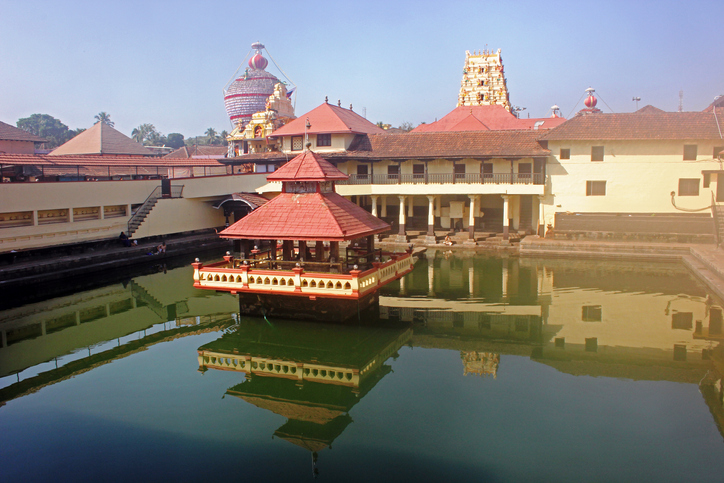
The Udupi Sri Krishna temple

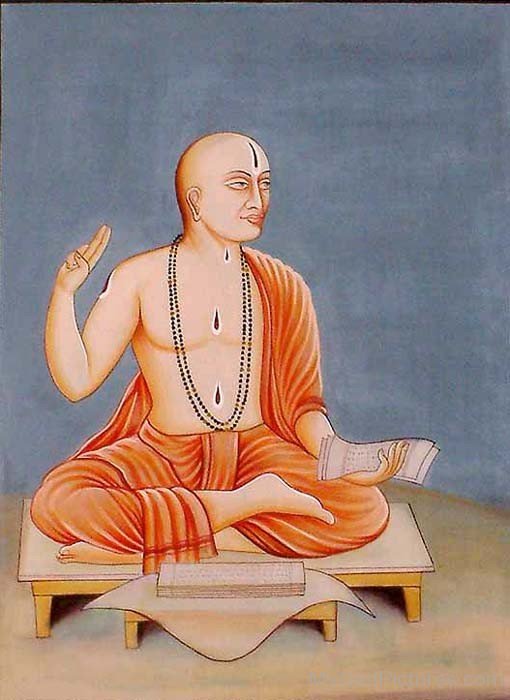
Madhvacharya, an influential 13th Century Guru was a management genius. While his spiritual contributions are unparalleled, there is another amazing contribution. He presented a very intelligent management paradigm that religious organizations should take note of. He recognized all these problems and came up with a master stroke of a management strategy.

Madhvacharya disappeared from our view in the Himalayas at Badarikashram over 700 years ago. He went to associate with his Guru Sri Veda Vyasa. It is said that the spiritual master and disciple are still living there, up in the Himalayas. But the management system he put into place still continues to work in Udupi, at the Sri Krishna Matha.

Lord Sri Krishna in Udupi

The Rotating Management System
What is Madhvacharya’s management genius? He built 8 management teams under 8 capable leaders. Not one, not two, but EIGHT! He then put each team in charge of management of the temple for two years, on a permanent rotation basis. So one team takes charge, manages the massive temple for two years, then hands over to the next team… continuously rotating.

Benefits of Rotation
Each team gets 14 years to invest into their own physical, mental, emotional and spiritual wellbeing. Then they sacrifice two years to serve at the temple… and then, before any of the above negative things start happening, they exit the main stage. They are now ready to recover, recoup, and reinvest into their spiritual core. They get a good 14 years to regroup, share reflections, and prepare for their next shot at the management service.

The Impact on Manager Motivation
Put yourself in their shoes. If you get 14 years to prepare for something, how eager and enthusiastic would you be? How hard-working, sincere, and serious would you be if you have just 2 years to actually do it? Many leaders don’t even get one chance to do the service, because after all, death appears to everyone. But if you do get more than one opportunity, we can be sure that the service will be always better.

The Importance of Rotation
There is no burnout, and no time to get involved in any detrimental activities. There is enough time to deeply ponder the purpose and mood and mission of the service. Religious organizations should take note of this. Any organization that does not follow such a rotation policy risks making the headlines for the wrong reasons. Do not keep a manager in a management role for too long. Find others, keep switching it up. Give everyone enough time to take care of their own health, physical, mental, emotional, and above all, spiritual.

Sri Krishna says this in the Bhagavad Gita…

युक्ताहारविहारस्य युक्तचेष्टस्य कर्मसु ।
युक्तस्वप्‍नावबोधस्य योगो भवति दु:खहा ॥ १७ ॥

yuktāhāra-vihārasya
yukta-ceṣṭasya karmasu
yukta-svapnāvabodhasya
yogo bhavati duḥkha-hā

He who is regulated in his habits of eating, sleeping, recreation and work can mitigate all material pains by practicing the yoga system.

https://vedabase.io/en/library/bg/6/17/

If you are a manager in a religious organization yourself, watch out!

You won’t get to your spiritual destination if you don’t take care of your spiritual growth. Managerial growth, or more fame, power, money or influence, is not the same as spiritual growth! Please guard your spiritual life with great attention!

Happy Hare Krishnas

I pray for your success!

Hare Krishna!

The author humbly expresses his gratitude to Sriman Ravindra Shyamsundar Joshi, his elder brother. His valuable feedback on this article addressed a key misunderstanding. It helped clarify that burnout was not the only cause of managerial issues in religious organizations.

Rapid fire questions… selfless service, amanina mana dena in marriage, Krishna Consciousness in a calamity, karma vs. compassion, free will, our anchor…

This article contains a series of questions and answers… it explores the essence of selfless service, emphasizing that true selfless action arises from a pure devotee’s desire to please Krishna, devoid of personal gain. It highlights how harmonious relationships are built on mutual respect. It also discusses how the Internal process of chanting Hare Krishna mbrings peace in challenging times. Understanding the difference between karmic reactions and divine mercy (kripa) allows devotees to perceive their experiences as opportunities for growth. Ultimately, it reinforces the concept of humility and service, reminding individuals of their role as servants of the lowliest servants in devotion to Krishna.

QUESTION 1) We talk a lot about selfless service, but can you pls tell one action devoid of gain in return?


MBD: Selfless service is not possible unless for a pure devotee, who does service for service sake. In all lower states of Bhakti, all service benefits the performer, even if it may benefit others. The higher the stage of the performer’s advancement, the more it benefits others. It benefits the performer less than it benefits others. Take any service. Krishna’s service to the living entities is always selfless. He does not need anything from anyone in return. Same with the spiritual master. He only seeks Krishna’s pleasure.

1.1) Can there be an action without result?


MBD: When you say result, do you mean “karmic” result? All action that is not purely transcendental has karmic reactions… everything in the modes. Devotional service has no karmic results. Still, there are devotional results. These start with the pleasure of Krishna and the purification of the heart of the devotee, etc.

(The question above is from before our discussion today.)

From what I have learned/heard: Anand/ Sukh (Bliss / Pleasure) is the ultimate goal of every action. So if the action is intended for the pleasure of the Lord, it is selfless. But if it is directed towards sense gratification or tries to satisfy sego, then it is selfish action.


MBD: Yes, you have the right understanding.

QUESTION 2) Does the phrase “amanina man dena…” apply in a husband/wife relationship?


MBD: Yes, it applies to all relationships. If 2 souls are perfectly in amanina (not expecting any respect), they experience a state of harmony. When they are in manadena (giving all respect), they are also in perfect harmony with the will of Krishna. They are thus very happy. Easier said than done.

QUESTION 3) In the most unbeatable calamity, what is your internal process in terms of Krishna Consciousness? What is the first thing that comes to your mind?


MBD: I chant Hare Krishna, if I can chant at all. In general, we are in good shape if we can make chanting the Lord’s name a reflex action. This should apply to anything that happens, whether good or bad. We can test how far we have come when something unexpected happens, good or bad.

QUESTION 4) How do we distinguish between the reactions of Karma from Kripa?


MBD: Kripa is undeserved, no one in material consciousness deserves it. For example getting Krishna Prasadam is a great privilege. You may have the karmic credits to be able to eat, digest, etc., but there is no karmic action that can “earn” you Krishna Prasasdam. Whatever our prarabdha is must be experienced without fail. Even pure devotees apparently enjoy or suffer karmic reactions. But Krishna gives them whatever is needed for others’ sake. This is to teach others by personal example. For devotees in the middle, Krishna can use karmic reactions to pat us on the back. He can also kick us in the butt, through maya or yogamaya. All devotional experiences, in general, are purely Kripa.

From what I have learned/heard: If something is happening to me/happened with me, it MUST be my prarabdh karma. But interpreting it as the mercy of the Lord helps. He is “kartum akartum anyatha kartum.” This helps to remain Krishna conscious in the moment. It erases the distinguishing line between karma and kripa.


MBD: That is where the attitude comes in. Whatever happened is by Krishna’s sanction. The devotee will see Krishna’s hand and understand the takeaway. The nondevotee will only try to adjust the situation to “avoid/improve/prevent/etc.” You are on the right track.

QUESTION 5) Do we really have freewill? (If Lord is the enjoyer/doer of all actions, and we are but a medium) So whatever “we think” has been done by us has actually been done by Him, no?


MBD: Knowing what you will do, and forcing you to do it are two different things. It’s like a parent. The parent knows what the child will do in a given situation. Nonetheless, they leave the child free in a limited way. This freedom allows the child to learn. In the material sense, Krishna is a non-doer. The 3 modes of material nature are set in motion by Krishna. They are the doer. In the devotional sense, Krishna does not know how exactly the devotee is going to serve Him. When Radharani cooks something, Krishna knows it will be amazing, but does not know what exactly it will be. He can know it if He wants, but Yogamaya overpowers His knowability. It is like Krishna’s Sarvajnata (all-knowing nature) and mugdhata (innocence) exist together. This would be a contradiction normally, but all contradictions converge and are resolved in Krishna.

QUESTION 6) What is that ONE anchor point to be aware of every time?


MBD: I am a servant of the servant of the servant. I serve at least as far as the extent of the current disciplic succession of Krishna. But I am a servant of all devotees, past, present, and future.

What is the religion of eating our mother and father, brother and sister?

How can we take the cow’s milk, and then kill her? Which religion supports this kind of ingratitude? How can we be so inhuman as to kill and eat the flesh of cows, bulls, and calves? Do we not see how this is causing havoc in human society? Please protect cows, and be peaceful and happy!

Sometimes, we see that people eat meat of animals, and that makes us sad.

We are sad because the killer becomes responsible for being killed. This cycle of violence can continue endlessly.

Sometimes we are shocked to see that they eat the meat of cows and bulls, calves too. It’s called “beef”.

They don’t seem to feel anything about this. Sometimes they even say their religion “supports” or “encourages” such meat eating.

But do you know that the cow is our mother? The bull is our father. All the calves are our brothers and sisters.

Sounds strange?

Well, when you were born, did you take the milk of your mother? Did your father contribute to your birth in this world? At least some of you have brothers and sisters older or younger to you? Do you kill them and eat their flesh?

Most of us take cow’s milk when we are babies. We continue when we are children. In most cases, we even continue as adults. We take yoghurt, buttermilk, cheese, milk sweets, and so many preparations made with cow’s milk.

If we take the cow’s milk, is the cow not our mother? Do we not owe a debt of gratitude to mother cow in return for her milk? How can we take the cow’s milk, then slaughter her?

The cow gives milk when she gives birth to a calf… then is the calf not our brother or sister?

The bull is responsible for making the cow pregnant. So, is the bull not our father?

What civilization is this? In our modern “animalization”, we have forgotten these debts to so many living entities.

We mercilessly slaughter the poor cow and her family.

But beware my dear reader – what goes around, comes around, it’s the law of karma.

We are cruelly slaughtering the cows, bulls, and calves. Similarly, our other “brothers and sisters” will slaughter us.

It will happen as war, it will happen through exploitation, it will happen as mass shootings. But happen it will.

War - especially unnecessary war is a result of karmic reactions. As you sow, so shall you reap.

For every hair on each body of every cow, bull, or calf we have killed, we will face the consequences. We have killed them unnecessarily. We will suffer slaughter ourselves. We will endure the same fate.

  • The war in Palestine is a result of cow killing.
  • The war in South Sudan is a result of cow killing.
  • The war in Ukraine is a result of cow killing.
  • Do we want more?
Why are there so many mass shootings in America? Is it not the cruelty we perpetrate every day that comes back to claim our own lives? The lives of our children?

Which religion allows you to kill and eat your father, your mother, your brothers and sisters?

No religion of God!

A society devoid of cow protection and brahminical culture is not under the direct protection of the Lord, just as the prisoners in the jails are not under the protection of the king but under the protection of a severe agent of the king. https://vedabase.io/en/library/sb/1/14/34/ Purport

Why is the middle east always in turmoil? Why is Africa always so violent? Why are the Muslims killing the Christians, the Christians killing the Muslims? The Jews killing the Muslims, the Muslims killing the Jews? Why are the Muslims killing each other?

Is a Muslim who kills unnecessarily even a Muslim?

Is a Jew who kills unnecessarily even a Jew?

Is a Christian who kills unnecessarily even a Christian?

Are Hindus, Sikhs, and Buddhists who tolerate such killing even Hindus, Sikhs, or Buddhists?

Is it really necessary to kill the cows, bulls, calves in the presence of so much other less violent food?

Why is the middle east always in turmoil? Why are the Muslims killing the Christians, the Christians killing the Muslims? The Jews killing the Muslims, the Muslims Killing the Jews? Why are the Muslims Killing each other?

Only a demonic understanding of religion would allow you to kill your own mother, father, brother, and sister, and eat their flesh.

If your “religion” is encouraging you to kill your family members, then it is questionable. What type of religion promotes such acts?

Do you regularly eat the flesh of your mother, father, brothers, and sisters in the form of beef? Can you answer whose religion you are following?

Look deeper into your respective scriptures, find gratitude and compassion

Stop it! I implore you! Most of the heinous violence in the world is caused by this… until we stop killing cows, bulls, and calves, there will never be peace on earth.

God Loves Cows! God does not like to see cows killed. Please protect cows!

God says, in His Song of God (Bhagavad Gita)

कृषिगोरक्ष्यवाणिज्यं वैश्यकर्म स्वभावजम् ।

Farming, cow protection and business are the natural work for the vaiśyas

https://vedabase.io/en/library/bg/18/44/

See “cow protection” above?

Please see the International Society for Cow Protection for more information on how you can help.

Brahmachari vs Bhramachari: Which one do you want to be?

A Brahmachari is like a spiritual athlete, dedicated to serving the Supreme Truth, while a Bhramachari chases illusions—basically like a spiritual couch potato, confusing the finish line for a mirage in a desert. We dive into how society’s roles, like Brahmanas and Shudras, fit into this divine quest, reminding us that serving God is the real goal, whether you’re a householder or a renounced sage. Remember, folks: always be a Brahmachari, not a Bhramachari—that’s the real spiritual workout!

A Brahmachari is a person who is dedicated to the pursuit and service of the Supreme Absolute Truth.

ब्रह्म आचरति इति ब्रह्मचारी

brahma ācarati iti brahmacāri

Brahmachari worships Radha Krishna

And a Bhramachari is a person is the exact opposite.

The Sanskrit word “bhrama” means “illusion”.

 Illusion, from the dictionary

So, someone who chases after illusory happiness is the opposite of someone who dedicates themselves to the Absolute Truth.

What got me thinking was a typo. The person writing was referring to a gentleman who is solidly dedicated to the Supreme Absolute Truth. At first I chuckled, but then I started thinking about the difference between the two.

I concluded that I can be one or the other at any given time, either I am engaged in the service of the Supreme Absolute Truth, or I am engaged in something frivolous that is temporary at best, illusory in nature.

Human society is divided by God into 4 natural orders of spiritual life, and 4 social orders, according to the natural qualities and work performed by the various people. And Brahmacharis can exist in all spiritual and social orders. This natural division is clearly visible in the nature and activities of people, it’s not the birth-based caste system as it has degenerated to.

चातुर्वर्ण्यं मया सृष्टं गुणकर्मविभागशः ।
तस्य कर्तारमपि मां विद्ध्यकर्तारमव्ययम् ॥ १३ ॥

cātur-varṇyaṁ mayā sṛṣṭaṁ
guṇa-karma-vibhāgaśaḥ
tasya kartāram api māṁ
viddhy akartāram avyayam

According to the three modes of material nature and the work associated with them, the four divisions of human society are created by Me. And although I am the creator of this system, you should know that I am yet the nondoer, being unchangeable. https://vedabase.io/en/library/bg/4/13/

The 4 Social Orders are:

  • Brahmanas: The intelligent class, the “head” of society
  • Kshatriyas: The administrator class, the “arms” of society
  • Vaishyas: The mercantile community, merchants, traders, farmers, the “belly” of society
  • Shudras: The worker class, the “legs” of society
Varna: The 4 social orders created by God. BG 4.13

And then there are the 4 spiritual orders:

  • Brahmachari: The celibate student
  • Grihastha: The householder family man
  • Vanaprastha: The former householder, retired from family life
  • Sannyasa: The fully renounced order of life

However, no matter which social or spiritual order one may be situated in…

अत: पुम्भिर्द्विजश्रेष्ठा वर्णाश्रमविभागश: ।
स्वनुष्ठितस्य धर्मस्य संसिद्धिर्हरितोषणम् ॥ १३ ॥


ataḥ pumbhir dvija-śreṣṭhā
varṇāśrama-vibhāgaśaḥ
svanuṣṭhitasya dharmasya
saṁsiddhir hari-toṣaṇam

O best among the twice-born, it is therefore concluded that the highest perfection one can achieve by discharging the duties prescribed for one’s own occupation according to caste divisions and orders of life is to please the Personality of Godhead. https://vedabase.io/en/library/sb/1/2/13/

All these 4 orders of society are meant to serve God in their own way, just like the different parts of the body serves the whole – the hand feeds the stomach, the leg moves the body, and the brain regulates the hand, stomach, and legs. One without the others is a handicapped body, not very effective. Neither is one more or less important than others.

By following the activities according to one’s own nature, and offering that in the service of God, one can indeed attain perfection.

यत: प्रवृत्तिर्भूतानां येन सर्वमिदं ततम् ।
स्वकर्मणा तमभ्यर्च्य सिद्धिं विन्दति मानव: ॥ ४६ ॥

yataḥ pravṛttir bhūtānāṁ
yena sarvam idaṁ tatam
sva-karmaṇā tam abhyarcya
siddhiṁ vindati mānavaḥ

By worship of the Lord, who is the source of all beings and who is all-pervading, a man can attain perfection through performing his own work. https://vedabase.io/en/library/bg/18/46/

Which now brings us to the main topic of our discussion…

No matter where we might fit into society, we are all meant to serve God with all our faculties, with all our gifts, with all our abilities, and all our resources.

This is how one may remain a Brahmachari, no matter where one may be situated in…

  • Brahmacharis in the Brahmachari Ashrama – these are either students or those dedicated to spiritual life without deviation, and/or preparing themselves for the renounced order, usually younger men, but also many older men. Being in young bodies or being inexperienced does not mean they can pursue unrestricted sense enjoyment.
  • Grihastha Brahmacharis, or those who pursue spiritual life even while accepting the responsibilities of householder or family life. It’s not that taking on family responsibilities give the person to pursue illusion in an unrestricted manner.
  • Vanaprastha Brahmacharis, or those who have retired from family life, or decided to marry a like-minded person dedicated to spiritual life – even while living as a married couple, they have no family responsibilities. However, just because they are not directly responsible for their family doesn’t mean they don’t accept responsibility for other Grihasthas and Brahmacharis. The dedicate themselves to being on “constant pilgrimage” and leveraging their life experience and spiritual knowledge to benefit others.
  • Sannyasa Brahmacharis, or those who are in the renounced order of life, with no family or social connections. But just because someone is in the renounced order of life doesn’t mean they don’t do anything. In fact, they adopt the whole world as their family, meeting others just so they can convey God Consciousness, Krishna Consciousness to them, and staying just long enough to deliver the message and keep moving on.

Importantly, one needs to remain focused on the goal of life, which is to attain spiritual perfection. The way one expresses one’s Brahmacharya, or dedication to spiritual advancement, may look different depending on which Varna and Ashram one is in, but the principles of a regulated spiritually focused life remain.

No matter if you are a man or woman, young or old, whether you wear white, or saffron, or any other colour… If you’re serious about spiritual life, then you must be a Brahmachari, in every thought, word, and deed.

So we have a choice, no matter what our official social and spiritual status might be. At every moment, with every thought, word, and deed, we all need to be Brahmacharis, not Bhramacharis.

Thoughts?

Why Religious Conversion Does Not Equal True Transformation

A reflection on the nature of religious conversion… does it often lack genuine transformation? What is religious conversion driven by? Let us not ignore the importance of personal development and the cultivation of qualities such as compassion, truthfulness, and humility, rather than merely changing religious labels!

A Hindu can convert to Islam or Christianity. A Christian can convert to Hinduism or Islam. And of course, a Muslim can give up his faith to become an agnostic or Hindu or Christian. Replace any label with any other label, an “X” can convert to “Y”.

When someone converts, then some rejoice, and others fret and fume. One lady once said to me, after revealing to me her previous background “don’t reveal this to anyone, those people, they will kill me if they find out.”. I was quite saddened to hear that someone could be so barbaric as to try and kill her.

Neither is religious conversion of any value, nor should we worry about it. Rest assured, it will have no effect whatsoever. Religious conversion is a farce. It is a political move at best. Why is that?

The work we do inside a trligious tradition matters, not just professing some faith!

What is The Purpose of Religious Tradition?

Because, religious traditions, are like universities or other educational institutions. You don’t “convert” from Stanford to Yale, for example. Neither do you “convert” from computer science to mathematics.

Yes, you can transfer credits from one program to another, you can even switch from one university to another, but it is laughable to say that you have “converted” from studying to be, say, a doctor, to studying to be a medical researcher.

No matter if you are a doctor, or a lawyer, or a medical researcher or a mathematician or a software engineer or whatever… ultimately the result of your work is an income, which you use to meet your needs and wants. A religious tradition is similar, in it that you are meant to use your religious tradition to get closer to God! So don’t use your religious tradition for political purposes or any other lesser purpose!

Now, after an academic transfer, if you actually complete the requirements of your new program and put your acquired knowledge and experience to do better than before, then maybe the transfer was worthwhile, otherwise, it is like the farce of enrolling into a program, and doing nothing to actually fulfill the requirements!

Conversions Galore, and Re-Conversions Too!

I come from India, and throughout my history lessons, I studied how, starting about 2,500 years ago, “Hindus” were converting to Buddhism. Then, I read how, as the philosophy of Buddhism was defeated by great Acharyas such as Adi Shankaracharya, Sripad Ramanujacharya, and Sri Madhvacharya… all those former Buddhists reconverted to “Hinduism”.

Then later on, the Muslims invaded India from Central Asia, the Middle East, and those parts of the world… and they “converted” many of the “Hindus” into “Muslims”. Some of those “Muslims” later reconverted to being called “Hindus” while others adopted their new identities.

After a few hundred years, the Christian missionaries came to India, and began to “convert” Hindus, Muslims, and even the remaining Buddhists, into “Christians”. Some convert back, or to something else!

And this conversion roulette continues to be played today.

It is a farce. A person who professes some label, now claiming to profess some other label doesn’t change anything!

rotten fruit juice is no nectar

Labels Labels Everywhere

If you took some rotten fruit juice and put it into a different bottle labeled something… will the rotten fruit juice be transformed into nectar? No, rotten will remain rotten, maybe even become more so!

You can take an animal, let’s say, a dog, and you can label him a cat, but does he change to being a cat? Can you label a bird as a fish and now the “bird-labeled-fish” will be able to breathe under water and swim around like a fish?

Yes, you could try to indoctrinate the dog all you want… you could tell him “ok, now you are a cat… cats are ‘yours’ and dogs are the enemy”… will it work? No, the next time that dog sees a cat, he will be after it, barking away.

a dog is a dog, in any dress or conditioniong

Similarly, if you take a person who is unable to, say, practice the high Brahminical standards… and you convert that person into, say, a Christian. Will there be any transformation in the person based on this conversion? No, that person will still not be able to follow the highest tenets of Christianity!

In this case, the religious conversion was just to avoid following higher standards. In this way, conversion for the sake of some temporary economic benefit, or social pressure, or frustration with the community – these are the signs of a farcical conversion!

Someone may convert to Christianity because of promise of money or a job or some gifts, like a blanket or a pot or a stove… some convert to Christianity to get access to an addiction recovery service.

After all, how many Christians can follow the ten commandments? In fact, most of the Christians were so incapable of following the ten commandments that they had to water them down! And still they are hard to follow for most people who profess Christianity.

Embodying the Essence!

But to a dedicated follower of the Vedic Principles, the ten commandments are nothing, merely common sense, not even some great philosophical revelation! They have no trouble naturally following the ten commandments!

So what is the real deal? The real deal is when a person’s consciousness is transformed, taking it from animal-like consciousness to a divine state of consciousness!

That is the test. When someone tells me “I am X” or “I am Y”… I look at whether the person has actually developed a love for God, a love for their fellow beings, and not just humans of a certain label. I look for qualities like compassion, cleanliness, truthfulness, punctuality, honesty, and so on. In fact, these are the qualities I try and cultivate within myself…

kṛpālu, akṛta-droha, satya-sāra, sama
nidoṣa, vadānya, mṛdu, śuci, akiñcana
sarvopakāraka, śānta, kṛṣṇaika-śaraṇa
akāma, anīha, sthira, vijita-ṣaḍ-guṇa
mita-bhuk, apramatta, mānada, amānī
gambhīra, karuṇa, maitra, kavi, dakṣa, maunī

SYNONYMS
kṛpālu—merciful; akṛta-droha—not defiant; satya-sāra—thoroughly truthful; sama—equal; nidoṣa—faultless; vadānya—magnanimous; mṛdu—mild; śuci—clean; akiñcana—without material possessions; sarva-upakāraka—working for the welfare of everyone; śānta—peaceful; kṛṣṇa-eka-śaraṇa—exclusively surrendered to Kṛṣṇa; akāma—desireless; anīha—indifferent to material acquisitions; sthira—fixed; vijita-ṣaṭ-guṇa—completely controlling the six bad qualities (lust, anger, greed, etc.); mita-bhuk—eating only as much as required; apramatta—without inebriation; māna-da—respectful; amānī—without false prestige; gambhīra—grave; karuṇa—compassionate; maitra—a friend; kavi—a poet; dakṣa—expert; maunī—silent.

TRANSLATION
”Devotees are always merciful, humble, truthful, equal to all, faultless, magnanimous, mild and clean. They are without material possessions, and they perform welfare work for everyone. They are peaceful, surrendered to Kṛṣṇa and desireless. They are indifferent to material acquisitions and are fixed in devotional service. They completely control the six bad qualities—lust, anger, greed and so forth. They eat only as much as required, and they are not inebriated. They are respectful, grave, compassionate and without false prestige. They are friendly, poetic, expert and silent.

https://vedabase.io/en/library/cc/madhya/22/78-80/

In fact, the Bhagavatam goes on to say this…

ŚB 5.18.12
यस्यास्ति भक्तिर्भगवत्यकिञ्चना
सर्वैर्गुणैस्तत्र समासते सुरा: ।
हरावभक्तस्य कुतो महद्गुणा
मनोरथेनासति धावतो बहि: ॥ १२ ॥

yasyāsti bhaktir bhagavaty akiñcanā
sarvair guṇais tatra samāsate surāḥ
harāv abhaktasya kuto mahad-guṇā
manorathenāsati dhāvato bahiḥ

Synonyms
yasya — of whom; asti — there is; bhaktiḥ — devotional service; bhagavati — to the Supreme Personality of Godhead; akiñcanā — without any motive; sarvaiḥ — with all; guṇaiḥ — good qualities; tatra — there (in that person); samāsate — reside; surāḥ — all the demigods; harau — unto the Supreme Personality of Godhead; abhaktasya — of a person who is not devoted; kutaḥ — where; mahat-guṇāḥ — good qualities; manorathena — by mental speculation; asati — in the temporary material world; dhāvataḥ — who is running; bahiḥ — outside.

Translation
All the demigods and their exalted qualities, such as religion, knowledge and renunciation, become manifest in the body of one who has developed unalloyed devotion for the Supreme Personality of Godhead, Vāsudeva. On the other hand, a person devoid of devotional service and engaged in material activities has no good qualities. Even if he is adept at the practice of mystic yoga or the honest endeavor of maintaining his family and relatives, he must be driven by his own mental speculations and must engage in the service of the Lord’s external energy. How can there be any good qualities in such a man?

https://vedabase.io/en/library/sb/5/18/12/

In the purport, Srila Prabhupada clarifies more…

The Qualities of an Advanced Spiritualist

In the Ādi-līlā of Caitanya-caritāmṛta, Chapter Eight, there is a description of some of the qualities of devotees. For example, Śrī Paṇḍita Haridāsa is described as being very well-behaved, tolerant, peaceful, magnanimous and grave. In addition, he spoke very sweetly, his endeavors were very pleasing, he was always patient, he respected everyone, he always worked for everyone’s benefit, his mind was free of duplicity, and he was completely devoid of all malicious activities. These are all originally qualities of Kṛṣṇa, and when one becomes a devotee they automatically become manifest. Śrī Kṛṣṇadāsa Kavirāja, the author of Caitanya-caritāmṛta, says that all good qualities become manifest in the body of a Vaiṣṇava and that only by the presence of these good qualities can one distinguish a Vaiṣṇava from a non-Vaiṣṇava. Kṛṣṇadāsa Kavirāja lists the following twenty-six good qualities of a Vaiṣṇava:

(1) He is very kind to everyone.

(2) He does not make anyone his enemy.

(3) He is truthful.

(4) He is equal to everyone.

(5) No one can find any fault in him.

(6) He is magnanimous.

(7) He is mild.

(8) He is always clean.

(9) He is without possessions.

(10) He works for everyone’s benefit.

(11) He is very peaceful.

(12) He is always surrendered to Kṛṣṇa.

(13) He has no material desires.

(14) He is very meek.

(15) He is steady.

(16) He controls his senses.

(17) He does not eat more than required.

(18) He is not influenced by the Lord’s illusory energy.

(19) He offers respect to everyone.

(20) He does not desire any respect for himself.

(21) He is very grave.

(22) He is merciful.

(23) He is friendly.

(24) He is poetic.

(25) He is expert.

(26) He is silent.

So let us all, with every means offered to us by our own religious tradition, strive to inculcate these qualities.

Let us not be a disgrace to our teachers, prophets, saints, philosophers, Gurus, Acharyas, Rabbis, Mullahs, Imams, Priests, Mentors, Pastors, Sangomas, and so on.

Let us not be a disgrace to our leaders. And it will be worse if we ourselves are the leaders!

In fact, it will be an even bigger disgrace if we ourselves are in such a respectable position as to advise others, and we ourselves have none of the transformation, none of the qualities mentioned above.

Let us all be converted in the only way that matters, develop pure Love for God.

Srila Prabhupada, a pure lover of God.

Hare Krishna!

Enrollment alone will not help us progress to perfection

Many of us are enrolled in various programs… the program is designed to help us progress… but most of those enrolled don’t make any progress. Is enrollment alone sufficient to make progress?

My dear reader… consider this… suppose a student enrolls in a course of study at a prestigious university… Everywhere our student friend goes, they advertise… “I’m a student of such-and-such-course in so-and-so university”. Our student friend is met with pats on the back, and nods of approval… “yes”, everyone seems to say “that is a fantastic program at a great university”, and our student friend is quite pleased at this.

That’s it, our student friend is content with enrollment. Post-enrollment, apart from the bragging about the program they are enrolled in, we find that our student does not do anything else…

  • Attends no classes
  • Reads no textbooks
  • Does no research
  • Submits no assignments
  • Works on no projects
  • Does no practical work
  • Learns nothing about what they’re supposed to learn in that program

Now, my dear reader, would you expect our student friend to graduate, or even be allowed to stay on in the program?

Not at all! At minimum, our friend the student would forfeit their fees, potentially be kicked out of the program, and most definitely not get to see graduation!

We all would agree that this kind of enrollment in a program with no work done is of no real benefit.

And yet, the world is full of such students, enrolled in various Universities…

  • Hinduism
  • Christianity
  • Islam
  • Judaism
  • Buddhism
  • Jainism
  • Sikhism
  • this-ism
  • that-ism

Yes, my dear reader, all of these are universities… meant to teach us most important things:

  1. Who we are, Be who we are
  2. Know God, Love God
  3. Know that everything and everyone is God’s, to love, cherish, and engage in the service of God

Each of these “universities” was created to cater to a particular set of persons, in a particular time, place, and circumstance.

And yet, there are so many who are “enrolled”, but are not doing any of the work needed to actually graduate.

What is graduation? Graduation means spiritual perfection, which is an eternally ever-increasing thing, there is no limit to perfection. Perfection is a journey.

yasmin vijñāte sarvam evaṁ vijñātaṁ bhavati (Muṇḍaka Upaniṣad 1.3)

According to this Vedic injunction, simply by understanding Kṛṣṇa one understands Brahman, Paramātmā, prakṛti, the illusory energy, the spiritual energy and everything else. Everything will be revealed.

https://vedabase.io/en/library/sb/6/16/53-54/

Such a person who has graduated from their “university” manifests love and compassion at every moment and acts for the benefit of the whole world.

What is that ultimate benefit?

तव कथामृतं तप्तजीवनं
कविभिरीडितं कल्मषापहम् ।
श्रवणमङ्गलं श्रीमदाततं
भुवि गृणन्ति ये भूरिदा जना: ॥ ९ ॥

tava kathāmṛtaṁ tapta-jīvanaṁ
kavibhir īḍitaṁ kalmaṣāpaham
śravaṇa-maṅgalaṁ śrīmad ātataṁ
bhuvi gṛṇanti ye bhūri-dā janāḥ

The nectar of Your words and the descriptions of Your activities are the life and soul of those suffering in this material world. These narrations, transmitted by learned sages, eradicate one’s sinful reactions and bestow good fortune upon whoever hears them. These narrations are broadcast all over the world and are filled with spiritual power. Certainly those who spread the message of Godhead are most munificent.

https://vedabase.io/en/library/sb/10/31/9/

Alas, despite the world being filled with people professing all kinds of faith, there are so few who broadcast the glories of the Lord in this way.

We see persons of all kinds of faith lacking the basic qualities that their tradition aims to inculcate… persons of “faith” but without compassion, without tolerance, without understanding, without knowledge, without purity, without simplicity, without love, without care, without human qualities even!

So what is to be done, my dear reader?

Go deep, deep, deeper into the University you are enrolled in.

In general, you may find you are at one of these levels:

  • Atheism – the school of blind faith regarding God
  • Agnosticism – the school of blind doubt
  • Gnosticism – the school of unclear knowledge about God
  • Impersonalism – the school of detailed knowledge, mixed with envy of God
  • Fear of God – where God is known, and feared, out of ignorance
  • Fruitive Religion – Where God is treated as an Order Supplier
  • Dutiful Religion – Where God is adored and worshipped out of Duty
  • Pure Love of God – Where God is Loved and Served in Loving Devotion

Different “Universities” cater to different profiles of students… you have the ones for really bright students, the ones where you can get a sports scholarship, ones where the standards aren’t that high, the ones meant for rich people, and so on… ultimately, you need to decide how far your University can take you.

If you find that your institution is a vocational college and not really very deep in terms of giving you full spiritual perfection, then, search out that deeper place, where all the information about God is fully available, and you get the pure unadulterated knowledge… and you get theory, practice, and examples of role models actually practicing perfection.

But, coming back to the original point, simply labeling yourself as a Hindu, Muslim, Christian, or any other “ism” is not sufficient. You need to actually go deep into your tradition and learn everything there is to learn, experience everything there is to experience, serve in every possible way, and strive for spiritual advancement at every step. You cannot afford to be complacent, because human life is rare, and human life is short.

Here are some humble suggestions from this servant of the servant of God…

  • Know that Religion, singular, is one… Religions, plural, is another name for politics
  • Read your scripture
  • Understand it deeply by discussion, don’t be lazy about it
  • Follow your religious tenets carefully, pragmatically, not fanatically
  • Read scriptures from other traditions
  • Observe the principles, don’t get hung up on the details of the differences
  • Be tolerant, patient, enthusiastic, and compassionate to others
  • Practice your faith, every moment, every day
  • Try and understand other traditions by principles
  • Focus on the common denominator in spiritual life
  • Know that God is the God of all creatures, not just people, not just your faith tradition
  • Proof of the pudding? Do you love God? Do you love all that is God’s?

Are you just enrolled, or are you on your way to graduating?

Hare Krishna!

Surrender yourself, with your intelligence

In spiritual life, we often hear the term “surrender”, and surrender we should. But dear reader, never surrender your intelligence!

In spiritual life, one of the key tenets is surrender to God. Without surrender to the will of God, spirituality has no meaning. But since most of us are not at a level where we can surrender directly to God, because it is hard to differentiate between the ranting of the mind and the voice of God within the heart, we often offer our surrender to a representative of God.

Now, it is required that any representative of God is of pure heart, simple, clean, and honest. But since we are all here in the material world, and the illusory energy of God is extremely strong, it is possible that even the most dedicated servant of God can come under the sway of illusion, even if momentarily.

Therefore, it is extremely important never to surrender our intelligence. In other words, while we surrender to the authority of the representative of God, a priest, a Rabbi, a Mullah, an Imam, a Guru, or a Pastor by any other name, we need to constantly remain on guard and not suspend our common sense and intelligence.

Not doing this, in other words, surrendering our common sense and intelligence has resulted in horrific abuses, including sexual abuse of children, abuse of poor and vulnerable people, and the destruction of faith in many a venerable religious organization. Such a loss is lamentable, because then, the purpose for which the spiritual tenets were coalesced to form a religious organization is lost.

My spiritual master instructed me “Surrender with your intelligence”.

What does this mean? If the actions of a superior in spiritual life are somehow incongruous, or going against our common sense or clear knowledge not tainted with opinions, then it is important to distance those from our surrender.

On the one hand, real spirituality is pure, but to take the essence of that spirituality to a large population, it is necessary to organize… And organization brings about its own sets of risks.

In a religious organization, managerial authority is often conflated with spiritual authority. It often happens that a person with spiritual authority is also given significant managerial authority. In such cases, the person may wear different hats at different times… or their actions while wearing one hat may conflict with their actions while wearing with the other. While it is extremely difficult to contest an instruction given under spiritual authority, every member of every religious organization has the right to carefully assess every single instruction given under managerial authority with their common sense and intelligence.

Doing so with small and big things is absolutely critical to preserve the spiritual purity of an organization. It is impossible to avoid dynamics of sycophancy, groupism, nepotism, politics, and positional power in any organization. That is the definition of the material world… A religious organization is still an organization in the material world, though its core is spiritual.

We deal with these types of political issues in business, Government, at Universities, in Hospitals, and all types of institutions, even Religious Institutions. But while all other types of organizations give an individual a choice to walk away from a job or a contract, in religious institutions, the situation is very different. A spiritual person associated with a religious institution often finds that their entire personal and social life is intertwined with the facilities afforded by that religious institution! And the leaders in those organizations know this very well. So it becomes extremely difficult for an ordinary member to “walk away”. Because walking away means leaving a big part of your life behind. And this becomes the reason for perpetration of all kinds of issues.

Abuse can range all the way from the innocuous to “I can do whatever I want and face no consequence”. And because powerful people are often surrounded by sycophants who, in order to fulfill their own personal agendas, will not speak the truth to the powerful, it is important for those of us with a conscience to reject nonsense when we see it.

Recently, I was in a situation where a very powerful individual tried to use their influence to “rewrite” facts. They had done something that was irresponsible, and they wanted to spin their actions as being reasonable, and wanted me to accept their version of the “alternative” facts. They were very angry with my refusal to “believe” their version which went against all reason and fundamental facts. I had to resist with all my might. I struggled with emotions like fear, guilt, and shame. They told me “I had a lot of respect for you, but I must say that it has diminished greatly”.

There may be material consequences in the short and long term, for example, I may not be in the “inner circle of confidantes” of this particular powerful person. And maybe I may remain far removed from positions of power within that religious organization. But as my spiritual master has instructed me to always remain focused on the spiritual essence, to be a pure devotee of Krishna, I must remain careful not to become a sycophant.

But what do I care about material consequences? My goal is pure devotional service to the lotus feet of Sri Krishna. If I had to endure a million material miseries for millions of times, it would be worth it to be a pure devotee of Krishna.

Another instruction my spiritual master gave was on the definition of intelligence. He said “the intelligent person is one who can hold two opposing sides of an argument or a concept, and not be disturbed by either of them“. So that was an interesting instruction.. what this means in this case is that while a person may have made a mistake on one aspect – the managerial side, the other aspect, the spiritual side does not automatically get diminished…

However, this very same person has indeed helped me in my spiritual life for many years. I need to learn to distinguish between the same person acting in a spiritual capacity, and the same person acting in a managerial capacity. So while I reject the erroneous actions and attitude of the managerial side, I still retain my respect and love for the spiritual side of the same person. So therefore, while I reject that person’s heavy-handedness and accept the consequences of doing so, I cannot discount the contribution of that person to my spiritual journey.

In the Srimad Bhagavatam, there is an instructive exchange between Maharaja Parikshit, the ideal example of a ruler, and Dharma, the personality of religion… https://vedabase.io/en/library/sb/1/17/ and I will excerpt a couple of key passages…

न वयं क्लेशबीजानि यत: स्यु: पुरुषर्षभ ।
पुरुषं तं विजानीमो वाक्यभेदविमोहिता: ॥ १८ ॥

na vayaṁ kleśa-bījāni
yataḥ syuḥ puruṣarṣabha
puruṣaṁ taṁ vijānīmo
vākya-bheda-vimohitāḥ

O greatest among human beings, it is very difficult to ascertain the particular miscreant who has caused our sufferings, because we are bewildered by all the different opinions of theoretical philosophers.

https://vedabase.io/en/library/sb/1/17/18/

केचिद् विकल्पवसना आहुरात्मानमात्मन: ।
दैवमन्येऽपरे कर्म स्वभावमपरे प्रभुम् ॥ १९ ॥

kecid vikalpa-vasanā
āhur ātmānam ātmanaḥ
daivam anye ’pare karma
svabhāvam apare prabhum

Some of the philosophers, who deny all sorts of duality, declare that one’s own self is responsible for his personal happiness and distress. Others say that superhuman powers are responsible, while yet others say that activity is responsible, and the gross materialists maintain that nature is the ultimate cause.

https://vedabase.io/en/library/sb/1/17/19/

अप्रतर्क्यादनिर्देश्यादिति केष्वपि निश्चय: ।
अत्रानुरूपं राजर्षे विमृश स्वमनीषया ॥ २० ॥

apratarkyād anirdeśyād
iti keṣv api niścayaḥ
atrānurūpaṁ rājarṣe
vimṛśa sva-manīṣayā

There are also some thinkers who believe that no one can ascertain the cause of distress by argumentation, nor know it by imagination, nor express it by words. O sage amongst kings, judge for yourself by thinking over all this with your own intelligence.

https://vedabase.io/en/library/sb/1/17/20/

In other words, whatever happens to us is by the direct sanction of the Supreme Personality of Godhead! We are meant to learn something from every experience, and without casting blame, we must intelligently figure out what is to be learned, learn that lesson, and move on.

The above two verses were spoken by Dharma, in the form a bull whose 3 legs had been broken by Kali, the personality of the age of quarrel and hypocrisy we live in Kaliyuga-not to be confused with Kali devi, the fierce form of the material nature. Maharaja Parikshit, who was responsible for the welfare of all, especially Dharma, inquired who was responsible for this violence, but Dharma stayed silent and did not incriminate Kali

And by applying the instructions of my spiritual master to every situation intelligently, I shall be always happy by his grace.

So, dear spiritualists, without getting bewildered by these tests of our faith, let us remain committed to the truth, and nothing but the Supreme Absolute Truth Sri Krishna and remained surrendered to Him at all times, places, and circumstances!

What should we pray to God for?

What should we pray to God for? Bread? Comfort? What is the best prayer to offer to God?

Kaspars, 3 Dec 2015

Hare Krishna!

1. When in some difficulty, material, psychological or spiritual, can we pray to God to help us, or should we be patient and silent in difficulty.

2. Maybe early christians were in great difficulty of food, Jesus taught them to pray for bread, or see food as God’s mercy.

3. Why does everyone in Krishna consciousness criticize christians about praying for daily bread? Jesus himself taught that. I think we should not criticize other religions prayer, we should not criticize Jesus? That whole christian prayer is all good. It is saving people from all bad.

Kaspars

Premananda Das, 3 December 2015

1) All material difficulties are due to our lack of Krishna consciousness, no external suffering.

2 & 3) Krishna consciousness or Christ consciousness means to follow the order as it is without interpretations.

your servant

Premananda Das

Hare Krishna!

Please accept my humble obeisances!

Shridhar Das, 3 December 2015

All Glories to His Divine Grace Srila Prabhupada!

Your question has been answered here:

akāmaḥ sarva-kāmo vā

mokṣa-kāma udāra-dhīḥ

tīvreṇa bhakti-yogena

yajeta puruṣaḿ param

“A person who has broader intelligence, whether he be full of all material desire, without any material desire, or desiring liberation, must by all means worship the supreme whole, the Personality of Godhead.”

SB 2.3.10

So we must somehow or other develop the practice of always praying and remembering God. Should we be silent?

Krishna says in 4.11: As all surrender unto Me, I reward them accordingly.

So not advisable as a callous/impersonal approach.

Regarding patience, that’s very pleasing to Krishna and we must if we can but this quality manifests in advancing stages of devotional path automatically and needn’t be imitated artificially.

In BG 18.58 Krishna says:

mac-cittaḥ sarva-durgāṇi

mat-prasādāt tariṣyasi

atha cet tvam ahańkārān

na śroṣyasi vinańkṣyasi

“If you become conscious of Me, you will pass over all the obstacles of conditioned life by My grace. If, however, you do not work in such consciousness but act through false ego, not hearing Me, you will be lost.”

BG 18.58

In fact Krishna emphasizes in BG 18.65:

man-manā bhava mad-bhakto

mad-yājī māḿ namaskuru

mām evaiṣyasi satyaḿ te

pratijāne priyo ‘si me

“Always think of Me, become My devotee, worship Me and offer your homage unto Me. Thus you will come to Me without fail. I promise you this because you are My very dear friend.”

BG 18.65

So it is a very good practice to always pray and remember God. This is possible when we know who is God, how is God, what are His qualities, just as we cannot love a person in air blindly. We need to be aware of their qualities and features before devoting to any person.

Regarding question 2, I am curious about ‘maybe’. But in general, whenever God or His emissaries like Jesus, the son of Christ descend, their only mission is to take the fallen stuck up souls back to Godhead by developing their attachment for God. In fact, in our Krishna Consciousness we also pray sarira avidya jal prayers thanking God for not only giving us food but for sanctifying. The thanks is extended by offering food to the source of food, God, begging him to kindly take away the sinful reactions from that food and bless it with His love and devotion. And then this is distributed in mass for what is that love centered around personal liberation?

However, although the practice of praying to God for bread is glorious, if the end result is attachment to food instead of God, then such a process is not topmost. Hence, whenever the prayers aren’t fulfilled, people in general become atheist.

Not only food, Krishna in the 10th chapter of Bhagavad Gita tells us He is the taste of the water, He is light of sun, of senses He is mind and so many things.

His mercy is not limited to food, it’s beyond our imagination. In one of the lectures by His Divine Grace Srila Prabhupada that I was recently hearing, it was stated that it’s a fact that our existence at every moment is Lord’s kindness. If we’re existing, it means it is the personal will of the Lord at every moment. What can be the ultimate mercy than God Himself descending to show us the guiding light? How can one not feel loved and purchased when we see Lord has given His Holy Names as the means to attain Him? Lord is Himself directly present in His Holy Names simply for our deliverance and is constantly sending His representatives time after time in this unbroken lineage. So our vision must stretch beyond food, water and material products.

Before answering the next question I wish to first clarify that the conception of Christianity, Islam, Hinduism, Buddhism, Jew,… as religions is incorrect. These are mere labels. Just as son of a lawyer cannot be rubber stamped as lawyer, a daughter of a doctor as a doctor, similarly no living entity can be labelled anything other than servant of God and ultimate religion being to love God by addressing Him as Krishna, Christ, Allah, Ram, Jehovah, wherever one’s devotion flows…

If someone criticizes a sect simply to satisfy one’s own senses or false ego, that’s displeasing to God. This is against austerities of speech clearly stated in the Bhagavad Gita. However, it’s very honest of you for having inquired the same sincerely.

What real religion is, in truth, is explained here:

“Completely rejecting all religious activities which are materially motivated, this Bhagavata Purana propounds the highest truth, which is understandable by those devotees who are fully pure in heart.”

SB 1.1.2

In a lecture on this same verse Srila Prabhupada says:

“So we should not approach God for economic satisfaction or for bread or for wood or for anything necessary for our life. God has arranged food for everyone, the aquatics, the birds, the beasts, the trees, the elephants or the other, four-legged animals, and why not for human being? Human being also, those who are uncivilized, still living in the forest, they have no arrangement for economic development, or they do not know, but they have got also food. Therefore sastra says,

tasyaiva hetoḥ prayateta kovido

na labhyate yad bhramatam upary adhaḥ

tal labhyate duḥkhavad anyataḥ sukhaṁ

kalena sarvatra gabhira-raṁhasa

[SB 1.5.18]

“One should try for developing God consciousness, not for anything else, because happiness and distress, they come automatically.” We haven’t got to try for it.

Happiness, everyone aspires for happiness. Nobody aspires for distress, but distress is forcibly come upon you. Similarly, the sastra says, “As distress comes without any desire, similarly, happiness also will come without any endeavor.” So long we are in the material world, the so-called happiness and distress will come and go, but our, the human life, the endeavor should be how to find out or revive our relationship with God. That is our main business.” [Unquote]

His Divine Grace A. C. Bhaktivedanta Swami Prabhupada

Therefore, the verse states, any faith or sect that has taught their follower how to love God, how to depend on God, how to remain satisfied, in bliss, undisturbed, amidst of all difficulties and miseries, simply by taking shelter of God is a successful religion, else it has failed. For the same reason our prayers, devotion, love, happiness, distress, everything should be aimed for the satisfaction of God, not personal satisfaction only.

Last point I wish to add is whatever the faith be but it must teach their followers to expand their vision to see God as an ever youthful all-perfect person, who is not aristocratic but all loving, indiscriminately. A true lover of God sees all the living entities as part and parcel of God including animals, insects, birds, trees, worms, aquatics and not without soul. Therefore, real love of God means loving all living entities. Most of them I meet while preaching conclude they love God but then they also love torturing their brothers and sisters by killing and eating them, which is very demoniac and sinful irrespective of one following Hinduism, Christianity, Islam, etc, as laws are universal just as 1+1=2 everywhere. Rather, in the ten commandments, the merciful Jesus, who is often cited as an ideal example in our movement, as Lord’s devotee, in whose foot steps we follow, has clarified “Thou shalt not kill”.

The Krishna Consciousness movement is not criticizing anyone rather my spiritual master has stated often, that the aim of the movement is to help everyone become a true lover of God. If one is a Christian, then a very ideal Christian, if Islam then a true one, if a Sanatana Dharmi, then a genuine Sanatana Dharmi or follower of Vedas.

Hence the movement is aimed around harmonizing all souls under the universal love of God.

What seemed as criticism to you against Christianity can be properly understood by Lord Jesus’s statement: Hate the sin, not the sinner.

So that pointing out was a merciful correction on an improper attitude of “Give me, give me, give me” whereas the mood of a devotee must be of “Giving giving giving”. 

It is the duty of an acharya to point out the fallacies in a system established by other acharyas (Lord Jesus here) if they are being misinterpreted. The acharyas share a common consciousness, love of Godhead. They are not to be understood like us for they are free of hatred, envy, lust and other such mundane qualities. Their vision is centered around God, not nation, body, society, sect and so on.

Hope this satisfies you!

your servant

Sridhar Das

Shyamapriya devi dasi, 3 December 2015

Hare Krishna Kaspars Gulbis,

Please accept my greetings.

All glories to Srila Prabhupada.

Thankyou for your humble inquiries.

1. I would say why not?

“..Padaṁ padaṁ yad vipadāṁ..” In SB 10.14.58 this material world has been described as a place full of miseries and danger lurks at every step. So why not pray to God in all circumstances. Whether in happiness or distress we should always try to remember God and never forget Him.

2. Indeed the food offered to lord is also known as “Prasadam” in Sanskrit, which in literal sense means “mercy”. The food we offer to the Lord with love and devotion is transformed into Lord’s mercy and when we honour such transformed food stuff it has a great spiritual impact on our consciousness.

3. Also, a truly Krishna conscious person would never criticize anyone. Infact, in the conversations of Srila Prabhupada, we can see him addressing Jesus Christ as a vaisnava. A vaisnava is actually a para dukha dukhi, one who can not tolerate the suffering of others. Therefore, we have great respect for Jesus Christ who was preaching the message of the God, as per time, place and circumstances to relieve the living entities from the miseries of this material world. 

 Coming back to your question: praying for daily bread seems insignificant when we see that even a tiny ant gets its daily food without praying, What to speak of thousands of Elephants roaming on Earth eating tonnes and tonnes of food daily. Atleast, I never saw them praying for food. Who provides them all the required food? God. God is all merciful. Since we are in the human form of life with a developed consciousness compared to other forms of life, it only seems wise to capitalize on this unique opportunity and pray for something very rare, very precious, something which is inconceivably priceless- and that is Pure love of God.

I hope this helps. However, it would be enlightening to hear more from other readers as well.

Sincerely,

Shyamapriya devi dasi

Lalit, 3 December 2015

Hare Krishna!

I share my learning.

If we are in Krishna consciousness, we will not be in need of any prayer for “anything”.

With awakened consciousness,we can see things as they are and not as we perceive.

Pain or suffering is there till we are attached to it, the moment awakening happens we realize that everything is like a dream which shall pass.

We do not feel the pain of injury in dreams on waking up.

Many great saints suffered from ailments but their awakening helped them realize that suffering was for the physical body and not aatma (soul) or jeev.

Everything is temporary here, so enjoy as it comes, without any attachment.

Lalit

Sunil, 3 December 2015

Dear Kaspars,

—–

From introduction to Gita :  Just what is the Bhagavad-gita? The purpose of Bhagavad-gita is to deliver mankind from the nescience of material existence. Every man is in difficulty in so many ways, as Arjuna also was in difficulty in having to fight the Battle of Kurukshetra. Arjuna surrendered unto Sri Krishna, and consequently this Bhagavad-gita was spoken.

From the book “Science of Self Realization” :

Whoever teaches how to know God and how to love Him—he is a spiritual master. Sometimes bogus rascals mislead people. “I am God,” they claim, and people who do not know what God is believe them. You must be a serious student to understand who God is and how to love Him. Otherwise, you will simply waste your time. So the difference between others and us is that we are the only movement that can actually teach one how to know God and how to love Him. We are presenting the science of how one can know Krishna, the Supreme Personality of Godhead, by practicing the teachings of theBhagavad-gita and the Srimad-Bhagavatam. They teach us that our only business is to love God. Our business is not to ask God for our necessities. God gives necessities to everyone—even to one who has no religion. For example, cats and dogs have no religion, yet Krishna supplies them with the necessities of life. So why should we bother Krishna for our daily bread? He is already supplying it. Real religion means to learn how to love Him.

The Srimad-Bhagavatam (1.2.6) says,

sa vai pumsam paro dharmo

yato bhaktir adhokshaje

ahaituky apratihata

yayatma suprasidati

First-class religion teaches one how to love God without any motive. If I serve God for some profit, that is business—not love. Real love of God is ahaituky apratihata: it cannot be checked by any material cause. It is unconditional. If one actually wants to love God, there is no impediment. One can love Him whether one is poor or rich, young or old, black or white.

Science of Self Realization by A. C. Bhaktivedanta Swami Prabhupada

From book “Teachings of Queen Kunti” :

Christians and Muslims are also Vaishnavas, devotees, because they offer prayers to the Lord. “O God,” they say, “give us our daily bread.” Those who offer this prayer may not know very much and may be at a lower stage, but this is a beginning, because they have approached God. Going to a church or mosque is also pious (catur-vidha bhajante mam janah sukritino ‘rjuna [Bg. 7.16]). Therefore those who begin in this way will one day become pure..

Teachings of Queen Kunti, by A. C. Bhaktivedanta Swami Prabhupada

Sincerely,

Bhakta Sunil

Jayendran C, 3 December 2015

Thank you devotees for the wonderful answers. Here is a wonderful shloka from the Bhagavatam that would be relevant.

akāmaḥ sarva-kāmo vā

 mokṣa-kāma udāra-dhīḥ

tīvreṇa bhakti-yogena

 yajeta puruṣaṁ param

Translation

A person who has broader intelligence, whether he be full of all material desire, without any material desire, or desiring liberation, must by all means worship the supreme whole, the Personality of Godhead

Purport

The Supreme Personality of Godhead Lord Śrī Kṛṣṇa is described in the Bhagavad-gītā as puruṣottama, or the Supreme Personality. It is He only who can award liberation to the impersonalists by absorbing such aspirants in the brahmajyoti, the bodily rays of the Lord. The brahmajyoti is not separate from the Lord, as the glowing sun ray is not independent of the sun disc. Therefore one who desires to merge into the supreme impersonal brahmajyoti must also worship the Lord by bhakti-yoga, as recommended here in the Śrīmad-Bhāgavatam. Bhakti-yoga is especially stressed here as the means of all perfection. In the previous chapters it has been stated that bhakti-yoga is the ultimate goal of both karma-yoga and jñāna-yoga, and in the same way in this chapter it is emphatically declared that bhakti-yoga is the ultimate goal of the different varieties of worship of the different demigods. Bhakti-yoga, thus being the supreme means of self-realization, is recommended here. Everyone must therefore seriously take up the methods of bhakti-yoga, even though one aspires for material enjoyment or liberation from material bondage.

Akāmaḥ is one who has no material desire. A living being, naturally being the part and parcel of the supreme whole puruṣaṁ pūrṇam, has as his natural function to serve the Supreme Being, just as the parts and parcels of the body, or the limbs of the body, are naturally meant to serve the complete body. Desireless means, therefore, not to be inert like the stone, but to be conscious of one’s actual position and thus desire satisfaction only from the Supreme Lord. Śrīla Jīva Gosvāmī has explained this desirelessness as bhajanīya-parama-puruṣa-sukha-mātra-sva-sukhatvam in his Sandarbha. This means that one should feel happy only by experiencing the happiness of the Supreme Lord. This intuition of the living being is sometimes manifested even during the conditioned stage of a living being in the material world, and such intuition is expressed in the manner of altruism, philanthropy, socialism, communism, etc., by the undeveloped minds of less intelligent persons. In the mundane field such an outlook of doing good to others in the form of society, community, family, country or humanity is a partial manifestation of the same original feeling in which a pure living entity feels happiness by the happiness of the Supreme Lord. Such superb feelings were exhibited by the damsels of Vrajabhūmi for the happiness of the Lord. The gopīs loved the Lord without any return, and this is the perfect exhibition of the akāmaḥ spirit. Kāma spirit, or the desire for one’s own satisfaction, is fully exhibited in the material world, whereas the spirit of akāmaḥ is fully exhibited in the spiritual world.

Thoughts of becoming one with the Lord, or being merged in the brahmajyoti, can also be exhibitions of kāma spirit if they are desires for one’s own satisfaction to be free from the material miseries. A pure devotee does not want liberation so that he may be relieved from the miseries of life. Even without so-called liberation, a pure devotee is aspirant for the satisfaction of the Lord. Influenced by the kāma spirit, Arjuna declined to fight in the Kurukṣetra battlefield because he wanted to save his relatives for his own satisfaction. But being a pure devotee, he agreed to fight on the instruction of the Lord because he came to his senses and realized that satisfaction of the Lord at the cost of his own satisfaction was his prime duty. Thus he became akāma. That is the perfect stage of a perfect living being.

Udāra-dhīḥ means one who has a broader outlook. People with desires for material enjoyment worship small demigods, and such intelligence is condemned in the Bhagavad-gītā (7.20) as hṛta-jñāna, the intelligence of one who has lost his senses. One cannot obtain any result from demigods without getting sanction from the Supreme Lord. Therefore a person with a broader outlook can see that the ultimate authority is the Lord, even for material benefits. Under the circumstances, one with a broader outlook, even with the desire for material enjoyment or for liberation, should take to the worship of the Lord directly. And everyone, whether an akāma or sakāma or mokṣa-kāma, should worship the Lord with great expedience. This implies that bhakti-yoga may be perfectly administered without any mixture of karma and jñāna. As the unmixed sun ray is very forceful and is therefore called tīvra, similarly unmixed bhakti-yoga of hearing, chanting, etc., may be performed by one and all regardless of inner motive.

https://vedabase.io/en/library/sb/2/3/10/

Bhagavatam had many instances where people depended on Krishna for their material miseries. King Gajendra depended on Krishna to save his life, Draupadi to protect her chastity, Uttara to save her womb from being destroyed, Dhruva to save his pride after being insulted. In this way, the Bhagavatam in my humble understanding states whoever comes to Krishna is never turned away and is purified even from the material desire they came for.

your humble servant,

Jayendran C

Kaspars Gulbis 3 December 2015

Hare Krishna Dear Devotees,

Please accept my humble obeisances. Please excuse my offenses.

All your kind answers are very nice! I understood that in real Krishna consciousness one doesn’t need to pray for ”anything”. That one has to expand his needs beyond bread and accept love for God that only our Krishna consciousness movement gives. Jesus is a Vaisnava and preached according to that place and circumstance. Also I understood that we can pray to Krishna anytime and must remember Him always. Is it all right?

Thank you!

Kaspars

Mahabhagavat Das, 3 December 2015

Dear Devotees,

Hare Krishna!

Thank you to all of you who participated in this wonderful Q&A. Indeed, this is the main purpose of this sda_students group, to ask questions, receive answers, help us all strengthen our faith, kill the doubts, and become gradually purified with this hearing and chanting about Krishna.

In a gathering, there needs to be a sincere question, and loving, knowledgeable authoritative answers from devotees who truly care.

Both are in abundance in this group of sincere spiritualists from all over the world.

Let the questions flow! Let the answers illuminate! Let us all hear and chant about Krishna and thus be fully engaged in body, intelligence, word and mind, let us enter into the spiritual dimension.

So what are we waiting for?

your servant,

Mahabhagavat Das

Vidaa Joon, 9 December 2015

Great answers, thank you. I agree and wish not to subtract anything from the answers but would like to add that for me another verse that comes to mind regarding the first question is BG 12.13-14, one of my favourites: 

One who is not envious but who is a kind friend to all living entities, who does not think himself a proprietor, who is free from false ego and equal both in happiness and distress, who is always satisfied and engaged in devotional service with determination and whose mind and intelligence are in agreement with Me-he is very dear to Me.

I love it because, sure, we sometimes feel a need to pray for help with our problems, and who better than Krishna to be the recipient of our prayers, but if we keep in mind what the above verse says, even our problems will seem to vanish as we put things into perspective, and not only that -it’s exciting to hear how this attitude makes us dear to Krishna! 

Also, I believe one should seek guidance from guru, sadhu, shastra when faced with difficulties, not that one has to suffer blindly. 

your humble servant

Vidaa

Yamini Narang, 9 December 2015

Hari Hari!

Dear devotees,

Thank you very much for the wonderful Q&A discussion! So enlightening! Thank you so much! All glories to all of you! Jai Gurudev! Jai guru Mataji! Jaya Srila prabhupada! 

your grateful and aspiring servant,

Bhaktin Yamini

Rathin Mandal, 9 December 2015

Hare Krishna,

Please accept my humble obeisances,

All glories to Srila Gurudeva and Srimati Gurumataji,

All glories to Srila Prabhupada.

Thank you for your questions. They are very good and important at the same time.

1. When in some difficulty, material, psychological or spiritual, can we pray to God to help us, or should we be patient and silent in difficulty.

When in a difficult situation we should remember Sri Krishna. Actually we should remember Him all the time. And yes, we should keep patience too. It should be understood that material and psychological problems are due to our own doing, our own past karma. One should understand that by present suffering one is burning his past karma. One should approach a senior devotee and discuss what Krishna Conscious activities he can do to lower his suffering and remember Sri Krishna more.

2. Maybe early christians were in great difficulty of food, Jesus taught them to pray for bread, or see food as God’s mercy.

3. Why does everyone in Krishna consciousness criticize christians about praying for daily bread? Jesus himself taught that. I think we should not criticize other religions prayer, we should not criticize Jesus? That whole christian prayer is all good. It is saving people from all bad.

I assure you, no one is criticizing Lord Jesus. Lord Jesus is a great Spiritual Master and taught us by his exemplary act as how to remember God at all times. 

What may be confusing you is this, among the 10 commandments, one commandment says ‘Thou shall not kill’. Today christians are opening slaughterhouses to eat meat. Is that what following commandments mean? 

Christians are praying for bread but are they offering the bread to Lord Jesus first. If Lord Jesus is providing them bread then the first share belongs to Lord Jesus. Just like the head of the family gets the first share. The better process would be to pray to Lord Jesus, thank Lord Jesus, offer Lord Jesus and then take what’s remaining.

your servant

Rathin

Kaspars Gulbis, 9 December 2015

Dear devotees,

All glories to all of you!

Every answer is wonderful and nice teaching. Thank you!

Serious Christians do offer prayers before eating, thanking the Lord for food and welcoming Jesus to join the meal with them. Although usually there is meat also having no idea of killing. They say animals have no soul, only humans have. There are also some serious people who strongly preach about vegetarianism and not killing.

Sincerely,

Kaspars

Tirtharaja Das, 11 December 2015

Hare Krsna

Please accept my humble obeisances

All glories to Srila Prabhupada

Jai Sri Sri guru gauranga

Thanks prabhu for this touchy aspect of the nine processes of devotional service.

To humbly respond to the first enquiry, yes devotees should approach the Lord for everything, thus by so doing we learn to completely and entirely depend on the Lord. In the advanced stage from the kanistha mentality we should aspire to not only imitate but to pray like queen Kunti. (Refer to Prayers of Queen Kunti).

In humble submission to 2 & 3, the Lord’s prayer as taught by Christ Jesus contains more than supplication for daily bread and for one to appreciate the depth of the prayer itself, it has to be taken in its entirety lest we seem to be like the blind men describing what is an elephant by the parts of an elephant they can touch.

For my own edification, I quote the same prayer and humbly entreaty all of us who can to meditate on the words of the prayer as vaishnavas and let it speak to our hearts.

Jesus Himself said (in Matthew 6: 8 – 13) … “Your Father already knows what you need before you ask Him. This then is how you should pray:

“Our Father in heaven;

May your Holy Name be honoured;

May your Kingdom come;

May your Will be done on earth as it is in Heaven.

Give us day by day the food we need.

Forgive us the wrongs we have done,

as we forgive the wrongs that others have done to us.

Do not bring us to hard testing,

but keep us safe from the Evil One.

Matthew 6: 8 -13

In verse 31 He further advises “So do not start worrying: ‘Where Will my food come from? or my drink? or my clothes? (These are the things the pagans (atheists, Asuras,) are always concerned about). Your Father in Heaven knows that you need all these things. Instead be concerned above everything else with the Kingdom of God and with what he requires of you…”

I ask forgiveness if I have offended anybody by quoting from a different scripture but just like Srila Prabhupada would quote Canakya Pandit saying that “a wise man should be able to collect gold from a rubbish damp” …..

Regards,

your lowly servant

Tirtharaja Dasa.

Mahabhagavat Das, 11 December 2015

Dear Tirtharaja Prabhu,

Please accept my humble obeisances.

All glories to Sri Guru and Gauranga!

All glories to Srila Prabhupada.

Thank you so very much Prabhu, for your insights!

Srila Prabhupada and all the Vaishnava Acharyas taught us to respect all the scriptures.

The only caution was to stick to those scriptures we study and understand thoroughly.

Srila Prabhupada`s statements, if not understood properly can cause misunderstandings.

Here are some quotes to help us appreciate context that Srila Prabhupada never criticized the Christians for this prayer, though it can be misunderstood that he criticized them, actually he was explaining the broader principle:

`There are different kinds of love or worship in the world. The beginning is, “O God, give us our daily bread.” This is the beginning. When we are, I mean to say, taught to love God, we are instructed that “You go to temple, go to church, and pray to God for your necessities, for your grievances.” That is the beginning. But that is not pure love. Pure love, perfection of pure love, can be found amongst the gopīs. That is the example.`

Srila Prabhupada lecture, Seattle Sep 30, 1968

`Yes. For the leaders. They are seeing this poor man is going to church or to temple for asking God, “God give us our daily bread.” They are taking the opportunity to spread atheism. They say, “Well, you have prayed for your bread in the temple or in the church. Have you got the bread?” They say, “No. Not yet.” “All right. Come to me. You ask me bread.” “Yes.” They are innocent, “Yes, Mr. such and such, give me bread,” and he gives bread. “Take this bread.” Then they are convinced, “Oh, God cannot give us bread. Our political leader can give bread.” This is, propaganda is going on.`

SB 1.1.2 lecture, London, Aug 18, 1971

`Those who are following the Vedic principles, they think like that. Not only they, others also, the so-called religious system, they also think like that. Just like the Christians. They go to church, “O God, give us our daily bread.” So this bread-supplying business is like that: “God simply supplies bread, and we eat and we enjoy.” Similarly, the Hindu system also there is: “O God, give me some money. I am very poor. I am suffering from disease. Please cure it.” And so everywhere you will find some motive in religiosity. So religion does not mean to solve the economic problem. `

Lecture SB 1.1.2, Caracas, Feb 23, 1975

`The Christian religion also, they say, “O father, give us our daily bread.” So God is accepted, actually He is the father. Must have. We must have original father. You cannot say there is no God. If you are existing, you are existing because of your father. Your father is existing because of his father, his father, his father. There must be somebody original father. That is logical conclusion, not that “I am born out of air” or “My father is born out of air, my grandfather is born…” No. There must be somebody—father. `

Lecture SB 1.2.1, New Vrindaban, Sep 1, 1972

Just like people generally go there like that, “O God, give us our daily bread.” Well, why you are asking God for daily bread? Daily bread is already given to everyone, even birds and bees. Your bread is also there. But people do not know that “My bread is already there. Why I shall bother God for daily bread? Let me learn how to love God.” God is giving us so many things without asking. God is giving us light, God is giving us water, God… Bhūmir āpo ‘nalo vāyuḥ khaṁ mano buddhiḥ… (BG 7.4). Everything He is giving you, without which cannot live. 

Lecture SB 1.2.6 Delhi Nov 11, 1973

Dharma is not meant for that purpose.” People have become materialistic more and more because, just like in our country, “If you want economic development, then why you should go to temple?” The communist theory is also like that, that “If you want material happiness, why you are going to church and accepting, ‘O God, give us our daily bread’? The bread, you manufacture. You just work for it.” In one side, it is good. But this is also fact, that without God’s mercy, you cannot get even bread. Although bread you can manufacture, but the ingredients of the bread, the wheat, that is not in your hand.

Lecture SB 1.2.9-10, Delhi, Nov 14, 1973

In this case, the Bible is very much a hallowed scripture, your understanding of this scripture is clearly a most exemplary Vaishnava understanding, and Srila Prabhupada and Srila Gurudeva both quote from the Bible.

In fact, Srila Gurudeva loves King David`s prayer “Yea, though I walk through the valley of the shadow of death, I will fear no evil: for thou [art] with me; thy rod and thy staff…`

So thank you Tirtharaja Prabhu for adding your perspective. I pray that we may receive more of your association in this group.

your servant,

Mahabhagavat Das

Guru Vandana Devi Dasi, 19 December 2015

Hare Krishna!

Please accept my humble obeisances.

All glories to Srila Prabhupada.

I would like to add one more reference to this question:

When in some difficulty, material, psychological or spiritual, can we pray to God to help us, or should we be patient and silent in difficulty

Our real goal of life is to become a pure devotee of Krishna. Srila Prabhupada explains in his introduction to Nectar of Devotion that any desire except for service of the Lord is material desire. Then does it sound as though Uttama Bhakti is not for us and restricted to particular group or sect who do not have any desires at all? No, pure devotional service is not too exclusive . When Srila Rupa Goswami  gave the definition for Uttama Bhakti, he did not write” anya abhilasa sunyam”, he gave it as ” anya abhilasita sunyam”. This means “void of any desires for sense gratification”. 

We have integral desires for our survival, for self preservation but still we are not out of the realm of pure devotional service. When we face difficulty we pray, “Oh Krishna please help me” .It is a personal desire for existence still we are not excluded from pure devotional service.We have to be very careful to be pure in our desires, our motive should be pure without any personal agenda for sense gratification.

Out of six principles which Srila Rupa Goswami explains which assure complete success in pure devotional service, being patient (dhairyat) is one of them.

your servant

Guru Vandana devi dasi

Please subscribe to daily inspirational emails from His Grace Sriman Sankarshan Das Adhikari (Writings and lectures archived at www.ecstaticmedia.com ), written fresh every day from his travels around the world sharing the highest spiritual knowledge with everyone. Sign up now at www.joincourse.com

The religion of fire, the religion of water, and the religion of the soul

What is your religion? What is the religion of fire? What is the religion of water?

What is your religion, people ask me sometimes. I tell them I’m beyond labels. They sometimes don’t understand. Sometimes they misunderstand.

What is the religion of fire?

What is the religion of water?

Fire gives heat, and fire gives light. And fire burns, whether you know how to handle it or not. Whether the fire is in a spaceship or in Australia, or in a submarine in the Pacific, fire is fire. If a fire doesn’t give heat or light, it is in an unnatural state.

Water is liquid, water quenches thirst, water wets, and water drowns also. No matter where the water is, water is water. When the water is vapour or has frozen to ice, it is in an unnatural state.

I am a living entity. You are a living entity. We are both living entities.

My religion is the same as yours, service, service to the Supreme’s little sparks, service to the Supreme.

We are pleased only when we serve. In fact, we find greater pleasure in service than we do in any form of gratification for ourselves. This is why if we don’t have any humans to serve, we seek out dogs and cats and ferrets.

But the problem with ordinary service to any other living entity is that this service is not always reciprocated, and almost never perfectly. There are mothers who served their children really sincerely but their children didn’t reciprocate with them. There are men who served women, women who served men, and they were not treated well or just tossed out.

There are people who have served organizations, and organizations who have served people.

In the best of situations, no one feels satisfied with this service.

But no one is fully satisfied by serving anyone else other than God.

Why is that?

Because God can reciprocate fully with all of us. Yes, even when billions and trillions of souls serve God simultaneously, God has the capacity to reciprocate with each of us as if we were the only one.

As if I were the only one.

Lovers aspire for this, “feel what I feel” closeness, but on the material level, it is all too fleeting, only to be replaced by heartbreak, disappointment, or just plain indifference.

We desire to be special, to be unique, to be one-of-a-kind. Someone special to someone special, forever. But we already are! Every single living entity is unique, that the specific flavour, the specific mellow of service, the specific mood is unique and irreplaceable.

My dear reader, please serve God as He wants to be served. That is your religion, as is mine. And when you find someone serving God in another way than you were taught according to you tradition, don’t think they are of another religion. Instead, rejoice.

I know God as Krishna. Someone knows Him as Allah. Someone else, as Jehovah or Christ. Someone loves Rama, someone loves Yahweh. Someone adores Adonai. Someone follows Jesus, yet another follows Nanak.

When you meet someone, anyone, serving God, you have met your kin.

Rejoice. And serve them in their service as much as you can.

राजविद्या राजगुह्यं पवित्रमिदमुत्तमम् ।
प्रत्यक्षावगमं धर्म्यं सुसुखं कर्तुमव्ययम् ॥ २ ॥

rāja-vidyā rāja-guhyaṁ
pavitram idam uttamam
pratyakṣāvagamaṁ dharmyaṁ
su-sukhaṁ kartum avyayam

This knowledge is the king of education, the most secret of all secrets. It is the purest knowledge, and because it gives direct perception of the self by realization, it is the perfection of religion. It is everlasting, and it is joyfully performed.

https://vedabase.io/en/library/bg/9/2/

One God. One Religion. Service to God.

The gimme’ gimme’ gimme’ religions of the world

Give me a Cadillac

A brand new Cadillac

Replete with Michelin Tires

Give my son a Harvard Education

Give my wife a new silk saree

Give me a house by the sea

Om Jaya Jagadeesha Hare

His Grace Sriman Sankarshan Das Adhikari

My spiritual master quoted above, does not despise Hindus or any group of people, and neither does he hate or deride anyone.

In the original satiric song above, he captures the essence of the majority of the followers of every possible religious tradition, be it Hindu, Muslim, Christian, Jew, Buddhist or any other tradition or denomination.

gimme gimme gimme! Gimme this! Gimme that! What a tiresome litany of requests God fields every moment of the day!

Religion (re-ligio – Latin) means to reconnect to our Source. We don’t reconnect by asking God for anything except for His service.

Bg. 18.66

सर्वधर्मान्परित्यज्य मामेकं शरणं व्रज ।
अहं त्वां सर्वपापेभ्यो मोक्षयिष्यामि मा श‍ुच: ॥ ६६ ॥ sarva-dharmān parityajya
mām ekaṁ śaraṇaṁ vraja
ahaṁ tvāṁ sarva-pāpebhyo
mokṣayiṣyāmi mā śucaḥ

Abandon all varieties of religion and just surrender unto Me. I shall deliver you from all sinful reactions. Do not fear.

Bhagavad Gita 18.66

The great boy saint Prahlada prays in this way…

ŚB 7.10.4

नान्यथा तेऽखिलगुरो घटेत करुणात्मन: ।
यस्त आशिष आशास्ते न स भृत्य: स वै वणिक् ॥ ४ ॥ nānyathā te ’khila-guro
ghaṭeta karuṇātmanaḥ
yas ta āśiṣa āśāste
na sa bhṛtyaḥ sa vai vaṇik

Otherwise, O my Lord, O supreme instructor of the entire world, You are so kind to Your devotee that You could not induce him to do something unbeneficial for him. On the other hand, one who desires some material benefit in exchange for devotional service cannot be Your pure devotee. Indeed, he is no better than a merchant who wants profit in exchange for service.

SB 7.10.4

Indeed, prayer is meant for one purpose, and one purpose only, to beg for more service from the Supreme Lord, service to the Lord, and the Lord’s loved ones. Any other use of prayer is simply a waste.

Still, anyone who has any kind of desire, spiritual or not, is advised to approach God…

अकाम: सर्वकामो वा मोक्षकाम उदारधी: ।
तीव्रेण भक्तियोगेन यजेत पुरुषं परम् ॥ १० ॥
akāmaḥ sarva-kāmo vā
mokṣa-kāma udāra-dhīḥ
tīvreṇa bhakti-yogena
yajeta puruṣaṁ param

A person who has broader intelligence, whether he be full of all material desire, without any material desire, or desiring liberation, must by all means worship the supreme whole, the Personality of Godhead.

Srimad Bhagavatam 2.3.10

And why is that? Because…

सत्यं दिशत्यर्थितमर्थितो नृणां
नैवार्थदो यत्पुनरर्थिता यत: ।
स्वयं विधत्ते भजतामनिच्छता-
मिच्छापिधानं निजपादपल्लवम् ॥ २७ ॥ satyaṁ diśaty arthitam arthito nṛṇāṁ
naivārthado yat punar arthitā yataḥ
svayaṁ vidhatte bhajatām anicchatām
icchāpidhānaṁ nija-pāda-pallavam

The Supreme Personality of Godhead fulfills the material desires of a devotee who approaches Him with such motives, but He does not bestow benedictions upon the devotee that will cause him to demand more benedictions again. However, the Lord willingly gives the devotee shelter at His own lotus feet, even though such a person does not aspire for it, and that shelter satisfies all his desires. That is the Supreme Personality’s special mercy.

Srimad Bhagavatam 5.19.2

What are you praying for?

Atheism is a religion, the religion of the mind

A little ant wants to map the world… (no ants were hurt in the writing of this post)

There is an ant in a kitchen in my apartment, and he may want to map the city I live in.

Poor little ant! I like him, I gave him a grain of sugar to eat too. He might not live long enough to map out the cupboard he is moving around in, much less get out and map out the kitchen, the living room, the bedrooms, the bathrooms, much less the yard, the driveway, the street I live on, the sub-division. Dangers exist at every step, and the average ant might live for a few weeks or a few months, if he doesn’t get in the way of something bigger than him.

As we continually expand the scale of reference, the probability that an ant might pull it off decreases dramatically. The scale and complexity of our world far outstrip the faculties of an ant, or generations of ants, for millions and billions of years. Remember, change is constant.

Fortunately there is no ant foolish enough. But there are others…

Atheists are trying to map out all of reality based on the meager faculties they possess, a puny little mind, a short lifespan, the work of others similarly puny in their faculties. We do applaud them for their valiant effort, but there’s another way to learn about the complete reality, and that is to turn inwards.

Just like a small insect, he takes birth in the evening, and from evening to morning, his birth, his marriage, his begetting children, everything is done, and in the morning he dies. There are many insects. They are called diwali pokali. At night they will throng together, in India. So for this insect, it is very difficult to understand that there is another animal which is called man, who has got this duration of his lifetime period in only twelve hours of his life. But the insect cannot go beyond that. Just like when we hear from Bhagavad-gītā that Brahmā lives such-and-such, we disbelieve sometimes. But everything is relative. With your relative body, your duration of life, your knowledge, your perception, everything is relative. So you are teeny human being. What is impossible for you is not impossible for others.

A. C. Bhaktivedanta Swami Prabhupada

I should know. I was an atheist once. Well-educated at the altar of atheistic assumptions right from my childhood, I know these really well.

असत्यमप्रतिष्ठं ते जगदाहुरनीश्वरम् ।
अपरस्परसंभूतं किमन्यत्कामहैतुकम् ॥ १६.८ ॥

asatyam apratiṣṭhaṁ te
jagad āhur anīśvaram
aparaspara-sambhūtaṁ
kim anyat kāma-haitukam


They say that this world is unreal, with no foundation, no God in control. They say it is produced of sex desire and has no cause other than lust.

Bhagavad Gita As It Is, 16.8 (The Divine and Demoniac Natures) https://vedabase.io/en/library/bg/16/8/
  1. There was nothing, and then suddenly the singularity / big bang happened and then the Universe came into being
  2. Basic building blocks coalesced into elements, elements combined to form compounds, and basic compounds combined to form organic chemicals, which then somehow combined to form single-celled organisms, which gradually evolved into life as we know it
  3. There’s no creator, no reason for anything at all except it is the way it is
  4. All of the world’s spirituality is basically superstition, created by aboriginal tribal lore to explain phenomena that were beyond their understanding

But as I grew and studied more, I began to discover more about what we didn’t know – we don’t understand much about the Universe at all. Most of what passes for explanations is merely theory, unproven, couched in clever language that implies certainty.

There is no proof that something material can come from nothing.

I also learned that just because we can’t see something or prove its existence doesn’t mean it doesn’t exist. Feelings, emotions, thoughts, and the clear sense of consciousness cannot be proven to exist except to take someone’s testimony for them.

“I am feeling sad” said one. “What do you mean you are feeling sad, I can’t see your sadness, so your sadness is imaginary!” said the other.

Just because something is not observable by everyone is not proof for its nonexistence. And so is the reality of God.

God is not so cheap that He can be fully understood by just anyone!

नाहं प्रकाशः सर्वस्य योगमायासमावृतः ।
मूढोऽयं नाभिजानाति लोको मामजमव्ययम् ॥ ७.२५ ॥

nāhaṁ prakāśaḥ sarvasya
yoga-māyā-samāvṛtaḥ
mūḍho ’yaṁ nābhijānāti
loko mām ajam avyayam

I am never manifest to the foolish and unintelligent. For them I am covered by My internal potency, and therefore they do not know that I am unborn and infallible.

Bhagavad Gita As It Is, 7.25 https://vedabase.io/en/library/bg/7/25/

It’s a laudable effort for someone to try and understand the world and its mysteries on their own. But the effort is doomed to failure, because Reality far outstrips anyone’s meager faculties. Reality is not so trivial that one can agitate one’s mind and conquer it – one cannot conquer something greater than oneself, and that which can be conquered cannot be said to be greater than oneself.

It’s much better to get a guided tour from The Creator.

The instrument with which we can perceive the spiritual side of reality is a finely honed instrument called “consciousness”. Presently, our consciousness may be covered, like a dust-encrusted mirror, or like that of a consciousness of someone who is drugged, drunk, or just asleep.

But when that consciousness is awake and purified, then such consciousness perceives a vast spectrum of reality untarnished by material crud.

श्रीभगवानुवाच ।
प्रजहाति यदा कामान्सर्वान्पार्थ मनोगतान्
आत्मन्येवात्मना तुष्टः स्थितप्रज्ञस्तदोच्यते ॥ २.५५ ॥

śrī-bhagavān uvāca
prajahāti yadā kāmān
sarvān pārtha mano-gatān
ātmany evātmanā tuṣṭaḥ
sthita-prajñas tadocyate

The Supreme Personality of Godhead said: O Pārtha, when a man gives up all varieties of desire for sense gratification, which arise from mental concoction, and when his mind, thus purified, finds satisfaction in the self alone, then he is said to be in pure transcendental consciousness.

Bhagavad Gita As It Is, 2.55 https://vedabase.io/en/library/bg/2/55/

That complete reality is my journey, destination, and experience, so stand aside all you (well-meaning or otherwise) ants!

Enter your email address to subscribe to this blog and receive notifications of new posts by email.

Which religion do you belong to?

We are not these bodies. To think we are these bodies, or to treat someone else as if they are a body is idiotic.

I often get asked that question, especially when dressed in traditional Vaishnava attire, the answer in the words of my spiritual master Sankarshan Das Adhikari, “Religion is one, to know yourself, and be yourself. To know God and to love God”, and he continues “Religion, singular, is one. Religions, plural, is politics.”.

Indeed, it is true that religion in its form as politics has been used for all sorts of terrible goals, subjugation, division, domination, control, politics, and so much more. But then, again, in the words of my spiritual master’s spiritual master, Srila Prabhupada, “It is something like that, that a man in the market, he has been cheated simply by counterfeit currency. He is disappointed that there is no real money. But actually that is not a fact. The government is there, and the currency is there, the real currency.”

So yes, there is real religion, and that real religion is beyond all material designations.

I often say “I’m past the labels, I’m all about – Do you knwo who God is? Do you really love God, or do you just want God to be your order supplier? Do you serve God’s creation or do you hanker for the Universe to serve you?”

Religion, the word, comes from the Latin “re-ligio”, to reconnect. “re-connect”, that means we were once connected and are now disconnected. And for a connection, there must be two connection points and some sort of mechanism to connect. And this is the essence of religion, and these are some tests I use to determine if I am on the right path or if I got side-tracked…

  • Do I care about material sense gratification less or more than before?
  • Do I feel upset that someone doesn’t agree with me?
  • Am I equipoised in honour, dishonour, wealth, poverty, health, sickness, happiness, distress?
  • When I discuss God with someone, is it about serving them or is it about feeding my own ego?
  • Do I know better now than before who I am? Do I act accordingly?
  • Do I know more about the identity and nature of God than before?
  • Do I really love God? I mean, do I really LOVE God?
  • Am I serving more or better than before?

In the Bhagavad Gita, the divisions of faith are clearly discussed, and there are different means of attaining to pure Love of God according to one’s current position. But no matter which genuine tradition of religion you pursue, the effects of the Pure Love of God are the same.

From Bhagavad Gita, Chapter 12, Bhakti Yoga
TEXTS 6-7:
But those who worship Me, giving up all their activities unto Me and being devoted to Me without deviation, engaged in devotional service and always meditating upon Me, having fixed their minds upon Me, O son of Pṛthā – for them I am the swift deliverer from the ocean of birth and death.
TEXT 8:
Just fix your mind upon Me, the Supreme Personality of Godhead, and engage all your intelligence in Me. Thus you will live in Me always, without a doubt.
TEXT 9:
My dear Arjuna, O winner of wealth, if you cannot fix your mind upon Me without deviation, then follow the regulative principles of bhakti-yoga. In this way develop a desire to attain Me.
TEXT 10:
If you cannot practice the regulations of bhakti-yoga, then just try to work for Me, because by working for Me you will come to the perfect stage.
TEXT 11:
If, however, you are unable to work in this consciousness of Me, then try to act giving up all results of your work and try to be self-situated.
TEXT 12:
If you cannot take to this practice, then engage yourself in the cultivation of knowledge. Better than knowledge, however, is meditation, and better than meditation is renunciation of the fruits of action, for by such renunciation one can attain peace of mind.
TEXTS 13-14:
One who is not envious but is a kind friend to all living entities, who does not think himself a proprietor and is free from false ego, who is equal in both happiness and distress, who is tolerant, always satisfied, self-controlled, and engaged in devotional service with determination, his mind and intelligence fixed on Me – such a devotee of Mine is very dear to Me.
TEXT 15:
He by whom no one is put into difficulty and who is not disturbed by anyone, who is equipoised in happiness and distress, fear and anxiety, is very dear to Me.
TEXT 16:
My devotee who is not dependent on the ordinary course of activities, who is pure, expert, without cares, free from all pains, and not striving for some result, is very dear to Me.
TEXT 17:
One who neither rejoices nor grieves, who neither laments nor desires, and who renounces both auspicious and inauspicious things – such a devotee is very dear to Me.
TEXTS 18-19:
One who is equal to friends and enemies, who is equipoised in honor and dishonor, heat and cold, happiness and distress, fame and infamy, who is always free from contaminating association, always silent and satisfied with anything, who doesn’t care for any residence, who is fixed in knowledge and who is engaged in devotional service – such a person is very dear to Me.
TEXT 20:
Those who follow this imperishable path of devotional service and who completely engage themselves with faith, making Me the supreme goal, are very, very dear to Me.

Enter your email address to subscribe to this blog and receive notifications of new posts by email.

Are you a man? Are you a woman? What are you?

We are not these bodies. To think we are these bodies, or to treat someone else as if they are a body is idiotic.

Recently I met a very intelligent lady on the street, who was very receptive to the spiritual message, but asked me “I am wary of religion, especially organized religion, because of the way they treat women. What is your view on women?”

I said to her that anyone who thinks they are a man or a woman is an idiot. We are all eternally spiritual beings, part-and-parcel of the Supreme. These temporary material identities are merely clothes we’re wearing, according to conditioning acquired over millions of lifetimes. A man today can be a woman tomorrow, and a woman today can be a man tomorrow, or for that matter, a dog, cat, or a worm or a tree.

To know and respect every living entity as a spirit soul, part-and-parcel of God, different only in the present quality of their covered consciousness, is the primary duty of a spiritualist. Anyone who does not do so is not really a spiritualist, but really a materialist in religious disguise.

In fact, this mistreatment of souls over hundreds and thousands of years has resulted in an exponential growth of the terrible, but fortunately curable disease known as atheism. Souls may not necessarily have anything against God to start with, but many can’t stand to be around self-absorbed holier-than-thou religious snobs.

In my journey as a recovering atheist, I am praying to be released of that kind of external material vision. I am praying to see every soul as a temple of God, where, the soul, and God in His expansion as the Supersoul or “Paramatma” reside. The tiny soul may or may not be directly feel connected to their Best Friend sitting next to them in their heart, but certainly the Supersoul, localized expansion of the Supreme Absolute Truth always sees the soul as His. Through sickness or health, through wealth or poverty, through atheism, materialistic religion, or true spirituality, the soul is always His.

If I am striving to purely love God, then I must also love the soul who is His. I am inviting spiritualists from all traditions to please recognize this “vector” of spreading either atheism or God consciousness – if you love me, love my dog. If you Love God, then Love His souls also. And no one can fake it. Every soul has an in-built lie-detector, a fakeness indicator. If a soul perceives that I do not appreciate them, then I can never be successful in reconnecting that soul to God.

विद्याविनयसंपन्ने ब्राह्मणे गवि हस्तिनि ।
शुनि चैव श्वपाके च पण्डिताः समदर्शिनः ॥ ५.१८ ॥
 
vidyā-vinaya-sampanne
brāhmaṇe gavi hastini
śuni caiva śva-pāke ca
paṇḍitāḥ sama-darśinaḥ
 

The humble sages, by virtue of true knowledge, see with equal vision a learned and gentle brāhmaṇa, a cow, an elephant, a dog and a dog-eater [outcaste]. BG 5.18 https://vedabase.io/en/library/bg/5/18/

ममैवांशो जीवलोके जीवभूतः सनातनः ।
मनःषष्ठानीन्द्रियाणि प्रकृतिस्थानि कर्षति ॥ १५.७ ॥
 
mamaivāṁśo jīva-loke
jīva-bhūtaḥ sanātanaḥ
manaḥ-ṣaṣṭhānīndriyāṇi
prakṛti-sthāni karṣati
 

The living entities in this conditioned world are My eternal fragmental parts. Due to conditioned life, they are struggling very hard with the six senses, which include the mind. https://vedabase.io/en/library/bg/15/7/

 
ईश्वरः सर्वभूतानां हृद्देशेऽर्जुन तिष्ठति ।
भ्रामयन्सर्वभूतानि यन्त्रारूढानि मायया ॥ १८.६१ ॥
 
īśvaraḥ sarva-bhūtānāṁ
hṛd-deśe ’rjuna tiṣṭhati
bhrāmayan sarva-bhūtāni
yantrārūḍhāni māyayā
 
The Supreme Lord is situated in everyone’s heart, O Arjuna, and is directing the wanderings of all living entities, who are seated as on a machine, made of the material energy. https://vedabase.io/en/library/bg/18/61/

Enter your email address to subscribe to this blog and receive notifications of new posts by email.

Why does talk about religion make some people uncomfortable

Bhakta Sunil, 14th April 2014

Hare Krishna everyone!

Please accept my humble obeisances
All Glories to Srila Prabhupada

Why do some persons avoid talking about religion? or try to keep the topic ‘private’?

regards,
sunil

Sudeep Manchanda, 16th April 2014

Hare Krishna,

I feel that people in general have started relating ‘religion’ with a set of orthodox beliefs which do not align with today’s scientific world. I guess a lot of people shy away from talking about God or any other related topics because they fear being categorized as someone who would follow things without a logic or does not challenge it. This is mainly because the so called called ‘religious’ people find it difficult to explain to the world what they feel is correct.

What would be your reaction if one asks you “Does God exists?”.. answers can be yes, no or maybe but a lot of times this answer is not dependent on your belief but on the fact that would one be able to justify the answer or not. So to avoid any debate … a lot of people would say ‘maybe’.

That is where Srila Prabhupada has shown his mercy. He has provided us with the answers to all the questions so that we can with confidence say that yes God exists and yes I follow the process of bhakti.

Regards,
Sudeep Manchanda

Bhakta Sunil, 16th April 2014

Very nice points in your reply! An eye-opener , helpful to keep in mind while preaching Jaya! Thanks ys, sunil

Mahabhagavat Das SDA, 18th April 2014

Nice question! Nice answer also! One can tell both Sunil and Sudeep are thinking about this and trying to share Krishna consciousness with others! 🙂

Here are some points which come out:

1. People really don’t know anything much about religion/God, and who wants to look foolish not knowing something, which, supposedly, internal desire, they feel they ought to know about.

2. They fear that if their understanding differs from yours, then the relationship they have is at stake – in other words, it may become an “irreconcilable difference”

3. They fear that the person who wants to talk about religion/God will bash them on the head with all sorts of dogma

4. They have been brainwashed by the atheists to believe that to be God conscious is to be foolish – it is some kind of peer pressure to look “cool”

5. They feel they already know better than you, and that you are too slow to understand what they know, and they cannot be bothered to take the trouble (but actually the more someone actually knows about God, the more they want to share, no matter how unqualified the other person appears to be)

6. They genuinely have *no* ability to show interest because they are so busy with the hard struggle for existence or satisfying the shrill demands of the senses

7. They don’t really care about anything at all, God consciousness included, and nothing (job etc.) is at stake so they don’t pretend to be interested in God consciousness as they would pretend to be interested in other things

8. They don’t trust me enough to be able to share such a deep personal thing with me.

There are many many more, the more we try to share Krishna consciousness, the more we get to know about all the blocks.

Sincerely,
Mahabhagavat Das

Bhakta Sunil, 18th April 2014

Jaya! thank you again and again to all the respondents with humble respects

your insignificant servant,
Bhakta Sunil

Please subscribe to daily inspirational emails from His Grace Sriman Sankarshan Das Adhikari (Writings and lectures archived at sda-archives.com), written fresh every day from his travels around the world sharing the highest spiritual knowledge with everyone. Sign up now at www.backtohome.com

Different ways to render devotional service

Sunil, Aug 28 2011

Please accept my humble obeisances

Which are the different ways in which one can render devotional service

Regards,

Sunil

Ashutosh Pandey, Aug 28 2011

Hare Krishna

All glories to Srila Prabhupada

*Sravanam kirtanam vishnoh, smaranam pada sevanam*

*archanam vandanam dasyam sakhyam atma-nivedanam*

*Sravanam* — by *hearing* the glories of Krishna from authorities (bona fide spiritual master or his representatives)

*Kirtanam-*by * congregational melodious chanting* of Hare Krishna Mahamantra

*Smaranam*- by *remembering* the pastimes of Krishna that you heard from authorities

*Pada Sevanam*- by offering *service to the lord’s lotus feet* (serving Vaishnavas, offering flowers, tulasi leaves etc.)

*Archanam – deity worship*(newbies can do the same with Photo-frames of lord or can perform worship of Gaura Nitai if allowed by authorities)

*Vandanam- praying *to lord for mercy (go in front of deities and say in your heart looking at them that you are here to be the object of His pleasure, tell me my lord how can I serve you, I am fallen but please engage me in your service and the service of your devotees, cry like a child…. it helps)

*Dasyam*- being *servant of the lord..*..perform duties of spiritual master…serve Vaishnavas….be humble like a blade of grass…tolerant like a tree..and think yourself to be simply insignificant

*Sakhyam- *being as a *friend *of Krishna glorify His name…tell about Him to others..how beautiful and merciful He is….

*Atma-nivedanam-* share your *thoughts and feelings* with the deities…confess your weakness…ask for mercy and promise yourself to rectify it…..

*As a practical guide::*

*Associate *with the devotees of the Lord Krishna

Read everyday (even one sloka or just two pages) of *Books *of Srila Prabhupada

*Chant *sixteen rounds of Hare Krsna mahamantra

*Diet *on Krsna prasadam——try to offer food to the lord in your home or whenever you get opportunity in temples

*Listen to the lectures* of Srila Prabhupada….or choose a bona fide master authorised by Srila Prabhupada if you like to listen in a particular language as Maharaja or Goswamis of ISKCON are from almost all parts of the world.

Out of this *Listening, Reading and chanting* are very important as these you can do wherever you are and whatever condition in you are living…… Whether in comfortable position or in times of pain….

Hare Krsna

YS

Ashutosh

Sunil, Aug 29 2011

Thank you Ashutosh Prabhu very much for your answer

Mahabhagavat Das SDA, Aug 29 2011

Very nice answers from Ashutosh Prabhu!

It is practically unlimited, in how many practical ways one can render devotional service…

Our collective mission is to take Krishna Consciousness to every living entity on this planet — so anything towards that goal is a service… speak about Krishna, show Krishna, give Krishna, share Krishna… and assist those who are doing it with body, words, and resources including time, money, facility, land, building, etc… whatever one can afford, whatever one has, engage wholeheartedly in service to the devotees of Krishna.

Your servant,

Mahabhagavat Das

Colour of Lord Krishna and Meaning of Plenary Expansion

Sunil, 20th July 2011

Respected Disciples and Devotees,

Please accept my humble obeisances

On reading books of Krishna Consciousness I understand that amazing knowledge is shared in this group and I am thankful to all group members who do so

I would like to ask following two questions:

What is the colour of Lord Krishna? I think that I have read that Lord Krishna’s colour is black as cloud and in photos I have many times seen Lord Krishna is blue in colour, So I am confused

Please also tell what is meaning of plenary expansion

Regards

Sunil

Indira G, 20th July 2011

Please accept my humble obeisances

I dont know whether my answer will help you or not  but i think Shri Krishna , the brahma is symbol of infinity so he appears in color of some time in deep blue or some time in black, or some time in green all  dark shades of all three hues reminds us the unfathomable depth of brahma.

Thanks & Regards

Indira G

Mahabhagavat Das SDA, 21th July 2011

Dear Sunil Prabhu,

Please accept my humble obeisances.

All glories to Srila Gurudeva.

All glories to Srila Prabhupada.

Thank you very much for your active involvement and participation. This shows that you are really engaging your intelligence in Prabhupada’s books.

Krishna’s color: Is not material in nature! It is a spiritual color, cannot be seen by anyone with material eyes. In various texts, Krishna is described as “blackish”, or “color of a newly formed rain cloud” or bluish in complexion, the color of the Tamal tree, etc. It is important to note that Krishna’s color is not static, for example, He may take the color that pleases Him most, and this could change – for example, the complexion of Radharani, or any other color that pleases Him. In deity form, it is said that the pure devotee sees Him as He is. So our goal should be to purify ourselves so that we may see Krishna face-to-face and see for ourselves what is really His color – as Lord Brahma says in the Brahma Samhita, and as Srila Gurudeva repeats often “Premanjana Chhurita Bhakti Vilochanena” – we can only see Him with eyes smeared with the ointment of Love, pure Love for Krishna. There is no mundane explanation for Krishna’s color. The impersonalists say that Krishna is a certain color because Krishna represents Brahman, but this is not correct. Krishna is the source of Brahman, the Brahmajyoti or Brahman effulgence emanates from His transcendental body, not the other way around – crude example: the sunshine exists because of the sun, not that the sun exists because of the sunshine.

Plenary expansion: Means expansion that carries the full potency of the original. This means that just because Sri Narayana is an expansion of Krishna, that does not mean that Sri Narayana is not all-powerful or omnipresent. Plenary expansion of Krishna means Vishnu-tattva. All the living entities are also expansions of Krishna, but we are not plenary expansions, we are jiva tattva, it means that we are one in quality with Krishna, that we are full of knowledge and bliss, but in quantity we are infinitesimal…

Dictionary meaning from dictionary.com is given below:

Origin: 1510s, earlier plenar  (late 13c.), from M.L. plenarius  “entire, complete,” from L. plenus  “full,” from PIE *ple-  “to be full”

as an adverb:

full; complete; entire; absolute; unqualified: plenary powers

attended by all qualified members; fully constituted: a plenary session of Congress.

As an adjective: full and complete in every respect

Your servant,

Mahabhagavat Das

SUPARTHA RUDRA, 21th July 2011

Hare Krishna Sunil Prabhuji,

Please accept my humble obeisances.

All glories to Srila Gurudeva.

All glories to Srila Prabhupada

The explanation given by Mahabhagavat Prabhuji is very nice and complete in sense.

With this may I most humbly add something that I recently read in this group?

It has been written by Jagannath Parbhuji. I’m just putting it below:

In Srila Prabhupada’s purport to Caitanya Caritamrta Madhya Lila Chapter 9,

text 144 he compares the qualities of Vishnu and Krishna.

“Lord Narayana has sixty transcendental qualities. Over and above these,

Krishna has four extraordinary transcendental qualities absent in Lord

Narayana. These four qualities are (1) His wonderful pastimes, which are

compared to an ocean, (2) His association in the circle of the supreme

devotees in conjugal love (the gopés), (3) His playing on the flute, whose

vibration attracts the three worlds, and (4) His extraordinary beauty, which

surpasses the beauty of the three worlds. Lord Krishna’s beauty is unequaled

and unsurpassed.”

From this it is clear that even though Lord Sri Krishna & His unlimited PLENARY EXPANSIONS are at the same plane but their moods (bhava) are different. Srila Prabhupad used to give the example of a Supreme Court Judge in the office (comparable to Lord Narayan) and that same Supreme Court Judge in his home( comparable to Lord Shri Krishna). In the Court room every body has respect with awe & reverence for the Judge. But in home that same Judge is enjoying sweet loving reciprocation with all the family members. That graveness of court room is not their in home. Similarly with Lord Shri Krishna the loving devotional service attitude dipped in either of the above-mentioned FOUR  TRANSCEDENTAL mellows can be sweetly reciprocated. But for us, we should consider ourselves as das anu das–servant of the servant of the Lord Shir Krishna and perform our devotional service following proper regulation prescribed in the scriptures under the expert and bonafide guidance of pure devotee (Spiritual Master) of Lord.

your servant,

supartha rudra

Sunil, 21st July 2011

Respected Devotees and Disciples

Please accept my humble obeisances

When I have read your answers I have felt satisfaction

Maybe this is what is called Relishing the nectar of transcendental knowledge

Regards

Sunil

Do all paths lead to God?

Sen,16 May,2011

Sages of all ages preached to hold steadfastly to your own belief and through introspection one can reach the ultimate truth of self realisation.

This can be seen over the ages, for which different cults, sects, believers emerged in this world over, with different religions and variety of practices to help the mundane, the lowliest of the lowly, all children of god, to rise above the rest and be free.

This feeling of one-self to be one with the whole is the ultimate achievement in one’s life, be it through any means. One should not be dogmatic that my path is the best. It is for the learner to choose which path suits him best as per his self-like and dislike.

Through the passage of time, the more one progresses, more one becomes refined, silence and peace dwells within his heart and becomes above all these petty issues.

Whoever likes Krishna, let him come to this path. Whoever likes Shiva or Kali or any other form of god, let him or her choose the same and be free.

Does the Krishna Bhakta’s believe in this ideology or is there something more in their understanding on the path of realisation? Of course, the path of love is the shortest way to reach to the ultimate truth and the core of all religions preaches the same.

pranathi sundaragiri,16th May,2011

Hare Krishna!

All glories to Guru and Gauranga 🙂

Religion is the order of God. Dharman tu sakshad bhagavat pranitam. So 1st of all, we must know who is God, then we take education about what His orders are and how to follow them. If we donot know who is God then where is the question of following His orders??

The orders of God are very clearly enunciated in our scriptures which tell us that the Supreme, the Highest, the Personality of Godhead is Lord Sri Krishna. We are also informed of the various prescribed ways to approach Him based on our currently prevalent material condition. The same has been advocated by sages of all times.

All this, IF we are serious about our spiritual life- our real life. If we want to imagine and manufacture, we can always do so. But the results are highly questionable.

Krishna is God. He is accepted by all the realized souls Including Shiva, Devi, Brahma and all the great acharyas including the famous mayavadi acharya, Sri Shankaracharya. God cannot be manufactured or imagined. Nor can someone become God just because a few people believe in them.

The idea of moksha as being fused with the Brahman aspect of God is highly prevalent but it is one of the five and, in fact, the least favoured type of liberation -known as sayujya mukti. The result of following a religion or dharma, the true test is whether we have learnt to love God, Adhokshaja.

sa vai pumsam paro dharmo yato bhaktir adhokshaje -srimad Bhagawatam 1.2.6

Hare Krishna

Mahabhagavat Das SDA,16th May,2011

Hare Krishna!

Thank you for this lively discussion.

It is best to also reflect on some writings by Srila Gurudeva, Sri Sankarshan Das Adhikari on this subject.

There are many many more writings on this subject as it is a common question.

Humbly,

Mahabhagavat Das

From 23 Sep 2009

Request:  Help Me Get Out of Suffering

——————————————————————————–

Dear Gurudeva,

Please accept my deepest respects for your love and devotion to God and for delivering the human race from suffering.

If I can be granted any mercy or favor in your sight, please respond with patience and understanding for my ignorance and gross darkness; I am not a devotee.

1. I have the most difficult time trusting God since my prayers don’t get answered.

2. I gather that He is aloof and that there is no guarantee for salvation unless I earn it, and still there is no guarantee. Because of unanswered prayers in my practices, I struggle with trusting any deity though I thirst for a personal living God. I am told there is one, but He is not real to me. I am reluctant to surrender to a deity for fear of discouragement, and I am thus walking away from God like I have done many times in the past. Voidism is a ‘safe haven’ for avoiding this discouragement by putting my salvation all on me, but it does not fulfill the heart of craving for fellowship. Plus, I have been let down by false masters who have knowledge but no wisdom. Worse, they knock other religions and have monetary motivations. Please assist me in this search and help me get out of suffering.

Thank you.

Your student

——————————————————————————–

Answer: Follow My Instructions. You Will Be Saved.

——————————————————————————–

If you are prayers are not being answered, you are not praying properly. It is a fact that God is aloof from those approach Him to fulfill their material desires. But He becomes the intimate associate of those who approach Him to humbly submit themselves at His feet as His eternal servants. Your salvation is 100% guaranteed if you will simply surrender yourself to Him. Voidness or the philosophy of absolute nothingness can never bring happiness to your heart because it denies your very existence, which is an obvious absurdity. If a guru teaches that there are different religions, he is not bona fide because religion is one, to become a pure lover God. And he is after your money, he is also not bona fide because the bona fide spiritual master is attracted to Krishna and only to Krishna.

If you are ready to fully open heart and learn the science of bhakti, I am willing to teach you, but for the teachings to be effective you have to be willing to carefully and sincerely follow my instructions. If you will adopt the proper practice of bhakti under qualified guidance I can assure you that will gradually become free from all suffering.

Sankarshan Das Adhikari

From June 4, 2006:


Why Does God Have Different Rules for Different Religions?…

Why do people fight in the name of religion? To stop doing such deeds, what are Krishna’s thoughts, as well as what do you feel about it? If God is one, then why Islamic people are so cruel for their religion? Why does god differentiate between Hindu, Muslim or Christian? Why does He have different rules for different religions?

What is the difference between religion, peace and love?

With regards,

Sangita

There Are Not Different Religions…

People who fight in the name of religion do so in complete ignorance of what is the meaning of religion. Religion means to obey the laws of God. It does not mean to exploit others. A devotee, a lover of God, does not even want to harm an ant because he sees every living being as a dear child of God.

God does not differentiate between religions because there is no such thing as different religions. It is man who has concocted these different so-called religions. God has given us one religion, to develop our pure love for Him.

True religion means to become a true lover of God and all of His creation. Only someone who comes to this platform can experience real peace. This is described by Lord Sri Krishna in the Bhagavad-gita as follows:

bhoktaram yajna-tapasam

sarva-loka-mahesvaram

suhrdam sarva-bhutanam

jnatva mam santim rcchati

“Only that person who knows Me to be the Supreme Enjoyer, the Supreme Proprietor, and the Supreme Friend can experience true peace.” Bhagavad-gita 5.29

Sankarshan Das Adhikari

From Aug 23, 2005


Which is the Best Religion?

Dear Prabhuji ,

Thanks for your reply. I was glad to receive your explanations. I am happy to read “Thought for the Day”, and I am benefiting from the same.

I would like to ask you a few more questions.

There are different religions in the world like Hinduism , Christianity, Islam , Buddhist , Sikhism , Jainism and a few other religions. Krishna says in the Gita he is supreme and similarly Christ and Allah are saying they are supreme in their religious books. How does an average neutral human being judge the major religions and decide which is the best way forward. I feel confused each religion is telling that their God is superior and to accept their ideology . Kindly advise me on this. Does this mean if a person accepts Krishna consciousness he is liberated and if he follows other religions he is not on the right track.

Hare Krishna

Regards,

Krishna

My Dear Krishna,

Please accept my blessings.

All glories to Srila Prabhupada.

In the Christian Bible and Islamic teachings there are statements indicating that is more knowledge beyond what those teachings are revealing. For example, the Bible Christ states, “There is so much that I have yet to tell thee, but you cannot bear to hear it now.”

Compare this with Krishna states in the Bhagavad-gita:

jnanam te ‘ham sa-vijnanam

idam vaksyamy asesatah

yaj jnatva neha bhuyo ‘nyaj

jnatavyam avasisyate

“I shall now declare unto you in full this knowledge, both phenomenal and numinous. This being known, nothing further shall remain for you to know.” Bhagavad-gita 7.2

So according to what the Christian, Islamic, and Vedic teachings say about themselves, the Vedas are giving the complete full knowledge and the Christian and Islamic teachings are giving a portion of it. This does not deny the validity of the Christian and Islamic teachings. This is simply to establish the more complete nature of the Vedic teachings. It is just like the difference between a pocket dictionary and an unabridged dictionary. Do you understand?  Both dictionaries are valid, but one is more complete than the other one.

This is not our bias.  This is according to the version of the teachings themselves.  This is why I am following the Vedic teachings.  If the Bible or Islamic teachings were more complete, I would follow them instead.  I am not attached to any particular religion or any particular organization.  I am simply attached to realizing and living the Truth in its most complete form.

My membership in ISKCON, the Hare Krishna Movement, is utilitarian, not blind.  I participate in ISKCON because they have the most perfect and complete conception of the Absolute Truth and the most perfect and complete methodology for realizing the Absolute Truth.

Hoping this meets you in the best of health and in a cheerful mood,

Your eternal well-wisher,

Sankarshan Das Adhikari

From 23 Jan 2011

Today’s Thought:

            Connecting with the Universal Religion

Uploaded from New Dwarka–Los Angeles, California, USA

There are many billions of people throughout the world who consider themselves religious. Generally each of them adheres to a particular religious tradition, which is in many ways similar and also in many ways different from other religious traditions. Often, they consider that their tradition is the only valid tradition, and that others who are not participants in their tradition are lost souls condemned to be denied access to the kingdom of God. In this way, they fail to see the true universal nature of religion. Unfortunately this exclusivist mentality leads to increasing chaos and conflict in a world that is already too much overburdened by chaos and conflict.  Religion is supposed to be God’s gift to man so that he can have a heaven on earth and qualify to return to God’s kingdom upon leaving his current body. So what is going wrong? And what can be done to change it?

What’s going wrong is that we approach God to fulfill our desires instead of His desires. In other words we approach Him with our contaminated consciousness of subtly considering ourselves to be the Supreme. We place ourselves over Him by asking Him to serve us instead of us serving Him. This is selfishness, not selflessness. And this is what is going wrong in the hearts of practically everyone who approaches God. To change this we must teach that selfless service to Supreme Person is the only way that one can experience genuine complete happiness. If the hand wants to get nourishment, it must give the food to the belly. God is like the belly and we are like the hand. So we must give everything to God. In this way, we will be the best servants of God and all living beings including ourselves.

So, the universal religion is pure selfless service to the Supreme Person, the source of all existence. The language of the universal religion takes different shapes according to the different traditions. But when one goes deep enough into any one tradition, he will arrive at exactly the same conclusion as anyone else who follows his own religious tradition deeply enough. Therefore instead of getting side tracked by the differences of the religious traditions, we should immediately try to capture the pure essence of religion, the universal religion of pure, unadulterated, selfless, loving service for the Supreme Person.

The difficulty is that we currently have a drastic shortage of enlightened teachers on this planet who are fully tuned into the original, pure essence of religion, the universal religion of pure selfless devotion to God. An enlightened teacher is someone who has gone deep enough into his own tradition to find the one universal root of all traditions. He is a teacher who has fully realized the one universal or absolute truth underlying all relative truths. If planet earth had a sufficient abundance of such enlightened teachers in each tradition, there could be instituted a global educational system which would easily bring to this tattered global society a truly profound golden era of peace, prosperity, and happiness for all.

This is the day that we are praying and crying for, Lord. May it come soon! May it come soon! May it come soon!

Sankarshan Das Adhikari

From Aug 18, 2004


“Reviving the World Religion”

The Ultimate Self Realization Course, Lesson B32

by His Grace Sriman Sankarshan Das Adhikari

Under the sublime loving guidance of His Divine Grace

Sri Srimad A.C. Bhaktivedanta Swami Prabhupada

There’s a lot of talk these days about bringing peace and unity throughout the world by establishing one World Religion. Many aspiring reformers are putting forward their proposals on what that World Religion should be. But what they fail to note is that man cannot invent Religion. Religion is given by God. Just as within a particular nation we must follow the established laws, we cannot invent our own laws and expect to be recognized as law-abiding citizens. It we neglect the existing laws we will be regarded as criminals and dealt with accordingly. It we disobey the laws of God we must suffer the karmic reactions for being out of harmony with the Supreme. This is why we see so much chaos in the world today.

While some want to invent a new World Religion others are pushing that their religious sect should become the World Religion. We see in many cases that such sectarianists will argue, fight, and even torture and kill others outside of their sect to push forward their own sect as the World Religion. Along with trying to invent a new World Religion this sectarianism is another type of madness. It has been going on for many, many centuries. Because of our tendency to place ourselves in the center instead of placing God in the center we may also try to establish our religious sect as the World Religion. This is not God consciousness. This is sectarian selfishness.

To clarify the situation there is one fact that we must carefully understand. That fact is that as soon as we talk about religions in the plural we are missing what is actual Religion. God is One. There cannot be two Supreme Beings any more than there can be two supreme courts. Since God is One, Religion, therefore, must also be One. Religion means simply to love God. When we consider religions in the plural we are not dealing with Religion. We are in the realm of religious sects. When we speak of Religion in the singular we are actually speaking about Religion.

After all, how many suns are there in the sky? There is only one. But how many different names are there for the sun? There are hundreds. Instead of fighting over what is the name of that fiery ball in the sky we should realize that we, along with everyone else, are the recipients of the rays of that same luminous object in the sky. The sun is not American. It is not Indian. It is not Christian. It is not Muslim. The sun exists beyond all the designations that we try to impose upon it. Similarly God exists beyond any designations that we try to impose upon Him.

Before the age of Kali began some 5,000 years ago the entire world was unified under one government centered in India and under one World Religion based on the Vedas. The Vedic conception of Religion does not restrict God to one name. The Vedic conception is the original religious teaching in this universe going back to the very beginnings of this universe some 155 trillion years ago. The religious conception described in the Vedas accepts all bonafide incarnations of God and all bonafide names of God. It does not allow anyone to concoct what is Religion according to his or her own imagination. It does present in a scientific way the detailed methodologies of how to dovetail perfectly your individual consciousness with the Supreme Consciousness. It can be practiced by anyone in any sect, whether they are Hindu, Christian, Jew, or Muslim. It is indeed the ultimate universal system for spiritual enlightenment, the true World Religion.

We are very fortunate to have been unlimitedly blessed with this knowledge by one of the greatest enlightened teachers in the history of the universe, His Divine Grace A.C. Bhaktivedanta Swami Prabhupada, through the many volumes of books that he has left behind for us to follow. Our course is meant to help you fully connect yourself with those teachings. Kindly take advantage of it and make your life sublime.

Sankarshan Das Adhikari

Bhaktivedanta Ashram

Austin, Texas, USA

August 18, 2004

Humbly,

Mahabhagavat Das

Compiled by Sunil Vaswani