Mahabhagavat Das SDA, Servant of the Servant of God- Spiritual Reflections of a Recovering Atheist
Author: Mahabhagavat Das SDA
I am a formally initiated disciple of His Grace Sriman Sankarshan Das Adhikari. My spiritual master was initiated by His Divine Grace A. C. Bhaktivedanta Swami Prabhupada in 1971. He is the author of the famous Ultimate Self Realization Course. Check it out at www.joincourse.com.
We often view terminal illness as a cruel tragedy, but from a Vedic perspective, every moment of suffering is a divine education. When pioneers like Dr. Ian Ball offer a shortcut through lethal injection, they aren’t just ending pain—they are interrupting a vital lesson that the soul must eventually return to finish.
Read more on the “Karmic Demotion” and why perseverance is the only true way to “burn the mountain” of our past.
Dr. Ian Ball is a Canadian physician and a pioneer in what is known as Medical Assistance in Dying (MAID). This procedure is for those diagnosed with a terminal illness. There is no hope of recovery or prognosis. For instance, if a patient suffering from cancer finds their pain unbearable, they may request MAID. In these instances, Dr. Ball or a colleague arrives to administer death through a specific set of lethal injections.
The scale of this practice has grown significantly. In 2024, in Canada alone, 16,499 people died by MAID, lives ended by the choice of patients. These are deaths through the direct actions of a doctor. This staggering figure represents over 5% of all registered deaths in Canada for that year. For those who know the value of life through spiritual knowledge, this trend is deeply distressing.
It is to be noted that doctors are also heavily involved in the other side of assisted death. They call it abortions. This has already resulted in a massive reduction of life expectancy rates around the world.
The Infallible Law of Karma
The law of karma is perfectly just and infallible. It is a misconception to say that “life is unfair”; in reality, life is perfectly fair to everyone. The principle is simple: As you sow, so shall you reap. What goes around, truly comes around. The cycle of actions and reactions is incredibly complex. As a result, many fail to understand this intricate chain of cause and effect.
Alas, a materially motivated person continues in this cycle:
नूनं प्रमत्त: कुरुते विकर्म यदिन्द्रियप्रीतय आपृणोति । न साधु मन्ये यत आत्मनोऽय- मसन्नपि क्लेशद आस देह: ॥ ४ ॥
nūnaṁ pramattaḥ kurute vikarma yad indriya-prītaya āpṛṇoti na sādhu manye yata ātmano ’yam asann api kleśada āsa dehaḥ
When a person considers sense gratification the aim of life, he certainly becomes mad after materialistic living and engages in all kinds of sinful activity. He does not know that due to his past misdeeds he has already received a body which, although temporary, is the cause of his misery. Actually the living entity should not have taken on a material body, but he has been awarded the material body for sense gratification. Therefore I think it not befitting an intelligent man to involve himself again in the activities of sense gratification by which he perpetually gets material bodies one after another.
kiṁ karma kim akarmeti kavayo ’py atra mohitāḥ tat te karma pravakṣyāmi yaj jñātvā mokṣyase ’śubhāt
Even the intelligent are bewildered in determining what is action and what is inaction. Now I shall explain to you what action is, knowing which you shall be liberated from all misfortune.
Our joys and sufferings are the direct result of our own past karmic reactions. We are affected by everything in this material world. This includes our genes, family, brain, body, work, health, money, and relationships. These are reactions to our past activities. These reactions are not punishments, but lessons meant to help us advance toward spiritual perfection. We are meant to accept them with grace, tolerance, and love, while maintaining gratitude toward God, as expressed in the mood of:
तत्तेऽनुकम्पां सुसमीक्षमाणो भुञ्जान एवात्मकृतं विपाकम् । हृद्वाग्वपुर्भिर्विदधन्नमस्ते जीवेत यो मुक्तिपदे स दायभाक् ॥ ८ ॥
tat te ’nukampāṁ su-samīkṣamāṇo bhuñjāna evātma-kṛtaṁ vipākam hṛd-vāg-vapurbhir vidadhan namas te jīveta yo mukti-pade sa dāya-bhāk
My dear Lord, one who earnestly waits for You to bestow Your causeless mercy upon him, all the while patiently suffering the reactions of his past misdeeds and offering You respectful obeisances with his heart, words and body, is surely eligible for liberation, for it has become his rightful claim.
To truly grasp the gravity of our situation, we must realize that our karmic reactions are virtually unlimited. We have been in the material realm for millions and millions of lives. Many of these reactions are mostly hidden from our view. Our total accumulated karma is comparable to the size of a Himalayan mountain. We bring only the equivalent of a single spoonful into any one lifetime. This portion is known as prarabdha karma. It progresses through three stages. Kutam signifies the hidden potential. Bijam is the seed form. Phala represents the visible “flowers and fruits” of pleasure or pain. When a doctor administers MAID to “stop the pain,” they aim to pluck out a single piece of “bitter fruit.” This action leaves the vast mountain of seeds and latent reactions untouched. These seeds are then ready to sprout again.
For those who are engaged in the devotional service of the Supreme Personality of Godhead, all sinful reactions, whether fructified, in the stock, or in the form of a seed, gradually vanish.
On the other hand, when a soul chooses to persevere for spiritual perfection, a miraculous transformation occurs. This happens through the fire of pain. By meeting suffering with equanimity and devotion, the soul doesn’t just pay off the spoonful of current karma. It actually burns off a vast amount of accumulated reactions from that hidden Himalayan mountain. This conscious endurance acts as a spiritual furnace. It incinerates the seeds (bijam) and latent potentials (kutam). These would have otherwise forced the soul into countless future births of suffering. What seems like a tragedy to the material eye is actually the soul’s best chance to clear the books. It is also the final liberation.
The Gift of Human Consciousness vs. Animal Instinct
It is vital to understand the distinction between human life and the lower species. In animal life, there is neither agency nor freedom, nor is there any inherent desire to do better. The specific animal form imposes its conditioning completely; the creature simply acts according to instinct. In contrast, human life is a unique gift. We alone possess the ability to reflect upon our condition, to tolerate our circumstances, and to grow. An animal is a prisoner of its biological programming. However, a human being can use even the most difficult suffering. This suffering can serve as a catalyst for spiritual evolution.
नृदेहमाद्यं सुलभं सुदुर्लभं प्लवं सुकल्पं गुरुकर्णधारम् । मयानुकूलेन नभस्वतेरितं पुमान् भवाब्धिं न तरेत् स आत्महा ॥ १७ ॥
nṛ-deham ādyaṁ su-labhaṁ su-durlabhaṁ plavaṁ su-kalpaṁ guru-karṇadhāram mayānukūlena nabhasvateritaṁ pumān bhavābdhiṁ na taret sa ātma-hāSynonyms
The human body, which can award all benefit in life, is automatically obtained by the laws of nature, although it is a very rare achievement. This human body can be compared to a perfectly constructed boat having the spiritual master as the captain and the instructions of the Personality of Godhead as favorable winds impelling it on its course. Considering all these advantages, a human being who does not utilize his human life to cross the ocean of material existence must be considered the killer of his own soul.
Furthermore, the consciousness of the soul at the moment of death determines its next destination. By choosing the “easy way out” through MAID, the soul avoids its challenges. This decision leads to spiritual stagnation. Instead of finding liberation from pain, the soul returns to the karmic cycle. It suffers even more than before. The individual has wasted the precious opportunity to use the human form for spiritual growth. As a result, they face a demotion. They are forced to take birth in a species characterized by tremendous suffering. In this new form, the light of human reason is no longer available to them. If I die like an animal running away from mere bodily pain, I will take life as an animal.
यं यं वापि स्मरन्भावं त्यजत्यन्ते कलेवरम् । तं तमेवैति कौन्तेय सदा तद्भावभावित: ॥ ६ ॥
yaṁ yaṁ vāpi smaran bhāvaṁ tyajaty ante kalevaram taṁ tam evaiti kaunteya sadā tad-bhāva-bhāvitaḥSynonyms
Whatever state of being one remembers when he quits his body, O son of Kuntī, that state he will attain without fail.
Karmic reactions act like the discipline of a benevolent, loving parent. If I have caused pain to other living entities, I must learn what that pain feels like. If I have brought joy to others, I am given a proportionate reaction. When this educational process is cut short by artificial means, the lesson remains unlearned. It is like dropping out of a difficult course of study. You will not get the “degree” until the requirements are met.
The Compounding Debt: When “therapeutic” pain is cut short, the patient suffers even more in the future. A debt balloons if not paid on time. A fire rages if unchecked. A disease festers when untreated.
Treating the Symptom: The terminal patient’s pain is not the disease! The terminal illness is not the disease! The true disease is the unfortunate attitude and impious activities that led to a material body. The material body is already doomed with a terminal illness the day it is born. Alas, the disease remains untreated, and the doctors are responsible for letting that spiritual disease flourish.
जातस्य हि ध्रुवो मृत्युर्ध्रुवं जन्म मृतस्य च । तस्मादपरिहार्येऽर्थे न त्वं शोचितुमर्हसि ॥ २७ ॥
jātasya hi dhruvo mṛtyur dhruvaṁ janma mṛtasya ca
One who has taken his birth is sure to die, and after death one is sure to take birth again.
To understand why this happens, we must distinguish between true intelligence and mere cleverness. Intelligence is the higher capacity to see right from wrong, the power of discrimination. Cleverness is simply the mental ability to solve material problems. One can be incredibly clever at administering a medical procedure while remaining completely unintelligent about the moral and karmic consequences. Without the ability to discern what benefits the soul, cleverness can harm it. Cleverness becomes a dangerous tool under these circumstances.
तेषां सततयुक्तानां भजतां प्रीतिपूर्वकम् । ददामि बुद्धियोगं तं येन मामुपयान्ति ते ॥ १० ॥
Physicians who perform these acts suffer terrible karmic reactions themselves. It is not that Dr. Ball and his colleagues set out with ill intent; they do this because of their lack of spiritual education. They are in ignorance, acting in ignorance, a classic case of the blind leading the blind.
Dr. Ball is undoubtedly a highly trained physician. He has an above-average mental capacity. He also has the courage to perform a very difficult task. Unfortunately, I presently have no influence over him or his colleagues. It is said that “fools rush in where angels fear to tread.” He is very clever, but he is unintelligent. He has no clue about the laws that govern the soul in the material world.
न ते विदु: स्वार्थगतिं हि विष्णुं दुराशया ये बहिरर्थमानिन: । अन्धा यथान्धैरुपनीयमाना- स्तेऽपीशतन्त्र्यामुरुदाम्नि बद्धा: ॥ ३१ ॥
na te viduḥ svārtha-gatiṁ hi viṣṇuṁ durāśayā ye bahir-artha-māninaḥ andhā yathāndhair upanīyamānās te ’pīśa-tantryām uru-dāmni baddhāḥSynonyms
Persons who are strongly entrapped by the consciousness of enjoying material life, and who have therefore accepted as their leader or guru a similar blind man attached to external sense objects, cannot understand that the goal of life is to return home, back to Godhead, and engage in the service of Lord Viṣṇu. As blind men guided by another blind man miss the right path and fall into a ditch, materially attached men led by another materially attached man are bound by the ropes of fruitive labor, which are made of very strong cords, and they continue again and again in materialistic life, suffering the threefold miseries.
I pray that God grants all such people the proper intelligence to do the right thing. At the very least, doctors should not be in the business of killing. That is the business of butchers, not healers.
Porsche thinks I’m a wannabe bogus guru simply because my name and profile screams “high-net-worth spiritual influencer.” They recently sent me an invite for a flashy racetrack experience, but I was too busy trudging through dusty Vrindavan, seeking upliftment and dodging the superficial chase for horsepower. While they promise transformation through adrenaline, I’m over here trying to transform my ego instead. Picture me chanting mantras quietly instead of revving engines – infinitely more fulfilling! It’s a classic case of misplaced marketing. Move over, Porsches; I’d rather take a stroll with the cowherd boys!
(And Why Porsche Thinks I’m a Pretender)
I recently received a message from Porsche Cars Canada, Ltd. addressed to Mahabhagavat Das.
The subject? An invitation to the Porsche Track Experience—a high-octane day at the Canadian Tire Motorsport Park. The copy was polished, promising more than just a drive:
“It’s more than a track day. It’s a transformation… Experience our 911 fleet in its natural habitat… refining your driving skills and redefining your limits.”
On the surface, it’s a standard luxury pitch. But beneath the hood of this invitation lies a fascinating, and somewhat indicting, look at how modern culture perceives “spirituality.”
The “Transformation” Trap
The Porsche sales team didn’t send this to me by accident. They operate in a world where “spirituality” has been successfully co-opted by the Spiritual-Industrial Complex. In this world, ancient wisdom is repackaged as a “lifestyle upgrade” for high-performers. There are the people who practice yoga so they can have better sex, for example.
When they use the word “transformation,” they aren’t referring to the shedding of the false ego. They aren’t discussing the quieting the chattering mind. They are certainly not talking about spiritual advancement! They are talking about a peak adrenaline experience—the ultimate form of sense gratification (indriya-tarpana). They’ve seen the “Gurus” in 911s and the “Mindfulness Coaches” who use Zen to sharpen their competitive edge. There are Big Gurus who can cut a deal like almost no one else.
They sent me this email because they assume I am like the other pretenders. They think Mahabhagavat Das is someone who uses a spiritual veneer to decorate a sensuous life. Chasing money, commanding status, and maximizing materialistic, hedonistic sense gratification.
My Actual “Track Experience”: The Dust of Vrindavan
Porsche invites me to a racetrack in Ontario. However, as I write this, I am currently engaged in a very different “performance” experience. I am on a pilgrimage in Vrindavan, India.
Here, there are no engines, no carbon-fiber frames, and no 0-to-60 stats. Instead, I am walking on foot alongside millions of other pilgrims. We aren’t trying to “refine” our driving skills; we are seeking to shed the false prestige entirely.
In Vrindavan, the goal is to peel away the layers of false identity. We aim to shed the material designations. Additionally, we seek to eliminate the suffocating false pride that a luxury car is designed to bolster. My “coaches” aren’t Porsche Certified Driving Instructors; they are the people I meet on the path. I try to humbly listen to everyone. I listen to the “newbies” just discovering Krishna Consciousness. I also listen to the great, accomplished saints who have mastered the art of humility.
A view of the Yamuna from Brahmand Ghat, Vrindavan, India
The Wealth of Simplicity
In this land, one finds a standard of “status” that would be incomprehensible to a luxury marketing team. I am surrounded by the mood of the eternal cow herds, the village boys of Vraja. These boys don’t look at The Supreme Personality of Godhead for any personal gain. They don’t regard Krishna and Balaram with awe, reverence, or the desire for a “blessing” of material wealth. In their utter simplicity, they think of Krishna and Balaram as no better than themselves. To them, Krishna and Balaram are just fellow cowherd boys. They do seek shelter of Krishna and Balaram. But most times, they see them as rather “poor wrestlers” who can be teased or defeated in a game. There is no overt hierarchy here, no “top of the line,” and no false prestige. There is only the intimacy of simple love. The world chases a Porsche to feel superior. In contrast, I find a higher state of being in the spiritual atmosphere of Vrindavan. This state is where we are all simple servants of one another, in our service to Krishna. Service for service’ sake.
The Sound of Surrender
Instead of listening to the roar of a flat-six engine, my focus is on a different sound vibration. I walk these dusty roads. I chant the Hare Krishna Mahamantra. I try to hear it in a mood of humble surrender. I am doing this as much as possible. I am doing it as best as I can. I understand that real power doesn’t come from a pedal. It comes from the humble heart’s call to the Divine Couple Sri Radha Shyamsundar.
Hare Krishna Hare Krishna
Krishna Krishna Hare Hare
Hare Rama Hare Rama
Rama Rama Hare Hare
Porsche talks about “taking the wheel,” but the Bhakti path is about deciding which wheel to take up. It is about realizing I am not the controller. Chanting is my attempt to align my consciousness not with a racetrack. Instead, it aligns with the Will of Krishna. I seek a transformation that no amount of horsepower could ever provide.
A view of the Yamuna from Brahmand Ghat
Why They Think I’m a “Pseudo-Spiritualist”. Bhakti vs. Bhukti!
To a marketing algorithm, a name like “Mahabhagavat Das” (Servant of a Great Devotee of Krishna) is just a data point. Their systems interpret “spiritual leader” as “High-Net-Worth Individual interested in Sense Pleasure.”
They believe my spiritual identity is just a “brand.” They think my true “natural habitat” is a racetrack, not a temple or place of service. They don’t think I really intend to serve suffering souls on their spiritual journey. They assume that, like many pseudo-spiritualists today, I am secretly chasing Bhukti (material enjoyment) while talking about Bhakti (devotion). Just one vowel makes syllable different, but almost nothing in common. One syllable is the difference between a soul bound by its desires and a soul liberated by its love.
Porsch vs. Toyot: The Illusion of Difference
Here is the reality that the Porsche sales team doesn’t understand. When you stop looking at the world through the lens of prestige, the “magic” of the brand disappears. The brand loses its allure.
I will not attend a Porsche Track Day. I see no fundamental difference between a Porsche and a Toyota. Remove the marketing, the leather, and the 500-horsepower engine. You are left with a temporary machine built of the same material elements. There is waste, and there is pollution. Infinitely more distraction in one case vs. the other.
In fact, past the labels, is there even a difference between a “Porsch” and a “Toyot”? These are just sounds. Just letters. Just labels we use to convince ourselves that one hunk of metal is “transformative” while the other is merely “functional.” Neither can move the needle of the soul. Neither can take me where I am actually trying to go.
Whether it’s a ‘Porsch’ or a ‘Toyot,’ it’s still just a machine of five elements (earth, water, fire, air, space). It carries a soul that is looking for a home. This home will never be found on a racetrack.
A person is said to be established in self-realization and is called a yogī [or mystic] when he is fully satisfied by virtue of acquired knowledge and realization. Such a person is situated in transcendence and is self-controlled. He sees everything – whether it be pebbles, stones or gold – as the same.
I’m not quite there myself, but chanting Hare Krishna sincerely will eventually will get me there.
The Ethics of Influence
There is a deeper, more personal reason for my “No.” In the Bhakti tradition, being a “Das” (servant) is a sacred trust. Any influence or facility I have been granted is meant for stewardship, not personal consumption.
Using one’s spiritual standing or influence to secure luxury toys or “sense-gratifying” experiences is a betrayal of that trust. The world is full of people who seek the peace of a monk. They also want the garage and harem of a mogul. But a true seeker doesn’t use the cloak of the Divine to chase the mirage of the racetrack.
कर्मेन्द्रियाणि संयम्य य आस्ते मनसा स्मरन् । इन्द्रियार्थान्विमूढात्मा मिथ्याचारः स उच्यते ॥ ६ ॥
karmendriyāṇi saṁyamya ya āste manasā smaran indriyārthān vimūḍhātmā mithyācāraḥ sa ucyate
One who restrains the senses of action but whose mind dwells on sense objects certainly deludes himself and is called a pretender.
It is so very easy to get distracted. There is danger at every step for the careless spiritualist. But I am protected by my spiritual masters. As long as I stay within their protection. No one has taken my free will away.
With that free will, I can ascend to a higher realm, or degrade myself.
उद्धरेदात्मनात्मानं नात्मानमवसादयेत् । आत्मैव ह्यात्मनो बन्धुरात्मैव रिपुरात्मन: ॥ ५ ॥
One must deliver himself with the help of his mind, and not degrade himself. The mind is the friend of the conditioned soul, and his enemy as well. https://vedabase.io/en/library/bg/6/5/
Closing the Gate
To the Porsche team, the 911 is a masterpiece of engineering. To me, it is just another useless distraction in a world already loud with them.
My path isn’t measured in lap times or gear shifts. It’s measured in the distance between my false ego and the truth. The 911 fleet waits for me in its “natural habitat.” Meanwhile, I’ll stay in mine. I am focusing on a transformation that doesn’t require a key or a combustion engine.
I’ll stay in mine. I strive to walk the dusty roads of Vrindavan, even when I’m in Toronto, or New York or London. The only thing I’m trying to “drive” is the desire for material status out of my heart. I hope to do this once and for all.
Alas, alas, I’m so very far from my goal.
With Gratitude to
The Porsche Marketing Team, for providing a seed many months ago.
Brahmanda Ghat is the sacred place where Lord Sri Krishna “ate dirt”. His friends and elder brother Lord Sri Balaram complained to Their transcendental mother Yashoda. She asked Krishna to open His mouth. She got a glimpse of the entire cosmic creation, many many universes, within Krishna’s mouth. She also saw herself inside herself looking into Krishna’s mouth. These few lines do not do justice to this pastime. Some day I will write more about this place of pilgrimage.
My simple spiritual master Sankarshan Prabhu, for blessing me to genuinely enter Vrindavan.
The organizers and participants of the Pilgrimage of the Heart, 2026, showed immense tolerance. They encouraged and humbled me on my spiritual journey with their own grace.
Especially Vaisesika Prabhu for his “Porsch” vs. “Toyot” joke, apparently an old one!
A heartfelt exchange between Mahabhagavat Das and a seeker wrestling with the notion of Krishna’s love. Initially perceiving it as conditional, the seeker grapples with doubts stemming from teachings and personal experiences. The response emphasizes that Krishna’s love is indeed unconditional, while our surrender can be conditional. The discussion highlights the importance of free will and the mercy found in life’s challenges. Ultimately, the seeker finds solace in recognizing Krishna’s unwavering love and encouragement to ask questions without fear.
This article outlines a discussion between Mahabhagavat Das and a sincere seeker. It focuses on the nature of the Supreme Lord Krishna’s love. This discussion is based on an email thread.
The Initial Question and Doubt
Q: Why does it seem that Krishna’s love is conditional, requiring our complete surrender first?
The doubt arose from specific teachings and anecdotes:
Conditions for Protection: A discourse by H.H. Sri Sri 1008 Sugunendra Theertha Swamiji cited the Bhagavad Gita verse (9.22), “ananyāś cintayanto māṁ ye janāḥ paryupāsate teṣāṁ nityābhiyuktānāṁ yoga-kṣemaṁ vahāmy aham.” He explained that Krishna offers protection when two conditions are met:
1) We worship and surrender utterly to Him only, and
2) We do this eternally.
The Draupadi Example: In the pastime where Draupadi was being disrobed, Krishna did not immediately rescue her. He only supplied endless cloth when she let go of her own saree and surrendered completely. This suggested to the questioner that Krishna was being conditional.
The Argument for Conditional Love: A discussion with another devotee led to the idea that love, even God’s, is conditional. This is similar to how human relationships can end when one partner does something the other dislikes. Srila Prabhupada once mentioned “rascaldom” existing in Krishna. This raised the question of whether “conditional love” could also exist in the Supreme Lord.
The Core Question: Is Krishna’s love conditional? Will He not provide for us protection, etc., if we don’t love Him? The Response: Unconditional Love and Conditional Surrender
Q: How is this understanding of conditional love a misunderstanding?
A: The essential truth is that Krishna’s love is not conditional; it is our surrender that is conditional. In real, transcendental love, the lover never stops loving. The notion that a relationship can end is a trait of lust. It is like saying, “I’ll scratch your back if you scratch mine,” and not pure love.
The Conditional Factor: It is not Krishna withholding His mercy, but rather us not accepting it.
The Role of Free Will: Krishna is a true Lover and does not force Himself upon us. If we are trying to help ourselves through other means, why should Krishna interfere? He respects our free will.
The Purpose of Experience: Krishna allows us to experience whatever we need to experience. This is also a form of mercy:
Parent/Child Analogy: A parent might let a child get slightly burned by a flame. This prevents greater harm in the future. The parent does not want the child to be hurt, but the momentary experience is for a higher protection.
Karmic Reactions as Mercy: Even when facing karmic reactions, we are experiencing Krishna’s mercy through those reactions. This is like a university and a prison. Both are funded by the government. One is a mercy for law-abiding citizens. The other is a mercy for those who chose not to be.
Resolution and Affirmation
Q: After consideration, what was the realization about Krishna’s love?
A: The questioner realized that Krishna’s love is indeed unconditional, citing the following observations:
Beauty of Creation: Krishna made the world beautiful with colors, flowers, and many beautiful things.
Incarnations: He mercifully incarnates so many times to guide us back to Him or to save us.
Telling the Secret of Secrets: He bothers to tell the secret of all secrets, demonstrating His care.
Steadfast Love: He never stops giving us His love. He continues to do so even when people insult or ridicule Him. Some fools even call Him a “False God”, but Krishna loves them too.
Q: Are such difficult questions considered offensive?
A: No. Questions asked in good faith to understand and deepen one’s Krishna Consciousness are not an offense. This is part of the principle of “guhyam aakhyaati prchhati” (confiding in and inquiring from a spiritual well-wisher). The questioner was encouraged to continue asking questions. One is always welcome to ask questions from one’s teachers. We are also encouraged to ask mentors and peers who are sincere in their approach to Krishna Consciousness.
Original Email Exchange (anonymized)
Email 1
Dear prabhuji, Please accept my humble obeisances All glories to Srila Prabhupada
I was listening to a short lecture by HH Sri Sri 1008 Sugunendra Theertha swamiji. He is the Mathadhipati of Sri Puthige matha and the current paryaya of Udupi Krishna matha. He was explaining about Krishna’s protection.
In Bhagavad Gita, there is the verse ananyāś cintayanto māṁ ye janāḥ paryupāsate teṣāṁ nityābhiyuktānāṁ yoga-kṣemaṁ vahāmy aham (9.22). He said that Krishna will offer protection to us, provided we fulfill two conditions –
We worship Him and Him only. We surrender utterly to Him only and worship only Him. We cannot do this for whichever devata we want, only Krishna
We do this eternally. No just the bad days or the good days, but for all days.
Swamiji also recounted the pastime where Krishna told the Pandavas something meaningful. Krishna said He liked Draupadi the most among all Pandavas. This was in response to being asked who He liked. Draupadi got angry. She asked Krishna why He didn’t immediately rescue her when getting disrobed by Dushasan in the sabha. It happened in front of everyone. She had even called His many names. Krishna told her that while she was doing that, one hand was raised up. The other was clinging onto her saree. But when she realized even she couldn’t save herself, she let go completely. She surrendered utterly. As a result, He saved her by supplying endless cloth.
Later, I pondered over this and realized that Krishna was being conditional. He isn’t going to protect us just like that. He wants our surrender first. I then asked for an explanation from someone, also a devotee of Lord Vishnu, why Krishna was setting such conditions. She said that even love is conditional. If you do something I don’t like, won’t I not like you and stop loving you? It felt a bit unfair, especially in terms of God’s love. But then I remember hearing stories. In those stories, lovers stopped loving each other. They did so because they were doing something the other didn’t like. If that can happen between lovers, why can’t it happen between us and God?
Srila Prabhupada, on 27 February 1972, recounted how Krishna used to act around with Radharani. This behavior superficially made Him the greatest rascal. He then said “Unless rascaldom is in Krishna, how could rascaldom exist in the world?”. Rascaldom can exist in us as it is in Krishna. Therefore, conditional love can exist in Krishna too. It feels like a bitter pill to swallow for me, if it is true, but it is what it is.
My question is: Is Krishna’s love conditional? Will he not provide for us things protection etc if we don’t love Him?
Sorry for the long message. Forgive me if I have offended you in any way.
Hari bol Your servant A
Response 1
Dear A,
Hare Krishna!
Please accept my humble obeisances. All glories to Srila Prabhupada.
I don’t know how you got into this grave misunderstanding that Krishna’s love is conditional. I don’t know why this other devotee is spreading their misunderstandings to you as well.
You have no understanding of love. In real love, the lover never stops loving. That is what Chaitanya Mahaprabhu prays “mat praana naathas tu sa eva na parah”. But in lust, the relationship can end. It can happen if the relationship is based on “I’ll scratch your back if you scratch mine”.
What Sugunendra Teertha Swami was saying is 100% correct. What Srila Prabhupada is saying is 100% correct. Your understanding, though, is 100% wrong.
It is not that Krishna’s love is conditional, but that our surrender is conditional. It is not Krishna withholding His mercy, but us not accepting Krishna’s mercy. Should Krishna force Himself upon us and intervene when we really don’t want Him to?
Consider this…
We have free will
Krishna does not force Himself upon us as a true Lover
So, if we are trying to help ourselves through other means, then why should Krishna interfere?
Krishna will let us experience whatever it is that we need to experience! Just like a parent, a child might get a little burned by the flame. This is to protect the child from greater harm in the future. The parent does not want the child to get hurt!
It is the same in modern life. We get vaccinated against certain diseases so we can avoid the actual disease. However, the vaccine itself can cause some side effects. It can even cause a fever sometimes.
Finally, if we are doing something and facing karmic reactions, then through those karmic reactions we are experiencing Krishna’s mercy…
It is just like a university and a prison. Both are funded by the government. A university is a mercy towards law abiding citizens. A prison is a mercy for those who chose not to be law abiding.
Does this make sense to you?
Sincerely, Mahabhagavat Das dasadas.com
Response 2
Hare krishna prabhuji! Thanks for taking the time out to respond to my question. I was in a bad headspace that time and having very negative thoughts on Krishna. Forgive me for any offences caused. I saw a video related to this and realized krishna does love us. He made this world so beautiful with colours, flowers and many beautiful things. He incarnates mercifully to guide us back to Him or to save us. Even when people insult Him or ridicule, He never stops giving us his love. If He really never loved us, why would this world be beautiful? Why would he bother to incarnate more than 10 times? Why would He bother to tell the secret of all secrets? Thanks for making me understand! Hare Krishna
Response 3
Hare Krishna A,
We all go through difficult moments.
Questions asked in good faith are meant to understand and deepen our Krishna Consciousness. In this context, there is no offense. That is one of the meanings of the “guhyam aakhyaati prchhati”.
My prayer to Sri Krishna and you is that you may receive His full shelter…. He is giving all shelter, and that you may fully accept His shelter.
You are welcome to ask questions. I am always welcome to ask questions from my spiritual masters, mentors, and peers.
Ever felt like life’s a puzzle without a map? Batch 3 of our Bhagavad Gita 100-101 series is now open! From the basics of the soul and karma to a full 18-chapter deep dive, this online journey offers timeless wisdom for modern life.
Classes are free (donations accepted), interactive with personal Q&A, and include recordings and slides. Our round-robin format means you can jump in anytime!
Join us alternate Fridays at 8:30 PM EST. Your roadmap to clarity starts here.
Enroll now: dasadas.com/courses
Ever feel like life is a complex puzzle, but you’re missing the box lid with the picture on it? You are looking for a spiritual anchor. Or you just want to understand why things happen. The Bhagavad Gita As It Is offers a timeless framework. It helps with navigating our world and transcend it to reach perfection.
We are thrilled to announce the opening of Batch 3 for our 100 and 101 series in March 2026. These courses are designed to take you from “curious beginner” to “informed practitioner” through 26, well-paced, structured, easy-to-digest sessions.
Krishna Guides Arjuna at Kurukshetra during the greatest battle of his life.
Bhagavad Gita Online Course BG 100: The Foundation (Level 0)
The “Big Picture” for those starting their journey.
This 6-session online course explores the core philosophical pillars of the Gita. If you’ve ever asked “Who am I?”, “Why is there suffering””, “Why do good things happen to bad people”. or “Why is time moving so fast?”, this is for you.
🎯 What: Online course discussing the main topics of Bhagavad Gita.
⏰ When: Alternate Friday Nights @ 8:30 PM EST (Toronto/New York time)
🌍 Not in EST?(Global Students: You can use Time.is to compare 8:30 PM Toronto time to your local city.)
🎓 The Curriculum:
100.1 Overview: Context, main topics, and modern relevance.
100.2 Jiva (The Soul): Who are you?
100.3 Prakriti (Material Nature): Where are you?
100.4 Karma (Action & Reaction): What are you doing and why?
100.5 Kala (Time): How does time affect you?
100.6 Bhagavan (The Supreme Origin): Why should you care?
Upon completion, registrants are automatically enrolled into BG 101.
Bhagavad Gita Online Course BG 100: The Foundation (Level 0)BG 101: The Chapter Summaries (Level 1)
A journey through all 18 chapters.
This 20-session course offers summaries of every chapter, providing a clear path through the dialogue between Krishna and Arjuna.
🎯 What: Online course offering detailed summaries of the entire text
⏰ When: Alternate Friday Nights @ 8:30 PM EST
🌍 Not in EST?(Global Students: You can use Time.is to compare 8:30 PM Toronto time to your local city.)
🎓 The Curriculum:
101.1 – Ch 1: Observing the Armies
101.2.1 & 101.2.2 – Ch 2: Contents of the Gītā Summarized (Parts 1 & 2)
101.3 – Ch 3: Karma-yoga
101.4 – Ch 4: Transcendental Knowledge
101.5 – Ch 5: Karma-yoga – Action in Kṛṣṇa Consciousness
101.6 – Ch 6: Dhyāna-yoga
101.7 – Ch 7: Knowledge of the Absolute
101.8 – Ch 8: Attaining the Supreme
101.9 – Ch 9: The Most Confidential Knowledge
101.10 – Ch 10: The Opulence of the Absolute
101.11 – Ch 11: The Universal Form
101.12 – Ch 12: Devotional Service
101.13 – Ch 13: Nature, the Enjoyer and Consciousness
101.14 – Ch 14: The Three Modes of Material Nature
101.15 – Ch 15: The Yoga of the Supreme Person
101.16 – Ch 16: The Divine and Demoniac Natures
101.17 – Ch 17: The Divisions of Faith
101.18.1 & 101.18.2 – Ch 18: The Perfection of Renunciation (Parts 1 & 2)
Everything You Need to Succeed
We’ve designed this course to be as supportive as possible. Every enrolled student receives:
📅 Calendar Invites: Once registered, students will receive a recurring calendar invite to ensure you never miss a session.
💬 Personal Q&A: Every class reserves dedicated time for a personal Q&A session. This is your opportunity to ask questions, clarify points, and discuss the practical application of the knowledge.
🎥Class Recordings: Re-watch at your own pace (minus the personal Q&A).
📊Course Slides: Access the visual materials to review key verses.
📝 Knowledge Quizzes: Link to an online quiz after each session to test your understanding.
Cost & Donations
In the spirit of sharing this wisdom freely, this course is offered free of charge. We believe that spiritual education should be accessible to everyone.
If you feel inspired to give, donations are gratefully accepted.
All contributions are used directly to spread the knowledge of the Bhagavad Gita. This helps those who otherwise can not afford a copy of the Bhagavad Gita As It Is.
The “Round Robin” Advantage
Don’t worry about “missing the bus.” Both BG 100 and BG 101 run on a continuous round-robin schedule.Join Anytime! You can enroll right now and jump into the current session. The course rotates in a way that it will revisit parts you missed. You can attend the full series at your own pace.
In 2025, after an ecstatic Srila Prabhupada marathon in North America, I was able to serve in several cities. I will return to India from February to March 2026, visiting various pilgrimage sites and engaging in spiritual activities at ISKCON temples. Meetings are best scheduled for the morning at the respective ISKCON temples. Hare Krishna!
Hare Krishna!
After an ecstatic 2025 Srila Prabhupada marathon in North America, I served in various cities. These cities include Toronto, Ottawa, Barrie, and Waterloo. It is a privilege to return to India, Sri Bharat Bhumi in February – March 2026.
20 – 27 February 2026, Vrindavan
28 February – 5 March 2026, Hyderabad
6-9 March 2026, Ahobilam
10 – 12 March 2026, ISKCON Juhu, Mumbai
12 – 16 March 2026, ISKCON NVCC, Pune
14 March 2026, Sri Nira Narasimha Yatra, Nira Narsingpur, Pune District
17-19 March 2026, Hyderabad
During this time, there will be:
Visits to places of pilgrimage
Hearing and Chanting about Krishna and His devotees
Distribution of Spiritual Literature, such as Bhagavad Gita As It Is
Service at Krishna’s temples
Anyone who wants to meet, the best time is during the morning hours 4:30AM-9:00AM at the respective ISKCON temple. Any meeting or engagement outside this, please check with me before.
Please bless me for a successful pilgrimage and service tour.
In Toronto’s brutal winter, Srila Prabhupada transforms the cold into spiritual gold by encouraging remarkable Sankirtan efforts, exceeding a total of 110 outings in 2025 against all odds for one humble warrior. Battling frigid temperatures and indifferent crowds, Srila Prabhupada tirelessly inspires diverse audiences, from skeptical Sikhs to curious Muslims. Each cold encounter becomes a lesson in humility to the Sankirtan warriors, the transient nature of recognition, and the deep connections formed within fleeting moments. Amidst dismissals and challenges, he ignites a spark of spirituality, guiding strangers towards timeless wisdom with every book offered. Dressed like a warrior against the harsh elements, the Sankirtan warriors are inspired into urgency into Srila Prabhupada’s mission: spreading enlightenment, one icy encounter at a time.
Dear Devotees,
Hare Krishna! Please kindly accept my humble obeisances. All glories to Srila Prabhupada!
I pray that you are all well and in good health and spirits. By your blessings I can join in this Hare Krishna movement, despite my disqualifications. Thank you!
Since I carefully started tracking my Sankirtan outings in 2017, I have completed over 950 outings! I started distributing books in 2009 though. By Krishna’s mercy, with some conservative estimates, I have been fortunate to be out on 1,144+ outings since 2009!
General Update:
What an ecstatic marathon this has been! At the beginning of November, I was 40 outings short of my annual target of 108. And there were so many challenges. My other services, commitments, and not the least, the frigid Toronto weather! But I’m happy to say that by your blessings, I have made it. I went out there 40+ times and also opened up my 2026 Sankirtan outings account!
In general, December is a cold month in Toronto. But usually the really cold weather only starts at the end of December. We got used to warm Decembers for many years. But this year, the polar vortex brought very extreme temperatures much earlier in the month. It also brought freezing rain, snow, and strong winds. The coldest temperature, with the windchill, that I went out in was -21C. I lasted about 30 minutes outside. I wore all possible winter gear. Then, I quickly sought warmth to continue.
Gratitude to my family for supporting my Sankirtan activities. Special thanks to my son Vitthal Bhakta who came out with me often. During the last few days of the marathon, it got extra cold, and I was out for longer. That extra support helped a lot.
Note: Photos are less, because, taking the hand out of the glove/mitten can mean an early break!
Cold Weather Sankirtan
How to keep going in the cold? Well, set a target, easy one, like, say, I will be out for 10 minutes. Then, once the 10 minutes are up and your mind reminds you? Say “I will ask those 3 people”, then “That one lady”, then “those 2 boys”, and then “that man”… and in this way, before you know it you have been out for an hour and never noticed the cold! But that is once you actually are well prepared for the cold.
If you are well prepared for the cold, then it is manageable. If it is not too cold, and it is only -3C or even Zero, you feel like Krishna is back. It seems like Spring has arrived. You have a spring in your step.
For aspiring cold weather Sankirtan warriors who don’t have a Canadian body, or a youthful body… Enduring extreme cold is challenging. Here is my clothing outline for the coldest of days. The trick is to dress in layers, many layers. The better dressed we are for the weather, the better we can serve.
All that clothing weighs you down with it’s sheer weight. It’s not too different from the warriors putting on armor! 🙂 Gives a special meaning to the phrase “Sankirtan Warrior”.
As some smart Nordic person said… there is no such thing as bad weather, there is only poor clothing.
Of course, you need to be properly fueled up with Prasadam before heading out. Being out in the cold on an empty stomach is the worst thing.
Also, you need to make sure your books are properly accessible. Make sure it is possible to pull them out without having to take your mittens off. Once the fingers freeze, it’s time out!
It’s best to stay close to a place which is warmer, like a subway station, shopping mall, etc. Productivity is higher if we can slip in for a few minutes, get warm and then head back out again.
Of course, in that type of cold, it is not always possible to have long conversations! I know that the weather is harsh. I am there for a particular purpose. This purpose gives me the strength to tolerate the weather. But not my customers. They don’t know why I am stopping them. They don’t know what advantage they will get by speaking with me. I am just another pesky fellow in their way! I have to stay alert. I must keep it short. Somehow, I must try to make it so that they leave with a book or a mantra or goodwill.
Freezing rain is breathtakingly beautifu. However, it is quite deadly when the trees overloaded with ice crash down onto houses, roads, cars, people, etc.
Rewarding Nevertheless
But it is a most rewarding experience. Trying to convince someone to take something spiritual can be exhausting, but always exhilarating. It is said that for someone who endeavors in this way, they build their spiritual body. This happens one interaction at a time. One learns more in a few hours or days than one can in an entire lifetime! One learns about oneself so much. When I see some negative quality or trait, it is so easy to spot that very trait in myself! Would I stop? Would I speak to a stranger? Would I take something from them? Would I encourage?
Above all, there is great appreciation for someone who took something spiritual. It is such a blessing that I can play a role in their spiritual journey. And it is almost 100% sure that the specifics of this interactions will be forgotten. I will be forgotten in the sands of time. I will be just one of the anonymous servitors of that soul. Just like I have so many anonymous benefactors. I have benefited from their service. Now I can pay it onward.
New Audiences
In this marathon, there were the usual mix of people, rich, poor, simple, sophisticated, etc. There were Indians, Caucasians and more. But there were a few observations on new audiences who otherwise don’t resonate with our message…
Filipinos: Mostly simple working class people, they don’t resonate with a philosophical approach. They are simple people. But they are fluent with English. The message needs to be simple. The books need to be simple. Most of the books with high philosophy don’t resonate with them. They loved to read about Reincarnation (Coming Back, Beyond Birth and Death). Food (Higher Taste) also interests them. They also enjoy reading about Meditation (Chant and Be Happy). And they will open up the book right there and start to read. Most of the time, I started with “Do you like to read?” and showed them a book.
Muslim Afghans: These are mostly displaced persons, new to Canada. They are also simple people, but wary of losing their Islamic connection. So, I place emphasis on the brotherly affection between those from India and Afghanistan. I tell them that knowledge is knowledge, no matter which language it comes from. I reassure them that I don’t intend to take them away from Islam. It is true, Pure Bhakti is the highest form of Islam. I show them Sri Ishopanishad, and ask them if the verses don’t remind them of Allah. That approach resonated with many Bangladeshi Muslims also.
Africans: There are so many African people in Canada. I don’t mean just the descendents of those who escaped slavery in America. These Africans are younger, well educated and curious. Many of them are very fluent with English and they love to read. They are also simple and open. All I had to do was ask them if they like to read. I was respectful in answering their questions. Then, the book was theirs.
Chinese: This is most interesting. For years, I have tried to distribute Chinese Books and it was always very difficult. I live in an area that is full of Chinese people. But I think I have found a technique that works. Do not say anything. Just hold out the book. Make sure the title is clearly visible. Use both hands so they can read the title. When they take the book, one little nod a light bow, and the book is in their bag. Most of the Chinese people I met, even those who spoke English fluently, preferred to read Chinese books. But I saw that they were intimidated by the size of the Chinese Bhagavad Gita. The small books I had this time (all donated by devotees) were perfect. They would read the title and say to me “Magic of yuga? yes, good?”.
Christians: Considering that I distribute right next to a Baptist Church, people would ask me if this was about Jesus. I said yes, this book explained Jesus’ way. I said that this book helps them go deeper into the Bible because it is about God the Father. Of course, some Christians asked things like “spirituality, which spirituality”. Some seemed freaked out. It was as if they’d seen a ghost and quickly got away. I blame the dishonest or evil preachers for that reaction. “Chant and Be Happy” and “Higher Taste” are especially good because of the copious references to the Bible there. But when there was no chance – I reminded them of the commandment “Thou Shalt Not Kill”. I repeated Srila Prabhupada’s instruction. He said that anyone who claimed to be a Christian but consumed the flesh of animals is not a Christian. He stated that consuming the flesh of animals contradicts Christian values. That made an impression. Hopefully “Higher Taste” next! 🙂
Arabic: Arabic people are so much like Indian people. Most of them are not overly concerned about spiritual topics. But they love the cookbooks and books in Arabic. I just had to hold out the title to make it visible as they passed. They would break out into a BIG smile and stop to chat. Even the ladies with face coverings pushing strollers and managing so many kids.
Nepalis: I have never met so many Nepali boys in such a short time before! It was practically like distributing books in India. They needed no convincing. I just had to ask them “Do you want a Gita?” They would check with me “Are you selling or distributing?”. Of course I was not selling. And then they would send me a donation by eTransfer after. If I didn’t have a Gita, then I would say “based on the Bhagavat”. They would take a book like Second Chance. Very pious souls.
Outings Outline:
2025.69 – 15 Nov 2025 – Don Mills & Finch Books
2025.70 – 16 Nov 2025 – ISKCON Brampton Class & Shastra Daan Collections
2025.71 – 16 Nov 2025 – Don Mills & Finch Books
2025.72 – 17 Nov 2025 – Don Mills & FInch Books
2025.73 – 19 Nov 2025 – Old City Hall Books
2025.74 – 22 Nov 2025 – Don Mills & Finch Books
2025.75 – 23 Nov 2025 – Anglican Church + ISKCON Toronto Sunday Feast Distribution Incl. SD
2025.76 – 24 Nov 2025 – Queens Park Station Books
2025.77 – 25 Nov 2025 – Don Mills & FInch Books
2025.78 – 29 Nov 2025 – Don Mills & Finch Books
2025.79 – 29 Nov 2025 – Don Mills & Finch Books
2025.80 – 30 Nov 2025 – ISKCON Toronto Sunday Feast Distribution
2025.81 – 1 Dec 2025 – LinkedIn Distribution + Temple Distribution
2025.82 – 2 Dec 2025 – Don Mills & Finch Books
2025.83 – 3 Dec 2025 – ISKCON Toronto Temple Corridor Books
2025.84 – 4-6 Dec 2025 – Montreal + Vermont Travel Distribution
2025.85 – 7 Dec 2025 – ISKCON Toronto Sunday Feast Distribution
2025.86 – 12 Dec 2025 – Don Mills & FInch Books
2025.87 – 13 Dec 2025 – 65 Forest Manor Door to Door Books
2025.88 – 14 Dec 2025 – ISKCON Toronto Books
2025.89 – 15 Dec 2025 – Don Mills & Finch Books
2025.90 – 16 Dec 2025 – Don Mills & Finch Books
2025.91 – 18 Dec 2025 – Don MIlls & Finch Books
2025.92 – 19 Dec 2025 – Don Mills & Finch Books
2025.93 – 20 Dec 2025 – 25 Forest Manor Door to Door Books
2025.94 – 21 Dec 2025 – ISKCON Toronto Sunday Feast Books
2025.95 – 22 Dec 2025 – Don Mills & Finch Books
2025.96 – 23 Dec 2025 – Don Mills & Finch Books
2025.97 – 24 Dec 2025 – Finch Bus Station Books
2025.98 – 24 Dec 2025 – ISKCON Toronto Books
2025.99 – 25 Dec 2025 – Don Mills & Finch Books
2025.100 – 26 Dec 2025 – Don Mills & Finch Books
2025.101 – 27 Dec 2025 – 25 Forest Manor Door to Door Books
2025.102 – 28 Dec 2025 – ISKCON Toronto Sunday Feast Books
2025.103 – 29 Dec 2025 – Yonge & Edward + YD Square with VB
2025.104 – 29 Dec 2025 – Nathan Phillips Square + Old City Hall with VB
2025.105 – 29 Dec 2025 – Finch Bus Station with VB
2025.106 – 30 Dec 2025 – Don Mills & Finch
2025.107 – LinkedIn + WhatsApp Friends & Family Campaign – counted when distributed/donated out
2025.108 – Don Mills & Finch Books
2025.109 – ISKCON Toronto Corridor distribution
2025.110 – Old City Hall Harinam + Books with VB, BMS and temple devotees
2026.1 – Old City Hall Harinam + Books with VB, BMS and temple devotees
New 42 2025 Outings
Total 110/108 outings in 2025, and 1/108 outings in 2026!
With the family at the St. John’s Anglican Church, after the Ordination of Reverend Dr. James Leatch, also seen Bishop Right Rev Kevin Robertson.
Diverse Interactions
Here are just a few of interactions that stood out… Note that I have had thousands of interactions, and noted a one-liner after each outing about those that stood out… Some of these are short. They show how little time one has to get a book out in the extreme cold!
The most common reaction that a book distributor faces is to be ignored. People pretend we don’t exist at all… either they are uncomfortable, in a hurry, or genuinely disinterested. So that is the most common reaction, and doesn’t count as an interaction. I counted hundreds or thousands of those in each outing.
A Sikh boy didn’t want to take anything because he said we worship stones and wood. He hadn’t heard of Guru Nanak visiting the temple of Lord Jagannath in Puri!
An Afghan man named Suleiman chanted names of Lord Ram very beautifully. We had a very sweet conversation on an unusually warm evening. He took 2 books.
A big part of book distribution in marathon is to collect donations from the congregations members. A lot of people each doing a little bit. I have no way to track these because the collection was centralized. Unless a transaction happens right in front of you, no way to see what actually happened. I was very conservative about counting these in my scores. But the congregation was very generous overall, they gave well over a quarter of a million dollars. Many different temples, including Toronto, Brampton, and other places. This is despite donor fatigue from being asked each year, year after year.
A running girl passing by said “I don’t need it but will take it” and ran off with a book!
A boy named Kamal, of Turkish heritage, he came to Canada about 4 years ago. Now he studies Computer Science and the more he studies the more disgested he gets. “What is the world coming to, what are we spending our lives on” he was thinking! He took books and promised to read and reach out.
A Muslim girl from Bangladesh was initially hesitant, but took an Ishopanishad when I showed her some of the verses. She bought the argument “Knowledge is knowledge”.
Ginger from Ukraine spoke of war, death, suffering, and so on. She said she didn’t know what can be done about all that. She did take books when presented as the only solution to all the problems. She liked that those who read will either stop such nonsense, or will not be affected by such nonsense.
I met Karthik, from Andhra Pradesh in a crosswalk, walking in opposite directions. I handed him a book and said he could donate if he wanted to, email inside. He’s a student and sent $40 by eTransfer! I was touched by his generosity.
This Dentist from Mumbai, Anil presently works at a Tim Hortons Coffee shop. I told him about my cousin who had to do the same things. He said he had many questions so took a Perfect Questions Perfect Answers.
Steve, who is from Gujarat, surprised me by taking a book when he heard “hey, knowledge is knowledge”. Usually Indian Christians rarely take books, in my experience.
Akshay took a book without a word, and said he wanted to join classes. He gave me $20 right away without hesitation.
Arash is from Afghanistan. He is not a quick reader. He knew about Shiva, Vishnu, Krishna, and the goddesses. I met him so many times during marathon. Always had a warm smile and a kind word for me. And even though he can’t read well, he took a book.
Enny born in Nigeria, now from Houston came here to study Computer Engineering. He was asking about the market for new graduates. I said not too good, thanks to AI. But he took a book. Franklin, his friend from Jamaica, also a student in the same class, actually took a SB 7.1! That was rare, to distribute a Bhagavatam on the street.
One boy asked me when I came to Canada, I said 2003. He said he was born that year, then he asked me how old I was. When I replied he said I was as old as his father. He then said he would never refuse anything his father told him to do. So he dutifully took a book.
Shane is a Seventh Day Adventist. He first apologized for the cans of beer in his hand. Then he told me he was giving it all up in the New Year. And he shared that he no longer goes to Church because he can worship any day of the week. I said reading this book as as good as going to church. So he took it.
Mohammed from Bahrain loves going to the Gym. I said this was not that kind of exercisy yoga. I said this was more internal. He said, yes, he is scared of that internal deep part. But since the book is in Arabic, he took it. And then he said “I will read, Inshalla”, and crossed… All this in about 10 seconds!
Every time we went door-to-door, the people overwhelmed us with their generosity. There was the lady who handed over all her week’s worth of groceries. The boys from India asked me to place the Gita in their altar. They hadn’t yet had a bath! Najib from Somalia donated generously. Sara from Ethiopia gave $50, and she is married to Christopher from Chennai who said “This is Gita. This is the best book!”.
One Chinese girl, said “I like to read, depends on the topic”. She was hooked in the Science of Self Realization, love at first sight. Took the book and immediately started reading. She kept reading as she stepped into the bus. She continued reading while she found a seat. When the bus took off, she was still reading with rapt attention. Wow! Srila Prabhupada ki kaya!
There was this Russian man who was attracted when I said “mystic secret knowledge.” However, he was disappointed when the book couldn’t teach him to fly. I couldn’t convince him that flying back home was better than flying like a bird in this world. But he knew that this was important, because all his arguments were quite inconsistent and he was laughing. But anyways, the bus came and he left.
Simple Spanish speaking lady took the book and said “nothing bad, right?” and started reading the book while crossing the street in the dark. I called out “careful!” but she was too engrossed in the book, though she made it safely across the street. Like anyone who can live in Srila Prabhupada’s vani is always safe in all situations, she was in safe hands.
Shivam and Krishnaa, a couple asked me what I was doing, and then Krishnaa took a BG Compact edition. She was an atheist before, just like me, and Shivam’s Mom is an ISKCON devotee in Nashik.
This man who looked like a ghost, white pasty skin, BIG eyes, half bald, open coat in the sub-zero weather… Lumbering gait, limping along… Reminded me of Frankenstein. He made his way straight at me, open mouthed, breathing hard, fixing his gaze on me without blinking! I must admit I was a little nervous. Then he took a book, smiled, and got on the bus. That man turned out to be a saint!
I asked an Indian girl alone at a bus stop where she was from. She looked exasperated as if I was some fellow trying to ask her out or buy her a drink. She said I am from this world. I knew she was from Gujarat from her accent. I replied that these books are from another world. She immediately replied “Let me take it then!”.
In my 40+ outings and meeting hundreds of Christians, I met only one Christian lady who eats no meat! I congratulated her. She was happy to know she was among the very few following the “Thou Shalt Not Kill” commandment.
Along the same lines, in an elevator between floors, I asked one Muslim boy what he thought of all the people claiming to be Muslim and then killing people to go to heaven. He said “They are not Muslim”. There is still hope for this world!
I did meet some people regularly. Like this man who was very short with me “I read books on my own terms”… after a few meeting he became very nice to me. Still didn’t take a book, but I will work on him the next time I see him! 🙂
One man I met at the Finch Bus Station carefully looked through each book I had in my hands… Some of the pictures freaked him out. He was especially disturbed by the Changing Bodies picture. The various species coming out of material nature endlessly picture also unsettled him. He loved Srila Prabhupada’s picture and he loved the picture of Mahaprabhu leading the devotees in Harinam Sankirtan. He took a CBH with tremendous gratitude, and thanked me for approaching him on that day!
One curious man near a bookstore asked me, “Why are you doing this?” I replied, “Because these books help anyone who reads them.” He took a small one and said, “To increase my chances of actually reading it.”
Stuti from Haridwar passed us by. Then came back, took a book, and promised to write to me and send me an eTransfer.
Two young girls at a bus stop were cautious, almost nervous when I approached them. One was in a white body, one in a black body. No one else was around, it was late and dark. Cold and windy. But as soon as I showed them the books, they immediately gravitated towards the books on reincarnation. Coming Back, Beyond Birth and Death, Second Chance… etc. You get the picture. They behaved very differently after, like they would with an old friend.
Salman from Kerala took a book, saying he only knows English and Malayalam. He didn’t respond to my Muslim greetings.
A father and son from Syria saw the books in my hands. They asked for them and took one book each. The father excitedly recommended a particular one to his son!
Anas from Mauritius wore no gloves! I asked him and he said he’s very new, still getting used to it all. He loved the example of how his Mom or Grandma can cook something special. No one else can ever replicate that same taste. He was intrigued with the ingredient beyond the ingredients. “Higher Taste” calling!
Hrithik from Bangladesh took the Bhagavad Gita and Krishna. He took beads too, which Brahma Prabhu offered to the deities. He promised to chant 2 rounds daily to start with.
This boy from Haryana couldn’t speak a sentence without using an expletive. He tried really hard controlling himself, seeing that I was with a child. Fortunately Vitthal Bhakta doesn’t understand any of that. But he was very open about his atheism. He said he didn’t believe all this. He said he did what the elders told him to do back home, but here he did whatever he liked. I tried to interest him in the difference between an animal. say a dog, and a human. He insisted there was no difference. I asked him so many questions about why no one wants to die, etc… Then he said he wouldn’t mind being a dog. They didn’t have to struggle so much. Their lives were so uncomplicated. At this point I remembered what Srila Prabhupada said to a boy who said he wanted to be a dog. So I touched him and blessed him that in his next life, he would be a dog. He seemed to be very happy with the blessing! Vitthal Bhakta was shocked I did that. But later I prayed for him. I hoped he would be born as a dog in the home of a Vaishnava. There, he would become purified by the dust of the Vaishnava’s lotus feet. I prayed that he would get Krishna Prasadam before and in his next human life. That’s the best I could do for him!
These are only a few of the many interactions… something about these stood out to me even now and I wrote them down for your pleasure. Please pray for everyone else who reciprocated with any devotee who was out on Sankirtan. They deserve your blessings. A few pictures attached.
Would you like to help? I can’t hit my targets alone. But you can help. You can donate for distribution in any region of the world. I will work to get your donation to book distributors in that part of the world. This way, we can make it easier for someone to get Srila Prabhupada’s books. Will you help?
All this is possible only by your encouragement and blessings! Thank you!
Do you want to be notified when I go out? Anyone you know? When I’m going out on Harinam, book distribution, or giving a class, I send out a notification. Please let me know… let us together flood this world with Harinam Sankirtan, Krishna Katha, and Srila Prabhupada’s books!
My 2025 goals summary is
110 Sankirtan outings – target exceeded
83 classes delivered – target exceeded, and
1662+ Bhagavad Gita or equivalent distributed (below target of 2330).
My lifetime goal of being an instrument in distributing 1 Lakh Gitas tracking is at 10,620+/100,000 (10.6% of goal).
My 2026 goals are,
108 Sankirtan outings
100 classes, and being an instrument in the
distribution of 3319 Bhagavad Gitas or equivalent!
I can only set goals and pray for mercy, then try my best. But the Vaishnavas and Krishna can help fulfill the prayer, enable the effort and make the target possible to achieve. Please bless me, because your blessings are certainly potent!
107 outings to go in 2026! Please bless me, please pray for me.
Please engage in acts of Harinam Sankirtan wherever you are!
P.S: If you wish to help me distribute Bhagavad Gitas, please let me know. Distribution can be arranged in a country of your choice. You can start with as little as 1 Bhagavad Gita. There are no upper limits! 🙂
P.P.S: Please forward to as many souls as you can with your personal note, where attention goes energy flows, so more and more souls may take up Harinam Sankirtan and Srila Prabhupada’s book distribution all over the world…
Bhakti means loving devotional service to Krishna. Newcomers often raise questions about the necessity of rules. While there are numerous rules and guidelines, such as chanting sixteen rounds of the Hare Krishna mantra daily, these rules serve a vital purpose. They help those who have not yet cultivated pure love for God. Like caring for a loved one, these instructions are given out of deep love and knowledge, ensuring careful devotion. Ultimately, rules are like the handrails and supports, they guide us toward achieving the highest spiritual goal of love for God. Do you have a problem with rules in spirituality?
I get this question a lot… Bhakti means loving devotional service to Krishna, the Supreme Personality of Godhead. Bhakti means Individual, Spontaneous, Loving Devotional Service… So why all the rules?
Some people say “I love spirituality, but I hate organized religion”. And I get their sentiment. They want to love God and serve God. However, they hate the bureaucracy, the politics, and the behind-the-scenes ugliness that may lurk inside religious organizations.
Spiritual life is supposed to be free, and yet the rules!
There are so many rules. There is the chanting of sixteen rounds of the Hare Krishna Maha Mantra every day – 1728 Mantras minimum. Here’s the mantra.
Hare Krishna Hare Krishna
Krishna Krishna Hare Hare
Hare Rama Hare Rama
Rama Rama Hare Hare
Sri Krishna Chaitanya Mahaprabhu even says that there are no rules…
“ ‘My Lord, O Supreme Personality of Godhead, in Your holy name there is all good fortune for the living entity, and therefore You have many names, such as “Kṛṣṇa” and “Govinda,” by which You expand Yourself. You have invested all Your potencies in those names, and there are no hard and fast rules for remembering them. My dear Lord, although You bestow such mercy upon the fallen, conditioned souls by liberally teaching Your holy names, I am so unfortunate that I commit offenses while chanting the holy name, and therefore I do not achieve attachment for chanting.’
It’s clear, Mahaprabhu says “there are no hard and fast rules“. Yet in the same verse, Sri Krishna Chaitanya Mahaprabhu also mentions “offenses” to be avoided. What are those?
When we chant Hare Krishna or any other authorized names of God, we should strive to avoid all offenses. There are 10 specific offenses to be mindful of.
1) To blaspheme the devotees who have dedicated their lives for propagating the holy name of the Lord.
2) To consider the names of demigods like Lord Shiva or Lord Brahma to be equal to or independent of the name of the Lord Vishnu.
3) To disobey the orders of the spiritual master.
4) To blaspheme the vedic scriptures or scriptures in pursuance to the vedic version.
5) To consider the glories of chanting Hare Krishna to be an imagination.
6) To give some interpretations to the holy name of the Lord.
7) To commit sinful activities on the strength of the holy name.
8) To consider the chanting of Hare Krishna as one of the auspicious ritualistic activities which are offered in the Vedas as frutive activities (Karma kanda).
9) To instruct a faithless person about the glories of the holy name
10) To not have complete faith in the chanting of the holy name and to maintain material attachments, even after understanding so many instructions on this matter. It is also an offense to be inattentive while chanting.
Every devotee who claims to be Vaishnava must guard against these offenses in order to quickly achieve the desired success KRISHNA PREMA!!!
Padma Purana (Section: Brahma Khanda 25.15–18)
There are so many rules and regulations! This applies whether it is with cooking for Krishna, or worship of Krishna in Deity form. This applies to fasting, or ending one’s fast. This applies to reading or explaining scripture. In every aspect of Bhakti there are rules.
There are rules and regulations in the other religious traditions also. There is hardly a tradition without rules and regulations. And without rules and regulations, what is tradition anyways?
But the highest spiritual principle is pure love of God, so why all the rules?
After all, there are no rules and regulations in love, no?
But here’s the catch… We presently do not have any love for God!
We have only a blind, slavish servitude of our senses and mind!
The rules are meant for those who are not yet pure lovers of God. For the pure Lover of God, there are no rules.
Still, why any rules on the path of love of God?
Think of this situation…
Let us say you are responsible for caring for someone. Let’s say, a dear parent, or grandparent, a child, or even a pet…
Now, let’s say you need to entrust that loved one to me, a stranger. Let us say I can be trusted to be reliable with my care, but I don’t know your loved one. I don’t know what they need.
How many rules and regulations will you give me? How many guidelines? How much advice?
She doesn’t like this food… He is allergic to that medicine. She sleeps at this time. He gets agitated when someone does that! She loves it when you serve this food with that condiment… Here is the clothing. Here is the extra blanket. Here is the toy. Wake him up for his appointment. Take him to this place. Don’t leave her alone… Here is the medicine, and this is the right dosage, by the way. Here is this, and don’t forget that. Here is my phone number, call me if you need anything. Please be careful. Thank you soooo much!
Then, when I am alone with your loved one, will you call? Will you check up on how they are doing?
That is the intent of the rules and regulations in Bhakti also.
The rules are regulations are given to us by someone who loves God very very much. The spiritual master, who gives us the rules, is a confidential servitor of God, and knows God better than us. The saintly souls hand us the rules, for our own growth.
So, out of their love for us, and for God, they give us the rules.
The rules and regulations are simply a manifestation of the saints’ love for Krishna. When we adhere to them precisely, we can reach the same stage of love. Of course, we can’t remain only on the platform of rules and regulations. By the blessings of the spiritual master, we can develop the same individual, spontaneous, loving attraction to Krishna. We can exceed the standard of the minimum rules by their grace.
So, who will be so foolish as to not pay attention to the rules and regulations of the scripture?
Bg. 16.23
य: शास्त्रविधिमुत्सृज्य वर्तते कामकारत: । न स सिद्धिमवाप्नोति न सुखं न परां गतिम् ॥ २३ ॥
yaḥ śāstra-vidhim utsṛjya vartate kāma-kārataḥ na sa siddhim avāpnoti na sukhaṁ na parāṁ gatim
He who discards scriptural injunctions and acts according to his own whims attains neither perfection, nor happiness, nor the supreme destination.
तस्माच्छास्त्रं प्रमाणं ते कार्याकार्यव्यवस्थितौ । ज्ञात्वा शास्त्रविधानोक्तं कर्म कर्तुमिहार्हसि ॥ २४ ॥
tasmāc chāstraṁ pramāṇaṁ te kāryākārya-vyavasthitau jñātvā śāstra-vidhānoktaṁ karma kartum ihārhasi
One should therefore understand what is duty and what is not duty by the regulations of the scriptures. Knowing such rules and regulations, one should act so that he may gradually be elevated.
Are you ready? Unraveling the soul’s origin sparks a provocative inquiry into our eternal essence. Souls emanate from Krishna, existing beyond creation, spiraling through lifetimes with desires entangled in material shackles. Memories of past lives lie buried, mostly to shield us from trauma, leaving lingering impressions as we cycle through bodies shaped by our will and divine sanction. Spiritual perfection delivers liberation, culminating in eternal pastimes with Krishna, where desire meets destiny. The journey demands a vigorous pursuit of understanding, action, and devotion—our only ticket home.
Soul in the Human Body
We had a few questions come up in Gita Class that I would have to ask you for the answers.
1.) Where did the soul originate?
Souls are eternal, just like Krishna. They originate as “emanations” or “expansions” from Krishna. There is no moment when they were created. Therefore, they are eternal. Krishna is eternally emanating us. Here is a crude example. Imagine a lit candle with a mirror in front of it. When did the reflection originate? Now in the case of our example, someone placed the candle and the mirror. They lit the candle. All this happened at a certain time. But if you conceive of the inconceivable, when the candle, mirror and flame eternally existent… then the reflection originated in the original flame, and will continue eternally. In our case, we are “separated expansions” unlike say Lord Narasimha, Lord Narayana, etc., who are “nondifferent” expansions.
The living entities in this conditioned world are My eternal fragmental parts. Due to conditioned life, they are struggling very hard with the six senses, which include the mind.
न त्वेवाहं जातु नासं न त्वं नेमे जनाधिपाः । न चैव नभविष्यामः सर्वे वयमतः परम् ॥ १२ ॥na tv evāhaṁ jātu nāsaṁ na tvaṁ neme janādhipāḥ na caiva na bhaviṣyāmaḥ sarve vayam ataḥ param
Never was there a time when I did not exist, nor you, nor all these kings; nor in the future shall any of us cease to be.
The philosophy of “achintya bheda abheda tattva”, inconceivable, simultaneous oneness and difference, is very deep. It can take us many, many lifetimes to fully understand it. But I don’t need to directly concern myself with all that. My job is to be a pure devotee acceptable by my spiritual master. He will cause everything to be revealed to me.
2.) How do people remember their past lives?
The spirit soul in the material world is encased in a subtle body. This body consists of the subtle material elements (mind, intelligence, and false ego). Now, this subtle body encasing the soul is suspended in 5 kinds of air. Each air is more subtle than the previous one: prana, apana, udana, vyana, and samana… This package is placed inside the heart of the living entity by the material nature.
“The soul is atomic in size and can be perceived by perfect intelligence. This atomic soul is floating in the five kinds of air [prāṇa, apāna, vyāna, samāna and udāna]. The soul is situated within the heart, and it spreads its influence all over the body of the embodied living entities. When the soul is purified from the contamination of the five kinds of material air, its spiritual influence is exhibited.”
When someone dies, the spirit soul leaves the gross material body. This body is made of the gross material elements earth, water, fire, air, and space. The soul remains cocooned inside the subtle body. It follows the various paths chalked out by Yamaraja into the next body.
Past life memories are usually buried or erased. This prevents trauma in the next life. For example helps avoid Post-Traumatic Stress Disorder (PTSD) cases. Consider what can happen if someone was a deer in their last lifetime. Suppose they remember when they were devoured alive by a tiger… Now think about this: If we remembered every single traumatic thing we ever experienced? These experiences span millions and billions of lifetimes… This is the mercy of the material nature under the direction of Krishna that we don’t remember past lives.
Young babies and small children are said to remember their past lives for some time. They forget as they grow up. Sometimes, remembrance of past lives is allowed for reasons that I know. One reason is to avoid the same mistakes again. There are also other reasons.
3.) This was about the impressions that people have based on their desires. We understand that people take another body, and they bring their impressions based on their desires with them. Can a person have a desire to not change into another body, meaning not wanting to come back? If they manifest it, then will it happen?
MBD: There is only so much we can control… “karmana daiva netrena jantar deha upapatti”. Our body is given by higher authorities according to what we desire and deserve, not just what we desire.
The Personality of Godhead said: Under the supervision of the Supreme Lord and according to the result of his work, the living entity, the soul, is made to enter into the womb of a woman through the particle of male semen to assume a particular type of body.
If we act in purely spiritual ways, then naturally the higher authorities will provide us with a spiritual body.
Bg. 13.22
पुरुष: प्रकृतिस्थो हि भुङ्क्ते प्रकृतिजान्गुणान् । कारणं गुणसङ्गोऽस्य सदसद्योनिजन्मसु ॥ २२ ॥
puruṣaḥ prakṛti-stho hi bhuṅkte prakṛti-jān guṇān kāraṇaṁ guṇa-saṅgo ’sya sad-asad-yoni-janmasu
The living entity in material nature thus follows the ways of life, enjoying the three modes of nature. This is due to his association with that material nature. Thus he meets with good and evil among various species.
This spiritual body has no flaws. Once a material body is obtained, no one can prevent its death. This is unless sanctioned by God or someone empowered by God. Not just by wishing or willing can we escape old age, disease, or death. “jatasya hi dhruvo mrtyuh” BG 2.27 One who has taken birth must die. One who has died must take birth again, until spiritual perfection is reached.
Bg. 2.27
जातस्य हि ध्रुवो मृत्युर्ध्रुवं जन्म मृतस्य च । तस्मादपरिहार्येऽर्थे न त्वं शोचितुमर्हसि ॥ २७ ॥
jātasya hi dhruvo mṛtyur dhruvaṁ janma mṛtasya ca tasmād aparihārye ’rthe na tvaṁ śocitum arhasi
One who has taken his birth is sure to die, and after death one is sure to take birth again. Therefore, in the unavoidable discharge of your duty, you should not lament.
This is why we bless “may you never take birth again”. If a person does reach spiritual perfection, then for one last lifetime, they will be transferred to a specific Universe. In that Universe, Krishna is performing His pastimes. These can be any of His expansions, depending on the love of the soul for a particular form of Krishna. They are born there and trained there. They reach their eternal competence. When Krishna winds up His pastimes, He takes that soul back to the spiritual world. The soul is in the specific eternal form that it has. This return happens without any birth. Then the soul experiences pastimes with Krishna eternally.
There are innumerable universes, and the Lord is appearing in one of these universes at every moment. Therefore His pastimes are called nitya-līlā, eternal pastimes. The Lord’s appearance as a child in the house of Devakī takes place continuously in one universe after another. Therefore, the devotee is first transferred to that particular universe where the pastimes of the Lord are current. As stated in Bhagavad-gītā, even if a devotee does not complete the course of devotional service, he enjoys the happiness of the heavenly planets, where the most pious people dwell, and then takes birth in the house of a śuci or śrīmān, a pious brāhmaṇa or a wealthy vaiśya (śucīnāṁ śrīmatāṁ gehe yoga-bhraṣṭo ’bhijāyate). Thus a pure devotee, even if unable to execute devotional service completely, is transferred to the upper planetary system, where pious people reside. From there, if his devotional service is complete, such a devotee is transferred to the place where the Lord’s pastimes are going on.
My Guru Maharaja has expressed the desire to stay here till all the souls are delivered back! 🙂 We can see what Krishna does with Him. It is possible for Krishna to do anything. For example, He can keep a soul in the spiritual realm. He can also let them serve Him in the material world. Many of our Acharyas could go into the spiritual realm in their meditation. They could bring back tangible objects back to the material realm. Like jewellery, food, flower, perfume, etc. There are many pastimes where Krishna has done it also… Take for example when Krishna married the 16,100 princesses at once… His parents, priest, wives, and other relatives where all at once attending the 16,100 weddings! 🙂 Krishna’s associates live a most adventurous life!
I know these are deep, but they were discussing it was beyond my capacity of understanding
MBD: This kind of churning is required for a person to genuinely understand the philosophy. Then, when they practice sincerely, they will realize the philosophy for themselves. When someone applies themselves wholeheartedly with a combination of knowledge, action, service and humility, then they reach the Supreme Destination. Our job is to send everyone back home, back to Godhead. Back home to Krishna. Hare Krishna!
This engaging exploration reveals the profound nature of what is the greatest love letter: the Bhagavad Gita. Initially perplexed by its inaccurate and dishonest translations, the writer eventually recognized the eternal and deep message of eternal love within it. Unlike conventional love letters, this sacred text transcends time, offering a deep, genuine, poetic understanding of love and connection. I invite you to find joy and solace by turning toward true love, emphasizing that despite life’s turmoil, one can always return to the enduring embrace of this loving essence. Will you?
What is the greatest love letter in history?
Would it be a letter from Frida Kahlo to Diego Riviera? Would it be Beethoven’s letter to his “Immortal Beloved”? Or would it be a letter from Romeo to Juliet, or from Juliet to Romeo?
I’ve read many of these letters myself. They were pale, untrue, and insipid. They do not compare to the greatest love letter of all time.
In fact, I discovered this love letter many many years ago, at the age of ten. I didn’t know what it was back then. I couldn’t understand it. It was in a language I didn’t fully understand, and the English translation confused me. Then I read another translation, then another, then another. Each was filled with contradictions and inconsistencies. Frustrated, I gave up after about fifteen tries with different English translations. Based on all these translations, I even wrote off the original as an absurd, useless piece of writing. But I must admit, was still intrigued by it.
Then, one day, I did get yet another translation. I had already made up my mind this would be another waste of my time. With low expectations, I read that one. I still didn’t understand it, but it seemed to make more sense than ever before. Then I read it again, and again, and again. I read that translation hundreds of times.
Now, after about 30 years of reading over and over again, I am convinced. Yes, this is the greatest love letter of all time. No, I haven’t fully understood everything yet. Or rather, it is so deep that many, many lifetimes of reading won’t be enough to fully plumb it’s depths. Yes, it’s that great.
What makes a love letter great? Well, it should be poetic, of course. It should be true, in the sense that the writer really meant what they wrote. And not just true in a fleeting moment of passion, but true forever. It should not be full of “sweet nothings” but it must be full of substance. After all, is love not eternal?
What is that love that changes with the seasons? What is love that fades with time? What is that love that ends with aging bodies and death? What is that love that does not endure?
What is great about this love letter? Is it that it is poetic, loving, and has endured millions and millions of years?
Anyone who reads this love letter, and understands it, falls head over heels in love. And that love causes them to rise, rise, rise above everything that is impermanent. This is a love that inspires countless sacrifices in millions. This is a love that is so great, that when someone associates with the smitten, they become smitten themselves. Indeed, this love is so contagious that no one can resist its clarion call, unless they dull themselves to it.
What is this love, and why is it so amazing?
Think about this… A lover separates from the beloved, and spends lifetime after lifetime separated, angry, envious, upset, sad. Millions of lifetimes… But the Beloved continues to love, continues to live in the heart of the lover. The lover goes through ups and downs. Sometimes the circumstances are fortunate, sometimes unfortunate. Sometimes the lover is happy, sometimes not. Sometimes the lover is angry, sometimes calm. But the beloved stays put. Continues to whisper loving guidance, with full freedom to the lover, to love the beloved or or leave the beloved.
In this love letter, the beloved discloses all.
This is who you are, my dear lover
You are inseparable from me, a part-and-parcel of myself
You are indestructible, just like me, why do you feer?
You dreamt that you can be happy without me, but are you happy?
This is where you are now, living your dream, or is it a nightmare now?
This is the nature of the world you inhabit, do you see as it is?
Oh, how you are hopelessly entangled in the consequences of your actions!
One action leads to a million reactions, and each reaction leaves behind a seed!
Lost in the forest of your actions and reactions, you have forgotten yourself
This is time, eternal time, absolute and relative, but how you are trapped!
This is who I am, your best friend and well-wisher
I am opulent in every respect, beauty, wealth, knowledge, fame, power, but I am renounced too!
I am all-powerful, but never force myself upon you
I know that you are unhappy and dissatisfied
I know you feel empty and lost, tired and confused
But you are a spark of my splendor!
I can get you out of that mess in less than a moment, easy, will you come back?
The love and joy you seek there can only be found with me, do you not see?
This is where you can be, with me here is my world, also yours
If you come back to me, you will have no troubles, no anxiety, no lamentation
Let go of your false pride, dear lover, it has come between us, I forgive you
You envied me, and you acted against me, but did it bring you any joy?
But here is what I have done for you since time immemorial…
This is what I will do for you forevermore
I care for you, more than you can ever imagine, can you see?
I hate to see you suffer, your suffering pains me!
Will you come back my dear part-and-parcel?
This is how you can come back, if you want to, will you turn to me?
I will show you the way, every step of your way, here, follow me!
I love you, even though I don’t need you, for I am self-satisfied
No one can make you feel as good as I can, can you see?
I am here, always available, should you ever care to turn my way
I will forgive, forget, and arrange for your return, fear not
But only if you want to come back, or else not.
All will be forgiven and it will be as if you never left
Love me or leave me, the choice is yours
But I shall love you for ever no matter what, for you are mine and I am yours
This is a tiny fragment of the essence of that love letter, of course, I can’t do it full justice.
Why don’t you read it for yourself?
Bhagavad Gita As It Is
Will you read the best love letter of all time? It’s called the Bhagavad Gita, the Song of God. Let me know if you want a copy!If you have already read the Bhagavad Gita As It Is and want to help others get the same blessing. Will you help end all suffering for all?
I reflect on a transformative spiritual journey that began 25+ years ago with the Bhagavad Gita As It Is, from a monk in Mumbai. Initially skeptical, I engaged, allowing the Gita to purify my heart through countless readings. Inspired by my benefactor, I set a goal to distribute 100,000 copies of the Gita. Through persistent outreach, I have successfully shared over 10,000 copies worldwide but I recognize the challenge ahead. I invite you to join in this great mission. Can you see the potential for worldwide transformational change as each inspired individual can significantly impact countless lives? Will you help?
Approximately twenty five years ago, I was a young, haughty engineer. I was also an atheist then. I got my copy of the Bhagavad Gita As It Is from a monk in Mumbai (then Bombay). He gave it to me free of charge. The story of my early spiritual journey is here.
The Perfect Escape Manual
Bhagavad Gita As It Is is the perfect escape manual for those trapped in the material realm.
I had read many editions of the Gita before, but they were more or less useless. I had discarded them. I had concluded that the Bhagavad Gita was complete nonsense. I planned to read and discard this one too. So I began to try and find the faults. This book ended up finding my faults, honestly.
My Journey with the Gita
As I travelled all over the world, my Gita went with me. Reflecting on the pure instructions of Krishna cleansed my consciousness. Reading the Bhagavad Gita hundreds of times, the clear writings of His Divine Grace A. C. Bhaktivedanta Swami Prabhupada purified my heart. I wasn’t speaking to anyone about spiritual life during those years. It was just me and the book…It was many years until I actually came into the association of the devotees. It was not just philosophy, but also a full manual to living life in a joyful spiritual way.
That interaction with our unknown hero, the Hare Krishna monk, has been the single most transformational one in my life.
Paying It Forward: The 100,000 Gita Goal
I began to gratefully consider how to respond… I didn’t know by benefactor by name or by face. I didn’t have any contact information for him. While I couldn’t do anything for him, I decided to pay it forward .
Impulsively, I think, at first, but with great conviction after, I picked a target to distribute 100,000 of those Bhagavad Gita As It Is, or equivalent. I don’t know how I came up with the number. But now it’s ingrained. I have committed this to myself. I have committed this to God. I have given my word to my Guru. I have asserted it to so many others. I’ve got to do it, or die trying.
It’s got to be done, the 100,000 Gitas or equivalent. And after 18 years of trying, I’m finally past the 10,000 mark. So 10% there. It’s not totally hopeless.
Testing a New Approach
But recently, I began to have a sneaking suspicion that I couldn’t do it alone. So I decided to test it out.
I continued to distribute Srila Prabhupada’s books as I did, hand-to-hand, person-to-person. I went into apartment buildings. I went to street corners. I went to busy intersections with a lot of people milling about. I approached strangers late at night. I distributed books on buses, trains, planes. I called people. I wrote online. I mailed books to people I’d met. Sometimes they gave me a donation. At other times I covered the cost of the books myself.
As I approach the end of my corporate career, I realized something important. I can’t continue to cover the costs myself for much longer!
The Reality of Spiritual Book Distribution
I quickly discovered that it’s almost impossible to even give spiritual books away. People who are uninterested or against the ideas in the books just do not want them. And to someone who is interested, they will gladly donate generously. There are the friends and family who have donated so much. There is the lady who emptied her bank account on a late night for a book that cost $1. Recently an auto mechanic did the “give you everything in my account right now” thing.
I also compared my hand-to-hand distribution score with the score I got from others’ help. And in the last few years, others have helped me distribute more books than I have distributed myself!
So this boils down the book distribution project down to finding interested people. An interested person wants a book for themselves. Or someone interested wants to help me distribute them to others.
I can only hit the 100,000 goal with others’ help!
The Numbers Don’t Lie
On average, whenever I go out to distribute books, very few people interact with me. Usually, about one in a hundred people will engage with me in any way. The interactions are on a wide spectrum. Some are quite positive. Some are nasty. Of those who do interact in any way, about one out of ten will take a book. Mostly it’s a small book. Rarely it is a Bhagavad Gita. And even more rarely, someone will get a full set of books, like the Srimad Bhagavatam, or the Chaitanya Charitamrita. All in all, it takes me about 10,000 attempts to distribute the equivalent of a single Bhagavad Gita.
My lifetime total is 100,000 Gitas. The last time I counted, I had about 90,000 to go.
The Impossible Math
Simple Math tells me that it will take me about 900,000,000 attempts. That is 900 Million. The human population of our planet is 8.2 Billion. I will need to approach 1 out of every 9 people on this planet. All this to distribute the equivalent of 90,000 Bhagavad Gitas hand-to-hand! This still sounds possible somehow, through my website, through my various outings all over the world.
But, given that a successful book distribution takes around 10 minutes on average including the unsuccessful interactions… that is 900,000 minutes, or 15,000 hours. I can presently go out 108 times a year. If each of my outings were to last just 2 hours, I’d need to go out 7,500 times. And at my current rate, that would take me another 70 years. I’m already over fifty years of bodily age in my current lifetime… It is unlikely I will live to be 120 years old! And even if I were to live that long, my “useful lifespan” would be much shorter than that.
Long story short. I really can’t do this alone. I need help.
Why can’t everyone just get the Gita for themselves?
That’s a valid question. After all, God helps those who helps themselves, right?Why should I or anyone else go through all this trouble? There are some key reasons why someone can’t get the Gita themselves:
They don’t know about it yet – that’s why we reach out relentlessly
They haven’t found a genuine edition of the Gita yet – most versions are full of motivated concoctions – I had read so many editions before, but that monk helped me get the pure message of the Gita, so can we help others
They just can’t afford it – I know many souls who just can’t afford to buy the book, in India, in Africa, in South America, and elsewhere
They don’t realize the value of the Gita – there are many who can very well afford to buy a copy, but don’t know the value – giving them a taste of the Gita will help them tremendously, and they will support the cause themselves
A donated copy of the Bhagavad Gita removes those barriers. Distributors can freely distribute to anyone who is interested.
That monk gave me a copy of the Bhagavad Gita As It Is free of charge. Someone sponsored that copy. So I have yet another unknown benefactor!
Being an Instrument
So how to do it?
It is not that I have to personally distribute the Bhagavad Gitas myself. I just need to be an instrument in the distribution of the Gitas. We know that Krishna advised Arjuna “nimitta-mātraṁ bhava“, “be but an instrument” (BG 11.33). Since the instructions of the Gita apply to all of humanity, they also apply to me, and to you. We can all choose to be instruments in the hands of God.
How can we be an instrument?
I can be an instrument if I can inspire a lot of people, each doing a little bit! And you can be an instrument if you choose to help.
We can be like a scalpel in the hands of the expert surgeon. We can work to remove the cancer of a Godless society together.
You, my dear reader, can surely help. If you help me, then together, we can change another 90,000 lives at least. The collateral improvement from this can be much bigger. Each of those lives can impact another 90,000, and each of those another 90,000… Don’t you want to save the world with Krishna’s wisdom from the Bhagavad Gita?
We can distribute Bhagavad Gitas anywhere on the planet. Whether it is Africa, or North America, or South America, Europe, Australia, or Asia. Any country in the world. Any of the 90+ languages the Bhagavad Gita is now available in.
2025.27-68 – This is only my second Sankirtan update of 2025, and there will be just one more 2025 marathon update after this… Lots of outings, lots of classes, online articles, service, mentoring, travel, etc., no time to write about it all promptly. But more and more engaged in sadhana and service than ever before, carefully tracked and measured. Feeling very blessed and grateful for it. 68 outings this year so far, 73 classes, 1027 Bhagavad Gitas. Please could you help?
Dear Devotees,
Hare Krishna! Please kindly accept my humble obeisances. All glories to Srila Prabhupada!
I pray that you are all well and in good health and spirits. By your blessings I am able to participate in this Hare Krishna movement, despite my disqualifications. Thank you!
General Update:
You’re used to getting my Sankirtan updates via email. But it became really hard for me to manage all my different communications channels alone. So I will use my website as the primary channel and connect all other channels to it. I pray for your kind understanding. Thank you.
This is only my second Sankirtan update of 2025, and there will be just one more 2025 marathon update after this… Lots of outings, lots of classes, online articles, service, mentoring, travel, etc., no time to write about it all promptly. But more and more engaged in sadhana and service than ever before, carefully tracked and measured. Feeling very blessed and grateful for it.
Outings Outline:
2025.27 – 28 May 2025 – Old City Hall Harinam
2025.28 – 31 May 2025 – MSF Old City Hall with VB and devotees
2025.29 – 7 Jun 2025 – Waterloo Ratha Yatra Book Table
2025.57 – 7 Oct 2025 – Hyderabad Nagar Sankirtan with Vishwa Kirti Prabhu ACBSP
2025.58 – 8 Oct 2025 – Hyderabad Nagar Sankirtan with Vishwa Kirti Prabhu ACBSP
2025.59 – P&T Colony Books – counted separately
2025.60 – 9 Oct 2025 – Hyderabad Nagar Sankirtan with Vishwa Kirti Prabhu ACBSP
2025.61 – 12 Oct 2025 – ISKCON Juhu Books
2025.62 – 13 Oct 2025 – ISKCON Juhu Books
2025.63 – 16 Oct 2025 – Thiruvananthapuram Adi Keshava temple Books
2025.64 – 17 Oct 2025 – P&T Colony Books
2025.65 – 2 Oct – 18 Oct 2025 Continuous India distribution all day – counted separately
2025.66 – 26 Oct 2025 – ISKCON Toronto Sunday feast distribution
2025.67 – 30 Oct 2025 – Royal St. George College Talk & Books
2025.68 – 2 Nov 2025 – ISKCON Toronto Sunday feast distribution
New 42 2025 Outings
Total 68/108 outings in 2025
Here are just a few of interactions that stood out…
Poland was a delightful place for Sankirtan & Book Distribution!
Rahul joined me on Sankirtan one day at Old City Hall
Radhashtami blessings! Siddharth is a young man who I struck up a conversation with on Radhashtami, discussing the Bhagavatam. He surprised me with his openness and deep questions, and took a set almost right away! Doesn’t happen too often. I remain in touch with him… that day was blessed and 11 sets were distributed in that outing! Bright young people, looking for answers to the questions of life. Just the type of people Srila Prabhupada had in mind!
Ritiv, the man of questions, was referred to me because he was asking so many questions. And he joined the classes reading the books carefully and asking many questions. He writes “this class is changing me into the best version of me. I would be always grateful to Radha Rani for giving me this opportunity to better understand myself with the help of Bhagavad Gita”. Thank you Ritiv and the whole Parampara is rooting for our success, we’re only getting started!
YD Square is a loud space, Toronto version of Times Square experiences, I call it an assault on the senses. The square with gigantic screens, all sorts of sights, sounds, and smells. And a continuous stream of people moving through it in all directions. Distributing Ratha Yatra invitation cards was a fun and interesting experience there. I got to invite several who would otherwise not know about the festival. The ones I least expected to took the cards. That reminded me again that we’re not these bodies. Krishna consciousness operates on the level of the spirit soul.
The Toronto Ratha Yatra is really BIG in terms of the opportunity to distribute books. Even though we have been distributing extensively there, there are still repeat customers. And the festival gives the perfect atmosphere for spiritual discussions. It was good numbers for me personally, even though my time was fragmented in so many services.
In my first unexpected visit to Thunder Bay, I was delighted to join their Ratha Yatra celebration. With a team that is stretched thin, book distribution often doesn’t get the attention it deserves. Serving souls up there in the North was very inspiring. I know this is one reason why Krishna took me from a tiny village in South India and plonked me here in Canada!
The Vaishnava Sanga festival was in Stratford this year and the Harinam was as good as it gets. There were hundreds of devotees out on the streets of Stratford. But they were light on the book distribution side – with just a few books. So I added my own personal stock to the mix and together we all distributed many books.
The ISKCON Scarborough Ratha Yatra has been steadily building up. They have a nice focus on book distribution, led by Anuttama Prabhu and my Godbrother Sudarshan Prabhu. It was a pleasure and privilege to assist them with book distribution
The Kensington market in Toronto has its own vibes. Whenever I go there, I can be sure to meet some far out folks. The total number of books distributed has somewhat reduced there. This is owing to the gentrification. But Kensington remains a great spot to go out on book distribution!
Kensington is still a fun place for Harinam Sankirtan & Book Distribution
One of the summer festivals we go to is the Cabbagetown festival. Named after its frugal inhabitants who grew cabbages in front of their homes instead of lawns, that reputation persists. We were met by this keen bargain hunter, a gentleman who wanted the Bhagavad Gita in Tamil. He came and he went. The devotee he spoke to first refused to give him a Gita… He came back, and again. Finally he got a Gita for what he thought was a bargain price. But he didn’t know that he’s bargaining with the best bargainer in the business, Sri Krishna. I got my Gita for free around 25 years ago, and look where I am!
Friend in deed! Antariksh is a young devotee in the community. He brought some of his friends to me at the book table. He then asked me to recommend some books for them, which I did after asking them a few questions. He then ensured that these young men liked the books. And then, he bought the books for them. What a friend!
My new friend with a book to sober him up
On my trip from Frankfurt to Hyderabad, I sat next to a young man. The flight was full. The cabin crew served passengers with their German efficiency. I struck up a conversation. he was an ambitious engineer. Reminded me of myself a couple of decades ago. He worked fulltime and had a business in Hyderabad. He was looking for advice in running his business. The young man, Sai, later confided in me. Among other things, he regretted getting drunk on this day. Of all days, he felt it was unfortunate since he was to sit next to me. We spoke about spiritual life, Krishna, about Karma. We spoke about chanting Hare Krishna. But anyways, he took a book, gave me a generous donation in Euros.
These boys have a Japa circle of their own at ISKCON Juhu!
India Sankirtan is always ecstatic! The Nagar Sankirtan with Vishwa Kirti Prabhu (ACBSP) was a highlight. There was also the book distribution at the ISKCON temple book stalls. It was even more exciting out on the street. Coming from the west, it is relatively hard to get the books out! But not in India. One just had to stand somewhere with the books and souls would make a beeline for the books. One just has to scratch the surface, and almost everyone in India is Krishna Conscious.
Books fly out in India
Narayana is the owner of a motorcycle repair workshop. He pulled up on his sleek motorbike and I handed him a small book. He took out his phone and transferred the entire content of his bank account to my Sankirtan account! I struggled to find books to reciprocate with his generosity! I gave him a few extra copies. Narayana said he was going to make the books mandatory reading for his “boys” back at the workshop! I look forward to visiting that transcendental workshop in my next visit!
This gentleman teaches chemistry and is preparing to serve as an officer in the government.
BACE Power! All this time, I’ve been distributing alone at my spot at the P&T Colony 5-road-intersection… But this time, all of a sudden, some boys with Tilaka came and asked if they could assist. Turns out, ISKCON Attapur has opened a BACE not too far from there. Boys stay there, work, study, and practice Krishna Consciousness. These boys enthusiastically distributed all my books in a few minutes – no donations LOL! Clearly they hadn’t been trained in the art of book distribution! We can afford to give the books away. But we try to get whatever donation we can for the benefit of the recipient. I look forward to associating more with those boys in my next visit. And I heard there is another BACE from ISKCON Hyderabad not far away. Talk about ecstatic!
My enthusiastic book distributor friends from the BACE in P&T Colony Dilsukhnagar
This young reader, Krishna, is reading Srila Prabhupada’s book. He later brought a handful of rice as a donation in exchange for the book.
I have an inspiring Godsister named Guru Vandana Devi Dasi. She is a very sincere and serious devotee. She distributed an SB set, and let me be an instrument in her distribution. Of course, Sri Adi Keshava orchestrated all this, we were all just instruments.
Sriman Padmakumar is a retired chief engineer from the Kanyakumari district. He met us at the ancient Sri Adi Keshava temple in Thiruvattaar, Tamil Nadu, right on the border with Kerala. We were on yatra there with my spiritual master and Gurumataji. There he expressed a wish to get a Srimad Bhagavatam set in English. He told Mother Guru Vandana, who passed me the lead. We only had enough time to exchange numbers. Over the next couple of days, I coordinated with Padmakumar and India BBT. With the magic of electronic messaging and transactions… while I was travelling around… Padmakumar sent me a donation, which I forwarded to the BBT. The BBT shipped an SB set! And just like that, 1 SB set distributed while on pilgrimage!
These are only a few of the many interactions… something about these stood out to me even now and I wrote them down for your pleasure. Please pray for everyone else who reciprocated with any devotee who was out on Sankirtan. They deserve your blessings. A few pictures attached.
Now, here in Toronto we have welcomed the Srila Prabhupada marathon. This is the month where we try in a concerted way to distribute Srila Prabhupada’s books. Especially the Bhagavad Gita As It Is, we distribute as much as possible. At least in Toronto, most of the targets are achieved through collection of funds – shaastra daan. This is a good way for those who don’t distribute books to get involved in book distribution. But for me personally, it’s about going out regularly. It is a very purifying experience, especially in the cold weather of Canada. If it was not for the kindness of the followers of Srila Prabhupada, where would I be? Probably on the other side of the marathon. So I try my best to reach as many souls as possible.
Would you like to help? I can’t hit my targets alone. But you can help. You can donate for distribution in any region of the world. I will work to get your donation to book distributors in that part of the world. This way, we can make it easier for someone to get Srila Prabhupada’s books. Will you help?
All this is possible only by your encouragement and blessings! Thank you!
Do you want to be notified when I go out? Anyone you know? When I’m going out on Harinam, book distribution, or giving a class, I send out a notification. Please let me know… let us together flood this world with Harinam Sankirtan, Krishna Katha, and Srila Prabhupada’s books!
My 2025 goals summary is
68 Sankirtan outings
73 classes delivered, and
1027 Bhagavad Gita or equivalent distributed.
My lifetime goal of being an instrument in distributing 1 Lakh Gitas tracking is at 10,195/100,000 (10.2% of goal).
My 2025 goals are,
108 Sankirtan outings
70 classes (exceeded), and being an instrument in the
distribution of 2330 Bhagavad Gitas or equivalent!
I can only set goals and pray for mercy, then try my best. But the Vaishnavas and Krishna can help fulfill the prayer, enable the effort and make the target possible to achieve. Please bless me, because your blessings are certainly potent!
40 outings to go in 2025! Please bless me, please pray for me.
Please engage in acts of Harinam Sankirtan wherever you are!
P.S: If you wish to help me distribute Bhagavad Gitas, please let me know. Distribution can be arranged in a country of your choice. You can start with as little as 1 Bhagavad Gita. There are no upper limits! 🙂
P.P.S: Please forward to as many souls as you can with your personal note, where attention goes energy flows, so more and more souls may take up Harinam Sankirtan and Srila Prabhupada’s book distribution all over the world…
Why should we avoid the terms “idol” and “mythology” when discussing Vedic culture? These terms undermine the Krishna and Vedic scriptures. Krishna is the Supreme Personality of Godhead. The Vedic scriptures expound the Supreme Absolute Truth and Universal history. The original misunderstanding stems from historical attacks on Vedic culture. What is actual idol worship? What is actual mythology? Read more to find out!
These two words “idol” and “mythology” should be avoided like the plague when speaking about Vedic Culture. Vedic Culture means the culture that increases our love for Krishna. Never use the words “idol” and “mythology” when speaking about Vedic culture, or Vishnu / Krishna.
Unfortunately, this happens a lot in India, which is sad.
I give dictionary meanings, before elaborating further.
Idol: /īd′l/ A false god. One that is adored, often blindly or excessively.
Mythology: /mĭ-thŏl′ə-jē/ A body or collection of myths belonging to a people and addressing their origin, history, deities, ancestors, and heroes. A body of myths associated with an event, individual, or institution.
Kṛṣṇa who is known as Govinda is the Supreme Godhead. He has an eternal blissful spiritual body. He is the origin of all. He has no other origin and He is the prime cause of all causes.https://vedabase.io/en/library/bs/5/1/
Krishna is the Supreme Absolute Truth.
This means that Krishna’s name, form, pastimes, paraphernalia, abode, associates, etc., are all on the Absolute platform.
नाम चिन्तामणि कृष्णस्चैतन्य रस विग्रहः | पूर्ण शुद्धो नित्य मुक्तो अभिन्नत्वं नाम नामिनोः ||
“ ‘The holy name of Kṛṣṇa is transcendentally blissful. It bestows all spiritual benedictions, for it is Kṛṣṇa Himself, the reservoir of all pleasure. Kṛṣṇa’s name is complete, and it is the form of all transcendental mellows. It is not a material name under any condition, and it is no less powerful than Kṛṣṇa Himself. Since Kṛṣṇa’s name is not contaminated by the material qualities, there is no question of its being involved with māyā. Kṛṣṇa’s name is always liberated and spiritual; it is never conditioned by the laws of material nature. This is because the name of Kṛṣṇa and Kṛṣṇa Himself are identical.’https://vedabase.io/en/library/cc/madhya/17/133/
Take a second look at the dictionary meaning of “idol”…
Idol: /īd′l/ A false god. One that is adored, often blindly or excessively.
Udupi Sri Krishna
Nothing about Krishna is “false”. And there can be no such thing as “blind” or “excessive” adoration of Krishna. In fact, no matter how much we adore, it is always insufficient. Our problem is that we don’t adore Krishna enough. And we don’t adore Krishna sufficiently because we are blind. If we were not blind, we would be absolutely pure in our love of Krishna.
kṛṣṇe sva-dhāmopagate dharma-jñānādibhiḥ saha kalau naṣṭa-dṛśām eṣa purāṇārko ’dhunoditaḥ
This Bhāgavata Purāṇa is as brilliant as the sun, and it has arisen just after the departure of Lord Kṛṣṇa to His own abode, accompanied by religion, knowledge, etc. Persons who have lost their vision due to the dense darkness of ignorance in the Age of Kali shall get light from this Purāṇa.https://vedabase.io/en/library/sb/1/3/43/
Now, to come back to the dictionary meaning of “mythology”…
Mythology: /mĭ-thŏl′ə-jē/ A body or collection of myths belonging to a people and addressing their origin, history, deities, ancestors, and heroes. A body of myths associated with an event, individual, or institution.
सर्वस्य चाहं हृदि सन्निविष्टो मत्त: स्मृतिर्ज्ञानमपोहनं च । वेदैश्च सर्वैरहमेव वेद्यो वेदान्तकृद्वेदविदेव चाहम् ॥ १५ ॥
sarvasya cāhaṁ hṛdi sanniviṣṭo mattaḥ smṛtir jñānam apohanaṁ ca vedaiś ca sarvair aham eva vedyo vedānta-kṛd veda-vid eva cāham
I am seated in everyone’s heart, and from Me come remembrance, knowledge and forgetfulness. By all the Vedas, I am to be known. Indeed, I am the compiler of Vedānta, and I am the knower of the Vedas.https://vedabase.io/en/library/bg/15/15/
Krishna and Arjuna on the Battlefield of Kurukshetra
The Vedic Scriptures explain different aspects of Krishna. The Puranas are ancient history. So ancient and so broad that they encompass the entire Universe, and go back billions, even trillions of years. Who can comprehend that Universal range and time scale with our teeny little perspective?
Now, where did this misunderstanding come from?
Where did anyone get the idea to call images of Krishna as “idols” and the Vedic scriptures as “Mythology”?
The last surviving bastion of Vedic culture is what is current-day India, Pakistan, Nepal, Bangladesh, Sri Lanka, Thailand, Indonesia, etc.
Vedic culture has been under attack for well over 3000 years. It is natural, because we are in the kaliyuga, the age of quarrel and hypocrisy. Vedic culture i the opposite of quarrel and hypocrisy
First, it was the advent of Buddhism, and Jainism. These are essentially either impersonal, voidist, or both, depending on the specific flavor. Both twisted the Vedic scriptures in different ways. Both were philosophically defeated and Buddhism was mostly driven out to the far corners of the world, away from India.
Buddhism was advented by Lord Gautama Buddha to originally to drive out a corruption in Vedic culture.
Then, in the beginning of Kali-yuga, the Lord will appear as Lord Buddha, the son of Añjanā, in the province of Gayā, just for the purpose of deluding those who are envious of the faithful theist.
Śukadeva Gosvāmī continued speaking to Mahārāja Parīkṣit: My dear King, the King of Koṅka, Veṅka and Kuṭaka whose name was Arhat, heard of the activities of Ṛṣabhadeva and, imitating Ṛṣabhadeva’s principles, introduced a new system of religion. Taking advantage of Kali-yuga, the age of sinful activity, King Arhat, being bewildered, gave up the Vedic principles, which are free from risk, and concocted a new system of religion opposed to the Vedas. That was the beginning of the Jain dharma. Many other so-called religions followed this atheistic system.https://vedabase.io/en/library/sb/5/6/9/
Later invasions from the west
But then, there were the expansionist invasions by the zealots claiming to follow “Islam, the religion of peace”. Those invaders to the Holy Land of India were attracted by the wealth, the riches in the temples… But they were too uncivilized and uncultured to appreciate the nuances of Vedic culture.
So they started calling temple worship “idol worship” in their middle eastern languages, Arabic, Persian, etc. They started a systematic system of persecution, calling the followers of Vedic culture as “kafirs” or non-believers. They did not understand that Krishna is actually Allah Himself. This persecution conginues to this day, a thousand years on. For example in Pakistan and Bangladesh, followers of Vedic culture are still harshly persecuted.
The European powers made the most sophisticated attempts to culturally conquer the Vedic culture. They came to India about 600 years ago. They engaged in business and military conquest. They also sought to replace Vedic culture with barbarian European culture through an insidious system called “modern education”.
Indians have been conditioned to denigrate their own culture!
Indians began to speak Portuguese, Dutch, French, and English. They were made to forget their own languages, their own customs and refined practices. It was deeply rooted. The Europeans, especially the British, sought to vilify all Vedic practices through their Christian missionaries.
Deity worship became “Idol Worship”.
Krishna became a “tribal chieftain” or at best, a “Hindu god”.
All the ancient historical texts like the Vedas, the Upanishads, the Puranas, became “Hindu myths”.
Vedic culture will rescue with world from its dense darkness. To revive the glorious Vedic culture, we must first reject this insulting word “idol” in relation to Krishna. We must also reject the derogatory “mythology” in relation to the Vedic scriptures.
What is idol worship then?
It is the worship of politicians, business people, actors, sports people, military leaders, etc. It is the worship of TV personalities and entertainers. The western world fully engages in idol worship daily. They do this through their thousands of TV channels, their movies, their books, newspapers, magazines, their marketplaces, and living spaces.
“Western Culture”, an oxymoron, means to worship the temporary bodies, through luxurious homes devoid of a culture of Krishna Consciousness. It means lavish bathrooms and swimming pools. It means arenas to celebrate war in disguise. It means a worship of their dogs and cats. It means the killing of cows and bulls, which are dear to Krishna.
Reject idol worship, by all means, but the form of Krishna is not an “idol”.
We can use the these words instead to describe images of Krishna:
“Archa Vigraha” (अर्च विग्र:) – the Divine Worshipable Form of God
Deity
Divine Form of God
And what is mythology?
What is called “modern science” is mostly mythology. And the western version of “history” is mythology. Common uncultured rascals have been promoted as great personalities. Alexander “the great” was a looter and marauder. Napoleon was a low class murderer and looter. He conspired to become king of France after the French had executed their king and rejected the monarchy. Winston Churchill was a disgusting narrow minded bigot. He was a lying manipulator. He was not a great leader by any stretch of the imagination, because he was full of all vices.
Everything that opposes the pristine Vedic culture is mythology. This includes the spiritual texts of the Middle East, that were once great and pure. These texts like the Quran, Bible, etc., have been censored, edited and misinterpreted. They have lost spiritual value due to tampering. They are only good as political manifestos now. Even if the text is intact, the misinterpretation and misunderstanding of it has depleted its value.
So, yes, reject mythology also, but the Vedic scriptures are not mythology.
धर्म: प्रोज्झितकैतवोऽत्र परमो निर्मत्सराणां सतां वेद्यं वास्तवमत्र वस्तु शिवदं तापत्रयोन्मूलनम् । श्रीमद्भागवते महामुनिकृते किं वा परैरीश्वर: सद्यो हृद्यवरुध्यतेऽत्र कृतिभि: शुश्रूषुभिस्तत्क्षणात् ॥ २ ॥
Completely rejecting all religious activities which are materially motivated, this Bhāgavata Purāṇa propounds the highest truth, which is understandable by those devotees who are fully pure in heart. The highest truth is reality distinguished from illusion for the welfare of all. Such truth uproots the threefold miseries. This beautiful Bhāgavatam, compiled by the great sage Vyāsadeva [in his maturity], is sufficient in itself for God realization. What is the need of any other scripture? As soon as one attentively and submissively hears the message of Bhāgavatam, by this culture of knowledge the Supreme Lord is established within his heart.https://vedabase.io/en/library/sb/1/1/2/
You can call the Vedic scriptures as:
The Yoga texts of India
Vedasor Puranas
Vedic scriptures
Vedic literature
Vedic History
Please give up the use of the words “idol” and “mythology” in relation with Vedic Culture! Hare Krishna!
Haridasa Varya Prabhu, a humble and devoted soul, exemplifies the profound impact of simple devotion. Initiated at the age of 82, he lived a quiet life in Maharashtra, embodying true spirituality through daily chanting and reading. Despite illness, his dedication never wavered, demonstrating that it’s never too late to pursue a spiritual path. Surrounded by supportive devotees, his sincere humility and consistent practice of chanting the Hare Krishna mantra brought him closer to Krishna, ultimately guiding him to spiritual perfection.
Haridasa Varya Prabhu is not a well known devotee. He is not a Guru. He is not a big leader. He does not give classes. He does not write books. He did not take any tremendous vows. He did not commit to or achieve some ambitious project. He is a simple devotee. But his simple devotion earned him a place in the spiritual realm. Read more about the simplicity of this sweet devotee that made him dear to Guru and Krishna.
Born in 1941, Haridasa Varya Prabhu left for the spiritual world in 2025 at the age of 84. He was initiated quite recently, in 2023. How did he achieve this amazing feat, and that too “so quickly”?
His Grace Haridasa Varya Prabhu
Our hero was born in a pious Marathi-speaking family. It was in a little village in the Washim District of Maharashtra. He led a very quiet and simple life. Married, early, he had two sons and a daughter. I learned about this great soul through his daughter. She is a devotee named Shyama Gauri Devi Dasi. She is a disciple of His Holiness Radhanath Swami. When she spoke about her father, I was inspired and struck by the simple devotion of her father. I had to write about it.
A map of India highlighting the Washim District of the State of Maharashtra
Once, not long ago, a visiting preacher, Ram Narayan Prabhu asked this elderly gentlemen “How many rounds are you chanting?”. The answer came back “Five”. The preacher asked “How will you reach spiritual perfection by chanting only five rounds?”. He added “If you chant a sixteen rounds, I will arrange for your initiation”. Our elderly hero was incredulous “What, even I can get initiated?” – thinking himself so unqualified for spiritual initiation, nevertheless started chanting sixteen rounds of the Hare Krishna Mahamantra. Every single day our octogenarian hero would chant Hare Krishna. Minimum of 16 rounds. Every single day.
Baladev Prabhu is our hero’s spiritual guide. He served as “Atma Pradarshak Guru” and “Shiksha Guru”, the instructing spiritual master. He took great pains to craft a plan of spiritual practice suitable for an octogenarian. Another spiritual guide was Vednath Prabhu, the Bhakti Vriksha leader or the local community.
Simple things get harder in old age. That’s one reason to start as early as possible. But, our hero never skipped his rounds. Even in ill health. Even in pain. No matter how hard it got, there was no stopping until he got to the magic number 16 rounds.
When it came time to getting initiated, though, there was a problem. He couldn’t travel far. In fact, he barely traveled to a nearby village. So how would he get initiated?
His Grace Samika Rishi Prabhu is a disciple of Srila Prabhupada. When he heard about this sincere soul, he agreed to initiate him. Not only is Samika Rishi Prabhu an accomplished physician of the body, he also is a doctor for the soul. The spiritual master has over 50 years of dedicated service under his belt. He agreed to visit the little village in Washim, Maharashtra. He came just to initiate this sincere soul.
On the initiation day, everyone was moved by the sincerity of the octogenarian initiate! His simplicity and dedication were clearly seen by all. New initiates are required to take the following vows:
To chant a minimum of 16 rounds of the Hare Krishna Mahamantra (1728 utterances of the mantra) every day.
To follow these four regulative principles
No illicit sex
No gambling
No meat eating
No intoxication
When taking the vows to follow the regulative, our hero was embarrassed. He didn’t want anyone thinking he used to do these things before and would now abstain from them! So he took the vows somewhat like this:
“I don’t partake of illicit sex, gambling, meat eating, or intoxication” – deliberately using the present tense!
That simple innocence definitely brought a chuckle to everyone present!
His Grace Samika Rishi Prabhu initiated our hero with the name “Haridasa Varya Das.” This name means “The foremost among the servants of Sri Hari.” He took his spiritual life very seriously.
This was the daily schedule of Haridasa Varya Prabhu:
7:00 AM – rise, cleanse teeth, have breakfast, take a bath, apply Tilaka, recite his mantras at the altar. The mantras starting with the Ganapati Stotra and other mantras he was used to reciting since childhood.
8:00 AM – Chant 16 rounds of the Hare Krishna Mahamantra on meditation beads
11 AM – Lunch
12 Noon – Nap
2 PM – Read the Srimad Bhagavatam, at least 40 pages daily – make a daily record of his reading
4PM – Watch TV, speak with other villagers
6PM – dinner
7PM – Chant Hare Krishna some more
9PM – Rest
Handwritten notes example, containing the reading progress of His Grace Haridasa Varya Prabhu around the date of his departure
When he became sick closer to departure from his body, he chanted constantly, with or without beads. Even without beads, or while “asleep”, he would “move the beads”on a piece of cloth in bed.
Just before he departed, he did this:
Asked for his beads
Asked for a picture of Krishna to be brought before him. Not just any picture of Krishna from some magazine, but a picture of Sri Radha Pandharinath from ISKCON Pandharpur.
He told his daughter-in-law “There are four personalities here. They have come to take me home”
He asked to go outside in the sun, and spoke to passersby as if saying goodbye to everyone
Took Krishna Prasadam
A neighbor who had gone to Prayagraj for the Maha Kumbha Mela gave him some Ganga Jal (water from the Ganga)
Refused to go into his bedroom to sleep
Sat down on a couch gazing at a picture of Sri Radha Vrindavan Chandra from ISKCON NVCC Pune.
Told his daughter-in-law, “Yes, there are four of them who have come for me”
Took his “bath”, a sponge bath from one of his daughters-in-law
He departed just when his arms were raised to put on his shirt
Sri Radha Vrindavan Chandra, ISKCON NVCC Pune
Haridasa Varya Prabhu used to love to lead Harinam Kirtan in his own special way. Someone would hold a microphone close to his mouth and he would sing a simple song or two. His sincere Kirtan was appreciated by all.
This was one of his favourite songs:
तू माझा यजमान रामा, तू माझा यजमान ||धृ||
जननी जठरी रक्षियले मज,पोसुनी पंचहि प्राण ||१||
बाहेर निघता मातेचे स्तनी,पय केले निर्माण ||२||
ऐसे असता या पोटाची,का करू चिंता जाण ||३||
मध्व मुनीश्वर स्वामी रमापती,धरी माझा अभिमान ||४||
You are my Lord Rama, You are my Lord
In the womb of my mother, you protected me, you preserved my five life airs
When I came out, you caused milk to flow from my mother’s breast
When this is so, why shall I worry for my own sustenance
He read the entire Srimad Bhagavatam and the entire Chaitanya Charitamrita. He was on his second round of reading the Srimad Bhagavatam around the date of his departure.
He leaves behind his wife, Mother Damodar Priya Devi Dasi, also initiated by Samika Rishi Prabhu.
At the end, he pulled out an ace… attained perfection… whatever he did or not, at the end, he did. – Her Grace Rukmini Devi Dasi (JPS)
Haridasa Varya Prabhu, I pray at your lotus feet the next prayer taught to me by my spiritual master. I fall down in the dust of your lotus feet while praying this prayer to you. You have shown us by your personal example of humility, eagerness, consistency, and presence of mind. You have attained pure devotional service at the lotus feet of Sri Radha Vrindavan Chandra. You are very kind and merciful Vaishnava. Please grant this poor soul shelter at your lotus feet.
From Haridasa Varya Prabhu’s life, we get the following lessons:
It is never too late to start – of course, start as early as possible, but start, and GO!
When the disciple is ready, the spiritual master is sent by Krishna. In this case, Haridasa Varya Prabhu’s spiritual master came all the way from New Jersey, USA.
Humility is a great asset – Haridasa Varya Prabhu considered himself unfit for initiation!
Take spiritual practice seriously. It is potent. Chanting Hare Krishna. Reading Srimad Bhagavatam. Every bit counts!
Focus consciousness on what is most important, and do it every day.
Simplicity in spiritual life is a prized asset, we should cultivate this simplicity that allows us to chant always.
Krishna is very kind and merciful, and His devotee is even more so. We see this from the example of all the devotees who encouraged Haridasa Varya Prabhu.
The process of devotional service as given to us by His Divine Grace A. C. Bhaktivedanta Swami Prabhupada works.
ये तु सर्वाणि कर्माणि मयि सन्न्यस्य मत्परा: । अनन्येनैव योगेन मां ध्यायन्त उपासते ॥ ६ ॥ तेषामहं समुद्धर्ता मृत्युसंसारसागरात् । भवामि न चिरात्पार्थ मय्यावेशितचेतसाम् ॥ ७ ॥
ye tu sarvāṇi karmāṇi mayi sannyasya mat-parāḥ ananyenaiva yogena māṁ dhyāyanta upāsate
teṣām ahaṁ samuddhartā mṛtyu-saṁsāra-sāgarāt bhavāmi na cirāt pārtha mayy āveśita-cetasām
But those who worship Me, giving up all their activities unto Me and being devoted to Me without deviation, engaged in devotional service and always meditating upon Me, having fixed their minds upon Me, O son of Pṛthā – for them I am the swift deliverer from the ocean of birth and death.
Alas, how shall I take shelter of one more merciful than He who granted the position of mother to a she-demon [Pūtanā] although she was unfaithful and she prepared deadly poison to be sucked from her breast?
This outline details the upcoming classes in India, with dates and locations specified. Any adjustments will be reflected on the webpage but will not trigger email notifications; registered participants will receive updates via WhatsApp. Locations include Hyderabad, Pune, and Mumbai, with some sessions providing audio recordings only and limited attendance. Additional information will be updated as available.
Hare Krishna!
This is an outline of the upcoming classes in India. Any changes will be updated on this page, but will not result in an update email. WhatsApp updates will be sent to those registered for that.
Hyderabad, like many other cities, is a vibrant chaos of litter. Dedicated street cleaners face a relentless battle against the chronic litterbugs who trash the city daily. Despite their morning efforts, the streets revert to their messy state by evening. This mirrors our spiritual lives where temporary cleansings fail to eliminate deeper impurities. The battle against sin and distraction is exacerbated by our habits that pollute consciousness. The antidote? Fully embrace Krishna Consciousness—an all-encompassing practice that brings clarity, purpose, and purity to both streets and spirit.
I am here in India presently, the booming bustling messy city of Hyderabad.
Every morning, I walk back from the temple after the morning program. I admire the cleaners busily cleansing the streets of all sorts of garbage… pieces of paper, plastic wrappers, cigarette butts, and more.
Street Sweepers in Hyderabad
They work quite hard, actually. They diligently sweep and clean up everything. They collect it all, put it into their carts, and take it all away. At about 8 AM in the morning, everything looks so neat and clean!
But come the afternoon, the streets look almost the same as they did before. This, despite all the hard work by the cleaners of Hyderabad!
What just happened?
Litterbug city
The culprits are the citizens (no offense intended) of Hyderabad! Most of them are chronic litterbugs… I saw one man on a motorcycle. He opens up a sachet of tobacco. He pops the contents into his mouth and discards the wrapper right there. All this while he is stopped in traffic.
A child peels the wrapper off a sweet. She pops it into her mouth. Then she discards the wrapper.
A street vendor is preparing some fruit for sale… He discards all the peels in a heap behind his cart.
A housewife has just swept her home, and she dumps the rubbish right on the street outside her house.
A man in a business suit is in a chauffeured car. He rolls down the tinted window of his fancy car. He out throws out an envelope, carefully torn into tiny bits. He spits out a stream of red tobacco induced liquid.
Boys light firecrackers on the street – it is a few weeks to Diwali. They’re getting a head start on the merriment… Every firework is left right there on the street where it went off… Bits of plastic, paper tubes, shredded paper.
Multiply that 11 Million times… the population of Hyderabad. It’s a recipe for one messy place!
Then the next morning, the cleaners will be at it again… sweep, collect, throw.
But Hyderabad looks as messy as ever, day after day. The rivers are open sewers, drains are clogged with plastic film… People have been spitting all over the place.
The cleaners don’t stand a chance, they are outnumbered!
Spiritual Cleansing, Materialistic Littering
On the spiritual path, people often engage in cleanups… Prayers, Purificatory rituals, penances, austerities… But sometimes we feel discouraged when there is no progress.
Let’s say someone prays or meditates (cleansing the consciousness) for 5 minutes, 20 minutes, or even two hours every day. Or more. What happens for the remaining time during the day?
It’s the same thing – gotta’ stop littering for the effects of the cleaning to show!
The streets of Hyderabad are cleaned each morning. But the actions of the chronic litterbugs make it seem futile. Similarly, our consciousness can be littered by where we choose to focus our attention.
It is important to focus our consciousness in a way that doesn’t litter our consciousness with more materialistic garbage.
The elephant’s bath
In a picturesque analogy from the Bhagavatam, King Parikshit makes this astute observation. He observes the souls passing in turn through regions of enjoyment and purgatory throughout the Universe. Souls are rewarded with heavenly pleasures for their pious activities, and punished for their sinful activities.
These pious and impious activities don’t cancel each other out. The after-effects of both must be experienced separately. Enjoyment for pious deeds, and suffering for the impious. And every such activity leaves behind a seed of future entanglement.
Many of us on the spiritual path are very keen to avoid the sinful activities. But all too often, we still fall victim.
क्वचिन्निवर्ततेऽभद्रात्क्वचिच्चरति तत्पुन: । प्रायश्चित्तमथोऽपार्थं मन्ये कुञ्जरशौचवत् ॥ १० ॥
Sometimes one who is very alert so as not to commit sinful acts is victimized by sinful life again. I therefore consider this process of repeated sinning and atoning to be useless. It is like the bathing of an elephant, for an elephant cleanses itself by taking a full bath, but then throws dust over its head and body as soon as it returns to the land.
Many of us do the same… we engage in purification, and then we cover our consciousness with dirt.
What is that “dirt”… It is activities which cover our spiritual consciousness with material contamination. Think television, newspapers, mundane movies, games of crickets and soccer, video games, internet gossip and worse.
Why?
It’s so important to lose the habit of littering our consciousness!
Lord Krishna says this in His Song, the Bhagavad Gita, the Song of God…
Though the embodied soul may be restricted from sense enjoyment, the taste for sense objects remains. But, ceasing such engagements by experiencing a higher taste, he is fixed in consciousness.
Only a rare person who has adopted complete, unalloyed devotional service to Kṛṣṇa can uproot the weeds of sinful actions with no possibility that they will revive. He can do this simply by discharging devotional service, just as the sun can immediately dissipate fog by its rays.
The process of Krishna Consciousness is so sublime. There is Krishna Consciousness activity to immerse ourselves twenty four hours a day.
24/7 Spiritual Engagement
We can start with rising early for Mangala Arati. We can engage in a full morning program of hearing, chanting, and worship. Our consciousness becomes charged up with Krishna. We can then insert Krishna Conscious thoughts, words, and deeds throughout the day as we go about our duties.
And of course, someone who rises early is also forced to rest early. So much trouble avoided!
And of course, genuine spiritualists do not litter. Not their consciousness, not their homes, nor their streets.
Let us take advantage of this process! Want to avoid littering your streets of your consciousness? Want to know how?
P.S: I have nothing against the city or the people of Hyderabad. It is practically the same story in every village, town, or city in the world. It is the terrible practice of littering, both spiritual and material, but especially the spiritual littering that I’m advocating against.
A devotee grapples with the weighty concerns of karma and how it burdens employers through their employees’ actions. His anxiety reflects a larger existential dilemma: can sincere devotion offset the negative karma from associates who resist spiritual growth? Replies from spiritual leaders emphasize that true surrender to Krishna liberates one from such burdens. However, they also underscore personal accountability in leadership roles, balancing professionalism and compassion. Ultimately, the discourse reveals a timeless struggle: navigating spiritual principles in the cutthroat world of business while striving to uplift those around you.
Bhakta Sunil, 29 September 2014
Hare Krishna
Please accept my humble obeisances
All Glories to Srila Prabhupada
Prabhu ji I have few doubts
a) How much percentage of karma does employer take of each of his or her employee
b) If employer is sincerely practising Krishna Consciousness , though not at the place of work with employee ( not with employee , but on own ) then karma from employee to employer is reduced or nullified?
I am a bit worried because we have two employees at shop. I tried many times to directly or indirectly share Krishna Consciousness with them.
Sometimes they paid attention , but one of the employee returned the book which I gave and I am not sure if they practice God Consciousness.
At times I have noticed them behaving rudely or not giving due respect to customers. So I am worried if we have to take their karma.
I have put Prabhupada’s books and photos at place of work and often played kirtana at place of work
your insignificant servant,
Bhakta Sunil
Srivatsa Das, 03 October 2014
Dear Bhakta Sunil
Please accept my humble obeisances
All glories to Srila Gurudeva
The employer, if he is surrendered to Lord Krishna, he need not worry about karma, or law of nature or destiny and all such complications, since Krishna has already declared that His devotee never perishes. And also in BG 18.66, Krishna tells, “Abandon all varieties of religion and just surrender unto Me. I shall deliver you from all sinful reactions. Do not fear.” We will be free from fear up to the extent we have faith in the Spiritual master and Krishna. So it is very important to develop faith in them.
We cannot force anybody including our children to lead Krishna Conscious life unless they are attracted themselves to Krishna Consciousness. Everybody has been given the required free will to surrender to Krishna and they are supposed to use it for that purpose and unfortunately, they can even misuse it also by not surrendering to the Lord.
Regarding the rude behaviour, it can be due to many reasons. In this material world, a lot of people are frustrated due to many miseries, that could be one of the reason for their rude behaviour. But, in most of the cases, the problems can be solved just by hearing their worries patiently at suitable location. We need not talk in many cases, but sometimes we need to encourage them to talk. Just hear their worries patiently and attentively. Most of the times, they themselves will arrive at the solution and thank us too !!! or they will ask for some suggestion, then, at that time we can give some suggestions that can help them to lead a Krishna Conscious life. Sometimes, we may have to correct ourselves too based on their input, so we should be prepared for some adjustments. This is one way of solving the issue.
Sincerely,
Srivatsa Das
Bhakta Sunil, 04 October 2014
Thank you Srivatsa Prabhu
Superb answer!
your insignificant servant,
Bhakta Sunil
Gusti Nyoman Ambara, 04 October 2014
Hare Krishna!
Dear Sunil Prabhu
Please accept my humble obeisances,
All glories to Srila Gurudeva and Srimati Gurumataji,
All glories to Srila Prabhupada.
I have no qualification at all to share my opinion with you, but I would humbly try to do it as per my capacity.
Srivatsa Prabhu have nicely given the explanation upon your doubts. It is true that if we are fully surrender to the Lord, we do not have to worry about karma and such things anymore. Always try to focus in making the Lord happy by executing our prescribed duties at our best and offered the result to Him no matter what it is. Then there will be no more anxiousness.
You also nicely show the symptom of a devotee by having compassion on your employees and try to share Krishna-consciousness to them. Indeed, it is the most important thing. I think you have correctly tried to do it by putting some Prabupada’s book and playing some kirtans at the place of work, because hearing (sravanam) is the most potent way for us to open our consciousness to Krishna. I myself also have proved this method. My mother started to chant Mahamantra on beads about a year ago. She told me that she was inspired to do so soon after she heard it played in my car stereo during our 8-hours journey from Bali to Surabaya.
If those things still do not work with your employees, I suggest you to give another try by using prasadam. It is also a powerful way to share Krishna-consciousness to the whole world. You can make some prasadam in the form of candies or sweets and put some of them at the place of work, so that your employees can have and taste them. You will gradually see the effect and surely you will no longer have any worries. Thank you very much.
your insignificant servant,
Gusti Nyoman Ambara
Bhakta Sunil, 06 October 2014
Dear Gusti Prabhu
Hare Krishna
Please accept my humble obeisances
All Glories to Srila Prabhupada
Thank you very much. Your answer is great!
Prabhu ji , I now understand that karma of one’s employee would not act for one who is practising Consciousness
Gusti Prabhu ki Jaya!
Your insignificant servant,
Bhakta Sunil
Tirtharaja Dasa, 07 10 2014
Hare Krishna Prabhu,
My take is from a different angle and might not be absolute but good for debate.
It is said that anybody in a position of leadership attracts both positive and negative karma in proportion to position held.
In a business situation if you are the chief executive then there definitely be a degree of karmic reaction just as much as the spiritual master who accepts a disciple has accruing karma until the disciple is liberated so in similar positions of leadership especially in situations where as devotees we are DE-facto spiritual masters, then there is definitely some accruing karma.
That’s why a devotee will not mind what position or circumstances he has in life but will always serve Lord Hari unconditionally.
Regards,
your Lowly Servant,
Tirtharaja Dasa.
Mahabhagavat Das SDA, 08 October 2014
Dear Bhakta Sunil,
Hare Krishna!
All these perspectives are wonderful. What I was feeling I was unable to articulate, until I read Tirtharaja Prabhu’s masterful writing. His response is befitting a senior devotee in our movement.
What I was thinking is that all those people we interact with, either as family members, community, relatives, colleagues from school, college, or work, we are already karmically bound with them. We have taken birth in similar circumstances just to enjoy or suffer collective karmas, and also repay various karmic debts. But this is a never-ending cycle… in this lifetime, we have some set of karmic debts to pay, in another cycle, it is some other set.
So, while it is true that as long as we are on the material platform, we are exchanging karmic debts, as long as we can leverage our present circumstances to drive devotional service, the situation cannot be rectified.
On a professional level, your staff need to get good training, good pay, etc., and in the worst case, if there is no progress or improvement, they would need to be fired, let go, etc. If I pay someone for a kilo of good vegetables and the person gives me only rotten vegetables, would I continue to pay that person? So inspite of giving good training, good pay, etc., if someone is not doing what I need done, then why should I continue to pay that person? Another example, ISKCON is building the Temple of Vedic Planetarium, the world’s biggest temple, we are taking full care that the engineers are qualified, the architects are qualified, the laborers are also fully qualified, the concrete is high quality, steel is perfect, etc. Of course, even though the workers are receiving payment, they are still getting the benefit of rendering devotional service.
In ISKCON Toronto, we are working on some school projects – the administrators, teachers, etc., need to be devotees, BUT they also must be professionally qualified in their specific field and be professionally competent… you could consider that, maybe there are professionally competent devotees who can also be your employees?
However, devotee or not, in the best case, even if your staff might not know or express interest in devotional service, if they are perfectly professional, and they facilitate your involvement in devotional service, they will also get some “ajnata sukrti”, or credit obtained by performing devotional service unknowingly.
Of course, you don’t expect that we will tell you how to run your business, right? You please take all these perspectives and do what is best for Krishna consciousness.
Sincerely,
Mahabhagavat Das
Bhakta Sunil, 18 October 2014
Thank you Tirtharaja Prabhu and Mahabhagavat Prabhu for discerning the conversation even further
I had heard in Bhagavatam lecture , that king collects karma from citizens and similarly for employers from employees
Thus I asked here to clarify
After reading Tirtharaja Prabhu and Mahabhagavat Prabhu’s reply , it further clarified what I understood in the lecture and what to do in such a situation
Tirtharaja Prabhu and Mahabhagavat Prabhu ki Jaya!
your insignificant servant,
Bhakta Sunil
Please subscribe to daily inspirational emails from His Grace Sriman Sankarshan Das Adhikari (Writings and lectures archived at www.ecstaticmedia.com), written fresh every day from his travels around the world sharing the highest spiritual knowledge with everyone. Sign up now at www.joincourse.com
Managing in religious organizations is uniquely challenging, with managers often facing burnout from balancing volunteer dynamics, demanding senior leaders, and resource limitations. There are other issues too, leading to dysfunctional management. This can hinder personal and spiritual growth. Implementing a rotational management system, like Madhvacharya’s, can combat burnout and foster healthier organizational environments, allowing managers, the organizaton, and the congregations to thrive.
He who is regulated in his habits of eating, sleeping, recreation and work can mitigate all material pains by practicing the yoga system. BG 6.17
Have you ever met a dysfunctional manager?
Someone who has been managing up, managing down, managing sideways, somehow trying to get things to work but failing? In your temple, church, mosque or synagogue?
A manager can be any one of burned out, corrupt, entitled, or arrogant. It is possible that a manager in a religious organization has lost touch with the purpose of the organization… I discussed that in one of my previous posts. That article talks about whether it is possible for a genuinely spiritual organization to even exist.
Corporate vs. Religious Management
In the corporate world, managers have it relatively easy. After all, when things get sticky, they can choose to leave. They switch jobs or fire people. They can also switch roles. We concluded with the sage words of Srila Prabhupada on how to manage effectively. The essence is that the managers or leaders can’t lose sight of the spiritual goal, the main thing.
The dysfunctional manager’s dual persona
The confusing part is usually when we meet such a dysfunctional the manager as an individual. They are usually a perfectly nice person. But when we meet the individual in their role as a manager, they can be cold or calculating. They may behave as shrewd, political, or even diabolical. They might seem callous, jealous, or envious. Sometimes, they are angry, sad, frustrated, anxious, or exhibit other negative traits. Most of the time, they may come across as uninspired and uninspiring.
Challenges for Managers in Religious Organizations
Let’s face it. Managers in religious organizations have it tough.
Managing Volunteers On the one hand, they manage an organization of volunteers. Volunteers can choose to accept what the manager is telling them, or do otherwise. Volunteers are few and far between. Volunteers are hard to fire. Every religious organization needs its volunteers.
Reporting to Senior Leaders On the other hand, managers in religious organizations often report to senior religious leaders. These leaders can be very demanding and authoritarian. Some of them can be egotists, worse than leaders in the corporate or business world. After all, a person who actually believes he is worthy of his exalted position can be dangerous. This belief is downright perilous.
Resource and Donor Management
There are other constraints. Managing scarce resources is one of them. Keeping donors happy without pandering to their every whim is another difficult job.
The Consequences of Burnout Continuously managing in this way leads to burnout. Managers lose their focus, their vision, and their enthusiasm. They end up acting in petty ways or developing serious issues like abuse of power, corruption, etc. Such managers land their organizations in hot water. Then, they cease to think or act “spiritual” by any stretch of the imagination. The news headlines reveal this all too often, unfortunately.
The Neglect of Personal Well-being Mainly, the problem is that management stresses leave the managers no time and energy. Managers (often volunteers themselves) can’t take care of their own physical, mental, emotional needs. Most importantly, they can’t invest into their own spiritual needs. All too often, managers in religious organizers manage, manage, manage their way into personal destruction, disrepute, disgrace, and eventually oblivion.
The Difficulty of Finding Qualified Managers
Understandably, it is very hard to find a serious spiritualist who will take up management responsibility in a religious organization. So many individuals with integrity and capability refuse. The task is very challenging. As a result, all too often, someone ends up in the role who is not qualified to manage. This happens out of necessity or just convenience. Someone who happened to be at the right place at the right time. So, unfortunately, it so happens that a dysfunctional manager is often kept in the role for too long. To the detriment of the individual. To the detriment of the organization. And to the detriment of the congregation.
To a sincere but capable soul, accepting management responsibility with no end in sight seems like spiritual suicide.
Not just burnout…
There is a well-known saying that power corrupts, and absolute power corrupts absolutely. This applies to all situations where someone has some power. But it is especially applicable to managerial situations in religious organizations. After all, a manager in a religious organization does have material power. This includes access to money, people, land, and resources. But they also carry the special cachet of being close to God.
To anyone who opposes a dysfunctional manager, that is a double jeopardy… They are dealing with someone who is undoubtedly very powerful. This person is also apparently very close to God!
And of course, all members of religious organizations are instructed to be subservient to authority! See the problem?
When someone has lost the mood of a servant
In all effective organizations, the leadership must keep the mood of being a servant.
Sri Chaitanya Mahaprabhu, God Himself appearing in the form of His own devotee, famously said this:
नाहं विप्रो न च नरपति नापि वैश्यो न शूद्रो नाहं वर्णी न च गर्हपतिर्नो वनस्थो यतिर्वा | किन्तुप्रोद्यननिखिलपरमानन्दपुर्णाम्र्ताब्धेर् गोपीभर्तुः पदकमलयोर्दासदासनुदासः ||
nāhaṁ vipro na ca nara-patir nāpi vaiśyo na śūdro nāhaṁ varṇī na ca gṛha-patir no vanastho yatir vā kintu prodyan-nikhila-paramānanda-pūrnāmṛtābdher gopī-bhartuḥ pada-kamalayor dāsa-dāsānudāsaḥ
“ ‘I am not a brāhmaṇa, I am not a kṣatriya, I am not a vaiśya or a śūdra. Nor am I a brahmacārī, a householder, a vānaprastha or a sannyāsī. I identify Myself only as the servant of the servant of the servant of the lotus feet of Lord Śrī Kṛṣṇa, the maintainer of the gopīs. He is like an ocean of nectar, and He is the cause of universal transcendental bliss. He is always existing with brilliance.’ ”https://vedabase.io/en/library/cc/madhya/13/80/
God Himself is flawless in all respects, in every role. Yet, God’s illusory energy, Maya, she, is a formidable temptress. Maya can convince anyone of that which is not. A manager or a leader can be falsely convinced that they are not a servant.
दैवी ह्येषा गुणमयी मम माया दुरत्यया । मामेव ये प्रपद्यन्ते मायामेतां तरन्ति ते ॥ १४ ॥
daivī hy eṣā guṇa-mayī mama māyā duratyayā mām eva ye prapadyante māyām etāṁ taranti te
This divine energy of Mine, consisting of the three modes of material nature, is difficult to overcome. But those who have surrendered unto Me can easily cross beyond it.https://vedabase.io/en/library/bg/7/14/
It is very easy for anyone to fall prey to the illusory material energy. After all, religious organizations are not full of perfected beings, but those who are trying to become spiritually perfect! So, it is practically unfair for a religious organization to leave someone in a position of power for too long.
Madhvacharya’s Management Genius
Madhvacharya, an influential 13th Century Guru was a management genius. While his spiritual contributions are unparalleled, there is another amazing contribution. He presented a very intelligent management paradigm that religious organizations should take note of. He recognized all these problems and came up with a master stroke of a management strategy.
Madhvacharya disappeared from our view in the Himalayas at Badarikashram over 700 years ago. He went to associate with his Guru Sri Veda Vyasa. It is said that the spiritual master and disciple are still living there, up in the Himalayas. But the management system he put into place still continues to work in Udupi, at the Sri Krishna Matha.
The Rotating Management System What is Madhvacharya’s management genius? He built 8 management teams under 8 capable leaders. Not one, not two, but EIGHT! He then put each team in charge of management of the temple for two years, on a permanent rotation basis. So one team takes charge, manages the massive temple for two years, then hands over to the next team… continuously rotating.
Benefits of Rotation Each team gets 14 years to invest into their own physical, mental, emotional and spiritual wellbeing. Then they sacrifice two years to serve at the temple… and then, before any of the above negative things start happening, they exit the main stage. They are now ready to recover, recoup, and reinvest into their spiritual core. They get a good 14 years to regroup, share reflections, and prepare for their next shot at the management service.
The Impact on Manager Motivation Put yourself in their shoes. If you get 14 years to prepare for something, how eager and enthusiastic would you be? How hard-working, sincere, and serious would you be if you have just 2 years to actually do it? Many leaders don’t even get one chance to do the service, because after all, death appears to everyone. But if you do get more than one opportunity, we can be sure that the service will be always better.
The Importance of Rotation There is no burnout, and no time to get involved in any detrimental activities. There is enough time to deeply ponder the purpose and mood and mission of the service. Religious organizations should take note of this. Any organization that does not follow such a rotation policy risks making the headlines for the wrong reasons. Do not keep a manager in a management role for too long. Find others, keep switching it up. Give everyone enough time to take care of their own health, physical, mental, emotional, and above all, spiritual.
If you are a manager in a religious organization yourself, watch out!
You won’t get to your spiritual destination if you don’t take care of your spiritual growth. Managerial growth, or more fame, power, money or influence, is not the same as spiritual growth! Please guard your spiritual life with great attention!
I pray for your success!
Hare Krishna!
The author humbly expresses his gratitude to Sriman Ravindra Shyamsundar Joshi, his elder brother. His valuable feedback on this article addressed a key misunderstanding. It helped clarify that burnout was not the only cause of managerial issues in religious organizations.
The author joyfully shares his upcoming journey to India from 2-18 October 2025, where he will immerse himself in spiritual practices centered around Krishna. He plans to visit sacred sites, engage in prayers, and connect with family and friends. This enriching experience promises to deepen his devotion and foster community service. Hare Krishna!
Hare Krishna!
It is a great pleasure and privilege to be back in the holy land of Bharat Bhumi. Most of us also know this land as India.
When in India, I will be hearing and chanting about Krishna. I will visit some places of pilgrimage. Sincere and serious devotees have based their lives around hearing and chanting about Krishna in these places.
If you want to meet me when I’m in India, please write to das@dasadas.com. Meeting individually is not always possible. Nonetheless, I will try to invite you to any programs I am attending or serving at.
And just so you have some spiritual gain from viewing this post, some beautiful spiritual images to meditate on…
ISKCON Hyderabad View of the Altars
Presiding Deities of Hyderabad Sri Radha Madan Mohan
ISKCON NVCC Pune
Presiding Deities of ISKCON NVCC Pune, Sri Radha Vrindavan Chandra
Presiding Deities of ISKCON Camp, Pune, Sri Radha Kunjabihari
Courtyard of ISKCON Juhu, Mumbai
Presiding Deities of ISKCON Juhu, Sri Radha Rasabihari
Night View of ISKCON Trivandrum
Presiding Deities of ISKCON Trivandrum, Sri Krishna Balaram
Join us for an enlightening session on Srimad Bhagavatam verses 8.7.40-42 with HG Mahabhagavat Das. This uplifting discussion highlights Lord Shiva’s selfless compassion and the importance of benevolence for all living entities. Don’t miss this opportunity to deepen your understanding on August 21, 2025, at 7:20 AM ET!
A class recording will be shared after.
Hare Krishna 🙏 Bhakti sanga Japa Conference Call Presents.
SPEAKER: HG Mahabhagavat Das
TOPIC:*Srimad Bhagavatam verse 8.7.40-42
DATE📆: Thursday, 21st August 2025
TIME⌚: 7:20 AM. ET USA/ 6:20 AM. CT USA/ 4:20 AM PST USA/ 12:20 PM UK/ 7:20 PM MYT/ 4:50 PM IST
puṁsaḥ — with a person; kṛpayataḥ — engaged in benevolent activities; bhadre — O most gentle Bhavānī; sarva–ātmā — the Supersoul; prīyate — becomes pleased; hariḥ — the Supreme Personality of Godhead; prīte — because of His pleasure; harau — the Supreme Lord, Hari; bhagavati — the Personality of Godhead; prīye — also become pleased; aham — I; sa–cara–acaraḥ — with all others, moving and nonmoving; tasmāt — therefore; idam — this; garam — poison; bhuñje — let me drink; prajānām — of the living entities; svastiḥ — welfare; astu — let there be; me — by me.
Translation
My dear gentle wife Bhavānī, when one performs benevolent activities for others, the Supreme Personality of Godhead, Hari, is very pleased. And when the Lord is pleased, I am also pleased, along with all other living creatures. Therefore, let me drink this poison, for all the living entities may thus become happy because of me.
Śrīla Śukadeva Gosvāmī continued: After informing Bhavānī in this way, Lord Śiva began to drink the poison, and Bhavānī, who knew perfectly well the capabilities of Lord Śiva, gave him her permission to do so.
Thereafter, Lord Śiva, who is dedicated to auspicious, benevolent work for humanity, compassionately took the whole quantity of poison in his palm and drank it.
Purport
Although there was such a great quantity of poison that it spread all over the universe, Lord Śiva had such great power that he reduced the poison to a small quantity so that he could hold it in his palm. One should not try to imitate Lord Śiva. Lord Śiva can do whatever he likes, but those who try to imitate Lord Śiva by smoking ganja and other poisonous things will certainly be killed because of such activities.
A thoughtful discussion about the impact of a cook’s consciousness on food, emphasizing the importance of Vedic principles in spiritual practice. They discuss why for tamasic foods like onions should be avoided, and how sincere prayer and love can influence family and promote a cuisine conducive to spiritual growth and devotion.
Shivani Saxena, 5 July 2014
Hare Krishna,
My respected obeisances to You,
Srila gurudev and gurumata,
All glories to Srila Prabhupada.
Our food at home is cooked with onions, and it is prepared by a hired cook.
Prabhu, kindly explain in detail for how the consciousness of the cook reaches to the one who eats it? What can we neophytes do about it because we can not keep convincing people to avoid onion because its tamasic?
Editor’s note: Tamasic means “in the mode of ignorance or darkness”, something that decreases our chance of spiritual success.
Hari bol…
Shivani
Shridhar Das, 8 July 2014
Hare Krsna Mataji!
Please accept my humble obeisances!
All Glories to Srila Gurudeva!
All Glories to Srila Prabhupada!
I will try answering the question to my best:
Our food at home is cooked with onions, and it is prepared by a hired cook. Prabhu, kindly explain in detail for how the consciousness of the cook reaches to the one who eats it? What can we neophytes do about it because we can not keep convincing people to avoid onion because its tamasic?
Answer. The Vedic science and explanation is a very subtle one. It is difficult to understand without purification. Most institutes do not accept it. They cannot experience it through their imperfect material senses. This inability is also the reason for the degradation of society. This can be another topic for discussion. Practicing Vedic science can confirm its validity. All the practicing souls are clearly concluding this through the results.
Our consciousness is added as an ingredient to the food. This is done by the same fire being used to cook. Exceptions include milk and fruit (Respected senior devotees kindly please confirm the same if correct). The main point is to read and understand BG 3.13.
The devotees of the Lord are released from all kinds of sins because they eat food which is offered first for sacrifice. Others, who prepare food for personal sense enjoyment, verily eat only sin. – Bhagavad Gita 3.13
Even assuming a food is free of someone’s consciousness, if it’s not offered it’s still full of sin. BG 3.13, especially the purport, needs to be carefully read and understood for the same which provides the logic behind it. But surely, subtle nature can’t directly be seen by material vision as so-called modern scientists demand.
Concerning the cook, we can beg to Lord in surrender. This allows us to receive the mercy to honor His remnants (sanctified food, prasadam). These remnants are potent in destroying innumerable sins. They are so potent that they can elevate a soul from a lower species of life. The soul can directly attain a human body. This applies to species like a bird or even lower. This is confirmed by Srila Prabhupada. Considering their other glories, why would Krsna not help the sincere devotees?
Onions are undoubtedly not good for progress in Krsna consciousness. If our family supports our path of bhakti, it can become a strong pillar for our career. It can also support any other duties of life. They will also understand how onion, garlic, mushroom, and meat act as poison to our progress. Krsna has given plenty of vegetables, fruits, milk, and grains. These can yield millions of tasty and nutritious recipes. Why focus so much on onion and garlic? They are full of stink, give foul breath, and are the source of lust. We cannot imagine offering a stink to Krsna. So by becoming convinced we may attempt to share the same with family. How to convince is another art and that is the talent of a preacher. In my case, I stopped taking any food. As a result, my parents were compelled to give up onion and garlic. I asked them to consume these but allow me to prepare my own food. However, there are better ways, as love works far better. Now I am working on the same. Senior devotees please guide on the techniques out of your experiences.
But prayers have worked for me. Even at my home, my mother was unable to cook due to medical conditions. All cooks who came and went by were meat eaters. I had no other choice but to offer. However, soon, a cook arrived who was Muslim. He rarely consumed meat and chanted the names of Allah before cooking. He recited them 500 times before sleeping. This was the best of a bad bargain. Currently, my mother is cooking as she is fine but again looking for a cook. I question every cook who approaches for cooking at our home “Do you consume meat?”. Then I received instructions from authorities. They said the cook must think that she is cooking for Krsna and be Krsna conscious. So I used to play melodious kirtans to the cook. I would talk about the Lord. Alternatively, I asked the cook to kindly adopt the required mentality. This was the toughest job. I made sincere efforts from my end. Also mataji, please read the following article. It explains why no Onions and Garlic. This will prove helpful in making efforts to avoid them.
I humbly request senior devotees to kindly put more light on this as well as correct my attempt as necessary.
your servant
Shridhar Das
Please subscribe to daily inspirational emails from His Grace Sriman Sankarshan Das Adhikari (Writings and lectures archived at www.sda-archives.com ), written fresh every day from his travels around the world sharing the highest spiritual knowledge with everyone. Sign up now at www.joincourse.com
A devotee inquires about the significance of raising hands during the chant “Hari bol.” Another devotee explains that this gesture represents voluntary surrender, drawing inspiration from Lord Chaitanya. It enhances one’s connection to Krishna, fostering sincerity and devotion. Ultimately, this practice brings individuals closer to their spiritual goals with heartfelt prayer.
Shivani Saxena, 5 July 2014
Hare Krishna,
My respected obeisances to You,
Srila gurudev and gurumata,
All glories to Srila Prabhupada.
If I may inquire: Why do we do hari bol in hands up position, what does it signify?
Hari bol…
Shivani
Shridhar Das, 8 July 2014
Hare Krsna Mataji!
Please accept my humble obeisances!
All Glories to Srila Gurudeva!
All Glories to Srila Prabhupada!
I will try answering the questions to my best:
1.Why do we do Haribol in hands up position, what does it signify?
Answers. One simple explanation for raising our hands when we say Haribol is because that’s what we read from Caitanya Caritamrta. The same applies when we chant Hare Krsna Mahamantra during lectures in unison or while singing arati. We read many times about Lord Chaitanya raising his hands up and blissfully chanting. He encouraged others to follow. We also follow His footsteps to convince Him that we are eager for the same taste, although far away.
What I was explained when I joined was it’s a sign of surrender. We all know what would happen if a criminal pointed a weapon at us. We would quickly raise our hands in surrender. He would force us by shouting “Hands up!” to make sure we obey his orders. Nevertheless, in bhakti the mood is of voluntary surrender. Out of love for the Lord, in surrender one chants Haribol!! Or during arati in the most surrendered mood. This is to convey one’s heartfelt prayers if the meaning of the song is understood. In the MOST surrendered mood, one prays: “Krsna, I am so helpless and such a fallen soul! Please help me surrender unto You!” or in the mood of glorifying Lord or His devotees. Ultimately, raising hands and singing puts the singer in a more surrendered state of mind. The more we surrender, the more Krsna is pleased with our sincerity despite difficulties. This helps us get closer to the ultimate goal.
your servant
Shridhar Das
Please subscribe to daily inspirational emails from His Grace Sriman Sankarshan Das Adhikari (Writings and lectures archived at www.sda-archives.com ), written fresh every day from his travels around the world sharing the highest spiritual knowledge with everyone. Sign up now at www.joincourse.com
Is “spiritual organization” a contradiction? Spirituality is all about simplicity while organizations lean towards complexity. Combining them poses risks, like losing sight of true spiritual goals. Yet, if done right, organizations can help spread spiritual teachings and drive broader impacts. It’s all about focus! Do you see problems with spiritual organizations?
“Spiritual Organization” – is that an oxymoron?
An oxymoron is when two contradictory words are used together. This can occur sometimes intentionally and sometimes by accident. Occasionally, it is not meant to be so, but hypocrisy is the cause.
In this case, we are aware of many spiritual organizations, think temples, churches, mosques, and so on… there are many. Some of them are spiritual, some religious, some both.
When I think about what spirituality is, and what organization must be, we wonder if they can ever go together.
Simplicity vs. Complexity
Spirituality means simplicity. For someone who is not simple, spiritual life is extremely complicated.
But organization means complexity… it is impossible to build and grow an organization without avoiding complexity.
On the other hand, without good organization, it is not possible to have a greater spiritual impact. Many pure saints have come and gone for thousands of years. Their existence remains a well-kept secret. They come, and they go, sight unseen. Almost no one knows about their teachings, instructions, or example.
Spiritual descendants of those simple saints often take a risk. They make the effort to organize and distribute their teachings on a wider scale. They regularly get sucked into the complexities of organizations. As a result, they sometimes lose sight of the simplicity that makes spiritual practice possible.
So this is the dichotomy… “spiritual” means simple, frugal, minimal, open, honest, etc.
But “organization” means people, money, structure, process, secrecy, and inevitably, politics.
Can spirituality exist in an organization? Can an organization fulfill spiritual goals?
How to properly understand this? How to reconcile these?
Let us examine both, and understand the risks better.
Spirituality
Spirituality means a pursuit that is non-material. A genuine spiritualist does not care for money, fame, power, influence, or any material trappings.
Organization
Organization means, fundamentally, some land or real estate, some money, and people… and some structure so that it can all be effectively governed.
In an organization, we need different types of roles. We need individual contributors. These include preachers, teachers, singers, cooks, cleaners, priests, musicians, etc. We also need managers, we need wranglers who can get things done. We need thinkers, we need executive leaders who can articulate a vision. And we need those who can execute on that vision. We need accountants, we need lawyers, we need marketing people too… we need fundraisers, we need people leaders and technically skilled leaders.
Amidst all of this, there is also a class of bureaucrats… people who can figure out a system and work it, to their advantage, to others’ disadvantage. There is also a rise of the people who don’t really contribute to the mission of the organization. They broker relationships, they broker rewards, they broker power and peddle influence. They also broker corruption. It is unavoidable, in any organization, even a spiritual organization. Even if there are parasites. Yes, we can strive to root them out, but it is often hard to tell. So we often tolerate them.
Why? Because a genuine spiritual process can transform even the most hardened materialist. So we have hope for them, even if we see through them. Even if we see their machinations, their schemes. Even if we must tolerate their shenanigans, while continuing to cultivate spiritual purity ourselves.
Srila Prabhupada spoke about this…
Just like a ripe mango and green mango. Green mango is the cause of ripe mango. But to taste ripe mango is better than unripe mango. Similarly, before attaining love of Godhead, you have got different stages. Just like the same mango, it passes through different stages, then one day it comes nice yellow color, fully ripened, and taste is so nice.
The same mango. The mango does not change, but it comes to the mature stage. So this . . . as this example, the mango is in the beginning a flower, then gradually a little fruit. Then gradually it grows. Then it becomes very tight, green, and then, gradually, it becomes little, little yellowish, and it becomes fully ripe.
This is the process of everything. In material world also, there are six processes, and the last process is vanquish. This mango example or any other material example, we can accept it so far the growth is required, concerned, but material example is not perfect. Just like mango, when it is ripe, somebody eats, that’s all right.
Otherwise it will overripe, it will decompose, it will fall down and finish. That is material. But spiritual is not like that. It is not finished. If you once come to the stage of mature stage of love, then that perfectional stage continues eternally, and your life is successful. Premā pum-artho mahān
It is tempting to think in that way… no organizations, no money, no power, no corruption, no bureaucrats, no parasites, right?
The power, the money, the powerful, the influential, the famous, and the stars. We all know fame corrodes and power corrupts. Absolute power corrupts absolutely.
No, because despite it all… Despite many challenges. By organizing ourselves better, we can help more souls advance spiritually. It is worth all the effort. Organization, sacrifices, and compromises make it possible, but only when we haven’t lost sight of the goal. Working together towards a common goal makes it possible, even if it is difficult to do so.
After all, one lone saintly person, how much can he do? How many souls can he reach?
So many saints have come and gone. Many have cried in the wilderness. Most are unknown. Those saints who took the time and trouble to organize did something tangible. Even if they had to distract themselves with the mundane temporarily, their efforts were worthwhile.
There is every risk that an organization becomes ineffective… That is a risk for any organization. Not just a danger for spiritual organizations.
I had written about this before. Srila Prabhupada wisely warned us against thinking that simply by being part of some organization we can advance spiritually…
But if we want to go to the spiritual platform, then these bodily demands, at least for the present, we have to regulate. We cannot enjoy material life without any restriction and at the same time we can stand on the spiritual platform. That is the whole thing. The difficult problem is there: we want to be spiritualist by speculation only. That is the whole tendency.
People are much interested in philosophical speculation without any practical life. In the modern world it is said, yaśo ‘rthe dharma-yajanam. This is the symptom of this age. Yaśaḥ arthe. I want to associate with some organization, spiritual, just for the sake of name: “Oh, I am attached to that such big organization.” But, so far my life is concerned, it is as it is. https://vanisource.org/wiki/660418_-_Lecture_BG_02.59-69_-_New_York?hl=organization
So? What is the conclusion?
Spiritualists, organize properly!
But how?
By making sure to keep the main thing the main thing!
I leave you with profound instructions from the great His Divine Grace A. C. Bhaktivedanta Swami Prabhupada.
The point is to be engaged in doing something for Krishna, never mind what is that job, but being so engaged in doing something very much satisfying to the devotee that he remains always enthusiastic.
He will automatically follow the regulative principles because they are part of his occupational duty–by applying them practically as his occupational duty, he realises the happy result of regulative principles.
So the future of this Krishna Consciousness movement is very bright, so long the managers remain vigilant that 16 rounds are being chanted by everyone without fail, that they are all rising before four morning, attending mangal arotik–our leaders shall be careful not to kill the spirit of enthusiastic service, which is individual and spontaneous and voluntary.
They should try always to generate some atmosphere of fresh challenge to the devotees, so that they will agree enthusiastically to rise and meet it.
That is the art of management: to draw out spontaneous loving spirit of sacrificing some energy for Krishna.
But where are so many expert managers? All of us should become expert managers and preachers. We should not be very much after comforts and become complacent or self-contented.
There must be always some tapasya, strictly observing the regulative principles
Krishna Consciousness movement must be always a challenge, a great achievement to be gained by voluntary desire to do it, and that will keep it healthy.
So you big managers now try to train up more and more some competent preachers and managers like yourselves.
We wake up to horrible headlines every day. People in leadership roles, people who are “highly educated” act in terrible ways.
We come up with band-aid solutions every day, whack-a-mole style. But have we examined the root cause of the problems we face in our world?
Could there be a problem with our education system?
What does it mean to be “educated”? What is the standard of education? What is the bar? How do we know if someone is educated or not?
I was shocked and disgusted to see news like this in the media…
Bengaluru student raped, blackmailed by college professors; three arrested
Former professor charged with raping multiple victims from El Salvador
Two women say Stanford and UC Berkeley professors raped them
UP professor booked for raping female students
Muslim Schoolteacher rapes and marries 12-year old student
Mumbai Teacher Gave Student Anti-Anxiety Meds, Sexually Assaulted Him
How is it that teachers and professors did this to their own students?
We are very proud of our education system in the modern world.
We gush about our kindergarten, primary, secondary, tertiary education… about Montessori and Waldorf, and other types of education.
We talk about degrees, undergraduate, graduate, PhDs.
We talk about vocational training, we laud the trades.
And yet, on a daily basis, we see scandals in the world around us. They occur in the corporate world, the medical profession, business, and government…
There are many band-aid solutions floating around, but do we know the real cause?
Our education system is a failure
Why do I say that?
Because education is meant to produce cultured individuals of high character. Someone objects that this is a subjective thing. Who can define what is a “cultured” individual with “high character”?
That is yet another failure of our education system. We don’t even know what the definition of simple things is.
The definition of “well educated” has been known for millions of years.
If someone does not trust the pedigree of Vedic culture, there is more recent definition. More than 1,500 years ago, the great thinker Chanakya Pandit wrote:
mātṛvat para-dāreṣu para-dravyeṣu loṣṭravat ātmavat sarva-bhūteṣu yaḥ paśyati sa paṇḍitaḥ
“One who considers another’s wife as his mother, another’s possessions as a lump of dirt and treats all other living beings as he would himself, is considered to be learned.”
But there is hardly such a person trained by the modern education system… And if you can actually find such a person, that is in spite of their education. It is not because of their education.
We don’t teach such things in our education system. What do we teach?
We teach how to compete, how to defeat, how to win at any cost. We teach how to beg, borrow, or steal. We teach how to be passionate or ignorant, but never how to be “good”. We simply teach people how to make a dollar, or a rupee, or a pound or euro. That is not education!
Education means to raise a student above their low class impulses, to be good in the face of temptation! But it is impossible for our education system today to do any better.
The very definition of “goodness” is unknown in the modern world!
Here are a few definitions of “goodness” from the Vedic scriptures…
nitya–sattva–sthaḥ — in a pure state of spiritual existence BG 2.45
ūrdhvaṁ gacchanti sattva-sthā – Those situated in the mode of goodness gradually go upward to the higher planets BG 14.18
sattva–saṁśuddhiḥ — purification of one’s existence BG 16.1
sāttvika – that which increases the duration of life, purify one’s existence and give strength, health, happiness and satisfaction BG 17.8
na dveṣṭy akuśalaṁ karma kuśale nānuṣajjate tyāgī sattva-samāviṣṭo medhāvī chinna-saṁśayaḥ
The intelligent renouncer situated in the mode of goodness, neither hateful of inauspicious work nor attached to auspicious work, has no doubts about work. BG 18.10
There are many many wonderful definitions of what it means to be “good” in Vedic literature. When we look at the few definitions of “goodness” above, we see that our education system does not touch these at all:
Spirituality
Understanding of the evolution of the qualities of life
Purification of our very existence
Renunciation, Contentment, etc.
As a result, no matter how educated someone is, they inevitably indulge in this:
Look upon other women (or men) as objects of their own gratification
Covet others’ wealth and try to make it their own
Emphasize and amplify the differences between others and oneself, treat others differently from how one would like to be treated
There is plenty of evidence to support the above claims.
Do you not see how things are in this world? Everyone is searching after one sexual experience after another… constantly, in real life, in the media, on social media, on the Internet… our society has become a cesspool of illicit sexual indulgence.
The men do not see other women as mothers. Nor do the women hold themselves in high enough regard to act and behave as mothers should. In fact, there is hardly any understanding of the exalted nature of mothers in our world! Some women, even elderly women, balk at being called “mother”, preferring to remain sex objects or identify with other designations.
With wealth, it is a free-for-all, “finders keepers losers weepers” goes the saying taught to tiny tots these days! No one sees others’ possessions as good as worthless. They are constantly envious of what others have, and how to take it from them, by hook or by crook. This goes all the way from individuals to corporations to countries!
And almost everyone treats everyone else differently from how they would like to be treated… There is widespread harassment, racism, sexism, ageism, nationalism, ableism, classism, and so much more.
The education sytem does not teach that we are all spirit souls, equal spiritually!
So, dear reader, our education system has failed.
We need to bring it back to this standard of education.
“One who considers another’s wife as his mother, another’s possessions as a lump of dirt and treats all other living beings as he would himself, is considered to be learned.”
All teachers, lecturers, instructors, professors, and other educators who can’t uphold this principle must be educated. They must reach the right standard before being trusted to educate anyone.
Until then, the education system will stay broken… and we will continually experience fresh horrors from the “products” of this demonic education system we push.
Anyone who can’t uphold the above principles must be seen as uneducated. They should not be given any position of leadership in any part of society.
Most of the modern leaders, including are uneducated, unfortunately. This includes this representative sample of those who lead our society today.
Special Programs in Ottawa, Toronto and nearby areas from May 30 – June 8 2025…
His Grace Sriman Sankarshan Das Adhikari, a disciple of Srila Prabhupada since 1971, has contributed significantly to ISKCON for over 50 years, authoring over 10 books and creating the popular Self Realization Course with 29,000 subscribers. Her Grace Vishnupriya Mataji, an ISKCON member since 1978, mentors many and excels in devotional arts.
Two wonderful visiting devotees will be giving a series of lectures in and around Ottawa, Canada. They will also lecture in Toronto, Canada. The programs are from May 30 – June 8, 2025.
Please attend these programs in person or online. Below a short summary of these two exalted personalities.
His Grace Sriman Sankarshan Das Adhikari, (Srila Gurudeva) is a disciple of His Divine Grace Srila A. C. Bhaktivedanta Swami Prabhupada since 1971 – he started chanting Hare Krishna in 1969. Having served in Srila Prabhupada’s ISKCON for over 50 years, he has rendered many valuable services. He has authored more than 10 books, including his autobiography “Divine Love Memoir“. His ultimate Self Realization Course features a daily thought and a Q&A. It also provides a weekly lesson on the Bhagavad Gita and the Bhagavata Online Academy. The course has over 29,000 subscribers worldwide. The course is translated into various languages including Hindi, Gujarati, Tamil, Russian, Lithuanian, Odia, etc. It is the longest running Internet course in the Bhakti Community Worldwide. Join today at www.joincourse.com.
Her Grace Vishnupriya Mataji (Srimati Gurumata), is a guide and mentor to thousands of souls around the world. She joined ISKCON in 1978. She adopted Krishna Consciousness as a schoolgirl. She dedicated herself fully to Srila Prabhupada’s ISKCON at a very young age. She is an expert in many devotional arts. These include deity worship and cooking for Krishna. She reads and explains Srila Prabhupada’s books in a most practical and profound way. She assists Sankarshan Prabhu with his services and also serves as the Temple President of ISKCON Austin.
Is spiritual advancement not possible for someone who has not done good deeds before? The discussion emphasizes that devotional service is accessible to everyone, regardless of past karma. The mercy of a pure devotee is crucial for spiritual growth, allowing even those with sinful backgrounds to engage in devotion. Ultimately, faith and appreciation can be cultivated through this divine grace, inspiring a hopeful journey toward Krishna Consciousness. Won’t you try? Hare Krishna!
Bhakta Sunil, 9 December 2015
Hare Krishna every one
Please help understand the following lines from Bhagavatam 2.7.15 Purport :
Every living entity is always distressed in this material world because this place is such that at every step one has to meet with some kind of distress. But one who is supported by his past good deeds engages himself in the devotional service of the Lord, as confirmed in the Bhagavad-gita (7.16). Those who are supported by impious acts cannot be engaged in the devotional service of the Lord, even though they are distressed. This is also confirmed in the Bhagavad-gita (7.15)
Does this mean, one has to have past good karma in order to engage in devotional service?
Thanks in anticipation
your insignificant servant, Sunil
Sudarshan Das, 9 December 2015 Hare Krishna,
Prabhuji, Devotional service is for everybody. Bhagavad Gita and the Maha Mantra is freely available to the people of the world because of Srila Prabhupada’s mercy. Srila Gurudev extends this mercy via the free online course. But does everybody take it? You are such an enthusiastic preacher and I am sure you talk about Krishna Consciousnesses to many people, but how many of them take it?
For a soul to be able to appreciate devotional service, they should at least be in mode of goodness in some form or the other. This consciousnesses is defined by past deeds. Lord Buddha preached non-violence to the people, so that they will at least leave the sinful life of meat eating and come to goodness so that they appreciate devotional service and take it up. That sukriti is required, it can be a agyat sukriti also, one that you get unknowingly like appreciating a devotee for the amazing kirtan he did..
To conclude, for one to appreciate and take up devotional service, good karmas create a favorable situation. If one has the causeless mercy of the Lord then the soul will surrender under any situation. 🙂
your servant, Sudarshan Das
Amala-Purana Das, 9 December 2015 Hi Sunil,
In response to your question: Does this mean, one has to have past good karma in order to engage in devotional service?
Answer: No. one does not need to have past good karma to engage in devotional service. It’s only the mercy of a pure devotee that one can take to devotional service and become a pure devotee. Pious persons are qualified to take to devotional service not exactly because of their piety, but because piety attracts a pure devotee’s mercy. It is the mercy of the Lord’s devotee and nothing else that destroys sins and establishes faith in bhakti
Srila Prabhupada informs us in BG 7.16 Purport: “When these four kinds of persons come to the Supreme Lord for devotional service and are completely purified by the association of a pure devotee, they also become pure devotees. As far as the miscreants are concerned, for them devotional service is very difficult because their lives are selfish, irregular and without spiritual goals. But even some of them, by chance, when they come in contact with a pure devotee, also become pure devotees.”
Also, Lord Krishna confirms in BG 4.36: “Even if you are considered to be the most sinful of all sinners, when you are situated in the boat of transcendental knowledge you will be able to cross over the ocean of miseries.”
Hope it helps
your servant, Amala-Purana Das
Amala-Purana Das, 9 December 2015 Adding further:
In Caitanya lila, we see how most sinful of all sinners, Jagai and Madhai were delivered by the mercy of Lord Nityananda
Also, there is a famous verse in Caitanya Caritamrta (Madhya 19.151), quoted often by Srila Prabhupada and Srila Gurudeva,
brahmāṇḍa bhramite kona bhāgyavān jīva guru-kṛṣṇa-prasāde pāya bhakti-latā-bīja
“According to their karma, all living entities are wandering throughout the entire universe. Some of them are being elevated to the upper planetary systems, and some are going down into the lower planetary systems. Out of many millions of wandering living entities, one who is very fortunate gets an opportunity to associate with a bona fide spiritual master by the grace of Kṛṣṇa. By the mercy of both Kṛṣṇa and the spiritual master, such a person receives the seed of the creeper of devotional service.”
your servant,, Amala-Purana Das
Bhakta Sunil, 12 December 2015 Jaya Sudarshan Prabhu and Amala-Purana Prabhu. The doubts have been dispelled
Sudarshan Prabhu, I also remember your enthusiasm of how you had helped another member in this forum, by giving analogy of ceiling fan taking time to come to halt after switching it off
Amala-Purana Prabhu, both of your answers have successfully vanquished the doubt
your insignificant servant, Bhakta Sunil
Please subscribe to daily inspirational emails from His Grace Sriman Sankarshan Das Adhikari (Writings and lectures archived at www.ecstaticmedia.com ), written fresh every day from his travels around the world sharing the highest spiritual knowledge with everyone. Sign up now at www.joincourse.com
Our society is plagued by rampant nationalism. The behavior of humans mirrors that of barking dogs. Dogs are fiercely protective of their perceived territories, and humans are behaving just like dogs. This disturbing behavior reveals a mindset rooted in bodily identity. This has overshadowed our shared spiritual essence. We are all spirit souls. We share the same heavenly father. But we are just focused on temporary external designations. Dogs will be dogs, but humans do not have to be dogs. Rejecting these divisive instincts will surely bring true unity among us all.
In the last Christmas/New Year’s holiday season, we went up to Huntsville, a town further north from Toronto. I was scheduled to deliver a class there. We decided to make a mini-holiday in the winter wonderland that is Muskoka.
During a snowstorm, I decided to take a short walk around the cottage. Big snow! I was practically wading through it. Out of nowhere, this fierce barking dog started chasing me! I kept walking along the road, the dog ran towards me and then started running parallel to me! He was barely 3 feet from me. The fellow kept barking fiercely, teeth bared. Something, almost magical, kept the dog away from me. I was thinking at least I had winter gear on – it won’t be as painful… Later I realized it was an “invisible fence” that saved me.
The dog barked and barked until I left it’s “territory”, continuing on my walk, quietly chanting the names of God.
What made the dog behave like that? What had I done to it? Did I not look right to him? Did I not smell right? But I was just a harmless tourist, renting a cottage a few doors down. I’d be gone in a couple of days.
People behave just like that… especially at the border. Bow-wow, where are your papers? Do you have your passport? Do you have a visa? Do you have enough money to spend while you’re here? When will you leave? Why are you here? What are you bringing with you?
But ordinary people also behave like that. Decades ago, when I was a young software engineer in Germany for a project, nice old ladies on the train would ask me questions. Hallo, ver do you come from? Vot verk do you make hier? Ent, ven you go beck? Almost every person would ask me that, first three questions. Some continued to speak further, but most people would stop after those three questions.
Nationalism is seeing a surge around the world these days. It is not a very spiritual thing.
nationalism /năsh′ə-nə-lĭz″əm, năsh′nə-/ noun
Devotion, especially excessive or undiscriminating devotion, to the interests or culture of a particular nation-state.
The belief that nations will benefit from acting independently rather than collectively, emphasizing national rather than international goals.
The belief that a particular cultural or ethnic group constitutes a distinct people deserving of political self-determination.
If someone is not a nationalist, they are looked down upon.
Now, I will say something that is unpopular…
What is the difference betweeen the behavior of a nationalist, and a dog?
Let’s say a new dog or cat or a person came into the “territory” of the dog. What would the dog do?
Bow-Wow! Grrrooowwwl! Teeth bared. What are you doing here? This is MINE! GO away!
Maybe the dog goes on the attack! Tries to rip the intruder apart!
Let’s say the dog’s master comes into the “territory” of the dog. What would the dog do?
Wag tail. Jump high. Happy little barks, squeals too. Lick, lick. Welcome home sir, what can I do for you?
Now, if I ask you again, what is the difference between a nationalist, and a dog?
I have nothing against dogs! Dogs will be dogs. They have no choice in the matter as long as they are in the body of a dog. But us, humans? Why do we have to be like dogs?
But the thing is, nothing “belongs” to the dog! In fact, the dog, as an animal, belongs to his human owner.
We are exactly the same. We “belong” to God!
क्षेत्रज्ञं चापि मां विद्धि सर्वक्षेत्रेषु भारत । क्षेत्रक्षेत्रज्ञयोर्ज्ञानं यत्तज्ज्ञानं मतं मम ॥ ३ ॥
kṣetra-jñaṁ cāpi māṁ viddhi sarva-kṣetreṣu bhārata kṣetra-kṣetrajñayor jñānaṁ yat taj jñānaṁ mataṁ mama
O scion of Bharata, you should understand that I am also the knower in all bodies, and to understand this body and its knower is called knowledge. That is My opinion.
Because each individual soul has his individual capacity for lording it over material nature, there are different bodies. But the Supreme also is present in them as the controller. The word ca is significant, for it indicates the total number of bodies. That is the opinion of Śrīla Baladeva Vidyābhūṣaṇa. Kṛṣṇa is the Supersoul present in each and every body apart from the individual soul. And Kṛṣṇa explicitly says here that real knowledge is to know that the Supersoul is the controller of both the field of activities and the finite enjoyer. – A. C. Bhaktivedanta Swami Prabhupada in purport to https://vedabase.io/en/library/bg/13/3/
Lest someone thinks that they “own” something, they do not. God, Krishna is the owner of everything, and only a small portion is assigned as our “quota”. We have no right to claim something that belongs to God, like the nationalists do.
Now, let’s say a friendly dog comes to the dog’s area… again, a similar welcome.
Everything animate or inanimate that is within the universe is controlled and owned by the Lord. One should therefore accept only those things necessary for himself, which are set aside as his quota, and one should not accept other things, knowing well to whom they belong.
A nationalist competes fiercely against those of other nations. A nationalist is so entrapped in the material identity that they cannot see others as spiritual beings, even if they are in human bodies!
But what is this “devotion” and “love” based on? It is simply based on a bodily identity. I am Indian, I am Pakistani, I am Chinese, Russian, American, you name it!
How are you, dear Indian, different from the Pakistani? You eat practically the same food, you talk practically about the same things, you even speak the same languages sometimes. You follow the same type of religion. You worry about the same things. You have brown skins, both Indians and Pakistanis. Yes, there are some differences. One of you bears a Pakistani Passport, and the other bears an Indian passport. Yes, those pieces of paper are different. But when you come to America you will be treated the same, whether you are Indian or Pakistani. And thanks to the different papers, bow wow, how dare you.
Same with the Russians and the Ukranians.
Same with the Israelis and the Palestinians.
Same with the Dinka and the Nuer in South Sudan.
The problem? Bodily Consciousness.
The thinking that I am this body and everything related to this body is mine.
यस्यात्मबुद्धि: कुणपे त्रिधातुके स्वधी: कलत्रादिषु भौम इज्यधी: । यत्तीर्थबुद्धि: सलिले न कर्हिचि- ज्जनेष्वभिज्ञेषु स एव गोखर: ॥ १३ ॥
yasyātma-buddhiḥ kuṇape tri-dhātuke sva-dhīḥ kalatrādiṣu bhauma ijya-dhīḥ yat-tīrtha-buddhiḥ salile na karhicij janeṣv abhijñeṣu sa eva go-kharaḥ
One who identifies his self as the inert body composed of mucus, bile and air, who assumes his wife and family are permanently his own, who thinks an earthen image or the land of his birth is worshipable, or who sees a place of pilgrimage as merely the water there, but who never identifies himself with, feels kinship with, worships or even visits those who are wise in spiritual truth — such a person is no better than a cow or an ass.
The living entities in this conditioned world are My eternal fragmental parts. Due to conditioned life, they are struggling very hard with the six senses, which include the mind.
It should be understood that all species of life, O son of Kuntī, are made possible by birth in this material nature, and that I am the seed-giving father.
विद्याविनयसम्पन्ने ब्राह्मणे गवि हस्तिनि । शुनि चैव श्वपाके च पण्डिता: समदर्शिन: ॥ १८ ॥
vidyā-vinaya-sampanne brāhmaṇe gavi hastini śuni caiva śva-pāke ca paṇḍitāḥ sama-darśinaḥ
The humble sages, by virtue of true knowledge, see with equal vision a learned and gentle brāhmaṇa, a cow, an elephant, a dog and a dog-eater [outcaste].
And this is the only way to be happy and peaceful…
ब्रह्मभूत: प्रसन्नात्मा न शोचति न काङ्क्षति । सम: सर्वेषु भूतेषु मद्भक्तिं लभते पराम् ॥ ५४ ॥
brahma-bhūtaḥ prasannātmā na śocati na kāṅkṣati samaḥ sarveṣu bhūteṣu mad-bhaktiṁ labhate parām
One who is thus transcendentally situated at once realizes the Supreme Brahman and becomes fully joyful. He never laments or desires to have anything. He is equally disposed toward every living entity. In that state he attains pure devotional service unto Me.
This article was inspired by the following excerpt of a conversation with Srila Prabhupada, the Guru of my Guru.
Prabhupāda: Ah. The bodily consciousness is also material. That is also one. And the soul consciousness, spiritual, that is also one. That is ekatvam. So for a learned person there is no defect. Vidyā-vinaya-sampanne brāhmaṇe gavi hastini, paṇḍitaḥ samaḥ (BG 5.18). This is the . . . so anyone who is under the bodily conception of life, either human being or dog, they are the same. But that upādhi amongst human being is stronger than the cats and dogs. The human being, being advanced in consciousness, they are making this nationalism. But it is nothing but dogism. Is it not? That’s all. The so-called national people are sacrificing so many lives, so many politicians, Napoleon and these big, big leaders. But what is their business? Business is that doggish mentality, “I am this body.” So it is very difficult to give up this doggish mentality that, “I am this body.” Very, very difficult.
Dr. Patel: That is ahaṅkāra.
Prabhupāda: False ahaṅkāra. Because he is not body, it is false ahaṅkāra. So śāstra therefore says, bhagavad-bhakti hīnasya jātiḥ japas tapaḥ kriya (Hari-bhakti-sudhodaya 3.11). A person who has not developed Kṛṣṇa consciousness, for him this advancement of nationality, big work, industry, so on, so on, so on, jati japas tapaḥ kriya . . . Kriya, these act . . .
Dr. Patel: Activities.
Prabhupāda: What are these? Aprāṇasya hi dehasya maṇḍanaṁ loka-rañjanam. It has no value. It has no value. But people are enamored by these things, “I belong to great nation. I am American. We have got so many industries. We have got so many cars.” Attachment. So it is very difficult. Sarvopādhi-vinirmuktaṁ (CC Madhya 19.170). One, after becoming completely freed from all these false designations, to become a devotee is very, very difficult. There is no education. https://vanisource.org/wiki/751112_-_Morning_Walk_-_Bombay?hl=dogism
Dear Reader, please be who you are, an eternal, blissful and knowledgeable Spirit Soul, a part-and-parcel of God.
This article contains a series of questions and answers… it explores the essence of selfless service, emphasizing that true selfless action arises from a pure devotee’s desire to please Krishna, devoid of personal gain. It highlights how harmonious relationships are built on mutual respect. It also discusses how the Internal process of chanting Hare Krishna mbrings peace in challenging times. Understanding the difference between karmic reactions and divine mercy (kripa) allows devotees to perceive their experiences as opportunities for growth. Ultimately, it reinforces the concept of humility and service, reminding individuals of their role as servants of the lowliest servants in devotion to Krishna.
QUESTION 1) We talk a lot about selfless service, but can you pls tell one action devoid of gain in return?
MBD: Selfless service is not possible unless for a pure devotee, who does service for service sake. In all lower states of Bhakti, all service benefits the performer, even if it may benefit others. The higher the stage of the performer’s advancement, the more it benefits others. It benefits the performer less than it benefits others. Take any service. Krishna’s service to the living entities is always selfless. He does not need anything from anyone in return. Same with the spiritual master. He only seeks Krishna’s pleasure.
1.1) Can there be an action without result?
MBD: When you say result, do you mean “karmic” result? All action that is not purely transcendental has karmic reactions… everything in the modes. Devotional service has no karmic results. Still, there are devotional results. These start with the pleasure of Krishna and the purification of the heart of the devotee, etc.
(The question above is from before our discussion today.)
From what I have learned/heard: Anand/ Sukh (Bliss / Pleasure) is the ultimate goal of every action. So if the action is intended for the pleasure of the Lord, it is selfless. But if it is directed towards sense gratification or tries to satisfy sego, then it is selfish action.
MBD: Yes, you have the right understanding.
QUESTION 2) Does the phrase “amanina man dena…” apply in a husband/wife relationship?
MBD: Yes, it applies to all relationships. If 2 souls are perfectly in amanina (not expecting any respect), they experience a state of harmony. When they are in manadena (giving all respect), they are also in perfect harmony with the will of Krishna. They are thus very happy. Easier said than done.
QUESTION 3) In the most unbeatable calamity, what is your internal process in terms of Krishna Consciousness? What is the first thing that comes to your mind?
MBD: I chant Hare Krishna, if I can chant at all. In general, we are in good shape if we can make chanting the Lord’s name a reflex action. This should apply to anything that happens, whether good or bad. We can test how far we have come when something unexpected happens, good or bad.
QUESTION 4) How do we distinguish between the reactions of Karma from Kripa?
MBD: Kripa is undeserved, no one in material consciousness deserves it. For example getting Krishna Prasadam is a great privilege. You may have the karmic credits to be able to eat, digest, etc., but there is no karmic action that can “earn” you Krishna Prasasdam. Whatever our prarabdha is must be experienced without fail. Even pure devotees apparently enjoy or suffer karmic reactions. But Krishna gives them whatever is needed for others’ sake. This is to teach others by personal example. For devotees in the middle, Krishna can use karmic reactions to pat us on the back. He can also kick us in the butt, through maya or yogamaya. All devotional experiences, in general, are purely Kripa.
From what I have learned/heard: If something is happening to me/happened with me, it MUST be my prarabdh karma. But interpreting it as the mercy of the Lord helps. He is “kartum akartum anyatha kartum.” This helps to remain Krishna conscious in the moment. It erases the distinguishing line between karma and kripa.
MBD: That is where the attitude comes in. Whatever happened is by Krishna’s sanction. The devotee will see Krishna’s hand and understand the takeaway. The nondevotee will only try to adjust the situation to “avoid/improve/prevent/etc.” You are on the right track.
QUESTION 5) Do we really have freewill? (If Lord is the enjoyer/doer of all actions, and we are but a medium) So whatever “we think” has been done by us has actually been done by Him, no?
MBD: Knowing what you will do, and forcing you to do it are two different things. It’s like a parent. The parent knows what the child will do in a given situation. Nonetheless, they leave the child free in a limited way. This freedom allows the child to learn. In the material sense, Krishna is a non-doer. The 3 modes of material nature are set in motion by Krishna. They are the doer. In the devotional sense, Krishna does not know how exactly the devotee is going to serve Him. When Radharani cooks something, Krishna knows it will be amazing, but does not know what exactly it will be. He can know it if He wants, but Yogamaya overpowers His knowability. It is like Krishna’s Sarvajnata (all-knowing nature) and mugdhata (innocence) exist together. This would be a contradiction normally, but all contradictions converge and are resolved in Krishna.
QUESTION 6) What is that ONE anchor point to be aware of every time?
MBD: I am a servant of the servant of the servant. I serve at least as far as the extent of the current disciplic succession of Krishna. But I am a servant of all devotees, past, present, and future.
Are you living the football experience? Are you constantly driven by desires and impulses like lust and anger? Despite life’s turmoil, there’s hope for liberation through spiritual practice. By seeking connection with genuine spiritual guidance, you can experience true freedom and purpose, transcending the endless kicking in material existence. Want to try it out?
A football (soccer ball) is kicked around on a field, from one side to the other. Sometimes one team has the ball, sometimes another. Sometimes it’s thrown in from the sidelines, sometimes it’s kicked out of bounds. Rarely, it ends inside the net of the goalpost… Sometimes it’s held in the armpit of the referee… If a football match lasts ninety minutes, then football is constantly moving around, from here to there, to another place…
Now suppose the football claims that it is moving by it’s own free will. The football claims that it is bouncing around from here to there on it’s own accord. Would you agree with the football?
No, you would say to the football, you’re being kicked and thrown around by the players. You have no free will, some will add.
We are all like that football. We get kicked around all over the place. Yet we claim that our trajectory is by free will! Actually, we’re kicked around due a misuse of free will! More on that in a moment.
How am I being kicked around, do you ask?
`Well, we have the feelings of lust and anger. Lust means the intense greed to have or own something. Lust means the urge to please my senses and mind. That lust propels us to great lengths. So we can say that the lust is kicking us around. And if the lust is fulfilled? Then we want more, naturally. More and more. Stronger kicks. But if the lust is not fulfilled? Then anger takes over! More kicking!
We can also see that we have 6 senses, including the mind. The eyes, ears, tongue, skin, and nose… plus the most insistent of them all, the mind. The eye wants to see something? Kick. The tongue wants to taste something? Kiick. The skin wants to touch something? Kiiick! The nose wants to smell something? Kiiiick! The ears want to hear something? Kiiiiick! And of course, the most resounding kick comes from the mind! Of course, the biggest kicks are from the mind… Out of bounds!
Sometimes we are kicked by our own mind and body, but sometimes we are impelled by others… A swarm of mosquitoes? A bed full of bugs? Cockroaches or rats anyone? Teeming, jostling, pushing crowds of people? Black flies, bears, you name it!
Sometimes we’re impelled by the forces of nature. A kick from a flood, maybe. Or a kick from fire. Worse, a kick from a hurricane, or an earthquake even.
Sometimes we’re impelled by illusion, sometimes by envy. Sometimes we’re compelled greed or madness. And all of these kick us around, from one end of the world to another. From one lifetime to another sometimes. Again and again.
Being kicked for ever. Ad infinitum.
All of this kicking, and we say we’re doing everything “by my own sweet will”?
In the famous Frank Sinatra Song, a misguided protagonist foolishly croons…
And now, the end is near And so I face the final curtain My friend, I’ll say it…And more, much more than this clear… I did it my way
Regrets, I’ve had a few …I did what I had to do …And more, much more than this… I did it my way
Yes, there were times, I’m sure you knew When I bit off more than I could chew… …And did it my way
I’ve loved, I’ve laughed and cried I’ve had my fill, my share of losing And now, as tears subside …Oh, no, oh, no, not me…I did it my way
For what is a man, what has he got? …The record shows I took the blows And did it my way
Yes, it was my way – Frank Sinatra “My Way”
Does that sound familiar?
It’s the football, even though getting kicked around all over the place, claiming “I did it my way”. Poor football!
But, there is hope, for all of us footballs in the material world.
কাম-ক্রোধের দাস হঞা তার লাথি খায় । ভ্রমিতে ভ্রমিতে যদি সাধু-বৈদ্য পায় ॥ ১৪ ॥ তাঁর উপদেশ-মন্ত্রে পিশাচী পলায় । কৃষ্ণভক্তি পায়, তবে কৃষ্ণ-নিকট যায় ॥ ১৫ ॥
“In this way the conditioned soul becomes the servant of lusty desires, and when these are not fulfilled, he becomes the servant of anger and continues to be kicked by the external energy, māyā. Wandering and wandering throughout the universe, he may by chance get the association of a devotee physician, whose instructions and hymns make the witch of the external energy flee. The conditioned soul thus gets into touch with devotional service to Lord Kṛṣṇa, and in this way he can approach nearer and nearer to the Lord. – https://vedabase.io/en/library/cc/madhya/22/14-15/
Srila Prabhupada, the spiritual master of my spiritual master comments in a lecture on these verses…
Very nice. In this way we are being kicked up. The freedom of football. The football is kicked from this party and thrown to the other party. The other party kicks and it comes. The football thinks . . . if the football thinks that, “I am in freedom movement,” so what is that freedom? Kicked from this party to that party and that . . . so here the same thing is said, kāma-krodhera dāsa hañā tāra lāthi khāya.
Just like the football players—the football is under the kicking method of two parties—similarly, we are under the kicking method of two things, lust and anger. We are lusty, and when our lust is not fulfilled, then we become kicked by anger. Two things. Just like the football is kicked by this party and that party, similarly, our position is we are being kicked sometimes by lust and sometimes by anger. So we are going on leading our life in this way. – His Divine Grace A. C. Bhaktivedanta Swami Prabhupada https://vanisource.org/wiki/670109_-_Lecture_CC_Madhya_22.11-15_-_New_York?hl=football
I am a spirit soul. So are you, dear reader. As spirit souls, we’re not meant to be footballs of lust or anger. We are not meant to be subjected to the vagaries of the misuse of free will. As part-and-parcels of Krishna, we have free will. When used properly, it results in a loving harmonious life. This life is rich with ecstatic relationships with Krishna and with each other.
If we act genuinely as a spirit soul, then there is no more getting kicked around.
My dear reader, please pray with me… My dear Lord Sri Krishna, for ages, countless eons, and trillions of lifetimes I am kicked around. I have been struggling with my own lust and anger.
Please place me as one of the atoms at your lotus feet. Then, I can experience true free will in Your service.
During a serene lunch break by Lake Ontario, a spontaneous encounter with a young man named George transformed a potentially uneasy moment into a thoughtful exchange about spirituality. Embracing the opportunity, I conveyed some nuggets of spiritual knowledge, fostering connection and understanding. Then I chanted my mantras. Ultimately, I left the encounter gratefully, having made a new friend.
I sat at one end of the bench and prepared to chant my Gayatri mantras. This big burly young man came and plonked himself right on the other end. The whole bench shook with the force of his landing. All other benches were empty, and this man chose to sit on the same one I was on.
The unkempt, untidy, muscular fellow was looking at me with some unusual interest… I wondered if I should move… was it going to be trouble? But I decided to stay there and chant my Gayatri mantras there anyways. After all, Krishna is non-different from His Names. I was in safe hands, come what may.
To make matters worse, this young man lit a cigarette. Oh no, I thought, how can I chant here amidst all the smoke? But still I resisted the urge to move. There was after all a reason why the Paramatma, the Supersoul in his heart inspired him to sit there. On the lone occupied bench on the entire pier.
All this happened one afternoon earlier this week, on my lunch break. Mantras on the pier that looks onto Lake Ontario – a typical lunch time routine for me. I took a slow walk, beads in hand, softly chanting the Hare Krishna Mahamantra. Then I chose an empty bench, which was not hard to do. Even though it was bright and sunny, it was still cold, about plus two degrees Celsius. So I had the pier all to myself, or so I thought. Krishna clearly had other plans!
Thus the intelligent person who places his faith in the Paramātmā or the Supreme Personality of Godhead begins to advance toward a blissful eternal life of knowledge.
Suddenly he asked me, interrupting, “Are you praying to the the Buddha?”. I said I was chanting the Hare Krishna Mahamantra. He said “I believe it all, the cross, Buddha, all”.
So then George, who is from Greece, and I had a nice little chat. We spoke about how there is only one God and we know the same God by different names. I chanted peacefully. George just sat there, taking a puff, looking at me, taking a puff…
As he smoked, I was hoping the smoke didn’t blow my way, and it didn’t, for the most part. Except for the last puff – the wind changed directions that moment. But then, he threw away the cigarette, and with a “be well, my friend” got up walked away.
Why had I wanted to avoid the interaction? What was the difference between this brief interaction and the ones that we view as more significant? Yes, the time span was different. This one was a few minutes, the others, a few hours, days, weeks, months, years, or even decades.
But no matter what, we have to part ways, is it not? We sometimes meet each other again, our paths cross again… but is it guaranteed that they will? So why did I want to get away from George? It was the mind that was playing tricks, that’s all!
Thereafter, Devayānī, the daughter of Śukrācārya, understood that the materialistic association of husband, friends and relatives is like the association in a hotel full of tourists. The relationships of society, friendship and love are created by the māyā of the Supreme Personality of Godhead, exactly as in a dream. By the grace of Kṛṣṇa, Devayānī gave up her imaginary position in the material world. Completely fixing her mind upon Kṛṣṇa, she achieved liberation from the gross and subtle bodies.
सा सन्निवासं सुहृदां प्रपायामिव गच्छताम् । विज्ञायेश्वरतन्त्राणां मायाविरचितं प्रभो: ॥ २७ ॥ सर्वत्र सङ्गमुत्सृज्य स्वप्नौपम्येन भार्गवी । कृष्णे मन: समावेश्य व्यधुनोल्लिङ्गमात्मन: ॥ २८ ॥
It is best to serve another soul whenever we get a chance. No postponing. After all, who knows if and when our paths will cross again?
I don’t know why George chose to sit next to me. I wonder if he just wanted to have an interaction with another human. But I feel that Krishna, God, inspired George. I hope I served the soul passing for George for the brief length of our interaction! I hope that the few nuggets of spiritual knowledge was pleasing to the soul in the body called George. I pray that my effort was pleasing to Krishna, who sits in my heart as well as George’s as Paramatma, the Supersoul.
I am glad I overcame my preconceived notions about this young man. It was by Krishna’s grace. Otherwise I would have missed the service opportunity, maybe even conveyed some misunderstanding to George. It is not very pleasant when someone tries to avoid you, especially if you don’t know why.
Too often, spiritual people end up pushing others away. This is because we are not in tune with the dictations of God sitting within our heart. It is because we fall prey to the urges of the mind.
I then chanted my Gayatri in peace. I continued chanting the Mahamantra after. Finally, it was time to get back to the office for a quick lunch and my next meeting.
It all ended well. I made a new friend, George from Greece. I prayed that he also experience Krishna in the form of His His Names, some day.
How can we take the cow’s milk, and then kill her? Which religion supports this kind of ingratitude? How can we be so inhuman as to kill and eat the flesh of cows, bulls, and calves? Do we not see how this is causing havoc in human society? Please protect cows, and be peaceful and happy!
Sometimes, we see that people eat meat of animals, and that makes us sad.
We are sad because the killer becomes responsible for being killed. This cycle of violence can continue endlessly.
Sometimes we are shocked to see that they eat the meat of cows and bulls, calves too. It’s called “beef”.
They don’t seem to feel anything about this. Sometimes they even say their religion “supports” or “encourages” such meat eating.
But do you know that the cow is our mother? The bull is our father. All the calves are our brothers and sisters.
Sounds strange?
Well, when you were born, did you take the milk of your mother? Did your father contribute to your birth in this world? At least some of you have brothers and sisters older or younger to you? Do you kill them and eat their flesh?
Most of us take cow’s milk when we are babies. We continue when we are children. In most cases, we even continue as adults. We take yoghurt, buttermilk, cheese, milk sweets, and so many preparations made with cow’s milk.
If we take the cow’s milk, is the cow not our mother? Do we not owe a debt of gratitude to mother cow in return for her milk? How can we take the cow’s milk, then slaughter her?
The cow gives milk when she gives birth to a calf… then is the calf not our brother or sister?
The bull is responsible for making the cow pregnant. So, is the bull not our father?
What civilization is this? In our modern “animalization”, we have forgotten these debts to so many living entities.
We mercilessly slaughter the poor cow and her family.
But beware my dear reader – what goes around, comes around, it’s the law of karma.
We are cruelly slaughtering the cows, bulls, and calves. Similarly, our other “brothers and sisters” will slaughter us.
It will happen as war, it will happen through exploitation, it will happen as mass shootings. But happen it will.
For every hair on each body of every cow, bull, or calf we have killed, we will face the consequences. We have killed them unnecessarily. We will suffer slaughter ourselves. We will endure the same fate.
The war in Palestine is a result of cow killing.
The war in South Sudan is a result of cow killing.
The war in Ukraine is a result of cow killing.
Do we want more?
Which religion allows you to kill and eat your father, your mother, your brothers and sisters?
No religion of God!
A society devoid of cow protection and brahminical culture is not under the direct protection of the Lord, just as the prisoners in the jails are not under the protection of the king but under the protection of a severe agent of the king. https://vedabase.io/en/library/sb/1/14/34/ Purport
Why is the middle east always in turmoil? Why is Africa always so violent? Why are the Muslims killing the Christians, the Christians killing the Muslims? The Jews killing the Muslims, the Muslims killing the Jews? Why are the Muslims killing each other?
Is a Muslim who kills unnecessarily even a Muslim?
Is a Jew who kills unnecessarily even a Jew?
Is a Christian who kills unnecessarily even a Christian?
Are Hindus, Sikhs, and Buddhists who tolerate such killing even Hindus, Sikhs, or Buddhists?
Is it really necessary to kill the cows, bulls, calves in the presence of so much other less violent food?
Only a demonic understanding of religion would allow you to kill your own mother, father, brother, and sister, and eat their flesh.
If your “religion” is encouraging you to kill your family members, then it is questionable. What type of religion promotes such acts?
Do you regularly eat the flesh of your mother, father, brothers, and sisters in the form of beef? Can you answer whose religion you are following?
Look deeper into your respective scriptures, find gratitude and compassion
Stop it! I implore you! Most of the heinous violence in the world is caused by this… until we stop killing cows, bulls, and calves, there will never be peace on earth.
God Loves Cows! God does not like to see cows killed. Please protect cows!
God says, in His Song of God (Bhagavad Gita)
कृषिगोरक्ष्यवाणिज्यं वैश्यकर्म स्वभावजम् ।
Farming, cow protection and business are the natural work for the vaiśyas…
At a funeral in Toronto for a man from Kazakhstan, the author, even though unfamiliar with the deceased, reflects on his unexpected role in the cremation, arising from a shared devotion to Krishna. Krishna is the All-Knowing, All-Powerful Supreme Personality of Godhead. This unexpected connection demonstrates Krishna’s omniscience and the surprising spiritual connections that intertwine our lives.
I stood at the funeral home, my finger poised on the button, ready to press it. The button was connected to the circuit that would ignite the fire. The flames would transform the lifeless body to ashes. The material elements would be consumed. The spirit soul that once inhabited the body, freed from it’s current bondage, would be free to move on.
Normally, this service of offering fire at the end of life is reserved for the son of the deceased. But this was not my father. In fact, before the funeral, I had never met him personally for a long time. We had seen each other in the past. In 2012 or 2013, but no significant interactions after that, just once, a short conversation. Victor recalled me asking him if he’d read the Bhagavad Gita, and turns out, he had!
The departed gentleman was from Kazakhstan, and I am from India. The funeral was being conducted in Toronto. The gentleman had two daughters, and no sons.
So how was it that his daughter, Lilamayi, no (bodily) relation to me, picked me to serve her father in this way?
It turns out that both of us, the daughter of the man, and I are devotees of Krishna. We are both initiated into spiritual life by disciples of His Divine Grace A. C. Bhaktivedanta Prabhupada. Her spiritual master is His Holiness Sacinandana Swami, and my spiritual master is His Grace Sriman Sankarshan Das Adhikari.
And we have both served in the Krishna Consciousness Movement, the International Society for Krishna Consciousness, ISKCON, for many years. I saw the young lady first come into our community. I happily witnessed her journey, deeper and deeper involved in hearing and chanting about Krishna. She is a noted kirtan leader today, Her Grace Lilamayi Devi Dasi.
Who arranged all this?
Krishna arranged all this. It seemed like it was “right at the last minute” to us. But Krishna knew who the gentleman was. Krishna knows who I am. Krishna knows who his daughter is. Krishna knew what my service to these souls would be. All this, well before we even came together. Krishna knows what that soul’s future trajectory is. Krishna knows mine too.
वेदाहं समतीतानि वर्तमानानि चार्जुन । भविष्याणि च भूतानि मां तु वेद न कश्चन ॥ २६ ॥
vedāhaṁ samatītāni vartamānāni cārjuna bhaviṣyāṇi ca bhūtāni māṁ tu veda na kaścana
O Arjuna, as the Supreme Personality of Godhead, I know everything that has happened in the past, all that is happening in the present, and all things that are yet to come. I also know all living entities; but Me no one knows. https://vedabase.io/en/library/bg/7/26/
Dear Sri Krishna, you are omniscient. You are Omnipotent. You are the Supreme Well-wisher of us all.
A person in full consciousness of Me, knowing Me to be the ultimate beneficiary of all sacrifices and austerities, the Supreme Lord of all planets and demigods, and the benefactor and well-wisher of all living entities, attains peace from the pangs of material miseries.
My Dear Sri Krishna, I pray to remain your surrendered servant, and the servant of your servants. What shall I do for your devotees Krishna?
Who was Victor before? What is my connection to him? Only you know, Dear Krishna. You remember everything, and I, almost nothing. Surely you had mapped out an auspicious trajectory for Victor. Why else were there so many Vaishnavas chanting Your Holy Names at Victor’s funeral?
I pray never to forget you, Dear Krishna. Please help me to always remember You.
Victor gained a son after his death, and I, service to someone dear to Krishna.
I now recall the same prayers I offered on behalf of Victor, the fortunate soul You had me serve. It was my good fortune that You gave me this service. May I never forget Your magnanimity.
Let this temporary body be burnt to ashes, and let the air of life be merged with the totality of air. Now, O my Lord, please remember all my sacrifices, and because You are the ultimate beneficiary, please remember all that I have done for You.
अग्ने नय सुपथा राये अस्मान् विश्वानि देव वयुनानि विद्वान् । युयोध्यस्मज्जुहुराणमेनो भूयिष्ठां ते नमउक्तिं विधेम ॥ १८॥
agne naya supathā rāye asmān viśvāni deva vayunāni vidvān yuyodhy asmaj juhurāṇam eno bhūyiṣṭhāṁ te nama-uktiṁ vidhema
O my Lord, as powerful as fire, O omnipotent one, now I offer You all obeisances, falling on the ground at Your feet. O my Lord, please lead me on the right path to reach You, and since You know all that I have done in the past, please free me from the reactions to my past sins so that there will be no hindrance to my progress.
Recently returning from a transformative trip to India, I found jet lag to be an unexpected ally in my spiritual journey. Embracing early mornings, I engaged in meditation, reading, and serving Krishna. Instead of viewing jet lag negatively, I was able to leverage it to enhance my devotional practices and enrich my daily routine. What a blessing! Jet lag? Bring it on!
I have recently returned to Toronto from a hectic, exhausting, yet ecstatic trip to Bharat Bhumi, also known as India. I was away for a total of 14 days. Out of those, I got to spend 11 in the holy land.
The privilege of meeting, hearing from, and serving the sincere devotees of Krishna is, as always, a life changing experience.
I visited…
Frankfurt
Mantralayam
Hyderabad
Bengaluru
Pune
Mumbai
With a 10.5 hour time zone difference between Toronto and India, that is just enough to get jet lagged. Jet lag gets a bad rap… because the body clock is set to some other time zone. It wakes up at odd hours. It feels sleepy at odd hours and so on. There’s an entire cottage industry to help people cope with and overcome jet lag.
I even tried this app called “Timeshifter” but it was totally impractical for my lifestyle… for example it contained advice to use caffeine, which I avoid like the plague, and melatonin… It required specific times to go to sleep and wake up. There were also specific times to “see” light and to avoid it. This was almost like trying to hack the body and mind. It didn’t sit right with me. Was it really necessary to “overcome” jet lag? I wondered if jet lag can be leveraged for Krishna, for spiritual growth.
When I was in India, the jet lag was a great asset! I managed to wake up early enough to attend Mangala Arati. I completed my Sadhana. I got by with a short nap for the rest of the day. Early mornings, late nights, and the rest of the time spent in serving Krishna and His devotees, perfect!
When I got back to Toronto, for example this morning, I was up at 2AM. I wondered if I should try to go back to sleep… then I remembered that my Guru and Gurumata usually rise at this hour. They complete their japa, meditation on the Holy Names of Krishna on their beads, well before others rise… and then they can spend their whole day serving others on their spiritual journey.
So I decided to follow in their footsteps. After completing my meditation, I still had time to read, not one but parts of 2 books! Anyone who has a corporate career and a family understands the challenge. Finding quality time to read is incredibly hard. I still had enough time to complete Mangala Arati. Then I performed deity worship before getting an early start to the day!
In this way I will leverage jet lag to serve Krishna. And when the jet lag ends? I will simply go back to my earlier routine to serve Krishna!
Jet lag? Bring it on!
Of course, in all success, the credit goes to Guru and Krishna, as long as we are ready to be an instrument!
Now, in case you think that this idea to leverage jet lag in Krishna’s service somehow is mine… it is not.
Srila Rupa Goswami enunciated the principle of “avyartha–kālatvam — being free from wasting time”, this was over 500 years ago…
“ ‘When the seed of ecstatic emotion for Kṛṣṇa fructifies, the following nine symptoms manifest in one’s behavior: forgiveness, concern that time should not be wasted, detachment, absence of false prestige, hope, eagerness, a taste for chanting the holy name of the Lord, attachment to descriptions of the transcendental qualities of the Lord, and affection for those places where the Lord resides — that is, a temple or a holy place like Vṛndāvana. These are all called anubhāva, subordinate signs of ecstatic emotion. They are visible in a person in whose heart the seed of love of God has begun to fructify.’
My spiritual master has indeed planted the seed of pure devotional service in my heart. However, I cannot claim any success in cultivating devotional service. I am just sincerely trying to practice sadhana bhakti.
And I have examples of great Vaishnavas who travel around the world…
So I brought Prabhupada his breakfast, and then when he was finished I came and took everything out and Prabhupada laid down. So I went back, I said, “Prabhupada’s resting.” So Paramahamsa and I, we laid down. Of course, we fell asleep, we were out, and Prabhupada maybe took 15 minutes or something and he was up. So finally I heard a bell ring. So I went into Prabhupada’s room, and it happened a few times where I would literally try to wake up as I was offering obeisances and exercise my eyes so Prabhupada couldn’t tell that I was sleeping. I sat up, and as soon as I sat up he said, “Why are you sleeping? You’re like dead men. Everyone is awake. The karmis are all at work but not the devotees. No, they’re sleeping.” He said, “They’re sleeping very soundly. Why are you sleeping?” And, of course, when Prabhupada asked why were you doing something wrong, I never had a response because whatever you said, he would just take that apart. So I just said, “Prabhupada, I’m sorry.” “What about Paramahamsa? Why is he sleeping?” He said, “Call him in here.” He goes in and immediately Prabhupada says, “You are a sannyasi. Your business is to minimize bodily demands, minimize sleeping, minimize eating. Why are you sleeping?” Paramahamsa said, “Prabhupada, I have jet lag,” and I thought, “Oh, no!” And Prabhupada said, “Jet lag?” He said, “Well, we just flew from here and done this,” and Prabhupada said, “So I am also flying, I am doing the same thing. I am awake.” Then he said, “All right, go on. Go sleep if you want.“
Srila Prabhupada circled the globe twelve times in less than 10 years… and no one ever recalls a time when he was jet lagged.
Gopal Krishna Goswami, a dear disciple of Srila Prabhupada, traveled from continent to continent. He was always on the altar offering Mangala Arati to the local deities at the temple he was staying at. This was regardless of which time zone he came in from and which time zone he traveled to. I have personally witnessed this, arrived at midnight, 1AM, 2AM, but no, at 4:30am he was on the altar.
My own spiritual master, Srila Sankarshan Das Adhikari, has circled the globe more than 50 times. My Gurumataji Srimati Vishnupriya Devi Dasi has accompanied him. They have never let jet lag stand in the way of their service to Krishna. They are both up early. They chant their rounds and offer their service to Sri Sri Radha Damodar. Then, they follow a full schedule of service all day, working 12-16 hours most days.
So why should I not try to follow in their illustrious footsteps?
A Brahmachari is like a spiritual athlete, dedicated to serving the Supreme Truth, while a Bhramachari chases illusions—basically like a spiritual couch potato, confusing the finish line for a mirage in a desert. We dive into how society’s roles, like Brahmanas and Shudras, fit into this divine quest, reminding us that serving God is the real goal, whether you’re a householder or a renounced sage. Remember, folks: always be a Brahmachari, not a Bhramachari—that’s the real spiritual workout!
A Brahmachari is a person who is dedicated to the pursuit and service of the Supreme Absolute Truth.
ब्रह्म आचरति इति ब्रह्मचारी
brahma ācarati iti brahmacāri
And a Bhramachari is a person is the exact opposite.
The Sanskrit word “bhrama” means “illusion”.
So, someone who chases after illusory happiness is the opposite of someone who dedicates themselves to the Absolute Truth.
What got me thinking was a typo. The person writing was referring to a gentleman who is solidly dedicated to the Supreme Absolute Truth. At first I chuckled, but then I started thinking about the difference between the two.
I concluded that I can be one or the other at any given time, either I am engaged in the service of the Supreme Absolute Truth, or I am engaged in something frivolous that is temporary at best, illusory in nature.
Human society is divided by God into 4 natural orders of spiritual life, and 4 social orders, according to the natural qualities and work performed by the various people. And Brahmacharis can exist in all spiritual and social orders. This natural division is clearly visible in the nature and activities of people, it’s not the birth-based caste system as it has degenerated to.
According to the three modes of material nature and the work associated with them, the four divisions of human society are created by Me. And although I am the creator of this system, you should know that I am yet the nondoer, being unchangeable. https://vedabase.io/en/library/bg/4/13/
The 4 Social Orders are:
Brahmanas: The intelligent class, the “head” of society
Kshatriyas: The administrator class, the “arms” of society
Vaishyas: The mercantile community, merchants, traders, farmers, the “belly” of society
Shudras: The worker class, the “legs” of society
And then there are the 4 spiritual orders:
Brahmachari: The celibate student
Grihastha: The householder family man
Vanaprastha: The former householder, retired from family life
Sannyasa: The fully renounced order of life
However, no matter which social or spiritual order one may be situated in…
अत: पुम्भिर्द्विजश्रेष्ठा वर्णाश्रमविभागश: । स्वनुष्ठितस्य धर्मस्य संसिद्धिर्हरितोषणम् ॥ १३ ॥
O best among the twice-born, it is therefore concluded that the highest perfection one can achieve by discharging the duties prescribed for one’s own occupation according to caste divisions and orders of life is to please the Personality of Godhead. https://vedabase.io/en/library/sb/1/2/13/
All these 4 orders of society are meant to serve God in their own way, just like the different parts of the body serves the whole – the hand feeds the stomach, the leg moves the body, and the brain regulates the hand, stomach, and legs. One without the others is a handicapped body, not very effective. Neither is one more or less important than others.
By following the activities according to one’s own nature, and offering that in the service of God, one can indeed attain perfection.
By worship of the Lord, who is the source of all beings and who is all-pervading, a man can attain perfection through performing his own work. https://vedabase.io/en/library/bg/18/46/
Which now brings us to the main topic of our discussion…
No matter where we might fit into society, we are all meant to serve God with all our faculties, with all our gifts, with all our abilities, and all our resources.
This is how one may remain a Brahmachari, no matter where one may be situated in…
Brahmacharis in the Brahmachari Ashrama – these are either students or those dedicated to spiritual life without deviation, and/or preparing themselves for the renounced order, usually younger men, but also many older men. Being in young bodies or being inexperienced does not mean they can pursue unrestricted sense enjoyment.
Grihastha Brahmacharis, or those who pursue spiritual life even while accepting the responsibilities of householder or family life. It’s not that taking on family responsibilities give the person to pursue illusion in an unrestricted manner.
Vanaprastha Brahmacharis, or those who have retired from family life, or decided to marry a like-minded person dedicated to spiritual life – even while living as a married couple, they have no family responsibilities. However, just because they are not directly responsible for their family doesn’t mean they don’t accept responsibility for other Grihasthas and Brahmacharis. The dedicate themselves to being on “constant pilgrimage” and leveraging their life experience and spiritual knowledge to benefit others.
Sannyasa Brahmacharis, or those who are in the renounced order of life, with no family or social connections. But just because someone is in the renounced order of life doesn’t mean they don’t do anything. In fact, they adopt the whole world as their family, meeting others just so they can convey God Consciousness, Krishna Consciousness to them, and staying just long enough to deliver the message and keep moving on.
Importantly, one needs to remain focused on the goal of life, which is to attain spiritual perfection. The way one expresses one’s Brahmacharya, or dedication to spiritual advancement, may look different depending on which Varna and Ashram one is in, but the principles of a regulated spiritually focused life remain.
No matter if you are a man or woman, young or old, whether you wear white, or saffron, or any other colour… If you’re serious about spiritual life, then you must be a Brahmachari, in every thought, word, and deed.
So we have a choice, no matter what our official social and spiritual status might be. At every moment, with every thought, word, and deed, we all need to be Brahmacharis, not Bhramacharis.
This article explores the profound concept of Vaishnava Compassion through the examples of Jesus Christ, Vasudeva Datta, Ramanuja Acharya, and Srila Prabhupada. Each figure exemplifies immense compassion, willing to suffer for the sake of others. Their teachings inspire us to embody such selflessness and understanding in our own lives.
In the earlier two parts of this series of articles, we examined
“And Jesus answered and said unto him, Blessed art thou, Simon: for flesh and blood hath not revealed it unto thee, but my Father who is in heaven.” Mathew 16.17
God is perfect in every respect. God is full of all opulence. The compassion of Jesus is even more adorable because he is a son of God and not God Himself.
Jesus Christ appeared in a most desolate place, the dry and foreboding desert, at a time of great turmoil, the decay of the Roman empire, amidst the most wretched of all people, and tried to help them understand God consciousness. But the people of that day and age were so fallen that they tried to crucify their savior. Still, what Jesus has taught continues to resonate with so many souls, even though most misunderstand his teachings.
We adore Lord Jesus Christ is a Vaishnava Acharya. Why do I say that?
I will leave you with some quotes of Srila A. C. Bhaktivedanta Swami Prabhupada…
The Śrīmad-Bhāgavatam states that any bona fide preacher of God consciousness must have the qualities of titikṣā (tolerance) and karuṇā (compassion). In the character of Lord Jesus Christ we find both these qualities. He was so tolerant that even while he was being crucified, he didn’t condemn anyone. And he was so compassionate that he prayed to God to forgive the very persons who were trying to kill him. (Of course, they could not actually kill him. But they were thinking that he could be killed, so they were committing a great offense.) As Christ was being crucified he prayed, “Father, forgive them. They know not what they are doing.”
…Of course, the message that Christ preached was just according to his particular time, place, and country, and just suited for a particular group of people. But certainly he is the representative of God. Therefore we adore Lord Jesus Christ and offer our obeisances to him.
Once, in Melbourne, a group of Christian ministers came to visit me. They asked, “What is your idea of Jesus Christ?” I told them, “He is our guru. He is preaching God consciousness, so he is our spiritual master.” The ministers very much appreciated that.
Actually, anyone who is preaching God’s glories must be accepted as a guru. Jesus Christ is one such great personality. We should not think of him as an ordinary human being. The scriptures say that anyone who considers the spiritual master to be an ordinary man has a hellish mentality. If Jesus Christ were an ordinary man, then he could not have delivered God consciousness. (Science of Self Realization, Chapter 4, “Understanding Krsna and Christ)
A. C. Bhaktivedanta Swami Prabhupada
2. Vasudeva Datta – relatively unknown, but even greater compassion
It is tempting to think that Lord Jesus Christ is one of a kind. Such mercy as shown by Jesus Christ is practically unparalleled. But such personalities have been repeatedly sent by God all over the world. Before Jesus, after Jesus, and such personalities continue to walk the earth with us even today. Most of us do not have the eyes to see such great personalities for who they are. But thanks to revealed scripture, we know of many such personalities.
One great example is Vasudeva Datta, an eternal associate of Sri Chaitanya Mahaprabhu. Lord Chaitanya is Krishna Himself, God in the form of His own pure devotee.
Jesus Christ takes the sins of anyone who believes in Him or surrenders to him. But Vasudeva Datta wanted to indiscriminately take on the sinful reactions of all the living entities in this Universe!
I will quote an interaction from the Chaitanya Charitamrita…
Śrī Caitanya Mahāprabhu then embraced Vāsudeva Datta and began to speak of his glories as if He had a thousand mouths.
When Caitanya Mahāprabhu glorified him, Vāsudeva Datta immediately became very much embarrassed and shy. He then submitted himself, touching the Lord’s lotus feet.
Vāsudeva Datta told Caitanya Mahāprabhu, “My dear Lord, You incarnate just to deliver all conditioned souls. I now have one petition, which I wish You would accept.
“My Lord, You are certainly able to do whatever You like, and You are indeed merciful. If You so desire, You can very easily do whatever You want.
“My Lord, my heart breaks to see the sufferings of all the conditioned souls; therefore I request You to transfer the karma of their sinful lives upon my head.
“My dear Lord, let me suffer perpetually in a hellish condition, accepting all the sinful reactions of all living entities. Please finish their diseased material life.”
When Śrī Caitanya Mahāprabhu heard Vāsudeva Datta’s statement, His heart became very soft. Tears flowed from His eyes, and He began to tremble. In a faltering voice He spoke as follows.
Accepting Vāsudeva Datta as a great devotee, the Lord said, “Such a statement is not at all astonishing because you are the incarnation of Prahlāda Mahārāja. It appears that Lord Kṛṣṇa has bestowed complete mercy upon you. There is no doubt about it.
“Whatever a pure devotee wants from his master, Lord Kṛṣṇa doubtlessly grants because He has no duty other than to fulfill the desire of His devotee.
“If you desire the deliverance of all living entities within the universe, then all of them can be delivered even without your undergoing the tribulations of sinful activity. Text 168: “Kṛṣṇa is not incapable, for He has all potencies. Why would He induce you to suffer the sinful reactions of other living entities?
“Whosever welfare you desire immediately becomes a Vaiṣṇava, and Kṛṣṇa delivers all Vaiṣṇavas from the reactions of their past sinful activities.
“ ‘Let me offer my respectful obeisances unto the original Personality of Godhead, Govinda, who regulates the sufferings and enjoyments due to fruitive activity. He does this for everyone — from the heavenly King Indra down to the smallest insect [indra-gopa]. That very Personality of Godhead destroys the karmic reactions of one engaged in devotional service.’
“Because of your honest desire, all living entities within the universe will be delivered, for Kṛṣṇa does not have to do anything to deliver all the living entities of the universe.
“Just as there are millions of fruits on the uḍumbara tree, millions of universes float on the waters of the river Virajā.
“The uḍumbara tree is filled with millions of fruits, and if one falls down and is destroyed, the tree does not even consider the loss.
“In the same way, if one universe is vacated due to the living entities’ having been liberated, that is a very little thing for Kṛṣṇa. He does not take it very seriously.
“The entire spiritual world constitutes the unlimited opulence of Kṛṣṇa, and there are innumerable Vaikuṇṭha planets there. The Causal Ocean is considered the surrounding waters of Vaikuṇṭhaloka. Text 176: “Māyā and her unlimited material universes are situated in that Causal Ocean. Indeed, māyā appears to be floating like a pot filled with mustard seeds.
“Of the millions of mustard seeds floating in that pot, if one seed is lost, the loss is not at all significant. Similarly, if one universe is lost, it is not significant to Lord Kṛṣṇa.
“To say nothing of one universal mustard seed, even if all the universes and the material energy [māyā] are destroyed, Kṛṣṇa does not even consider the loss.
“If a person possessing millions of wish-fulfilling cows loses one she-goat, he does not consider the loss. Kṛṣṇa owns all six opulences in full. If the entire material energy is destroyed, what does He lose?”
Śrī Caitanya Mahāprabhu continued, “ ‘O my Lord, O unconquerable one, O master of all potencies, please exhibit Your internal potency to conquer the nescience of all moving and inert living entities. Due to nescience, they accept all kinds of faulty things, thus provoking a fearful situation. O Lord, please show Your glories! You can do this very easily, for Your internal potency is beyond the external potency, and You are the reservoir of all opulence. You are also the demonstrator of the material potency. You are also always engaged in Your pastimes in the spiritual world, where You exhibit Your reserved, internal potency, and sometimes You exhibit the external potency by glancing over it. Thus You manifest Your pastimes. The Vedas confirm Your two potencies and accept both types of pastimes due to them.’ ”
In both of the above cases, the compassion of Jesus and Vasudeva Datta was certainly great.
But the great Vaishnava Acharya Sri Ramanuja exhibited even greater compassion. He showed the way by which anyone can be freed from the effects of bondage due to sinful reactions.
Among many instances of Ramanuja’s vast compassion, here is just one.
Ramanuja was advised to get education from a highly respected teacher of the times, Goshtipurna, based in Tirukostiyur. Ramanuja was then based in Srirangam. Over 100 kms away. When Ramanuja approached him after his 100+km walk, Goshtipurna asked Ramanuja to come back another day. Ramanuja was disappointed but went back and came another day, walking all the way. This happened once, twice, a total of 18 times! This was just to test the earnestness of the aspiring disciple, Ramanuja. However, Ramanuja rose to the expectations and Goshtipurna gave him the mantra at last.
Just imagine, Ramanuja walked well over 3600 kms to get the mantra!
When the great teacher imparted the well-known mantra, he commanded Ramanuja to keep it an absolute secret. The reason was that those who heard it would be liberated. But if imparted to unworthy persons, Ramanuja would go to hell. Ramanuja considered this for some time. He then hastened to a nearby temple, quickly climbed to the top of its tower. Ramanuja then called out to the people to assemble there and loudly imparted the mantra to everyone.
When Goshtipurna got the news, he was furious. He called for his errant disciple right away. Ramanuja humbly expressed his willingness to go to eternal hell. He said he would reside in hell with great joy. Since so many others people who, otherwise might not progress to liberation would now surely get it, he was happy. Goshtipurna realized the magnanimity of Ramanuja and fell at his feet, giving him the title “Emperumanar” – He who is the most compassionate.
Ramanuja Acharya and his followers have popularized the mantra all over!
4. Srila Prabhupada – a modern example of Vaishnava Compassion
The glories of Srila Prabhupada are limitless! He appeared in this world 1896, and re-entered the spiritual realm in 1977.
Hundreds and Thousands of souls have written about this great modern-day saint. Writings about Srila Prabhupada will continue at least for the next 10,000 years.
Here is one little pastime that illustrates Srila Prabhupada’s most perfect example of Vaishnava Compassion.
When Srila Prabhupada was winding up his pastimes on our planet, he was apparently very ill.
One doctor, a very learned traditional healer, came to see Srila Prabhupada. He had an urgent, important piece of information that could prolong Srila Prabhupada’s life!
He said that when an Acharya allows a deity of himself to be worshipped while he is still in a living body, when people offer obeisances to that deity and touch the feet of the deity, the karmic reactions of the worshiper enter the living body of the Acharya.
In other words, Srila Prabhupada was accepting the sinful reactions of thousands upon thousands of people every day.
The doctor made an urgent request – he said, remove that deity, let people not worship you in deity form, and you will be immediately healed, cured from your ailment.
Srila Prabhupada refused. He softly muttered “do you not know why I have come?”
Srila Prabhupada came to take away our sufferings, and was willing to suffer, exactly in the mood of Jesus Christ, of Vasudeva Datta, of Ramanuja Acharya.
Such compassion is rare indeed, in our world.
We cannot imitate it, but we can certainly try to follow in their footsteps.
It is said that great personalities almost always accept voluntary suffering because of the suffering of people in general. This is considered the highest method of worshiping the Supreme Personality of Godhead, who is present in everyone’s heart.
If Buddhi means intelligence, and Jnana means knowledge, then to use one’s intelligence, does it means to speculate on the knowledge?
What does Krishna mean by “Buddi Yoga”?
Buddhi-Yoga is not just mundane intelligence! It’s the ultimate key to true devotion and liberation. Mixed with speculative knowledge however, Jnana dilutes pure bhakti, making it a distant dream. Real progress in spiritual pursuits demands a focus on Krishna alone, stripping away distractions, and achieving clarity in devotion. Are you ready to commit to the pursuit of spiritual perfection?
Bhakta Sunil, 26 February 2021
Please accept my humble obeisances All Glories to Srila Prabhupada
Does Buddhi-Yoga mean utilizing one’s intelligence to serve the Lord? If yes , is Buddhi Yoga the same as Gyaan-Yoga-Mishrit-Bhakti?
What is the difference between Buddhi-Yoga and Gyaan-Yoga-Mishrit-Bhakti?
your servant, sunil
Bhakta Sunil, 12 March 2015 Hare Krishna
To rephrase / add to the query : Can a person do Buddhi-Yoga if his bhakti is tinged with mental speculation?
your servant, sunil
Shridhar Das, 13 March 2015 Hare Krishna Sunil Prabhu, Please accept my humble obeisances! All Glories to his Divine Grace Srila Prabhupada!
“Buddhi-yoga itself is action in Kṛṣṇa consciousness; that is the highest intelligence.” “When one tries to go back home, back to Godhead, and takes fully to Kṛṣṇa consciousness in devotional service, his action is called buddhi-yoga. In other words, buddhi-yoga is the process by which one gets out of the entanglement of this material world.”(From the Purport)
“I am the source of all spiritual and material worlds. Everything emanates from Me. The wise” [budha] “who perfectly know this engage in My devotional service and worship Me with all their hearts.” (BG 10.8)
As per His Divine Grace Srila Prabhupada:
Intelligence means to know how to go back to home, back to Godhead.
Buddhi means intelligence and buddhi yoga is apt for bhakti yoga only because in various other yogas, the spiritualists are taking so much pain by changing their positions, locations, shelters, what not, but failing to realize – Krishna is complete, Krishna is everything and the only shelter.
For the same reason Krishna states – I will give you the “intelligence” by which you can come to me, hence this is real intelligence, real buddhi and hence buddhi yoga is bhakti yoga.
A broader understanding of buddhi yoga – To be able to discriminate whether our acts are on the platform of pure consciousness (pleasing Guru and Krishna) or on the platform of body? This technique of being able to rectify our own act is also buddhi yoga as per His Divine Grace.
Interestingly, this also connects with BG 2.49 and confirms buddhi yoga:
“O Dhanañjaya, keep all abominable activities far distant by devotional service, and in that consciousness surrender unto the Lord. Those who want to enjoy the fruits of their work are misers.” (BG 2.49)
I personally also relate this with vyavasaya-atmika buddhir (BG 2.41) – resoluteness in Krishna consciousness.
Finally, Srila Prabhupada again specifies Buddhi yoga from BG 10.10:
So what is that buddhi-yoga? Krsna says, tesam satata-yuktanam: “Persons who are twenty-four hours engaged,” satata… Satata means always. Engaged. What kind of engagement? Bhajatam priti-purvakam. This engagement means always trying to render some service to the Lord. How? Priti-purvakam: “with love and faith.” Not that “Oh, I have to do it? All right, let me do.” No. “Oh, I have to do it? Let me do it nicely.”(September 12, 1973, London)
I hope this helps us conclude clearly what Buddhi yoga ultimately means.
Regarding difference between the 2 yogas, Srila Prabhupada states:
All other yoga system, there is little tinge of vasudeva-bhakti, but not cent percent pure. It is mixed. Misra-bhakti. Misra-bhakti will not be immediately fruitful. It will take long, long time. Bahunam janmanam ante jnanavan mam prapadyate [Bg. 7.19]. Everything, there is some bhakti-yoga, but if it is not pure.then it will take very, very, very, very long time, bahunam janmanam. One janma means hundreds of years.
Jnana-misra-bhakti means affinity for scriptural knowledge or tendency towards monistic liberation among sadhakas. Instead of trying to serve, to know and to experience, we are more in the mood of trying to be a pandita without following. We already know pure devotional service is anyabhilasita sunyam jnana-karma-adi anavrtam – free of all desires except the desire to please Krishna.
I also had read Uddhava was among jnana-misra-bhakta, being a disciple of Brihaspati. For the same reason Lord Krishna chose him for Vrindavan so that he may take to pure devotional service while associating with the Vrajavasis, especially the gopis. However, position of Uddhava having Lord’s personal association is not to be considered as a subject of comparison.
Personally sharing, when I was researching the strict differences and understandings between jnana and jnana-misra-bhakti yoga an year ago, which has scholarly been distinguished by Srila Vishvanath Chakravarti Thakur and Srila Bhaktivinoda Thakura, I ultimately concluded – Let me take shelter of that which will help with my current struggle against the dirt in my heart and mind. If Krishna wants, He shall drag me to all these studies in future.
your servant, Shridhar Das
Bhakta Sunil, 16 March 2015 Hare Krishna Shridhar Prabhu
Please accept my humble obeisances All Glories to Srila Prabhupada
Prabhu amazing knowledge you shared
my , any doubts on this topic have been dispelled
All Glories to your enthusiastic endeavor
in humble mood, sunil
Mahabhagavat Das, 17 March 2015 Dear Devotees,
Hare Krishna!
As I was reflecting to find a concise way to describe the difference between Buddhi Yoga (Yoga of Intelligence) and Jnana-Mishra-Bhakti (Devotional Service tinged with the desire to become One with the Supreme), and very much inspired by Shridhar Prabhu’s’ answer, I also came across this wonderful purport by Srila Prabhupada in my regular study, it was very profound, and this is from the purport to SB 7.2.47:
“The living entity is bound by the subtle body, consisting of the mind, intelligence and false ego. At the time of death, therefore, the position of the mind becomes the cause for the next body. As confirmed in Bhagavad-gītā (8.6), yaṁ yaṁ vāpi smaran bhāvaṁ tyajaty ante kalevaram: at the time of death the mind sets the criteria for the spirit soul’s being carried to another type of body. If a living being resists the dictation of the mind and engages the mind in the loving service of the Lord, the mind cannot degrade him. The duty of all human beings, therefore, is to keep the mind always engaged at the lotus feet of the Lord (sa vai manaḥ kṛṣṇa-padāravindayoḥ). When the mind is engaged at the lotus feet of Kṛṣṇa, the intelligence is purified, and then the intelligence gets inspiration from the Supersoul (dadāmi buddhi-yogaṁ tam). Thus the living entity makes progress toward liberation from material bondage.”
What jumped out at me was “If a living being resists the dictation of the mind and engages the mind in the loving service of the Lord, the mind cannot degrade him.”, and then ” When the mind is engaged at the lotus feet of Kṛṣṇa, the intelligence is purified, and then the intelligence gets inspiration from the Supersoul (dadāmi buddhi-yogaṁ tam). Thus the living entity makes progress toward liberation from material bondage.”
In other words, as stated by Srila Prabhupada in the purport to BG 10.10, as referred by Shridhar Prabhu:
“In this verse the word buddhi-yogam is very significant. We may remember that in the Second Chapter the Lord, instructing Arjuna, said that He had spoken to him of many things and that He would instruct him in the way of buddhi-yoga. Now buddhi-yoga is explained. Buddhi-yoga itself is action in Kṛṣṇa consciousness; that is the highest intelligence. Buddhi means intelligence, and yoga means mystic activities or mystic elevation. When one tries to go back home, back to Godhead, and takes fully to Kṛṣṇa consciousness in devotional service, his action is called buddhi-yoga. In other words, buddhi-yoga is the process by which one gets out of the entanglement of this material world. The ultimate goal of progress is Kṛṣṇa. People do not know this; therefore the association of devotees and a bona fide spiritual master are important. One should know that the goal is Kṛṣṇa, and when the goal is assigned, then the path is slowly but progressively traversed, and the ultimate goal is achieved.”
So therefore, I would summarize that Buddhi Yoga means Bhakti Yoga, or pure devotional service, and every other mixup is an unfortunate distraction.
Sincerely, Mahabhagavat Das
Sudarshan Das, 20 March 2015 Hare Krishna,
I also had been thinking on the question and the following translations by His Divine Grace caught my attention which further supports Mahabhagavat Prabhuji’s mail.
BG 2.44:
bhogaiśvarya-prasaktānāṁ tayāpahṛta-cetasām vyavasāyātmikā buddhiḥ samādhau na vidhīyate
“In the minds of those who are too attached to sense enjoyment and material opulence, and who are bewildered by such things, the resolute determination for devotional service to the Supreme Lord does not take place.”
“A man engaged in devotional service rids himself of both good and bad reactions even in this life. Therefore strive for yoga, which is the art of all work.”
Here: buddhi-yuktaḥ — one who is engaged in devotional service
your servant, Sudarshan Das
Bhakta Sunil, 21 March 2015 Amazing finds Sudarshan Prabhu
Jaya
All Glories to your sincere endeavour
your insignificant servant, Bhakta Sunil
Shridhar Das, 21 March 2015 Hare Krishna!
All Glories to Srila Gurudeva and Srimati Gurumataji!
One time I had a good fortune to be near Srila Gurudeva while Srila Gurudeva was singing “Jaya Radhe Jaya Krishna Jaya Vrindavan” while departing from Gokula Vrindavan. Then when “Mahavan” was sung in the bhajan (kalindi jamuna jaya jaya mahavan”), Srila Gurudeva searched for Mahavan in Vedabase and further shared of the 12 forests, 5 situated in East and 7 in the West, separated by Yamuna, Mahavan maybe situated in the East. Then Srila Gurudeva shared few pastimes of Lord Krishna which connected with Mahavan. Then Srila Gurudeva asked me all that I remembered from the first part(which I typed above).
Srila Gurudeva inspired me to refer to Vedabase and research on topics although I had Vedabase 2014 lying on laptop desktop unused for a long time. Now these questions, an amazing one such as yours, are helping me to use Vedabase nicely and conclude as per acharyas. Therefore All Glories to Srila Gurudeva and your (Sunil Prabhu) question which are allowing me to follow my heart, at least begin with it in some way.
Mahabhagavat prabhuji, you have shared the dividing line and the science that takes from mishrit to shuddha bhakti from such a sublime purport from His Divine Grace that would have not sparked a bulb in my mind. Glad to have your association. Additions from Sudarshan Prabhu makes us seem that we had an essence conclusion of what buddhi-yoga is.
your servant, Shridhar Das
Please subscribe to daily inspirational emails from His Grace Sriman Sankarshan Das Adhikari (Writings and lectures archived at www.ecstaticmedia.com ), written fresh every day from his travels around the world sharing the highest spiritual knowledge with everyone. Sign up now at www.joincourse.com
Does birth matter in the eyes of God? What does it mean to be lowborn? Are women lowborn? Are merchants lowborn? Are workers lowborn? And if someone does happen to be “lowborn”, are they rejected by God?
In the Bhagavad Gita, Krishna emphasizes that all individuals, regardless of social standing or gender, have the potential for spiritual elevation through devotional service. True worth is defined by one’s internal consciousness, not external circumstances. By taking shelter in Krishna, everyone can attain the supreme destination, fostering hope for all.
Question:
B.G 9.32 says women are considered as low born. I answered this but somehow I am not satisfied with my answer. Please guide me on this.
Answer:
You are referring to the this verse from the Bhagavad Gita…
māṁ hi pārtha vyapāśritya ye ’pi syuḥ pāpa-yonayaḥ striyo vaiśyās tathā śūdrās te ’pi yānti parāṁ gatim
Synonyms
mām — of Me; hi — certainly; pārtha — O son of Pṛthā; vyapāśritya — particularly taking shelter; ye — those who; api — also; syuḥ — are; pāpa-yonayaḥ — born of a lower family; striyaḥ — women; vaiśyāḥ — mercantile people; tathā — also; śūdrāḥ — lower-class men; te api — even they; yānti — go; parām — to the supreme; gatim — destination.
Translation
O son of Pṛthā, those who take shelter in Me, though they be of lower birth – women, vaiśyas [merchants] and śūdras [workers] – can attain the supreme destination.
In this verse above, Krishna is covering over 90% of the human population, including men! So should we all take offense that Krishna is saying this?
Srila Prabhupada writes this in his purport:
It is clearly declared here by the Supreme Lord that in devotional service there is no distinction between the lower and higher classes of people. In the material conception of life there are such divisions, but for a person engaged in transcendental devotional service to the Lord there are not. Everyone is eligible for the supreme destination. In the Śrīmad-Bhāgavatam (2.4.18) it is stated that even the lowest, who are called caṇḍālas (dog-eaters), can be purified by association with a pure devotee. Therefore devotional service and the guidance of a pure devotee are so strong that there is no discrimination between the lower and higher classes of men; anyone can take to it. The most simple man taking shelter of the pure devotee can be purified by proper guidance. According to the different modes of material nature, men are classified in the mode of goodness (brāhmaṇas), the mode of passion (kṣatriyas, or administrators), the mixed modes of passion and ignorance (vaiśyas, or merchants), and the mode of ignorance (śūdras, or workers). Those lower than them are called caṇḍālas, and they are born in sinful families. Generally, the association of those born in sinful families is not accepted by the higher classes. But the process of devotional service is so strong that the pure devotee of the Supreme Lord can enable people of all the lower classes to attain the highest perfection of life. This is possible only when one takes shelter of Kṛṣṇa. As indicated here by the word vyapāśritya, one has to take shelter completely of Kṛṣṇa. Then one can become much greater than great jñānīs and yogīs.
Besides these, O mighty-armed Arjuna, there is another, superior energy of Mine, which comprises the living entities who are exploiting the resources of this material, inferior nature.
“Energy” indicates that the energy belongs to the “energetic”. For example, the sunshine is an energy of the sun. A living entity’s core nature is as a part-and-parcel of God. The living entities are “energies” of God. This is true whether someone is in a male body or a female body. The energetic is called “male” and the energy is called “female”. The “minute energy” is not the Supreme Energetic, God. Then, the only true “male” is God Himself, or Krishna, because other than God everyone is an energy.
In the same verse, Vaishyas and Shudras are also considered to be lowborn, and that includes men also. Why are Vaishyas included here? Vaishya means business person. If a business person cares only about money, and not about spiritual advancement, then are they not lowborn? A Shudra is a person who cannot do anything independently. A Shudra laments unnecessarily over inconsequential things. A Shudra lacks higher training. When a Shudra is not interested in spiritual advancement, then are they not lowborn?
A person who considers themselves a woman is definitely lowborn. A woman who they are a spirit soul in the body of a woman is elevated. The same thing applies to men also… For example a person who works for a salary is a Shudra, a worker. This is not dependent on their birth. Socially speaking, they are employed, so they are Shudra. A person who works in abominable professions is worse than a Shudra. If such a person uses their time and money to advance in Krishna Consciousness, they are ONLY externally a Shudra. Internally they are advancing spiritually. Thus, they are a Vaishnava. The internal consciousness of a person trumps the externals.
But the focus of the verse is not that someone is lowborn or highborn etc. It does not matter who or what someone is externally. Anyone can be elevated to the highest platform by devotional service to Krishna. We should not lose focus of what Krishna is saying and focus tangentially extracting some obscure meaning.
I leave you with this paraphrased quote of Krishna. Please try to understand it in the proper context
Those who take shelter in Me … Reach the supreme destination. – Lord Krishna
Srila Prabhupada, a great teacher, wrote prolifically. Even though his works are lucid and clear, there are many misunderstandings about his writings. One is that he insulted Lord Shiva. Is this true?
Question:
A devotee who has been with ISKCON for 7 years has asked this question… he says he does not agree with Srila Prabhupada’s purport to BG 2.62.
Lord Śiva was deep in meditation, but when Pārvatī agitated him for sense pleasure, he agreed to the proposal, and as a result Kārtikeya was born.
He says that this is not the real story also he doesn’t agree that Lord Shiva can be agitated.
Answer:
Thank you for writing to me about this. It is an important thing.
First and foremost we have to understand who is Srila Prabhupada. Srila Prabhupada is a pure devotee. As a pure devotee, Srila Prabhupada has no envy in his heart. Srila Prabhupada has no desire to criticize someone unnecessarily. He also has no tendency to try and pull someone down. In fact, Srila Prabhupada is on the Uttama Adhikari platform. As an Uttama Adhikari, he feels that everyone else is serving Krishna except himself. But Srila Prabhupada came down to the Madhyama Adhikari platform. On this platform, he suppressed his ecstatic emotions and took the role of a teacher of Krishna Consciousness. Thus he preached to us poor lost souls in the material world. Srila Prabhupada undertook an austerity for us. Just like Lord Shiva drank up the ocean of poison, Srila Prabhupada tolerated the poisonous nature of this material world. His sacrifice saves us all.
Great personalities accept voluntary suffering for the benefit of others
“tapyante loka taapena”, this is a verse from the Bhagavatam glorifying personalities like Lord Shiva and Srila Prabhupada.
tapyante loka-tāpena sādhavaḥ prāyaśo janāḥ paramārādhanaṁ tad dhi puruṣasyākhilātmanaḥ
It is said that great personalities almost always accept voluntary suffering because of the suffering of people in general. This is considered the highest method of worshiping the Supreme Personality of Godhead, who is present in everyone’s heart.
A devotee behaves differently with different kinds of personalities. A Madhyama Adhikari is a teacher/preacher… and his mission is to guide souls to spiritual perfection.
To Supreme Personality of Godhead or His plenary expansions, he offers prayers
To the devotees of Krishna, he makes friendship
To the innocent, he preaches Krishna Consciousness
Those envious of Krishna, he avoids
ईश्वरे तदधीनेषु बालिशेषु द्विषत्सु च । प्रेममैत्रीकृपोपेक्षा य: करोति स मध्यम: ॥ ४६ ॥
īśvare tad-adhīneṣu bāliśeṣu dviṣatsu ca prema-maitrī-kṛpopekṣā yaḥ karoti sa madhyamaḥ
An intermediate or second-class devotee, called madhyama-adhikārī, offers his love to the Supreme Personality of Godhead, is a sincere friend to all the devotees of the Lord, shows mercy to ignorant people who are innocent and disregards those who are envious of the Supreme Personality of Godhead.
Just as the Gaṅgā is the greatest of all rivers, Lord Acyuta the supreme among deities and Lord Śambhu [Śiva] the greatest of Vaiṣṇavas, so Śrīmad-Bhāgavatam is the greatest of all Purāṇas.
In the Brahma Samhita (kshiram yatha dadhi vikaaram) it is stated that Lord Vishnu transforms as Lord Shiva when Lord Vishnu is “in touch” with material energy. This is just like how milk turns to curds when touched with tamarind. In other words, Lord Vishnu and Lord Shiva have no difference of opinion. Krishna desires everyone to be His pure devotee. Similarly, Lord Shiva desires everyone to be Krishna’s pure devotee.
क्षीरं यथा दधि विकारविशेषयोगात् सञ्जायते न हि ततः पृथगस्ति हेतोः । यः शम्भुतामपि तथा समुपैति कार्या- -द्गोविन्दमादिपुरुषं तमहं भजामि ॥ ४५ ॥
kṣīraṁ yathā dadhi vikāra-viśeṣa-yogāt sañjāyate na hi tataḥ pṛthag asti hetoḥ yaḥ śambhutām api tathā samupaiti kāryād govindam ādi-puruṣaṁ tam ahaṁ bhajāmi
Just as milk is transformed into curd by the action of acids, but yet the effect curd is neither same as, nor different from, its cause, viz., milk, so I adore the primeval Lord Govinda of whom the state of Śambhu is a transformation for the performance of the work of destruction.
In fact, without the mercy of Lord Shiva, no one can become a Vaishnava. Lord Shiva and Parvati Devi are regarded as the father and mother of the material world. As you know, father and mother are the first teachers of every child.
As such, Lord Shiva is beyond all criticism. And as Lord Shiva is a pure devotee, Srila Prabhupada would never criticize Lord Shiva.
Srila Prabhupada is stating the fact.
Lord Kartikeya was born of Shiva and Parvati’s union. Lord Brahma, who is Lord Vishnu’s son is born directly from Himself without the help or assistance of Lakshmi Devi.
In the Valmiki Ramayana, Kartikeya is mentioned as the son of Rudra and Parvati. Agni and Ganga Devi aided in his birth. We accept Valmiki Muni as an utmost authority.
In the Mahabharata, Kartikeya is mentioned as the son of Shiva and Parvati. He emerged as a result of Lord Shiva’s sexual union with Parvati Devi. The details I will not mention here. Ganga Devi cultivated the seed of Lord Shiva. Agni Deva, the demigod in charge of fire, kept it warm.
Now, there is a third story, from the Shiva Purana… Lord Shiva was meditating. Parvati Devi was trying to attract him. Kamadeva tried to help but was burned to ashes by the wrath of Lord Shiva. Lord Shiva, being merciful, then paid attention to Parvati Devi. He married her, and Kartikeya was conceived.
There is additionally a Tamil version of the Skanda Purana in which another story is presented. I read that story in the Amar Chitra Katha comics as a child. Only later I learned where the story came from. The demigods prayed to Lord Shiva and pleased Him. As a result, Lord Shiva manifested 5 additional heads. From each head came one spark. Vayu Deva, the demigod in charge of the wind, carried these sparks and handed them to Agni Deva. Agni Deva then carried the sparks to Ganga Devi, who took them to Saravana lake. There, 6 boys were born. The 6 boys were merged into one by Krittika Devi. This marked the appearance of Kartikeya. He then defeated the demons Surapadma and Simhamukha. These demons surrendered to Kartikeya and became his assistant associates.
Valmiki Ramayana is the Absolute Truth. Mahabharata is also composed by Veda Vyasa. Therefore, we have 2 authoritative references to support Srila Prabhupada’s statement about Lord Shiva in BG 2.62.
Srila Prabhupada is a highly empowered Vaishnava Acharya who has presented Krishna Consciousness in the Brahma Madhva Gaudiya Sampradaya. Why should anyone accept an objection raised by an uncontrolled mind? Instead, whenever we hear the instruction of the Acharya, we should strive to understand how it is true. It’s not about whether it is true or not, but how it is true. This is called surrender. It may take time. It took me many years to surrender to my Guru Maharaja, but eventually I did. Whenever I had any doubts about Srila Prabhupada’s words, my spiritual masters helped me. They guided me with proper understanding to overcome that doubt.
To “disagree” with an Acharya, is simply immaturity.
Sometimes Acharyas disagree with each other. This is alright if they are of an equal stature. In that case, the rest of us must try to understand how they are right, all of them! Spiritual reality is truly wonderful. It is not one dimensional.
Puranic stories sometimes differ because they describe one kalpa (a day of Brahma) or another. On different days of Lord Brahma, there can be variations in some details.
Lord Shiva’s agitation by Parvati is not an insult to Lord Shiva.
Instead, it glorifies his great devotion to Sri Krishna. By personal example, Lord Shiva is showing how great Lord Krishna is. Lord Krishna remained without agitation even when surrounded by 3 Billion beautiful young gopis. The gopis were ready to do anything for Krishna. Krishna is an eternal Brahmachari, and the proof of this statement is Sri Bhishmadeva who has stated this personally!
Does this help?
Glossary – Personalities & Concepts mentioned in the article:
Acharya – A teacher in one of 4 authorized disciplic successions from God, who teaches by personal example
Bhishmadeva – Among the 12 greatest spiritual authorities of our universe, played a pivotal role in the Mahabharata, sometimes referred to as “grandsire” or “grandfather”
Brahma – The creator of this universe, son of Lord Vishnu
Brahma Samhita – The composition of Lord Brahma is a 100-chapter book. Only Chapter 5 is available. It can be found online at https://vedabase.io/en/library/bs
Deva – “Demigod”, also used as an honorific for divine personalities
Ganga – The most sacred river in our Universe, a liquid form of God
Gopis – The topmost saints, devotees of Krishna
Guru – Spiritual Master, also “heavy”
Kalpa – A day of Brahma, 4.32 Billion Years long
Kama – Literally “lust”, used to refer to the demigod in charge of love
Kartikeya – Son of Shiva and Parvati, the military commander of the demigods
Krishna – The Supreme Personality of Godhead, source of both spiritual and material realms, the One and Only appearing Himself in different forms and with different names
Krittika Devi – a demigoddess
Madhva Gaudiya Sampradaya – A current unbroken line of disciplic succession from God Himself, included below for reference
Madhyama Adhikari – defined above
Maharaja – King among men, used to refer to royalty and to renounced or exalted souls
Parvati – The consort of Lord Shiva, expanded as the material energy
Purana – Authorized history of the Universe, there are 18 such histories, 6 meant for those in the mode of goodness, 6 for those in the mode of passion, and 6 meant for those in the mode of passion
Ramayana – The pastimes of Lord Rama, the Personality of Godhead
Rudra – A son of Lord Brahma, born of his anger from his forehead
Simhamukha & Surapadma – Former demons who accepted the shelter of Kartikeya and became his assistants
Shiva – The auspicious one, also referred to as Rudra
Shiva Purana – The scripture describing the pastimes of Lord Shiva, meant for the benefit of those situated in the mode of ignorance
Sri – Opulence, refers to the Goddess of Fortune, or someone blessed with some extraordinary opulence
Uttama Adhikari – defined above
Valmiki – The author of the original Ramayana, disciple of Narada
Vayu Deva – The demigod in charge of the air and wind
If someone practices spiritual practices, then should their karmic reactions not get destroyed? Why do they suffer? Though the spiritual path can lead through suffering, it’s seen as a test of devotion rather than a punishment. Suffering serves to deepen one’s faith and understanding. Embracing challenges as divine mercy can transform experiences, encouraging resilience and growth. Ultimately, the journey fosters strength, love, and connection to God.
Jaanvi, 22 September 2014 Dear All,
Could you please tell me why do some people who are on the spiritual path i.e. going to temple, satsang, kirtan, seva and praying, get seriously ill and need to be hospitalized and suffer terribly.
Now, despite being on the Godly path..why so much suffering, I would assume the karmic reactions should be nullified for such people?
Hare Krsna. Jaanvi
Anuja Raghuvanshi, 23 September 2014 Dear Jaanvi Mataji,
Please accept my humble obeisances. All Glories to Srila Praphupada.
The problem you have mentioned has happened to me but i did not get seriously ill. I had fever and i had sore throat for a month, but i got over it. I realized in my mind that I was feeling an absolute lack of love in my life. Emotionally, it was like I needed a shelter.
I have always known that it’s an emotional lag in me. It created that upsurge internally. I consciously put in my 100% in Sri Krsna. I begged for his mercy to cleanse all my sins and bestow unlimited love.
I became absolutely all right and stronger. Sri Krsna, under his mercy, got me upright and fresh. It was almost as if he took my hand and drove me out of that dark night of my soul. Swami Radanath jee mentioned in one of his books that even if we feel loveless, it’s a dark night of the soul. We may feel dry during this time. At that time, one almost feels as if no Krsna exists. Krsna does exist, and we just have to keep strong and ask for his mercy.
I am sorry i am unable to quote the exact book in which i read this particular colored reference. Tomorrow I will be able to tell you better where exactly I read this above reference. Since I gave you my personal experience, I hope you can wait.
Hare Krsna ,
Warm Regards, Anuja Raghuvanshi
Rathin Mandal, 23 September 2014 Hare Krishna,
Please accept my humble obeisances, All glories to Srila Gurudeva and Srimati Gurumataji, All glories to Srila Prabhupada.
This is a nice question. And the answer to this also have very deep meaning. I can share my thoughts with my realizations.
It is true that even advance devotees seems to suffer like ordinary people externally. But it is not like the suffering of ordinary people. It is like when you switch off the fan, it loses its rotating energy. But still the fan makes few more revolutions before coming to a full stop. Similarly the suffering of a pure devotee is only residual. While a karmi is destined to suffer perpetually.
But we should not always see the suffering as a pain. There are devotee who embrace that suffering. After all that happened, Mata Kunti still prays to Sri Krishna. She says, “It is better to suffer so that I can remember you.” A pure devotee enjoys whatever he gets. Whether it is good or bad, doesn’t matter to them. MayaDevi may test the devotee. She wants to see if his devotion is sincere towards Sri Krishna. It checks if he is just faking it. During a test is becomes easier to see who a pure devotee. Otherwise, people will exploit it as a business. They will think that I chant Hare Krishna and expect Sri Krishna to do the work for me.
I can tell you a incident that I witnessed. Some Devotee’s house was burned down in lightening, he said that he any-ways wanted to remodel the house. So Sri Krishna has made it easier for him now. 🙂 We don’t hear this from regular people. 🙂
your servant Rathin
Jaanvi, 23 September 2014 Dear Matajis,
Thanks so much for your reply and experience.
However, what if the living entity is unable to tolerate the height of pain and suffering?
At that time, any other material person would say it is better to be attached to material life. They would argue this rather than follow the spiritual path.
Hare Krsna. Jaanvi
Mahabhagavat Das, 24 September 2014 Dear Mother Jaanvi,
Hare Krishna!
It is said that one definition of madness is to do the same thing and expect a different result. If I keep doing the same thing, what right do I have to expect a different result? If following the material path ensured avoidance of suffering, that may have been a reasonable strategy. Regardless of someone’s material expertise, suffering is inevitable. It arrives inevitably, like night follows day.
In the material world, sufferings are inevitable. No one can be spared this. This material world is a prison, it is not a pleasant place. If it were completely pleasant, it could not be material. That is the definition of the spiritual world “vaikuntha”, “vai + kuntha” or “vai=without + kuntha=suffering”.
To the materialist, the suffering is just reward. In trying to avoid the suffering, the materialist digs themselves deeper into the net. To the spiritualist, the suffering is motivation to hasten the journey back to Krishna. So the spiritualist simply tolerates and changes course to spiritualize all thoughts, words, and deeds.
When advanced spiritualists apparently suffer, it is to teach others who to behave in such situations. Krishna provides a token reaction when beginning spiritualists suffer. This reminds them that past actions have resulted in current misery. Therefore, they should not return to their previous pattern of lifestyle.
A person who cannot genuinely take responsibility for their own suffering often returns to a materialistic life. This is similar to an alcoholic or drug addict. Instead of actively facing life’s problems, they choose to remain in a drunken stupor to forget. However, “material intoxication” also causes suffering. This happens because everything one is attached to is snatched away at the moment of death. This occurs no matter how “important” someone may be.
The wise person prepares for this eventual forced eviction from this body here and now.
Sincerely, Mahabhagavat Das
Kamal Caran Das, 28 September 2014 Hare Krsna.
Please accept my humble obeisances.
All glories to Srila Gurudeva & Srila Prabhupada. All glories to Sri Gaur Nitai.
Sri Krsna very nicely explains in very first stage of Gita that all the sufferings are due to the assumption of that self is the body (BG 2.13 & 14 ). Further He explains that never try to have right over the fruits of action as well never consider yourself the cause of the result ( BG 2.47 ).
Next He explains that what so ever is happening around us is the ‘act’ of the three modes of nature, which are under direct supervision of Supreme I.e. Himself (BG 3.27 & 7.14 ).
He also ensures that “ananyas cintanto mam, ye janah paryupaste; yes nitya abhiyuktanam, Yog ksemam vahami aham”..
If we carefully ponder this with all our experiences openly, while keeping hari nam japas regular, we can easily see the real picture of the material world. This helps us develop the strength to face any tough situation in life.
One shall not think that he will get rid of suffering because he is doing bhakti. This is the most important thing. Thinking so will not n bhakti but business. Running away of sufferings is the by product only.. Not the right but the causeless Mercy…
Please forgive me for the errors in message & may correct me..
Hare Krsna. your servant. Kamal Caran Das
Sacinandana Das, 8 November 2014 Hare Krishna Dear Devotees,
Please accept my humble obeisances.
All glories to Srila Gurudev and Srimati Gurumata. All glories to Srila Prabhupada.
This material world is like a jail. How can we expect good things happening in jail. This material world is full of suffering. If we are expecting good result while doing some devotional services, it is not pure devotional service. It was our choice to become God. That is the reason why we have to come to this material world. Now we have to suffer like anything. Actually its horrible. A pure devotee takes everything as a mercy of the Lord. Actually suffering is also a mercy of the Lord. We all should become pure devotees for the pleasure of Sri Guru, Krishna and Vaishnavas.
your servant, Sacinandana Das
Please subscribe to daily inspirational emails from His Grace Sriman Sankarshan Das Adhikari (Writings and lectures archived at www.ecstaticmedia.com ), written fresh every day from his travels around the world sharing the highest spiritual knowledge with everyone. Sign up now at www.joincourse.com
Suppose you want to help someone. Very noble! First do no harm. How can you tell if you are helping or hurting? Suppose we want to act with compassion… should we not understand what compassion is first? Here is a discussion about hte complexity of compassion and how well-intentioned actions in passion and ignorance cause harm. Effective compassion must be in the mode of goodness. But charity begins at home. If we are not compassionate with ourselves, we cannot be compassionate towards others. And how to be compassionate with ourselves?
This is part Two of a Series of Articles on Compassion. Part 1 is here. Part 3 is here
Let’s say we do somehow get past the most obvious schadenfreude for others. How to act with compassion?
How do we know if something is helping or hurting?
It is said, first, do no harm.
Take these situations… how would you “help” in these situations?
A crying, tantrum-throwing child is being firmly dealt with by a parent
A patient is on a very strict diet to allow their quick recovery
A homeless substance abuser is begging for money on the street
Would it be “compassion” to intervene in the first example of the child above? Should we stop the parent from being firm? No! The parent knows what the child needs. Maybe the child is hungry, maybe the child is tired and sleepy. The parent is being compassionate with that child, even if it’s not all kisses and hugs!
There is a second example of a sick friend on a strict diet. The patient asks you to sneak in a rich meal, they want to escape their bland, boring diet. You are his buddy. You really want your friend to have some great food! Would you be acting with compassion? No, you end up killing your friend with your “act of compassion”!
In the third example, the drug addict is on the street begging you for money. If you gave it to them, would that be compassionate? No, the person doesn’t know what is good for them! They will use your charity to hurt themselves, dig deeper into addiction! Maybe even die of an overdose!
Everything we experience in this world is composed of what is known as the modes of material nature. This includes substances, personalities, habits, and activities. It also encompasses the time of day or night, music, writing, and entertainment. Indeed, we can understand that these are the fundamental ingredients of material nature.
We can consider that trying to help someone is an intentional action. Being compassionate towards someone means acting to help that person. Being compassionate takes the form of charity.
Actions in the mode of passion give results that are sweet to start, but have a bitter end. Actions in the mode of ignorance bring results that are bitter in the beginning and bitter in the end.
The modes of material nature are three in number:
Goodness
Passion
Ignorance
Only actions in the mode of goodness produce a desirable result. They may taste bitter to start. This bitterness nevertheless, is only if someone is not situated in the mode of goodness.
The result of charity is highly misunderstood in our world. Not everything we consider charitable is actually beneficial! There are three kinds of charity defined by Krishna in the Bhagavad Gita.
Charity in the Mode of Goodness
Charity in the Mode of Passion
Charity in the Mode of Ignorance
Charity given out of duty, without expectation of return, at the proper time and place, and to a worthy person is considered to be in the mode of goodness.
But charity performed with the expectation of some return, or with a desire for fruitive results, or in a grudging mood is said to be charity in the mode of passion.
And charity performed at an impure place, at an improper time, to unworthy persons, or without proper attention and respect is said to be in the mode of ignorance.
The mode of goodness way to deal with an upset child is to let a parent handle the situation. This parent knows what the child actually needs. Others should not interfere.
The mode of goodness way to deal with a patient is to follow the physician’s prescription with food and medicine. This is true no matter how dissatisfied the patient is with a bland diet.
The mode of goodness way to deal with a drug addict on the street is to get them professional help. Seek assistance from those who are trained and qualified to help them.
How to “help” someone and not push them deeper into a hole?
Charity begins at home! To be compassionate with anyone else, I need to be compassionate with myself first!
What is that compassion? First, I must know the difference between what is compassion and what is not!
In a desert, say there is a mirage. If someone races towards that mirage, should I let them just run? Or should I stop them?
“trushna” is a Sanskrit word that indicates extreme thirst. This is a thirst that can never be quenched. An animal in the desert, running towards a mirage can never quench it’s thirst. In fact it will run to its death.
Similarly, conditioned souls in the material world are running, running running… Running with their tongues out, trying to get some taste, to quench their thirst. This they’re trying to do by pursuing sense gratification.
The conditioned living entities try to satisfy themselves by trying to satisfy the senses. At the extreme, this is hedonism. Everyone is on that trip, more or less.
Compassion is definitely not about gratifying the senses of a suffering soul.
The senses are like a fire! They can never be satisfied by giving them more gratification!
Think of it this way. If there’s a blazing fire, can it be put out by adding more fuel to it? No! A fire can be put out by cutting the supply of fuel and oxygen. But only an expert firefighter knows how to put out a really bad fire.
The senses are like fire, and sense gratification is like fuel. The senses can’t be satisfied, no matter how much we try to gratify them. They must be controlled for the soul to be satisfied.
Just like the expert firefighter, there are great souls who manifest compassion. They know actually what it means to “help” someone. We can learn from them and follow the process they have given us.
क उत्तमश्लोकगुणानुवादात्पुमान् विरज्येत विना पशुघ्नात् ॥ ४ ॥
nivṛtta-tarṣair upagīyamānād bhavauṣadhāc chrotra-mano-’bhirāmāt ka uttamaśloka-guṇānuvādāt pumān virajyeta vinā paśughnāt
Glorification of the Supreme Personality of Godhead is performed in the paramparā system, that is, it is conveyed from the spiritual master to disciple. Such glorification is relished by those no longer interested in the false, temporary glorification of this cosmic manifestation. Descriptions of the Lord are the right medicine for the conditioned soul undergoing repeated birth and death. Therefore, who will cease hearing such glorification of the Lord except a butcher or one who is killing his own self?
tad viddhi praṇipātena paripraśnena sevayā upadekṣyanti te jñānaṁ jñāninas tattva-darśinaḥ
Just try to learn the truth by approaching a spiritual master. Inquire from him submissively and render service unto him. The self-realized souls can impart knowledge unto you because they have seen the truth.
This is a Sankirtan Update, covering outings from Spring through Fall 2024. Many encouraging interactions with blessed souls. Covers, Toronto, Delhi, Hyderabad, Mantralayam and other interactions. Hare Krishna!
Dear Devotees,
Hare Krishna!
Please kindly accept my humble obeisances. All glories to Srila Prabhupada!
I pray that you are all well and in good health and spirits.
By your blessings I can join in this Hare Krishna movement, despite my disqualifications. Thank you!
It is hard to believe that it is the end of October. This is only my second Sankirtan update for 2024!
The next things have compressed my Sankirtan reports writing time, so this is inevitable:
1. More classes online and in person this year. There will be nearly 60 in 2024, double of 2023. This number is nothing for the great preachers. Still, for someone like me, it takes a lot of time to prepare for the classes. I also spend a lot of time going to the various places, etc.
2. More posts published to my website www.dasadas.com… 30+ articles, again nothing for the great preachers, but a lot of time spent in writing, researching, revising, etc.
3. Added to the temple services at ISKCON Toronto, which takes up 1 evening every week.
4. My Gurudeva ordered me to finish the Ultimate Self Realization Course Bhagavad Gita weekly lesson project. It is a great honour to serve my spiritual master Srila Sankarshan Prabhu on this.
5. Missed recording some outings and book count at the time… but I’m not going to speculate about those… best to count them as “not done” and do a bit more.
6. In several MSFs, focus on the Kirtan. Let other newer sankirtan warriors distribute books. Everyone needs to get the experience of distributing books. They should feel that ecstasy and surge of energy from book distribution. I felt privileged to support their distribution with my Kirtan, but of course, my personal book count was zero then.
I started writing this update in spring. I picked out this verse, which is not relevant any more. This is because it is now autumn/fall here in Toronto! Better late than never!
Of the hymns in the Sāma Veda I am the Bṛhat-sāma, and of poetry I am the Gāyatrī. Of months I am Mārgaśīrṣa [November-December], and of seasons I am flower-bearing spring. BG 10.35
Spring had certainly arrived in Toronto. The flowers were in full bloom and the cold winter has given way to a more pleasant spring. Of course, this is all short-lived, so I’m trying my best to make the most of it! With spring, the people are out. I am noticing that they are in a better mood. They are more likely to engage in a spiritual conversation.
Everything has gotten busier, of course. Sankirtan powers my spiritual life along with hearing and chanting. I make sure to go out regularly.
Summer & Fall Update
In summer, there were many outings, personally, as well as in a group. In the late summer/fall, there was a trip to Sri Bharat Bhumi, also called India in modern times… I came back with a severe flu. It took me time to regain lung capacity. Eventually, I was able to go out on Harinam and do both call and response myself!
There was quite a bit of book distribution in India, as you can see below. Now I look forward to rounding out the year with Harinam and Book Distribution outings in Toronto. This is my seva spot for now…
Please feel free to share this Sankirtan report with others… If it inspires even one soul to go out on Harinam or Book Distribution, we will all benefit. Even just once more will bring benefits for everyone. If one more spiritual book is distributed as a result, we will all benefit!
General Update
The number of devotees out on Sankirtan in and around Toronto has increased significantly. This comes after a bit of a dip. We have the young folks from Bhakti Academy going out more often. I was pleasantly surprised to find one young devotee in Brampton. His name is Saahil. He is very fired up for book distribution and goes out regularly. He sends me his updates and they greatly engladden and inspire me. In general, as long as this Sankirtan continues, the future of this world is very bright.
Sankirtan and book distribution in India is booming. It is really heartwarming to see just how many souls are taking Srila Prabhupada’s books. There are no lengthy conversations before a book changes hands there. Devotees go to Vrindavan, Mayapur, and other places of pilgrimage to recharge themselves spiritually. In the same way, I often draw great inspiration from Sankirtan in India… especially after the austere lonely Harinamas here in cold Toronto 🙂
Outings Summary
01 May 2024 – Old City Hall Harinam
10 May 2024 – Old City Hall Harinam
12 May 2024 – ISKCON Toronto Sunday feast distribution
17 May 2024 – Union Station Sankirtan with Bhakta Venkatesh – Bhakti Prabhava Swami reception
20 May 2024 – Home Program with Bhakti Prabhava Swami
24 May 2024 – Old City Hall Harinam
25 May 2024 – Waterloo Class & MSF
27 May 2024 – Old City Hall Harinam
3 Jun 2024 – YD Square RY Invitations
5 Jun 2024 – Old City Hall Harinam
15 Jun 2024 – Markham Music Festival
16 Jun 2024 – ISKCON Toronto Sunday Feast Distribution
18 Jun 2024 – Union Statation RY Invitations
22 Jun 2024 – ISKCON Barrie RY Books Distribution
24 Jun 2024 – YD Square RY Invitations
29 Jun 2024 – Toronto MSF
1 Jul 2024 – Canada Day Harinam
8 Jul 2024 – YD Square RY Card Distribution
13 Jul 2024 – RY Parade Distribution
13 Jul 2024 – RY Book Stall distribution
14 Jul 2024 – RY Book Stall distribution
21 Jul 2024 – Ottawa Parliament Hill Hill Harinam & Books
27 Jul 2024 – Ottawa RY parade & book stall distribution
10 Aug 2024 – ISKCON Scarborough RY Book Stall Distribution
17 Aug 2024 – Old City Hall Harinam & Books
20 Aug 2024 – Pearson Airport Distribution
22 Aug 2024 – ISKCON Hyderabad Book Stall Distribution
23 Aug 2024 – ISKCON Hyderabad Book Stall Distribution
24 Aug 2024 – Anantagiri Padmanabha Swamy Temple Distribution
26 Aug 2024 – P&T Colony Hyderabad Distribution
27 Aug 2024 – ISKCON Hyderabad SPL Sets Distribution
29 Aug 2024 – P&T Colony Post Office Distribution
30 Aug 2024 – ISKCON Juhu Book Stall Distribution
8 Sep 2024 – Mantralayam Book Distribution
9 Sep 2024 – Hyderabad SPL Distribution
13 Sep 2024 – ISKCON Hyderabad Book Stall Distribution
14 Sep 2024 – ISKCON Hyderabad Book Stall Distribution
17 Sep 2024 – Hyderabad SB Set Distribution
18 Sep 2024 – Hyderabad Travel Distribution
20 Aug – 19 Sep 2024 – India Daily Continuous Books Distribution
28 Sep 2024 – Old City Hall Toronto MSF
29 Sep 2024 – ISKCON Muskoka BG class + distribution
23 Oct 2024 – Old City Hall Harinam
27 Oct 2024 – ISKCON Toronto Sunday Feast distribution
New 44 2024 outings, Total 69/108 outings in 2024
It is now Oct 28, 2024 as I write this… I am 39 outings short of my annual target!
Here are some interactions that stood out…
Toronto Conversations
In Toronto, out on MSF, we meet many wonderful souls… one such soul was visiting from Paris. She stopped to chat with me. Her flight was leaving in less than 3 hours. When I reached Hyderabad, I shipped her some French Language books I had. The books included a note by His Grace Anandamaya Prabhu. He is a disciple of Srila Prabhupada from France and has lived and served Srila Prabhupada in Hyderabad for decades. No picture unfortunately, but this is what she wrote back:
“Dear Das, Wouahhh I don’t have the words and thanks a lot“. May she be blessed by Srila Prabhupada’s divine vani.
One day, I was out on Harinam Sankirtan at Old City Hall in Toronto. It was a beautiful afternoon and I got many nice responses from passersby. But the best response was from these 4 Muslim girls dressed in colourful clothes and headscarves… they walked by, looked at me, without looking at me, in the way of girls trained in modest behavior… then they went a few steps away. They took the obligatory pictures in front of the big red building known as Old City Hall. They discussed something amongst themselves, and a chosen representative asked “Excuse me, but what are you doing”… I paused, told them “Chanting the names of God. God is One, but our languages are many. I am chanting the names of God in Sanskrit, an ancient language.” I asked them where they were from, they said Lahore… I said I was from Bombay, practically a twin city of Karachi in so many ways. Their next question was “Why are you doing this here?” I answered “See, we are fighting with each other all over the world. We are focused on our differences, which come from bodily consciousness. If we come together and chant the names of the One God, we will overcome those differences. This can happen even if it’s in our own languages. We will achieve this by the mercy of God. God is fully present in His Names. The Quran lists at least 99 names. We know so many more from our scriptures.” We had a few more Q&A. Then the girls said “we love your message, can we offer you a donation”. They did make a donation. I showed them the books I had… they looked at each one carefully. They asked me “but these books, do they go against the Quran?” I told them, “If you see a name of God you don’t recognize, read it as Allah. It could also be Rahman, Rahim, or any other name you know.” Knowledge is knowledge. There is no such thing as Hindu knowledge or Muslim knowledge. Just like there is no Pakistani sun or Canadian sun.” They agreed with me. They selected “Beyond Birth and Death.” They told me, “We also believe that life exists after death.” And they did read some parts from each book. How pure is Srila Prabhupada! His words and instructions can inspire devout Muslim girls. They approached a strange man on the street to get a book! “We like your message”, they said before leaving. I then continued chanting blissfully. I rejoiced at the pure seed of Srila Prabhupada’s love for Krishna. It had been planted in their midst.
Another young man was from South America. He studied here in Canada for a semester. He went back home despite having good grades in his program. This was because he just couldn’t find a suitable part-time job to pay his school fees. But he went home with Srila Prabhupada’s books, and even though he was broke, carefully counted out a good donation! Picture attached.
One gentleman was railing against all the injustice heaped upon him. I connected with him by explaining that seeing others on a spiritual level prevents such things from happening. The Bhagavad Gita helps us achieve this understanding, so he took a Gita. Photo attached.
Mantralayam nuggets
One man in Mantralayam said he wanted to go to ISKCON Bangalore to get himself a Bhagavad Gita, but couldn’t. He was regretting his misfortune. Now he was here in Mantralayam and a Bhagavad Gita was waiting for him!
One lady in Mantralayam wanted a Gita, wanted a Gita, wanted a Gita, but didn’t have any money… I thought it was an excuse to not get it, one of many. But I was wrong. About 20 minutes later, the lady’s daughter ran up with a handful of cash. She took the Gita from me. Inside the Mantralayam temple, my wife witnessed the family taking selfies. The main sanctum was the background. Their brand new Bhagavad Gita was the foreground!
After my time budget in Mantralayam, I still had a couple of boxes of books left… and no vehicle nearby. The policemen on duty allowed my vehicle to drop me off with my boxes of books. However, they didn’t allow the vehicle to stay or park anywhere nearby… Now I was stuck, and couldn’t carry the boxes due to back issues… I approached two men nearby… they agreed to help me carry my books outside of the enclosure. I thought they might each carry a box. But no, one of them showed up with a motorbike. The books were safely transported. At the end of their seva, we got talking. Turns out both of them were off-duty policemen, relatively new in their careers. They both took books and made generous donations.
Hyderabad Interactions
I met a Muslim Security Poet Saintly Soul in Hyderabad… works at the Hyderabad Metro. I took rikshaws and cabs at first. Then I discovered how convenient and inexpensive the Metro was. It also offers so many book distribution opportunities! As soon as he got a book, this gentleman started composing poetry glorifying Sri Krishna right on the spot… At first, I didn’t know he was Muslim. When I found out, I said “I don’t know why people argue so much when He is One”… right after that, he was so warm and friendly. Our interactions were nectarean and he took books and Prasadam. I met him almost every day and every day he had some beautiful thing to say about Krishna. Photo attached.
A deaf and dumb store assistant was helping us find clothes for our son… When I showed him a book, he was so very enthusiastic to read it! Photo attached. Srila Prabhupada’s books are for everyone! Just because someone cannot speak or hear doesn’t mean they can’t read.
During my various travels, I faced baggage weight restrictions and non-availability of languages in temples. Because of this, I didn’t always have specific books in specific languages with me… so I took down addresses and shipped them when I got to a place where books were available… Shipping books in India is really inexpensive, BTW! Of course I made friends with many postal clerks… the one at the P&T Colony post office was really fascinated with my seva. As soon as I showed up with packages of books, this gentleman would make everyone else wait. He would skip me right to the front of the line. Of course he took books and made generous donations too. Photo attached.
Every time I was able to go out, a group of young men were quickly drawn to Srila Prabhupada’s books. Some would take them. Others would ask questions… At any given time, there were some young people in the scrum… Pictures attached.
On festival days, the crowds in the Indian temples were enormous. This made book distribution in the usual way impossible. When it was possible, they did BIG sponsorship campaigns, for example on Srila Prabhupada’s Vyasa Puja… many sets were distributed by devotees who could afford to buy sets, and given to those who could not. A picture is attached. Shravana Bhakti Radha Mataji, a servitor of Sri Radha Madan Mohan, sponsors a set for another devotee.
These are only a few of the stories… I couldn’t capture and share all the interactions. Many people only took small books, and there were so many. In any case, Krishna has orchestrated and recorded all those interactions and will help us all come closer to Him.
All this is possible only by your encouragement and blessings! Thank you!
If you or anyone you know wants to be notified if I’m going out on Harinam or giving a class, please let me know. Let us together flood this world with Harinam Sankirtan, Krishna Katha, and Srila Prabhupada’s books!
My 2024 goals summary so far is 69 outings, 47 classes delivered, and 307 Bhagavad Gita or equivalent distributed.
My lifetime goal of being an instrument in distributing 1 Lakh Gitas tracking is at 8,100/100,000 (8.1% of goal).
I can only set goals and pray for mercy, and try my best. But the Vaishnavas and Krishna can help fulfill the prayer, enable the effort and make the target possible to achieve. Please bless me, because your blessings are certainly potent!
Please engage in acts of Harinam Sankirtan wherever you are!
If you’re trapped in a cycle of self-sabotage, fully aware of your weaknesses, fully aware of what needs to be done, yet indulging in meaningless distractions. The remedy? Consistent dedication to Krishna through disciplined practice. Just like a sick person must stick to their medicine, embrace the struggle. Transformation may not be instantaneous, but it’s inevitable for those who truly commit.
Question
Hare Krsna Prabhu I have a question. I know what is good for me, what is right and wrong and the ISKCON philosophy. But i give in to my sense gratification. Instead of reading the Gita I read other novels for entertainment or be on my phone. Not able to put my 100% free time into reading Prabhupada’s books. Why is this. I find more ruci (taste) in mundane material temporary things even though i know the truth. How can I change my self. I am not able to control my mind. Its very much spiritual suicide my actions.
Answer
Hare Krishna!
Congratulations! Do you know that if you know the problem then that is half the solution? It is also like “well begun is half done”.
Most people don’t even know the problem. But you do! That is very fortunate!
Thank you for your nice question. The answer will benefit many more also. Of course, your identity will never be disclosed whenever you ask a question, especially if the question is sensitive…
All of us who are in the material realm in material consciousness have one thing in common. Those in the spiritual realm, or in spiritual consciousness do not have this problem.
We have tried for a very long time to forget Krishna, the Supreme Personality of Godhead. So, over these millions of lifetimes, we have developed our false sense of identity… that we are this mind or body that covers us. So, we feel that satisfying the mind or satisfying the senses will actually give us pleasure.
If this were true, then all of us in the material world would be extremely ecstatic… After all, so many of us of us are able to fulfill so many of our material desires on a daily basis!
Srila Rupa Goswami, in the Nectar of Instruction, compares our condition to that of a jaundiced person… I had jaundice once, everything sweet tasted bitter. When I was feeling unwell recently, even the sweetest of drinking water tasted bitter! But in a healthy condition of life, we know that water is not bitter. We also know that sweet things are not bitter. When the illness subsides, then we begin to taste everything as it is.
Similarly, Srila Rupa Goswami Prabhupada advises us…
The holy name, character, pastimes and activities of Kṛṣṇa are all transcendentally sweet like sugar candy. Although the tongue of one afflicted by the jaundice of avidyā [ignorance] cannot taste anything sweet, it is wonderful that simply by carefully chanting these sweet names every day, a natural relish awakens within his tongue, and his disease is gradually destroyed at the root. – https://vedabase.io/en/library/noi/7/
Please read that verse, translation, and purport before you continue further… Please read the verse and purport. The following will make sense only if you have done this now 🙂
So, now what is to be done?
Just as a sick person needs to take their medicine and follow a strict diet, we need to carefully follow the rules of Sadhana Bhakti.
Daily chant a minimum of 16 rounds attentively or as best as possible
Follow the regulative principles carefully
Read Srila Prabhupada’s books prayerfully
Sing the songs of the Vaishnava Acharyas regularly
Memorize chant the verses of the Bhagavad Gita and Srimad Bhagavatam as much as possible
Serve Krishna and His devotees as much as possible
On a practical level, “where attention goes, energy flows”… so when we pay attention to Krishna, then our energy also flows to Krishna. When we pay attention to Maya’s toys, then our attention also goes there.
The weight of our spiritual practices sinks into our consciousness… if I am less conditioned, then it happens very quickly… like those disciples of Srila Prabhupada who started chanting 16 rounds from one day to the next… or who surrendered immediately… but if I am more heavily conditioned, then it may take some time.
But rest assured, like millions of souls have attested and continue to profess, the process of Bhakti Yoga works unfailingly on everyone who sincerely tries. It is a scientific process, which means that when the process is followed without deviation, the result is sure. Srila Prabhupada says “Success is certain for the rigid practitioner.”
So, my request to you is not to get discouraged… sincerely try, just as a child learning to walk does not give up trying to walk.
Compassion is a complex and often misunderstood concept, as it calls for empathy towards all individuals, regardless of their circumstances. Balancing compassion for various groups can present challenges, especially when faced with conflicting needs and situations. Ultimately, striving for universal compassion is essential, despite the inherent difficulties in this pursuit. However, if we want to act with universal compassion, we should start with understanding what compassion is not! Schadenfreude, certainly not. Alas, it is more common than we think!
Compassion, this word is used very often. Someone wants us to have compassion upon the downtrodden and poor. Someone else wants us to have compassion upon the rich and powerful. Some want to be compassionate towards people with black skin. Others want to be compassionate upon the war veterans. Someone is working intently upon manifesting compassion towards those battling cancer.
This is part 1 of a 3 series of articles. Part 2 is here, and Part 3 is here.
I agree with them all. We should be compassionate with everyone in the whole world.
Do you agree that all those living entities mentioned above deserve to be treated with compassion? What about those not mentioned above? Do they deserve to be treated with compassion?
But for example, suppose I dedicate my life to, say, feeding hungry people. Now, all of my efforts are spent in finding the hungry, acquiring food and feeding them… how would I help the sick children, the war veterans, the people with black skin, and the cancer patients?
Or, if I invest all my time in trying to find a cure for Cancer… now how would I feed the hungry, take care of the sick children, the war veterans, the people with black skin?
Or maybe I do a little bit to help them all… donate to feed a few hungry people, donate to a charity helping war veterans, volunteer for a hospital that treats people with cancer… but then I notice that there are many more hungry, many more war veterans, many with cancer and many disadvantaged people with black skin!
What’s more, I find that the charity feeding the hungry is slaughtering innocent animals… the war veterans who are injured actually committed atrocities upon other people who are left in worse shape than them, some of the the people with cancer happened to be those who smoked all their lives, and some of the people with black skin are of poor character and have harmed many others…
Now what do I do?
Do I prioritize the “innocent” disadvantaged over those with a criminal background? Do I overlook Diabetes or Hypertension in my obsession over cancer? Do I ignore the elderly in my quest to help the children?
It appears that being compassionate is more difficult than it sounds at first!
It’s all extremely confusing and difficult to sort through!
I am just one teeny little soul, a tiny jiva, one little spirit soul among unlimited spirit souls. I have limited energy, limited time in this life, and very limited resources, power and influence in the world. And yet I want to be compassionate to all.
I don’t want to be compassionate to one group of living entities, say, sick children, and not be compassionate, say, to poor children who are not sick but lack education. I don’t want to be compassionate upon the hungry people of the world, and end up slaughtering animals to help temporarily prevent their hunger.
Do I have any hope of attaining my goal of being compassionate towards everyone then?
Can I be compassionate towards ALL souls?
Yes, in the Bhagavad Gita, Krishna speaks about compassion for all souls.
दया भूतेषु – dayā bhūteṣu – compassion for all living entities
More specifically, Krishna stresses that this quality, among a total of twenty size qualities, belong to those godly souls endowed with a divine nature.
So, clearly it is not hopeless to strive to be compassionate towards one and all.
In our present context though, we may not be “godly souls”, and we may not (yet) be endowed with a “divine nature”… what can we do?
First and foremost, we need to understand what compassion is not!
Yes, if we understand what is not compassion, then we should be able to steer our thoughts, words, and deeds in the direction of compassion.
Let’s look at the most obvious example of what is NOT compassion.
The American Heritage Dictionary Defines Schadenfreude as follows:
schadenfreude /shäd′n-froi″də/
noun
Pleasure derived from the misfortunes of others.
Malicious enjoyment derived from observing someone else’s misfortune.
Delight in another person’s misfortune.
We can safely say that someone who is feeling schadenfreude is not being compassionate!
Hey, I’m not like that!
So we may think. But here are just a few examples when we indulge in Schadenfreude…
Sports – what happens when a team you support wins, and a team you oppose loses? Do you feel happy?
Exams/Competition/Contests – what happens when you beat other competitors in an exam or competition? Do you feel elated?
Business – what happens when you defeat a competitor, win a contract from an opponent, or put another company out of business? Do you celebrate?
War – say the country you live in is at war with another country… no matter whose “fault” it was… if your army scores a “win”, does that not mean that someone on the other end is mourning a loved one?
Politics – say the party you support wins an election and comes to power… does that mean that the defeated parties had nothing good to offer to the world at all?
When we examine our world, we find that…
In fact, our whole world, our society is built on top of deriving pleasure from the misfortunes of others.
Where does it all come from, one would wonder…
Schadenfreude comes from envy… “I wish that you don’t have what you have, I wish I have it instead, and you don’t”… it originally begins with Envy of God, but that is a discussion for another article.
Where there is envy, there can never be true co-operation, there can only be competition, sometimes, cut-throat.
Countries, communities, clubs, societies, networks, organizations are formed on the basis of envy against others. The envy may be based on race, religion, nationality, language, education, political, cultural or economic factors. It does not matter what the criteria separating the “us” and “them” are. And all of them engage wholesale in this schadenfreude.
We’re all members of such propagators of schadenfreude whether unwillingly or not!
So we can think about how to live in a world where competition is the name of the game!
Compassion means the exact opposite of Schadenfreude… to feel pain at the sufferings of others.
OK, let’s say we do somehow get past the most obvious schadenfreude. How to act with compassion?
For example, what if I’m trying to “help” someone, but I only end up hurting the person I’m trying to help?
How do we know if something we are thinking, feeling, willing, saying, or doing is helping or hurting?
A reflection on the nature of religious conversion… does it often lack genuine transformation? What is religious conversion driven by? Let us not ignore the importance of personal development and the cultivation of qualities such as compassion, truthfulness, and humility, rather than merely changing religious labels!
A Hindu can convert to Islam or Christianity. A Christian can convert to Hinduism or Islam. And of course, a Muslim can give up his faith to become an agnostic or Hindu or Christian. Replace any label with any other label, an “X” can convert to “Y”.
When someone converts, then some rejoice, and others fret and fume. One lady once said to me, after revealing to me her previous background “don’t reveal this to anyone, those people, they will kill me if they find out.”. I was quite saddened to hear that someone could be so barbaric as to try and kill her.
Neither is religious conversion of any value, nor should we worry about it. Rest assured, it will have no effect whatsoever. Religious conversion is a farce. It is a political move at best. Why is that?
What is The Purpose of Religious Tradition?
Because, religious traditions, are like universities or other educational institutions. You don’t “convert” from Stanford to Yale, for example. Neither do you “convert” from computer science to mathematics.
Yes, you can transfer credits from one program to another, you can even switch from one university to another, but it is laughable to say that you have “converted” from studying to be, say, a doctor, to studying to be a medical researcher.
No matter if you are a doctor, or a lawyer, or a medical researcher or a mathematician or a software engineer or whatever… ultimately the result of your work is an income, which you use to meet your needs and wants. A religious tradition is similar, in it that you are meant to use your religious tradition toget closer to God! So don’t use your religious tradition for political purposes or any other lesser purpose!
Now, after an academic transfer, if you actually complete the requirements of your new program and put your acquired knowledge and experience to do better than before, then maybe the transfer was worthwhile, otherwise, it is like the farce of enrolling into a program, and doing nothing to actually fulfill the requirements!
Conversions Galore, and Re-Conversions Too!
I come from India, and throughout my history lessons, I studied how, starting about 2,500 years ago, “Hindus” were converting to Buddhism. Then, I read how, as the philosophy of Buddhism was defeated by great Acharyas such as Adi Shankaracharya, Sripad Ramanujacharya, and Sri Madhvacharya… all those former Buddhists reconverted to “Hinduism”.
Then later on, the Muslims invaded India from Central Asia, the Middle East, and those parts of the world… and they “converted” many of the “Hindus” into “Muslims”. Some of those “Muslims” later reconverted to being called “Hindus” while others adopted their new identities.
After a few hundred years, the Christian missionaries came to India, and began to “convert” Hindus, Muslims, and even the remaining Buddhists, into “Christians”. Some convert back, or to something else!
And this conversion roulette continues to be played today.
It is a farce. A person who professes some label, now claiming to profess some other label doesn’t change anything!
Labels Labels Everywhere
If you took some rotten fruit juice and put it into a different bottle labeled something… will the rotten fruit juice be transformed into nectar? No, rotten will remain rotten, maybe even become more so!
You can take an animal, let’s say, a dog, and you can label him a cat, but does he change to being a cat? Can you label a bird as a fish and now the “bird-labeled-fish” will be able to breathe under water and swim around like a fish?
Yes, you could try to indoctrinate the dog all you want… you could tell him “ok, now you are a cat… cats are ‘yours’ and dogs are the enemy”… will it work? No, the next time that dog sees a cat, he will be after it, barking away.
Similarly, if you take a person who is unable to, say, practice the high Brahminical standards… and you convert that person into, say, a Christian. Will there be any transformation in the person based on this conversion? No, that person will still not be able to follow the highest tenets of Christianity!
In this case, the religious conversion was just to avoid following higher standards. In this way, conversion for the sake of some temporary economic benefit, or social pressure, or frustration with the community – these are the signs of a farcical conversion!
Someone may convert to Christianity because of promise of money or a job or some gifts, like a blanket or a pot or a stove… some convert to Christianity to get access to an addiction recovery service.
After all, how many Christians can follow the ten commandments? In fact, most of the Christians were so incapable of following the ten commandments that they had to water them down! And still they are hard to follow for most people who profess Christianity.
Embodying the Essence!
But to a dedicated follower of the Vedic Principles, the ten commandments are nothing, merely common sense, not even some great philosophical revelation! They have no trouble naturally following the ten commandments!
So what is the real deal? The real deal is when a person’s consciousness is transformed, taking it from animal-like consciousness to a divine state of consciousness!
That is the test. When someone tells me “I am X” or “I am Y”… I look at whether the person has actually developed a love for God, a love for their fellow beings, and not just humans of a certain label. I look for qualities like compassion, cleanliness, truthfulness, punctuality, honesty, and so on. In fact, these are the qualities I try and cultivate within myself…
SYNONYMS kṛpālu—merciful; akṛta-droha—not defiant; satya-sāra—thoroughly truthful; sama—equal; nidoṣa—faultless; vadānya—magnanimous; mṛdu—mild; śuci—clean; akiñcana—without material possessions; sarva-upakāraka—working for the welfare of everyone; śānta—peaceful; kṛṣṇa-eka-śaraṇa—exclusively surrendered to Kṛṣṇa; akāma—desireless; anīha—indifferent to material acquisitions; sthira—fixed; vijita-ṣaṭ-guṇa—completely controlling the six bad qualities (lust, anger, greed, etc.); mita-bhuk—eating only as much as required; apramatta—without inebriation; māna-da—respectful; amānī—without false prestige; gambhīra—grave; karuṇa—compassionate; maitra—a friend; kavi—a poet; dakṣa—expert; maunī—silent.
TRANSLATION ”Devotees are always merciful, humble, truthful, equal to all, faultless, magnanimous, mild and clean. They are without material possessions, and they perform welfare work for everyone. They are peaceful, surrendered to Kṛṣṇa and desireless. They are indifferent to material acquisitions and are fixed in devotional service. They completely control the six bad qualities—lust, anger, greed and so forth. They eat only as much as required, and they are not inebriated. They are respectful, grave, compassionate and without false prestige. They are friendly, poetic, expert and silent.
Synonyms yasya — of whom; asti — there is; bhaktiḥ — devotional service; bhagavati — to the Supreme Personality of Godhead; akiñcanā — without any motive; sarvaiḥ — with all; guṇaiḥ — good qualities; tatra — there (in that person); samāsate — reside; surāḥ — all the demigods; harau — unto the Supreme Personality of Godhead; abhaktasya — of a person who is not devoted; kutaḥ — where; mahat-guṇāḥ — good qualities; manorathena — by mental speculation; asati — in the temporary material world; dhāvataḥ — who is running; bahiḥ — outside.
Translation All the demigods and their exalted qualities, such as religion, knowledge and renunciation, become manifest in the body of one who has developed unalloyed devotion for the Supreme Personality of Godhead, Vāsudeva. On the other hand, a person devoid of devotional service and engaged in material activities has no good qualities. Even if he is adept at the practice of mystic yoga or the honest endeavor of maintaining his family and relatives, he must be driven by his own mental speculations and must engage in the service of the Lord’s external energy. How can there be any good qualities in such a man?
In the Ādi-līlā of Caitanya-caritāmṛta, Chapter Eight, there is a description of some of the qualities of devotees. For example, Śrī Paṇḍita Haridāsa is described as being very well-behaved, tolerant, peaceful, magnanimous and grave. In addition, he spoke very sweetly, his endeavors were very pleasing, he was always patient, he respected everyone, he always worked for everyone’s benefit, his mind was free of duplicity, and he was completely devoid of all malicious activities. These are all originally qualities of Kṛṣṇa, and when one becomes a devotee they automatically become manifest. Śrī Kṛṣṇadāsa Kavirāja, the author of Caitanya-caritāmṛta, says that all good qualities become manifest in the body of a Vaiṣṇava and that only by the presence of these good qualities can one distinguish a Vaiṣṇava from a non-Vaiṣṇava. Kṛṣṇadāsa Kavirāja lists the following twenty-six good qualities of a Vaiṣṇava:
(1) He is very kind to everyone.
(2) He does not make anyone his enemy.
(3) He is truthful.
(4) He is equal to everyone.
(5) No one can find any fault in him.
(6) He is magnanimous.
(7) He is mild.
(8) He is always clean.
(9) He is without possessions.
(10) He works for everyone’s benefit.
(11) He is very peaceful.
(12) He is always surrendered to Kṛṣṇa.
(13) He has no material desires.
(14) He is very meek.
(15) He is steady.
(16) He controls his senses.
(17) He does not eat more than required.
(18) He is not influenced by the Lord’s illusory energy.
(19) He offers respect to everyone.
(20) He does not desire any respect for himself.
(21) He is very grave.
(22) He is merciful.
(23) He is friendly.
(24) He is poetic.
(25) He is expert.
(26) He is silent.
So let us all, with every means offered to us by our own religious tradition, strive to inculcate these qualities.
Let us not be a disgrace to our teachers, prophets, saints, philosophers, Gurus, Acharyas, Rabbis, Mullahs, Imams, Priests, Mentors, Pastors, Sangomas, and so on.
In fact, it will be an even bigger disgrace if we ourselves are in such a respectable position as to advise others, and we ourselves have none of the transformation, none of the qualities mentioned above.
Let us all be converted in the only way that matters, develop pure Love for God.
It’s the Festival of Lord Ganesha! Millions of people are praying for all sorts of benedictions. Do you know what Lord Ganesha’s highest blessing is? What will you ask for?
As I write this, today is an auspicious day known as Ganesh Chaturthi. It’s the 4th day of the month of Bhadra, according to the Luni-Solar Vedic calendar.
On this day, millions of people in India and other parts of the world worship Lord Ganesha, known by many names like Ganapati, Lambodara, Vakratunda, Mahakaya, Vighneshwara, Vinayaka, etc.
Lord Ganesha is a universal favourite, even among those who don’t follow the Vedic tradition. His rotund figure, his elephant head with big ears, tusks, long trunk and cheerful disposition makes him a very lovable deity.
Lord Ganesha, pictured with his Mother Parvati Devi, and Father Lord Shiva.
Lord Ganesha is the son of Mother Parvati and Lord Shiva, who are practically the parents of the material world. He is a very special deity, in charge of elimination of obstacles. Obstacles may be in many forms, and he is tasked with the service of removing them. And this is how Lord Ganesha is empowered…
yat-pāda-pallava-yugaṁ vinidhāya kumbha- dvandve praṇāma-samaye sa gaṇādhirājaḥ vighnān vihantum alam asya jagat-trayasya govindam ādi-puruṣaṁ tam ahaṁ bhajāmi
Synonyms yat — whose; pāda-pallava — lotus feet; yugam — two; vinidhāya — having held; kumbha-dvandve — upon the pair of tumuli; praṇāma-samaye — at the time of offering obeisances; saḥ — he; gaṇa-adhirājaḥ — Gaṇeśa; vighnān — obstacles; vihantum — to destroy; alam — capable; asya — of these; jagat-trayasya — three worlds; govindam — Govinda; ādi-puruṣam — the original person; tam — Him; aham — I; bhajāmi — worship.
Translation I adore the primeval Lord Govinda, whose lotus feet are always held by Gaṇeśa upon the pair of tumuli protruding from his elephant head in order to obtain power for his function of destroying all the obstacles on the path of progress of the three worlds.
There are very grand celebrations all over… attracting millions of souls. The opulence of these celebrations is hard to describe in words.
A temporary Opulent Ganesh Pandal setup in India.
Many souls undergo tremendous austerities and penances during this festival, which can span from 1 to 12 days. In return for these efforts, they ask for blessings which are often granted, depending on whether a person deserves those or not.
However, most of these blessings are temporary, like someone asking for more money, offspring, a better home, health, and so on…
Lord Ganesha accompanied by thousands of devotees, in procession
However, many of the “worshipers” also degrade themselves by indulging in low class activities like materialistic movie songs, partaking of meat, and intoxicants like tobacco, alcohol, and in these modern days, even hard drugs.
Then, in that intoxicated state, they dance for hours and hours, part of long processions.
What really saddens me though, is that most people don’t realize that the greatest blessing of Lord Ganesha are contained within the great magnum opus Mahabharata, as the 700-verse Bhagavad Gita.
Veda Vyasa recited the Mahabharata, all of 100,000 verses, and Lord Ganesha acted as His scribe… and in this way, the treatise became available to us, unfortunate conditioned souls.
Veda Vyasa Recites the Mahabharata, containing the Bhagavad Gita and Lord Ganesha serves as the scribe.
Within those 700 verses, one can learn about:
One’s own spiritual identity
The purpose of human life
The cause of one’s material bondage in the cycle of birth, death, old age, disease
The identity of the Supreme Absolute Truth, Krishna
One’s relationship with Krishna, and
The way to end this material tribulation once and for all
In fact, the Bhagavad Gita covers these main topics, covered in my Introduction to Bhagavad Gita series of classes, contact me to join:
Jiva – the spirit soul
Karma – the cycle of action and reaction
Prakriti – this material nature we currently inhabit
Kala – The Time Factor that moves everything
Bhagavan – the Supreme Absolute Truth, Krishna
Anyone who carefully studies and acts on the instructions of the Bhagavad Gita will not have any more obstacles… not just temporarily, but for all of eternity!
mat-karma-kṛn mat-paramo mad-bhaktaḥ saṅga-varjitaḥ nirvairaḥ sarva-bhūteṣu yaḥ sa mām eti pāṇḍava
My dear Arjuna, he who engages in My pure devotional service, free from the contaminations of fruitive activities and mental speculation, he who works for Me, who makes Me the supreme goal of his life, and who is friendly to every living being – he certainly comes to Me.
As I pass by the various installations of Lord Ganesha during my travels in the Holy Land of India, what I will be praying for? That all the obstacles in my pathway to understanding the Bhagavad Gita may be removed, and that I may serve Lord Ganesha in propagating the Bhagavad Gita all over the world, in every town and village.
How can we elevate those who are unfortunate and bereft of good sense? How can we make their lives auspicious and allow them to enjoy unending, ever increasing bliss for ever?
Hare Krishna!
In this most intriguing and enlightening conversation called the Srimad Bhagavatam, the tricky topics of attaining to the Supreme Absolute Truth are discussed in great detail.
In fact, the Bhagavatam says this “The highest truth is reality distinguished from illusion for the welfare of all.” SB 1.1.2 (fragment)
Relative truths may be good for some time, some place, and some circumstance, but that is not good enough because such partial truths leave out some section of living entities.
Join to find out!
TOPIC: ISKCON Mayapur English Bhagavatam Class
LOCATION: ISKCON Mayapur Campus, West Bengal, India
DATE📆: Monday, 2nd Sep 2024
TIME⌚: 10:30 PM. ET USA+Canada/ 8:30 PM. CT USA/ 8:30 PM PST USA/ 2:30 AM UK/ 11:30 AM MYT/ 8:00 AM IST
I will record audio, and the class will also be broadcast online on the ISKCON Mayapur English Channel.
दैवेन ते हतधियो भवत: प्रसङ्गा- त्सर्वाशुभोपशमनाद्विमुखेन्द्रिया ये । कुर्वन्ति कामसुखलेशलवाय दीना लोभाभिभूतमनसोऽकुशलानि शश्वत् ॥ ७ ॥
daivena te hata-dhiyo bhavataḥ prasaṅgāt sarvāśubhopaśamanād vimukhendriyā ye kurvanti kāma-sukha-leśa-lavāya dīnā lobhābhibhūta-manaso ’kuśalāni śaśvat
Synonyms daivena — by fate of misfortune; te — they; hata-dhiyaḥ — bereft of memory; bhavataḥ — of You; prasaṅgāt — from the topics; sarva — all; aśubha — inauspiciousness; upaśamanāt — curbing down; vimukha — turned against; indriyāḥ — senses; ye — those; kurvanti — act; kāma — sense gratification; sukha — happiness; leśa — brief; lavāya — for a moment only; dīnāḥ — poor fellows; lobha-abhibhūta — overwhelmed by greed; manasaḥ — of one whose mind; akuśalāni — inauspicious activities; śaśvat — always.
Translation O my Lord, persons who are bereft of the all-auspicious performance of chanting and hearing about Your transcendental activities are certainly unfortunate and are also bereft of good sense. They engage in inauspicious activities, enjoying sense gratification for a very little while.
Purport The next question is why people are against such auspicious activities as chanting and hearing the glories and pastimes of the Lord, which can bring total freedom from the cares and anxieties of material existence. The only answer to this question is that they are unfortunate because of supernatural control due to their offensive activities performed simply for the sake of sense gratification. The Lord’s pure devotees, however, take compassion upon such unfortunate persons and, in a missionary spirit, try to persuade them into the line of devotional service. Only by the grace of pure devotees can such unfortunate men be elevated to the position of transcendental service.
How can Krishna and Allah be the same person, when so many Muslims see the followers of Krishna as “kafirs” or non-believers worthy of being put to death?
Sri Krishna with Srimati Radha
Question
Hare krishna prabhuji! Please accept my humble obeisances All glories to Srila Prabhupada
Srila Prabhupada and Sankarshana Das Adhikari Maharaj have said time and again that Krishna and Allah are the same. I do understand both of them have dedicated all of their time to Bhakti yoga and hence have reached this understanding, however I don’t think I am able to wrap my head around this.
The thing is, the Quran talks about how all kafirs(non muslims) should be killed and so many things. Personally, I don’t believe that those fanatics who so-call kill in the name of Allah go to Jannah. I don’t think those people who destroyed a location of ISKCON Bangladesh and harassing the devotees there will get a place even in heaven. They also talk about eternal damnation for kafirs. I don’t believe in eternal damnation just cause you don’t follow this and that. Isn’t our karma that decides the country and religion we are born in? Those people who act like this are just fanatics ( religion with no philosophy). Krishna in BG says He is our friend, well wisher and more. He even sits in our heart even if we are demons. But in Quran, Allah is someone who would rather choose a sinful muslim than a pious kafir. How can we say Krishna and Allah are same? I am just not able to find any answer that puts me at ease. Why are there different religions in this world? Sorry to say, but wouldn’t the world be a better place if there was only Sanathana Dharma? This entire Allah and Krishna topic drives me crazy..
I would like to get the answers to my questions. Kindly forgive me for my offenses that I have inadvertently done .
Your confused servant…
Answer:
Hare Krishna!
I have read the Quran. It is a delightful text. Yes, there are some verses which can cause misunderstanding, but this is true also of Vedic scriptures… so therefore we have the GPS of Guru (spiritual master in disciplic succession), Sadhu (community of saintly souls), Shaastra (scripture)… in the Abrahamic cultures, only Shaastra – scripture is remaining… the Guru (disciplic succession) and Saadhu (communities of saintly souls) pillars have been destroyed by thousands of years of violence.
We need to understand this on the level of our highest understanding… for example, someone might think that Krishna is a “Hindu god”… but we know that Krishna is the Supreme Personality of Godhead.
Similarly, we have a better understanding of Allah than most Muslims… we understand that Allah is an impersonal name for Krishna.
If someone regards the devotee of Krishna as a kafir (non-believer), then that person is in ignorance because they don’t know who is a kafir and who is not. An atheist is a kafir… but we can’t expect everyone to understand… According to the Abrahamic traditions, we see that Muslims, Christans, and Jews are all called “brothers of the book” because their scriptures are practically all the same… and still they fight like cats and dogs. This is not the fault of their respective religious traditions or scriptures but that they have lost the context and culture that comes from Parampara – disciplic succession. For example the one of the ten commandments is “Thou Shalt Not Kill” and all the Christians do morning, evening, and night is kill, kill, kill, for breakfast, lunch and dinner.
Simply scripture alone can be easily weaponized… “Shastra” (weapon) and “Shaastra” (scripture) can be used in similar ways. Both of these can be used to protect or to destroy… recall that a knife in the hands of a surgeon is different from a knife in the hands of a criminal.
Now, as far as the Quran (scripture followed by Muslims) is concerned, it was taught to people who were not very advanced… for example the Quran contains instructions that from this day henceforth, no Muslim shall have a sexual relationship with his mother. Why is such an instruction given? Because such things were happening back then!
But it is not that the Quran does not contain the pathway to the highest instructions… In the conversation between Sri Chaitanya Mahaprabhu and Chand Kazi (See https://vedabase.io/en/library/cc/adi/17/), they argued on the basis of the respective Vedic and Islamic scriptures, and a common understanding was reached by mutual loving enlightened discussions. I have met many many advanced Muslims, who see Krishna as Allah Himself. In particular I have met at least 2 “Muslim Brahmins” in Hyderabad myself, and have interacted with many such saintly souls.
As far as Bangladesh goes, many more people have been killed in their recent riots, of all religious backgrounds, and to be honest, their sufferings are unfortunately going to be heavy… we should be compassionate upon them and not be caught up in the cycle of hatred. It is 100% sure that everyone gets their just dues. The low-class rascals who destroyed an ISKCON temple in Meherpur, Bangladesh will face the wrath of Allah, because know it or not, Lord Jagannath (Lord of the Universe) is Allah Himself, and ignorance of the law is no defense.
Also, you should know that I have met foolish so-called adherents of Sanatan Dharma also… they are no better than animals in human form… Such people, whether they called themselves Sanatan Dharmis or Muslims or Christians or Sikhs or any other designation does not matter, because they are still in animal consciousness… however, they can follow whatever they can manage to follow and gradually they will be elevated – we cannot judge the value of the tradition they are claiming to follow just by seeing that they are not very advanced.
So, in conclusion, as Srila Gurudeva has said, the perfectly Krishna Conscious person is simultaneously the best Muslim, Hindu, Christian, Sikh, Jew, and whatever other bona fide system of religion exists… Sanatana Dharma is not outside of these traditions… the perfection of those traditions is in Sanatana Dharma.
Don’t think that the average “Hindu” is properly following Sanatana Dharma (The Eternal Nature), most of them don’t even understand the meaning of Sanatana Dharma! 🙂 They think Sanatana Dharma is some sectarian religion followed only by Hindus!
I have written many articles on this subject matter, in general:
My humble request to you is to get fully immersed in Krishna Consciousness, so that we all can have the same vision as Srila Gurudeva Sankarshan Prabhu and Srila Prabhupada have. Are you already initiated in the disciplic succession of Srila Prabhupada’s disciples and grand-disciples? If not, what is your personal plan to get to that point?
Make full use of the context and culture which we still do have available!
What is the best way to understand Bhagavad Gita? Chant Hare Krishna! Doesn’t sound reasonable? How can chanting a mantra over and over again help me understand the Bhagavad Gita? What is the proof of the pudding? Is it not in the eating? Read more to find out how this works! Do you have questions?
Hare Krishna!
For those of you trying to understand Bhagavad Gita… here is a tip.
Bhagavad Gita is a study of consciousness… lower consciousness, higher consciousness, human, animal, or divine consciousness… and then, when one understands, then to practice, uplift our consciousness and act in the best possible way…
The only way to understand Bhagavad Gita better and better is to sharpen, refine, and clarify our own consciousness… it’s like if you have a blunt knife, it is hard to cut away impurities or imperfections, say, in a fruit or vegetable… but with a sharp knife, one can easily cut away undesirable portions…
So then, the question becomes… “How to sharpen, refine, and clarify my consciousness?”
The short answer? Chant the Hare Krishna Mahamantra!
Why? There is a lot of theory, and a lot of information about this, but it is not something that can be understood theoretically.
Why?
Because it is a practical, experiential thing!
Just like eating when you are hungry… no amount of theoretical reasoning can give you that feeling of satisfaction or fullness… but a simple plate of Krishna Prasada can satisfy you in all respects when you are hungry.
Chaitanya Mahaprabhu summarized this in his famous 8-verse prayer, the Shikshashtakam… “cheto darpana marjanam”… cleansing the mirror of the consciousness… is what Sri Harinam does, first and foremost.
ceto-darpaṇa-mārjanaṁ bhava-mahā-dāvāgni-nirvāpaṇaṁ śreyaḥ-kairava-candrikā-vitaraṇaṁ vidyā-vadhū-jīvanam ānandāmbudhi-vardhanaṁ prati-padaṁ pūrṇāmṛtāsvādanaṁ sarvātma-snapanaṁ paraṁ vijayate śrī-kṛṣṇa-saṅkīrtanam Synonyms cetaḥ — of the heart; darpaṇa — the mirror; mārjanam — cleansing; bhava — of material existence; mahā-dāva-agni — the blazing forest fire; nirvāpaṇam — extinguishing; śreyaḥ — of good fortune; kairava — the white lotus; candrikā — the moonshine; vitaraṇam — spreading; vidyā — of all education; vadhū — wife; jīvanam — the life; ānanda — of bliss; ambudhi — the ocean; vardhanam — increasing; prati-padam — at every step; pūrṇa-amṛta — of the full nectar; āsvādanam — giving a taste; sarva — for everyone; ātma-snapanam — bathing of the self; param — transcendental; vijayate — let there be victory; śrī-kṛṣṇa-saṅkīrtanam — for the congregational chanting of the holy name of Kṛṣṇa.
Translation “ ‘Let there be all victory for the chanting of the holy name of Lord Kṛṣṇa, which can cleanse the mirror of the heart and stop the miseries of the blazing fire of material existence. That chanting is the waxing moon that spreads the white lotus of good fortune for all living entities. It is the life and soul of all education. The chanting of the holy name of Kṛṣṇa expands the blissful ocean of transcendental life. It gives a cooling effect to everyone and enables one to taste full nectar at every step.’
ceto-darpaṇa-mārjanaṁ … cetaḥ — of the heart; darpaṇa — the mirror; mārjanam — cleansing;
What is the proof of this? I can cite my personal example… I got my Bhagavad Gita As It Is in my early twenties, and I had already read so many other editions without understanding anything… I read hundreds of times, without understanding much… for years and years, I read, thinking I had understood… but didn’t understand much, because my actual life didn’t change much… the proof of understanding is what we do with the knowledge, is it not?
But the moment I started chanting Hare Krishna, in 2005, things started falling into place, and my life was transformed. The process continues to this day.
So, what can you do to understand the Bhagavad Gita? Chant Hare Krishna!
Ask me if you don’t know… Do you know how to chant Hare Krishna?
Is there a festival that doesn’t exclude someone? Is there a festival that benefits everyone who comes across it? Is there such a festival at all?
Hare Krishna!
There are different kinds of festivals. Some celebrate their culture, some celebrate nationality, yet others celebrate a religious event.
Some festivals appeal to, say, Africans, or Indians, or Chinese people… yet other festivals appeal to those who like to drink a particular beverage or eat some particular food.
Some festivals are for children, some are for youth, some are for people pursuing a particular profession or professing a particular cause.
But is there a festival that is for all? Is there a festival that doesn’t exclude anyone?
If there is such a festival, it is called the Jagannatha Ratha Yatra, or the Chariot Festival of Lord Jagannath.
Ah, you may say, that’s an Indian festival… and that may be so, but for the last 50+ years, this festival has expanded to the Americas, Europe, Australia, Africa, every inhabited continent.
You might be forgiven for thinking this is a bunch of sentimental people pulling a cart with a rope, while singing, and dancing, and then feasting…
But there is a deep significance for anyone who comes across even just one of these festivals…
Someone may know nothing about Lord Jagannath or Krishna or any other spiritual matters
Someone may be a highly advanced spiritualists, practically at the cusp of spiritual perfection…
And someone may be someone in between…
This festival has something for everyone, the highest possible opportunity. What is that?
Join to find out!
TOPIC: ISKCON Ottawa Sunday Feast Class
LOCATION: 212 Somerset St E, Ottawa, Canada K1N 6V4
DATE📆: Sunday, 21st July 2024
TIME⌚: 3:30 PM. ET USA+Canada/ 2:30 PM. CT USA/ 12:30 PM PST USA/ 8:30 PM UK/ 4:30 AM MYT/ 2:00 AM IST
I will record audio, and the class will also be broadcast online on zoom.
One who knows the transcendental nature of My appearance and activities does not, upon leaving the body, take his birth again in this material world, but attains My eternal abode, O Arjuna.
Purport
The Lord’s descent from His transcendental abode is already explained in the sixth verse. One who can understand the truth of the appearance of the Personality of Godhead is already liberated from material bondage, and therefore he returns to the kingdom of God immediately after quitting this present material body. Such liberation of the living entity from material bondage is not at all easy. The impersonalists and the yogīs attain liberation only after much trouble and many, many births. Even then, the liberation they achieve – merging into the impersonal brahma-jyotir of the Lord – is only partial, and there is the risk of returning to this material world. But the devotee, simply by understanding the transcendental nature of the body and activities of the Lord, attains the abode of the Lord after ending this body and does not run the risk of returning to this material world. In the Brahma-saṁhitā (5.33) it is stated that the Lord has many, many forms and incarnations: advaitam acyutam anādim ananta-rūpam. Although there are many transcendental forms of the Lord, they are still one and the same Supreme Personality of Godhead. One has to understand this fact with conviction, although it is incomprehensible to mundane scholars and empiric philosophers. As stated in the Vedas (Puruṣa-bodhinī Upaniṣad):
“The one Supreme Personality of Godhead is eternally engaged in many, many transcendental forms in relationships with His unalloyed devotees.” This Vedic version is confirmed in this verse of the Gītā personally by the Lord. He who accepts this truth on the strength of the authority of the Vedas and of the Supreme Personality of Godhead and who does not waste time in philosophical speculations attains the highest perfectional stage of liberation. Simply by accepting this truth on faith, one can, without a doubt, attain liberation. The Vedic version tat tvam asi is actually applied in this case. Anyone who understands Lord Kṛṣṇa to be the Supreme, or who says unto the Lord, “You are the same Supreme Brahman, the Personality of Godhead,” is certainly liberated instantly, and consequently his entrance into the transcendental association of the Lord is guaranteed. In other words, such a faithful devotee of the Lord attains perfection, and this is confirmed by the following Vedic assertion:
tam eva viditvāti mṛtyum eti nānyaḥ panthā vidyate ’yanāya
“One can attain the perfect stage of liberation from birth and death simply by knowing the Lord, the Supreme Personality of Godhead, and there is no other way to achieve this perfection.” (Śvetāśvatara Upaniṣad 3.8) That there is no alternative means that anyone who does not understand Lord Kṛṣṇa as the Supreme Personality of Godhead is surely in the mode of ignorance and consequently he will not attain salvation simply, so to speak, by licking the outer surface of the bottle of honey, or by interpreting the Bhagavad-gītā according to mundane scholarship. Such empiric philosophers may assume very important roles in the material world, but they are not necessarily eligible for liberation. Such puffed-up mundane scholars have to wait for the causeless mercy of the devotee of the Lord. One should therefore cultivate Kṛṣṇa consciousness with faith and knowledge, and in this way attain perfection.
Ambitions are something everyone has, someone has high ambitions, someone has low ambitions, someone has ordinary ambitions, someone has extraordinary ambitions.
Someone wants to be very famous… someone wants to be very rich… someone wants to be very knowledgeable… someone aspires for strength and power…. someone may have a combination of different categories of ambitions.
But if we take all ambitions into account, what is the ultimate goal of all ambitions?
What is a worthy ambition and what is an unworthy ambition?
If we take “ambitions” as a broad category, then what is the ultimate goal of all ambitions?
Hare Krishna!
Ambitions are something everyone has, someone has high ambitions, someone has low ambitions, someone has ordinary ambitions, someone has extraordinary ambitions.
Someone wants to be very famous… someone wants to be very rich… someone wants to be very knowledgeable… someone aspires for strength and power…. someone may have a combination of different categories of ambitions.
Why does someone have any ambition?
What is a worthy ambition and what is an unworthy ambition?
If we take “ambitions” as a broad category, then what is the ultimate goal of all ambitions?
What is the ultimate goal of all ambition?
TOPIC: Srimad Bhagavatam verse 6.18.75
DATE📆: Sunday, 21st July 2024
TIME⌚: 7:30 AM. ET USA+Canada/ 6:30 AM. CT USA/ 4:30 AM PST USA/ 12:30 PM UK/ 8:30 PM MYT/ 5:00 PM IST
The class will be available on ISKCON Toronto’s Youtube Channel, and I will also record audio separately.
Please join online if you’re interested in joining this class, or let me know if you want to get a link to the recording.
Diti Vows to Kill King Indra
This chapter gives the history of Diti, the wife of Kaśyapa, and how she followed a vow to have a son who would kill Indra. It also describes how Indra attempted to foil her plan by cutting to pieces the son within her womb.
In relation to Tvaṣṭā and his descendants, there is a description of the dynasty of the Ādityas (sons of Aditi) and other demigods. Pṛśni, the wife of Aditi’s fifth son named Savitā, had three daughters — Sāvitrī, Vyāhṛti and Trayī — and very exalted sons named Agnihotra, Paśu, Soma, Cāturmāsya and the five Mahāyajñas. Siddhi, the wife of Bhaga, had three sons, named Mahimā, Vibhu and Prabhu, and she also had one daughter, whose name was Āśī. Dhātā had four wives — Kuhū, Sinīvālī, Rākā and Anumati — who had four sons, named Sāyam, Darśa, Prātaḥ and Pūrṇamāsa respectively. Kriyā, the wife of Vidhātā, gave birth to the five Purīṣyas, who are representatives of five kinds of fire-gods. Bhṛgu, the mind-born son of Brahmā, took his birth again from Carṣaṇī, the wife of Varuṇa, and the great sage Vālmīki appeared from Varuṇa’s semen. Agastya and Vasiṣṭha were two sons of Varuṇa and Mitra. Upon seeing the beauty of Urvaśī, Mitra and Varuṇa discharged semen, which they kept in an earthen pot. From that pot, Agastya and Vasiṣṭha appeared. Mitra had a wife named Revatī, who gave birth to three sons — Utsarga, Ariṣṭa and Pippala. Aditi had twelve sons, of whom Indra was the eleventh. Indra’s wife was named Paulomī (Śacīdevī). She gave birth to three sons — Jayanta, Ṛṣabha and Mīḍhuṣa. By His own powers, the Supreme Personality of Godhead appeared as Vāmanadeva. From His wife, whose name was Kīrti, appeared a son named Bṛhatśloka. Bṛhatśloka’s first son was known as Saubhaga. This is a description of the sons of Aditi. A description of Āditya Urukrama, who is an incarnation of the Supreme Personality of Godhead, will be offered in the Eighth Canto.
The demons born of Diti are also described in this chapter. In the dynasty of Diti appeared the great saintly devotee Prahlāda and also Bali, Prahlāda’s grandson. Hiraṇyakaśipu and Hiraṇyākṣa were the first sons of Diti. Hiraṇyakaśipu and his wife, whose name was Kayādhu, had four sons — Saṁhlāda, Anuhlāda, Hlāda and Prahlāda. They also had one daughter, whose name was Siṁhikā. In association with the demon Vipracit, Siṁhikā bore a son named Rāhu, whose head was severed by the Supreme Personality of Godhead. Kṛti, the wife of Saṁhlāda, bore a son named Pañcajana. Hlāda’s wife, whose name was Dhamani, gave birth to two sons — Vātāpi and Ilvala. Ilvala put Vātāpi into the form of a ram and gave him to Agastya to eat. Anuhlāda, in the womb of his wife, Sūryā, begot two sons, named Bāṣkala and Mahiṣa. Prahlāda’s son was known as Virocana, and his grandson was known as Bali Mahārāja. Bali Mahārāja had one hundred sons, of whom Bāṇa was the eldest.
After describing the dynasty of the Ādityas and the other demigods, Śukadeva Gosvāmī describes Diti’s sons known as the Maruts and how they were elevated to the position of demigods. Just to help Indra, Lord Viṣṇu had killed Hiraṇyākṣa and Hiraṇyakaśipu. Because of this, Diti was very envious, and she was eager to have a son who could kill Indra. By her service, she enchanted Kaśyapa Muni in order to beg from him a greater son to do this. In corroboration of the Vedic injunction vidvāṁsam api karṣati, Kaśyapa Muni was attracted to his beautiful wife and promised to grant her any request. When, however, she requested a son who would kill Indra, he condemned himself, and he advised his wife Diti to follow the Vaiṣṇava ritualistic ceremonies to purify herself. When Diti, following the instructions of Kaśyapa, engaged in devotional service, Indra could understand her purpose, and he began observing all her activities. One day, Indra had the opportunity to see her deviating from devotional service. Thus he entered her womb and cut her son into forty-nine parts. In this way the forty-nine kinds of air known as the Maruts appeared, but because Diti had performed the Vaiṣṇava ritualistic ceremonies, all the sons became Vaiṣṇavas.
The ultimate goal of all ambitions is to become a servant of the Supreme Personality of Godhead. If an intelligent man serves the most dear Lord, who gives Himself to His devotees, how can he desire material happiness, which is available even in hell?
Purport
An intelligent man will never aspire to become a devotee to achieve material happiness. That is the test of a devotee. As Śrī Caitanya Mahāprabhu teaches:
na dhanaṁ na janaṁ na sundarīṁ kavitāṁ vā jagad-īśa kāmaye mama janmani janmanīśvare bhavatād bhaktir ahaitukī tvayi
“O almighty Lord, I have no desire to accumulate wealth, nor do I desire beautiful women, nor do I want any number of followers. I only want Your causeless devotional service birth after birth.” A pure devotee never begs the Lord for material happiness in the shape of riches, followers, a good wife or even mukti. The Lord promises, however, yoga-kṣemaṁ vahāmy aham: “I voluntarily bring everything necessary for My service.”





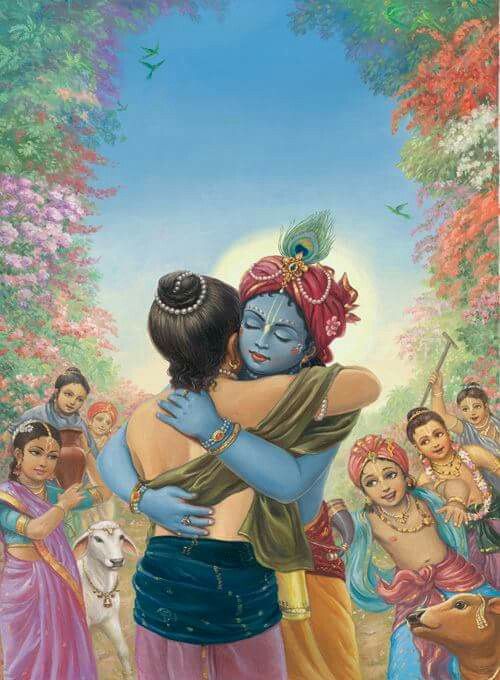



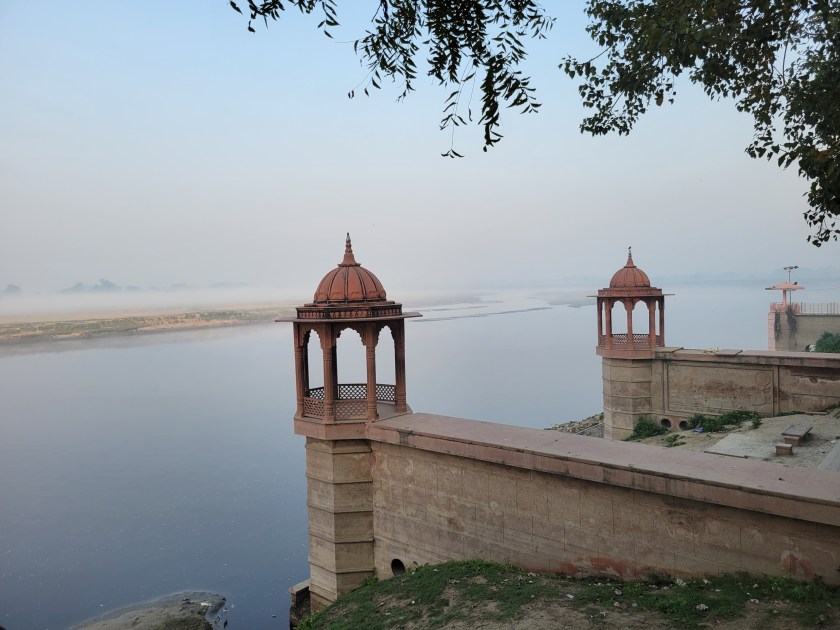

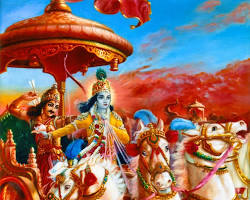

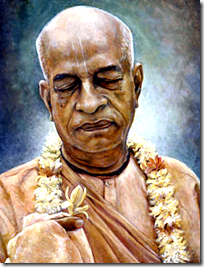


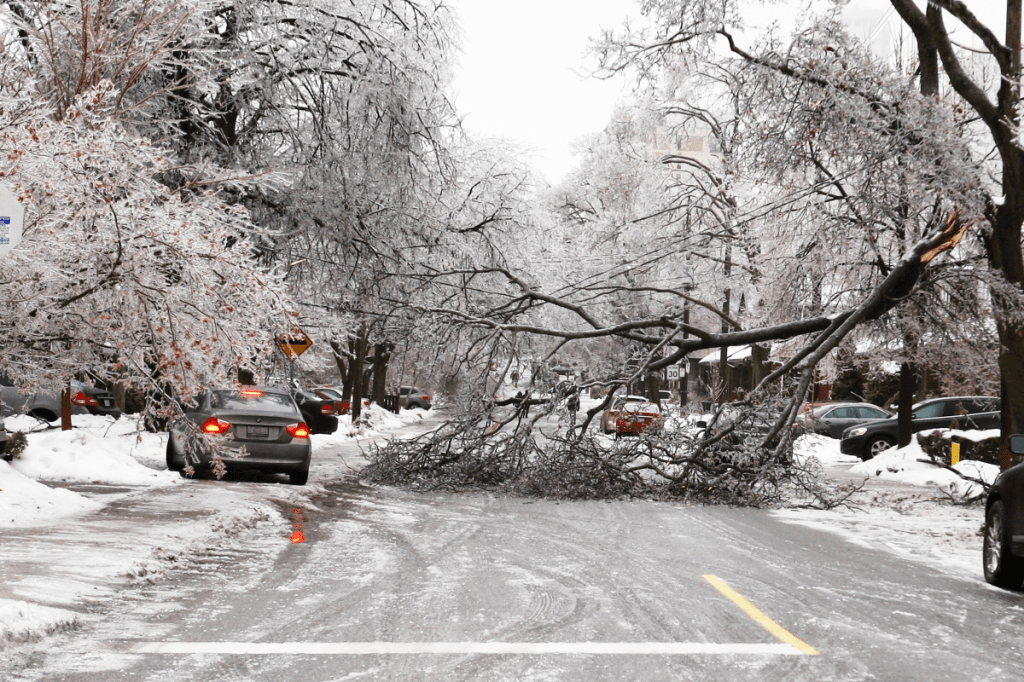




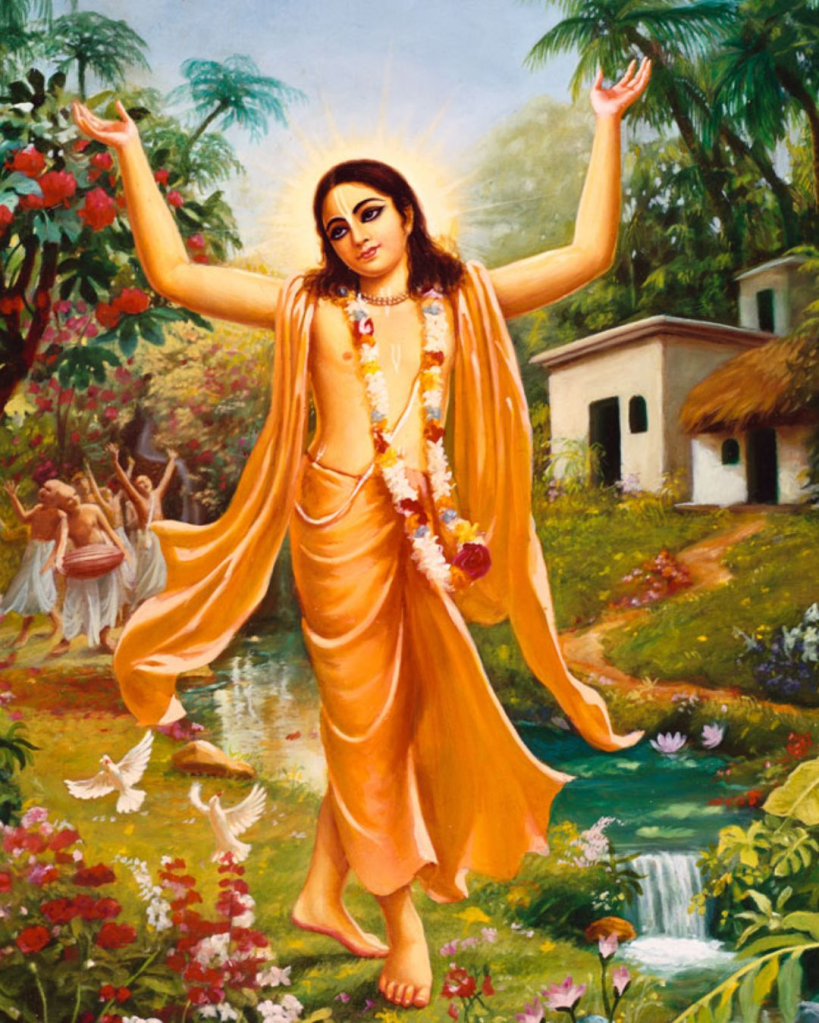



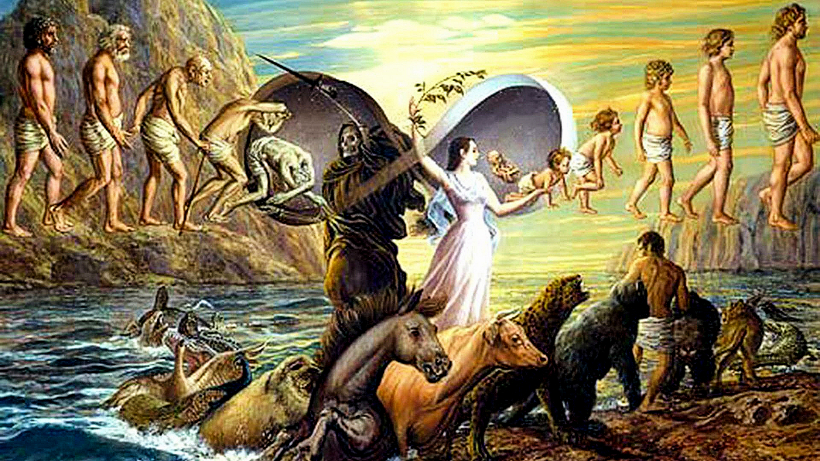

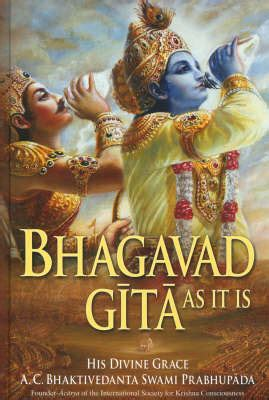
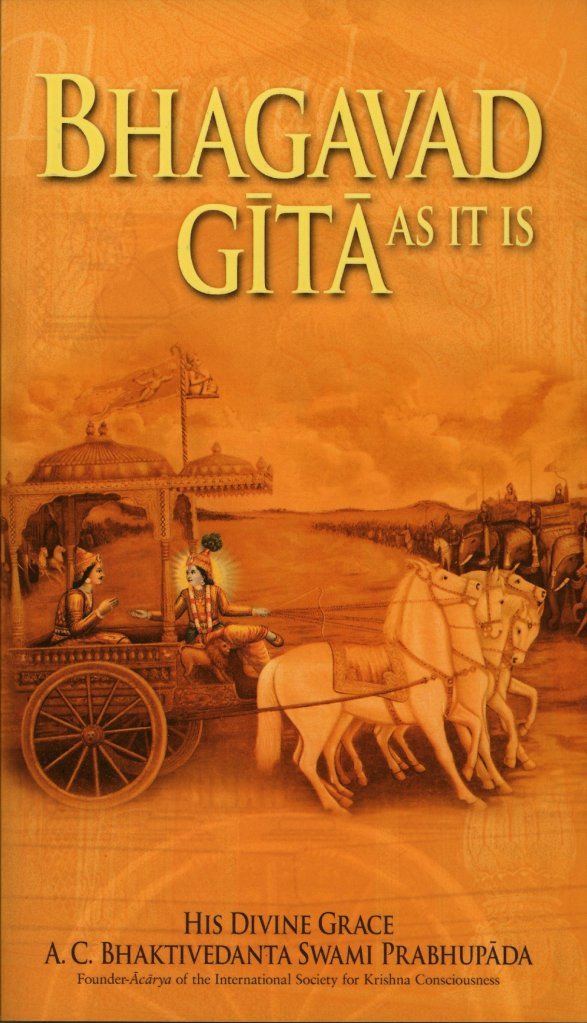


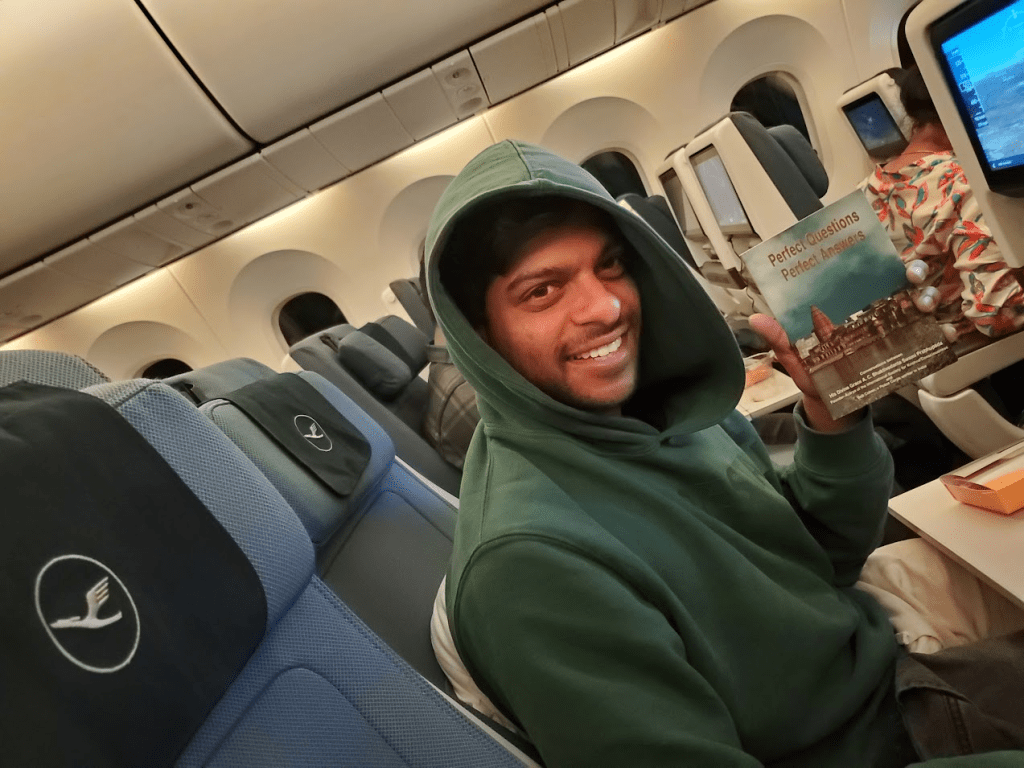
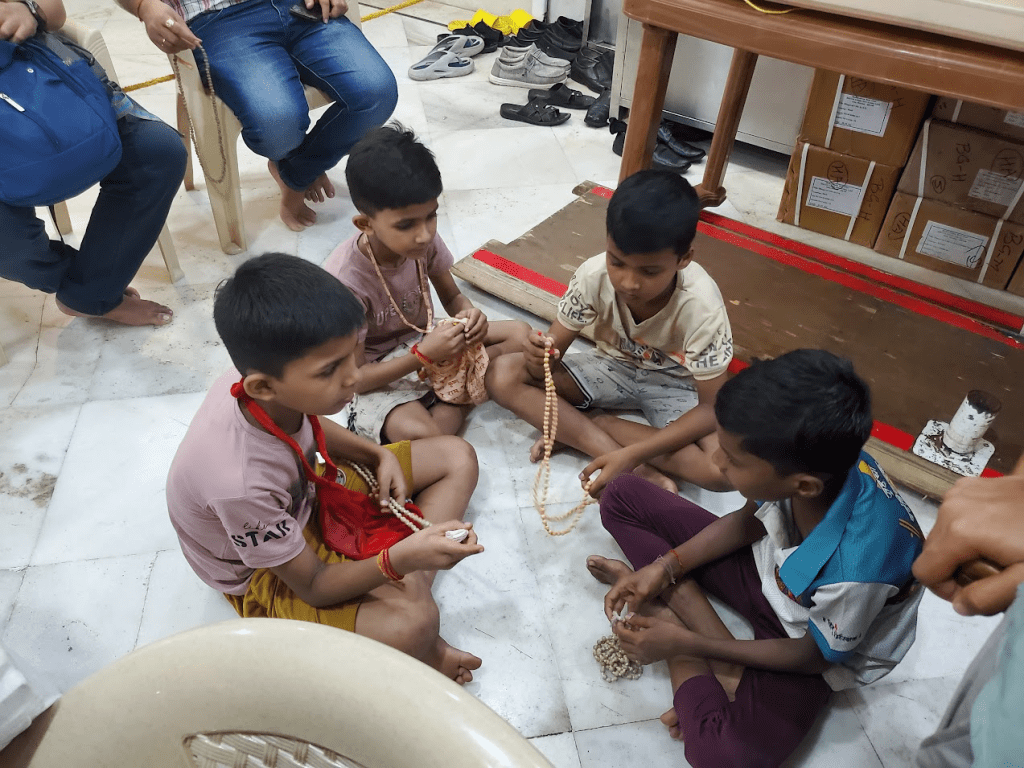
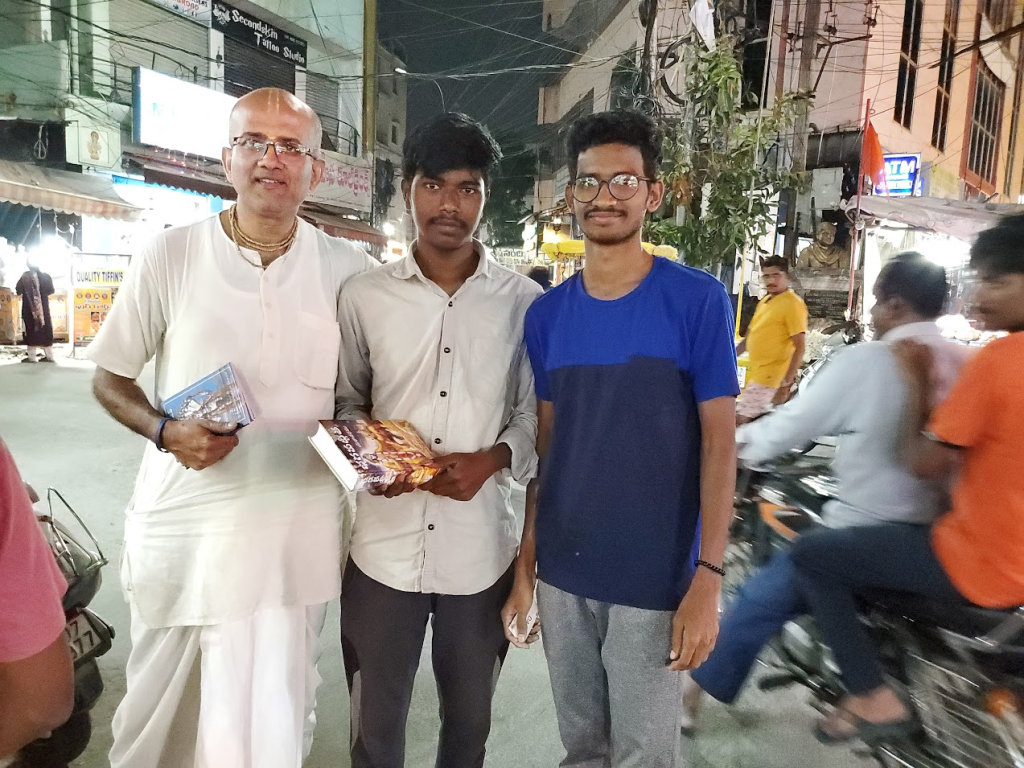
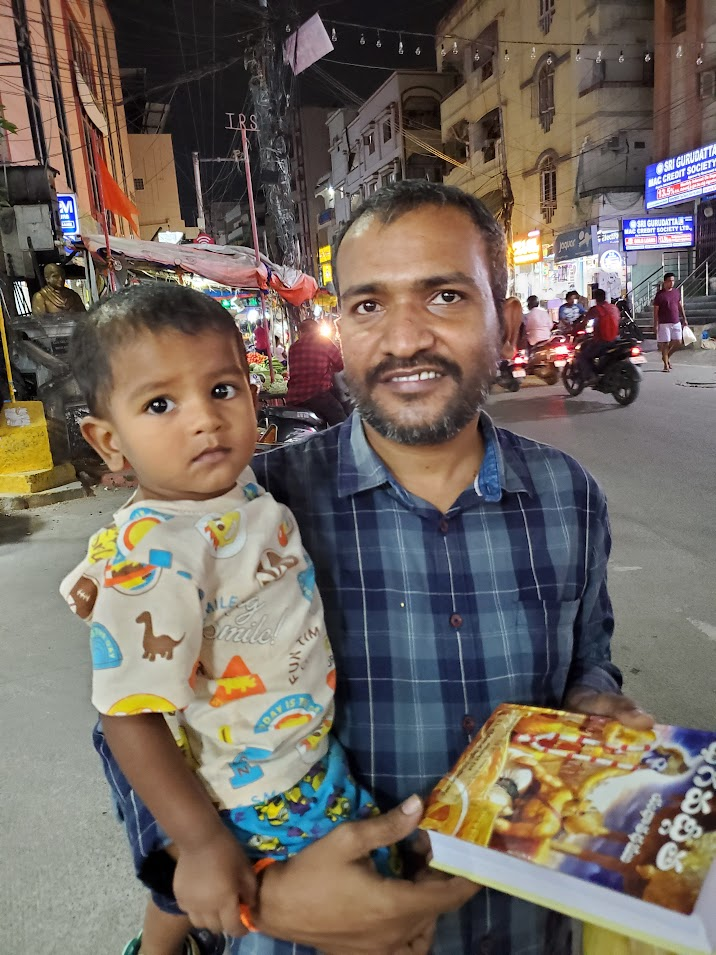


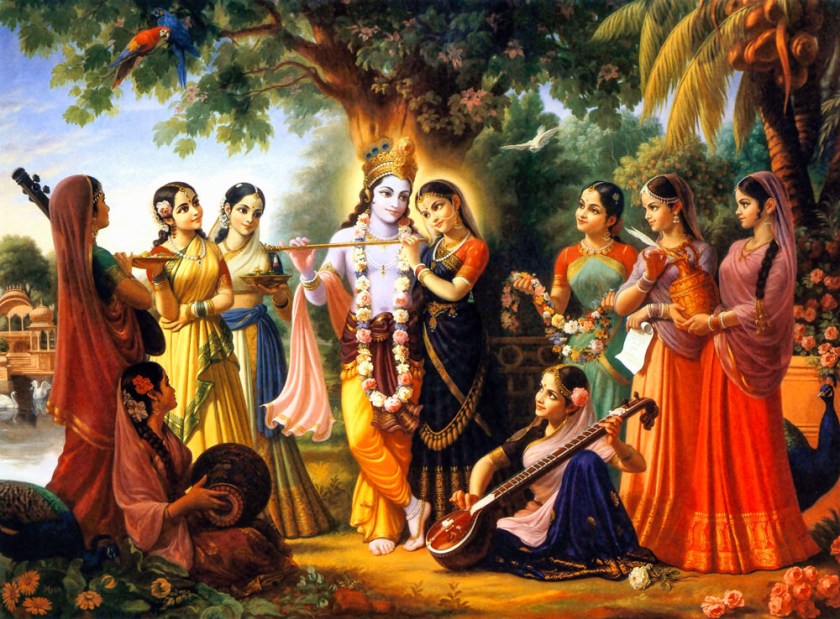
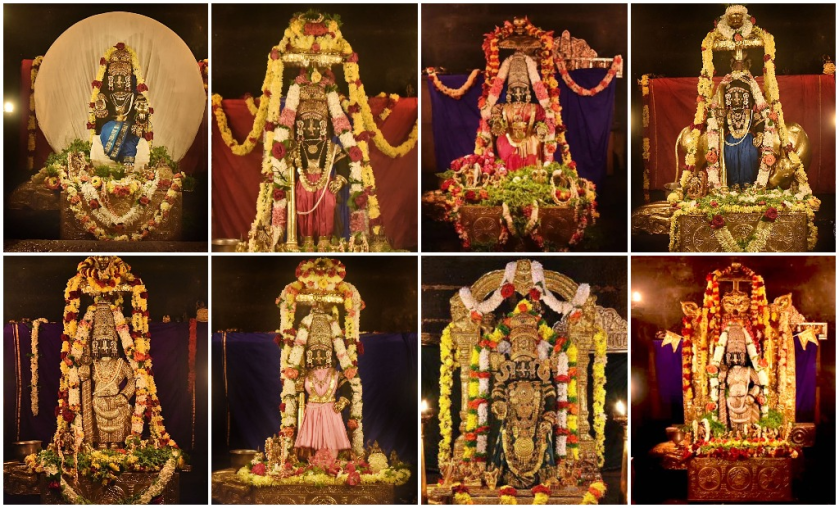
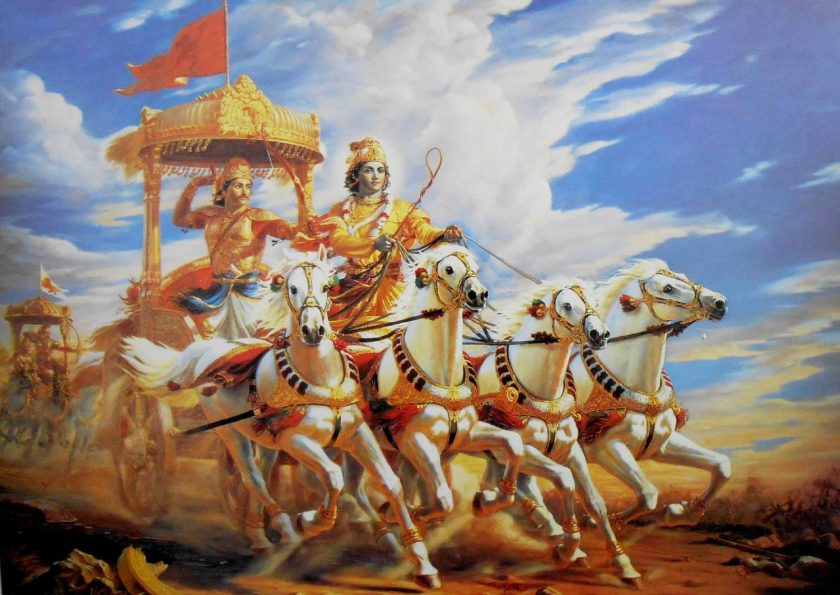






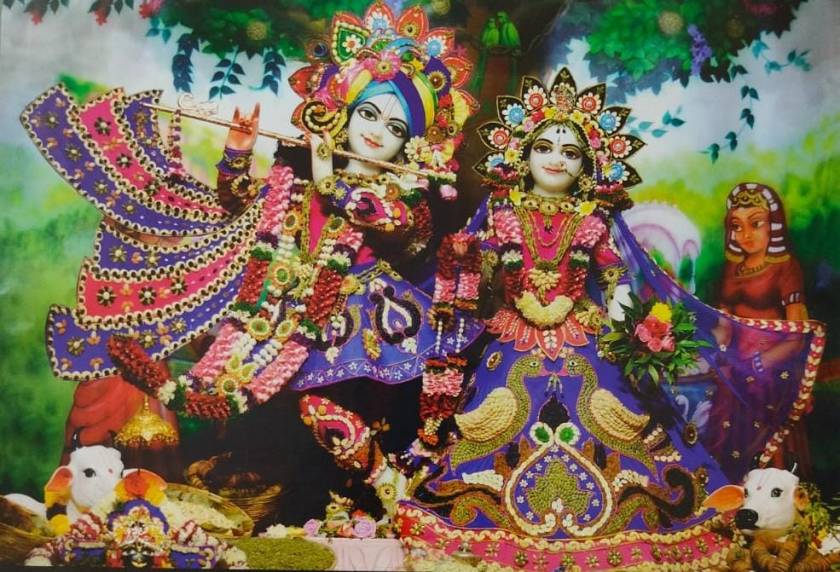
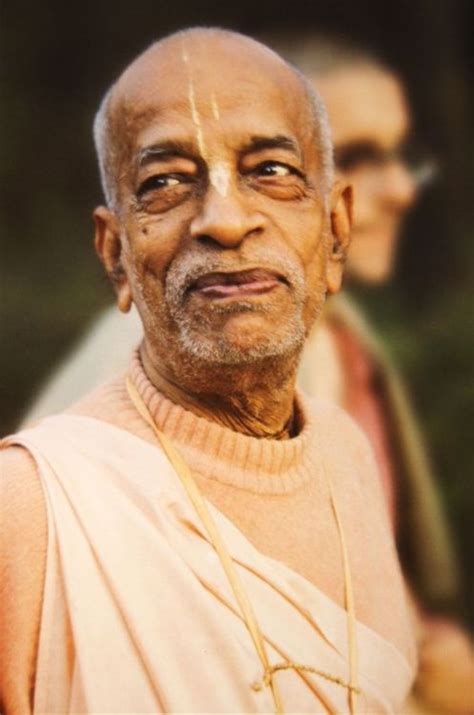

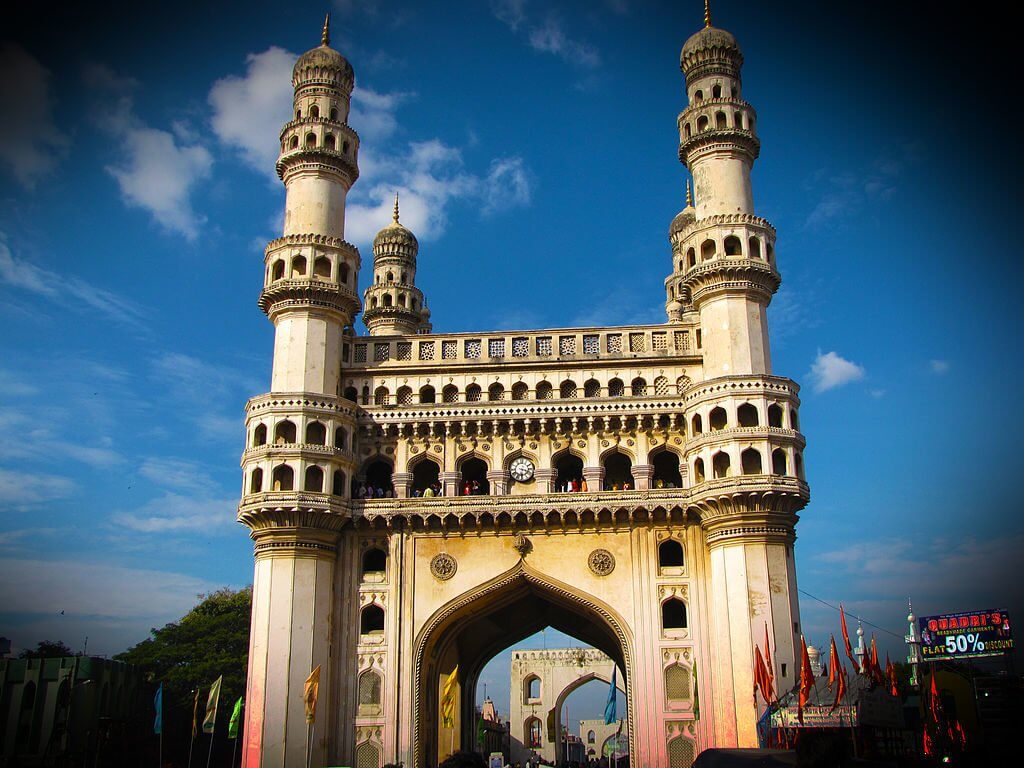







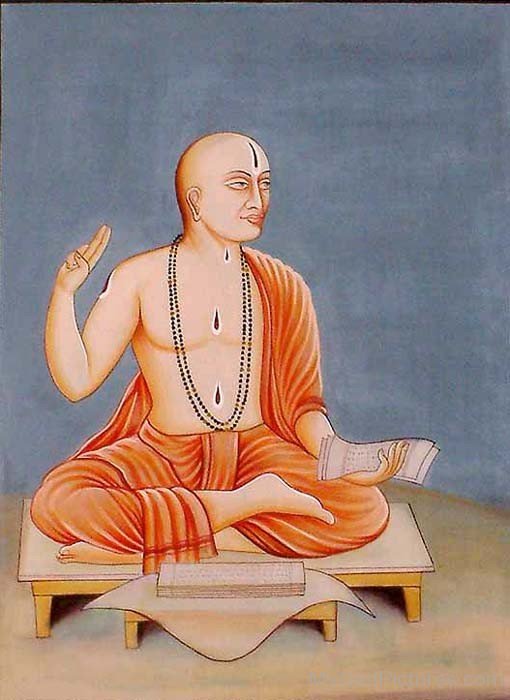



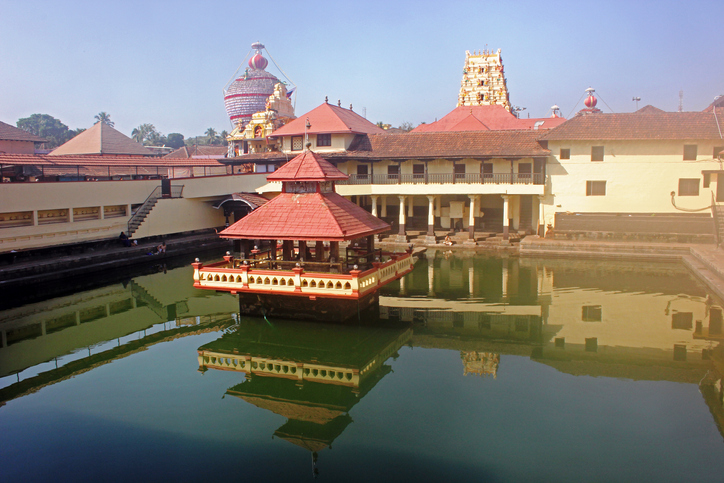
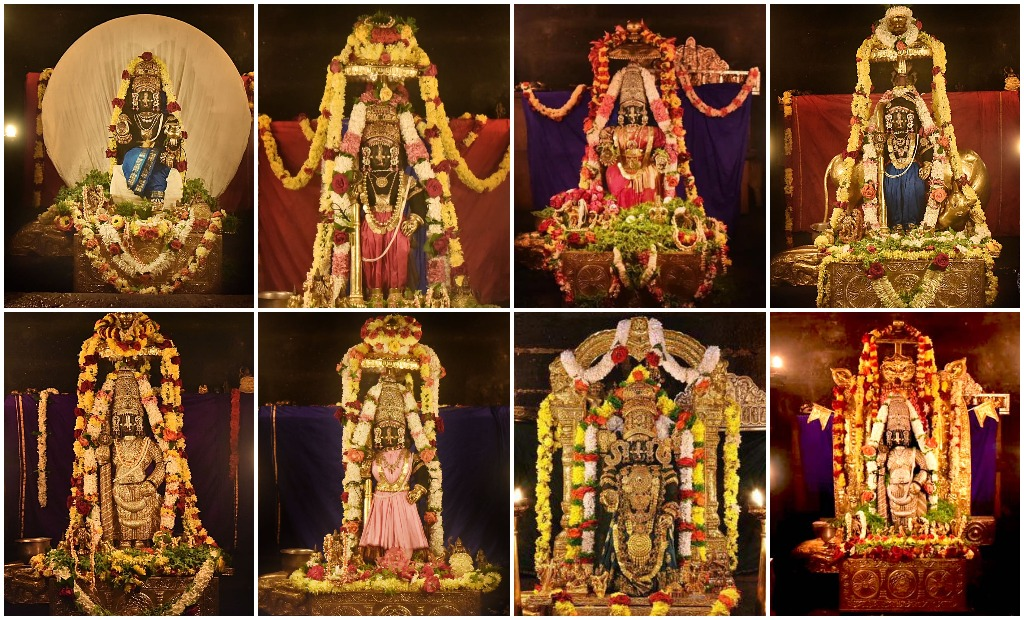
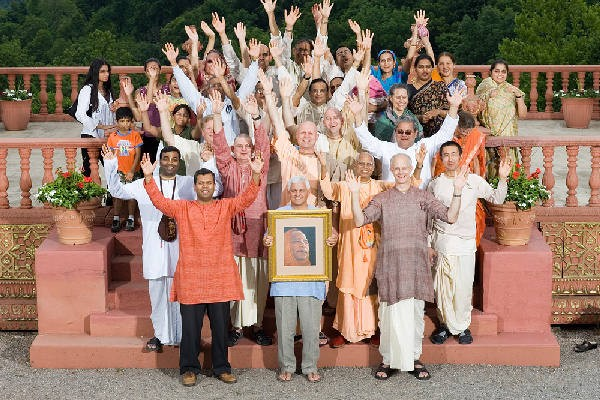


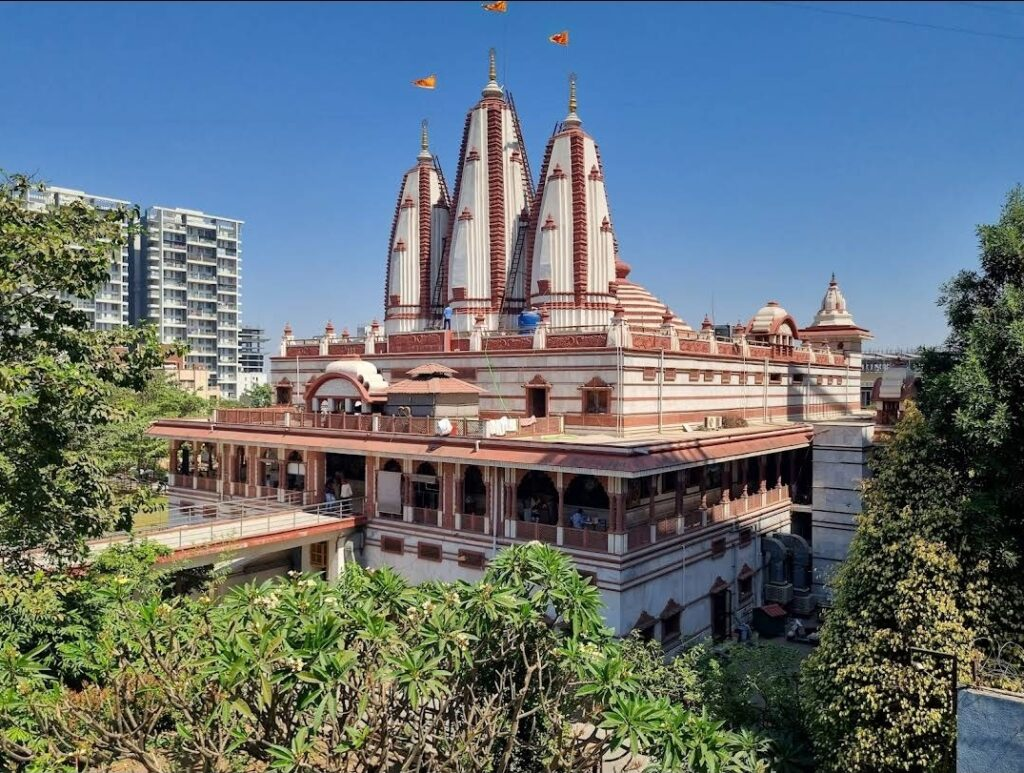
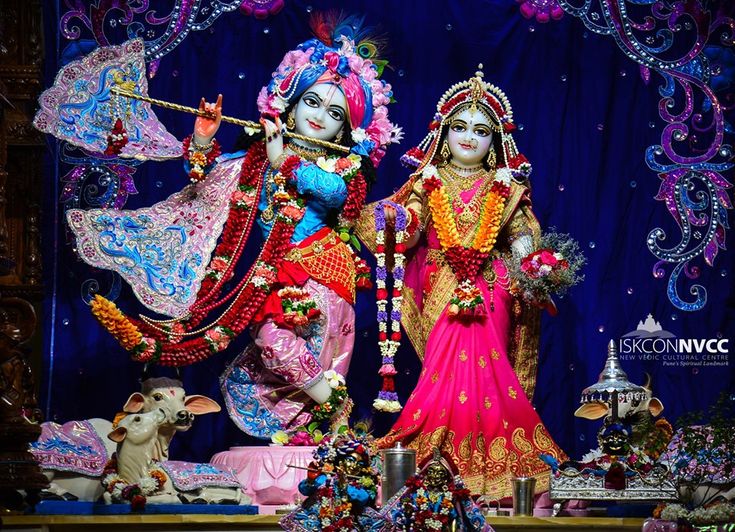
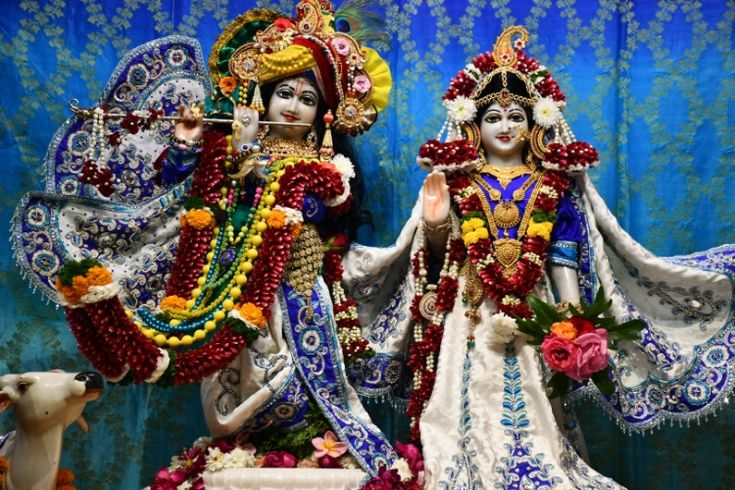
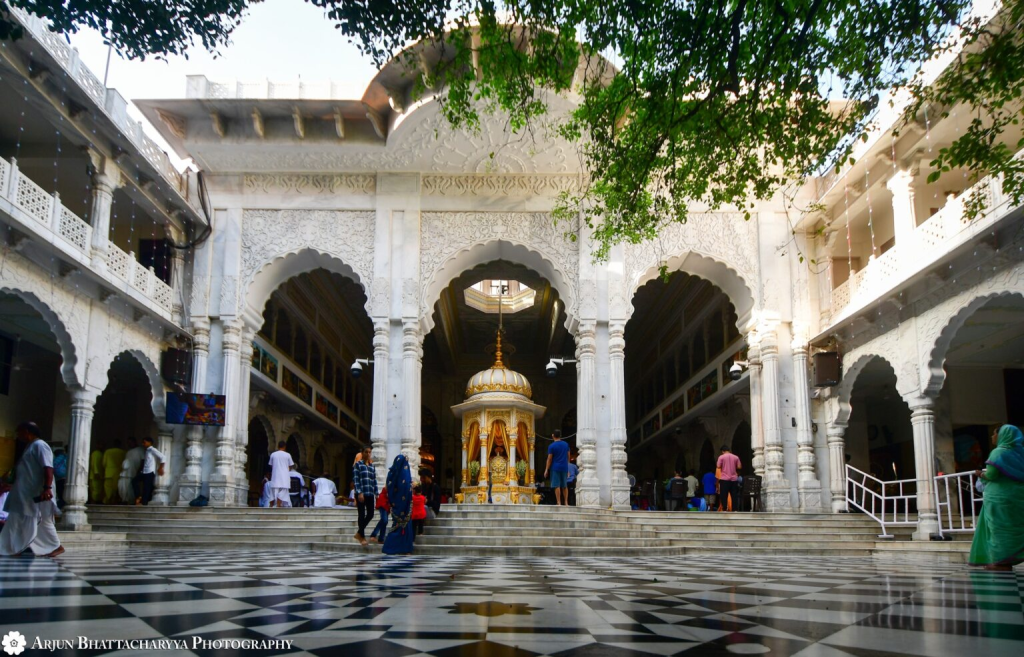


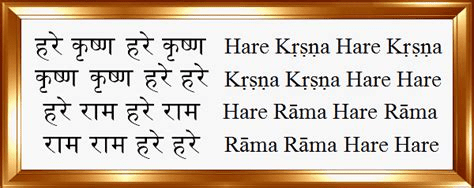















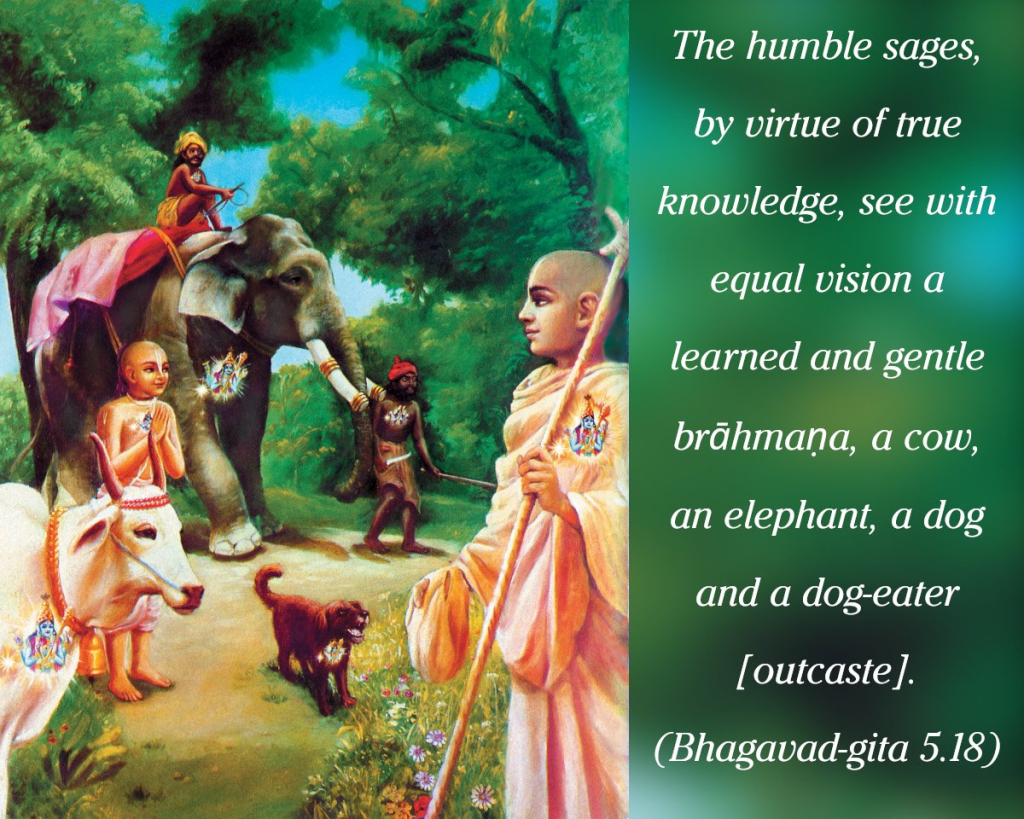





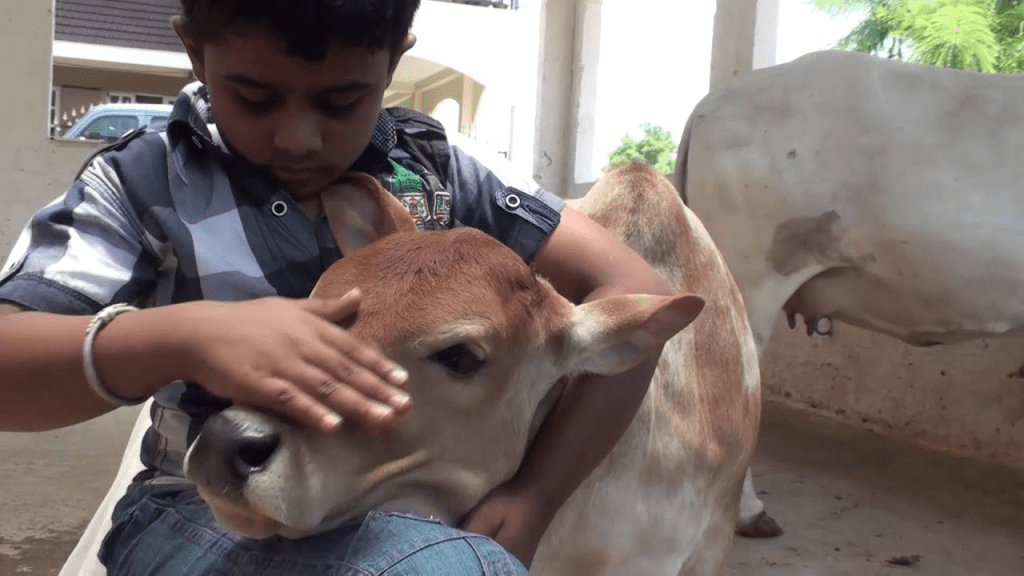








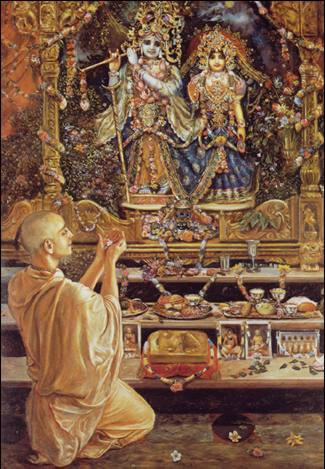


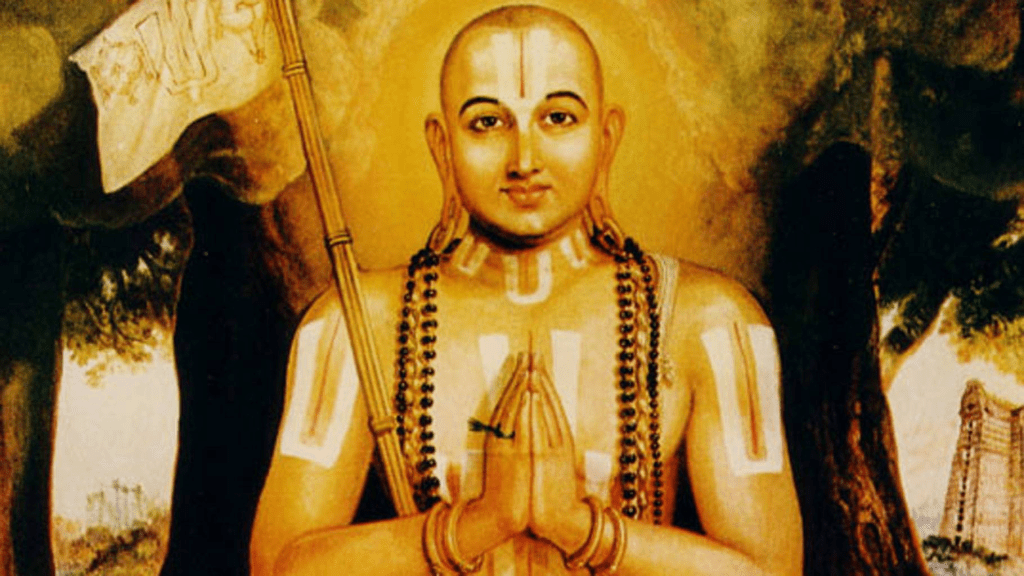


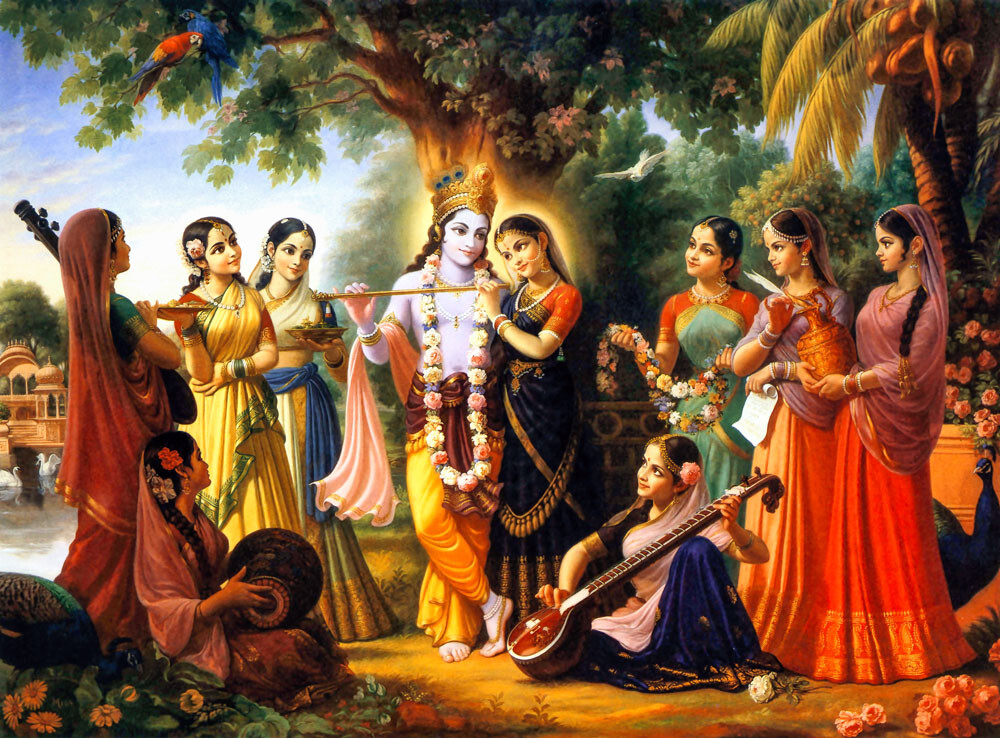

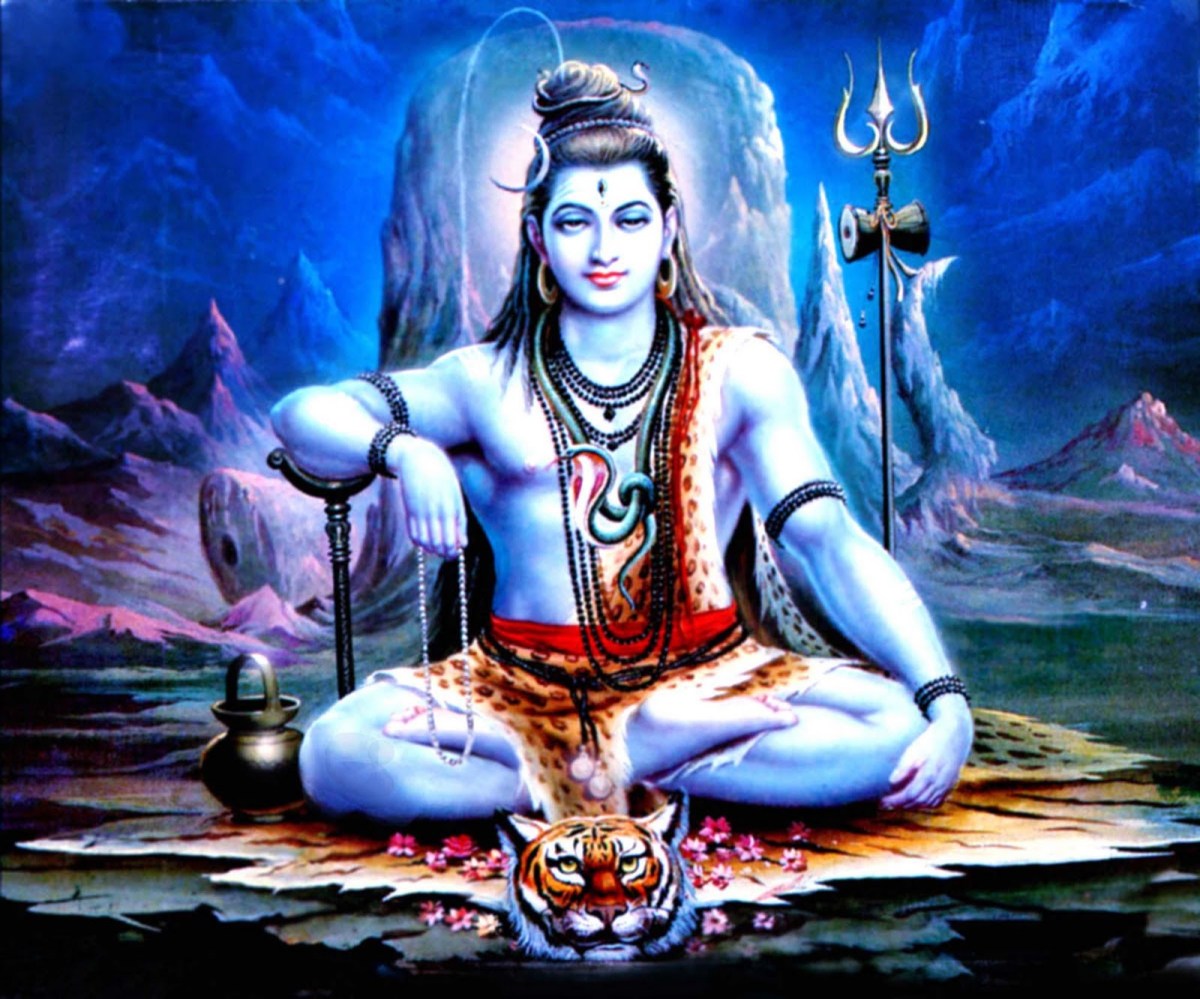

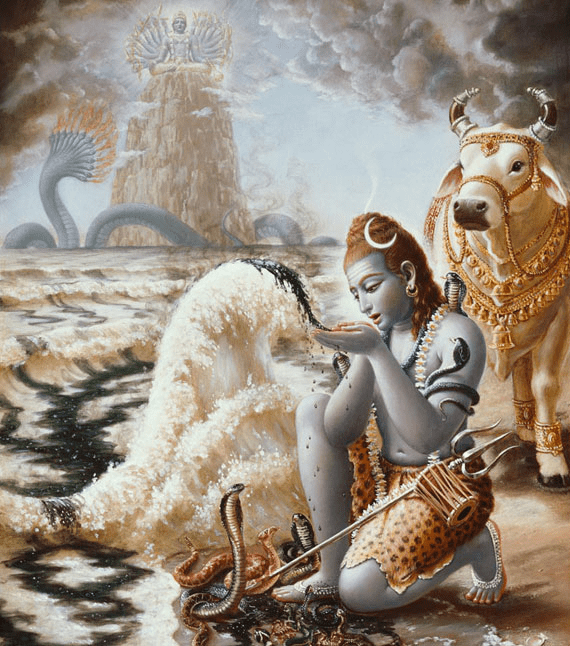







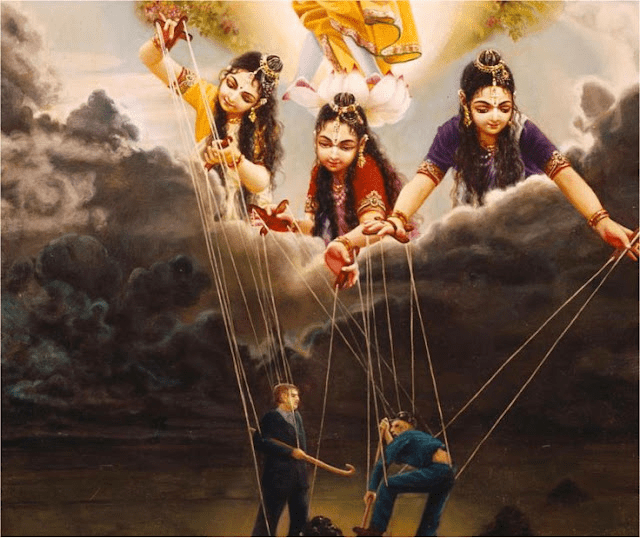










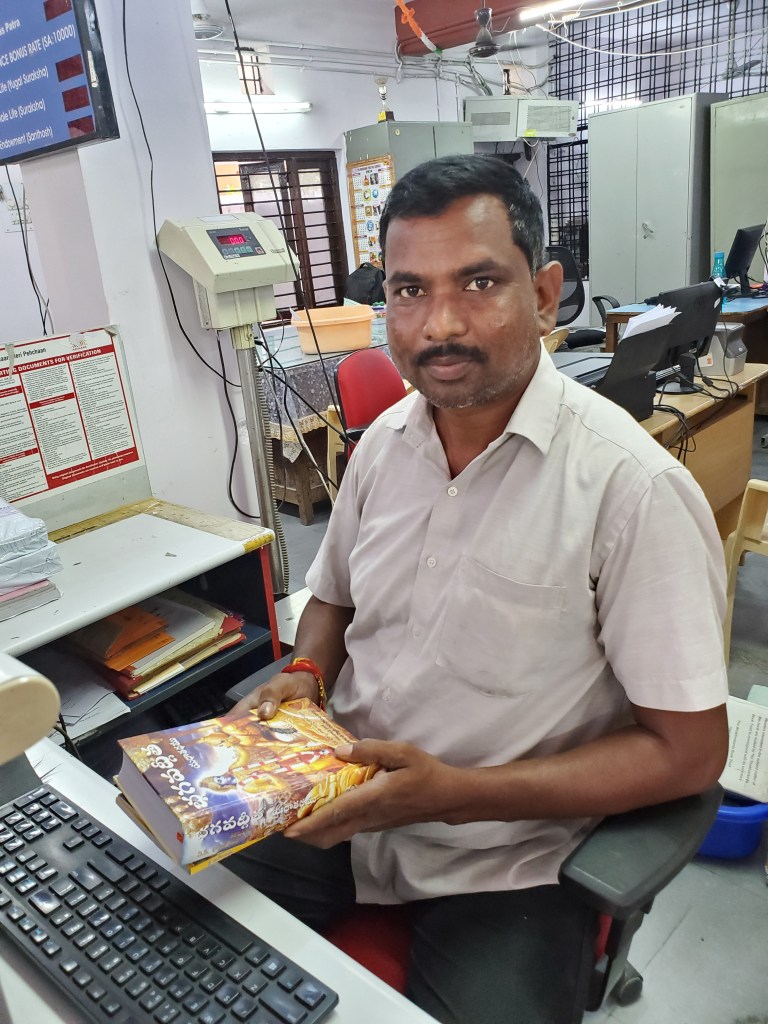
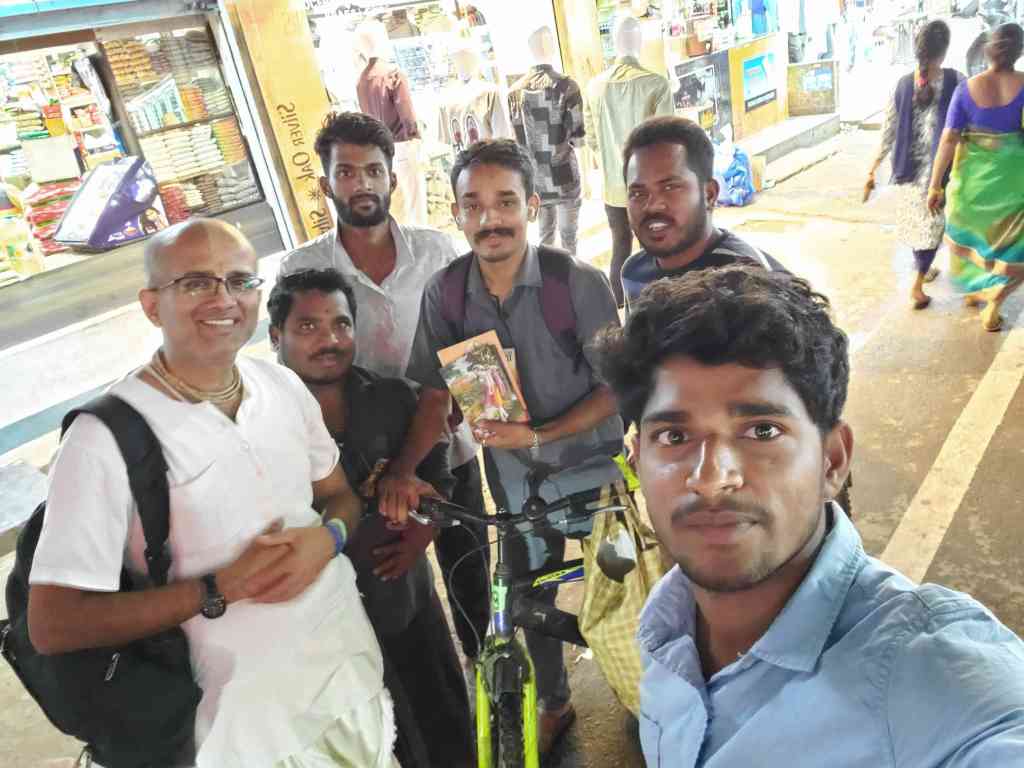
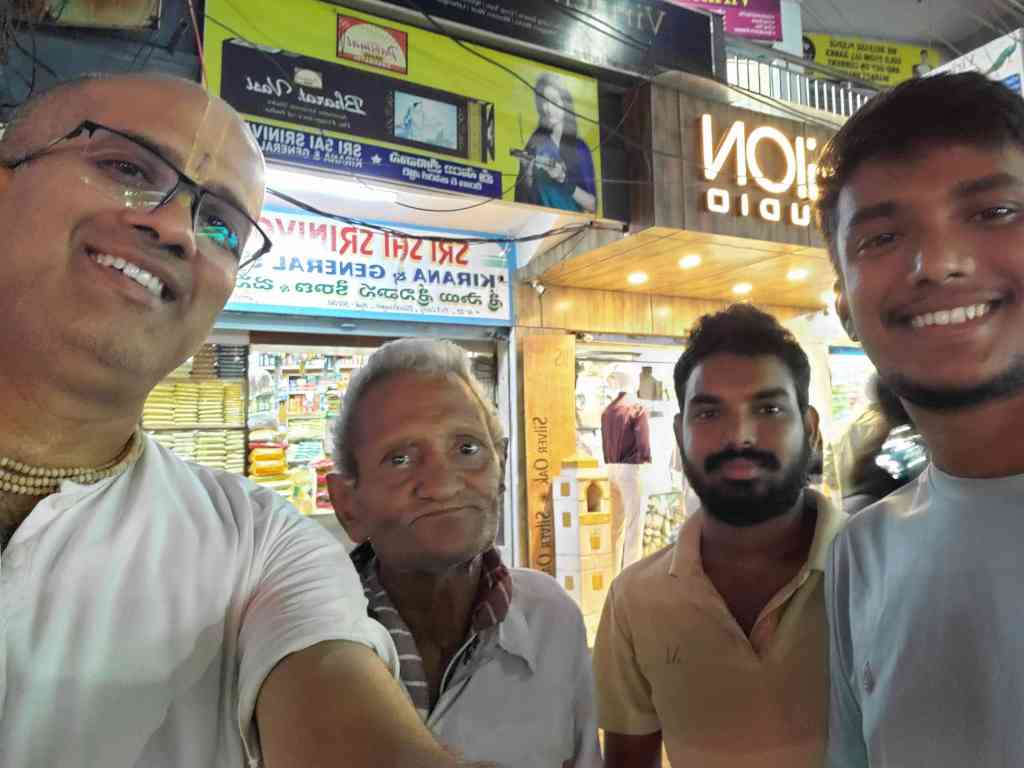
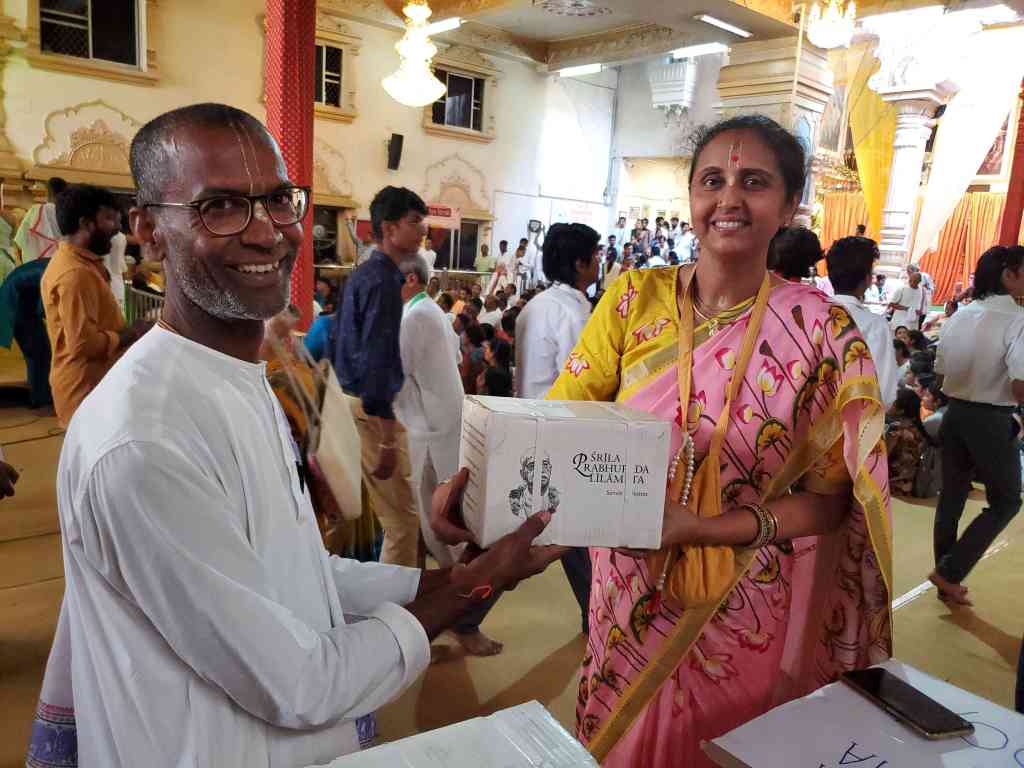


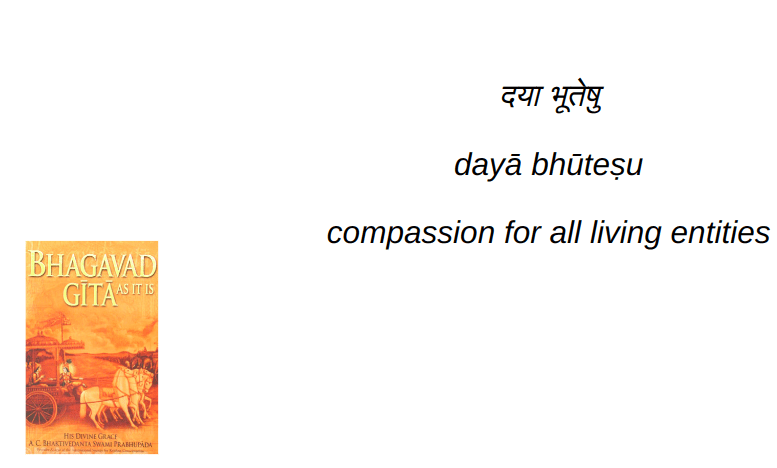






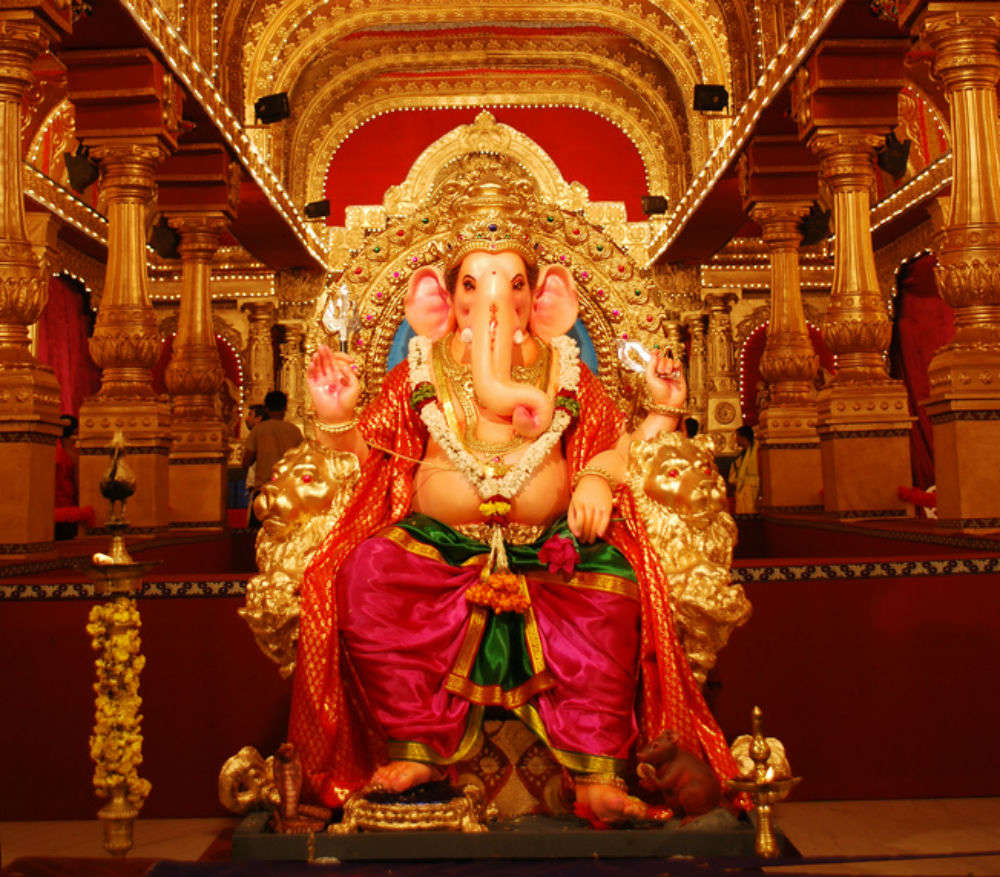
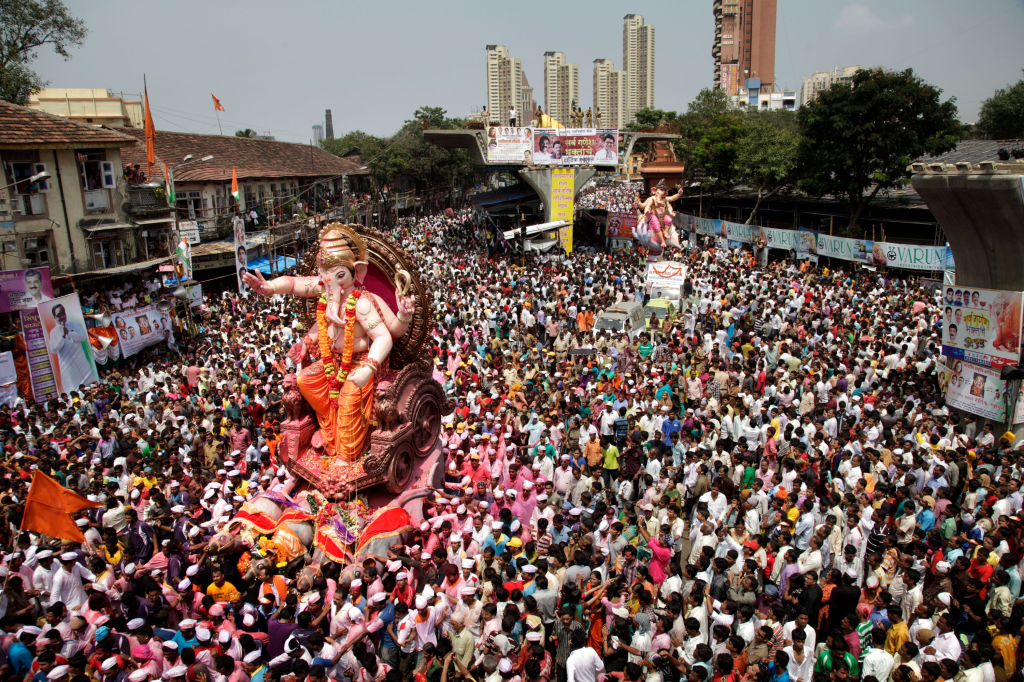


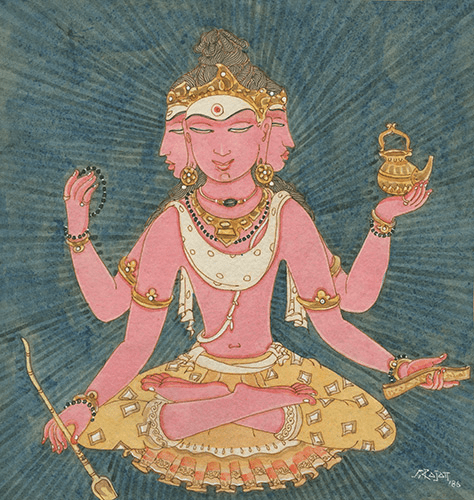




 Freedom through Genuine Spiritual Progress