Join the Mission: Distribute 100,000 Bhagavad Gitas Worldwide

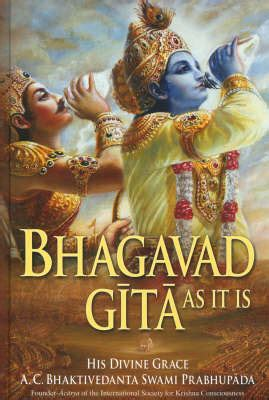
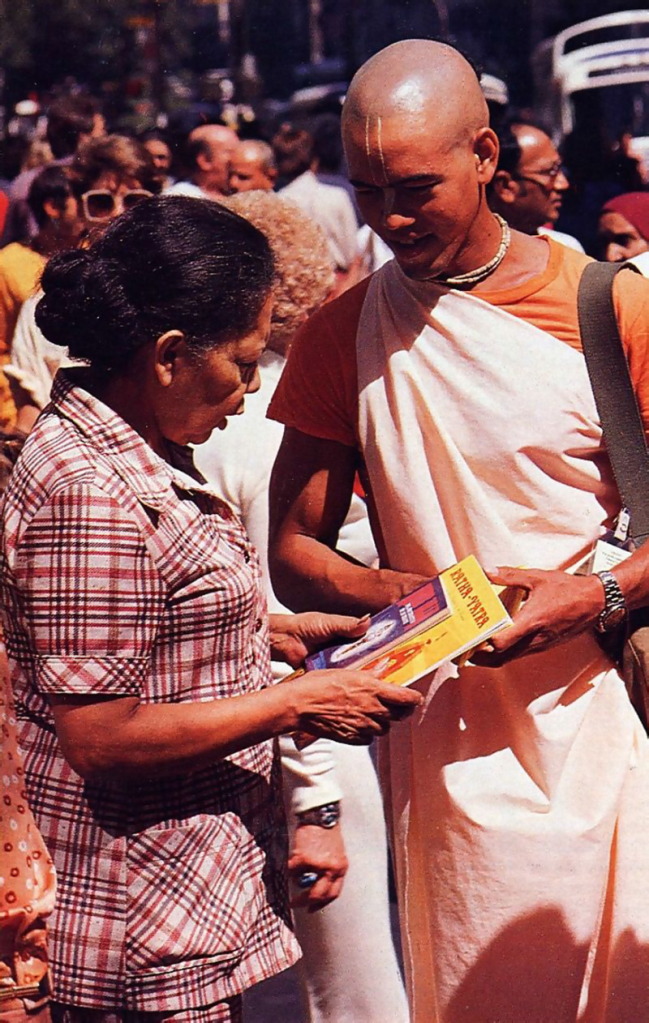
I reflect on a transformative spiritual journey that began 25+ years ago with the Bhagavad Gita As It Is, from a monk in Mumbai. Initially skeptical, I engaged, allowing the Gita to purify my heart through countless readings. Inspired by my benefactor, I set a goal to distribute 100,000 copies of the Gita. Through persistent outreach, I have successfully shared over 10,000 copies worldwide but I recognize the challenge ahead. I invite you to join in this great mission. Can you see the potential for worldwide transformational change as each inspired individual can significantly impact countless lives? Will you help?

Approximately twenty five years ago, I was a young, haughty engineer. I was also an atheist then. I got my copy of the Bhagavad Gita As It Is from a monk in Mumbai (then Bombay). He gave it to me free of charge. The story of my early spiritual journey is here.

The Perfect Escape Manual

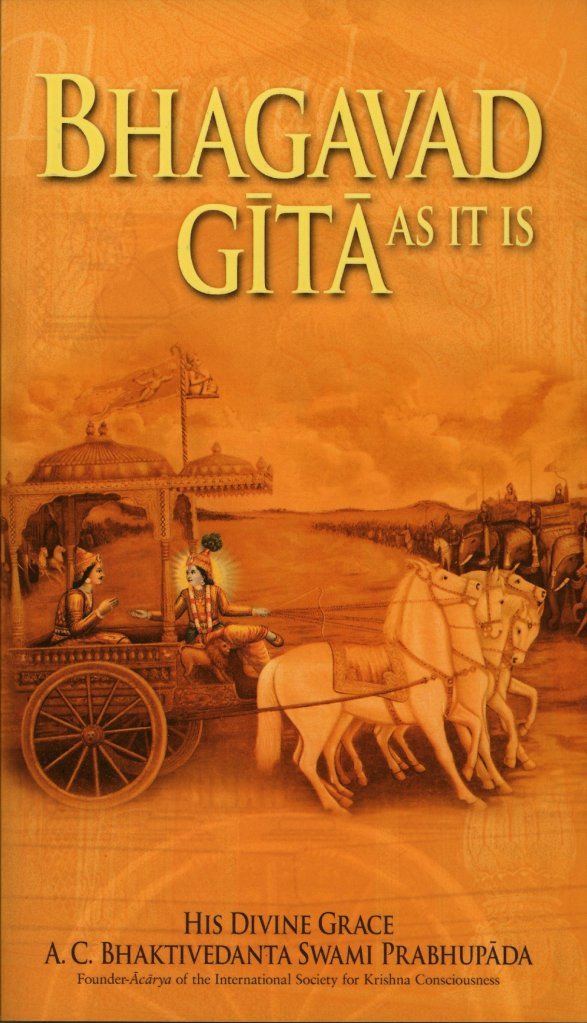
Bhagavad Gita As It Is
Bhagavad Gita As It Is is the perfect escape manual for those trapped in the material realm.

I had read many editions of the Gita before, but they were more or less useless. I had discarded them. I had concluded that the Bhagavad Gita was complete nonsense. I planned to read and discard this one too. So I began to try and find the faults. This book ended up finding my faults, honestly.

My Journey with the Gita

As I travelled all over the world, my Gita went with me. Reflecting on the pure instructions of Krishna cleansed my consciousness. Reading the Bhagavad Gita hundreds of times, the clear writings of His Divine Grace A. C. Bhaktivedanta Swami Prabhupada purified my heart. I wasn’t speaking to anyone about spiritual life during those years. It was just me and the book…It was many years until I actually came into the association of the devotees. It was not just philosophy, but also a full manual to living life in a joyful spiritual way.

That interaction with our unknown hero, the Hare Krishna monk, has been the single most transformational one in my life.

Paying It Forward: The 100,000 Gita Goal

I began to gratefully consider how to respond… I didn’t know by benefactor by name or by face. I didn’t have any contact information for him. While I couldn’t do anything for him, I decided to pay it forward .

Impulsively, I think, at first, but with great conviction after, I picked a target to distribute 100,000 of those Bhagavad Gita As It Is, or equivalent. I don’t know how I came up with the number. But now it’s ingrained. I have committed this to myself. I have committed this to God. I have given my word to my Guru. I have asserted it to so many others. I’ve got to do it, or die trying.

It’s got to be done, the 100,000 Gitas or equivalent. And after 18 years of trying, I’m finally past the 10,000 mark. So 10% there. It’s not totally hopeless.

Testing a New Approach

But recently, I began to have a sneaking suspicion that I couldn’t do it alone. So I decided to test it out.

I continued to distribute Srila Prabhupada’s books as I did, hand-to-hand, person-to-person. I went into apartment buildings. I went to street corners. I went to busy intersections with a lot of people milling about. I approached strangers late at night. I distributed books on buses, trains, planes. I called people. I wrote online. I mailed books to people I’d met. Sometimes they gave me a donation. At other times I covered the cost of the books myself.

As I approach the end of my corporate career, I realized something important. I can’t continue to cover the costs myself for much longer!

The Reality of Spiritual Book Distribution

I quickly discovered that it’s almost impossible to even give spiritual books away. People who are uninterested or against the ideas in the books just do not want them. And to someone who is interested, they will gladly donate generously. There are the friends and family who have donated so much. There is the lady who emptied her bank account on a late night for a book that cost $1. Recently an auto mechanic did the “give you everything in my account right now” thing.

I also compared my hand-to-hand distribution score with the score I got from others’ help. And in the last few years, others have helped me distribute more books than I have distributed myself!

So this boils down the book distribution project down to finding interested people. An interested person wants a book for themselves. Or someone interested wants to help me distribute them to others.

I can only hit the 100,000 goal with others’ help!

The Numbers Don’t Lie

On average, whenever I go out to distribute books, very few people interact with me. Usually, about one in a hundred people will engage with me in any way. The interactions are on a wide spectrum. Some are quite positive. Some are nasty. Of those who do interact in any way, about one out of ten will take a book. Mostly it’s a small book. Rarely it is a Bhagavad Gita. And even more rarely, someone will get a full set of books, like the Srimad Bhagavatam, or the Chaitanya Charitamrita. All in all, it takes me about 10,000 attempts to distribute the equivalent of a single Bhagavad Gita.

My lifetime total is 100,000 Gitas. The last time I counted, I had about 90,000 to go.

The Impossible Math

Simple Math tells me that it will take me about 900,000,000 attempts. That is 900 Million. The human population of our planet is 8.2 Billion. I will need to approach 1 out of every 9 people on this planet. All this to distribute the equivalent of 90,000 Bhagavad Gitas hand-to-hand! This still sounds possible somehow, through my website, through my various outings all over the world.

But, given that a successful book distribution takes around 10 minutes on average including the unsuccessful interactions… that is 900,000 minutes, or 15,000 hours. I can presently go out 108 times a year. If each of my outings were to last just 2 hours, I’d need to go out 7,500 times. And at my current rate, that would take me another 70 years. I’m already over fifty years of bodily age in my current lifetime… It is unlikely I will live to be 120 years old! And even if I were to live that long, my “useful lifespan” would be much shorter than that.

Long story short. I really can’t do this alone. I need help.

Why can’t everyone just get the Gita for themselves?

That’s a valid question. After all, God helps those who helps themselves, right?Why should I or anyone else go through all this trouble? There are some key reasons why someone can’t get the Gita themselves:

  1. They don’t know about it yet – that’s why we reach out relentlessly
  2. They haven’t found a genuine edition of the Gita yet – most versions are full of motivated concoctions – I had read so many editions before, but that monk helped me get the pure message of the Gita, so can we help others
  3. They just can’t afford it – I know many souls who just can’t afford to buy the book, in India, in Africa, in South America, and elsewhere
  4. They don’t realize the value of the Gita – there are many who can very well afford to buy a copy, but don’t know the value – giving them a taste of the Gita will help them tremendously, and they will support the cause themselves

A donated copy of the Bhagavad Gita removes those barriers. Distributors can freely distribute to anyone who is interested.

That monk gave me a copy of the Bhagavad Gita As It Is free of charge. Someone sponsored that copy. So I have yet another unknown benefactor!

Being an Instrument

So how to do it?

It is not that I have to personally distribute the Bhagavad Gitas myself. I just need to be an instrument in the distribution of the Gitas. We know that Krishna advised Arjuna “nimitta-mātraṁ bhava“, “be but an instrument” (BG 11.33). Since the instructions of the Gita apply to all of humanity, they also apply to me, and to you. We can all choose to be instruments in the hands of God.

How can we be an instrument?

I can be an instrument if I can inspire a lot of people, each doing a little bit! And you can be an instrument if you choose to help.

We can be like a scalpel in the hands of the expert surgeon. We can work to remove the cancer of a Godless society together.

An Invitation for you to Join

य इदं परमं गुह्यं मद्भ‍क्तेष्वभिधास्यति ।
भक्तिं मयि परां कृत्वा मामेवैष्यत्यसंशय: ॥ ६८ ॥

ya idaṁ paramaṁ guhyaṁ
mad-bhakteṣv abhidhāsyati
bhaktiṁ mayi parāṁ kṛtvā
mām evaiṣyaty asaṁśayaḥ

For one who explains this supreme secret to the devotees, pure devotional service is guaranteed, and at the end he will come back to Me.

https://vedabase.io/en/library/bg/18/68/

न च तस्मान्मनुष्येषु कश्चिन्मे प्रियकृत्तम: ।
भविता न च मे तस्मादन्य: प्रियतरो भुवि ॥ ६९ ॥

na ca tasmān manuṣyeṣu
kaścin me priya-kṛttamaḥ
bhavitā na ca me tasmād
anyaḥ priya-taro bhuvi

There is no servant in this world more dear to Me than he, nor will there ever be one more dear.

https://vedabase.io/en/library/bg/18/69/

You, my dear reader, can surely help. If you help me, then together, we can change another 90,000 lives at least. The collateral improvement from this can be much bigger. Each of those lives can impact another 90,000, and each of those another 90,000… Don’t you want to save the world with Krishna’s wisdom from the Bhagavad Gita?

We can distribute Bhagavad Gitas anywhere on the planet. Whether it is Africa, or North America, or South America, Europe, Australia, or Asia. Any country in the world. Any of the 90+ languages the Bhagavad Gita is now available in.

Will you please help? das@dasadas.com

“Idol” and “Mythology” – Two words that are offensive to Vedic culture

Why should we avoid the terms “idol” and “mythology” when discussing Vedic culture? These terms undermine the Krishna and Vedic scriptures. Krishna is the Supreme Personality of Godhead. The Vedic scriptures expound the Supreme Absolute Truth and Universal history. The original misunderstanding stems from historical attacks on Vedic culture. What is actual idol worship? What is actual mythology? Read more to find out!

These two words “idol” and “mythology” should be avoided like the plague when speaking about Vedic Culture. Vedic Culture means the culture that increases our love for Krishna. Never use the words “idol” and “mythology” when speaking about Vedic culture, or Vishnu / Krishna.

Unfortunately, this happens a lot in India, which is sad.

I give dictionary meanings, before elaborating further.

Idol: /īd′l/ A false god. One that is adored, often blindly or excessively.

Mythology: /mĭ-thŏl′ə-jē/ A body or collection of myths belonging to a people and addressing their origin, history, deities, ancestors, and heroes. A body of myths associated with an event, individual, or institution.

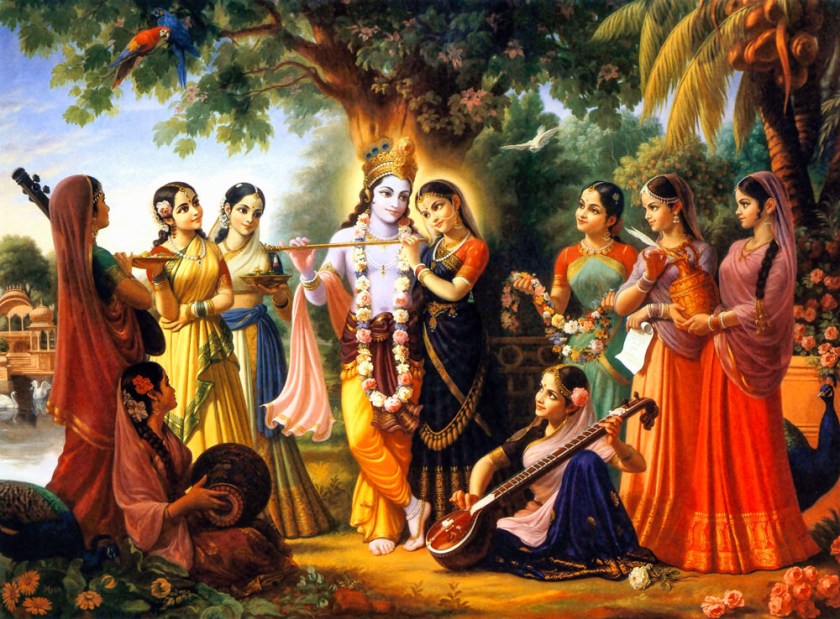
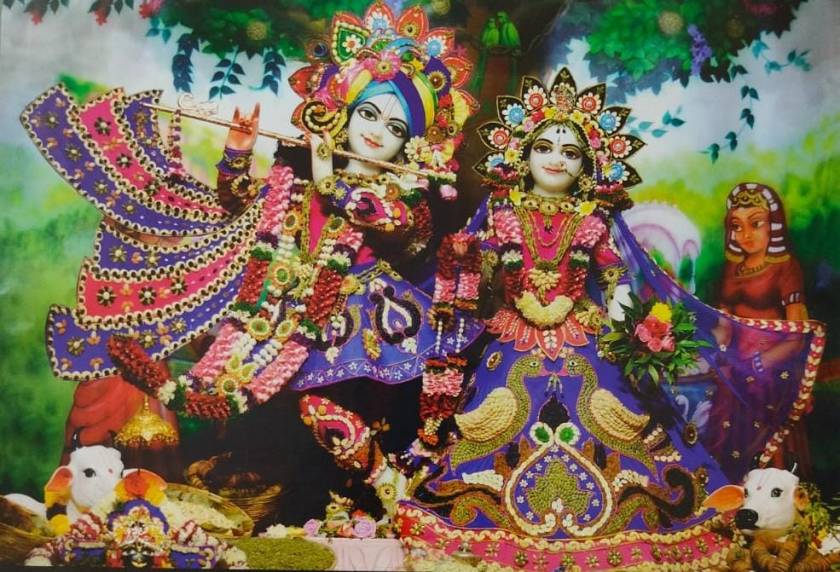
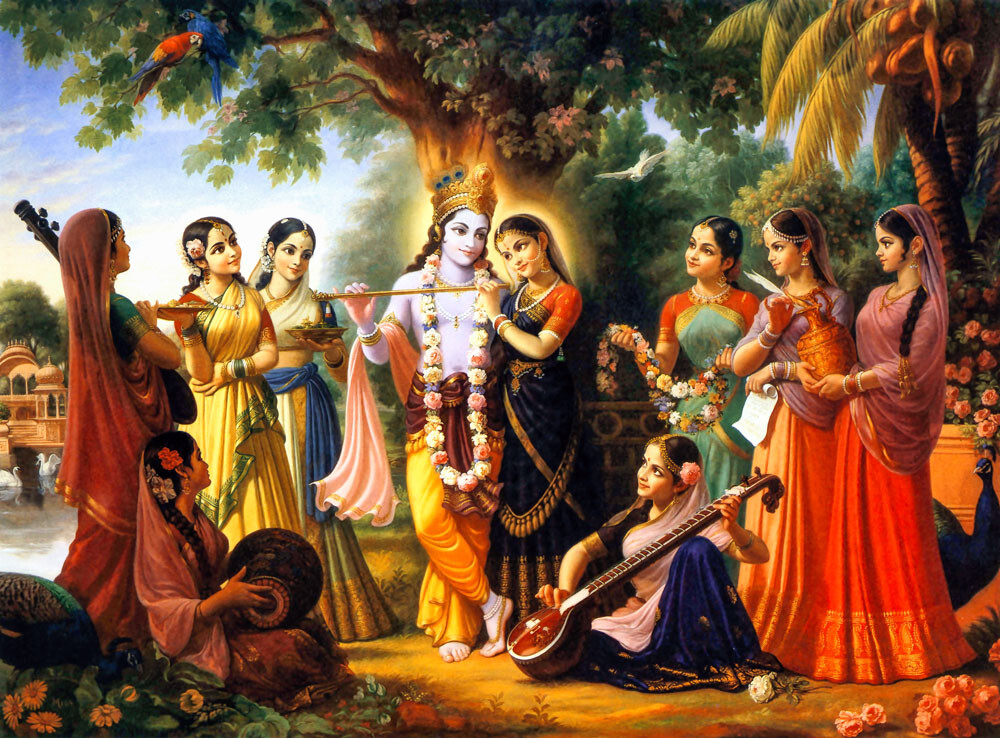
Radha Krishna and the 8 Topmost Gopis

Krishna is the Supreme Personality of Godhead. Krishna is known in other languages as Allah, Jehovah, Yahweh, and many other languages.

ईश्वरः परमः कृष्णः सच्चिदनन्द विग्रह:
अनदिरदिर् गोविन्दः सर्व कारण कारणं ।।१।।

īśvaraḥ paramaḥ kṛṣṇaḥ
sac-cid-ānanda-vigrahaḥ
anādir ādir govindaḥ
sarva-kāraṇa-kāraṇam

Kṛṣṇa who is known as Govinda is the Supreme Godhead. He has an eternal blissful spiritual body. He is the origin of all. He has no other origin and He is the prime cause of all causes. https://vedabase.io/en/library/bs/5/1/

Krishna is the Supreme Absolute Truth.

This means that Krishna’s name, form, pastimes, paraphernalia, abode, associates, etc., are all on the Absolute platform.

नाम चिन्तामणि कृष्णस्चैतन्य रस विग्रहः |
पूर्ण शुद्धो नित्य मुक्तो अभिन्नत्वं नाम नामिनोः ||

nāma cintāmaṇiḥ kṛṣṇaś
caitanya-rasa-vigrahaḥ
pūrṇaḥ śuddho nitya-mukto
’bhinnatvān nāma-nāminoḥ

“ ‘The holy name of Kṛṣṇa is transcendentally blissful. It bestows all spiritual benedictions, for it is Kṛṣṇa Himself, the reservoir of all pleasure. Kṛṣṇa’s name is complete, and it is the form of all transcendental mellows. It is not a material name under any condition, and it is no less powerful than Kṛṣṇa Himself. Since Kṛṣṇa’s name is not contaminated by the material qualities, there is no question of its being involved with māyā. Kṛṣṇa’s name is always liberated and spiritual; it is never conditioned by the laws of material nature. This is because the name of Kṛṣṇa and Kṛṣṇa Himself are identical.’ https://vedabase.io/en/library/cc/madhya/17/133/

Take a second look at the dictionary meaning of “idol”…

Idol: /īd′l/ A false god. One that is adored, often blindly or excessively.

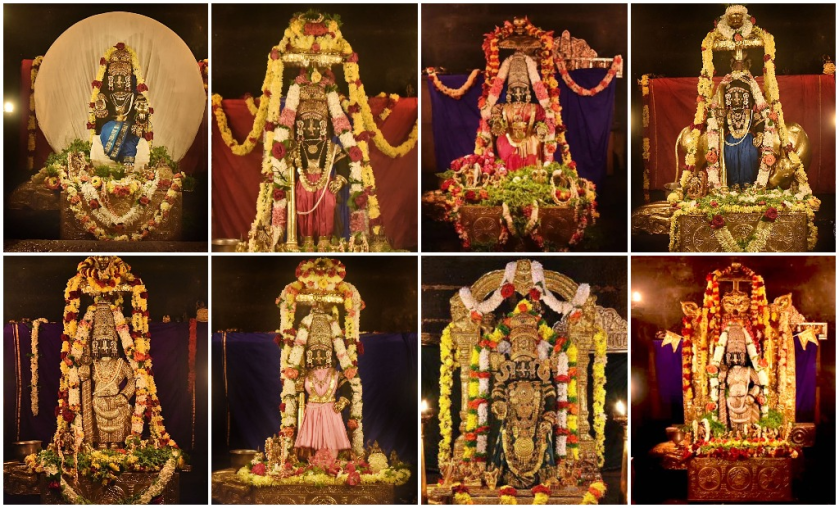
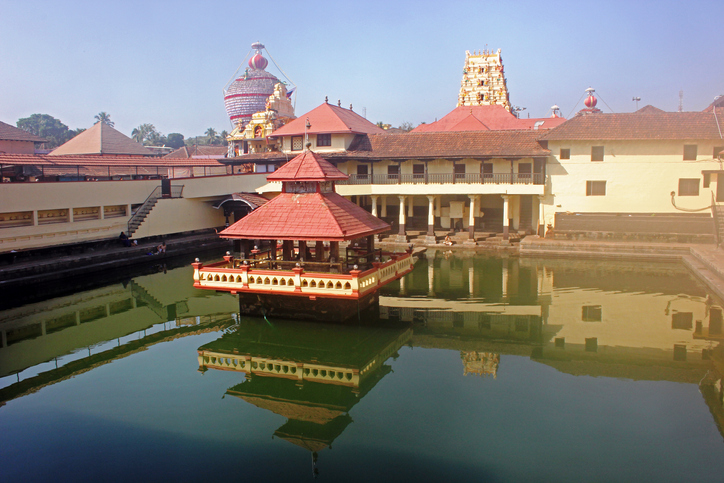
Udupi Sri Krishna
Udupi Sri Krishna

Nothing about Krishna is “false”. And there can be no such thing as “blind” or “excessive” adoration of Krishna. In fact, no matter how much we adore, it is always insufficient. Our problem is that we don’t adore Krishna enough. And we don’t adore Krishna sufficiently because we are blind. If we were not blind, we would be absolutely pure in our love of Krishna.

कृष्णे स्वधामोपगते धर्मज्ञानादिभि: सह ।
कलौ नष्टद‍ृशामेष पुराणार्कोऽधुनोदित: ॥ ४३ ॥

kṛṣṇe sva-dhāmopagate
dharma-jñānādibhiḥ saha
kalau naṣṭa-dṛśām eṣa
purāṇārko ’dhunoditaḥ

This Bhāgavata Purāṇa is as brilliant as the sun, and it has arisen just after the departure of Lord Kṛṣṇa to His own abode, accompanied by religion, knowledge, etc. Persons who have lost their vision due to the dense darkness of ignorance in the Age of Kali shall get light from this Purāṇa. https://vedabase.io/en/library/sb/1/3/43/

Now, to come back to the dictionary meaning of “mythology”…

Mythology: /mĭ-thŏl′ə-jē/ A body or collection of myths belonging to a people and addressing their origin, history, deities, ancestors, and heroes. A body of myths associated with an event, individual, or institution.

सर्वस्य चाहं हृदि सन्निविष्टो
मत्त: स्मृतिर्ज्ञानमपोहनं च ।
वेदैश्च सर्वैरहमेव वेद्यो
वेदान्तकृद्वेदविदेव चाहम् ॥ १५ ॥

sarvasya cāhaṁ hṛdi sanniviṣṭo
mattaḥ smṛtir jñānam apohanaṁ ca
vedaiś ca sarvair aham eva vedyo
vedānta-kṛd veda-vid eva cāham

I am seated in everyone’s heart, and from Me come remembrance, knowledge and forgetfulness. By all the Vedas, I am to be known. Indeed, I am the compiler of Vedānta, and I am the knower of the Vedas. https://vedabase.io/en/library/bg/15/15/

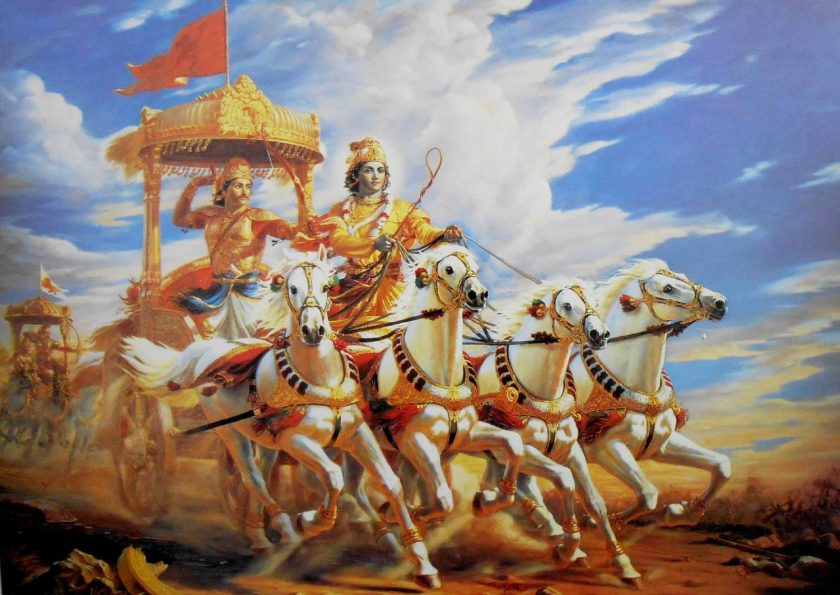
Krishna and Arjuna on the Battlefield of Kurukshetra

The Vedic Scriptures explain different aspects of Krishna. The Puranas are ancient history. So ancient and so broad that they encompass the entire Universe, and go back billions, even trillions of years. Who can comprehend that Universal range and time scale with our teeny little perspective?

Now, where did this misunderstanding come from?

Where did anyone get the idea to call images of Krishna as “idols” and the Vedic scriptures as “Mythology”?

The last surviving bastion of Vedic culture is what is current-day India, Pakistan, Nepal, Bangladesh, Sri Lanka, Thailand, Indonesia, etc.

Vedic culture has been under attack for well over 3000 years. It is natural, because we are in the kaliyuga, the age of quarrel and hypocrisy. Vedic culture i the opposite of quarrel and hypocrisy

First, it was the advent of Buddhism, and Jainism. These are essentially either impersonal, voidist, or both, depending on the specific flavor. Both twisted the Vedic scriptures in different ways. Both were philosophically defeated and Buddhism was mostly driven out to the far corners of the world, away from India.

Lord Buddha

Buddhism was advented by Lord Gautama Buddha to originally to drive out a corruption in Vedic culture.

तत: कलौ सम्प्रवृत्ते सम्मोहाय सुरद्विषाम् ।
बुद्धो नाम्नाञ्जनसुत: कीकटेषु भविष्यति ॥ २४ ॥

tataḥ kalau sampravṛtte
sammohāya sura-dviṣām
buddho nāmnāñjana-sutaḥ
kīkaṭeṣu bhaviṣyati

Then, in the beginning of Kali-yuga, the Lord will appear as Lord Buddha, the son of Añjanā, in the province of Gayā, just for the purpose of deluding those who are envious of the faithful theist.

https://vedabase.io/en/library/sb/1/3/24/

The origin of Jainism was a corruption of the pure teachings and example of Lord Rishbhadeva, an incarnation of Krishna.

Lord Rishabhadeva instructing His sons

यस्य किलानुचरितमुपाकर्ण्य कोङ्कवेङ्ककुटकानां राजार्हन्नामोपशिक्ष्य कलावधर्म उत्कृष्यमाणे भवितव्येन विमोहित: स्वधर्मपथमकुतोभयमपहाय कुपथपाखण्डमसमञ्जसं निजमनीषया मन्द: सम्प्रवर्तयिष्यते ॥ ९ ॥

yasya kilānucaritam upākarṇya koṅka-veṅka-kuṭakānāṁ rājārhan-nāmopaśikṣya kalāv adharma utkṛṣyamāṇe bhavitavyena vimohitaḥ sva-dharma-patham akuto-bhayam apahāya kupatha-pākhaṇḍam asamañjasaṁ nija-manīṣayā mandaḥ sampravartayiṣyate.

Śukadeva Gosvāmī continued speaking to Mahārāja Parīkṣit: My dear King, the King of Koṅka, Veṅka and Kuṭaka whose name was Arhat, heard of the activities of Ṛṣabhadeva and, imitating Ṛṣabhadeva’s principles, introduced a new system of religion. Taking advantage of Kali-yuga, the age of sinful activity, King Arhat, being bewildered, gave up the Vedic principles, which are free from risk, and concocted a new system of religion opposed to the Vedas. That was the beginning of the Jain dharma. Many other so-called religions followed this atheistic system. https://vedabase.io/en/library/sb/5/6/9/

Later invasions from the west

But then, there were the expansionist invasions by the zealots claiming to follow “Islam, the religion of peace”. Those invaders to the Holy Land of India were attracted by the wealth, the riches in the temples… But they were too uncivilized and uncultured to appreciate the nuances of Vedic culture.

So they started calling temple worship “idol worship” in their middle eastern languages, Arabic, Persian, etc. They started a systematic system of persecution, calling the followers of Vedic culture as “kafirs” or non-believers. They did not understand that Krishna is actually Allah Himself. This persecution conginues to this day, a thousand years on. For example in Pakistan and Bangladesh, followers of Vedic culture are still harshly persecuted.

The European powers made the most sophisticated attempts to culturally conquer the Vedic culture. They came to India about 600 years ago. They engaged in business and military conquest. They also sought to replace Vedic culture with barbarian European culture through an insidious system called “modern education”.

Indians have been conditioned to denigrate their own culture!

Indians began to speak Portuguese, Dutch, French, and English. They were made to forget their own languages, their own customs and refined practices. It was deeply rooted. The Europeans, especially the British, sought to vilify all Vedic practices through their Christian missionaries.

  1. Deity worship became “Idol Worship”.
  2. Krishna became a “tribal chieftain” or at best, a “Hindu god”.
  3. All the ancient historical texts like the Vedas, the Upanishads, the Puranas, became “Hindu myths”.

Vedic culture will rescue with world from its dense darkness. To revive the glorious Vedic culture, we must first reject this insulting word “idol” in relation to Krishna. We must also reject the derogatory “mythology” in relation to the Vedic scriptures.

What is idol worship then?

It is the worship of politicians, business people, actors, sports people, military leaders, etc. It is the worship of TV personalities and entertainers. The western world fully engages in idol worship daily. They do this through their thousands of TV channels, their movies, their books, newspapers, magazines, their marketplaces, and living spaces.

Sports fans indulging in Idol Worship

“Western Culture”, an oxymoron, means to worship the temporary bodies, through luxurious homes devoid of a culture of Krishna Consciousness. It means lavish bathrooms and swimming pools. It means arenas to celebrate war in disguise. It means a worship of their dogs and cats. It means the killing of cows and bulls, which are dear to Krishna.

Reject idol worship, by all means, but the form of Krishna is not an “idol”.

We can use the these words instead to describe images of Krishna:

  1. “Archa Vigraha” (अर्च विग्र:) – the Divine Worshipable Form of God
  2. Deity
  3. Divine Form of God

And what is mythology?

What is called “modern science” is mostly mythology. And the western version of “history” is mythology. Common uncultured rascals have been promoted as great personalities. Alexander “the great” was a looter and marauder. Napoleon was a low class murderer and looter. He conspired to become king of France after the French had executed their king and rejected the monarchy. Winston Churchill was a disgusting narrow minded bigot. He was a lying manipulator. He was not a great leader by any stretch of the imagination, because he was full of all vices.

False history propagated by the Europeans

Everything that opposes the pristine Vedic culture is mythology. This includes the spiritual texts of the Middle East, that were once great and pure. These texts like the Quran, Bible, etc., have been censored, edited and misinterpreted. They have lost spiritual value due to tampering. They are only good as political manifestos now. Even if the text is intact, the misinterpretation and misunderstanding of it has depleted its value.

So, yes, reject mythology also, but the Vedic scriptures are not mythology.

धर्म: प्रोज्झितकैतवोऽत्र परमो निर्मत्सराणां सतां
वेद्यं वास्तवमत्र वस्तु शिवदं तापत्रयोन्मूलनम् ।
श्रीमद्भागवते महामुनिकृते किं वा परैरीश्वर:
सद्यो हृद्यवरुध्यतेऽत्र कृतिभि: शुश्रूषुभिस्तत्क्षणात् ॥ २ ॥

dharmaḥ projjhita-kaitavo ’tra paramo nirmatsarāṇāṁ satāṁ
vedyaṁ vāstavam atra vastu śivadaṁ tāpa-trayonmūlanam
śrīmad-bhāgavate mahā-muni-kṛte kiṁ vā parair īśvaraḥ
sadyo hṛdy avarudhyate ’tra kṛtibhiḥ śuśrūṣubhis tat-kṣaṇāt

Completely rejecting all religious activities which are materially motivated, this Bhāgavata Purāṇa propounds the highest truth, which is understandable by those devotees who are fully pure in heart. The highest truth is reality distinguished from illusion for the welfare of all. Such truth uproots the threefold miseries. This beautiful Bhāgavatam, compiled by the great sage Vyāsadeva [in his maturity], is sufficient in itself for God realization. What is the need of any other scripture? As soon as one attentively and submissively hears the message of Bhāgavatam, by this culture of knowledge the Supreme Lord is established within his heart. https://vedabase.io/en/library/sb/1/1/2/

You can call the Vedic scriptures as:

  1. The Yoga texts of India
  2. Vedas or Puranas
  3. Vedic scriptures
  4. Vedic literature
  5. Vedic History

Please give up the use of the words “idol” and “mythology” in relation with Vedic Culture! Hare Krishna!

The Simple Devotion of Haridasa Varya Prabhu

Haridasa Varya Prabhu, a humble and devoted soul, exemplifies the profound impact of simple devotion. Initiated at the age of 82, he lived a quiet life in Maharashtra, embodying true spirituality through daily chanting and reading. Despite illness, his dedication never wavered, demonstrating that it’s never too late to pursue a spiritual path. Surrounded by supportive devotees, his sincere humility and consistent practice of chanting the Hare Krishna mantra brought him closer to Krishna, ultimately guiding him to spiritual perfection.

Haridasa Varya Prabhu is not a well known devotee. He is not a Guru. He is not a big leader. He does not give classes. He does not write books. He did not take any tremendous vows. He did not commit to or achieve some ambitious project. He is a simple devotee. But his simple devotion earned him a place in the spiritual realm. Read more about the simplicity of this sweet devotee that made him dear to Guru and Krishna.

Born in 1941, Haridasa Varya Prabhu left for the spiritual world in 2025 at the age of 84. He was initiated quite recently, in 2023. How did he achieve this amazing feat, and that too “so quickly”?

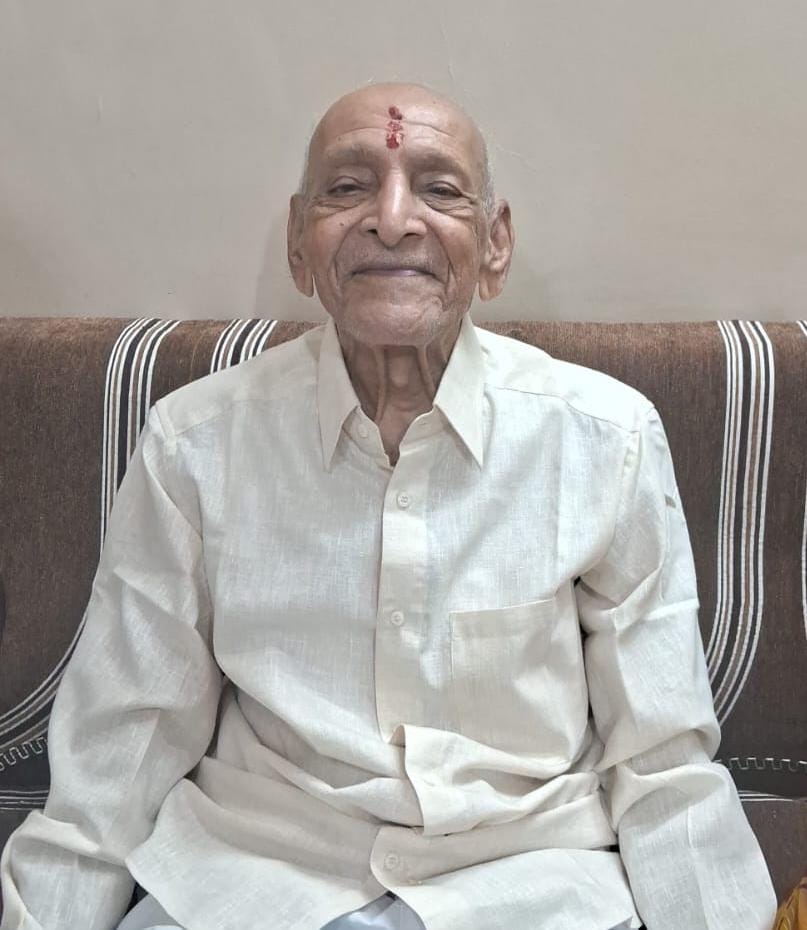
His Grace Haridasa Varya Prabhu

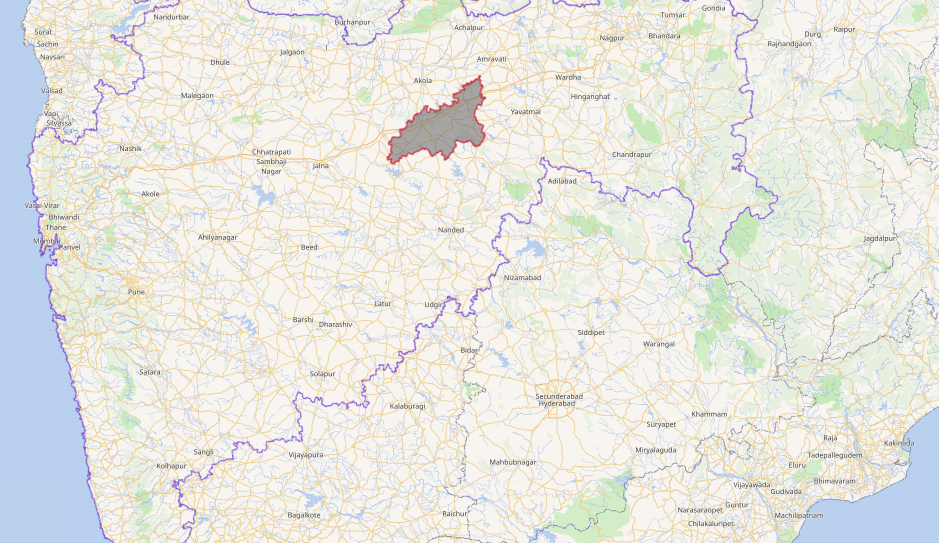
Our hero was born in a pious Marathi-speaking family. It was in a little village in the Washim District of Maharashtra. He led a very quiet and simple life. Married, early, he had two sons and a daughter. I learned about this great soul through his daughter. She is a devotee named Shyama Gauri Devi Dasi. She is a disciple of His Holiness Radhanath Swami. When she spoke about her father, I was inspired and struck by the simple devotion of her father. I had to write about it.

A map of India highlighting the Washim District of the State of Maharashtra

A map of India highlighting the Washim District of the State of Maharashtra

Once, not long ago, a visiting preacher, Ram Narayan Prabhu asked this elderly gentlemen “How many rounds are you chanting?”. The answer came back “Five”. The preacher asked “How will you reach spiritual perfection by chanting only five rounds?”. He added “If you chant a sixteen rounds, I will arrange for your initiation”. Our elderly hero was incredulous “What, even I can get initiated?” – thinking himself so unqualified for spiritual initiation, nevertheless started chanting sixteen rounds of the Hare Krishna Mahamantra. Every single day our octogenarian hero would chant Hare Krishna. Minimum of 16 rounds. Every single day.

Baladev Prabhu is our hero’s spiritual guide. He served as “Atma Pradarshak Guru” and “Shiksha Guru”, the instructing spiritual master. He took great pains to craft a plan of spiritual practice suitable for an octogenarian. Another spiritual guide was Vednath Prabhu, the Bhakti Vriksha leader or the local community.

Simple things get harder in old age. That’s one reason to start as early as possible. But, our hero never skipped his rounds. Even in ill health. Even in pain. No matter how hard it got, there was no stopping until he got to the magic number 16 rounds.

When it came time to getting initiated, though, there was a problem. He couldn’t travel far. In fact, he barely traveled to a nearby village. So how would he get initiated?

His Grace Samika Rishi Prabhu is a disciple of Srila Prabhupada. When he heard about this sincere soul, he agreed to initiate him. Not only is Samika Rishi Prabhu an accomplished physician of the body, he also is a doctor for the soul. The spiritual master has over 50 years of dedicated service under his belt. He agreed to visit the little village in Washim, Maharashtra. He came just to initiate this sincere soul.

On the initiation day, everyone was moved by the sincerity of the octogenarian initiate! His simplicity and dedication were clearly seen by all. New initiates are required to take the following vows:

  1. To chant a minimum of 16 rounds of the Hare Krishna Mahamantra (1728 utterances of the mantra) every day.
  2. To follow these four regulative principles
    • No illicit sex
    • No gambling
    • No meat eating
    • No intoxication

When taking the vows to follow the regulative, our hero was embarrassed. He didn’t want anyone thinking he used to do these things before and would now abstain from them! So he took the vows somewhat like this:

“I don’t partake of illicit sex, gambling, meat eating, or intoxication” – deliberately using the present tense!

That simple innocence definitely brought a chuckle to everyone present!

His Grace Samika Rishi Prabhu initiated our hero with the name “Haridasa Varya Das.” This name means “The foremost among the servants of Sri Hari.” He took his spiritual life very seriously.

This was the daily schedule of Haridasa Varya Prabhu:

7:00 AM – rise, cleanse teeth, have breakfast, take a bath, apply Tilaka, recite his mantras at the altar. The mantras starting with the Ganapati Stotra and other mantras he was used to reciting since childhood.

8:00 AM – Chant 16 rounds of the Hare Krishna Mahamantra on meditation beads

11 AM – Lunch

12 Noon – Nap

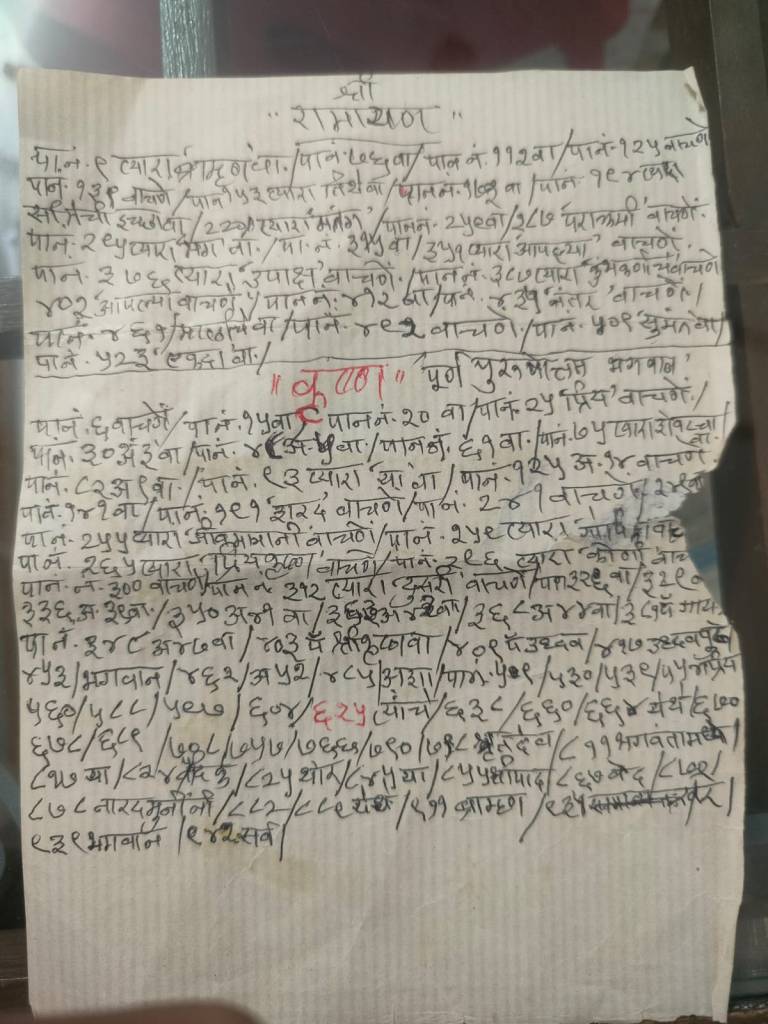
2 PM – Read the Srimad Bhagavatam, at least 40 pages daily – make a daily record of his reading

4PM – Watch TV, speak with other villagers

6PM – dinner

7PM – Chant Hare Krishna some more

9PM – Rest

Handwritten notes containing the reading progress of His Grace Haridasa Varya Prabhu around the date of his departure

Handwritten notes example, containing the reading progress of His Grace Haridasa Varya Prabhu around the date of his departure

When he became sick closer to departure from his body, he chanted constantly, with or without beads. Even without beads, or while “asleep”, he would “move the beads”on a piece of cloth in bed.

Just before he departed, he did this:

  • Asked for his beads
  • Asked for a picture of Krishna to be brought before him. Not just any picture of Krishna from some magazine, but a picture of Sri Radha Pandharinath from ISKCON Pandharpur.
  • He told his daughter-in-law “There are four personalities here. They have come to take me home”
  • He asked to go outside in the sun, and spoke to passersby as if saying goodbye to everyone
  • Took Krishna Prasadam
  • A neighbor who had gone to Prayagraj for the Maha Kumbha Mela gave him some Ganga Jal (water from the Ganga)
  • Refused to go into his bedroom to sleep
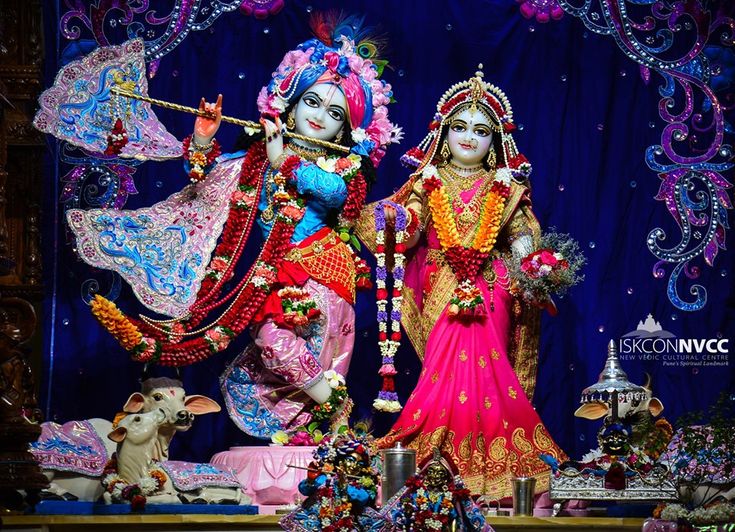
  • Sat down on a couch gazing at a picture of Sri Radha Vrindavan Chandra from ISKCON NVCC Pune.
  • Told his daughter-in-law, “Yes, there are four of them who have come for me”
  • Took his “bath”, a sponge bath from one of his daughters-in-law
  • He departed just when his arms were raised to put on his shirt
Sri Radha Vrindavan Chandra, ISKCON NVCC Pune

Haridasa Varya Prabhu used to love to lead Harinam Kirtan in his own special way. Someone would hold a microphone close to his mouth and he would sing a simple song or two. His sincere Kirtan was appreciated by all.

This was one of his favourite songs:

तू माझा यजमान रामा, तू माझा यजमान ||धृ||

जननी जठरी रक्षियले मज,पोसुनी पंचहि प्राण ||१||

बाहेर निघता मातेचे स्तनी,पय केले निर्माण ||२||

ऐसे असता या पोटाची,का करू चिंता जाण ||३||

मध्व मुनीश्वर स्वामी रमापती,धरी माझा अभिमान ||४||

You are my Lord Rama, You are my Lord

In the womb of my mother, you protected me, you preserved my five life airs

When I came out, you caused milk to flow from my mother’s breast

When this is so, why shall I worry for my own sustenance

He read the entire Srimad Bhagavatam and the entire Chaitanya Charitamrita. He was on his second round of reading the Srimad Bhagavatam around the date of his departure.

He leaves behind his wife, Mother Damodar Priya Devi Dasi, also initiated by Samika Rishi Prabhu.

At the end, he pulled out an ace… attained perfection… whatever he did or not, at the end, he did. – Her Grace Rukmini Devi Dasi (JPS)

Haridasa Varya Prabhu, I pray at your lotus feet the next prayer taught to me by my spiritual master. I fall down in the dust of your lotus feet while praying this prayer to you. You have shown us by your personal example of humility, eagerness, consistency, and presence of mind. You have attained pure devotional service at the lotus feet of Sri Radha Vrindavan Chandra. You are very kind and merciful Vaishnava. Please grant this poor soul shelter at your lotus feet.

From Haridasa Varya Prabhu’s life, we get the following lessons:

  1. It is never too late to start – of course, start as early as possible, but start, and GO!
  2. When the disciple is ready, the spiritual master is sent by Krishna. In this case, Haridasa Varya Prabhu’s spiritual master came all the way from New Jersey, USA.
  3. Humility is a great asset – Haridasa Varya Prabhu considered himself unfit for initiation!
  4. Take spiritual practice seriously. It is potent. Chanting Hare Krishna. Reading Srimad Bhagavatam. Every bit counts!
  5. Focus consciousness on what is most important, and do it every day.
  6. Simplicity in spiritual life is a prized asset, we should cultivate this simplicity that allows us to chant always.
  7. Krishna is very kind and merciful, and His devotee is even more so. We see this from the example of all the devotees who encouraged Haridasa Varya Prabhu.
  8. The process of devotional service as given to us by His Divine Grace A. C. Bhaktivedanta Swami Prabhupada works.

ये तु सर्वाणि कर्माणि मयि सन्न्यस्य मत्परा: ।
अनन्येनैव योगेन मां ध्यायन्त उपासते ॥ ६ ॥
तेषामहं समुद्धर्ता मृत्युसंसारसागरात् ।
भवामि न चिरात्पार्थ मय्यावेशितचेतसाम् ॥ ७ ॥

ye tu sarvāṇi karmāṇi mayi sannyasya mat-parāḥ
ananyenaiva yogena māṁ dhyāyanta upāsate

teṣām ahaṁ samuddhartā mṛtyu-saṁsāra-sāgarāt
bhavāmi na cirāt pārtha mayy āveśita-cetasām

But those who worship Me, giving up all their activities unto Me and being devoted to Me without deviation, engaged in devotional service and always meditating upon Me, having fixed their minds upon Me, O son of Pṛthā – for them I am the swift deliverer from the ocean of birth and death.

https://vedabase.io/en/library/bg/12/6-7/

And this beautiful verse…

अहो बकी यं स्तनकालकूटं
जिघांसयापाययदप्यसाध्वी ।
लेभे गतिं धात्र्युचितां ततोऽन्यं
कं वा दयालुं शरणं व्रजेम ॥ २३ ॥

aho bakī yaṁ stana-kāla-kūṭaṁ
jighāṁsayāpāyayad apy asādhvī
lebhe gatiṁ dhātry-ucitāṁ tato ’nyaṁ
kaṁ vā dayāluṁ śaraṇaṁ vrajema

Alas, how shall I take shelter of one more merciful than He who granted the position of mother to a she-demon [Pūtanā] although she was unfaithful and she prepared deadly poison to be sucked from her breast?

https://vedabase.io/en/library/sb/3/2/23/

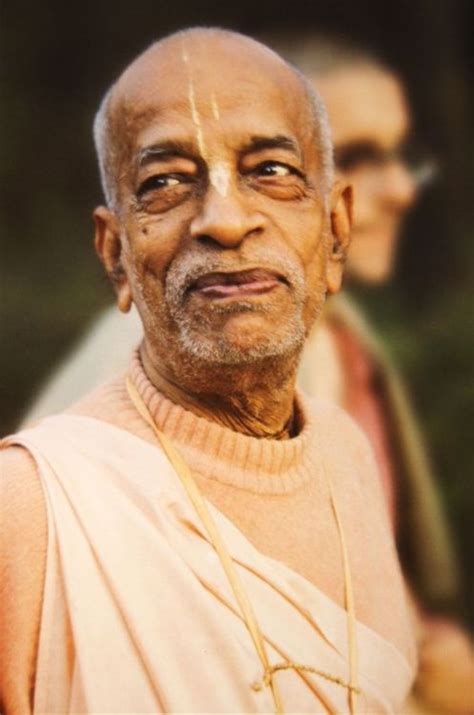
Srila Prabhupada
Srila Prabhupada

How Spiritual Practices Combat Material Pollution

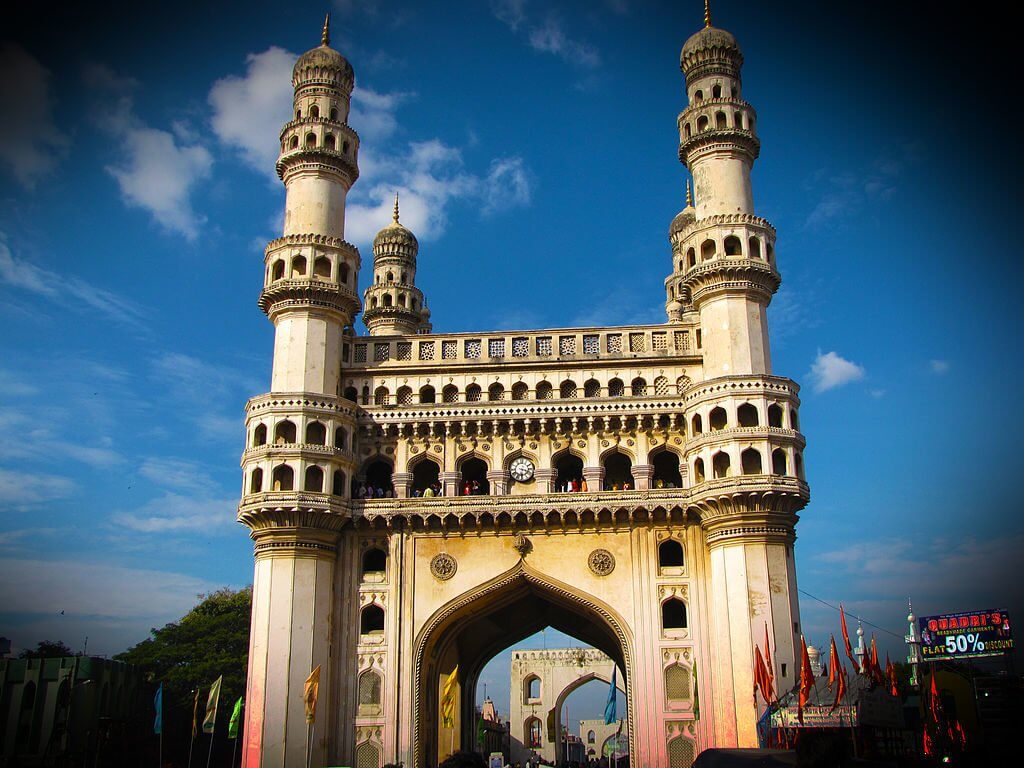
Hyderabad, like many other cities, is a vibrant chaos of litter. Dedicated street cleaners face a relentless battle against the chronic litterbugs who trash the city daily. Despite their morning efforts, the streets revert to their messy state by evening. This mirrors our spiritual lives where temporary cleansings fail to eliminate deeper impurities. The battle against sin and distraction is exacerbated by our habits that pollute consciousness. The antidote? Fully embrace Krishna Consciousness—an all-encompassing practice that brings clarity, purpose, and purity to both streets and spirit.

I am here in India presently, the booming bustling messy city of Hyderabad.

Every morning, I walk back from the temple after the morning program. I admire the cleaners busily cleansing the streets of all sorts of garbage… pieces of paper, plastic wrappers, cigarette butts, and more.

Street Sweepers in Hyderabad

They work quite hard, actually. They diligently sweep and clean up everything. They collect it all, put it into their carts, and take it all away. At about 8 AM in the morning, everything looks so neat and clean!

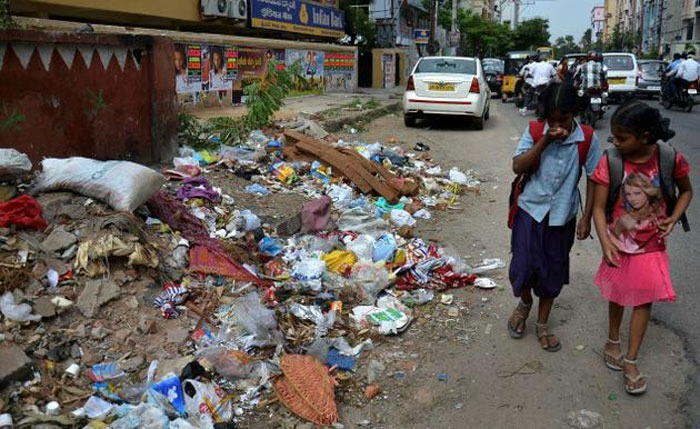
But come the afternoon, the streets look almost the same as they did before. This, despite all the hard work by the cleaners of Hyderabad!

No matter how much the cleaners clean, Hyderabad streets remain as messy as ever.

What just happened?

Litterbug city

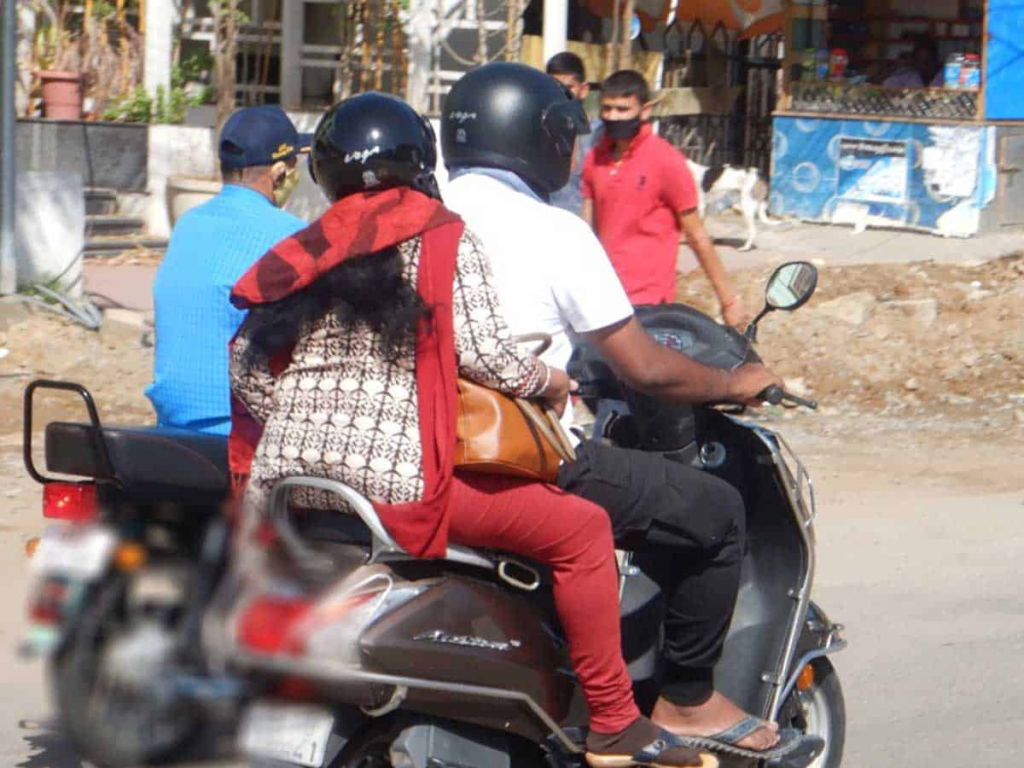
The culprits are the citizens (no offense intended) of Hyderabad! Most of them are chronic litterbugs… I saw one man on a motorcycle. He opens up a sachet of tobacco. He pops the contents into his mouth and discards the wrapper right there. All this while he is stopped in traffic.

Motorcycle riders in Hyderabad

A child peels the wrapper off a sweet. She pops it into her mouth. Then she discards the wrapper.

A street vendor is preparing some fruit for sale… He discards all the peels in a heap behind his cart.

A fruit vendor in Hyderabad

A housewife has just swept her home, and she dumps the rubbish right on the street outside her house.

A man in a business suit is in a chauffeured car. He rolls down the tinted window of his fancy car. He out throws out an envelope, carefully torn into tiny bits. He spits out a stream of red tobacco induced liquid.

Boys light firecrackers on the street – it is a few weeks to Diwali. They’re getting a head start on the merriment… Every firework is left right there on the street where it went off… Bits of plastic, paper tubes, shredded paper.

Multiply that 11 Million times… the population of Hyderabad. It’s a recipe for one messy place!

Then the next morning, the cleaners will be at it again… sweep, collect, throw.

But Hyderabad looks as messy as ever, day after day. The rivers are open sewers, drains are clogged with plastic film… People have been spitting all over the place.

The cleaners don’t stand a chance, they are outnumbered!

Spiritual Cleansing, Materialistic Littering

On the spiritual path, people often engage in cleanups… Prayers, Purificatory rituals, penances, austerities… But sometimes we feel discouraged when there is no progress.

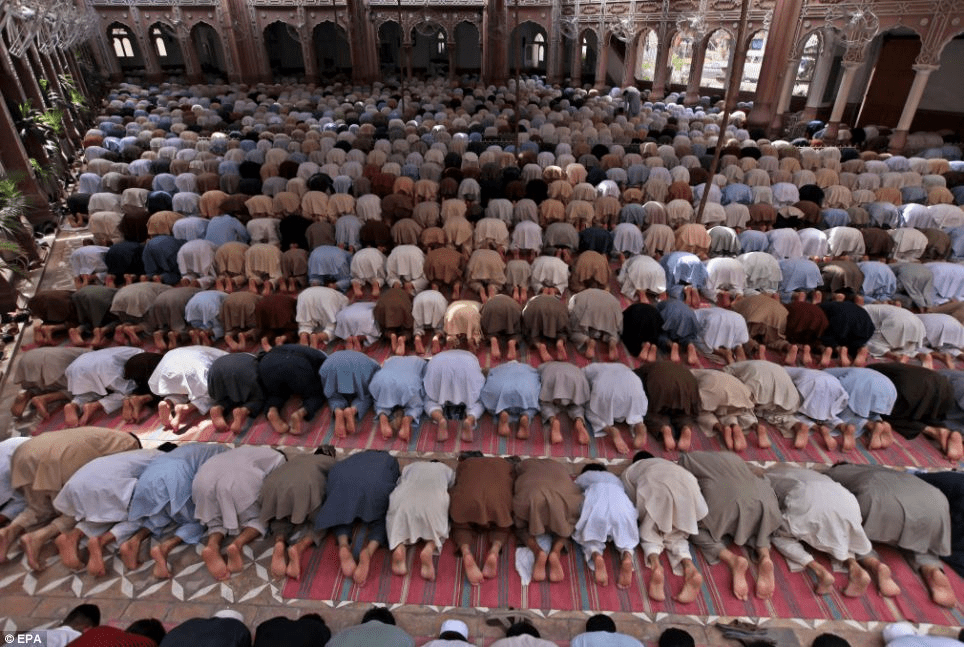
Faithful Muslims Praying

Let’s say someone prays or meditates (cleansing the consciousness) for 5 minutes, 20 minutes, or even two hours every day. Or more. What happens for the remaining time during the day?

It’s the same thing – gotta’ stop littering for the effects of the cleaning to show!

The streets of Hyderabad are cleaned each morning. But the actions of the chronic litterbugs make it seem futile. Similarly, our consciousness can be littered by where we choose to focus our attention.

It is important to focus our consciousness in a way that doesn’t litter our consciousness with more materialistic garbage.

The elephant’s bath

In a picturesque analogy from the Bhagavatam, King Parikshit makes this astute observation. He observes the souls passing in turn through regions of enjoyment and purgatory throughout the Universe. Souls are rewarded with heavenly pleasures for their pious activities, and punished for their sinful activities.

King Parikshit receives transcendental knowledge from the great sage Sukadeva Goswami

These pious and impious activities don’t cancel each other out. The after-effects of both must be experienced separately. Enjoyment for pious deeds, and suffering for the impious. And every such activity leaves behind a seed of future entanglement.

Many of us on the spiritual path are very keen to avoid the sinful activities. But all too often, we still fall victim.

क्‍वचिन्निवर्ततेऽभद्रात्‍क्‍वचिच्चरति तत्पुन: ।
प्रायश्चित्तमथोऽपार्थं मन्ये कुञ्जरशौचवत् ॥ १० ॥

kvacin nivartate ’bhadrāt
kvacic carati tat punaḥ
prāyaścittam atho ’pārthaṁ
manye kuñjara-śaucavat

Sometimes one who is very alert so as not to commit sinful acts is victimized by sinful life again. I therefore consider this process of repeated sinning and atoning to be useless. It is like the bathing of an elephant, for an elephant cleanses itself by taking a full bath, but then throws dust over its head and body as soon as it returns to the land.

https://vedabase.io/en/library/sb/6/1/10/

An elephant bathes himself with clean water
An elephant showers himself with mud

Many of us do the same… we engage in purification, and then we cover our consciousness with dirt.

What is that “dirt”… It is activities which cover our spiritual consciousness with material contamination. Think television, newspapers, mundane movies, games of crickets and soccer, video games, internet gossip and worse.

Why?

It’s so important to lose the habit of littering our consciousness!

Lord Krishna says this in His Song, the Bhagavad Gita, the Song of God…

विषया विनिवर्तन्ते निराहारस्य देहिनः ।
रसवर्जं रसोऽप्यस्य परं दृष्ट्वा निवर्तते ॥ ५९ ॥

viṣayā vinivartante
nirāhārasya dehinaḥ
rasa-varjaṁ raso ’py asya
paraṁ dṛṣṭvā nivartate

Though the embodied soul may be restricted from sense enjoyment, the taste for sense objects remains. But, ceasing such engagements by experiencing a higher taste, he is fixed in consciousness.

https://vedabase.io/en/library/bg/2/59/

You see, the taste for sense objects remains. There is facility, there is time, and so, we fall headlong.

But is there a way to prevent this? How to avoid the fall?

केचित्केवलया भक्त्या वासुदेवपरायणा: ।
अघं धुन्वन्ति कार्त्स्‍न्येन नीहारमिव भास्कर: ॥ १५ ॥

kecit kevalayā bhaktyā
vāsudeva-parāyaṇāḥ
aghaṁ dhunvanti kārtsnyena
nīhāram iva bhāskaraḥ

Translation

Only a rare person who has adopted complete, unalloyed devotional service to Kṛṣṇa can uproot the weeds of sinful actions with no possibility that they will revive. He can do this simply by discharging devotional service, just as the sun can immediately dissipate fog by its rays.

https://vedabase.io/en/library/sb/6/1/15/

The process of Krishna Consciousness is so sublime. There is Krishna Consciousness activity to immerse ourselves twenty four hours a day.

24/7 Spiritual Engagement

We can start with rising early for Mangala Arati. We can engage in a full morning program of hearing, chanting, and worship. Our consciousness becomes charged up with Krishna. We can then insert Krishna Conscious thoughts, words, and deeds throughout the day as we go about our duties.

And of course, someone who rises early is also forced to rest early. So much trouble avoided!

And of course, genuine spiritualists do not litter. Not their consciousness, not their homes, nor their streets.

Let us take advantage of this process! Want to avoid littering your streets of your consciousness? Want to know how?

P.S: I have nothing against the city or the people of Hyderabad. It is practically the same story in every village, town, or city in the world. It is the terrible practice of littering, both spiritual and material, but especially the spiritual littering that I’m advocating against.

Does an Employer take the Employee’s Karma?

A devotee grapples with the weighty concerns of karma and how it burdens employers through their employees’ actions. His anxiety reflects a larger existential dilemma: can sincere devotion offset the negative karma from associates who resist spiritual growth? Replies from spiritual leaders emphasize that true surrender to Krishna liberates one from such burdens. However, they also underscore personal accountability in leadership roles, balancing professionalism and compassion. Ultimately, the discourse reveals a timeless struggle: navigating spiritual principles in the cutthroat world of business while striving to uplift those around you.

Bhakta Sunil, 29 September 2014

Hare Krishna

Please accept my humble obeisances

All Glories to Srila Prabhupada

Prabhu ji I have few doubts

a) How much percentage of karma does employer take of each of his or her employee

b) If employer is sincerely practising Krishna Consciousness , though not at the place of work with employee ( not with employee , but on own ) then karma from employee to employer is reduced or nullified?

I am a bit worried because we have two employees at shop. I tried many times to directly or indirectly share Krishna Consciousness with them.

Sometimes they paid attention , but one of the employee returned the book which I gave and I am not sure if they practice God Consciousness.

At times I have noticed them behaving rudely or not giving due respect to customers. So I am worried if we have to take their karma.

I have put Prabhupada’s books and photos at place of work and often played kirtana at place of work

your insignificant servant,

Bhakta Sunil

Srivatsa Das, 03 October 2014

Dear Bhakta Sunil

Please accept my humble obeisances

All glories to Srila Gurudeva 

The employer, if he is surrendered to Lord Krishna, he need not worry about karma, or law of nature or destiny and all such complications, since Krishna has already declared that His devotee never perishes.  And also in BG 18.66, Krishna tells, “Abandon all varieties of religion and just surrender unto Me. I shall deliver you from all sinful reactions. Do not fear.”  We will be free from fear up to the extent we have faith in the Spiritual master and Krishna.  So it is very important to develop faith in them. 

We cannot force anybody including our children to lead Krishna Conscious life unless they are attracted themselves to Krishna Consciousness.  Everybody has been given the required free will to surrender to Krishna and they are supposed to use it for that purpose and unfortunately, they can even misuse it also by not surrendering to the Lord.

Regarding the rude behaviour, it can be due to many reasons.  In this material world, a lot of people are frustrated due to many miseries, that could be one of the reason for their rude behaviour.  But, in most of the cases, the problems can be solved just by hearing their worries patiently at suitable location.  We need not talk in many cases, but sometimes we need to encourage them to talk. Just hear their worries patiently and attentively.  Most of the times, they themselves will arrive at the solution and thank us too !!! or they will ask for some suggestion, then, at that time we can give some suggestions that can help them to lead a Krishna Conscious life.  Sometimes, we may have to correct ourselves too based on their input, so we should be prepared for some adjustments.  This is one way of solving the issue.

Sincerely,

Srivatsa Das

Bhakta Sunil, 04 October  2014

Thank you Srivatsa Prabhu

Superb answer!

your insignificant servant,

Bhakta Sunil

Gusti Nyoman Ambara, 04 October 2014

Hare Krishna!

Dear Sunil Prabhu

Please accept my humble obeisances,

All glories to Srila Gurudeva and  Srimati Gurumataji,

All glories to Srila Prabhupada.

I have no qualification at all to share my opinion with you, but I would humbly try to do it as per my capacity.

Srivatsa Prabhu have nicely given the explanation upon your doubts. It is true that if we are fully surrender to the Lord, we do not have to worry about karma and such things anymore. Always try to focus in making the Lord happy by executing our prescribed duties at our best and offered the result to Him no matter what it is. Then there will be no more anxiousness.

You also nicely show the symptom of a devotee by having compassion on your employees and try to share Krishna-consciousness to them. Indeed, it is the most important thing. I think you have correctly tried to do it by putting some Prabupada’s book and playing some kirtans at the place of work, because hearing (sravanam) is the most potent way for us to open our consciousness to Krishna. I myself also have proved this method.  My mother started to chant Mahamantra on beads about a year ago. She told me that she was inspired to do so soon after she heard it played in my car stereo during our 8-hours journey from Bali to Surabaya.

If those things still do not work with your employees, I suggest you to give another try by using prasadam. It is also a powerful way to share Krishna-consciousness to the whole world. You can make some prasadam in the form of candies or sweets and put some of them at the place of work, so that your employees can have and taste them. You will gradually see the effect and surely you will no longer have any worries. Thank you very much.

your insignificant servant,

Gusti Nyoman Ambara

Bhakta Sunil, 06 October 2014

Dear Gusti Prabhu

Hare Krishna 

Please accept my humble obeisances

All Glories to Srila Prabhupada

Thank you very much. Your answer is great!

Prabhu ji , I now understand that karma of one’s employee would not act for one who is practising Consciousness

Gusti Prabhu ki Jaya!

Your insignificant servant,

Bhakta Sunil

Tirtharaja Dasa, 07 10 2014

Hare Krishna Prabhu,

My take is from a different angle and might not be absolute but good for debate.

It is said that anybody in a position of leadership attracts both positive and negative karma in proportion to position held.

In a business situation if you are the chief executive then there definitely be a degree of karmic reaction just as much as the spiritual master who accepts a disciple has accruing karma until the disciple is liberated so in similar positions of leadership especially in situations where as devotees we are DE-facto spiritual masters, then there is definitely some accruing karma.

That’s why a devotee will not mind what position or circumstances he has in life but will always serve Lord Hari unconditionally.

Regards,

your Lowly Servant,

Tirtharaja Dasa.

Mahabhagavat Das SDA, 08 October 2014

Dear Bhakta Sunil,

Hare Krishna!

All these perspectives are wonderful. What I was feeling I was unable to articulate, until I read Tirtharaja Prabhu’s masterful writing. His response is befitting a senior devotee in our movement.

What I was thinking is that all those people we interact with, either as family members, community, relatives, colleagues from school, college, or work, we are already karmically bound with them. We have taken birth in similar circumstances just to enjoy or suffer collective karmas, and also repay various karmic debts. But this is a never-ending cycle… in this lifetime, we have some set of karmic debts to pay, in another cycle, it is some other set.

So, while it is true that as long as we are on the material platform, we are exchanging karmic debts, as long as we can leverage our present circumstances to drive devotional service, the situation cannot be rectified.

On a professional level, your staff need to get good training, good pay,  etc., and in the worst case, if there is no progress or improvement, they would need to be fired, let go, etc. If I pay someone for a kilo of good vegetables and the person gives me only rotten vegetables, would I continue to pay that person? So inspite of giving good training, good pay, etc., if someone is not doing what I need done, then why should I continue to pay that person? Another example, ISKCON is building the Temple of Vedic Planetarium, the world’s biggest temple, we are taking full care that the engineers are qualified, the architects are qualified, the laborers are also fully qualified, the concrete is high quality, steel is perfect, etc. Of course, even though the workers are receiving payment, they are still getting the benefit of rendering devotional service.

In ISKCON Toronto, we are working on some school projects – the administrators, teachers, etc., need to be devotees, BUT they also must be professionally qualified in their specific field and be professionally competent… you could consider that, maybe there are professionally competent devotees who can also be your employees?

However, devotee or not, in the best case, even if your staff might not know or express interest in devotional service, if they are perfectly professional, and they facilitate your involvement in devotional service, they will also get some “ajnata sukrti”, or credit obtained by performing devotional service unknowingly.

Of course, you don’t expect that we will tell you how to run your business, right? You please take all these perspectives and do what is best for Krishna consciousness.

Sincerely,

Mahabhagavat Das

Bhakta Sunil, 18 October 2014

Thank you  Tirtharaja Prabhu and Mahabhagavat Prabhu for discerning the conversation even further

I had heard in Bhagavatam lecture , that king collects karma from citizens and similarly for employers from employees

Thus I asked here to clarify

After reading  Tirtharaja Prabhu and Mahabhagavat Prabhu’s reply , it further clarified what I understood in the lecture and what to do in such a situation

Tirtharaja Prabhu and Mahabhagavat Prabhu ki Jaya!

your insignificant servant,

Bhakta Sunil

Please subscribe to daily inspirational emails from His Grace Sriman Sankarshan Das Adhikari (Writings and lectures archived at www.ecstaticmedia.com), written fresh every day from his travels around the world sharing the highest spiritual knowledge with everyone. Sign up now at www.joincourse.com

Madhvacharya’s Genius: A Solution for Managerial issues

Managing in religious organizations is uniquely challenging, with managers often facing burnout from balancing volunteer dynamics, demanding senior leaders, and resource limitations. There are other issues too, leading to dysfunctional management. This can hinder personal and spiritual growth. Implementing a rotational management system, like Madhvacharya’s, can combat burnout and foster healthier organizational environments, allowing managers, the organizaton, and the congregations to thrive.

He who is regulated in his habits of eating, sleeping, recreation and work can mitigate all material pains by practicing the yoga system. BG 6.17

Have you ever met a dysfunctional manager?

Someone who has been managing up, managing down, managing sideways, somehow trying to get things to work but failing? In your temple, church, mosque or synagogue?

A manager can be any one of burned out, corrupt, entitled, or arrogant. It is possible that a manager in a religious organization has lost touch with the purpose of the organization… I discussed that in one of my previous posts. That article talks about whether it is possible for a genuinely spiritual organization to even exist.

Corporate vs. Religious Management

In the corporate world, managers have it relatively easy. After all, when things get sticky, they can choose to leave. They switch jobs or fire people. They can also switch roles. We concluded with the sage words of Srila Prabhupada on how to manage effectively. The essence is that the managers or leaders can’t lose sight of the spiritual goal, the main thing.

Burned out manager

The dysfunctional manager’s dual persona

The confusing part is usually when we meet such a dysfunctional the manager as an individual. They are usually a perfectly nice person. But when we meet the individual in their role as a manager, they can be cold or calculating. They may behave as shrewd, political, or even diabolical. They might seem callous, jealous, or envious. Sometimes, they are angry, sad, frustrated, anxious, or exhibit other negative traits. Most of the time, they may come across as uninspired and uninspiring.

Challenges for Managers in Religious Organizations

Let’s face it. Managers in religious organizations have it tough.

Managing Volunteers
On the one hand, they manage an organization of volunteers. Volunteers can choose to accept what the manager is telling them, or do otherwise. Volunteers are few and far between. Volunteers are hard to fire. Every religious organization needs its volunteers.

Volunteers

Reporting to Senior Leaders
On the other hand, managers in religious organizations often report to senior religious leaders. These leaders can be very demanding and authoritarian. Some of them can be egotists, worse than leaders in the corporate or business world. After all, a person who actually believes he is worthy of his exalted position can be dangerous. This belief is downright perilous.

Resource and Donor Management

There are other constraints. Managing scarce resources is one of them. Keeping donors happy without pandering to their every whim is another difficult job.

Leaders in religious organizations

The Consequences of Burnout
Continuously managing in this way leads to burnout. Managers lose their focus, their vision, and their enthusiasm. They end up acting in petty ways or developing serious issues like abuse of power, corruption, etc. Such managers land their organizations in hot water. Then, they cease to think or act “spiritual” by any stretch of the imagination. The news headlines reveal this all too often, unfortunately.

The Neglect of Personal Well-being
Mainly, the problem is that management stresses leave the managers no time and energy. Managers (often volunteers themselves) can’t take care of their own physical, mental, emotional needs. Most importantly, they can’t invest into their own spiritual needs. All too often, managers in religious organizers manage, manage, manage their way into personal destruction, disrepute, disgrace, and eventually oblivion.

A spiritual leader in poor health

The Difficulty of Finding Qualified Managers

Understandably, it is very hard to find a serious spiritualist who will take up management responsibility in a religious organization. So many individuals with integrity and capability refuse. The task is very challenging. As a result, all too often, someone ends up in the role who is not qualified to manage. This happens out of necessity or just convenience. Someone who happened to be at the right place at the right time. So, unfortunately, it so happens that a dysfunctional manager is often kept in the role for too long. To the detriment of the individual. To the detriment of the organization. And to the detriment of the congregation.

To a sincere but capable soul, accepting management responsibility with no end in sight seems like spiritual suicide.

Not just burnout…

There is a well-known saying that power corrupts, and absolute power corrupts absolutely. This applies to all situations where someone has some power. But it is especially applicable to managerial situations in religious organizations. After all, a manager in a religious organization does have material power. This includes access to money, people, land, and resources. But they also carry the special cachet of being close to God.

To anyone who opposes a dysfunctional manager, that is a double jeopardy… They are dealing with someone who is undoubtedly very powerful. This person is also apparently very close to God!

And of course, all members of religious organizations are instructed to be subservient to authority! See the problem?

When someone has lost the mood of a servant

In all effective organizations, the leadership must keep the mood of being a servant.

Sri Chaitanya Mahaprabhu, God Himself appearing in the form of His own devotee, famously said this:

नाहं विप्रो न च नरपति नापि वैश्यो न शूद्रो
नाहं वर्णी न च गर्हपतिर्नो वनस्थो यतिर्वा |
किन्तुप्रोद्यननिखिलपरमानन्दपुर्णाम्र्ताब्धेर्
गोपीभर्तुः पदकमलयोर्दासदासनुदासः ||

nāhaṁ vipro na ca nara-patir nāpi vaiśyo na śūdro
nāhaṁ varṇī na ca gṛha-patir no vanastho yatir vā
kintu prodyan-nikhila-paramānanda-pūrnāmṛtābdher
gopī-bhartuḥ pada-kamalayor dāsa-dāsānudāsaḥ

“ ‘I am not a brāhmaṇa, I am not a kṣatriya, I am not a vaiśya or a śūdra. Nor am I a brahmacārī, a householder, a vānaprastha or a sannyāsī. I identify Myself only as the servant of the servant of the servant of the lotus feet of Lord Śrī Kṛṣṇa, the maintainer of the gopīs. He is like an ocean of nectar, and He is the cause of universal transcendental bliss. He is always existing with brilliance.’ ” https://vedabase.io/en/library/cc/madhya/13/80/

God Himself is flawless in all respects, in every role. Yet, God’s illusory energy, Maya, she, is a formidable temptress. Maya can convince anyone of that which is not. A manager or a leader can be falsely convinced that they are not a servant.

दैवी ह्येषा गुणमयी मम माया दुरत्यया ।
मामेव ये प्रपद्यन्ते मायामेतां तरन्ति ते ॥ १४ ॥

daivī hy eṣā guṇa-mayī
mama māyā duratyayā
mām eva ye prapadyante
māyām etāṁ taranti te

This divine energy of Mine, consisting of the three modes of material nature, is difficult to overcome. But those who have surrendered unto Me can easily cross beyond it. https://vedabase.io/en/library/bg/7/14/

It is very easy for anyone to fall prey to the illusory material energy. After all, religious organizations are not full of perfected beings, but those who are trying to become spiritually perfect! So, it is practically unfair for a religious organization to leave someone in a position of power for too long.

Madhvacharya’s Management Genius

The Udupi Sri Krishna temple

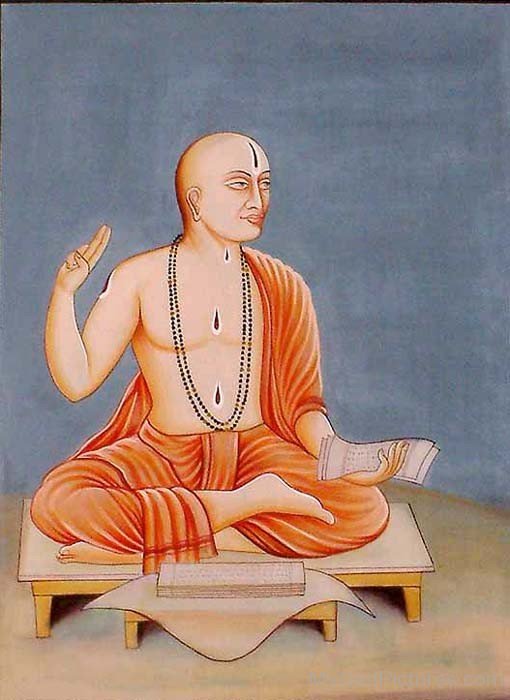
Madhvacharya, an influential 13th Century Guru was a management genius. While his spiritual contributions are unparalleled, there is another amazing contribution. He presented a very intelligent management paradigm that religious organizations should take note of. He recognized all these problems and came up with a master stroke of a management strategy.

Madhvacharya disappeared from our view in the Himalayas at Badarikashram over 700 years ago. He went to associate with his Guru Sri Veda Vyasa. It is said that the spiritual master and disciple are still living there, up in the Himalayas. But the management system he put into place still continues to work in Udupi, at the Sri Krishna Matha.

Lord Sri Krishna in Udupi

The Rotating Management System
What is Madhvacharya’s management genius? He built 8 management teams under 8 capable leaders. Not one, not two, but EIGHT! He then put each team in charge of management of the temple for two years, on a permanent rotation basis. So one team takes charge, manages the massive temple for two years, then hands over to the next team… continuously rotating.

Benefits of Rotation
Each team gets 14 years to invest into their own physical, mental, emotional and spiritual wellbeing. Then they sacrifice two years to serve at the temple… and then, before any of the above negative things start happening, they exit the main stage. They are now ready to recover, recoup, and reinvest into their spiritual core. They get a good 14 years to regroup, share reflections, and prepare for their next shot at the management service.

The Impact on Manager Motivation
Put yourself in their shoes. If you get 14 years to prepare for something, how eager and enthusiastic would you be? How hard-working, sincere, and serious would you be if you have just 2 years to actually do it? Many leaders don’t even get one chance to do the service, because after all, death appears to everyone. But if you do get more than one opportunity, we can be sure that the service will be always better.

The Importance of Rotation
There is no burnout, and no time to get involved in any detrimental activities. There is enough time to deeply ponder the purpose and mood and mission of the service. Religious organizations should take note of this. Any organization that does not follow such a rotation policy risks making the headlines for the wrong reasons. Do not keep a manager in a management role for too long. Find others, keep switching it up. Give everyone enough time to take care of their own health, physical, mental, emotional, and above all, spiritual.

Sri Krishna says this in the Bhagavad Gita…

युक्ताहारविहारस्य युक्तचेष्टस्य कर्मसु ।
युक्तस्वप्‍नावबोधस्य योगो भवति दु:खहा ॥ १७ ॥

yuktāhāra-vihārasya
yukta-ceṣṭasya karmasu
yukta-svapnāvabodhasya
yogo bhavati duḥkha-hā

He who is regulated in his habits of eating, sleeping, recreation and work can mitigate all material pains by practicing the yoga system.

https://vedabase.io/en/library/bg/6/17/

If you are a manager in a religious organization yourself, watch out!

You won’t get to your spiritual destination if you don’t take care of your spiritual growth. Managerial growth, or more fame, power, money or influence, is not the same as spiritual growth! Please guard your spiritual life with great attention!

Happy Hare Krishnas

I pray for your success!

Hare Krishna!

The author humbly expresses his gratitude to Sriman Ravindra Shyamsundar Joshi, his elder brother. His valuable feedback on this article addressed a key misunderstanding. It helped clarify that burnout was not the only cause of managerial issues in religious organizations.

India Trip 2-18 October 2025

The author joyfully shares his upcoming journey to India from 2-18 October 2025, where he will immerse himself in spiritual practices centered around Krishna. He plans to visit sacred sites, engage in prayers, and connect with family and friends. This enriching experience promises to deepen his devotion and foster community service. Hare Krishna!

Hare Krishna!

It is a great pleasure and privilege to be back in the holy land of Bharat Bhumi. Most of us also know this land as India.

When in India, I will be hearing and chanting about Krishna. I will visit some places of pilgrimage. Sincere and serious devotees have based their lives around hearing and chanting about Krishna in these places.

This is my schedule

  • Till 29 September 2025, Toronto
  • 30 September 2025, Travel Toronto – Frankfurt
  • 1 October 2025, Travel Frankfurt – Hyderabad
  • 2 October 2025, Hyderabad, Vijayadashami, Dussehra, the victory of Lord Rama over Ravana, Sri Madhvacharya’s Appearance Day
  • 2 – 8 October 2025, Hyderabad
  • 9 – 12 October 2025, Pune
  • 12 – 14 Oct 2025, Mumbai
  • 15-17 October 2025, Tiruvanantapuram / Trivandrum
  • 18 October 2025, Hyderabad
  • 18 – 19 October, Travel Hyderabad – Delhi – Toronto
  • 19 October 2025 onward, Toronto

These are the planned activities

  1. Spend some time with my elderly parents.
  2. Attend the full morning program.
    • Join Mangala Arati at 4:30AM .
    • Engage in Japa, or chanting Hare Krishna.
    • See Shringara Arati
    • Offer Guru Puja to Srila Prabhupada.
    • Attend classes on Srimad Bhagavatam at the nearest ISKCON temple with the devotees.
  3. Distributing Srila Prabhupada’s books.
  4. Read and Hear from Srila Prabhupada’s books.
  5. Sing in Harinam Sankirtan.
  6. Give Classes where possible.
  7. Meet, serve, and hear from my Guru – spiritual master and Guru Mata.
  8. Meet family and friends.

If you want to meet me when I’m in India, please write to das@dasadas.com. Meeting individually is not always possible. Nonetheless, I will try to invite you to any programs I am attending or serving at.

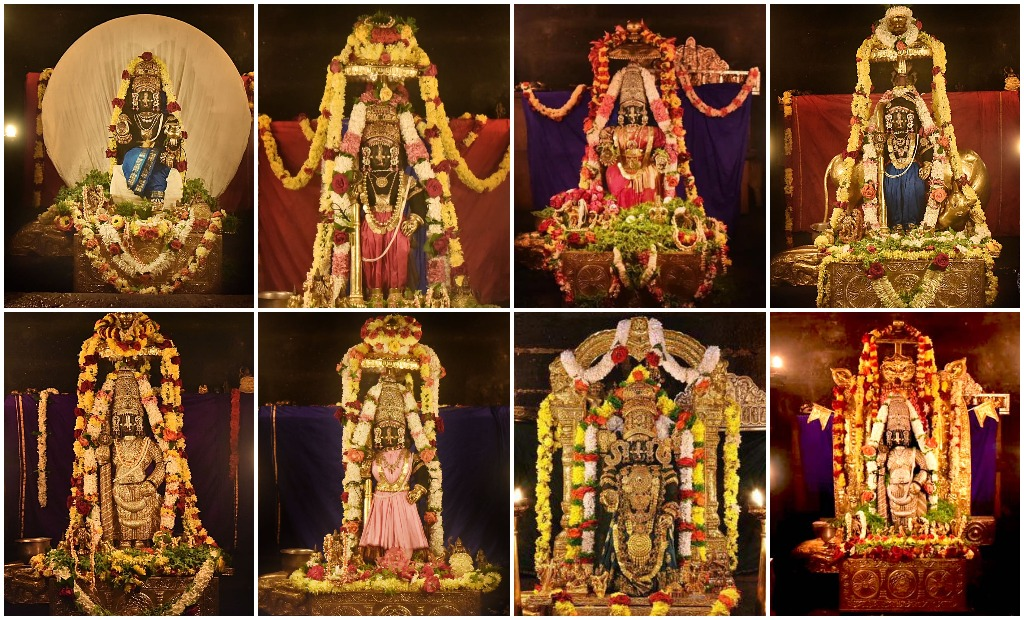
And just so you have some spiritual gain from viewing this post, some beautiful spiritual images to meditate on…

ISKCON Hyderabad View of the Altars

ISKCON Hyderabad View of the Altars

Presiding Deities of Hyderabad Sri Radha Madan Mohan

Presiding Deities of Hyderabad Sri Radha Madan Mohan

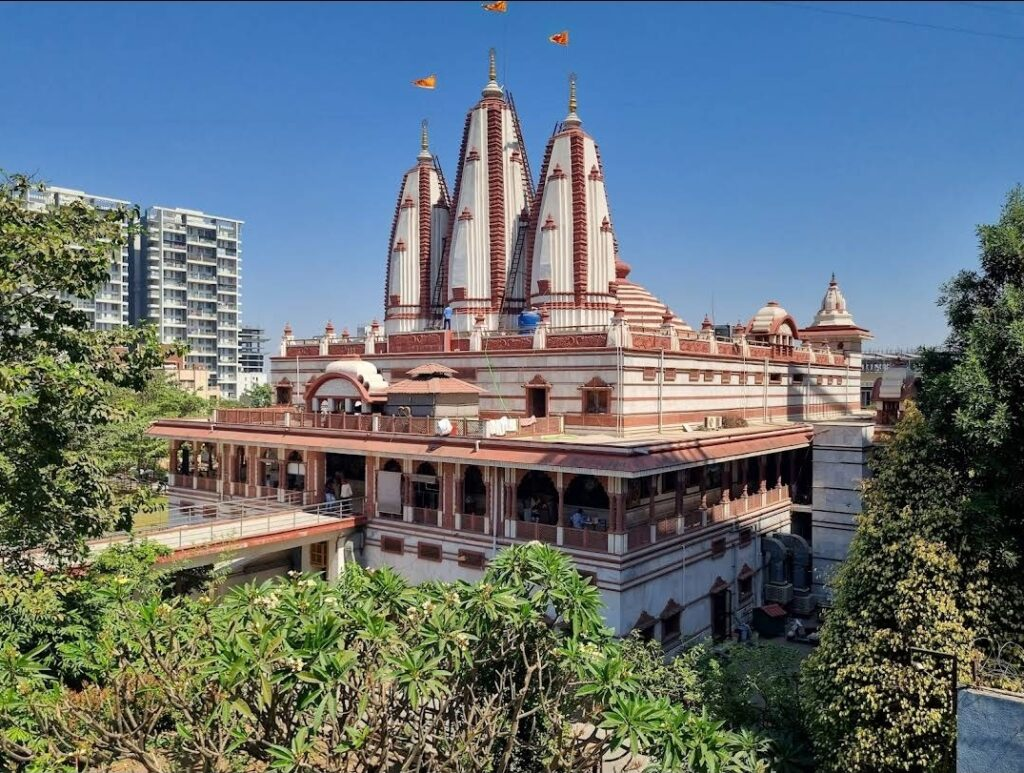
ISKCON NVCC Pune

ISKCON NVCC Pune

Presiding Deities of ISKCON NVCC Pune, Sri Radha Vrindavan Chandra

Presiding Deities of ISKCON NVCC Pune, Sri Radha Vrindavan Chandra

Presiding Deities of ISKCON Camp, Pune, Sri Radha Kunjabihari

Presiding Deities of ISKCON Camp, Pune, Sri Radha Kunjabihari

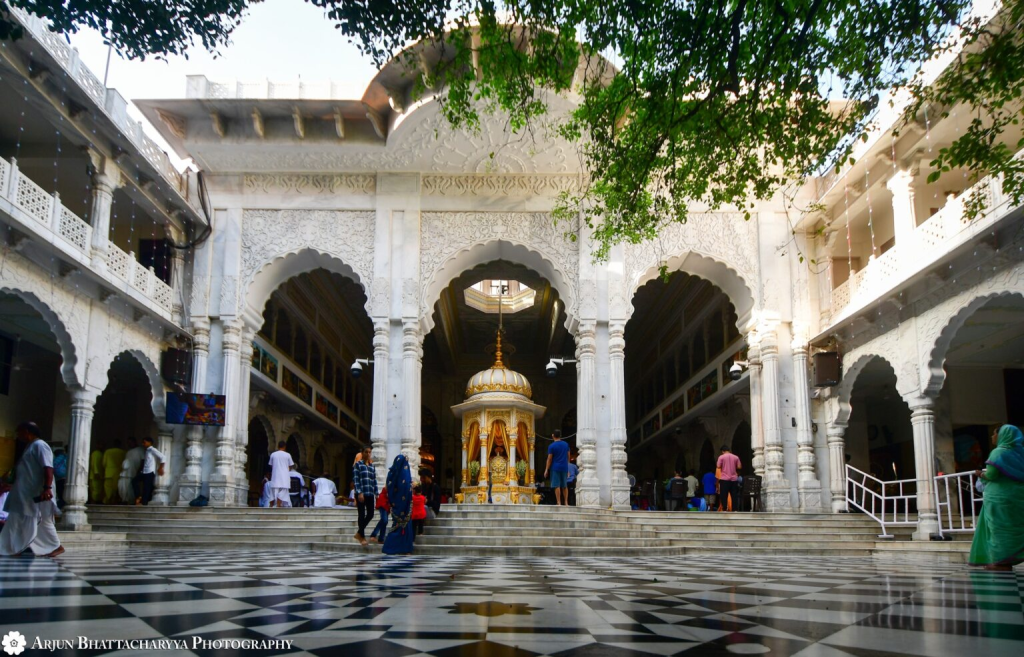
Courtyard of ISKCON Juhu, Mumbai

Courtyard of ISKCON Juhu, Mumbai

Presiding Deities of ISKCON Juhu, Sri Radha Rasabihari

Presiding Deities of ISKCON Juhu, Sri Radha Rasabihari

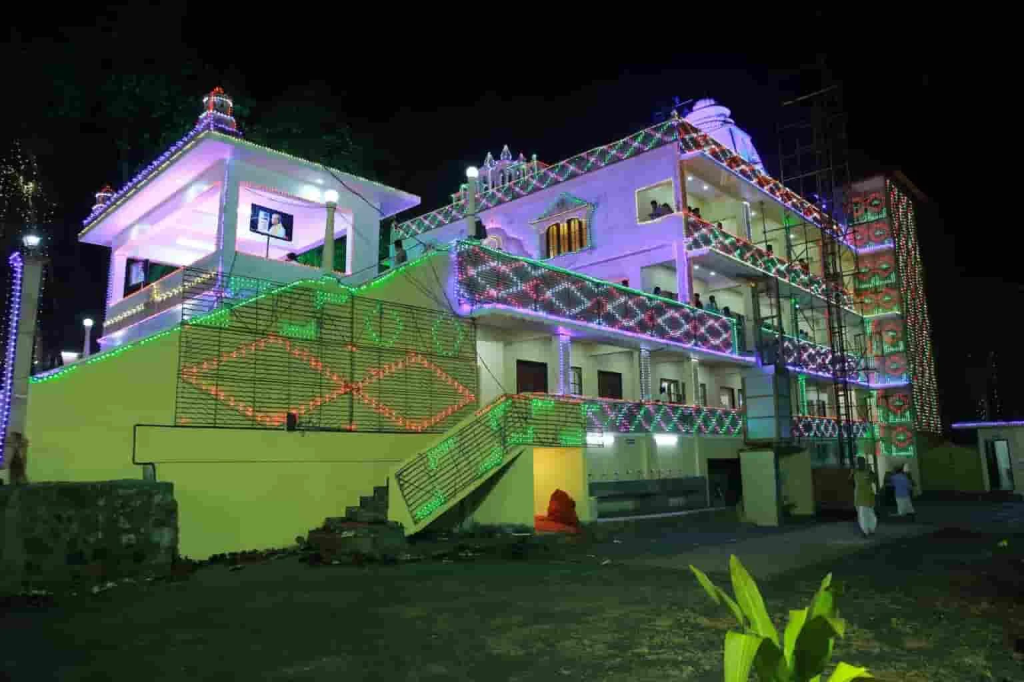
Night View of ISKCON Trivandrum

Night View of ISKCON Trivandrum, India

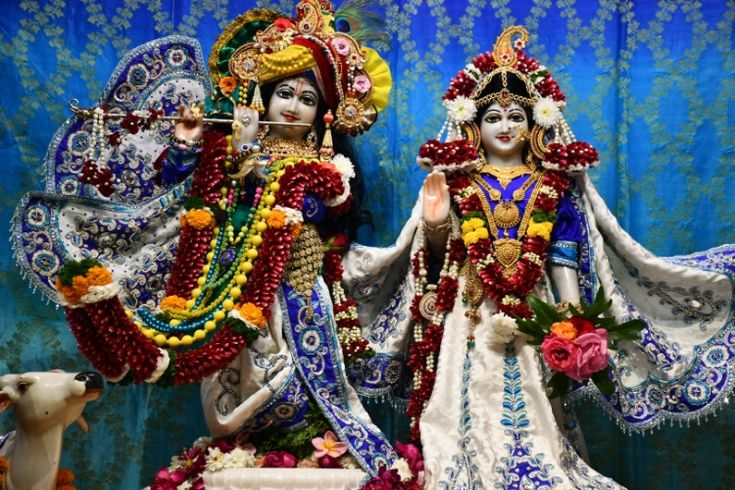
Presiding Deities of ISKCON Trivandrum, Sri Krishna Balaram

Sri Krishna Balaram, ISKCON Trivandrum, India
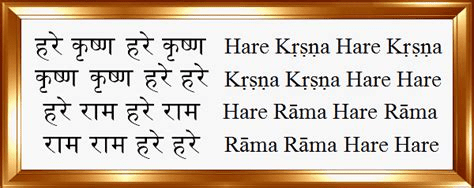
the mahamantra hare krishna hare krishna krishna krishna hare hare hare rama hare rama rama rama hare hare

The standard of education

We wake up to horrible headlines every day. People in leadership roles, people who are “highly educated” act in terrible ways.

We come up with band-aid solutions every day, whack-a-mole style. But have we examined the root cause of the problems we face in our world?

Could there be a problem with our education system?

What does it mean to be “educated”? What is the standard of education? What is the bar? How do we know if someone is educated or not?

I was shocked and disgusted to see news like this in the media…

  • Bengaluru student raped, blackmailed by college professors; three arrested
  • Former professor charged with raping multiple victims from El Salvador
  • Two women say Stanford and UC Berkeley professors raped them
  • UP professor booked for raping female students
  • Muslim Schoolteacher rapes and marries 12-year old student
  • Mumbai Teacher Gave Student Anti-Anxiety Meds, Sexually Assaulted Him

How is it that teachers and professors did this to their own students?

We are very proud of our education system in the modern world.

We gush about our kindergarten, primary, secondary, tertiary education… about Montessori and Waldorf, and other types of education.

We talk about degrees, undergraduate, graduate, PhDs.

We talk about vocational training, we laud the trades.

And yet, on a daily basis, we see scandals in the world around us. They occur in the corporate world, the medical profession, business, and government…

There are many band-aid solutions floating around, but do we know the real cause?

Our education system is a failure

Why do I say that?

Because education is meant to produce cultured individuals of high character. Someone objects that this is a subjective thing. Who can define what is a “cultured” individual with “high character”?

That is yet another failure of our education system. We don’t even know what the definition of simple things is.

The definition of “well educated” has been known for millions of years.

If someone does not trust the pedigree of Vedic culture, there is more recent definition. More than 1,500 years ago, the great thinker Chanakya Pandit wrote:

mātṛvat para-dāreṣu
para-dravyeṣu loṣṭravat
ātmavat sarva-bhūteṣu
yaḥ paśyati sa paṇḍitaḥ

“One who considers another’s wife as his mother, another’s possessions as a lump of dirt and treats all other living beings as he would himself, is considered to be learned.”

quoted by Srila A. C. Bhaktivedanta Swami Prabhupada in https://vedabase.io/en/library/sb/9/10/27/

But there is hardly such a person trained by the modern education system… And if you can actually find such a person, that is in spite of their education. It is not because of their education.

We don’t teach such things in our education system. What do we teach?

We teach how to compete, how to defeat, how to win at any cost. We teach how to beg, borrow, or steal. We teach how to be passionate or ignorant, but never how to be “good”. We simply teach people how to make a dollar, or a rupee, or a pound or euro. That is not education!

Education means to raise a student above their low class impulses, to be good in the face of temptation! But it is impossible for our education system today to do any better.

The very definition of “goodness” is unknown in the modern world!

Here are a few definitions of “goodness” from the Vedic scriptures…

  • nityasattvasthaḥ — in a pure state of spiritual existence BG 2.45
  • ūrdhvaṁ gacchanti sattva-sthā – Those situated in the mode of goodness gradually go upward to the higher planets BG 14.18
  • sattvasaṁśuddhiḥ — purification of one’s existence BG 16.1
  • sāttvika – that which increases the duration of life, purify one’s existence and give strength, health, happiness and satisfaction BG 17.8
  • na dveṣṭy akuśalaṁ karma kuśale nānuṣajjate
    tyāgī sattva-samāviṣṭo medhāvī chinna-saṁśayaḥ

The intelligent renouncer situated in the mode of goodness, neither hateful of inauspicious work nor attached to auspicious work, has no doubts about work. BG 18.10

There are many many wonderful definitions of what it means to be “good” in Vedic literature. When we look at the few definitions of “goodness” above, we see that our education system does not touch these at all:

  1. Spirituality
  2. Understanding of the evolution of the qualities of life
  3. Purification of our very existence
  4. Renunciation, Contentment, etc.

As a result, no matter how educated someone is, they inevitably indulge in this:

  1. Look upon other women (or men) as objects of their own gratification
  2. Covet others’ wealth and try to make it their own
  3. Emphasize and amplify the differences between others and oneself, treat others differently from how one would like to be treated

There is plenty of evidence to support the above claims.

Do you not see how things are in this world? Everyone is searching after one sexual experience after another… constantly, in real life, in the media, on social media, on the Internet… our society has become a cesspool of illicit sexual indulgence.

The men do not see other women as mothers. Nor do the women hold themselves in high enough regard to act and behave as mothers should. In fact, there is hardly any understanding of the exalted nature of mothers in our world! Some women, even elderly women, balk at being called “mother”, preferring to remain sex objects or identify with other designations.

With wealth, it is a free-for-all, “finders keepers losers weepers” goes the saying taught to tiny tots these days! No one sees others’ possessions as good as worthless. They are constantly envious of what others have, and how to take it from them, by hook or by crook. This goes all the way from individuals to corporations to countries!

And almost everyone treats everyone else differently from how they would like to be treated… There is widespread harassment, racism, sexism, ageism, nationalism, ableism, classism, and so much more.

The education sytem does not teach that we are all spirit souls, equal spiritually!

So, dear reader, our education system has failed.

We need to bring it back to this standard of education.

“One who considers another’s wife as his mother, another’s possessions as a lump of dirt and treats all other living beings as he would himself, is considered to be learned.”

All teachers, lecturers, instructors, professors, and other educators who can’t uphold this principle must be educated. They must reach the right standard before being trusted to educate anyone.

Until then, the education system will stay broken… and we will continually experience fresh horrors from the “products” of this demonic education system we push.

Anyone who can’t uphold the above principles must be seen as uneducated. They should not be given any position of leadership in any part of society.

Most of the modern leaders, including are uneducated, unfortunately. This includes this representative sample of those who lead our society today.

  • Teachers
  • Professors
  • Politicians
  • Business leaders
  • Government leaders
  • Scientists
  • Researchers
  • Doctors
  • Military Leaders
  • Engineers
  • Architects
  • Judges
  • Lawyers
  • Police Officers
  • Accountants
  • IT Professionals
  • Corporate Leaders
  • Social Workers
  • Economists
  • Religious Leaders

Can we wake up to the real standard of education?

Can Anyone Engage in Devotional Service? Is Good Karma required? Key Insights

Is spiritual advancement not possible for someone who has not done good deeds before? The discussion emphasizes that devotional service is accessible to everyone, regardless of past karma. The mercy of a pure devotee is crucial for spiritual growth, allowing even those with sinful backgrounds to engage in devotion. Ultimately, faith and appreciation can be cultivated through this divine grace, inspiring a hopeful journey toward Krishna Consciousness. Won’t you try? Hare Krishna!

Bhakta Sunil, 9 December 2015

Hare Krishna every one

Please help understand the following lines from Bhagavatam 2.7.15 Purport :

Every living entity is always distressed in this material world because this place is such that at every step one has to meet with some kind of distress. But one who is supported by his past good deeds engages himself in the devotional service of the Lord, as confirmed in the Bhagavad-gita (7.16). Those who are supported by impious acts cannot be engaged in the devotional service of the Lord, even though they are distressed. This is also confirmed in the Bhagavad-gita (7.15)

Does this mean, one has to have past good karma in order to engage in devotional service?

Thanks in anticipation

your insignificant servant,
Sunil

Sudarshan Das, 9 December 2015
Hare Krishna,

Prabhuji, Devotional service is for everybody. Bhagavad Gita and the Maha Mantra is freely available to the people of the world because of Srila Prabhupada’s mercy. Srila Gurudev extends this mercy via the free online course. But does everybody take it? You are such an enthusiastic preacher and I am sure you talk about Krishna Consciousnesses to many people, but how many of them take it?

For a soul to be able to appreciate devotional service, they should at least be in mode of goodness in some form or the other. This consciousnesses is defined by past deeds. Lord Buddha preached non-violence to the people, so that they will at least leave the sinful life of meat eating and come to goodness so that they appreciate devotional service and take it up. That sukriti is required, it can be a agyat sukriti also, one that you get unknowingly like appreciating a devotee for the amazing kirtan he did..

To conclude, for one to appreciate and take up devotional service, good karmas create a favorable situation. If one has the causeless mercy of the Lord then the soul will surrender under any situation. 🙂

your servant,
Sudarshan Das

Amala-Purana Das, 9 December 2015
Hi Sunil,

In response to your question: Does this mean, one has to have past good karma in order to engage in devotional service?

Answer: No. one does not need to have past good karma to engage in devotional service. It’s only the mercy of a pure devotee that one can take to devotional service and become a pure devotee. Pious persons are qualified to take to devotional service not exactly because of their piety, but because piety attracts a pure devotee’s mercy. It is the mercy of the Lord’s devotee and nothing else that destroys sins and establishes faith in bhakti

Srila Prabhupada informs us in BG 7.16 Purport:
“When these four kinds of persons come to the Supreme Lord for devotional service and are completely purified by the association of a pure devotee, they also become pure devotees. As far as the miscreants are concerned, for them devotional service is very difficult because their lives are selfish, irregular and without spiritual goals. But even some of them, by chance, when they come in contact with a pure devotee, also become pure devotees.”

Also, Lord Krishna confirms in BG 4.36:
“Even if you are considered to be the most sinful of all sinners, when you are situated in the boat of transcendental knowledge you will be able to cross over the ocean of miseries.”

Hope it helps

your servant,
Amala-Purana Das

Amala-Purana Das, 9 December 2015
Adding further:

In Caitanya lila, we see how most sinful of all sinners, Jagai and Madhai were delivered by the mercy of Lord Nityananda

Also, there is a famous verse in Caitanya Caritamrta (Madhya 19.151), quoted often by Srila Prabhupada and Srila Gurudeva,

brahmāṇḍa bhramite kona bhāgyavān jīva
guru-kṛṣṇa-prasāde pāya bhakti-latā-bīja

“According to their karma, all living entities are wandering throughout the entire universe. Some of them are being elevated to the upper planetary systems, and some are going down into the lower planetary systems. Out of many millions of wandering living entities, one who is very fortunate gets an opportunity to associate with a bona fide spiritual master by the grace of Kṛṣṇa. By the mercy of both Kṛṣṇa and the spiritual master, such a person receives the seed of the creeper of devotional service.”

your servant,,
Amala-Purana Das

Bhakta Sunil, 12 December 2015
Jaya Sudarshan Prabhu and Amala-Purana Prabhu. The doubts have been dispelled

Sudarshan Prabhu, I also remember your enthusiasm of how you had helped another member in this forum, by giving analogy of ceiling fan taking time to come to halt after switching it off

Amala-Purana Prabhu, both of your answers have successfully vanquished the doubt

your insignificant servant,
Bhakta Sunil


Please subscribe to daily inspirational emails from His Grace Sriman Sankarshan Das Adhikari (Writings and lectures archived at www.ecstaticmedia.com ), written fresh every day from his travels around the world sharing the highest spiritual knowledge with everyone. Sign up now at www.joincourse.com

Rapid fire questions… selfless service, amanina mana dena in marriage, Krishna Consciousness in a calamity, karma vs. compassion, free will, our anchor…

This article contains a series of questions and answers… it explores the essence of selfless service, emphasizing that true selfless action arises from a pure devotee’s desire to please Krishna, devoid of personal gain. It highlights how harmonious relationships are built on mutual respect. It also discusses how the Internal process of chanting Hare Krishna mbrings peace in challenging times. Understanding the difference between karmic reactions and divine mercy (kripa) allows devotees to perceive their experiences as opportunities for growth. Ultimately, it reinforces the concept of humility and service, reminding individuals of their role as servants of the lowliest servants in devotion to Krishna.

QUESTION 1) We talk a lot about selfless service, but can you pls tell one action devoid of gain in return?


MBD: Selfless service is not possible unless for a pure devotee, who does service for service sake. In all lower states of Bhakti, all service benefits the performer, even if it may benefit others. The higher the stage of the performer’s advancement, the more it benefits others. It benefits the performer less than it benefits others. Take any service. Krishna’s service to the living entities is always selfless. He does not need anything from anyone in return. Same with the spiritual master. He only seeks Krishna’s pleasure.

1.1) Can there be an action without result?


MBD: When you say result, do you mean “karmic” result? All action that is not purely transcendental has karmic reactions… everything in the modes. Devotional service has no karmic results. Still, there are devotional results. These start with the pleasure of Krishna and the purification of the heart of the devotee, etc.

(The question above is from before our discussion today.)

From what I have learned/heard: Anand/ Sukh (Bliss / Pleasure) is the ultimate goal of every action. So if the action is intended for the pleasure of the Lord, it is selfless. But if it is directed towards sense gratification or tries to satisfy sego, then it is selfish action.


MBD: Yes, you have the right understanding.

QUESTION 2) Does the phrase “amanina man dena…” apply in a husband/wife relationship?


MBD: Yes, it applies to all relationships. If 2 souls are perfectly in amanina (not expecting any respect), they experience a state of harmony. When they are in manadena (giving all respect), they are also in perfect harmony with the will of Krishna. They are thus very happy. Easier said than done.

QUESTION 3) In the most unbeatable calamity, what is your internal process in terms of Krishna Consciousness? What is the first thing that comes to your mind?


MBD: I chant Hare Krishna, if I can chant at all. In general, we are in good shape if we can make chanting the Lord’s name a reflex action. This should apply to anything that happens, whether good or bad. We can test how far we have come when something unexpected happens, good or bad.

QUESTION 4) How do we distinguish between the reactions of Karma from Kripa?


MBD: Kripa is undeserved, no one in material consciousness deserves it. For example getting Krishna Prasadam is a great privilege. You may have the karmic credits to be able to eat, digest, etc., but there is no karmic action that can “earn” you Krishna Prasasdam. Whatever our prarabdha is must be experienced without fail. Even pure devotees apparently enjoy or suffer karmic reactions. But Krishna gives them whatever is needed for others’ sake. This is to teach others by personal example. For devotees in the middle, Krishna can use karmic reactions to pat us on the back. He can also kick us in the butt, through maya or yogamaya. All devotional experiences, in general, are purely Kripa.

From what I have learned/heard: If something is happening to me/happened with me, it MUST be my prarabdh karma. But interpreting it as the mercy of the Lord helps. He is “kartum akartum anyatha kartum.” This helps to remain Krishna conscious in the moment. It erases the distinguishing line between karma and kripa.


MBD: That is where the attitude comes in. Whatever happened is by Krishna’s sanction. The devotee will see Krishna’s hand and understand the takeaway. The nondevotee will only try to adjust the situation to “avoid/improve/prevent/etc.” You are on the right track.

QUESTION 5) Do we really have freewill? (If Lord is the enjoyer/doer of all actions, and we are but a medium) So whatever “we think” has been done by us has actually been done by Him, no?


MBD: Knowing what you will do, and forcing you to do it are two different things. It’s like a parent. The parent knows what the child will do in a given situation. Nonetheless, they leave the child free in a limited way. This freedom allows the child to learn. In the material sense, Krishna is a non-doer. The 3 modes of material nature are set in motion by Krishna. They are the doer. In the devotional sense, Krishna does not know how exactly the devotee is going to serve Him. When Radharani cooks something, Krishna knows it will be amazing, but does not know what exactly it will be. He can know it if He wants, but Yogamaya overpowers His knowability. It is like Krishna’s Sarvajnata (all-knowing nature) and mugdhata (innocence) exist together. This would be a contradiction normally, but all contradictions converge and are resolved in Krishna.

QUESTION 6) What is that ONE anchor point to be aware of every time?


MBD: I am a servant of the servant of the servant. I serve at least as far as the extent of the current disciplic succession of Krishna. But I am a servant of all devotees, past, present, and future.

Life as a football is no fun

Are you living the football experience? Are you constantly driven by desires and impulses like lust and anger? Despite life’s turmoil, there’s hope for liberation through spiritual practice. By seeking connection with genuine spiritual guidance, you can experience true freedom and purpose, transcending the endless kicking in material existence. Want to try it out?

A football (soccer ball) is kicked around on a field, from one side to the other. Sometimes one team has the ball, sometimes another. Sometimes it’s thrown in from the sidelines, sometimes it’s kicked out of bounds. Rarely, it ends inside the net of the goalpost… Sometimes it’s held in the armpit of the referee… If a football match lasts ninety minutes, then football is constantly moving around, from here to there, to another place…

Now suppose the football claims that it is moving by it’s own free will. The football claims that it is bouncing around from here to there on it’s own accord. Would you agree with the football?

No, you would say to the football, you’re being kicked and thrown around by the players. You have no free will, some will add.

We are all like that football. We get kicked around all over the place. Yet we claim that our trajectory is by free will! Actually, we’re kicked around due a misuse of free will! More on that in a moment.

How am I being kicked around, do you ask?

`Well, we have the feelings of lust and anger. Lust means the intense greed to have or own something. Lust means the urge to please my senses and mind. That lust propels us to great lengths. So we can say that the lust is kicking us around. And if the lust is fulfilled? Then we want more, naturally. More and more. Stronger kicks. But if the lust is not fulfilled? Then anger takes over! More kicking!

We can also see that we have 6 senses, including the mind. The eyes, ears, tongue, skin, and nose… plus the most insistent of them all, the mind. The eye wants to see something? Kick. The tongue wants to taste something? Kiick. The skin wants to touch something? Kiiick! The nose wants to smell something? Kiiiick! The ears want to hear something? Kiiiiick! And of course, the most resounding kick comes from the mind! Of course, the biggest kicks are from the mind… Out of bounds!

Sometimes we are kicked by our own mind and body, but sometimes we are impelled by others… A swarm of mosquitoes? A bed full of bugs? Cockroaches or rats anyone? Teeming, jostling, pushing crowds of people? Black flies, bears, you name it!

Sometimes we’re impelled by the forces of nature. A kick from a flood, maybe. Or a kick from fire. Worse, a kick from a hurricane, or an earthquake even.

Sometimes we’re impelled by illusion, sometimes by envy. Sometimes we’re compelled greed or madness. And all of these kick us around, from one end of the world to another. From one lifetime to another sometimes. Again and again.

Being kicked for ever. Ad infinitum.

All of this kicking, and we say we’re doing everything “by my own sweet will”?

In the famous Frank Sinatra Song, a misguided protagonist foolishly croons…

And now, the end is near
And so I face the final curtain
My friend, I’ll say it…And more, much more than this clear… I did it my way

Regrets, I’ve had a few
…I did what I had to do
…And more, much more than this… I did it my way

Yes, there were times, I’m sure you knew
When I bit off more than I could chew… …And did it my way

I’ve loved, I’ve laughed and cried
I’ve had my fill, my share of losing
And now, as tears subside
…Oh, no, oh, no, not me…I did it my way

For what is a man, what has he got?
…The record shows I took the blows
And did it my way

Yes, it was my way – Frank Sinatra “My Way”

Does that sound familiar?

It’s the football, even though getting kicked around all over the place, claiming “I did it my way”. Poor football!

But, there is hope, for all of us footballs in the material world.

কাম-ক্রোধের দাস হঞা তার লাথি খায় ।
ভ্রমিতে ভ্রমিতে যদি সাধু-বৈদ্য পায় ॥ ১৪ ॥
তাঁর উপদেশ-মন্ত্রে পিশাচী পলায় ।
কৃষ্ণভক্তি পায়, তবে কৃষ্ণ-নিকট যায় ॥ ১৫ ॥

kāma-krodhera dāsa hañā tāra lāthi khāya
bhramite bhramite yadi sādhu-vaidya pāya
tāṅra upadeśa-mantre piśācī palāya
kṛṣṇa-bhakti pāya, tabe kṛṣṇa-nikaṭa yāya

“In this way the conditioned soul becomes the servant of lusty desires, and when these are not fulfilled, he becomes the servant of anger and continues to be kicked by the external energy, māyā. Wandering and wandering throughout the universe, he may by chance get the association of a devotee physician, whose instructions and hymns make the witch of the external energy flee. The conditioned soul thus gets into touch with devotional service to Lord Kṛṣṇa, and in this way he can approach nearer and nearer to the Lord.https://vedabase.io/en/library/cc/madhya/22/14-15/

Srila Prabhupada, the spiritual master of my spiritual master comments in a lecture on these verses…

Very nice. In this way we are being kicked up. The freedom of football. The football is kicked from this party and thrown to the other party. The other party kicks and it comes. The football thinks . . . if the football thinks that, “I am in freedom movement,” so what is that freedom? Kicked from this party to that party and that . . . so here the same thing is said, kāma-krodhera dāsa hañā tāra lāthi khāya.

Just like the football players—the football is under the kicking method of two parties—similarly, we are under the kicking method of two things, lust and anger. We are lusty, and when our lust is not fulfilled, then we become kicked by anger. Two things. Just like the football is kicked by this party and that party, similarly, our position is we are being kicked sometimes by lust and sometimes by anger. So we are going on leading our life in this way. – His Divine Grace A. C. Bhaktivedanta Swami Prabhupada https://vanisource.org/wiki/670109_-_Lecture_CC_Madhya_22.11-15_-_New_York?hl=football

I am a spirit soul. So are you, dear reader. As spirit souls, we’re not meant to be footballs of lust or anger. We are not meant to be subjected to the vagaries of the misuse of free will. As part-and-parcels of Krishna, we have free will. When used properly, it results in a loving harmonious life. This life is rich with ecstatic relationships with Krishna and with each other.

If we act genuinely as a spirit soul, then there is no more getting kicked around.

My dear reader, please pray with me… My dear Lord Sri Krishna, for ages, countless eons, and trillions of lifetimes I am kicked around. I have been struggling with my own lust and anger.

Please place me as one of the atoms at your lotus feet. Then, I can experience true free will in Your service.

Hare Krishna!

A Moment of Reflection: Mantras and Unexpected Friendships

During a serene lunch break by Lake Ontario, a spontaneous encounter with a young man named George transformed a potentially uneasy moment into a thoughtful exchange about spirituality. Embracing the opportunity, I conveyed some nuggets of spiritual knowledge, fostering connection and understanding. Then I chanted my mantras. Ultimately, I left the encounter gratefully, having made a new friend.

I sat at one end of the bench and prepared to chant my Gayatri mantras. This big burly young man came and plonked himself right on the other end. The whole bench shook with the force of his landing. All other benches were empty, and this man chose to sit on the same one I was on.

The unkempt, untidy, muscular fellow was looking at me with some unusual interest… I wondered if I should move… was it going to be trouble? But I decided to stay there and chant my Gayatri mantras there anyways. After all, Krishna is non-different from His Names. I was in safe hands, come what may.

To make matters worse, this young man lit a cigarette. Oh no, I thought, how can I chant here amidst all the smoke? But still I resisted the urge to move. There was after all a reason why the Paramatma, the Supersoul in his heart inspired him to sit there. On the lone occupied bench on the entire pier.

All this happened one afternoon earlier this week, on my lunch break. Mantras on the pier that looks onto Lake Ontario – a typical lunch time routine for me. I took a slow walk, beads in hand, softly chanting the Hare Krishna Mahamantra. Then I chose an empty bench, which was not hard to do. Even though it was bright and sunny, it was still cold, about plus two degrees Celsius. So I had the pier all to myself, or so I thought. Krishna clearly had other plans!

Thus the intelligent person who places his faith in the Paramātmā or the Supreme Personality of Godhead begins to advance toward a blissful eternal life of knowledge.

https://vedabase.io/en/library/bg/13/23/

Suddenly he asked me, interrupting, “Are you praying to the the Buddha?”. I said I was chanting the Hare Krishna Mahamantra. He said “I believe it all, the cross, Buddha, all”.

So then George, who is from Greece, and I had a nice little chat. We spoke about how there is only one God and we know the same God by different names. I chanted peacefully. George just sat there, taking a puff, looking at me, taking a puff…

As he smoked, I was hoping the smoke didn’t blow my way, and it didn’t, for the most part. Except for the last puff – the wind changed directions that moment. But then, he threw away the cigarette, and with a “be well, my friend” got up walked away.

Why had I wanted to avoid the interaction? What was the difference between this brief interaction and the ones that we view as more significant? Yes, the time span was different. This one was a few minutes, the others, a few hours, days, weeks, months, years, or even decades.

But no matter what, we have to part ways, is it not? We sometimes meet each other again, our paths cross again… but is it guaranteed that they will? So why did I want to get away from George? It was the mind that was playing tricks, that’s all!

Thereafter, Devayānī, the daughter of Śukrācārya, understood that the materialistic association of husband, friends and relatives is like the association in a hotel full of tourists. The relationships of society, friendship and love are created by the māyā of the Supreme Personality of Godhead, exactly as in a dream. By the grace of Kṛṣṇa, Devayānī gave up her imaginary position in the material world. Completely fixing her mind upon Kṛṣṇa, she achieved liberation from the gross and subtle bodies.

सा सन्निवासं सुहृदां प्रपायामिव गच्छताम् ।
विज्ञायेश्वरतन्त्राणां मायाविरचितं प्रभो: ॥ २७ ॥
सर्वत्र सङ्गमुत्सृज्य स्वप्नौपम्येन भार्गवी ।
कृष्णे मन: समावेश्य व्यधुनोल्लिङ्गमात्मन: ॥ २८ ॥

sā sannivāsaṁ suhṛdāṁ
prapāyām iva gacchatām
vijñāyeśvara-tantrāṇāṁ
māyā-viracitaṁ prabhoḥ

sarvatra saṅgam utsṛjya
svapnaupamyena bhārgavī
kṛṣṇe manaḥ samāveśya
vyadhunol liṅgam ātmanaḥ

https://vedabase.io/en/library/sb/9/19/27-28/

It is best to serve another soul whenever we get a chance. No postponing. After all, who knows if and when our paths will cross again?

I don’t know why George chose to sit next to me. I wonder if he just wanted to have an interaction with another human. But I feel that Krishna, God, inspired George. I hope I served the soul passing for George for the brief length of our interaction! I hope that the few nuggets of spiritual knowledge was pleasing to the soul in the body called George. I pray that my effort was pleasing to Krishna, who sits in my heart as well as George’s as Paramatma, the Supersoul.

I am glad I overcame my preconceived notions about this young man. It was by Krishna’s grace. Otherwise I would have missed the service opportunity, maybe even conveyed some misunderstanding to George. It is not very pleasant when someone tries to avoid you, especially if you don’t know why.

Too often, spiritual people end up pushing others away. This is because we are not in tune with the dictations of God sitting within our heart. It is because we fall prey to the urges of the mind.

Chanting Mantras with meditation beads...

I then chanted my Gayatri in peace. I continued chanting the Mahamantra after. Finally, it was time to get back to the office for a quick lunch and my next meeting.

It all ended well. I made a new friend, George from Greece. I prayed that he also experience Krishna in the form of His His Names, some day.

Hare Krishna Hare Krishna 
Krishna Krishna Hare Hare 
Hare Rama Hare Rama 
Rama Rama Hare Hare
The Hare Krishna Mahamantra

The Spiritual Connection revealed at a Farewell

At a funeral in Toronto for a man from Kazakhstan, the author, even though unfamiliar with the deceased, reflects on his unexpected role in the cremation, arising from a shared devotion to Krishna. Krishna is the All-Knowing, All-Powerful Supreme Personality of Godhead. This unexpected connection demonstrates Krishna’s omniscience and the surprising spiritual connections that intertwine our lives.

I stood at the funeral home, my finger poised on the button, ready to press it. The button was connected to the circuit that would ignite the fire. The flames would transform the lifeless body to ashes. The material elements would be consumed. The spirit soul that once inhabited the body, freed from it’s current bondage, would be free to move on.

Normally, this service of offering fire at the end of life is reserved for the son of the deceased. But this was not my father. In fact, before the funeral, I had never met him personally for a long time. We had seen each other in the past. In 2012 or 2013, but no significant interactions after that, just once, a short conversation. Victor recalled me asking him if he’d read the Bhagavad Gita, and turns out, he had!

The departed gentleman was from Kazakhstan, and I am from India. The funeral was being conducted in Toronto. The gentleman had two daughters, and no sons.

So how was it that his daughter, Lilamayi, no (bodily) relation to me, picked me to serve her father in this way?

It turns out that both of us, the daughter of the man, and I are devotees of Krishna. We are both initiated into spiritual life by disciples of His Divine Grace A. C. Bhaktivedanta Prabhupada. Her spiritual master is His Holiness Sacinandana Swami, and my spiritual master is His Grace Sriman Sankarshan Das Adhikari.

And we have both served in the Krishna Consciousness Movement, the International Society for Krishna Consciousness, ISKCON, for many years. I saw the young lady first come into our community. I happily witnessed her journey, deeper and deeper involved in hearing and chanting about Krishna. She is a noted kirtan leader today, Her Grace Lilamayi Devi Dasi.

Who arranged all this?

Krishna arranged all this. It seemed like it was “right at the last minute” to us. But Krishna knew who the gentleman was. Krishna knows who I am. Krishna knows who his daughter is. Krishna knew what my service to these souls would be. All this, well before we even came together. Krishna knows what that soul’s future trajectory is. Krishna knows mine too.

वेदाहं समतीतानि वर्तमानानि चार्जुन ।
भविष्याणि च भूतानि मां तु वेद न कश्चन ॥ २६ ॥


vedāhaṁ samatītāni
vartamānāni cārjuna
bhaviṣyāṇi ca bhūtāni
māṁ tu veda na kaścana

O Arjuna, as the Supreme Personality of Godhead, I know everything that has happened in the past, all that is happening in the present, and all things that are yet to come. I also know all living entities; but Me no one knows. https://vedabase.io/en/library/bg/7/26/

Dear Sri Krishna, you are omniscient. You are Omnipotent. You are the Supreme Well-wisher of us all.

भोक्तारं यज्ञतपसां सर्वलोकमहेश्वरम् ।
सुहृदं सर्वभूतानां ज्ञात्वा मां शान्तिमृच्छति ॥ २९ ॥


bhoktāraṁ yajña-tapasāṁ
sarva-loka-maheśvaram
suhṛdaṁ sarva-bhūtānāṁ
jñātvā māṁ śāntim ṛcchati

A person in full consciousness of Me, knowing Me to be the ultimate beneficiary of all sacrifices and austerities, the Supreme Lord of all planets and demigods, and the benefactor and well-wisher of all living entities, attains peace from the pangs of material miseries.

https://vedabase.io/en/library/bg/5/29/

My Dear Sri Krishna, I pray to remain your surrendered servant, and the servant of your servants. What shall I do for your devotees Krishna?

Who was Victor before? What is my connection to him? Only you know, Dear Krishna. You remember everything, and I, almost nothing. Surely you had mapped out an auspicious trajectory for Victor. Why else were there so many Vaishnavas chanting Your Holy Names at Victor’s funeral?

I pray never to forget you, Dear Krishna. Please help me to always remember You.

Victor gained a son after his death, and I, service to someone dear to Krishna.

I now recall the same prayers I offered on behalf of Victor, the fortunate soul You had me serve. It was my good fortune that You gave me this service. May I never forget Your magnanimity.

वायुरनिलममृतमथेदं भस्मान्तं शरीरम् ।
ॐ क्रतो स्मर कृतं स्मर क्रतो स्मर कृतं स्मर ॥ १७॥

vāyur anilam amṛtam
athedaṁ bhasmāntaṁ śarīram
oṁ krato smara kṛtaṁ smara
krato smara kṛtaṁ smara

Let this temporary body be burnt to ashes, and let the air of life be merged with the totality of air. Now, O my Lord, please remember all my sacrifices, and because You are the ultimate beneficiary, please remember all that I have done for You.

https://vedabase.io/en/library/iso/17/

अग्ने नय सुपथा राये अस्मान्
विश्वानि देव वयुनानि विद्वान् ।
युयोध्यस्मज्जुहुराणमेनो
भूयिष्ठां ते नमउक्तिं विधेम ॥ १८॥

agne naya supathā rāye asmān
viśvāni deva vayunāni vidvān
yuyodhy asmaj juhurāṇam eno
bhūyiṣṭhāṁ te nama-uktiṁ vidhema

O my Lord, as powerful as fire, O omnipotent one, now I offer You all obeisances, falling on the ground at Your feet. O my Lord, please lead me on the right path to reach You, and since You know all that I have done in the past, please free me from the reactions to my past sins so that there will be no hindrance to my progress.

https://vedabase.io/en/library/iso/18/

Hare Krishna Hare Krishna

Krishna Krishna Hare Hare

Hare Rama Hare Rama

Rama Rama Hare Hare

Thank you, Krishna.

Leveraging Jet Lag for Spiritual Growth

Recently returning from a transformative trip to India, I found jet lag to be an unexpected ally in my spiritual journey. Embracing early mornings, I engaged in meditation, reading, and serving Krishna. Instead of viewing jet lag negatively, I was able to leverage it to enhance my devotional practices and enrich my daily routine. What a blessing! Jet lag? Bring it on!

I have recently returned to Toronto from a hectic, exhausting, yet ecstatic trip to Bharat Bhumi, also known as India. I was away for a total of 14 days. Out of those, I got to spend 11 in the holy land.

The privilege of meeting, hearing from, and serving the sincere devotees of Krishna is, as always, a life changing experience.

I visited…

  • Frankfurt
  • Mantralayam
  • Hyderabad
  • Bengaluru
  • Pune
  • Mumbai

With a 10.5 hour time zone difference between Toronto and India, that is just enough to get jet lagged. Jet lag gets a bad rap… because the body clock is set to some other time zone. It wakes up at odd hours. It feels sleepy at odd hours and so on. There’s an entire cottage industry to help people cope with and overcome jet lag.

I even tried this app called “Timeshifter” but it was totally impractical for my lifestyle… for example it contained advice to use caffeine, which I avoid like the plague, and melatonin… It required specific times to go to sleep and wake up. There were also specific times to “see” light and to avoid it. This was almost like trying to hack the body and mind. It didn’t sit right with me. Was it really necessary to “overcome” jet lag? I wondered if jet lag can be leveraged for Krishna, for spiritual growth.

When I was in India, the jet lag was a great asset! I managed to wake up early enough to attend Mangala Arati. I completed my Sadhana. I got by with a short nap for the rest of the day. Early mornings, late nights, and the rest of the time spent in serving Krishna and His devotees, perfect!

When I got back to Toronto, for example this morning, I was up at 2AM. I wondered if I should try to go back to sleep… then I remembered that my Guru and Gurumata usually rise at this hour. They complete their japa, meditation on the Holy Names of Krishna on their beads, well before others rise… and then they can spend their whole day serving others on their spiritual journey.

So I decided to follow in their footsteps. After completing my meditation, I still had time to read, not one but parts of 2 books! Anyone who has a corporate career and a family understands the challenge. Finding quality time to read is incredibly hard. I still had enough time to complete Mangala Arati. Then I performed deity worship before getting an early start to the day!

In this way I will leverage jet lag to serve Krishna. And when the jet lag ends? I will simply go back to my earlier routine to serve Krishna!

Devotee serving Krishna

Jet lag? Bring it on!

Of course, in all success, the credit goes to Guru and Krishna, as long as we are ready to be an instrument!

Now, in case you think that this idea to leverage jet lag in Krishna’s service somehow is mine… it is not.

Srila Rupa Goswami enunciated the principle of “avyarthakālatvam — being free from wasting time”, this was over 500 years ago…

ক্ষান্তিরব্যর্থকালত্বং বিরক্তির্মানশূন্যতা ।
আশাবন্ধঃ সমুৎকণ্ঠা নামগানে সদা রুচিঃ ॥ ১৮ ॥
আসক্তিস্তদ্‌গুণাখ্যানে প্রীতিস্তদ্বসতিস্থলে ।
ইত্যাদয়োঽনুভাবাঃ স্যু র্জাতভাবাঙ্কুরে জনে ॥ ১৯ ॥


kṣāntir avyartha-kālatvaṁ viraktir māna-śūnyatā
āśā-bandhaḥ samutkaṇṭhā nāma-gāne sadā ruciḥ
āsaktis tad-guṇākhyāne prītis tad-vasati-sthale
ity-ādayo ’nubhāvāḥ syur jāta-bhāvāṅkure jane

“ ‘When the seed of ecstatic emotion for Kṛṣṇa fructifies, the following nine symptoms manifest in one’s behavior: forgiveness, concern that time should not be wasted, detachment, absence of false prestige, hope, eagerness, a taste for chanting the holy name of the Lord, attachment to descriptions of the transcendental qualities of the Lord, and affection for those places where the Lord resides — that is, a temple or a holy place like Vṛndāvana. These are all called anubhāva, subordinate signs of ecstatic emotion. They are visible in a person in whose heart the seed of love of God has begun to fructify.’

https://vedabase.io/en/library/cc/madhya/23/18-19/

My spiritual master has indeed planted the seed of pure devotional service in my heart. However, I cannot claim any success in cultivating devotional service. I am just sincerely trying to practice sadhana bhakti.

And I have examples of great Vaishnavas who travel around the world…

So I brought Prabhupada his breakfast, and then when he was finished I came and took everything out and Prabhupada laid down. So I went back, I said, “Prabhupada’s resting.” So Paramahamsa and I, we laid down. Of course, we fell asleep, we were out, and Prabhupada maybe took 15 minutes or something and he was up. So finally I heard a bell ring. So I went into Prabhupada’s room, and it happened a few times where I would literally try to wake up as I was offering obeisances and exercise my eyes so Prabhupada couldn’t tell that I was sleeping. I sat up, and as soon as I sat up he said, “Why are you sleeping? You’re like dead men. Everyone is awake. The karmis are all at work but not the devotees. No, they’re sleeping.” He said, “They’re sleeping very soundly. Why are you sleeping?” And, of course, when Prabhupada asked why were you doing something wrong, I never had a response because whatever you said, he would just take that apart. So I just said, “Prabhupada, I’m sorry.” “What about Paramahamsa? Why is he sleeping?” He said, “Call him in here.” He goes in and immediately Prabhupada says, “You are a sannyasi. Your business is to minimize bodily demands, minimize sleeping, minimize eating. Why are you sleeping?” Paramahamsa said, “Prabhupada, I have jet lag,” and I thought, “Oh, no!” And Prabhupada said, “Jet lag?” He said, “Well, we just flew from here and done this,” and Prabhupada said, “So I am also flying, I am doing the same thing. I am awake.” Then he said, “All right, go on. Go sleep if you want.

https://srilaprabhupadalila.org/read/3665 

Srila Prabhupada circled the globe twelve times in less than 10 years… and no one ever recalls a time when he was jet lagged.

Gopal Krishna Goswami, a dear disciple of Srila Prabhupada, traveled from continent to continent. He was always on the altar offering Mangala Arati to the local deities at the temple he was staying at. This was regardless of which time zone he came in from and which time zone he traveled to. I have personally witnessed this, arrived at midnight, 1AM, 2AM, but no, at 4:30am he was on the altar.

My own spiritual master, Srila Sankarshan Das Adhikari, has circled the globe more than 50 times. My Gurumataji Srimati Vishnupriya Devi Dasi has accompanied him. They have never let jet lag stand in the way of their service to Krishna. They are both up early. They chant their rounds and offer their service to Sri Sri Radha Damodar. Then, they follow a full schedule of service all day, working 12-16 hours most days.

So why should I not try to follow in their illustrious footsteps?

Understanding Buddhi Yoga and Jnana-Mishra-Bhakti

If Buddhi means intelligence, and Jnana means knowledge, then to use one’s intelligence, does it means to speculate on the knowledge?

What does Krishna mean by “Buddi Yoga”?

Buddhi-Yoga is not just mundane intelligence! It’s the ultimate key to true devotion and liberation. Mixed with speculative knowledge however, Jnana dilutes pure bhakti, making it a distant dream. Real progress in spiritual pursuits demands a focus on Krishna alone, stripping away distractions, and achieving clarity in devotion. Are you ready to commit to the pursuit of spiritual perfection?

Bhakta Sunil, 26 February 2021

Please accept my humble obeisances
All Glories to Srila Prabhupada

Does Buddhi-Yoga mean utilizing one’s intelligence to serve the Lord?
If yes , is Buddhi Yoga the same as Gyaan-Yoga-Mishrit-Bhakti?

What is the difference between Buddhi-Yoga and Gyaan-Yoga-Mishrit-Bhakti?

your servant,
sunil

Bhakta Sunil, 12 March 2015
Hare Krishna

To rephrase / add to the query : Can a person do Buddhi-Yoga if his bhakti is tinged with mental speculation?

your servant,
sunil

Shridhar Das, 13 March 2015
Hare Krishna Sunil Prabhu,
Please accept my humble obeisances!
All Glories to his Divine Grace Srila Prabhupada!

Your question is clearly answered in BG 10.10:

teṣāṁ satata-yuktānāṁ
bhajatāṁ prīti-pūrvakam
dadāmi buddhi-yogaṁ taṁ
yena mām upayānti te

“Buddhi-yoga itself is action in Kṛṣṇa consciousness; that is the highest intelligence.”
“When one tries to go back home, back to Godhead, and takes fully to Kṛṣṇa consciousness in devotional service, his action is called buddhi-yoga. In other words, buddhi-yoga is the process by which one gets out of the entanglement of this material world.”(From the Purport)

This can be confirmed from BG 10.8 also:

ahaṁ sarvasya prabhavo
mattaḥ sarvaṁ pravartate
iti matvā bhajante māṁ
budhā bhāva-samanvitāḥ

“I am the source of all spiritual and material worlds. Everything emanates from Me. The wise” [budha] “who perfectly know this engage in My devotional service and worship Me with all their hearts.” (BG 10.8)

As per His Divine Grace Srila Prabhupada:

Intelligence means to know how to go back to home, back to Godhead.

Buddhi means intelligence and buddhi yoga is apt for bhakti yoga only because in various other yogas, the spiritualists are taking so much pain by changing their positions, locations, shelters, what not, but failing to realize – Krishna is complete, Krishna is everything and the only shelter.

For the same reason Krishna states – I will give you the “intelligence” by which you can come to me, hence this is real intelligence, real buddhi and hence buddhi yoga is bhakti yoga.

A broader understanding of buddhi yoga – To be able to discriminate whether our acts are on the platform of pure consciousness (pleasing Guru and Krishna) or on the platform of body? This technique of being able to rectify our own act is also buddhi yoga as per His Divine Grace.

Interestingly, this also connects with BG 2.49 and confirms buddhi yoga:

dūreṇa hy avaraṁ karma
buddhi-yogād dhanañ-jaya
buddhau śaranam anviccha
kṛpaṇāḥ phala-hetavaḥ

“O Dhanañjaya, keep all abominable activities far distant by devotional service, and in that consciousness surrender unto the Lord. Those who want to enjoy the fruits of their work are misers.” (BG 2.49)

I personally also relate this with vyavasaya-atmika buddhir (BG 2.41) – resoluteness in Krishna consciousness.

Finally, Srila Prabhupada again specifies Buddhi yoga from BG 10.10:

So what is that buddhi-yoga? Krsna says, tesam satata-yuktanam: “Persons who are twenty-four hours engaged,” satata… Satata means always. Engaged. What kind of engagement? Bhajatam priti-purvakam. This engagement means always trying to render some service to the Lord. How? Priti-purvakam: “with love and faith.” Not that “Oh, I have to do it? All right, let me do.” No. “Oh, I have to do it? Let me do it nicely.”(September 12, 1973, London)

I hope this helps us conclude clearly what Buddhi yoga ultimately means.

Regarding difference between the 2 yogas, Srila Prabhupada states:

All other yoga system, there is little tinge of vasudeva-bhakti, but not cent percent pure. It is mixed. Misra-bhakti. Misra-bhakti will not be immediately fruitful. It will take long, long time. Bahunam janmanam ante jnanavan mam prapadyate [Bg. 7.19]. Everything, there is some bhakti-yoga, but if it is not pure.then it will take very, very, very, very long time, bahunam janmanam. One janma means hundreds of years.

Jnana-misra-bhakti means affinity for scriptural knowledge or tendency towards monistic liberation among sadhakas. Instead of trying to serve, to know and to experience, we are more in the mood of trying to be a pandita without following. We already know pure devotional service is anyabhilasita sunyam jnana-karma-adi anavrtam – free of all desires except the desire to please Krishna.

I also had read Uddhava was among jnana-misra-bhakta, being a disciple of Brihaspati. For the same reason Lord Krishna chose him for Vrindavan so that he may take to pure devotional service while associating with the Vrajavasis, especially the gopis. However, position of Uddhava having Lord’s personal association is not to be considered as a subject of comparison.

Personally sharing, when I was researching the strict differences and understandings between jnana and jnana-misra-bhakti yoga an year ago, which has scholarly been distinguished by Srila Vishvanath Chakravarti Thakur and Srila Bhaktivinoda Thakura, I ultimately concluded – Let me take shelter of that which will help with my current struggle against the dirt in my heart and mind. If Krishna wants, He shall drag me to all these studies in future.

your servant,
Shridhar Das

Bhakta Sunil, 16 March 2015
Hare Krishna Shridhar Prabhu

Please accept my humble obeisances
All Glories to Srila Prabhupada

Prabhu amazing knowledge you shared

my , any doubts on this topic have been dispelled

All Glories to your enthusiastic endeavor

in humble mood,
sunil

Mahabhagavat Das, 17 March 2015
Dear Devotees,

Hare Krishna!

As I was reflecting to find a concise way to describe the difference between Buddhi Yoga (Yoga of Intelligence) and Jnana-Mishra-Bhakti (Devotional Service tinged with the desire to become One with the Supreme), and very much inspired by Shridhar Prabhu’s’ answer, I also came across this wonderful purport by Srila Prabhupada in my regular study, it was very profound, and this is from the purport to SB 7.2.47:

“The living entity is bound by the subtle body, consisting of the mind, intelligence and false ego. At the time of death, therefore, the position of the mind becomes the cause for the next body. As confirmed in Bhagavad-gītā (8.6), yaṁ yaṁ vāpi smaran bhāvaṁ tyajaty ante kalevaram: at the time of death the mind sets the criteria for the spirit soul’s being carried to another type of body. If a living being resists the dictation of the mind and engages the mind in the loving service of the Lord, the mind cannot degrade him. The duty of all human beings, therefore, is to keep the mind always engaged at the lotus feet of the Lord (sa vai manaḥ kṛṣṇa-padāravindayoḥ). When the mind is engaged at the lotus feet of Kṛṣṇa, the intelligence is purified, and then the intelligence gets inspiration from the Supersoul (dadāmi buddhi-yogaṁ tam). Thus the living entity makes progress toward liberation from material bondage.”

What jumped out at me was “If a living being resists the dictation of the mind and engages the mind in the loving service of the Lord, the mind cannot degrade him.”, and then ” When the mind is engaged at the lotus feet of Kṛṣṇa, the intelligence is purified, and then the intelligence gets inspiration from the Supersoul (dadāmi buddhi-yogaṁ tam). Thus the living entity makes progress toward liberation from material bondage.”

In other words, as stated by Srila Prabhupada in the purport to BG 10.10, as referred by Shridhar Prabhu:

“In this verse the word buddhi-yogam is very significant. We may remember that in the Second Chapter the Lord, instructing Arjuna, said that He had spoken to him of many things and that He would instruct him in the way of buddhi-yoga. Now buddhi-yoga is explained. Buddhi-yoga itself is action in Kṛṣṇa consciousness; that is the highest intelligence. Buddhi means intelligence, and yoga means mystic activities or mystic elevation. When one tries to go back home, back to Godhead, and takes fully to Kṛṣṇa consciousness in devotional service, his action is called buddhi-yoga. In other words, buddhi-yoga is the process by which one gets out of the entanglement of this material world. The ultimate goal of progress is Kṛṣṇa. People do not know this; therefore the association of devotees and a bona fide spiritual master are important. One should know that the goal is Kṛṣṇa, and when the goal is assigned, then the path is slowly but progressively traversed, and the ultimate goal is achieved.”

So therefore, I would summarize that Buddhi Yoga means Bhakti Yoga, or pure devotional service, and every other mixup is an unfortunate distraction.

Sincerely,
Mahabhagavat Das

Sudarshan Das, 20 March 2015
Hare Krishna,

I also had been thinking on the question and the following translations by His Divine Grace caught my attention which further supports Mahabhagavat Prabhuji’s mail.

BG 2.44:

bhogaiśvarya-prasaktānāṁ
tayāpahṛta-cetasām
vyavasāyātmikā buddhiḥ
samādhau na vidhīyate

“In the minds of those who are too attached to sense enjoyment and material opulence, and who are bewildered by such things, the resolute determination for devotional service to the Supreme Lord does not take place.”

Here: buddhiḥ — devotional service to the Lord

And then BG 2.50:

buddhi-yukto jahātīha
ubhe sukṛta-duṣkṛte
tasmād yogāya yujyasva
yogaḥ karmasu kauśalam

“A man engaged in devotional service rids himself of both good and bad reactions even in this life. Therefore strive for yoga, which is the art of all work.”

Here: buddhi-yuktaḥ — one who is engaged in devotional service

your servant,
Sudarshan Das

Bhakta Sunil, 21 March 2015
Amazing finds Sudarshan Prabhu

Jaya

All Glories to your sincere endeavour

your insignificant servant,
Bhakta Sunil

Shridhar Das, 21 March 2015
Hare Krishna!

All Glories to Srila Gurudeva and Srimati Gurumataji!

One time I had a good fortune to be near Srila Gurudeva while Srila Gurudeva was singing “Jaya Radhe Jaya Krishna Jaya Vrindavan” while departing from Gokula Vrindavan. Then when “Mahavan” was sung in the bhajan (kalindi jamuna jaya jaya mahavan”), Srila Gurudeva searched for Mahavan in Vedabase and further shared of the 12 forests, 5 situated in East and 7 in the West, separated by Yamuna, Mahavan maybe situated in the East. Then Srila Gurudeva shared few pastimes of Lord Krishna which connected with Mahavan. Then Srila Gurudeva asked me all that I remembered from the first part(which I typed above).

Srila Gurudeva inspired me to refer to Vedabase and research on topics although I had Vedabase 2014 lying on laptop desktop unused for a long time. Now these questions, an amazing one such as yours, are helping me to use Vedabase nicely and conclude as per acharyas. Therefore All Glories to Srila Gurudeva and your (Sunil Prabhu) question which are allowing me to follow my heart, at least begin with it in some way.

Mahabhagavat prabhuji, you have shared the dividing line and the science that takes from mishrit to shuddha bhakti from such a sublime purport from His Divine Grace that would have not sparked a bulb in my mind. Glad to have your association. Additions from Sudarshan Prabhu makes us seem that we had an essence conclusion of what buddhi-yoga is.

your servant,
Shridhar Das

Please subscribe to daily inspirational emails from His Grace Sriman Sankarshan Das Adhikari (Writings and lectures archived at www.ecstaticmedia.com ), written fresh every day from his travels around the world sharing the highest spiritual knowledge with everyone. Sign up now at www.joincourse.com

Krishna’s Message on Spiritual Equality in Devotion

Does birth matter in the eyes of God? What does it mean to be lowborn? Are women lowborn? Are merchants lowborn? Are workers lowborn? And if someone does happen to be “lowborn”, are they rejected by God?
In the Bhagavad Gita, Krishna emphasizes that all individuals, regardless of social standing or gender, have the potential for spiritual elevation through devotional service. True worth is defined by one’s internal consciousness, not external circumstances. By taking shelter in Krishna, everyone can attain the supreme destination, fostering hope for all.

Question:

B.G 9.32 says women are considered as low born. I answered this but somehow I am not satisfied with my answer. Please guide me on this.

Answer:

You are referring to the this verse from the Bhagavad Gita…

Bg. 9.32

मां हि पार्थ व्यपाश्रित्य येऽपि स्यु: पापयोनय: ।
स्त्रियो वैश्यास्तथा श‍ूद्रास्तेऽपि यान्ति परां गतिम् ॥ ३२ ॥

māṁ hi pārtha vyapāśritya
ye ’pi syuḥ pāpa-yonayaḥ
striyo vaiśyās tathā śūdrās
te ’pi yānti parāṁ gatim

Synonyms

mām — of Me; hi — certainly; pārtha — O son of Pṛthā; vyapāśritya — particularly taking shelter; ye — those who; api — also; syuḥ — are; pāpa-yonayaḥ — born of a lower family; striyaḥ — women; vaiśyāḥ — mercantile people; tathā — also; śūdrāḥ — lower-class men; te api — even they; yānti — go; parām — to the supreme; gatim — destination.

Translation

O son of Pṛthā, those who take shelter in Me, though they be of lower birth – women, vaiśyas [merchants] and śūdras [workers] – can attain the supreme destination.

https://vedabase.io/en/library/bg/9/32/

In this verse above, Krishna is covering over 90% of the human population, including men! So should we all take offense that Krishna is saying this?

Srila Prabhupada writes this in his purport:

It is clearly declared here by the Supreme Lord that in devotional service there is no distinction between the lower and higher classes of people. In the material conception of life there are such divisions, but for a person engaged in transcendental devotional service to the Lord there are not. Everyone is eligible for the supreme destination. In the Śrīmad-Bhāgavatam (2.4.18) it is stated that even the lowest, who are called caṇḍālas (dog-eaters), can be purified by association with a pure devotee. Therefore devotional service and the guidance of a pure devotee are so strong that there is no discrimination between the lower and higher classes of men; anyone can take to it. The most simple man taking shelter of the pure devotee can be purified by proper guidance. According to the different modes of material nature, men are classified in the mode of goodness (brāhmaṇas), the mode of passion (kṣatriyas, or administrators), the mixed modes of passion and ignorance (vaiśyas, or merchants), and the mode of ignorance (śūdras, or workers). Those lower than them are called caṇḍālas, and they are born in sinful families. Generally, the association of those born in sinful families is not accepted by the higher classes. But the process of devotional service is so strong that the pure devotee of the Supreme Lord can enable people of all the lower classes to attain the highest perfection of life. This is possible only when one takes shelter of Kṛṣṇa. As indicated here by the word vyapāśritya, one has to take shelter completely of Kṛṣṇa. Then one can become much greater than great jñānīs and yogīs.

https://vedabase.io/en/library/bg/9/32/

Spiritually speaking, Krishna describes all living entities as “Prakriti.” As spirit souls, we’re higher than material elements.

Earth, water, fire, air, ether, mind, intelligence and false ego – all together these eight constitute My separated material energies.

https://vedabase.io/en/library/bg/7/4/

Besides these, O mighty-armed Arjuna, there is another, superior energy of Mine, which comprises the living entities who are exploiting the resources of this material, inferior nature.

https://vedabase.io/en/library/bg/7/5/

“Energy” indicates that the energy belongs to the “energetic”. For example, the sunshine is an energy of the sun. A living entity’s core nature is as a part-and-parcel of God. The living entities are “energies” of God. This is true whether someone is in a male body or a female body. The energetic is called “male” and the energy is called “female”. The “minute energy” is not the Supreme Energetic, God. Then, the only true “male” is God Himself, or Krishna, because other than God everyone is an energy.

In the same verse, Vaishyas and Shudras are also considered to be lowborn, and that includes men also. Why are Vaishyas included here? Vaishya means business person. If a business person cares only about money, and not about spiritual advancement, then are they not lowborn? A Shudra is a person who cannot do anything independently. A Shudra laments unnecessarily over inconsequential things. A Shudra lacks higher training. When a Shudra is not interested in spiritual advancement, then are they not lowborn?

A person who considers themselves a woman is definitely lowborn. A woman who they are a spirit soul in the body of a woman is elevated. The same thing applies to men also… For example a person who works for a salary is a Shudra, a worker. This is not dependent on their birth. Socially speaking, they are employed, so they are Shudra. A person who works in abominable professions is worse than a Shudra. If such a person uses their time and money to advance in Krishna Consciousness, they are ONLY externally a Shudra. Internally they are advancing spiritually. Thus, they are a Vaishnava. The internal consciousness of a person trumps the externals.

But the focus of the verse is not that someone is lowborn or highborn etc. It does not matter who or what someone is externally. Anyone can be elevated to the highest platform by devotional service to Krishna. We should not lose focus of what Krishna is saying and focus tangentially extracting some obscure meaning.

I leave you with this paraphrased quote of Krishna. Please try to understand it in the proper context

Those who take shelter in Me … Reach the supreme destination. – Lord Krishna

Is Srila Prabhupada insulting Lord Shiva?

Srila Prabhupada, a great teacher, wrote prolifically. Even though his works are lucid and clear, there are many misunderstandings about his writings. One is that he insulted Lord Shiva. Is this true?

Question:

A devotee who has been with ISKCON for 7 years has asked this question… he says he does not agree with Srila Prabhupada’s purport to BG 2.62.

Lord Śiva was deep in meditation, but when Pārvatī agitated him for sense pleasure, he agreed to the proposal, and as a result Kārtikeya was born.

https://vedabase.io/en/library/bg/2/62/

He says that this is not the real story also he doesn’t agree that Lord Shiva can be agitated.

Lord Shiva, Parvati Devi, and their children Kartikeya and Ganesha

Answer:

Thank you for writing to me about this. It is an important thing.

First and foremost we have to understand who is Srila Prabhupada. Srila Prabhupada is a pure devotee. As a pure devotee, Srila Prabhupada has no envy in his heart. Srila Prabhupada has no desire to criticize someone unnecessarily. He also has no tendency to try and pull someone down. In fact, Srila Prabhupada is on the Uttama Adhikari platform. As an Uttama Adhikari, he feels that everyone else is serving Krishna except himself. But Srila Prabhupada came down to the Madhyama Adhikari platform. On this platform, he suppressed his ecstatic emotions and took the role of a teacher of Krishna Consciousness. Thus he preached to us poor lost souls in the material world. Srila Prabhupada undertook an austerity for us. Just like Lord Shiva drank up the ocean of poison, Srila Prabhupada tolerated the poisonous nature of this material world. His sacrifice saves us all.

Great personalities accept voluntary suffering for the benefit of others

“tapyante loka taapena”, this is a verse from the Bhagavatam glorifying personalities like Lord Shiva and Srila Prabhupada.

तप्यन्ते लोकतापेन साधव: प्रायशो जना: ।
परमाराधनं तद्धि पुरुषस्याखिलात्मन: ॥ ४४ ॥

tapyante loka-tāpena
sādhavaḥ prāyaśo janāḥ
paramārādhanaṁ tad dhi
puruṣasyākhilātmanaḥ

It is said that great personalities almost always accept voluntary suffering because of the suffering of people in general. This is considered the highest method of worshiping the Supreme Personality of Godhead, who is present in everyone’s heart.

https://vedabase.io/en/library/sb/8/7/44/

Lord Shiva drinks up an ocean of deadly poison and keeps it suspended in his throat

On the Madhyama Adhikari platform…

A devotee behaves differently with different kinds of personalities. A Madhyama Adhikari is a teacher/preacher… and his mission is to guide souls to spiritual perfection.

  1. To Supreme Personality of Godhead or His plenary expansions, he offers prayers
  2. To the devotees of Krishna, he makes friendship
  3. To the innocent, he preaches Krishna Consciousness
  4. Those envious of Krishna, he avoids

ईश्वरे तदधीनेषु बालिशेषु द्विषत्सु च ।
प्रेममैत्रीकृपोपेक्षा य: करोति स मध्यम: ॥ ४६ ॥

īśvare tad-adhīneṣu
bāliśeṣu dviṣatsu ca
prema-maitrī-kṛpopekṣā
yaḥ karoti sa madhyamaḥ

An intermediate or second-class devotee, called madhyama-adhikārī, offers his love to the Supreme Personality of Godhead, is a sincere friend to all the devotees of the Lord, shows mercy to ignorant people who are innocent and disregards those who are envious of the Supreme Personality of Godhead.

https://vedabase.io/en/library/sb/11/2/46/

Srila Prabhupada, the great Vaishnava Acharya

Now, let us examine who is Lord Shiva.

Lord Shiva is the Topmost Vaishnava, “vaishnavaanaam yathaa shambhu” as stated in the Bhagavatam.

निम्नगानां यथा गङ्गा देवानामच्युतो यथा ।
वैष्णवानां यथा शम्भु: पुराणानामिदं तथा ॥ १६ ॥

nimna-gānāṁ yathā gaṅgā
devānām acyuto yathā
vaiṣṇavānāṁ yathā śambhuḥ
purāṇānām idam tathā

Just as the Gaṅgā is the greatest of all rivers, Lord Acyuta the supreme among deities and Lord Śambhu [Śiva] the greatest of Vaiṣṇavas, so Śrīmad-Bhāgavatam is the greatest of all Purāṇas.

https://vedabase.io/en/library/sb/12/13/16/

In the Brahma Samhita (kshiram yatha dadhi vikaaram) it is stated that Lord Vishnu transforms as Lord Shiva when Lord Vishnu is “in touch” with material energy. This is just like how milk turns to curds when touched with tamarind. In other words, Lord Vishnu and Lord Shiva have no difference of opinion. Krishna desires everyone to be His pure devotee. Similarly, Lord Shiva desires everyone to be Krishna’s pure devotee.

क्षीरं यथा दधि विकारविशेषयोगात्
सञ्जायते न हि ततः पृथगस्ति हेतोः ।
यः शम्भुतामपि तथा समुपैति कार्या-
-द्गोविन्दमादिपुरुषं तमहं भजामि ॥ ४५ ॥

kṣīraṁ yathā dadhi vikāra-viśeṣa-yogāt
sañjāyate na hi tataḥ pṛthag asti hetoḥ
yaḥ śambhutām api tathā samupaiti kāryād
govindam ādi-puruṣaṁ tam ahaṁ bhajāmi

Just as milk is transformed into curd by the action of acids, but yet the effect curd is neither same as, nor different from, its cause, viz., milk, so I adore the primeval Lord Govinda of whom the state of Śambhu is a transformation for the performance of the work of destruction.

https://vedabase.io/en/library/bs/5/45/

In fact, without the mercy of Lord Shiva, no one can become a Vaishnava. Lord Shiva and Parvati Devi are regarded as the father and mother of the material world. As you know, father and mother are the first teachers of every child.

As such, Lord Shiva is beyond all criticism. And as Lord Shiva is a pure devotee, Srila Prabhupada would never criticize Lord Shiva.

Srila Prabhupada is stating the fact.

Lord Kartikeya was born of Shiva and Parvati’s union. Lord Brahma, who is Lord Vishnu’s son is born directly from Himself without the help or assistance of Lakshmi Devi.

In the Valmiki Ramayana, Kartikeya is mentioned as the son of Rudra and Parvati. Agni and Ganga Devi aided in his birth. We accept Valmiki Muni as an utmost authority.

Valmiki, the author of the Original Ramayana

In the Mahabharata, Kartikeya is mentioned as the son of Shiva and Parvati. He emerged as a result of Lord Shiva’s sexual union with Parvati Devi. The details I will not mention here. Ganga Devi cultivated the seed of Lord Shiva. Agni Deva, the demigod in charge of fire, kept it warm.

Now, there is a third story, from the Shiva Purana… Lord Shiva was meditating. Parvati Devi was trying to attract him. Kamadeva tried to help but was burned to ashes by the wrath of Lord Shiva. Lord Shiva, being merciful, then paid attention to Parvati Devi. He married her, and Kartikeya was conceived.

There is additionally a Tamil version of the Skanda Purana in which another story is presented. I read that story in the Amar Chitra Katha comics as a child. Only later I learned where the story came from. The demigods prayed to Lord Shiva and pleased Him. As a result, Lord Shiva manifested 5 additional heads. From each head came one spark. Vayu Deva, the demigod in charge of the wind, carried these sparks and handed them to Agni Deva. Agni Deva then carried the sparks to Ganga Devi, who took them to Saravana lake. There, 6 boys were born. The 6 boys were merged into one by Krittika Devi. This marked the appearance of Kartikeya. He then defeated the demons Surapadma and Simhamukha. These demons surrendered to Kartikeya and became his assistant associates.

Valmiki Ramayana is the Absolute Truth. Mahabharata is also composed by Veda Vyasa. Therefore, we have 2 authoritative references to support Srila Prabhupada’s statement about Lord Shiva in BG 2.62.

Srila Prabhupada is a highly empowered Vaishnava Acharya who has presented Krishna Consciousness in the Brahma Madhva Gaudiya Sampradaya. Why should anyone accept an objection raised by an uncontrolled mind? Instead, whenever we hear the instruction of the Acharya, we should strive to understand how it is true. It’s not about whether it is true or not, but how it is true. This is called surrender. It may take time. It took me many years to surrender to my Guru Maharaja, but eventually I did. Whenever I had any doubts about Srila Prabhupada’s words, my spiritual masters helped me. They guided me with proper understanding to overcome that doubt.

To “disagree” with an Acharya, is simply immaturity.

Sometimes Acharyas disagree with each other. This is alright if they are of an equal stature. In that case, the rest of us must try to understand how they are right, all of them! Spiritual reality is truly wonderful. It is not one dimensional.

Puranic stories sometimes differ because they describe one kalpa (a day of Brahma) or another. On different days of Lord Brahma, there can be variations in some details.

Lord Shiva’s agitation by Parvati is not an insult to Lord Shiva.

Instead, it glorifies his great devotion to Sri Krishna. By personal example, Lord Shiva is showing how great Lord Krishna is. Lord Krishna remained without agitation even when surrounded by 3 Billion beautiful young gopis. The gopis were ready to do anything for Krishna. Krishna is an eternal Brahmachari, and the proof of this statement is Sri Bhishmadeva who has stated this personally!

Does this help?

Glossary – Personalities & Concepts mentioned in the article:

  • Acharya – A teacher in one of 4 authorized disciplic successions from God, who teaches by personal example
  • Agni Deva – The demigod in charge of fire
  • Bhagavatam – The topmost spiritual scripture, available online at https://vedabase.io/en/library/sb/
  • Bhishmadeva – Among the 12 greatest spiritual authorities of our universe, played a pivotal role in the Mahabharata, sometimes referred to as “grandsire” or “grandfather”
  • Brahma – The creator of this universe, son of Lord Vishnu
  • Brahma Samhita – The composition of Lord Brahma is a 100-chapter book. Only Chapter 5 is available. It can be found online at https://vedabase.io/en/library/bs
  • Deva – “Demigod”, also used as an honorific for divine personalities
  • Ganga – The most sacred river in our Universe, a liquid form of God
  • Gopis – The topmost saints, devotees of Krishna
  • Guru – Spiritual Master, also “heavy”
  • Kalpa – A day of Brahma, 4.32 Billion Years long
  • Kama – Literally “lust”, used to refer to the demigod in charge of love
  • Kartikeya – Son of Shiva and Parvati, the military commander of the demigods
  • Krishna – The Supreme Personality of Godhead, source of both spiritual and material realms, the One and Only appearing Himself in different forms and with different names
  • Krittika Devi – a demigoddess
  • Madhva Gaudiya Sampradaya – A current unbroken line of disciplic succession from God Himself, included below for reference
  • Madhyama Adhikari – defined above
  • Maharaja – King among men, used to refer to royalty and to renounced or exalted souls
  • Parvati – The consort of Lord Shiva, expanded as the material energy
  • Purana – Authorized history of the Universe, there are 18 such histories, 6 meant for those in the mode of goodness, 6 for those in the mode of passion, and 6 meant for those in the mode of passion
  • Ramayana – The pastimes of Lord Rama, the Personality of Godhead
  • Rudra – A son of Lord Brahma, born of his anger from his forehead
  • Simhamukha & Surapadma – Former demons who accepted the shelter of Kartikeya and became his assistants
  • Shiva – The auspicious one, also referred to as Rudra
  • Shiva Purana – The scripture describing the pastimes of Lord Shiva, meant for the benefit of those situated in the mode of ignorance
  • Sri – Opulence, refers to the Goddess of Fortune, or someone blessed with some extraordinary opulence
  • Uttama Adhikari – defined above
  • Valmiki – The author of the original Ramayana, disciple of Narada
  • Vayu Deva – The demigod in charge of the air and wind
  • Vishnu – An expansion of Krishna
  • Vyasa – The compiler of Vedic literature

The Brahma Madhva Gaudiya Sampradaya:

1. Kṛṣṇa
2. Brahmā
3. Nārada
4. Vyāsa
5. Madhva
6. Padmanābha
7. Nṛhari
8. Mādhava
9. Akṣobhya
10. Jaya Tīrtha
11. Jñānasindhu
12. Dayānidhi
13. Vidyānidhi
14. Rājendra
15. Jayadharma
16. Puruṣottama
17. Brahmaṇya Tīrtha
18. Vyāsa Tīrtha
19. Lakṣmīpati
20. Mādhavendra Purī
21. Īśvara Purī, (Nityānanda, Advaita)
22. Lord Caitanya
23. Rūpa, (Svarūpa, Sanātana)
24. Raghunātha, Jīva
25. Kṛṣṇadāsa
26. Narottama
27. Viśvanātha
28. (Baladeva), Jagannātha
29. Bhaktivinoda
30. Gaurakiśora
31. Bhaktisiddhānta Sarasvatī
32. A. C. Bhaktivedanta Swami Prabhupāda

The Author’s spiritual master, His Grace Sriman Sankarshan Das Adhikari, is a disciple of His Divine Grace A. C. Bhaktivedanta Swami Prabhupada.

Why Do Spiritual Practitioners Face Illness and Pain?

If someone practices spiritual practices, then should their karmic reactions not get destroyed? Why do they suffer? Though the spiritual path can lead through suffering, it’s seen as a test of devotion rather than a punishment. Suffering serves to deepen one’s faith and understanding. Embracing challenges as divine mercy can transform experiences, encouraging resilience and growth. Ultimately, the journey fosters strength, love, and connection to God.

Jaanvi, 22 September 2014
Dear All,

Could you please tell me why do some people who are on the spiritual path i.e. going to temple, satsang, kirtan, seva and praying, get seriously ill and need to be hospitalized and suffer terribly.

Now, despite being on the Godly path..why so much suffering, I would assume the karmic reactions should be nullified for such people?

Hare Krsna.
Jaanvi

Anuja Raghuvanshi, 23 September 2014
Dear Jaanvi Mataji,

Please accept my humble obeisances.
All Glories to Srila Praphupada.

The problem you have mentioned has happened to me but i did not get seriously ill. I had fever and i had sore throat for a month, but i got over it. I realized in my mind that I was feeling an absolute lack of love in my life. Emotionally, it was like I needed a shelter.

I have always known that it’s an emotional lag in me. It created that upsurge internally. I consciously put in my 100% in Sri Krsna. I begged for his mercy to cleanse all my sins and bestow unlimited love.


I became absolutely all right and stronger. Sri Krsna, under his mercy, got me upright and fresh. It was almost as if he took my hand and drove me out of that dark night of my soul. Swami Radanath jee mentioned in one of his books that even if we feel loveless, it’s a dark night of the soul. We may feel dry during this time. At that time, one almost feels as if no Krsna exists. Krsna does exist, and we just have to keep strong and ask for his mercy.

I am sorry i am unable to quote the exact book in which i read this particular colored reference. Tomorrow I will be able to tell you better where exactly I read this above reference. Since I gave you my personal experience, I hope you can wait.

Hare Krsna ,

Warm Regards,
Anuja Raghuvanshi

Rathin Mandal, 23 September 2014
Hare Krishna,

Please accept my humble obeisances,
All glories to Srila Gurudeva and Srimati Gurumataji,
All glories to Srila Prabhupada.

This is a nice question. And the answer to this also have very deep meaning.
I can share my thoughts with my realizations.

It is true that even advance devotees seems to suffer like ordinary people externally. But it is not like the suffering of ordinary people. It is like when you switch off the fan, it loses its rotating energy. But still the fan makes few more revolutions before coming to a full stop. Similarly the suffering of a pure devotee is only residual. While a karmi is destined to suffer perpetually.

But we should not always see the suffering as a pain. There are devotee who embrace that suffering. After all that happened, Mata Kunti still prays to Sri Krishna. She says, “It is better to suffer so that I can remember you.” A pure devotee enjoys whatever he gets. Whether it is good or bad, doesn’t matter to them.
MayaDevi may test the devotee. She wants to see if his devotion is sincere towards Sri Krishna. It checks if he is just faking it. During a test is becomes easier to see who a pure devotee. Otherwise, people will exploit it as a business. They will think that I chant Hare Krishna and expect Sri Krishna to do the work for me.

I can tell you a incident that I witnessed. Some Devotee’s house was burned down in lightening, he said that he any-ways wanted to remodel the house. So Sri Krishna has made it easier for him now. 🙂 We don’t hear this from regular people. 🙂

your servant
Rathin

Jaanvi, 23 September 2014
Dear Matajis,

Thanks so much for your reply and experience.

However, what if the living entity is unable to tolerate the height of pain and suffering?

At that time, any other material person would say it is better to be attached to material life. They would argue this rather than follow the spiritual path.

Hare Krsna.
Jaanvi

Mahabhagavat Das, 24 September 2014
Dear Mother Jaanvi,

Hare Krishna!

It is said that one definition of madness is to do the same thing and expect a different result. If I keep doing the same thing, what right do I have to expect a different result? If following the material path ensured avoidance of suffering, that may have been a reasonable strategy. Regardless of someone’s material expertise, suffering is inevitable. It arrives inevitably, like night follows day.

In the material world, sufferings are inevitable. No one can be spared this. This material world is a prison, it is not a pleasant place. If it were completely pleasant, it could not be material. That is the definition of the spiritual world “vaikuntha”, “vai + kuntha” or “vai=without + kuntha=suffering”.

To the materialist, the suffering is just reward. In trying to avoid the suffering, the materialist digs themselves deeper into the net. To the spiritualist, the suffering is motivation to hasten the journey back to Krishna. So the spiritualist simply tolerates and changes course to spiritualize all thoughts, words, and deeds.

When advanced spiritualists apparently suffer, it is to teach others who to behave in such situations. Krishna provides a token reaction when beginning spiritualists suffer. This reminds them that past actions have resulted in current misery. Therefore, they should not return to their previous pattern of lifestyle.

A person who cannot genuinely take responsibility for their own suffering often returns to a materialistic life. This is similar to an alcoholic or drug addict. Instead of actively facing life’s problems, they choose to remain in a drunken stupor to forget. However, “material intoxication” also causes suffering. This happens because everything one is attached to is snatched away at the moment of death. This occurs no matter how “important” someone may be.

The wise person prepares for this eventual forced eviction from this body here and now.

Sincerely,
Mahabhagavat Das

Kamal Caran Das, 28 September 2014
Hare Krsna.

Please accept my humble obeisances.

All glories to Srila Gurudeva & Srila Prabhupada.
All glories to Sri Gaur Nitai.

Sri Krsna very nicely explains in very first stage of Gita that all the sufferings are due to the assumption of that self is the body (BG 2.13 & 14 ). Further He explains that never try to have right over the fruits of action as well never consider yourself the cause of the result ( BG 2.47 ).

Next He explains that what so ever is happening around us is the ‘act’ of the three modes of nature, which are under direct supervision of Supreme I.e. Himself (BG 3.27 & 7.14 ).

He also ensures that
“ananyas cintanto mam, ye janah paryupaste; yes nitya abhiyuktanam, Yog ksemam vahami aham”..

If we carefully ponder this with all our experiences openly, while keeping hari nam japas regular, we can easily see the real picture of the material world. This helps us develop the strength to face any tough situation in life.

One shall not think that he will get rid of suffering because he is doing bhakti. This is the most important thing. Thinking so will not n bhakti but business. Running away of sufferings is the by product only.. Not the right but the causeless Mercy…

Please forgive me for the errors in message & may correct me..

Hare Krsna.
your servant.
Kamal Caran Das

Sacinandana Das, 8 November 2014
Hare Krishna Dear Devotees,

Please accept my humble obeisances.

All glories to Srila Gurudev and Srimati Gurumata.
All glories to Srila Prabhupada.

This material world is like a jail. How can we expect good things happening in jail. This material world is full of suffering. If we are expecting good result while doing some devotional services, it is not pure devotional service. It was our choice to become God. That is the reason why we have to come to this material world. Now we have to suffer like anything. Actually its horrible. A pure devotee takes everything as a mercy of the Lord. Actually suffering is also a mercy of the Lord. We all should become pure devotees for the pleasure of Sri Guru, Krishna and Vaishnavas.

your servant,
Sacinandana Das


Please subscribe to daily inspirational emails from His Grace Sriman Sankarshan Das Adhikari (Writings and lectures archived at www.ecstaticmedia.com ), written fresh every day from his travels around the world sharing the highest spiritual knowledge with everyone. Sign up now at www.joincourse.com

Why Religious Conversion Does Not Equal True Transformation

A reflection on the nature of religious conversion… does it often lack genuine transformation? What is religious conversion driven by? Let us not ignore the importance of personal development and the cultivation of qualities such as compassion, truthfulness, and humility, rather than merely changing religious labels!

A Hindu can convert to Islam or Christianity. A Christian can convert to Hinduism or Islam. And of course, a Muslim can give up his faith to become an agnostic or Hindu or Christian. Replace any label with any other label, an “X” can convert to “Y”.

When someone converts, then some rejoice, and others fret and fume. One lady once said to me, after revealing to me her previous background “don’t reveal this to anyone, those people, they will kill me if they find out.”. I was quite saddened to hear that someone could be so barbaric as to try and kill her.

Neither is religious conversion of any value, nor should we worry about it. Rest assured, it will have no effect whatsoever. Religious conversion is a farce. It is a political move at best. Why is that?

The work we do inside a trligious tradition matters, not just professing some faith!

What is The Purpose of Religious Tradition?

Because, religious traditions, are like universities or other educational institutions. You don’t “convert” from Stanford to Yale, for example. Neither do you “convert” from computer science to mathematics.

Yes, you can transfer credits from one program to another, you can even switch from one university to another, but it is laughable to say that you have “converted” from studying to be, say, a doctor, to studying to be a medical researcher.

No matter if you are a doctor, or a lawyer, or a medical researcher or a mathematician or a software engineer or whatever… ultimately the result of your work is an income, which you use to meet your needs and wants. A religious tradition is similar, in it that you are meant to use your religious tradition to get closer to God! So don’t use your religious tradition for political purposes or any other lesser purpose!

Now, after an academic transfer, if you actually complete the requirements of your new program and put your acquired knowledge and experience to do better than before, then maybe the transfer was worthwhile, otherwise, it is like the farce of enrolling into a program, and doing nothing to actually fulfill the requirements!

Conversions Galore, and Re-Conversions Too!

I come from India, and throughout my history lessons, I studied how, starting about 2,500 years ago, “Hindus” were converting to Buddhism. Then, I read how, as the philosophy of Buddhism was defeated by great Acharyas such as Adi Shankaracharya, Sripad Ramanujacharya, and Sri Madhvacharya… all those former Buddhists reconverted to “Hinduism”.

Then later on, the Muslims invaded India from Central Asia, the Middle East, and those parts of the world… and they “converted” many of the “Hindus” into “Muslims”. Some of those “Muslims” later reconverted to being called “Hindus” while others adopted their new identities.

After a few hundred years, the Christian missionaries came to India, and began to “convert” Hindus, Muslims, and even the remaining Buddhists, into “Christians”. Some convert back, or to something else!

And this conversion roulette continues to be played today.

It is a farce. A person who professes some label, now claiming to profess some other label doesn’t change anything!

rotten fruit juice is no nectar

Labels Labels Everywhere

If you took some rotten fruit juice and put it into a different bottle labeled something… will the rotten fruit juice be transformed into nectar? No, rotten will remain rotten, maybe even become more so!

You can take an animal, let’s say, a dog, and you can label him a cat, but does he change to being a cat? Can you label a bird as a fish and now the “bird-labeled-fish” will be able to breathe under water and swim around like a fish?

Yes, you could try to indoctrinate the dog all you want… you could tell him “ok, now you are a cat… cats are ‘yours’ and dogs are the enemy”… will it work? No, the next time that dog sees a cat, he will be after it, barking away.

a dog is a dog, in any dress or conditioniong

Similarly, if you take a person who is unable to, say, practice the high Brahminical standards… and you convert that person into, say, a Christian. Will there be any transformation in the person based on this conversion? No, that person will still not be able to follow the highest tenets of Christianity!

In this case, the religious conversion was just to avoid following higher standards. In this way, conversion for the sake of some temporary economic benefit, or social pressure, or frustration with the community – these are the signs of a farcical conversion!

Someone may convert to Christianity because of promise of money or a job or some gifts, like a blanket or a pot or a stove… some convert to Christianity to get access to an addiction recovery service.

After all, how many Christians can follow the ten commandments? In fact, most of the Christians were so incapable of following the ten commandments that they had to water them down! And still they are hard to follow for most people who profess Christianity.

Embodying the Essence!

But to a dedicated follower of the Vedic Principles, the ten commandments are nothing, merely common sense, not even some great philosophical revelation! They have no trouble naturally following the ten commandments!

So what is the real deal? The real deal is when a person’s consciousness is transformed, taking it from animal-like consciousness to a divine state of consciousness!

That is the test. When someone tells me “I am X” or “I am Y”… I look at whether the person has actually developed a love for God, a love for their fellow beings, and not just humans of a certain label. I look for qualities like compassion, cleanliness, truthfulness, punctuality, honesty, and so on. In fact, these are the qualities I try and cultivate within myself…

kṛpālu, akṛta-droha, satya-sāra, sama
nidoṣa, vadānya, mṛdu, śuci, akiñcana
sarvopakāraka, śānta, kṛṣṇaika-śaraṇa
akāma, anīha, sthira, vijita-ṣaḍ-guṇa
mita-bhuk, apramatta, mānada, amānī
gambhīra, karuṇa, maitra, kavi, dakṣa, maunī

SYNONYMS
kṛpālu—merciful; akṛta-droha—not defiant; satya-sāra—thoroughly truthful; sama—equal; nidoṣa—faultless; vadānya—magnanimous; mṛdu—mild; śuci—clean; akiñcana—without material possessions; sarva-upakāraka—working for the welfare of everyone; śānta—peaceful; kṛṣṇa-eka-śaraṇa—exclusively surrendered to Kṛṣṇa; akāma—desireless; anīha—indifferent to material acquisitions; sthira—fixed; vijita-ṣaṭ-guṇa—completely controlling the six bad qualities (lust, anger, greed, etc.); mita-bhuk—eating only as much as required; apramatta—without inebriation; māna-da—respectful; amānī—without false prestige; gambhīra—grave; karuṇa—compassionate; maitra—a friend; kavi—a poet; dakṣa—expert; maunī—silent.

TRANSLATION
”Devotees are always merciful, humble, truthful, equal to all, faultless, magnanimous, mild and clean. They are without material possessions, and they perform welfare work for everyone. They are peaceful, surrendered to Kṛṣṇa and desireless. They are indifferent to material acquisitions and are fixed in devotional service. They completely control the six bad qualities—lust, anger, greed and so forth. They eat only as much as required, and they are not inebriated. They are respectful, grave, compassionate and without false prestige. They are friendly, poetic, expert and silent.

https://vedabase.io/en/library/cc/madhya/22/78-80/

In fact, the Bhagavatam goes on to say this…

ŚB 5.18.12
यस्यास्ति भक्तिर्भगवत्यकिञ्चना
सर्वैर्गुणैस्तत्र समासते सुरा: ।
हरावभक्तस्य कुतो महद्गुणा
मनोरथेनासति धावतो बहि: ॥ १२ ॥

yasyāsti bhaktir bhagavaty akiñcanā
sarvair guṇais tatra samāsate surāḥ
harāv abhaktasya kuto mahad-guṇā
manorathenāsati dhāvato bahiḥ

Synonyms
yasya — of whom; asti — there is; bhaktiḥ — devotional service; bhagavati — to the Supreme Personality of Godhead; akiñcanā — without any motive; sarvaiḥ — with all; guṇaiḥ — good qualities; tatra — there (in that person); samāsate — reside; surāḥ — all the demigods; harau — unto the Supreme Personality of Godhead; abhaktasya — of a person who is not devoted; kutaḥ — where; mahat-guṇāḥ — good qualities; manorathena — by mental speculation; asati — in the temporary material world; dhāvataḥ — who is running; bahiḥ — outside.

Translation
All the demigods and their exalted qualities, such as religion, knowledge and renunciation, become manifest in the body of one who has developed unalloyed devotion for the Supreme Personality of Godhead, Vāsudeva. On the other hand, a person devoid of devotional service and engaged in material activities has no good qualities. Even if he is adept at the practice of mystic yoga or the honest endeavor of maintaining his family and relatives, he must be driven by his own mental speculations and must engage in the service of the Lord’s external energy. How can there be any good qualities in such a man?

https://vedabase.io/en/library/sb/5/18/12/

In the purport, Srila Prabhupada clarifies more…

The Qualities of an Advanced Spiritualist

In the Ādi-līlā of Caitanya-caritāmṛta, Chapter Eight, there is a description of some of the qualities of devotees. For example, Śrī Paṇḍita Haridāsa is described as being very well-behaved, tolerant, peaceful, magnanimous and grave. In addition, he spoke very sweetly, his endeavors were very pleasing, he was always patient, he respected everyone, he always worked for everyone’s benefit, his mind was free of duplicity, and he was completely devoid of all malicious activities. These are all originally qualities of Kṛṣṇa, and when one becomes a devotee they automatically become manifest. Śrī Kṛṣṇadāsa Kavirāja, the author of Caitanya-caritāmṛta, says that all good qualities become manifest in the body of a Vaiṣṇava and that only by the presence of these good qualities can one distinguish a Vaiṣṇava from a non-Vaiṣṇava. Kṛṣṇadāsa Kavirāja lists the following twenty-six good qualities of a Vaiṣṇava:

(1) He is very kind to everyone.

(2) He does not make anyone his enemy.

(3) He is truthful.

(4) He is equal to everyone.

(5) No one can find any fault in him.

(6) He is magnanimous.

(7) He is mild.

(8) He is always clean.

(9) He is without possessions.

(10) He works for everyone’s benefit.

(11) He is very peaceful.

(12) He is always surrendered to Kṛṣṇa.

(13) He has no material desires.

(14) He is very meek.

(15) He is steady.

(16) He controls his senses.

(17) He does not eat more than required.

(18) He is not influenced by the Lord’s illusory energy.

(19) He offers respect to everyone.

(20) He does not desire any respect for himself.

(21) He is very grave.

(22) He is merciful.

(23) He is friendly.

(24) He is poetic.

(25) He is expert.

(26) He is silent.

So let us all, with every means offered to us by our own religious tradition, strive to inculcate these qualities.

Let us not be a disgrace to our teachers, prophets, saints, philosophers, Gurus, Acharyas, Rabbis, Mullahs, Imams, Priests, Mentors, Pastors, Sangomas, and so on.

Let us not be a disgrace to our leaders. And it will be worse if we ourselves are the leaders!

In fact, it will be an even bigger disgrace if we ourselves are in such a respectable position as to advise others, and we ourselves have none of the transformation, none of the qualities mentioned above.

Let us all be converted in the only way that matters, develop pure Love for God.

Srila Prabhupada, a pure lover of God.

Hare Krishna!

How can Krishna and Allah be the Same Person?

How can Krishna and Allah be the same person, when so many Muslims see the followers of Krishna as “kafirs” or non-believers worthy of being put to death?

Sri Krishna with Srimati Radha
Allah, the primary name of God from the Quran, written in Arabic script

Question

Hare krishna prabhuji!
Please accept my humble obeisances
All glories to Srila Prabhupada

Srila Prabhupada and Sankarshana Das Adhikari Maharaj have said time and again that Krishna and Allah are the same. I do understand both of them have dedicated all of their time to Bhakti yoga and hence have reached this understanding, however I don’t think I am able to wrap my head around this.

The thing is, the Quran talks about how all kafirs(non muslims) should be killed and so many things. Personally, I don’t believe that those fanatics who so-call kill in the name of Allah go to Jannah. I don’t think those people who destroyed a location of ISKCON Bangladesh and harassing the devotees there will get a place even in heaven. They also talk about eternal damnation for kafirs. I don’t believe in eternal damnation just cause you don’t follow this and that. Isn’t our karma that decides the country and religion we are born in? Those people who act like this are just fanatics ( religion with no philosophy). Krishna in BG says He is our friend, well wisher and more. He even sits in our heart even if we are demons. But in Quran, Allah is someone who would rather choose a sinful muslim than a pious kafir. How can we say Krishna and Allah are same? I am just not able to find any answer that puts me at ease. Why are there different religions in this world? Sorry to say, but wouldn’t the world be a better place if there was only Sanathana Dharma? This entire Allah and Krishna topic drives me crazy..

I would like to get the answers to my questions. Kindly forgive me for my offenses that I have inadvertently done 🙏.

Your confused servant…

Answer:

Hare Krishna!

I have read the Quran. It is a delightful text. Yes, there are some verses which can cause misunderstanding, but this is true also of Vedic scriptures… so therefore we have the GPS of Guru (spiritual master in disciplic succession), Sadhu (community of saintly souls), Shaastra (scripture)… in the Abrahamic cultures, only Shaastra – scripture is remaining… the Guru (disciplic succession) and Saadhu (communities of saintly souls) pillars have been destroyed by thousands of years of violence.

We need to understand this on the level of our highest understanding… for example, someone might think that Krishna is a “Hindu god”… but we know that Krishna is the Supreme Personality of Godhead.

Similarly, we have a better understanding of Allah than most Muslims… we understand that Allah is an impersonal name for Krishna.

In general, if we are talking of a Supreme Person, and they are talking of a Supreme Person, then they must be the same person, because there cannot be 2 Supremes. Otherwise we end up with the 6 blind men situation… https://dasadas.com/2022/07/28/the-ultimate-synthesis-of-advaita-dvaita-achintya-bheda-abheda/

If someone regards the devotee of Krishna as a kafir (non-believer), then that person is in ignorance because they don’t know who is a kafir and who is not. An atheist is a kafir… but we can’t expect everyone to understand… According to the Abrahamic traditions, we see that Muslims, Christans, and Jews are all called “brothers of the book” because their scriptures are practically all the same… and still they fight like cats and dogs. This is not the fault of their respective religious traditions or scriptures but that they have lost the context and culture that comes from Parampara – disciplic succession. For example the one of the ten commandments is “Thou Shalt Not Kill” and all the Christians do morning, evening, and night is kill, kill, kill, for breakfast, lunch and dinner.

Simply scripture alone can be easily weaponized… “Shastra” (weapon) and “Shaastra” (scripture) can be used in similar ways. Both of these can be used to protect or to destroy… recall that a knife in the hands of a surgeon is different from a knife in the hands of a criminal.

Now, as far as the Quran (scripture followed by Muslims) is concerned, it was taught to people who were not very advanced… for example the Quran contains instructions that from this day henceforth, no Muslim shall have a sexual relationship with his mother. Why is such an instruction given? Because such things were happening back then!

But it is not that the Quran does not contain the pathway to the highest instructions… In the conversation between Sri Chaitanya Mahaprabhu and Chand Kazi (See https://vedabase.io/en/library/cc/adi/17/), they argued on the basis of the respective Vedic and Islamic scriptures, and a common understanding was reached by mutual loving enlightened discussions. I have met many many advanced Muslims, who see Krishna as Allah Himself. In particular I have met at least 2 “Muslim Brahmins” in Hyderabad myself, and have interacted with many such saintly souls.

As far as Bangladesh goes, many more people have been killed in their recent riots, of all religious backgrounds, and to be honest, their sufferings are unfortunately going to be heavy… we should be compassionate upon them and not be caught up in the cycle of hatred. It is 100% sure that everyone gets their just dues. The low-class rascals who destroyed an ISKCON temple in Meherpur, Bangladesh will face the wrath of Allah, because know it or not, Lord Jagannath (Lord of the Universe) is Allah Himself, and ignorance of the law is no defense.

Also, you should know that I have met foolish so-called adherents of Sanatan Dharma also… they are no better than animals in human form… Such people, whether they called themselves Sanatan Dharmis or Muslims or Christians or Sikhs or any other designation does not matter, because they are still in animal consciousness… however, they can follow whatever they can manage to follow and gradually they will be elevated – we cannot judge the value of the tradition they are claiming to follow just by seeing that they are not very advanced.

So, in conclusion, as Srila Gurudeva has said, the perfectly Krishna Conscious person is simultaneously the best Muslim, Hindu, Christian, Sikh, Jew, and whatever other bona fide system of religion exists… Sanatana Dharma is not outside of these traditions… the perfection of those traditions is in Sanatana Dharma.

Don’t think that the average “Hindu” is properly following Sanatana Dharma (The Eternal Nature), most of them don’t even understand the meaning of Sanatana Dharma! 🙂 They think Sanatana Dharma is some sectarian religion followed only by Hindus!

I have written many articles on this subject matter, in general:

My humble request to you is to get fully immersed in Krishna Consciousness, so that we all can have the same vision as Srila Gurudeva Sankarshan Prabhu and Srila Prabhupada have. Are you already initiated in the disciplic succession of Srila Prabhupada’s disciples and grand-disciples? If not, what is your personal plan to get to that point?

Make full use of the context and culture which we still do have available!

I hope this helps.

Confused – why are there different deities of Krishna when Krishna is One The Original Supreme Personality of Godhead?

If Krishna is One, then why do we have so many deities like Madana Mohana, Govinda, and Gopinath? Is one deity superior to others?

Question:

In this purport from CC Adi 1.47, I don’t understand the purport…

https://vedabase.io/en/library/cc/adi/1/47/

Why the different deities have different roles? Aren’t they all one-  svayam bhagwan krsna?  Is Gopinath vigraha superior to all deities? 

“Śrīla Sanātana Gosvāmī is the ideal spiritual master, for he delivers one the shelter of the lotus feet of Madana-mohana. Even though one may be unable to travel on the field of Vṛndāvana due to forgetfulness of his relationship with the Supreme Personality of Godhead, he can get an adequate opportunity to stay in Vṛndāvana and derive all spiritual benefits by the mercy of Sanātana Gosvāmī. Śrī Govindajī acts exactly like the śikṣā-guru (instructing spiritual master) by teaching Arjuna the Bhagavad-gītā. He is the original preceptor, for He gives us instructions and an opportunity to serve Him. The initiating spiritual master is a personal manifestation of Śrīla Madana-mohana vigraha, whereas the instructing spiritual master is a personal representative of Śrīla Govindadeva vigraha. Both of these Deities are worshiped at Vṛndāvana. Śrīla Gopīnātha is the ultimate attraction in spiritual realization.”

Answer:

Yes, Krishna is one. Just like a multi-faceted diamond shines in different colours, similarly Krishna manifests differently according to the need and desire of the devotee…

Take for example, a man… in the business world he may be called as “Mr. Rana”, by his friends as “Arpit”, by his wife as “honey” by his juniors as “sir”, by his friends as “Arpi”, by his kids as “dad”… and so on. It is not that the person is different, he is the same person, but manifesting differently to different people… he’s doing business in one place, obeying instructions in another place, and so on…

For example, we have Sri Radha Khirchor Gopinath on the altar, but to the person who is an atheist They manifest as a statue, to a person fearful of his mistakes, They appear as the Lawgivers… to a person in the mood of awe and reverence or not yet pure devotee… as Sri Lakshmi Narayana, in Their opulence etc.

What to speak of the deity… even Krishna will manifest Himself as the ishta deva of His devotee… for example to Murari Gupta, Chaitanya Mahaprabhu manifested as Lord Ramachandra as Murari Gupta is an incarnation of Hanuman… to one devotee as Varahadeva, to another as Narasimhadeva… when Krishna disappeared during the Rasa Lila, He tried to conceal Himself by appearing as Four-handed Narayana… but the Gopis’ love was so intense he couldn’t contain himself and appeared as Shyamasundar Krishna!

You will find many such instructions in the scriptures.

Please continue reading scrutinizingly and in a prayerful mood… does this help? Are there any other questions?

Lord Chaitanya Instructs Sanatana Goswami

Sri Radha Madana-Mohana, now in Karauli, Rajasthan, India

Sri Radha Govindaji, now in Jaipur, Rajasthan, India

Sri Radha Gopinath, now in Jaipur, Rajasthan, India

Enrollment alone will not help us progress to perfection

Many of us are enrolled in various programs… the program is designed to help us progress… but most of those enrolled don’t make any progress. Is enrollment alone sufficient to make progress?

My dear reader… consider this… suppose a student enrolls in a course of study at a prestigious university… Everywhere our student friend goes, they advertise… “I’m a student of such-and-such-course in so-and-so university”. Our student friend is met with pats on the back, and nods of approval… “yes”, everyone seems to say “that is a fantastic program at a great university”, and our student friend is quite pleased at this.

That’s it, our student friend is content with enrollment. Post-enrollment, apart from the bragging about the program they are enrolled in, we find that our student does not do anything else…

  • Attends no classes
  • Reads no textbooks
  • Does no research
  • Submits no assignments
  • Works on no projects
  • Does no practical work
  • Learns nothing about what they’re supposed to learn in that program

Now, my dear reader, would you expect our student friend to graduate, or even be allowed to stay on in the program?

Not at all! At minimum, our friend the student would forfeit their fees, potentially be kicked out of the program, and most definitely not get to see graduation!

We all would agree that this kind of enrollment in a program with no work done is of no real benefit.

And yet, the world is full of such students, enrolled in various Universities…

  • Hinduism
  • Christianity
  • Islam
  • Judaism
  • Buddhism
  • Jainism
  • Sikhism
  • this-ism
  • that-ism

Yes, my dear reader, all of these are universities… meant to teach us most important things:

  1. Who we are, Be who we are
  2. Know God, Love God
  3. Know that everything and everyone is God’s, to love, cherish, and engage in the service of God

Each of these “universities” was created to cater to a particular set of persons, in a particular time, place, and circumstance.

And yet, there are so many who are “enrolled”, but are not doing any of the work needed to actually graduate.

What is graduation? Graduation means spiritual perfection, which is an eternally ever-increasing thing, there is no limit to perfection. Perfection is a journey.

yasmin vijñāte sarvam evaṁ vijñātaṁ bhavati (Muṇḍaka Upaniṣad 1.3)

According to this Vedic injunction, simply by understanding Kṛṣṇa one understands Brahman, Paramātmā, prakṛti, the illusory energy, the spiritual energy and everything else. Everything will be revealed.

https://vedabase.io/en/library/sb/6/16/53-54/

Such a person who has graduated from their “university” manifests love and compassion at every moment and acts for the benefit of the whole world.

What is that ultimate benefit?

तव कथामृतं तप्तजीवनं
कविभिरीडितं कल्मषापहम् ।
श्रवणमङ्गलं श्रीमदाततं
भुवि गृणन्ति ये भूरिदा जना: ॥ ९ ॥

tava kathāmṛtaṁ tapta-jīvanaṁ
kavibhir īḍitaṁ kalmaṣāpaham
śravaṇa-maṅgalaṁ śrīmad ātataṁ
bhuvi gṛṇanti ye bhūri-dā janāḥ

The nectar of Your words and the descriptions of Your activities are the life and soul of those suffering in this material world. These narrations, transmitted by learned sages, eradicate one’s sinful reactions and bestow good fortune upon whoever hears them. These narrations are broadcast all over the world and are filled with spiritual power. Certainly those who spread the message of Godhead are most munificent.

https://vedabase.io/en/library/sb/10/31/9/

Alas, despite the world being filled with people professing all kinds of faith, there are so few who broadcast the glories of the Lord in this way.

We see persons of all kinds of faith lacking the basic qualities that their tradition aims to inculcate… persons of “faith” but without compassion, without tolerance, without understanding, without knowledge, without purity, without simplicity, without love, without care, without human qualities even!

So what is to be done, my dear reader?

Go deep, deep, deeper into the University you are enrolled in.

In general, you may find you are at one of these levels:

  • Atheism – the school of blind faith regarding God
  • Agnosticism – the school of blind doubt
  • Gnosticism – the school of unclear knowledge about God
  • Impersonalism – the school of detailed knowledge, mixed with envy of God
  • Fear of God – where God is known, and feared, out of ignorance
  • Fruitive Religion – Where God is treated as an Order Supplier
  • Dutiful Religion – Where God is adored and worshipped out of Duty
  • Pure Love of God – Where God is Loved and Served in Loving Devotion

Different “Universities” cater to different profiles of students… you have the ones for really bright students, the ones where you can get a sports scholarship, ones where the standards aren’t that high, the ones meant for rich people, and so on… ultimately, you need to decide how far your University can take you.

If you find that your institution is a vocational college and not really very deep in terms of giving you full spiritual perfection, then, search out that deeper place, where all the information about God is fully available, and you get the pure unadulterated knowledge… and you get theory, practice, and examples of role models actually practicing perfection.

But, coming back to the original point, simply labeling yourself as a Hindu, Muslim, Christian, or any other “ism” is not sufficient. You need to actually go deep into your tradition and learn everything there is to learn, experience everything there is to experience, serve in every possible way, and strive for spiritual advancement at every step. You cannot afford to be complacent, because human life is rare, and human life is short.

Here are some humble suggestions from this servant of the servant of God…

  • Know that Religion, singular, is one… Religions, plural, is another name for politics
  • Read your scripture
  • Understand it deeply by discussion, don’t be lazy about it
  • Follow your religious tenets carefully, pragmatically, not fanatically
  • Read scriptures from other traditions
  • Observe the principles, don’t get hung up on the details of the differences
  • Be tolerant, patient, enthusiastic, and compassionate to others
  • Practice your faith, every moment, every day
  • Try and understand other traditions by principles
  • Focus on the common denominator in spiritual life
  • Know that God is the God of all creatures, not just people, not just your faith tradition
  • Proof of the pudding? Do you love God? Do you love all that is God’s?

Are you just enrolled, or are you on your way to graduating?

Hare Krishna!

Any Harm in attending Laxmi Puja?

Lakshmi Puja is an essential aspect of Hindu Ritualistic practices, especially during Diwali or Deepavali. Lakshmidevi is worshipped as the Goddess of Fortune, and prayers are made to bestow wealth upon the worshippers. However, Lakshmidevi is also the wife of Lord Narayana. Should we attend, or should we avoid as a materialistic practice?

Hemanga Das, 15 August 2014

Hare Krishna Devotees!

Please accept my obeisances

All glories to Srila Prabhupada

The practice of performing Laxmi puja by householders in India is pretty common.My question is, What is the best thing to do when invited to Laxmi puja?

Can we attend these Pujas with an understanding that Laxmi is the wife Lord Narayana (One of Krishna’s incarnation) or should we see it as a demigod worship and refuse the invitation?

Thank you in advance.

your servant,

Hemanga Das 

Bhakta Sunil, 19 August 2014

Hare Krishna

Please accept my humble obeisances

All Glories to Srila Prabhupada

Prabhu ji , this may not be answer to your question : Regarding Laxmi Puja during Diwali , I remember having heard that one should worship both Laxmi Mata and Narayana Bhagavan. I mean worship , not only Laxmi Mata during Laxmi Puja , but both Laxmi Mata and Narayana Bhagavan in the Laxmi Puja

Requesting readers to correct me if I am wrong

Humbly,

Sunil

​Mahabhagavat Das SDA, 20 August 2014

Dear Hemanga Prabhu,

Please accept my humble obeisances.

All glories to Srila Gurudeva.

All glories to Srila Prabhupada.

It is true that it is not necessary for us to engage in demigod worship. The so-called Lakshmi Puja is essentially a prayer to the Goddess of wealth to please give wealth so that the worshiper may engage in sense gratification with the money. People want Lakshmi, but they don’t understand that where Lord Narayana goes, Lakshmidevi follows her husband.

However, as devotees in general society, if we outright reject all these things, then we will be seen as fanatics and we will not be effective in sharing Krishna consciousness with anyone.

So, since I know you are personally a fixed-up devotee, and I personally don’t see any risk if you go… I would say, weigh carefully all the pros and cons, and decide for yourself. Here are some advantages of going:

1. You make friendships with others and strengthen your relationships

2. You get a chance to share Krishna consciousness with others who may not come to temple etc.

3. You can pray to Lakshmidevi to please give you mercy so you can be a pure devotee – as long as you don’t pray to any demigod for sense gratification or consider any demigod the Supreme, you are fine.

You can take some books of Srila Prabhupada with you also, as presents for those who might not have them, on the auspicious occasion of Lakshmi Puja.

Sincerely,

Mahabhagavat Das

P.S: Srimati Lakshmidevi is also the primary link of the Sri Sampradaya, of which Sri Ramanujacharya is a great Vaishnava Acharya. We follow his instructions to this day!

Please subscribe to daily inspirational emails from His Grace Sriman Sankarshan Das Adhikari (Writings and lectures archived at www.ecstaticmedia.com), written fresh every day from his travels around our world and into the spiritual world, sharing the highest spiritual knowledge with everyone. Sign up now at www.joincourse.com

11 Jun 2024 Atheist Father Tries to Kill Saintly Son… Srimad Bhagavatam Class with Bhakti Sanga Japa Group SB 7.8.14-15

When one tries to offer wisdom to an envious fool, the fool only becomes angry just as feeding a poisonous snake only increases his venom. Hiranyakashipu, the world’s topmost atheist was furious with his saintly son Prahlada, and prepared to kill his five year old son with his own sword. What happened at that time?

Hare Krishna!

The Bhakti Sanga Japa Group connects Krishna conscious devotees from across the world, be it a neophyte, serious sadhaka, or just someone with a casual interest in spirituality, through online conference calls! Bhakti Sanga group facilitates devotee association with several classes and japa sessions during the day. Classes include lectures on Srimad Bhagavatam, Sri Caitanya Caritamrta, Children’s sessions on scriptures, festival/holy days and assorted spiritual topics. The Bhakti Sanga group provides an informal setting where devotees can seek answers regarding their sadhana, spiritual topics and practices. Come experience Krishna consciousness in the association of devotees, from the very convenience of your home, just a phone call away!

TOPIC: Srimad Bhagavatam verse 7.8.14-15

DATE📆: Tuesday, 11th June 2024

TIME⌚: 7:20 AM. ET USA/ 6:20 AM. CT USA/ 4:20 AM PST USA/ 12:20 PM UK/ 8:20 PM MYT/ 4:50 PM IST

The class will be available on Zoom and later uploaded online on their Youtube Channel.

ZOOM Meeting ID: 681 873 6022 Password: 803604

https://www.youtube.com/channel/UCHty1ZkyTvzn_vTTfiYqwTA

Please join online if you’re interested in joining this class, or let me know if you want to get a link to the recording.

Lord Nṛsiṁhadeva Slays the King of the Demons


As described in this chapter, Hiraṇyakaśipu was ready to kill his own son Prahlāda Mahārāja, but the Supreme Personality of Godhead appeared in front of the demon as Śrī Nṛkeśarī, half lion and half man, and killed him.

Following the instructions of Prahlāda Mahārāja, all the sons of the demons became attached to Lord Viṣṇu, the Supreme Personality of Godhead. When this attachment became pronounced, their teachers, Ṣaṇḍa and Amarka, were very much afraid that the boys would become more and more devoted to the Lord. In a helpless condition, they approached Hiraṇyakaśipu and described in detail the effect of Prahlāda’s preaching. After hearing of this, Hiraṇyakaśipu decided to kill his son Prahlāda. Hiraṇyakaśipu was so angry that Prahlāda Mahārāja fell down at his feet and said many things just to pacify him, but he was unsuccessful in satisfying his demoniac father. Hiraṇyakaśipu, as a typical demon, began to advertise himself as being greater than the Supreme Personality of Godhead, but Prahlāda Mahārāja challenged him, saying that Hiraṇyakaśipu was not God, and began to glorify the Supreme Personality of Godhead, declaring that the Lord is all-pervading, that everything is under Him, and that no one is equal to or greater than Him. Thus he requested his father to be submissive to the omnipotent Supreme Lord.

The more Prahlāda Mahārāja glorified the Supreme Personality of Godhead, the more angry and agitated the demon became. Hiraṇyakaśipu asked his Vaiṣṇava son whether his God existed within the columns of the palace, and Prahlāda Mahārāja immediately accepted that since the Lord is present everywhere, He was also present within the columns. When Hiraṇyakaśipu heard this philosophy from his young son, he derided the boy’s statement as just the talk of a child and forcefully struck the pillar with his fist.

As soon as Hiraṇyakaśipu struck the column, there issued forth a tumultuous sound. At first Hiraṇyakaśipu, the King of the demons, could not see anything but the pillar, but to substantiate Prahlāda’s statements, the Lord came out of the pillar in His wonderful incarnation as Narasiṁha, half lion and half man. Hiraṇyakaśipu could immediately understand that the extraordinarily wonderful form of the Lord was surely meant for his death, and thus he prepared to fight with the form of half lion and half man. The Lord performed His pastimes by fighting with the demon for some time, and in the evening, on the border between day and night, the Lord captured the demon, threw him on His lap, and killed him by piercing his abdomen with His nails. The Lord not only killed Hiraṇyakaśipu, the King of the demons, but also killed many of his followers. When there was no one else to fight, the Lord, roaring with anger, sat down on Hiraṇyakaśipu’s throne.

The entire universe was thus relieved of the rule of Hiraṇyakaśipu, and everyone was jubilant in transcendental bliss. Then all the demigods, headed by Lord Brahmā, approached the Lord. These included the great saintly persons, the Pitās, the Siddhas, the Vidyādharas, the Nāgas, the Manus, the prajāpatis, the Gandharvas, the Cāraṇas, the Yakṣas, the Kimpuruṣas, the Vaitālikas, the Kinnaras and also many other varieties of beings in human form. All of them stood not far from the Supreme Personality of Godhead and began offering their prayers unto the Lord, whose spiritual effulgence was brilliant as He sat on the throne.

ŚB 7.8.14


एवं दुरुक्तैर्मुहुरर्दयन् रुषा
सुतं महाभागवतं महासुर: ।
खड्‌गं प्रगृह्योत्पतितो वरासनात्
स्तम्भं तताडातिबल: स्वमुष्टिना ॥ १४ ॥
evaṁ duruktair muhur ardayan ruṣā
sutaṁ mahā-bhāgavataṁ mahāsuraḥ
khaḍgaṁ pragṛhyotpatito varāsanāt
stambhaṁ tatāḍātibalaḥ sva-muṣṭinā
Synonyms
evam — thus; duruktaiḥ — by harsh words; muhuḥ — constantly; ardayan — chastising; ruṣā — with unnecessary anger; sutam — his son; mahā-bhāgavatam — who was a most exalted devotee; mahā-asuraḥ — Hiraṇyakaśipu, the great demon; khaḍgam — sword; pragṛhya — taking up; utpatitaḥ — having gotten up; vara-āsanāt — from his exalted throne; stambham — the column; tatāḍa — struck; ati-balaḥ — very strong; sva-muṣṭinā — by his fist.

Translation
Being obsessed with anger, Hiraṇyakaśipu, who was very great in bodily strength, thus chastised his exalted devotee-son Prahlāda with harsh words. Cursing him again and again, Hiraṇyakaśipu took up his sword, got up from his royal throne, and with great anger struck his fist against the column.

https://vedabase.io/en/library/sb/7/8/14/

ŚB 7.8.15


तदैव तस्मिन्निनदोऽतिभीषणो
बभूव येनाण्डकटाहमस्फुटत् ।
यं वै स्वधिष्ण्योपगतं त्वजादय:
श्रुत्वा स्वधामात्ययमङ्ग मेनिरे ॥ १५ ॥
tadaiva tasmin ninado ’tibhīṣaṇo
babhūva yenāṇḍa-kaṭāham asphuṭat
yaṁ vai sva-dhiṣṇyopagataṁ tv ajādayaḥ
śrutvā sva-dhāmātyayam aṅga menire
Synonyms
tadā — at that time; eva — just; tasmin — within (the pillar); ninadaḥ — a sound; ati-bhīṣaṇaḥ — very fearful; babhūva — there was; yena — by which; aṇḍa-kaṭāham — the covering of the universe; asphuṭat — appeared to crack; yam — which; vai — indeed; sva-dhiṣṇya-upagatam — reaching their respective abodes; tu — but; aja-ādayaḥ — the demigods, headed by Lord Brahmā; śrutvā — hearing; sva-dhāma-atyayam — the destruction of their abodes; aṅga — my dear Yudhiṣṭhira; menire — thought.

Translation
Then from within the pillar came a fearful sound, which appeared to crack the covering of the universe. O my dear Yudhiṣṭhira, this sound reached even the abodes of the demigods like Lord Brahmā, and when the demigods heard it, they thought, “Oh, now our planets are being destroyed!”

Purport
As we sometimes become very much afraid at the sound of a thunderbolt, perhaps thinking that our houses will be destroyed, the great demigods like Lord Brahmā feared the thundering sound that came from the pillar in front of Hiraṇyakaśipu.

https://vedabase.io/en/library/sb/7/8/15/

How to Surrender Completely?

Surrender is terrible in the material world. It implies humiliation. But surrender is no bad word in the spiritual realm. Spiritual Surrender is victory! Surrender must be done intelligently though. And Surrender means Loving Devotional Service. How to do it though?

Choppy Ocean
No one can swim out of the middle of the ocean

Yamini, 20 December 2014

Hare Krishna devotees,
Please accept my humble obeisances!
All glories to Srila Gurudeva and Srimati Guru Mataji..
All glories to Srila Prabhupada….

How can we completely surrender ourselves unto the lotus feet of our spiritual master and the Supreme Personality of Godhead?

Please allow me to become eternal servant and serve all of you and serve Srila Gurudeva…

your servant,
Yamini

Lalit, 22 December 2014
Hare Krishna!
Surrendering to Krishna doesn’t require any special effort if it is the real yearning from within.

Surrender not out of fear, desire, expectation or momentary disinterest in the world but surrender only by choice.

Surrender in absolute is becoming a non judgemental observer.

Let him steer.

Lalit

Mahabhagavat Das SDA, 23 December 2014
Dear Mother Yamini,

Hare Krishna!

If surrendering to Krishna did not require any special effort, every single person on the planet would be Krishna conscious. But it does require a conscious effort.

The thing is, most of us are conditioned souls – conditioning removes all element of choice, we simply act like robots, according to our conditioning… here comes sense gratification, and there goes the sense gratifier running after the sense gratification. Just like a dog runs after the bone… did the dog “choose” to go after the bone? No, it is a reflex due to the dog acting out of conditioned consciousness.

Similarly, practicing devotional service in spite of all material distractions means to develop, as Devamrita Swami Maharaja says “choice muscles”. Our conditioning is forcing us to go towards sense gratification, but we are still choosing to go towards Krishna.

What Bhakta Lalit said re “Let Krishna steer” is correct. How? Krishna has left clear unambiguous instructions in the Bhagavad Gita, and we are fortunate to have those instructions clearly explained in Bhagavad Gita As It Is by Srila Prabhupada. For example He says to work in Krishna consciousness without any expectations of results, to surrender results to Krishna. So it is not simply an empty “sit around and observe everything without judging” as the Mayavadis sometimes say, which is often just an excuse not to do any practical service to Krishna. It is an active engagement in the practice of Krishna consciousness, as you are doing.

Simply by following the instructions of the spiritual master sincerely, without doing so as a blind follower – in other words, strive to understand the spirit behind the spiritual master’s instructions while sincerely trying to follow, is key.

Srila Gurudeva mentions that we use the 3 main “GPS triangulation points” of Guru, Sadhu, Shastra and act accordingly.

Sincerely,
Mahabhagavat Das

Please subscribe to daily inspirational emails from His Grace Sriman Sankarshan Das Adhikari (Writings and lectures archived at www.ecstaticmedia.com), written fresh every day from his travels around our world and into the spiritual world, sharing the highest spiritual knowledge with everyone. Sign up now at www.joincourse.com

Delicious Names!

The Names of God are Unlimitedly Sweet. Purandara Dasa, who was a multi-billionaire, gave up the sweeter than honey money to taste the delicious names of God.

He wrote a beautiful song about the sweetness of the Lord’s Names…

To the Milk of Rama’s Name, add the Sugar of Krishna’s Name

Add the Ghee* of Vitthala’s Name, and Smack your Lips!

Bring the Wheat of Single-Mindedness, Grind with the Stones of Renunciation

Draw out the Fine Flour of Simplicity, and Roll into Thin Vermicelli

In the Pot of your Heart, with the Green Gram of your Faith

Cook it all down with your Intelligence, and Serve to Hari’s plate

Oh Joy Oh Bliss when you Experience, and Let Out Satisfied Burps

Then remember Our Lord Eternal Vitthala, the Form of Eternal Bliss!

In Feasting on the Holy Name, I offered a glimpse of how those dedicated to the spiritual path can avoid things like eating and sleeping.

Here in this article, I offer a tangible example of a great soul who actually could taste the holy name… and convey that to those of us who may not yet be tasting.

There are many great souls with a tangible taste of the Holy Name of God, for example, the great saint Rupa Goswami wrote this verse…

tuṇḍe tāṇḍavinī ratiṁ vitanute tuṇḍāvalī-labdhaye
karṇa-kroḍa-kaḍambinī ghaṭayate karṇārbudebhyaḥ spṛhām
cetaḥ-prāṅgaṇa-saṅginī vijayate sarvendriyāṇāṁ kṛtiṁ
no jāne janitā kiyadbhir amṛtaiḥ kṛṣṇeti varṇa-dvayī

“I do not know how much nectar the two syllables ‘Kṛṣ-ṇa’ have produced. When the holy name of Kṛṣṇa is chanted, it appears to dance within the mouth. We then desire many, many mouths. When that name enters the holes of the ears, we desire many millions of ears. And when the holy name dances in the courtyard of the heart, it conquers the activities of the mind, and therefore all the senses become inert.”https://vedabase.io/en/library/cc/antya/1/99/

Where I come from, we know a great saint named Purandara Dasa.

Purandara Dasa was born Srinivasa Nayaka, son of a rich diamond merchant. Srinivasa was trained in the fine arts and received a solid spiritual education, but as he grew up, he morphed into a ruthless businessman, business above all else, shrewd, calculating, though completely honest. He was a famed jeweller and he had business interests in mortgages, real estate, farmland, and much much more… all this over 500 years ago!

His net worth was said to be the equivalent of 90 million gold coins. If one gold coin was just 10 grams, then that means he owned the equivalent of 900,000 kilograms of gold. In today’s price of gold, Srinivasa Nayaka had an estimated net worth of slightly over USD 68 Billion, or with the current exchange rate!

For the sake of my readers in India, that is Five Lakh Forty Seven Thousand Crore Rupees as of today, or 5,47,000 Crore Rupees!

But, God had delicious plans for Srinivasa Nayaka! He appeared in very interesting disguises to Srinivasa Nayaka. Once there was an intriguing pastime of the nose ring of his wife, Saraswati… and completely bewildered and smitten, when our hero was hopelessly in love with God, he was instructed by God to give away all his wealth and focus exclusively on devotional service. Srinivasa Nayaka had to part with his dearest possession, his wealth, to gain the wealth of God!

How often do we find a Billionaire who gives away $68Bn of wealth and engage himself as a Haridasa, a fully surrendered servant of God?

Srinivasa Nayaka did that, and received initiation from Vyasa Tirtha, a pre-eminent saint in the line of Sri Madhwacharya. Sripad Vyasa Tirtha happens to the the grand-spiritual master of Sripad Madhavendra Puri of the Brahma-Madhwa-Gaudiya Sampradaya, into which this humble author has received initiation from Sripad Sankarshan Das Adhikari, disciple of Srila A. C. Bhaktivedanta Swami Prabhupada.

Initiated as Purandara Dasa, and given the “pen name” of “Purandara Vitthala”, Purandara Dasa is said to have composed more than 475,000 “kritis” or songs. Unfortunately for us, we have only a few known to us today, approximately 1000. Purandara Dasa, like many other pure devotees, Haridasas, spontaneously composed beautiful songs.

His songs are collectively referred to as “Purandaropanishad”… which can be translated as the eternal instructions that bring us closer to the Lord.

His songs explain the most esoteric of concepts in a very simple way, and even ordinary souls such as myself can understand, appreciate, and relish them. The result of meditating on his songs is that our devotional service becomes stronger.

One of my favourite songs of Purandara Dasa is about the most delicious Names of God…

The Names of God are sweeter to Purandara Dasa, whereas to ordinary souls, Money is sweeter than honey, but Purandara Dasa gave all his vast wealth away to obtain the wealth of the Names of God

Rama Nama Payasake – To the Milk of Rama’s Name…

In Kannada Script, the song looks like this:

ರಾಮನಾಮ ಪಾಯಸಕ್ಕೆ ಕೃಷ್ಣನಾಮ ಸಕ್ಕರೆ
ವಿಠಲನಾಮ ತುಪ್ಪವ ಬೆರೆಸಿ ಬಾಯಿ ಚಪ್ಪರಿಸಿರೊ

ಒಮ್ಮನ ಗೋಧಿಯ ತಂದು ವೈರಾಗ್ಯ ಕಲ್ಲಲಿ ಬೀಸಿ
ಸುಮ್ಮನ ಸಜ್ಜಿಗೆ ತೆಗೆದು ಸಣ್ಣ ಸೇವೆಗೆ ಹೊಸೆದು

ಹೃದಯವೆಂಬೊ ಪಾತ್ರೆಯೊಳಗೆ ಭಾವವೆಂಬೊ ಎಸರು ಇಟ್ಟು
ಬುದ್ದಿಯಿಂದ ಪಕ್ವವ ಮಾಡಿ ಹರಿವಾಣದೊಳಗೆ ನೀಡಿ

ಆನಂದ ಆನಂದವೆಂಬೊ ತೇಗು ಬಂದ ಪರಿಯಲಿ
ಆನಂದಮೂರುತಿ ನಮ್ಮ ಪುರಂದರವಿಠಲ ನೆನೆಯಿರೊ

raama naama paayasakke kRuShNanaama sakkare |
viThalanaama tuppava kalasi baayi capparisiro ||pa||

ommaana gOdhiya taMdu vairaagya kallili bIsi |
summane sajjigeya tegedu saNNa shaavigeya hosedu ||1||

hRudayaveMbo maDakeyalli bhaavaveMbo esaraniTTu |
buddhiyiMda paakamaaDi harivaaNake baDisikoMDu ||2||

aanaMda aanaMdaveMbo tEgu baMditu kANirO |
aanaMda mUruti namma puraMdara viThalana neneyiro ||3||

– Purandara Dasa

I will try to offer a translation for those who may not be conversant with Kannada…

To the Milk of Rama’s Name, add the Sugar of Krishna’s Name

Add the Ghee* of Vitthala’s Name, and Smack your Lips!

Bring the Wheat of Single-Mindedness, Grind with the Stones of Renunciation

Draw out the Fine Flour of Simplicity, and Roll into Thin Vermicelli

In the Pot of your Heart, with the Green Gram of your Faith

Cook it all down with your Intelligence, and Serve to Hari’s plate

Oh Joy Oh Bliss when you Experience, and Let Out Satisfied Burps

Then remember Our Lord Eternal Vitthala, the Form of Eternal Bliss!

– Purandara Dasa’s Rama Nama Payasake, translation by Mahabhagavata Dasa

* Ghee – Clarified Butter, a delicacy used to enhance the flavour of various dishes. Like most Bhakti experiences, it must be tasted and experienced in that way, there is no theoretical way to understand this flavour, the aroma, etc.

Now, my dear reader, please allow me to introduce the deep eternal spiritual truths contained in this simple 4-stanza song.

The Name of God is Sweet!

Is there any doubt about this Yes, beginners may not experience the sweetness, but it is not for lack of sweetness in the Lord’s names, but for the diseased tongue of the beginner to spiritual life… Rupa Goswami Says:

स्यात् कृष्णनामचरितादिसिताप्यविद्यापित्तोपतप्तरसनस्य न रोचिका नु ।
किन्त्वादरादनुदिनं खलु सैव जुष्टा स्वाद्वी क्रमाद्भवति तद्गदमूलहन्त्री ॥ ७ ॥

syāt kṛṣṇa-nāma-caritādi-sitāpy avidyā-
pittopatapta-rasanasya na rocikā nu
kintv ādarād anudinaṁ khalu saiva juṣṭā
svādvī kramād bhavati tad-gada-mūla-hantrī

The holy name, character, pastimes and activities of Kṛṣṇa are all transcendentally sweet like sugar candy. Although the tongue of one afflicted by the jaundice of avidyā [ignorance] cannot taste anything sweet, it is wonderful that simply by carefully chanting these sweet names every day, a natural relish awakens within his tongue, and his disease is gradually destroyed at the root.

https://vedabase.io/en/library/noi/7/

Single Mindedness is essential for Spiritual Perfection

For the attainment of any goal, focus is a requirement. The rarer and more distinguished the prize, the more single-minded focus is required.

Krishna says, in the Bhagavad Gita:

व्यवसायात्मिका बुद्धिरेकेह कुरूनन्दन ।
बहुशाखा ह्यनन्ताश्च बुद्धयोऽव्यवसायिनाम् ॥ ४१ ॥


vyavasāyātmikā buddhir
ekeha kuru-nandana
bahu-śākhā hy anantāś ca
buddhayo ’vyavasāyinām

Those who are on this path are resolute in purpose, and their aim is one. O beloved child of the Kurus, the intelligence of those who are irresolute is many-branched.

https://vedabase.io/en/library/bg/2/41/

Renunciation from Worldly Goals is required for someone seeking spiritual perfection

Krishna then continues, further on…

भोगैश्वर्यप्रसक्तानां तयापहृतचेतसाम् ।
व्यवसायात्मिका बुद्धिः समाधौ न विधीयते ॥ ४४ ॥


bhogaiśvarya-prasaktānāṁ
tayāpahṛta-cetasām
vyavasāyātmikā buddhiḥ
samādhau na vidhīyate

In the minds of those who are too attached to sense enjoyment and material opulence, and who are bewildered by such things, the resolute determination for devotional service to the Supreme Lord does not take place.

https://vedabase.io/en/library/bg/2/44/

Spiritual Life means Simplicity without any Duplicity

To some, spiritual life is extremely easy. To others it is the, most difficult thing.

Again, in the Bhagavad Gita describes the qualities of someone who is in spiritual life.

अमानित्वमदम्भित्वमहिंसा क्षान्तिरार्जवम्
आचार्योपासनं शौचं स्थैर्यमात्मविनिग्रह: ॥ ८ ॥


amānitvam adambhitvam ahiṁsā kṣāntir ārjavam
ācāryopāsanaṁ śaucaṁ sthairyam ātma-vinigrahaḥ


Humility; pridelessness; nonviolence; tolerance; simplicity; approaching a bona fide spiritual master; cleanliness; steadiness; self-control

https://vedabase.io/en/library/bg/13/8-12/

Simple for the simple, difficult for the crooked!

God lives in our Heart, so working on our heart is essential, it’s a very personal loving thing, not just dry intellectual pursuit!

तेषामेवानुकम्पार्थमहमज्ञानजं तम: ।
नाशयाम्यात्मभावस्थो ज्ञानदीपेन भास्वता ॥ ११ ॥


teṣām evānukampārtham
aham ajñāna-jaṁ tamaḥ
nāśayāmy ātma-bhāva-stho
jñāna-dīpena bhāsvatā

To show them special mercy, I, dwelling in their hearts, destroy with the shining lamp of knowledge the darkness born of ignorance.

https://vedabase.io/en/library/bg/10/11/

Faith in the Spiritual Process is a Necessary Ingredient

अश्रद्दधाना: पुरुषा धर्मस्यास्य परन्तप ।
अप्राप्य मां निवर्तन्ते मृत्युसंसारवर्त्मनि ॥ ३ ॥


aśraddadhānāḥ puruṣā
dharmasyāsya paran-tapa
aprāpya māṁ nivartante
mṛtyu-saṁsāra-vartmani

Those who are not faithful in this devotional service cannot attain Me, O conqueror of enemies. Therefore they return to the path of birth and death in this material world.

https://vedabase.io/en/library/bg/9/3/

Spiritual Progress is Made by those who endeavour Intelligently

इन्द्रियाणि पराण्याहुरिन्द्रियेभ्यः परं मनः ।
मनसस्तु परा बुद्धिर्यो बुद्धेः परतस्तु सः ॥ ४२ ॥


indriyāṇi parāṇy āhur
indriyebhyaḥ paraṁ manaḥ
manasas tu parā buddhir
yo buddheḥ paratas tu saḥ

The working senses are superior to dull matter; mind is higher than the senses; intelligence is still higher than the mind; and he [the soul] is even higher than the intelligence.

https://vedabase.io/en/library/bg/3/42/

In the purport to the above verse, Srila Prabhupada writes…

With intelligence one has to seek out the constitutional position of the soul and then engage the mind always in Kṛṣṇa consciousness. That solves the whole problem. A neophyte spiritualist is generally advised to keep aloof from the objects of the senses. But aside from that, one has to strengthen the mind by use of intelligence. If by intelligence one engages one’s mind in Kṛṣṇa consciousness, by complete surrender unto the Supreme Personality of Godhead, then, automatically, the mind becomes stronger, and even though the senses are very strong, like serpents, they will be no more effective than serpents with broken fangs. But even though the soul is the master of intelligence and mind, and the senses also, still, unless it is strengthened by association with Kṛṣṇa in Kṛṣṇa consciousness, there is every chance of falling down due to the agitated mind. – BG 3.42 purport by A. C. Bhaktivedanta Swami Prabhupada

Spiritual Perfection Must be Offered to God

Srila Prabhupada summarizes, in his Nectar of Devotion…

By the process of executing regulated devotional service, one is actually elevated to the transcendental stage, beyond the material modes of nature. At that time one’s heart becomes illuminated like the sun. The sun is far above the planetary systems, and there is no possibility of its being covered by any kind of cloud; similarly, when a devotee is purified like the sun, from his pure heart there is a diffusion of ecstatic love which is more glorious than the sunshine. Only at that time is the attachment to Kṛṣṇa perfect. Spontaneously, the devotee becomes eager to serve the Lord in his ecstatic love.

https://vedabase.io/en/library/nod/17/

There is no happiness like that from chanting God’s Holy names for anyone

In the Srimad Bhagavatam, we find this verse:

एतन्निर्विद्यमानानामिच्छतामकुतोभयम् ।
योगिनां नृप निर्णीतं हरेर्नामानुकीर्तनम् ॥ ११ ॥


etan nirvidyamānānām
icchatām akuto-bhayam
yogināṁ nṛpa nirṇītaṁ
harer nāmānukīrtanam


O King, constant chanting of the holy name of the Lord after the ways of the great authorities is the doubtless and fearless way of success for all, including those who are free from all material desires, those who are desirous of all material enjoyment, and also those who are self-satisfied by dint of transcendental knowledge.

https://vedabase.io/en/library/sb/2/1/11/

But we can see which taste is more delicious… the taste of untold wealth, or the taste of the Holy Names of God.

Purandara Dasa is the example.

Purandara Dasa is also known as the Father of Carnatic Classical Music, but above mere music is His simple devotion, which he expressed through music.

What will we give up to taste the most unlimitedly delicious sweet clear pure Names of God?

What if all you had to do was to chant this Mantra without giving anything else up?

Hare Krishna Hare Krishna Krishna Krishna Hare Hare Hare Rama Hare Rama Rama Rama Hare Hare

My Dear Reader, would you please chant this Mantra even just once?

Purandara Dasa is a Mahabhagavata, a mighty pure devotee of the Lord, and this Mahabhagavata Dasa aspires to be the servants of his servants, and hankers to taste their delicious remnants.

I ended my Ekadasi fast 3 minutes too late… what will be my punishment for that?

The rules and regulations of the scripture are meant for purification. But all rules and regulations are within the mercy of the Lord, in other words, God is not a mechanical robot who prescribes punishments for unavoidable or accidental oversight of the rules. One should remember that God is not trying to catch us doing something wrong. We are almost always doing something or the other wrong. God is trying to catch us doing something right.

Question:

I did Ekadasi fast yesterday and time to end the fast was this morning – I hope I didn’t make a big mistake but I broke fast about 3 minutes after window of time. 

Please can you advise how to not be punished too much for this as I’ve done most fasting for years and within prescribed times.

Demigods pray to Lord Vishnu at the boundary of the milk ocean

Background:

Spiritualists from all traditions have some form of fasting as part of their spiritual practices… Some Muslims fast for the month of Ramadan. Some Christians fast for Lent, before Easter. Some Jews fast on Yom Kippur and other days.

Vaishnavas, or those who follow the ancient texts such as the Bhagavad Gita and Srimad Bhagavatam, fast on several occasions, such as Ekadasi, the 11th day of each fortnight of the waxing and waning moon. There are specific rules for such fasting, such as the time when one ends the fast.

Answer:

Srila Prabhupada didn’t emphasize the time of ending one’s fast. We do try, but sometimes it just doesn’t work out.

For example yesterday I was in service from 4:45am-10pm, almost practically continuously. Then this morning I was in service again from 4:30am till now, approximately 5pm. There is still chanting to complete and the evening service of the Lord.  I could only take breakfast at 7:45am, more than an hour after the official time to end fast today.

I’m not telling you all this for any other reason except to ask you… What sort of merciful Lord is Sri Krishna who gave the position of His Mother to Putana who came to kill Him disguising herself as a mother but smearing deadly poison on her breast?

So why will Krishna overlook your daily worship and sadhana and instead make you liable for a 3min delay in ending your fast? Can you see I’m trying to help you see the sweet merciful character of Sri Krishna who is all-merciful?

That is really the difference between Karma Kanda and Bhakti. In Bhakti we take shelter of the causeless mercy of the Lord.

And even if Krishna wants to use something that is like sinful reactions for my purification, my Lord is my best well-wisher so whatever He is is for my own best benefit. Please take full shelter of the lotus feet of Sri Krishna. Depend upon Him.

Why not do our best and leave it to Krishna?

14 May 2024 What is the real problem of life, and how to stop it? Srimad Bhagavatam Class with Bhakti Sanga Japa Group SB 7.7.37

Prahlada is a great saint. He learned everything he knew while he was still in the womb of his mother Kayadhu, from Narada Muni, the great spiritual master. And his devotion manifested when he was a small child… so much so that Prahlada is known as one of the great Mahajanas, the great pure teachers of the Science of God.

In this SB 7.7.37, Prahlada instructs that the real problem of life is birth and death. Do you want to know how to stop this continuously whirling wheel of birth and death?

Attend this class to find out, watch the recording, or if you are pressed for time, just read this article!

Hare Krishna!

The Bhakti Sanga Japa Group connects Krishna conscious devotees from across the world, be it a neophyte, serious sadhaka, or just someone with a casual interest in spirituality, through online conference calls! Bhakti Sanga group facilitates devotee association with several classes and japa sessions during the day. Classes include lectures on Srimad Bhagavatam, Sri Caitanya Caritamrta, Children’s sessions on scriptures, festival/holy days and assorted spiritual topics. The Bhakti Sanga group provides an informal setting where devotees can seek answers regarding their sadhana, spiritual topics and practices. Come experience Krishna consciousness in the association of devotees, from the very convenience of your home, just a phone call away!

DATE📆: Tuesday, 14th May 2024

TIME⌚: 7:20 AM. ET USA/ 6:20 AM. CT USA/ 4:20 AM PST USA/ 12:20 PM UK/ 8:20 PM MYT/ 4:50 PM IST

The class will be available on Zoom and later uploaded online on their Youtube Channel.

ZOOM Meeting ID: 681 873 6022 Password: 803604

https://www.youtube.com/channel/UCHty1ZkyTvzn_vTTfiYqwTA

Please join online if you’re interested in joining this class, or let me know if you want to get a link to the recording.

Chapter SB 7.7 What Prahlāda Learned in the Womb – Summary

In this chapter, to dissipate the doubts of his class friends, the sons of the demons, Prahlāda Mahārāja states how, within the womb of his mother, he had heard from the mouth of Nārada Muni, who had instructed him in bhāgavata-dharma.

When Hiraṇyakaśipu left his kingdom and went to the mountain known as Mandarācala to execute severe austerities, all the demons scattered. Hiraṇyakaśipu’s wife, Kayādhu, was pregnant at that time, and the demigods, mistakenly thinking that she carried another demon in her womb, arrested her. Their plan was that as soon as the child took birth they would kill him. While they were taking Kayādhu to the heavenly planets, they met Nārada Muni, who stopped them from taking her away and took her to his āśrama until Hiraṇyakaśipu’s return. In Nārada Muni’s āśrama, Kayādhu prayed for the protection of the baby in her womb, and Nārada Muni reassured her and gave her instructions on spiritual knowledge. Taking advantage of those instructions, Prahlāda Mahārāja, although a small baby within the womb, listened very carefully. The spirit soul is always apart from the material body. There is no change in the spiritual form of the living entity. Any person above the bodily conception of life is pure and can receive transcendental knowledge. This transcendental knowledge is devotional service, and Prahlāda Mahārāja, while living in the womb of his mother, received instructions in devotional service from Nārada Muni. Any person engaged in the service of the Lord through the instructions of a bona fide spiritual master is immediately liberated, and being free from the clutches of māyā, he is relieved of all ignorance and material desires. The duty of everyone is to take shelter of the Supreme Lord and thus become free from all material desires. Regardless of the material condition in which one is situated, one can achieve this perfection. Devotional service is not dependent on the material activities of austerity, penance, mystic yoga or piety. Even without such assets, one can achieve devotional service through the mercy of a pure devotee.

https://vedabase.io/en/library/sb/7/7/

ŚB 7.7.37

अधोक्षजालम्भमिहाशुभात्मन:
शरीरिण: संसृतिचक्रशातनम् ।
तद् ब्रह्मनिर्वाणसुखं विदुर्बुधा-
स्ततो भजध्वं हृदये हृदीश्वरम् ॥ ३७ ॥

adhokṣajālambham ihāśubhātmanaḥ
śarīriṇaḥ saṁsṛti-cakra-śātanam
tad brahma-nirvāṇa-sukhaṁ vidur budhās
tato bhajadhvaṁ hṛdaye hṛd-īśvaram

Synonyms

adhokṣaja — with the Supreme Personality of Godhead, who is beyond the reach of the materialistic mind or experimental knowledge; ālambham — being constantly in contact; iha — in this material world; aśubhaātmanaḥ — whose mind is materially contaminated; śarīriṇaḥ — of a living entity who has accepted a material body; saṁsṛti — of material existence; cakra — the cycle; śātanam — completely stopping; tat — that; brahmanirvāṇa — connected with the Supreme Brahman, the Absolute Truth; sukham — transcendental happiness; viduḥ — understand; budhāḥ — those who are spiritually advanced; tataḥ — therefore; bhajadhvam — engage in devotional service; hṛdaye — within the core of the heart; hṛtīśvaram — to the Supreme Personality of Godhead, the Supersoul within the heart.

Translation

The real problem of life is the repetition of birth and death, which is like a wheel rolling repeatedly up and down. This wheel, however, completely stops when one is in touch with the Supreme Personality of Godhead. In other words, by the transcendental bliss realized from constant engagement in devotional service, one is completely liberated from material existence. All learned men know this. Therefore, my dear friends, O sons of the asuras, immediately begin meditating upon and worshiping the Supersoul within everyone’s heart.

Purport

Generally it is understood that by merging into the existence of Brahman, the impersonal feature of the Absolute Truth, one becomes completely happy. The words brahma-nirvāṇa refer to connecting with the Absolute Truth, who is realized in three features: brahmeti paramātmeti bhagavān iti śabdyate. One feels brahma-sukha, spiritual happiness, by merging into the impersonal Brahman because the brahmajyoti is the effulgence of the Supreme Personality of Godhead. Yasya prabhā prabhavato jagad-aṇḍa-koṭiYasya prabhā, the impersonal Brahman, consists of the rays of Kṛṣṇa’s transcendental body. Therefore whatever transcendental bliss one feels from merging in Brahman is due to contact with Kṛṣṇa. Contact with Kṛṣṇa is perfect brahma-sukha. When the mind is in touch with the impersonal Brahman one becomes satisfied, but one must advance further to render service to the Supreme Personality of Godhead, for one’s remaining merged in the Brahman effulgence is not always assured. As it is said, āruhya kṛcchreṇa paraṁ padaṁ tataḥ patanty adho ’nādṛta-yuṣmad-aṅghrayaḥ: one may merge in the Brahman feature of the Absolute Truth, but there is a chance that one may fall because of not being acquainted with Adhokṣaja, or Vāsudeva. Of course, such brahma-sukha undoubtedly eliminates material happiness, but when one advances through impersonal Brahman and localized Paramātmā to approach the Supreme Personality of Godhead in relationship with Him as a servant, friend, parent or conjugal lover, one’s happiness becomes all-pervading. Then one automatically feels transcendental bliss, just as one becomes happy seeing the shining of the moon. One acquires natural happiness upon seeing the moon, but when one can see the Supreme Personality of Godhead, one’s transcendental happiness increases hundreds and thousands of times. As soon as one is very intimately connected with the Supreme Personality of Godhead, one surely becomes free from all material contamination. Yā nirvṛtis tanu-bhṛtām. This cessation of all material happiness is called nirvṛti or nirvāṇa. Śrīla Rūpa Gosvāmī says in Bhakti-rasāmṛta-sindhu (1.1.38):

brahmānando bhaved eṣa
cet parārdha-guṇīkṛtaḥ
naiti bhakti-sukhāmbhodheḥ
paramāṇu-tulām api

“If brahmānanda, the bliss of merging in the Brahman effulgence, were multiplied one hundred trillion times, it would still not equal even an atomic fragment of the ocean of transcendental bliss felt in devotional service.”

brahma-bhūtaḥ prasannātmā
na śocati na kāṅkṣati
samaḥ sarveṣu bhūteṣu
mad-bhaktiṁ labhate parām

“One who is transcendentally situated at once realizes the Supreme Brahman and becomes fully joyful. He never laments or desires to have anything; he is equally disposed toward all living entities. In that state he attains pure devotional service unto the Lord.” (Bg. 18.54) If one advances further from the brahma-nirvāṇa platform, one enters the stage of devotional service (mad-bhaktiṁ labhate parām). The word adhokṣajālambham refers to keeping the mind always engaged in the Absolute Truth, who is beyond the mind and material speculation. Sa vai manaḥ kṛṣṇa-padāravindayoḥ. This is the result of Deity worship. By constantly engaging in the service of the Lord and thinking of His lotus feet, one is automatically freed from all material contamination. Thus the word brahma-nirvāṇa-sukham indicates that when one is in touch with the Absolute Truth, material sense gratification is completely nullified.

https://vedabase.io/en/library/sb/7/7/37

What do we call persons who don’t recognize their own suffering?

What do we call someone who does not recognize that they are suffering? What do you call someone who does not recognize the root cause of their suffering? What do you call someone who refuses to accept the cause of their suffering? We call them innocent, just like children, just like animals. And then we see them as spirit souls, and we try to serve them on their spiritual journey. Hare Krishna!

Have you ever seen an animal that is about to be slaughtered? In the modern world, that includes most chickens, goats, sheep, pigs, cows, fish, and buffaloes.

Sheep, to the slaughter

These sheep are being led to slaughter

Animals cannot see their impending doom

I have spent much time in the South Indian City of Hyderabad. This city has a large Muslim population. The Muslims celebrate a festival called Bakri-eid, when many Muslims sacrifice a goat to Allah. It is a common sight to see a Muslim man leading a goat somewhere just before Eid, or even on the day of.

Charminar, Old City, Hyderabad, India

As a child, I was tempted to innocently call out to the goat “run away goat, run away, you are about to be slaughtered”. But no, neither do I have the power to make a goat understand that his life is in danger, nor does the goat have the intelligence to understand his fate.

Even right before being slaughtered, the animal can be seen calmly gobbling up grass here and there, oblivious.

Goat chewing and chewing, oblivious

We can extrapolate… think about the animals being transferred in trains or trucks from one place to another. They are all going to be slaughtered, sooner or later.

Cows being transported for slaughter

What about us? Can we see our own sufferings?

As we go about the world, we see so many suffering souls. Some are hungry, some others are unclothed, hot, or cold… yet others are diseased. And everyone is striving, struggling, to solve these problems of life, food, shelter, and clothing, medical treatment, and so on.

Struggling human, sisyphean effort

It is of course, natural for a human being or an animal to mitigate an immediate danger. For example, once an animal senses that someone is causing it harm, for example the pain of a hook in it’s mouth, or a botched attempt at slaughter, it will flap about, bleat, moo, or make some other frantic sounds, maybe try to fight it’s attacker, and even try to run away, but alas, by then it is usually too late.

Goat, about to lose it's life

Similarly, we see human beings trying to mitigate their sufferings in so many ways.

But do they really recognize the actual cause of their suffering?

Man getting medical treatment

Does that woman who is being wooed ardently by that handsome, passionate, suave, smooth-talking man realize that once the man has had his fill of sensual gratification, she will be left behind after an “it’s not you, it’s me conversation.”?

Young man wooing a girl with sweet words and flowers

Does that hard-working employee staying late and working long hours realize that a business change means he is to be on the next list of employees to be laid off due to a “Reduction in Force” or “Headcount cut” or “Re-organization”?

Hardworking employee, doesn't know he is just one step away from being fired

Does that person suffering poverty, pestilence, or war realize that they have created their own situation with their own past actions?

तत्तेऽनुकम्पां सुसमीक्षमाणो
भुञ्जान एवात्मकृतं विपाकम् ।
हृद्वाग्वपुर्भिर्विदधन्नमस्ते
जीवेत यो मुक्तिपदे स दायभाक् ॥ ८ ॥

tat te ’nukampāṁ su-samīkṣamāṇo
bhuñjāna evātma-kṛtaṁ vipākam
hṛd-vāg-vapurbhir vidadhan namas te
jīveta yo mukti-pade sa dāya-bhāk

My dear Lord, one who earnestly waits for You to bestow Your causeless mercy upon him, all the while patiently suffering the reactions of his past misdeeds and offering You respectful obeisances with his heart, words and body, is surely eligible for liberation, for it has become his rightful claim.

https://vedabase.io/en/library/sb/10/14/8

Suffering Child. Who creates our suffering for us?

How can we help everyone understand how to end this cycle of suffering?

Sometimes, not being satisfied with trying to please the senses, an intellectual may, instead, choose to live within the mind, for example in the realm of art, literature, poetry, scientific or mathematical endeavours, maybe even philosophy and speculation about God?

Intellectuals, lost in the world of trying to satisfy the mind

Does the frustrated intellectual, who has given up on gross materialistic gratification and is now involved in trying to satisfy the mind realize that he’s only headed towards insanity?

Mad Scientists. What will they not do?

Neither the mind, nor the senses can ever be satisfied, as much as a fire can never be extinguished by giving it more fuel.

lust cannot be satisfied by any amount of sense enjoyment, just as fire is never extinguished by a constant supply of fuel. In the material world, the center of all activities is sex, and thus this material world is called maithunya-āgāra, or the shackles of sex life. In the ordinary prison house, criminals are kept within bars; similarly, the criminals who are disobedient to the laws of the Lord are shackled by sex life.

https://vedabase.io/en/library/bg/3/39, purport

Blazing fire, no amount of fuel will extinguish it!

We try and we try and we try to help everyone understand that they are not their mind, that they are not this body, not the senses… we try and try to help them understand that actually they are the spirit soul.

Hare Krishna Monk tries to distribute spiritual literature

But unfortunately, most of the souls we come in contact with are not interested. They are content to pursue that next gourmet meal, that next sensual experience, that holiday, that next acquisition, be it a house or a car or some other shiny object. They are content to chase job after job, climbing the ladder to nowhere (more on that another time).

What do we call such a soul, even if in a human body?

Are we cultivating the consciousness of animals. Then what is our destination?

We call such a person an animal in human form. You may be shocked at this. How dare I call a human being an animal? How arrogant and conceited of me! What sort of spiritualist am I, this Das?

यस्यात्मबुद्धि: कुणपे त्रिधातुके
स्वधी: कलत्रादिषु भौम इज्यधी: ।
यत्तीर्थबुद्धि: सलिले न कर्हिचि-
ज्जनेष्वभिज्ञेषु स एव गोखर: ॥ १३ ॥
yasyātma-buddhiḥ kuṇape tri-dhātuke
sva-dhīḥ kalatrādiṣu bhauma ijya-dhīḥ
yat-tīrtha-buddhiḥ salile na karhicij
janeṣv abhijñeṣu sa eva go-kharaḥ

One who identifies his self as the inert body composed of mucus, bile and air, who assumes his wife and family are permanently his own, who thinks an earthen image or the land of his birth is worshipable, or who sees a place of pilgrimage as merely the water there, but who never identifies himself with, feels kinship with, worships or even visits those who are wise in spiritual truth — such a person is no better than a cow or an ass.

https://vedabase.io/en/library/sb/10/84/13

My dear reader, please understand that a spiritualist is just like an honest doctor. An honest doctor is not afraid to observe carefully and make the right diagnosis. From the doctor’s diagnosis comes a treatment plan, including diet, rest, exercise, and medicine. And from this comes a prognosis, some hope of hope, possibly.

But a doctor who sweeps the symptoms under a rug and pretends everything is just fine, is no doctor. Such a “doctor” is really an enemy in disguise.

A doctor must be honest!

And therefore, out of abundant compassion, we call such a human an animal. So that we may develop even more patience and compassion. After all, there is no point being too harsh with an animal or a child. We then try to coax and cajole and convince in this way or in that way.

Physician Heal Thyself

First things first. As a spiritualist, I seek to spot the times when I myself behave as if I were my mind or my body. And I strive to disassociate myself, my self interest from the urges of the body or the mind. If I can be honest with myself, then I will have a deep sense of humility and understanding as to why this is so difficult for me. My conditioning in the material world makes it extremely difficult, and I have been trying for decades!

So, what should I do? First and foremost, look in the mirror and be honest with myself at all times, places, and circumstances.

I cannot be like this kitten here!

Compassion and Equal Vision!

Just as we need to see ourselves and where we are, we need to see everyone with an equal vision, and understand that every spirit soul is precious!

Not all souls can be served in the same way… I cannot discuss philosophy with a dog, nor can I get a pig to appreciate delicious food.

विद्याविनयसम्पन्ने ब्राह्मणे गवि हस्तिनि ।
श‍ुनि चैव श्वपाके च पण्डिता: समदर्शिन: ॥ १८ ॥

vidyā-vinaya-sampanne
brāhmaṇe gavi hastini
śuni caiva śva-pāke ca
paṇḍitāḥ sama-darśinaḥ

The humble sages, by virtue of true knowledge, see with equal vision a learned and gentle brāhmaṇa, a cow, an elephant, a dog and a dog-eater [outcaste].

https://vedabase.io/en/library/bg/5/18

For 99% of the population, we just try to engage in the chanting of God’s names. We give them Krishna Prasada, sanctified food, which has been lovingly cooked for and offered to Krishna. We then drip in a little bit of the medicine of the philosophy, you are not this body, you are not this mind, you are a spirit soul.

Hare Krishnas out on Harinam Sankirtan, out to save us all!

And so the effort continues, many, many spiritual warriors trying to save one soul, lifetime after lifetime, in a concerted harmonious effort.

The merciful Srila Prabhupada distributes Krishna Prasada generously to one and all.

My dear soul, please help us with this greatest of all causes, please do your bit for yourself, and then turn to serve others and help them get on and stay on a spiritual journey. Hare Krishna!

Next Class: Bhagavad Gita Chapter 2 Summary – Part 2 May 3/4 2024

In this exciting journey through Chapter 2 of the Bhagavad Gita, we delve into the essence of spiritual wisdom. Krishna compassionately guides Arjuna as he unveils profound truths about spirit, duty, devotion, and enlightenment. This immersive course offers a transformative experience, with online classes and accessible recordings. Join us for an enlightening exploration!

Hare Krishna!

We explored an introduction to the first part of Chapter 2, and now part 2 coming up.

Chapter 2 of the Bhagavad Gita is called “सांख्ययोग” / “Saankhya Yoga” – Contents of the Gita Summarized.

Krishna, the Perfect Teacher, summarizes the subject matter of the Bhagavad Gita in this course.

Arjuna, paralyzed by his material compassion, accepts Krishna as his spiritual master. Krishna first berates Arjuna, and then masterfully begins to instruct Arjuna.

Actually, Arjuna, as Krishna’s eternal associate, needs no instruction, but Arjuna is playing the part of the rest of us materially entangled souls so that Krishna can mercifully delivery the knowledge of the Bhagavad Gita to us, those whose need is great.

We explore how Krishna explains this knowledge from different perspectives… Krishna appeals to Arjuna’s sense of honour and chivalry as a warrior, then explains the fundamental spiritual truths regarding the soul, and in terms of the duty of the embodied soul, the art of work without attachment – karma yoga.

Krishna goes on to explain working in devotion, working in Love for the Supreme, Bhakti Yoga, with permanent and ever-increasing bliss beyond the short-lived results from the Vedic rituals.

Arjuna asks intelligent questions, and then Krishna describes the fully enlightened Bhakti Yogi, the perfect Jiva.

The topics introduced in this second chapter will be explained in detail in later chapters, and Chapter 2 serves as a key to the rest of the Gita.

We rely on the Bhagavad Gita As It Is with translations and purports by His Divine Grace A. C. Bhaktivedanta Swami Prabhupada, published by the Bhaktivedanta Book Trust, as our textbook.

Please contact if you’re interested in joining this course.

Next Class is online, on Friday May 3 / Saturday May 4, depending on your timezone. The class is online and recordings are available to everyone registered.

Thank you for engaging me in the study of Bhagavad Gita.

Next Class: Appearance of Sri Radha Kunda, ISKCON Stouffville, 28 Apr 2024

Sri Radha Kunda and Sri Shyam Kunda are sacred places of pilgrimage at Sri Govardhan, near Vrindavan. This class discusses the appearance pastime, and how to approach such a sacred site as this. There will also be a discussion as to what is stopping us from appreciating such spiritually elevated pastimes and topics, and what we can do to improve our spiritual standing.

Hare Krishna!

ISKCON Stouffville Program on 28 Apr 2024 5:15 PM (Eastern Time)

https://www.facebook.com/IStouffville

St. James Presbytarian Church, 6432 Main St, Stouffville, L4A 1G3

Appearance of Sri Radha Kunda

Sri Radha Kunda, along with Sri Shyam Kunda, are among the holiest places of pilgrimage for Vaishnavas. Located at the foot of Sri Govardhan near Vrindavan, they are most auspicious for any fortunate soul who can get a chance to visit them.

We will discuss the following at this class:

  1. The Deliverance of the Demon Aristasura
  2. The playful interactions of Krishna and the Gopis
  3. The appearance of Sri Shyam Kunda
  4. The appearance of Sri Radha Kunda
  5. The disappearance and rediscovery of these sacred ponds
  6. The depth of pastimes such as these, and why we don’t discuss them publicly except in an introductory form
  7. Who cannot appreciate such pastimes
  8. The condition of most of humanity at present
  9. How to improve our spiritual life following the instructions of Srila Prabhupada.

The class will be recorded by ISKCON Stouffville and later uploaded online.

I will also record this class and broadcast it live. Later on, I will send out a link to the recording to those who have expressed interest.

Please contact if you’re interested in joining this class.

Moonlight wakeup call

I strive to follow the spiritual practices such as rising early for meditation, but sometimes, being encased in dull matter, even though I am a spirit soul, I stumble. But by divine serendipity this morning, I got a loving moonlit wake-up call!

Generally, a spiritualist strives to rise early in the morning.

The time before sunrise is extremely precious for persons on the spiritual path. A most conducive time for meditation, spiritual reflection, and worship of the Supreme Lord.

It may appear like the depth of darkness to the materialist, but the early morning hours are very sublime.

या निशा सर्वभूतानां तस्यां जागर्ति संयमी ।
यस्यां जाग्रति भूतानि सा निशा पश्यतो मुनेः ॥ ६९ ॥

yā niśā sarva-bhūtānāṁ
tasyāṁ jāgarti saṁyamī
yasyāṁ jāgrati bhūtāni
sā niśā paśyato muneḥ

What is night for all beings is the time of awakening for the self-controlled; and the time of awakening for all beings is night for the introspective sage.

https://vedabase.io/en/library/bg/2/69

I too try my best to wake up as early as possible in the morning, but am encased inside a material body.

In general, a spiritualist is enjoined to practice perfect balance in the matter of rest, recreation, work, and food…

युक्ताहारविहारस्य युक्तचेष्टस्य कर्मसु ।
युक्तस्वप्‍नावबोधस्य योगो भवति दु:खहा ॥ १७ ॥

yuktāhāra-vihārasya
yukta-ceṣṭasya karmasu
yukta-svapnāvabodhasya
yogo bhavati duḥkha-hā

He who is regulated in his habits of eating, sleeping, recreation and work can mitigate all material pains by practicing the yoga system.

https://vedabase.io/en/library/bg/6/17

Sometimes, even the most well-meaning spiritualist can succumb to imbalances, as I do, ever so often.

My subtle material body consisting of mind, body, and false ego constrains me too often from pursuing spiritual life freely. Sometimes, the spirit and the mind may be willing but it could be the gross material body, made of earth, water, fire, air, and space that constrains me.

ममैवांशो जीवलोके जीवभूत: सनातन: ।
मन:षष्ठानीन्द्रियाणि प्रकृतिस्थानि कर्षति ॥ ७ ॥

mamaivāṁśo jīva-loke
jīva-bhūtaḥ sanātanaḥ
manaḥ-ṣaṣṭhānīndriyāṇi
prakṛti-sthāni karṣati

The living entities in this conditioned world are My eternal fragmental parts. Due to conditioned life, they are struggling very hard with the six senses, which include the mind.

https://vedabase.io/en/library/bg/15/7

This morning, my alarm was set for 4:00 AM, but somehow or other I did not rise, resolving to rise at 5:00 AM instead.

But then, shortly thereafter, the moon, who is almost full right now, positioned himself in the sky so he shone on my sleeping face with his full brilliance. As if to help the moon, the mirror behind my pillow on the mat joined in with a secondary reflection of the moonrays.

It was impossible to continue sleeping!

Krishna can be perceived through the light of the sun and the moon.

रसोऽहमप्सु कौन्तेय प्रभास्मि शशिसूर्ययो: ।
प्रणव: सर्ववेदेषु शब्द: खे पौरुषं नृषु ॥ ८ ॥

raso ’ham apsu kaunteya
prabhāsmi śaśi-sūryayoḥ
praṇavaḥ sarva-vedeṣu
śabdaḥ khe pauruṣaṁ nṛṣu

O son of Kuntī, I am the taste of water, the light of the sun and the moon, the syllable oṁ in the Vedic mantras; I am the sound in ether and ability in man.

https://vedabase.io/en/library/bg/7/8

My alarm clock and my determination to rise early may have waned, but the waxing moon got me!

Within a few minutes, I was energized by this merciful radiation, reminded of Krishna, and was able to rise refreshed and dive deep into meditation and worship.

Hare Krishna Hare Krishna Krishna Krishna Hare Hare Hare  Rama Hare Rama Rama Rama Hare Hare

The moonlight is an energy of Krishna, the ability for me to engage in acts of Krishna Consciousness are also a gift from Krishna. So it is best to engage my God-given ability in the service of Krishna.

Thanks to that completely undeserved beautiful start to the day, despite all other obstacles or distractions, it has been a most blessed day!

Dear Krishna, thank you for making so many arrangements to help me, a dull recovering atheist, rise to the purpose of human life. Dear Srila Gurudeva, my dear spiritual master, thank you for your prayers and blessings on my behalf, which allow even me, a wretched lost soul, to bask in Krishna Consciousness, even if some of the time.

Little Krishna

Next Class: Bhagavad Gita Chapter 2 Summary – Part 1

Hello, Hare Krishna! In the first 7 classes, we covered the Introduction to Bhagavad Gita, exploring Jiva, Prakriti, Karma, Kala, and Bhagavan. Moving on to individual chapter summaries, we will soon delve into Chapter 2. The course relies on the Bhagavad Gita As It Is with translations and purports by His Divine Grace A. C. Bhaktivedanta Swami Prabhupada. If interested, the next class is on Friday April 19 and Saturday April 20. Thank you for your engagement.

Hare Krishna!

After these first 7 introductory classes over the last 12 weeks…

  1. Introduction to Bhagavad Gita
  2. Jiva – the Spirit Soul
  3. Prakriti – Material Nature
  4. Karma – Work, Actions, Reactions
  5. Kala – Time that Impels, Absolute & Relative
  6. Bhagavan – Who is He and why should I care
  7. Chapter 1 Summary – Arjuna Vishaada Yoga or Observing the Armies on the Battlefield of Kurukshetra

We are moving to individual chapter summaries. Chapter 2 Part 1 coming up.

Chapter 2 of the Bhagavad Gita called “सांख्ययोग” / “Saankhya Yoga” – Contents of the Gita Summarized.

Krishna, the Perfect Teacher, summarizes the subject matter of the Bhagavad Gita in this course.

We rely on the Bhagavad Gita As It Is with translations and purports by His Divine Grace A. C. Bhaktivedanta Swami Prabhupada, published by the Bhaktivedanta Book Trust, as our textbook.

Please contact if you’re interested in joining this course.

Next Class is on Friday April 19 / Saturday April 20, depending on your timezone. The class is online and recordings are available to everyone registered.

Thank you for engaging me in the study of Bhagavad Gita.

Anxious from physical pain or health issue? Leverage it!

When facing physical pain, it’s natural to feel anxious. This anxiety can be debilitating if not channeled properly. However, this can be channeled to deepen Krishna Consciousness. Just like a cricket batsman flicks away a fast ball from an aggressive bowler to score many runs, embracing verses like 10.14.8 from Srimad Bhagavatam within the heart and leveraging hardships to increase devotion can lead to liberation. Just as a legitimate son inherits from his father, a sincere devotee will gain the mercy of the Lord and attain the kingdom of God.

Question

When I get any physical pain or physical health problem, I tend to get extremely anxious. How to deal with that?

Answer

The anxiety in response to physical pain is natural. After all your body is your home, home of the spirit soul.

If there is a fire or flood in our home we get anxious and take care to mitigate the issue. People spend their whole life maintaining their house and clothes and car.

India is full of people who are mad after cricket. So here is a cricket analogy… when a fast bowler sends a very fast ball the batsman who is skillful channels the energy of the bowler to score runs, just by flicking the ball away to the boundary.

Cricket batsman plays the flick shot...

We may not be able to avoid anxiety but we can channel that anxiety to increase our Krishna Consciousness. We can use the opportunity to remember that the present body is temporary, to remember Krishna and take to His shelter more deeply. Whenever I feel such pain I ask if this may be my last moment in this life and try to remember Krishna very sincerely and cry, even if internally, that I am not yet Krishna Conscious.

Verse 10.14.8 from Srimad Bhagavatam is my favorite to take shelter of when facing adverse situations. Learn it by heart and take shelter of that verse whenever you feel anxious.

तत्तेऽनुकम्पां सुसमीक्षमाणो
भुञ्जान एवात्मकृतं विपाकम् ।
हृद्वाग्वपुर्भिर्विदधन्नमस्ते
जीवेत यो मुक्तिपदे स दायभाक् ॥ ८ ॥


tat te ’nukampāṁ su-samīkṣamāṇo
bhuñjāna evātma-kṛtaṁ vipākam
hṛd-vāg-vapurbhir vidadhan namas te
jīveta yo mukti-pade sa dāya-bhāk

Translation
My dear Lord, one who earnestly waits for You to bestow Your causeless mercy upon him, all the while patiently suffering the reactions of his past misdeeds and offering You respectful obeisances with his heart, words and body, is surely eligible for liberation, for it has become his rightful claim.

Purport
Śrīla Śrīdhara Svāmī explains in his commentary that just as a legitimate son has to simply remain alive to gain an inheritance from his father, one who simply remains alive in Kṛṣṇa consciousness, following the regulative principles of bhakti-yoga, automatically becomes eligible to receive the mercy of the Personality of Godhead. In other words, he will be promoted to the kingdom of God.

The word su-samīkṣamāṇa indicates that a devotee earnestly awaits the mercy of the Supreme Lord even while suffering the painful effects of previous sinful activities. Lord Kṛṣṇa explains in the Bhagavad-gītā that a devotee who fully surrenders unto Him is no longer liable to suffer the reactions of his previous karma. However, because in his mind a devotee may still maintain the remnants of his previous sinful mentality, the Lord removes the last vestiges of the enjoying spirit by giving His devotee punishments that may sometimes resemble sinful reactions. The purpose of the entire creation of God is to rectify the living entity’s tendency to enjoy without the Lord, and therefore the particular punishment given for a sinful activity is specifically designed to curtail the mentality that produced the activity. Although a devotee has surrendered to the Lord’s devotional service, until he is completely perfect in Kṛṣṇa consciousness he may maintain a slight inclination to enjoy the false happiness of this world. The Lord therefore creates a particular situation to eradicate this remaining enjoying spirit. This unhappiness suffered by a sincere devotee is not technically a karmic reaction; it is rather the Lord’s special mercy for inducing His devotee to completely let go of the material world and return home, back to Godhead.

A sincere devotee earnestly desires to go back to the Lord’s abode. Therefore he willingly accepts the Lord’s merciful punishment and continues offering respects and obeisances to the Lord with his heart, words and body. Such a bona fide servant of the Lord, considering all hardship a small price to pay for gaining the personal association of the Lord, certainly becomes a legitimate son of God, as indicated here by the words dāya-bhāk. Just as one cannot approach the sun without becoming fire, one cannot approach the supreme pure, Lord Kṛṣṇa, without undergoing a rigid purificatory process, which may appear like suffering but which is in fact a curative treatment administered by the personal hand of the Lord.

https://vedabase.io/en/library/sb/10/14/8/

Next Class: Connecting to Lord Rama, ISKCON Barrie, Ontario, Canada 13 Apr 2024

Jai Sri Ram! The auspicious chant resounds all over the world! But would you like to connect on a deeper level than that?

Hare Krishna!

ISKCON Barrie Program on 13 Apr 2024

Northwest Barrie United Church, Barrie, Ontario

464 Ferndale Dr N, Barrie ON L4N 7X6, Canada

12:30 – 3:30 PM

Please contact if you’re interested in joining this class.

When did the immortal soul get attached to Karmic Debts?

If a spirit soul is eternally existent, and karmic reactions only attach when in the material realm, how could spirit souls originally accumulate karmic debt?

Question:

If souls always existed , how did karmic substance get attached to the souls for the first time ?

Answer:

There are an unlimited number of spirit souls, manifesting eternally from Krishna for the purpose of having a loving relationship with Him. An infinitesimal fraction of them decide to enjoy separately from Krishna. That is an infinitely large number…

Why? Because for love, there must be free will. There must be the freedom to leave. Krishna does not force anyone to love Him. He gives them freedom to leave if they wish to.

But when a living entity comes from the spiritual realm, the only position fit for the soul is as Lord Brahma of a Universe. There are an unlimited number of Universes, and therefore an unlimited number of Brahma posts available.

Some of these Brahmas are Bhaktyonmukhi (devotionally inclined) Brahmas, in other words, they see the material world and make a U-turn and go back home back to Godhead, after that one lifetime as Brahma.

Some of them, foolishly, are Bahir Mukha (materially inclined) Brahmas, choose to experience other lifetimes, say, as Indra, Chandra, as an Apsara, and so on…

The way karmic reactions work, one karmic action is sufficient to create an unlimited number of reactions. Why? Think of a banyan tree that gives figs… how many seeds are there inside each fruit? And how many trees can sprout from one fruit? In other words, how many banyan trees are inside one little seed? Actions and reactions, easily and quickly pile up.

Remaining inside karma chakra, the cycle of fruitive action and reaction, or doing things like trying to be artificially nonviolent is of no use. We unavoidably create karmic reactions at every moment, just by breathing, speaking, eating, or sleeping.

How to get rid of all of them?

By performing devotional service, Bhakti.

This is what the Padma Purana says…

aprarabdha phalam papam
kutam bijam phalon-mukham
kramenaiva praliyeta
vishnu bhakti ratatmanam

Karmic reactions exist as manifest as fruits, unmanifest, hidden, in seed form etc., but they are gradually destroyed through the process of vishnu bhakti.

Therefore Krishna says:

सर्वधर्मान्परित्यज्य मामेकं शरणं व्रज ।
अहं त्वां सर्वपापेभ्यो मोक्षयिष्यामि मा श‍ुच: ॥ ६६ ॥

sarva-dharmān parityajya
mām ekaṁ śaraṇaṁ vraja
ahaṁ tvāṁ sarva-pāpebhyo
mokṣayiṣyāmi mā śucaḥ

Abandon all varieties of religion and just surrender unto Me. I shall deliver you from all sinful reactions. Do not fear.

https://vedabase.io/en/library/bg/18/66

Next Class: Bhagavad Gita Chapter 1 Summary

The introductory classes on Bhagavad Gita covered topics such as Jiva, Prakriti, Karma, Kala, and Bhagavan. Moving forward, individual chapter summaries will be explored. The course relies on the Bhagavad Gita As It Is with translations and purports by A. C. Bhaktivedanta Swami Prabhupada. The next class is scheduled for April 5/6. Those interested, contact for enrollment.

Hare Krishna!

After these first 6 introductory classes over the last 12 weeks…

  1. Introduction to Bhagavad Gita
  2. Jiva – the Spirit Soul
  3. Prakriti – Material Nature
  4. Karma – Work, Actions, Reactions
  5. Kala – Time that Impels, Absolute & Relative
  6. Bhagavan – Who is He and why should I care

We are moving to individual chapter summaries. Chapter 1 coming up.

Chapter 1 is of the Bhagavad Gita called “अर्जुनविषादयोग” / “Arjuna Vishada Yoga” – Arjuna’s lamentation. Srila Prabhupada translated the title as “”Observing the Armies on the BattleField of Kurukshetra”.

We rely on the Bhagavad Gita As It Is with translations and purports by His Divine Grace A. C. Bhaktivedanta Swami Prabhupada, published by the Bhaktivedanta Book Trust, as our textbook.

Please contact if you’re interested in joining this course.

Next Class is on Friday April 5 / Saturday April 6, depending on your timezone. The class is online and recordings are available to everyone registered.

Thank you for engaging me in the study of Bhagavad Gita.

What is “reflective” chanting?

What are the stages in chanting the Hare Krishna Maha Mantra? Especially, what is reflecting chanting? What are the benefits experienced by someone at the various levels of chanting?

Madumitha, 11 November 2014

Hare Krishna!

Please accept my humble obeisances.

All glories to Srila Prabhupada!

All glories to Guru and Gauranga!

Could you please elaborate on what is meant by ‘reflective chanting’. I understand that the offensive chanting stage is when a neophyte devotee commits offenses while chanting and the offenseless chanting stage is when one does not commit any offenses towards the Holy Name, but I am unable to understand what happens in this intermediate stage. It is also mentioned that it is in the reflective chanting stage that one attains a stage of emancipation. What does this mean? Doesn’t one become liberated at the offenseless chanting stage?  

Thanks, 

Madumitha

Srivatsa Das, 13 November 2014

Hare Krishna

Please accept my humble obeisances

All glories to Srila Gurudeva

 In previous yugas, the devotees attained purified goodness mode by training of yoga by a Brahmana or a bona fide spiritual master away from the devotee’s home under brahmacharya asrama.  In the present age,  it is not possible to have this,  but still, we can attain the same purified goodness or Vasudeva sattva stage by the easy process of chanting the mahamantra offencelessly and reading regularly Srimad Bhagavad gita and Srimad Bhagavatam along with other devotees. In both the cases we can see that the seed of bhakti has to be planted into the heart of the devotee by a bonafide spiritual master.

As the chanting continues along with other devotional services, purification starts.  The three stages of chanting as I understood are as follows:

1. offensive chanting –  In this stage purification starts

2.  intermediate stage of chanting – Attains liberation

3. in the offence-less chanting – in this stage one attains Vasudeva sattva stage by real love and devotion towards the Lord.  In this stage, the devotee might be present in this material world physically, but he is already in the Goloka Vrindavana serving the Lord at His lotus feet.

Waiting to read others understanding about the question

your servant

Srivatsa Das

Bhakta Sunil, 13 November 2014

Hare Krishna

Please accept my humble obeisances

All Glories to Srila Prabhupada

All Glories to the assembled devotees , in this group

Regarding your query about “Thought For the Day” of 10th November 2014 : 

—————————

Today’s Thought–Broadcast daily to over 16,000 subscriber in over 100 countries listed at: http://www.backtohome.com/countries 

The Offenseless Chanter Lives in God’s Kingdom

uploaded from ISKCON Austin, Texas USA

We read in Srila Prabhupada’s purport to Srimad Bhagavatam 2.2.30:

“There are three stages in chanting the holy name of the Lord. The first stage is the offensive chanting of the holy name, and the second is the reflective stage of chanting the holy name. The third stage is the offenseless chanting of the holy name of the Lord. In the second stage only, the stage of reflection, between the offensive and offenseless stages, one automatically attains the stage of emancipation. And in the offenseless stage, one actually enters into the kingdom of God, although physically he may apparently be within the material world.”

This is truly amazing! Even while apparently being situated in his material body the offenseless chanter of Krishna’s holy names is actually situated in Krishna’s pastimes in the spiritual world. What this means is that the devotee does not have to wait for the demise of his material body to go back to Godhead. He can gradually attain the perfection of going back to Godhead even while he is in his present body simply by becoming an offenseless chanter of the Hare Krishna mahamantra. At this perfectional stage while associating within his heart with Krishna, he will be externally engaged on this planet for bringing about a spiritual revolution and thus the influence of the age of Kali to go into remission.

Sankarshan Das Adhikari

www.joincourse.com

———————– 

On researching for your query , I understand that reflective chanting refers to the ‘clearing of offenses leading to liberation’. At this stage of chanting , one gets taste of the Holy Names or ‘namabhasa’

The following references ( courtesy webpage )  may help further clarify your doubts :

The three stages of chanting the holy name:

The simple process of offenselessly chanting and hearing the holy name of the Lord will gradually promote one very soon to the stage of emancipation. There are three stages in chanting the holy name of the Lord. The first stage is the offensive chanting of the holy name, and the second is the reflective stage of chanting the holy name. The third stage is the offenseless chanting of the holy name of the Lord. In the second stage only, the stage of reflection, between the offensive and offenseless stages, one automatically attains the stage of emancipation. And in the offenseless stage, one actually enters into the kingdom of God, although physically he may apparently be within the material world.

Srimad Bhagavatam 2.2.30

There are three stages in chanting the holy name of the Lord−the offensive stage, the stage of lessening offenses, and the pure stage. When a neophyte takes to the chanting of the Hare Krsna mantra, he generally commits many offenses. There are ten basic offenses, and if the devotee avoids these, he can glimpse the next stage, which is situated between offensive chanting and pure chanting. When one attains the pure stage, he is immediately liberated. This is called bhava−mahadavagni−nirvapanam. As soon as one is liberated from the blazing fire of material existence, he can relish the taste of transcendental life.

The Nectar of Instruction Text 7

There are three stages in chanting the holy name of the Lord. In the first stage, one commits ten kinds of offenses while chanting. In the next stage, namabhasa, the offenses have almost stopped, and one is coming to the platform of pure chanting. In the third stage, when one chants the Hare Krsna mantra without offenses, his dormant love for Krsna immediately awakens. This is the perfection.

Srimad Bhagavatam 5.24.20

________________________________

The namabhasa stage of chanting elevates one to the position of offenseless chanting:

[Chand Kazi to his orderlies]: “‘The Hindus chant the name Hari because that is the name of their God. But you are Muhammadan meat−eaters. Why do you chant the name of the Hindus’ God?’ The meat−eater replied, ‘Sometimes I joke with the Hindus. Some of them are called Krsnadasa, and some are called Ramadasa. Some of them are called Haridasa. They always chant “Hari, Hari,” and thus I thought they would steal the riches from someone’s house. Since that time, my tongue always vibrates the sound “Hari, Hari.” I have no desire to say it, but still my tongue says it. I do not know what to do.’ Another meat−eater said, ‘Sir, please hear me. Since the day I joked with some Hindus in this way, my tongue chants the Hare Krsna hymn and cannot give it up. I do not know what mystic hymns and herbal potions these Hindus know.'”

Sometimes demoniac nonbelievers, not understanding the potency of the holy name, make fun of the Vaisnavas when the Vaisnavas chant the Hare Krsna maha−mantra. This joking is also beneficial for such persons. Srimad−Bhagavatam, Sixth Canto, Second Chapter, verse 14, indicates that the chanting of the Hare Krsna maha−mantra, even in joking, in the course of ordinary discussion, in indicating something extraneous, or in negligence, is called namabhasa, which is chanting that is almost on the transcendental stage. This namabhasa stage is better than namaparadha. Namabhasa awakens the supreme remembrance of Lord Visnu. When one remembers Lord Visnu, he becomes free from material enjoyment. Thus he gradually comes forward toward the transcendental service of the Lord and becomes eligible to chant the holy name of the Lord in the transcendental position.

Sri Caitanya caritamrta Adi−lila 17.197−202

__

Hope this helps,

Sincerely,

Bhakta Sunil

Guru Vandana devi dasi, 13 November 2014

Hare Krishna!

When the mirror is covered by dust it does not reflect our image clearly. But when it is polished a clear picture is reflected from the impressions on it.Similarly when our minds are covered with material contamination our reflections on holy name are not clear.

Gradually as the transcendental sound of the holy names cleanses the dust of our heart and leads to the reflective stage where one is able to reflect the names or remember the Lord.The stage is when one is free from material anxieties, lamentation, hankering and is elevated to brahma bhutah stage.

your servant

Guru Vandana devi dasi

Sulakshana devi dasi, 14 November 2014

Hare Krishna

Please accept my humble obeisances

All glories to Srila Gurudeva and Smt Gurumataji!

All Glories to Srila Prabhupada!

Thank you Guru Vandana mataji for such a nice explanation.

Your humble servant,

Sulakshana devi dasi

Mahabhagavat Das SDA, 22 November 2014

Hare Krishna!

Answer from Srila Gurudeva below. Note the specific meaning of the word “reflective/reflection” in this context coming to us from Srila Prabhupada. I hope this clears all doubts.

Sincerely,

Mahabhagavat Das

———- Forwarded message ———-

From: Sankarshan Das Adhikari

Date: Fri, Nov 14, 2014 at 7:41 AM

Subject: Re: [sda_students:4624] Question regarding thought for the day Nov 10,2014

To: Mahabhagavat Das SDA

From: ISKCON Austin, Texas USA

My Dear Mahabhagavat,  

Please accept my blessings.

All glories to Srila Prabhupada.

Srila Prabhupada has used this term for the clearing stage:

The first stage is the offensive chanting of the holy name, and the second is the reflective stage of chanting the holy name. The third stage is the offenseless chanting of the holy name of the Lord. In the second stage only, the stage of reflection, between the offensive and offenseless stages, one automatically attains the stage of emancipation. And in the offenseless stage, one actually enters into the kingdom of God, although physically he may apparently be within the material world. 

purport to  SB 2.2.30

Reflection means  serious thought or consideration.  So in the clearing stage one is deeply thoughtful about his chanting.  In other words, he is carefully chanting and trying to avoid all of the offenses. 

I hope this meets you in the best of health and in an ecstatic mood.

Your ever well-wisher,

Sankarshan Das Adhikari

kṛṣṇe matir astu (“May you become Krishna conscious”).

From: Mahabhagavata Das <mahabhag…@gmail.com>

Date: Wednesday, November 12, 2014 at 3:55 PM

To: Sankarshan Das Adhikari <s…@backtohome.com>

Subject: Fwd: [sda_students:4624] Question regarding thought for the day Nov 10,2014

Dear Srila Gurudeva,

Please accept my humble obeisances.

All glories unto your divine grace.

The following question was asked on your students’ group. I cannot understand exactly why you used the specific word “reflective” to mention the intermediate “clearing” stage. Instead of speculating, it is better you answer the question, will post it to the entire group.

your servant,

Mahabhagavat Das

Madhumitha, 22 November 2014

Hare Krishna!

Please accept my humble obeisances.

All glories to Srila Prabhupada!

All glories to Guru and Gauranga!

Thank you very much Prabhus and Matajis for clarifying this for me. I understand it now.

Thanks,

Madumitha

Please subscribe to daily inspirational emails from His Grace Sriman Sankarshan Das Adhikari ( Writings and lectures archived at www.ecstaticmedia.com ), written fresh every day from his travels around the world sharing the highest spiritual knowledge with everyone. Sign up now at www.joincourse.com

Why did Krishna help Kunti and the Pandavas? Why do devotees suffer? Why do conditioned souls suffer?

Why did Krishna help Kunti and the Pandavas? Was it because Kunti was Krishna’s aunt and the Pandavas were His cousins? Or is Krishna always impartial?

Also, why do devotees suffer?

And what is the purpose of the suffering of conditioned souls?

Brajanath Das, 14 January 2016

Hare Krishna!

Please accept my humble obeisances!

All glories to Sri Caitanya Mahaprabhu!

All glories to Srila Prabhupada!

How to understand the following sentence in SB 1.8.23 purport

Krishna helped Kunti and Pandavas from a series of dangers because …

“Kuntidevi was a widow, and there was none to help her except

Krishna.” 

Does it mean that the Lord helped mother Kunti and pandavas

out of sympathy (as a relative)?

your servant,

Brajanath Das

Mahabhagavat Das SDA, 15 January 2016

Dear Brajanath Prabhu,

Hare Krishna!

Please accept my humble obeisances.

All glories to Sri Guru and Gauranga.

All glories to Srila Prabhupada.

Your question is relevant and you are in good company, because other great personalities (in this particular case, Maharaja Parikshit, the grandson of Arjuna) have asked this question. I am quoting this from the synopsis of the first chapter of the seventh canto of Srimad Bhagavatam or 

“In this chapter, in response to a question by Mahārāja Parīkṣit, Śukadeva Gosvāmī gives his conclusions concerning how the Supreme Personality of Godhead, although the Supersoul, friend and protector of everyone, killed the Daityas, the demons, for the sake of Indra, the King of heaven. In his statements, he totally refutes the arguments of people in general who accuse the Supreme Lord of partiality. Śukadeva Gosvāmī proves that because the body of the conditioned soul is infected by the three qualities of nature, dualities arise such as enmity and friendship, attachment and detachment. For the Supreme Personality of Godhead, however, there are no such dualities. Even eternal time cannot control the activities of the Lord. Eternal time is created by the Lord, and it acts under His control. The Supreme Personality of Godhead, therefore, is always transcendental to the influence of the modes of nature, māyā, the Lord’s external energy, which acts in creation and annihilation. Thus all the demons killed by the Supreme Lord attain salvation immediately.”

I request everyone to read at least the translations, if not the purports to that chapter (link above), to get a good understanding of this.

Generally, Krishna is impartial, but to a person who is devoted to Him, He becomes obliged in a certain way, this is not partiality but reciprocation of Love – anyone and everyone can access Krishna’s Love, but some choose not to. Krishna is very fair and discrete, He rewards everyone according to their own situation.

Krishna states His impartiality AND discretion openly:

samo ’haṁ sarva-bhūteṣu

na me dveṣyo ’sti na priyaḥ

ye bhajanti tu māṁ bhaktyā

mayi te teṣu cāpy aham

I envy no one, nor am I partial to anyone. I am equal to all. But whoever renders service unto Me in devotion is a friend, is in Me, and I am also a friend to him. BG 9.29

The purport of Srila Prabhupada contains some very profound but also elegantly simple points 

Now, in the specific case of Mother Kunti and the Pandavas, they are all exalted devotees to have the Lord appear like an ordinary relative in their family, but it is not that the Lord is bound by the familial relationship but He is attracted by their pure love.

In fact, pure Bhakti, especially the stage of Raganuga Bhakti teaches us how we can follow in the footsteps of such great devotees. But that is for someone who is already practically a pure devotee, no material contaminations – if anything else other than Krishna attracts us more than Krishna, then we are not pure devotees yet, even if the attraction is on a subtle level.

Krishna is sympathetic to every single living entity, therefore He comes to the material world even though the material world is as pleasurable to Him as a dirty toilet bowl is to you. In the toilet bowl, some cockroaches might like to live there, but a decent person does not want to linger there… imagine, the material world is such a dirty filthy place, but the Lord repeatedly comes, He sends His pure representatives like Lord Jesus Christ, Prophet Mohammed, Srila Prabhupada, Srila Gurudeva, He leaves behind His books, the pure devotees leave behind systems, societies, and projects to help us come back to Krishna, but still so many of us make no effort to leverage all these facilities and purify ourselves of material contamination!

Other perspectives are always welcome, of course, they all need to be in harmony with Guru, Sadhu, and Shastra. 🙂

Sincerely,

Mahabhagavat Das

Brajanath Das, 19 January 2016

Pranams Mahabhagavat Prabhu for your wonderful answer.  Krishna is Bhavagrahi, yet He let His devotees suffer because “Devotees sufferings are for their glorification and conditioned souls sufferings are for purification”. Could you elaborate it, please?

your servant,

Brajanath Das

Mahabhagavat Das, 19 January 2016

Dear Brajanath Prabhu,

This has also been discussed before on this group but I can’t seem to get access to the link(s).

Because the pure devotee sees everything as Krishna’s mercy, changes of material condition don’t affect them, and this attracts sincere seekers to devotional service because they see how in extreme situations the devotees are not actually undergoing any suffering.

This is described by Srila Prabhupada in his purport to one of Queen Kunti’s prayers:

http://www.vedabase.io/en/sb/1/8/25

And even more elaborately in Srila Prabhupada’s book Teachings of Queen Kunti https://vedabase.io/en/library/tqk/

Teachings of Queen Kunti

Even the highest suffering of being separated from the devotees, or the spiritual master, or Krishna, that is experienced by advanced devotees in “vipralambha seva” or service in separation, and a highest form of ecstasy. “The ecstasy exhibited before the lover and beloved meet, the ecstasy experienced between them after meeting, the state of mind experienced by not meeting, and the state of mind experienced after meeting but fearing separation are called vipralambha. That vipralambha serves as a nourishing element for future meetings.” This is described in Srila Prabhupada’s book Teachings of Lord Chaitanya https://vedabase.io/en/library/tlc/

Teachings of Lord Chaitanya

For materially conditioned souls, yes, the material suffering is a means to vanquish material attachments.

There is a superlative description of this in Srila Prabhupada’s purport to https://vedabase.io/en/library/sb/10/14/8/

In that description, Srila Prabhupada explains how Krishna uses this so-called suffering to draw a devotee closer to Himself.

Devotees, please do feel free to add or correct.

Sincerely,

Mahabhagavat Das

Please subscribe to daily inspirational emails from His Grace Sriman Sankarshan Das Adhikari (Writings and lectures archived at https://ecstaticmedia.com/ ), written fresh every day from his travels around the world sharing the highest spiritual knowledge with everyone. Sign up now at www.joincourse.com

Bound up, Fashionably

Do you strive to look good? Body building? Sculpting? Plastic Surgery? Fashion? Chic? Couture? Do you know that you may be bound up, trapped, shackled, your freedom of choice stripped from you? Do you know you could be trapped?

Are you into body building or body sculpting? Like for example, making sure those abs, biceps, triceps are just perfect? Do you invest in protein shakes and supplements just so you can make your body look just so? Have you undertaken plastic surgery to hide the ravages of time? Does it make you feel good when people admire your body?

muscular man, flexing his biceps

Are you into trendy fashion or hair or makeup? Are you always up-to-date with your wardrobe striving to look like that fashion model on the ramp? Are you a fashionista? Do you strive to dress up or look chic? Are you constantly striving to turn heads with the way you look?

Men staring at an attractive-looking woman passing by

If you answered even a partial yes to one of the above questions, I’m sorry to say that you are a prisoner. You have been forcibly taken away from yourself and bound up, hand and foot. But your shackles, yeah, they look amazing.

shackles are shackles, no matter how fashionable

Needless to say, it doesn’t matter how nice those shackles look, they’re still shackles. A shackled person has no freedom of movement. A shackled person also has extremely limited freedom of choice.

A shackled prisoner has severely limited choices.

Why do I equate a sculpted body or a keen sense of fashion consciousness you ask? Please consider this.

देही नित्यमवध्योऽयं देहे सर्वस्य भारत ।
तस्मात्सर्वाणि भूतानि न त्वं शोचितुमर्हसि ॥ ३० ॥

dehī nityam avadhyo ’yaṁ
dehe sarvasya bhārata
tasmāt sarvāṇi bhūtāni
na tvaṁ śocitum arhasi

O descendant of Bharata, he who dwells in the body can never be slain. Therefore you need not grieve for any living being.

https://vedabase.io/en/library/bg/2/30/

We are spirit souls with a mind and a body as vehicles.

We, the Atma, Spirit Soul, live inside the body

Let’s say you drive a car, let’s say the car is of a particular brand, let’s say it is an old Honda. One fine day, if the car stops working while you are out and about, it just won’t go, you gotta’ get it towed. Were “you” towed or was it the car that was towed?

If your car was towed, were you towed or your car towed?

Now, let’s say you drive another car… and this time, the car is a brand new 2023 Jaguar. Now let’s say you were feeling hungry and you went to a service station… the attendants at the service station fawned over your new car, refueled it, inflated the tires, and handed you a bill. But they didn’t give you anything to eat. But did they not refuel you? Ah, not you? They refueled your car?

If you were hungry, stopped at a service station, and the attendants refueled the car but didn't give you any food or drink, would you be satisfied?

There is a story about a woman and her bird in a cage. She polished and polished and polished the cage every single day. But no matter how hard she polished her cage, the bird inside kept getting weaker and weaker… until one day the bird in the cage dropped dead. Well, duh, you might say, the woman forgot to feed the bird!

We are like a bird in a cage. If someone polished the cage but didn't feed the bird, the bird would die, wouldn't it?

And that is exactly what being overly conscious of our body or our clothes does to us… this applies to our other vehicles too, our bikes or cars, our homes or offices… ultimately we are not these body, clothes, vehicles or dwellings.

We are spirit souls. Each and every one of us. Including the trees and the insects and the birds and the fish and the animals. Every living being is a spirit soul.

विद्याविनयसम्पन्ने ब्राह्मणे गवि हस्तिनि ।
श‍ुनि चैव श्वपाके च पण्डिता: समदर्शिन: ॥ १८ ॥

vidyā-vinaya-sampanne
brāhmaṇe gavi hastini
śuni caiva śva-pāke ca
paṇḍitāḥ sama-darśinaḥ

The humble sages, by virtue of true knowledge, see with equal vision a learned and gentle brāhmaṇa, a cow, an elephant, a dog and a dog-eater [outcaste].

https://vedabase.io/en/library/bg/5/18/
The humble sages, by virtue of true knowledge, see with equal vision a learned and gentle brāhmaṇa, a cow, an elephant, a dog and a dog-eater [outcaste].  BG 5.18

When I flex my muscles and look in the mirror, when I dress to attract the attention of whoever is likely to be attracted by my attire, I am causing myself to forget that I am a spirit soul. I am causing the others to forget that I am a spirit soul. I am entrapping myself and others!

This consciousness is so pervasive and has become so deeply rooted in our psyche, that we feel we’re doing this for “me”, for ourselves. But it’s a mere reflection of us, a shadow at best.

What we see in the mirror is not us, it is just our body

Why is bodily consciousness so bad for us? Because this makes us forget the core of who we are, spiritual beings living in a world of illusory perceptions, unnecessarily suffering through the travails of the material realm.

Excessive attachment to the body and mind, to the point where a person neglects their true needs, which are spiritual in nature, is the cause of all our problems. In other words, a person may be in the human form of life, but is acting no better than a lifeless object or a soul living in the lower species.

तरव: किं न जीवन्ति भस्त्रा: किं न श्वसन्त्युत ।
न खादन्ति न मेहन्ति किं ग्रामे पशवोऽपरे ॥ १८ ॥

taravaḥ kiṁ na jīvanti
bhastrāḥ kiṁ na śvasanty uta
na khādanti na mehanti
kiṁ grāme paśavo ’pare

Do the trees not live? Do the bellows of the blacksmith not breathe? All around us, do the beasts not eat and discharge semen?

https://vedabase.io/en/library/sb/2/3/18/

Ultimately, bodily consciousness traps us in the most enticing of sensual pleasures, sex. Even if a person has become old or invalid, someone who has not cultivated spiritual consciousness is still entrapped by this deadly attraction.

Indeed, sex is the main thing that keeps a spirit soul entrapped!

यन्मैथुनादिगृहमेधिसुखं हि तुच्छं
कण्डूयनेन करयोरिव दु:खदु:खम् ।
तृप्यन्ति नेह कृपणा बहुदु:खभाज:
कण्डूतिवन्मनसिजं विषहेत धीर: ॥ ४५ ॥

yan maithunādi-gṛhamedhi-sukhaṁ hi tucchaṁ
kaṇḍūyanena karayor iva duḥkha-duḥkham
tṛpyanti neha kṛpaṇā bahu-duḥkha-bhājaḥ
kaṇḍūtivan manasijaṁ viṣaheta dhīraḥ

Sex life is compared to the rubbing of two hands to relieve an itch. Gṛhamedhis, so-called gṛhasthas who have no spiritual knowledge, think that this itching is the greatest platform of happiness, although actually it is a source of distress. The kṛpaṇas, the fools who are just the opposite of brāhmaṇas, are not satisfied by repeated sensuous enjoyment. Those who are dhīra, however, who are sober and who tolerate this itching, are not subjected to the sufferings of fools and rascals.

https://vedabase.io/en/library/sb/7/9/45/

As a child of God, we have a most wonderful life in the spiritual realm, complete in every respect. We are now just like a rebellious child of prosperous loving parents, living on the street without proper food, clothes, and shelter.

ममैवांशो जीवलोके जीवभूत: सनातन: ।
मन:षष्ठानीन्द्रियाणि प्रकृतिस्थानि कर्षति ॥ ७ ॥

mamaivāṁśo jīva-loke
jīva-bhūtaḥ sanātanaḥ
manaḥ-ṣaṣṭhānīndriyāṇi
prakṛti-sthāni karṣati

The living entities in this conditioned world are My eternal fragmental parts. Due to conditioned life, they are struggling very hard with the six senses, which include the mind.

https://vedabase.io/en/library/bg/15/7/

Yes, to stay healthy, a body needs a balanced diet and exercise. Despite all this care, the body does grow old, get sick, and die. So doing anything beyond the minimum for the body is but a waste of time and energy.

We must leave the body behind eventually, here people attend the burial of a departed soul

Why, you ask? Well, just think about what will happen to our body after our death? Either it is offered to the fire and burned to ashes, or it is buried underground and becomes earth… or, in some cultures, the body is fed to the vultures, and ends up as the droppings of those birds.

A body, no matter how beautiful or powerful or wise it was before death, is burned, buried, or thrown to the birds and animals

देवसंज्ञितमप्यन्ते कृमिविड्भस्मसंज्ञितम् ।
भूतध्रुक्तत्कृते स्वार्थं किं वेद निरयो यत: ॥ १० ॥

deva-saṁjñitam apy ante
kṛmi-viḍ-bhasma-saṁjñitam
bhūta-dhruk tat-kṛte svārthaṁ
kiṁ veda nirayo yataḥ

While living one may be proud of one’s body, thinking oneself a very big man, minister, president or even demigod, but whatever one may be, after death this body will turn either into worms, into stool or into ashes. If one kills poor animals to satisfy the temporary whims of this body, one does not know that he will suffer in his next birth, for such a sinful miscreant must go to hell and suffer the results of his actions.

https://vedabase.io/en/library/sb/10/10/10/

To keep the mind healthy, it needs some amount of recreation and social interaction. The body assists the mind with this, giving it the stimulation it needs through the senses. The mind needs some amount of exercise too, but beyond that, no matter how much you serve the mind, it will remain as flickering, as unpredictable as ever. It will not stop flip-flopping either, one moment like, the next moment hatred… one moment happy, one moment sad. Now agreeing, now disagreeing. Will you make up your mind, my dear mind? No, the mind is the mind.

Unless the mind is engaged in the service of the intelligence it will remain bound up in its own little petty nonsense. The intelligence, which is beyond the mind, must be engaged in the service of the spirit soul.

And the spirit soul, which is a part-and-parcel of the Supreme Spirit, must be engaged in the service of the Supreme Divine. This Supreme Divine is referred to by many names depending on the knowledge and culture, but ultimately, is referred to as God in the impersonal sense. But of course, God is a Person, just not a person like us.

God is the eternally ever-perfect, manifesting each of us in order to have a loving personal relationship with us. He manifests uncountable living entities, and uncountable Universes. As long as we remain trapped in bodily consciousness, we can never make spiritual advancement.

Dancing Hare Krishnas in Russia. Spiritual Perfection Sets us Free.

Would you like to be free of your shackles? Ask me how!

Why Krishna Takes Birth

Why does Krishna take birth in this horrible material world? How does contact with Krishna help a soul? And what if we cannot associate with Krishna personally?

Today is the Appearance Day of Krishna. The festival is celebrated by hundreds of millions around the world. This festival is also called Sri Krishna Janmashtami or Gokulashtami.

Krishna is the Supreme Personality of Godhead. Krishna has many names.

But when someone learns that Krishna comes to this material realm via “birth”, that too in a prison cell, and then they learn that Krishna has parents… Vasudeva, Devaki, and foster parents Nanda and Yashoda… they are bewildered.

Krishna manifests His four handed Vishnu form to Vasudeva and Devaki and then transforms into a baby in the prison cell of Kamsa.

Are you sure, they ask, that this is God we are talking about? How can God have parents, and how can God have a form like you and me, how can God take birth?

But dear soul, please consider that if you and me, we have a form, then is God lesser than us to have no form? Krishna’s form, though, is not like ours. Krishna’s form is purely spiritual. Even in His deity form, Krishna’s form is purely spiritual.

Also consider that the “parents” of Krishna eternally love Him and want to serve Him in that way. Everyone knows that parents serve a child unceasingly! So why can God not grant that wish to His devotee?

But so many accept Krishna as a historical personality, famous, smart, strong, influential, but an ordinary person like you and me, a mortal with a material coil. Some accept Krishna as a soul on the way to spiritual perfection. Some go further and accept Krishna as a prophet, a messenger of God, one among many.

But of course, Krishna declares this in the Bhagavad Gita and the great spiritual masters like Shankaracharya, Ramanuja, and Madhva have accepted His words.

भोक्तारं यज्ञतपसां सर्वलोकमहेश्वरम् ।
सुहृदं सर्वभूतानां ज्ञात्वा मां शान्तिमृच्छति ॥ २९ ॥

bhoktāraṁ yajña-tapasāṁ
sarva-loka-maheśvaram
suhṛdaṁ sarva-bhūtānāṁ
jñātvā māṁ śāntim ṛcchati

A person in full consciousness of Me, knowing Me to be the ultimate beneficiary of all sacrifices and austerities, the Supreme Lord of all planets and demigods, and the benefactor and well-wisher of all living entities, attains peace from the pangs of material miseries.

https://vedabase.io/en/library/bg/5/29/

So, then, why does the Supreme Personality of Godhead come here, to this nasty place where most people misunderstand Him, defame Him, insult Him, try to kill Him, ignore Him, or in the worst case, never even come across Krishna!

Krishna takes birth so we don’t have to take another birth ourselves.

जन्म कर्म च मे दिव्यमेवं यो वेत्ति तत्त्वतः ।
त्यक्त्वा देहं पुनर्जन्म नैति मामेति सोऽर्जुन ॥ ९ ॥

janma karma ca me divyam
evaṁ yo vetti tattvataḥ
tyaktvā dehaṁ punar janma
naiti mām eti so ’rjuna

One who knows the transcendental nature of My appearance and activities does not, upon leaving the body, take his birth again in this material world, but attains My eternal abode, O Arjuna.

https://vedabase.io/en/library/bg/4/9/

Krishna personally states some reasons as to why He comes

यदा यदा हि धर्मस्य ग्लानिर्भवति भारत ।
अभ्युत्थानमधर्मस्य तदात्मानं सृजाम्यहम् ॥ ७ ॥

yadā yadā hi dharmasya
glānir bhavati bhārata
abhyutthānam adharmasya
tadātmānaṁ sṛjāmy aham

Whenever and wherever there is a decline in religious practice, O descendant of Bharata, and a predominant rise of irreligion – at that time I descend Myself.

परित्राणाय साधुनां विनाशाय च दुष्कृताम् ।
धर्मसंस्थानार्थाय सम्भवामि युगे युगे ॥ ८ ॥

paritrāṇāya sādhūnāṁ
vināśāya ca duṣkṛtām
dharma-saṁsthāpanārthāya
sambhavāmi yuge yuge

To deliver the pious and to annihilate the miscreants, as well as to reestablish the principles of religion, I Myself appear, millennium after millennium.

https://vedabase.io/en/library/bg/4/7/ and https://vedabase.io/en/library/bg/4/8/

But to be honest, Krishna does not have to personally come to accomplish all this. He has many competent energies and empowered agents who can do this themselves.

So why does He come then?

No matter how you see God as, as God the Father, or God the Ultimate Master, or God the Best Friend, or God the Lover, or God Second to None… ultimately, Krishna is concerned about us, souls trapped in the material realm.

He comes to free us. How does he do that? In many ways.

We are here in the… material realm trying to enjoy. But what can we enjoy with these imperfect senses and decaying dying bodies? It is a mere reflection of enjoyment, a mere shadow of the real thing.

Krishna comes here and brings His eternal associates, places, paraphernalia, and pastimes, and with them, shows us the standard of real enjoyment.

Enjoyment that is:

  1. Ever increasing
  2. Never ending
  3. Unlimitedly variegated

Regardless of what our own standard of enjoyment is here in the material realm, it is fluctuating and temporary, and the more you try to enjoy, the more it is the same old same old… And time takes it all away! Take any sensory experience. Why is anyone dissatisfied in the world with material sense gratification? Because it is, immediately or eventually, boring. Materialists are always looking for something more, something different, but ever dissatisfied despite tremendous endeavour.

It is a fact that when presented with genuine pleasure, the materially entrapped soul cannot appreciate. However, the more the conditioned soul comes in contact with Krishna, the more they are purified.

When Krishna comes and shows the standard of His character, then we are all attracted to following such a wonderful magnanimous person.

Take the example of Putana. Putana was a witch. She specialized in killing. Not just anyone, but little babies and children. She had killed thousands. She enjoyed various ways of torturing and killing them, and sucking their blood. She developed this into a way of life. She was expert in all kinds of murder, from poison to weapons. She was commissioned to kill Krishna by Kamsa, the demoniac tyrant.

She carefully thought about her modus operandi, and dressed herself as a beautiful celestial woman. So exquisite did she look that no one stopped her. She approached Krishna as a wet nurse, to feed Him. Her disguise and manner was masterful. And in a village, mothers often feed each other’s children. No one stopped her, so trusting and simple were Krishna’s associates.

She had smeared a deadly poison on her breast. Her plan was simple. Baby Krishna sucks, end of story.

But Krishna, He is impossible to kill. Even the rest of us are impossible to kill, because the spirit soul is immortal.

अच्छेद्योऽयमदाह्योऽयमक्ल‍ेद्योऽशोष्य एव च ।
नित्यः सर्वगतः स्थाणुरचलोऽयं सनातनः ॥ २४ ॥

acchedyo ’yam adāhyo ’yam
akledyo ’śoṣya eva ca
nityaḥ sarva-gataḥ sthāṇur
acalo ’yaṁ sanātanaḥ

This individual soul is unbreakable and insoluble, and can be neither burned nor dried. He is everlasting, present everywhere, unchangeable, immovable and eternally the same

https://vedabase.io/en/library/bg/2/24/

Indeed, the soul is completely indestructible!

नैनं छिन्दन्ति शस्त्राणि नैनं दहति पावकः ।
न चैनं क्ल‍ेदयन्त्यापो न शोषयति मारुतः ॥ २३ ॥

nainaṁ chindanti śastrāṇi
nainaṁ dahati pāvakaḥ
na cainaṁ kledayanty āpo
na śoṣayati mārutaḥ

The soul can never be cut to pieces by any weapon, nor burned by fire, nor moistened by water, nor withered by the wind.

https://vedabase.io/en/library/bg/2/23/

While our material bodies can be killed in various ways, Krishna’s body is completely spiritual.

īśvaraḥ paramaḥ kṛṣṇaḥ
sac-cid-ānanda-vigrahaḥ
anādir ādir govindaḥ
sarva-kāraṇa-kāraṇam

Kṛṣṇa who is known as Govinda is the Supreme Godhead. He has an eternal blissful spiritual body. He is the origin of all. He has no other origin and He is the prime cause of all causes.

https://vedabase.io/en/library/bs/5/1/

In fact, Krishna only appears to enter the material world, but actually He never enters or leaves! After all, what does it mean to enter or exit when Krishna is all-pervading, inside and outside of everything and everyone simultaneously?

स एव स्वप्रकृत्येदं सृष्ट्वाग्रे त्रिगुणात्मकम् ।
तदनु त्वं ह्यप्रविष्ट: प्रविष्ट इव भाव्यसे ॥ १४ ॥

sa eva svaprakṛtyedaṁ
sṛṣṭvāgre tri-guṇātmakam
tad anu tvaṁ hy apraviṣṭaḥ
praviṣṭa iva bhāvyase

My Lord, You are the same person who in the beginning created this material world by His personal external energy. After the creation of this world of three guṇas [sattva, rajas and tamas], You appear to have entered it, although in fact You have not.

https://vedabase.io/en/library/sb/10/3/14/

Krishna sucked the poison, sucked the milk, and sucked out her very life!

Good riddance, someone might say. After all she was quite wicked.

Ah, but here is how Krishna is not only great but so sweet!

Krishna didn’t merely suck out the poison from her outside, Krishna sucked out the poison from Putana’s very heart! He washed her completely clean. Just by coming in contact with Krishna, Putana became spotless!

And because Putana approached him as a mother, even if with a heinous devious motive, still Krishna took the best of what she had to offer… she approached as a mother, and that position Krishna gave to Putana in the spiritual realm.

अहो बकी यं स्तनकालकूटं
जिघांसयापाययदप्यसाध्वी ।
लेभे गतिं धात्र्युचितां ततोऽन्यं
कं वा दयालुं शरणं व्रजेम ॥ २३ ॥

aho bakī yaṁ stana-kāla-kūṭaṁ
jighāṁsayāpāyayad apy asādhvī
lebhe gatiṁ dhātry-ucitāṁ tato ’nyaṁ
kaṁ vā dayāluṁ śaraṇaṁ vrajema

Alas, how shall I take shelter of one more merciful than He who granted the position of mother to a she-demon [Pūtanā] although she was unfaithful and she prepared deadly poison to be sucked from her breast?

https://vedabase.io/en/library/sb/3/2/23/

Krishna chooses the highest and best of everyone to amplify, magnify, and enhance.

I got out on Sankirtan often. I sing Krishna’s names in public, and speak about Krishna, distribute spiritual literature, and try to get souls to serve Krishna in some way, according to their capacity.

Some take to it enthusiastically, singing along, dancing, taking books, making donations, having deep spiritual conversations. These are really the fortunate souls.

Some engage with Krishna, but not in such positive ways… they try to make fun, they tease, they try to insult or abuse. They are also fortunate souls.

Why is that?

If Krishna can give the highest position of “Mother of God” to a witch who came to poison Him, then what to speak of those who engage with Him?

Krishna is the Supreme Absolute Truth!

নাম চিন্তামণিঃ কৃষ্ণশ্চৈতন্যরসবিগ্রহঃ ।
পূর্ণঃ শুদ্ধো নিত্যমুক্তোঽভিন্নত্বান্নামনামিনোঃ ॥ ১৩৩ ॥

nāma cintāmaṇiḥ kṛṣṇaś
caitanya-rasa-vigrahaḥ
pūrṇaḥ śuddho nitya-mukto
’bhinnatvān nāma-nāminoḥ

“ ‘The holy name of Kṛṣṇa is transcendentally blissful. It bestows all spiritual benedictions, for it is Kṛṣṇa Himself, the reservoir of all pleasure. Kṛṣṇa’s name is complete, and it is the form of all transcendental mellows. It is not a material name under any condition, and it is no less powerful than Kṛṣṇa Himself. Since Kṛṣṇa’s name is not contaminated by the material qualities, there is no question of its being involved with māyā. Kṛṣṇa’s name is always liberated and spiritual; it is never conditioned by the laws of material nature. This is because the name of Kṛṣṇa and Kṛṣṇa Himself are identical.’

https://vedabase.io/en/library/cc/madhya/17/133/

In other words, by associating with the name of Krishna, you get the same benefit as associating with Krishna personally. There is no difference betweeen Krishna and His Name!

Do you want proof that Krishna and His Name are nondifferent?

Modern-day Kannauj, the ancient city of Kanyakubja

In what is modern-day Kannauj (ancient Kanyakubja) in Northern India, there was a very decent young man named Ajamila. Trained to be a Vaishnava priest, he once went to the forest to collect some ingredients for the worship of Krishna.

In the forest, he saw what is a very common sight today… he saw an uncouth man embracing a prostitute in a sensuous way. Such a sight is sure to agitate a young man.

Ajamila spots a prostitute and her customer

Not a self controlled soul as Krishna describes, but anyone who is below this standard…

आपूर्यमाणमचलप्रतिष्ठं
समुद्रमापः प्रविशन्ति यद्वत् ।
तद्वत्कामा यं प्रविशन्ति सर्वे
स शान्तिमाप्‍नोति न कामकामी ॥ ७० ॥

āpūryamāṇam acala-pratiṣṭhaṁ
samudram āpaḥ praviśanti yadvat
tadvat kāmā yaṁ praviśanti sarve
sa śāntim āpnoti na kāma-kāmī

A person who is not disturbed by the incessant flow of desires – that enter like rivers into the ocean, which is ever being filled but is always still – can alone achieve peace, and not the man who strives to satisfy such desires.

https://vedabase.io/en/library/bg/2/70/

Poor Ajamila was attracted to this uncultured woman, and became her keeper. The husband of a prostitute is most unfortunate. He cannot be happy, no matter how hard he may try to satisfy his wife. He gave up his wife and parents, and engaged in all sorts of abominable occupations like thieving, robbery, gambling, and murder, to maintain the prostitute and the 10 children he had with her.

Time flies, but like most of us, Ajamila didn’t notice.

Somehow or other, by inspiration from Krishna who sits in the heart as Paramatma, the Supersoul, he named his youngest son “Narayana”, which is another name of Krishna.

He was very attached to this little child, and would constantly call out “Narayana take your milk”, “Narayana wake up”, “Narayana, it is time for bed”, “Narayana careful that you don’t fall into that pond” and so on as a typical loving parent calls out to a small child.

Even thought he was 88 years of age, he didn’t notice that death was creeping up on him, so attached he was to this little child.

One day, the moment of his death arrived and he saw the Yamadutas, the servants of Yamaraja, the demigod in-charge of death. They were quite frightful looking. They engaged their tools in extracting Ajamila’s soul from the inner reaches of his heart.

In great pain and anxiety undergoing the process of death, he called out with tears to that which he was most attached to, his little child Narayana.

Hearing his plaintive cry, made in helplessness, the Vishnudutas, the servants of Lord Vishnu, appeared and forbade the servants of death from taking the soul.

Ajamila witnessed the conversation between the two sets of personalities, the Vishnudutas and the Yamadutas. The essence was that by that one cry of the name of Krishna, “Narayana”, his previous sinful activities were completely nullified.

Ajamila got a second chance to reform himself, and he took the second chance.

The key point to note here is that in recognition of some past spiritual service, Krishna inspired Ajamila to name his son after Himself. So he arranged for Ajamila’s deliverance.

Those of us who have already received the Holy Name of Krishna into our life, we should simply sincerely continue chanting.

Hare Krishna Hare Krishna
Krishna Krishna Hare Hare
Hare Rama Hare Rama
Rama Rama Hare Hare

When the Holy Name of Krishna appears, it means Lord Krishna Himself has appeared in our life.

And this is why we are saved by the Holy Name of Krishna.

अज्ञानादथवा ज्ञानादुत्तमश्लोकनाम यत् ।
सङ्कीर्तितमघं पुंसो दहेदेधो यथानल: ॥ १८ ॥

ajñānād athavā jñānād
uttamaśloka-nāma yat
saṅkīrtitam aghaṁ puṁso
dahed edho yathānalaḥ

As a fire burns dry grass to ashes, so the holy name of the Lord, whether chanted knowingly or unknowingly, burns to ashes, without fail, all the reactions of one’s sinful activities.

https://vedabase.io/en/library/sb/6/2/18/

Dear reader, my dear Jivatma. Please chant the name of Krishna incessantly.

Krishna says that for a materially entangled spirit soul, the only way out of suffering is to surrender unto Him completely, abandoning all other attachments…

सर्वधर्मान्परित्यज्य मामेकं शरणं व्रज ।
अहं त्वां सर्वपापेभ्यो मोक्षयिष्यामि मा श‍ुच: ॥ ६६ ॥

sarva-dharmān parityajya
mām ekaṁ śaraṇaṁ vraja
ahaṁ tvāṁ sarva-pāpebhyo
mokṣayiṣyāmi mā śucaḥ

Abandon all varieties of religion and just surrender unto Me. I shall deliver you from all sinful reactions. Do not fear.

https://vedabase.io/en/library/bg/18/66/

It may feel very difficult to unconditionally surrender, but, if you simply chant the names of Krishna, such surrender will be yours very soon.

You will feel unlimited ecstatic joy, if not immediately, then in due course of time, but very soon.

If someone like myself, a sinful former atheist can recover and feel ever increasing joy by chanting Hare Krishna, then what to speak of you, who are surely much better than me in every respect?

Why does Maya try so hard to take us away from Krsna?

Maya, the illusory energy, is also an energy of God. So then, why does Maya test us so hard? Why does the illusory energy try so hard take us away from God, even if we are trying to get closer to God? This doesn’t seem to make sense! Please explain!

Priya Sundari Devi Dasi, 12 Dec 2014

Hare Krsna Prabhus

Please accept my humble obeisances

All glories to Srila Prabhupada

All glories to Gurudev

All glories to Vaishnavas

I was listening to some lectures by HH Radhanath Maharaj and the importance of relishing the holy name and fighting against Maya to ensure we don’t fall prey and continue to increase our love and taste for the Hare Krsna Maha Mantra. 

I understand that Maya is the Lord’s external energy, so when she is a part of the Lord himself, why does she try so hard to take us away from Krsna? Is it purely because we’re in the material world? 

But it makes me think, do we not have enough miseries in this material world? Birth, Disease, Old Age and Death… so why then does Maya try so hard to take us away from the Lord even when we take shelter of his pure devotees? 

Apologies if my question has many parts to it and/or if I have misunderstood Maharaj’s lecture. 

Haribol 

your servant 

Priya Sundari Devi Dasi. 

*Krsne matir astu*

Jagannatha Dasa, 12 Dec 2014

to Satsang

Please accept my humble obeisances.

All glories to our beloved spiritual masters.

All glories to Srila Prabhupada!

Thank you for the inspiring question.  I hope this reply will begin a chain of others sharing also!

Maya simply does quality control to make sure only pure lovers of the Lord and His devotees are in the spiritual world.  Others are filtered out into various regions of this material world to enact our selfish dreams, which are more like nightmares.  This can be gross as in the case of the animal forms, or subtle like humans or superhuman beings such as upadevas, demigods etc.  The pure devotees act for Krishna’s pleasure only, manifesting that determination according to their situation.  This is where duty comes in.  

For most of us, duty seems like a burdensome chore.  But for the mature devotees, duty is seen as with the eye of knowledge as the dependable means to get a good result for Krishna’s pleasure.  

saktāḥ karmaṇy avidvāṁso yathā kurvanti bhārata

kuryād vidvāṁs tathāsaktaś cikīrṣur loka-saṅgraham

As the ignorant perform their duties with attachment to results, the learned may similarly act, but without attachment, for the sake of leading people on the right path. (https://vedabase.io/en/library/bg/3/25/)

Srila Prabhupada explains that the right path, mentioned here is Krishna consciousness.  Maya is what we make of her.  If we have the eyes of selfishness, greed and false ego, Maya acts as the three modes of nature to drive us circling about this karma chakra to get humiliated into humility.  From there we can chant the holy names and get purified.

tṛṇād api su-nīcena taror iva sahiṣṇunā

amāninā māna-dena kīrtanīyaḥ sadā hariḥ

One who thinks himself lower than the grass, who is more tolerant than a tree, and who does not expect personal honor yet is always prepared to give all respect to others can very easily always chant the holy name of the Lord. (https://vedabase.io/en/library/cc/antya/6/239/)

With the eyes of love of Krishna, Maya acts as the “three modes” of spiritual nature:

ānandāṁśe hlādinī, sad-aṁśe sandhinī

cid-aṁśe samvit — yāre jñāna kari’ māni

Hlādinī is His aspect of bliss; sandhinī, of eternal existence; and samvit, of cognizance, which is also accepted as knowledge. (https://vedabase.io/en/library/cc/madhya/6/159/)

In the final paragraph concluding the lengthy purport to this verse (Caitanya-caritamrta Adi-lila 4.62), Srila Prabhupada explains that these three modes are the internal energy of the Lord, and they manifest as the external energy in the forms goodness, passion and ignorance.  From the highest angle of vision, everything is coming to help us, even maya, but we need proper vision.  The devotees bless us with this vision.  These are great treasures, and like any treasure they take time to accumulate.  

your servant,

Jagannatha Dasa

Harihara Hota, 12 Dec 2014

Please accept my humble obeisances

All glories to Srila Prabhupada

All glories to Gurudev

All glories to Vaishnava Haribol 

The question regarding maya is most important to manage life in a spiritual way which has been idealized  by the revered Srila Prabhupada Maharaj.

Thank you for question

your servant

Harihara Hota

Mahabhagavat Das SDA, 13 Dec 2014

Dear Mother Priya Sundari,

Please accept my humble obeisances.

All glories to Srila Prabhupada.

Thank you for bringing this up. You may have heard answers to this and related questions, the answer by Jagannatha Prabhu is quite deep too.

Even thought birth, death, old age and disease affect 100% of the population, what percentage of the population even perceives them as evils? Even among devotees, how easy is it to slip into material consciousness? The pure devotee is giving us shelter, but are we really taking their shelter, or are we turning to our false ego and Maya for false shelter and temporary gratification?

I was scouring Srila Prabhupada’s Bhagavad Gita As It Is yesterday looking for what Krishna says and what Srila Prabhupada says:

1. Krishna mentions Maya in BG 7.14, where He simultaneously calls her “daivi” or divine and “duratyaya”, translated as very difficult to overcome, understand, to follow, or unavoidable, insurmountable, impossible to transcend, etc., except to those who surrender to Him.

2. We are in the material world because of one primary fault is us – we are “unsurrendered to Krishna”. In fact, we are envious of Krishna. The difference between jealousy and envy is that when I am jealous of you, I don’t like that you have what you have, or that you are what you are… but envy is more sinister. Envy means, I don’t like what you have, I don’t like who you are, I want you to not have it, I want it instead, and I don’t want you to be who you are, I want to be who you are instead. In other words, envy of Krishna means that the conditioned living entity wants to BE Krishna, kick Him out, and be Him instead. Seems very drastic, but that is why anyone is here, except of course the pure devotee, who has come here on a transcendental rescue mission. Our understanding is that this is the concept called “the original sin” by the Christians, “the forbidden fruit” is to partake of that envy of God.

3. Srila Prabhupada mentions in several one of his purports, but specifically one of them BG 3.17, that “By such clearing of consciousness, one becomes fully confident of his eternal position in relationship with the Supreme.”

4. So, in other words, the purpose of this “divine difficult” energy of Krishna is to clear the consciousness… so therefore, Maya’s purpose is to purify everyone of that terrible envy of Krishna… So, she promises everyone this land where they can think they are #1, but the problem is, she didn’t tell them there are countless such persons who want to be #1, and they are all fighting each other to be #1, case in point, our world. While they are here, she repeatedly pokes, prods, and gives correction to everyone who is here… Ultimately one among millions finally gets it and begins one’s journey back home, but it is Maya’s thankless job to purify that person also… she keeps poking and prodding to test if the person is “done”. When “done”, the person experiences Maya as “Yogamaya” as described in Jagannatha Prabhu’s email. To do her job effectively, she has to be terrible, scary etc… Vaisesika Prabhu says that Kali devi will not think twice about tearing out someone’s entrails and wearing it as a garland, that’s how “heartless” of a witch she is, as described in the songs of the Acharyas – but it is not that she is not doing her job or that she is not dear to Krishna!

I hope this helps?

your servant,

Mahabhagavat Das

Madumitha, 13 Dec 2014

Hare Krishna!

Please accept my humble obeisances.

All glories to Srila Prabhupada!

All glories to Guru and Gauranga!

I came across a weekly lesson pertaining to this question. I hope this helps a little.

Here’s an excerpt from it:

I was there in New Vrindavan, West Virginia in the summer of 1972 when a young hippy asked Srila Prabhupada, “If our purpose is to go back to Godhead, why is Maya so strong?” Without the slightest hesitation Srila Prabhupada profoundly and poetically answered, “Because your purpose is not strong.”

In other words Maya, the Lord’s illusory energy, only has power over us to the extent that we are not determined to go back to home, back to Godhead. If we are determined to become fully Krishna conscious and not take birth here again in this material world, the material energy will be powerless to do anything to stop us from achieving our goal.

So instead of being weak in our determination, we must become powerful in our determination.

His Grace Sriman Sankarshan Das Adhikari, Weekly Lesson from the Ultimate Self Realization Course

The whole lesson is very enlightening. Here’s the link to read the entire lesson: http://www.sda-archives.com/tftd/course/C/C68.html

Thanks,

Madumitha

Gabrielė. 15 Dec 2014

Hare Krishna,

Please, accept my humble obeisances.

All glories to Srila Gurudeva and His students.

All glories to Srila Prabhupada.

Could you please kindly answer to me, such a neophyte? 

If Maya tests if a person is “done”, so she is terrible, scary, etc. – does this process stop when one becomes a pure devotee or only at the moment of death?

Thank You,

your servant,

Gabriele

Shahvir Balaporia, 15 Dec 2014

Hare Krishna!

Please accept my humble obeisances

All glories to Srila Prabhupada

Isn’t Yogmaya akin to the Kundalini shakti (force) which the yogis practicing chakra meditation frequently refer to? It is said that once the Kundalini shakti is awakened & starts rising through the chakra system one attains all kinds of superhuman powers (siddhis) eventually culminating into the final stage of self-realization. I think this is Yogmaya at work. Kindly correct me if i am wrong.

your humble servant,

Shahvir

Mahabhagavat Das SDA, 15 Dec 2014

Dear Mother Gabriele,

Hare Krishna!

Please kindly accept my humble obeisances.

All glories to Srila Gurudeva.

All glories to Srila Prabhupada.

There is a gradual transformation in the experience of a person as they get gradually purified of material propensities… Srila Prabhupada gives the example of the jaws of a cat… to the mouse, they are the jaws of death, but to the kitten, they are the safest place in the world. In this case, the materialist is compared to the mouse, and the pure devotee is compared to a kitten. The process is very gradual, it is subtle – the individual who is trying notices that they are being tested even though others may not notice… if they don’t clear the hurdle with help of what they have learned so far, then other devotees also notice – a gradually widening circle of devotees, so that the aspiring devotee can get help. This happens to me all the time, I do get help from my friends and mentors if I cannot manage to resolve something by myself, it is a really wonderful process, I can vouch for that.

Sincerely,

Mahabhagavat Das

Mahabhagavat Das SDA, 15 Dec 2014

Dear Sriman Shahvir,

Hare Krishna!

Anyone who is not connected with Krishna has no experience or knowledge or understanding of Yogamaya. By observing the process of kundalini yoga as described by Sri Krishna in the Bhagavad Gita starting with the verse 6.11 through 6.32, there are no kundalini yogis in modern-day society, in fact, a kundalini yogi cannot have cannot have a home, a family, any money, no phone, no job, no arrangements for food and sustenance, no contact with society whatsoever. Anyone who is claiming to practice kundalini yoga in modern day society is, for want of a better word, a fraudster, or cheater.

Sincerely,

Mahabhagavat Das

Shahvir Balaporia, 15 Dec 2014

Hare Krishna!

Please accept my humble obeisances

All glories to Srila Prabhupada

Dear Mahabhagavat Prabhuji,

Thank you very much for your guidance.

your humble servant,

Shahvir

Priya Sundari Devi Dasi, 16 Dec 2014

Hare Krsna Prabhus 

Please accept my humble obeisances

All glories to Srila Prabhupada

All glories to Guru and Gauranga

All glories to Vaishnavas

My humble heartfelt thanks to all the devotees that have responded. Thank you Jagannatha Das Prabhu for the elaborate reply. It is my Guru Maharaj’s favorite verses, trinad api sunicena, taror api sahishnuna, amanina manadena, kirtaniya sada harih

All glories to all your service. 

Haribol 

your servant

Priya Sundari Devi Dasi

*Krsne matir astu*

lease subscribe to daily inspirational emails from His Grace Sriman Sankarshan Das Adhikari (Writings and lectures archived at www.ecstaticmedia.com ), written fresh every day from his travels around the world sharing the highest spiritual knowledge with everyone. Sign up now at www.joincourse.com

The 26 Qualities of a Devotee of Krishna

The devotee of Krishna, or Lord Ramachandra, or any other expansion of Krishna, referred to as “Vaishnava” manifests 26 wonderful qualities. What are they?

Yamini Narang, 13 Feb 2015

Hare Krishna!

Please accept my humble obeisances at your lotus feet.

All glories to Sri Guru & Gauranga!

All glories to Srila Prabhupada.

Dear devotee,

The Twenty-Six Qualities of a Devotee in detail:

The Lord is satisfied by the development of the transcendental qualities of the living entities and not by artificial performance of sacrifices and mystic yoga. In other words, unless one is fully qualified to become a pure devotee of the Lord, one cannot expect to be liberated from material entanglement.

1. KIND TO EVERYONE

The devotee is merciful because he is the well-wishing friend of all living entities. He is not only favorably inclined to the human society but also to plants and animals. He treats all living entities in such a way that they can ultimately become free from material bondage and go back home, back to Godhead.

2. HUMBLE, DOES NOT QUARREL WITH ANYONE

To be humble means that one is not hankering to be worshiped by others. Humility should not be artificial but honest, deep, and natural. It will develop when the conditioned soul admits its wrong attitude towards Krsna and prays to Him for forgiveness and to be allowed to always engage in His devotional service.

3.TRUTHFUL, FIXED IN THE ABSOLUTE TRUTH

The primary truthfulness for a disciple to keep his vow of following the regulative principles and chanting 16 rounds of japa every day. Also, a devotee should not perform any illegal activities and he should always act in Krsna’s interest and not in his own in order to remain fixed in the absolute truth.

4.EQUAL TO EVERYONE

A devotee sees the soul and the Supersoul in everyone’s heart and treats every living entity according to its position and in a way that is most beneficial for its spiritual progress.

5.FAULTLESS

A devotee, who in words, deeds, and mind is always surrendered to Krsna and who executes Krsna’s desire to the best of his ability is considered to be faultless.

6.CHARITABLE

A devotee is charitable because he knows that love for Krsna is the best, and he distributes it without selfish motives. His charity has no limits, just like the happiness someone experiences who got the gift of Krsna consciousness.

7.MILD

A devotee avoids illusory, materialistic happiness, and thus is spared from the suffering which is bound to it. He always remains peaceful, because he is satisfied within Krsna consciousness.

8.CLEAN, PURE

The Krsna conscious movement is meant for purifying the world in a revolutionary way-by hygienic external principles as well as by chanting the Hare Krsna maha-mantra which purifies the heart.

9.SIMPLE, WITHOUT MATERIAL POSSESSION

The highest realization is to see everything as Krsna’s property. The sincere devotee is not only satisfied to see everything as Krsna’s property, but also to engage everything in a proper way in Krsna’s service.

10.BENEVOLENT

Since Krsna-consciousness affects the heart of every living entity, the welfare work of a devotee is not restricted to a specific race, species, etc., but for the benefit of all living entities.

11.PEACEFUL

To be peaceful does not mean to physically maintain idyllic peace but to experience real peace in one’s relationship with Krsna. Only someone who has realized that there is nothing beyond Krsna can achieve real peace and fearlessness.

12.COMPLETELY ATTACHED TO KRSNA

Devotion to Krsna is neither sentimental nor whimsical but authorized and scientific. By practicing devotional service we can learn to surrender properly. Complete surrender to Krsna is the goal of every devotee because he wants to become free from material desires in order to serve Krsna more and more. Complete surrender to Krsna is the most important of all qualities to be developed.

13.DESIRELESS

When one is fully engaged in devotional service, one realizes that all one’s desires are satisfied. Thus one does not have any material desire anymore. One only desires to serve guru and Krsna.

14.INDIFFERENCE TOWARDS MATERIAL POSSESSIONS

A devotee may use things in Krsna’s service but he does not become attached to or dependent on them. He may serve Krsna with millions of dollars by opening temples, printing books, etc. However, he is also satisfied when he does not have any material assets and then simply chants Hare Krsna.

15.STEADY, FIXED

The realizations of a devotee should be so profound that his dedication to his spiritual master and Krsna cannot be influenced anymore by various temptations, suffering or opposing philosophies.

16.SELF-CONTROLLED

There are six bad qualities, namely lust, anger, greed, illusion, madness and envy. A pure devotee controls these bad qualities by engaging in Krsna’s service. These qualities cannot be left behind in an artificial way by can be easily counteracted with transcendental knowledge and transcendental taste arising from one’s devotional service.

17.DOES NOT EAT MORE THAN REQUIRED

Lord Krsna explains in the Bhagavad-gita that a yogi does not eat too much nor too little. This means practically exactly as much as he can easily digest. According to Ayurveda, one’s stomach should be filled with 1/2 food, 1/4 water, and 1/4 air.

18.SANE

A devotee is never intoxicated by material enjoyment. He reduces his requirements to a minimum and offers his whole life to Krsna. In this way he is completely balanced.

19.RESPECTFUL

A devotee offers respect to others without expecting anything in return. He respects everyone as part of Krsna and treats them accordingly.

20.HAS NO MATERIAL HANKERING

A devotee is not attracted by material possessions which help us to gain a prestigious position. He sees everything attractive in this world as a reflection of Krsna, the all-attractive cause of all causes.

21.GRAVE

Although we lead a happy life in Krsna consciousness, we are always conscious that the material existence can be finished at any time and that the way back home, back to Godhead is not cheap. To be grave means that the devotee is constantly thinking of Krsna and the ultimate goal of life.

22.COMPASSIONATE

The essence of compassion is the distribution of transcendental knowledge. The basis of it are Srila Prabhupada’s books and the force behind it is our purity.

23.FRIENDLY

A devotee is friendly because he leads everyone to Krsna, who is the best friend of all living entities.

24.POETIC

A devotee is even poetic if he is not literally active because he is able to connect everything with Krsna’s transcendental nature.

25.SILENT

Silence means that one only speaks about Krsna and not about material topics.

26.EXPERT

The essence of the expertise of a devotee is that he can do anything for Krsna. The best expertise is to surrender to Krsna.

His Divine Grace A.C. Bhaktivedanta Swami Prabhupada exhibits these super excellent qualities of a devotee. He is the acarya (one who teaches by example) and is exemplary in showing us how to develop the qualities in order to benefit all living beings and to serve Krsna.

His Divine Grace Srila Prabhupada ki Jai!

Jaya Prabhupada!

Thank you!

May you always think of Krsna!

Begging your mercy,

Forever your servant,

yamini

Rantideva Das, 13 Feb 2015

My dear Yamini,

Please accept my humble obeisances.

All glories to Sri Guru and Sri Gauranga.

All glories to Srila Prabhupada.

I trust that you are well.

Thank you so much for posting these 26 qualities of the devotee. This list helps the devotee remember the proper path to pure love of God. I pray that through the mercy of Sri Guru and Lord Sri Krishna, as well as the prayers of my wonderful godbrothers and sisters, that I may someday develop at least one of these qualities.

I remain your worthless servant,

Rantideva das

Gabrielė, 13 Feb 2015

Hare Krishna, dear Yamini,

Please, kindly accept my humble obeisances at Your lotus feet.

All glories to Sri Guru and Gauranga !

All glories to Srila Prabhupada !

Thank You very much for the detailed list. May Krishna bless You have all those qualities forever 🙂

your servant,

Gabriele

(https://vedabase.io/en/library/sb/5/18/12/ – editor)

Please subscribe to daily inspirational emails from His Grace Sriman Sankarshan Das Adhikari (Writings and lectures archived at www.ecstaticmedia.com ), written fresh every day from his travels around the world sharing the highest spiritual knowledge with everyone. Sign up now at www.joincourse.com

Feasting on the Holy Name

Many spiritualists fast. Especially Vaishnavas on Ekadasi day… but Ekadasi is meant for feasting. So how is it that someone can be simultaneously fasting and feasting at the same time?

తెలుగు (Telugu) translation

In most religious traditions, there is a concept of fasting… whether it is fasting from vice, or fasting from food and water… For example, the Christians fast for 40 days during Lent. Muslims fast for a month during Ramadan/Ramzan… and many other traditions have similar fasts.

In the Vaishnava tradition which I practice, we fast once approximately every 14 days, on a day called Ekadasi or Ekadashi. Usually this is the eleventh day of the waxing or waning moon. Usually, because there are some details when the fasting is a day later, but we won’t get into all that right now.

However, some advanced Vaishnavas say that Ekadashi is meant to be a day of feasting, not fasting.

But…

One should fast on the two Ekādaśī days, which fall on the eleventh day of the waxing and waning moon, and on the birthdays of Lord Kṛṣṇa, Lord Rāma and Caitanya Mahāprabhu. There are many such fasting days.

https://vedabase.io/en/library/sb/3/27/22/

Huh?

If Vaishnavas are fasting from grains, beans, and in some cases from all food, and from all water too for some… then what are they feasting on?

Well, new practitioners may find it hard to fast from food, being how intricately attached we are to our bodies, minds, and serving them constantly. For such Vaishnavas, it is advised that they can eat as much as they need to, except no grains and beans… and all that they eat must be first offered to Krishna. This helps them regulate their senses at least on that level.

But many Vaishnavas often fast from much more than just grains and beans, so how is it that they can feast?

Let us take the example of Rupa Goswami and Sanatana Goswami, great Goswamis of Vrindavan… they had obtained exalted birth, a very sharp intelligence and tremendous knowledge, and were serving as the ministers of the Nawab of Bengal. Rupa Goswami’s life savings in gold coins filled up an entire boat with gold!

But these same two brothers, when in Vrindavan, had no fixed residence, spending each night under a different tree, with barely enough clothing to cover themselves, and austere food, spent all their time hearing and chanting about Krishna. How could they do that?

tyaktva turnam asesha-mandala-pati-srenim sada tuccha-vat
bhutva dina-ganesakau karunaya kaupina-kanthasritau
gopi-bhava-rasamritabdhi-lahari-kallola-magnau muhur
vande rupa-sanatanau raghu-yugau sri-jiva-gopalakau

I offer my respectful obeisances unto the six Gosvamis, namely Sri Rupa Gosvami, Sri Sanatana Gosvami,
Sri Raghunatha Bhatta Gosvami, Sri Raghunatha dasa Gosvami, Sri Jiva Gosvami, and Sri Gopala Bhatta
Gosvami, who kicked off all association of aristocracy as insignificant. In order to deliver the poor
conditioned souls, they accepted loincloths, treating themselves as mendicants, but they are always merged in
the ecstatic ocean of the gopis’ love for Krishna and bathe always and repeatedly in the waves of that ocean.

Verse 4 https://iskcondesiretree.com/page/shad-goswamy-ashtakam

How is it possible for such persons accustomed to royal pleasures to give them up?

It understand by spiritualists that the objects of the senses, the experiences we chase, the possessions we crave, the sensory satisfaction we seek, are compared to toys and children… the child is attached to the toy, but can be induced to give up the toy if offered a higher and better experience.

What could be a higher and better experience than all the pleasures of material life? Especially, how can one give up that most basic of bodily needs – food?

What does food do for us?

  • Food satisfies the tongue – this hankering of the tongue is practically unconquerable, no matter if we need the food or not, the tongue will never say no.
  • Food nourishes the body – we feel strength from the food.
  • Food produces renunciation from food – as we get full, we hanker for food less and less.

भक्ति: परेशानुभवो विरक्ति-
रन्यत्र चैष त्रिक एककाल: ।
प्रपद्यमानस्य यथाश्न‍त: स्यु-
स्तुष्टि: पुष्टि: क्षुदपायोऽनुघासम् ॥ ४२ ॥

bhaktiḥ pareśānubhavo viraktir
anyatra caiṣa trika eka-kālaḥ
prapadyamānasya yathāśnataḥ syus
tuṣṭiḥ puṣṭiḥ kṣud-apāyo ’nu-ghāsam

Devotion, direct experience of the Supreme Lord, and detachment from other things — these three occur simultaneously for one who has taken shelter of the Supreme Personality of Godhead, in the same way that pleasure, nourishment and relief from hunger come simultaneously and increasingly, with each bite, for a person engaged in eating.

So, if someone obtained an experience that fulfilled all three needs – satisifed the tongue, satisfied the bodily need for nourishment, and produced renunciation from the hankering for food, then that experience can replace food!

https://vedabase.io/en/library/sb/11/2/42/

Such is the chanting of the Holy Name of God.

This Hare Krishna Mahamantra

Hare Krishna Hare Krishna
Krishna Krishna Hare Hare
Hare Rama Hare Rama
Rama Rama Hare Hare

The Hare Krishna Mahamantra

This Mahamantra, when chanted purely, produces such an experience and beyond.

In fact, advanced spiritualists have tried to describe the experience of chanting Hare Krishna…

tuṇḍe tāṇḍavinī ratiṁ vitanute tuṇḍāvalī-labdhaye
karṇa-kroḍa-kaḍambinī ghaṭayate karṇārbudebhyaḥ spṛhām
cetaḥ-prāṅgaṇa-saṅginī vijayate sarvendriyāṇāṁ kṛtiṁ
no jāne janitā kiyadbhir amṛtaiḥ kṛṣṇeti varṇa-dvayī

“I do not know how much nectar the two syllables ‘Kṛṣ-ṇa’ have produced. When the holy name of Kṛṣṇa is chanted, it appears to dance within the mouth. We then desire many, many mouths. When that name enters the holes of the ears, we desire many millions of ears. And when the holy name dances in the courtyard of the heart, it conquers the activities of the mind, and therefore all the senses become inert.”

Rupa Goswami https://vedabase.io/en/library/cc/antya/1/99/

Is it any wonder that if a Vaishnava experiences even a tiny drop of a fraction of the ecstasy that the Holy Name generates, that they can abstain from food?

So should the rest of us go and imitate these Vaishnavas and fast from food and water willy nilly, even if the body is hurting?

अशास्त्रविहितं घोरं तप्यन्ते ये तपो जना: ।
दम्भाहङ्कारसंयुक्ता: कामरागबलान्विता: ॥ ५ ॥
कर्षयन्त: शरीरस्थं भूतग्राममचेतस: ।
मां चैवान्त: शरीरस्थं तान्विद्ध्यासुरनिश्चयान् ॥ ६ ॥

aśāstra-vihitaṁ ghoraṁ
tapyante ye tapo janāḥ
dambhāhaṅkāra-saṁyuktāḥ
kāma-rāga-balānvitāḥ

karṣayantaḥ śarīra-sthaṁ
bhūta-grāmam acetasaḥ
māṁ caivāntaḥ śarīra-sthaṁ
tān viddhy āsura-niścayān

Those who undergo severe austerities and penances not recommended in the scriptures, performing them out of pride and egoism, who are impelled by lust and attachment, who are foolish and who torture the material elements of the body as well as the Supersoul dwelling within, are to be known as demons.

https://vedabase.io/en/library/bg/17/5-6/

Of course, advanced Vaishnavas are not masochists or sadists, certainly not demons, and they don’t accept torturing their bodies, even if they have transcended the body… This is because the advanced Vaishnava sees the body as the property of Krishna.

In fact, when an advanced Vaishnava is seen by Krishna to be accepting too much austerity, Krishna gives that person more nourishment and opulence.

Take Krishna’s friend, the pure-hearted Brahmana named Sudama… Krishna gave him all opulence even though he didn’t ask for it!

This is one of Krishna’s most famous promises…

अनन्याश्चिन्तयन्तो मां ये जना: पर्युपासते ।
तेषां नित्याभियुक्तानां योगक्षेमं वहाम्यहम् ॥ २२ ॥

ananyāś cintayanto māṁ
ye janāḥ paryupāsate
teṣāṁ nityābhiyuktānāṁ
yoga-kṣemaṁ vahāmy aham

But those who always worship Me with exclusive devotion, meditating on My transcendental form – to them I carry what they lack, and I preserve what they have.

https://vedabase.io/en/library/bg/9/22/

So, coming back to our original question… when a Vaishnava fasts, how is it that they are still feasting while fasting?

Simple. They feast on the Holy Name of Krishna

(1)
Of sweet things, it’s the sweetest you will taste at any time;
Of things that bring good fortune, it’s good fortune’s paradigm;
Of things that purify, it purifies most powerf’lly;
The Holy Name of Sri Hari is surely all that be.
(2)
From Brahma’s realm atop the sky down to the lowly grass,
Illusion reigns in Maya-devi’s treacherous morass.
The truth, the truth, the only truth: the Name of Sri Hari.
The Holy Name of Sri Hari is surely all that be.
(3)
He’s the guru, he’s the father, he’s the friend most true,
And she’s the real mother who most kindly teaches you
To always chant and hear the Holy Name of Sri Hari.
The Holy Name of Sri Hari is surely all that be.
(4)
Remember that our final breath may come at any time,
No matter if we’re old and sick or in our youthful prime.
So young and old alike should chant the Name incessantly.
The Holy Name of Sri Hari is surely all that be.
(5)
Lord Sri Hari forever dwells wherever devotees
Whose hearts are fixed on Him and free of all impurities
Uplift their voices high and sing His Name in ecstasy.
The Holy Name of Sri Hari is surely all that be.
(6)
Alas! What sorrow! What great pain! The worst calamity-
For people to forget the Holy Name of Sri Hari!
Although the Name’s a priceless gem, mere broken glass they see.
The Holy Name of Sri Hari is surely all that be.
(7)
Just fill your ears, just fill them with the Name of Sri Hari!
Just chant the Name, just chant the Name with all sincerity!
Just sing the Name, just sing the Holy Name eternally!
The Holy Name of Sri Hari is surely all that be.
(8)
It makes this world appear like bits of straw upon the ground;
It splendorously reigns supreme-divinity in sound;
It’s filled with transcendental bliss and peerless purity;
The Holy Name of Sri Hari is surely all that be.
(9)
Inspired to glorify the Holy Name of Sri Hari,
A certain sage composed this hymn in Sanskrit poetry.
I pray that those who read this lowly version made by me
Will chant the Holy Name of Sri Hari in ecstasy.

His Grace Sriman Dravida Dasa ACBSP English rendering of Sri Kevalastakam of Sri Nilakanta Goswami

What to speak of food for a day, the advanced Vaishnava can give up this entire material world!

How much sin does Chanting Hare Krishna eliminate, and Why is material advancement a disqualification?

How powerful is the chanting of Hare Krishna? And why is advancement in material progress a disqualification? After all the whole world is trying to advance materially? And hardly anyone chants Hare Krishna?

Brajanath Das, 24 January 2016

Hare Krishna Dear Devotees,

Please accept my humble obeisances!

All glories to Sri Caitanya Mahaprabhu!

All glories to Srila Prabhupada!

All glories to your devotional service!

While reading SB 1.8.26 purport, I got the following doubts –

In the purport it is stated that “It is said in the śāstras that by once uttering the holy name of the Lord, the sinner gets rid of a quantity of sins that he is unable to commit.” What is the meaning of “… the sinner gets rid of a quantity of sins that he is unable to commit”?

Later in the purport Prabhupada says …

Therefore, the four principles of material advancement, namely (1) high parentage, (2) good wealth, (3) high education and (4) attractive beauty, are, so to speak, disqualifications for progress on the path of spiritual advancement. 

 Krishna says in Bg 6.41 that unsuccessful yogi takes birth in sucinam srimatam gehe … , but the first two are kind of contradictory.

The other two – high education (knowledge)  and beauty are sparks of Krishna’s opulence. Only pious/fortunate people get them. How they become disqualification for spiritual progress?

Please help me to understand.

your servant, 

Brajanath Das

Mahabhagavat Das SDA, 26 January 2016

Dear Brajanath Prabhu,

Hare Krishna!

Please accept my humble obeisances.

All glories to Srila Gurudeva.

All glories to Srila Prabhupada.

>What is the meaning of “… the sinner gets rid of a quantity of sins that he is unable to commit”?

It is said that by one utterance of the Hare Krishna Mahamantra,

Hare Krishna Hare Krishna

Krishna Krishna Hare Hare

Hare Rama Hare Rama

Rama Rama Hare Hare

one burns away more sinful (and pious) reactions than one can accumulate in an entire lifetime.

Lord Gautama Buddha also said that if we stacked up the skeletons of all the bodies one soul has inhabited in the material world, it would block out the sun. Meaning that we have been here more lifetimes than we can possibly imagine.

One lifetime of Brahma is 311.04 trillion years. Every living entity starts as a Brahma of some universe, and then devolves and goes up and down in the chain of species, sometimes human sometimes some other bodies. The scriptures state that numerous Brahmas come and go and the living entity is still in the cycle of birth and death.

I heard a class by Kadamba Kanana Swami Maharaja where he said “apparently, then, there is a bit of a pile of sinful reactions” (not actual quote – but as I remember).

Sinful activities give rise to seeds, which sprout, take root, grow into trees, and give flowers and fruits – imagine one banyan seed giving rise to a tree giving rise to millions of figs which give thousands of seeds each, which result in more trees… So, Sriman Rao, our past sinful activities are collecting super-super compound interest as I write this 🙂 Unless we are fully surrendered to Krishna, in which case, these seeds are roasted in the fire of Krishna consciousness, and this incapable of multiplying and eventually burned by Krishna.

But still, another challenge is offenses against the Vaishnavas, against the Holy Name – inspite of absence of sinful reactions, these offenses block progress in spiritual life and stop us from chanting Hare Krishna properly.

>The other two – high education (knowledge)  and beauty are sparks of Krishna’s opulence. Only pious/fortunate people

>get them. How they become disqualification for spiritual progress?

With your second question, in the purport, Srila Prabhupada makes it clear – did you miss those lines:

quote

But the result is that by possessing all these material assets one becomes artificially puffed up, intoxicated by such temporary possessions. Consequently, such materially puffed up persons are incapable of uttering the holy name of the Lord by addressing Him feelingly, “O Govinda, O Kṛṣṇa.”

unquote

Don’t you see that if you have a beautiful face and healthy body, others will be attracted to you for sense gratification and they will give you sense gratification? Don’t you se that high education in the material realm will give you a lot of money with the ability to enjoy a lot of sense gratification? Does sense gratification ever relinquish its grip on a person intoxicated with knowledge, beauty and wealth?

Finally, did you read these lines in the purport? “The material covering of the pure spirit soul is an external feature, as much as fever is an external feature of the unhealthy body. The general process is to decrease the degree of the fever and not to aggravate it by maltreatment. Sometimes it is seen that spiritually advanced persons become materially impoverished. This is no discouragement. On the other hand, such impoverishment is a good sign as much as the falling of temperature is a good sign. The principle of life should be to decrease the degree of material intoxication which leads one to be more and more illusioned about the aim of life. Grossly illusioned persons are quite unfit for entrance into the kingdom of God.”

Yes, the verse from Bhagavad Gita you quoted, 6.41 is right, but this pious birth only gives an opportunity for advancement, it does not guarantee this. How many children from pious households do we know who took up terrible bad habits like meat eating, illicit sex, intoxication, and gambling? Just being born in a pious atmosphere does not guarantee piety, just as being born in a family of doctors does not guarantee one’s profession as a doctor.

Yes, the facility is there, but if someone does not make use of the facility, they fall back down into a lower status.

We should realize that Maya, or the illusory energy, is also a spark of Krishna’s splendor. But associating with this energy of Krishna does not lead to spiritual emancipation.

One should follow in entirety what Srila Prabhupada has taught us, not take a sentence from here, a sentence from there, and allow the uncontrolled mind to make us bewildered with some apparent contradiction.

Does this make sense?

Devotees, please do kindly add your perspectives

Sincerely,

Mahabhagavat Das

Bhakta Sunil, 27 January 2016

Hare Krishna

Please accept my humble obeisances

All Glories to Srila Prabhupada

Here is a discussion : 

(kīrtana, followed by small child playing karatālas)

Prabhupāda: Oh, very good. (laughs) Śucīnāṁ śrīmatāṁ geheyoga bhraṣṭa sañjāyate [Bg. 6.41]. When Arjuna asked Kṛṣṇa that “Persons who are trying to make perfection in the bhakti-yoga…” Because the māyā’s influence is very strong. Anyone practicing bhakti-yoga, sometimes he may fall down. But there is assurance that even one falls down, there is no loss. That has been advised by Nārada Muni, that tyaktvā sva-dharmaṁcaraṇāmbujaṁ harer bhajann apakvo ‘tha patet tato yadi [SB1.5.17]. Just like in our movement somebody joins. A few cases have happened also that joined, being nice, but all of a sudden drifted from our Society. So Nārada Muni advised that even some, sometimes somebody may not continue, but falls down, there is no loss. Tyaktvā sva-dharmaṁ caraṇāmbujam. And those who are sticking to their work, prescribed duties, but not in Kṛṣṇa consciousness, what they are gaining? Just try to understand. A person, say, out of sentiment, or some other influence, he joins this Movement, Kṛṣṇa consciousness, but could not follow strictly the rules and regulation and falls down. Nārada Muni says there is no loss, even though he has fallen. But another person who is sticking to their material activities, a material… A karmī’s thinking, “What these people are doing? Simply wasting time. Let us do our duty. Let us produce something”—so-called production.

So Bhāgavata says such persons who are very nicely done their materialistic way of life, duties, but has not taken to Kṛṣṇa consciousness, what does he gain? This is the comparison. One joins this movement; due to some reason, immaturity, he falls down. For him the assurance is that he does not lose. He’s still gainer. But one who’s sticking to the material duties, but does not take to Kṛṣṇa consciousness, Bhāgavata says, “What does he gain?” It is very important question. The spiritualistic duties, transcendental duties, Kṛṣṇa conscious duty is so nice that even if you fall down, whatever you have done, that is your guaranteed property. That is your guaranteed property. And anything, whatever you gain in this material world… Suppose you become very rich man, good factory, working. But as soon as this body’s ended, everything is ended. Lost everything. These things will not go with you. Your factory, your skyscraper building, your millions of dollars, bank balance, that you’ll have to leave behind you. You have to go with your work only, what you have done, pious or sinful activities. That will go with you. The result of pious activity and sinful activity will go with you. But in Kṛṣṇa consciousness, whatever you have done, it will go with you, and to give you other chance you’ll have your birth in two nice places: śucīnāṁ śrīmatāṁ gehe [Bg. 6.41]. Those who have fallen from this Kṛṣṇa consciousness platform due to many reasons, maybe—he’s guaranteed next life a human form of life. And where? Śucīnāṁ śrīmatāṁ gehe. You’ll take your birth in a nice devotee or brāhmaṇa’s house or in a rich man’s family. Not only your human form of life is guaranteed, but also in a better house, in a better family.

So these children who are born in our Kṛṣṇa consciousness Society, they are those children, those who could not finish Kṛṣṇa consciousness last life. They have been given to take birth in the family of devotee husband and wife; therefore he’s playing karatāla. Otherwise it is not possible. He had practice in his last life; therefore he’s quickly… He had got the chance. Again he’s remembering and playing. This is the fact. So we have to study from the śāstric vision. Śāstra-cakṣuṣāt. How you’ll see? You’ll see through the authority, scriptures. So these are the statements of authoritative scriptures. Śucīnāṁśrīmatāṁ gehe. So this child is born of a devotee father and devotee mother. Now he’ll again begin from the point where he lost last life. Suppose Kṛṣṇa consciousness he executed fifty percent. So he’ll begin from this life fifty-one percent. That fifty percent was in his stock. But ordinary karmīs—cent percent lost. He has to begin another chapter of life according to hiskarma. Either he’ll become a man or dog, there is no guarantee. If he has maintained a dog mentality, then he’ll get a dog’s body. All this property he made in this life goes to hell. He becomes a dog if he has maintained a dog mentality. And if he has maintained a god’s mentality, then he becomes a god also. But that will depend on his work. But generally the karmīs, they are not very good mentality. So there is risk. You do not know.Karmaṇā daiva netreṇa [SB 3.31.1]. The judgement will be done by the superior authority, and he’ll be given a particular type of body, as he has maintained the consciousness.

Therefore our business, this Kṛṣṇa consciousness movement, is to train the followers to Kṛṣṇa consciousness so that next life he gets Kṛṣṇa consciousness atmosphere. He’s not promoted immediately, directly to the abode of Kṛṣṇa. That is also possible. Mad-yājino ‘pi yānti mām [Bg. 9.25]. “Those who are My devotees, they come to My place.” Kṛṣṇa says. So if you perfect your Kṛṣṇa consciousness in this life, then you’re guaranteed to be promoted to go back to home, back to Kṛṣṇa. If you do not perfect, then next life is guaranteed, a very nice human body, either in a rich man’s family or in a Kṛṣṇaconscious family. Just try to understand how nice this movement is.

Thank you very much. Hare Kṛṣṇa.

Devotee: (indistinct)

Prabhupāda: Yes. Now here is a question: If one takes a birth in a rich man family, rich man’s family, how it is good? Nowadays, actually, now…, not nowadays, practically always… That is also stated in the Bhagavad-gītā: bhogaiśvarya-prasaktānāṁ tayāapahṛta-cetasām [Bg. 2.44]. Those who get facilities of material sense gratification, bhoga, aiśvarya—means great opulence, wealthy—for them it is very difficult to come to Kṛṣṇa consciousness. In other words, too much rich, richness, is a disqualification for coming to Kṛṣṇa consciousness. But it is not always the same. There are many persons, if they have associated, they… Unfortunately they do not associate with spiritually advanced men. That is their defect. They think the spiritual advancement is poor man’s business: “They have no sufficient to eat; therefore they are chanting Hare Kṛṣṇa. What they can do? We have got this factory. We have to go to the factory.” That is their mentality. Therefore it is not good. But if one is intelligent, if he has got good association, then he understands the verdict of Bhagavad-gītā, śucīnāṁ śrīmatāṁgehe, yoga bhraṣṭa sañjāyate. [Bg. 6.41] If he thinks that “I have got this opportunity of opulence. I have nothing to bother about my living and eating. I am born rich man. Why I am given so much chance? Because last, my, I executed Kṛṣṇa consciousness, yoga; I could not finish. Therefore Kṛṣṇa has given me this chance that I’ll not have to bother about my eating, sleeping. I save my time and engage myself in Kṛṣṇa consciousness.” Unfortunately, due to bad association, they think, “I have…, we have go so much money, father’s money, for nothing, without any labor. So either let me become a great sense enjoyer or a hippy.” That’s all. It is due to bad association. Therefore it is our duty to go door to door and inform them the message of Kṛṣṇa, without any discrimination, so that they’ll come to Kṛṣṇa consciousness.

All right, give me…. (end)

Hope that the following lecture by Prabhupada in Detroit, July 17, 1971 on Gita 6.41 , helps

Sincerely,

Bhakta Sunil

Brajanath Das, 29 January 2016

Pranams Prabhu for your wonderful answer.

Dandavats a lot!

your servant,

Brajanath Das

Brajanath Das, 30 January 2016

Pranams Sunil Prabhu,

Kudos to you for sharing a wonderful lecture by Srila Prabhupada. After reading Mahabhagavat das Prabhu’s answer and the Srila Ptabhupada lecture, the following two pastimes came to my mind.

Lords pastime – Deliverance of Nalakuvara and Manigriva (breaking the twin arjuna trees) clearly explains how arrogant pride which comes from puffed-up prestige, which is rooted in a madness for wealth. This pastime of Krishna very directly illustrates the predicament of people who are wealthy and aristocratic, but who become involved in licentiousness.

Lord Chaitanya’s pastime with Keshav Kashmiri CC Ādi 16.29 on wards … Later Kesava Kashmiri became an acharya in  Kumara Vaisnava Sampradaya and his pravachanams became Kesava Kasmiri’s Commentary.

Any pastime on beauty? (Probably King Daksha, not sure)

your servant,

Brajanath Das

David J, 30 January 2016

I seem to have posted this wrong the first time.  I hope I am doing it correctly this time.

Dear Mahabhagavat Prabhu

Hari bol!

All glories to Krishna’s devotees.

I hope I don’t add to anyone else’s confusion by ‘butting in”, but your answer has raised a question in my mind.

You stated “Every living entity starts as a Brahma of some universe and then devolves and goes up and down in the 

chain of species…”

I would be first to admit that my Krishna consciousness is infinitesimally small.  That being said, I find this statement quite confusing.  I was under the impression that Lord Brahma(s) is a more ‘evolved’ being in the chain of species; indeed, at the top of the chain.  I have read that he is a great devotee of Lord Krishna, although I cannot provide a specific reference.  If this is true, how is it that he ‘devolves’ into lower species, rather than immediately going back home, after leaving the Brahma body?

David

Bhakta Sunil, 01 February 2016

Jaya!

While reading “Nectar of Devotion” for e-academy connected to this group, i came across following lines from Chapter nine , which further enlightens on your question :

There is the following statement in Caitanya-caritamrita: “A person who chants the holy name of Krishna once can counteract the resultant actions of more sinful activities than he is able to perform.” A sinful man can perform many, many sinful activities, but he is unable to perform so many that they cannot be wiped out by one single uttering of Krishna.”

Regarding pastime in context of wealth and beauty having a corrupting impact , following pastimes came to my mind :

Hiranyakasipu who misused power

Prostitute who tried to entice Haridas Thakur with her beauty

Hare Krishna

your insignificant servant,

Bhakta Sunil

Brajanath Das, 01 February 2016

Pranams Mahabhagavat Prabhu,

Wonderful answer. I liked this sentence very much .. “One should follow in entirety what Srila Prabhupada has taught us, not take a sentence from here, a sentence from there, and allow the uncontrolled mind to make us bewildered with some apparent contradiction.”

Dandavats a lot!

your servant,

Brajanath Das

Mahabhagavat Das SDA, 01 February 2016

Dear David,

Hare Krishna!

Your question is valid and relevant, and you may be helping a lot of us clear our confusion. I had a similar confusion when I heard this first, but later on I understood by asking questions.

There are two types of Brahmas, one type, a living entity Brahma, and when no one is qualified, then the Supreme Personality of Godhead expands Himself to play the role of Brahma. A living entity can fall, the Supreme Personality of Godhead can never fall down into material conditioning, being Supremely Perfect.

Now, in the category of the living entity Brahmas – what is the qualification? One hundred consecutive human lifetimes lived without sin qualifies a living entity to play the role of Brahma. Of course, just because someone is qualified does not mean they do become a Brahma, that is Krishna’s choice. (source – class by Rupanuga Prabhu (GKG), no recording or transcript exists – feel free not to accept this part)

Now, from the category of those jivas who have got the post of Brahmas, there are two categories. One category is a devotee Brahma, like our 4-headed Brahma is a pure devotee. Another category is “bahirmukha Brahma” or “outward facing Brahma” or in other word a Brahma who is not a devotee. Just imagine, one can be 100% sinless and still not be a devotee!

The living entities struggling here were, at some point in time, clearly a non-devotee Brahma.

Srila Prabhupada writes this in his book Teachings of Queen Kunti (see http://www.vedabase.com/en/tqk/18):

quote

To become Brahmā is not a very easy thing. Brahmā is such a big post, and it is given to a very qualified living entity who is highly advanced in austerities and penance. But he is also a living entity like us. In America there are many citizens, and President Ford is also a citizen, but by dint of his ardent labor and diplomacy he captured the post. Still, he is an ordinary citizen. President Nixon, for example, has now been dragged down and is no longer president. This is because he was an ordinary citizen. Similarly, if we like, we may also become Brahmā. Therefore Bhaktivinoda Ṭhākura says:

kīṭa-janma hao yathā tuyā dāsa

bahirmukha brahma-janme nāhi āśā

“Let me become an insect in a place where Your devotee is present, because if I fall down in the dust of the feet of a devotee my life will be successful.” Bhaktivinoda Ṭhākura says, bahirmukha brahma-janme nāhi āśā: “I would not want to be a Brahmā and not be a devotee of Kṛṣṇa.”

unquote

Srila Prabhupada also writes the following in his purport to SB 6.16.57:

quote

As stated by the Vaiṣṇava poet Jagadānanda Paṇḍita in his Prema-vivarta:

kṛṣṇa-bahirmukha hañā bhoga vāñchā kare

 nikaṭa-stha māyā tāre jāpaṭiyā dhare

As soon as a living entity forgets his constitutional position and endeavors to become one with the Supreme, his conditional life begins. The conception that the Supreme Brahman and the living entity are equal not only in quality but also in quantity is the cause of conditional life. If one forgets the difference between the Supreme Lord and the living entity, his conditional life begins. Conditional life means giving up one body to accept another and undergoing death to accept death again.

unquote

We are fortunate to even take our birth in a universe where the chief living entity is a devotee, and we happen to be in that tradition passed down by him… we should definitely take advantage of this and finish this foolish dalliance with the material energy.

Sincerely,

Mahabhagavat Das

Please subscribe to daily inspirational emails from His Grace Sriman Sankarshan Das Adhikari (Writings and lectures archived at www.ecstaticmedia.com ), written fresh every day from his travels around the world sharing the highest spiritual knowledge with everyone. Sign up now at www.joincourse.com

Vrindavan Feeling in Toronto

Sometimes, you’re so near to a spiritually perfect person or in a sacred place of pilgrimage, but your consciousness is far from spiritual, and sometimes you could be far from a spiritual preceptor or a place of pilgrimage, but feel blessed with spiritual grace… w Howhy is that? How can we be in perfect spiritual consciousness always? How can we experience Krishna at every moment?

Kusum Sarovar, Govardhan, near Vrindavam
Kusum Sarovar, Govardhan, near Vrindavan

One Morning a few years ago, well before sunrise, I suddenly had the feeling that I was in the sacred sublime atmosphere of Vrindavan, or at the very minimum, in the personal presence of my spiritual master, Srila Sankarshan Das Adhikari.

Everything I did that morning was done in a very pure way, without any disturbance from body, mind, or external sources. I cannot describe the experience in words fully, and neither do I want to disclose details, because that is not the point of this post.

On that morning however, neither was I in Vrindavan, and nor was I in the personal presence of my divine spiritual master.

So what to make of that wonderful ecstatic feeling I was gifted with?

For those who may not know, Vrindavan is a sacred tract of land, a replica of the highest spiritual realm, mentioned in the scriptures as Goloka. That the Vrindavan in the material realm, in the modern-day district of Mathura, Uttar Pradesh, is confirmed by great saints… for example, Srila A. C. Bhaktivedanta Swami Prabhupada writes:

The Lord descends to this mortal world to show His pastimes in Vṛndāvana, which are full of happiness. When Lord Śrī Kṛṣṇa was in Vṛndāvana, His activities with His cowherd boyfriends, with His damsel friends, with the other inhabitants of Vṛndāvana and with the cows were all full of happiness. The total population of Vṛndāvana knew nothing but Kṛṣṇa….

Of course we have a material conception of the sky, and we think of it in relationship to the sun, moon, stars and so on, but in this verse the Lord states that in the eternal sky there is no need for the sun nor for the moon nor electricity or fire of any kind because the spiritual sky is already illuminated by the brahma-jyotir, the rays emanating from the Supreme Lord. We are trying with difficulty to reach other planets, but it is not difficult to understand the abode of the Supreme Lord. This abode is referred to as Goloka. In the Brahma-saṁhitā (5.37) it is beautifully described: goloka eva nivasaty akhilātma-bhūtaḥ. The Lord resides eternally in His abode Goloka, yet He can be approached from this world, and to this end the Lord comes to manifest His real form, sac-cid-ānanda-vigraha. When He manifests this form, there is no need for our imagining what He looks like. To discourage such imaginative speculation, He descends and exhibits Himself as He is, as Śyāmasundara. Unfortunately, the less intelligent deride Him because He comes as one of us and plays with us as a human being. But because of this we should not consider the Lord one of us. It is by His omnipotency that He presents Himself in His real form before us and displays His pastimes, which are replicas of those pastimes found in His abode

https://vedabase.io/en/library/bg/introduction/

After much reflection, I realized that this meant I was doing something right in my spiritual practice. Actually this meant I was following my spiritual master’s instructions sincerely, even if not perfectly. What I was feeling was the pleasure of my spiritual master, and the grace of Sri Radha Krishna.

Since then, I have regularly tested that internal state to determine what kind of consciousness I am in. For example, whenever I am in material consciousness, even if I am directly in Vrindavan, or in the personal presence of my spiritual master, I feel far far away from that divine spiritual consciousness.

How amazing is that! By being there, doing that, still one can feel so far away, and yet, still, while far far away, one can feel that special feeling?

You can’t go to Vrindavan by buying a ticket to travel to Delhi and then taking a taxi or whatever. You can only enter Vrindavan by the blessings of the pure devotee.

His Grace Sriman Sankarshan Das Adhikari

I have had a chance to test this out on several occasions…

  1. While in the personal presence of my spiritual master but unfortunately distracted, and
  2. By physically being in Vrindavan but due my misfortune, in the association of materialistic persons.

Can’t get no Bhaav!

His Grace Sriman Vaisesika Das Adhikari

I cannot just go and sit down in Vrindavan, and even if I do, the current external atmosphere of Vrindavan has become so degraded that it is so easy to come under the influence of the many materialistic persons who prowl there in the hope of making money or enjoying personal sense gratification… it takes a lot of intense prayer and mercy to be able to enter into the real mood of Vrindavan.

It is said that the pure devotee, due to their intense Krishna Consciousness, carries Krishna within their heart, and therefore, wherever they go, that place becomes spiritual even if it is the most abominable place.

भवद्विधा भागवतास्तीर्थभूता: स्वयं विभो ।
तीर्थीकुर्वन्ति तीर्थानि स्वान्त:स्थेन गदाभृता ॥ १० ॥

bhavad-vidhā bhāgavatās
tīrtha-bhūtāḥ svayaṁ vibho
tīrthī-kurvanti tīrthāni
svāntaḥ-sthena gadābhrtā

My lord, devotees like your good self are verily holy places personified. Because you carry the Personality of Godhead within your heart, you turn all places into places of pilgrimage.

https://vedabase.io/en/library/sb/1/13/10/

And neither can I always be in the personal presence of my spiritual master, owing to my various responsibilities, which he has instructed me to manage intelligently.

It is further confirmed by Krishna Himself that He lives where His pure devotees are hearing and chanting about Him…

nāhaṁ tiṣṭhāmi vaikuṇṭhe
yogināṁ hṛdayeṣu vā
tatra tiṣṭhāmi nārada
yatra gāyanti mad-bhaktāḥ

“My dear Nārada, actually I do not reside in My abode, Vaikuṇṭha, nor do I reside within the hearts of the yogīs, but I reside in that place where My pure devotees chant My holy name and discuss My form, pastimes and qualities.”

Padma Purana, quoted in https://vedabase.io/en/library/sb/4/30/35/

So therefore, all I have to do is to sincerely remember and follow in the footsteps of my spiritual master, and strive to sincerely hear and chant about Krishna.

Simply by bringing the memory of an instruction received, one can practically bring into one’s heart the presence of the spiritual master.

Even though, due to my past sinful activities, I have to be in a place where almost everyone practices forgetting Krishna, and where speaking nonsense and doing stupid things are the norm… even for such a lowly wretch such as myself, there is hope.

I can still always be in the association of my spiritual master, and in the sacred spiritual realm of Vrindavan. How?

किरातहूणान्ध्रपुलिन्दपुल्कशा
आभीरशुम्भा यवना: खसादय: ।
येऽन्ये च पापा यदपाश्रयाश्रया:
शुध्यन्ति तस्मै प्रभविष्णवे नम: ॥ १८ ॥

kirāta-hūṇāndhra-pulinda-pulkaśā
ābhīra-śumbhā yavanāḥ khasādayaḥ
ye ’nye ca pāpā yad-apāśrayāśrayāḥ
śudhyanti tasmai prabhaviṣṇave namaḥ

Kirāta, Hūṇa, Āndhra, Pulinda, Pulkaśa, Ābhīra, Śumbha, Yavana, members of the Khasa races and even others addicted to sinful acts can be purified by taking shelter of the devotees of the Lord, due to His being the supreme power. I beg to offer my respectful obeisances unto Him.

https://vedabase.io/en/library/sb/2/4/18/

I may be the most lowly wretch, and yet, simply by remembering my spiritual master, by taking shelter of him within my mind, by following his instructions, wherever I am, and whatever I might be doing, I shall be instantly purified.

To do what I can, with what I have, this is what I pray for, birth after birth. For a moment of pleasure for Guru and Krishna, I am prepared to work hard sincerely, lifetime after lifetime. May this ever be.

A gift of warm socks, from one beggar to another

Once, on the street, an old lady gifted me with warm socks. I am not a beggar, and but yet a beggar. Why was I begging? I don’t need anything from anyone. Or do I?

It was one cold December morning before Christmas. We were out with book tables in downtown Toronto, trying to get passing souls to consider a spiritual gift, either for themselves or others.

One elderly lady, dressed in shabby winter wear suddenly approached me, speaking a language I didn’t understand, but holding out a a pair of gray socks she had in her hand. She herself could have used those socks… some good Samaritan had given out the socks as a present, probably in the spirit of the season. But the lady insisted that I take them from her.

When I repeatedly refused, the look in her eyes turned from a kind eagerness to a kind of dejected sadness – why was I refusing her gift?

I tried to show her my own warm socks, the ones I wore – she pulled out another pair of the same kind of socks… in other words, we were even.

I then explained that I had other pairs of warm socks at home… she probably thought I was politely declining out of some kind of pride.

Each time I refused, she grew sadder.

Until finally, I decided to accept her gift. She couldn’t have been happier!

To the kind lady, out there in the cold, I appeared to be in more need than herself!

I tried to look at myself from her angle of vision. I was wearing an unbranded hat, coat, and boots. I was out there soliciting passersby to consider taking books. Some people handed me change or different amounts of money in exchange for the books.

So, it must have appeared to her that I was trying to earn some money by selling spiritual books to passersby. She saw that I had a child with me… and her motherly compassion was aroused.

She was quite happy when I accepted her kind gift, and she blessed me, this time, in English, saying “God bless you my child, you should keep doing this work for God. You are doing a good thing”.

Relieved and happy that she was conversant with English, I handed her a gift set of books and without being asked, she gave me some change with a smile.

She may or may not have realized this, but at that moment, the whole trajectory of her life changed. She had donated in exchange for spiritual knowledge, which means she had acquired the power to read and understand those books, and apply the knowledge to her own life.

The gift of spiritual knowledge has the power to end the endless sojourn of the soul in the material realm. Each soul has been here, taking birth, growing old, catching disease, and dying, over and over again.

But genuine spiritual knowledge, such as the Bhagavad Gita As It Is, has the power to change the trajectory of the soul and end all suffering.

So the gift of spiritual knowledge is the highest of all gifts, because it is the ultimate solution to all problems.

I came back home and offered those socks to Krishna. Those were valuable socks.

I treasure and value that gift. Because the lady gave a donation selflessly without expectation of a return, to a person who was out trying to serve God and His souls, her donation qualifies under this qualification spoken by Krishna:

दातव्यमिति यद्दानं दीयतेऽनुपकारिणे ।
देशे काले च पात्रे च तद्दानं सात्त्विकं स्मृतम् ॥ २० ॥

dātavyam iti yad dānaṁ
dīyate ’nupakāriṇe
deśe kāle ca pātre ca
tad dānaṁ sāttvikaṁ smṛtam

Charity given out of duty, without expectation of return, at the proper time and place, and to a worthy person is considered to be in the mode of goodness.

https://vedabase.io/en/library/bg/17/20/

I am no beggar from an external perspective. God has given me enough and more, enough to be able to donate my time and money to worthy causes. He has given me a relatively easy way to earn a decent livelihood, given me good health, put me into a good family, given me a good education, and best of all, placed me in the care of advanced spiritualists. I’m really quite fortunate in all respects.

I don’t consider myself “worthy” to receive charity… but the mission I was on is worthy. She may have given to me, but actually she gave to the mission.

From an internal perspective, I am indeed a beggar. I constantly beg God to engage me in His service, and the service of His servants. I also beg other souls to please turn their attention to God, and to make God the centre of their lives. In other words, I beg from people for their own benefit.

To anyone who is a beggar of any kind, of course, must be prepared for all sorts of rebuffs, insults, and the like.

नूनं स्वार्थपरो लोको न वेद परसङ्कटम् ।
यदि वेद न याचेत नेति नाह यदीश्वर: ॥ ६ ॥

nūnaṁ svārtha-paro loko
na veda para-saṅkaṭam
yadi veda na yāceta
neti nāha yad īśvaraḥ

Those who are too self-interested beg something from others, not knowing of others’ pain. But if the beggar knew the difficulty of the giver, he would not ask for anything. Similarly, he who is able to give charity does not know the beggar’s difficulty, for otherwise he would not refuse to give the beggar anything he might want as charity.

https://vedabase.io/en/library/sb/6/10/6/

I often get told “Go get a real job” (as if this world were permanent and that any job in the material world had any relevance in the realm of eternity), or “stop living off of others” (as if anyone is living off of themselves, everyone depends on God for everything!). I get shooed, chased off, ridiculed, and made fun of. Sometimes, I get threatened with violence or worse. Sometimes, I get barely tolerated, sometimes, I get all sorts of rude comments.

Of course, I do get compliments and admiration and so many nice sentiments expressed.

The best is when someone actually takes the spiritual message I am trying to pass on.

I know the difficulty of the beggar, and I know the difficulty of the giver too. It is the hardest thing to contemplate and actually surrender. But the search for a soul who is ready to return to God is well worth all the trouble.

As for the kind lady with the gift of warm socks? She has a special place in Krishna’s world. Time separates her from her eventual destination. I pray that wherever she is, Krishna helps her to continue her journey, for she has served Lord Chaitanya’s mission with a kind heart.

Krishna is someone who is constantly looking to catch us doing something right, and He takes the highest and best from even the most insignificant thing we may do. Krishna never forgets something that someone has done for Him or the servant of His servant. That I am, fortunately.

As a spiritual beggar, my job is to keep approaching souls, looking for the ones who are ready to go back.

Coming back to the kind lady, a beggar herself, possibly homeless, who developed a motherly affection for me…

The trajectory of her life is irrevocably altered, she has begun her journey home.

(dis) United Nations

In 1945 when the United Nations was setup, there were 74 countries. Now there are 194. Since 1945, more than 285 wars have been fought. So clearly the nations are disunited! Did you know why we can never achieve unity through negotiations and resolutions?

In 1919, the League of Nations was established to maintain world peace. It went bust in 1946, after being unable to prevent the second world war.

In 1945, the United Nations was setup, another attempt at maintaining world peace.

Since 1945, the Nations have been anything but “United”… some nations became superpowers, some others teamed up with one or the other, and yet others formed their own little group of have-nots.

And what has the United Nations accomplished?

There were 74 sovereign countries in 1945.

There are now 194 countries in the world, as I write this, in 2022.

And within every country, there are groups of people who want to separate into their own country… think about India, now is Pakistan, India, and Bangladesh.

Think about Yugoslavia, it is now seven different countries… Croatia, Slovenia, Bosnia, Serbia, Montenegro, and Kosovo… actually I had a hard time figuring that out, with the almost continuous change there.

And wars? How many wars have been fought since the “war to end all wars” – the second world war?

Since 1945 till 2001, 194, and from 1945 to 2020, there were more than 285! In other words, about 91 in less than 20 years! (source Uppsala Conflict Data Program)

And what about the wars going on today around the world?

Let’s face it, the United Nations is impotent and useless.

At this rate, every village will be a country. Why stop at that, every family, and every individual wants to declare independence!

So, actually, to anyone who has a little spiritual knowledge, that comes as no surprise.

After all, we came here to this material world to declare “independence” from God!

ममैवांशो जीवलोके जीवभूत: सनातन: ।
मन:षष्ठानीन्द्रियाणि प्रकृतिस्थानि कर्षति ॥ ७ ॥

mamaivāṁśo jīva-loke
jīva-bhūtaḥ sanātanaḥ
manaḥ-ṣaṣṭhānīndriyāṇi
prakṛti-sthāni karṣati

The living entities in this conditioned world are My eternal fragmental parts. Due to conditioned life, they are struggling very hard with the six senses, which include the mind.

We are all eternal fragmental parts of God. We are simultaneously one and different with Him, described as the philosophy that synthesizes all philosophy. In other words, we are different in identity, but one in quality and are meant to be one in purpose too.

https://vedabase.io/en/library/bg/15/7/

Just like your hand is a part of you, but is not you, similarly you are a part of God but not God. And if the hand doesn’t serve you, then it is diseased.

Similarly, us, here in the material world are diseased, and continuously split into smaller and smaller groups, because, let’s face it, if we can’t get along with God, we can’t get along with anyone.

Why is that?

God is so tolerant, forbearing, forgiving, and magnanimous!

र्वधर्मान्परित्यज्य मामेकं शरणं व्रज ।
अहं त्वां सर्वपापेभ्यो मोक्षयिष्यामि मा श‍ुच: ॥ ६६ ॥

sarva-dharmān parityajya
mām ekaṁ śaraṇaṁ vraja
ahaṁ tvāṁ sarva-pāpebhyo
mokṣayiṣyāmi mā śucaḥ

Abandon all varieties of religion and just surrender unto Me. I shall deliver you from all sinful reactions. Do not fear.

https://vedabase.io/en/library/bg/18/66/

In fact, no matter how you approach God, you benefit!

Putana was a witch who specialized in killing little babies. She smeared poison on her breast and disguised herself as a wet nurse… she took baby Krishna on her lap to “feed” him. Krishna, He is God and cannot be killed. He took her milk and her poison, but also sucked out her very life. With that act of what appears to be “killing”, he killed the nastiness of Putana completely. So much so that she attained the service of serving as one of Krishna’s mothers in the spiritual world.

अहो बकी यं स्तनकालकूटं
जिघांसयापाययदप्यसाध्वी ।
लेभे गतिं धात्र्युचितां ततोऽन्यं
कं वा दयालुं शरणं व्रजेम ॥ २३ ॥

aho bakī yaṁ stana-kāla-kūṭaṁ
jighāṁsayāpāyayad apy asādhvī
lebhe gatiṁ dhātry-ucitāṁ tato ’nyaṁ
kaṁ vā dayāluṁ śaraṇaṁ vrajema

Alas, how shall I take shelter of one more merciful than He who granted the position of mother to a she-demon [Pūtanā] although she was unfaithful and she prepared deadly poison to be sucked from her breast?

https://vedabase.io/en/library/sb/3/2/23/

So, coming back to our original topic… how can nations be united. No amount of negotiation and discussion and deal-making can help us be united.

There is only one thing that can help us be united.

तस्मादेकेन मनसा भगवान् सात्वतां पति: ।
श्रोतव्य: कीर्तितव्यश्च ध्येय: पूज्यश्च नित्यदा ॥ १४ ॥

tasmād ekena manasā
bhagavān sātvatāṁ patiḥ
śrotavyaḥ kīrtitavyaś ca
dhyeyaḥ pūjyaś ca nityadā

Therefore, with one-pointed attention, one should constantly hear about, glorify, remember and worship the Personality of Godhead, who is the protector of the devotees.

https://vedabase.io/en/library/sb/1/2/14/

Let us admit that all these ways of trying to be united without God in the centre have not and will never work, and let us meet on the platform of glorification of God.

Sankirtan = Samyak Kirtan – Complete Glorification of God is the only solution to the problems of the world.

param vijayate sri krishna sankirtanam! Eternally victorious is Sri Krishna Sankirtana!

The weapon guaranteed to backfire

If you had a weapon that was guranteed to backfire each time you use it, would you ever employ it? But we routinely do! What is this weapon that is guaranteed to hurt the owner?

Suppose you had a weapon. And you felt a reason to use it too. But every time you loaded it up, pointed at the target, and fired, the weapon would fire back at you. Your weapon was guaranteed to hit you every time you tried to use it.

Would you use such a weapon? Would you not throw it away?

But most of us diligently maintain and regularly use exactly such a weapon! And we repeatedly get hurt by this weapon of ours, but we continue to use it. Over and over again.

What does that sound like?

It’s called envy. Jealousy is another word that is sometimes used as a synonym. Sometimes, envy is perceived as being greater than jealousy. In any case, both are harmful.

Envy is an emotion which “occurs when a person lacks another’s
superior quality, achievement, or possession and either desires it or
wishes that the other lacked it”. Aristotle defined envy as pain at the
sight of another’s good fortune, stirred by “those who have what we
ought to have.”

Wikipedia

Very often, the target of the envy does not even know about the resentment someone bears towards them.

Envy is a weapon that’s guaranteed to burn the bearer.

Sometimes, like in the case of people eating meat (you die so I can enjoy) or assaulting (your pain is my pleasure) others, or a community or a nation waging war (let’s attack them, even if they haven’t harmed us, just think, it would set them back at least by 30 years), it does also hurt the target, but not without hurting the bearer of envy first.

Envy of other living entities forms the basis of eternal life in the material world. Anyone who is envious is guaranteed to remain here.

Envy is the fundamental characteristic of a conditioned soul trapped in the material world.

Would you like to do a quick test whether you are conditioned or liberated?

Here we go!

To want to enjoy anything for ourselves, to take credit, to claim proprietorship – this means we are conditioned. Even in spiritual life, to compete, to not co-operate, this is envy… we’re secretly hoping someone ahead of us will fall down, so others will see someone is not as good as I am! Condescension, Holier-than-thou, all this is envy!

Envy is a weed

Where does this envy spring up from?

Ultimately, Envy damages our relationships.

  • In an ideal relationship, there is reciprocation
  • In an imbalanced relationship, there is exploitation
  • Where there is envy, one tries to cause damage to the other
  • Envy is exploitation taken to the maximum!
  • No possibility of happiness for the envious.
  • We need to recognize envy, understand its source, and overcome it

This is the root cause of all evil. It is the original sin of being envious of God.

God, or The Supreme Personality of Godhead, Krishna, as I know Him, but also called variously as Allah, Jehovah, Rama, Yahweh and countless other names, is the Supreme Enjoyer.

Material consciousness line of thought…

  • I want all the pleasure, the greatest pleasure, all for me
  • Even if others have to die, let them, me first!
  • Who has the greatest pleasure right now?
  • Krishna has the greatest pleasure
  • Therefore, I want Krishna to not be Krishna
  • I want to be Krishna instead
  • Let me kill Krishna and take Krishna’s place

This is material conditioning!

The spiritual world is a place where everyone is trying to increase God’s pleasure. The material world is a place where everyone is trying to be #1, trying to be God.

We see this everywhere, on the streets, in traffic, in the social fabric, in lifestyles, envy rears its ugly head with saddening regularity.

Envy of God translates to Envy of God’s!

  • An envious person tries to kill God
  • By Science, by Politics, or by Religion, the envious person tries to kill God
  • Many tried, Ravana, Hiranyakashipu, Duryodhana, and many others
  • An Atheist is necessarily envious of God, even just the very idea
  • If an envious person gets frustrated by not being able to kill God, then?

Envy everyone else!

Envy, disguised

  • Hunting comes from envy, Fishing from envy
  • Meat Eating comes from envy
  • Economic Exploitation comes envy
  • Abuse (Physical, Emotional, Mental) comes from envy
  • Hedonism (avoid pain, seek pleasure at all costs) comes from envy
  • Insensitivity comes from envy
  • Discord in relationships, family, society, nations, all comes from envy
  • Essentially all problems in human society come from one root cause!
  • Religious Extremism comes from Envy too!
  • ENVY IS THE ROOT CAUSE OF ALL EVIL!

What is interesting to note is that when we envy someone, anyone, no matter whether it is for their possessions, relationships, beauty, fame, knowledge or any other quality… we actually envy God!

Why is that? Because anything that anyone has is by the direct sanction of God! Lord Rishabhadeva offers a most insightful instruction to his sons, meant for the benefit of all of us…

सर्वाणि मद्धिष्ण्यतया भवद्भ‍ि-
श्चराणि भूतानि सुता ध्रुवाणि ।
सम्भावितव्यानि पदे पदे वो
विविक्तद‍ृग्भिस्तदु हार्हणं मे ॥ २६ ॥

sarvāṇi mad-dhiṣṇyatayā bhavadbhiś
carāṇi bhūtāni sutā dhruvāṇi
sambhāvitavyāni pade pade vo
vivikta-dṛgbhis tad u hārhaṇaṁ me

My dear sons, you should not envy any living entity — be he moving or nonmoving. Knowing that I am situated in them, you should offer respect to all of them at every moment. In this way, you offer respect to Me.

https://vedabase.io/en/library/sb/5/5/26/

In other words, if, by offering respect to everyone, we respect God by respecting His creation, then by envying any living entity, we actually envy God!

How to be free from envy?

There are direct and indirect methods of getting free from envy.

Krishna, for example, advises us thus:

But if one happens to meet a great devotee, a mahātmā who is a representative of the Personality of Godhead, one is immediately purified. To become purified, one isB enjoined to worship the fire, the sun, the moon, the earth, the water, the air, the sky and the mind. By worshiping all the elements and their predominating deities, one can gradually become free from the influence of envy, but all the sins of an envious person can be nullified immediately simply by serving a great soul.

https://vedabase.io/en/library/kb/84/

Love is the only antidote to envy!

And what is Love? That is discussed in these articles…

Living based on Envy

Unfortunately, there are actually many “religious” systems and organizations that are actually based on envy…

How can a religious system that produces envy of one’s self
and of others be beneficial for oneself and for them? What is
auspicious about following such a system? What is actually to
be gained? By causing pain to one’s own self due to self-envy
and by causing pain to others, one arouses Your anger and
practices irreligion.


Any religious system but the process of bhāgavata-dharma —
service as an eternal servant of the Supreme Personality of
Godhead — is a system of envy of one’s own self and of
others.

https://vedabase.io/en/library/sb/6/16/42/

What is the use of following such a religious system that does not breed love but envy and hatred?

धर्म: स्वनुष्ठित: पुंसां विष्वक्सेनकथासु य: ।
नोत्पादयेद्यदि रतिं श्रम एव हि केवलम् ॥ ८ ॥

dharmaḥ svanuṣṭhitaḥ puṁsāṁ
viṣvaksena-kathāsu yaḥ
notpādayed yadi ratiṁ
śrama eva hi kevalam

The occupational activities a man performs according to his own position are only so much useless labor if they do not provoke attraction for the message of the Personality of Godhead.

https://vedabase.io/en/library/sb/1/2/8/

Here is one way…

O King Parīkṣit, anyone who
aurally receives the narrations
concerning the characteristics of
Lord Rāmacandra’s pastimes will
ultimately be freed from the
disease of envy and thus be
liberated from the bondage of
fruitive activities.

https://vedabase.io/en/library/9/11/23

Srila A. C. Bhaktivedanta Swami Prabhupada writes…

Here in this material world, everyone is envious of someone else. Even in religious life, it is sometimes found that if one devotee has advanced in spiritual activities, other devotees are envious of him. Such envious devotees are not completely freed from the bondage of birth and death. As long as one is not
completely free from the cause of birth and death, one cannot enter the sanātana-dhāma or the eternal pastimes of the Lord. One becomes envious because of being influenced by the designations of the body, but the liberated devotee has nothing to do with the body, and therefore he is completely on the transcendental platform. A devotee is never envious of anyone, even his enemy. Because the devotee knows that the Lord is his supreme protector, he thinks, “What harm can the so-called enemy do?” Thus a devotee is confident about his protection. The Lord says, ye yathā māṁ prapadyante tāṁs tathaiva bhajāmy aham: “According to the proportion of one’s surrender unto Me, I respond accordingly.” A devotee must therefore be completely free from envy, especially of other devotees. To envy other devotees is a great offense, a vaiṣṇava-aparādha. A devotee who constantly engages in hearing and chanting (śravaṇa-kīrtana) is certainly freed from the disease of envy, and thus he becomes eligible to go back home, back to Godhead.

https://vedabase.io/en/library/sb/9/11/23/

What is the ultimate solution?

A devotee who constantly engages in hearing and chanting (śravaṇa-kīrtana) is certainly freed from the disease of envy, and thus he becomes eligible to go back home, back to Godhead.

In conclusion… Recognize Krishna, and Krishna’s…

  • Krishna is the Supreme Enjoyer
  • Anything anyone else has is also given by Krishna
  • Krishna is our best friend
  • If Krishna doesn’t give something, good reasons…
  • I should do everything to please Krishna
  • When you’re looking in the mirror, when you decorate yourself, the reflection
  • in the mirror also gets decorated
  • Turn to Krishna, serve Krishna, Please Krishna.
  • Love me, love my dog
  • Who is not Krishna’s?

Recognize envy, and root it out!

  • The roots of a weed can be deep, and not pulling out the roots
  • can result in the weed growing back
  • The root of all evil is envy towards Krishna
  • Recognize sense gratification as a mirage
  • Recognize that the way to nourish the plant is to water the root
  • Krishna is our root

स वै पुंसां परो धर्मो यतो भक्तिरधोक्षजे ।
अहैतुक्यप्रतिहता ययात्मा सुप्रसीदति ॥ ६ ॥

sa vai puṁsāṁ paro dharmo
yato bhaktir adhokṣaje
ahaituky apratihatā
yayātmā suprasīdati

The supreme occupation [dharma] for all humanity is that by which men can attain to loving devotional service unto the transcendent Lord. Such devotional service must be unmotivated and uninterrupted to completely satisfy the self.

https://vedabase.io/en/library/sb/1/2/6/

Praying for our success! Hare Krishna!

Did Arjuna always know that Krishna is actually the Supreme Personality of Godhead?

Arjuna addressed Krishna as Madhusudana in BG 1.35, before Krishan revealed Himself as The Supreme Personality of Godhead. So how did Arjuna know that Krishna was Hayagriva before?

Brajanath Das, 01 March 2016

Hare Krishna Dear Devotees!

Please accept my humble obeisances!

All glories to Sri Caitanya Mahaprabhu!

All glories to Srila Prabhupada!

While reading Bhagavad-Gita 1.34 where in Arjuna calls Krishna as Madhusudana, “the killer of the Madhu demon,” I got the following doubt –

Madhu was killed by the avatar of Hayagriva, who came before the Krishna avatar. Since Arjuna did not know that Krishna was the Supreme Personality of Godhead at that time, so how did he know that Madhusudana was Krishna? Did Arjuna know that Hayagriva and Krishna are the same? If so, how?

your servant,

Brajanath Das

Mahabhagavat Das SDA, 02 March 2016

Dear Sriman Rao,

Hare Krishna!

Please accept my humble obeisances.

All glories to Srila Gurudeva.

All glories to Srila Prabhupada.

Arjuna knows Krishna’s identity very well, his apparent “illusion” was a device by Krishna to make Arjuna the recipient of knowledge intended for us.

In the Mahabharata, for example, in the assembly of Kurus where great sages like Narada Muni were present, during the Rajasuya Yajna performed by Maharaja Yudhisthira, Krishna was unanimously (except for Shishupala who was then delivered by Krishna) chosen as the head of the assembly in the presence of so many exalted personalities.

See https://vedabase.io/en/library/kb/74/

It is best if we all read the entire chapter, as the Krishna Book of Srila Prabhupada is the 10th Canto of Srimad Bhagavatam.

There are many other indications, for example Arjuna’s choice of Krishna over Krishna’s army which went to Duryodhana… from Srila Prabhupada’s lecture “Arjuna was satisfied with Kṛṣṇa. That’s all. Kṛṣṇa also divided Himself. Because it is family quarrel. So He said, “I cannot take part with anyone and even if I take part, side, of any of you, I shall not fight. Directly I shall not fight. I may be on your side or that side, but I’ll not fight.” Still, Arjuna was satisfied. So Kṛṣṇa, in order to satisfy Arjuna, that “I shall not fight, but I shall become your charioteer. I shall drive your chariot.”” Source http://vanisource.org/wiki/Lecture_on_BG_1.2-3_–_London,_July_9,_1973

Actually it was an openly known fact that Krishna is the Supreme Personality of Godhead, but still, many people did not choose to accept Him as such.

“So here, Dhṛtarāṣṭra, he is jealous. He cannot give any good government. Kṛṣṇa knew it. Kṛṣṇa sent a messenger, Akrura. You have read in the Śrīmad-Bhāgavatam. Before this Battle of Kurukṣetra from Dvārakā, He sent His uncle Akrūra: “Just go to Hastināpura, New Delhi, and see what is the situation.” So Akrūra understood that Dhṛtarāṣṭra was planning something. So he talked with him that “Why you are implicated in such planning? Kṛṣṇa does not want it.” Although Dhṛtarāṣṭra knew that Kṛṣṇa was the Supreme Personality of Godhead… So Dhṛtarāṣṭra said that “I know that what I am planning, that is not good. I know Kṛṣṇa—the Supreme Personality of Godhead. And He has requested me. But I tell you frankly, I cannot do without it. So when Kṛṣṇa will be pleased upon me, I may be.”

So this is the position of the materialistic person. A materialistic person knows that he is sinful. A materialistic person knows that whatever he is doing is wrong, but he cannot check. Just like the thief. A thief knows that if he commits stealing, he will be arrested, he will be punished. He knows. Because he heard from law books, from other sources, and he has also seen that a thief is arrested and he is taken by the police for being punished. So we have got two kinds of experiences: by hearing and by seeing directly. In Bengali it is called dekhā-śunā. In India it is called. The two kinds of experience: one by seeing, practically experiencing, hand to hand; another by hearing. So one who is intelligent, he gets his experience simply by hearing from the right source.” Source http://vanisource.org/wiki/730707_-_Lecture_BG_01.01_-_London

By corollary, the devotee can recognize Krishna as He is always.

Sincerely,

Mahabhagavat Das

Please subscribe to daily inspirational emails from His Grace Sriman Sankarshan Das Adhikari (Writings and lectures archived at www.ecstaticmedia.com ), written fresh every day from his travels around the world sharing the highest spiritual knowledge with everyone. Sign up now at www.joincourse.com